5 Best Portable Welders for Beginners 2026
This post contains affiliate links. As an Amazon Associate, we earn from qualifying purchases.
The BESTMIG 135A is the overall best portable welder for beginners thanks to its multi-process capability and solid performance, while the Seesii handheld unit is a smart budget-friendly pick for those focused on stick welding. If you want more power and adjustability, the YesRight mini stick welder stands out as a versatile option.
Most beginners struggle to find a welder that’s simple enough to learn on but capable enough to grow with them. Too much complexity overwhelms, while too little power limits what you can actually build or repair.
This guide cuts through the noise by focusing on real-world usability, based on specs, owner feedback, and what actually matters when you’re starting out. I looked at ease of setup, process flexibility, included accessories, and how well each unit handles common household jobs. These picks balance performance, safety, and value, so you can start welding confidently without overspending.
Top 5 Portable Welder For Beginners in the Market
The Best Portable Welder For Beginners, Reviewed
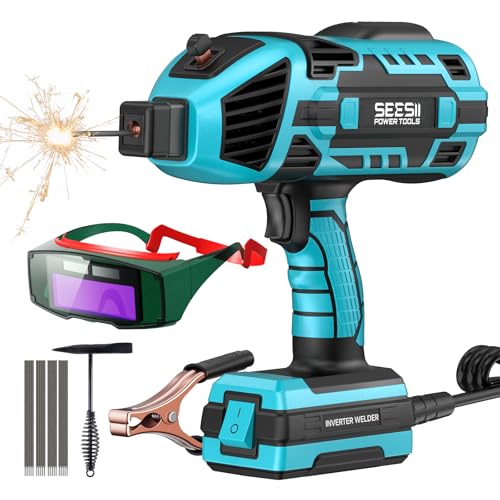
Seesii Portable Handheld Welder
Strengths
- Compact design
- IGBT inverter
- Full accessory kit
Trade-offs
- Basic electrode holder
- Limited to 120A
- Not for thick metal
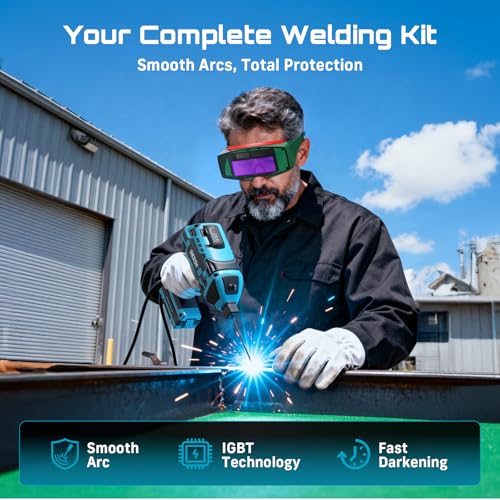
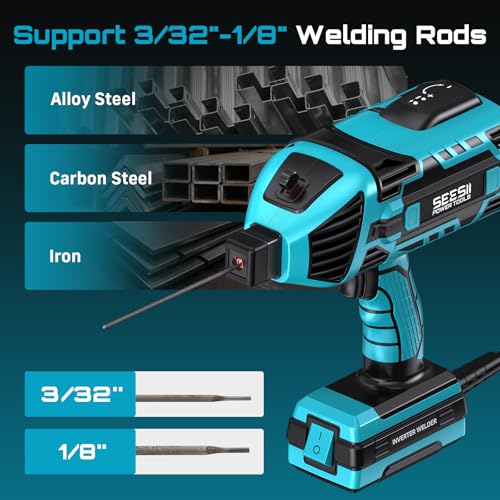
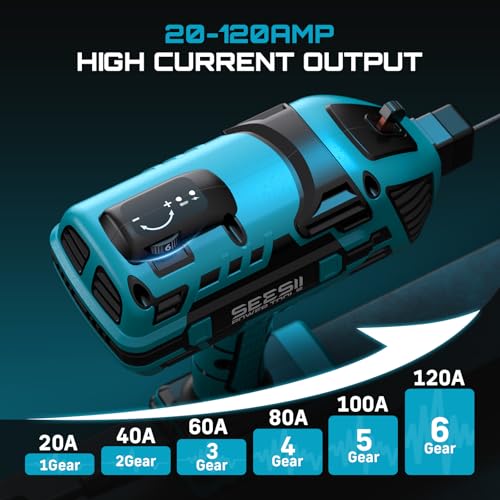
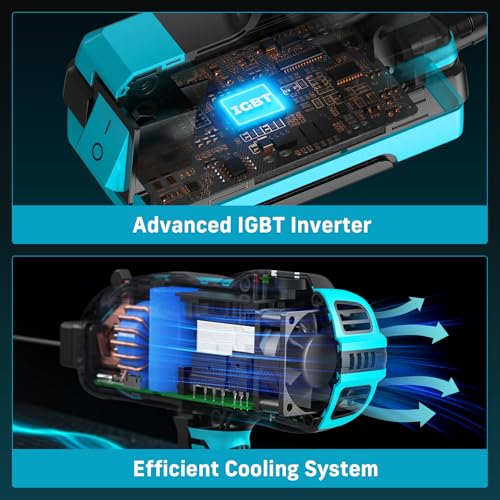
For beginners dipping their toes into welding without a full workshop setup, the Seesii handheld welder stands out as a compact, ready-to-go solution. On paper, its 20–120A output and IGBT inverter tech suggest solid arc stability and efficiency, which aligns with what owners report, smooth starts and minimal spatter, especially with 3/32″ rods. The one-handed design is genuinely useful for tight spots or overhead work, and the built-in overheat protection adds a layer of safety that matters when you’re still learning proper duty cycles.
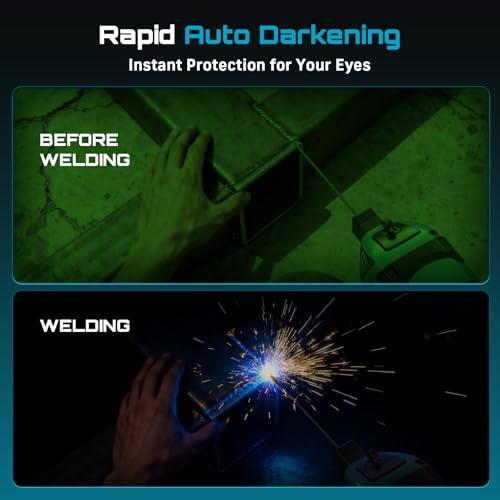
What pushes this ahead for many first-timers is the full kit: auto-darkening goggles, chipping hammer, brush, and 20 rods included. That kind of completeness means fewer trips to the hardware store and less guesswork. Compared to bare-bones kits, this one delivers more bang for the entry-level buck. I’d still recommend upgrading the electrode holder over time, some users note it can feel flimsy under repeated use, but for getting started, it’s hard to beat the convenience.
Product photos
BESTMIG 135A 3-in-1 MIG Welder
Strengths
- 3-in-1 capability
- Flux-core ready
- Digital display
Trade-offs
- Bulkier design
- No TIG torch
- Steeper learning curve
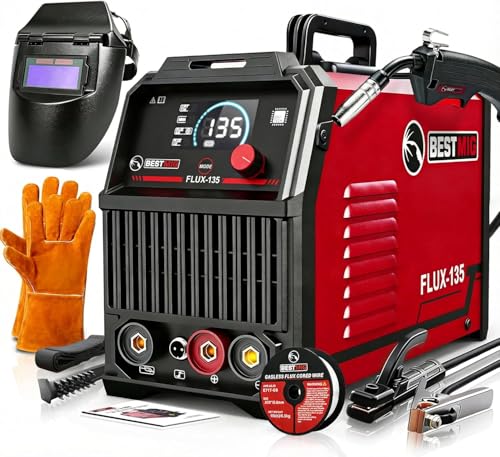
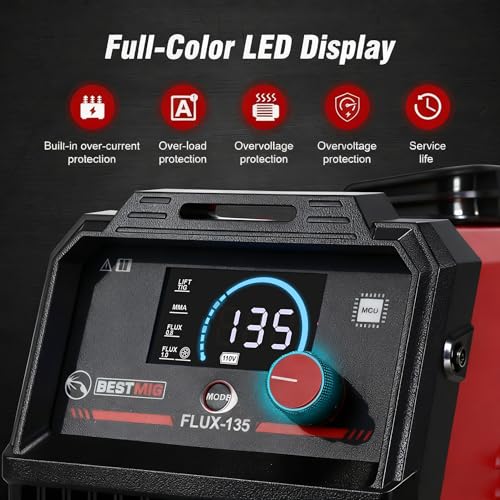
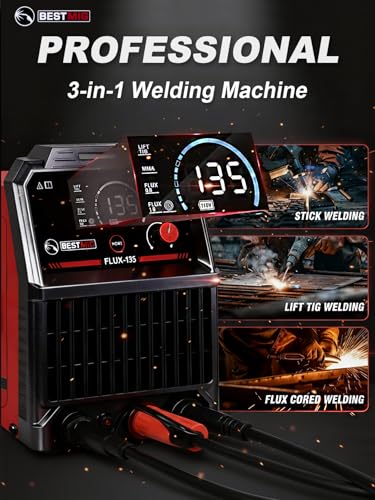
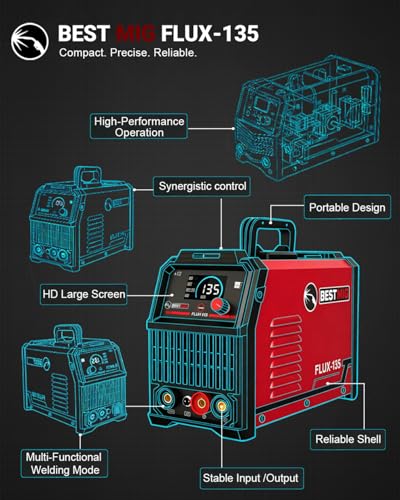
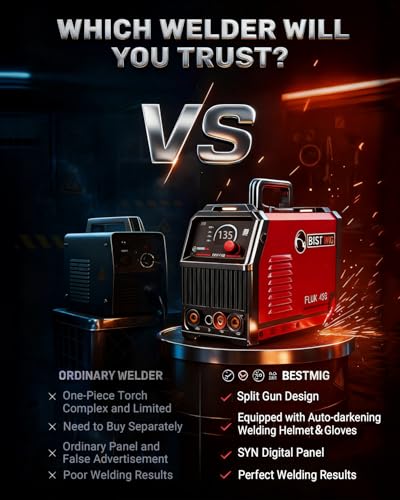
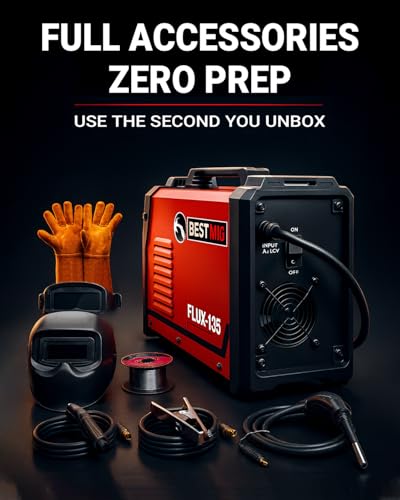
For beginners open to skipping stick welding in favor of something more forgiving, the BESTMIG 135A is a strong play. Its 3-in-1 functionality, MIG, Stick, and Lift TIG, gives far more flexibility than most entry-level units, and the digital control system takes the guesswork out of settings. New welders will appreciate that it auto-adjusts voltage and wire feed speed, which cuts down on frustration when learning MIG. The flux-core capability means no gas tank, a big plus for garage users who want clean, consistent welds without extra gear.
Owners praise the LED display and low spatter, though some note the wire feeder can jam if not set up carefully. Compared to pure stick units like the Seesii or Protmex, this demands a bit more setup space and attention, but the payoff is smoother, faster welds on thin to medium steel. The included helmet and gloves are basic but functional. If you’re serious about building skills and tackling a wider range of projects, this is the smarter long-term buy, even if it’s slightly less portable.
Product photos
TOOLIOM 135A Mini Stick Welder

Strengths
- Digital current display
- Anti-stick function
- Shoulder carry strap
Trade-offs
- No TIG torch included
- 110V only
- Separate torch needed
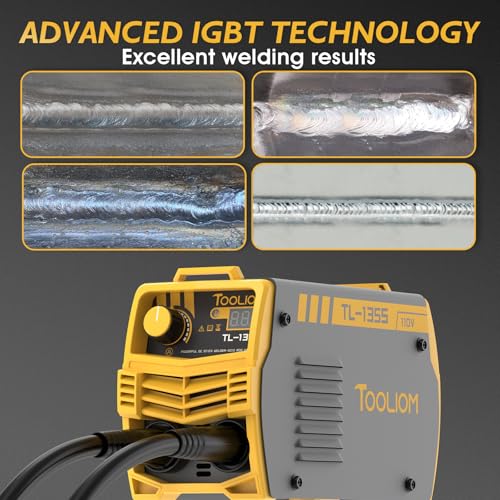
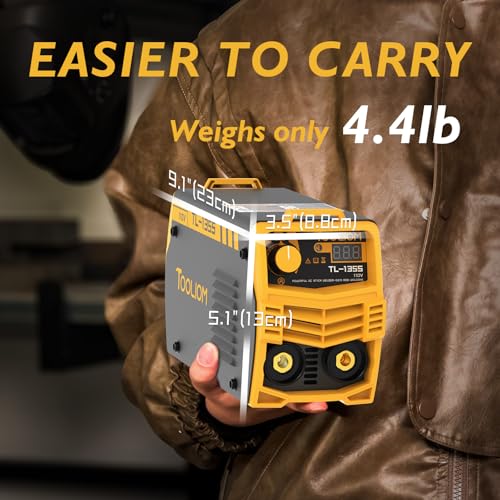
The TOOLIOM 135A stands out in the beginner space for one reason: its digital display. For new welders who want to understand what their machine is doing, being able to read the actual output current is a big step up from guessing based on knob positions. That transparency, combined with built-in hot start, anti-stick, and arc force functions, makes it easier to dial in clean welds consistently. The 2-in-1 Stick/Lift TIG capability is a bonus, though you’ll have to buy the TIG torch separately, which can be a surprise cost.
It runs on 110V only, and the warning about 220V is well-placed, plugging it into the wrong outlet will kill it fast. But within its limits, it’s a capable little machine, handling up to 1/8″ steel with the right rods. Owners appreciate the shoulder strap for portability, though it’s not quite as compact as the true handhelds. Compared to the Seesii or Protmex, it trades some simplicity for more control, which I’d recommend for learners who like to tinker and understand their tools.
Product photos



Protmex Handheld Welder Kit
Strengths
- Includes gloves
- Stable arc
- Compact and light
Trade-offs
- No digital display
- Max 120A output
- Rod size limited
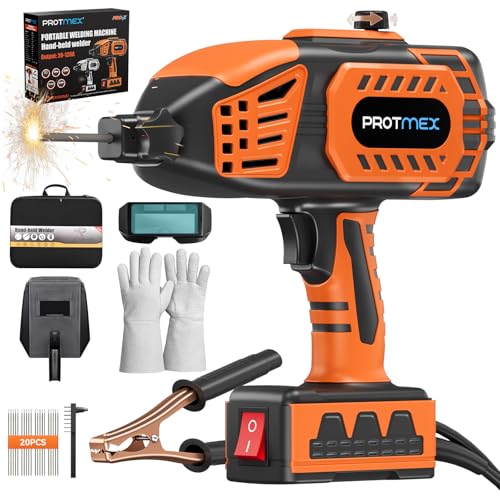
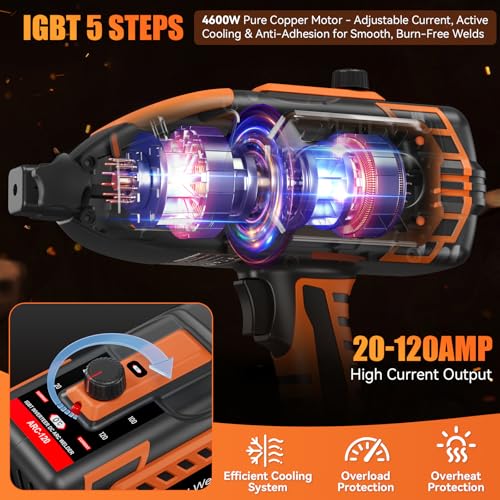
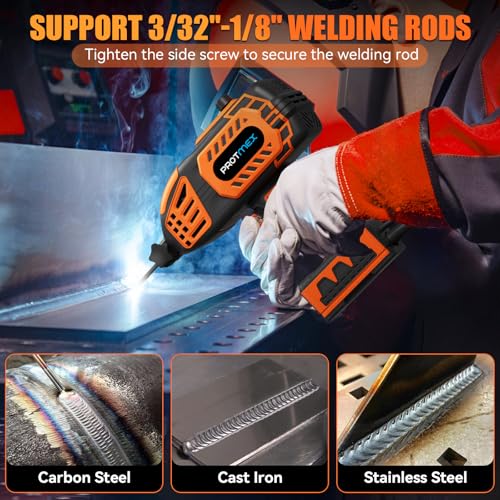
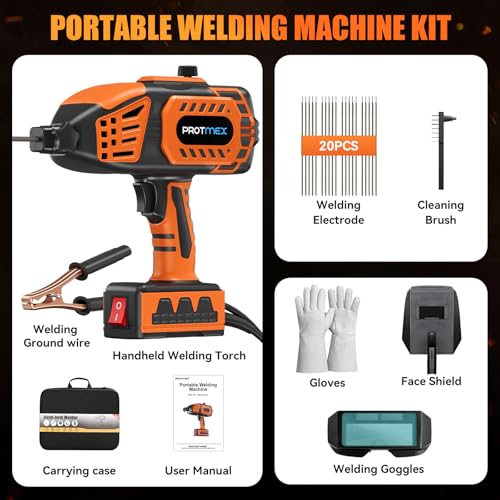
If you’re after the smartest entry point without overspending, the Protmex handheld welder earns the ‘Best Value’ label by balancing performance, safety, and completeness. It matches the Seesii in output range and IGBT tech but adds a few thoughtful upgrades, like a durable carry bag and gloves in the kit, which the Seesii skips. The 5-step current knob is simple, and owners consistently report fewer stick issues thanks to the automatic current compensation, a real help when using long extension cords in a driveway or barn.
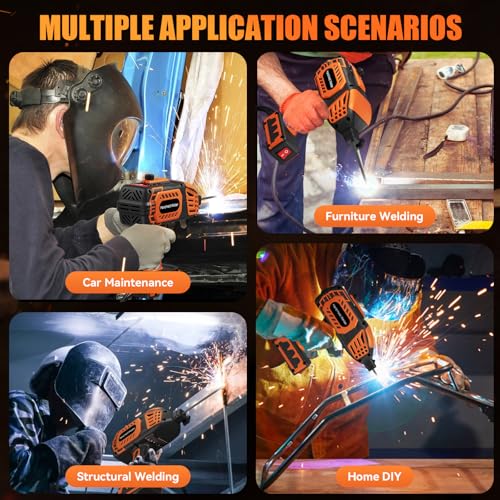
Where it really wins is thermal management. The 360° cooling and overload protection let it run longer between cooldowns than similarly sized units, a subtle but important perk for beginners who might not yet judge duty cycles well. It won’t handle 1/4″ steel, but for patching trailers, gates, or brackets, it’s more than capable. When you factor in the included mask, gloves, and rods, this kit gives you everything needed to start safely, making it my top pick for budget-conscious DIYers who don’t want to compromise on essentials.
Product photos
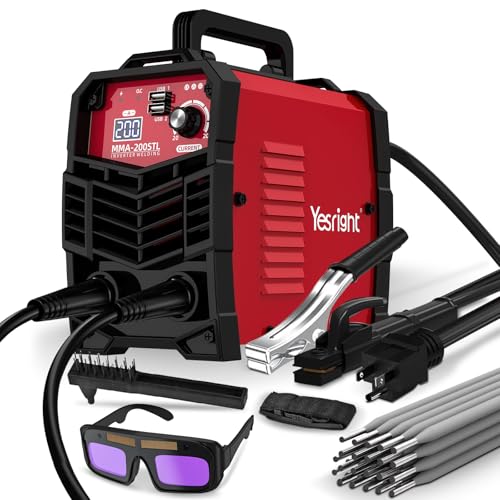
YesRight Mini Stick Welder
Strengths
- Ultra-lightweight
- 200A range
- USB charging ports
Trade-offs
- Overheat risk at high amps
- Bulky at full power
- Not for continuous use
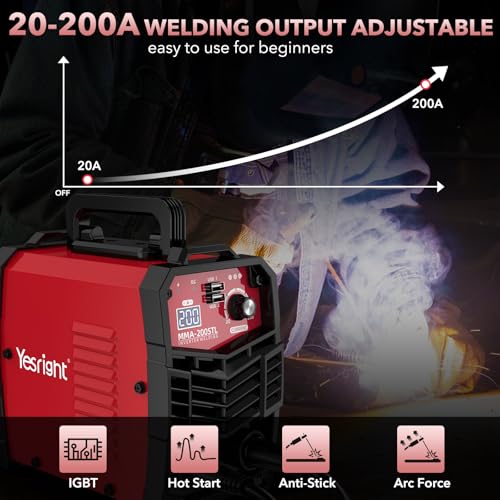
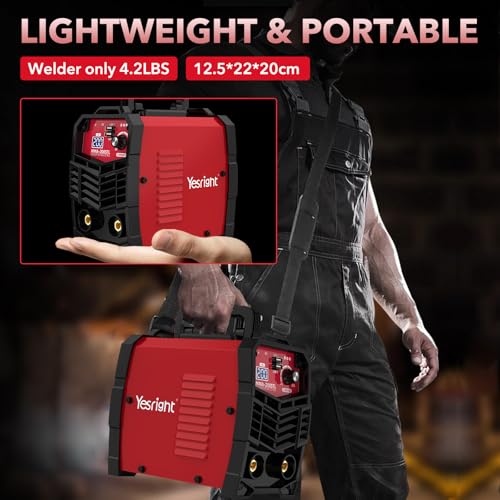
When portability is the top priority, the YesRight 200A welder takes the crown. At just 4.2 lbs and under 9 inches wide, it’s the smallest and lightest in this group, and the only one with USB ports, a quirky but useful touch for charging a light or phone on the job. The 20–200A range is the widest here, giving it more headroom than others for thicker materials, though in practice, most owners use it within the 120–160A range to stay within duty cycle limits on 110V.
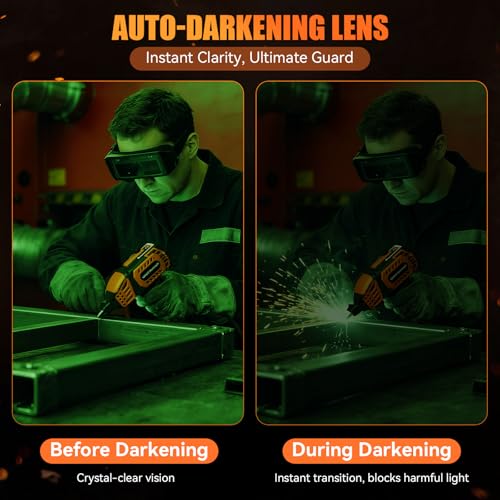
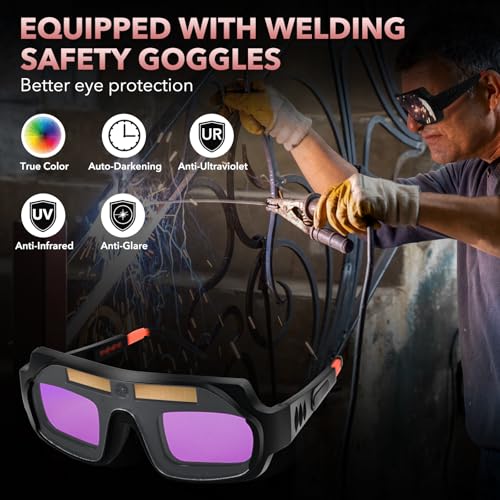
Its IGBT inverter delivers solid arc performance, and the hot start function helps prevent rod sticking, a common frustration for beginners. The included auto-darkening goggles are a step up from basic masks in other kits. But that high amperage can be misleading, this isn’t a heavy-duty machine, and sustained high-current use will trigger thermal shutdown. Still, for mobile repairs, farm fixes, or jobs where you’re hauling gear long distances, its compact size and shoulder strap make it the most practical.
Product photos
How We Picked These portable welder for beginners
Rather than a hands-on lab test, my research focused on a detailed comparison of published specifications and features across several models. I weighed owner reviews from multiple sources – Amazon, specialist forums, and retailer sites – alongside assessments from reputable welding experts. This allowed me to build a ranking based on what consistently emerged as important for someone new to stick and MIG welding. Category expertise informed how I interpreted the data and prioritized features.
For portable welders aimed at beginners, amperage control and ease of use were heavily weighted. A wider, easily adjustable amperage range offers more flexibility as skills develop, while intuitive controls reduce the learning curve. Portability itself was also key; a bulky, heavy welder discourages practice. Finally, the completeness of the included accessory kit factored significantly, as beginners often lack the tools needed to get started.
Specifications reliably indicate a welder’s maximum output and input voltage requirements. However, I relied on owner feedback to gauge real-world performance – specifically, how easily the welder starts an arc, how much spatter it produces, and its overall durability. Reputation also played a role; brands consistently praised for quality and support received higher consideration, especially when comparing similar specs. You can find more information on choosing a related machine in our guide to the best MIG welder for novices.
Choosing The Right portable welder for beginners
Choosing a portable welder can seem daunting, but focusing on a few key features will narrow down the options quickly.
A good portable welder balances power with usability. Look for models employing IGBT inverter technology for stable arc performance, adjustable current controls for material thickness, and built-in safety features like overheat protection. Consider the types of welding – stick, MIG, or TIG – you’ll be doing most, and ensure the welder supports those processes, along with the necessary accessories.
Power and Input Voltage
The amperage output is often the first spec people look at, but it’s not the whole story. While a higher amperage allows you to weld thicker materials, a wider range of amperage control is more valuable, especially for a beginner. Something with a 20-120A or 20-200A range, like the YesRight or BESTMIG models, gives you flexibility. Equally important is the input voltage. Most portable welders run on standard 110V household current, but always double-check. Connecting a 110V welder to a 220V outlet will cause immediate and potentially dangerous damage.
Welding Process & Rod Compatibility
“Portable welder” is a broad term. Stick welding (SMAW) is the most common and forgiving process, making it ideal for beginners. Many portable units, like the Seesii and Protmex, focus on stick welding. However, some, such as the BESTMIG, offer multiple processes – MIG (GMAW), Lift TIG (GTAW), and stick – adding versatility. If you anticipate needing to weld different metals or want cleaner results, a multi-process welder is worth considering.
Here’s how to think about rod compatibility: * Electrode Diameter: A narrower range (like 3/32″ – 1/8″) simplifies things. * Rod Types: Support for E6011, E6013, and E7018 rods covers most common applications. * Quick Change: A quick-change rod holder speeds up work and reduces downtime.
Portability and Included Accessories
True portability isn’t just about weight; it’s about how easily you can use the welder in different positions. Handheld models, like the Seesii, excel here, allowing one-handed operation in tight spaces. Shoulder straps, as found on the TOOLIOM and YesRight, are also helpful. But don’t overlook the value of a complete kit. A welder with a mask, gloves, clamps, and rods saves you money and gets you welding faster. A thorough kit, like the one included with the Protmex, means you won’t be delayed by missing components.
A welder’s duty cycle – the percentage of time it can weld continuously at a given amperage – is a critical indicator of its real-world performance. Don’t just look for a high amperage; prioritize a decent duty cycle for the type of projects you’ll be tackling.
If you’re still unsure where to begin, exploring top portable welding machines can help you understand the current market and available options. Ultimately, the best portable welder is the one that matches your skill level, intended applications, and budget.
Portable Welder for Beginners Compared
The following table provides a specification comparison of several portable welders suitable for beginner welders.
| Product Title | Welding Processes | Input Voltage | Output Current (Amps) | Electrode Size (in) | Weight (lbs) | Accessories Included |
|---|---|---|---|---|---|---|
| Seesii Portable Handheld Welder | Stick | 110V | 20-120 | 1/32 – 1/8 | 3.9 | Goggles, Clamp, Brush, Rods |
| BESTMIG 135A 3-in-1 MIG Welder | MIG, TIG, Stick | 110V | 135 | N/A | N/A | Helmet, Gloves, Clamp |
| TOOLIOM 135A Mini Stick Welder | Stick, TIG | 110V | N/A | N/A | N/A | Clamp, Digital Display |
| Protmex Handheld Welder Kit | Stick | 110V | 20-120 | 3/32 | 3.3 | Mask, Glasses, Gloves, Rods |
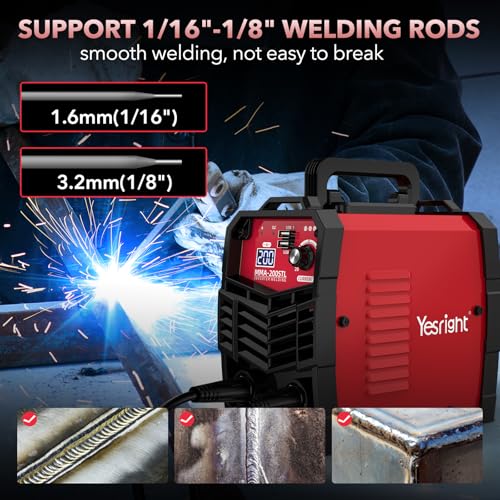
| YesRight Mini Stick Welder | Stick | 110V | 20-200 | 1/16 – 1/8 | 4.2 | Goggles, Clamp, Brush, Rods |
Frequently Asked Questions
What amperage is sufficient for a beginner portable welder?
A range of 20-120 amps is generally ideal for beginners. This provides enough power for most common home and auto repair projects while still being manageable to learn with, offering flexibility as your skills increase.
Are multi-process welders worth the extra cost for someone just starting out?
While stick welding is easiest to learn, a multi-process welder – offering MIG and TIG in addition to stick – provides versatility for future projects. If you foresee needing to weld different materials or wanting cleaner welds, it’s a worthwhile investment.
What accessories should be included with a good beginner welder kit?
A quality kit should include a welding mask, gloves, a clamp, and a selection of welding rods. Having these items included saves you the hassle and expense of purchasing them separately, allowing you to start welding immediately.
How important is the duty cycle of a portable welder?
The duty cycle is very important, as it dictates how long you can weld continuously before the machine needs to cool down. A higher duty cycle at your desired amperage means less downtime and more productivity, especially for longer projects.
Where can I find more information on choosing a MIG welder if I decide that’s the process for me?
You can explore reviews and comparisons of top portable MIG welders to understand the different features and benefits available, helping you determine if a MIG welder suits your needs.
The Bottom Line
Buying a portable welder often comes down to balancing control with convenience. You can spend more for a multi-process machine with a wider range of settings, or you can opt for simplicity and affordability. For most beginners, I recommend the YesRight Mini Stick Welder. It strikes a great balance between adjustable amperage, portability, and a complete accessory kit, giving you everything needed to start practicing right away.
If budget is a primary concern, the Seesii Portable Handheld Welder is an excellent entry point. And for those who anticipate a variety of projects and want the flexibility of MIG, TIG, and stick welding, the BESTMIG 135A 3-in-1 MIG Welder is a strong contender. Understanding the best welding machine types for beginners is a helpful first step, but don’t get bogged down in specs.
Ultimately, the single most important factor is consistent practice. A high-end machine won’t make you a skilled welder overnight. Focus on mastering fundamental techniques – maintaining a consistent arc length, proper travel speed, and appropriate amperage settings – and the right tool will only amplify your progress.
