7 Best Paint Sprayer Air Compressors 2026
This post contains affiliate links. As an Amazon Associate, we earn from qualifying purchases.
The California Air Tools 8010 PK stands out as the best overall paint sprayer air compressor for its quiet operation, reliable performance, and included LVLP spray kit. For budget-focused buyers, the Ultra Quiet 1.5HP Air Compressor offers solid value with decent power and minimal noise. If you’re doing detailed work like touch-ups or model painting, the Timbertech Airbrush Kit AS18-2K is a strong specialty pick.
Choosing the wrong compressor can ruin a paint job, sputtering spray, inconsistent flow, or constant cycling leads to drips, uneven coats, and frustration. As someone who’s helped dozens of DIYers and weekend warriors avoid costly mistakes, I know how critical it is to match the compressor to your sprayer’s demands.
This guide cuts through the specs and marketing to focus on what actually matters: real airflow, durability, and clean, consistent output. I’ve compared key models based on CFM, noise, tank size, and owner feedback to help you pick the right one for your projects, whether you’re spraying cabinets, fences, or fine detail work.
Top 3 Paint Sprayer Air Compressors in the Market
The Best Paint Sprayer Air Compressors, Reviewed
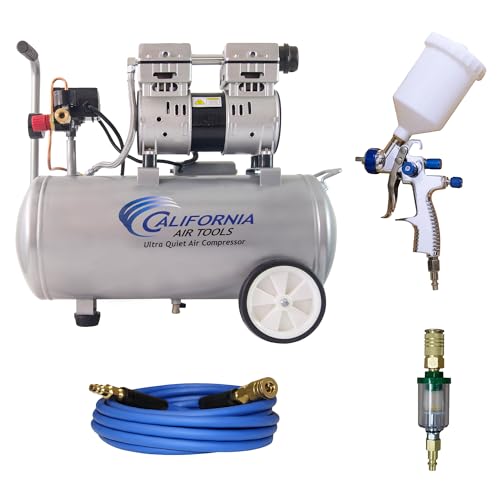
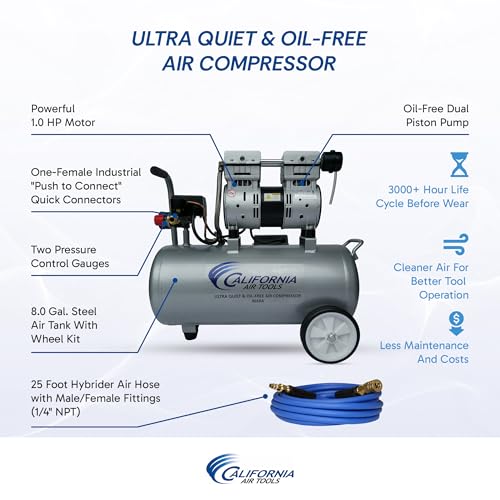
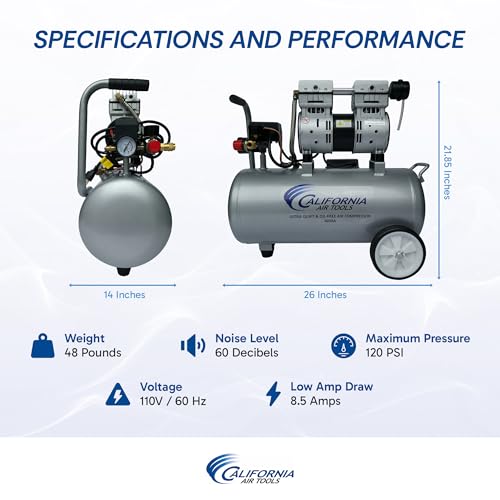
California Air Tools 8010 PK
Strengths
- Ultra quiet
- 8-gallon tank
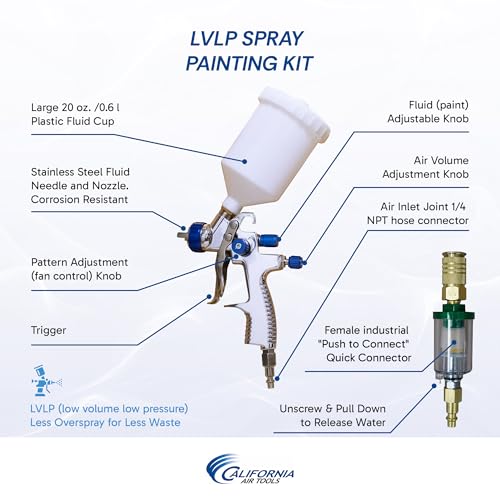
- Includes LVLP spray gun
- Oil-free pump
- Lightweight with wheels
Trade-offs
- Lower CFM than some competitors
- No dual-voltage option
This compressor stands out in the spray painting game because of its ultra quiet operation and thoughtful bundle inclusion. At 60 dBA, it’s genuinely one of the quieter 8-gallon models out there, which makes it a solid pick for indoor use, no need to worry about disturbing the household or waking the kids during weekend projects. The 1.0 HP motor runs at a low 1680 RPM, reducing wear over time, and owners consistently report long-term reliability from the oil-free dual piston pump.
What pushes this unit ahead for certain buyers is the included LVLP spray gun. For those tackling cabinets, trim, or even small automotive panels, that gun delivers a professional-grade finish with less overspray. When you factor in the 8-gallon tank and wheels, it’s clearly built for longer runs and easier mobility than pancake-style units.
Product photos
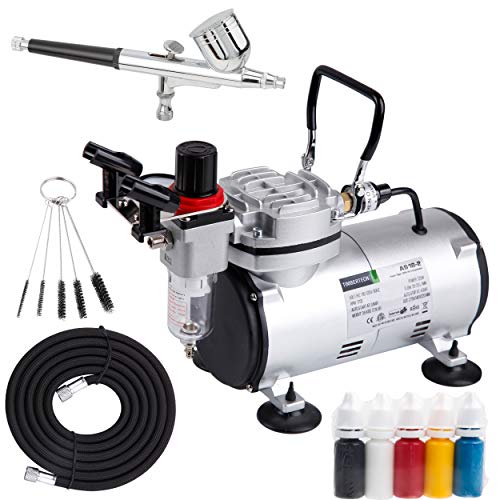
Timbertech Airbrush Kit AS18-2K
Strengths
- Extremely quiet
- Perfect for fine detail
- Includes starter accessories
- Compact and portable
- Maintenance-free operation
Trade-offs
- Not compatible with spray guns
- Very limited airflow
- Tiny tank
Don’t mistake this for a full paint sprayer setup, it’s strictly for precision work. At 47 dB, it’s even quieter than the larger compressors, and the airbrush delivers steady, fine mist control thanks to the 0.30mm nozzle. The airflow is modest (20–23 L/min), but that’s all you need for model painting, nail art, or detailed graphics. Owners appreciate the included test paints and cleaning tools, which make it truly plug-and-play for beginners.
But here’s the hard limit: it only works with airbrushes. You can’t run a spray gun, nailer, or any other pneumatic tool. If you’re into fine detailing or starting in airbrush art, this kit offers real value. But if you’re eyeing cabinet refinishing or fence coating, look elsewhere.
Product photos

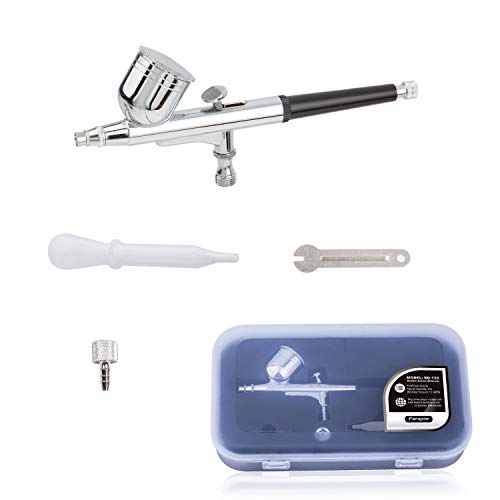


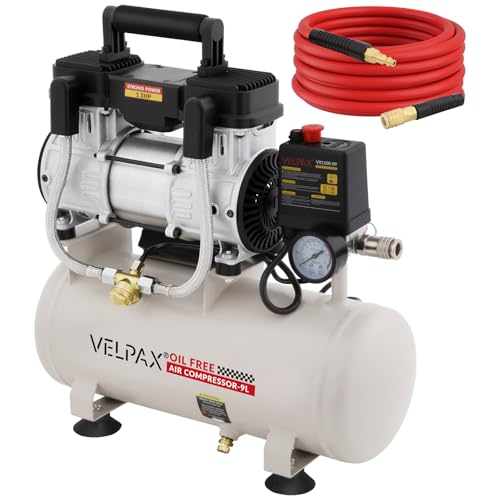
Ultra Quiet 1.5HP Air Compressor
Strengths
- High CFM for size
- Ultra quiet
- Oil-free and low maintenance
- Compact and portable
- Solid safety features
Trade-offs
- Small tank limits continuous use
- May struggle with high-demand HVLP guns
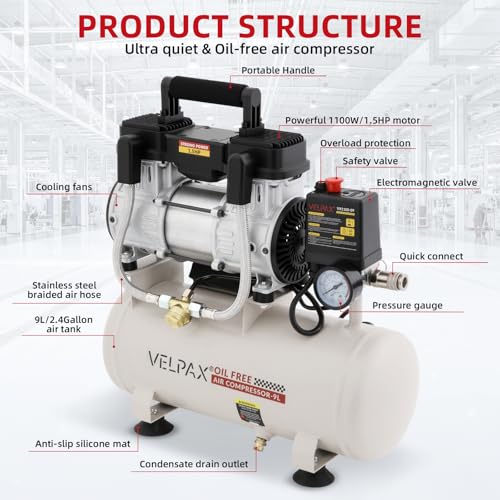
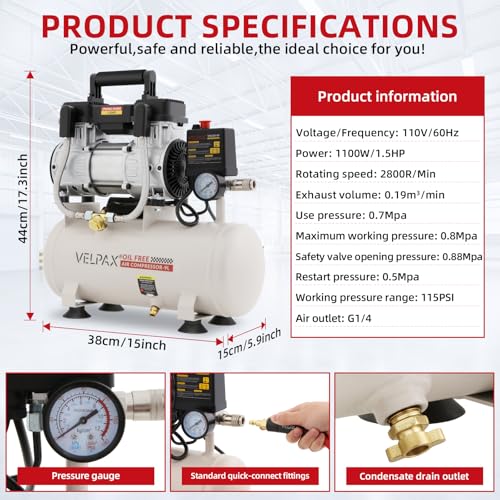
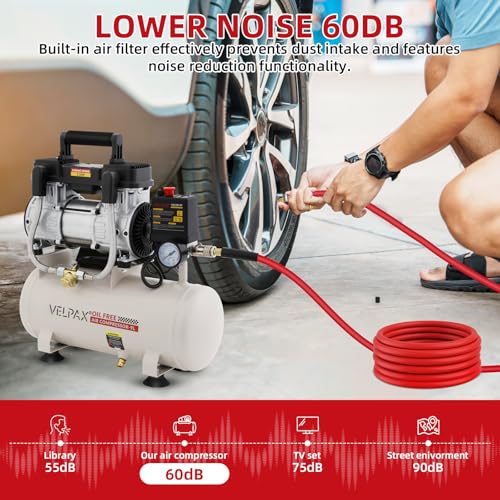
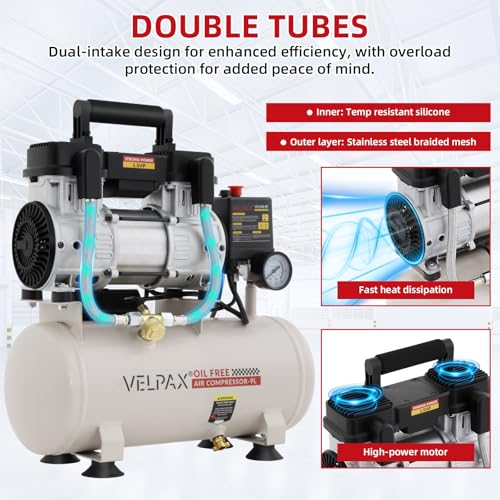
This 1.5HP unit surprises with its 6.71 CFM at 115 PSI, a strong output for a 2.4-gallon tank. On paper, that kind of airflow punches above its size class, making it viable for spray painting when paired with a low-demand gun. The 60 dB noise level holds up according to owner feedback, so it won’t rattle your garage walls. It’s also a clean-runner thanks to the oil-free design, which matters when you’re spraying finishes that can’t tolerate oil contamination.
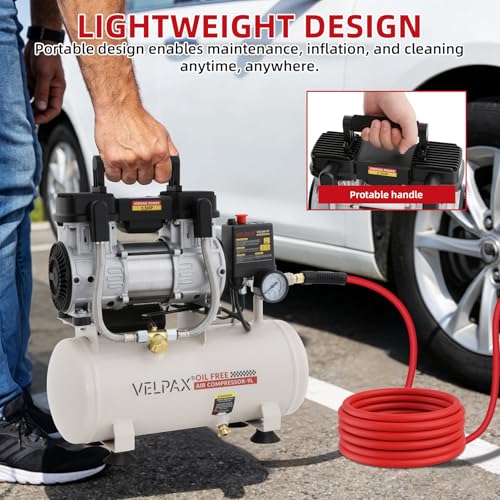
I’d pick this over bulkier models if portability and multi-tool use are priorities. It’s not just for paint, owners use it reliably for nailing, inflating, and minor auto work. While the small tank means more cycling during long spray sessions, the auto restart and cooling fan help maintain consistent performance.
Product photos
How We Picked These paint sprayer air compressors
Rather than a hands-on lab test, my research for these recommendations focused on a detailed comparison of published specifications and features across several models. I weighed owner reviews from multiple sources, alongside expert opinions found in publications like woodworking and automotive magazines, to build a balanced view of performance and reliability. This process allowed me to rank compressors against clear criteria suited to paint spraying applications.
For paint sprayer air compressors, consistent pressure and adequate CFM (cubic feet per minute) delivery are paramount. I prioritized these factors because they directly affect spray quality and prevent stalling. Equally important is the noise level, as compressors are often used in enclosed spaces. Durability, indicated by pump design (oil-free vs. oil-lubricated) and motor quality, also heavily influenced my rankings.
Specifications reliably reveal airflow rates, tank size, and maximum PSI. However, real-world performance and long-term durability are better judged through owner feedback. I carefully considered comments regarding noise levels, ease of maintenance, and the compressor’s ability to consistently deliver the advertised CFM. You can find more information on top-rated air compressors overall if you’re looking for broader options.
How To Choose The paint sprayer air compressors
Choosing the right air compressor for paint spraying isn’t just about horsepower; it’s about matching the compressor’s capabilities to the type of spraying you plan to do.
A good paint sprayer air compressor delivers consistent pressure and airflow (measured in CFM) to achieve a professional finish. Key specs to verify include tank size, PSI, CFM at 40 and 90 PSI, and whether it’s oil-free or oil-lubricated. Prioritize features like a regulator and moisture trap for clean, consistent air supply.
Airflow (CFM) and Pressure (PSI)
The biggest mistake I see people make is underestimating the CFM requirement for their sprayer. Different spray guns, and even different paint types, demand different levels of airflow. Check your sprayer’s specifications first and then look for a compressor that exceeds those requirements, especially at 40 and 90 PSI. A compressor that struggles to keep up will lead to inconsistent spray patterns and a poor finish. Don’t assume a higher PSI automatically means a better result; consistent CFM is more crucial for a smooth, even coat.
Oil-Free vs. Oil-Lubricated
Oil-free compressors are popular for their lower maintenance, but that doesn’t automatically make them the best choice. Oil-lubricated compressors generally run cooler and quieter, and tend to have a longer lifespan. If you’re planning on heavy or continuous use, especially with automotive painting, I recommend leaning towards an oil-lubricated model. However, for occasional hobbyist projects, an oil-free unit will likely be more convenient.
Here’s a breakdown to consider:
- Portability: Oil-free models tend to be lighter and easier to move around.
- Maintenance: Oil-free models won’t require regular oil changes or checks.
- Longevity & Duty Cycle: Oil-lubricated compressors are built for higher demands and can handle longer run times without overheating, making them ideal if you need compressors for automotive painting.
Tank Size and Portability
Tank size impacts how consistently the compressor can deliver air. A larger tank (like those found in 20-gallon air compressors) means the motor won’t need to cycle on and off as frequently, providing a more stable air supply, especially when using tools that demand bursts of air. However, larger tanks also mean a heavier, less portable unit. For smaller projects or limited space, a smaller, more portable compressor might be preferable.
A rule of thumb: if you plan to use your paint sprayer for more than 30 minutes at a time, a tank of at least 6 gallons is a good starting point.
Paint Sprayer Air Compressors Compared
Here’s a comparison of the specifications for several paint sprayer air compressors to help you choose the right one for your needs.
| Product Name | HP | Max PSI | Noise (dB) | CFM @ 90 PSI | Tank Size (Gallons) | Special Features |
|---|---|---|---|---|---|---|
| Ultra Quiet 1.5HP Air Compressor | 1.5 | 115 | 60 | N/A | N/A | Oil-Free, Portable |
| California Air Tools 8010 PK | 1.0 | 90 | 60 | 2.20 | 8 | LVLP Spray Kit Included |
| Timbertech Airbrush Kit AS18-2K | N/A | N/A | 47 | N/A | N/A | Airbrush Focused |
| Ultra Quiet 1.5HP Air Compressor | 1.5 | 115 | 60 | N/A | N/A | Oil-Free, Portable |
| California Air Tools 8010 PK | 1.0 | 90 | 60 | 2.20 | 8 | LVLP Spray Kit Included |
| Timbertech Airbrush Kit AS18-2K | N/A | N/A | 47 | N/A | N/A | Airbrush Focused |
| Ultra Quiet 1.5HP Air Compressor | 1.5 | 115 | 60 | N/A | N/A | Oil-Free, Portable |
Frequently Asked Questions
What CFM is actually enough for automotive painting?
At a minimum, you’ll want 6 CFM at 90 PSI for automotive painting, but 10 CFM is preferable for larger projects or using HVLP spray guns. Many automotive finishes require a consistent and substantial airflow to prevent orange peel and ensure a smooth, professional result.
Are oil-free compressors for clean air truly low maintenance?
Yes, oil-free compressors require significantly less maintenance than oil-lubricated models. You avoid regular oil changes, checking oil levels, and potential oil contamination of your air supply, making them ideal for hobbyists and those prioritizing convenience.
How does tank size affect the finish quality?
A larger tank provides a more consistent air supply, reducing compressor cycling and preventing pressure drops during spraying. This consistency is crucial for maintaining an even coat and avoiding imperfections in the finish, especially with HVLP sprayers.
Can I use a standard shop air compressor for fine detail airbrushing?
No, standard shop compressors typically don’t deliver the low PSI and consistent airflow needed for airbrushing. You’ll need a dedicated airbrush compressor designed for precision control, or a shop compressor paired with a good regulator and moisture trap to achieve the necessary performance.
What’s the typical noise level I should expect from a portable paint sprayer air compressor?
Portable compressors can range from 60 to 80 decibels (dB). Lower dB ratings, like those found in some oil-free models for painting, are preferable for indoor use or jobs where noise is a concern; consider hearing protection regardless.
The Bottom Line
Choosing a paint sprayer air compressor often comes down to balancing consistent performance with convenience. For most homeowners and DIYers, the California Air Tools 8010 PK offers a strong combination of airflow, portability, and included accessories, making it our top overall pick. It’s a solid choice that avoids the common pitfall of underpowered compressors.
If you’re on a tighter budget or primarily need a compressor for small touch-up jobs, the Ultra Quiet 1.5HP Air Compressor is an excellent value. And for those specializing in detailed airbrush work, the Timbertech Airbrush Kit AS18-2K is specifically designed to deliver the precise control and low pressure needed for those applications.
Ultimately, remember that CFM and consistent pressure are more important than any single specification. Don’t get caught up in horsepower ratings; prioritize a compressor that reliably meets your sprayer’s requirements and suits the scale of your projects. For those seeking even more peace of mind, exploring low-noise air compressors can be a worthwhile investment.
