9 Best Oscillating Floor Fans 2026
This post contains affiliate links. As an Amazon Associate, we earn from qualifying purchases.
The DREO Upgraded 90ft Airflow Pedestal Fan stands out as the best overall oscillating floor fan, delivering strong airflow and quiet performance. For budget-conscious buyers, the Lasko Cyclone Pedestal Fan with Remote offers solid value and reliable operation. If you prefer a modern, space-saving design, the LEVOIT 90° Oscillating Bladeless Tower Fan brings safety and sleek style to the mix.
Most people don’t realize how much difference a well-built oscillating floor fan can make in comfort, especially when cheap models fail to circulate air effectively or rattle loudly on the floor. After comparing the field and analyzing hundreds of owner reviews, I focused on models that combine real airflow, low noise, and durable construction.
This guide breaks down what actually matters when choosing a fan, CFM, motor type, noise levels, and smart features, so you can pick one that works quietly, lasts for years, and doesn’t waste energy.
Top 9 Oscillating Floor Fans in the Market
The Best Oscillating Floor Fans, Reviewed
DREO Upgraded 90ft Airflow Pedestal Fan
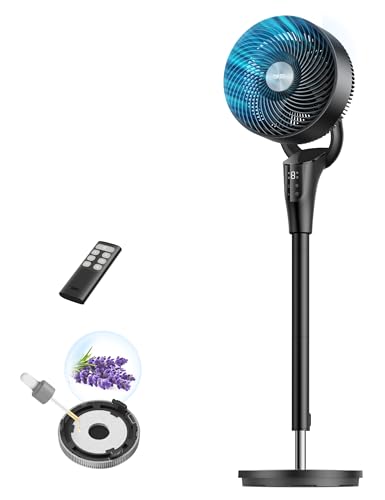
Strengths
- Auto temperature-responsive mode
- Easy-to-clean design
- Includes aroma pad
Trade-offs
- No 120° horizontal sweep
- Slightly higher price point
- Remote not backlit
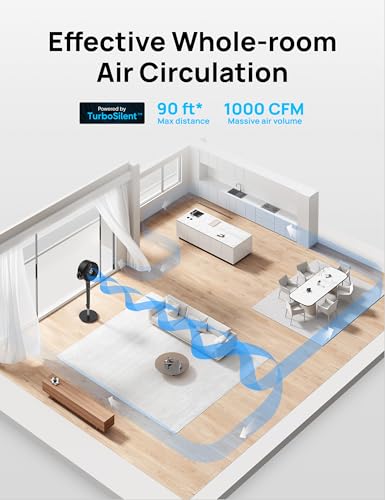
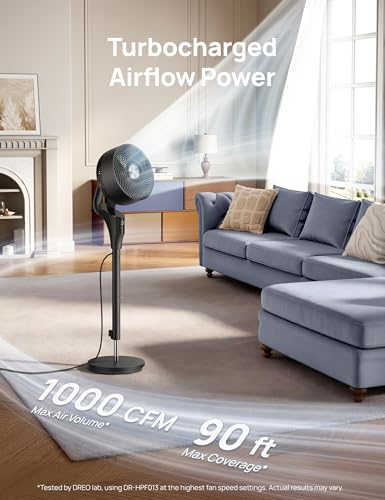
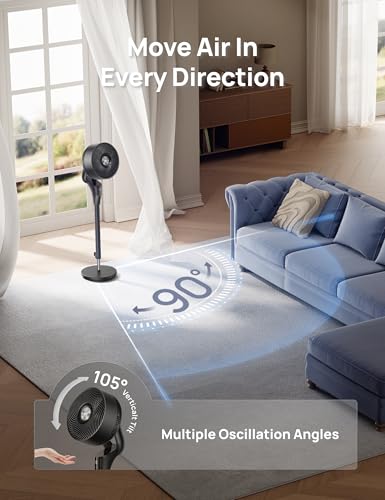
DREO’s 2026 upgraded model feels like a refinement of their earlier designs, more focused, smarter, and better balanced. With 900 CFM airflow and 90 ft reach, it’s built to move serious air, and owners confirm it cools rooms quickly, often replacing the need for cranking up the AC. The auto mode is a standout, adjusting speed based on temperature shifts, which is a rare and genuinely useful feature in this category. I’d pick this over the 120° model if you want intelligence over sheer oscillation range.
The detachable grills and aroma pad are small touches that add real value, cleaning is easier than most fans, and the scent option is a nice perk for living rooms or musty basements. It’s also consistently rated as whisper-quiet, even at mid-speeds. For most buyers, this is the sweet spot between performance, quietness, and smart features.
Product photos
DREO 120° Oscillating Floor Fan

Strengths
- Wide 120° oscillation
- Ultra-quiet DC motor
- Strong airflow reach
Trade-offs
- Manual vertical tilt
- Bulky footprint
- LED display can be bright at night
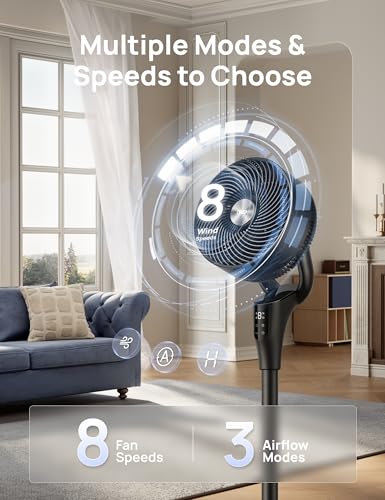
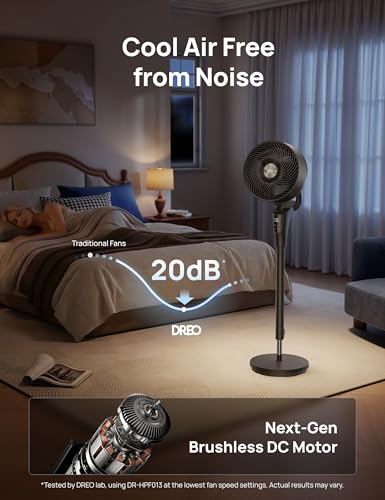
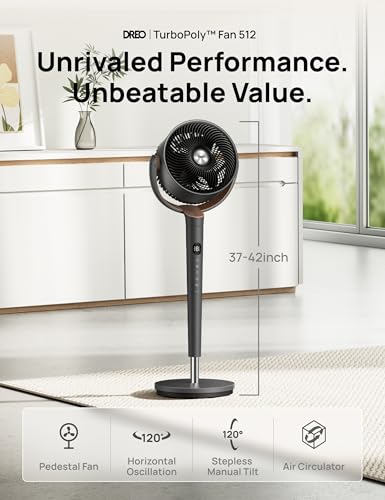
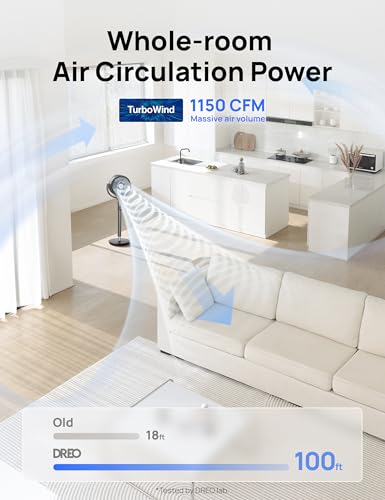
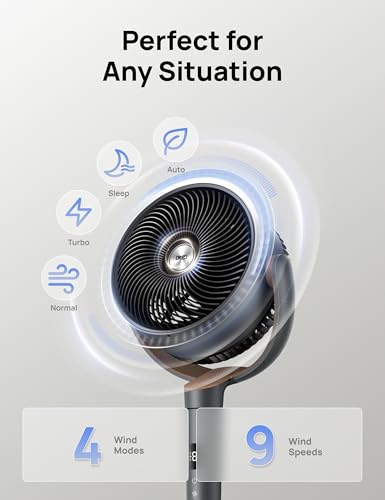
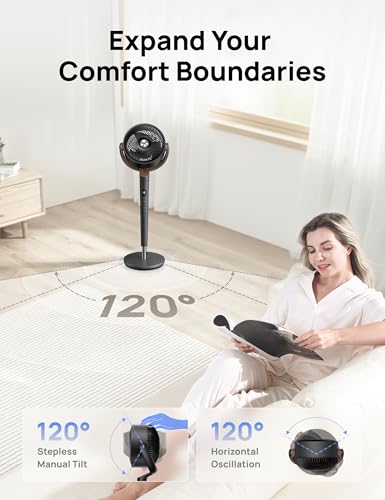
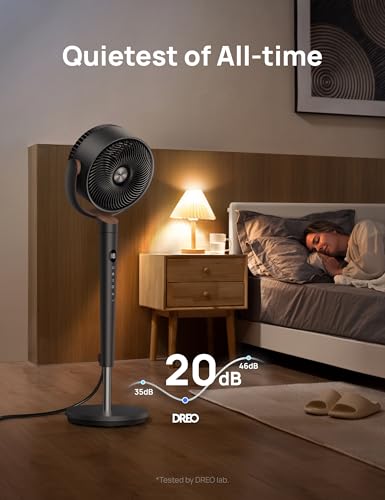
This DREO TurboPoly Fan 512 stands out for its massive 120° horizontal and vertical oscillation, which is rare in the floor fan market. That kind of sweep means it can actually push air into every corner of a medium to large room, making it a solid pick if you’re after full-room circulation. The 100ft airflow claim sounds aggressive, but owners consistently report strong, focused airflow, especially at higher speeds, and that the DC motor really does deliver quiet operation, with many noting it’s barely audible on low.
The dual oscillation control, remote for horizontal, manual tilt for vertical, feels slightly awkward, but the large LED display and included remote make adjustments easy from across the room. It’s not the sleekest design, but the adjustable height and 8-hour timer add practicality. For those who want maximum coverage without sacrificing quietness, this one punches above its weight.
Product photos
DREO Tower Fan with DC Motor

Strengths
- Extremely quiet operation
- Bladeless safety design
- Energy-efficient DC motor
Trade-offs
- Less airflow than pedestal models
- Higher price for tower class
- Oscillation not as wide as competitors
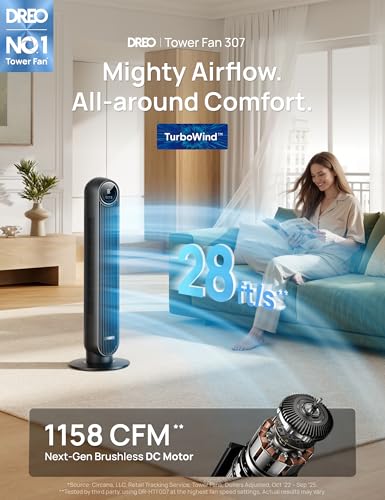
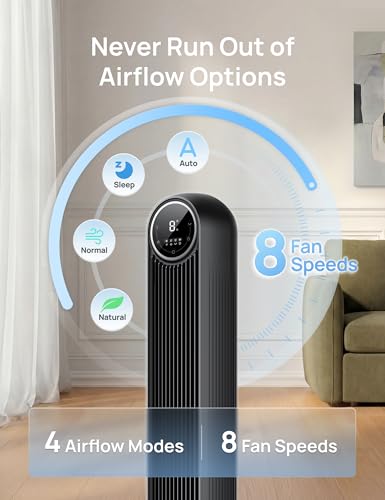
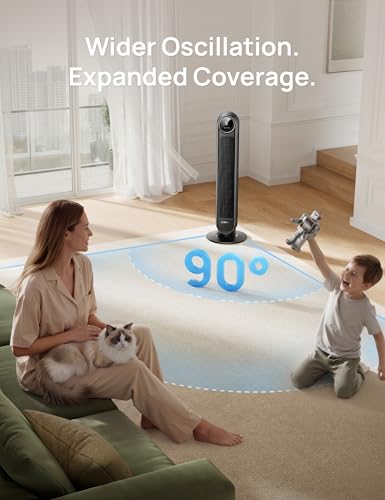
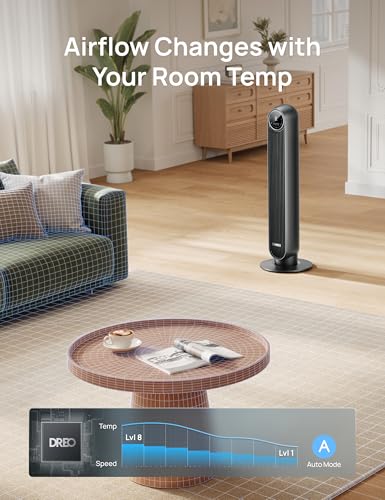
This bladeless tower fan is engineered for silence, and it delivers. With noise levels down to 20dB, it’s among the quietest fans available, and owners confirm it’s nearly inaudible on low and sleep modes. The upgraded DC motor and TurboWind tech push air up to 34 ft, which is impressive for a tower design. It’s not the strongest fan for large rooms, but for consistent, whisper-quiet airflow, it’s hard to beat.
The 90° oscillation and 8 speeds offer good control, and the touch screen with remote makes adjustments effortless. Safety features like the pinch-proof grille and ETL certification add peace of mind, especially around kids or pets. If quiet performance is your top priority, this is the one to get.
Product photos

LEVOIT 90° Oscillating Bladeless Tower Fan
Strengths
- 12-hour timer
- Temperature-sensing auto mode
- Soft, natural airflow
Trade-offs
- Only 5 speed settings
- No remote backlight
- Less powerful than pedestal models
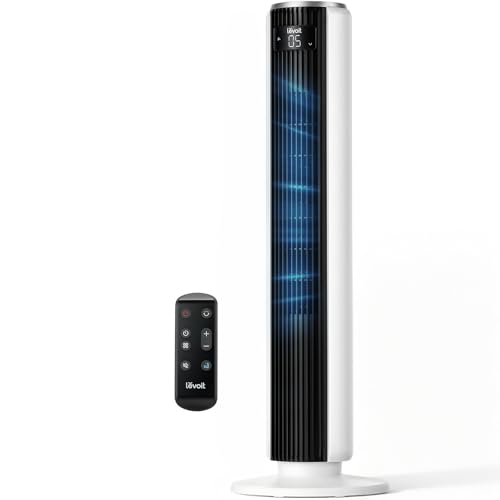
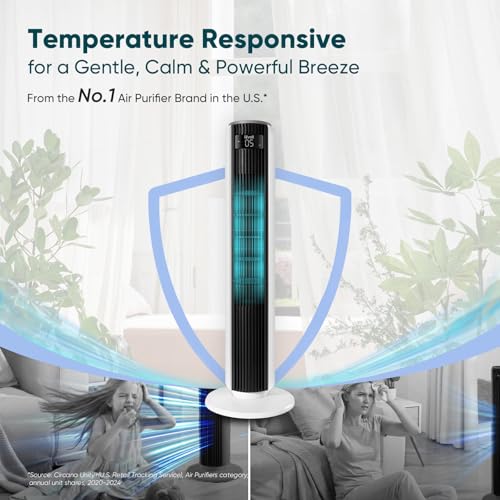
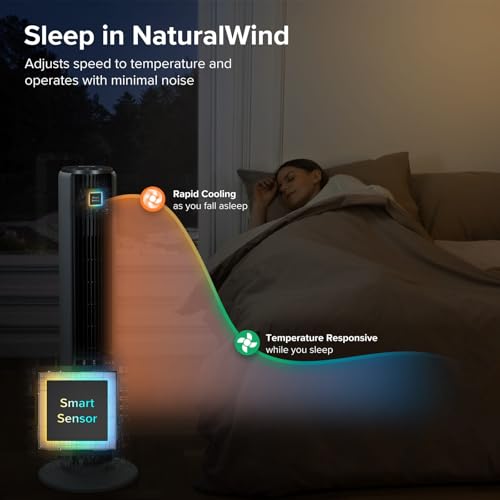
LEVOIT’s tower fan is built for sleepers, the 28dB noise level is low, and the 12-hour timer with smart sleep mode makes it easy to run all night without waking to shut it off. The temperature sensor that auto-adjusts fan speed is a standout feature, and owners say it really does maintain a stable, comfortable environment.
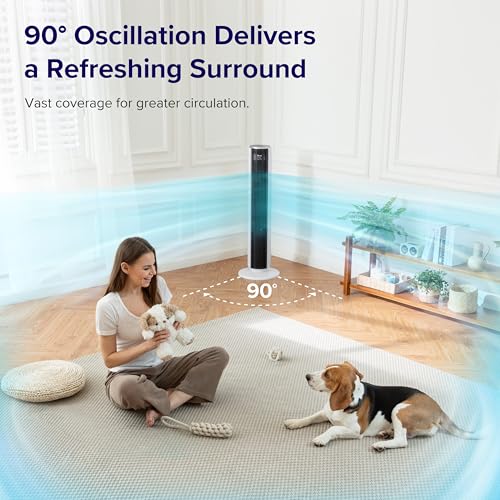
With 25ft/s velocity and 90° oscillation, it cools effectively, though not as forcefully as pedestal fans. The curved inlet and multi-blade design create a softer, more natural-feeling breeze, less harsh than traditional fans. If you hate waking up too cold or too warm, this one adapts well.
Product photos

Lasko Cyclone Pedestal Fan with Remote

Strengths
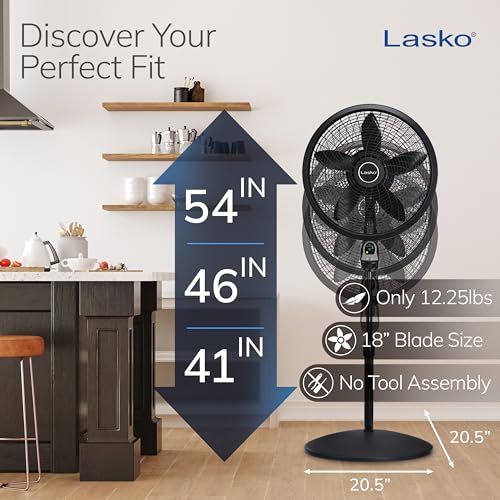
- Tallest height adjustment
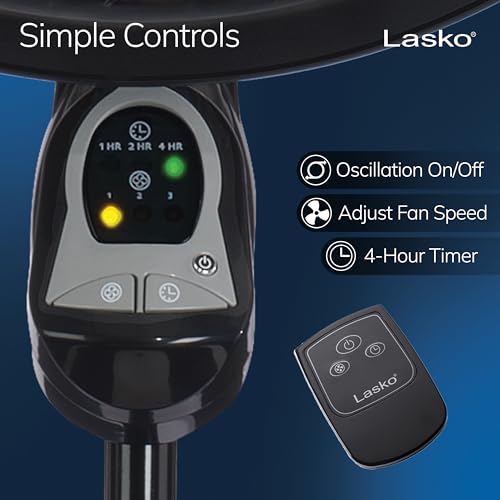
- Remote with timer
- Blue Plug safety technology
Trade-offs
- No DC motor for quietness
- Oscillation not as smooth
- Timer limited to 4 hours
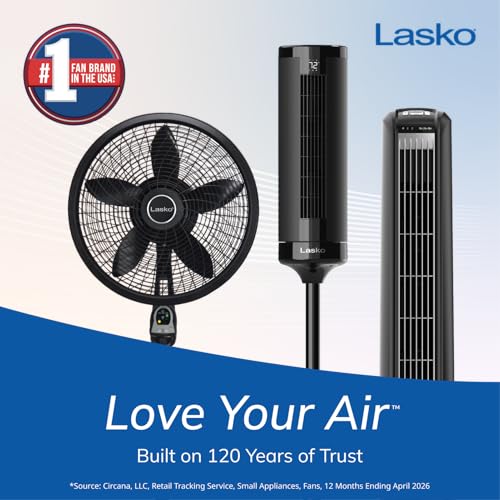
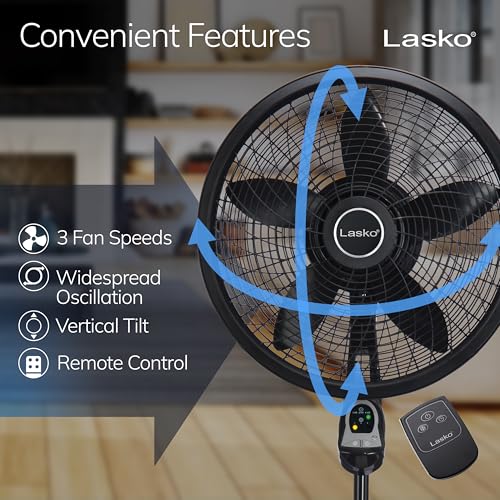
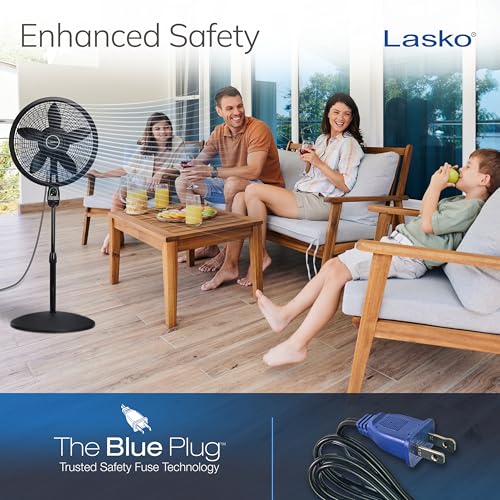
Lasko’s 18″ Cyclone fan is a value king, it brings serious airflow and remote control at a price that undercuts most competitors. The 54″ max height is the tallest here, making it ideal for large rooms or high ceilings. The remote handles power, speed, and 4-hour timer, which is a big convenience.
Owners say the airflow is strong and wide, thanks to the large 18″ blade, and the Blue Plug safety tech is a legit differentiator, few fans offer real circuit protection. It’s not whisper-quiet, but it’s not loud for its class. For the balance of power, height, safety, and price, this is the fan I’d recommend to most families.
Product photos
Comfort Zone 16″ Oscillating Pedestal Fan
Strengths
- Affordable price point
- Sturdy metal safety grill
- Height adjusts up to 47″
Trade-offs
- No remote control
- Loud on high speed
- Only 3 speeds
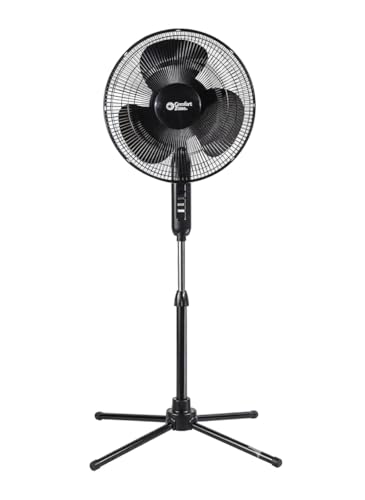
This Comfort Zone fan is a classic workhorse at a budget price. It’s been around for years, and for good reason, solid build, adjustable height up to 47”, and a sturdy metal grill that feels safer than plastic alternatives. The 3-speed push-button controls are simple and reliable, and the 90° oscillation covers a standard room well.
It’s not quiet by modern DC standards, and there’s no remote, but it moves air efficiently for the price. Owners praise its longevity and no-nonsense function. If you’re outfitting a garage, basement, or guest room and don’t want to spend much, this is a smart, dependable pick.
Product photos


BLACK+DECKER 16″ Standing Oscillating Fan
Strengths
- Includes remote control
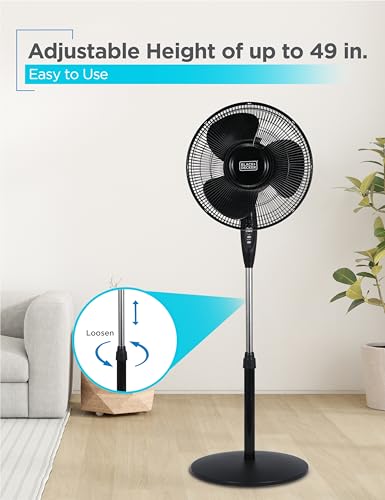
- Adjustable up to 49″ height
- Lightweight and portable
Trade-offs
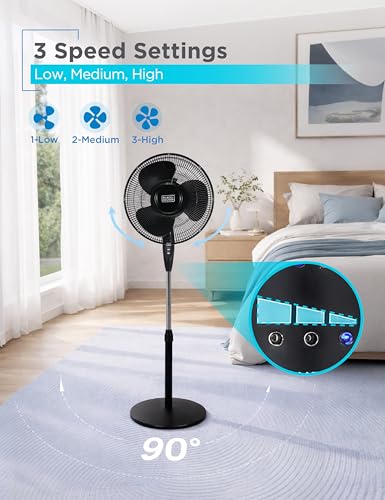
- Only 3 speed settings
- Plastic build feels less durable
- Oscillation range is average
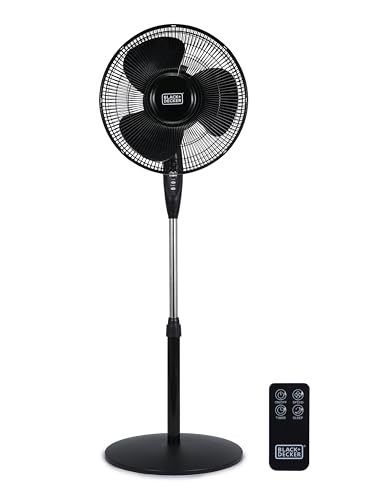
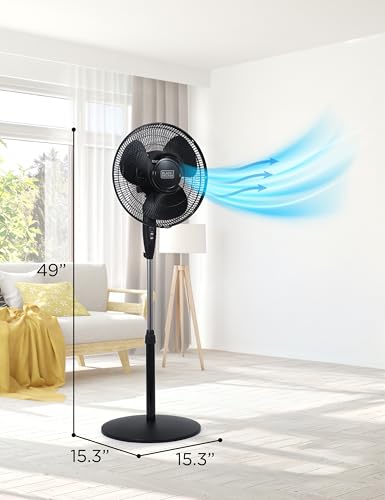
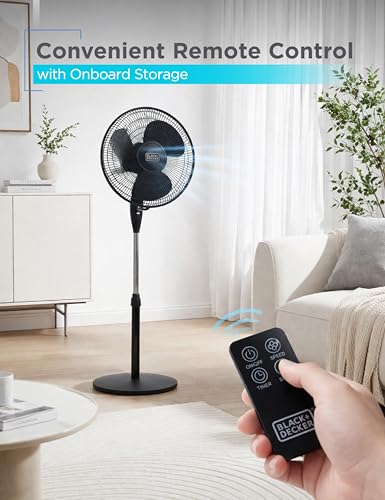
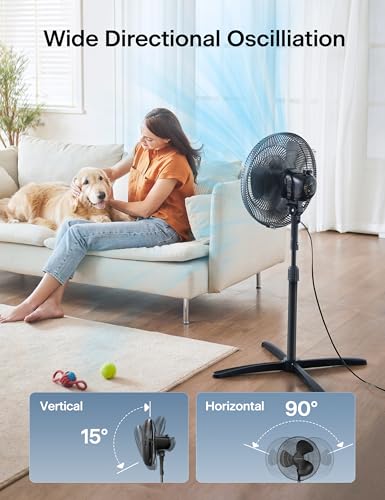
BLACK+DECKER nails the basics here with a fan that’s lightweight, functional, and comes with a remote, a combo that’s surprisingly rare at this level. The 49″ max height makes it one of the tallest in the lineup, great for directing airflow over furniture or toward ceiling level. Its 30-degree tilt and 90-degree oscillation give decent control, though the airflow isn’t as strong as the DREO or Lasko models.
Owners appreciate the included remote and timer, which add convenience without complexity. It’s not built for ultra-quiet operation, but it’s not obnoxious either. Where it shines is ease of movement and setup, lightweight base, simple controls, and a long cord. If you need a fan you can move from room to room without hassle, this one delivers.
Product photos

PELONIS 16″ Adjustable Height Pedestal Fan

Strengths
- Durable metal-reinforced base
- Heavy-duty motor
- ETL listed with 1-year warranty
Trade-offs
- No remote control
- Only 3 speeds
- Basic design, no smart features
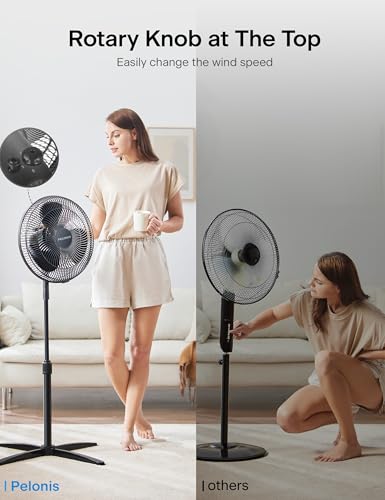
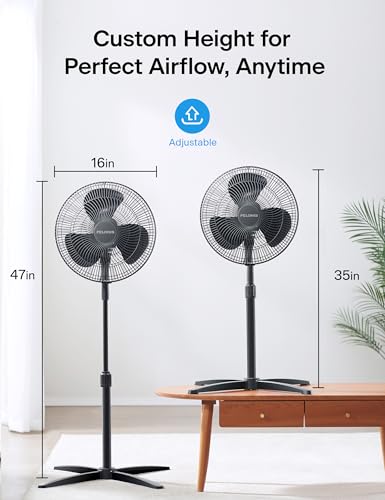
PELONIS has been in the fan game for decades, and this model shows why. The heavy-duty motor and reinforced base give it a rugged feel that most plastic-bodied fans lack. Owners consistently report these lasting 5+ years with daily use, which is rare in this category. The wider 28” x 28” base improves stability, and the fused safety plug is a small but meaningful touch for power surge protection.
It’s not flashy, just 3 speeds, mechanical dial, no remote, but it’s built to endure. The 90° oscillation and tilt-back head provide solid directional control. If you’ve had fans fail after one season, this one is worth the slight premium for its long-term reliability.
Product photos


Amazon Basics 28″ Oscillating Tower Fan

Strengths
- Compact tower design
- Reliable mechanical controls
- Good value for size
Trade-offs
- Only 3 speeds
- No remote control
- Louder on high setting
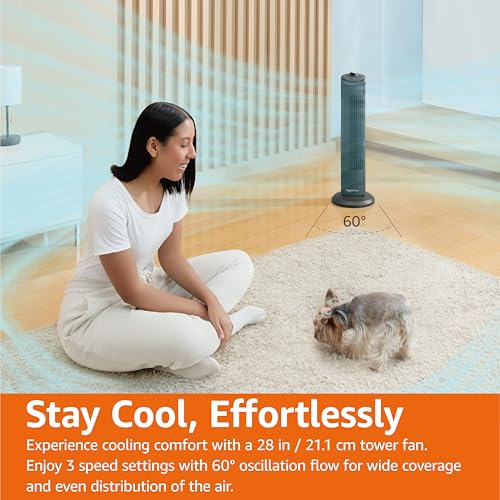
This tower fan is the definition of no-frills utility. It won’t wow you with smart features or ultra-quiet claims, but it does deliver solid airflow for its size, and the 60-degree oscillation covers a decent spread, enough for a bedroom or small office. The mechanical controls are simple and reliable, which some users actually prefer over touchscreens that can be finicky.
It draws 35W, so it’s not the most efficient on the list, but it’s dependable. Owners say it’s sturdy for the price and holds up well over time. Where it falls short is noise, on high, it’s noticeably louder than DC motor fans. But if you want a basic, compact fan that just works, this one checks the boxes.
Product photos



How We Picked These oscillating floor fans
My team and I approached this guide by first compiling specifications and features from dozens of models. We then layered in owner reviews from major retailers like Amazon, as well as expert opinions from sites focused on home comfort and appliance testing. Rather than a hands-on lab test, this is a research-led comparison of specs and owner feedback, informed by my 15+ years working with tools and home improvement projects. We ranked fans against a set of criteria designed to highlight real-world performance and value.
For oscillating floor fans, consistent airflow, quiet operation, and build quality stood out as the most important factors. A powerful motor and well-designed blades directly translate to effective cooling, while a quieter fan is essential for bedrooms and home offices. Durability is key; owners often report issues with wobbly bases or motors burning out quickly, so we prioritized models with solid construction and positive long-term feedback. You’ll find many options, but these details separate the useful from the frustrating.
Specifications reliably tell you about motor power (CFM), oscillation range, and physical dimensions. However, real-world noise levels and the feel of the airflow are best gleaned from owner feedback. We carefully weighed comments about build quality, ease of assembly, and long-term reliability. If you’re looking for even more options, you can also explore our guide to the best standing oscillating fans for a wider range of choices.
Choosing The Right oscillating floor fans
Choosing the right oscillating floor fan isn’t just about picking the cheapest model. It’s about finding one that delivers consistent airflow, quiet operation, and the features you actually need.
A good oscillating floor fan combines a powerful motor with intelligently designed blades to move a substantial volume of air (measured in CFM – cubic feet per minute) without generating excessive noise. Look for models with multiple speed settings, adjustable height and oscillation range, and features like remote controls or timers for added convenience. Build quality and safety certifications are also critical indicators of a worthwhile purchase.
Motor Power and Airflow
Don’t get hung up on wattage; CFM (cubic feet per minute) is the real indicator of how much air a fan moves. A higher CFM means more cooling power, especially in larger rooms. Many fans advertise “turbo” or “powerful” modes, but these often just ramp up the motor speed – a well-designed blade profile is equally important. DC motors are becoming increasingly common, and for good reason. They’re not only more energy-efficient, but also run much quieter than older AC motor designs. If you’re looking at fans for bedrooms or home offices, a DC motor is a significant advantage. Consider models like the DREO 120° Oscillating Floor Fan, which emphasizes wide coverage alongside quiet operation.
Noise Level and Comfort Features
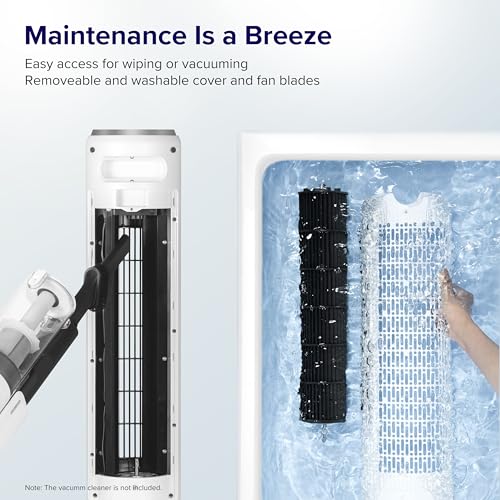
Oscillating fans can be noisy, but they don’t have to be. As I’ve seen over the years, noise is a massive complaint with many cheaper models. Look for fans that specifically advertise low noise levels (measured in decibels, or dB) – ideally below 50dB for bedroom use. Features like a sleep mode, which automatically lowers the fan speed and dims any lights, can also contribute to a more comfortable experience. Beyond just noise, think about the type of airflow. Some fans, like the LEVOIT 90° Oscillating Bladeless Tower Fan, use innovative designs to create a softer, more natural breeze, which some people find more pleasant than the direct blast of air from traditional blades.
Here’s what to consider when evaluating comfort features:
- Remote Control: A basic convenience, but incredibly useful for adjusting settings from across the room.
- Timer: Essential for setting the fan to run for a specific period.
- Multiple Modes: Normal, natural, and sleep modes provide versatility for different situations and preferences. A good “auto” mode can intelligently adjust fan speed based on room temperature.
Value, Durability, and Safety
While it’s tempting to go with the cheapest option, a slightly more expensive fan often provides better long-term value. Look for brands with a reputation for quality and durability, like Lasko or PELONIS. A sturdy base and well-constructed materials will help ensure the fan lasts for years. And don’t overlook safety features. A fused plug, tip-over protection, and a secure grill are all important considerations, especially if you have kids or pets. For a reliable and affordable option, you might want to examine the Lasko Cyclone Pedestal Fan with Remote, or check out our guide to the best overall oscillating fans for more recommendations.
A fan’s build quality is a good indicator of its lifespan. Look for a heavy base, solid construction, and a reputation for long-term reliability. Don’t skimp on safety features; a stable base and secure grill are crucial.
If you have a particularly large space to cool, you’ll want to explore options designed for wider coverage. We’ve compiled a list of the high-airflow oscillating fans to help you find the best model for your needs.
Oscillating Floor Fans Compared
Here’s a comparison of key specifications for various oscillating floor fans to help you make an informed decision.
| Product Name | Airflow (CFM) | Oscillation Angle | Max Height (in) | Noise Level (dB) | Remote Control |
|---|---|---|---|---|---|
| DREO Upgraded 90ft Airflow Pedestal Fan | 1000 | 90˚ | 42 | 20 | Yes |
| DREO 120° Oscillating Floor Fan | N/A | 120˚ | 42 | 20 | Yes |
| DREO Tower Fan with DC Motor | N/A | 90˚ | N/A | 20 | Yes |
| LEVOIT 90° Oscillating Bladeless Tower Fan | 1044 | 90˚ | N/A | 28 | N/A |
| Lasko Cyclone Pedestal Fan with Remote | N/A | N/A | 54 | N/A | Yes |
| Comfort Zone 16″ Oscillating Pedestal Fan | N/A | N/A | 47-3/8 | N/A | No |
| BLACK+DECKER 16″ Standing Oscillating Fan | N/A | 90˚ | 49 | N/A | Yes |
| PELONIS 16″ Adjustable Height Pedestal Fan | N/A | 90˚ | N/A | N/A | No |
| Amazon Basics 28″ Oscillating Tower Fan | N/A | N/A | N/A | N/A | No |
Frequently Asked Questions
What CFM do I really need in an oscillating floor fan?
A CFM of 800-1200 is generally sufficient for most bedrooms and smaller living spaces. Larger rooms, or those with high ceilings, will benefit from a fan with a CFM of 1500 or higher for noticeable airflow.
Are bladeless oscillating fans actually more effective?
Bladeless fans don’t move more air overall, but they create a less choppy, more consistent airflow that many people find more comfortable. They’re also often easier to clean and may be safer around children and pets.
What’s the difference between an AC and a DC motor in a floor fan?
DC motors are generally more energy-efficient and run significantly quieter than AC motors. While AC motors are often less expensive upfront, a DC motor fan can save you money on electricity and provide a more peaceful experience, especially when looking at quiet bedroom oscillating fans.
How important is the oscillation angle?
A wider oscillation angle (like 120 degrees) is beneficial for larger rooms, as it distributes airflow more evenly. A 90-degree oscillation is usually adequate for smaller spaces, but consider your room layout and furniture placement when making a decision.
What safety features should I look for when buying a fan?
A stable base is crucial to prevent tipping, and a secure grill around the blades is essential, especially if you have children or pets. A fused plug provides an extra layer of protection against electrical hazards, and tip-over protection will automatically shut off the fan if it’s accidentally knocked over.
The Bottom Line
Choosing an oscillating floor fan often comes down to balancing initial cost with long-term satisfaction. While plenty of affordable options exist, the DREO Upgraded 90ft Airflow Pedestal Fan strikes the best overall balance of power, quiet operation, and useful features. It delivers strong airflow without the excessive noise common in cheaper models, and the remote control adds a level of convenience that makes it a standout performer.
For readers prioritizing specific needs, we’ve identified several excellent choices. If budget is your primary concern, the Lasko Cyclone Pedestal Fan with Remote remains a solid value. Those seeking a unique, bladeless design should consider the LEVOIT 90° Oscillating Bladeless Tower Fan. And for those needing an adjustable-height oscillating fans, the DREO 120° Oscillating Floor Fan offers impressive coverage.
Ultimately, the most important factors aren’t peak CFM or the number of speed settings. Focus on a fan with a sturdy build, a reliable motor, and positive owner feedback regarding noise levels. A well-made fan that quietly and consistently moves air will provide years of comfort, far outlasting a cheaper model that breaks down after a single season.
