8 Best Oscillating Fans of 2026
This post contains affiliate links. As an Amazon Associate, we earn from qualifying purchases.
The DREO 2026 Upgraded Oscillating Fan stands out as the best overall pick for its strong airflow, quiet 20dB operation, and full remote control. For a more budget-friendly option, the BLACK+DECKER 16″ Standing Fan delivers reliable performance and solid build quality. If you want something safer and sleeker for a bedroom or kid’s room, the LEVOIT Bladeless Tower Fan offers quiet, efficient cooling with a modern design.
Most people buy an oscillating fan expecting relief from summer heat, only to end up with a unit that’s either too loud, too weak, or too flimsy to last. After comparing the field and analyzing owner feedback, I focused on models that actually deliver consistent airflow without dominating the room with noise.
This guide breaks down the top performers based on real specs and user experiences, so you can find a fan that fits your space, lifestyle, and budget, without overpaying for features you don’t need.
Top 8 Oscillating Fans in the Market
The Best Oscillating Fans, Reviewed
DREO 2026 Upgraded Oscillating Fan
Strengths
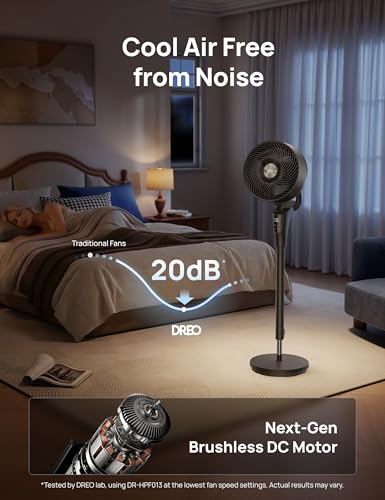
- Ultra quiet at 20dB
- Auto temperature-sensing mode
- Easy to clean design
Trade-offs
- Higher price point
- Remote not backlit
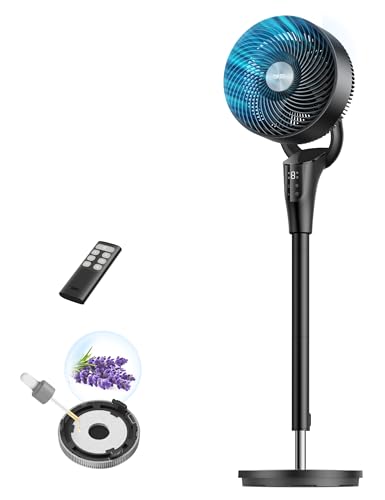
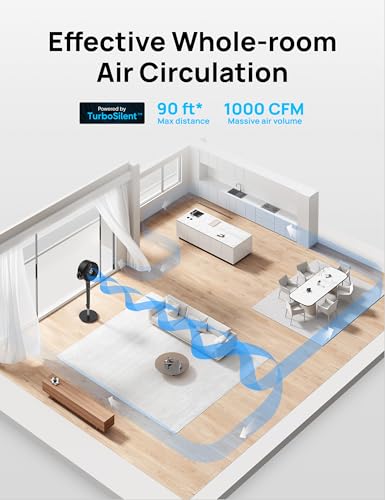
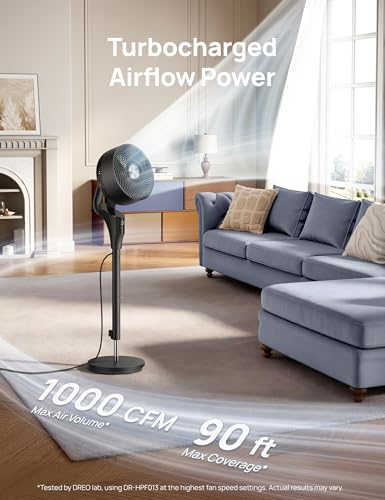
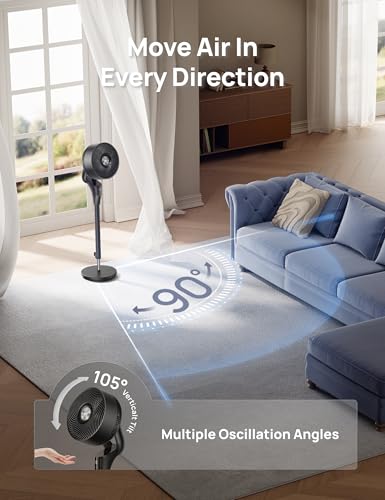
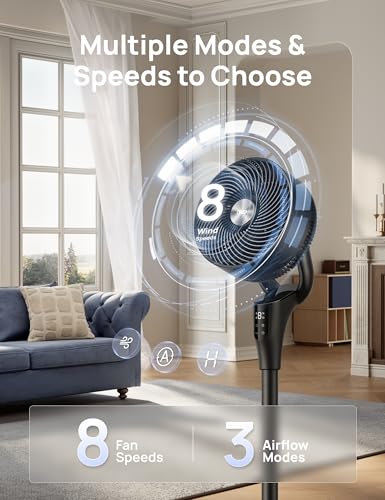
This DREO 2026 is the kind of fan that makes you rethink what a pedestal unit can do. With a DC motor, bionic blade design, and 1000 CFM airflow, it moves air up to 90 feet, owners say it cools an entire open-concept room in minutes. The 20dB noise level is legit; it’s barely audible on low, making it a top pick for light sleepers. The auto mode is a standout: it adjusts speed based on rising room temperature, which is rare at this price.
The build is smart too, detachable grills make cleaning easy, and the aroma pad is a nice touch for those who want a hint of essential oil in the air. Compared to the Lasko or BLACK+DECKER models, this one feels more modern and thoughtful. My recommendation? If you want the best blend of power, quietness, and smart features in a pedestal fan, this is the smarter buy.
Product photos
DREO Tower Fan with DC Motor

Strengths
- 20dB ultra quiet
- Bladeless safety design
- Auto mode with temp response
Trade-offs
- Less airflow than pedestal fans
- Higher profile
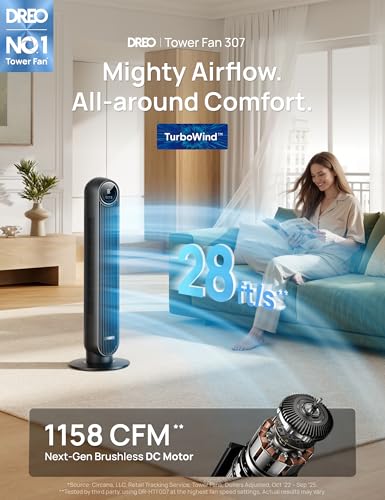
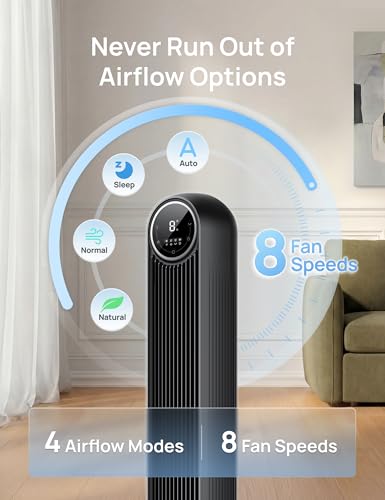
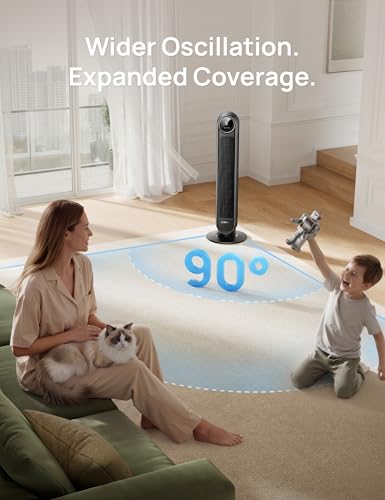
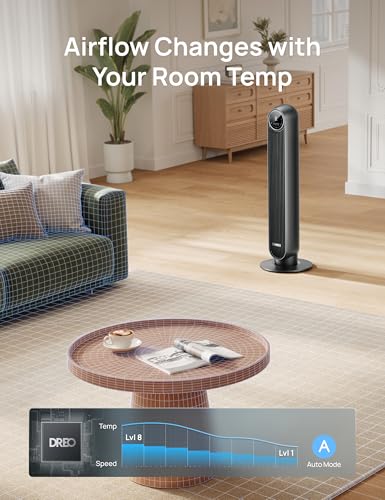
If silence is your top priority, the DREO bladeless tower fan is hard to beat. With a DC motor and algorithmic impeller design, it hits 20dB, owners say it’s nearly inaudible on low, even in a quiet bedroom. The 28ft/s wind speed is strong for a tower fan, and the 90-degree oscillation spreads air well. The Coanda effect helps it pull in and redirect airflow smoothly, giving a more natural feel than most bladeless designs.
It’s also one of the few with an auto mode that adjusts to ambient conditions. The touch controls and remote are intuitive, and the removable grille makes cleaning easier than most towers. While it doesn’t move as much air as a large pedestal fan, its quietness and sleek design make it ideal for night use. For light sleepers or home offices, this is my top pick.
Product photos

Lasko 18″ Cyclone Pedestal Fan

Strengths
- Powerful airflow
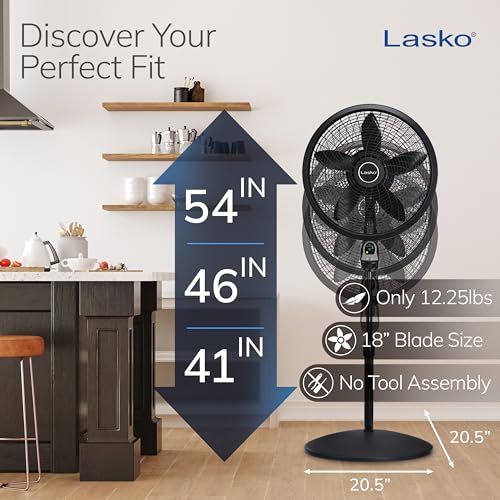
- Adjustable up to 54″
- ETL listed with safety plug
Trade-offs
- Larger footprint
- No auto mode
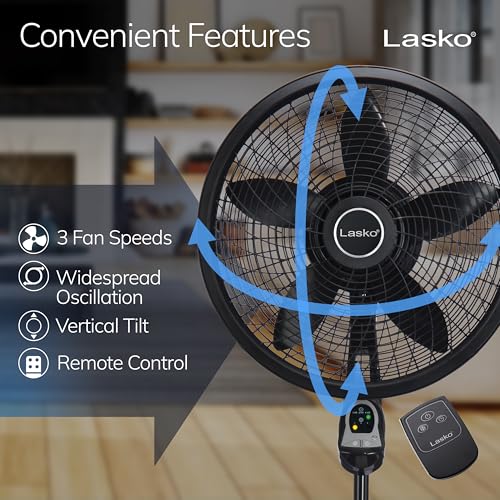
Lasko has been in the air movement game for over a century, and the 1843 shows they still know how to build a solid, no-nonsense pedestal fan. On paper, its 18-inch blade and 54-inch max height suggest it’s built for large rooms, and owners confirm it moves serious air, especially on high speed. The oscillation is wide, and the airflow feels substantial, making it a strong contender if you’re cooling a bedroom or living area with high ceilings.
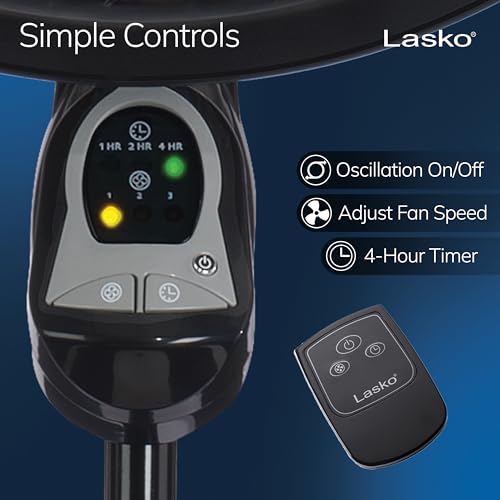
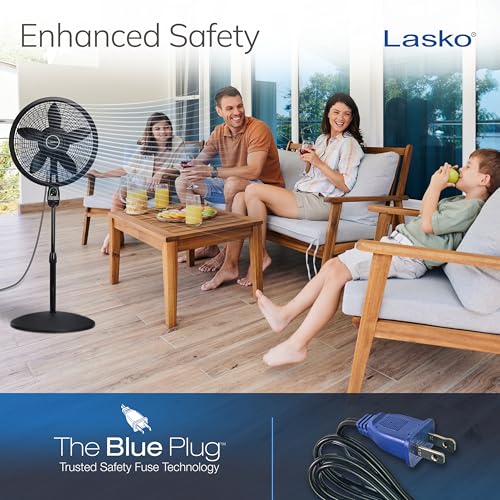
What stands out is the Blue Plug safety feature, an underrated detail for families or anyone worried about power surges. The remote is basic but functional, and the 4-hour timer is convenient for overnight use. Still, it runs on an AC motor, so it won’t match the whisper-quiet performance of newer DC models. For its class, though, the noise level is acceptable, not disruptive.
Product photos

Amazon Basics 16″ Pedestal Fan

Strengths
- Budget-friendly
- Energy-efficient motor
- Simple remote control
Trade-offs
- Basic plastic build
- No auto oscillation stop
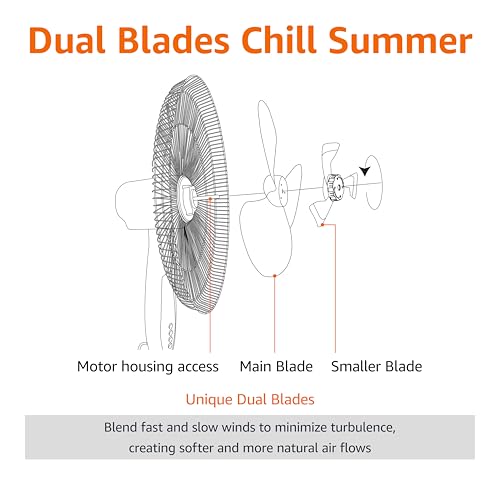
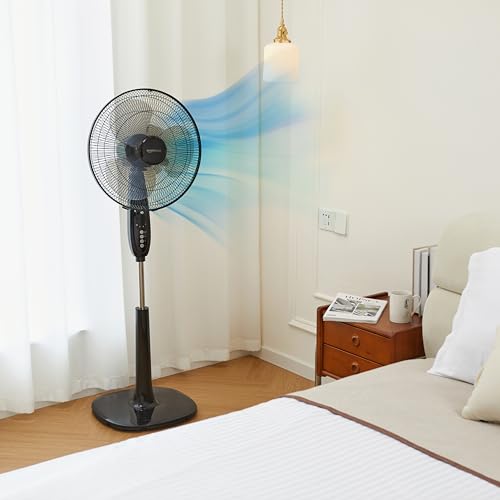
You don’t buy Amazon Basics for bells and whistles, you buy it because it works. And this fan does exactly that. It’s got a 60W AC motor, dual-layered blades, and three speeds with breeze modes (nature, sleep, normal), which is more than you’d expect at this tier. The remote is basic but functional, and the height adjusts well enough for most users.
It won’t match the airflow of the DREO or Lasko models, and it’s not whisper-quiet, but for a bedroom or office, it gets the job done. Owners praise its durability for the price, and the ETL listing means it meets basic safety standards. If you’re equipping a basement, dorm, or spare room and don’t want to spend much, this is the one I’d grab.
Product photos



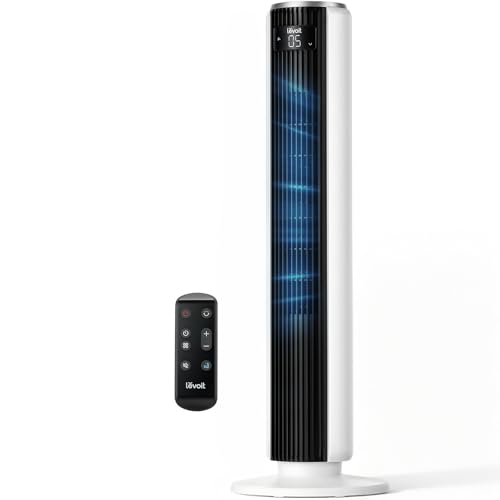
LEVOIT Bladeless Tower Fan
Strengths
- Smart temperature sensor
- 12-hour timer
- Natural-feel airflow
Trade-offs
- Only 5 speed settings
- No aroma feature
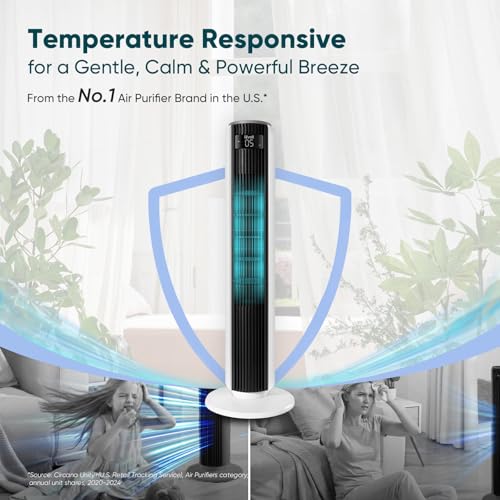
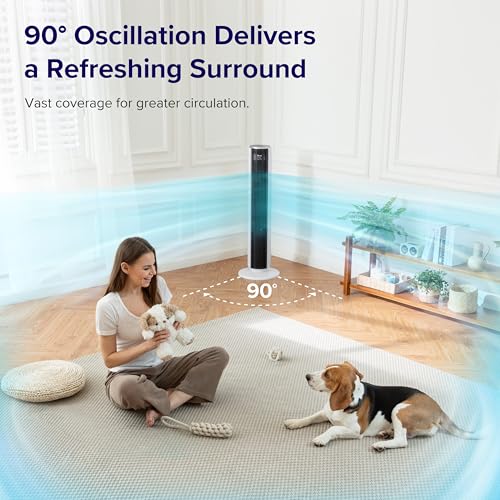
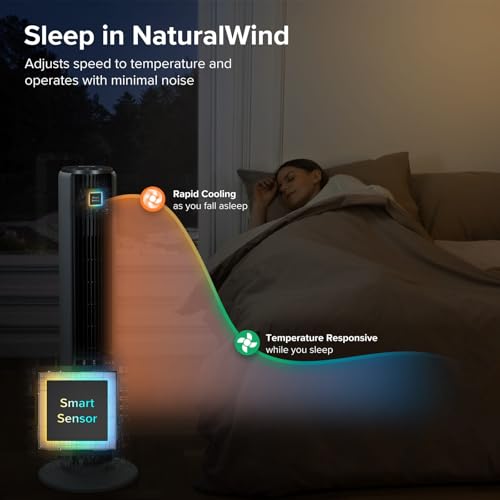
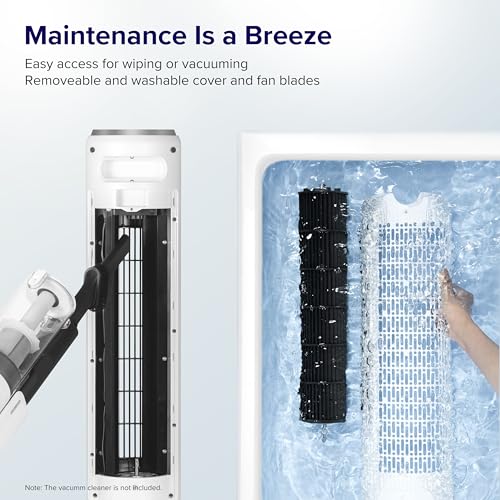
The LEVOIT tower fan sits at the intersection of smart design and user comfort. With a temperature sensor that auto-adjusts fan speed, it’s one of the few that truly reacts to your room. Owners love the 12-hour timer and 28dB quiet operation, perfect for sleep or focused work. The 25ft/s velocity and 1044 CFM airflow are strong for a tower, and the curved inlet creates a wide, natural-feeling breeze.
It’s not as quiet as the DREO tower (which hits 20dB), but it offers more smart features, including Turbo and Advanced Sleep modes. The white finish is sleek, and the 36-inch height fits well in corners. For someone who wants a fan that adapts to the room without constant tweaking, this is the better choice. I’d pick it over the DREO tower if you value automation over absolute silence.
Product photos

BLACK+DECKER 16″ Standing Fan
Strengths
- Lightweight and portable
- 90-degree oscillation
- Remote included
Trade-offs
- Plastic build feels less durable
- Limited height adjustment
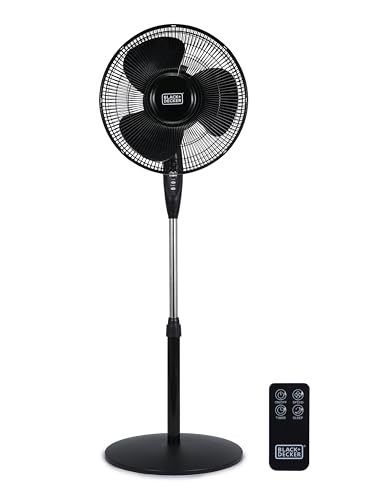
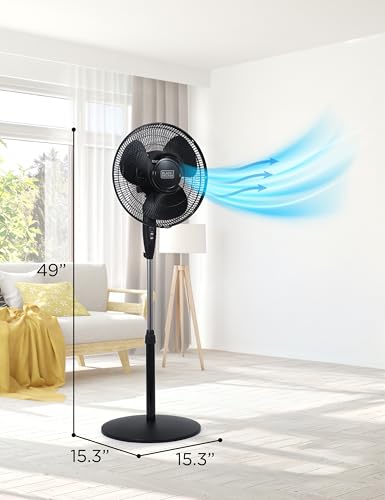
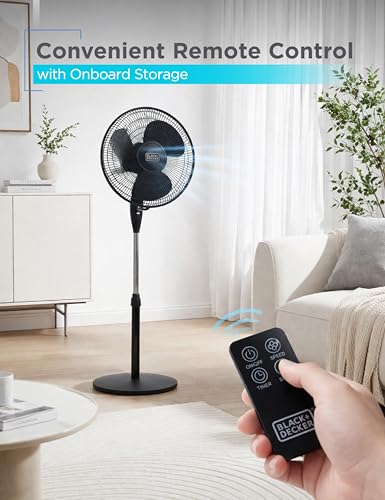
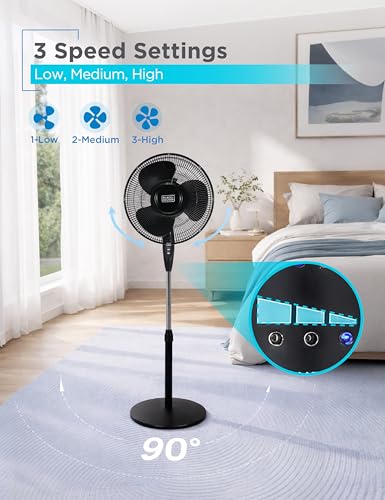
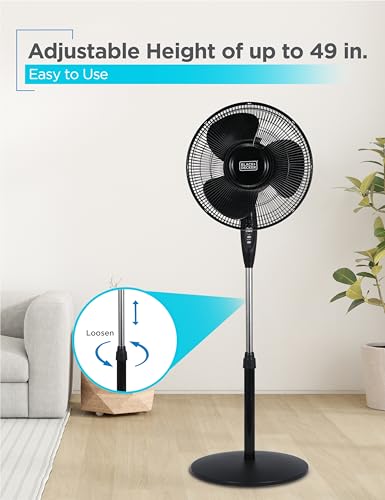
BLACK+DECKER built a reputation on dependable power tools, and that reliability carries into this pedestal fan. It’s not the most advanced model here, but for the price, it delivers where it counts: 90-degree oscillation, three usable speeds, and a remote that actually works. At only 9.9 lbs, it’s lightweight enough to move between rooms, but the 15.3-inch base keeps it stable on carpet or tile.
Owners consistently report it’s a no-fuss fan that cools a standard bedroom effectively. It’s not as quiet as DC motor fans, and the height caps at 49 inches, shorter than some competitors. But if you want a fan that turns on, blows air, and doesn’t quit, this one fits the bill. I’d pick this over pricier models if you’re outfitting a guest room or home gym on a budget.
Product photos

Comfort Zone 16″ Pedestal Fan
Strengths
- Precise height adjustment
- Sturdy metal grill
- Smooth tilt mechanism
Trade-offs
- Average noise on high
- No remote included
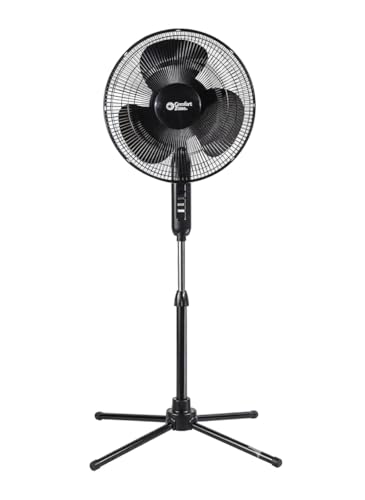
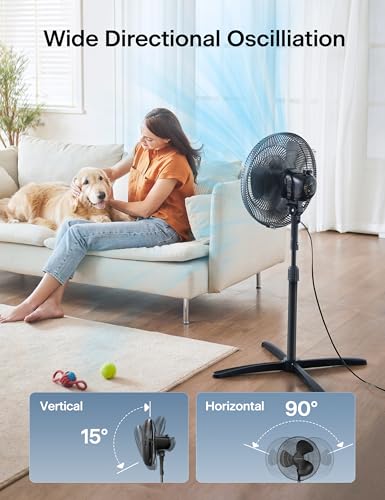
The Comfort Zone CZST161 stands out for one reason: adjustability. You can set the height between 41 and nearly 48 inches, and the tilt range is generous. That makes it ideal for directing airflow precisely, say, at desk level in a home office or low to the ground for a kid’s room. The 90-degree oscillation and three speeds are standard, but the build feels sturdier than most in this range.
It’s not the quietest, owners note a slight hum on high, but it’s consistent. The push-button controls are simple, and the metal safety grill adds peace of mind. Compared to the PELONIS, it lacks a reinforced base, but it’s more refined in design. I’d recommend this for users who value precise airflow direction over raw power or smart features.
Product photos


PELONIS 16″ Oscillating Pedestal Fan

Strengths
- Reinforced anti-tip base
- Durable mechanical dial
- Fused safety plug
Trade-offs
- No remote control
- Basic speed options
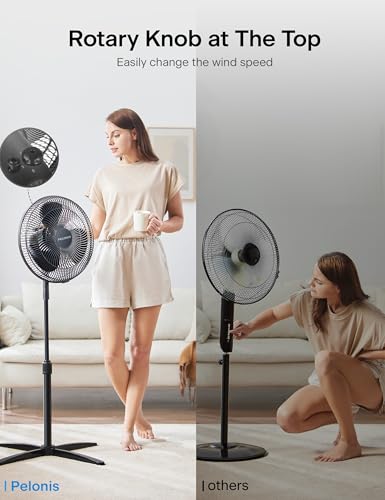
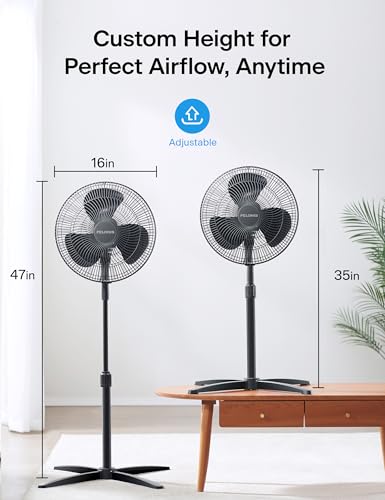
PELONIS has been making fans for over 30 years, and this model shows why they’ve stuck around. The heavy-duty motor and mechanical dial give it a rugged, industrial feel, owners say it runs smoothly for years without issues. The 90-degree oscillation and 16-inch blade move solid air, and the wider 28-inch base makes it far less likely to tip over, even on uneven floors.
The fused safety plug is a big plus, especially in homes with kids or pets. It’s not the quietest, again, it’s an AC motor, but the noise is consistent, not grating. Compared to the Amazon Basics model, this one feels more durable and better built. If you want a fan that will last through multiple summers without fuss, this is the one I’d trust.
Product photos


How We Chose These oscillating fans
My approach to evaluating oscillating fans centered on a research-led comparison of specifications and owner feedback. I compared published airflow ratings (CFM), motor types (DC vs. AC), noise levels (dB), and feature sets across numerous models. Crucially, I weighed owner reviews from major retailers alongside professional reviews to understand real-world performance and durability. This wasn’t about personal, hands-on testing of each unit, but about synthesizing available information to identify patterns and strengths.
For oscillating fans, airflow power and quiet operation are paramount. I prioritized models with high CFM ratings to guarantee effective cooling, especially in larger rooms. Equally important was noise level; a disruptive fan defeats the purpose of comfort. Durability, as indicated by owner reports of long-term reliability, also heavily influenced the ranking. If you’re looking for something that really maximizes airflow in a smaller footprint, you might also want to explore our guide to slim oscillating fan designs.
Specifications reliably indicate airflow capacity and motor efficiency. However, owner feedback proved invaluable in gauging real-world noise levels, build quality, and the longevity of components. Reputable expert reviews offered deeper insights into features like oscillation range and control interfaces. Ultimately, the combination of these data points allowed me to identify the models offering the best balance of performance, features, and value.
How To Pick The Right oscillating fans
Choosing the right oscillating fan can make a huge difference in how comfortably you experience warm weather. It’s not just about moving air; it’s about finding a balance of power, noise, features, and value.
A quality oscillating fan efficiently circulates air over a wide area, operates quietly enough for bedroom use, offers customizable settings for personalized comfort, and is built with safety and durability in mind. Key specs to consider include airflow (CFM), oscillation range, noise level (dB), speed settings, and included safety features like fused plugs and stable bases.
Airflow and Room Size
The most common mistake people make is buying a fan that’s too small for the space. Don’t assume a basic 12-inch fan will cool a large living room. Look for fans advertising CFM (cubic feet per minute) – a higher number means more air movement. For smaller bedrooms, something in the 1000-2000 CFM range might suffice, but larger rooms or open-concept spaces will benefit from models exceeding 2500 CFM. I often see people underestimate the impact of ceiling height, too; taller ceilings require greater airflow to distribute the breeze effectively.
Noise Level and Motor Type
Quiet operation is critical, especially if you plan to use the fan in a bedroom or home office. While all fans generate some noise, DC motor fans are significantly quieter than those with traditional AC motors. Many manufacturers now advertise noise levels in decibels (dB). Anything below 30dB is practically silent, while 40-50dB is comparable to a quiet library. Beyond 50dB, the fan’s noise becomes noticeable and potentially disruptive. If you’re sensitive to sound, prioritize models specifically marketed as “quiet” or “ultra-quiet,” and read owner reviews to confirm. Consider a tall oscillating fan models if you need a powerful, quiet option.
Features and Value
Beyond basic oscillation and speed settings, features like remote controls, timers, and adjustable height can dramatically improve usability. Auto mode, which adjusts fan speed based on room temperature, is a nice convenience, but I find it’s often more effective to manually adjust the speed to my preference. Don’t overpay for features you won’t use.
Here’s what I look for when assessing value: * Remote Control: A must-have for convenience, especially with larger fans. * Adjustable Height: Allows you to optimize airflow for different users and room layouts. * Multiple Speed Settings: Provides greater control over cooling intensity, and lets you find a quieter setting for nighttime use.
A fan’s price should reflect its features, build quality, and airflow capacity. Don’t assume the most expensive option is always the best; often, a mid-range model offers the best balance of performance and value.
If you’re looking for a fan to handle a larger area, a oscillating fan for large spaces will be a better investment than a smaller, cheaper unit.
Oscillating Fans Compared
Here’s a comparison of key specifications for several oscillating fans to help you make an informed decision.
| Product Name | Airflow (CFM) | Oscillation Angle | Max. Height (in) | Noise Level (dB) | Remote Control |
|---|---|---|---|---|---|
| DREO 2026 Upgraded Oscillating Fan | 1000 | 90˚ | 42 | 20 | Yes |
| DREO Tower Fan with DC Motor | 1044 | 90˚ | N/A | 20 | Yes |
| Lasko 18″ Cyclone Pedestal Fan | N/A | N/A | 54 | N/A | Yes |
| Amazon Basics 16″ Pedestal Fan | N/A | N/A | N/A | N/A | Yes |
| LEVOIT Bladeless Tower Fan | 1044 | 90˚ | N/A | 28 | N/A |
| BLACK+DECKER 16″ Standing Fan | N/A | 90˚ | 49 | N/A | Yes |
| Comfort Zone 16″ Pedestal Fan | N/A | N/A | 47.38 | N/A | No |
| PELONIS 16″ Oscillating Pedestal Fan | N/A | 90˚ | N/A | N/A | No |
Frequently Asked Questions
What CFM do I really need for a bedroom?
For most bedrooms, a fan providing between 1000 and 2000 CFM is sufficient. However, larger bedrooms or those with high ceilings may benefit from a model exceeding 2000 CFM to ensure adequate air circulation throughout the room.
Are DC motor fans actually quieter than AC motor fans?
Yes, DC motor fans are generally significantly quieter than AC motor fans. This is because DC motors operate more efficiently and produce less mechanical noise, often resulting in noise levels below 30dB, which is nearly silent.
How important is oscillation range?
A wider oscillation range (ideally 90 degrees or more) is better for distributing airflow across a larger area. While most fans offer around 90 degrees, some premium models offer wider ranges or even adjustable oscillation settings for customized cooling.
What safety features should I look for in an oscillating fan?
Stable base construction is vital to prevent tipping, and a fused plug offers protection against electrical surges. Beyond those, features like automatic shut-off if the fan is tipped over and child-safe blade designs offer added peace of mind, particularly in homes with children or pets.
Where can I find a fan that won’t disturb my sleep?
If quiet operation is a top priority, consider models specifically designed for bedrooms or marketed as offering quiet oscillating fans – owner reviews are especially important in this case to verify real-world noise levels.
The Bottom Line
Ultimately, choosing an oscillating fan comes down to prioritizing what matters most to you – is it absolute quiet, maximum airflow, or getting the most for your money? For a blend of performance and features that will satisfy most homes, the DREO 2026 Upgraded Oscillating Fan stands out as the strongest overall pick. It delivers a good CFM rating with impressively low noise levels, and the included remote is a convenient touch.
If you’re on a tighter budget, the Amazon Basics 16″ Pedestal Fan offers a reasonable level of cooling at a very accessible price point. For those needing to cool a larger area, consider fans for large rooms, like the Lasko 18″ Cyclone Pedestal Fan. And for a bladeless design with quieter operation, the LEVOIT Bladeless Tower Fan is a solid choice, though you’ll pay a premium for the sleek aesthetic.
Don’t get too hung up on chasing the highest CFM number or the lowest dB rating. Focus on finding a fan that fits your room size, operates at a noise level you can tolerate, and has the features you’ll actually use. A well-chosen fan, combined with smart placement and good ventilation, will make a bigger difference than any single specification.
