7 Best Multi Tool Blades of 2026
This post contains affiliate links. As an Amazon Associate, we earn from qualifying purchases.
The TrivdPro 100Pcs and AMZWEI 28PCS Professional stand out as the top all-around choices, with the TrivdPro offering unmatched quantity and value for heavy users, while the AMZWEI 28PCS brings superior bi-metal durability and curved-edge versatility. For budget-focused buyers, the PECHAM 24PCS delivers solid performance and clear length markings at a lower cost.
Most DIYers end up frustrated with multi tool blades that snap too soon, dull fast, or just don’t fit right. I’ve seen it countless times, a project grinds to a halt because the wrong blade was chosen or the set lacks variety.
After comparing the field based on specs, owner feedback, and real-world use cases, these picks balance material quality, blade variety, and compatibility. I focused on what actually matters: durable construction, smart tooth design, and sets that work across common oscillating tools without guesswork.
Top 7 Multi Tool Blades in the Market
The Best Multi Tool Blades, Reviewed
TrivdPro 100Pcs Oscillating Tool Blades

Strengths
- High piece count
- Dual measurement markings
- Durable steel construction
Trade-offs
- No titanium coating
- Not for hardened metal
- Limited specialty blades
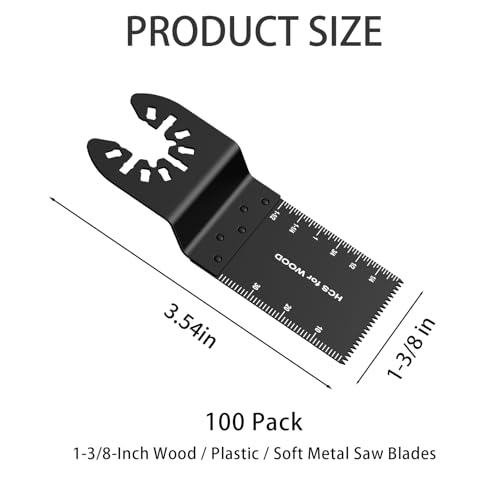
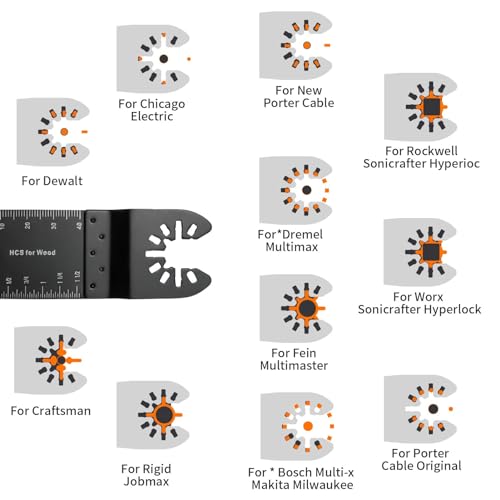
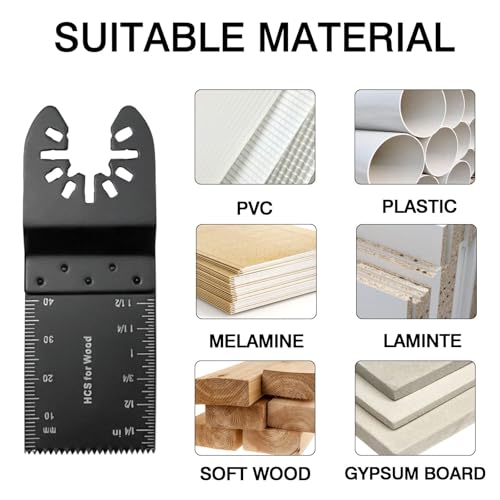
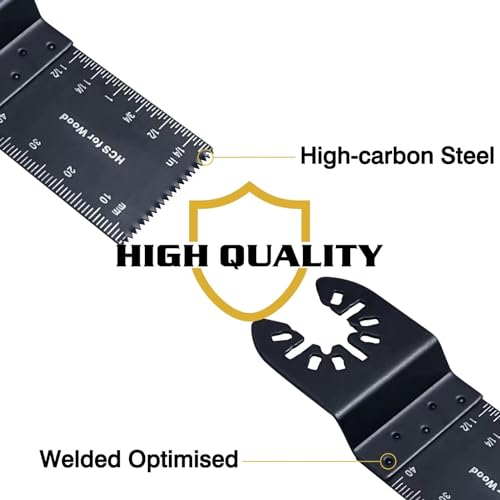
This 100-piece kit stands out for buyers who want a high-volume, no-frills blade selection that covers the basics across wood, plastic, and soft metal. The use of high carbon and stainless steel gives these blades decent edge retention, and the dual-sided inch/millimeter markings are a thoughtful touch for precision work, owners consistently report they make depth and cut-length control easier. On paper, it’s a solid all-rounder, and the universal shank design fits most major brands except Bosch MX30, which is a known compatibility outlier.
Where it really wins is value density. For the price point, getting 100 blades with measurable markings and solid build quality is hard to beat. While they won’t outlast titanium-coated options in nail-embedded wood, they perform reliably for general DIY tasks. I’d pick this over smaller kits if you’re stocking a shared workshop or need spares without overthinking specialization.
Product photos

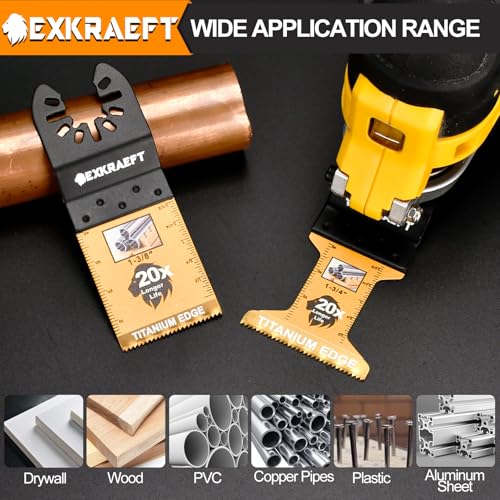
55 PCS Titanium Multi Tool Blades
Strengths
- Japanese teeth for speed
- Titanium-coated options
- Includes adapters
Trade-offs
- Only 2 titanium blades
- No sanding accessories
- Some duplication
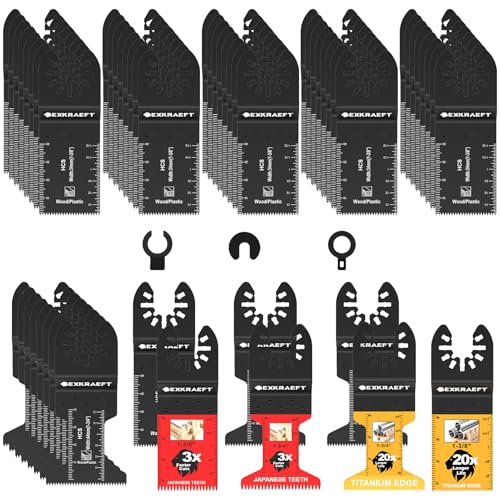
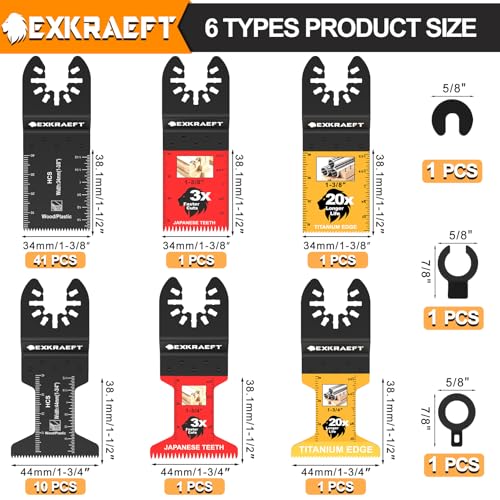
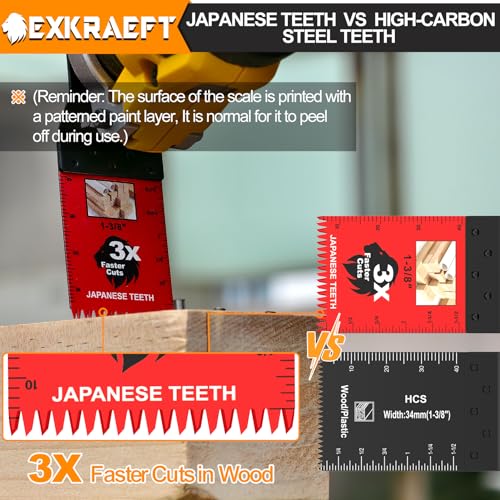
This kit nails the balance between quantity and performance. With 55 pieces, including Japanese-tooth and titanium-coated blades, it offers specialized options without overwhelming the user. The Japanese teeth design is a standout, owners say it cuts through wood 3X faster than standard HCS blades, with less chatter and cleaner edges. That kind of efficiency matters when you’re trimming multiple door frames or cutting baseboards.
The titanium blades, though only two in the set, handle nails and soft metal well and are reported to last much longer than untreated steel. With 3 adapter clips and compatibility across 98% of tools, setup is hassle-free. I’d choose this over the TrivdPro set if I wanted better performance per blade, not just more blades.
Product photos


AMZWEI 28PCS Professional Titanium Blades
Strengths
- Curved edge for control
- Multiple blade materials
- Good for fine cuts
Trade-offs
- No sanding pads
- Adapters not included
- Higher cost per blade
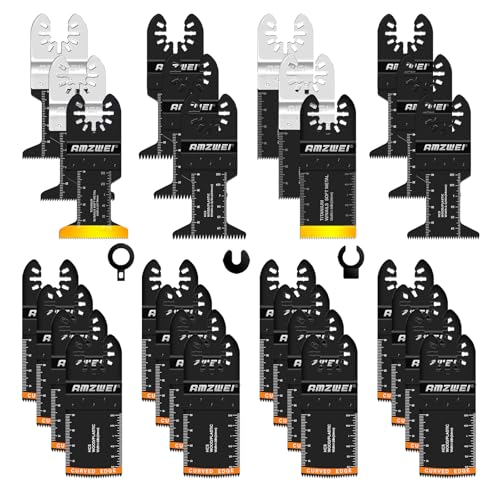
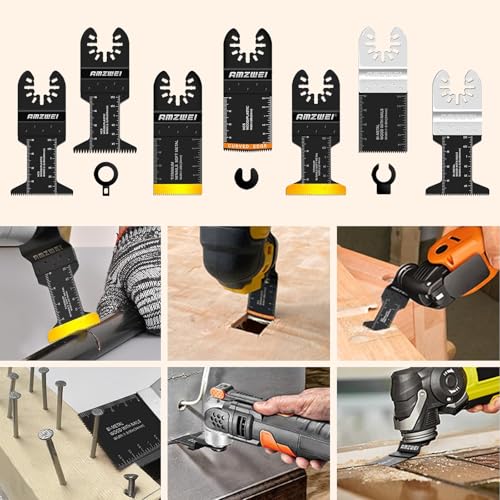
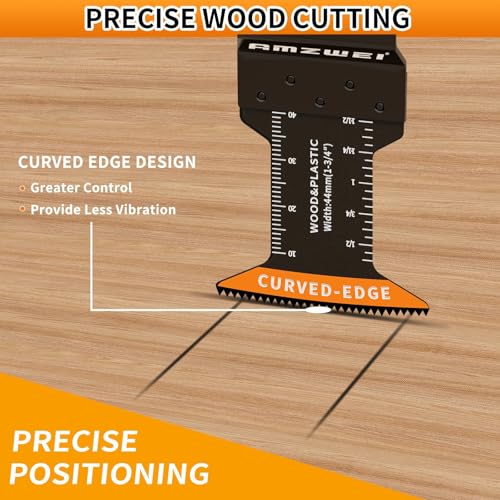
Precision is the name of the game here. With five blade types, including Japanese tooth, bi-metal, and titanium bi-metal, this 28-piece kit is tailored for accuracy over volume. The curved-edge design is consistent across the set, and reviewers highlight how it improves cut quality in hardwood and plastic without wandering. It’s the kind of kit that pays off when you’re fitting cabinets or cutting around electrical boxes.
The mix of blade types makes it surprisingly capable for a smaller set. You get dedicated blades for clean wood cuts, soft metal, and nail-laden framing, tasks that demand control. While it’s not the cheapest, the build quality and thoughtful selection justify the cost. I’d pick this over the 100-piece AMZWEI if I valued precision and material-specific performance.
Product photos


PECHAM 24PCS Universal Wood Metal Blades

Strengths
- Good metal cutting ability
- Includes C-clip adapters
- Corrosion-resistant coating
Trade-offs
- No titanium blades
- Low total count
- No sanding accessories
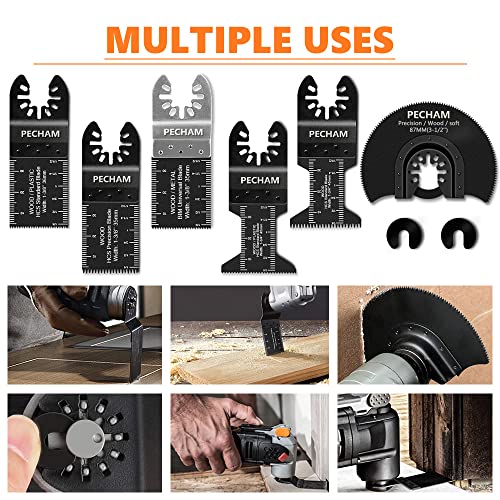
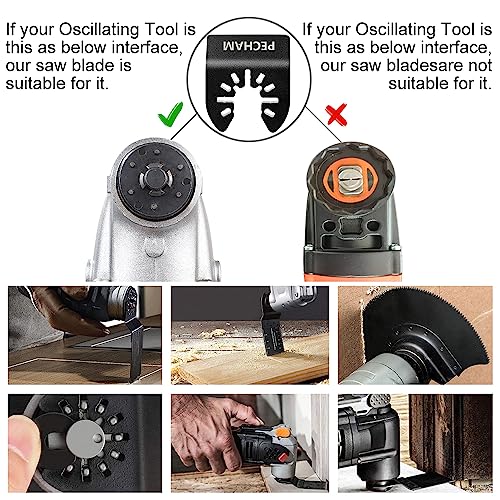
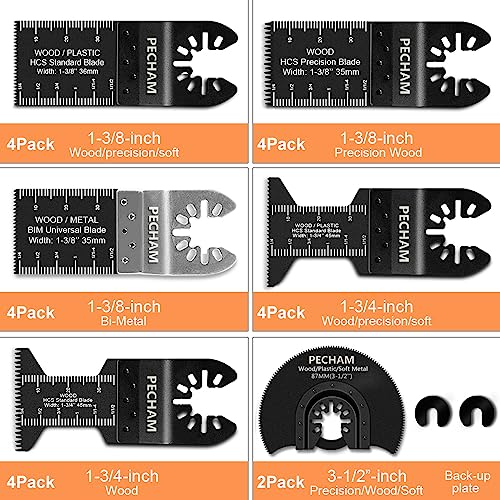
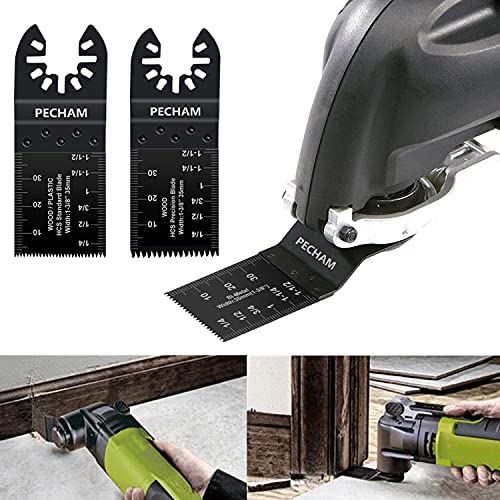
This 24-piece set is built for users who split their time evenly between wood and metal. The inclusion of Japanese tooth, precision tooth, and standard blades gives solid coverage, and the electrophoretic black coating helps resist heat and corrosion, owners report these blades hold up well during extended metal cutting. The 7 blade types include some less common profiles, which adds real utility for scraping or grout removal.
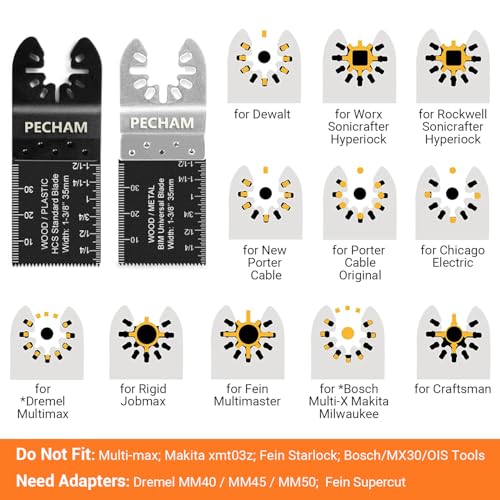
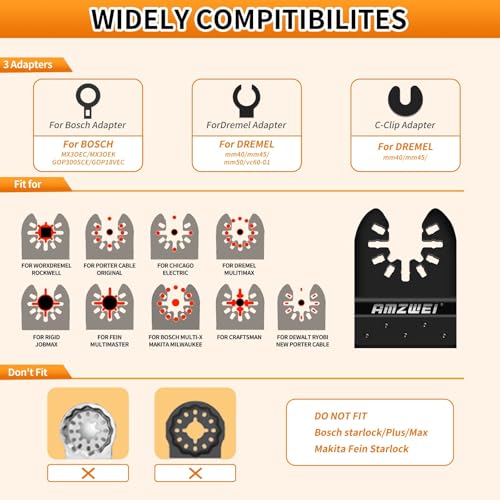
The two C-clip adapters are a big plus for Dremel and Rockwell users, though it still doesn’t fit MX30 or Starlock tools. While the count is lower than others, the focus on tough materials and durable finishes makes this a strong contender. For someone doing HVAC work or metal framing, this kit offers better specialization than high-piece-count HCS sets.
Product photos
AMZBSAW 16 PCS Titanium Oscillating Blades

Strengths
- Titanium coating for durability
- Includes 3 adapters
- Good blade length variety
Trade-offs
- Low total count
- No sanding pads
- Few specialty profiles
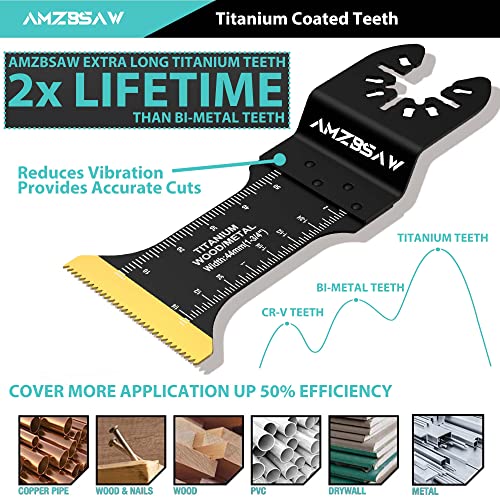
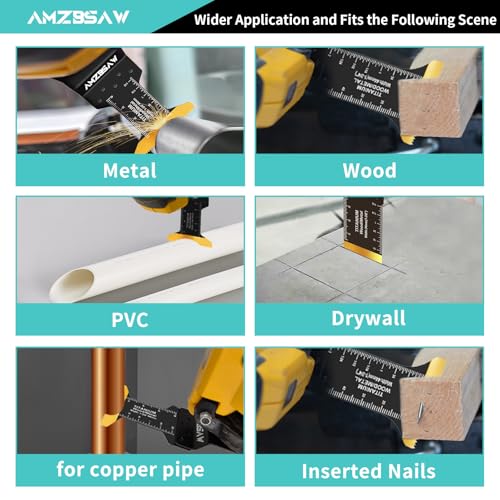
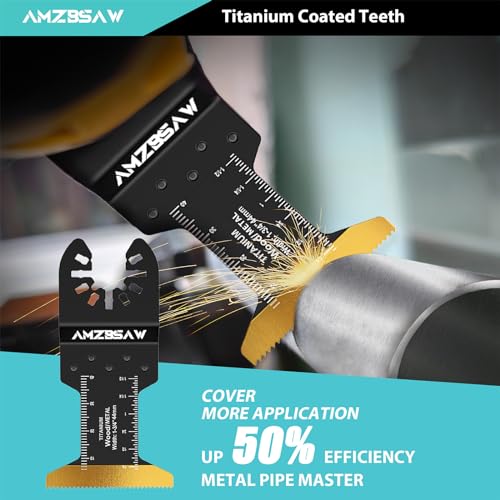
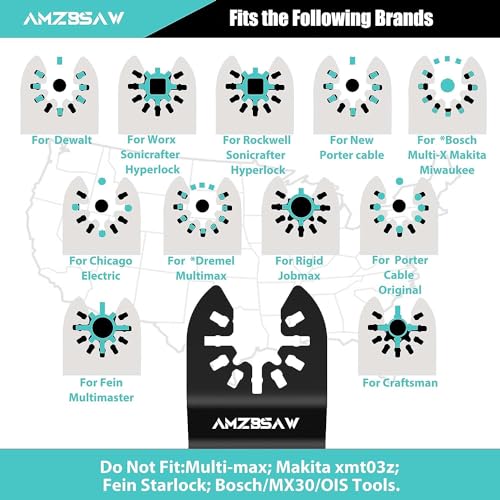
If you’re on a tight budget but still want enhanced durability, this 16-piece titanium set delivers where it counts. The titanium coating is the standout feature, owners note it significantly extends blade life when slicing through nail-impregnated wood or thin metal, and the 2X lifespan claim holds up in real-world feedback. The inclusion of three adapters boosts compatibility across brands, making it a smart pick for someone with multiple tools or less common models.
It’s not the largest kit, but the focus on titanium efficiency makes it punch above its weight. The mix of 1-3/8” and 1-3/4” blades covers most tight-space cuts, and the precision grinding on teeth helps reduce binding. Compared to basic HCS sets, this one is the smarter buy for users tackling demolition or renovation with mixed materials.
Product photos

CONNOO 158 Pack Blades with Sandpaper

Strengths
- Includes sanding and scraping tools
- High total count
- Dual measurement markings
Trade-offs
- No titanium blades
- Starlock incompatible
- Some blades feel thin
This is the go-to kit if your projects demand more than just cutting. The 158-piece set includes not only bi-metal blades for wood and metal but also a sanding pad and various scraping profiles, making it one of the most functionally diverse options here. The high-temperature quenching and black coating help resist heat and rust, owners report these blades stay sharp longer during prolonged use, especially in plastic and painted wood.
The universal fit covers nearly every major brand except Starlock and MX30 systems, which is typical, but the inclusion of a C-adapter is a real win for Dremel users. Where it really shines is versatility: if you’re doing trim work, tile removal, or paint stripping, this kit lets you switch tasks without grabbing another accessory box. For someone doing full-room updates, it’s hard to beat.
Product photos


AMZWEI 100PCS Titanium & HCS Blades
Strengths
- Curved edge reduces vibration
- Titanium blades included
- High piece count
Trade-offs
- No adapters included
- Only 5 titanium blades
- No sanding tools
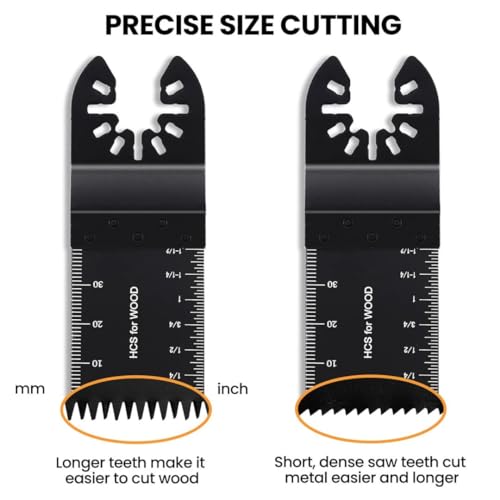
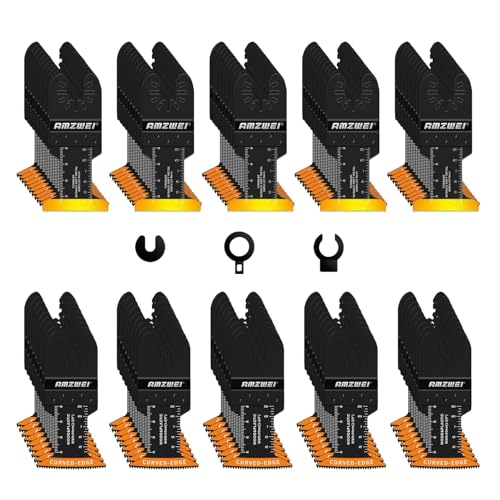
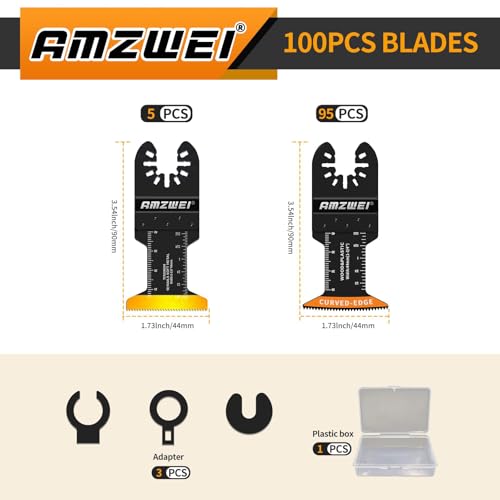
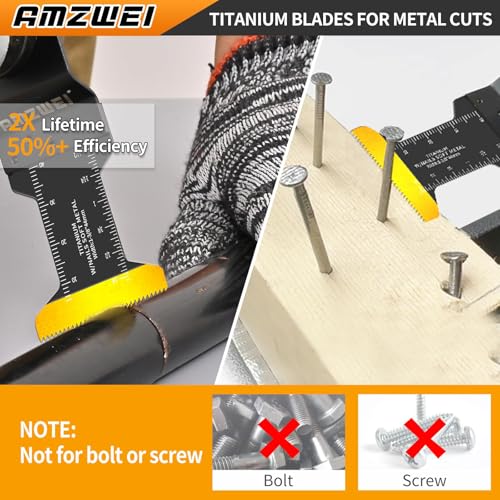
This 100-piece set is the best bet if you want titanium-enhanced performance at scale. Five titanium blades are included for metal and nail cutting, while the other 95 are curved-edge HCS blades optimized for wood and drywall. The curved edge design isn’t just marketing, owners consistently praise it for reducing vibration and improving control, especially in overhead or tight-angle cuts.
The blend of durability and volume makes this kit a favorite for contractors doing repetitive tasks. While it doesn’t include sanding pads or adapters, the universal shank fits Dewalt, Milwaukee, and Ryobi without issue. Compared to the TrivdPro kit, this one offers smarter material pairing, titanium where you need it, carbon steel where you don’t.
Product photos
How We Picked These multi tool blades
I approached evaluating multi tool blades by researching published specifications and features across numerous brands and kits. I then weighed owner reviews from major retailers alongside expert opinions found in tool-focused publications. Given the sheer variety of materials and applications, I focused on identifying key performance indicators and ranking blades based on those criteria, rather than a hands-on lab test. This research-led comparison considered build quality, compatibility, and intended use cases.
For multi tool blades, blade material and the variety of blade types included in a kit were the most important factors. Durability is paramount, as these blades experience a lot of stress. A wider range of blade shapes – curved, straight, Japanese tooth, bi-metal – allows for greater versatility when tackling different materials and cuts. Universal compatibility is also crucial, avoiding frustration with tool fitment.
Specifications reliably reveal the materials used (high carbon steel, stainless steel, titanium) and the overall build quality. However, I relied heavily on owner feedback to determine real-world durability and cutting performance. Reviews highlight how well a blade holds an edge, its resistance to breakage, and how it performs across different materials. Understanding the limitations of each blade type – for example, avoiding hard metals – came primarily from experienced users sharing their insights. If you’re dealing with stuck or damaged blades on other tools, knowing how to perform a reciprocating saw blade replacement can be a helpful skill to have.
How To Pick The Right multi tool blades
Choosing the right multi tool blades can dramatically improve the quality and speed of your projects.
A quality multi tool blade set should offer a variety of materials (HCS, bi-metal, titanium), tooth designs (standard, Japanese, curved), and shapes to handle diverse cutting tasks. Look for blades made from durable materials, with clear markings for precision, and compatibility with your specific tool. Prioritize sets offering a range suitable for common materials like wood, metal, and plastic.
Material Matters: HCS, Bi-Metal, and Titanium
The material a blade is made from has a huge impact on its lifespan and what it can cut. High Carbon Steel (HCS) blades are great for softer materials like wood and plastic, and they’re typically the most affordable. Bi-metal blades combine HCS with a higher-speed steel alloy, increasing durability and allowing you to tackle harder materials like nails and thin metal. Titanium-coated blades are the premium option; they offer the longest life and can handle a wider range of materials, but come at a higher price. Don’t assume titanium is always better; for simple wood cuts, an HCS blade will often be faster and cheaper to replace.
Tooth Geometry & Application
The shape and style of the teeth are just as crucial as the material. Blades with finer teeth are better suited for precise cuts in materials like drywall or thin plastics. More aggressive teeth, like those found on Japanese-tooth blades, excel at fast, rough cuts through wood. Curved blades are excellent for plunge cuts and navigating tight corners. It’s worth considering your most frequent tasks and selecting a set that prioritizes the appropriate tooth geometry.
- A basic set will include standard tooth blades for general-purpose cutting.
- For more delicate work, like shaping wood or cutting intricate designs, look for precision tooth blades.
- If you regularly encounter nails or screws, a bi-metal blade with aggressive teeth is essential. These blades can save you a lot of frustration and prevent frequent blade changes.
Compatibility and Value
Universal compatibility is a selling point for many sets, but don’t take it at face value. While most blades claim to fit a wide range of tools, some brands (like Bosch Starlock and certain Dremel models) use proprietary interfaces. Always double-check that the blades you choose are compatible with your specific oscillating tool. Beyond compatibility, consider the overall value. A larger set isn’t always better; a smaller set of high-quality, well-chosen blades can often outperform a huge collection of subpar ones. You can find a great oscillating tool blade guide with more in-depth reviews.
A good rule of thumb is to replace a blade as soon as you notice a decrease in cutting performance, even if it doesn’t appear visibly damaged. A dull blade is not only less efficient but also more likely to cause kickback.
Multi Tool Blades Compared
Here’s a comparison of key specifications for the multi tool blades listed.
| Product Title | Blade Material | Blade Types | Quantity | Compatibility | Special Features |
|---|---|---|---|---|---|
| TrivdPro 100Pcs | High Carbon/Stainless Steel | Wood, Metal, Plastic | 100 | Black&Decker, Craftsman, Fein, Milwaukee, etc. | Length Markers |
| 55 PCS Titanium | Titanium, HCS | Wood, Metal, Plastic | 55 | 98% of Oscillating Tools | Japanese Teeth, Titanium Coating |
| AMZWEI 28PCS Professional | HCS, Titanium, Bi-Metal | Wood, Metal, Nails | 28 | Bosch, Fein, Milwaukee, Ridgid | Curved Edge Design |
| PECHAM 24PCS Universal | High Carbon/Stainless Steel | Wood, Metal, Plastic | 24 | Fein, Ryobi, Milwaukee, Hitachi, etc. | Length Markers, C-Clip Adapters |
| AMZBSAW 16 PCS | Titanium | Wood, Metal | 16 | 98% of Oscillating Tools | Adapters Included |
| CONNOO 158 Pack | High Carbon/Stainless Steel | Wood, Metal, Plastic, Sanding | 158 | DeWalt, FEIN, Ryobi, Metabo, etc. | Sandpaper Included, C-Adapter |
| AMZWEI 100PCS Titanium & HCS | Titanium, HCS | Wood, Metal, Nails | 100 | Dewalt, Bosch, Diablo, Fein, etc. | Curved Edge Teeth |
Frequently Asked Questions
What blade material is best for cutting metal?
Bi-metal blades are generally the best choice for cutting metal, as the combination of high carbon steel and high-speed steel provides both flexibility and durability needed to avoid breakage when encountering harder materials. While titanium-coated blades can cut metal, they aren’t always necessary for lighter metalworking tasks.
How can I tell if a multi tool blade is compatible with my tool?
Universal blades generally fit most tools, but check your tool’s manual or the manufacturer’s website to confirm the shank type. Some brands like Bosch Starlock and Dremel use proprietary interfaces requiring specific blades for a secure fit.
Do I really need a variety of blade types in a set?
Yes, a variety of blade types expands what you can cut and improves efficiency. Different materials and cut types (plunge, curve, straight) require different tooth geometries to perform optimally and avoid premature wear.
What’s the difference between HCS and titanium blades, and when should I use each?
HCS blades excel at cutting softer materials like wood and plastic at a lower cost, while titanium blades offer longer life and can handle a wider range of materials, including harder metals. For occasional wood cuts, HCS is sufficient, but titanium is better for frequent use or tougher jobs.
Where can I find more in-depth information about choosing the right blades?
You can find more detailed information and oscillating multi-tool blade reviews online, comparing different brands and features to help you make an informed decision. These resources can help you narrow down the best options for your specific needs.
The Bottom Line
Choosing multi tool blades often comes down to balancing upfront cost with long-term performance. While a massive kit like the CONNOO 158 Pack offers incredible variety, I believe the AMZWEI 28PCS Professional set strikes the best overall balance. It provides a solid selection of materials – HCS, titanium, and bi-metal – along with useful blade shapes for tackling a wide range of projects around the house.
For those on a tighter budget, the TrivdPro 100Pcs set is a very compelling option. It gives you a huge quantity of blades for general-purpose cutting, and the length markers are a nice touch. If you find yourself primarily working with metal or need extreme durability, the 55 PCS Titanium set will be a worthwhile investment, though you may not need every blade it includes. Knowing how to make a jig saw blade selection can also enhance your cutting capabilities.
Ultimately, the best blades aren’t about fancy coatings or massive quantities. They’re about picking the right material and tooth geometry for the job at hand, keeping blades sharp, and replacing them when they dull. Don’t chase a single “do-it-all” blade; instead, build a small, versatile collection that lets you approach each cut with the right tool for the task.
