
7 Best Metal Cutting Saws of 2026
This post contains affiliate links. As an Amazon Associate, we earn from qualifying purchases.
The Evolution S210CCS stands out as the best overall metal cutting saw for most users, delivering strong performance and clean cuts with its TCT blade. For budget-conscious buyers, the Evolution S185CCSL offers solid value and portability without sacrificing too much power. And if you need versatility for different angles and materials, the Evolution S14MCS is a smart pick with mitering capabilities.
Cutting metal isn’t like cutting wood. The heat, the sparks, the noise, it demands the right tool built for the job. Use the wrong saw and you’ll waste time, ruin blades, or worse, risk safety. After comparing the field and weighing specs against real-world feedback from DIYers and pros, these picks rise to the top based on power, blade quality, and features that actually matter. This guide breaks down what to look for and why these models stand out.
Top 7 Metal Cutting Saws in the Market
The Best Metal Cutting Saws, Reviewed
Evolution S15CPS 15″ Metal Cutting Chop Saw

Strengths
- Exceptional blade life
- Precision shadow line guide
- Soft start and e-brake
- Compatible with 15″ blades
Trade-offs
- Heavy and less portable
- Higher upfront cost
- Not ideal for DIYers
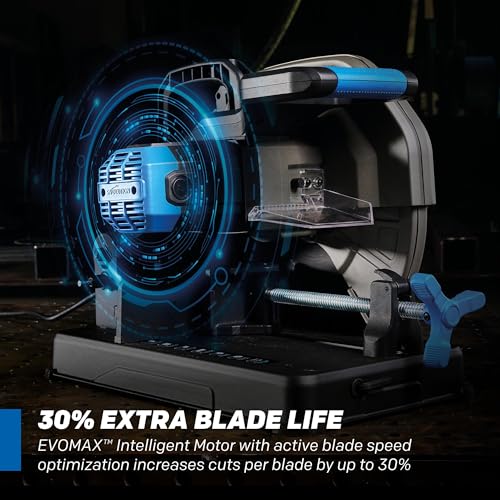
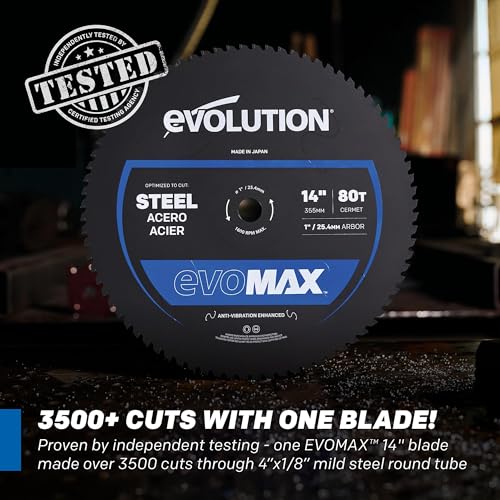
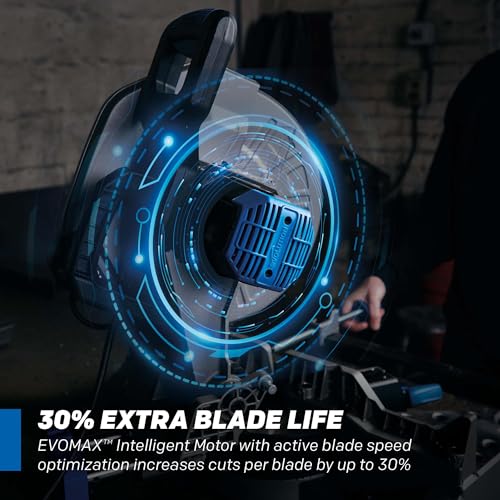
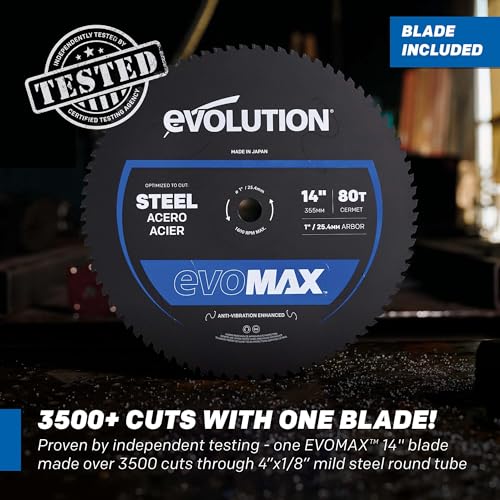
This is where Evolution flexes its engineering muscle. The S15CPS isn’t just another chop saw, it’s a precision industrial tool built for shops that demand consistency and longevity. The EVOMAX Intelligent Motor doesn’t just deliver power, it manages startup load to reduce stress on the blade and motor, which owners say translates to noticeably longer blade life and fewer tripped breakers. When paired with the 14-inch EVOMAX blade, it’s capable of over 3,500 clean cuts in mild steel, a number that outpaces most competitors.
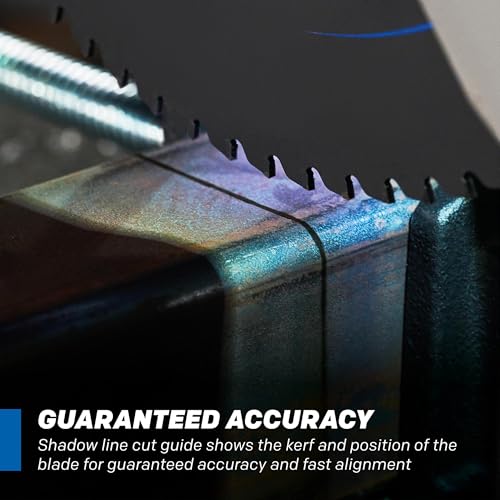
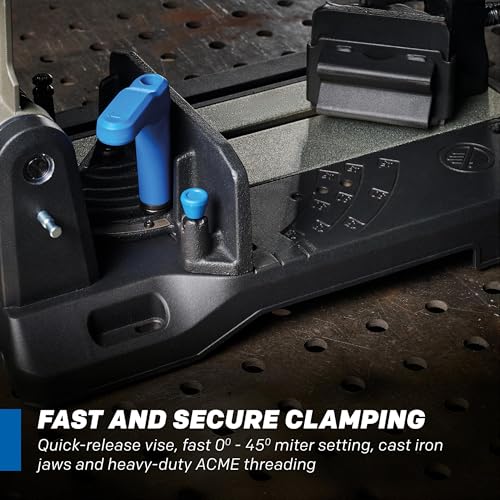
The shadow line guide is a standout for accuracy, and the cast iron fence adds real rigidity. The e-brake stops the blade fast, and the soft start makes this saw feel more refined than anything else in its class. While it’s not cheap, the build quality and performance justify it as the best overall choice for professionals who cut metal daily.
Product photos

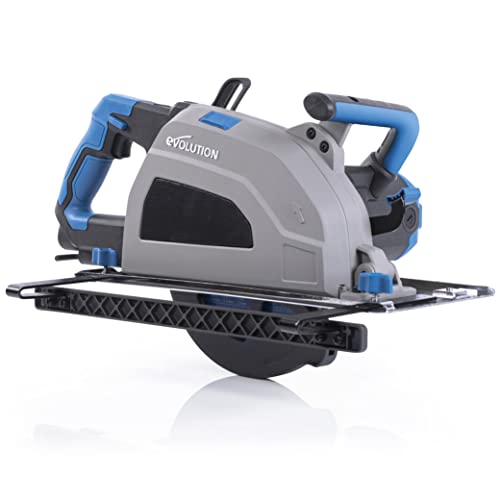
Evolution S210CCS 8-1/4″ Metal Cutting Circular Saw
Strengths
- Cuts thick steel with ease
- Large chip collector
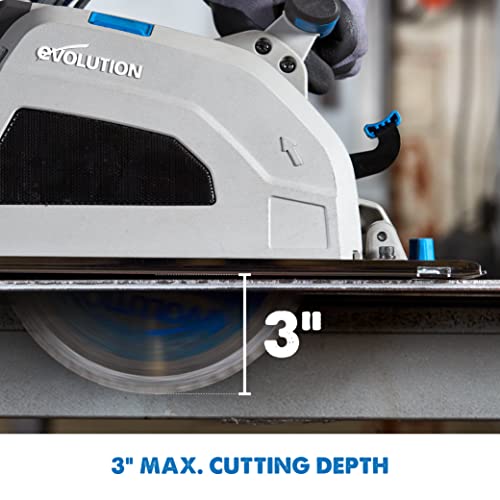
- Adjustable 3″ depth
- High-torque motor
Trade-offs
- Heavy and bulky
- Higher noise level
- Requires strong support
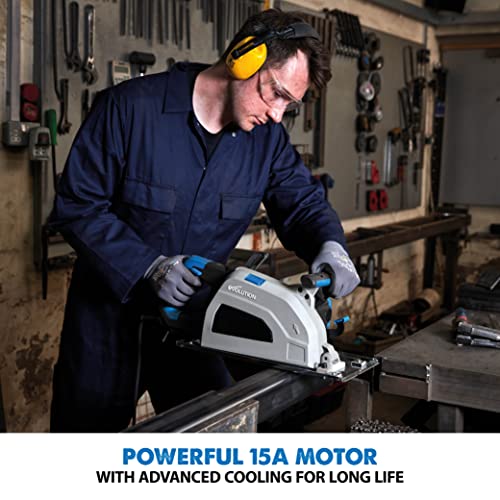
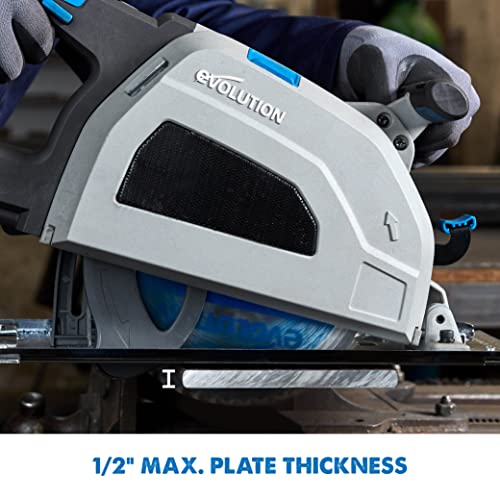
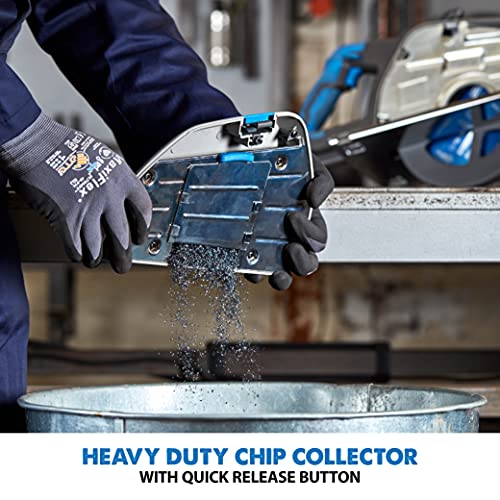
The Evolution S210CCS is built like a tank for a reason, it’s the best choice for heavy-duty cutting in industrial environments. With an 8-1/4-inch TCT blade and a high-torque motor, it powers through 1/2-inch steel plate without hesitation, something few circular saws can claim. The 3-inch adjustable depth is a major advantage for plunge cuts in thick material, and the chip collector actually works, holding significantly more debris than standard guards and reducing cleanup time.
Owners love the LED cutline light and parallel guide, which make long, straight cuts far more accurate. It’s heavier than other models, but that weight adds stability. When compared to the S185CCSL, this is the next step up, more power, more depth, more durability. If you’re cutting thick steel all day, this is the saw that won’t quit.
Product photos

Evolution S14MCS 14″ Mitering Chop Saw
Strengths
- Wide miter range with detents
- Superior blade life
- Shadow line guide
- Reinforced base for stability
Trade-offs
- Smaller capacity than 15″ models
- Premium price
- Not for thick plate work
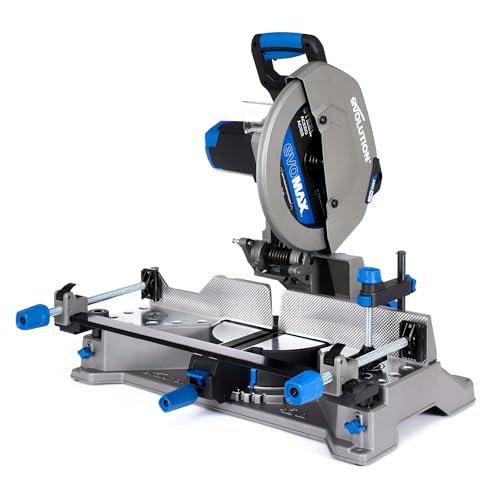
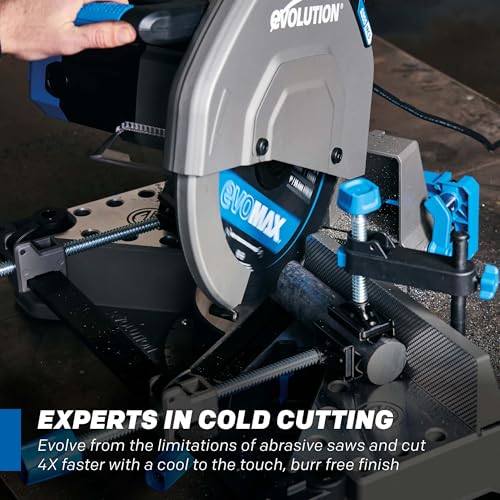
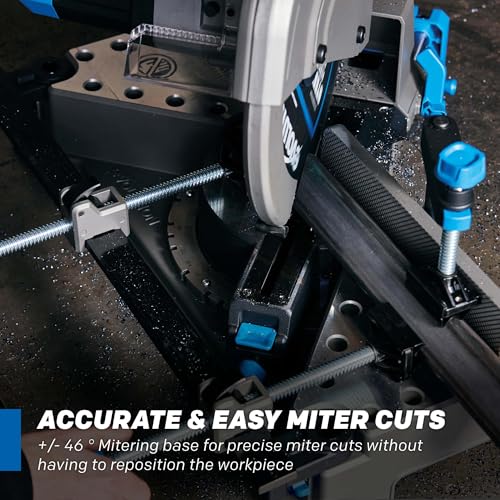
If your work involves precision miter cuts in metal, this Evolution S14MCS should be at the top of your list. It’s built for fabricators who need repeatability and clean, weld-ready edges, no grinding, no heat distortion. The +/-46° miter range with detents gives you more flexibility than most chop saws, and the stainless-steel gauge system ensures angles stay consistent over hundreds of cuts.
The EVOMAX motor and Japanese-made cermet carbide blade are the real stars. Owners report over 3500 cuts in 4-inch mild steel, and the soft start with electronic brake makes this saw both durable and safe. Compared to the S15CPS, it’s slightly smaller but more specialized, this is the tool you pick when accuracy and mitering matter more than sheer size.
Product photos

Evolution S185CCSL 7.25″ Metal Cutting Circular Saw
Strengths
- Extremely lightweight
- Clean, burr-free cuts
- Good bevel range
- Clear cutline visibility
Trade-offs
- Limited depth for thick stock
- Not for heavy plate
- Blade wear on harder alloys
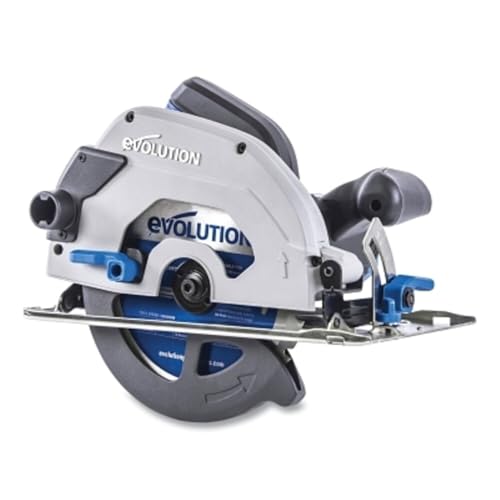
If you’re tired of lugging around bulky chop saws for occasional metal cuts, the Evolution S185CCSL is a breath of fresh air. At just 11.4 lbs, it’s one of the lightest corded circular saws built specifically for metal, and that makes a huge difference when you’re cutting overhead or making repetitive cuts on framing or roofing. The 15A motor spins the 40-tooth TCT blade fast enough to slice through mild steel cleanly, and owners consistently report cuts that are cool to the touch and ready for welding, no grinding needed.
The bevel range goes up to 45° with paddle levers that are easy to adjust mid-job, and the airflow management system actually works, dust and chips are directed away from the line of sight. It’s not for thick plate work, but for thin to medium gauge steel, this is the kind of tool that stays in your rack because it’s fast, reliable, and gets the job done without drama.
Product photos
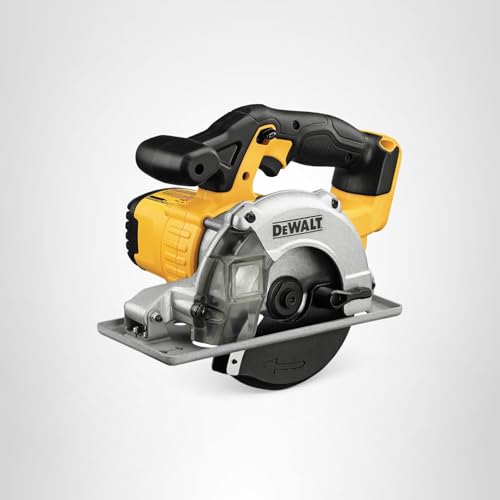
DEWALT DCS373B 20V Cordless Metal Cutting Saw
Strengths
- True cordless portability
- Bright LED with delay
- Compact and balanced
- Good for tight spaces
Trade-offs
- Limited runtime on thick cuts
- Shallow cutting depth
- Battery sold separately
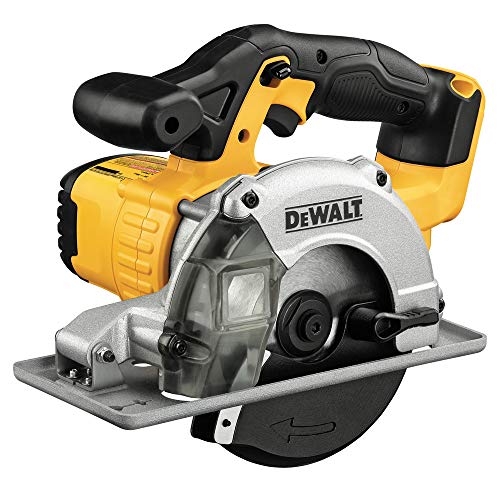
The DEWALT DCS373B is the go-to when power lines aren’t an option and mobility is key. Running on 20V Max, this cordless circular saw packs a 3700 RPM motor and a 5-1/2-inch carbide-tipped blade that cuts through conduit, studs, and thin steel with surprising speed. The LED light with 20-second delay is a small feature that makes a big difference, especially in dim garages or unfinished spaces where visibility matters.
It’s not as aggressive as corded models, and battery runtime can be a constraint on high-volume jobs, but for service techs, electricians, or remodelers who need to make a few quick cuts on the fly, this saw is a winner. Compared to the Evolution corded models, it trades raw power for freedom of movement, but holds its own in real-world use.
Product photos
VEVOR 14″ 2800W Dry Cut Chop Saw

Strengths
- High power motor
- Dry-cut blade reduces sparks
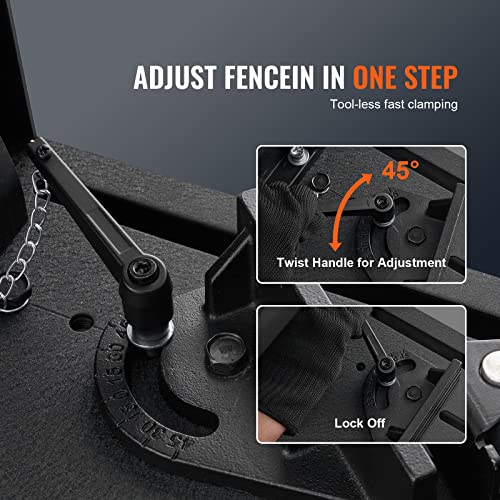
- Tool-free angle adjustment
Trade-offs
- Noticeable vibration
- Limited precision features
- Not for stainless steel
This VEVOR 14-inch chop saw is built like a budget workhorse, and for shops that need heavy-duty cutting without the premium price tag, it delivers. On paper, the 2800W motor and 1200 RPM speed suggest serious power, and owners confirm it handles rebar, angle iron, and aluminum with minimal bogging. The dry-cut ceramic alloy blade is a standout, it runs cooler than standard abrasive wheels and leaves a smoother finish, which means less grinding prep down the line.
Where it stumbles is in refinement. While the adjustable fence goes to 45° without tools, the overall build quality feels industrial but not precise. Some users report vibration at startup, and the lack of a shadow line guide or digital angle readout means you’re relying more on skill than system accuracy. Still, for job sites where brute force matters more than finesse, this is a solid pick.
Product photos


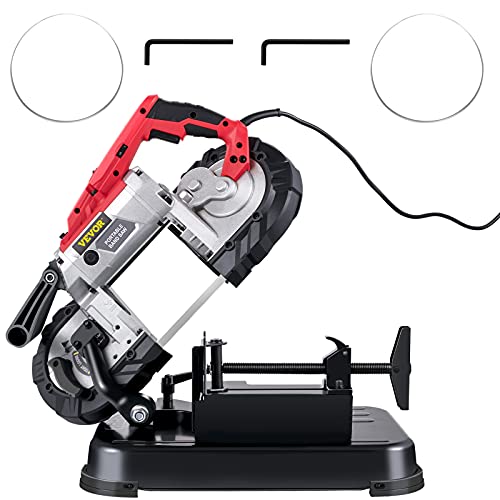
VEVOR 5″ Portable Band Saw
Strengths
- Excellent deep-cut capacity
- Variable speed control
- Removable base for flexibility
- Cuts both metal and wood
Trade-offs
- Freehand accuracy varies
- Vibration during prolonged use
- Blade alignment can drift
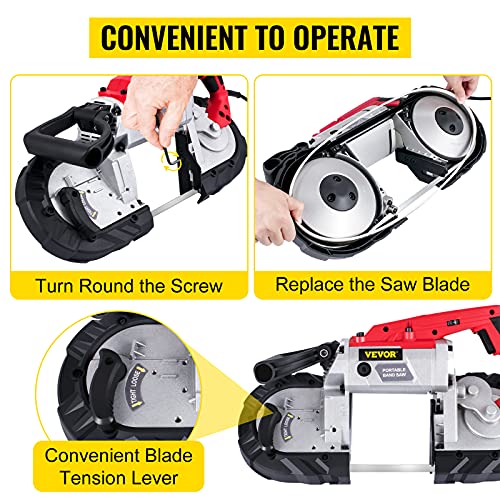
When you need to cut inside a pipe, under a beam, or in a spot where a chop saw won’t fit, the VEVOR portable band saw earns its place. With a 5-inch capacity for round stock and variable speed control, it’s designed for freehand and deep cuts that other saws simply can’t reach. The 10A motor delivers solid torque, and owners say it handles steel pipe and angle iron without stalling, especially when you let the blade do the work at optimal speed.
The removable base adds versatility, it can switch from handheld to bench-mounted mode for more controlled angled cuts up to 45°. That said, freehand cutting metal takes practice, and accuracy depends heavily on user skill. It’s not a replacement for a chop saw, but as a complementary tool for odd angles and confined spaces, it’s hard to beat at this price.
Product photos


How We Chose These metal cutting saws
Rather than a hands-on lab test, my research for these recommendations focused on a detailed comparison of published specifications and features across numerous models. I weighed owner reviews from major retailers alongside professional assessments from trusted tool review sites. As someone who’s spent years advising on workshop setups, I applied my understanding of metalworking needs and prioritized saws based on real-world usability and durability.
For metal cutting saws, blade quality and motor power were the biggest differentiators. A good blade delivers clean, accurate cuts without excessive heat or burrs, which is critical for fabrication and welding. Motor power dictates how quickly and efficiently a saw can handle thicker materials, and ultimately impacts long-term reliability. Beyond that, safety features like blade brakes and effective chip collection systems played a significant role in my rankings.
Specifications reliably indicate a saw’s maximum cutting capacity and motor output. However, I relied heavily on owner feedback to gauge real-world performance, particularly regarding blade life, ease of use, and the presence of any design flaws. Reputation, as indicated by consistently positive reviews from experienced metalworkers, was also a strong deciding factor; you can learn a lot about a saw’s long-term viability by seeing what professionals say. If you’re considering using a miter saw for metal, it’s helpful to understand its limitations and appropriate applications.
Choosing The Right metal cutting saws
Choosing the right metal cutting saw depends heavily on the type of projects you tackle and the volume of work.
A quality metal cutting saw prioritizes precision, minimal material waste, and operator safety. Key features include blade material (carbide-tipped or abrasive), motor power suited to the material thickness, effective chip/spark management, and safety mechanisms like blade brakes. Look for saws with adjustable settings for bevel and miter cuts to increase versatility, and consider portability if jobsite work is common.
Blade Type & Material
The blade is where the magic happens, and the choices are surprisingly varied. Many affordable saws use abrasive blades, but these wear quickly and generate a lot of heat. For more demanding work, or if you value cut quality, look for saws using TCT (Tungsten Carbide Tipped) blades. These hold an edge much longer, create cleaner cuts, and produce less heat, which is particularly important when you’re dealing with materials that warp easily. The Evolution S15CPS, for example, highlights its EVOMAX blade designed for extended life. Don’t assume all TCT blades are created equal – the quality of the carbide and the blade’s geometry significantly impact performance.
Power & Cutting Capacity
More power isn’t always better, but it’s crucial to match the saw’s motor to the thickness and type of metal you’ll be cutting. A lightweight saw like the Evolution S185CCSL is great for thinner sheet metal and occasional use, but a thicker steel plate will require a more robust motor, such as the one found in the Evolution S210CCS. Consider both the amperage (for corded saws) and the voltage (for cordless) as indicators of power. Also factor in the maximum cutting depth and diameter – a saw with a limited cutting capacity won’t be useful if you regularly work with large stock.
Features & Usability
Beyond the core cutting ability, consider features that improve safety, precision, and convenience. An integrated LED light, like on the Evolution S210CCS, is a small detail that makes a big difference in visibility. A blade brake, found on many models, rapidly stops the blade after you release the trigger, enhancing safety. If you’re frequently making angled cuts, a miter saw with adjustable angles is essential; if you’re working with aluminum, be sure to review aluminum cutting saw tips before starting. Here’s what to prioritize:
- A good chip collection system (essential for cleanup).
- Adjustable bevel and depth settings (for versatility).
- Ergonomic handles and a balanced design (for comfort and control, especially during extended use).
A good rule of thumb: if you’re primarily cutting steel thicker than 1/4 inch, prioritize a chop saw or a bandsaw over a circular saw.
If you’re looking for a versatile option for a variety of metal cutting tasks, consider exploring different types of metal-cutting circular saws.
Metal Cutting Saws Compared
Here’s a comparison of key specifications for various metal cutting saws to help you make an informed decision.
| Product Name | Blade Size | Power Source | Max Cut Capacity (Steel) | Key Features | Weight (lbs) |
|---|---|---|---|---|---|
| Evolution S15CPS | 15″ | Corded | N/A | EVOMAX Blade, E-Brake | N/A |
| Evolution S210CCS | 8-1/4″ | Corded | 1/2″ | TCT Blade, Chip Collector | N/A |
| Evolution S14MCS | 14″ | Corded | N/A | Mitering, EVOMAX Blade | N/A |
| Evolution S185CCSL | 7.25″ | Corded | N/A | Lightweight, TCT Blade | 11.4 |
| DEWALT DCS373B | 5-1/2″ | Cordless | N/A | 20V, LED Light | N/A |
| VEVOR 14″ | 14″ | Corded | N/A | Dry Cut, 0-45° Miter | N/A |
| VEVOR 5″ | 5″ | Corded | 4.7″x4.7″ | Portable, Deep Cut | N/A |
Frequently Asked Questions
What’s the difference between an abrasive blade and a TCT blade?
Abrasive blades are cheaper but wear out quickly, while TCT (Tungsten Carbide Tipped) blades last much longer and produce cleaner cuts. TCT blades are the better choice for frequent use and materials where precision is vital.
How important is a blade brake for safety?
A blade brake is a very important safety feature, as it quickly stops the blade’s rotation when you release the trigger. This minimizes the chance of accidental contact and reduces potential injury.
What power source is best for a metal cutting saw?
Corded saws generally offer more consistent power for demanding cuts, but cordless models provide portability. The best choice depends on your needs; if you primarily work in a shop with access to power, corded is fine, but for jobsite work, cordless is more convenient.
What should I look for in a saw’s cutting capacity specifications?
Cutting capacity refers to the maximum thickness and diameter of material the saw can handle. Ensure the saw’s capacity matches the size of the metal stock you’ll be working with most often; a larger capacity offers flexibility.
Are metal cutting saws limited to just cutting metal, or can they handle other materials?
While designed for metal, some saws can cut other materials like plastic or wood with the appropriate blade. However, using a metal-cutting blade on wood will quickly dull the blade, so it’s best to use the correct blade type for each material or consider a separate saw for wood, such as metal-cutting band saws.
The Bottom Line
Choosing a metal cutting saw often comes down to balancing control and convenience. You can spend more for a saw with features like a blade brake and precise angle adjustments, or opt for a simpler, more affordable model that gets the job done for lighter tasks. Ultimately, the Evolution S15CPS strikes the best overall balance of power, blade technology, and safety features, making it our top pick for most metalworkers.
For those on a tighter budget, the Evolution S185CCSL delivers surprisingly good performance in a lightweight package. If portability is paramount, or you frequently work with thinner materials, that’s an excellent choice. And if you need a saw specifically for angled cuts, the Evolution S14MCS is a solid option, though understanding cutting steel with miter saw limitations is important.
Don’t get too hung up on horsepower numbers or fancy features. A sharp blade, a stable base, and a focus on safety will always deliver better results than the most expensive saw with a dull blade and a shaky hand. Prioritize those fundamentals, and you’ll be well-equipped to tackle any metal cutting project.
