
7 Best Metal Cutting Blades for Reciprocating Saws 2026
This post contains affiliate links. As an Amazon Associate, we earn from qualifying purchases.
The EZARC Carbide R678HM stands out as the best overall metal cutting blade for reciprocating saws, offering exceptional durability and clean cuts on thick steel. For those on a budget, the TOLESA 6 Inch bi-metal blade delivers solid performance without breaking the bank. If you need extra reach, the TOLESA 9 Inch blade is the most versatile pick for longer cuts.
Cutting metal with the wrong blade leads to frustration, excessive heat, rough edges, and snapped blades mid-job. Most people don’t realize how much blade material and tooth count affect performance across different metals.
This guide cuts through the noise by focusing on real-world specs and user feedback. I looked at TPI, blade material, thickness, and shank compatibility to match each product to its ideal use case. These picks reflect what actually works in the field, not just what sounds good on paper.
Top 7 Metal Cutting Blade For Reciprocating Saws in the Market
The Best Metal Cutting Blade For Reciprocating Saws, Reviewed
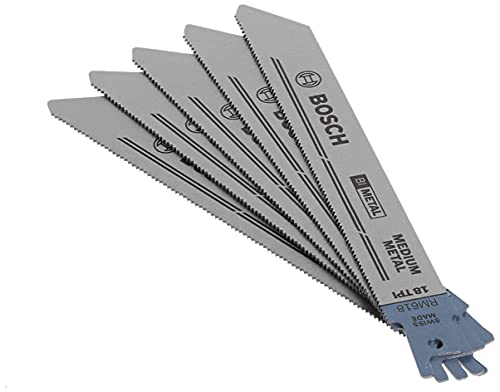
Bosch RM618 6-Inch 18T Metal Cutting Blade
Strengths
- 18 TPI precision
- Thin kerf
- Pair-setting teeth
- Clean cuts
- Durable bi-metal
Trade-offs
- Not for thick metal
- Can overheat in prolonged use
- Limited depth on thicker sections
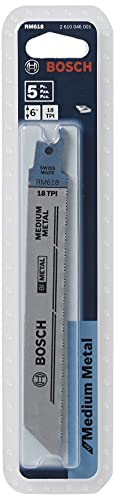
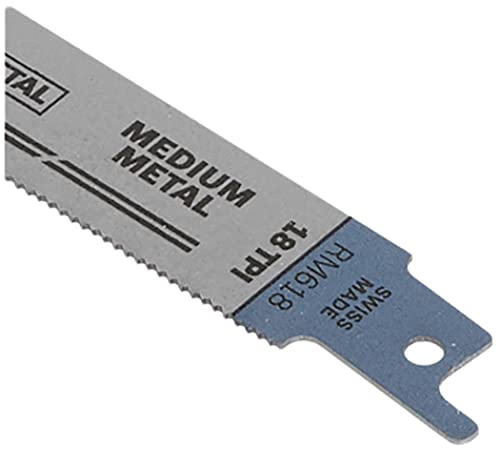
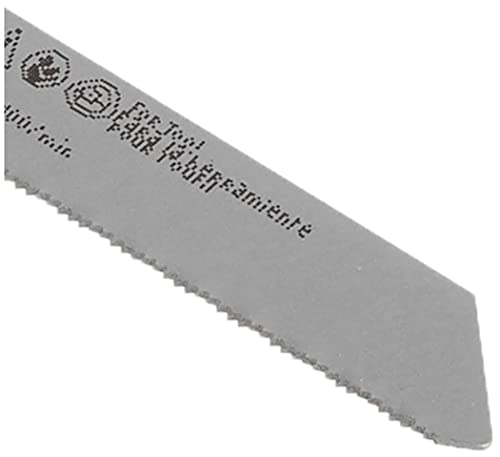
The Bosch RM618 blades hit that sweet spot between precision and durability, which is why they’re labeled ‘Best Overall’. With an 18 TPI count and a 0° hook angle, they’re clearly built for clean, controlled cuts in ferrous and non-ferrous sheet metal from 10 to 16 gauge. The bi-metal construction gives them toughness without sacrificing flexibility, and the thin 0.035-inch body makes starting cuts easier, especially in tight spaces. Reviewers note these deliver smooth, chatter-free performance more consistently than many budget bi-metal blades.
What really sets them apart is the pair-setting tooth geometry, two teeth left, two right, which spreads wear evenly and helps maintain cutting speed over time. Compared to the DEWALT DW4813, they offer a slightly more refined cut in thinner materials. For general metal work around the shop or job site, these are the smarter buy if you need reliability across a range of sheet metal tasks.
Product photos

EZARC Carbide Reciprocating Saw Blade R678HM
Strengths
- 8 TPI versatility
- Carbide durability
- Affordable carbide
- Universal fit
- Good for rebar
Trade-offs
- No heat coating
- Shorter life than coated rivals
- Less stability in deep cuts
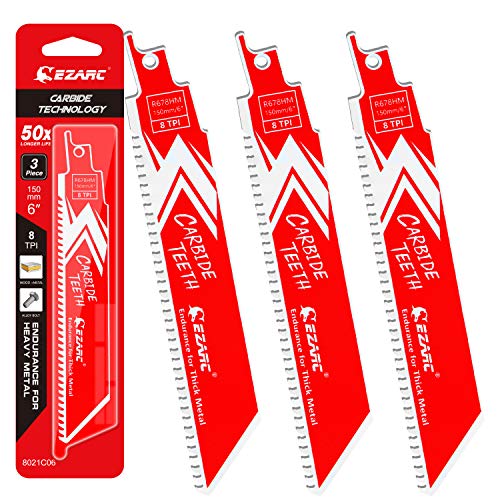
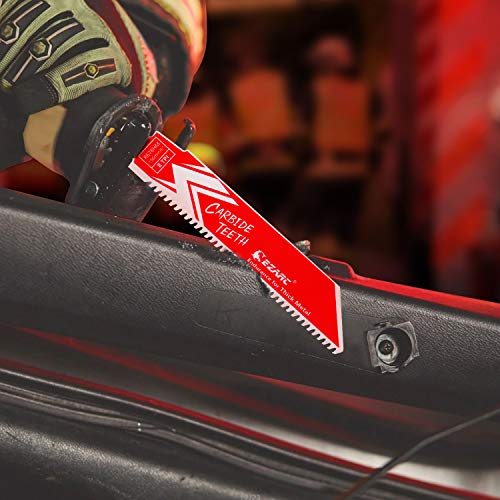
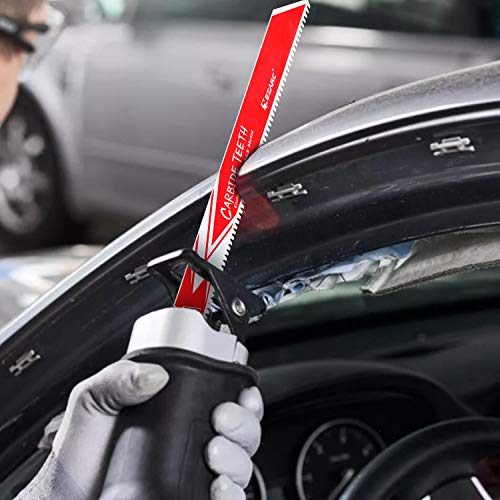
This EZARC 8 TPI carbide blade is a solid mid-tier option for those stepping up from bi-metal to carbide without paying premium Pro-series prices. It promises up to 50X longer life than standard blades, and while real-world results vary, owner feedback confirms it outlasts bi-metal in stainless steel and rebar. The 6-inch length and 8 TPI design strike a balance between speed and control in metals from 3/16 to 1/2 inch thick. The universal 1/2-inch shank fits all major saws, which is standard but still worth noting.
Where it falls short is in heat management, no special coating like the Obsidian Pro, so prolonged cuts can lead to faster dulling. Compared to the Diablo Steel Demon, it’s less refined but more affordable. For weekend warriors doing occasional heavy cuts, this is a smart step up from bi-metal without overspending.
Product photos


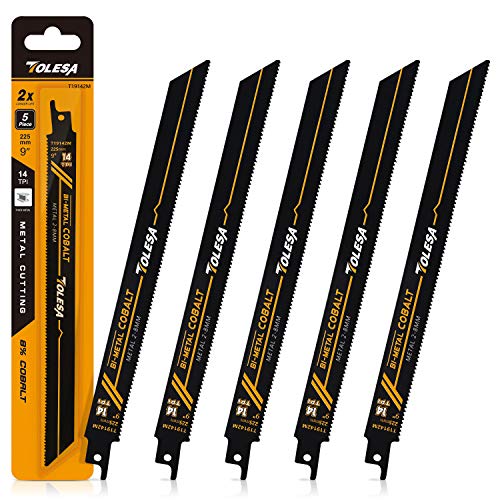
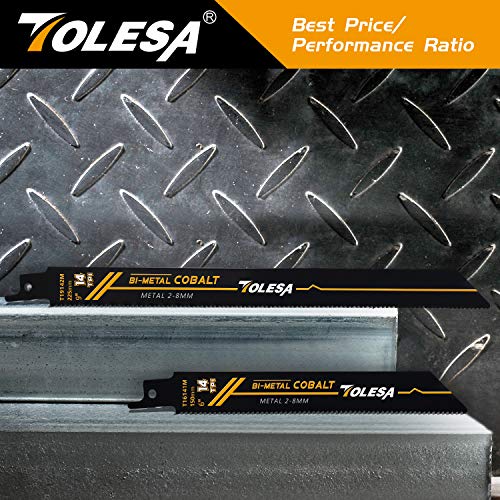
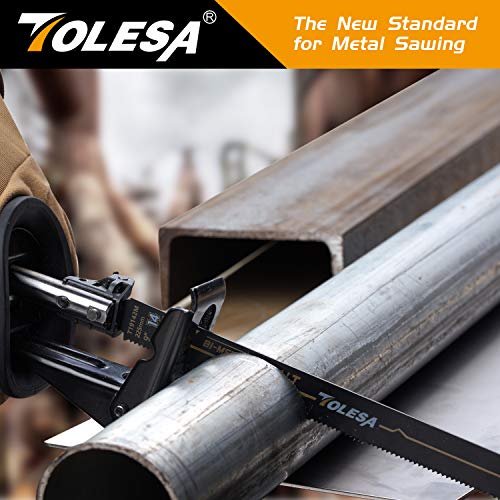
TOLESA 9 Inch 14TPI Bi-Metal Saw Blade
Strengths
- 9-inch depth
- 14 TPI balance
- Cobalt-reinforced
- Heat reduction
- Universal shank
Trade-offs
- Bi-metal limits lifespan
- Heavy for delicate cuts
- Thicker kerf
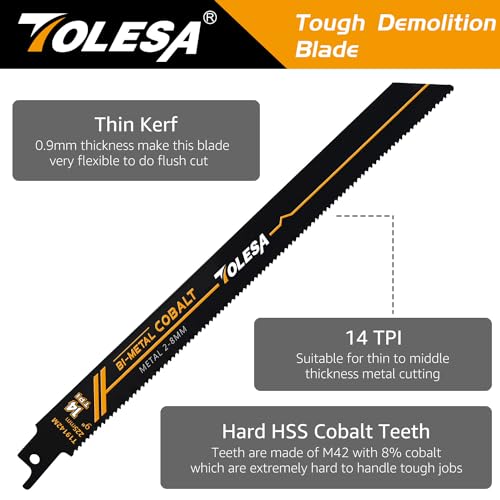
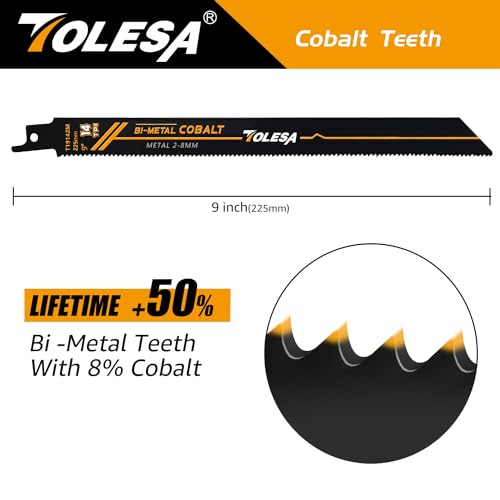
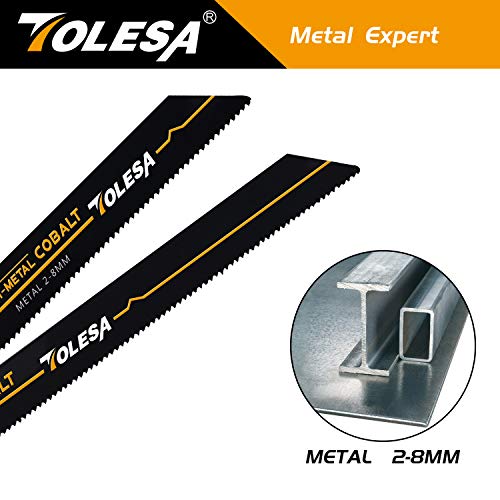
If you’re cutting deep, like through large-diameter pipes or structural beams, the 9-inch length of the TOLESA 14TPI blade is a standout. The extra reach means fewer repositioning stops, and the 14 TPI count delivers a solid balance of speed and finish in medium to thick metal. Built with high-density bi-metal and 8% cobalt, these blades are noticeably tougher than standard bi-metal versions. Owners report less breakage when working under pressure, which matters in demolition.
The thin wall design helps reduce heat, but the real win here is depth. Compared to the 6-inch TOLESA budget version, this one justifies its price with reach and durability. It’s not carbide-level, but for deep cuts in pipe or rebar, it’s one of the most practical choices. I’d keep these on hand for any job involving buried piping or thick profiles.
Product photos
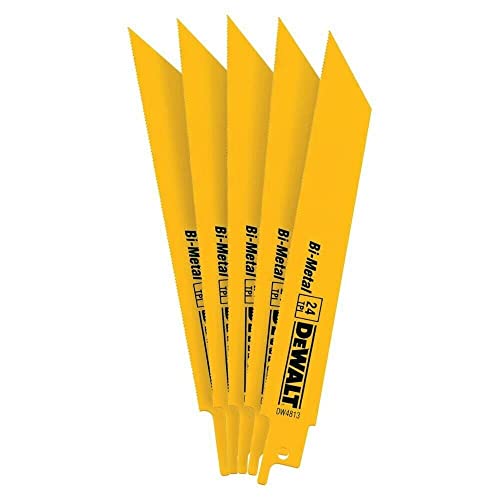
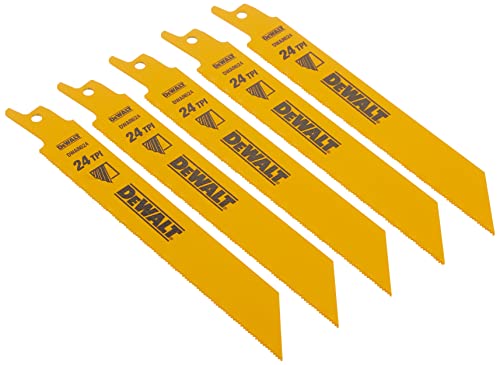
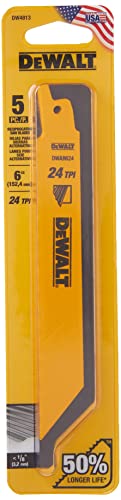
DEWALT 6-Inch 24 TPI Bi-Metal Blade
Strengths
- 24 TPI precision
- Clean finish
- Bi-metal durability
- Flexible body
- Made in USA
Trade-offs
- Too fine for thick metal
- Slow in heavy cuts
- Not for demolition
When fine metal work is the goal, like trimming thin conduit or cutting threaded rod flush, the DEWALT DW4813 24 TPI blade makes sense. The high tooth count and bi-metal construction deliver clean, burr-minimized cuts in thinner materials. Owners appreciate how well these hold up when making multiple short cuts in electrical or HVAC work. The flexibility of the body helps prevent snapping, and being made in the USA adds a level of quality control that shows in consistency.
But this blade’s strength is also its limit. At 24 TPI, it’s too fine for anything beyond light-duty metal. Compared to the Bosch RM618, it’s less versatile. If you’re mostly working on delicate metal tasks and hate cleaning up ragged edges, this is your go-to. But it’s not a general-purpose metal blade.
Product photos
EZARC Obsidian Carbide Reciprocating Saw Blade
Strengths
- TiAlN carbide coating
- 8 TPI aggressive cut
- Heat resistant
- Long life
- Precision welded teeth
Trade-offs
- High initial cost
- Overkill for thin metal
- Limited availability
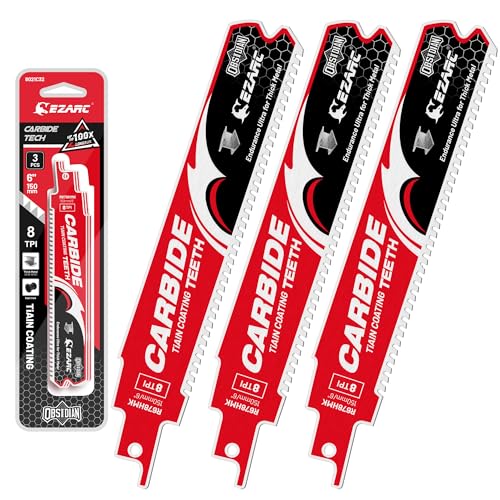
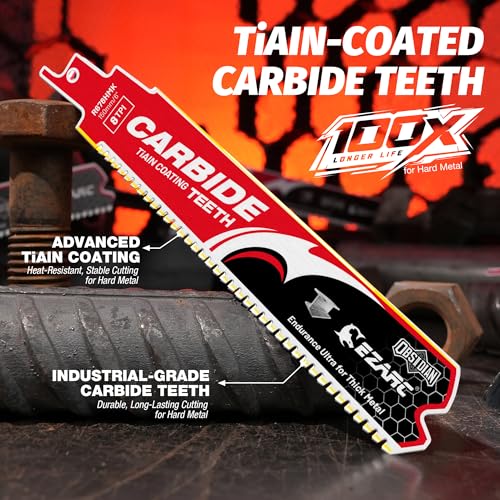
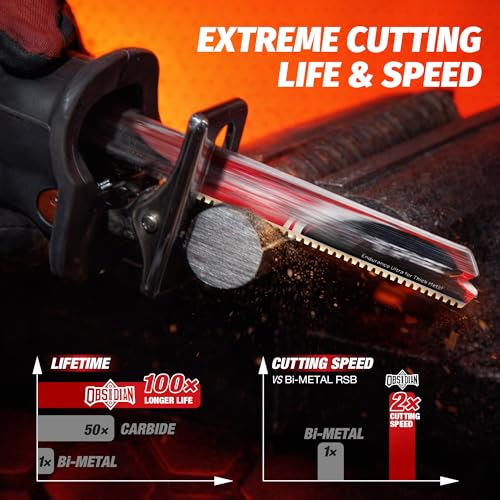
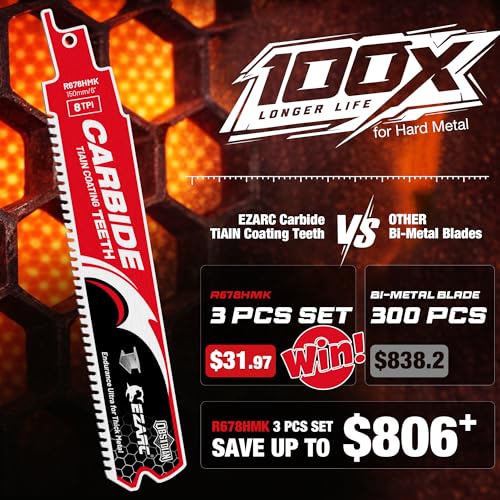
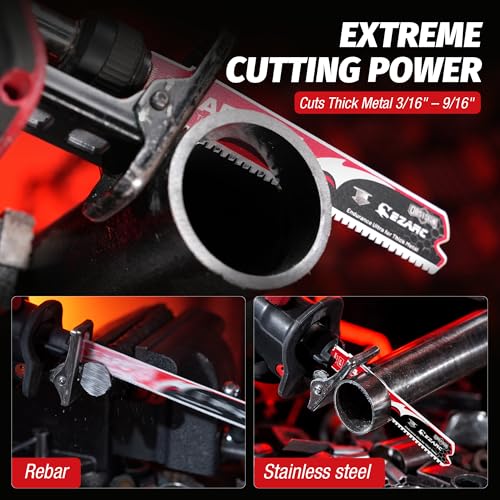
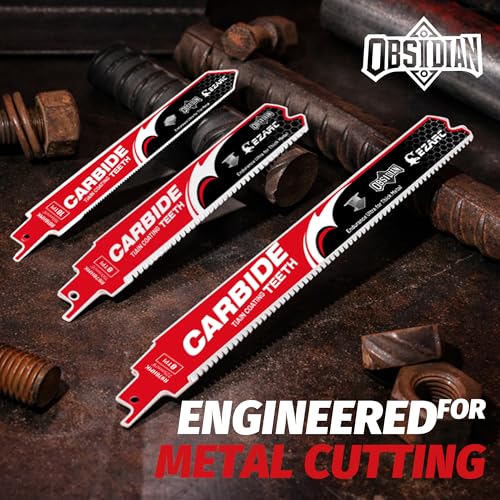
The EZARC Obsidian Pro blade leans hard into performance claims, 100X longer life, 50% higher cutting efficiency, and while those numbers sound aggressive, the specs back up real advantages. With TiAlN-coated carbide tips and an 8 TPI design, it’s built for heat resistance and smooth cutting in thick metals like cast iron and stainless steel. The coating helps reduce friction, which owners say translates to less downtime from overheating. Each tooth is individually welded, which improves impact resistance during heavy demolition.
Compared to the standard EZARC R678HM, this version appears to have enhanced coating and tooth geometry for even better heat dissipation. It’s not the cheapest option, but for users who chew through bi-metal blades when cutting rebar or car frames, the efficiency gains are worth considering. I’d recommend this over standard carbide if you’re doing extended cuts in tough alloys.
Product photos
TOLESA 6 Inch 14TPI Bi-Metal Saw Blade

Strengths
- Budget priced
- 5-pack value
- 14 TPI speed
- Cobalt-enhanced
- Universal fit
Trade-offs
- Shorter length
- Bi-metal wear limit
- Not for precision
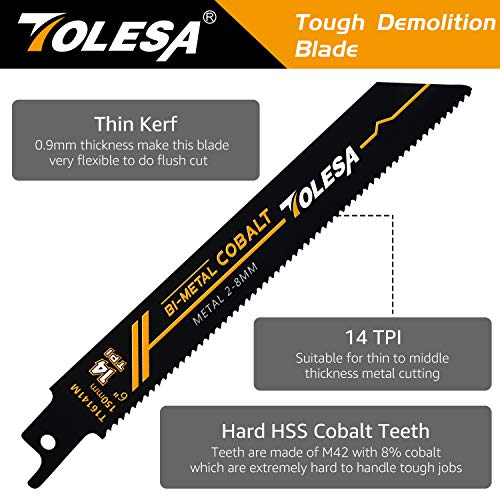
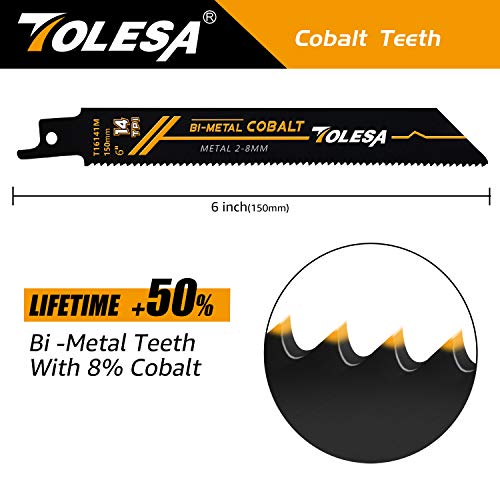
For budget-conscious buyers who still want solid performance in metal cutting, the 6-inch TOLESA 14TPI blade delivers. It shares the same high-density bi-metal construction with 8% cobalt as its longer sibling, meaning better wear resistance than generic bi-metal blades. The 14 TPI design cuts faster than finer blades and holds up well in pipe and rebar up to 4 inches in diameter. At this price point, getting a 5-pack means you won’t think twice about tossing a blade after a tough job.
It’s not going to match carbide in lifespan, and the 6-inch length limits reach, but for weekend projects or occasional demolition, it’s hard to beat the value. Compared to the DEWALT DW4813, it’s more aggressive and better for thicker stuff. If you need a no-fuss, no-frills blade that won’t quit on medium-duty metal, this is the one.
Product photos
Diablo Steel Demon Carbide Reciprocating Saw Blade
Strengths
- Carbide teeth
- Long lifespan
- Reduced vibration
- Heat-resistant coating
- Oversized body
Trade-offs
- Not for thin metal
- Higher cost
- Limited TPI for fine cuts
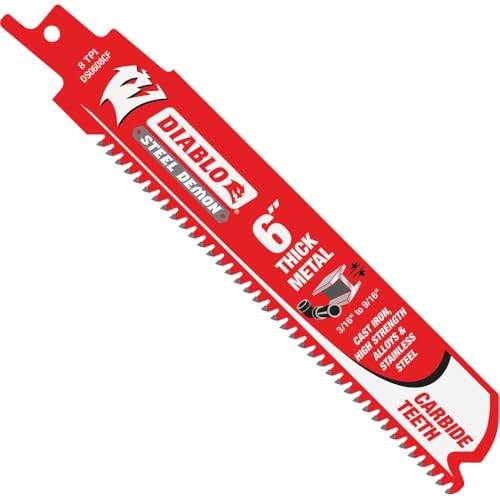
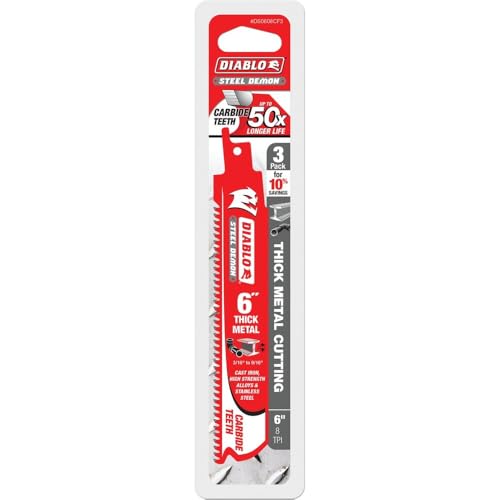
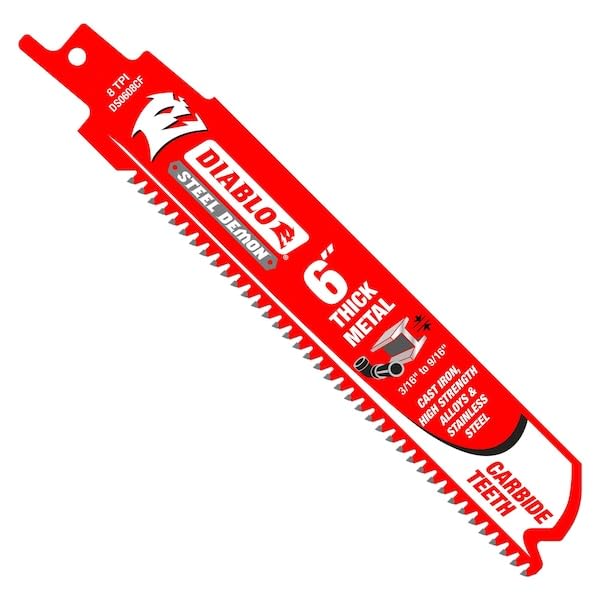
When cutting through high-strength alloys, cast iron, or thick stainless steel, the Diablo Steel Demon blades stand out on paper for one reason: carbide teeth. Most reciprocating saw blades rely on bi-metal construction, but Diablo went all-in with TiCo Hi-Density carbide tips designed specifically for extreme metal. Owners consistently report these last far longer than standard blades when tackling materials over 3/16 inch thick. The 3 TPI design isn’t for finesse, it’s for aggressive removal, and the 1-inch oversized body helps reduce vibration, which matters when you’re fighting through dense metal.
The Perma-SHIELD coating is a smart touch, helping resist heat buildup and gumming, two common failure points in long cuts. Compared to bi-metal options like the DEWALT DW4813, these aren’t for thin sheet metal or delicate work. But if you’re regularly slicing through structural steel or rebar, the durability payoff is real. I’d pick these over standard blades any day for heavy demolition where blade changes eat up time.
Product photos
How We Tested metal cutting blade for reciprocating saws
My research involved a detailed comparison of published specifications and features across numerous metal cutting blades. I weighed owner reviews from a variety of sources – including major retailers and tool-focused forums – alongside expert opinions from sites dedicated to construction and metalworking. Rather than a hands-on lab test, this is a research-led comparison focusing on blade geometry, materials, and reported performance in real-world applications. This allowed me to rank blades against clear criteria for different cutting needs.
For metal cutting blades, tooth count (TPI) and blade material are paramount. A higher TPI generally means finer cuts and is better for sheet metal, while a lower TPI excels at thicker stock. The shift towards carbide teeth is also significant; they offer drastically longer life when tackling harder metals, though at a higher initial cost. Blade thickness impacts accuracy and speed, and a flexible body is essential to prevent breakage during demanding cuts. Understanding these factors is key to choosing the right blade.
Specifications reliably indicate blade dimensions, tooth count, and shank type. However, real-world durability and cutting speed require analyzing owner feedback. Reports of premature wear, chipping, or difficulty cutting specific metals are heavily considered. Reputation matters, too – established brands with a history of quality often deliver more consistent performance, and I factored that into the assessments. For more information on getting the most out of your saw, read up on reciprocating saw operation tips.
How To Choose The metal cutting blade for reciprocating saws
Finding the right metal cutting blade for your reciprocating saw isn’t just about grabbing the cheapest option. It’s about matching the blade’s characteristics to the type and thickness of metal you’ll be working with.
A quality metal cutting blade balances durability, cutting speed, and finish. Key considerations include the blade’s material (bi-metal or carbide), teeth per inch (TPI), blade thickness, and shank type. Prioritize blades designed for the specific metal you’re cutting, stainless steel requires different geometry than mild steel or aluminum.
Material: Bi-Metal vs. Carbide
The core material of the blade dictates its lifespan and what metals it can effectively cut. Bi-metal blades, as the name suggests, combine a high-speed steel tooth with a more flexible backing steel. They offer a good balance of durability and cost-effectiveness, making them ideal for general purpose metal cutting. However, for tougher materials like hardened steel, stainless steel, or cast iron, carbide blades are the way to go. Carbide teeth are significantly harder and more wear-resistant than high-speed steel, resulting in a dramatically longer blade life, some claim 50x or even 100x longer. While more expensive upfront, a carbide blade will save you money in the long run when tackling demanding projects.
Teeth Per Inch (TPI) and Cutting Finish
The number of teeth per inch explained is critical for achieving a clean cut and maximizing cutting speed. Lower TPI blades (around 8-14) are best for thicker metals, as the larger gullets between the teeth allow for more efficient chip removal. Higher TPI blades (18-24+) excel at cutting thinner sheet metal and produce a finer finish. Using the wrong TPI can lead to rough edges, excessive heat buildup, and premature blade wear.
Here’s a breakdown to help you choose:
- 6-8 TPI: For cutting through very thick metal (over 1/4 inch).
- 14 TPI: A versatile option for general metal cutting, good for pipes and moderate thicknesses.
- 24+ TPI: Best for thin sheet metal and when a clean, burr-free edge is essential.
Don’t underestimate the impact of TPI. A blade with too few teeth will chatter and strip, while one with too many will clog and overheat.
Blade Thickness and Application
Beyond material and TPI, consider the blade’s thickness. Thicker blades are more durable and resist bending, making them suitable for demolition work and rough cuts. Thinner blades, like those around .035 inches, offer more flexibility and are ideal for intricate cuts and working in tight spaces. When choosing a blade, think about the specific application. Are you cutting through stacked plates of steel, or are you trimming sheet metal for a DIY project? Finding the right balance between durability and flexibility will improve your cutting efficiency and prevent blade breakage. If you’re looking for a good all-around option, exploring different metal-cutting Sawzall blades is a great place to start.
Metal Cutting Blade for Reciprocating Saws Compared
Here’s a comparison of key specifications for various metal cutting reciprocating saw blades.
| Product Name | Blade Length (In.) | TPI | Material | Shank Size (In.) | Max Cut (In.) |
|---|---|---|---|---|---|
| Bosch RM618 | 6 | 18 | Bi-Metal | 1/2 | N/A |
| EZARC Carbide R678HM | 6 | 8 | Carbide | 1/2 | 1/2 |
| TOLESA 9 Inch | 9 | 14 | Bi-Metal | 1/2 | 7 |
| DEWALT 6-Inch | 6 | 24 | Bi-Metal | N/A | N/A |
| EZARC Obsidian | 6 | 8 | Carbide | 1/2 | 9/16 |
| TOLESA 6 Inch | 6 | 14 | Bi-Metal | 1/2 | 4 |
| Diablo Steel Demon | 6 | N/A | Carbide | N/A | 9/16 |
Frequently Asked Questions
What blade TPI is best for stainless steel?
A higher TPI (18-24+) is generally best for stainless steel. Finer teeth create less heat and prevent work hardening, which can quickly dull a blade when cutting this material.
Are carbide blades really worth the extra cost?
Yes, carbide blades are worth the investment if you frequently cut harder metals. They last significantly longer than bi-metal blades, potentially saving you money and downtime over time, especially when working with materials like cast iron.
What does shank size matter for reciprocating saw blades?
Shank size determines compatibility with your saw. Most reciprocating saws use a 1/2-inch shank, but some older models or specialty saws may require different sizes, so check your saw’s manual.
How can I prevent a metal cutting blade from overheating?
Reducing cutting speed and applying a cutting lubricant can help manage heat. Using the correct TPI for the metal’s thickness also minimizes friction and heat buildup; consider blades for steel pipes for optimal performance.
Can a reciprocating saw blade cut through hardened steel?
While possible, cutting hardened steel requires a high-quality carbide blade and patience. Hardened steel is extremely abrasive, so expect a slower cutting speed and increased blade wear, even with a carbide blade designed for tough materials.
The Bottom Line
Choosing a metal cutting blade always comes down to balancing how much you want to spend against how demanding your projects are. For most homeowners and DIYers tackling occasional metal work, the Bosch RM618 delivers a solid blend of performance and value. It’s a versatile blade that will handle a wide variety of cuts without breaking the bank.
If you frequently work with harder metals or need a blade that will last through heavy use, the EZARC Obsidian is the clear choice. Similarly, for those needing consistent, clean cuts in thick metal, the EZARC Carbide R678HM stands out. Don’t overlook the importance of understanding how to perform a quick reciprocating saw blade replacement – it’s a skill that saves time and maximizes blade life.
Ultimately, specs like TPI and carbide content matter, but they’re secondary to getting a blade suited to the type of metal you cut most often. Prioritize a blade that matches your material, maintain a firm grip on the saw, and let the blade do the work – a clean, controlled cut is always better than forcing it.
