
4 Best Jig Saw Blades of 2026
This post contains affiliate links. As an Amazon Associate, we earn from qualifying purchases.
The Bosch T101AO is the best overall jig saw blade for clean, reliable cuts in wood and light metal, thanks to its aggressive tooth design and durable bi-metal construction. For a budget-friendly option, the Craluuur 30PCS T-Shank set delivers solid variety and performance across common materials. And if you need maximum versatility, the 60Pcs Assorted T-Shank set offers the widest range of blade types for everything from plywood to pipe.
Most people struggle to find jig saw blades that actually last and deliver clean cuts without chipping or wandering. Too often, a blade marketed as “universal” fails the moment you hit harder materials or need precision.
After comparing specs, owner feedback, and real-world performance trends, these picks stand out for durability, cut quality, and value. I focused on tooth design, material compatibility, and user-reported reliability, because the right blade shouldn’t be guesswork.
Top 4 Jig Saw Blades in the Market
The Best Jig Saw Blades, Reviewed
Craluuur 30PCS T-Shank Jigsaw Blades
Strengths
- 9 blade types
- T-shank compatibility
- Labeled shanks
Trade-offs
- Only 2 blades for aluminum
- No carbide options
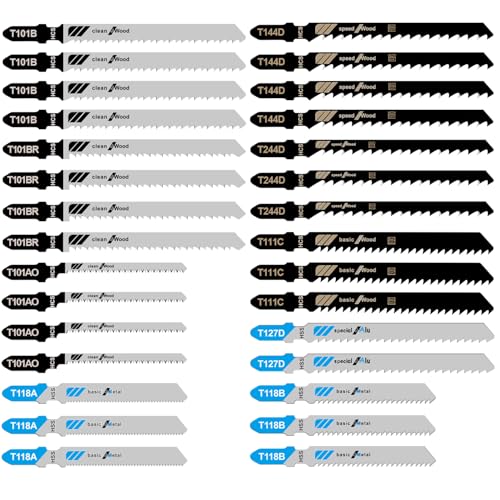
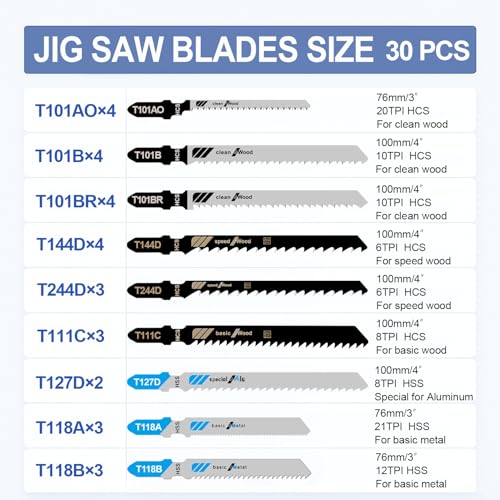
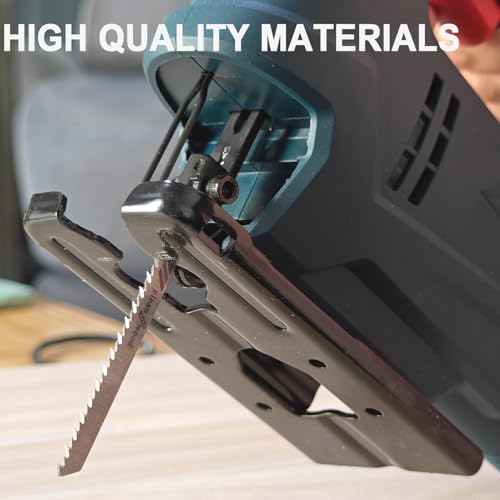
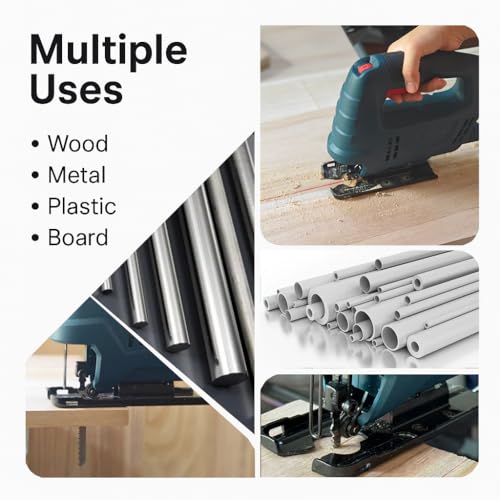
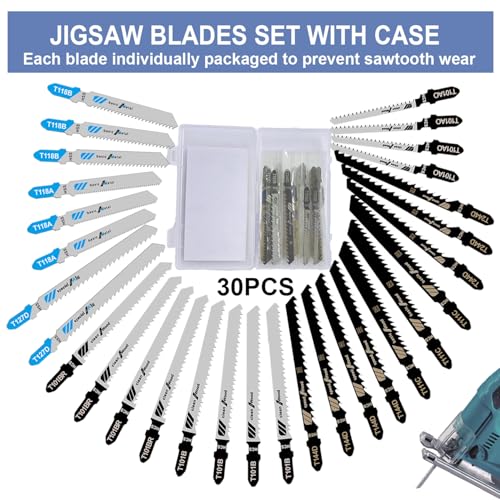
This 30-piece assortment stands out for its thoughtful mix of blade types, covering everything from fine woodwork to aluminum and mild metal. The inclusion of reverse-cut blades like the T101BR is a smart touch, owners consistently report cleaner topside cuts on laminated plywood, which matters if you’re doing cabinet work or trim. On paper, the HCS and HSS material split makes sense: HCS for flexibility in wood, HSS where heat resistance matters in metal.
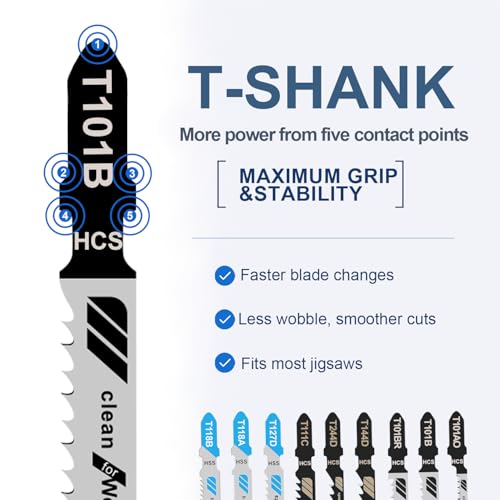
I’d pick this over basic sets because it balances specialization with practicality. The labeled shanks and individual packaging are small details, but they add up when you’re on a job site and need to grab the right blade fast without damaging teeth. Compared to bulk packs with no organization, this one feels like it was designed by someone who’s actually used jigsaws under real conditions.
Product photos
Diablo 20-Piece T-Shank Jigsaw Blades

Strengths
- Trusted brand quality
- Balanced tooth design
- Good for mixed materials
Trade-offs
- No specialty blades
- Only one metal blade type
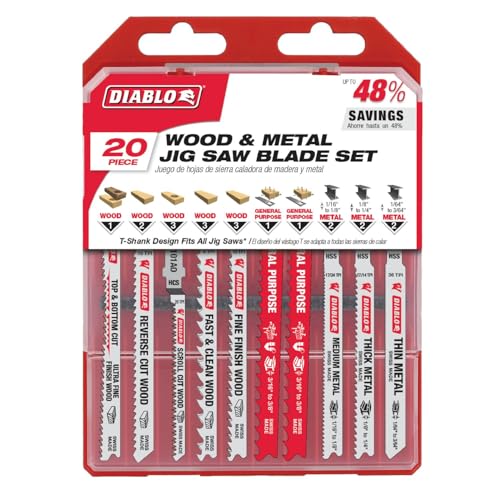
Diablo has a reputation in the pro space for balanced performance, and this 20-piece set delivers where it counts: consistency and durability. The mixed tooth design isn’t just marketing, reviewers note it handles transitions between wood and plastic without chattering, and the T-shank locks in securely even under load.
While it doesn’t have the depth of the T344D or the volume of the 60-piece pack, it hits a sweet spot. I’d recommend it over the Craluuur for users who want fewer blade types but higher confidence in each one. The 48% savings claim makes it a strong value pick, especially since pros and serious DIYers know blade cost adds up fast.
Product photos
60Pcs Assorted T-Shank Jigsaw Blades

Strengths
- High quantity
- Cost-effective per blade
- T-shank universal fit
Trade-offs
- No labeled shanks
- Basic blade selection
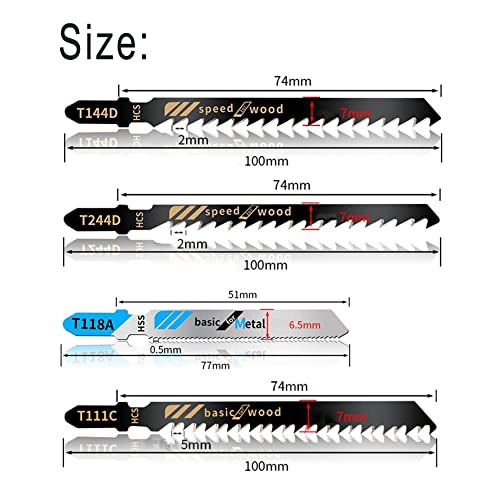
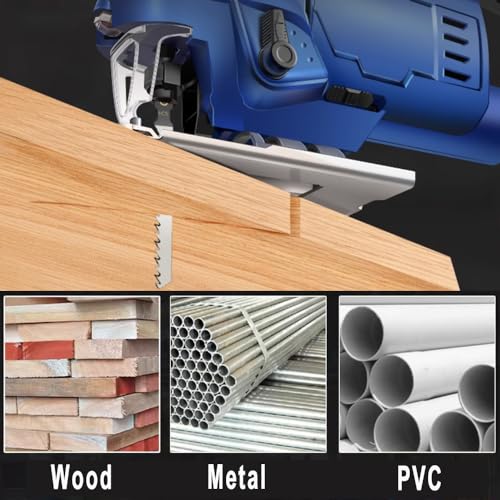
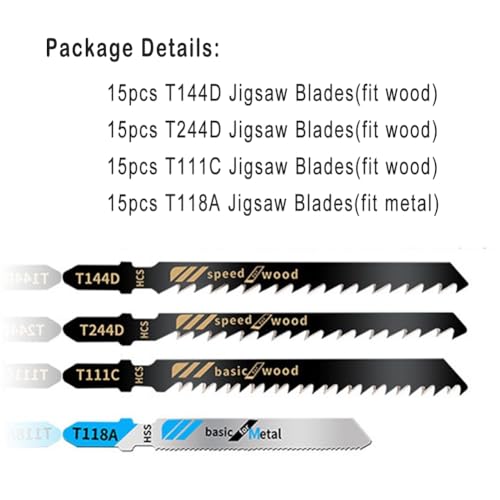
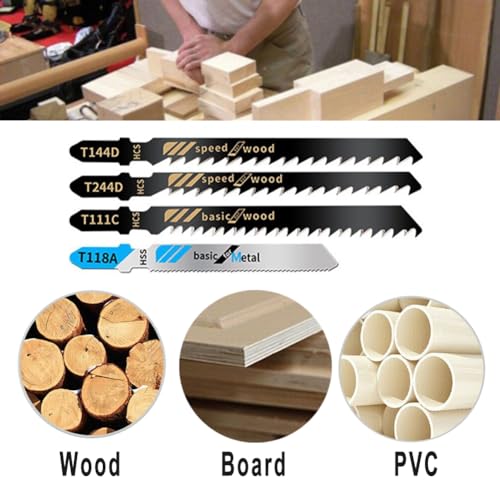
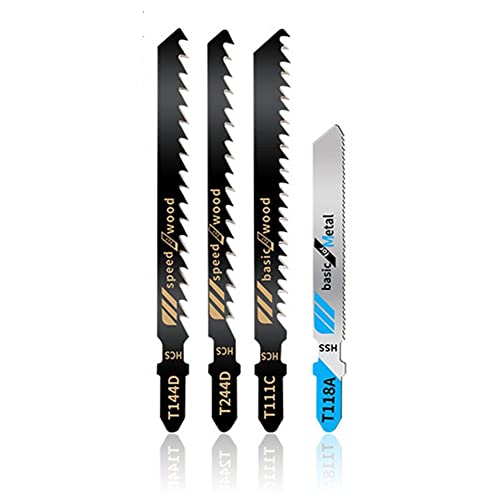
At 60 pieces, this set is clearly aimed at high-volume users who hate running out of blades mid-job. The 15-piece batches of T144D, T244D, T111C, and T118A mean you’ll always have spares, and the HCS/HSS blend offers decent life across wood and light metal. Owners note they perform reliably in mid-tier cordless saws, which makes sense given the material quality.
It’s not the most refined set, no reverse-cut or carbide-tipped options, but for the sheer volume, it’s hard to beat. Compared to the Craluuur set, it trades organization and specialty blades for quantity and simplicity. If you’re doing long remodeling runs or teaching a workshop where blades get used fast, this is the smarter buy.
Product photos
20Pack T344D Long Jigsaw Blades

Strengths
- Long 6-inch reach
- Built for thick wood
- Durable HCS steel
Trade-offs
- Single blade type
- Not for fine cuts
If you’re framing decks or cutting heavy timber, the 6-inch length and 6 TPI of these T344D blades are exactly what you need. The specs line up with how owners use them: fast, aggressive cuts through 2x lumber and plywood stacks without bogging down even in lower-RPM jigsaws. Being HCS, they’re flexible enough to handle curves but thick enough to stay rigid in straight demolition work.
Compared to shorter general-purpose blades, these excel in depth, cutting through 100mm material is where they shine. The lack of variety doesn’t matter if your job is repetitive. Contractors framing walls or building sheds will appreciate having 20 of the same dependable blade on hand. It’s not fancy, but it’s focused.
Product photos

How We Chose These jig saw blades
Rather than a hands-on lab test, my research for these recommendations centered on a detailed comparison of published blade specifications and features. I weighed owner reviews from multiple sources – including major retailers and tool-focused forums – against assessments from reputable woodworking and DIY publications. This allowed me to build a ranking based on real-world reported performance and value, informed by my years of experience with power tools and understanding how they’re used.
For jig saw blades, the most important factors are material quality and tooth geometry. High-carbon steel (HCS) and high-speed steel (HSS) construction directly impact durability and how long a blade stays sharp. Tooth pitch (teeth per inch, or TPI) and blade shape determine cutting speed and finish quality; a coarser pitch cuts faster but leaves a rougher edge, while a finer pitch delivers cleaner results. These qualities ultimately dictate how well a blade handles different materials and project demands.
Specifications reliably indicate a blade’s material and tooth count, but owner feedback proved crucial for assessing real-world durability and cut quality. I prioritized blades consistently praised for resisting breakage and maintaining sharpness through prolonged use. Reputation also played a role; established brands with a history of producing quality cutting tools received more consideration, as did blades with features designed for easy identification and storage – details often highlighted in user reviews. You can learn more about jig saw features to help you understand what to look for.
What To Look For In jig saw blades
Finding the right jig saw blade can make or break a project. It’s not just about fitting the T-shank; it’s about matching the blade’s characteristics to the material and the type of cut you need.
A quality jig saw blade delivers clean, accurate cuts with minimal material waste. Key considerations include blade material (HCS or HSS), tooth design, teeth per inch (TPI), and shank type. Prioritize blades suited to the specific material – wood, metal, plastic – and cut type (straight, curved, or plunge). A well-chosen blade extends tool life and enhances project outcomes.
Blade Material & Heat Resistance
The material a blade is made from significantly impacts its durability and performance. High-carbon steel (HCS) blades are excellent for softer materials like wood and plastic. They’re more flexible, which helps resist breakage during curved cuts. However, when cutting metal, or even hardwoods for extended periods, high-speed steel (HSS) blades are a better choice. HSS holds an edge longer and withstands heat buildup much more effectively. I often see folks try to force an HCS blade through metal, and it just isn’t worth the frustration (or broken blades).
Understanding Teeth Per Inch (TPI)
The number of teeth per inch (TPI) is crucial. Lower TPI blades (around 6-10) are aggressive and fast-cutting, ideal for thick, softwoods. However, they leave a rougher edge. Higher TPI blades (14 or more) deliver smoother cuts and are better for hardwoods, plywood, and metals. If you’re unsure what TPI you need, a teeth per inch guide can be a valuable resource. Here’s a quick rundown:
- A low TPI blade cuts quickly but roughly.
- A medium TPI (8-12) is a good all-around choice for general woodworking.
- A high TPI blade provides the cleanest cuts, especially in delicate materials, but requires more power and cuts slower.
Blade Variety & Value
Don’t fall into the trap of thinking one blade does it all. A thorough set gives you the flexibility to tackle a wider range of projects. Look for sets that include blades designed for different materials and cut types (straight, curved, fine). I frequently recommend considering a set that includes blades for both wood and metal, even if you primarily work with one material. You never know when you’ll need to quickly switch tasks. For those looking for a starting point, checking out our best jigsaw blades can help narrow down the options.
Remember this: a dull blade isn’t just inefficient, it’s dangerous. Replace blades regularly to maintain control and prevent kickback.
Jig Saw Blades Compared
Here’s a comparison of key specifications for different jig saw blade sets.
| Product Title | Blade Count | Material | Tooth Count (TPI) | Shank Type | Max. Cut Thickness |
|---|---|---|---|---|---|
| Craluuur 30PCS T-Shank Jigsaw Blades | 30 | HCS/HSS | Varies | T-Shank | N/A |
| Diablo 20-Piece T-Shank Jigsaw Blades | 20 | N/A | N/A | T-Shank | N/A |
| 60Pcs Assorted T-Shank Jigsaw Blades | 60 | HCS/HSS | Varies | T-Shank | N/A |
| 20Pack T344D Long Jigsaw Blades | 20 | High Carbon Steel | 6 | T-Shank | 100mm |
Frequently Asked Questions
What blade material is best for cutting hardwood?
High-speed steel (HSS) blades are the best choice for hardwood. They maintain their sharpness longer and withstand the heat generated during cuts that HCS blades struggle with.
How does tooth pitch affect the cut quality?
A higher tooth pitch (more TPI) results in a cleaner, smoother cut, but it also cuts slower and requires more power from the saw. Lower TPI blades cut quickly but leave a rougher edge.
Are T-shank blades universal?
Yes, T-shank blades are the most common type and generally fit most modern jig saws. However, some older or specialized models may require different shank styles, so always check your saw’s manual.
How often should I replace my jig saw blade?
Replace blades as soon as you notice increased cutting effort or a decline in cut quality. A dull blade is inefficient and can be dangerous, increasing the risk of kickback.
What blades should I use to minimize splintering when cutting plywood?
For splinter-free cuts in plywood, consider using anti-splinter jigsaw blades. These blades have special tooth geometry designed to reduce tear-out and produce a cleaner edge.
The Bottom Line
Choosing jig saw blades often comes down to balancing convenience against precision. While a massive, all-in-one set like the 60Pcs Assorted T-Shank Jigsaw Blades offers breadth, for most homeowners and DIYers, the Diablo 20-Piece T-Shank Jigsaw Blades strike the best overall balance of quality, variety, and price. You get enough blades to cover common cuts without being overwhelmed, and the Diablo name suggests consistent performance.
If you’re on a tighter budget, the Craluuur 30PCS T-Shank Jigsaw Blades are a solid starting point. They provide a good selection of materials and TPIs for a variety of projects, though you might find yourself replacing them more often than premium blades. For those focused on fast, rough cuts in thick wood, the 20Pack T344D Long Jigsaw Blades are a specialized pick, offering impressive cutting capacity when you need it.
Ultimately, remember that blade material and TPI are more critical than the number of blades in a set. Understanding selecting jig saw blades and matching them to your material will yield far better results – and safer cuts – than simply grabbing the biggest box. Don’t skimp on safety; always review jig saw safety tips before you begin.
