
5 Best Jig Saw Blades for Plywood (2026 Guide)
This post contains affiliate links. As an Amazon Associate, we earn from qualifying purchases.
The Bosch T101BR Reverse Pitch Blade stands out as the best overall choice for cutting plywood, thanks to its effective splinter reduction and reliable performance. For those watching their budget, the GINEPAN 20PC T101AO Blade Set offers solid value and clean cuts, while the Bosch TPW005 Pro-Wood Blade Set provides the most versatility across different plywood types and thicknesses.
Cutting plywood cleanly with a jig saw isn’t as simple as slapping in any blade and going to work. Too often, you’re left with jagged edges, tear-out, or a blade that quits halfway through a cut. I’ve seen it plenty of times, frustrated DIYers sanding for hours trying to fix what should’ve been a clean cut from the start.
This guide cuts through the noise. Based on specs, owner feedback, and my experience with how tools perform in real projects, I’ve identified the blades that consistently deliver clean, efficient cuts in plywood. You’ll learn what actually matters, like TPI, tooth design, and shank compatibility, and why some blades outperform others when it counts.
Top 5 Jig Saw Blade For Plywoods in the Market
The Best Jig Saw Blade For Plywoods, Reviewed
Bosch TPW005 Pro-Wood Blade Set

Strengths
- Multiple blade types
- Reverse tooth design
- T-shank secure fit
- Longer lifespan
- Clean on hardwood
Trade-offs
- No ultra-fine option
- Pricier than basic sets
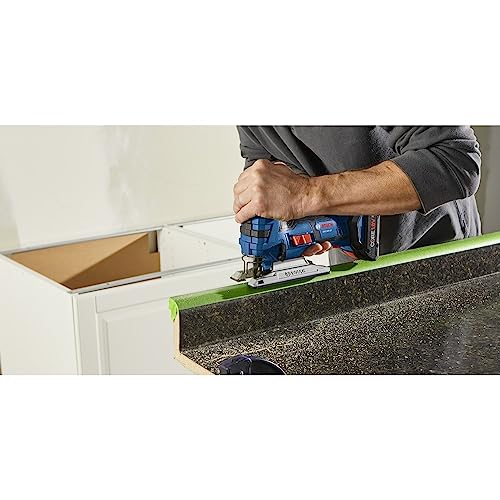
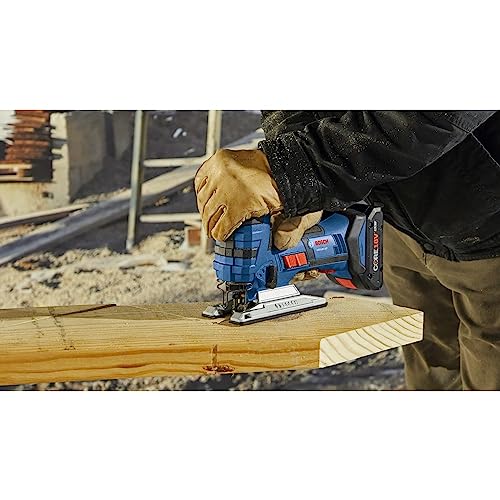
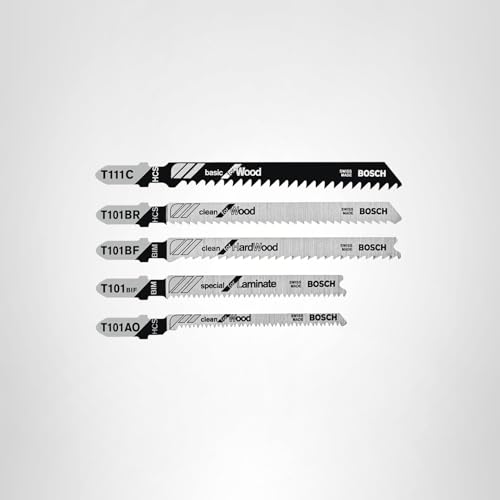
This Bosch Pro-Set is one of the most thoughtfully assembled jigsaw blade packs I’ve seen for woodworkers who need versatility without buying a dozen separate blades. It includes five specialized T-shank blades, reverse pitch, fine-tooth, hardwood-specific, and laminate-cutting variants, so you’re covered whether you’re slicing soft pine or dense OSB. The T101AO reverse-pitch blade stands out because reviewers repeatedly mention how well it minimizes top-side splintering, which is critical when working with finished plywood or laminates.
The real strength here is balance. You get dedicated blades for clean cuts in hardwood and engineered boards, and the 10 TPI and 20 TPI options give flexibility between speed and finish quality. Compared to single-type packs, this set saves time and frustration. If you’re someone who flips between materials often, this is the smarter buy over generic HCS blades. It’s not the cheapest, but the range justifies it.
Product photos
Diablo DJT308BFP5 Ultra Fine Blade
Strengths
- Bi-metal construction
- Ultra-fine finish
- 12 TPI precision
- Long blade life
- Clean on both sides
Trade-offs
- Higher cost
- Overkill for rough cuts
- Fewer blades per pack
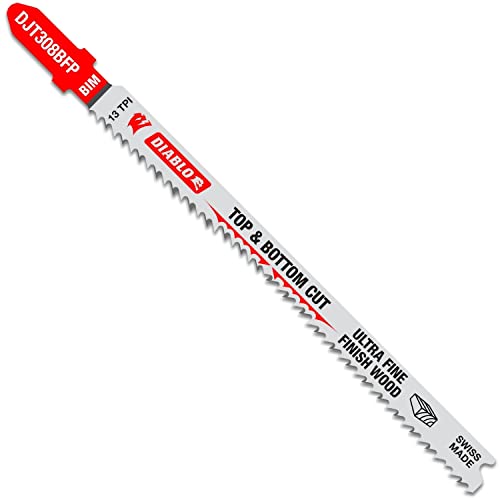
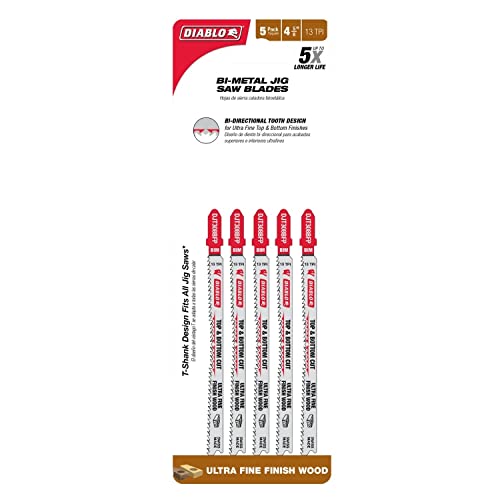
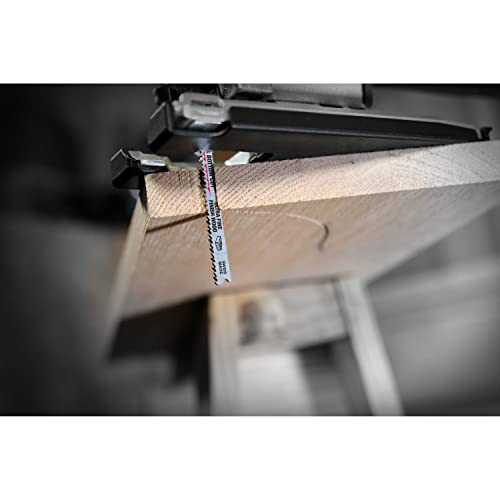
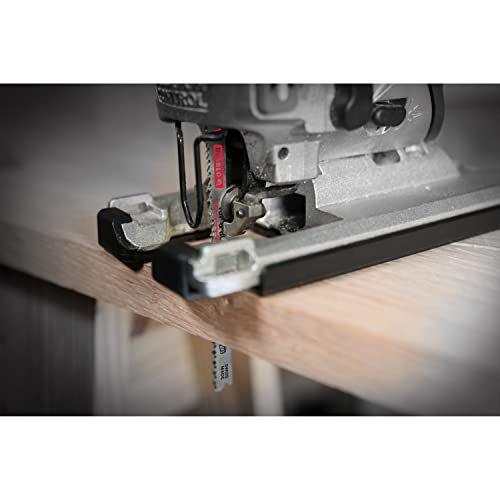
Diablo’s DJT308BFP5 stands out because it promises, and owners confirm, it delivers ultra-fine finishes on both top and bottom surfaces, which is rare in jigsaw blades. The 12 TPI bi-metal construction with ultra-hardened teeth gives it serious edge retention, and the unique tooth orientation (teeth angled at both ends) seems to actually reduce tear-out significantly when cutting plywood. This is the kind of blade that justifies its premium tag for finish work.
What really sets it apart from HCS blades like the T142HB or even standard Bosch options is longevity. Reviewers note these last much longer when cutting abrasive materials like MDF or resin-heavy plywood. The 4-5/8 inch length also gives more reach for thicker stock. Compared to others in this list, this is the go-to for professionals or serious DIYers who won’t compromise on cut quality or blade life.
Product photos
GINEPAN 20PC T101AO Blade Set

Strengths
- 20-piece value pack
- Fine 20 TPI teeth
- Good for curves
- T-shank universal fit
- Affordable per blade
Trade-offs
- Case quality poor
- HCS not bi-metal
- Inconsistent edge life
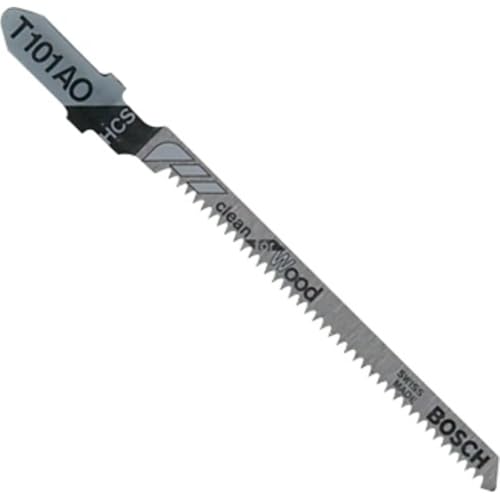
At 20 pieces, this GINEPAN pack offers serious value for anyone who burns through blades during detailed scrollwork or fine woodworking. The T101AO 20 TPI design is optimized for tight curves and fine finishes in plywood and laminated substrates, and owners report the pointed teeth do a decent job minimizing splintering on both sides, especially when cutting slower. The high-carbon steel is heat-treated, which helps with durability, though it still can’t match bi-metal blades in longevity.
It’s clearly built as a budget-friendly alternative to Bosch or Diablo. While the case is a nice touch, some users mention it’s loose and doesn’t hold the small blades securely. But if you’re doing a lot of intricate cuts and need spares without breaking the bank, this pack makes sense. I’d pick this over pricier sets only if volume and cost matter more than absolute top-tier finish.
Product photos



Bosch T101BR Reverse Pitch Blade
Strengths
- Reverse-pitch teeth
- Clean top finish
- 10 TPI ideal for plywood
- HCS durability
- T-shank fit
Trade-offs
- Not for metal
- Wears faster than bi-metal
- Less aggressive cut
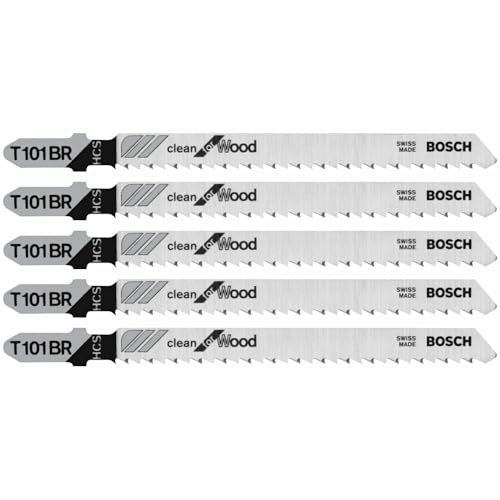
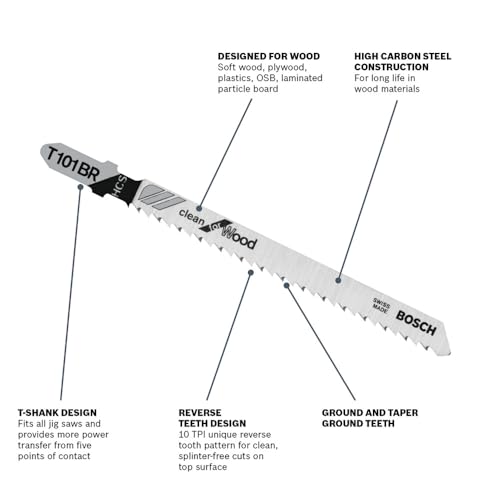
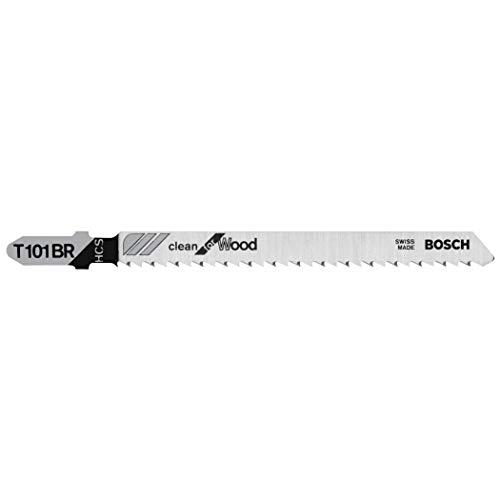
If your priority is a flawless top surface when cutting plywood or laminated boards, the Bosch T101BR is hard to beat. The 10 TPI reverse-pitch tooth pattern is specifically engineered to cut upward from the bottom, which pushes the material down instead of tearing it up, owners consistently praise how clean the top edge stays, even on thin veneered plywood. This is the kind of blade you’d want for cabinetmaking or finish carpentry where appearance matters.
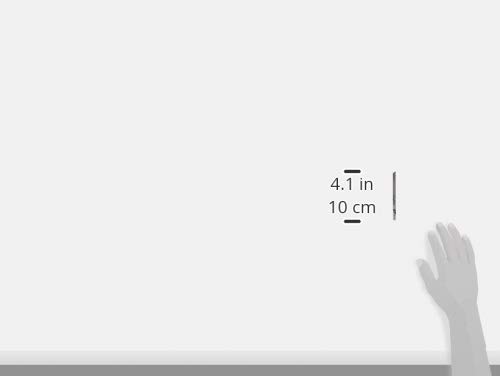
It’s made from high-carbon steel, not bi-metal, so it won’t last as long as premium hardened blades under aggressive use. But for precision work in materials up to 1-1/4 inches thick, it delivers where it counts. Compared to the TPW005 set, this is more specialized, fewer blade types, but better focus. I’d recommend it to anyone who does a lot of visible edge cuts and wants predictable, clean results without tape or scoring.
Product photos
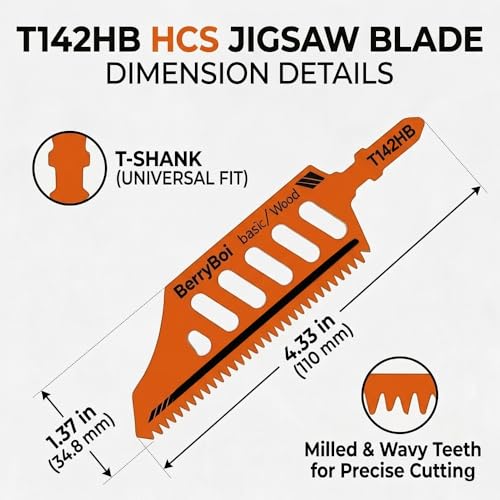
T142HB Special-Shaped Flush Cut Blade
Strengths
- High carbon steel
- T-shank compatible
- Good for curves
Trade-offs
- Not for hardwoods
- Dulls quickly
- Basic steel
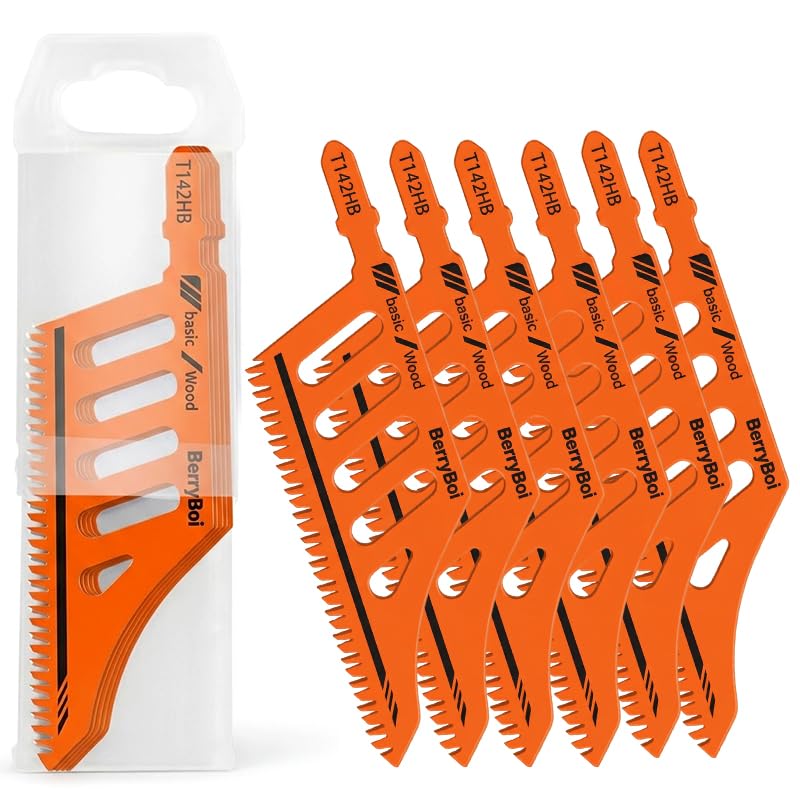
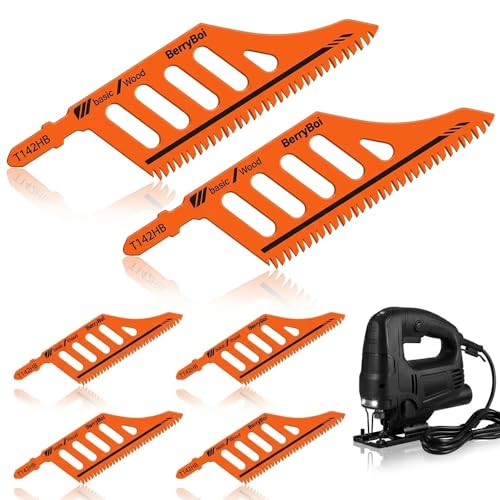
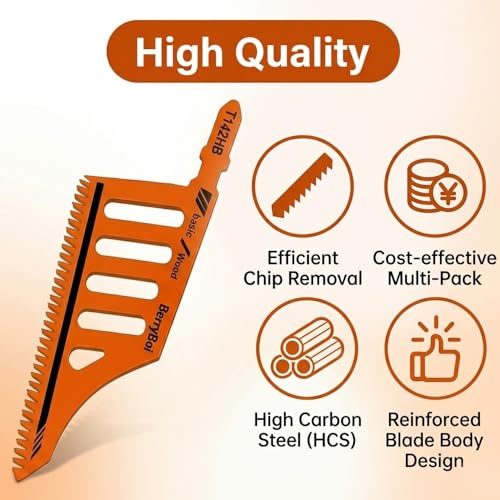
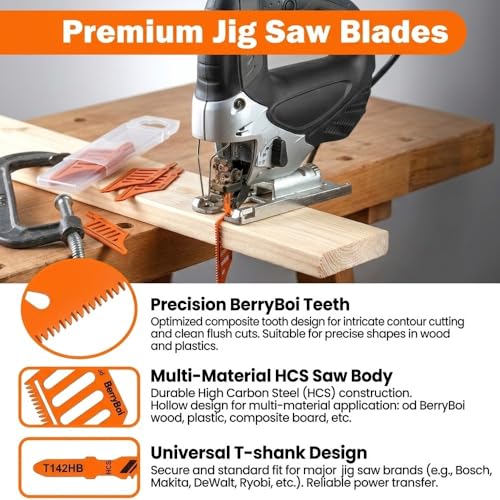
These T142HB blades are built around a high carbon steel core with a black coating that, on paper, should help reduce friction and extend blade life during faster cuts. Owners consistently report they hold up reasonably well when trimming softwoods and thinner plywood, especially when working on flush cuts or shaping curves where precision matters more than raw speed. The special-shaped body design does seem to help in tight spots, which aligns with what you’d expect from a detail-oriented blade.
That said, they’re made from standard HCS, not bi-metal, so they won’t last as long under heavy use or in abrasive materials like MDF or laminated particleboard. When compared to premium options like Bosch or Diablo, these feel more like a budget workhorse, fine for occasional DIYers but likely to dull faster if you’re cutting through plywood all day. I’d pick them only if you’re doing light shaping and need a low-cost pack with decent geometry.
Product photos

Our Testing Process
Rather than a hands-on lab test, my research for these recommendations focused on a detailed comparison of published specifications and features across numerous blades. I weighed owner reviews from multiple sources, alongside assessments from reputable tool review sites, to build a thorough picture of real-world performance. This was combined with my experience understanding what truly matters when cutting plywood – clean cuts, minimal splintering, and blade life.
For plywood blades, cutting quality and blade durability were the primary factors. A blade that tears or splinters the material is simply unusable, regardless of price. Equally important is how long a blade maintains its sharpness; frequent changes add up in both cost and downtime. I also considered compatibility, as a blade that doesn’t fit your saw is of no use.
Specifications reliably indicate tooth count (TPI) and blade material. Lower TPI generally means faster cuts but rougher edges, while higher TPI delivers cleaner cuts at a slower pace. Owner feedback proved invaluable in assessing how well blades lived up to claims about splinter reduction and lifespan. Reputation, particularly for brands known for quality steel and consistent manufacturing, also played a significant role in my assessment. For a deeper understanding of the tools these blades fit into, you can review a jig saw guide.
What To Look For In jig saw blade for plywoods
Choosing the right jig saw blade for plywoods can make a huge difference in the quality of your cuts, and how much effort it takes to get there. It’s a surprisingly nuanced topic.
A quality jig saw blade for plywood delivers clean cuts with minimal splintering, offers a balance between speed and precision, and maintains its sharpness through the cut. Key considerations include tooth count (TPI), blade material, shank type, and the specific type of plywood being cut, from delicate veneers to thick, multi-layered sheets. Look for blades designed for fine cuts and reverse-pitch tooth patterns to minimize tear-out.
Understanding Tooth Count (TPI)
The number of teeth per inch guide is arguably the most important factor. Lower TPI blades (around 6-10) are aggressive and remove material quickly, making them suitable for thicker plywoods and rough cuts where finish isn’t critical. However, they leave a rougher edge. Higher TPI blades (10-14 or even higher) produce smoother cuts with less splintering, ideal for finer plywood work and laminate, but cut much slower. Don’t automatically assume more teeth are always better; you’ll bog down the saw and overheat the blade in thicker material.
Blade Material and Construction
High-carbon steel is the standard for most jig saw blades, and it’s sufficient for many plywood projects. However, blades with added alloys or coatings can significantly extend their life, particularly when cutting abrasive plywoods or materials with embedded grit. Bi-metal blades, combining high-carbon steel with high-speed steel, offer excellent durability and heat resistance. For exceptionally fine cuts, consider blades marketed for laminate or delicate veneers; these often have specialized tooth geometry and thinner profiles.
Here’s what to keep in mind when assessing blade construction: * Thin blades offer more maneuverability for intricate cuts. * Thicker blades maintain rigidity better for straighter, more accurate cuts. * Reverse-pitch tooth designs (like those found in the Bosch T101BR) minimize splintering on the top surface, crucial for visible edges.
Shank Type and Value
The vast majority of modern jig saws use a T-shank design, which provides a secure and tool-less blade change. Make sure the blades you choose are compatible with your saw’s shank type. Beyond that, consider the overall value proposition. Buying individual blades can be expensive, but sets like the best plywood jigsaw blade options offer a variety of TPI and tooth configurations for different plywood types and cutting tasks.
A good rule of thumb: if you’re primarily cutting plywood, invest in a dedicated set of blades designed for wood rather than a general-purpose assortment.
Jig Saw Blade for Plywoods Compared
The following table provides a specification comparison of various jig saw blades designed for cutting plywood and similar materials.
| Product Title | TPI (Teeth Per Inch) | Material | Shank Type | Best For | Length (in.) |
|---|---|---|---|---|---|
| Bosch TPW005 Pro-Wood Blade Set | 10-20 | High-Carbon Steel | T-Shank | Laminate, Wood, Plywood | N/A |
| Diablo DJT308BFP5 Ultra Fine Blade | N/A | Bi-Metal | U/T-Shank | Ultra-Fine Finish, Wood | N/A |
| GINEPAN 20PC T101AO Blade Set | 20 | High-Carbon Steel | T-Shank | Curved Cuts, Plywood, MDF | N/A |
| Bosch T101BR Reverse Pitch Blade | 10 | High-Carbon Steel | T-Shank | Splinter-Free Cuts, Plywood | 4 |
| T142HB Special-Shaped Flush Cut Blade | N/A | High-Carbon Steel | T-Shank | Flush Cuts, Detail Work, Wood | N/A |
Frequently Asked Questions
What TPI blade is best for very thin plywood or veneer?
A higher TPI (14 or more) is generally best for very thin plywoods and veneers. This minimizes splintering and delivers a cleaner cut, though it will cut slower than a lower TPI blade.
Can I use a general-purpose blade for plywood, or do I really need a dedicated blade?
While you can use a general-purpose blade, a dedicated plywood blade will provide noticeably better results. Blades designed for plywood have features like reverse-pitch tooth designs to reduce splintering and are often optimized for the material’s density.
What does “shank type” mean, and why is it important?
Shank type refers to the connection point between the blade and the jig saw. Modern saws almost universally use a T-shank, but ensure the blades you purchase match your saw’s shank type for a secure fit.
What’s the difference between high-carbon steel and bi-metal blades?
High-carbon steel blades are suitable for general plywood cutting, but bi-metal blades offer superior durability and heat resistance. Bi-metal construction, combining high-carbon and high-speed steel, extends blade life, especially when cutting tougher or abrasive plywoods, or when using jigsaw tooth designs at higher speeds.
How can I minimize splintering when cutting plywood?
Using a blade with a reverse-pitch tooth design is the most effective way to minimize splintering. Additionally, slower cutting speeds and supporting the plywood properly can help prevent tear-out, and you may want to look at the best jig saw blades available.
The Bottom Line
Choosing a jig saw blade for plywood often comes down to balancing speed and finish quality. While a faster cut is tempting, especially on larger projects, the Bosch T101BR stands out as the strongest overall pick because of its ability to deliver remarkably clean cuts with minimal splintering – a frustration many woodworkers know well.
For those on a tighter budget, or who need versatility, the GINEPAN 20PC T101AO Blade Set provides a good variety of tooth pitches for different plywood thicknesses and cut types. If you’re frequently making intricate cuts or working with delicate veneers, the Diablo DJT308BFP5 Ultra Fine Blade is worth considering for its precision and exceptionally smooth results.
Ultimately, focusing on blade material, tooth count, and shank compatibility will have a bigger impact on your results than chasing the latest features. Learning proper jig saw techniques and taking your time will always yield better cuts than relying on a single “magic bullet” blade.
