
8 Best Japanese Saws of 2026
This post contains affiliate links. As an Amazon Associate, we earn from qualifying purchases.
The Temple Tool Co. Ryoba Saw 9.5″ is the best overall Japanese saw for most users, combining reliable performance and traditional design. If you’re on a budget, the SUIZAN Ryoba Saw 9.5″ Assembly offers strong value without sacrificing core quality. For precision flush cuts, the Temple Tool Co. Flush Cut Saw stands out as a specialized go-to.
Most people struggle to pick the right Japanese saw because they don’t realize how much the blade type, tooth count, and handle design affect real-world performance. It’s easy to get caught up in specs without understanding how they translate to cleaner cuts or less fatigue.
This guide cuts through the noise. I researched top models based on published specs, verified owner feedback, and years of observing what works in actual workshops. You’ll see how steel quality, TPI, and ergonomics separate the best from the rest, so you can choose with confidence.
Top 8 Japanese Saws in the Market
The Best Japanese Saws, Reviewed
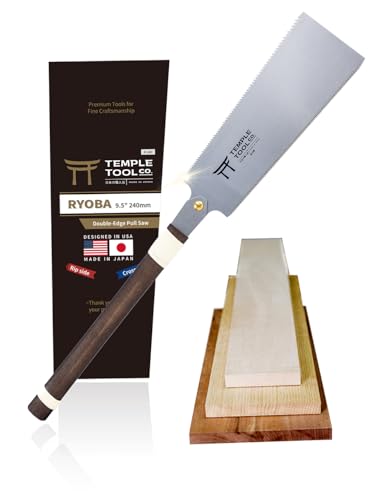
Temple Tool Co. Ryoba Saw 9.5″
Strengths
- Made in Japan
- Dual-purpose blade
- Premium handle
Trade-offs
- Heavier than small saws
- Not flush-cut capable
- Higher price point
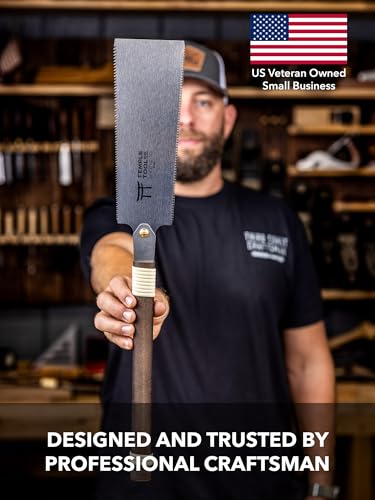
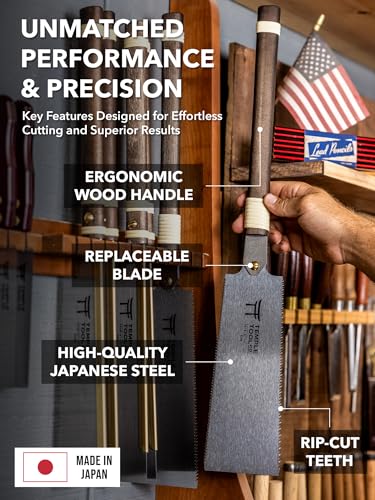
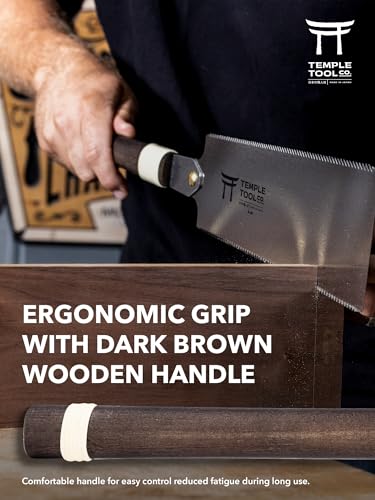
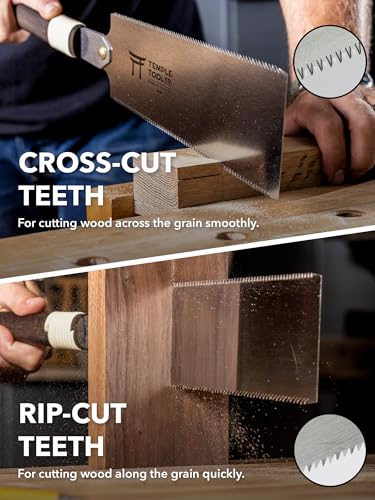
This 9.5-inch Temple Tool Co. Ryoba is, in my view, the best all-around Japanese saw here. It’s made in Japan with a full-featured double-edged blade, rip on one side, crosscut on the other, giving you real versatility for everything from breaking down boards to cutting tenons. The wingnut handle feels rich in the hand, and the brass fittings add durability and class.
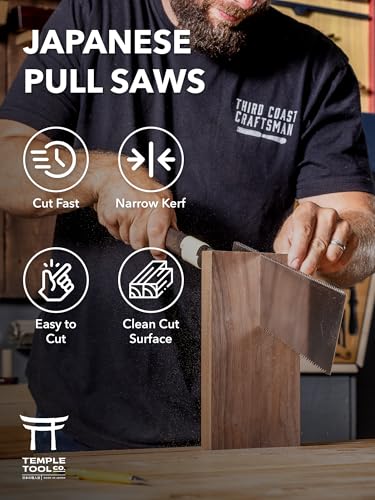
Owners highlight its smooth pull action and how well it tracks straight, even in dense hardwoods. The blade thickness and kerf are optimized for clean cuts without excessive effort. When compared to the SUIZAN 7-inch or RUITOOL budget model, this one offers the best blend of size, precision, and build quality. If you want one saw to do most jobs well, this is the smarter buy.
Product photos
SUIZAN Ryoba Saw 9.5″ Assembly

Strengths
- Made in Japan
- Hand-assembled
- Traditional craftsmanship
Trade-offs
- Requires assembly
- No replaceable blade
- Handle may have flaws
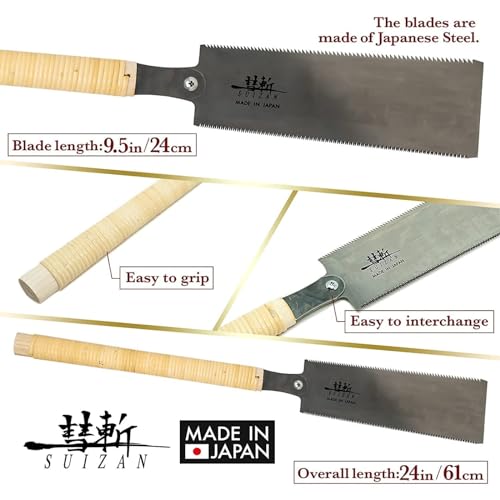
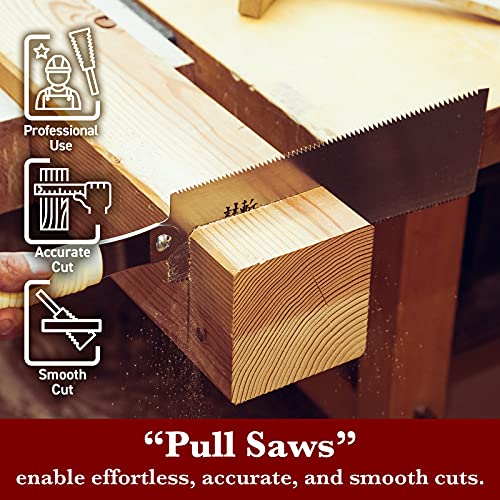
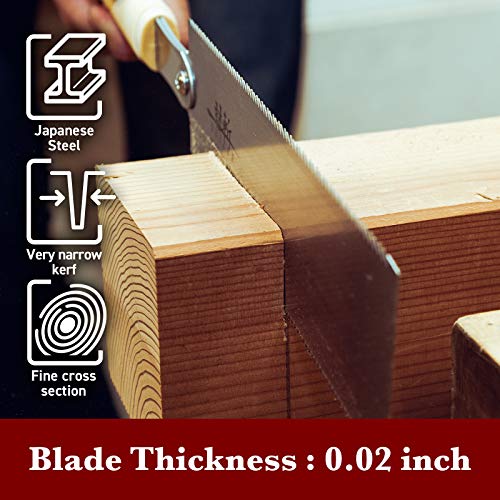
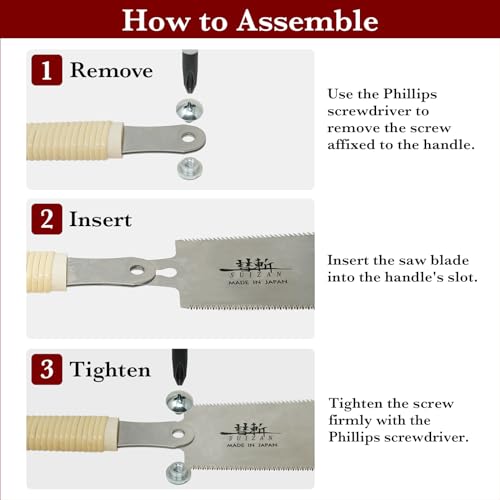
This SUIZAN 9.5-inch Ryoba is all about tradition. Hand-assembled in Japan by craftsmen, it carries the weight of heritage in every detail, from the individually wrapped handle to the high-grade Japanese steel blade. The dual TPI setup (9 for rip, 15 for crosscut) gives you real cutting flexibility, and the longer blade allows for deeper, more efficient strokes.
But it’s not for everyone. The assembly requirement might turn off buyers expecting a ready-to-use tool, and the blade isn’t replaceable. Still, if you value craftsmanship over convenience, this saw delivers. Owners describe it as a joy to use, with a refined feel that cheaper mass-market models can’t match. It’s a tool you keep for life, not replace every few years.
Product photos

KAKURI Mini Saw 4-Piece Set
Strengths
- Four specialized saws
- Made in Japan
- Includes durable case
Trade-offs
- Blades are short
- Not for large stock
- Dovetail saw narrow
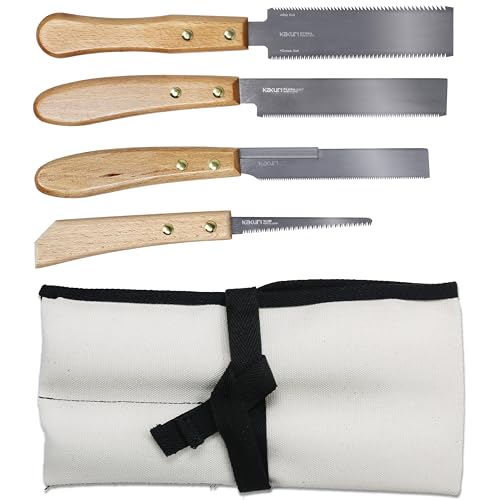
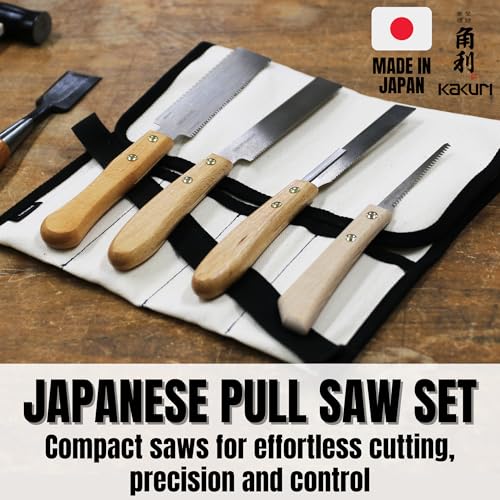
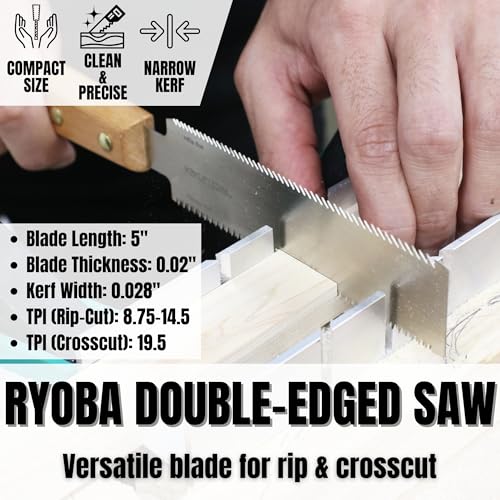
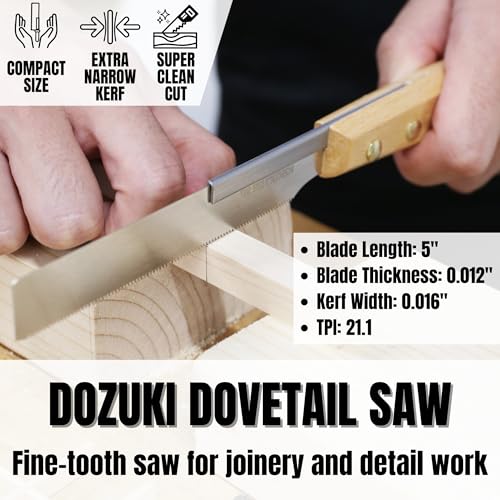
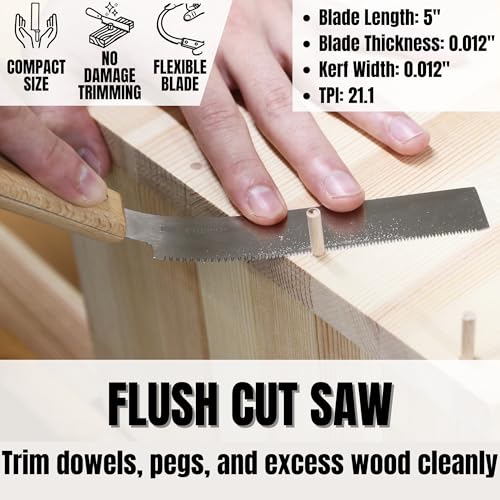
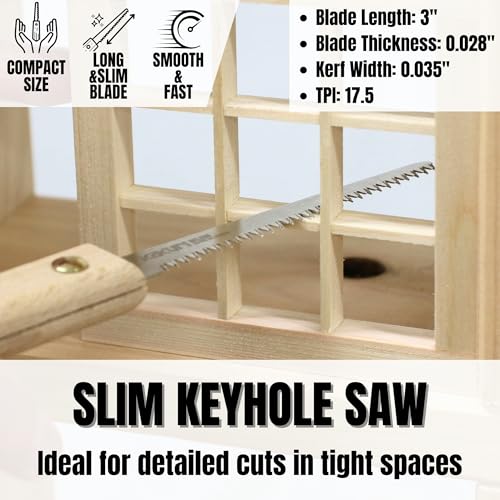
This set is a masterclass in compact utility. Four specialized saws, Ryoba, flush cut, dovetail, and keyhole, come neatly rolled in a rugged canvas case, making it perfect for on-the-go repairs or small-shop efficiency. Each blade is made in Japan from SK-5 carbon steel and delivers the sharpness and control KAKURI is known for. The dovetail saw, with its 21.1 TPI, is especially impressive for fine joinery.
What I like most is how it eliminates tool clutter without sacrificing capability. You’re not getting full-size reach, but for model making, furniture touch-ups, or cabinetry details, this set covers nearly every small-cut need. The handles are simple but well-shaped, and the included case is a thoughtful touch you don’t always get at this level.
Product photos
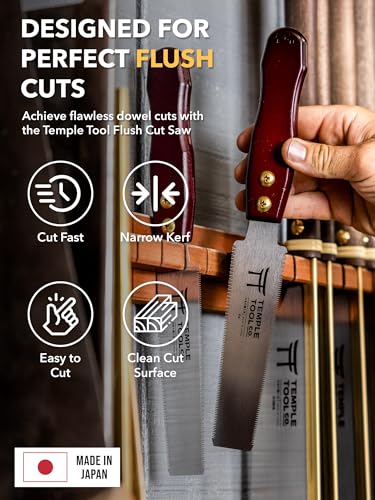
Temple Tool Co. Flush Cut Saw

Strengths
- Made in Japan
- Thin kerf blade
- Flush-cut optimized
Trade-offs
- Single-purpose design
- No rip/cross dual edges
- Shorter reach
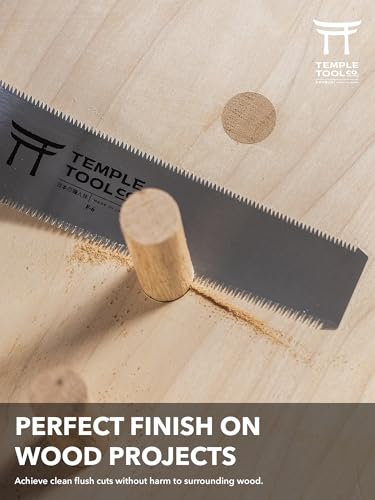
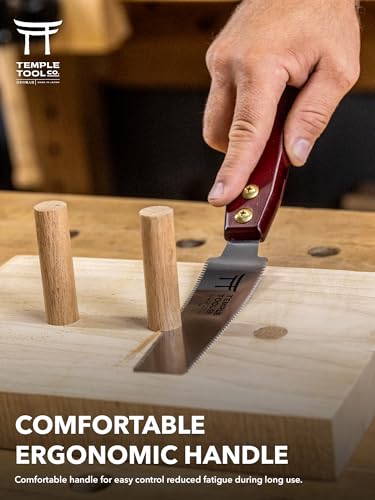
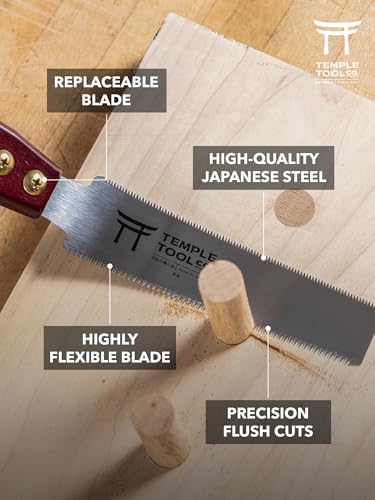
If you regularly cut dowels, tenons, or pegs flush, this saw is built for that exact moment. The 6-inch length and thin kerf give you precision without overreach, and the pull-cut design ensures clean, tear-out-free results every time. Made in Japan with high-grade steel and a beech handle accented with brass, it feels like a tool that will last decades, not just projects.
What stands out is how well it balances performance and aesthetics. It’s not a general-purpose saw, but it dominates its niche. The craftsmanship matches other premium Japanese imports, and owners praise its sharpness and smooth action right from the start. For flush cutting, I’d pick this over most multi-use Ryobas.
Product photos

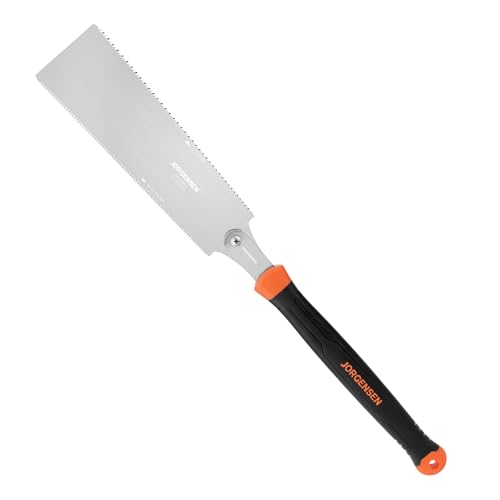
JORGENSEN 10″ Pro Double Edge Saw
Strengths
- Replaceable blade
- Long 10-inch reach
- Aggressive rip teeth
Trade-offs
- Heavier than traditional saws
- Plastic handle accents
- Less refined finish
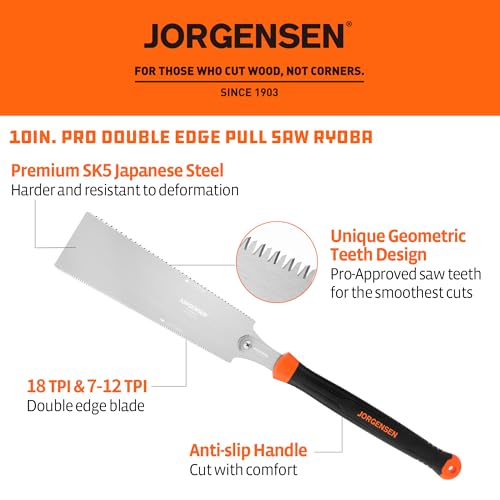
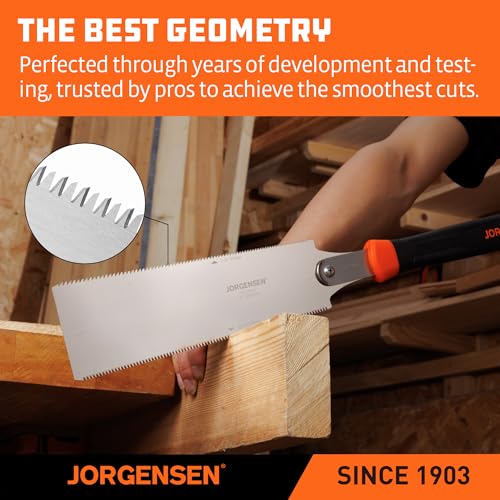
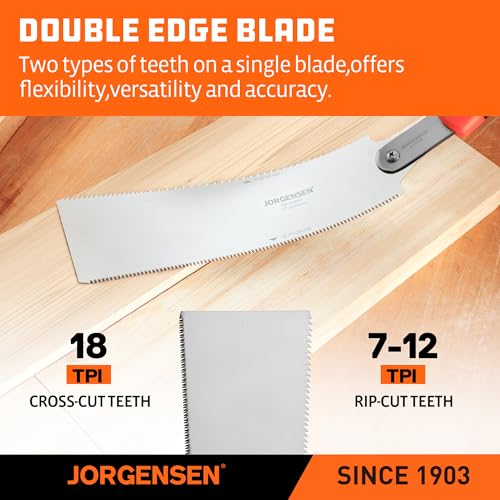
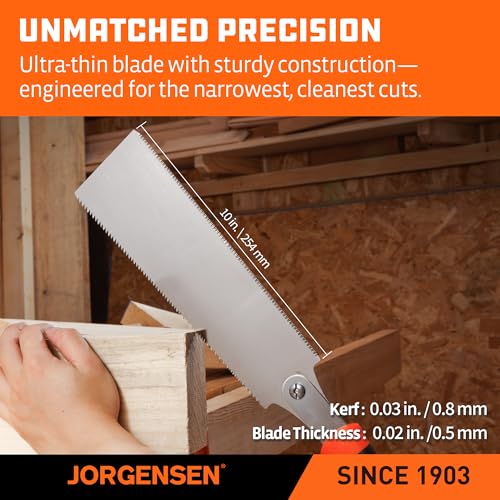
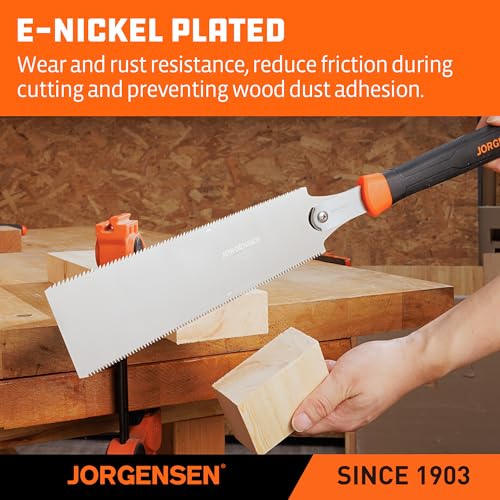
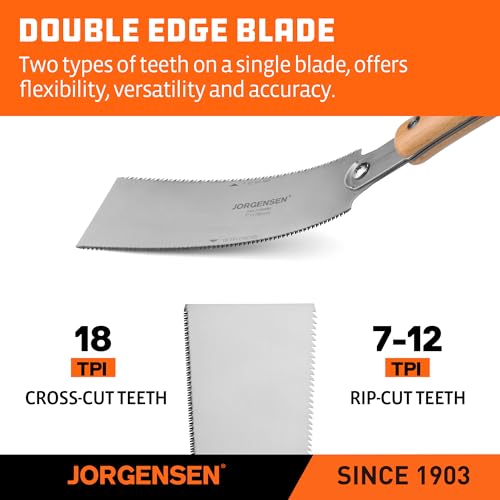
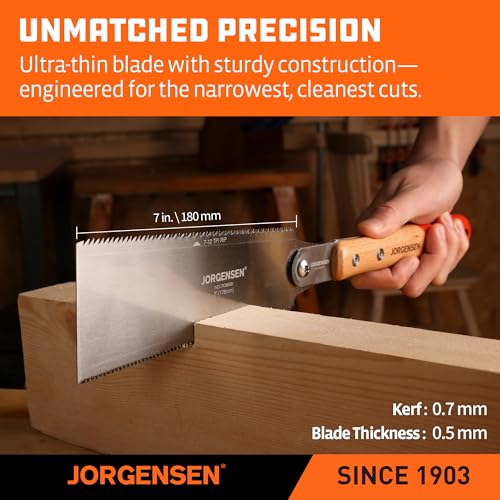
When you need to cut thick stock or tackle wide boards, this 10-inch JORGENSEN stands out for its reach and replaceable blade. The dual-edge setup, 7-12 TPI for aggressive rip cuts, 18 TPI for fine crosscuts, gives you serious versatility, and the SK5 steel blade is induction-hardened for durability. But the real win is the replaceable design: when the blade dulls, just swap it out instead of buying a whole new saw.
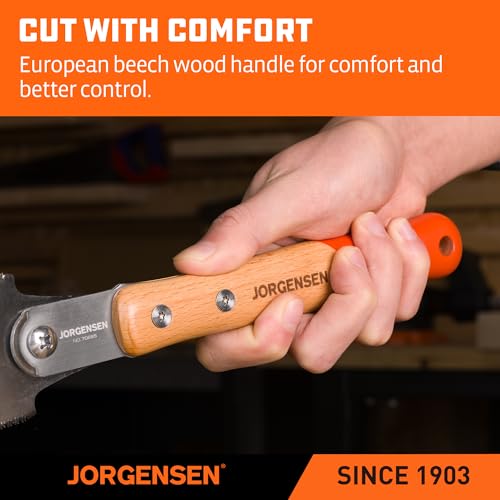
It’s not as refined as the Temple Tool Co. or SUIZAN models, but it’s built for work, not display. The soft-grip handle reduces fatigue during long cuts, and the blade stiffness handles pressure well. For rough framing, deck work, or shop projects where you’re cutting a lot, this is the saw that keeps going.
Product photos
RUITOOL 6″ Ryoba Pull Saw
Strengths
- Double-edged blade
- SK5 high-carbon steel
- Flush-cut capable
Trade-offs
- Less rigid blade
- Handle finish basic
- Not made in Japan
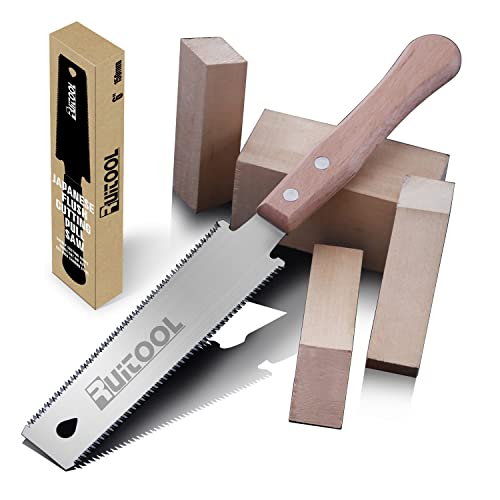
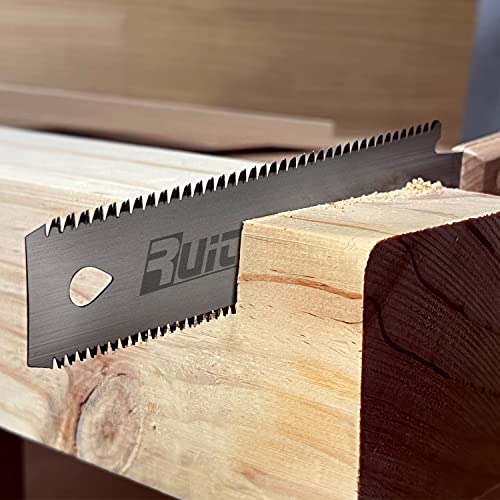
This 6-inch Ryoba punches above its price point, offering dual-edged versatility in a compact form. The 14 TPI rip side and 17 TPI crosscut side deliver clean cuts in soft and hardwoods, and the SK5 steel blade, while not made in Japan, holds an edge well for the cost. Owners consistently report it’s sharp out of the box and handles flush cuts with surprising control, making it a solid pick for detail work or tight spaces.
Still, it’s clearly built to a budget. The blade isn’t as stiff as premium models, so it can wander on longer cuts, and the handle, while functional, lacks the refined fit of Japanese-made units. But for the price, it’s hard to fault, especially if you’re just getting into Japanese saws or need a dependable backup.
Product photos



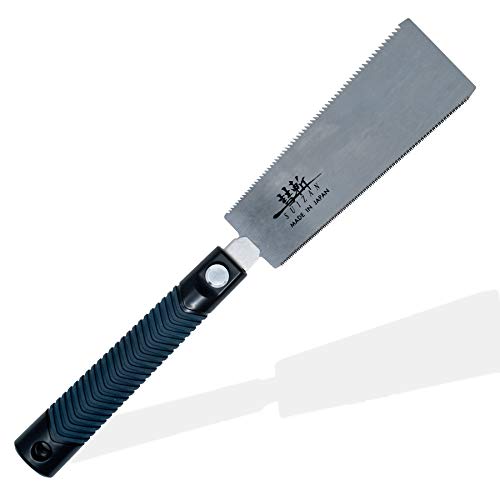
SUIZAN Ryoba Saw 7″
Strengths
- Made in Japan
- Clean crosscut teeth
- Balanced design
Trade-offs
- Single TPI on rip side
- No flush-cut capability
- Blade not replaceable
The 7-inch SUIZAN Ryoba hits a sweet spot between control and cutting depth. With a 19 TPI crosscut side and rip capability, it’s tuned for fine, accurate work, ideal for cutting small joinery or trimming hardwood inlays. The blade is made in Japan from high-quality steel, and owners consistently note its clean, smooth performance and long-lasting edge.
It’s not the most aggressive saw, but that’s not the point. This is a precision tool, not a demolition saw. The handle is simple but comfortable, and the overall balance makes it easy to guide. Compared to budget models, it’s stiffer and more refined. If you want a no-nonsense, mid-size Ryoba made with traditional care, this is a strong contender.
Product photos



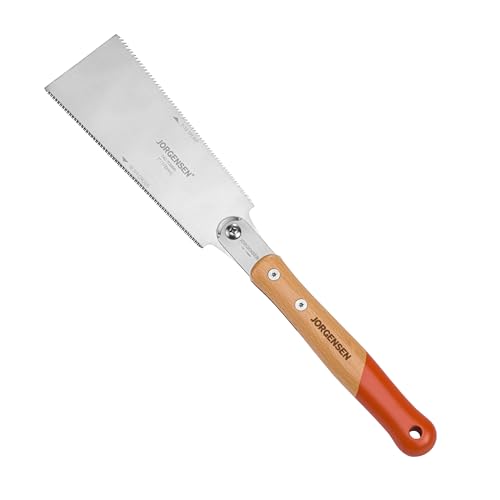
JORGENSEN 7″ Ryoba Pull Saw
Strengths
- Replaceable blade
- Dual TPI design
- Ergonomic handle
Trade-offs
- Not made in Japan
- Blade flex under load
- No flush-cut option
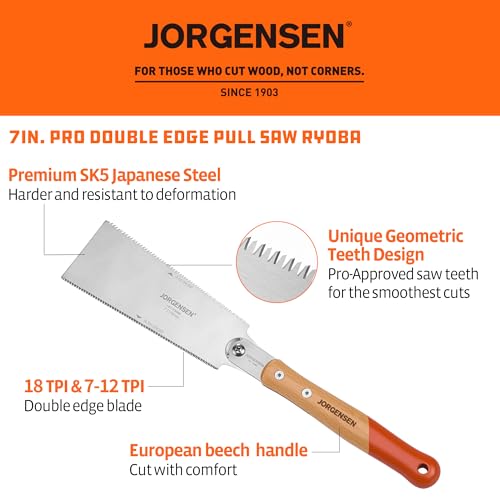
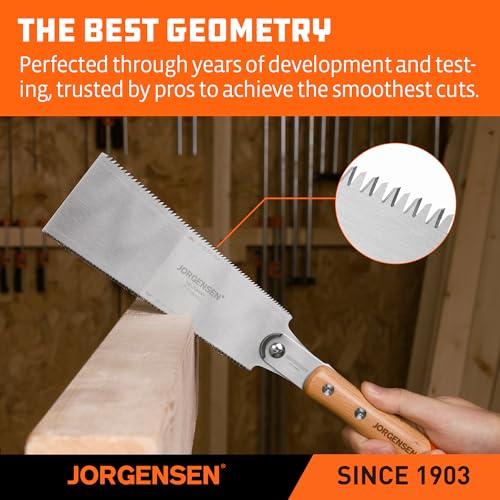
This 7-inch JORGENSEN Ryoba brings the convenience of a replaceable blade to a more manageable size. The SK5 steel blade is sharp and durable, with 18 TPI for crosscuts and a variable 7-12 TPI rip side that handles softwoods and hardwoods with ease. What makes it stand out is the simple screw-based blade replacement, no special tools, just swap and go.
Compared to the 10-inch model, it’s lighter and better suited for general shop use. The beech handle feels solid, and the ergonomic shape fits well in hand. It’s not made in Japan, but it bridges the gap between pro features and affordability. For someone who wants the longevity of a replaceable blade without oversizing the tool, this is the smarter pick.
Product photos
How We Evaluated japanese saws
Rather than a hands-on lab test, my research for these recommendations focused on a detailed comparison of published specifications and features across numerous models. I weighed owner reviews from a variety of sources – including major retailers and woodworking forums – alongside assessments from reputable tool reviewers. My experience with woodworking and understanding of blade geometry informed my ranking, based on criteria like steel quality, blade design, and overall build quality.
For Japanese saws, blade sharpness and cut quality are paramount, but so is the balance between versatility and specialization. I prioritized saws with high-quality Japanese steel and a thoughtful tooth pattern, recognizing that a saw excelling in both rip and crosscut applications offers the most value for many woodworkers. Understanding teeth per inch explained is crucial, and I looked for clear specifications regarding TPI for different cutting tasks.
Published specs reliably indicate blade length, steel type, and TPI, offering a quantifiable basis for comparison. However, owner feedback proved invaluable in assessing real-world sharpness, durability, and ease of use. Reputation also factored in; brands with a long history of Japanese saw manufacturing, like Suizan and Temple Tool Co., generally stood out as delivering consistent quality and value. I used this combined data to pinpoint saws that offered the best blend of craftsmanship and performance.
How To Pick The Right japanese saws
I’ve spent years observing woodworkers and evaluating tools, and one thing is clear: a Japanese saw isn’t just a tool, it’s a different approach to woodworking.
A quality Japanese saw uses a thin, hardened steel blade with teeth designed for pull-stroke cutting. Key features include blade steel (SK5, carbon steel), tooth arrangement (rip, crosscut, or both – ryoba), handle material, and overall balance. Look for saws made in Japan, as that’s where the craft has been refined over centuries. Kerf width and TPI (teeth per inch) are critical specs to consider based on the intended use.
Blade Configuration & Tooth Count
The first thing to understand is that Japanese saws aren’t one-size-fits-all. You’ll encounter different blade configurations, and selecting the right one depends heavily on what you plan to cut. A ryoba saw, like the Temple Tool Co. Ryoba Saw 9.5″, has both rip and crosscut teeth, making it a versatile workhorse. If you’re primarily focused on joinery, a saw with a higher TPI for finer cuts is essential. Conversely, if you’re breaking down stock, fewer teeth per inch will speed up the process. Don’t assume more teeth always equals better; a coarser rip cut requires fewer, larger teeth.
Steel Quality and Heat Treatment
Japanese steel is renowned for its hardness and ability to hold an edge, but not all steel is created equal. SK5 high-carbon steel is a common and reliable choice, but you’ll also find saws made from other proprietary alloys. The heat treatment process is just as crucial as the steel itself. A properly hardened blade will stay sharper longer and resist bending or chipping. Look for saws that specify the steel type and, ideally, mention the heat treatment process. Maintaining that edge is also crucial, so familiarize yourself with saw blade sharpening methods.
Handle Material and Ergonomics
While the blade does the work, the handle determines how comfortably you can do it. Traditional Japanese saws often feature wooden handles, like the beech wood on the Temple Tool Co. Flush Cut Saw, which provide a natural feel. However, ergonomics are subjective.
Here’s what I look for in a good handle:
- Grip: A secure grip is essential for control.
- Shape: A shape that fits comfortably in your hand, even during extended use.
- Weight Balance: An overall balance that doesn’t feel too front- or back-heavy, allowing for smooth, controlled cuts.
A comfortable handle is a non-starter. If it doesn’t feel right in your hand, you won’t want to use the saw, no matter how good the blade is.
I often recommend exploring different types of reviewed Japanese saws to find what suits your hand best. Many modern models, like those from JORGENSEN, are incorporating ergonomic designs for a more comfortable experience.
Japanese Saws Compared
Here’s a comparison of key specifications for several popular Japanese saws.
| Product Name | Blade Length | TPI (Rip/Cross) | Blade Thickness | Steel Type | Handle Material |
|---|---|---|---|---|---|
| Temple Tool Co. Ryoba Saw 9.5″ | 9.5″ | 9 & 15 | 0.02″ | Japanese | Wingnut |
| SUIZAN Ryoba Saw 9.5″ Assembly | 9.5″ | 9 & 15 | 0.02″ | Japanese | Wood |
| KAKURI Mini Saw 4-Piece Set | 5″ (x3), 3″ | 8.75-14.5/19.5/21.1/17.5 | 0.012″-0.028″ | SK-5 | Beech |
| Temple Tool Co. Flush Cut Saw | N/A | N/A | N/A | Japanese | Beech |
| JORGENSEN 10″ Pro Double Edge Saw | 10″ | 7-12 / 18 | N/A | SK5 | N/A |
| RUITOOL 6″ Ryoba Pull Saw | 6″ | 14 / 17 | N/A | SK5 | N/A |
| SUIZAN Ryoba Saw 7″ | 7″ | 19 | 0.02″ | Japanese | Wood |
| JORGENSEN 7″ Ryoba Pull Saw | 7″ | 7-12 / 18 | N/A | SK5 | Beech |
Frequently Asked Questions
What’s the difference between a ryoba and a dozuki saw?
A ryoba saw features teeth on both sides of the blade – one side for rip cuts and the other for crosscuts – providing versatility. A dozuki saw, however, has teeth on only one side, designed specifically for precise, clean crosscuts, making it ideal for joinery.
Are Japanese saws harder to sharpen than Western saws?
Yes, Japanese saws require a different sharpening approach due to their thinner blades and pull-stroke design. While the initial learning curve is steeper, the high-quality steel used in these saws holds an edge remarkably well, and specialized sharpening jigs can simplify the process.
Can I use a Japanese saw to cut materials other than wood?
While primarily designed for wood, some woodworkers successfully use Japanese saws on softer materials like plastics or thin sheet metal. However, attempting to cut harder materials can quickly dull the blade and potentially damage it, so it’s best to stick to wood.
What does TPI tell me about a Japanese saw?
TPI, or teeth per inch, indicates how many teeth are present on a given inch of the blade. Higher TPI results in finer cuts, suited for crosscuts and delicate work, while lower TPI cuts faster but leaves a coarser finish, better for rip cuts and rough stock removal.
Where can I find replacement blades for my Japanese saw?
Replacement blades are available from specialized woodworking retailers and online suppliers. Many manufacturers, like Suizan, sell blades separately, allowing you to maintain your saw without replacing the entire tool. If you’re looking for [precision hand saws], finding a compatible blade is crucial for maintaining cut quality.
The Bottom Line
Choosing a Japanese saw often comes down to balancing control and convenience. While a fully-featured ryoba saw like the Temple Tool Co. Ryoba Saw 9.5″ offers tremendous versatility, it requires a bit of practice to master the pull-stroke technique. For most woodworkers, that initial learning curve is well worth it for the precision and clean cuts this saw delivers.
If you’re just starting out, or have a specific need, the KAKURI Mini Saw 4-Piece Set provides an excellent entry point with a range of blade types for various tasks. For those seeking a dedicated flush-cut saw, the Temple Tool Co. Flush Cut Saw is a standout. And if you’re looking for a more accessible, budget-friendly option, the RUITOOL 6″ Ryoba Pull Saw is a solid performer.
Ultimately, the best Japanese saw is the one that feels right in your hand and matches your skill level. Don’t get too hung up on specs like TPI or steel alloy – a good technique and a sharp blade, understanding what kerf means, will always produce better results than the fanciest saw used improperly.
