8 Best Japanese Pull Saws of 2026
This post contains affiliate links. As an Amazon Associate, we earn from qualifying purchases.
The Temple Tool Co. 9.5″ Ryoba Saw stands out as the best overall Japanese pull saw for its precision, durable Japanese steel, and smooth dual-edge performance. For a budget-friendly yet solid option, the SUIZAN 7″ Ryoba Double Edge Saw delivers strong value. If you need portability, the JORGENSEN 10-3/8″ Folding Kataba Saw is the most versatile pick for on-site work.
Most people don’t realize how much difference a proper pull saw can make in clean, controlled cuts, especially when working on trim, cabinetry, or fine joinery. Many end up frustrated with tear-out, binding, or uncomfortable handles that make accurate work a chore.
This guide cuts through the noise by focusing on real-world performance indicators: blade steel, tooth design, and handle ergonomics. I researched the top models, analyzed specs, and weighed owner feedback to find the Japanese pull saws that consistently deliver sharpness, control, and durability, so you can choose with confidence.
Top 8 Japanese Pull Saws in the Market
The Best Japanese Pull Saws, Reviewed
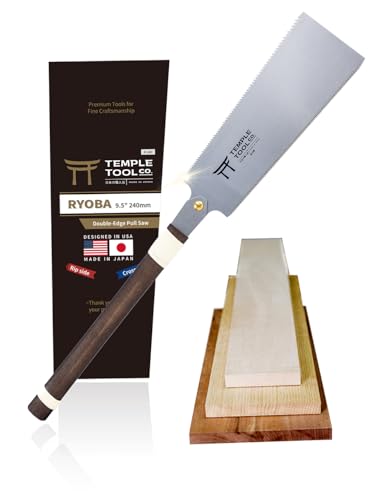
Temple Tool Co. 9.5″ Ryoba Saw
Strengths
- Double-edge versatility
- Made in Japan
- Premium handle material
Trade-offs
- Higher price point
- Not ideal for flush cuts
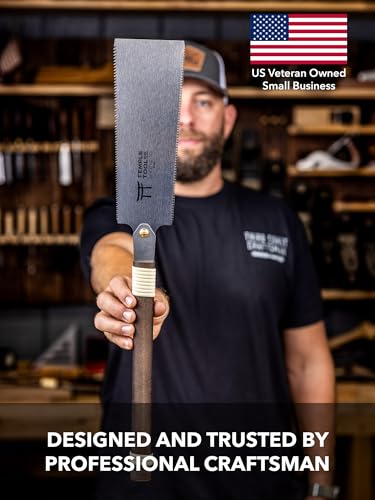
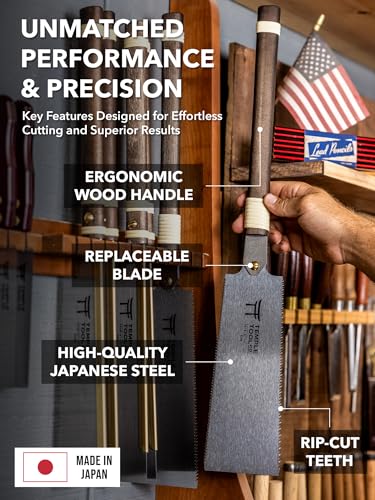
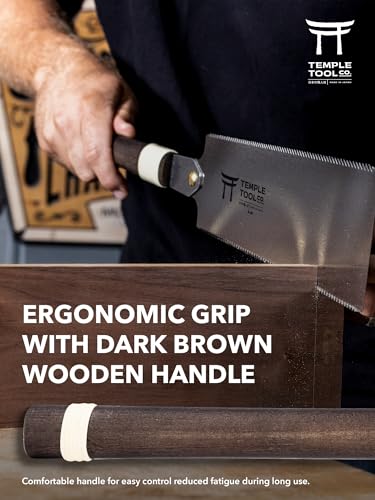
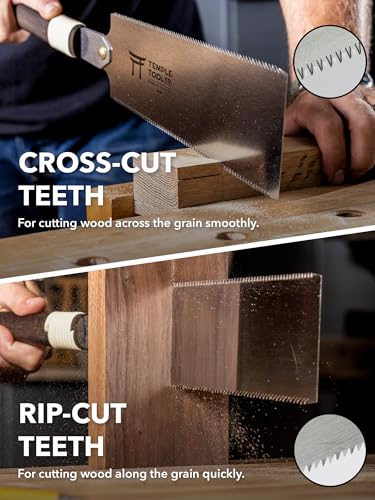
This Temple Tool Co. 9.5 Ryoba hits that sweet spot between craftsmanship and practicality. The dual-edge setup, 9 TPI rip on one side, 15 TPI crosscut on the other, gives serious versatility for a single saw, and owners consistently report clean, controlled cuts in both hardwoods and softwoods. The made-in-Japan pedigree and high-grade steel mean it holds an edge well, which matters when you’re doing fine joinery like dovetails or cutting boards to width.
What really sets it apart is the build quality, a solid Wingnut handle with brass fittings not only looks great on the bench but feels balanced in hand. Compared to budget models, this one doesn’t feel delicate or overly stiff. It’s the kind of saw I’d recommend to someone who wants one high-performing general-purpose tool without jumping into a multi-saw collection.
Product photos
SUIZAN 9.5″ Ryoba Double Edge Saw

Strengths
- Excellent cutting precision
- Long blade reach
- High TPI crosscut side
Trade-offs
- Requires self-assembly
- Handle finish varies
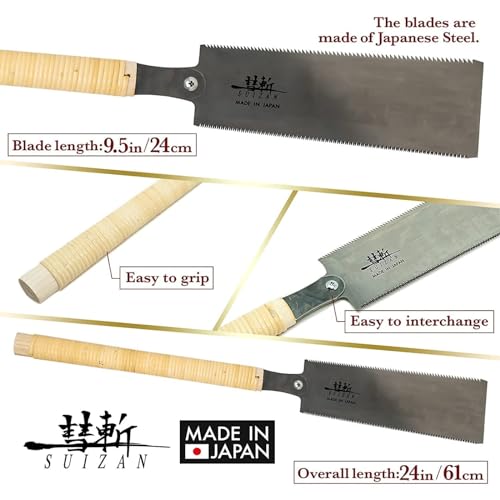
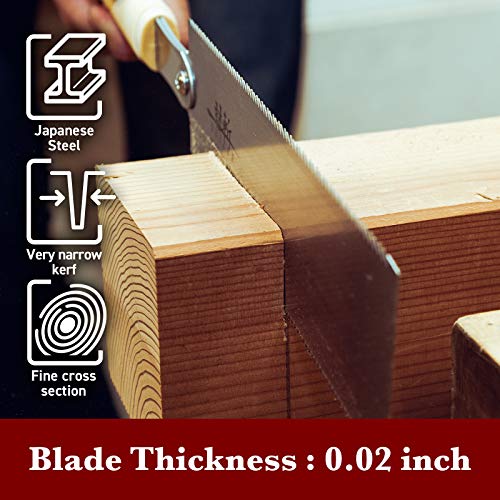
This 9.5-inch Suizan Ryoba is built for performance, long blade, 9 TPI rip side, 15 TPI cross side, and a kerf width under 0.8mm for clean, precise cuts. On paper, it’s one of the most capable saws here, especially for ripping thick stock or accurate crosscuts. The made-in-Japan steel and craftsmanship are consistent with Suizan’s reputation, and owners report excellent edge retention and smooth action.
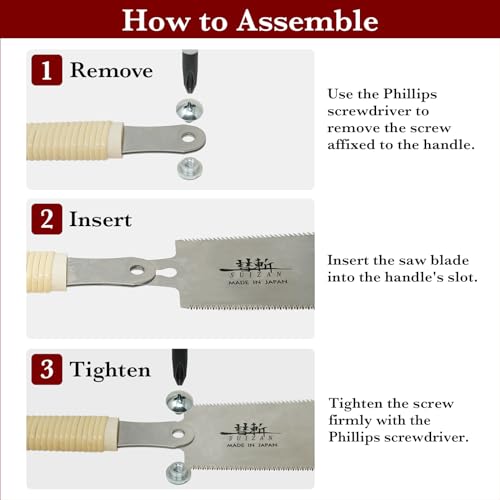
But there’s a catch: it ships disassembled. You have to install the blade yourself, and while that’s not hard, it’s unusual and could turn off some buyers. Also, the handle is wrapped by hand, so minor cosmetic variations are normal, not a defect, but something to expect. If you’re okay with assembly, this is a top-tier performer.
Product photos

Temple Tool Co. 6″ Flush Cut Saw

Strengths
- Excellent flush-cutting
- Razor-thin kerf
- Premium handle
Trade-offs
- Single-purpose design
- No rip/cross versatility
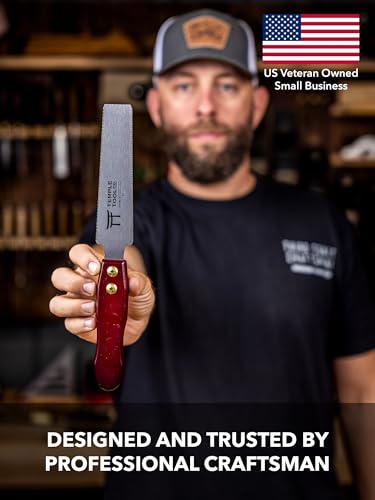
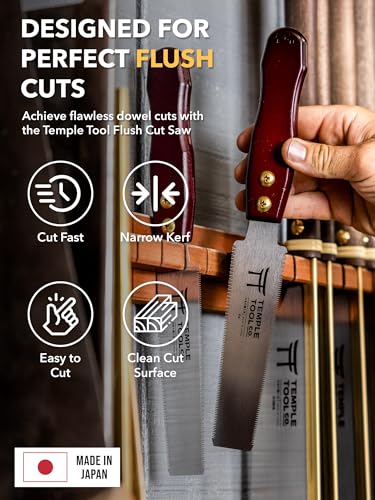
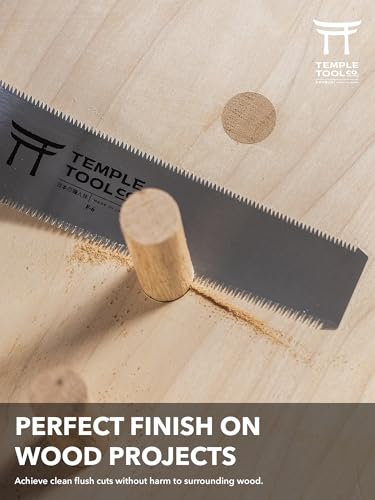
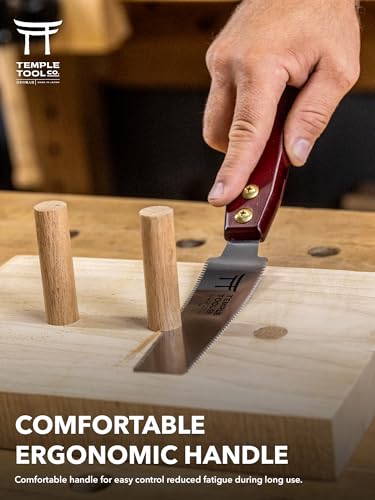
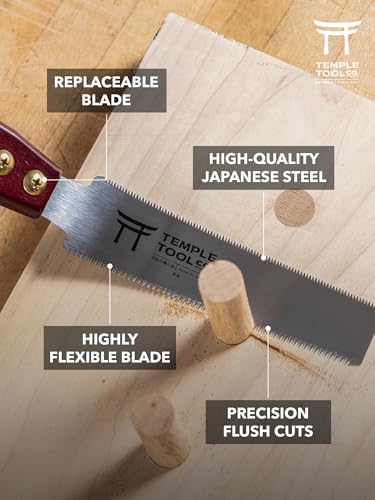
When you need to trim a dowel or peg flush without marring the surface, this 6-inch Temple flush cut saw is purpose-built for the job. The blade is thin and stiff enough to slice right up against a joint, and the zero-set teeth ensure no scratching on the adjacent wood. Owners praise its precision, especially when doing furniture repair or finish work where a regular saw would catch or gouge.
Like the larger Temple Ryoba, it’s made in Japan with high-grade steel and comes with that same Wingnut handle, beautiful and balanced. It’s not meant for long rip cuts, but that’s not the point. If flush cutting is a regular part of your workflow, this is the smarter buy over trying to modify a general-purpose saw.
Product photos
SUIZAN 7″ Ryoba Double Edge Saw
Strengths
- Mid-size balance
- Clean cutting
- Durable Japanese steel
Trade-offs
- Shorter blade length
- Limited rip capacity
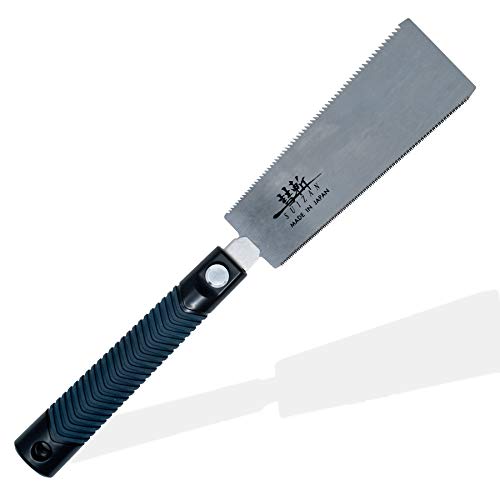
The 7-inch Suizan Ryoba is a well-balanced middle ground, not too big, not too small. At 19 TPI on the crosscut side and a 0.5mm blade thickness, it’s designed for accuracy in medium-duty work. It’s lighter than the 9.5-inch models, making it easier to control for users with smaller hands or those doing detail work. Owners note it feels sturdy without being tiring, and the made-in-Japan build inspires confidence in long-term performance.
Compared to the Temple 9.5, it sacrifices some cutting depth but gains maneuverability. It’s not the best for heavy rip cuts, but for crosscuts and light joinery, it’s more than capable. If you want a single saw that’s agile and precise without giving up too much blade length, this one earns its place.
Product photos



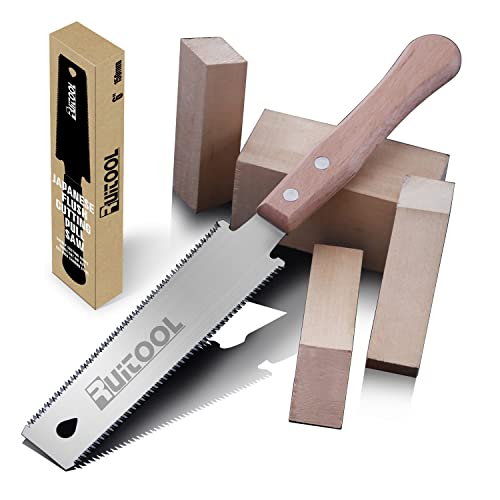
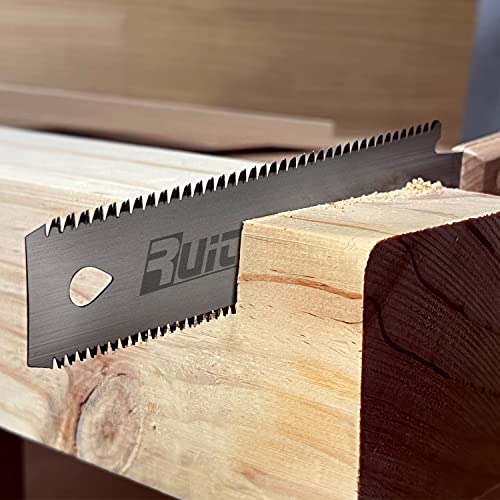
RUITOOL 6″ Double Edge Ryoba Saw
Strengths
- Affordable
- Compact size
- SK5 steel blade
Trade-offs
- Basic handle finish
- Shorter reach
- Less durability in hardwoods
If you’re just getting into Japanese pull saws and don’t want to commit to a premium model yet, this RUITOOL 6-inch Ryoba makes sense on paper. The SK5 steel blade is induction-hardened to HRC60-63, which is solid for this price range, and the 14/17 TPI split gives decent flexibility between soft and hardwoods. It’s compact, lightweight, and several owners mention using it for small trim work or model building where control matters more than cutting depth.
But while it delivers for light tasks, it doesn’t have the refined ergonomics or blade stability of the Temple or Suizan models. The beech handle is functional but feels basic, and the blade, while sharp out of the box, may dull faster under heavy use. Still, for the cost, it’s a capable entry point.
Product photos



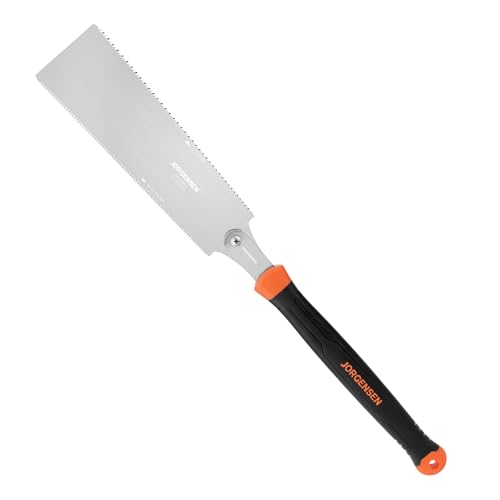
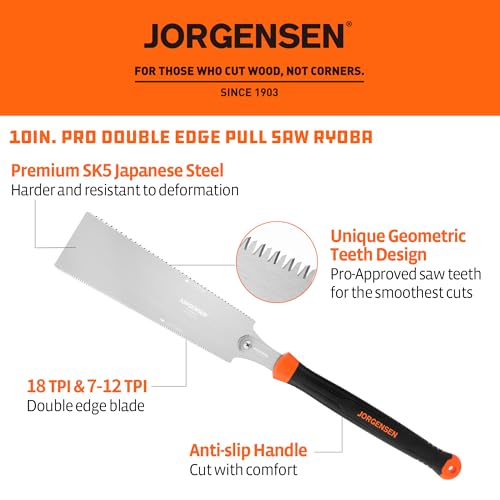
JORGENSEN 10″ Pro Double Edge Saw
Strengths
- Replaceable blade
- Ergonomic handle
- Long cutting reach
Trade-offs
- Slight blade flex
- Replacement availability
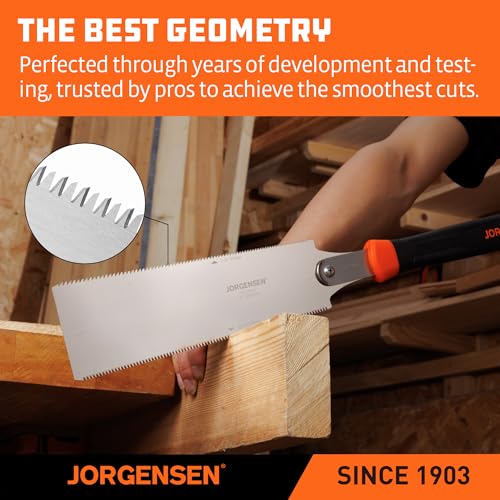
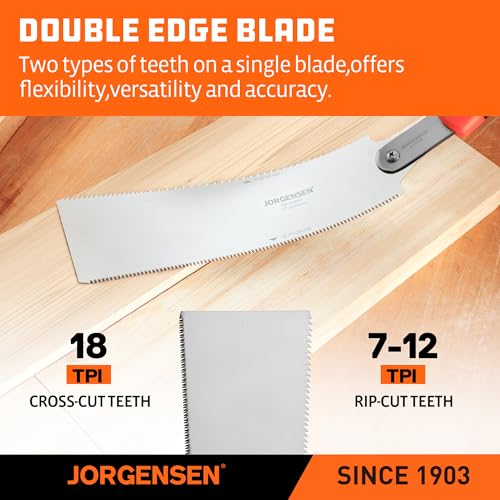
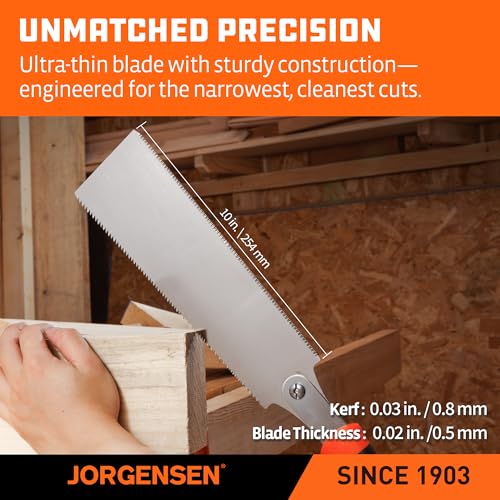
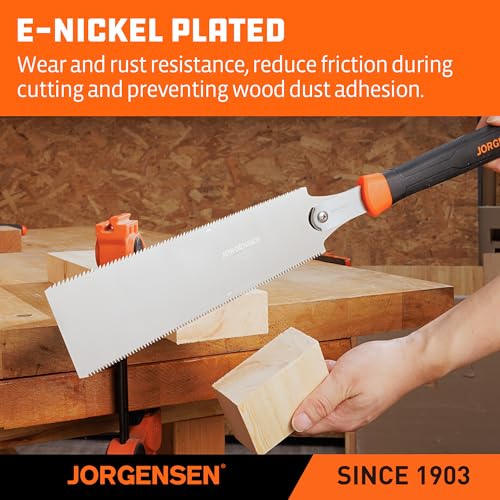
The standout feature here is obvious, a replaceable blade. That’s rare in this category and a real win for users who go through a lot of material or work in gritty conditions. The SK5 steel blade is flexible and induction-hardened, and the dual TPI setup (7-12 for rip, 18 for cross) gives solid performance across materials. The soft-grip handle is comfortable, and the 10-inch length offers aggressive cutting speed on thicker stock.
But it’s not all upside. The replaceable mechanism adds a little play in the blade compared to one-piece designs, which can affect cut accuracy. And while the blade swaps are convenient, finding exact replacements long-term might be tricky. Still, for job-site durability and versatility, this is a strong pick.
Product photos
Evertools 3-Piece Japanese Saw Set
Strengths
- Three-in-one value
- Includes flush and pruning saws
- Good for mixed tasks
Trade-offs
- Average blade sharpness
- Basic handles
- Less precision on fine cuts
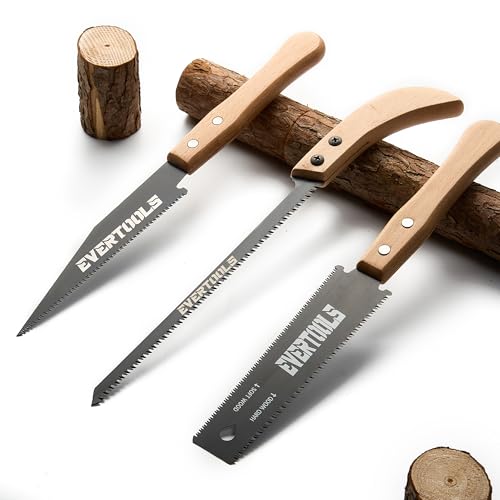
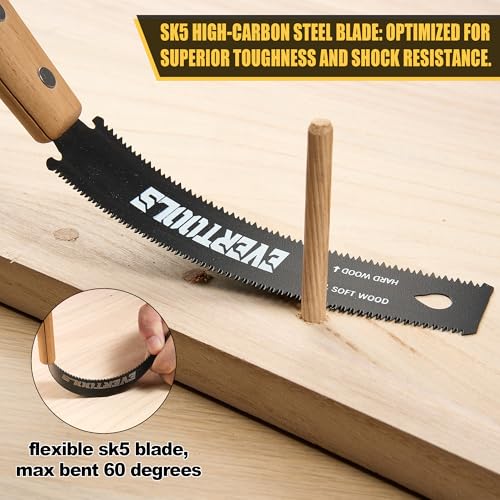
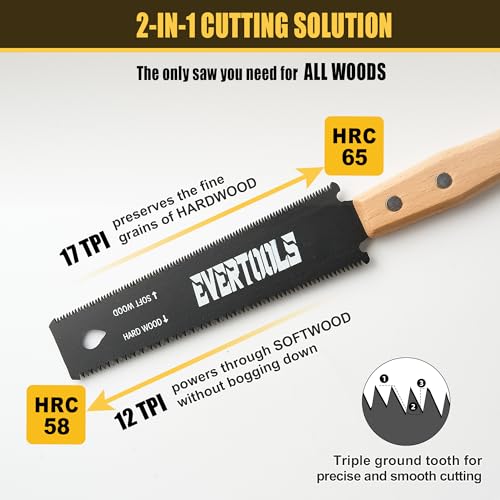
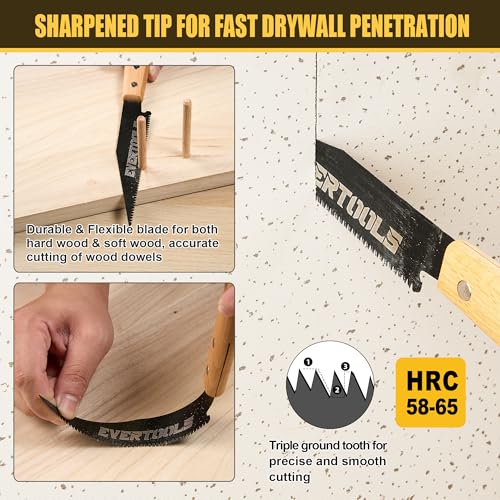
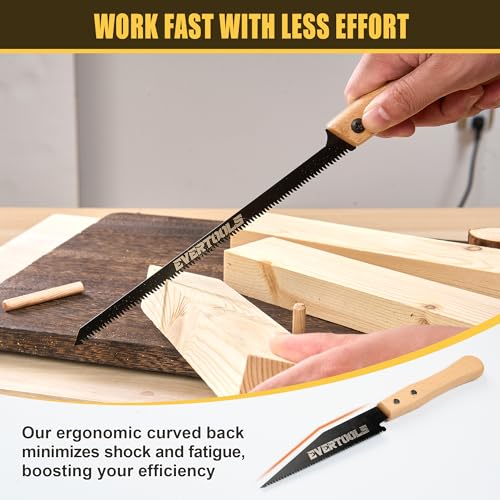
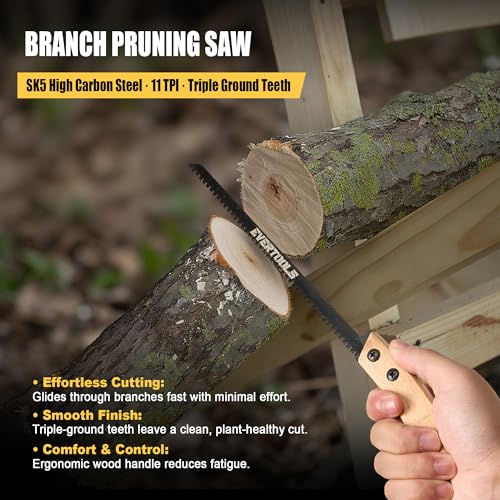
This 3-piece Evertools set stands out for sheer value, you get a 6″ Ryoba, a 6″ flush cut, and an 8″ pruning saw, all with SK5 steel blades. For someone setting up a basic toolkit or needing options for different tasks without buying one high-end saw at a time, this is a smart way to go. The Ryoba handles basic rip and crosscuts, the flush saw works for trim, and the pruning blade adds outdoor utility, which a lot of owners appreciate for quick yard jobs.
That said, don’t expect the fit and finish of a Temple or Suizan. The handles are simpler, and the blades, while functional, aren’t quite as refined. But for the versatility and low cost, it’s hard to beat. I’d pick this over a single budget saw if you need multiple cutting styles.
Product photos
JORGENSEN 10-3/8″ Folding Kataba Saw

Strengths
- Folding design
- Compact and portable
- Replaceable blade
Trade-offs
- Single-edge only
- Folding mechanism adds play
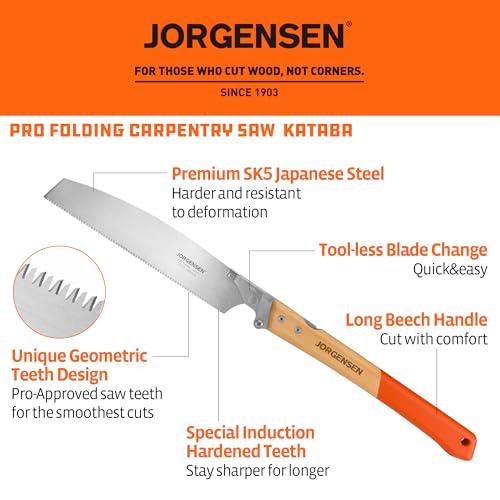
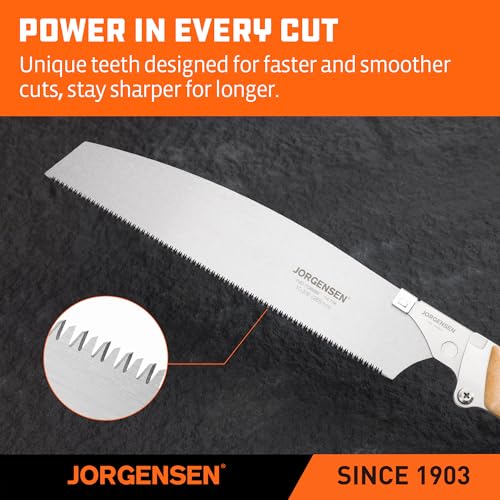
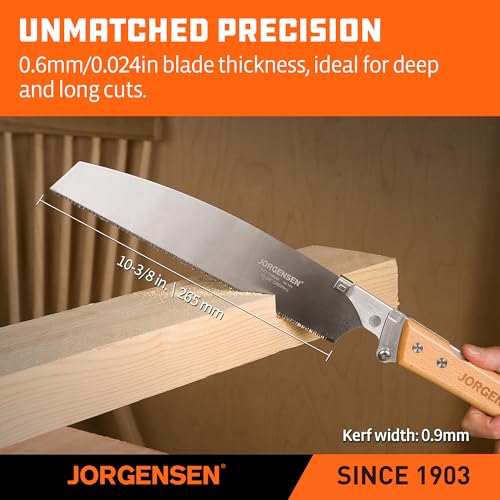
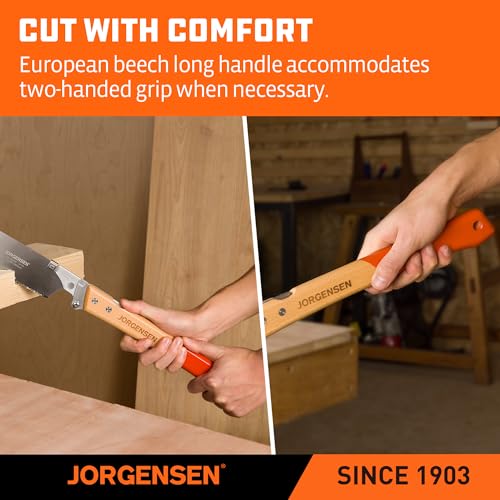
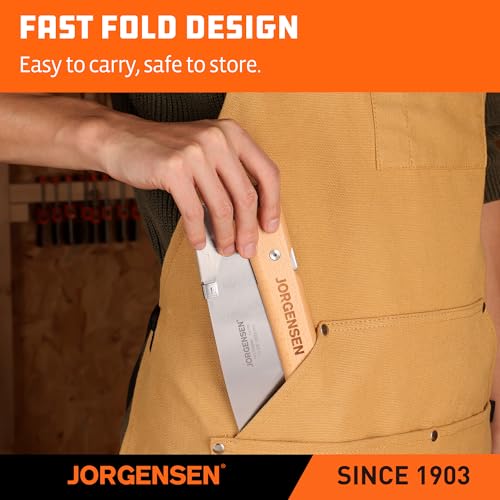
This folding Kataba model is all about portability and convenience. The 10.3-inch SK5 blade locks securely, and the 14 TPI design handles both hardwoods and softwoods with decent smoothness. The beech handle feels solid, and the folding mechanism makes it easy to stash in a tool bag or even a deep pocket, something a lot of users mention for on-the-go repairs or outdoor projects.
It’s a single-edge saw, so you lose the Ryoba’s dual functionality, and the folding joint, while sturdy, isn’t as rock-solid as a fixed handle. But if you value compactness and don’t want to carry multiple tools, this is a practical solution. It’s not a shop centerpiece, but it gets respect for utility.
Product photos
How We Chose These japanese pull saws
My approach to evaluating Japanese pull saws centered on a detailed comparison of specifications and features across numerous models. I weighed this technical data against extensive owner reviews and assessments from respected woodworking experts. Rather than a hands-on lab test, this is a research-led comparison focused on identifying patterns in performance and value. I then ranked saws based on how well they met key criteria for different user needs.
For this category, blade steel quality and tooth geometry were the most important factors. Japanese saws are renowned for their incredibly fine kerf and sharpness, and these qualities directly impact cut quality and ease of use. Beyond that, handle comfort and build quality significantly influence control and long-term durability – elements owners frequently comment on. Finding saws that balance these features at various price points was crucial.
Specifications reliably indicate steel type (like SK5) and tooth per inch (TPI), which are good predictors of cutting performance. However, I placed significant weight on owner feedback regarding sharpness retention and the overall feel of the saw. Reputation of the manufacturer also played a role, particularly when assessing long-term quality and support. You’ll find many excellent options if you know where to look for accurate ryoba saw picks.
What To Look For In japanese pull saws
Choosing a Japanese pull saw involves understanding a few key differences from Western-style saws. It’s not just about the handle; the steel, tooth pattern, and intended use all play a critical role.
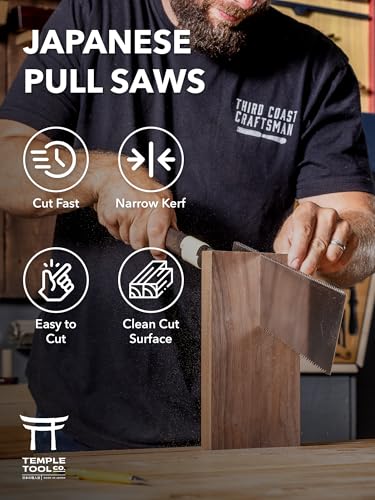
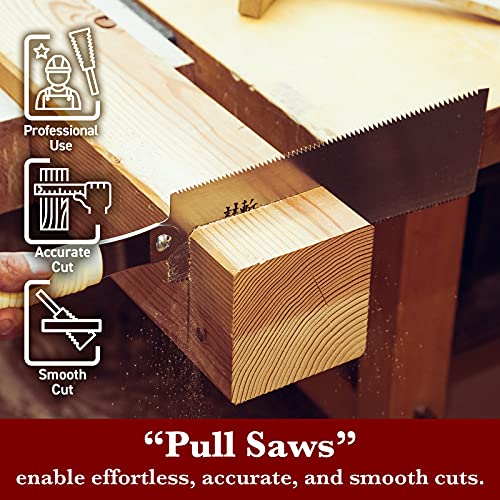
A quality Japanese pull saw uses hardened steel, thin kerf blades, and a pull-stroke action for precise, efficient cuts. Key considerations include blade length relative to typical project material, tooth configuration (TPI) for the intended cut type, and handle comfort for extended use. Blade thickness and steel quality directly impact smoothness and longevity.
Blade Type & Tooth Configuration
The first thing to consider is what kind of cutting you’ll be doing most. Unlike a standard Western saw, Japanese pull saws come in specialized types. A ryoba saw, like the Temple Tool Co. 9.5″ Ryoba Saw or the SUIZAN 7″ Ryoba Double Edge Saw, has both rip and crosscut teeth on opposite sides of the blade, making it a versatile all-rounder. Dozuki saws have a spine for added rigidity and are ideal for fine joinery. Finally, kataba saws feature teeth on only one side, optimized for either rip or crosscut work. Don’t assume more teeth always mean a cleaner cut; the tooth geometry is equally important.
Steel Quality and Heat Treatment
Japanese saw blades are renowned for their steel, and for good reason. SK5 high-carbon steel is common, but the way that steel is treated – the hardening process – matters immensely. A blade hardened to around HRC60-63 degrees (as claimed by RUITOOL) will hold an edge significantly longer than softer steel. While you won’t be testing hardness with a file, researching the steel type and manufacturer’s claims is a good start. Look for saws made with Japanese steel specifically, rather than a generic “high-carbon” designation, and consider exploring dedicated ryoba saw reviews if you’re leaning toward that style.
Handle Comfort and Portability
While the blade gets all the attention, don’t underestimate the importance of the handle. A comfortable handle, especially on longer saws, reduces fatigue during extended use. Many traditional Japanese saws use wood handles (like those on the Temple Tool Co. models) which offer a natural feel. However, some manufacturers, like JORGENSEN with their folding saw, are incorporating ergonomic designs and soft-grip materials. If you plan to take your saw to job sites or work outdoors, a folding or compact model is a smart choice. Finding the best overall Japanese saws often comes down to balancing blade quality and handle ergonomics for your hands.
A dull saw is more dangerous than a sharp one. Invest in a honing guide and learn to sharpen your blade, or factor in the cost of professional sharpening.
Japanese Pull Saws Compared
This table provides a side-by-side comparison of key specifications for various Japanese pull saws.
| Product Title | Blade Length | TPI (Rip/Cross) | Blade Thickness | Steel Type | Features |
|---|---|---|---|---|---|
| Temple Tool Co. 9.5″ Ryoba Saw | 9.5″ (240mm) | 9 & 15 | 0.02″ (0.5mm) | Japanese | Double Edge |
| SUIZAN 9.5″ Ryoba Double Edge Saw | 9.5″ (240mm) | 9 & 15 | 0.02″ (0.5mm) | Japanese | Double Edge |
| Temple Tool Co. 6″ Flush Cut Saw | 6″ | N/A | N/A | Japanese | Flush Cutting |
| SUIZAN 7″ Ryoba Double Edge Saw | 7″ (180mm) | 19 | 0.02″ (0.5mm) | Japanese | Double Edge |
| RUITOOL 6″ Double Edge Ryoba Saw | 6″ | 14/17 | N/A | SK5 | Double Edge |
| JORGENSEN 10″ Pro Double Edge Saw | 10″ | 7-12 / 18 | N/A | SK5 | Replaceable Blade |
| Evertools 3-Piece Japanese Saw Set | 6″, 6″, 8″ | N/A | N/A | SK5 | Multi-Saw Set |
| JORGENSEN 10-3/8″ Folding Kataba Saw | 10-3/8″ | 14 | N/A | SK5 | Folding, Portable |
Frequently Asked Questions
What TPI (teeth per inch) is best for a beginner?
A TPI between 9 and 15 is generally best for beginners, offering a good balance between cutting speed and smoothness. Lower TPI cuts faster but leaves a rougher finish, while higher TPI provides finer cuts but requires more effort.
Can I sharpen a Japanese pull saw myself?
Yes, you can sharpen a Japanese pull saw, but it requires different techniques and tools than sharpening Western saws. A honing guide specifically designed for Japanese saw blades is highly recommended for maintaining the correct angle and achieving a sharp edge.
Are Japanese pull saws only for fine woodworking?
While excellent for fine woodworking, Japanese pull saws are versatile enough for many tasks. Ryoba saws, in particular, can handle both rip and crosscut operations, making them useful for general construction and DIY projects, as detailed in our woodworking hand saw guide.
What is the main advantage of a pull saw over a Western push saw?
The primary advantage is the thin kerf (blade width) and the pull-stroke action, which reduces buckling and allows for more precise cuts. This results in less wasted material and cleaner, more controlled cuts compared to a traditional push saw.
What’s the difference between a ryoba and a dozuki saw?
A ryoba saw has teeth on both sides of the blade for rip and crosscuts, while a dozuki saw has teeth on one side and a spine for added rigidity. The dozuki excels at very precise joinery, while the ryoba is a more all-purpose option, as you’ll find in our manual saw recommendations.
The Bottom Line
Choosing a Japanese pull saw really comes down to how much control you want versus how much fuss you’re willing to deal with. While a set can be tempting, the Temple Tool Co. 9.5″ Ryoba Saw strikes the best balance of quality, versatility, and value for most woodworkers. It’s a tool built to last and deliver clean cuts across a wide range of projects.
For those on a tighter budget, the RUITOOL 6″ Double Edge Ryoba Saw offers surprisingly good performance for the price. And if portability is key, the JORGENSEN 10-3/8″ Folding Kataba Saw is a smart choice – allowing you to take quality Japanese craftsmanship on the go. You can find top-rated pull saws for any budget, but don’t skimp on the blade.
Ultimately, the specs matter less than a sharp blade and a comfortable grip. Invest in learning to properly sharpen your saw, or budget for professional sharpening services. A well-maintained saw, regardless of price, will always outperform a dull one, and will bring you years of satisfaction with every cut.
