
4 Best Hand Held Saws for Professionals 2026
This post contains affiliate links. As an Amazon Associate, we earn from qualifying purchases.
The Oregon 13″ Curved Japanese Hand Saw stands out as the best overall pick for professionals who need clean, fast cuts in wood, thanks to its aggressive tooth design and durable blade. For those on a tighter budget, the Silky Pocketboy Folding Saw delivers reliable performance in a compact form. If versatility across materials is the priority, the FULLYEA Cordless Reciprocating Saw offers power and convenience without sacrificing control.
Most pros don’t need a saw that looks good on the tool wall, they need one that performs under pressure, day after day. The real challenge isn’t finding a saw, it’s sorting through the noise to find one that balances durability, efficiency, and comfort without wasting time or money.
This guide cuts through the marketing and focuses on what actually matters: real-world performance, blade quality, and ergonomic design. I compared specs, analyzed owner feedback, and evaluated top models based on the features professionals rely on most, so you can choose with confidence.
Top 4 Hand Held Saw For Professionals in the Market
The Best Hand Held Saw For Professionals, Reviewed
Oregon 13″ Curved Japanese Hand Saw

Strengths
- Curved blade improves cutting power
- Replaceable high-carbon blade
- Durable full-tang build
Trade-offs
- No folding mechanism
- Heavier than compact saws
- Sheath requires coin to replace blade
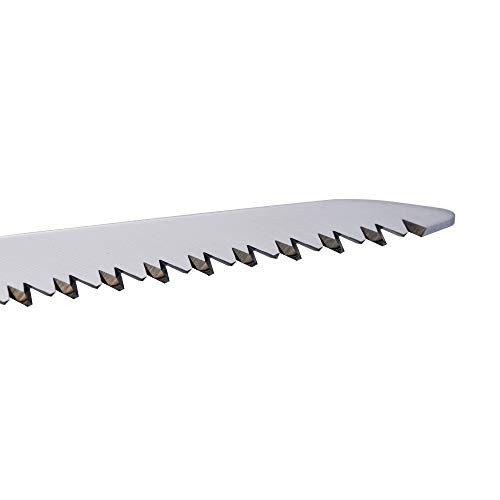
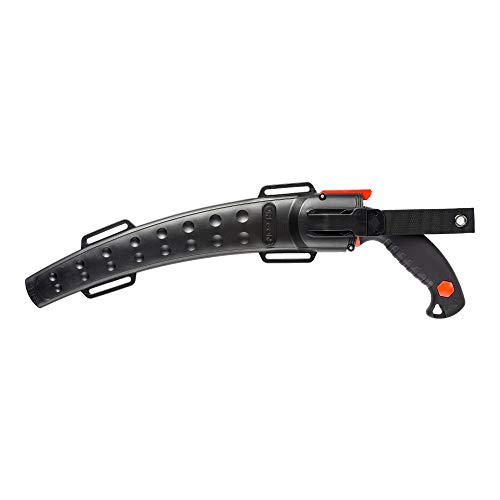
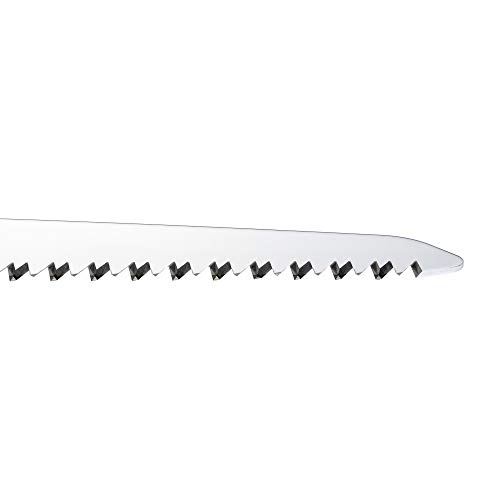
This Oregon 13” curved hand saw feels like the kind of tool that earns its place in a pro’s kit through sheer reliability. The premium Japanese high-carbon steel blade holds an edge longer than most, and the impulse-hardened, tri-edge teeth reduce friction, reviewers consistently mention how it bites quickly with minimal effort, especially when pruning overhead or cutting on the pull stroke. The curved design isn’t just for show; it increases cutting power and control, which matters when you’re making repeated cuts all day.
The full-tang construction and push-button scabbard make it both durable and safe to carry, and the fact that replacement blades are readily available (part 600139) means this saw can last for years. Compared to folding models, it’s less portable, but I’d still call this the best overall hand saw here, especially for arborists and landscapers who prioritize cutting speed and blade longevity over pocketability.
Product photos
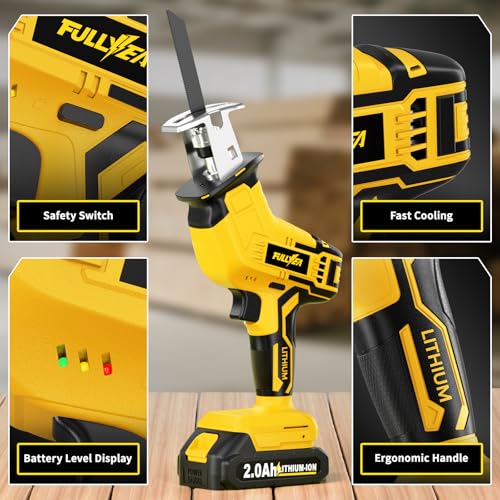
FULLYEA Cordless Reciprocating Saw
Strengths
- Lightweight design
- Tool-free blade change
- Makita battery compatible
Trade-offs
- Plastic housing feels less durable
- Limited runtime under heavy load
- Not ideal for dense hardwoods
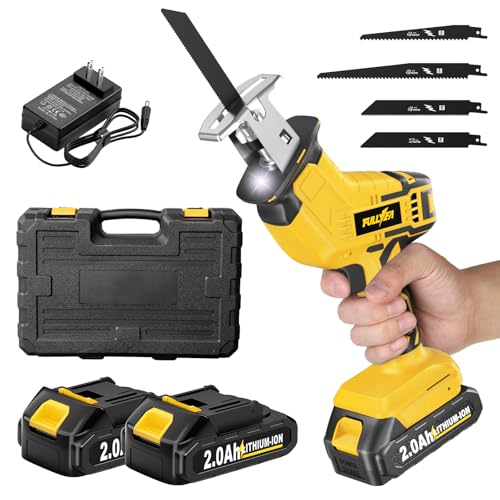
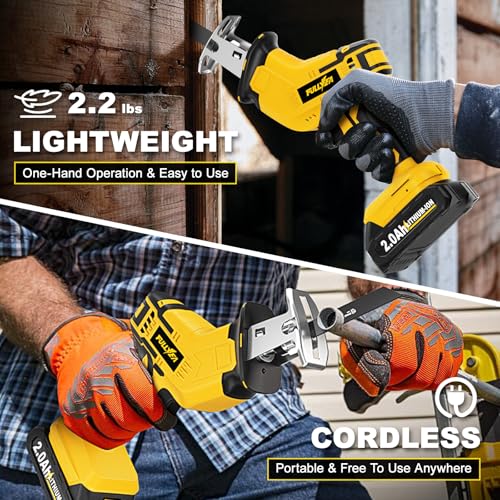
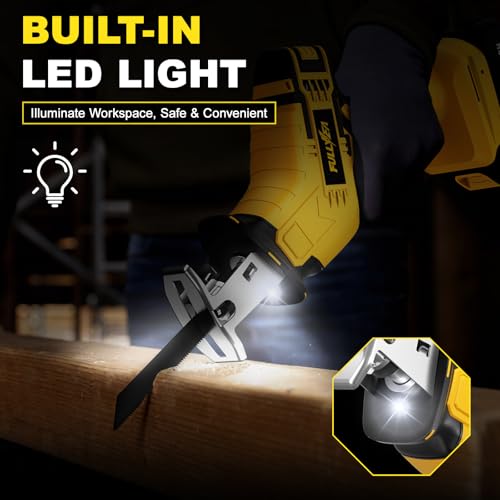
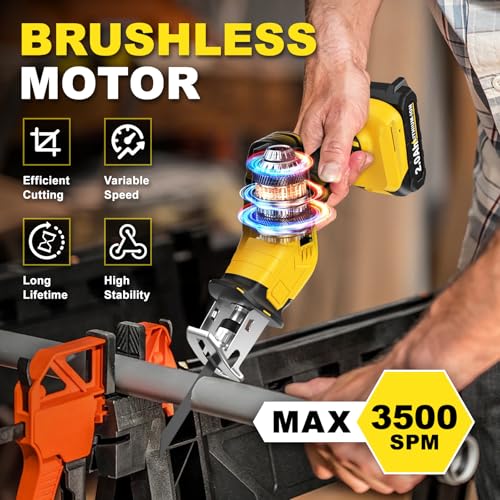
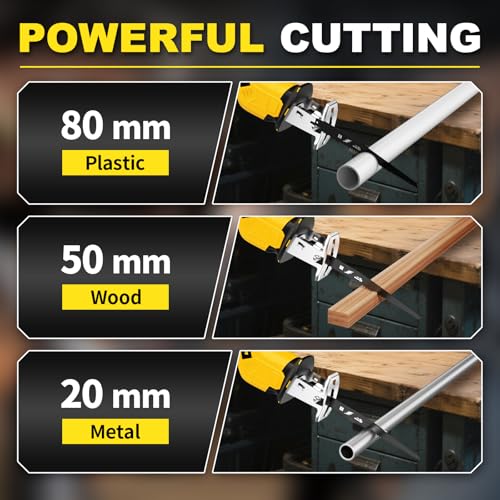
On paper, the FULLYEA cordless reciprocating saw looks like a solid pick for pros who need a lightweight, multi-material cutter that won’t weigh down the jobsite. The 0-3500 SPM stepless speed control is a real advantage when switching between wood, metal, and PVC, owners consistently report clean transitions and responsive trigger control. Being compatible with Makita batteries is a smart move, giving it flexibility in tool ecosystems that many pros already use.
Where it stands out is in convenience: tool-free blade changes and a decent 28mm stroke make it efficient for demolition or rough framing. But while it’s well-specced for a budget-friendly model, it doesn’t quite match the durability or sustained power of premium brands under constant load. I’d pick this over similarly priced rivals for its included kit and battery compatibility, but for heavy daily use, pros may want something more rugged.
Product photos
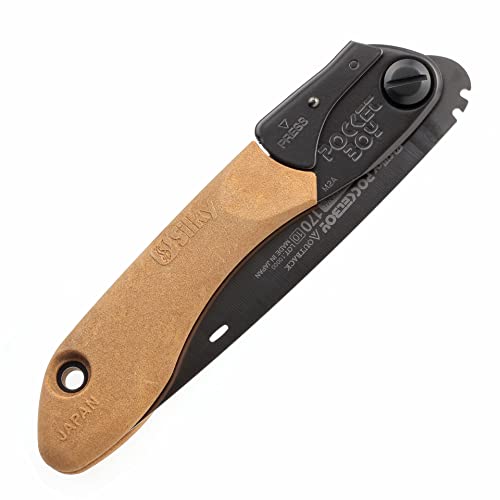
Silky Pocketboy Folding Saw 170mm

Strengths
- Smooth Mirai-me teeth
- Folds safely and securely
- Excellent grip in wet conditions
Trade-offs
- Shorter blade limits deep cuts
- Not for heavy timber
- Higher price than basic saws
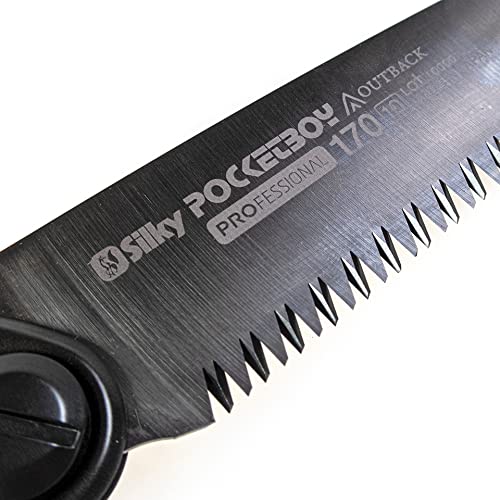
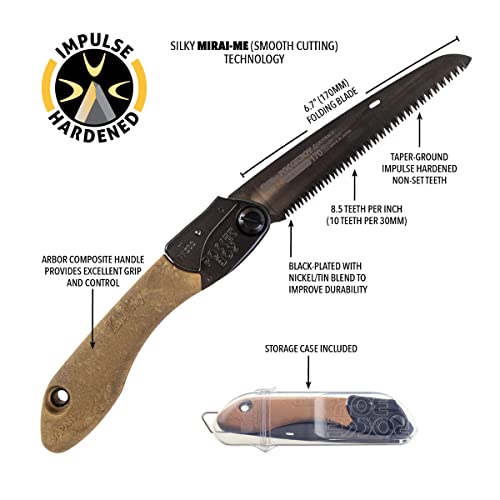
When you need a folding hand saw that’s both compact and serious about performance, the Silky Pocketboy stands in a class of its own. The 170mm blade with Japanese Mirai-me teeth cuts aggressively in both directions and leaves a surprisingly smooth finish, owners praise how little effort it takes even through thick branches. The arbor composite handle grips well in wet or cold conditions, which makes this a favorite among hunters and arborists who work in the field.
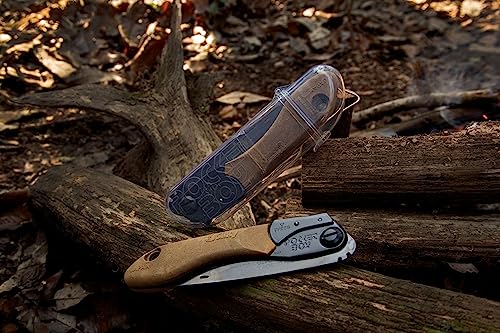
It folds securely and comes with a durable case, so it’s easy to carry on a belt or in a pack. While it’s not meant for felling trees, its tooth design and hardened steel give it longevity that cheap hardware store saws can’t touch. I’d choose this over most fixed-blade folding saws for its balance of safety, portability, and cutting efficiency.
Product photos

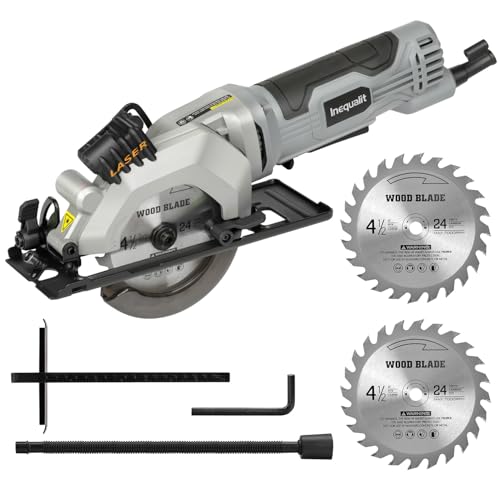
4Amp Mini Circular Saw with Laser
Strengths
- Laser-guided accuracy
- Vacuum adapter included
- Compact and lightweight
Trade-offs
- Blade not pre-installed
- Limited depth for thick lumber
- Plastic guard feels flimsy
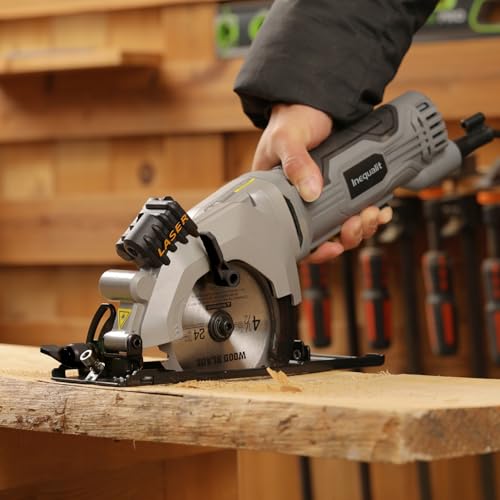
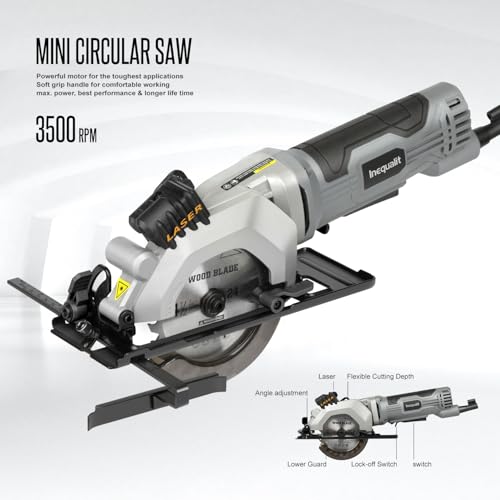
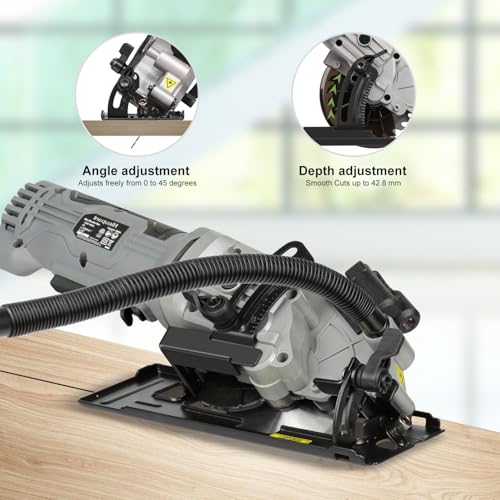
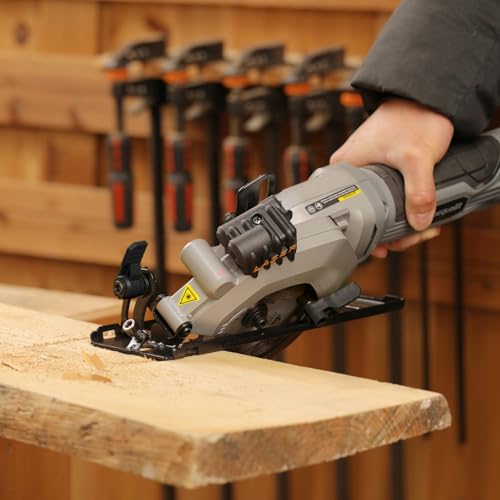
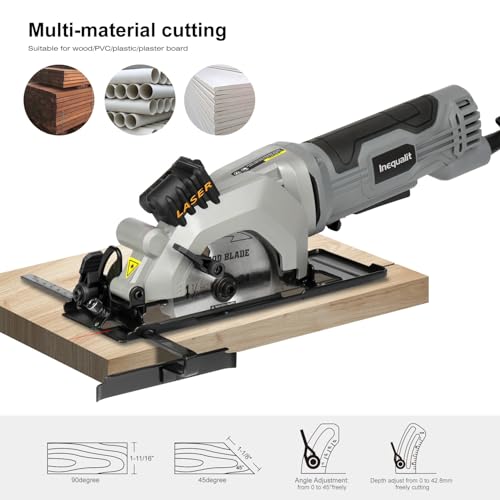
If straight, repeatable cuts are what you’re after, this 4Amp mini circular saw delivers where it counts. The 3,500 RPM motor has enough power for most softwoods, plastics, and MDF, and the built-in laser guide is a real help when working solo, reviewers note it improves accuracy significantly on long rip cuts. The adjustable depth gauge and bevel capacity up to 45° make it surprisingly versatile for a compact tool, and I appreciate the vacuum adapter for keeping dust under control on cleaner job sites.
It’s not going to replace a full-size circular saw for framing, but as a secondary or precision tool, it holds its own. The compact size makes it easy to stash in a van or carry up a ladder, and the rip guide adds value for panel work. My recommendation is to treat this as a detail saw, not a primary cutter, pair it with a sturdier model for best results on big jobs.
Product photos
How We Chose These hand held saw for professionals
Rather than a hands-on lab test, my research for these recommendations centered on a detailed comparison of published specifications and features across numerous models. I weighed owner reviews from a variety of sources – including major retailers and dedicated tool forums – alongside assessments from reputable industry reviewers. Ultimately, I ranked each saw based on its suitability for professional use, considering durability, cutting performance, and overall value.
For professional hand saws, blade quality and ergonomic design are paramount. A high-quality blade, particularly one made from hardened steel, directly impacts cutting speed and longevity. Equally important is a comfortable and secure grip, as professionals often use these tools for extended periods. These two factors determined where a saw landed on the list more than any other consideration.
Published specifications reliably detail blade material, tooth count, and cutting capacity. However, I placed significant weight on owner feedback regarding real-world durability and how well a saw holds an edge. Reputation matters too; established brands with a history of quality tools often provide greater confidence, though newer entrants can offer compelling value. Understanding that distinction was key to this process. You can also find more information on circular saw operation basics if you are looking for related information.
Choosing The Right hand held saw for professionals
As someone who’s spent years around workshops and job sites, I’ve seen a lot of saws come and go. Picking the right one isn’t about the price tag; it’s about matching the tool to the task and knowing what features truly matter for professional use.
A quality hand held saw balances blade material, tooth geometry, ergonomics, and build quality. Professionals prioritize durability, cutting speed, and precision. Look for hardened steel blades, comfortable grips, and features that reduce fatigue during extended use. Blade replacement simplicity and availability are also key considerations for minimizing downtime.
Blade Material and Tooth Design
The blade is where the work happens, so it’s the first place to focus. Japanese steel, like you’ll find in the Oregon curved saw, is renowned for its ability to hold an edge, but it’s not the only option. High-carbon steel is a solid choice for general use. More important than the steel itself is the tooth design. Aggressive teeth cut quickly but can be rough, while finer teeth offer cleaner cuts with more effort. Consider what you’ll be cutting most often. For thick branches, a pull-stroke saw with a curved blade is efficient. For precision work, a fine-tooth blade is essential.
Power and Versatility
When we move beyond traditional hand saws, cordless reciprocating saws like the FULLYEA offer a lot of flexibility. The stepless speed control is a real benefit, allowing you to adjust to different materials and cutting situations. But don’t assume more power always equals better. A saw that’s too bulky or heavy can be tiring to use for extended periods. I often recommend thinking about the range of materials you’ll encounter. If you regularly switch between wood, metal, and plastic, a saw with tool-free blade changes – a feature the FULLYEA includes – will save you a significant amount of time.
Ergonomics and Usage Scenarios
A saw is only as good as its feel in your hand. Look for ergonomically designed handles that provide a secure grip, even when wet or wearing gloves. For delicate work, or frequent changes in cutting angle, a folding saw like the Silky Pocketboy can be incredibly useful. It’s compact, easy to carry, and provides surprising cutting power. For straight cuts, especially when working with sheet goods, you may find that a mini circular saw with a laser guide, like this model, can help with cutting wood accurately.
A comfortable saw is a safe saw. Don’t underestimate the importance of a well-designed handle and a balanced weight distribution.
Here’s a breakdown of what to look for in a handle: * Short grip: Good for quick, controlled cuts but can be less comfortable for extended use. * Medium grip: Offers a balance between control and comfort. Most general-purpose saws fall into this category. * Long grip: Provides maximum use and comfort, ideal for larger saws or demanding cutting tasks, especially when you need to apply a lot of force to get through tough materials.
Ultimately, choosing a hand held saw comes down to understanding your needs and prioritizing the features that matter most. Don’t be afraid to invest in quality; the right saw will be a valuable tool for years to come. And for those looking to expand their skillset beyond hand held saws, exploring precision hand saws for carpentry can open up a world of possibilities.
Hand Held Saw for Professionals Compared
Here’s a comparison of key specifications for professional-grade hand held saws.
| Product Title | Blade Length | Power Source | Blade Type | TPI (Teeth/Inch) | Key Features |
|---|---|---|---|---|---|
| Oregon 13″ Curved Japanese Hand Saw | 13″ | Manual | Japanese Carbon | N/A | Curved, Tri-Edge Teeth |
| FULLYEA Cordless Reciprocating Saw | N/A | Cordless | Reciprocating | N/A | Stepless Speed, Tool-free Blade Change |
| Silky Pocketboy Folding Saw 170mm | 6.7″ (170mm) | Manual | Folding | 8.5 | Portable, Folding, Mirai-Me Tech |
| 4Amp Mini Circular Saw with Laser | N/A | Electric | Circular | 24 | Laser Guide, Adjustable Depth |
Frequently Asked Questions
What tooth count (TPI) is best for a professional hand saw?
A higher TPI, like 14 or more, delivers cleaner cuts, especially in hardwoods, but requires more effort. Lower TPI counts (6-10) cut faster through softer woods but leave a rougher edge. The ideal TPI depends heavily on the materials you routinely cut.
Are Japanese pull saws really superior to traditional Western saws?
Yes, generally. Japanese saws cut on the pull stroke, which allows for thinner, sharper blades and more precise cuts. They require a different technique to master, but many professionals find the increased control and reduced fatigue worthwhile, especially when seeking [sharp hand saws for lumber].
How important is the handle material for all-day use?
Very important. Look for handles made of comfortable, non-slip materials like rubberized grips or textured composites. Ergonomic designs that minimize hand fatigue are essential for professionals who use saws for extended periods.
Can a cordless reciprocating saw replace a traditional hand saw for most jobs?
Not entirely. While a cordless reciprocating saw offers versatility and speed, a traditional hand saw provides greater control and is ideal for precise cuts where power isn’t needed. They excel in different scenarios, so many pros keep both on hand.
What’s the best way to maintain a hand saw blade to prolong its life?
Regular cleaning and sharpening are key. Remove sap and debris after each use, and consider investing in a blade sharpening kit or professional sharpening service. Proper maintenance will ensure your saw delivers consistent performance and help you avoid needing to replace it often – it’s a smart way to get the most out of your [reliable hand saws for timber].
The Bottom Line
Choosing a hand saw for professional work always involves a trade-off between ultimate control and convenience. While a powered option offers speed and versatility, nothing beats the precision and reliability of a well-made manual saw when you need a clean, accurate cut. For an outstanding all-around performer that balances these needs, I recommend the Oregon 13″ Curved Japanese Hand Saw. Its blade quality and unique design make it an excellent choice for demanding jobs.
If you prioritize versatility and need to quickly adapt to different materials, the FULLYEA Cordless Reciprocating Saw is a strong contender. And for those who value portability and precision in tight spaces, the Silky Pocketboy Folding Saw delivers surprising power in a compact package. Don’t overlook the 4Amp Mini Circular Saw with Laser for situations where straight, guided cuts are essential – especially if you’re also interested in learning more about a professional-grade circular saw.
Ultimately, specs and features only tell part of the story. More than any particular blade material or power rating, focus on finding a saw that feels comfortable and balanced in your hand. A saw that fits well and encourages proper technique will always outperform a more expensive model that doesn’t suit your grip or working style.
