
7 Best Flush Trim Router Bits of 2026
This post contains affiliate links. As an Amazon Associate, we earn from qualifying purchases.
The Freud 1/2″ Top & Bottom Bearing Flush Trim Bit stands out as the best overall pick, delivering clean cuts and solid durability. For a budget-friendly option, the Wolfride 4PCS Flush Trim Router Bit set offers solid value. If you’re working with plywood or veneer, the EANOSIC Downcut Spiral Flush Trim Router Bit minimizes splintering better than most.
A lot of DIYers end up frustrated with tear-out, wandering cuts, or bits that dull too fast, often because they didn’t realize how much bearing quality and carbide grade matter. I’ve researched the field extensively, comparing specs and owner feedback to find flush trim bits that deliver consistent performance across real projects.
This guide breaks down what actually affects cut quality and longevity, so you can choose a bit that matches your router, materials, and precision needs, without overpaying for features you won’t use.
Top 7 Flush Trim Router Bits in the Market
The Best Flush Trim Router Bits, Reviewed
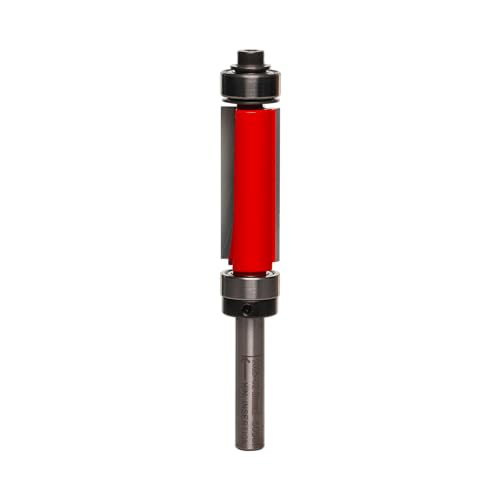
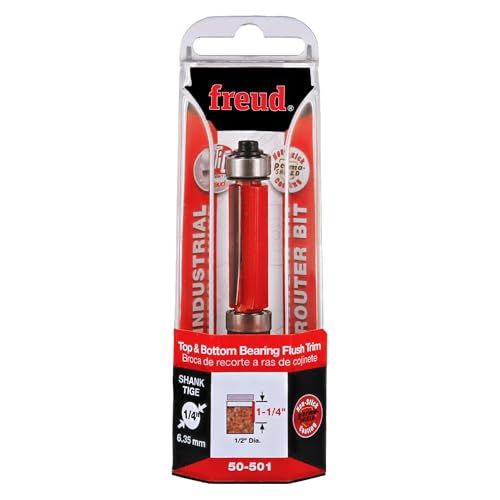
Freud 1/2″ Top & Bottom Bearing Flush Trim Bit
Strengths
- Top and bottom bearings
- Excellent for templates
- TiCo carbide
- High RPM rated
Trade-offs
- 1/4″ shank
- Higher price
- Overkill for simple trims
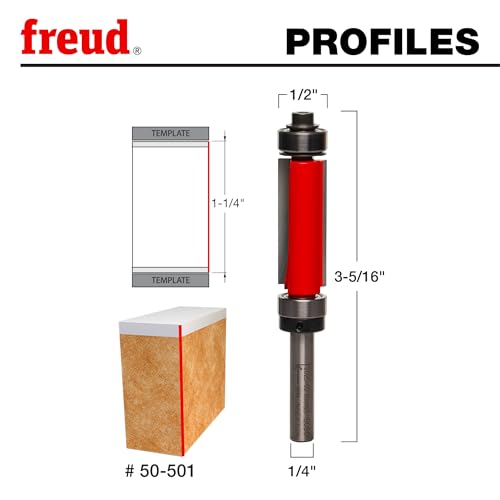
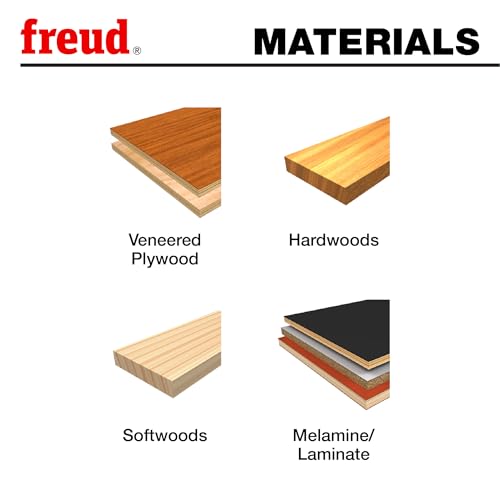
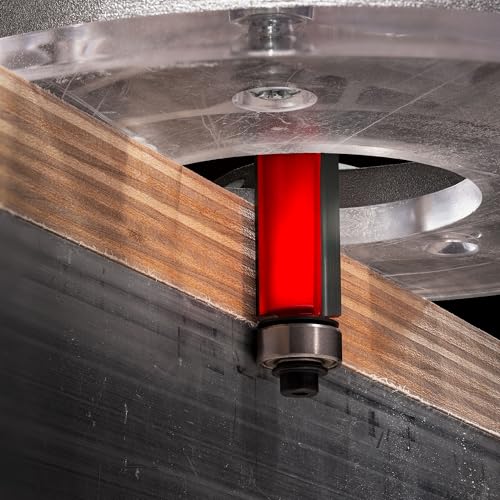
This is the most versatile flush trim bit on the list, and that’s thanks to the dual top-and-bottom bearings. You can flip the bit or the workpiece and still get consistent results, perfect for template routing symmetrical curves where you want to avoid repositioning. The TiCo hi-density carbide stays sharp through hardwoods and laminates, and owners report it delivers clean cuts with little burn when fed properly.
Rated for 24,000 RPM, it’s built for high-speed routers and laminate trimmers. The 1/4″ shank is the only limitation, less rigid than 1/2″ options, but for most handheld and table routers, it’s more than sufficient. Compared to single-bearing bits, this one gives you real flexibility. If you’re doing template work, box builds, or kitchen installations, this is the smarter buy.
Product photos

Wolfride 4PCS Flush Trim Router Bit Set

Strengths
- Affordable
- Multiple sizes
- Good for softwoods
Trade-offs
- Bearing durability
- Not for hardwoods
- Average longevity
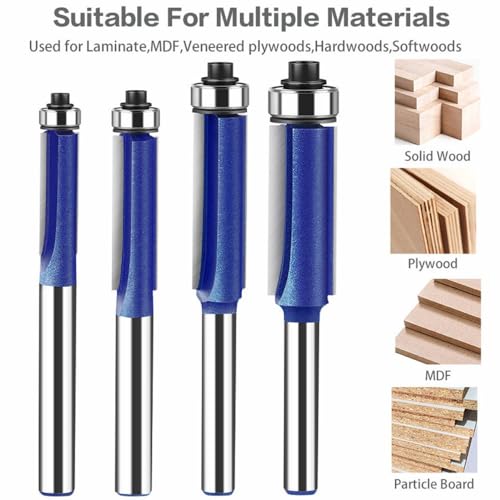
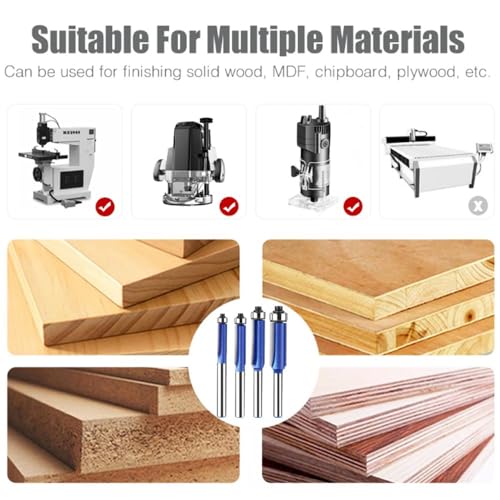
This set gives you a solid entry point into flush trim routing without asking much from your wallet. With four bits covering common diameters from 1/4″ to 1/2″, it’s a practical starter kit for light-duty DIYers who need basic pattern trimming now and then. The industrial-grade carbide cutters hold up reasonably well on softer materials like MDF and plywood, and owners consistently report clean results when used at proper feed rates.
Still, these are budget bits, and that shows in the long run. The bearings aren’t sealed, so dust ingress can shorten their life, especially in shop environments with heavy use. Compared to premium options, they dull faster on hardwoods and lack the refined balance you’d want for fine cabinetry. But for occasional use, like trimming edge banding or cleaning up templates, I’d say this set delivers more than you’d expect at this price.
Product photos



CMT Xtreme Compression Flush Trim Bit
Strengths
- Zero tear-out
- Compression spiral design
- 1/2″ shank
- Excellent on melamine
Trade-offs
- Large diameter only
- Higher cost
- Overkill for softwoods
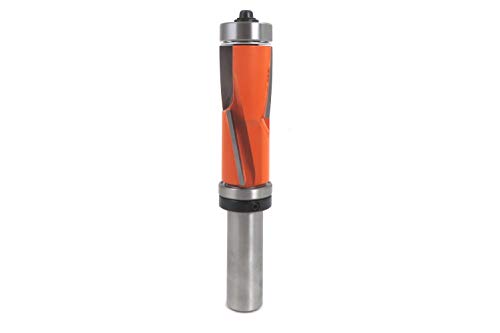
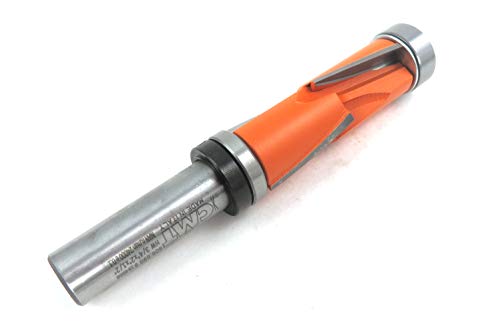
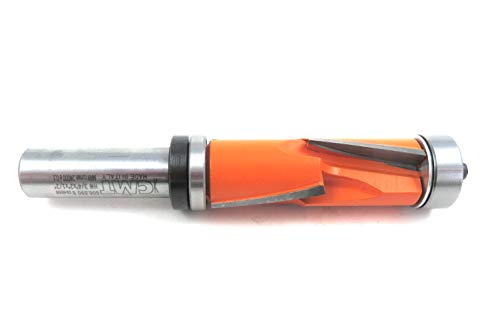
When splinter-free edges are essential, like on a veneered cabinet door or a melamine shelf, this CMT compression bit is hard to beat. The 3/4″ diameter with upcut on the lower half and downcut on the upper creates a shearing action that cleanly severs fibers on both top and bottom surfaces. That’s critical when working with layered materials that chip easily.
The 1/2″ shank adds rigidity, and at 18,000 RPM max, it’s tuned for stability over raw speed. Owners consistently praise its finish quality, especially on melamine and thin veneers. It’s a single-diameter bit, so you won’t use it for templates needing multiple sizes, but for high-end finish work, I’d choose this over most competitors. It’s heavier and more expensive, but the cut quality justifies it.
Product photos
SHARPRO Compression Flush Trim Router Bit

Strengths
- Dual-bearing stability
- TAC coated carbide
- Low vibration
- Long cutting length
Trade-offs
- Higher price
- 1/4″ shank limits rigidity
- Not needed for light tasks
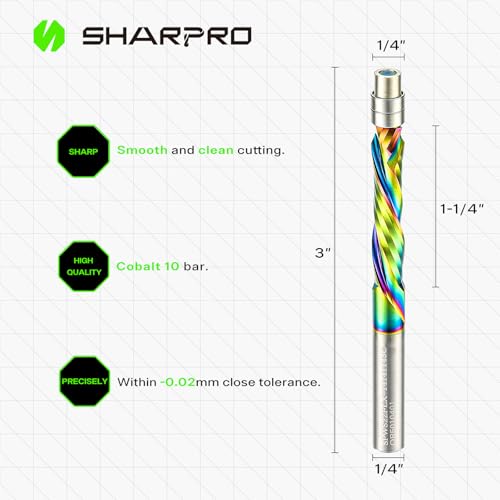
This is one of the few 1/4″ shank bits built like it belongs in a production shop. The bottom-bearing compression design, combined with TAC coating and a dual-bearing lock system, makes it a standout for CNC and heavy-duty use. Owners report minimal vibration even at high RPMs, and the reinforced bearing retention is a real safety upgrade, bearing ejection is a known risk in aggressive cuts, and SHARPRO addresses it well.
With a 1-1/4″ cutting length and smooth helix angle, it powers through particleboard and MDF without chatter. The low-friction coating helps dissipate heat, which matters when running long batches. It’s not the cheapest, but when you’re routing composite panels all day or running CNC patterns, this bit won’t quit on you. Compared to standard flush trim bits, it’s overbuilt in the best way.
Product photos



EANOSIC Downcut Spiral Flush Trim Router Bit

Strengths
- Reduces tear-out
- Nano-coated carbide
- Good for CNC
Trade-offs
- Requires slow feed
- Downcut limits chip ejection
- Not ideal for deep cuts
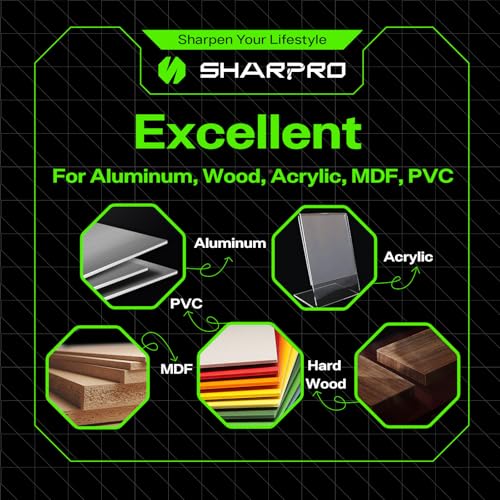
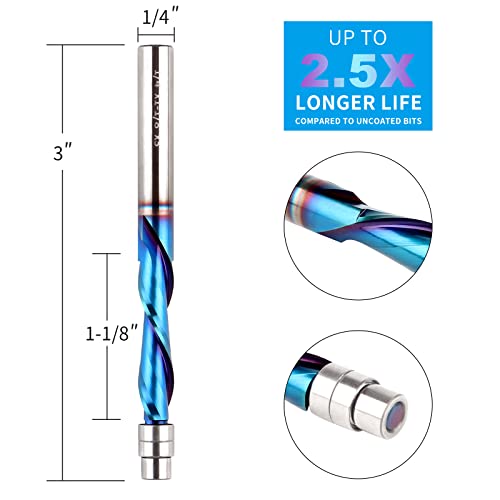
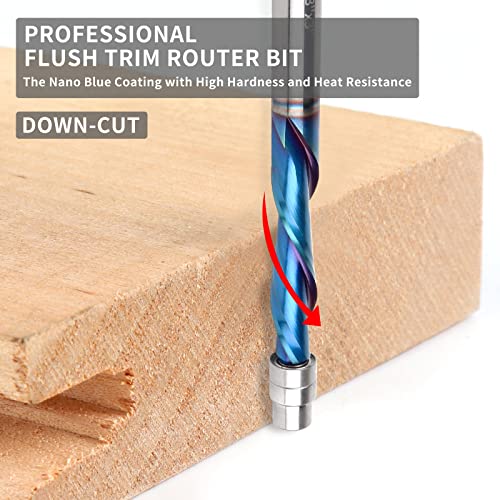
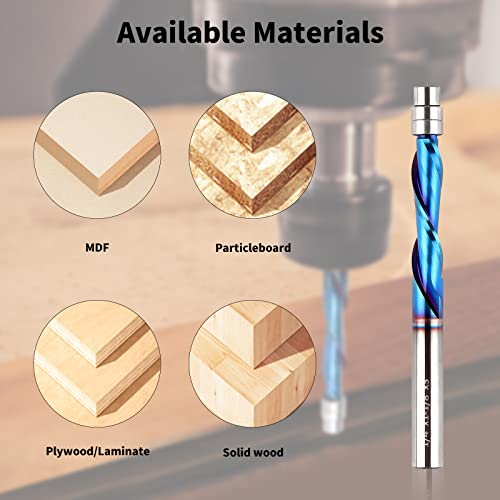
If you’re working with veneered plywood or sheet goods where tear-out is a real concern, this EANOSIC downcut bit stands out on paper. The nano-coated virgin carbide promises up to 2.5X longer life than standard bits, and reviewers confirm it stays sharp well into repeated passes. The downcut spiral design is ideal for keeping veneer edges intact, it forces material down rather than lifting it, which is exactly what you need when finishing cabinet doors or box fronts.
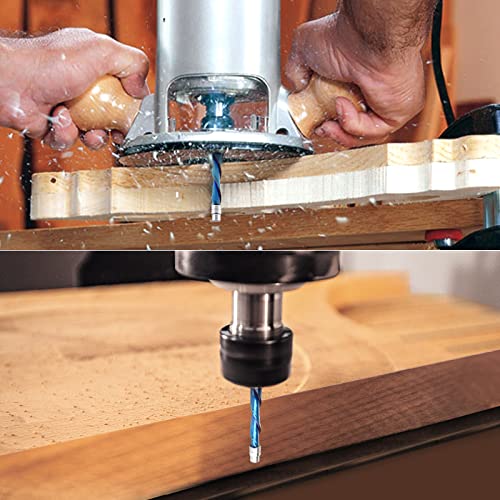
The dual ball bearings on steel collars add stability, and the 1″ cut length handles most sheet materials with ease. It’s also compatible with both handheld plunge routers and CNC setups, giving it some versatility. But that downcut action means you need to feed slowly; too fast and you’ll bog down the motor or burn the edge. I’d pick this over straight-cut bits when edge quality matters more than speed.
Product photos
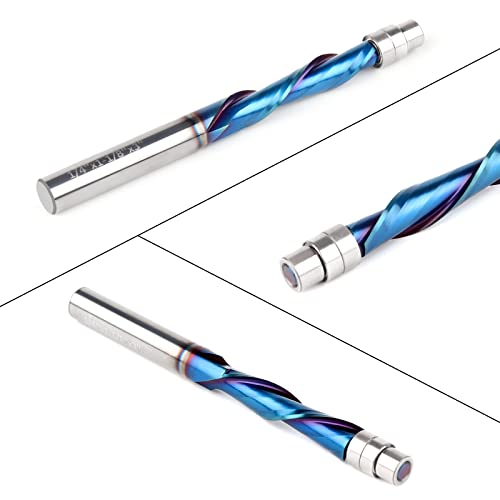
Junreox 4PCS Flush Trim Router Bit Set

Strengths
- Multiple cutting lengths
- Sealed bearings
- Good for curves
- Individual cases
Trade-offs
- All same diameter
- Not for thick stock
- Limited to 1/4″ shank
This set is built for detail, literally. With four bits all at 1/2″ diameter but varying cutting lengths from under 1/2″ to 1-1/2″, it’s tailored for intricate work like inlay trimming, small jigs, or shallow mortises. The heat-treated tungsten steel and sealed bearings help maintain precision, and the anti-kickback design gives a smoother cut, which matters when working tight curves.
The inclusion of individual cases is a nice touch for organization and edge protection. Owners say these bits excel in basswood, poplar, and other soft hardwoods used in fine woodworking. But they’re not meant for heavy material removal. Compared to general-purpose sets, this is more specialized, less about versatility in diameter, more about control in depth. For model makers or detail-oriented crafters, that’s a win.
Product photos


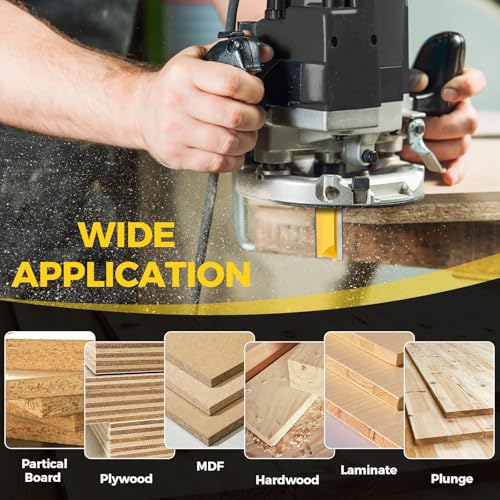
Freud 42-114 1/2″ Bearing Flush Trim Bit
Strengths
- 1/2″ shank stability
- Perma-SHIELD coating
- Durable carbide
- Clean on hardwoods
Trade-offs
- Single size
- No bottom bearing
- Not for veneer
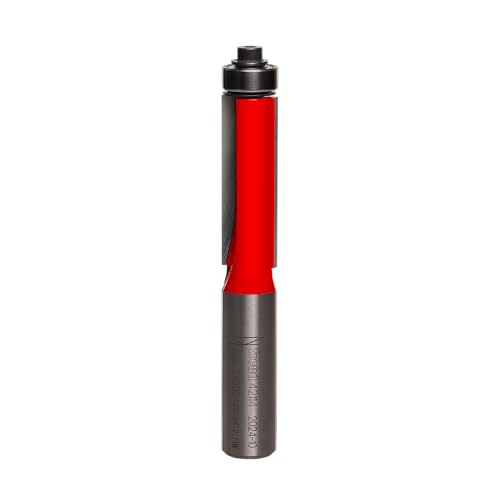
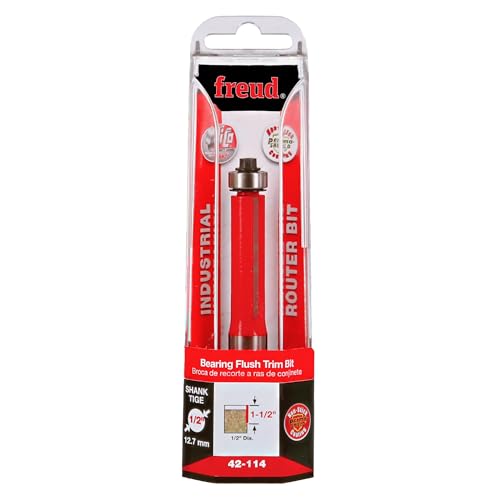
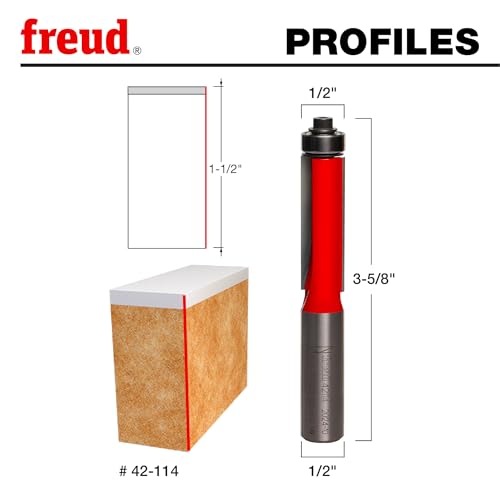
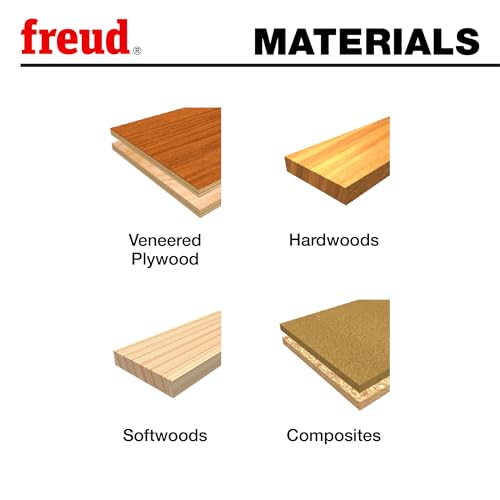
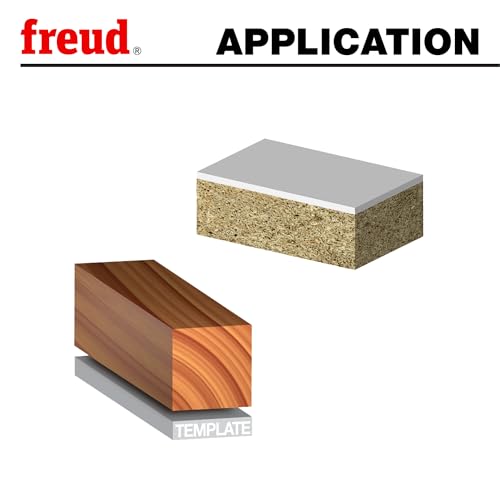
This Freud is a straightforward, no-frills workhorse with a 1/2″ cutting diameter and 1/2″ shank, ideal when you need rigidity and consistent results. The Perma-SHIELD coating helps resist heat and wear, and Freud’s reputation for balanced bits means less vibration during use. It handles hardwoods, plywoods, and composites without issue, and the 1-1/2″ carbide height suggests it can be sharpened several times before retirement.
It’s not a multi-bearing or compression bit, so don’t expect magic on thin veneers. But for general flush trimming, say, cleaning up a glued-on hardwood edge, it’s reliable and durable. Compared to smaller-diameter bits, this one removes material faster and tracks more steadily. I’d recommend it as a go-to for cabinetmakers who want one solid, large-diameter bit for everyday tasks.
Product photos

How We Evaluated flush trim router bits
Rather than a hands-on lab test, my research for these recommendations focused on a detailed comparison of published specifications and features across numerous models. I weighed owner reviews from multiple sources – looking for recurring praise and complaints – alongside professional assessments from woodworking publications and forums. My goal was to rank these bits based on real-world performance indicators, not just marketing promises.
For flush trim bits, cutting quality and durability are paramount. I gave the most weight to carbide quality and bearing construction, as these directly impact the smoothness of the cut and the bit’s lifespan. The ability to minimize splintering, particularly in delicate materials like plywood and veneer, was also a key factor. A secure bearing lock is also vital for safety, so that was heavily considered.
Specifications reliably reveal shank size, cutting diameter, and maximum RPM. However, I relied on owner feedback to assess real-world durability, ease of use, and the accuracy of claims about splinter-free cuts. Reputation and brand history also played a role; established manufacturers often deliver consistent quality and have better customer support. Proper tool maintenance, like saw blade sharpening techniques is also key to getting the most out of your tools.
How To Pick The Right flush trim router bits
Choosing the right flush trim router bit can make the difference between a professional-looking project and one that feels amateurish.
A quality flush trim bit delivers clean, consistent cuts along a template or edge. Key considerations include carbide quality for sharpness and durability, bearing type and size for precision, shank diameter for router compatibility, and overall design features that minimize tear-out and vibration. Look for bits with quality carbide, secure bearing attachments, and designs suited to the materials you’ll be working with.
Carbide Quality & Cutting Geometry
The heart of any router bit is the carbide it’s made from. Don’t assume all carbide is created equal. Bits using coarser carbide may be cheaper upfront, but they’ll dull faster, requiring more frequent sharpening or replacement. I generally recommend looking for bits with TiCo (titanium cobalt) or micrograin carbide. These materials hold an edge longer and resist chipping, especially important when working with hardwoods or abrasive materials. Beyond the material itself, pay attention to the cutting geometry. A two-cutter design, like you find in the Freud 1/2″ Top & Bottom Bearing Flush Trim Bit, often provides a good balance of speed and smoothness.
Bearing Type and Precision
The bearing guides the bit along your template, so its quality is critical. Most flush trim bits use sealed ball bearings, but the way they’re mounted matters. Cheaper bits sometimes have bearings that are loosely fitted, leading to wandering and inaccurate cuts. Look for bits where the bearing is securely attached, preferably with a lock nut or similar mechanism. For demanding applications, consider compression bits like the CMT Xtreme Compression Flush Trim Bit. These use a unique spiral design and dual-bearing system to minimize deflection and produce exceptionally clean edges – especially important if you’re looking for premium router bit sets.
- A smaller bearing diameter (e.g., 1/4″) allows for tighter curves and more intricate work.
- A larger bearing diameter (e.g., 3/4″) provides more stability on longer, straight cuts.
- Consider the bearing material – steel is standard, but some high-end bits use ceramic bearings for reduced friction and heat buildup, which can improve cut quality and bit life.
A well-maintained bit is a safe bit. Regularly inspect your bearings for wear or damage and replace them when necessary.
Shank Size and Material Compatibility
Shank size is simple: it must match your router’s collet. Most flush trim bits come with either 1/4″ or 1/2″ shanks. A 1/2″ shank generally offers more stability, reducing vibration, particularly in larger routers. However, if you’re using a laminate trimmer or a router with only a 1/4″ collet, you’ll need 1/4″ shank bits. Material compatibility is also key. If you work with plywood often, a downcut spiral bit like the EANOSIC Downcut Spiral Flush Trim Router Bit is a smart choice, as the downcut action minimizes splintering on the top surface. For solid wood and hardwoods, a standard flush trim bit will usually suffice. You might also want to look at top router bits if you are looking for options that can handle multiple materials. And remember, proper blade maintenance solutions extend to router bits too – keeping them clean and sharp improves performance and safety.
Flush Trim Router Bits Compared
This table provides a reference of specifications for various flush trim router bits to aid in product comparison.
| Product Title | Shank Size | Cutting Diameter | Cutting Length | Max RPM | Bearing Type |
|---|---|---|---|---|---|
| Freud 1/2″ Top & Bottom Bearing… | 1/2″ | N/A | N/A | 24,000 | Top & Bottom |
| Wolfride 4PCS Flush Trim Router… | 1/4″ | 1/4″, 5/16″, 3/8″, 1/2″ | N/A | N/A | Top |
| CMT Xtreme Compression Flush Trim… | 1/2″ | 3/4″ | 2″ | 18,000 | N/A |
| SHARPRO Compression Flush Trim… | N/A | N/A | N/A | N/A | Dual |
| EANOSIC Downcut Spiral Flush Trim… | 1/4″ | N/A | 1″ | N/A | Top |
| Junreox 4PCS Flush Trim Router… | 1/4″ | 1/2″ | 15/32″, 25/32″, 31/32″, 1-1/2″ | 24,000 | N/A |
| Freud 42-114 1/2″ Bearing Flush… | 1/2″ | 1/2″ | N/A | N/A | N/A |
Frequently Asked Questions
What bearing size should I choose for detailed work?
A smaller bearing diameter (like 1/4″) is best for intricate work and tighter curves. It allows for more precise control when following a template with complex shapes, though it may be less stable on long, straight cuts.
Are compression bits really worth the extra cost?
Yes, compression bits offer superior performance in demanding applications. Their unique design minimizes deflection and delivers exceptionally clean edges, especially when working with materials prone to tear-out or chipping.
Can I use a 1/2″ shank bit in a router with a 1/4″ collet?
No, you cannot. The shank size must match your router’s collet. Using an incorrect size risks damaging the bit, the router, or both, and creates a significant safety hazard.
What’s the difference between top-bearing and bottom-bearing flush trim bits?
Top-bearing bits are more common and work well for most applications. Bottom-bearing bits are used when you need to trim against a surface that’s below the workpiece, like when creating a layered effect. Many bits, like those from Freud, offer both.
Where can I find more information on choosing the right router bit for my needs?
You can explore a detailed [wood router bit types] (https://powertoolguide.net/best-router-bits-for-woodworkings/) guide to get a better understanding of the various bit styles available and how they perform in different situations.
The Bottom Line
Choosing a flush trim bit often comes down to balancing precision with price. While you can spend a lot for advanced features, the Freud 1/2″ Top & Bottom Bearing Flush Trim Bit strikes a great balance of quality, versatility, and value, making it our overall top recommendation. It’ll handle most projects with ease and deliver professional-looking results.
For those on a tighter budget, or who need a range of sizes, the Wolfride 4PCS Flush Trim Router Bit Set is a solid choice. And if you frequently work with plywood or veneer and struggle with splintering, the EANOSIC Downcut Spiral Flush Trim Router Bit is specifically designed to address that issue. Don’t overlook the importance of understanding table saw operation basics either – a good setup will always make your results better.
Ultimately, the best flush trim bit isn’t about the flashiest features or highest price tag. It’s about choosing a bit with quality carbide, a secure bearing, and a design that suits the materials you work with most. Prioritize those fundamentals, and you’ll be well on your way to consistently clean, accurate cuts.
