
8 Best Flush Cut Saws of 2026
This post contains affiliate links. As an Amazon Associate, we earn from qualifying purchases.
The Suizan 6″ Flush Cut Saw is the best overall, delivering exceptional precision and durability thanks to its high-quality Japanese steel and replaceable blade. For a budget-friendly option that still performs well, the JORGENSEN 7.25″ Single Edge Pull Saw stands out, while the Temple Tool Co. 6″ Flush Cut Saw offers excellent versatility for fine woodworking tasks.
Flush cuts demand accuracy, not force, and using the wrong saw can leave behind ragged edges or damage surrounding material. Too many people grab whatever handsaw is nearby, only to struggle with tear-out or poor control.
This guide cuts through the noise by focusing on real-world performance, blade quality, and user feedback to identify the flush cut saws that actually deliver clean, flush results. I looked at steel type, tooth configuration, handle ergonomics, and owner experiences to find the ones worth your time.
Top 8 Flush Cut Saws in the Market
The Best Flush Cut Saws, Reviewed
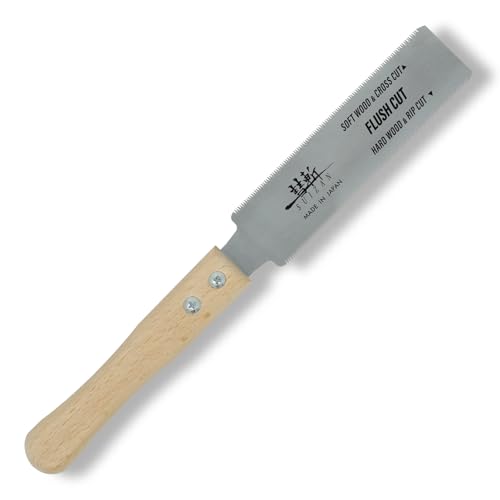
Suizan 6″ Flush Cut Saw
Strengths
- Replaceable blade
- Precision TPI split
- Clean pull-cut action
Trade-offs
- Slightly higher price
- Blade replacement adds steps
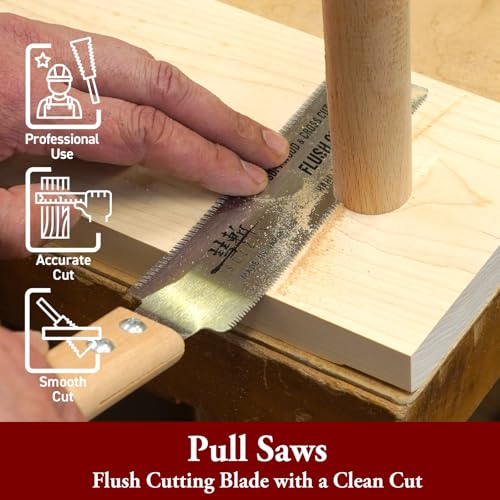
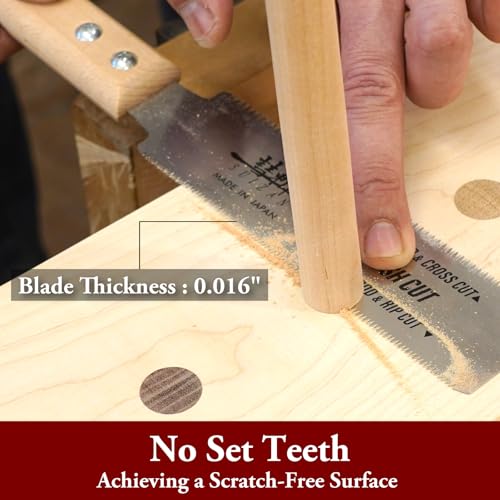
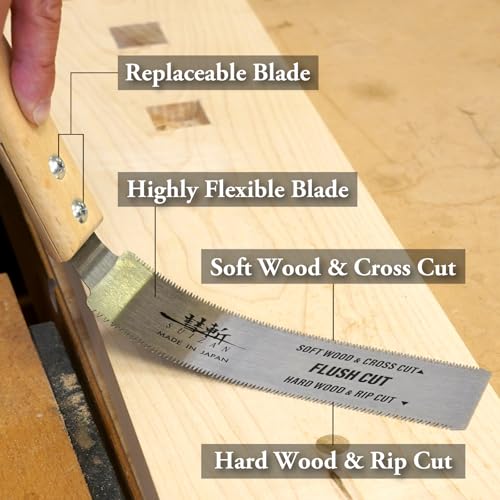
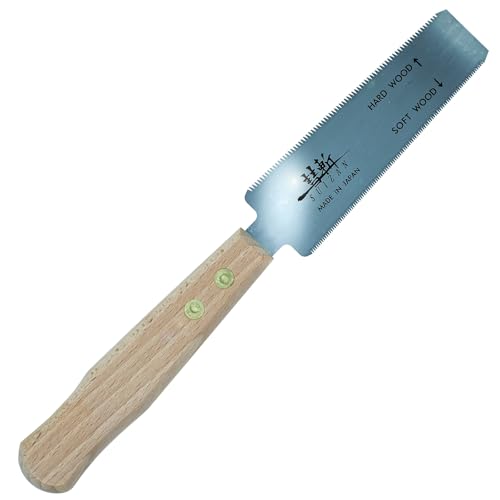
This 6-inch SUIZAN saw earns its “Best Overall” label by balancing performance, design, and practicality. With a 17 TPI hardwood side and 20 TPI softwood side, it handles a wide range of materials cleanly, and the 0.4mm blade thickness provides just enough rigidity without sacrificing flush-cutting ability. The fact that the blade is replaceable sets it apart, most Japanese pull saws aren’t, but here you get extended life and lower long-term cost.
Made in Japan with high-grade steel and master craftsmanship, it rivals Temple Tool Co. in build but adds functional flexibility. Owners consistently report smooth, fatigue-free cutting and excellent edge retention. When compared to the 5-inch SUIZAN model, this one offers better reach for most tasks, making it the more versatile pick. For most users, this is the sweet spot.
Product photos


Suizan 5″ Flush Cut Saw
Strengths
- Compact and precise
- Clean flush cuts
- High-quality steel
Trade-offs
- No replaceable blade
- Limited reach
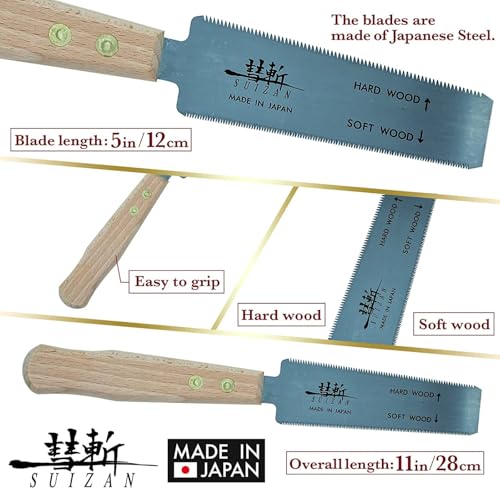
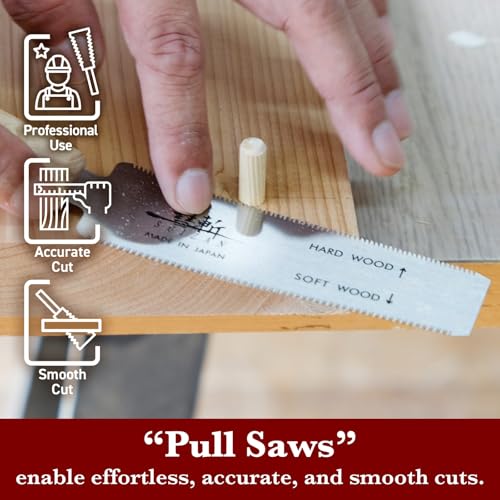
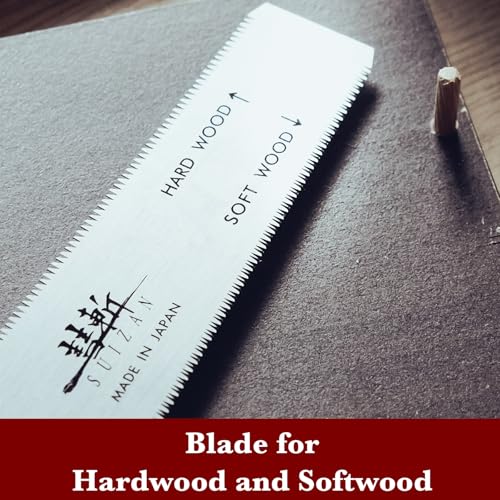
The 5-inch SUIZAN flush cut saw is all about precision in tight quarters. Its shorter 125mm blade and 0.4mm thickness make it ideal for delicate tasks like trimming tenons flush or cutting pins in dovetails without marring adjacent surfaces. Like its bigger sibling, it’s made in Japan with high-grade steel and cuts cleanly on the pull stroke, minimizing tear-out.
While it lacks a replaceable blade, its compact size and accuracy make it a favorite for detail work. Compared to the 6-inch SUIZAN, this one trades reach for control, perfect when you’re working on small boxes, drawers, or intricate joints. Owners who keep both models often use this one as their go-to for fine finishing touches.
Product photos

Temple Tool Co. 6″ Flush Cut Saw

Strengths
- Heirloom-quality build
- Beautiful hardwood handle
- Precision Japanese steel
Trade-offs
- Higher price point
- No blade replacement
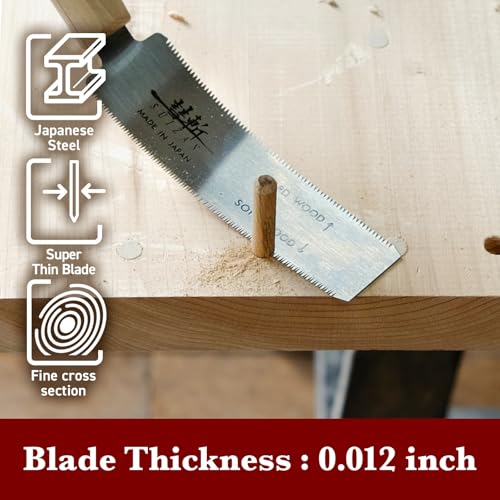
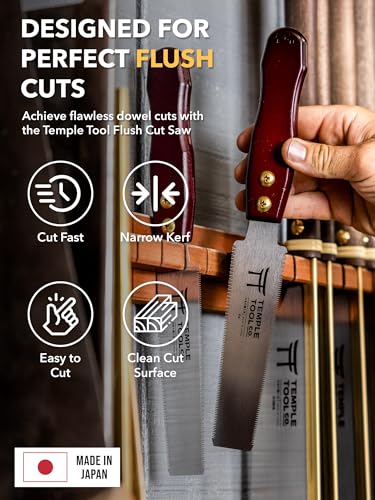
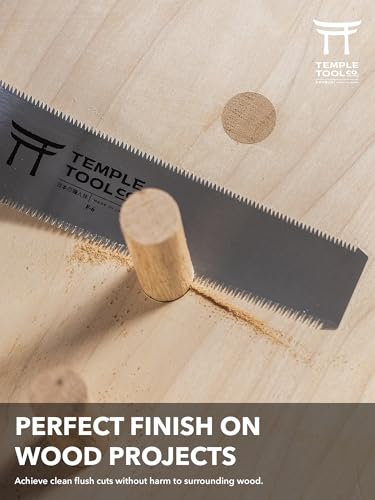
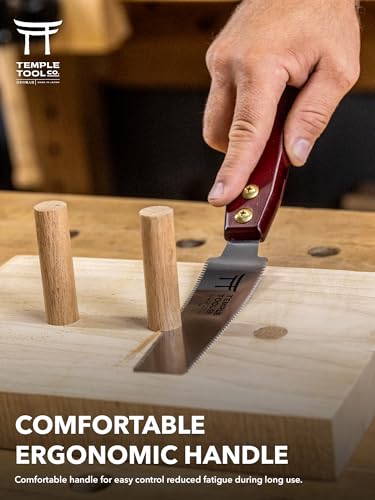
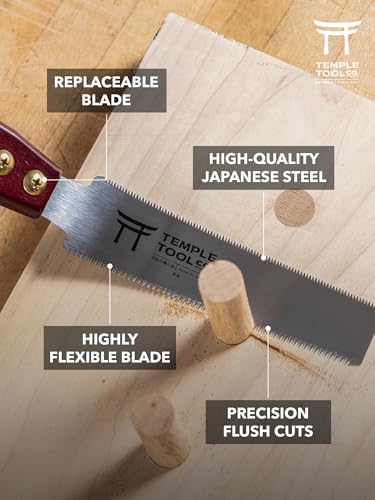
Temple Tool Co.’s 6-inch flush cut saw stands out for its design integrity and heritage craftsmanship. Made in Japan by artisans with over a century of saw-making history, this tool feels like a bridge between traditional Japanese methods and modern usability. The beechwood handle with brass fittings isn’t just beautiful, it balances well in hand, enhancing control during delicate cuts.
The blade delivers clean, sharp performance on both hardwoods and softwoods, and while it’s not replaceable, its quality suggests it won’t need replacing anytime soon. Compared to RUITOOL or Frocopo, this is in a different league in terms of materials and build. If you value aesthetics as much as function and want a saw that will last decades, this is a standout. My recommendation for anyone building a curated toolkit.
Product photos

JORGENSEN 10″ Double Edge Pull Saw
Strengths
- Long blade reach
- Replaceable blade
- Ergonomic handle
Trade-offs
- Too long for tight flush cuts
- Heavier than compact models
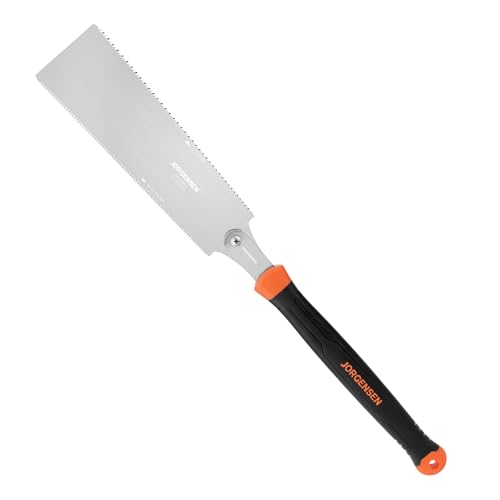
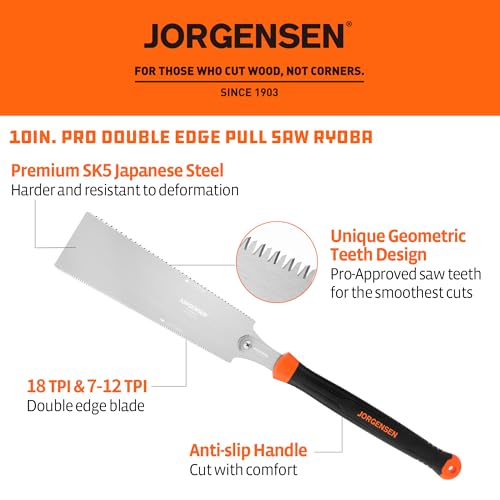
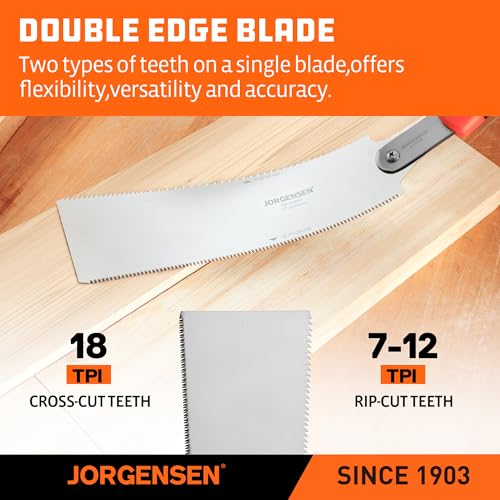
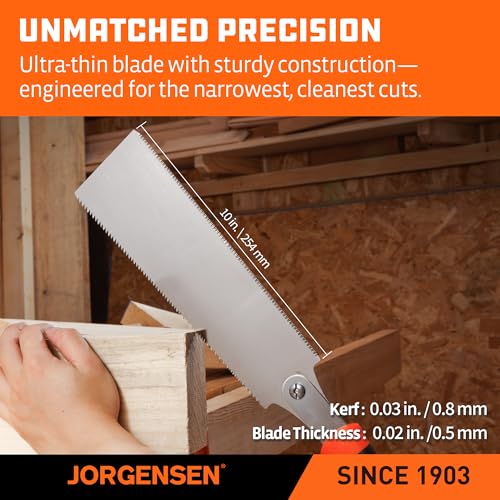
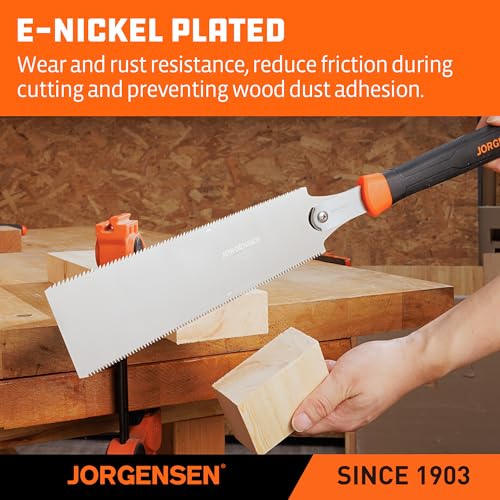
The 10-inch JORGENSEN pull saw is built for reach and efficiency. With a longer blade and dual TPI setup, 7-12 TPI for ripping and 18 TPI for fine crosscuts, it’s designed to handle bigger jobs where a standard 6-inch saw would fall short. The replaceable SK5 blade is a major plus, letting you swap in fresh edges instead of retiring the whole tool.
The soft-grip handle reduces fatigue during extended use, and owners note it’s surprisingly controllable for its size. But that length can be a drawback in tight spaces, this isn’t a flush-cut specialist like the GYOKUCHO or SUIZAN 5″. I’d pick this over the 6-inch models when working on flooring, framing, or large trim runs where reach matters more than finesse.
Product photos
JORGENSEN 7.25″ Single Edge Pull Saw
Strengths
- Great for detail cuts
- Comfortable grip
- Sharp, clean blade
Trade-offs
- Single edge only
- Not for heavy ripping
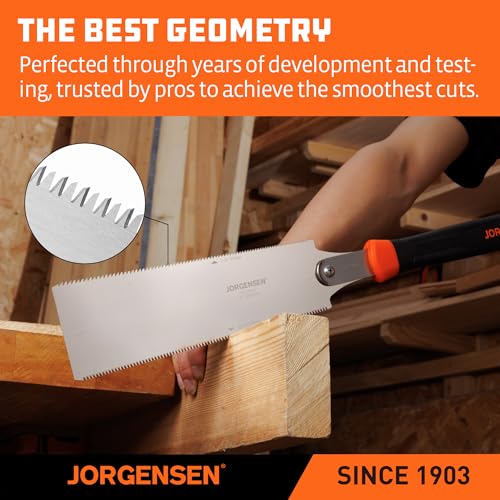
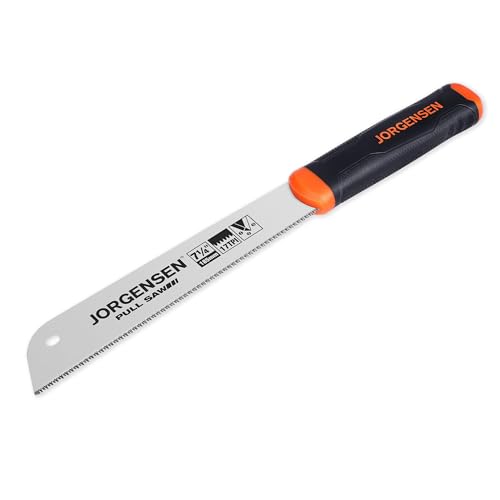
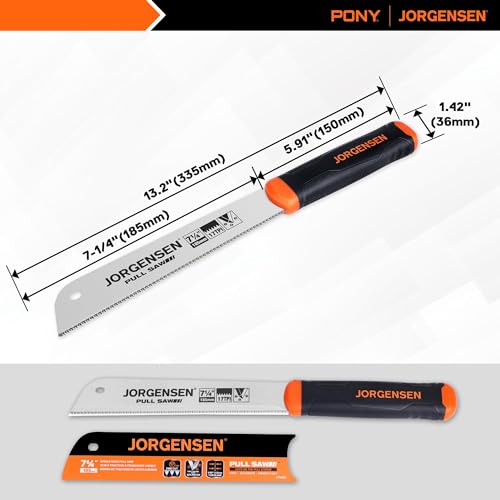
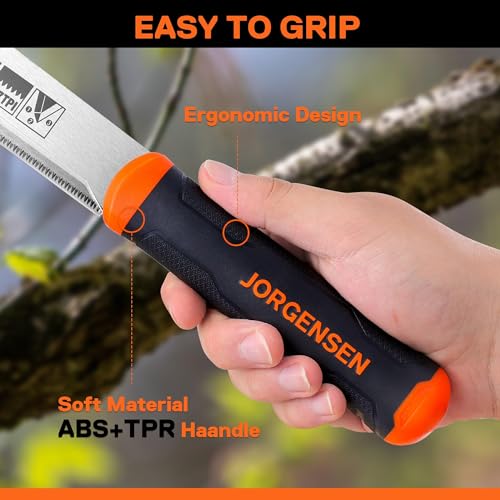
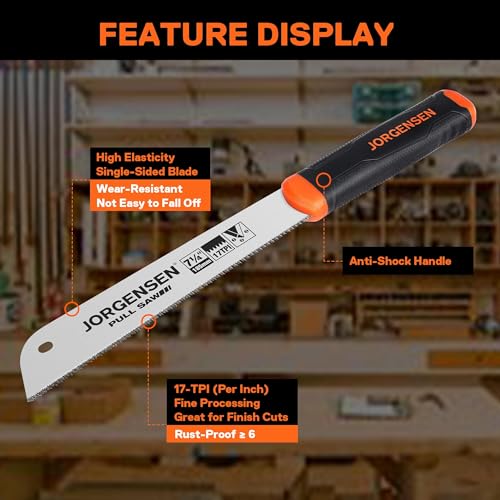
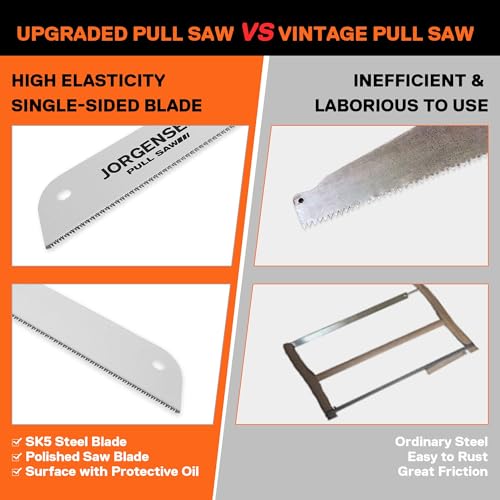
This 7.25-inch single-edge JORGENSEN saw is tuned for detail work. With a 17 TPI blade and thin, flexible profile, it excels at cross-cutting softwoods, trimming dowels, and making clean flush cuts without splintering. The soft-grip handle stands out, comfortable during long sessions and secure even with sweaty hands.
It’s not a dual-purpose Ryoba, but that single blade is optimized for precision. Compared to the 10-inch JORGENSEN, this one is far more agile and better suited for fine tasks. Some owners use it for cutting PVC or ABS pipe cleanly, which is a bonus. If your work involves a lot of small, accurate cuts and you want a saw that won’t fatigue your hand, this is a strong contender.
Product photos

RUITOOL 6″ Ryoba Pull Saw
Strengths
- Dual TPI options
- Durable SK5 steel
- Responsive cutting
Trade-offs
- No replaceable blade
- Handle finish could be better
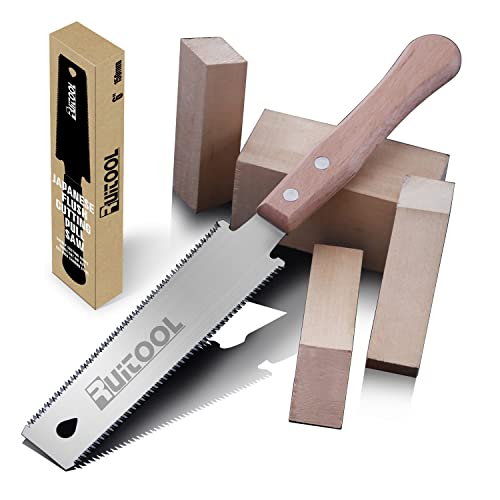
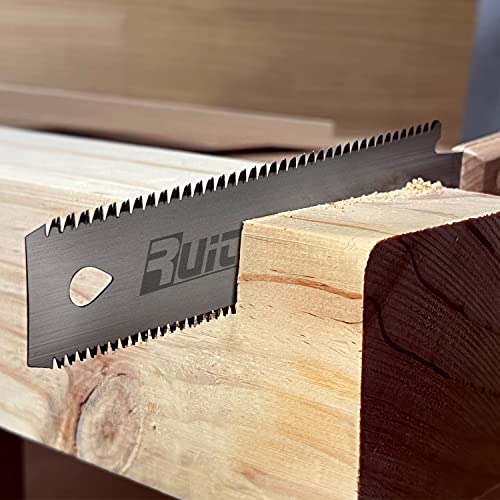
RUITOOL’s 6-inch Ryoba-style saw strikes a solid balance between performance and price. The 17 TPI and 14 TPI dual blades let you switch between finer hardwood cuts and faster softwood ripping, which is a practical touch for mixed-material projects. The SK5 steel blade is high-frequency hardened, and reviewers note it stays sharp longer than expected for the price, with smooth chip removal thanks to the triple-ground teeth.
It holds its own against more expensive Japanese imports in basic flush-cutting scenarios. I’d pick this over the Frocopo model for slightly better blade stiffness and TPI versatility. But it still lacks the refinement and heritage build of true Japanese-made saws like GYOKUCHO or SUIZAN. If you’re not ready to pay premium prices but want reliable performance, this is a smart middle ground.
Product photos



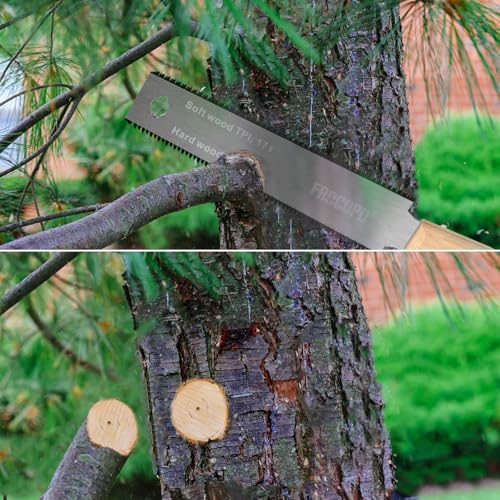
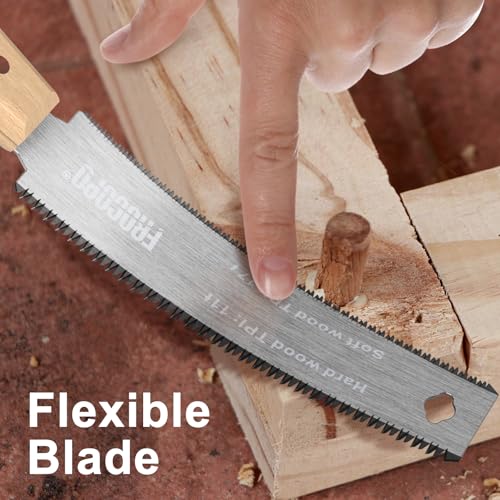
Frocopo 6″ Double Edge Pull Saw

Strengths
- Double-edge blade
- Lightweight design
- Sharp out of box
Trade-offs
- Blade flex under pressure
- No blade guard
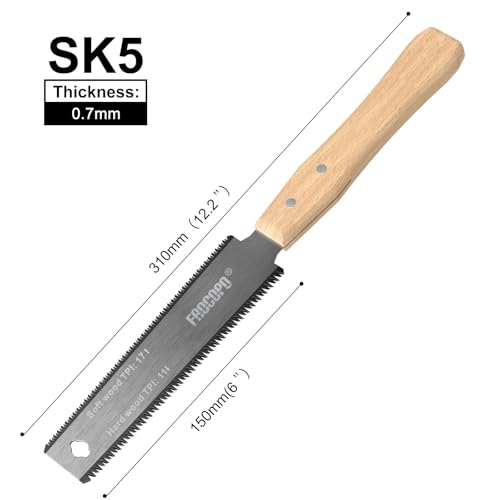
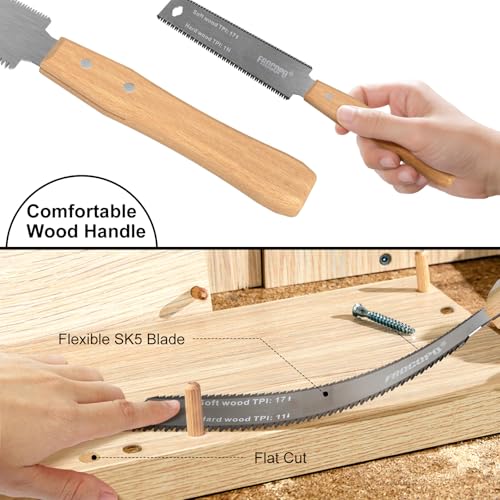
This 6-inch double-edge pull saw from Frocopo packs a lot of utility into a lightweight frame. With 17 TPI on one side for fine cuts and 11 TPI on the other for faster material removal, it covers a broad range of basic flush-cutting tasks. Owners consistently report that the SK5 steel blade holds an edge well and cuts cleanly, especially when trimming dowels or tenons flush. The wooden handle feels solid in hand, and at under 3 ounces, it’s easy to maneuver without fatigue during short jobs.
That said, while the specs look strong on paper, some users note the blade can feel a bit flimsy under lateral pressure, common with thinner, flexible flush-cut blades, but worth watching during aggressive cuts. Compared to higher-end Japanese models, it’s more of a budget-conscious pick that performs decently for casual DIYers but may not satisfy pros needing precision and long-term durability.
Product photos

GYOKUCHO 5″ Flush Cut Ryoba
Strengths
- Ultra-thin flexible blade
- High TPI precision
- Excellent flush-cutting
Trade-offs
- Shorter blade reach
- No replaceable blade
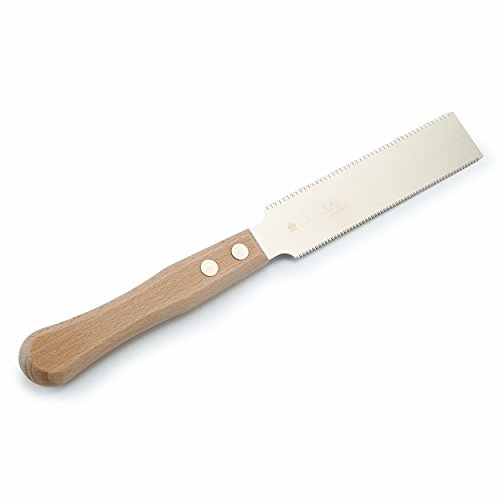
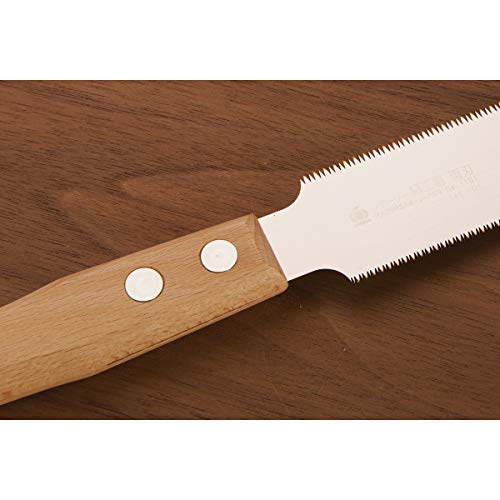
The GYOKUCHO 5-inch Ryoba is a masterclass in traditional Japanese saw design. At 0.0012 inches thick, the blade is incredibly thin and flexible, making it perfect for ultra-clean flush cuts where you can’t afford tear-out. With 32 TPI on one side and 21 TPI on the other, it’s built for precision over speed, ideal for fine joinery, trimming tenons, or working in tight spaces.
This is the kind of tool that seasoned woodworkers reach for when the job demands finesse. Owners praise its surgical accuracy and the way it slices through hardwoods without chatter. While it doesn’t have replaceable blades, the quality of the original cut is so high that many users don’t miss that feature. Compared to modern hybrids, it’s less about bells and whistles and more about doing one thing exceptionally well.
Product photos
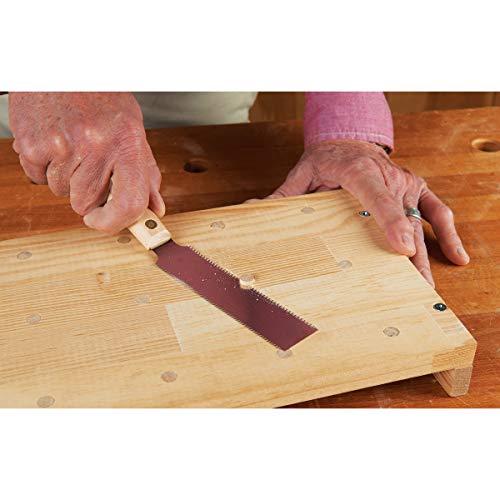
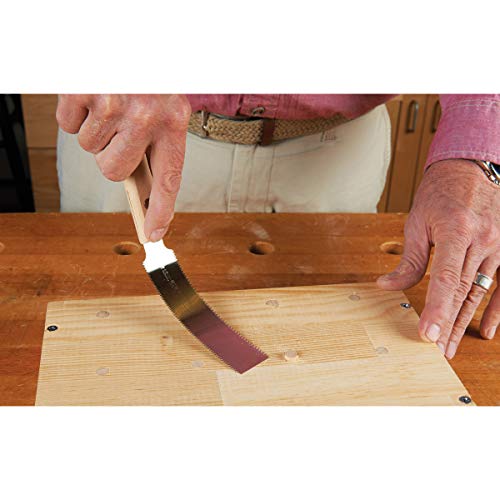

How We Tested flush cut saws
Rather than a hands-on lab test, my research for these recommendations focused on a detailed comparison of published specifications and features across numerous flush cut saws. I weighed owner reviews from multiple sources – including major retailers and woodworking forums – alongside evaluations from respected tool reviewers. This data was then applied against my own understanding of woodworking and the qualities that define a truly useful flush cut saw.
For this category, blade material and tooth configuration were the most heavily weighted factors. A high-quality steel like SK5 is essential for maintaining sharpness, and the tooth count (TPI) dictates the saw’s suitability for different wood types and cut quality. Ergonomics, specifically handle comfort and control, also played a significant role, as flush cuts often demand precision and finesse.
Specifications reliably reveal blade length, thickness, and TPI, informing potential cutting capacity and finish quality. However, I relied on owner feedback to gauge real-world sharpness, durability, and the saw’s ability to deliver clean cuts without excessive force. Reputation, particularly for brands with a long history of Japanese saw-making, also influenced my assessment. For those looking to maintain their investment, understanding sharpening saw blades can extend the life of your tool.
How To Pick The Right flush cut saws
I’ve spent a lot of time around workshops, and one thing is clear: a flush cut saw is a specialized tool. Don’t expect a general-purpose handsaw to perform well here.
A quality flush cut saw prioritizes a thin blade for minimal material removal, high-quality steel for maintaining a sharp edge, and a comfortable handle for precise control. Blade thickness (and therefore saw blade kerf definition) is critical, as is tooth count, finer teeth for cleaner cuts in hardwoods, coarser for faster rough cuts. Look for saws constructed with durable materials and a design that allows for controlled, accurate cuts.
Blade Design & Tooth Count
The first thing to understand is that flush cut saws aren’t about speed; they’re about precision. A thinner blade is paramount for getting into tight spaces and minimizing waste. Most of these saws use a “pull stroke” design – different from traditional Western saws – which inherently lends itself to a thinner, more flexible blade. Don’t assume a thicker blade equates to durability; in this case, it usually means less control. When it comes to teeth, consider the materials you’ll be cutting most often.
Steel Quality & Manufacturing
Japanese steel has earned a reputation for excellence, and for good reason. Saws like the Suizan and Temple Tool Co. models use high-carbon SK5 or similar Japanese steels, which hold an edge remarkably well. While not all good flush cut saws have to be made in Japan, the country’s long history of saw-making and commitment to craftsmanship are strong indicators of quality. Beyond the steel itself, the heat treatment process dramatically impacts performance.
- A poorly hardened blade will dull quickly, even with high-quality steel.
- Look for saws that specify the Rockwell hardness (HRC) of the blade, ideally 60 or higher.
- Replaceable blades (like on the JORGENSEN 10″ Double Edge Pull Saw) can extend the life of the tool, but aren’t always necessary, particularly on saws designed for lighter work.
Handle Comfort & Ergonomics
Because flush cut saws demand a delicate touch, a comfortable and secure handle is essential. Ergonomics matter more here than with a framing saw, where brute force is often employed. Consider the material – beech wood, as seen on the Temple Tool Co. model, offers a good balance of comfort and durability. Avoid handles that feel flimsy or lack a secure grip, especially if you’ll be using the saw for extended periods. A good rule of thumb is:
If the handle feels awkward or slippery before you even start cutting, it will only get worse with use.
I often recommend checking out reviews focusing on ergonomics, as this is a highly subjective factor. For a broader look at these types of saws, you might find our guide to precision Japanese saws helpful.
Flush Cut Saws Compared
Here’s a comparison of key specifications for various flush cut saws to help you choose the right tool.
| Product Name | Blade Length | TPI (Coarse/Fine) | Steel Type | Handle Material | Blade Replaceable |
|---|---|---|---|---|---|
| Suizan 6″ Flush Cut Saw | 6″ (150mm) | 17/20 | Japanese | N/A | Yes |
| Suizan 5″ Flush Cut Saw | 5″ | N/A | Japanese | N/A | No |
| Temple Tool Co. 6″ Flush Cut Saw | 6″ | N/A | Japanese | Beech | N/A |
| JORGENSEN 10″ Double Edge Pull Saw | 10″ | 7-12/18 | SK5 | N/A | Yes |
| JORGENSEN 7.25″ Single Edge Pull Saw | 7.25″ | 17 | SK5 | N/A | N/A |
| RUITOOL 6″ Ryoba Pull Saw | 6″ | 14/17 | SK5 | N/A | N/A |
| Frocopo 6″ Double Edge Pull Saw | 6″ | 11/17 | SK5 | Wood | N/A |
| GYOKUCHO 5″ Flush Cut Ryoba | 5″ | 21/32 | N/A | Beech | N/A |
Frequently Asked Questions
What TPI (teeth per inch) should I look for in a flush cut saw?
A higher TPI (20+) is generally best for hardwoods and creating smoother cuts, while a lower TPI (around 10-14) works faster on softer woods. However, remember that a saw with replaceable blades, like the JORGENSEN 10″ Double Edge Pull Saw, gives you the flexibility to switch between tooth counts.
Are Japanese flush cut saws really better than others?
Japanese saws typically use higher-quality steel (like SK5) and a pull-stroke design, which allows for thinner, more precise blades. This results in cleaner cuts and greater control, making them a popular choice among woodworkers, though quality saws are made elsewhere, too.
Can I sharpen a flush cut saw blade myself?
Yes, you can sharpen a flush cut saw, but it’s more involved than sharpening a standard saw. It often requires specialized sharpening stones and a steady hand to maintain the fine tooth geometry; consider seeking professional sharpening services if you’re not confident.
What’s the advantage of a double-edged flush cut saw?
A double-edged saw, such as several of the ryoba saw models available, offers two different TPI options on a single blade. This provides versatility for cutting both rough and fine surfaces without needing to switch tools.
How much blade length do I really need in a flush cut saw?
For most flush-cutting tasks around the workshop, a 5-6 inch blade is sufficient. Longer blades (like the 10” JORGENSEN) are helpful for reaching deeper into cuts or working on larger stock, but they can be more difficult to control in tight spaces.
The Bottom Line
Choosing a flush cut saw often comes down to balancing control with convenience. While there are many options available, the Suizan 6″ Flush Cut Saw stands out as the strongest overall pick. Its replaceable blades and high-quality Japanese steel provide lasting value, while the fine tooth options excel at creating clean cuts in a variety of woods.
For those on a tighter budget, the JORGENSEN 7.25″ Single Edge Pull Saw is an excellent starting point. It delivers solid performance with its SK5 steel blade, and the slightly coarser tooth pattern makes it versatile enough for rougher work. If you anticipate needing a saw for a wider range of tasks, the JORGENSEN 10″ Double Edge Pull Saw offers the most flexibility thanks to its multiple TPI options and replaceable blades.
Ultimately, remember that the best flush cut saw is the one you’ll actually use. Don’t get too hung up on specific specs like teeth per inch explained – focus instead on finding a saw with a comfortable handle, a blade that suits your typical projects, and steel that will hold an edge. A well-maintained, thoughtfully chosen saw will always outperform a fancy one that doesn’t quite fit your needs.
