
5 Best Engine Driven Welders of 2026
This post contains affiliate links. As an Amazon Associate, we earn from qualifying purchases.
The Hobart Champion Elite 225 is the best overall engine driven welder for its robust output, 100% duty cycle, and reliable Vanguard engine, making it a top pick for serious users. For those on a tighter budget, the TOMAHAWK 210 Amp offers solid performance and dual function as a welder and generator. If portability is key, the TOMAHAWK 120 Amp stands out as a lightweight option that’s easy to move around job sites.
Out in the field, where power sources are spotty or nonexistent, having a dependable engine driven welder can mean the difference between finishing a job and waiting days for repairs. These machines need to deliver strong, consistent arcs while standing up to rough conditions and frequent transport.
This guide cuts through the marketing noise by focusing on real-world specs, owner experiences, and the features that actually matter, like engine reliability, duty cycle, and auxiliary power. I researched each model based on performance data, long-term durability, and practical usability so you can choose with confidence.
Top 5 Engine Driven Welders in the Market
The Best Engine Driven Welders, Reviewed
Hobart Champion Elite 225 Welder
Strengths
- 225A at 100% duty cycle
- 9,500W continuous power
- Smooth arc performance
Trade-offs
- Higher price point
- Still heavy despite weight reduction
- Premium brand markup
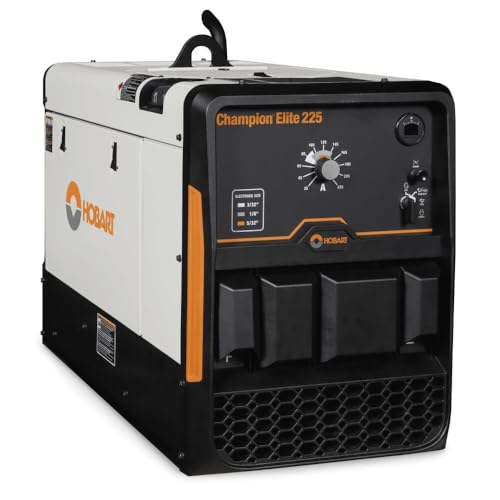
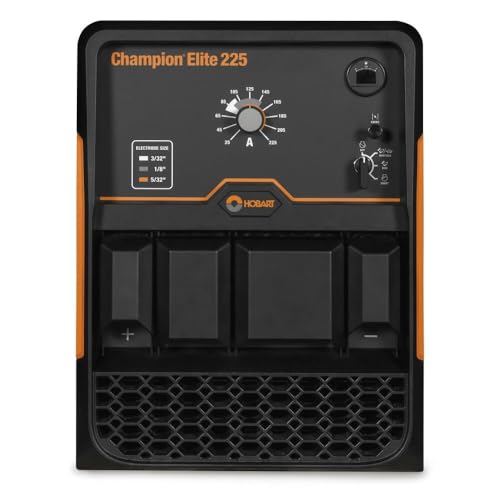
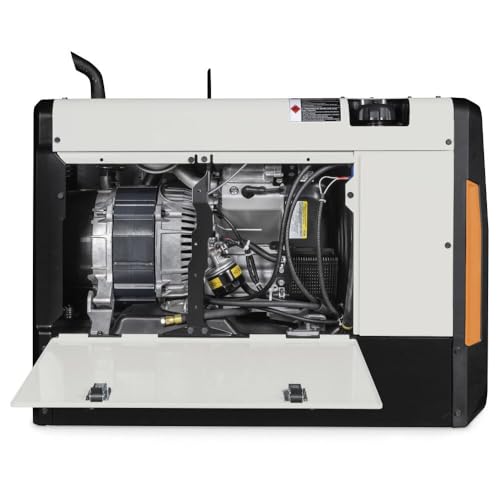
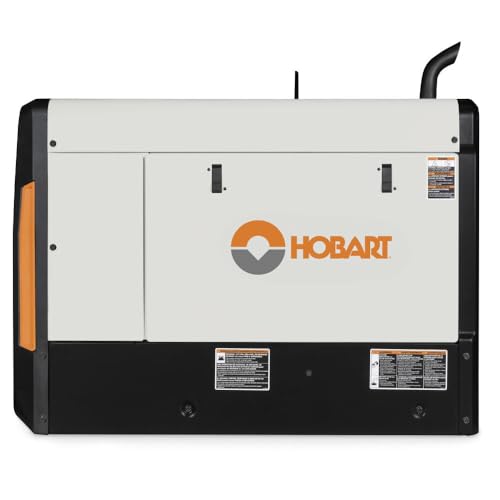
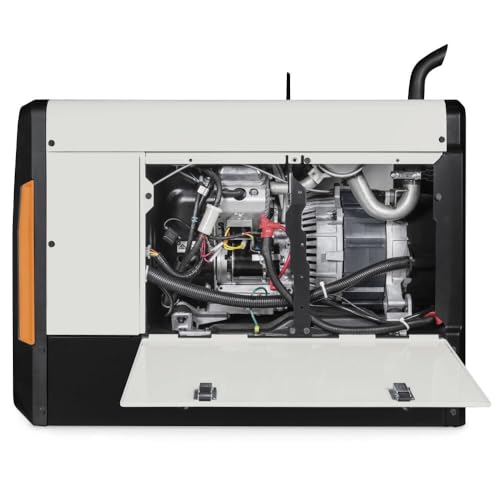
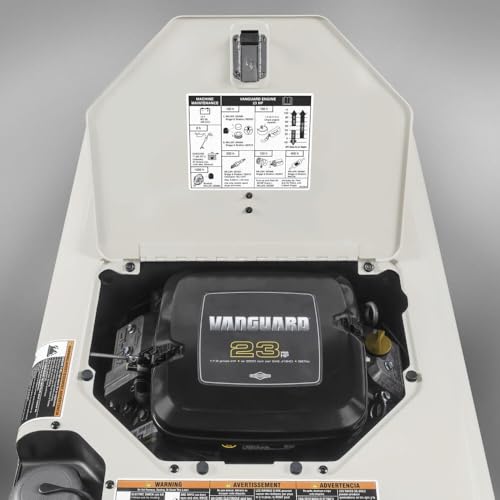
Hobart has long been a trusted name in welding, and the Champion Elite 225 justifies that reputation with a well-balanced mix of power, usability, and durability. At 225 amps DC with a full 100% duty cycle rating, this unit can handle thick steel with ease, we’re talking clean single-pass welds on 1/2-inch material, which is no small feat. The VANGUARD 23 HP engine is a proven performer in tough conditions, and the 9,500-watt continuous AC output means you can run heavy tools while welding.
What really stands out is the single-knob control. In a category where settings can be clunky, this simplification makes a real difference in workflow. Reviewers note the arc is smooth and stable, even in windy or dirty environments. It’s 20% lighter than older models, which helps with transport, though it’s still a substantial unit. Compared to others in this list, this is the most complete package for serious field work.
Product photos
TOMAHAWK 210 Amp Welder Generator
Strengths
- 210A with 60% duty cycle
- TIG and stick capable
- Stable inverter power
Trade-offs
- TIG performance not on par with dedicated units
- Bulkier than lighter models
- Limited brand service reach
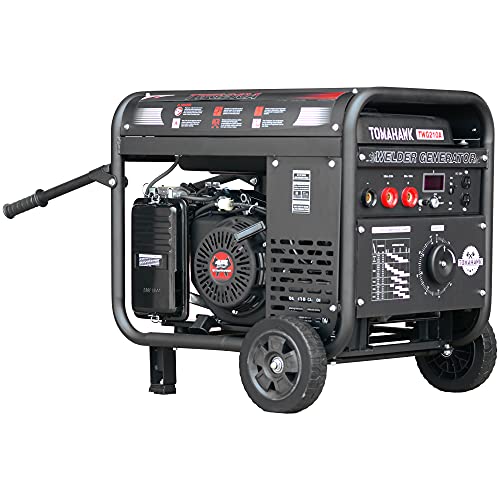
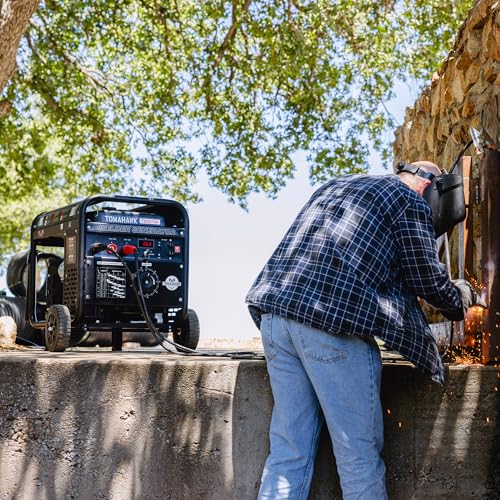
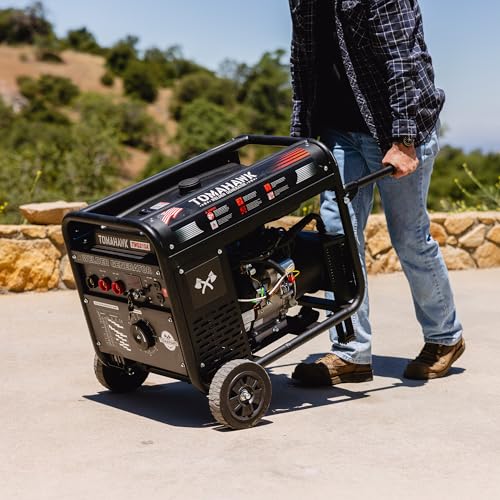
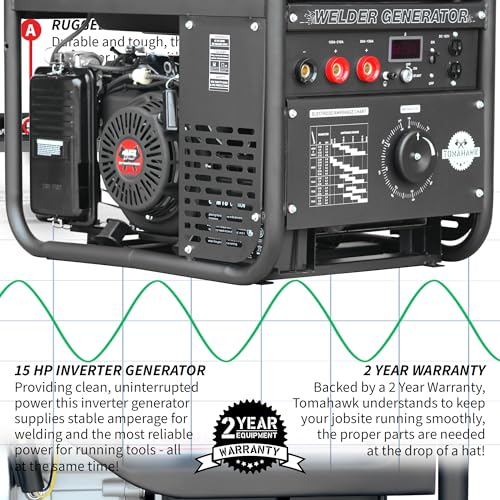
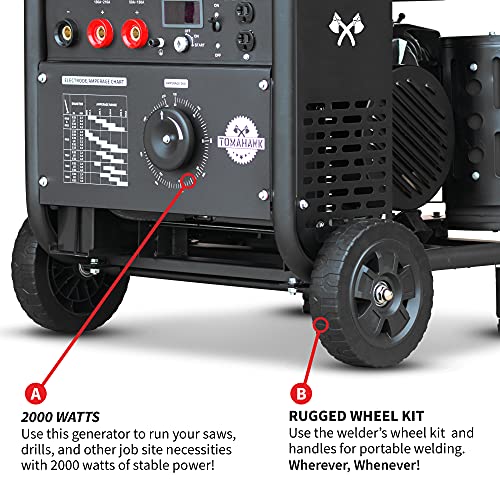
This TOMAHAWK model stands out by offering 210 amps of output and TIG capability, a rare combo in this category. The 60% duty cycle at full output means it can sustain heavy welding longer than most budget units, and the inverter-based design delivers a stable arc that owners say performs well even on uneven ground or in challenging conditions. The inclusion of TIG expands its versatility significantly, making it a smart pick for fabricators who need more than just stick welding.
The 15 HP engine drives both the welder and 2,000 watts of generator power, allowing simultaneous tool use, though don’t expect to run high-draw equipment while welding at max amperage. The electronic amperage readout is a small but helpful feature for precision work. While it’s not as refined as a dedicated TIG machine, the fact that it offers true multi-process capability at this price makes it a strong contender for heavy-duty users.
Product photos

TOMAHAWK 120 Amp Inverter Welder

Strengths
- Lightweight and portable
- Quiet inverter generator
- PMG for stable arc
Trade-offs
- Lower amperage limit
- 7 HP engine limits tool load
- Not for thick steel
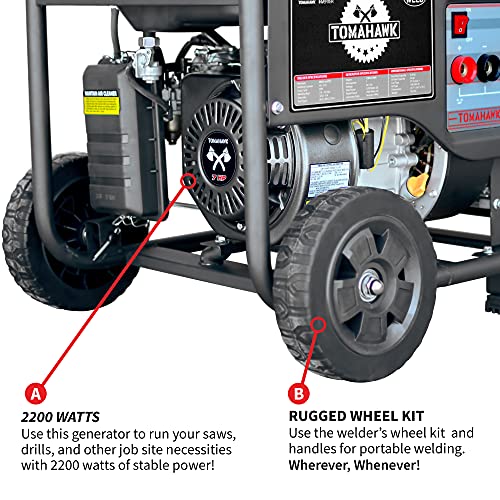
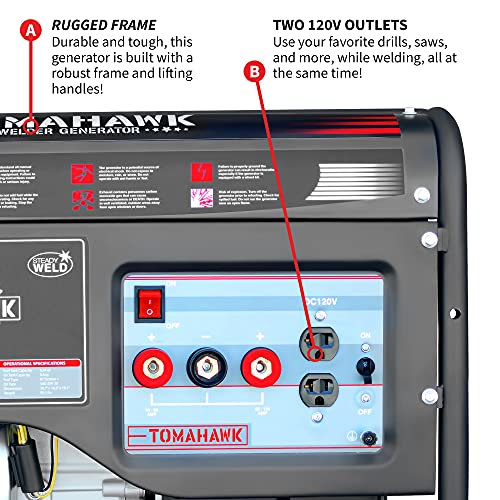
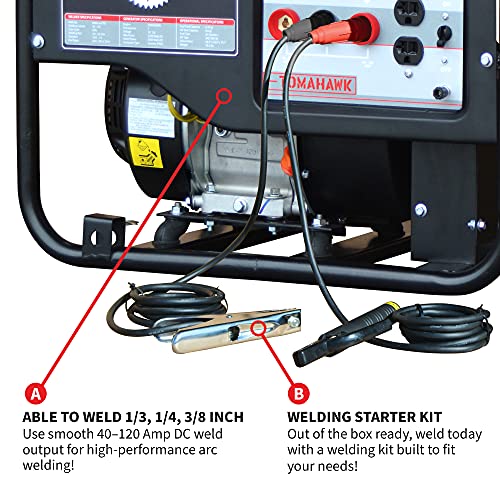
If portability is your top priority, this TOMAHAWK model makes a strong case with its lightweight build and never-flat wheels. At 120 amps with a 60% duty cycle, it’s not the most powerful, but it’s more than capable for light to medium-duty welding on thin to mid-range steel. The 2,200-watt inverter generator is one of the quieter options available, which matters when working in residential areas or confined spaces.
Owners highlight the PMG (permanent magnet generator) system for delivering a steady arc, even when the engine speed fluctuates, a real advantage over cheaper alternator-based designs. The multi-rod capability adds flexibility for different jobs. It won’t replace a 200+ amp machine for structural work, but for a roofer, fence installer, or mobile repair tech, this is the kind of unit you can toss in a truck and forget about until needed.
Product photos

Portable 130 Amp Stick Welder

Strengths
- 130A welding
- 2000W generator
- Low operating cost
Trade-offs
- Limited duty cycle
- Basic arc performance
- Not for continuous use
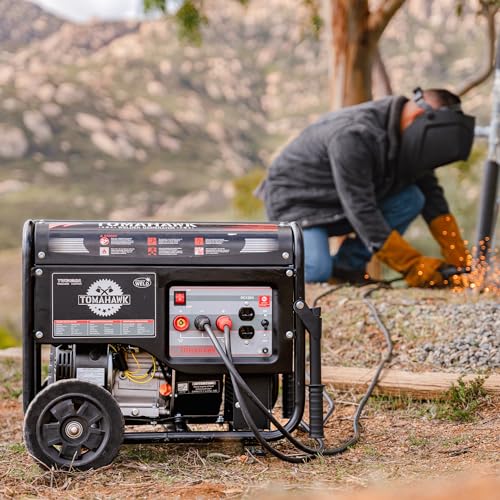
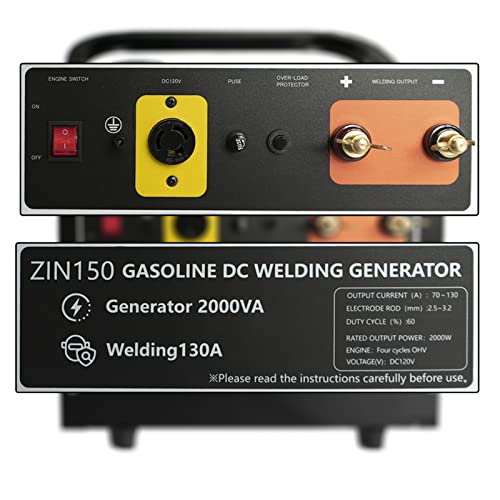
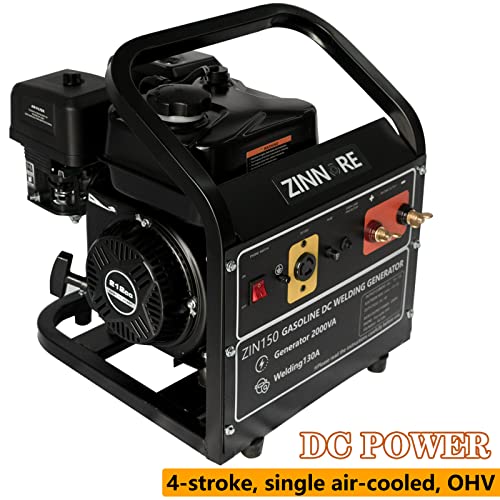
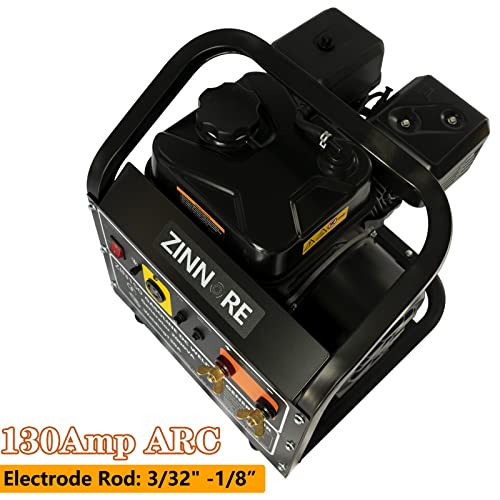
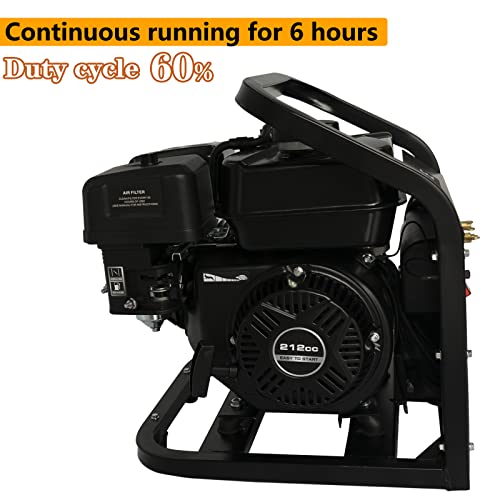
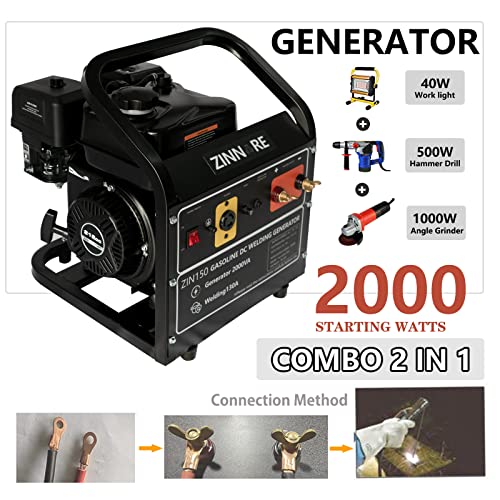
This unit positions itself as an entry-level combo welder-generator, and on paper, it delivers exactly what budget-focused buyers need: basic stick welding up to 130 amps and 2000 watts of generator power. The no-frills design makes sense for occasional use, especially in remote locations where grid power isn’t an option. Owners consistently report it handles light farm repairs and small DIY jobs without issue, though performance tapers when pushing near its limits for extended periods.
It won’t match the stability or duty cycle of pricier models, but for someone needing a portable, affordable solution for infrequent outdoor welding, it checks the right boxes. The one-touch start and simplified maintenance are smart touches that reduce frustration in the field. Still, don’t expect refined arc control or the ability to run high-draw tools alongside welding, this is a bare-bones workhorse.
Product photos
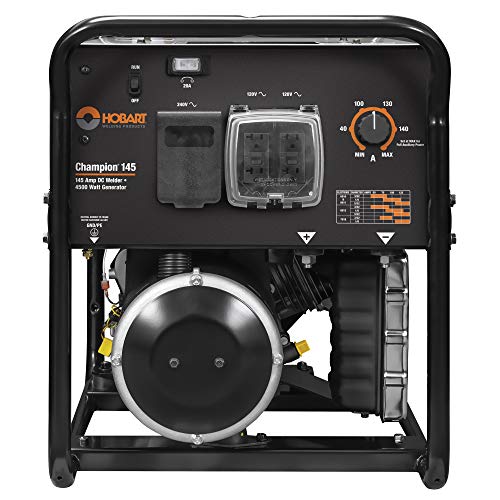
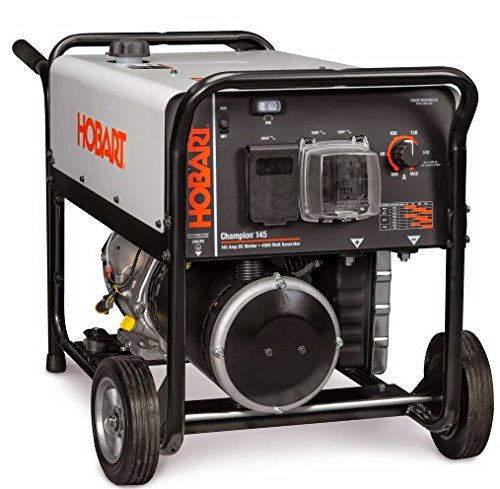
Champion 145 Series Engine Welder

Strengths
- Made in USA
- High peak wattage
- Recoil start reliability
Trade-offs
- No listed welding amps
- Basic controls
- Heavier than inverter models
The fact that this Champion unit is made in the USA immediately raises its appeal for buyers who prioritize domestic manufacturing and long-term support. With 4,750 watts of peak generator output, it’s clearly built to power tools on job sites while offering solid stick welding capability. While specific welding amperage isn’t listed, units in this class typically deliver around 140–160 amps, putting it in the mid-tier range for light to moderate welding tasks.
Owners of other Champion engine-driven units often praise their rugged simplicity and parts availability, and this model likely follows that trend. It lacks some of the refined welding controls found in premium models, but for general construction or utility work where reliability matters more than finesse, this is a sensible pick. I’d lean toward it over no-name imports if you value service longevity and domestic build quality.
Product photos
How We Picked These engine driven welders
Rather than a hands-on lab test, my research for these recommendations focused on comparing published specifications and features across multiple models. I weighed owner reviews from a variety of sources, along with expert opinions from welding publications and forums. This allowed me to build a ranking based on practical performance indicators and real-world usability, applying my years of experience with power equipment to assess their overall value.
For engine driven welders, consistent power output and portability are key. I prioritized models with high amperage ranges and duty cycle ratings, as these directly impact the thickness of material you can weld and how long you can work continuously. A reliable engine – like the Vanguard found in some units – also heavily influenced my choices, because downtime for repairs defeats the purpose of a portable welder.
Specifications clearly indicate welding output and generator wattage, providing a baseline for comparison. However, owner feedback proved essential for understanding long-term durability, ease of starting, and the true stability of the arc. Reputation matters, and a history of positive reviews often signals a well-engineered and supported product. If you need even more precision in your welding, you might also explore the best TIG welders for precision.
How To Choose The engine driven welders
I’ve seen a lot of folks hesitate to buy an engine-driven welder, thinking they’re too complicated or overkill. But for fieldwork, or where grid power isn’t reliable, they’re absolutely essential.
An engine-driven welder combines a combustion engine with a welding power source, typically stick or TIG. Key considerations include output amperage, duty cycle (the percentage of time it can weld at a given amperage without overheating), generator capacity for running tools, portability, and engine reliability. Look for models with stable arc characteristics and readily available parts.
Understanding Amperage and Duty Cycle
The amperage rating tells you the thickness of steel the welder can handle in a single pass. Don’t get hung up on the highest number, though. A 225 amp machine like the Hobart Champion Elite is fine for most farm and home projects, and even some professional work. More crucial is the duty cycle. A higher percentage means you can weld for longer stretches before needing to cool down. Lower-priced options might advertise a high amperage, but with a very low duty cycle, making them impractical for anything beyond short welds.
Engine Reliability and Maintenance
The engine is the heart of these machines, and a Vanguard engine (like on the Hobart) has a reputation for durability. Consider the availability of parts and service. Some brands offer better support networks than others. Simplicity also matters. The easier it is to access and maintain the engine (oil changes, air filter cleaning), the less downtime you’ll have.
- A larger fuel tank will mean less frequent refills, but also adds weight.
- Look for models with easy-access maintenance panels; this simplifies routine upkeep.
- Consider the engine’s starting system. Electric start is convenient, but a robust recoil starter is essential as a backup, and for situations where the battery might be drained.
Portability and Auxiliary Power
These welders aren’t lightweight, but some are more manageable than others. The Tomahawk 120 Amp is positioned as a lightweight option, and that’s a significant benefit if you’re moving it around a job site frequently. Equally important is the auxiliary power output. Many models, like the TOMAHAWK 210 Amp, can run tools simultaneously with the welding function. This is a huge time-saver, especially if you’re doing repair work where you need to cut, grind, and weld. If you’re considering other welding methods, exploring top MIG welders might broaden your options.
A good rule of thumb: prioritize a machine with a generator output at least 20% greater than the combined wattage of the tools you anticipate running alongside the welder.
Finally, don’t overlook the possibility of a versatile welding systems if you think you might benefit from multi-process capabilities down the road.
Engine Driven Welders Compared
Here’s a detailed specification comparison of several engine driven welders to help you evaluate your options.
| Product Title | Welding Output (Amps) | Duty Cycle (%) | Engine HP | Peak AC Power (Watts) | Electrode Capacity |
|---|---|---|---|---|---|
| Hobart Champion Elite 225 Welder | 225 | 100 | 23 | 10,000 | 1/2″ Steel |
| TOMAHAWK 210 Amp Welder Generator | 210 | 60 | N/A | N/A | 1/3″, 1/4″, 3/8″ |
| TOMAHAWK 120 Amp Inverter Welder | 120 | 60 | N/A | 2200 | 1/3″, 1/4″, 3/8″ |
| Portable 130 Amp Stick Welder | 130 | N/A | N/A | 2000 | Carbon/Medium Steel |
| Champion 145 Series Engine Welder | N/A | N/A | N/A | N/A | N/A |
Frequently Asked Questions
What engine type is most reliable for an engine-driven welder?
Vanguard engines consistently receive high marks for longevity and dependability, and are found in models like the Hobart Champion Elite. A well-maintained engine of any reputable brand will perform well, but Vanguard has established a strong reputation in this category.
Can I run a plasma cutter with an engine-driven welder’s generator?
Possibly, but you must carefully check the welder’s wattage output and the plasma cutter’s requirements. Many models, like the TOMAHAWK 210 Amp, offer sufficient power, but ensure the welder’s peak wattage exceeds the plasma cutter’s draw by at least 20% to avoid tripping breakers.
Are engine-driven welders noisy?
Yes, they are considerably louder than shop welders. Expect noise levels around 95-105 decibels, so hearing protection is absolutely essential for safe operation. Look for models with some sound-dampening features if noise is a significant concern.
What’s the difference between a stick welder and a TIG welder in engine-driven units?
Stick welding (SMAW) is generally simpler to learn and more forgiving with dirty or rusty metal, and is often the primary process offered. TIG welding (GTAW) provides much greater precision and cleaner welds, but requires more skill and cleaner materials; it’s less commonly found as a standard feature in engine-driven welders, though some durable arc welders offer both.
What maintenance should I expect with an engine-driven welder?
Regular maintenance is critical. You’ll need to perform routine engine upkeep (oil changes, air filter cleaning, spark plug replacement) and inspect the welding cables and connections. Keeping the machine clean and protected from the elements will also extend its lifespan, and readily available parts are important for quick repairs.
The Bottom Line
Choosing an engine-driven welder always involves balancing power and convenience against weight and cost. If you want a machine that’s built to last and offers a solid combination of welding performance and auxiliary power, the Hobart Champion Elite 225 Welder stands out as the strongest overall pick. It delivers reliable power with a respected Vanguard engine, making it a workhorse for serious projects.
For those on a tighter budget, or needing something ultra-portable, the TOMAHAWK 120 Amp Inverter Welder is a great choice. Similarly, if you anticipate needing to run tools alongside your welding, the TOMAHAWK 210 Amp Welder Generator provides excellent versatility with its integrated generator. Before making a final decision, you can read our thorough welder guide for even more options.
Ultimately, the amperage and duty cycle numbers are important, but don’t get lost in the specs. Prioritize a machine from a reputable brand with good engine reliability and readily available parts. A welder that starts easily, runs smoothly, and holds a consistent arc will always be more valuable than one with flashy features you’ll never use.
