
9 Best Dual Action Polishers 2026, Analyzed
This post contains affiliate links. As an Amazon Associate, we earn from qualifying purchases.
The Adam’s 9mm stands out as the best dual action polisher for most detailers, combining strong power with precise control. If you’re on a budget, the Chemical Guys TORQX delivers solid performance without the high price, while the BATOCA 15mm offers serious cutting ability for heavier correction jobs.
Picking a dual action polisher isn’t just about raw power, it’s about finding a tool that balances performance, control, and comfort for your type of work. Too aggressive, and you risk damaging paint. Too weak, and you’ll waste time with little results.
This guide cuts through the noise by focusing on specs that matter, like motor output, orbit size, and speed range, while factoring in real-world feedback on vibration, durability, and ease of use. These picks reflect what actually works in driveways and garages, not just on paper.
Top 9 Dual Action Polishers in the Market
The Best Dual Action Polishers, Reviewed
Adam’s 9mm Dual Action Polisher

Strengths
- 1000W motor
- 9mm throw
- Excellent balance
Trade-offs
- Slightly heavier than entry models
- Noisy at high speeds
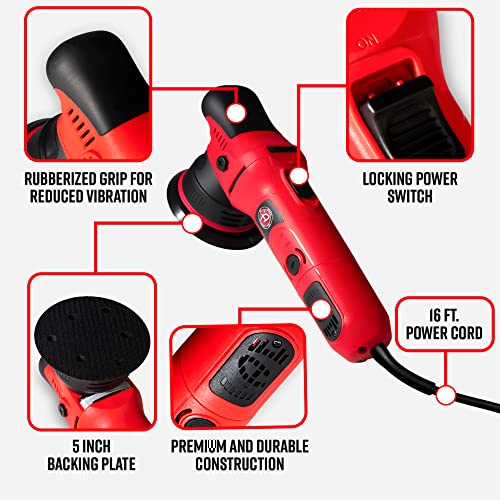
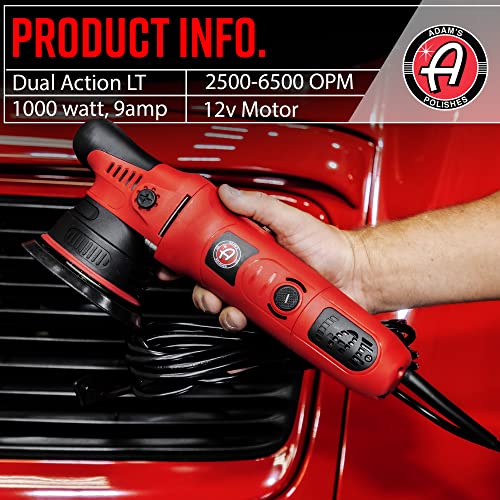
Adam’s 9mm DA Polisher hits a sweet spot between power and usability, which is why it earns the ‘Best Overall’ label. The 1000W motor and 9mm throw give it serious cutting ability, on par with the Maxshine M8S V2, but it’s slightly better balanced and easier to handle. Owners report it removes defects quickly without walking or vibrating excessively, and the 16-foot cord is a practical touch for garage setups. The concave rubber grips enhance control, and the block at the rear helps with stability and storage.
It’s not the lightest, but it’s close enough to the TORQX in handling while offering more correction power. Compared to the BATOCA 15mm, it’s less aggressive but more predictable, better for users who want strong performance without the learning curve. If you’re looking for one polisher to handle everything from compounding to waxing, this is the smarter buy.
Product photos


Maxshine M8S V2 Dual Action Polisher
Strengths
- 1000W motor
- 8mm throw
- 6-speed control
Trade-offs
- Heavier build
- Not ideal for tight areas
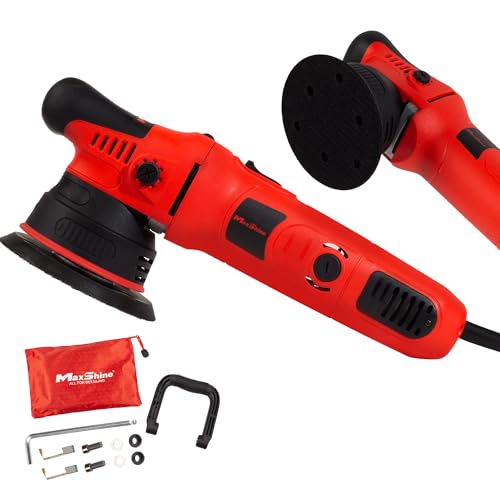
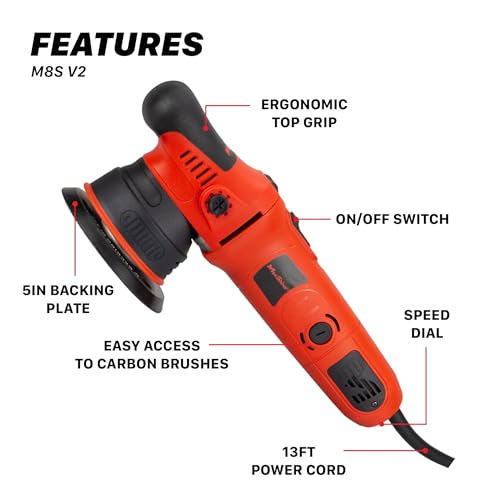
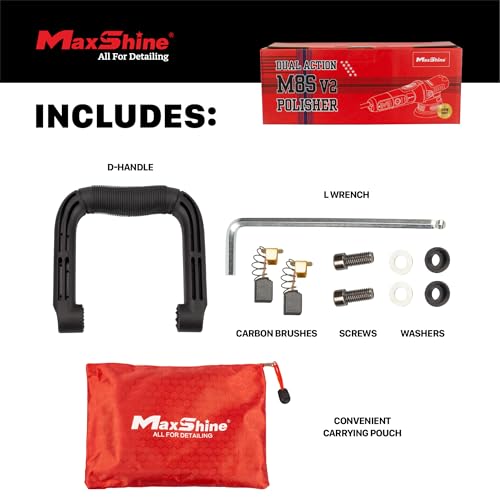
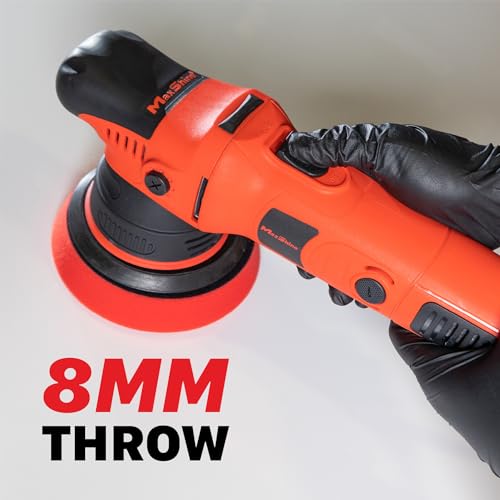
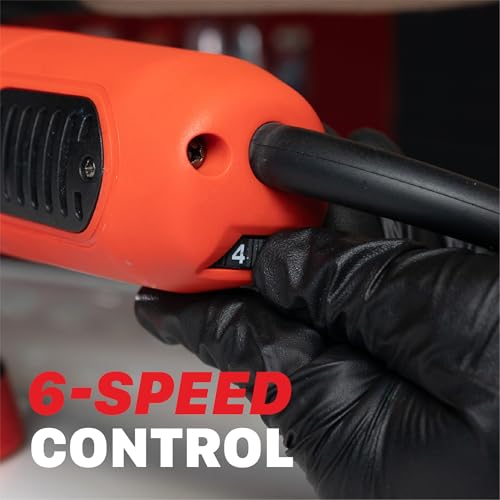
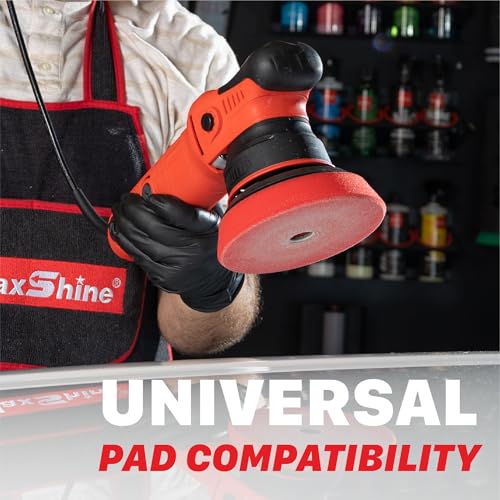
The Maxshine M8S V2 stands out as a serious contender for users prioritizing raw correction power without sacrificing control. With a 1000W motor and an 8mm throw, it delivers torque that rivals some larger machines, making it capable of handling moderate paint defects efficiently. Owners consistently report it powers through compounding with minimal stalling, and the 6-speed range gives enough flexibility to dial in for finishing or waxing. The 5/16″ thread is standard, so pad compatibility isn’t an issue.
Still, while it’s built like a workhorse, the size and weight might tire users during full-car sessions. It’s not the lightest on the list, and though it’s marketed as low-vibration, feedback suggests it’s more suited for those already familiar with dual action tools. Compared to lighter options like the Chemical Guys TORQX, this one leans into performance over portability.
Product photos
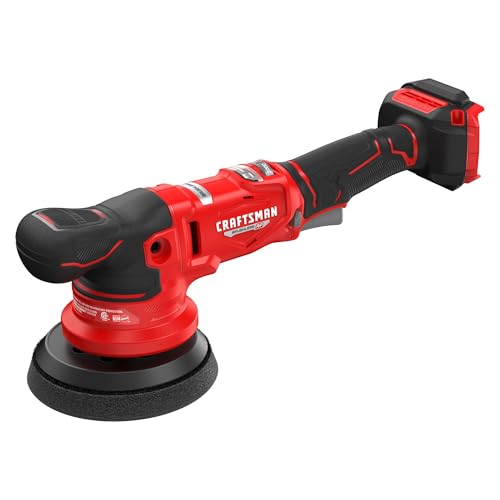
CRAFTSMAN 5 in. Cordless Polisher
Strengths
- Cordless freedom
- Brushless motor
- 9-speed control
Trade-offs
- Battery sold separately
- Higher upfront cost
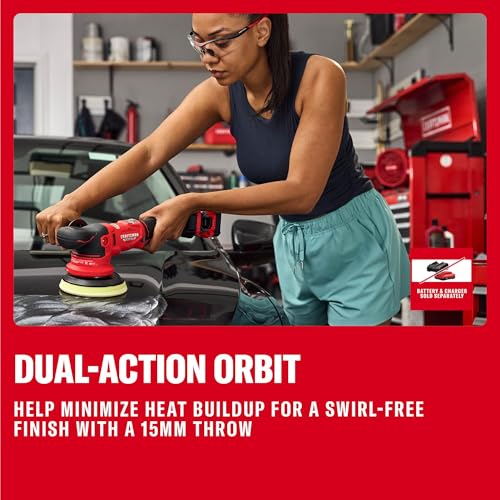
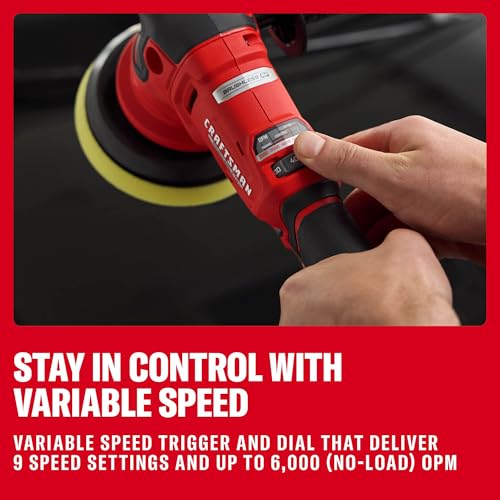
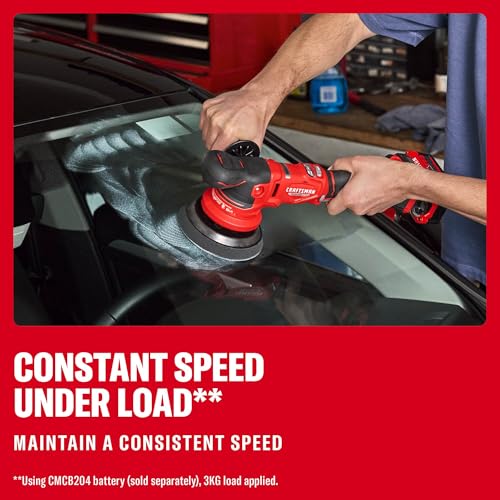
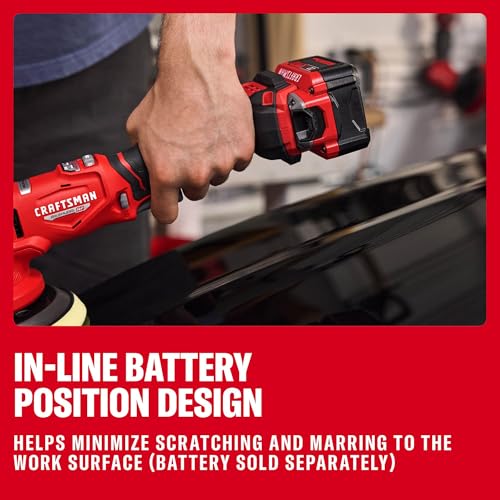
The CRAFTSMAN CMCE150B stands out as the only cordless brushless option here, and that freedom of movement is a real advantage. The 15mm throw gives it serious cutting ability, and the 9-speed dial offers fine control, more granular than most 6-speed models. The brushless motor delivers efficiency and longer runtime, and the in-line battery design keeps the weight centered, reducing the chance of marring.
It’s not cheap, and you’ll need to buy the battery and charger separately, which adds to the cost. But owners praise its balance and sustained power, no voltage sag even during long sessions. Compared to the corded BATOCA 15mm, it’s more convenient and just as capable. For mobile detailers or those working in driveways without outlets, this is the clear pick.
Product photos

BATOCA S5 Cordless 2-in-1 Polisher

Strengths
- 2-in-1 rotary & DA modes
- 1-inch detail shaft
- Cordless convenience
Trade-offs
- Limited runtime
- Gets warm during use
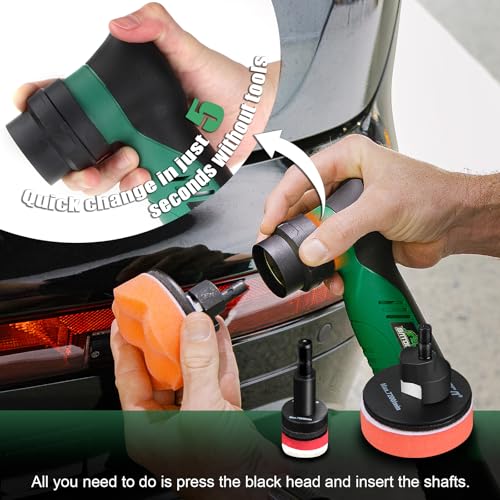
The BATOCA S5 is the only true 2-in-1 on this list, and that versatility is its biggest strength. The ability to switch between dual action and rotary modes in five seconds is a standout for users who want both safety and aggression when needed. The 12mm orbit in DA mode is aggressive, but the real standout is the 1-inch straight shaft for detailing emblems, trim, and headlights. Owners love how it tackles tight spots without needing a second tool.
Battery life is limited, 20 to 30 minutes depending on load, but having two swappable 12V batteries helps. The 6-speed control works well across tasks, though heat buildup is noticeable after prolonged use, as some owners report. It’s not ideal for full-car jobs on cordless, but for spot correction, interior metal, or wheel detailing, it’s unmatched. Compared to the ZOTA mini, it’s more capable and modular.
Product photos


BATOCA 15mm Dual Action Polisher
Strengths
- 15mm orbit
- 1100W motor
- Aggressive cut
Trade-offs
- High vibration
- Bulky and heavy
- Overkill for light jobs
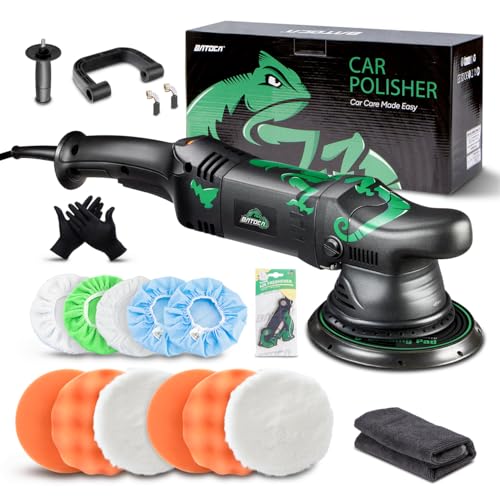
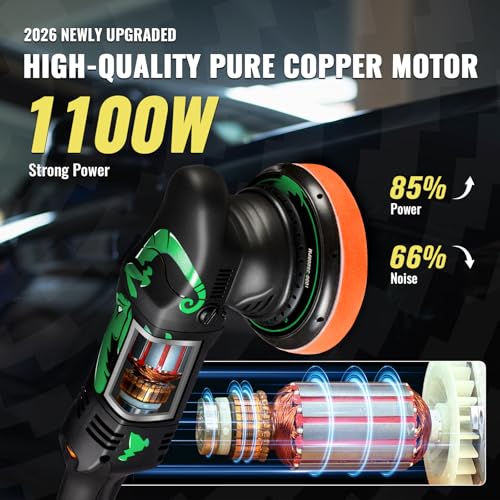
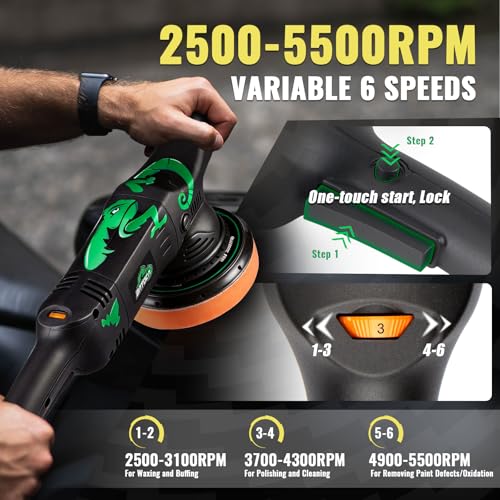
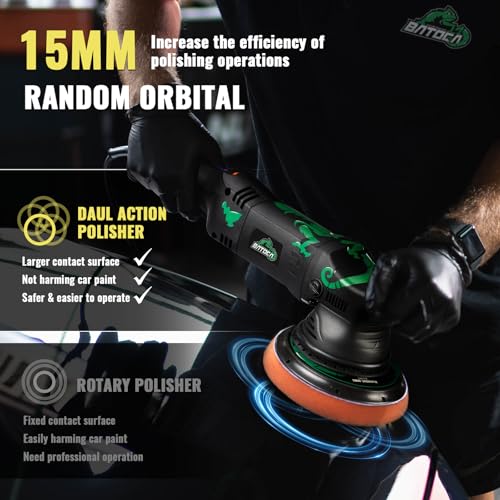
With a 15mm throw and 1100W motor, the BATOCA 2026 is built for aggressive correction, more so than any other DA on this list. The large orbit displaces compound quickly, making it effective on deep swirls and oxidation. Owners say it cuts like a rotary but with less risk, thanks to the dual action motion. The 6-speed dial gives control, and the constant power under load helps maintain consistency.
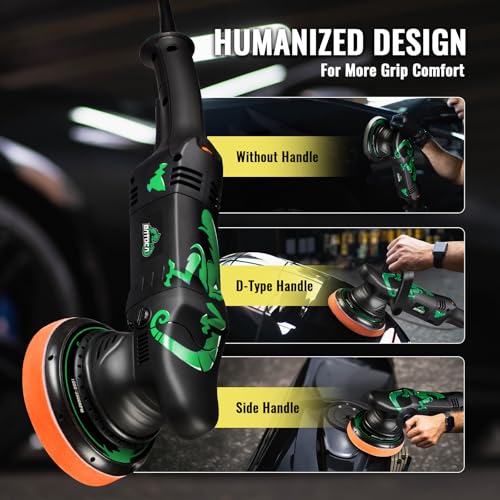
But that power comes with trade-offs. It’s bulky, vibrates more than average, and requires a firm grip to manage, especially on curved panels. It’s not beginner-friendly and can easily overheat thin paint if misused. Compared to the Adam’s 9mm, it’s less balanced and harder to control. I’d only recommend it for users with experience who are tackling neglected finishes and need serious cutting force.
Product photos
AVID POWER 5-inch Dual Action Polisher

Strengths
- Affordable price
- Adjustable D-handle
- 5″ and 6″ pad support
Trade-offs
- Plastic build
- Less durable long-term
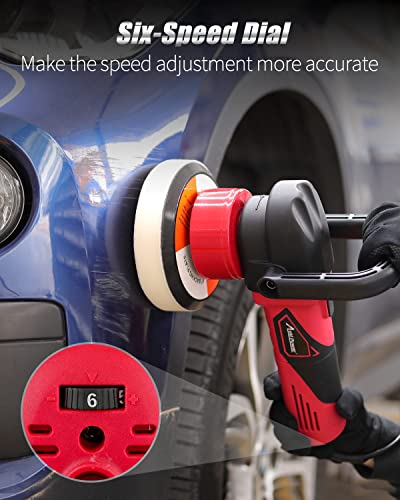
If you’re on a budget but still want a capable dual action polisher, the AVID POWER delivers. It’s not flashy, but it offers 6 speeds, a 5/6-inch backing plate option, and a motor that holds up under typical use. The adjustable D-handle is a standout, five positions let you customize grip angle, which helps with control on vertical panels. Owners say it’s quiet for its class and doesn’t vibrate excessively, making it a solid starter tool.
It won’t match the Maxshine or Adam’s in power, and the plastic housing feels a bit light-duty compared to metal-bodied competitors. But for the price, it’s hard to beat. I’d recommend it over the ZOTA or even the DEKOPRO if you’re just getting into detailing and don’t want to overspend. It’s not for pros doing daily correction, but for weekend warriors, it’s the smarter entry point.
Product photos




ZOTA 3″ Mini Dual Action Polisher
Strengths
- Compact 3-inch size
- Great for tight spots
- Lightweight
Trade-offs
- Underpowered for heavy jobs
- Short cord
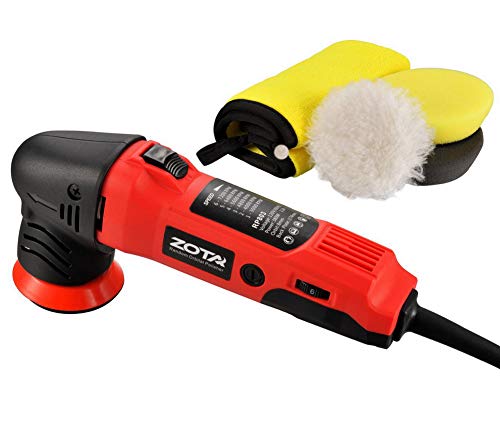
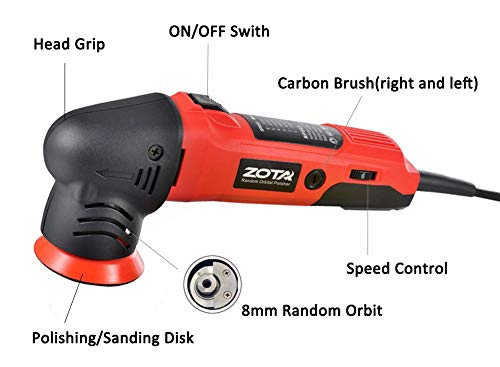
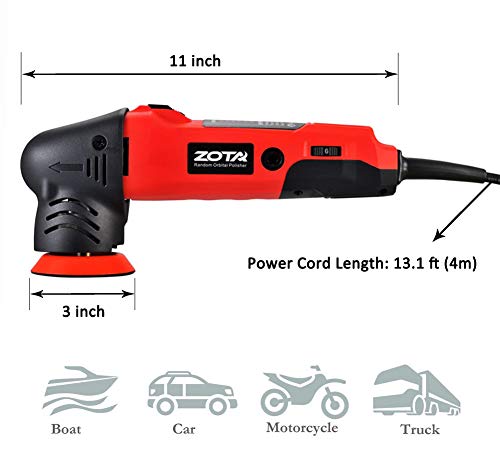
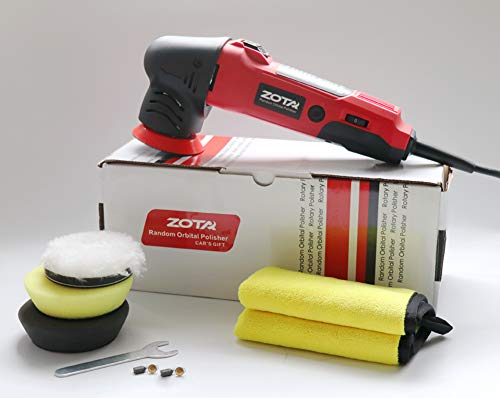
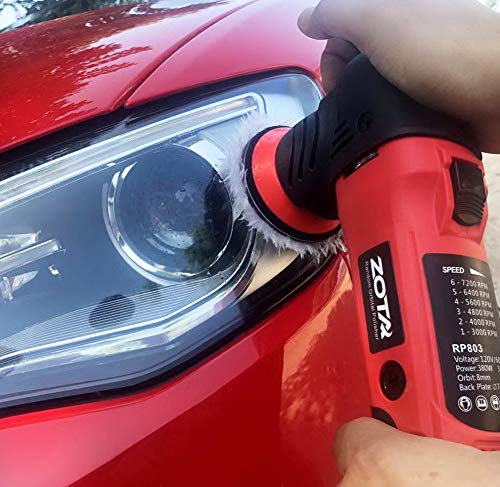
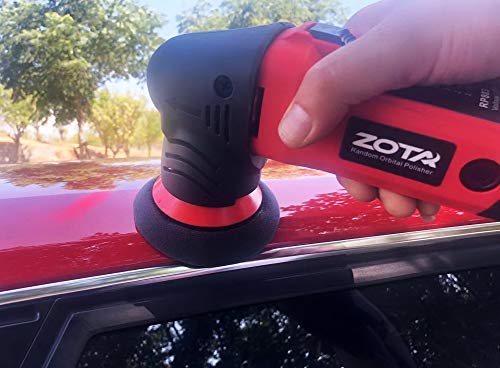
The ZOTA 3-inch mini polisher is built for one thing: getting into places other machines can’t. Its compact size and 8mm throw make it ideal for A-pillars, headlights, and motorcycle tanks. The 380W motor is modest, but it’s enough for light polishing or wax application in confined areas. Owners appreciate the short learning curve and the fact that it’s nearly impossible to burn through paint at this scale.
But it’s not a full-car tool, trying to correct an entire hood with it would be exhausting. It lacks the power and pad size for serious defect removal. Compared to the BATOCA S5, it’s less versatile since it’s DA-only and doesn’t offer rotary mode. Still, as a dedicated detail tool, it holds its own. If you’re restoring a classic or working on bikes, it’s worth having.
Product photos
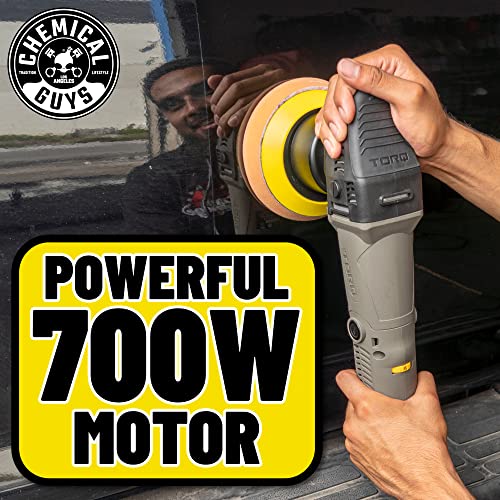
Chemical Guys TORQX Dual Action Polisher

Strengths
- Lightweight at 4.7 lb
- Balanced design
- 8mm orbit
Trade-offs
- Less aggressive cut
- 700W motor limits heavy jobs
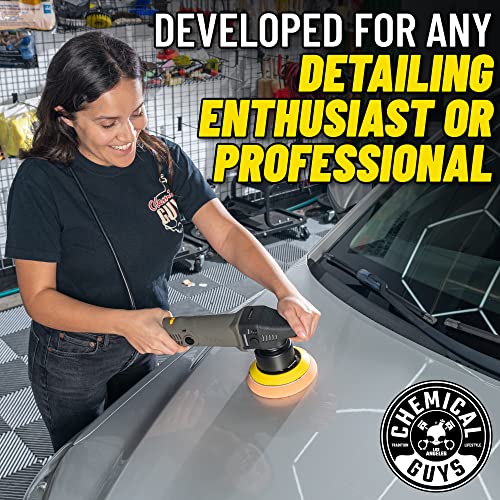
The TORQX wins on ergonomics and balance. At just 4.7 pounds, it’s one of the lightest 8mm throw polishers in its class, and that makes a real difference during extended sessions. The 700W motor isn’t the strongest here, but it’s well-matched to the orbit size, delivering enough power for moderate correction without being overly aggressive. Owners praise its comfort and control, especially around curved panels, and the soft grips reduce hand fatigue noticeably.
It’s not the fastest cut, so if you’re dealing with heavy oxidation, you might need to spend more time or step up to a higher-powered model like the Adam’s or Maxshine. But for most users doing regular maintenance, light correction, or finishing, it’s more than capable. I’d pick this over the DEKOPRO or BATOCA 15mm models for daily use simply because it’s easier on the arms.
Product photos



DEKOPRO 6 Inch Dual Action Polisher

Strengths
- 6-inch pad size
- 9mm orbit
- Constant speed under load
Trade-offs
- Bulky for tight spaces
- Heavier than average
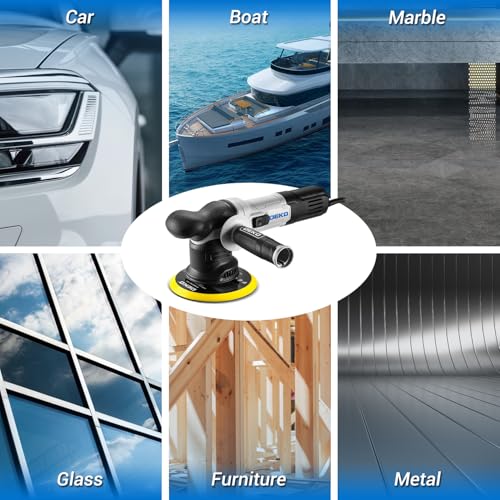
At 6 inches and with a 9mm orbit, this DEKOPRO model is built for speed over finesse. It covers ground fast, which makes it a solid pick if you’re working on trucks, SUVs, or boats where large, flat surfaces dominate. The constant speed control is a real advantage under load, owners note it holds RPMs well when pressing into compound, which helps avoid uneven finishes. The 7 amp motor feels responsive, and the soft start reduces jerk on startup, a nice touch for newer users.
That said, the size works against it in tighter zones. You’ll struggle around mirrors, grilles, or wheel wells. It’s also one of the heavier units here, so fatigue sets in quicker. Compared to the AVID POWER or Chemical Guys options, it trades agility for coverage. If you’re doing full-vehicle jobs and value efficiency over precision, this makes sense. But for detailers who work on varied contours, it’s overkill.
Product photos


How We Evaluated dual action polishers
I approached this guide to dual action polishers by first compiling a detailed spreadsheet of specifications and features from numerous manufacturers and retailers. I then layered that data with extensive review analysis – reading both owner experiences on sites like Amazon and dedicated detailing forums, as well as professional reviews from automotive publications. My goal was to understand how these polishers perform in real-world conditions, beyond just marketing claims.
For this category, the most important factors separating good polishers from great ones are motor power (measured in watts) and orbital throw (typically 8mm or 15mm). More power translates to maintaining consistent speed under pressure, which is vital for effective paint correction. A larger orbital throw covers more surface area and can remove defects faster, but requires more skill to avoid damaging the finish. Finally, ergonomics and vibration reduction significantly impact user comfort during longer detailing sessions.
Specifications reliably indicate raw power and orbital size, but owner feedback proved crucial for assessing vibration levels, ease of use, and long-term durability. Reputation also played a role; brands consistently praised within the detailing community were given more weight. If you’re looking for a broader overview of polisher options, including rotary polishers, you can find more information about rotary and DA polishers.
How To Pick The Right dual action polishers
Picking the right dual action polisher can feel overwhelming, but understanding a few key factors will make the process much smoother.
A quality dual action polisher balances power with control. Look for a motor strong enough to cut through imperfections, a variable speed dial for adaptability, and ergonomic features to minimize fatigue during extended use. Orbit size (typically 6mm, 8mm, or 15mm) impacts correction ability and finishing finesse; larger orbits correct faster but can leave more marring, while smaller orbits refine surfaces more gently.
Power and Speed Control
Don’t assume “more power” automatically means “better.” While a robust motor is essential for tackling heavier paint correction, the ability to control that power is equally important. Variable speed dials are standard, but pay attention to the range. A wider range (e.g., 1500-6000 RPM) gives you greater flexibility for everything from applying wax to aggressively removing scratches. Some, like the BATOCA 15mm, offer speeds up to 5500 RPM, which is great for heavier correction. However, even a seemingly lower maximum speed, combined with a well-designed motor, can be sufficient – especially if you’re primarily focused on polishing and finishing.
Orbit Size and Correction Level
The “orbit” refers to the circular motion of the polishing pad. Larger orbits (like the 15mm found on the CRAFTSMAN model) remove material faster, making them ideal for quickly addressing significant paint defects. However, they also tend to leave more swirl marks that require further refinement. Smaller orbits (6mm or 8mm, common in models like the Adam’s 9mm and Maxshine M8S V2) are gentler and better suited for polishing, finishing, and applying waxes or sealants. Consider what you’ll be using the polisher for most often. If you’re new to paint correction, a smaller orbit is generally more forgiving.
- Cutting pads are best paired with more aggressive compounds and higher speeds.
- Polishing pads need moderate speeds and polishing compounds for swirl removal.
- Finishing pads, used with finishing polishes, demand low speeds to maximize gloss and clarity without introducing defects.
Ergonomics and Usability
You’ll likely be holding a dual action polisher for extended periods, so ergonomics are crucial. Look for a polisher with a balanced weight distribution and comfortable grip. The AVID POWER 5-inch polisher, for example, boasts an adjustable D-handle to accommodate different grip preferences. Weight is also a factor; heavier polishers can cause fatigue more quickly. If you plan on detailing in tight spaces, a smaller, lighter model like the ZOTA 3″ Mini is a good choice. Don’t overlook features like a long power cord or, if you’re opting for a cordless model, battery life and the availability of extra batteries. If you’re looking for more in-depth information, check out our best DA polishers guide.
A good rule of thumb: start with the least aggressive combination of pad and polish necessary to achieve the desired result. You can always increase the intensity, but it’s much harder to undo damage caused by being too aggressive.
For those seeking a more detailed overview of available models, our dual-action car polishers article provides thorough top dual-action polishers and DA polisher recommendations.
Dual Action Polishers Compared
Here’s a comparison of key specifications for popular dual action polishers to help you make an informed decision.
| Product Name | Motor Power | Orbit Size (mm) | Speed (RPM) | Corded/Cordless | Weight (lbs) | Special Features |
|---|---|---|---|---|---|---|
| Adam’s 9mm | 1000W | 9 | 6500 | Corded | <5.5 | 110% Satisfaction Guarantee |
| Maxshine M8S V2 | 1000W | 8 | 6500 | Corded | N/A | 6 Variable Speed Settings |
| CRAFTSMAN 5 in. | N/A | 15 | 6000 | Cordless | N/A | Brushless Motor |
| BATOCA S5 | N/A | 12 | 2000-5500 | Cordless | N/A | 2-in-1 Rotary/Dual Action |
| BATOCA 15mm | N/A | 15 | 2500-5500 | Corded | N/A | Long-life Motor |
| AVID POWER 5-inch | N/A | N/A | 2700-6500 | Corded | N/A | Adjustable D-Handle |
| ZOTA 3″ | 380W | N/A | 3000-7200 | Corded | N/A | Compact Size |
| Chemical Guys TORQX | 700W | 8 | N/A | Corded | 4.7 | Lightweight Design |
| DEKOPRO 6 Inch | N/A | 9 | 1800-5500 | Corded | N/A | Constant Speed Control |
Frequently Asked Questions
What level of experience is needed to use a dual action polisher?
A dual action polisher is generally considered beginner-friendly, but practice is still required. The random orbital motion reduces the risk of damaging paint compared to rotary polishers, making it a good starting point for those new to paint correction.
How often do I need to replace the polishing pads?
Pad replacement depends on use and material. Expect to replace cutting pads after 5-10 uses, polishing pads after 10-20, and finishing pads after 20+ uses, but inspect them after each job for saturation or breakdown.
Are cordless dual action polishers as powerful as corded models?
Cordless polishers have closed the gap in recent years, but generally offer slightly less sustained power than corded options. However, the convenience of not being tethered to an outlet often outweighs this difference, especially for smaller jobs, and you can find excellent options like the best cordless DA polishers.
What’s the difference between a cutting, polishing, and finishing pad?
Cutting pads are more aggressive and remove defects quickly, polishing pads refine the finish and remove swirl marks, and finishing pads maximize gloss with minimal correction. The pad’s foam density and abrasiveness determine its purpose; always match the pad to the appropriate compound or polish.
Can a dual action polisher remove severe scratches?
While a DA polisher can improve the appearance of scratches, severely deep scratches may require professional attention or a more aggressive method like wet sanding. A DA polisher excels at removing swirl marks and light imperfections, but it has limits.
The Bottom Line
Choosing a dual action polisher really comes down to balancing how much control you want with how quickly you need to work. If you’re after the best overall performance and aren’t afraid to invest a bit more, I believe the Adam’s 9mm strikes that balance perfectly – it offers excellent power, a forgiving orbit size, and a reputation for reliability. It’s a polisher that can grow with your skills.
For those on a tighter budget, or for specific needs, the field opens up. If you’re a beginner, look at the best DA polishers for beginners – the DEKOPRO 6 Inch is a fantastic starting point. If you need something ultra-compact for tight spaces, the ZOTA 3″ is a clear winner, and for those who want the versatility of both DA and rotary action, the BATOCA S5 is a compelling option.
Ultimately, the specs are only part of the story. Focus on finding a polisher that feels comfortable in your hand, has a speed control you trust, and matches your detailing goals. Don’t get too caught up in chasing the highest wattage or largest orbit size; a well-executed polishing job relies more on technique, quality pads and polishes, and a methodical approach than any single feature.
