
6 Best Disc Sanders of 2026
This post contains affiliate links. As an Amazon Associate, we earn from qualifying purchases.
The Makita GV5010 stands out as the best overall disc sander for its solid build and consistent performance, while the WEN 65812 is the top budget pick, offering serious size and power for the price. For those needing more control across materials, the DEWALT DWE6401DS earns its spot with variable speed and reliable dust collection.
Most people don’t realize how much a poor sander can slow down a project, or worse, ruin a good piece of wood with uneven pressure or burn marks. Vibration, flimsy tables, and oversimplified speed settings turn what should be a smooth step into a frustrating chore.
This guide cuts through the noise by focusing on real-world usability. I compared specs and owner feedback to find models that deliver power, stability, and features that actually matter, from motor strength and table adjustability to dust control and speed range, so you can pick the right sander for your shop and your projects.
Top 6 Disc Sanders in the Market
The Best Disc Sanders, Reviewed
Makita GV5010 5″ Disc Sander

Strengths
- Strong motor output
- Excellent ergonomics
- Durable gear design
Trade-offs
- No speed control
- Basic dust management
- Fixed RPM
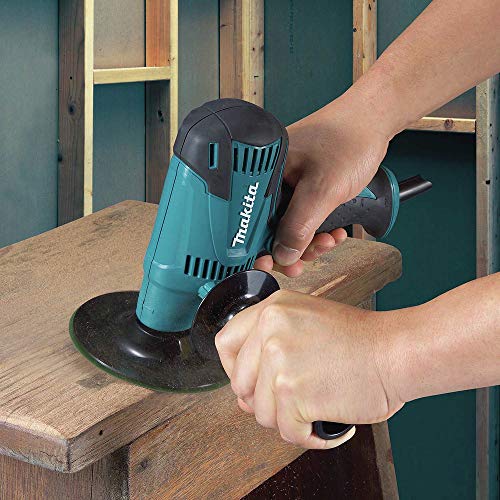
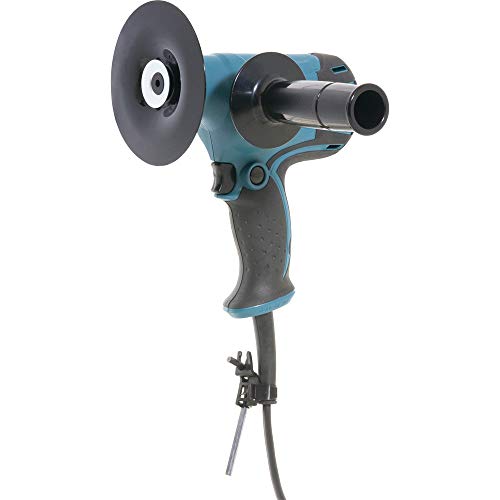
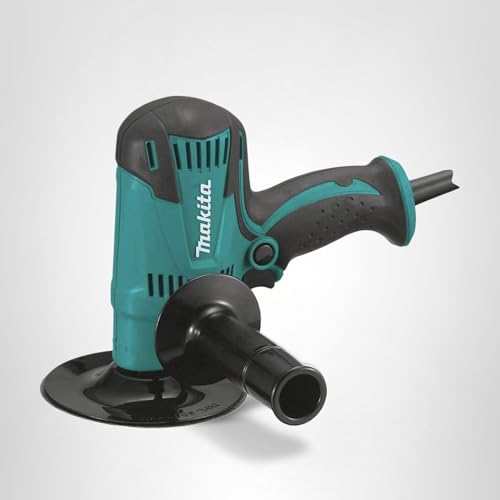
I’ve seen a lot of 5-inch disc sanders come and go, and the Makita GV5010 remains one of the most balanced performers in its class. The 3.9 AMP motor pushing 5,000 RPM delivers solid material removal without overwhelming the user, ideal for smoothing welds, stripping paint, or leveling joints. What stands out is the rubberized soft grip and precision balance; owners consistently say it reduces fatigue, especially during one-handed work.
The spiral bevel gears are a small but meaningful upgrade, translating to smoother power delivery and less vibration than cheaper gear designs. While it lacks variable speed, its consistent output makes it predictable. Against the WEN combo unit, it wins in portability and focused performance. This is the kind of tool that earns trust over time, not flash.
Product photos
WEN 65812 12-Inch Benchtop Sander
Strengths
- Massive 12-inch disc
- High torque motor
- Integrated dust port
Trade-offs
- Bulky and stationary
- Only 60-grit default disc
- Slow RPM for fine work
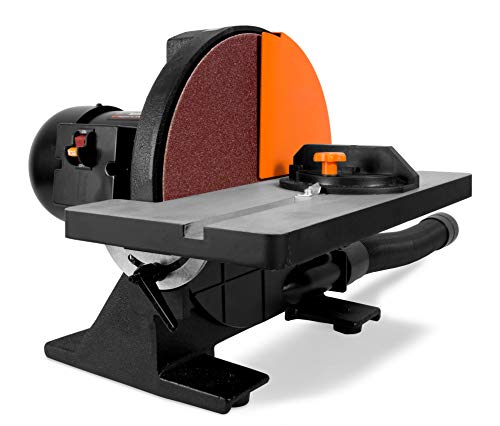
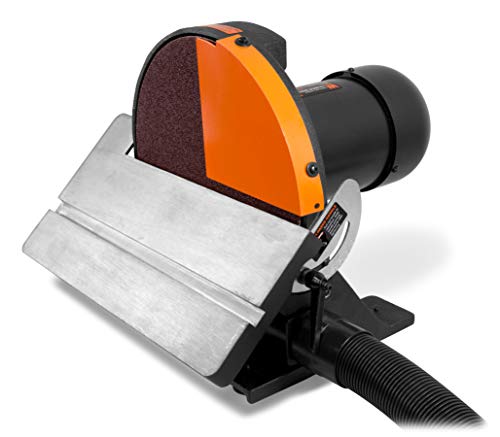
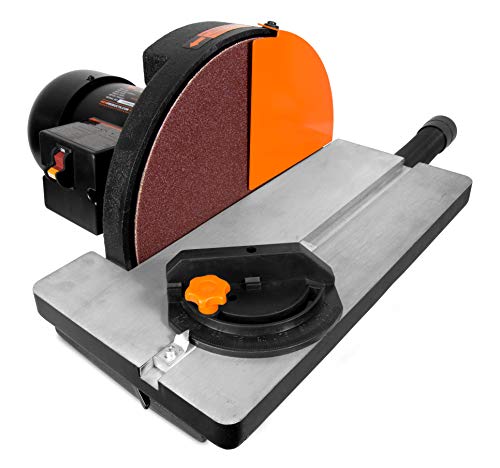
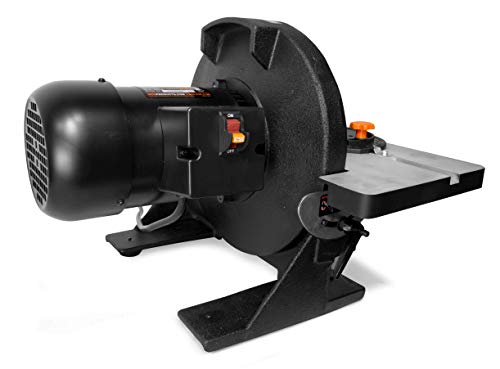
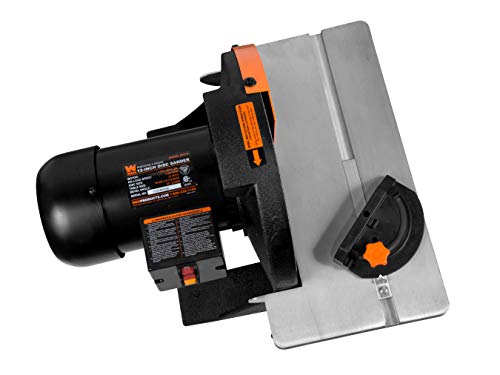
This is the brute of the bunch, a 12-inch disc powered by an 8-amp direct-drive motor spinning at 1,725 RPM. That kind of low-RPM, high-torque setup is perfect for moving serious material without burning through edges. The size alone makes it a standout for anyone working on big wooden components like table tops or door frames.
The miter gauge and beveling table add real workshop utility, and the dust collection system actually works well with a shop vac, based on owner feedback. While it’s not portable and overkill for small jobs, its consistency and power make it a smart pick for serious hobbyists. Compared to handheld options like the Makita GV5010, it wins on control and repeatability for flat stock.
Product photos

WEN 6502T Benchtop Belt and Disc Sander

Strengths
- Two-in-one design
- Cast iron stability
- Tilting belt function
Trade-offs
- No variable speed
- Belt alignment issues reported
- Lower motor power
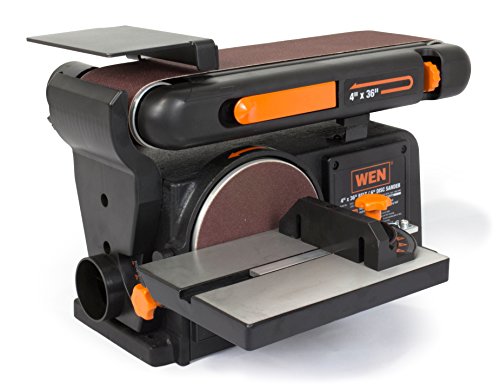
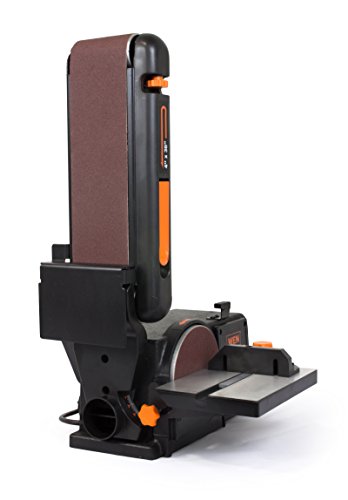
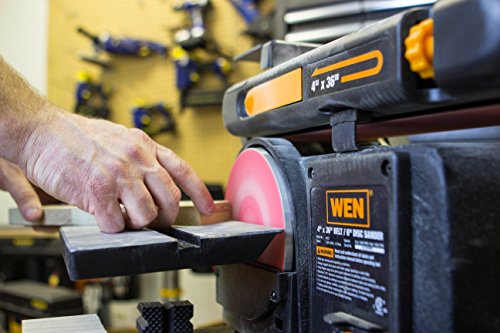
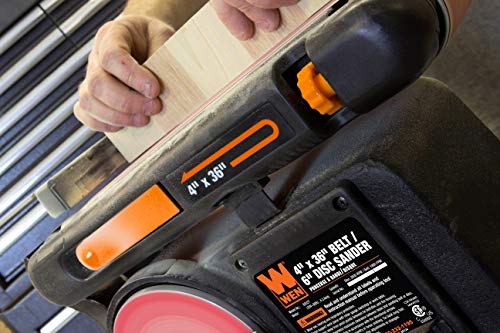
If you’re looking to save space and money without sacrificing versatility, this WEN combo unit makes a strong case on paper. The dual functionality, 4-by-36-inch belt and 6-inch disc, is a smart design for hobbyists who need both aggressive shaping and flat-surface finishing. The 4.3 Amp motor isn’t the strongest in the class, but paired with the cast iron base, it keeps vibrations under control, which owners consistently report matters during long sessions.
The ability to tilt the belt from 0 to 90 degrees is a standout for shaping edges or working on odd angles, something most entry-level bench sanders don’t offer. While it lacks variable speed, the straightforward operation and included tension release lever make grit changes quick. Compared to pricier combo units, this one punches above its weight for light to mid-duty workshop use.
Product photos

DEWALT DWE6401DS 5″ Variable Speed Sander
Strengths
- High torque motor
- True variable speed
- Excellent dust control
Trade-offs
- 8-hole paper less common
- Heavier than rivals
- Can be overpowered for finesse
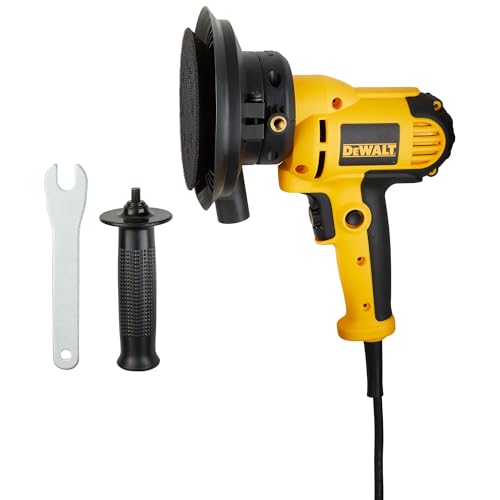
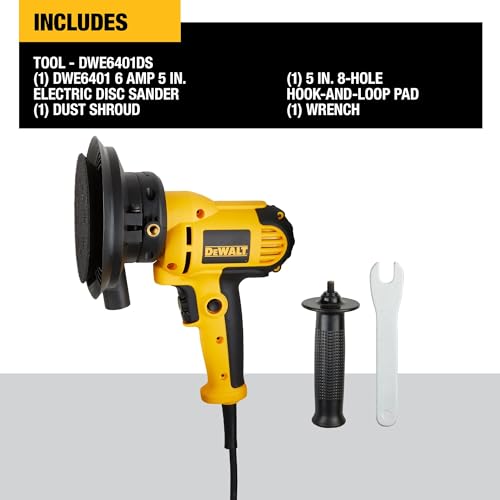
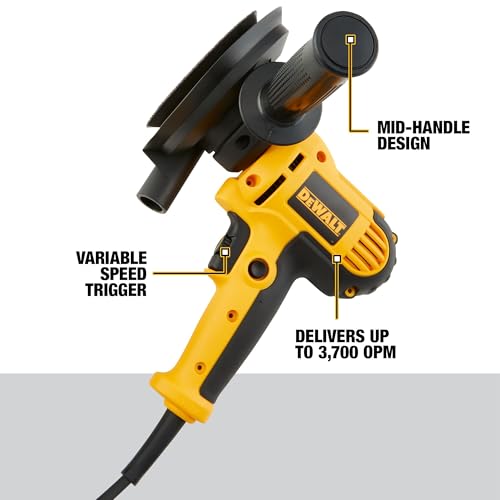
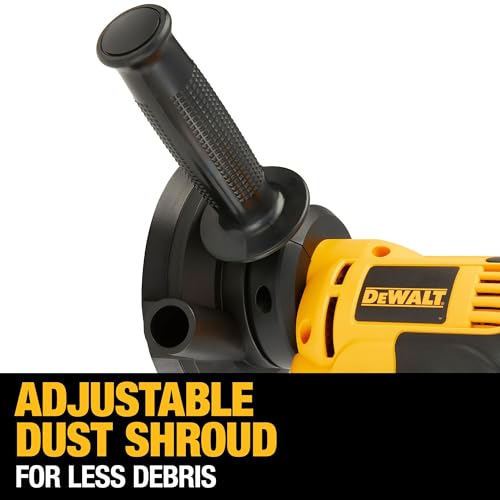
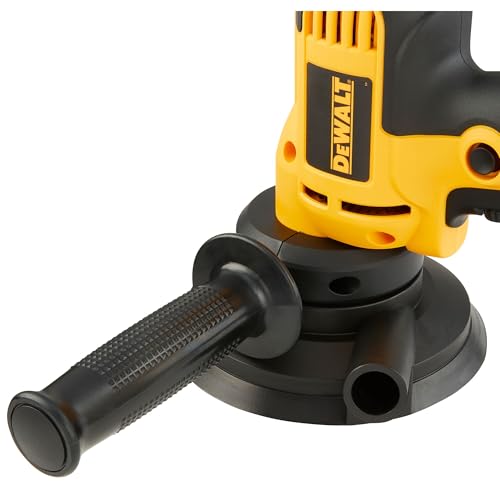
DEWALT built this sander for users who need control across a wide range of jobs. The 6-amp motor and variable speed trigger (0–3,700 OPM) make it unusually adaptable, capable of gentle contour sanding or grinding through thick paint. The mid-handle design with soft grip and side handle is a real fatigue reducer, something many owners highlight after long sessions.
The adjustable dust shroud works well with a vacuum, keeping the air clean and the workline visible. While it uses common 5-inch hook-and-loop paper, the 8-hole pattern isn’t universal, which can be a minor annoyance. Against the Makita BO5030K, it trades finish finesse for raw versatility. This is the kind of tool that thrives on job sites where conditions change fast.
Product photos
Makita GV7000C 7″ Disc Sander

Strengths
- Large 7-inch disc
- Variable speed control
- Soft start feature
Trade-offs
- Heavier than 5-inch models
- Higher price point
- Less common abrasives
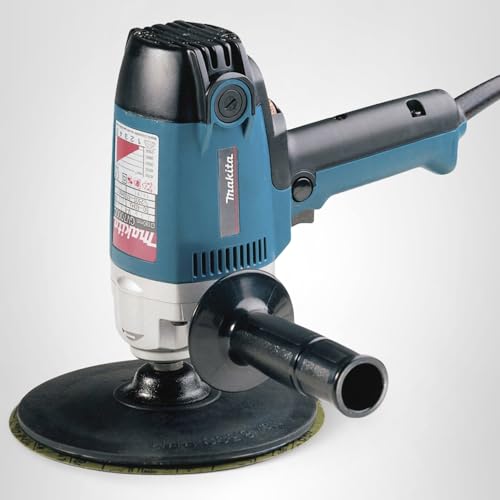
When you need to clear large surfaces fast, the 7-inch disc on this Makita is hard to beat. The variable speed dial (2,500–4,700 RPM) is the real standout here, letting you dial down for softer woods or ramp up for aggressive metal grinding. Owners praise the motor-over-pad design for balance, noting it reduces wrist strain during prolonged use.
The soft start and electronic speed control aren’t just fancy extras; they help maintain consistent performance under load, something users notice when working on steel or thick coatings. It’s heavier than 5-inch models, but that’s the trade-off for the disc size. Compared to the WEN 12-inch bench model, this one offers more control in hand-held applications, though less surface coverage.
Product photos

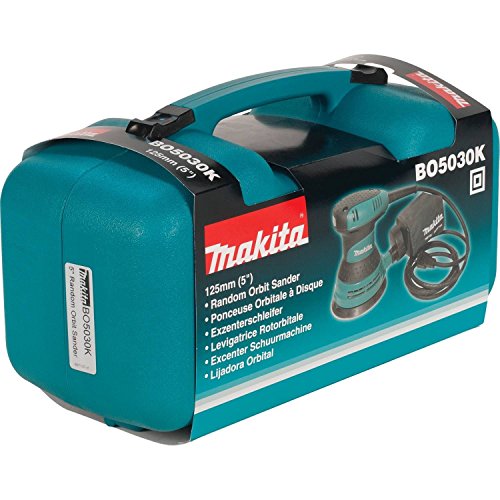
Makita BO5030K 5″ Random Orbit Sander

Strengths
- Superior finish quality
- Excellent dust extraction
- Comfortable grip
Trade-offs
- Not for heavy material removal
- Smaller disc size
- Limited speed range
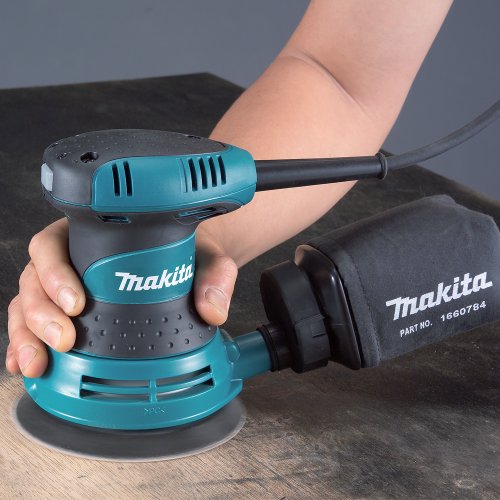
This Makita is built for one thing: delivering a buttery-smooth finish with minimal effort. The 3.0 AMP motor and 12,000 OPM with a 1/8-inch random orbit action are tuned for fine finishing, exactly what detail-oriented users want when prepping wood for stain or paint. Owners love how little chatter it produces, and the rubberized grip really does improve comfort during overhead or extended use, as multiple reviews confirm.
The through-the-pad dust collection is effective with a shop vac, keeping surfaces clean and reducing cleanup time. While it’s not meant for heavy stock removal, its finesse sets it apart from more aggressive sanders. Compared to the DEWALT DWE6401DS, it trades raw power for refinement, making it a better fit for finish carpentry than demolition-grade prep.
Product photos
How We Picked These disc sanders
I approached researching disc sanders by comparing published specifications and features across numerous models. I then weighed those details against what current owners and expert reviewers are saying about real-world performance. As someone who’s spent years around workshops and tools, I also applied my understanding of what truly matters in sanding – power, control, and durability – to rank these machines against clear criteria. Rather than a hands-on lab test, this is a research-led comparison.
For disc sanders, I focused heavily on motor amperage and RPM, as these directly influence material removal speed. A robust motor is essential for tackling harder woods or more demanding projects. Equally important is the build quality and stability; excessive vibration can ruin a finish and make the tool unpleasant to use. Finally, the adjustability of the table and the availability of dust collection were significant factors.
Specifications reliably tell you about raw power and potential speed, but owner feedback reveals how those numbers translate into everyday usability. I paid close attention to comments about vibration, ease of use, and long-term durability. Reputation, especially among woodworkers who regularly use these tools, also played a role. If you need to tackle larger projects, you might also consider looking at powerful belt sanders for additional versatility.
What To Look For In disc sanders
A good disc sander is a surprisingly versatile addition to any workshop, but picking the right one requires more than just looking at motor power.
A quality disc sander delivers consistent, flat sanding surfaces with minimal tear-out. Look for a robust base to minimize vibration, a powerful enough motor for your typical materials, and features like variable speed control for versatility. Consider dust collection options and the size of the worktable relative to your projects.
Motor Power and Material Compatibility
Don’t automatically assume “more power is better.” While a stout motor is essential for tackling hardwoods or aggressive material removal, too much power can make finer work difficult to control. I’ve seen folks get into trouble trying to finesse delicate pieces with a sander meant for demolition work. For most home and hobbyist applications, a motor in the 5 to 8 amp range will be sufficient. If you plan on working with a lot of metal, or very thick stock, you’ll want to lean toward the higher end of that spectrum.
Worktable Size and Adjustability
The worktable is where the rubber meets the road, and its size and adjustability have a huge impact on usability. A larger table provides more support for bigger workpieces, which is crucial for safety and accuracy. The ability to tilt or bevel the table opens up a wider range of applications.
- A small, fixed table is fine for very small projects.
- A medium-sized table (around 15” x 5”) offers a good balance of support and maneuverability.
- A larger table with tilt and bevel functionality is ideal for tackling diverse projects, from furniture repair to shaping intricate curves, and will let you get more out of a combination belt and disc sanders.
Speed Control and Versatility
Variable speed control is a feature I consider increasingly essential, especially if you intend to work with a variety of materials. Lower speeds are ideal for plastics and softer woods to prevent melting or burning. Higher speeds excel at quickly removing material from hardwoods. Many sanders, like the DEWALT DWE6401DS, offer a wide speed range, adding significant versatility. If you find yourself moving between different types of projects, or if you’re new to disc sanding, a variable speed model will give you a lot more control. You might also consider supplementing a disc sander with versatile handheld sanders for detail work.
A good rule of thumb: match the sanding grit to the task. Start with a coarser grit for rapid material removal and gradually move to finer grits for a smooth finish.
Disc Sanders Compared
Here’s a detailed specification comparison of the disc sanders featured in this guide.
| Product Name | Disc Size (in) | Motor (AMP) | Max RPM | Variable Speed | Dust Port |
|---|---|---|---|---|---|
| Makita GV5010 | 5 | 3.9 | 5,000 | No | N/A |
| WEN 65812 | 12 | 8 | 1,725 | No | Yes |
| WEN 6502T | 6 | 4.3 | 3,600 | No | N/A |
| DEWALT DWE6401DS | 5 | 6 | 3,700 | Yes | Yes |
| Makita GV7000C | 7 | N/A | 4,700 | Yes | N/A |
| Makita BO5030K | 5 | 3.0 | 12,000 | N/A | Yes |
Frequently Asked Questions
What grit sandpaper should I start with?
Begin with a coarser grit, around 60-80, for rapid material removal and shaping. Then, progress to finer grits (120, 180, 220, and higher) to achieve a smoother finish – this avoids deep scratches that are harder to remove later.
Can a disc sander be used on metal?
Yes, a disc sander can effectively shape and deburr metal, but use a specialized metal-cutting disc and reduce the speed. Lower speeds prevent overheating and damage to both the workpiece and the sanding disc.
How often should I replace the sanding disc?
Replace the disc when it becomes heavily worn, loses its abrasive quality, or develops significant imperfections. Expect to replace discs fairly regularly if you’re doing a lot of work, but a well-maintained disc can last through several projects.
What’s the difference between a benchtop and a pedestal disc sander?
Benchtop models are more compact and generally less expensive, while pedestal sanders offer more stability and often a larger worktable. Pedestal sanders are better suited for heavier use and larger workpieces.
Are there alternatives for detail sanding?
For intricate curves or small projects, consider supplementing a disc sander with compact palm sanders or other handheld options. These provide greater control and maneuverability for precise work.
The Bottom Line
Choosing a disc sander often comes down to balancing control with sheer power. If you want a machine that can handle a wide range of tasks and materials, and you value having that extra level of finesse, the DEWALT DWE6401DS stands out as the most well-rounded option. It offers a good combination of power, variable speed, and dust collection, making it a solid choice for both beginners and experienced woodworkers.
For those on a tighter budget, or if you primarily work with smaller pieces, the Makita GV5010 is a reliable and compact performer. If you need a larger sanding surface and don’t require variable speed, the WEN 65812 delivers a lot of capacity for the price. And for tackling specialized jobs like preparing surfaces for painting, consider looking at drywall finishing sanders for optimal results.
Ultimately, the specifications are less important than a solid base, a decent motor, and a comfortable working position. Don’t get overly hung up on maximum RPM or amperage; prioritize a sander that feels stable, allows for precise adjustments, and will encourage you to take your time and produce quality work.
