7 Best Cordless Nailers of 2026
This post contains affiliate links. As an Amazon Associate, we earn from qualifying purchases.
The DEWALT 20V MAX Brad Nailer stands out as the best overall cordless nailer for its consistent power and reliability, especially when working with hardwoods. For those watching their budget, the WEN 20V Max Brad Nailer delivers solid performance at a lower price. If you need more versatility, the GoYwato 21V 2-in-1 Nail Gun offers both brad and staple firing with strong battery life.
Most people shopping for a cordless nailer want freedom from cords and compressors without sacrificing performance. But too many models either lack the power to drive nails cleanly or die halfway through a project.
After comparing the field and weighing specs, owner feedback, and brand reputation, I focused on tools that deliver real-world runtime, reliable firing, and ease of use. This guide breaks down exactly what to look for and highlights the models that rise above the rest.
Top 7 Cordless Nailers in the Market
The Best Cordless Nailers, Reviewed
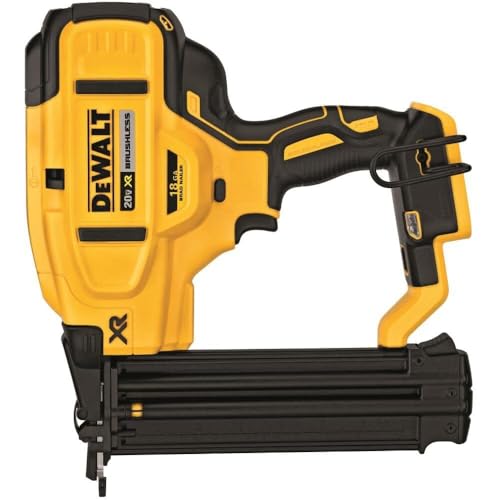
DEWALT 20V MAX Brad Nailer
Strengths
- Brushless motor
- Micro nose design
- Tool-free adjustments
- Dual firing modes
- Low nail lockout
Trade-offs
- No battery or charger included
- Slightly higher cost for tool-only
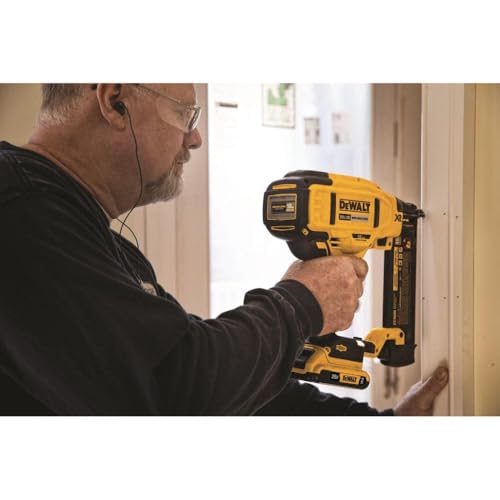
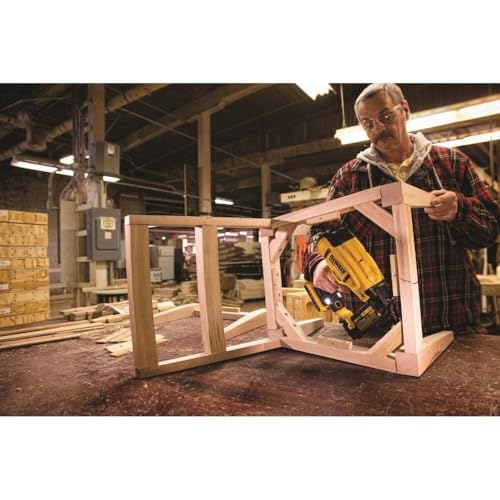
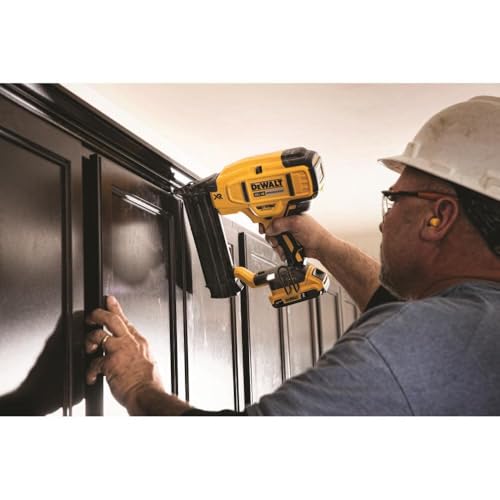
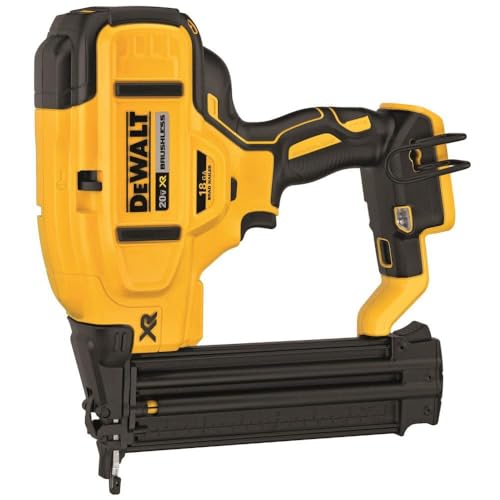
The DEWALT DCN680B stands out in the 18-gauge cordless brad nailer class not because it’s flashy, but because it gets the fundamentals right. The brushless motor delivers reliable power and efficiency, which owners consistently report translates to longer runtime and fewer trips to the charger compared to brushed models. The micro nose design isn’t just a gimmick, it genuinely improves visibility, especially when working in tight corners or on intricate trim.
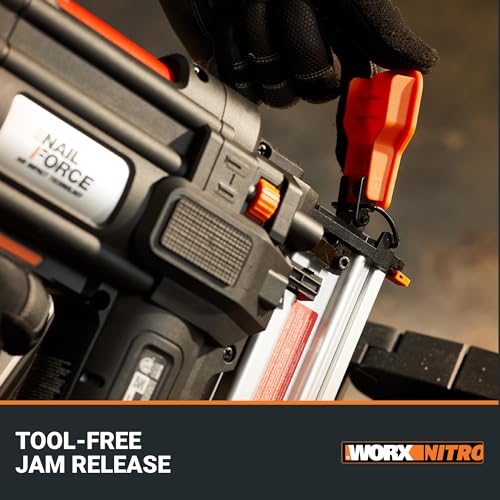
What really seals the deal is the thoughtful feature set: tool-free depth adjustment, jam release, and dual firing modes give you real control on the job. It’s built like a DEWALT should be, durable, balanced, and engineered for pros and serious DIYers who hate downtime. While it’s sold tool-only, that makes sense if you’re already in the DEWALT 20V ecosystem.
Product photos

Metabo HPT 18V MultiVolt Nailer
Strengths
- Instant response time
- Lightweight and compact
- Drives 2-inch brads in hardwood
- Bright LED light
- Fuel gauge on battery
Trade-offs
- Lower shot count per charge
- Battery not as high capacity
- Limited to Metabo HPT 18V system
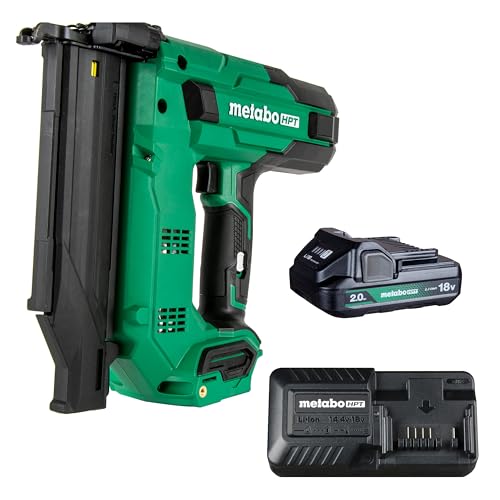
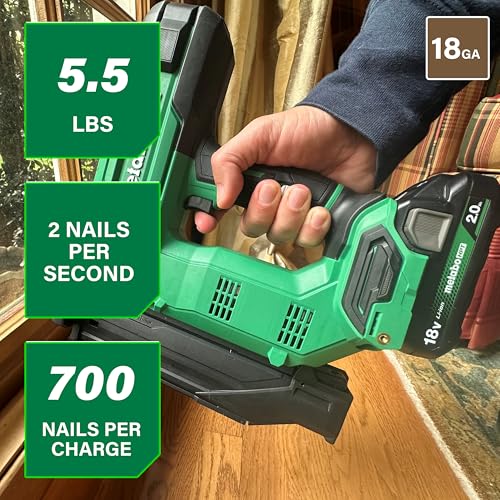
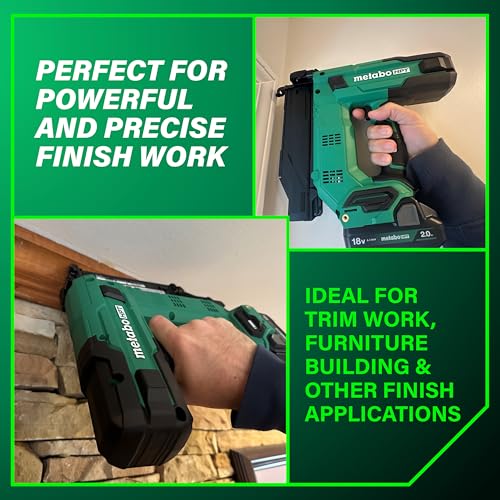
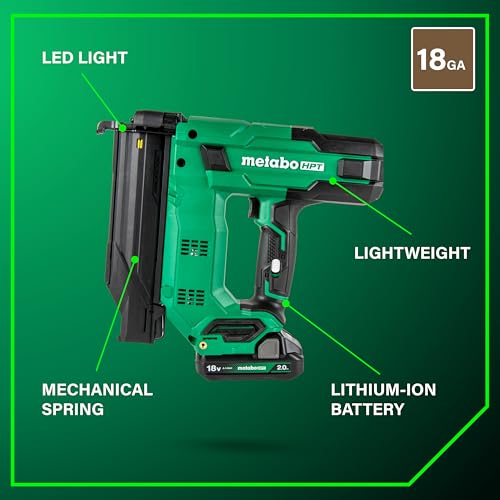
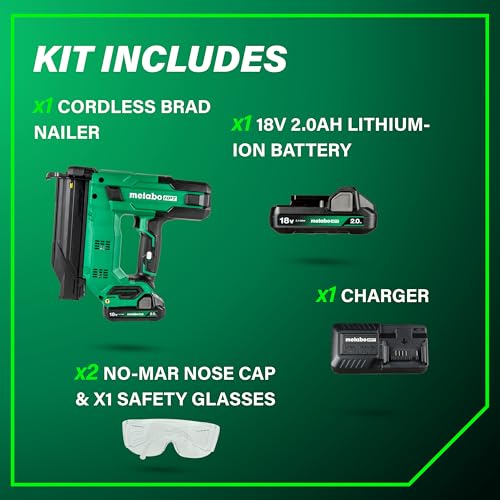
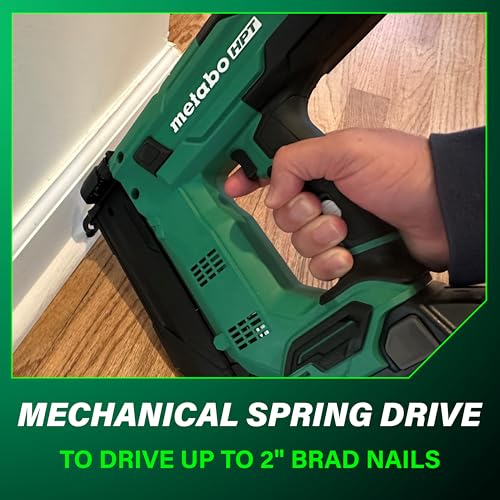
If you’re working with hardwoods and need consistent, bump-free starts, the Metabo HPT NT1850DG deserves attention. Its mechanical spring drive system delivers instant response between shots, no ramp-up time, which matters when you’re nailing quickly down a baseboard. At just 5.5 lbs and with a low center height, it’s easy to maneuver in tight spaces, and the bright LED helps in dim corners.
Owners report it handles 2-inch brads in oak and maple without hesitation, which is rare in cordless models. The 700-nail runtime is modest compared to others, but the included battery has a fuel gauge, so you’re never guessing. It’s not the most versatile, but for hardwood trim work, it’s one of the most dependable.
Product photos
WEN 20V Max Brad Nailer

Strengths
- Affordable entry price
- Smart LED indicators
- Includes battery and charger
- Easy load magazine
- Lightweight
Trade-offs
- Limited power in dense materials
- Single battery limits runtime
- Not for heavy use
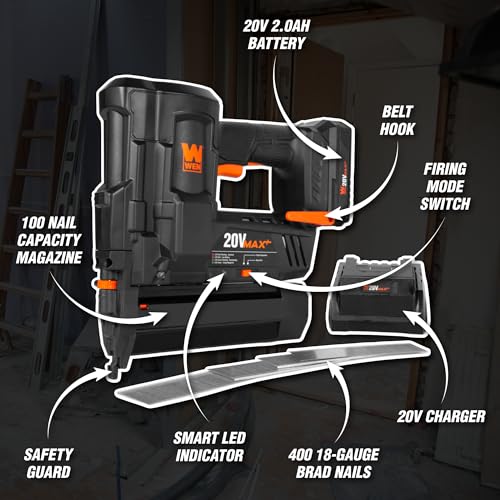
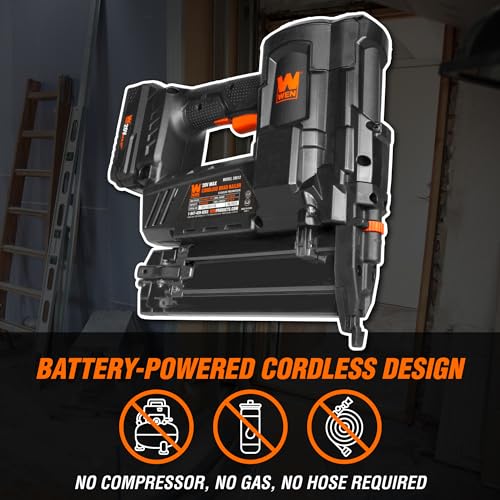
The WEN 20512 is the kind of tool that reminds me why budget options still have a place in the shop. It’s not going to match DEWALT or Metabo HPT in durability, but for light-duty projects, think assembling picture frames, small shelving, or basic trim, it gets the job done. The 2.0Ah battery included is a decent start, and the smart LED indicators for battery, temperature, and magazine fill are more than you’d expect at this price.
Owners report mixed experiences with driving power in hardwoods, and the lack of a second battery means more downtime. But if you’re a casual user or just starting out, this is a low-risk way to go cordless without draining your wallet. Just don’t expect it to keep up on all-day jobs.
Product photos


Worx Nitro 20V Brad Nailer

Strengths
- Strong driving power
- PowerShare battery system
- Full kit included
- Anti-ejection design
- Two firing modes
Trade-offs
- Battery only compatible with Worx tools
- Build quality not pro-tier
- Magazine could be sturdier
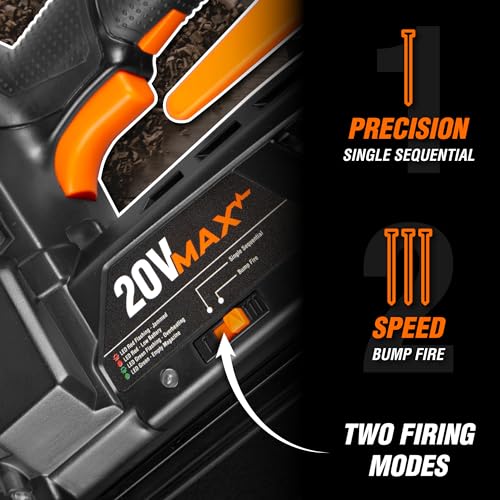
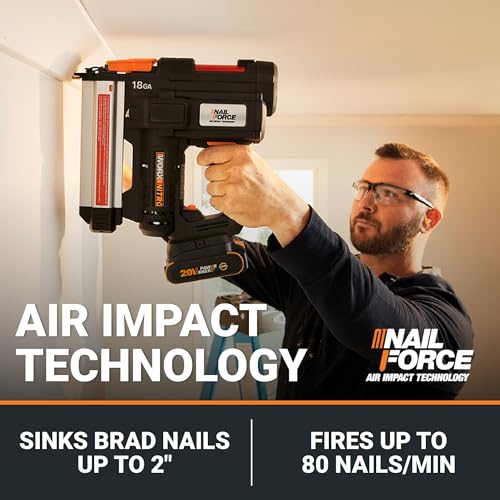
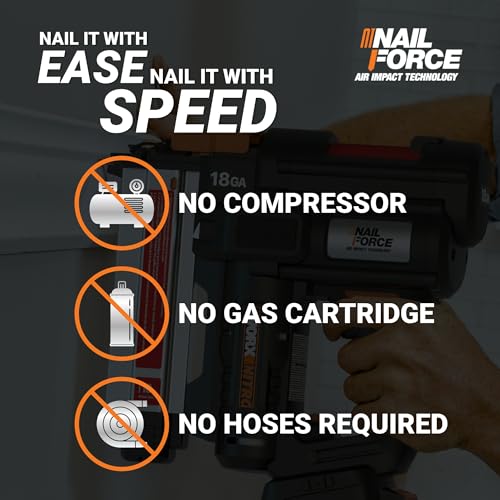
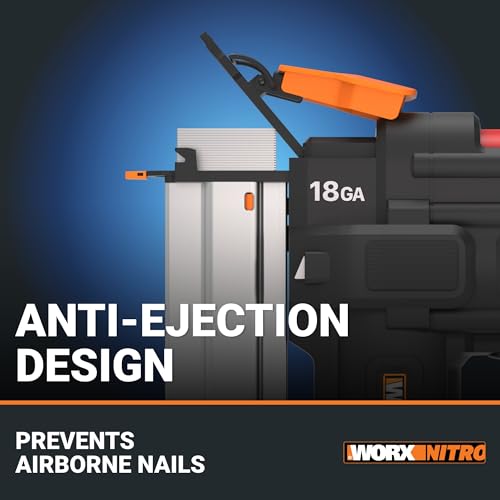
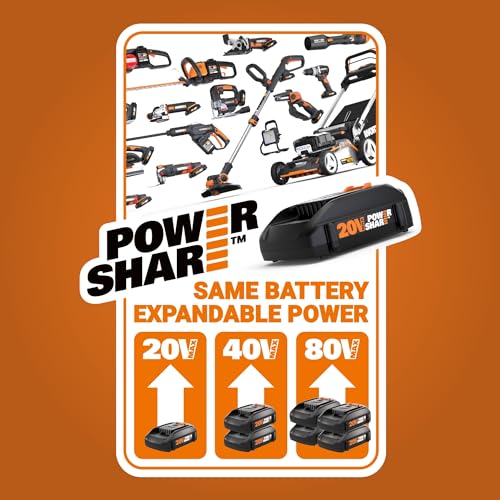
The Worx WX842L hits a sweet spot between capability and value, especially if you’re already using other Worx PowerShare tools. The NailForce Air Impact Technology gives it surprising punch for a cordless model, letting it drive 2-inch brads into hardwoods without bogging down, something not all budget nailers can claim. Owners appreciate the two firing modes and the anti-ejection design, which really does reduce messy nail spills during jam clearing.
What pushes it over the edge as a value pick? The full kit: battery, charger, nails, carry bag, and belt clip. You’re not scrambling to buy extras. While the PowerShare system is a plus, it’s only helpful if you own other Worx tools. If you don’t, the standalone performance is good, but not groundbreaking.
Product photos
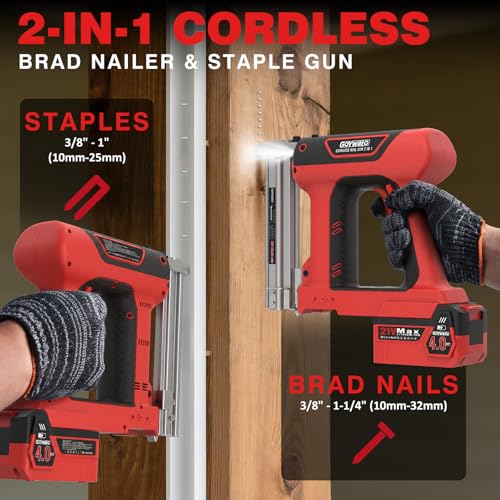
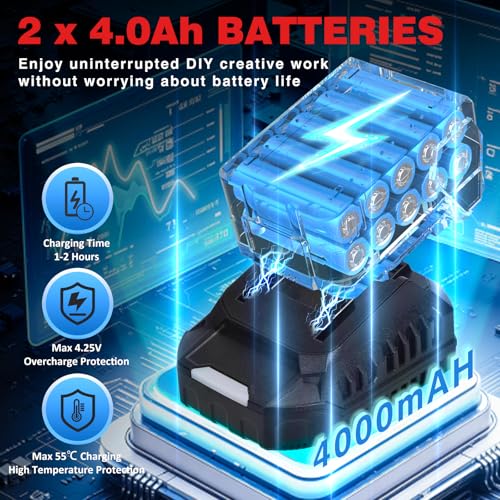
GoYwato 21V 2-in-1 Nail Gun

Strengths
- Two 4.0Ah batteries
- 2-in-1 brad and staple
- Long runtime
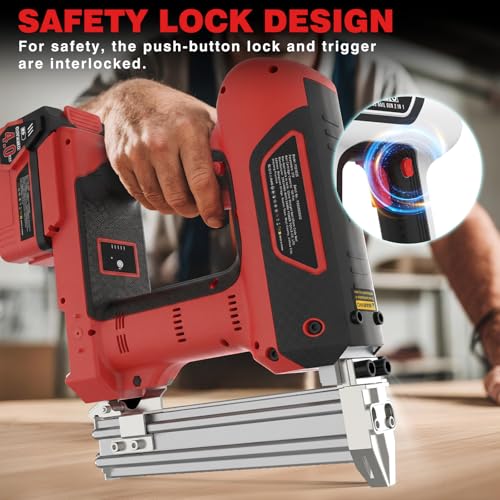
- One-handed safety
- Fast charging
Trade-offs
- Build quality not pro-grade
- Magazine can be fussy with staples
- Occasional jamming
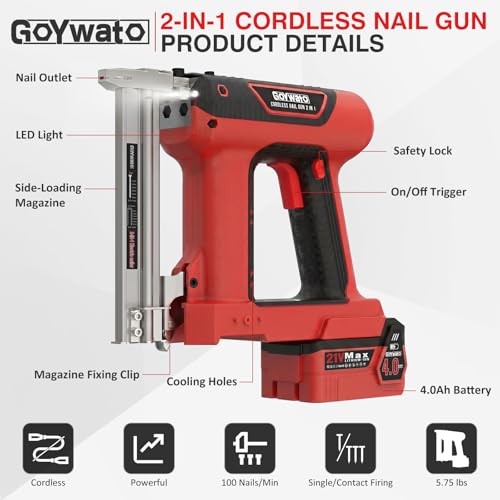
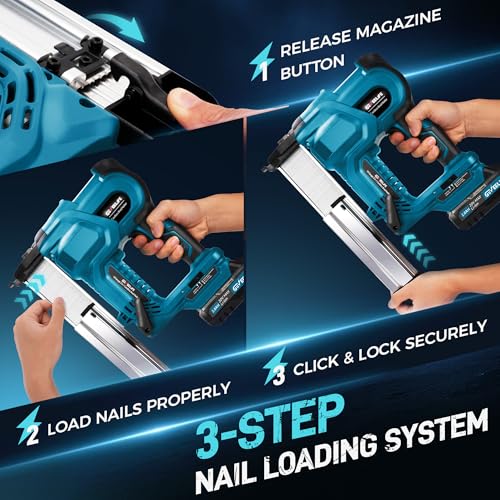
If runtime and included accessories are your top concerns, the GoYwato 21V model makes a strong case. Coming with two 4.0Ah batteries and a fast charger, it’s clearly designed for users who hate stopping to recharge. On paper, 4,000–5,000 nails per battery is impressive, and while real-world results vary, owners confirm it outlasts many competitors with smaller or single-battery kits. The 2-in-1 capability, driving both brads and staples, is genuinely useful for mixed projects like cabinetry or furniture repair.
It’s not all perfect. The build quality feels more budget-oriented than premium, and some users report occasional jamming with warped fasteners. But for the value, the one-handed safety lock and dual firing modes add real convenience. At this price point, getting this much runtime and flexibility is rare.
Product photos

DEWALT 20V Pin Nailer

Strengths
- Ultra-fine 23-gauge pins
- Compact and lightweight
- 2,000 shots per charge
- Brushless motor
- Low nail LED indicator
Trade-offs
- Limited fastener size range
- Not for structural or heavy-duty use
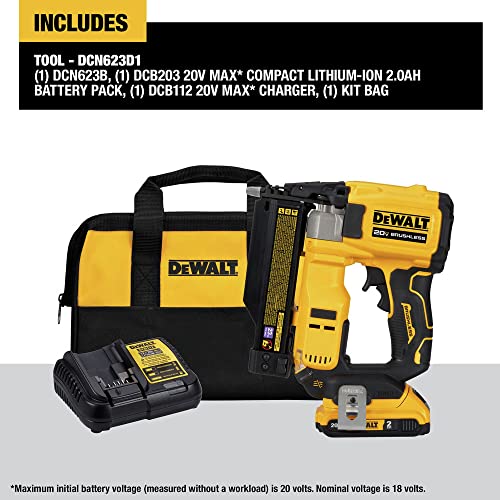
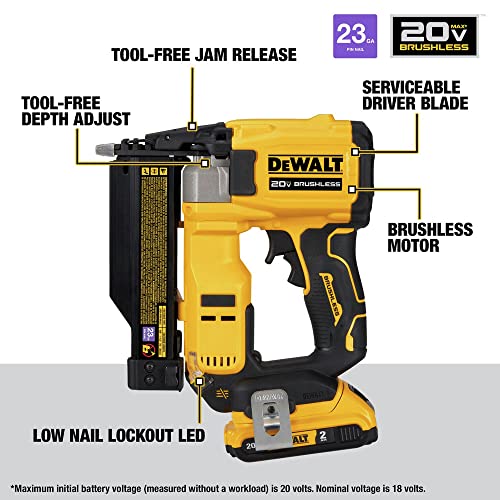
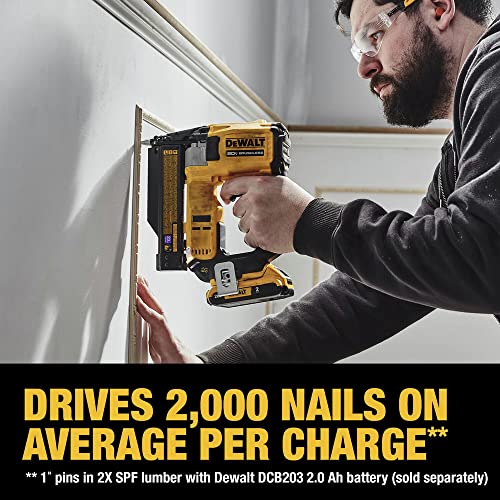
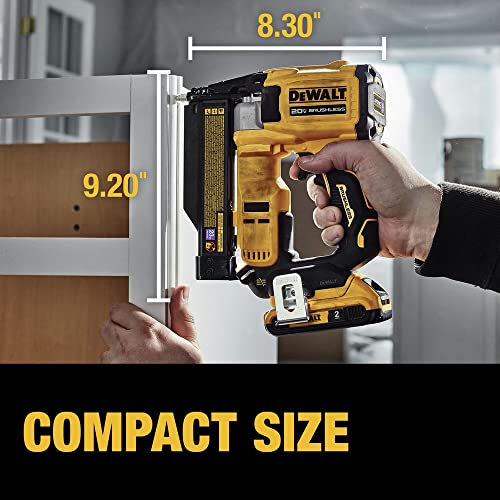
When the job calls for discretion, like attaching fragile moldings or delicate trim, this 23-gauge DEWALT ATOMIC is where I’d lean. The smaller pin nails leave nearly invisible marks, which matters when you’re working with hardwoods or high-end finishes. Owners praise its compact size and 2,000 nails per charge performance, which is outstanding for a pin nailer. The brushless motor helps, but so does the efficient design, this tool is built to last and perform in tight spots.
It’s not a replacement for an 18-gauge brad nailer. You can’t drive larger fasteners or handle heavy-duty tasks. But for fine woodworking, cabinet installation, or anywhere you need precision without splitting, this is the smarter choice. The included battery and charger sweeten the deal.
Product photos

GEVEELIFE 2″ 2-in-1 Cordless Nailer
Strengths
- 2-in-1 brad and staple
- Two batteries included
- Adjustable depth
- Dual firing modes
- LED light
Trade-offs
- Plastic housing less durable
- Staple feeding issues reported
- Not for heavy-duty use
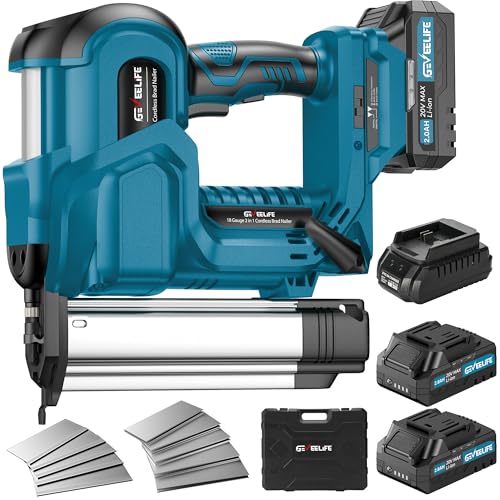
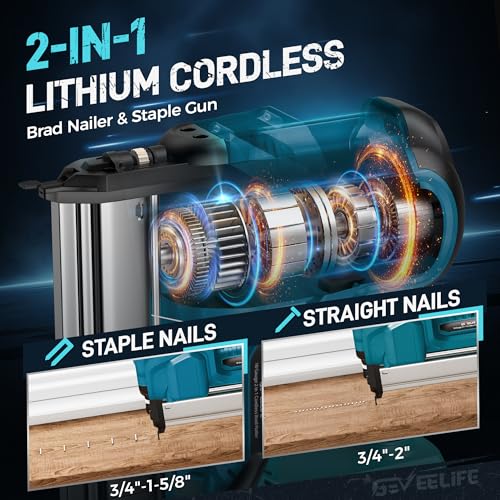
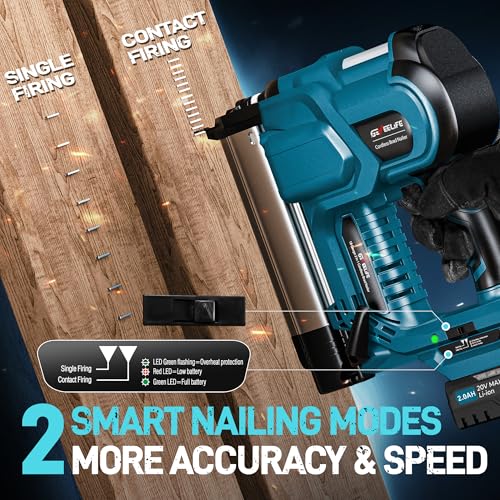
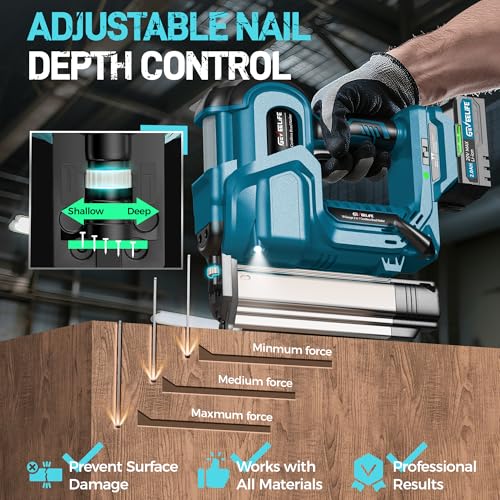
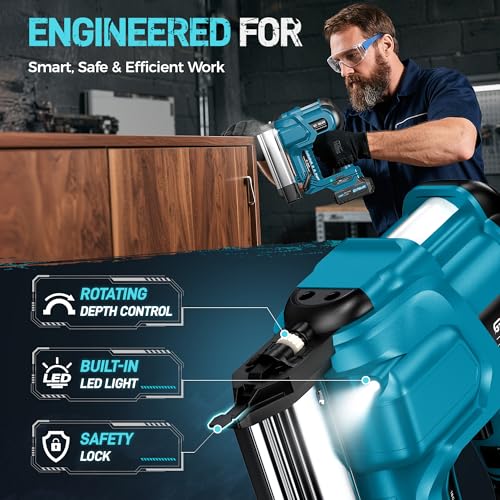
The GEVEELIFE 2-in-1 stands out by offering real dual-function flexibility, it drives both 18-gauge brads and staples, which is a big deal if you’re doing upholstery, cabinet backs, or mixed-material projects. With two 2.0Ah batteries included, you’re not left scrambling for spares, and the adjustable depth wheel makes fine-tuning easy on the fly. The dual firing modes and LED light are standard now, but they’re executed well here.
Some owners note the staple feed can be finicky, and the build feels more plasticky than metal-bodied rivals. But for the price, the versatility is unmatched. If you need one tool for brads and staples, this is the most cost-effective way to get it.
Product photos
How We Tested cordless nailers
My approach to evaluating cordless nailers, as with all tools at PowerToolGuide.net, centers on a research-led comparison. Rather than a hands-on lab test with every model, I focused on thoroughly comparing published specifications and features across numerous brands and price points. I then weighed owner reviews from major retailers alongside professional reviews from trusted sources to understand real-world performance and durability. Finally, I applied my 15+ years of experience with power tools to assess how well each nailer aligns with typical workshop and project demands.
For cordless nailers, runtime and nailing power consistently emerged as the most important factors. A nailer’s ability to consistently drive fasteners – especially in hardwoods – without bogging down is paramount. Equally critical is the battery life; frequent recharging interrupts workflow. Beyond these, ease of use, specifically jam clearing and depth adjustment, moved models up or down the ranking.
Specifications provide a reliable baseline for things like nail gauge, magazine capacity, and motor type (brushless vs. brushed). However, owner feedback proved invaluable for assessing real-world runtime claims, the frequency of jams, and long-term durability. Reputation also played a key role; brands with established track records for quality and service received greater consideration. For more detailed evaluations of similar tools, you can find helpful information in our guide to cordless finish nailers.
What To Look For In cordless nailers
Choosing the right cordless nailer can significantly improve the speed and quality of your projects.
A truly useful cordless nailer balances power and runtime with ergonomics and convenience. Look for models with brushless motors for efficiency, adjustable features for versatility, and thoughtful designs that minimize fatigue during extended use. Battery voltage and amp-hour ratings are key indicators of performance, as is the range of fasteners the tool accepts.
Gauge and Application
First, determine what you’ll be building. Cordless nailers aren’t one-size-fits-all. Brad nailers (18-gauge) are excellent for delicate trim work, picture frames, and crafts, but won’t have the holding power for structural applications. Pin nailers (23-gauge) leave nearly invisible holes, making them ideal for fine finishing. If you’re tackling heavier tasks like framing or roofing, you’ll want to explore more powerful options like cordless framing nailers. Don’t assume a 2-in-1 nailer will eliminate the need for dedicated tools; often, these compromise on performance in one mode or the other.
Battery Platform and Runtime
The battery platform is critical, especially if you already own tools from a particular brand. Sticking with a system like DeWalt 20V or Worx Nitro means you can share batteries and chargers, saving money and reducing clutter. Runtime is directly tied to battery amp-hours (Ah) and the nailer’s motor efficiency. A 2.0Ah battery will drive fewer nails than a 4.0Ah battery, so consider your project size and whether you’ll have access to a charger.
Here’s how to think about battery capacity: * A small trim project might be fine with a single 2.0Ah battery. * A larger project or one requiring continuous use benefits from a 4.0Ah or even 5.0Ah battery. * For maximum uptime, consider a nailer that includes two batteries, allowing one to charge while the other is in use.
Features and Ergonomics
Beyond power and runtime, a few key features can make a huge difference. Tool-free jam release is a must-have. It’s incredibly frustrating to spend ten minutes clearing a jammed nail with a screwdriver. Depth adjustment is also important for precise countersinking. Look for models with adjustable belt hooks to keep the tool readily accessible.
A comfortable grip and balanced weight distribution will save your hands and arms during extended use. Don’t underestimate the importance of ergonomics.
Finally, explore safety features. Many nailers now include dry-fire lockout, which prevents accidental firing when the magazine is empty, and safety locks to prevent unintentional activation. If you’re also considering tackling roofing projects, checking out cordless roofing nailers may also be a good idea.
Cordless Nailers Compared
Here’s a comparison of key specifications for popular cordless nailers to help you make an informed decision.
| Product Title | Gauge | Nail/Staple Length Capacity | Battery Voltage | Battery Amp-Hours | Firing Modes |
|---|---|---|---|---|---|
| DEWALT 20V MAX Brad Nailer | 18 GA | Up to 2″ | 20V | N/A | Sequential/Contact |
| Metabo HPT 18V MultiVolt Nailer | 18 GA | 5/8″ – 2″ | 18V | 2.0 Ah | Sequential |
| WEN 20V Max Brad Nailer | 18 GA | 3/4″ – 2″ | 20V | N/A | Sequential |
| Worx Nitro 20V Brad Nailer | 18 GA | Up to 2″ | 20V | 2.0 Ah | Sequential/Contact |
| GoYwato 21V 2-in-1 Nail Gun | 18 GA | Brad: 3/8″ – 1-1/4″, Staple: 3/8″ – 1″ | 21V | 4.0 Ah (x2) | Single/Continuous |
| DEWALT 20V Pin Nailer | 23 GA | 5/8″ – 1-1/2″ | 20V | N/A | Sequential |
| GEVEELIFE 2″ 2-in-1 Cordless Nailer | 18 GA | Brad: 3/4″ – 2″, Staple: 3/4″ – 1-5/8″ | N/A | 2.0 Ah (x2) | Single/Contact |
Frequently Asked Questions
What nail gauge should I choose for baseboards?
An 18-gauge brad nailer is the standard for installing baseboards. It provides enough holding power for most applications while leaving small nail holes that are easily filled. For thicker or heavier baseboards, consider a light-duty 16-gauge nailer for increased strength.
Are 2-in-1 nailers a good alternative to buying separate tools?
While convenient, 2-in-1 nailers often compromise performance. They generally won’t match the power or precision of dedicated brad or staple nailers, and are best suited for light-duty tasks where ultimate holding power isn’t critical. You can find more detailed evaluations of dedicated models in our guide to cordless trim nailers.
How long do cordless nailer batteries typically last?
Battery life varies greatly depending on usage, but expect 800 to 1,000 nail drives per 2.0Ah battery. A 4.0Ah battery will roughly double that. Consider a model with dual battery compatibility for larger projects to minimize downtime.
What’s the difference between sequential and contact firing modes?
Sequential firing requires you to depress the safety contact and pull the trigger for each nail, offering greater precision and safety. Contact firing allows you to hold the trigger down and fires a nail with each contact, speeding up production but potentially increasing the risk of accidental firing.
What causes nail jams, and how can I prevent them?
Jams typically occur due to low-quality nails, incorrect nail length settings, or debris in the magazine. Always use nails recommended by the manufacturer, ensure proper depth adjustment, and regularly clean the magazine to minimize the chance of jams.
The Bottom Line
Choosing a cordless nailer always comes down to balancing convenience with capability. You can spend less upfront, but often sacrifice power or runtime, or you can invest in a higher-end model for consistent performance and long-term reliability. For the best overall combination of features, power, and reputation, I believe the DEWALT 20V MAX Brad Nailer stands out as a solid choice for a wide range of projects.
If you have specific needs, several other options excel in particular areas. For those seeking a versatile and affordable solution, the WEN 20V Max Brad Nailer offers good value. If you need something for very fine work, explore options like the DEWALT 20V Pin Nailer, and for those wanting to compare multiple cordless brad nailers, take a look at our guide to cordless brad nailers.
Ultimately, the most important thing isn’t a specific feature or brand, but understanding your projects and matching the tool to the task. Don’t get caught up in chasing the highest voltage or the most advanced technology; focus on a nailer that feels comfortable in your hand, consistently drives fasteners, and fits within your budget.
