
8 Best Corded Reciprocating Saws of 2026
This post contains affiliate links. As an Amazon Associate, we earn from qualifying purchases.
The Bosch GSA12-30 stands out as the best overall corded reciprocating saw, delivering strong performance and reliability for demanding jobs. If you’re watching your budget, the DEWALT DWE305 offers solid power and a versatile 4-position pivoting shoe at a lower price point. For heavier-duty tasks, the 13-amp SKIL SPT44A-00 brings extra muscle and effective vibration control.
Most people buying a corded reciprocating saw need a tool that won’t quit halfway through a demolition job, but they also don’t want to wrestle with a heavy, shaky machine that wears them out. Finding one that balances raw power, durability, and comfort isn’t always easy.
In this guide, I break down the top models based on specs, owner feedback, and real-world usability. These picks reflect what actually matters when cutting through wood, metal, or old nails, things like amperage, stroke length, blade changes, and how much vibration you can tolerate over time.
Top 8 Corded Reciprocating Saws in the Market
The Best Corded Reciprocating Saws, Reviewed
BOSCH GSA12-30 Corded Reciprocating Saw

Strengths
- Strong 12 amp motor
- Pivoting footplate
- Lightweight yet powerful
Trade-offs
- Slightly higher price
- No included blades
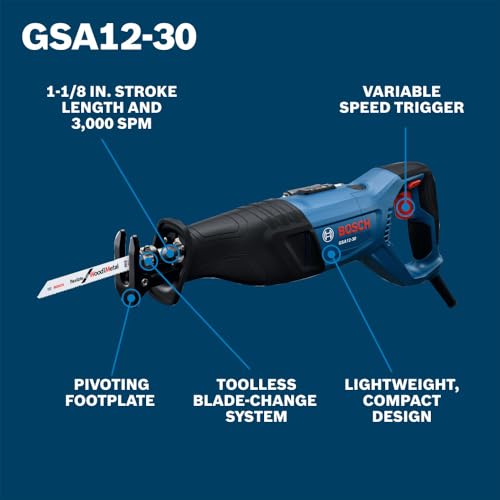
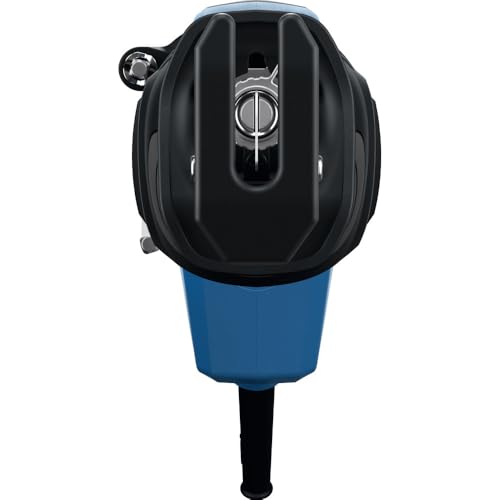
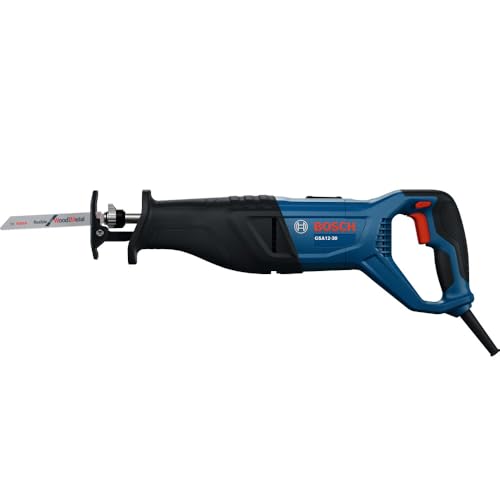
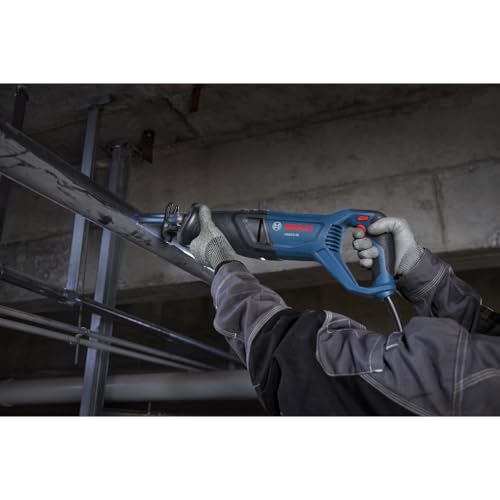
If I had to pick one corded reciprocating saw for most users, it would be the BOSCH GSA12-30. It strikes the best overall balance: 12 amps, 3,000 SPM, a 1-3/16-inch stroke, and a pivoting footplate that improves cut precision. At 8.2 pounds, it’s light enough for overhead cuts but powerful enough for serious demolition. The tool-free blade change is smooth and secure, and the built-in saw hook is a small but appreciated touch.
Owners highlight its reliability across wood, metal, and PVC, and it outperforms budget models like the WEN 3630 in both speed and durability. Compared to the DEWALT DWE305, it adds orbital action and better ergonomics without sacrificing power. It’s not the lightest or the highest-amp, but in this class, well-rounded performance wins, and this one delivers.
Product photos
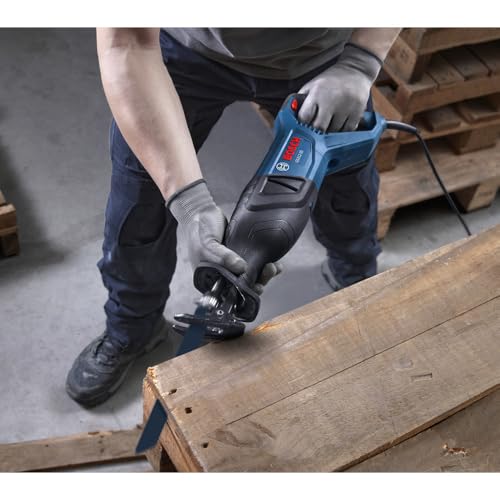
BOSCH RS325 120-Volt Reciprocating Saw
Strengths
- Ultra-compact design
- Fixed footplate
- Orbital cutting mode
Trade-offs
- Shorter stroke length
- No tool hook
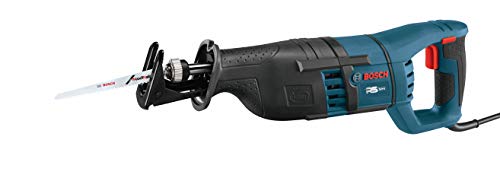
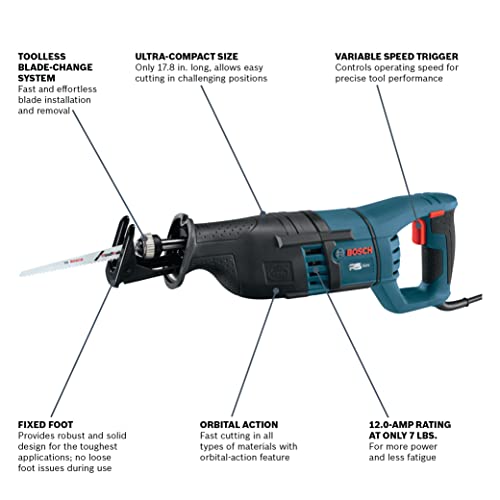
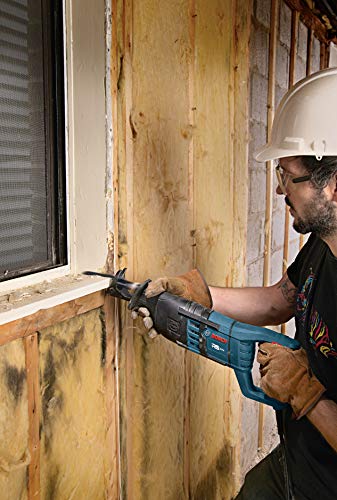
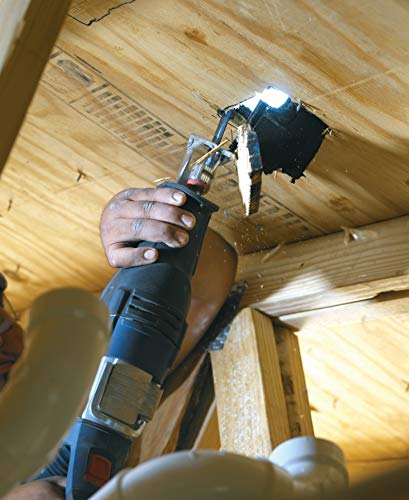
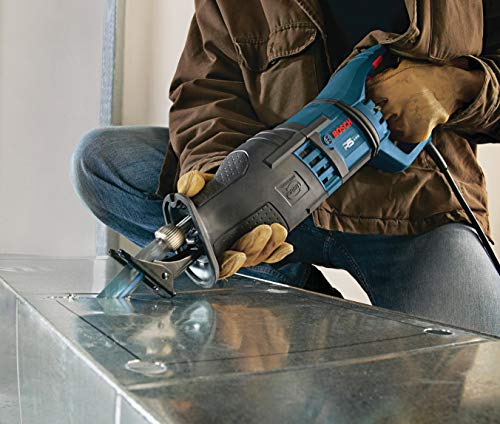
At just 7 pounds and 17.8 inches long, the BOSCH RS325 is the standout when it comes to compactness and balance. That lightweight, short-body design makes it a top pick for overhead work or tight crawl spaces where every inch and ounce counts. The fixed footplate adds stability, no wobble or shifting during aggressive cuts, and the soft-grip handle is consistently praised in owner feedback for comfort.
It packs a 12 amp motor and constant orbital action, which gives it an efficiency boost over non-orbital models like the DEWALT DWE305. While it doesn’t have the longest stroke (1-1/8-inch), the combination of power, size, and cutting speed makes it a favorite for finish carpenters and electricians. Compared to the heavier Makita JR3051T, this one trades raw mass for agility, a trade I’d make often in real-world use.
Product photos
Makita JR3051T 12 Amp Reciprocating Saw

Strengths
- Long 1-3/16-inch stroke
- 3,000 SPM speed
- 12 amp motor
Trade-offs
- Heavier than compact models
- No vibration reduction tech
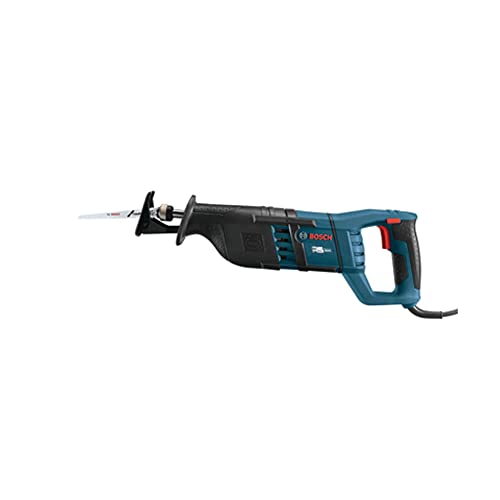
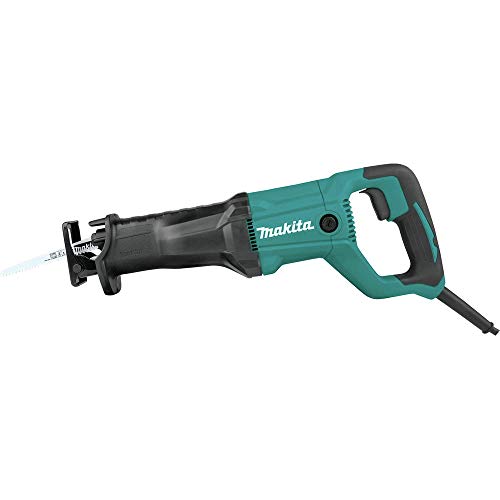
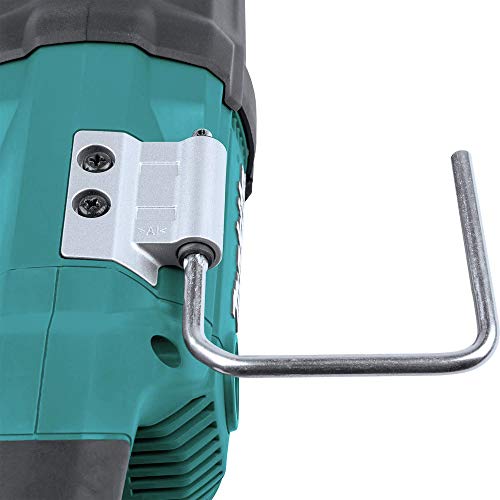
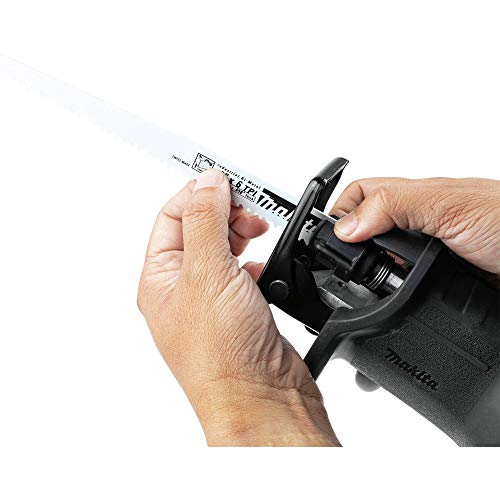
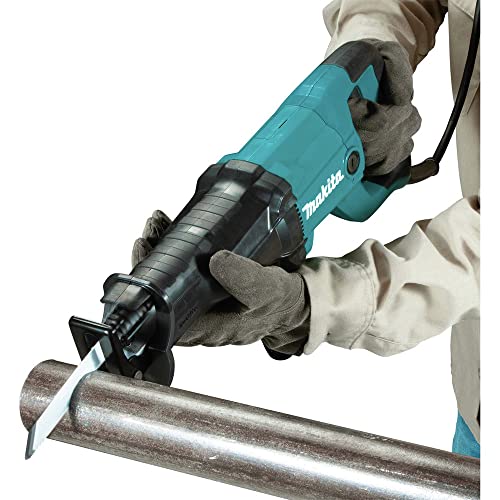
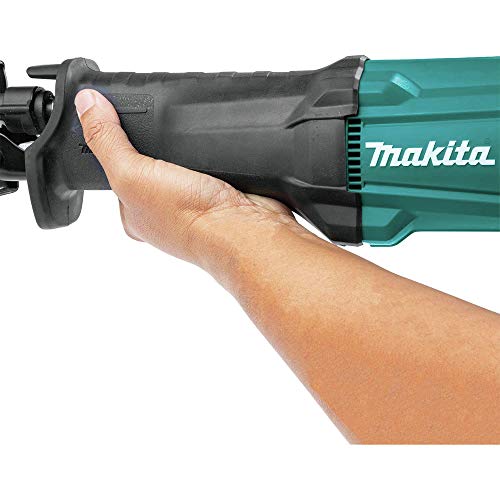
When it comes to heavy-duty cutting, the Makita JR3051T is the one to beat. Its 12 amp motor pushes 3,000 SPM with a 1-3/16-inch stroke, giving it serious cutting speed and depth, ideal for slicing through thick wood, metal, or nail-studded framing. The variable speed trigger offers solid control, and the tool-less blade change is quick and secure, though not quite as smooth as BOSCH’s system.
Owners consistently report it outperforms in demolition scenarios, where cutting speed and durability matter most. Compared to the DEWALT DWE305, it has a longer stroke and slightly better power delivery. It’s not the most comfortable for overhead use, but if you’re tearing out walls or cutting through metal supports, this Makita won’t let you down.
Product photos
DEWALT DWE305 12 Amp Reciprocating Saw

Strengths
- 12 amp motor
- 4-position blade clamp
- Keyless blade change
Trade-offs
- Heavier than compact models
- No orbital action
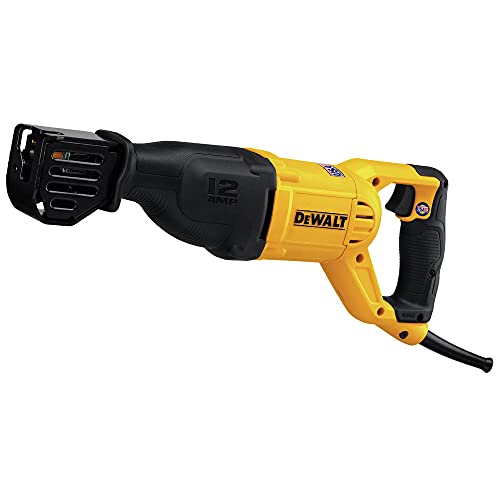
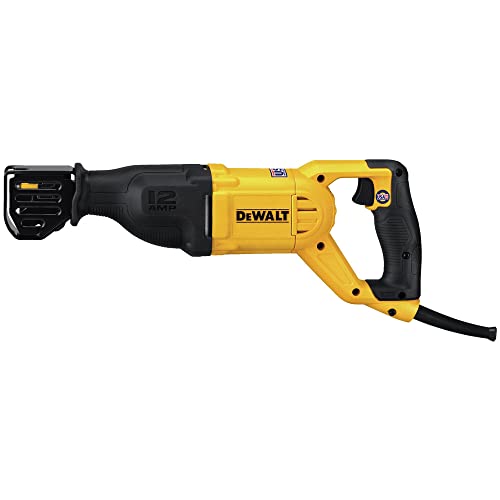
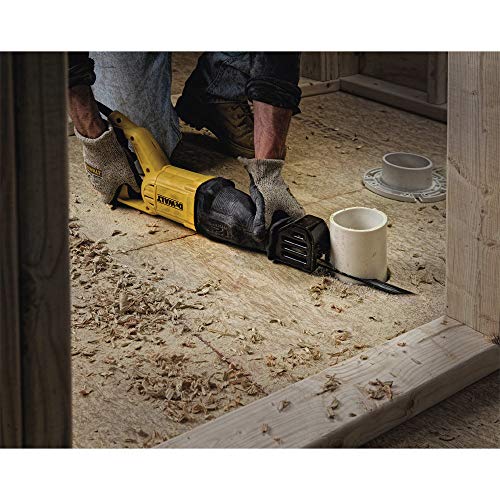
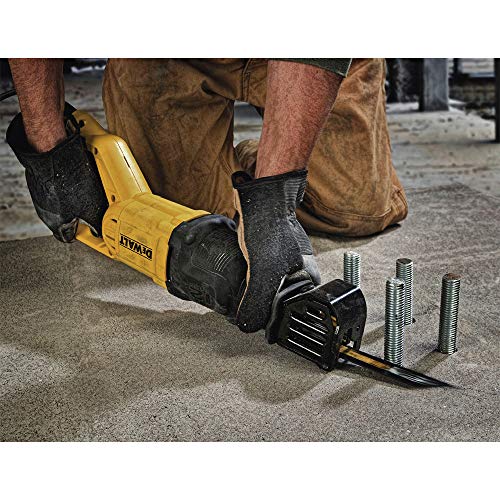
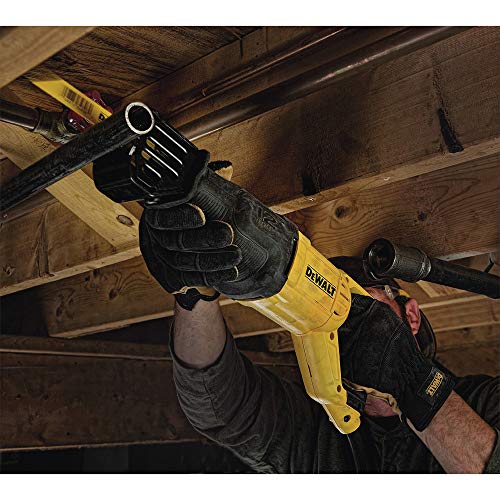
The DEWALT DWE305 stands out in the corded reciprocating saw category with its 12 amp motor and 4-position blade clamp, a feature that’s rare at this level. That blade clamp is the real story here, it lets users install blades in multiple orientations, which makes flush cutting significantly easier than with most competitors. On paper, the 2,900 SPM and 1-1/8-inch stroke are solid, not class-leading, but paired with DEWALT’s reputation for durability, it’s a reliable workhorse for demolition and remodeling.
Owners consistently report it powers through nail-embedded wood without bogging down, and the keyless blade clamp is praised for being both fast and secure. Compared to lighter-duty models like the WEN 3630, this one feels more at home on job sites where performance matters more than price. It’s not the lightest or most compact, but if you need dependable cutting with excellent blade positioning flexibility, this DEWALT is hard to beat.
Product photos
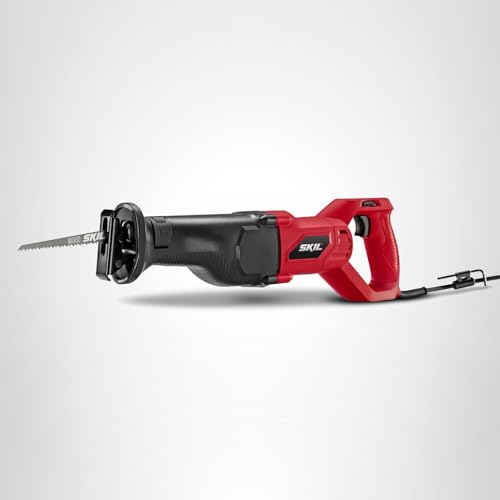
SKIL SPT44A-00 13 Amp Reciprocating Saw
Strengths
- 13 amp motor
- BUZZKILL vibration reduction
- Oversize trigger
Trade-offs
- Bulky design
- Blade clamp lacks fine adjustment
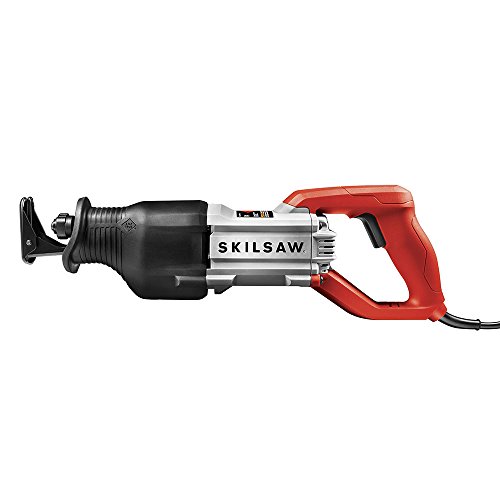
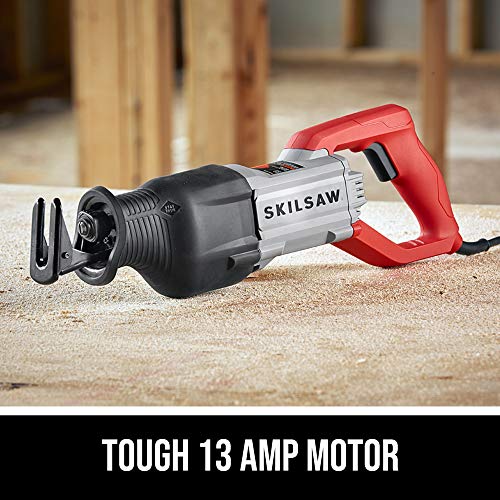
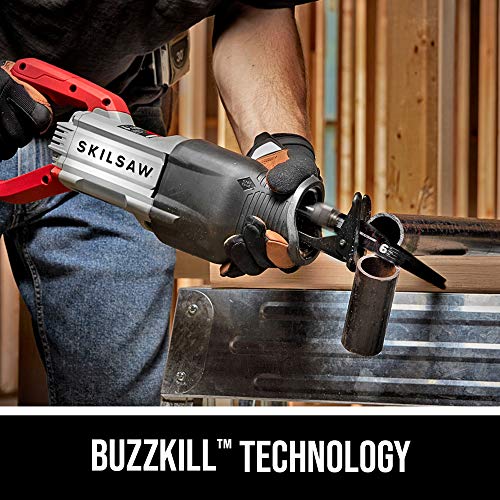
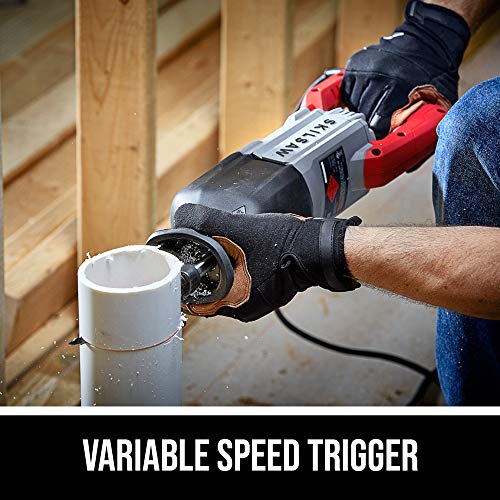
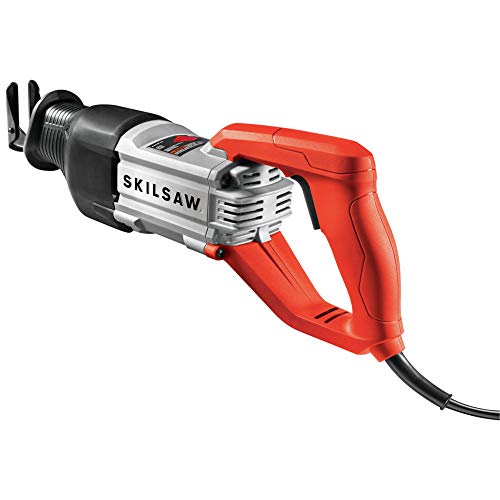
SKIL’s SPT44A-00 leans hard into comfort with its BUZZKILL Technology, which reviewers note meaningfully reduces vibration, up to 35% better than some rivals. That’s a big deal if you’re spending hours cutting pipe, framing, or old decking. The 13 amp motor is among the strongest here, giving it plenty of grunt, and the oversize trigger allows for better control whether you’re gloved up or working in awkward angles.
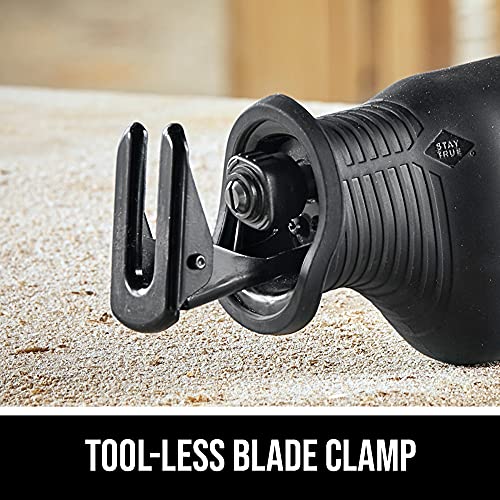
The tool-less blade clamp is reliable, though not as refined as DEWALT’s or BOSCH’s systems. Still, the vibration reduction sets this one apart. Compared to the BOSCH RS325, it’s longer and a bit bulkier, so it’s less ideal for tight spots, but for extended use where fatigue is a concern, this SKIL model has a real edge. It’s not flashy, but it’s smart engineering for hands-on users.
Product photos
WEN 3630 10-Amp Reciprocating Saw

Strengths
- Low cost
- 8-position pivoting head
- Tool-free blade change
Trade-offs
- Plastic housing
- Limited power
- Higher vibration
The WEN 3630 is the clear budget leader in this group, and it shows. It delivers a 10-amp motor, 8-position pivoting head, and tool-free blade changes at a fraction of the cost of premium models. The 8-position head is actually useful, letting you angle cuts without repositioning your body, which helps in tight corners.
But it’s not all upside. While owners say it handles light demolition and pruning fine, it lacks the power and durability of 12-amp models like the BOSCH GSA12-30 or Makita JR3051T. The plastic housing feels flimsy next to metal-bodied competitors, and vibration control is mediocre. That said, for a weekend warrior or someone on a tight budget, it’s a smart entry-level pick that won’t break the bank.
Product photos


EZUVITA 7 Amp Reciprocating Saw
Strengths
- 180° rotating handle
- Adjustable front shoe
- 6-speed dial
Trade-offs
- Lower power motor
- Build quality not pro-grade
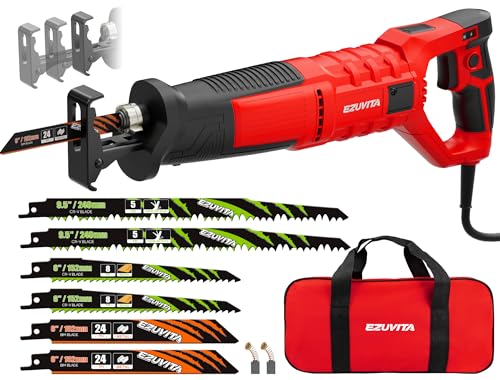
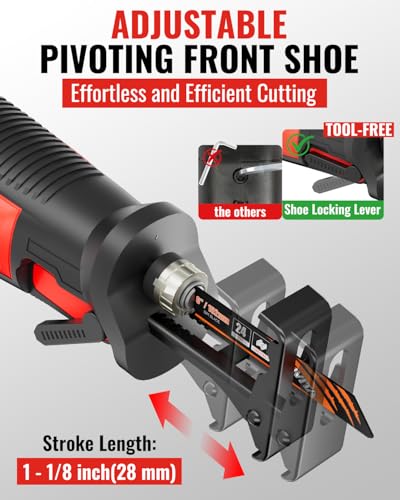
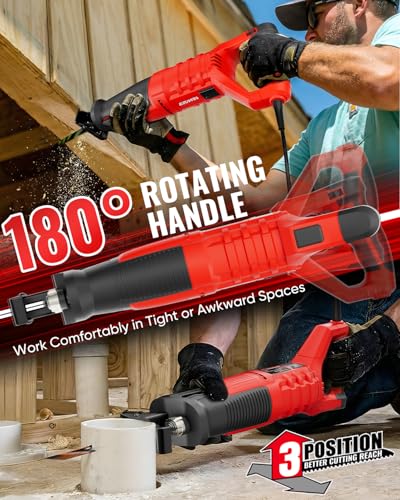
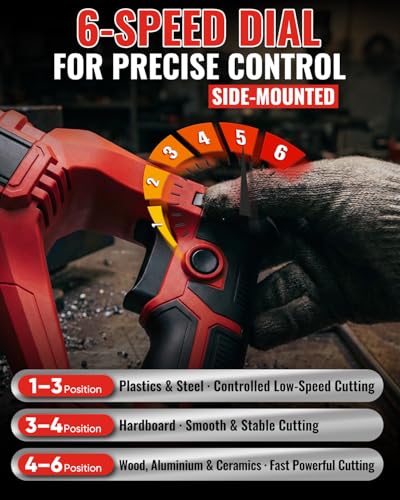
The EZUVITA 7 Amp model is built for maneuverability first. The 180° rotating handle is its standout feature, letting you flip the grip 90° left or right, a real advantage when cutting overhead or in corners. Add the adjustable pivoting shoe and 6-speed dial, and you’ve got a saw that adapts well to complex jobs.
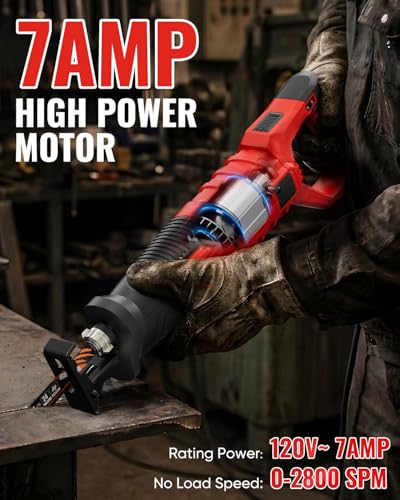
It only has a 7 amp motor, so don’t expect it to power through thick timber like the Makita or DEWALT, but owners say it handles pruning, PVC, and light framing just fine. The included 6-blade kit and carry bag add serious value. Compared to the Skil 9206-02, it’s less rugged but far more flexible in positioning. If your work involves awkward angles, this one deserves serious consideration.
Product photos

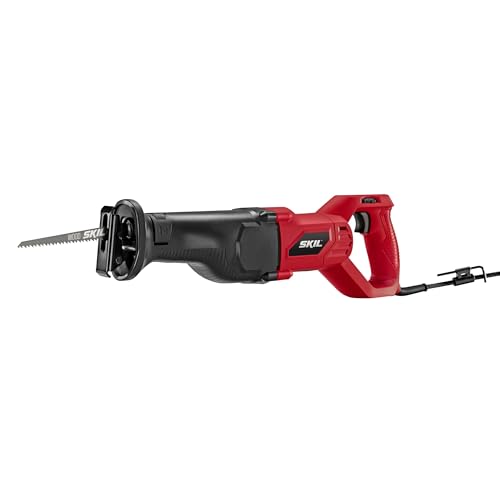
Skil 9206-02 7.5-Amp Reciprocating Saw
Strengths
- Metal gear housing
- Counter balance system
- Tool-less blade change
Trade-offs
- Lower power output
- No orbital action
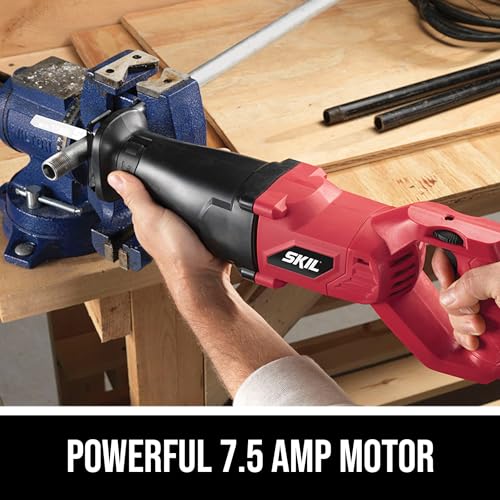
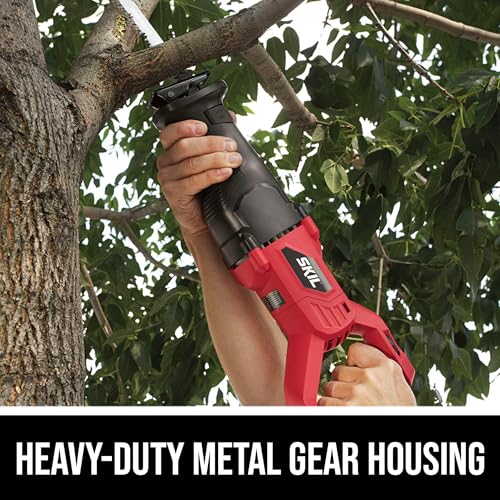
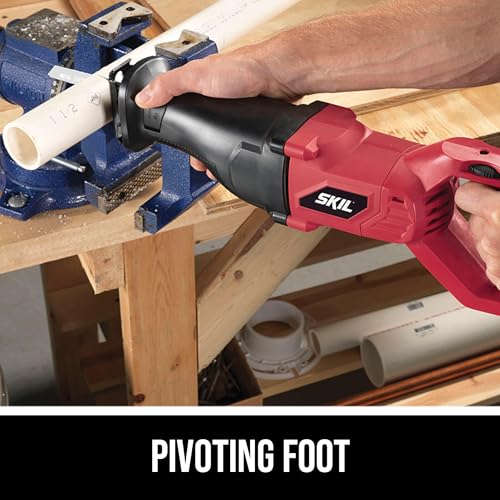
The Skil 9206-02 isn’t the most powerful or feature-rich, but its heavy-duty metal gear housing and counter balance system give it surprising durability and smoother operation than its specs suggest. At 7.5 amps, it’s underpowered compared to 12+ amp models, but for users doing intermittent cutting, like fence repair or small remodels, it holds up well.
Owner feedback consistently highlights its longevity, with many reporting years of trouble-free use. It’s not built for all-day demolition, but for someone who values a rugged, no-frills tool that won’t quit, this Skil model makes sense. Compared to the EZUVITA 7 Amp, it feels more industrial despite similar power. I’d recommend it as a secondary saw or for users who prioritize tool life over speed.
Product photos

How We Chose These corded reciprocating saws
My approach to evaluating corded reciprocating saws involved a thorough comparison of published specifications and features across numerous models. Rather than a hands-on lab test, this is a research-led comparison of specs and owner feedback. I weighed owner reviews from multiple sources – including major retailers and dedicated tool forums – alongside assessments from reputable reviewers. This data was then ranked against criteria important for typical homeowner and DIY use.
For corded reciprocating saws, power and durability are paramount. I placed significant weight on amperage and stroke length, as these directly impact cutting speed and capacity. Equally important was the design of the blade clamp and overall build quality, as these influence how well the saw holds up to demanding tasks and frequent use. Understanding reciprocating saw brand types also informed my assessment of long-term reliability.
Published specs clearly define a saw’s potential power and physical characteristics. However, I judged real-world usability and build quality primarily through owner feedback. Reports on vibration levels, ease of blade changes, and long-term durability came directly from those using the tools on jobsites. This complemented the technical data, providing a more holistic view than specifications alone. A Sawzall vs reciprocating saw comparison is often helpful when considering these tools.
How To Choose The corded reciprocating saws
A corded reciprocating saw is a workhorse, and knowing what to look for separates a frustrating experience from a tool you’ll rely on for years.
A quality corded reciprocating saw balances power with usability. Key considerations include amperage for tackling tough materials, stroke length for cutting speed, a robust build for durability, and features like variable speed and tool-free blade changes to improve efficiency and control. Look for models with vibration reduction to minimize fatigue during extended use.
Amperage and Cutting Capacity
Don’t get caught up in chasing the highest amperage number, but do pay attention to it. A 12-amp motor is generally sufficient for most homeowner and professional tasks, offering a good balance of power and weight. However, if you regularly demolish structures or cut through thick metal, stepping up to a 13-amp or 15-amp model will save you time and strain on the tool. Consider the materials you’ll be cutting most often. Thicker materials demand more amperage, and a saw struggling against its limits will overheat and wear out faster. A saw with a good amperage rating is a key component of the top reciprocating saw models.
Blade Change System & Features
Tool-free blade changes are a massive time saver. The older systems requiring Allen wrenches are just…slow. Beyond that, look at the blade clamp design. Some saws offer four-position clamps, which are incredibly useful for flush cutting – getting right up against a wall or other surface. Variable speed triggers are also essential; slower speeds give you more control when working with thinner materials or metal, preventing bending and damage. Consider whether the saw has an orbital action setting; this increases cutting speed in softer materials, but reduces control.
Here’s what I look for in a blade change system: * Simple release (a quick-release lever is best). * Secure hold (you don’t want a blade slipping mid-cut). * Compatibility (most saws use standard blades, but double-check). This can save you from needing to find proprietary blades.
Vibration Control & Ergonomics
Reciprocating saws vibrate – it’s part of the deal. But excessive vibration leads to fatigue and reduces control. The SKIL SPT44A-00, for example, features BUZZKILL technology, and other brands incorporate counter-balance systems. While marketing hype exists, models with dedicated vibration reduction features are noticeably more comfortable during extended use. Beyond vibration, pay attention to the handle design. A comfortable, ergonomic grip is crucial, especially for overhead work. A well-placed auxiliary handle can also improve control and reduce strain. Don’t underestimate the importance of a balanced saw – a poorly balanced tool will feel heavier and more unwieldy.
A comfortable grip and a saw that feels balanced in your hand are worth more than a few extra amps.
Finally, understand the relationship between a reciprocating saw and a Sawzall. While the terms are often used interchangeably, “Sawzall” is actually a trademarked name owned by Milwaukee. Learning the difference between Sawzall and reciprocating saw can help you navigate the market and find the best tool for your needs.
Corded Reciprocating Saws Compared
Here’s a spec comparison of several corded reciprocating saws to help you find the right tool for your needs.
| Product Name | Amps | SPM (Max) | Stroke Length (In) | Blade Clamp | Vibration Control | Pivoting Shoe |
|---|---|---|---|---|---|---|
| BOSCH GSA12-30 | 12 | 3,000 | 1-3/16 | Tool-Free | N/A | Yes |
| BOSCH RS325 | 12 | N/A | N/A | N/A | N/A | Fixed |
| Makita JR3051T | 12 | 3,000 | 1-3/16 | Tool-less | N/A | N/A |
| DEWALT DWE305 | 12 | 2,900 | 1-1/8 | Keyless | N/A | 4-Position |
| SKIL SPT44A-00 | 13 | N/A | N/A | Tool-less | BUZZKILL | N/A |
| WEN 3630 | 10 | 2,800 | N/A | Twist-Lock | N/A | 8-Position |
| EZUVITA 7 Amp | 7 | 2,800 | 1-1/8 | Tool-Free | N/A | Adjustable |
| Skil 9206-02 | 7.5 | N/A | N/A | Tool-Less | Counter Balance | Yes |
Frequently Asked Questions
What stroke length do I really need in a corded reciprocating saw?
A stroke length of 1-1/8 inches is sufficient for most common tasks, but if you frequently cut through thick materials like 4×4 lumber or large-diameter pipes, a saw with 1-3/16 inches or greater will perform better and require less effort.
Are more expensive reciprocating saws actually better?
Price doesn’t always equal performance, but generally, higher-priced models offer features like improved vibration control, more durable construction, and tool-free blade change systems. These upgrades contribute to user comfort and long-term reliability, potentially saving you money in the long run by avoiding frequent replacements.
Can a corded reciprocating saw cut through metal?
Yes, corded reciprocating saws can cut metal, but it requires using the correct blade designed for metal cutting. Slower speeds and a lubricating cutting oil are also recommended to prevent overheating and extend blade life.
What’s the difference between a standard and a pivoting shoe on a reciprocating saw?
A pivoting shoe allows the blade to be rotated, enabling flush cuts against surfaces. While not essential, it’s a valuable feature for demolition work or when you need to cut materials precisely in tight spaces. Consider top cordless reciprocating saws if portability is a concern.
What should I look for in a blade clamp?
Tool-free blade clamps are a significant convenience, but the clamp’s overall robustness is equally important. A secure clamp prevents blade slippage during operation, which is a safety concern and can ruin your cut, so look for a clamp made of durable metal.
The Bottom Line
Choosing a corded reciprocating saw always comes down to balancing what you need with what you’re willing to spend. While a higher price tag often gets you more power and features, the Bosch GSA12-30 strikes an excellent balance, offering a robust build, tool-free blade changes, and a pivoting shoe – making it our top overall pick for most homeowners and DIYers. It’s a saw that will handle a wide range of projects without breaking the bank or your wrists.
For those on a tighter budget, the WEN 3630 delivers surprising value. It won’t have all the bells and whistles of more expensive models, but it provides enough power for basic cutting tasks and its eight-position pivoting shoe is a standout feature at this price point. If you’re primarily tackling demolition work or need to cut through particularly thick materials, the SKIL SPT44A-00, with its 13-amp motor and BUZZKILL vibration reduction, is a solid choice for more demanding jobs.
Ultimately, specs matter, but they aren’t everything. Focus on finding a saw that feels comfortable in your hands, offers quick and easy blade changes, and has enough power for the materials you’ll be working with most often. Mastering reciprocating saw operation basics will get you much further than chasing the highest amperage number.
