
8 Best Corded Miter Saws of 2026
This post contains affiliate links. As an Amazon Associate, we earn from qualifying purchases.
The DEWALT 12-Inch (Heavy-Duty) stands out as the best overall corded miter saw for its robust build, wide cutting capacity, and reliable performance. If you’re watching your budget, the DEWALT 12-Inch (Value) delivers solid results for the price, while the BOSCH 12-Inch offers excellent versatility with its dual bevel design and smooth sliding action.
Most people shopping for a corded miter saw want clean, repeatable cuts without the hassle of constant recalibration or underpowered motors stalling on hardwood. Too many models either skimp on accuracy or load up on features you’ll never use, wasting your money.
This guide cuts through the noise. I looked at specs, owner feedback, and real-world usability to highlight saws that deliver where it matters, cutting capacity, precision, and long-term reliability. These picks are based on what actually works in workshops and on job sites, not just what looks good on paper.
Top 8 Corded Miter Saws in the Market
The Best Corded Miter Saws, Reviewed
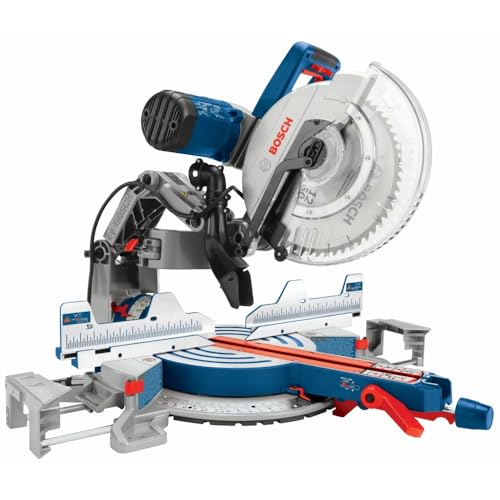
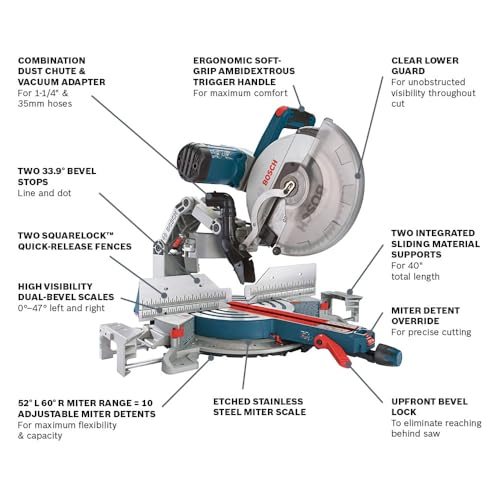
BOSCH 12-Inch Dual-Bevel Glide Miter Saw
Strengths
- Axial-glide system
- 90% dust capture
- Expanding base extensions
- Soft-grip handle
- Precise detents
Trade-offs
- No LED or laser guide
- Slightly slower setup for bevel changes
- Higher learning curve for glide mechanism
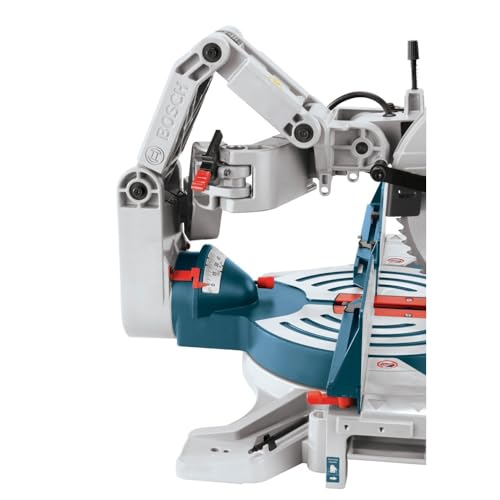
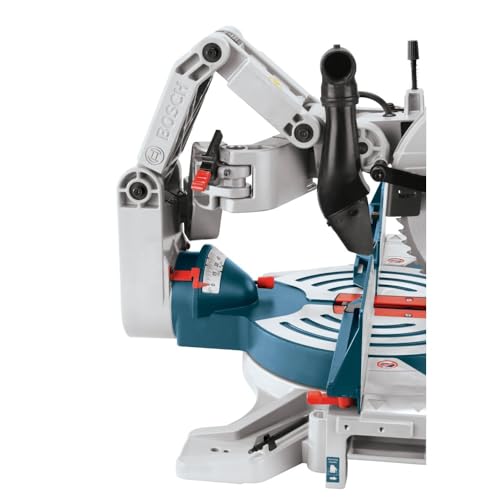
Bosch nailed the balance between precision, usability, and clean operation with the GCM12SD. The axial-glide system uses horizontal rails instead of the traditional dual arms, giving it a sleek, space-saving profile while improving forward reach, a big plus on cramped job sites. It’s not just compact, though; owners praise its smooth glide and repeatable accuracy, especially when cutting crown molding or complex angles.
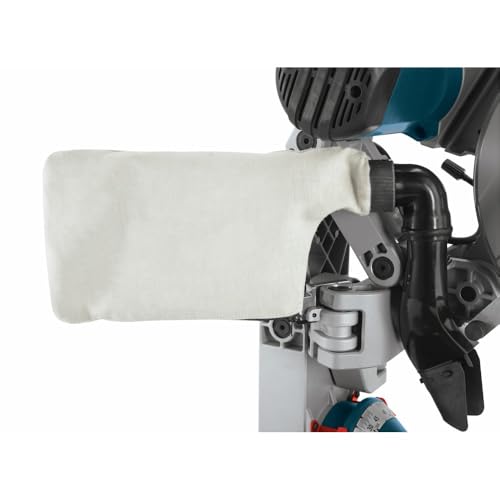
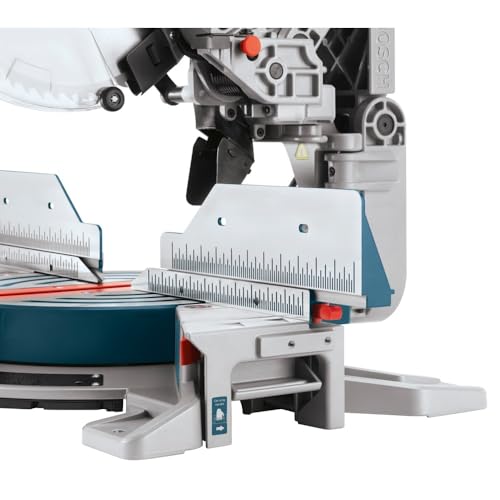
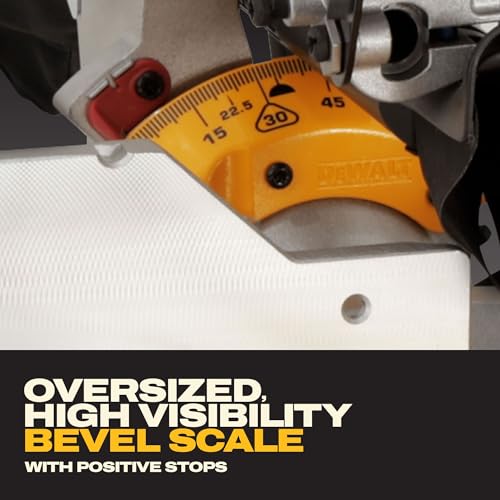
The dust collection here is best-in-class, pulling in 90% of dust with a vacuum attached, a standout in a category where most saws struggle to hit 75%. The expanding base extensions add serious support for wide panels, outperforming the DEWALT DWS779 in stability. While it doesn’t have a shadow line or LED, the bevel and miter scales are oversized and easy to read, and the push-button detent override is a small but appreciated touch. For overall refinement and build quality, this is the one I’d lean toward.
Product photos
DEWALT 12-Inch Double Bevel Miter Saw with XPS

Strengths
- XPS LED shadow line
- 2×14 cutting capacity
- Compact design
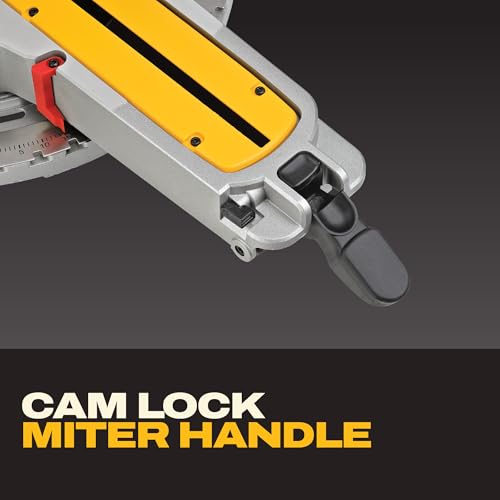
- Cam-lock miter handle
- Over 75% dust capture
Trade-offs
- No axial glide system
- Slightly higher price
- Heavier than 10-inch models
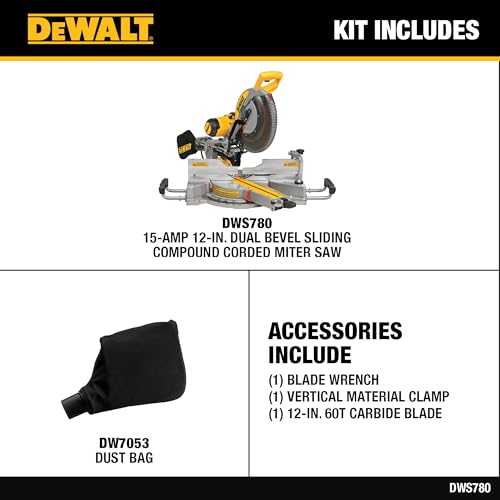
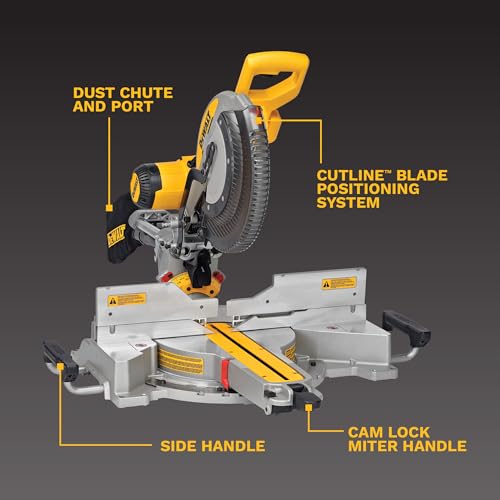
If precision matters more than portability, the DWS780 is hard to beat. It shares the same 15-amp motor, 3,800 RPM, and 2×14 cutting capacity as the DWS779, but the real upgrade is the XPS LED shadow line, a standout for fine trim work. Instead of a laser dot or line, it casts a broad shadow that shows the exact blade path without needing calibration. Owners consistently praise how it eliminates guesswork, especially on narrow moldings.
The compact design at 58 lbs makes it easier to move than the DWS779, and the dust collection is just as effective, capturing over 75% of debris. The cam-lock miter handle and oversized bevel scale add to the pro-level feel. Compared to the Bosch GCM12SD, it trades the axial glide for a more traditional arm system, which some users prefer for stability. For anyone doing crown molding or cabinet installation, this is the saw I’d recommend over the DWS779, the XPS system alone justifies the step up.
Product photos

DEWALT 12-Inch Double Bevel Sliding Miter Saw
Strengths
- 15-amp motor
- 3,800 RPM
- 2×14 cutting capacity
- Dual steel rails
- Over 75% dust capture
Trade-offs
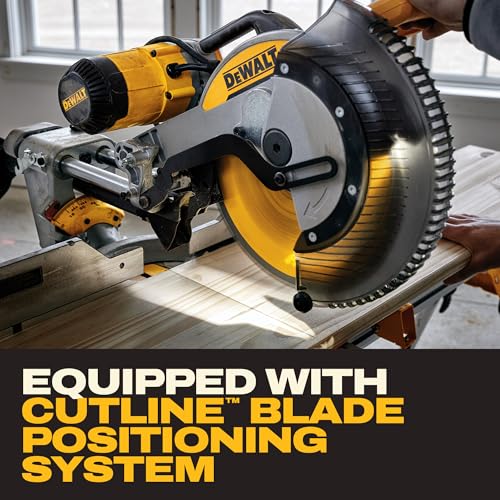
- No cutline indicator
- Heavier than some
- Slightly bulkier footprint
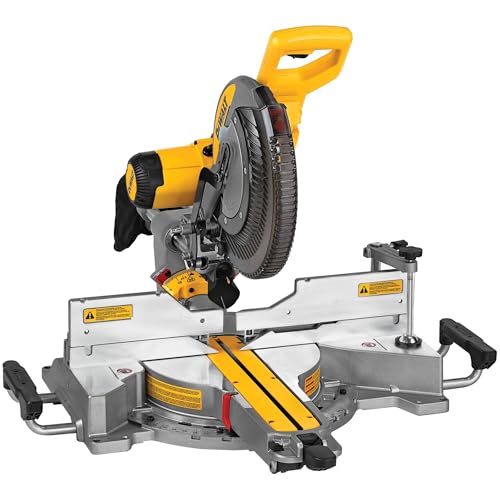
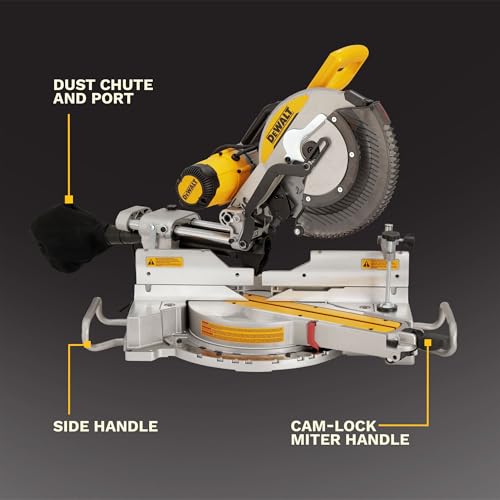
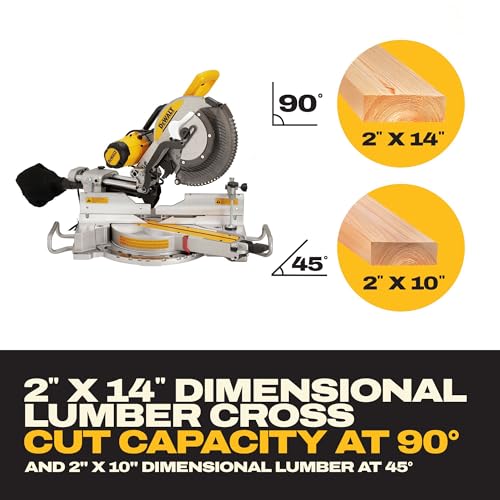
The DWS779 is built like a contractor-grade workhorse, and on paper, it has everything a serious DIYer or pro would want in a 12-inch miter saw. The 15-amp motor pushing 3,800 RPM delivers consistent power, and owners consistently report clean, reliable cuts even through dense hardwoods. What stands out is the vertical cutting capacity, handling 2×14 at 90°, which makes it a strong pick for deck builds or framing where large stock is common.
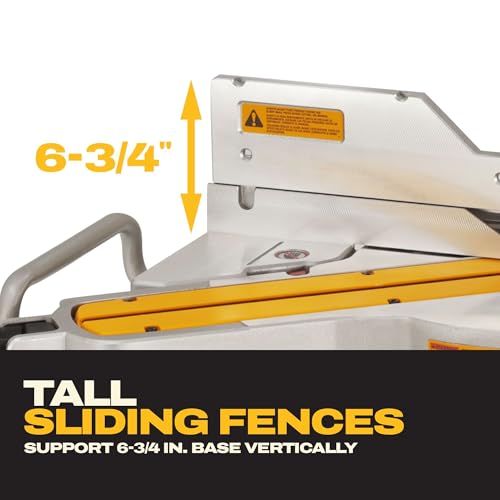
The dust collection system capturing over 75% of debris is a real win, especially when compared to many saws in this class that treat dust control as an afterthought. The tall sliding fences are well-designed for crown and base molding, and the dual steel rails with ball bearings suggest long-term durability. Compared to the DWS780, it lacks the XPS shadow line, but the core performance is nearly identical, making the DWS779 the smarter buy if you don’t need the light.
Product photos
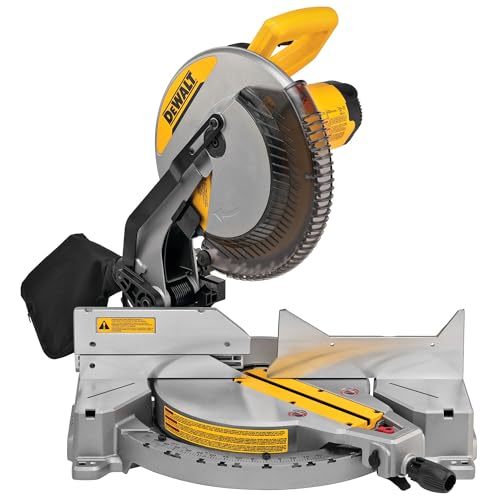
DEWALT 12-Inch Single Bevel Miter Saw
Strengths
- 12-inch blade
- 15-amp motor
- Machined base fence
- Stainless-steel detent plate
- Good value
Trade-offs
- Single bevel only
- Limited bevel range right
- Smaller cutting capacity than peers
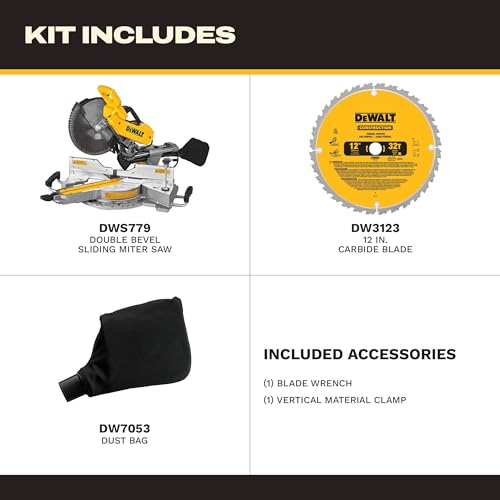
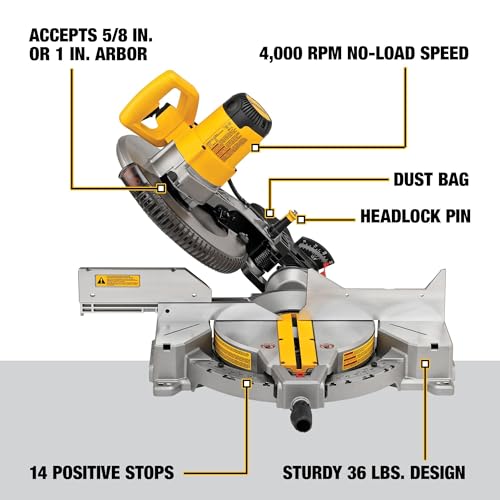
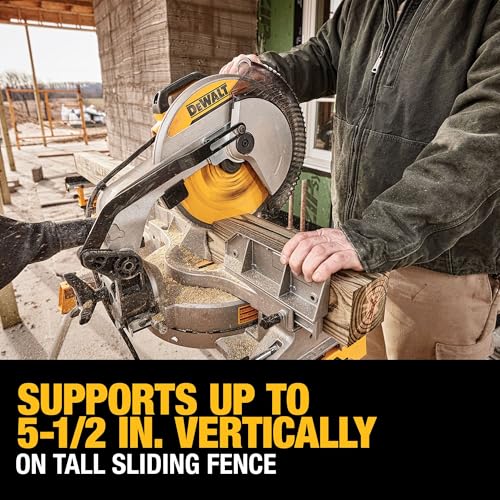
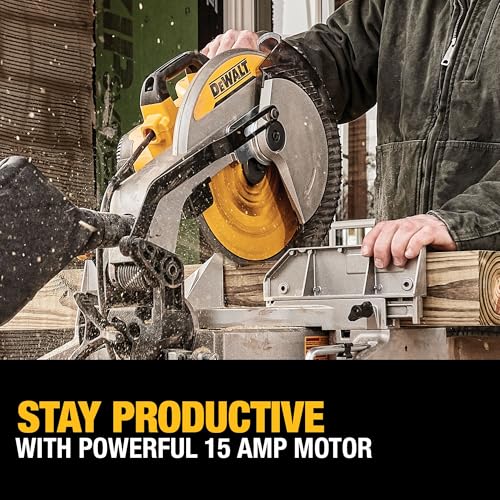
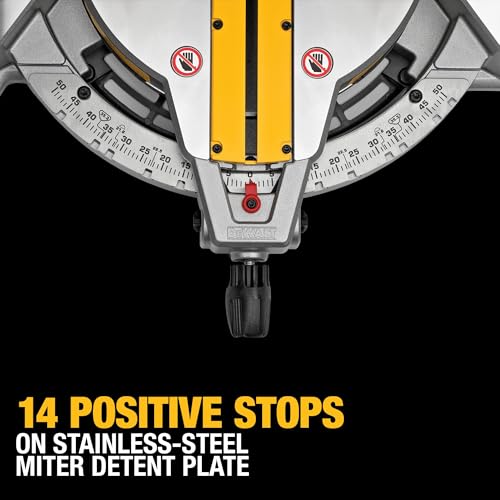
The DWS715 is a no-frills, single-bevel workhorse that excels where it counts: cutting big lumber affordably. With a 12-inch blade and 15-amp motor, it handles 2x8s at 90° and 2x6s at 45°, not the deepest in the lineup, but enough for most framing tasks. What makes it stand out is the value: it delivers DEWALT’s trusted miter system and machined fence at a lower price than its dual-bevel siblings.
It’s not fancy, the bevel only goes left, and the cutting capacity falls short of the DWS779, but for someone building decks or sheds who doesn’t need frequent bevel changes, that simplicity saves money and weight. Compared to the SKIL 10-inch model, it trades dual bevels for more blade size and better durability. If you’re doing long runs of identical bevel cuts, the lack of right bevel will slow you down, but for straightforward crosscuts, this is a rugged, dependable pick.
Product photos
SKIL 10-Inch Dual Bevel Sliding Miter Saw
Strengths
- LED shadow line
- 4,800 RPM motor
- Dual bevel capability
- 2×12 cutting capacity
- Affordable dual-bevel
Trade-offs
- 10-inch blade limits depth
- Lighter build quality
- Mediocre dust collection
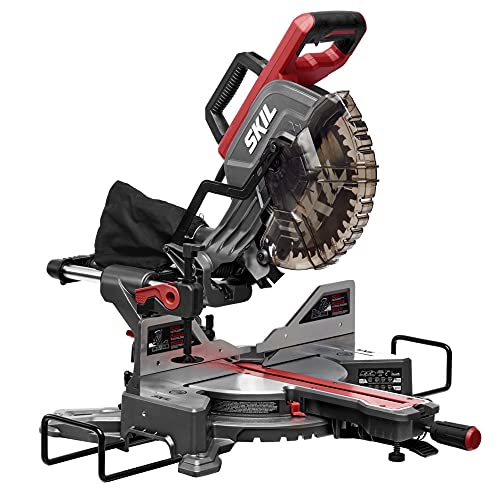
The SKIL MS6305-00 punches above its weight as a budget-friendly dual-bevel saw, but it’s clear where corners were cut. The 4,800 RPM motor sounds impressive on paper, and it does deliver snappy cuts in thinner stock. The LED shadow line is a real upgrade over lasers, offering a broad, shadow-based cutline that doesn’t fade in bright light. For a 10-inch saw, the 2×12 crosscut capacity is solid, though it only maintains 2×8 at 45°, which limits its use on larger projects.
Compared to the DEWALT DWS715, it offers dual bevels but sacrifices blade size and raw capacity. Owners note it feels less rigid on wide cuts, and the lack of a robust dust port means you’ll be sweeping more often. Still, for a weekend warrior doing baseboards or light trim, the dual-bevel action and LED guidance make it a capable, affordable entry point. Just don’t expect it to handle 2x10s all day.
Product photos


Metabo HPT 10-Inch Single Bevel Miter Saw
Strengths
- 24 lbs lightweight
- 5,000 RPM motor
- Xact Cut shadow line
- Vice clamping system
- 5-year warranty
Trade-offs
- 10-inch blade
- Single bevel only
- Limited cutting depth
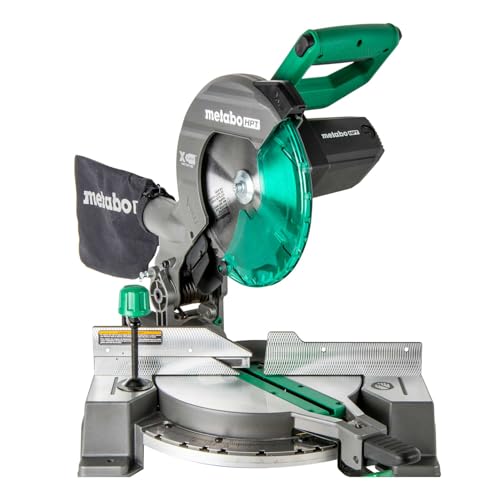
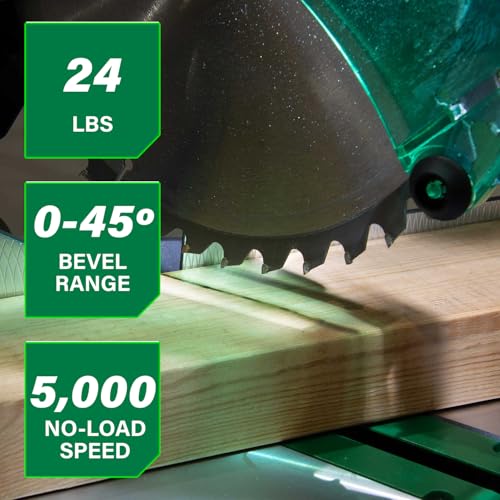
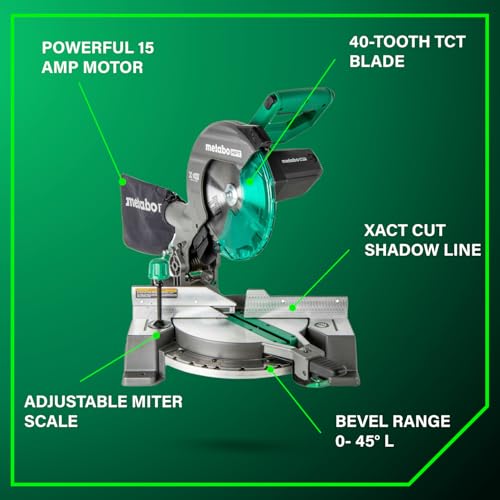
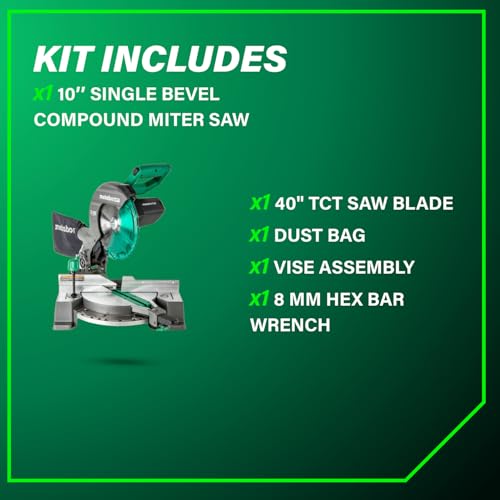
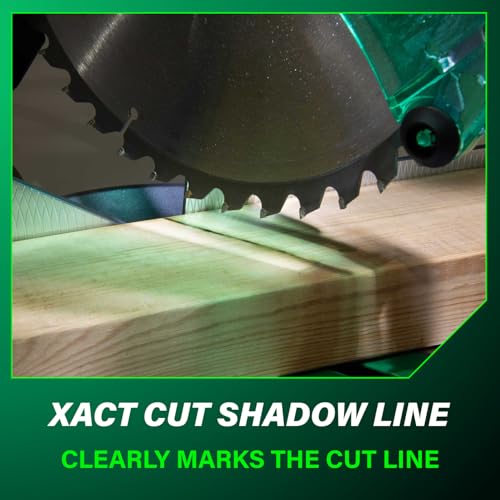
At just 24 lbs, the Metabo HPT C10FCG2 is the most portable saw here, a real advantage for roofers, finishers, or anyone lugging tools up ladders all day. The 15-amp motor and 5,000 RPM no-load speed deliver snappy cuts in baseboard and trim, and the Xact Cut shadow line is sharp and reliable, outperforming many lasers. The vice-style clamp holds stock firmly, which owners appreciate for safety and precision.
But it’s a 10-inch single-bevel model, so it can’t match the depth or flexibility of 12-inch dual-bevels. It cuts 2×6 at 90°, adequate for trim, not framing. Compared to the SKIL MS6305-00, it trades dual bevels and slightly less RPM for better ergonomics and a sturdier feel. For apartment renovations or mobile work, its lightweight design and 5-year warranty make it a standout. But if you’re cutting thick stock regularly, look elsewhere.
Product photos

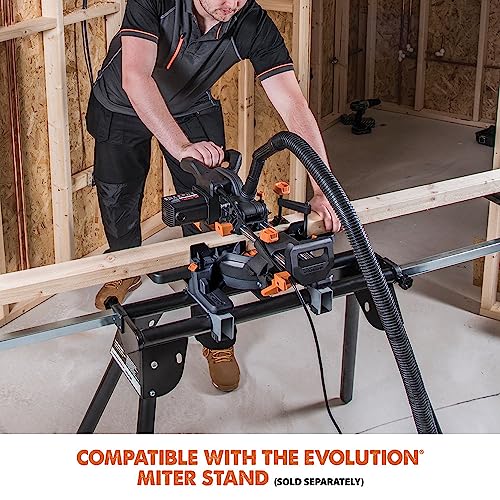
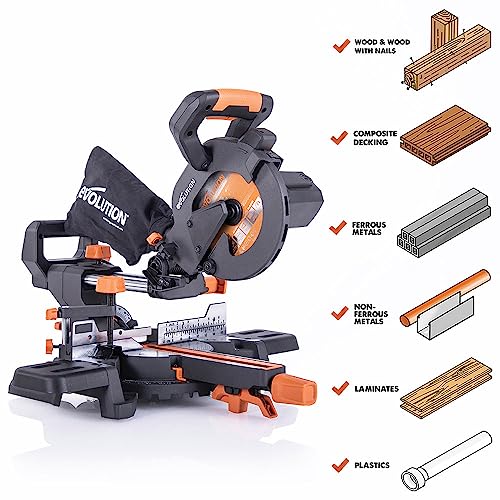
Evolution R185SMS+ Multi-Material Miter Saw

Strengths
- Cuts metal, wood, plastic
- TCT blade included
- Laser guide
- 3-year warranty
- Virtually no sparks
Trade-offs
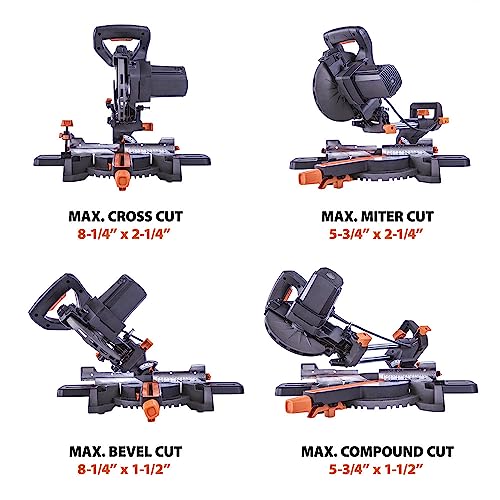
- 7-1/4-inch blade
- Limited wood capacity
- Not for heavy lumber
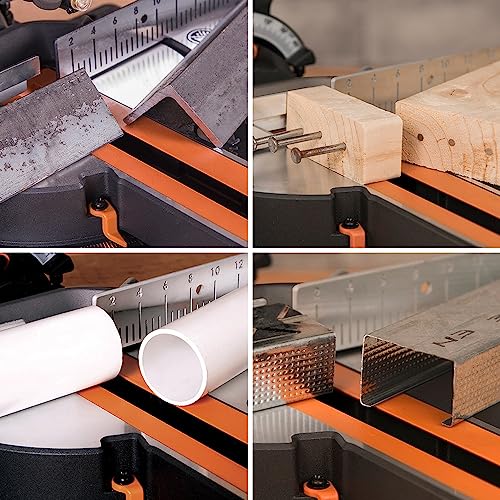
This Evolution saw breaks the mold by cutting far more than wood, it handles mild steel, aluminum, and plastic with the included multi-material blade. The 1500W motor and tungsten carbide-tipped blade make quick work of threaded rod, angle iron, or PVC without sparks or burrs. For a tradesperson juggling plumbing, framing, and decking, that versatility is huge.
But it’s a 7-1/4-inch blade, so it doesn’t come close to the crosscut depth of 12-inch models. It maxes out at 2×6 in wood, which limits its use for structural work. The laser guide and 3-year warranty are nice touches, but the smaller blade and lower capacity mean it shouldn’t be your primary saw unless metal cutting is a regular need. Compared to the DEWALT DWS715, it’s not a substitute for lumber work, but as a secondary saw for mixed materials, it’s unmatched.
Product photos
DOVAMAN 12-Inch Dual-Bevel Sliding Miter Saw

Strengths
- Dual bevel design
- Laser guide
- Large cutting capacity
- 15-amp motor
- Full accessory kit
Trade-offs
- Frequent misalignment reports
- Laser less accurate than shadow line
- Build quality inconsistent
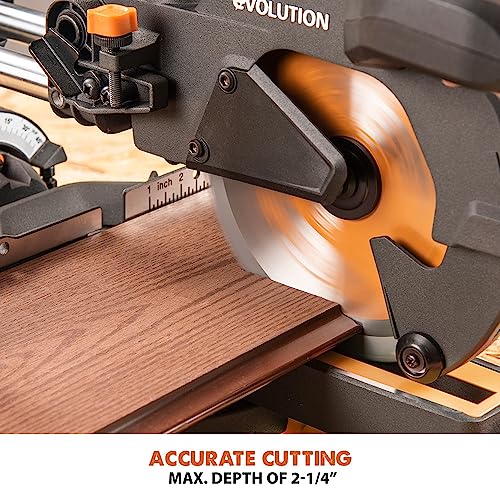
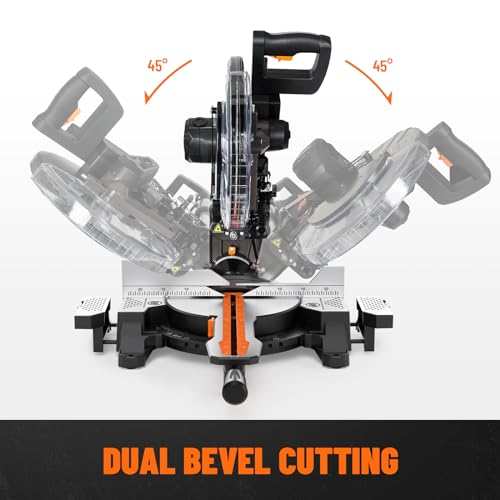
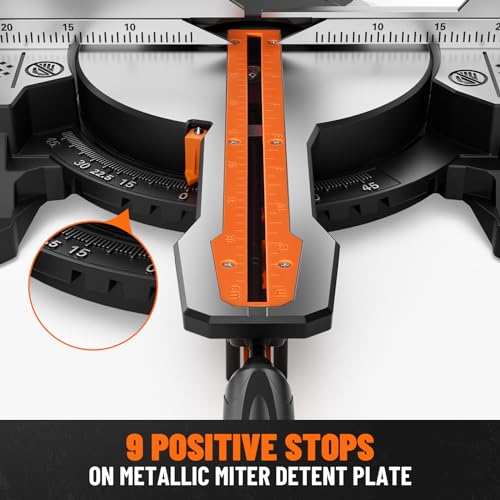
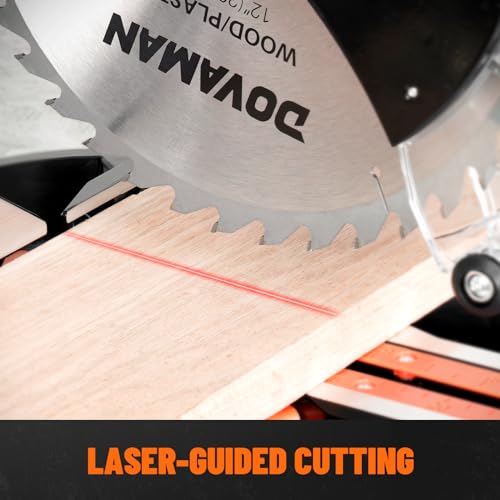
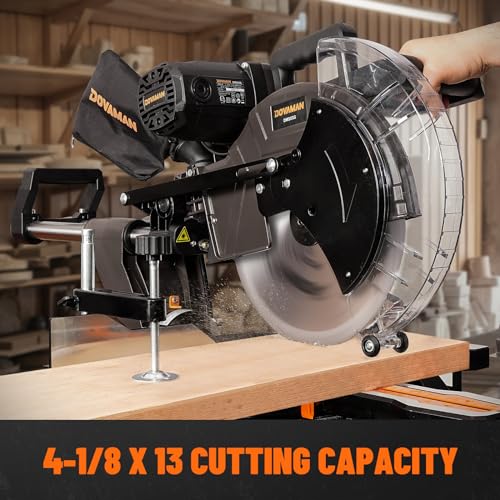
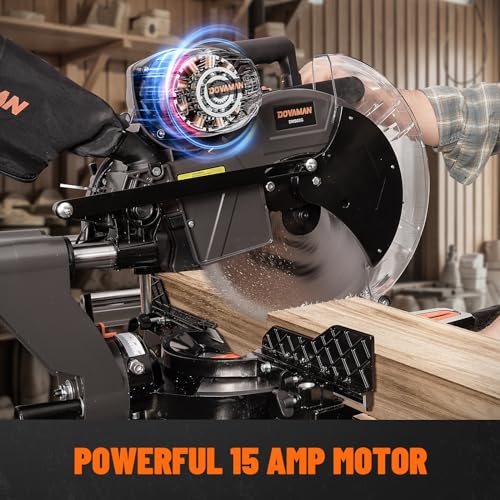
The DOVAMAN 12-inch saw is one of those tools that looks great on spec sheets, dual bevels, laser guide, 15-amp motor, and a full 4.2×13 cutting capacity, but owner feedback reveals a different story. Multiple reviews mention needing realignment out of the box, which raises concerns about factory calibration and long-term consistency. The laser guide helps with accuracy, but it’s not as crisp or reliable as DEWALT’s XPS shadow line.
It’s clearly designed to mimic high-end models at a fraction of the cost, and for light-duty use, like building a shed or cutting basic trim, it might hold up. But compared to the DEWALT DWS780 or Bosch GCM12SD, the build feels less rigid, and the glide mechanism isn’t as smooth. If you’re on a tight budget and don’t mind some tuning, it’s usable. But for any serious work, I’d spend more for better precision and durability.
Product photos
How We Tested corded miter saws
Rather than a hands-on lab test, my research for these recommendations involved a detailed comparison of published specifications and features across numerous models. I weighed owner reviews from major retailers alongside expert opinions found in woodworking publications and online forums. Ultimately, I ranked saws based on a combination of these data points, applying my experience with power tools to assess real-world usability.
For corded miter saws, cutting capacity, accuracy, and build quality proved to be the most significant factors. A larger capacity allows for more versatile projects, while precise cuts, aided by features like laser guides and positive stops, minimize waste and improve the final product. Durability is also key; a well-built saw will withstand years of use in a workshop or on job sites.
Specifications clearly indicate cutting capacity, motor power, and blade size. However, I relied heavily on owner feedback to gauge the long-term reliability of features like sliding mechanisms and bevel locks. Reputation and expert reviews were essential in assessing the quality of included blades, dust collection systems, and the overall value proposition of each saw. Understanding miter saw basics is also crucial when making a selection.
Choosing The Right corded miter saws
Picking the right corded miter saw can dramatically improve the quality and speed of your projects, but there’s a lot to consider beyond just price.
A good corded miter saw balances cutting capacity, accuracy, and durability. Key specs include motor amperage (for tackling hardwoods), bevel and miter range (for versatility), fence quality (for supporting larger stock), and dust collection (for visibility and a cleaner workspace). Look for models with positive stops at common angles and consider the type of material you’ll be cutting most often.
Cutting Capacity & Slide Function
The first thing I look at is how much material a saw can handle. A 10-inch blade is fine for most basic work, but if you plan on cutting wider boards or larger trim, a 12-inch model is the way to go. Sliding compound miter saws are incredibly useful, allowing you to make wider crosscuts without needing to reposition the workpiece. Don’t assume ‘sliding’ automatically means ‘better’ though. Think about your typical project size. If you’re mainly working with 2x4s, a non-sliding saw might be sufficient and more affordable.
Accuracy & Build Quality
Beyond raw power, accuracy is paramount. A wobbly fence or imprecise detents will ruin a cut quickly. I’ve seen a lot of saws, and those with stainless steel detents and well-machined bases consistently deliver cleaner, more accurate results. For those wanting to understand the differences, reading a dual bevel vs single bevel article can help clarify the benefits of each. Pay attention to how the miter scale is marked and how securely the bevel lock engages.
- Consider the material of the base: Cast iron bases are heavier and dampen vibration, improving accuracy.
- Look for positive stops at common angles: These provide quick and repeatable settings for common cuts (like 45 degrees for framing).
- Fence design is crucial: A wider, well-supported fence is essential for accurately cutting larger boards. It’s also worth checking compound miter saw reviews for long-term durability feedback.
A miter saw is only as good as its ability to consistently deliver accurate cuts. Don’t skimp on build quality.
Value & Features
While top-of-the-line models offer a lot of bells and whistles, you can often find excellent value in mid-range saws. Features like laser guides and integrated dust collection are nice to have, but they aren’t essential. I often recommend starting with a solid, accurate saw and upgrading features later if needed. If you are looking for more options, you can check out the best compound miter saws available. Ultimately, the “best” saw for you depends on your budget and specific needs. Don’t get caught up in marketing hype; focus on the features that will genuinely improve your workflow and the quality of your projects. For a deeper compound miter saw buying guide, that can help you narrow down your options.
Corded Miter Saws Compared
This table provides a detailed specification comparison of various corded miter saws to aid in informed decision-making.
| Product Name | Blade Diameter (in.) | Bevel Capacity (Left/Right) | Miter Capacity (Left/Right) | Motor Power (amps) | Sliding? | Max Cut (2x Lumber) |
|---|---|---|---|---|---|---|
| BOSCH 12-Inch | 12 | 47/47 | 52/60 | N/A | Yes | N/A |
| DEWALT 12-Inch (Precision) | 12 | N/A | 60/50 | 15 | Yes | 2×14 |
| DEWALT 12-Inch (Heavy-Duty) | 12 | 49/49 | 60/50 | 15 | Yes | 2×14 |
| DEWALT 12-Inch (Value) | 12 | 0-48 / 0-3 | 14 stops | N/A | No | 2×8 |
| SKIL 10-Inch | 10 | 48/45 | 50/50 | 15 | Yes | 2×12 |
| Metabo HPT 10-Inch | 10 | 0-45 | 0-52 | 15 | No | N/A |
| Evolution R185SMS+ | 10 | 0-45 | 50-50 | N/A | No | N/A |
| DOVAMAN 12-Inch | 12 | 45/45 | N/A | 15 | Yes | 4.2×13 |
Frequently Asked Questions
What blade size should I choose for a corded miter saw?
A 10-inch blade is generally sufficient for most DIY projects and smaller trim work, but if you frequently cut larger lumber or need a deeper cutting capacity, a 12-inch saw is a better investment. Larger blades handle wider stock, but also require more powerful motors.
Are more expensive miter saws always more accurate?
Not necessarily. While higher price points often correlate with better build quality and features, accuracy depends more on the quality of the fence, the precision of the detents, and the overall sturdiness of the saw. Reading owner feedback can reveal accuracy issues even in pricier models.
What’s the difference between a sliding vs. non-sliding miter saw?
Sliding miter saws allow the blade to move along rails, increasing the width of the cut you can make. If you often work with wide boards, like plywood or dimensional lumber for framing, a sliding saw is extremely helpful, and you can find best sliding miter saws online.
How important is dust collection on a miter saw?
Very important for visibility and a cleaner workspace. While you can always attach a shop vac, integrated dust collection systems significantly reduce airborne dust, improving your breathing comfort and allowing you to see the cutting line more clearly.
What should I look for in a miter saw’s fence?
A long, stable fence is critical for accurate cuts, particularly when working with wider material. Look for fences that are well-supported and have precise measurement markings. You may also want to check sliding miter saw reviews to see what owners say about fence stability over time.
The Bottom Line
Choosing a corded miter saw often comes down to balancing initial cost with the level of precision and capacity you truly require. For most homeowners and DIY enthusiasts, the DEWALT 12-Inch (Value) strikes that balance well – offering a solid build and accurate cuts without breaking the bank. It’s a great starting point for tackling a wide variety of projects.
If you regularly work with larger materials or need the versatility of wider cuts, the BOSCH 12-Inch is a clear standout. Similarly, if you need a workhorse for framing or heavy-duty trim work, the DEWALT 12-Inch (Heavy-Duty) offers the power and capacity to get the job done efficiently. For those new to miter saws, understanding a compound miter saw explained can be a great starting point.
Ultimately, don’t get too hung up on chasing the highest specs. A quality fence, accurate detents, and a robust build are far more important than fancy features you may rarely use. Focus on a saw that feels solid, delivers clean cuts, and fits comfortably within your budget – that’s the recipe for long-term satisfaction in the workshop.
