8 Best Belt and Disc Sanders Combination (2026 Guide)
This post contains affiliate links. As an Amazon Associate, we earn from qualifying purchases.
The DEWALT 4″ x 36″ Belt and 8″ Disc Sander is the best overall for its powerful motor, solid build, and reliable performance. For budget-conscious buyers, the WEN 4 x 36 Belt and 6 in. Disc Sander delivers strong value without sacrificing key features. If you need maximum versatility, the BUCKTOOL 5.0A Direct-Drive model stands out with its wide tilt range and durable design.
Most people shopping for a combination belt and disc sander want one tool that can handle打磨, shaping, and finishing without taking up extra space in the shop. The real challenge is finding a unit that doesn’t compromise on power, stability, or adjustability.
After comparing the field and analyzing specs and owner feedback, I focused on models that offer real workshop utility, strong motors, cast iron bases, and precise table adjustments. This guide cuts through the noise to highlight the ones that actually deliver, based on what matters most for everyday use.
Top 8 Combination Belt And Disc Sanders in the Market
The Best Combination Belt And Disc Sanders, Reviewed
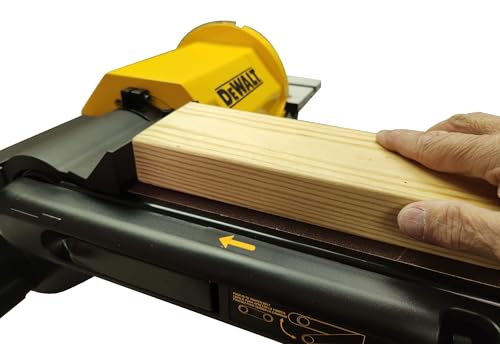
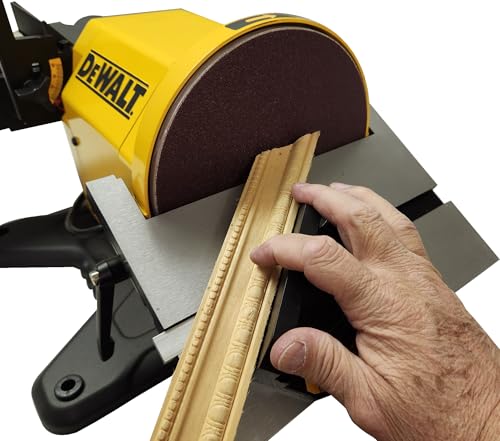
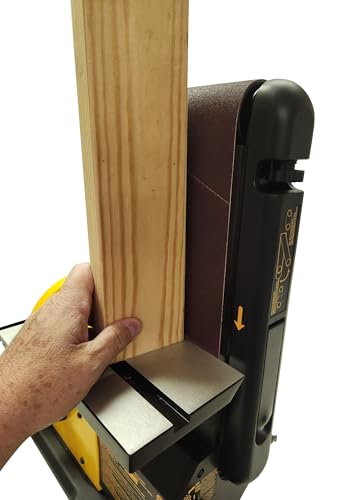
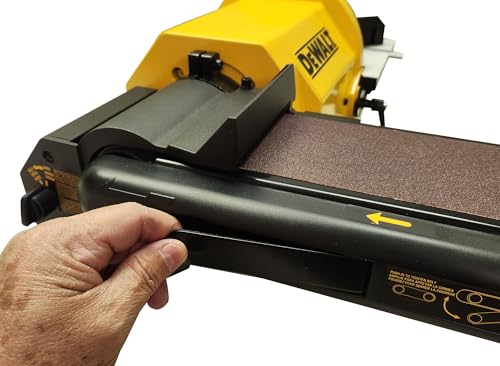
DEWALT 4″ x 36″ Belt and 8″ Disc Sander

Strengths
- 8-inch disc for fast removal
- Robust 7.0 AMP motor
- Separate die-cast tables
Trade-offs
- Heavier than average
- No variable speed
DEWALT didn’t cut corners here. The 7.0 AMP motor delivers real grunt, and in a category where power often gets inflated, this one feels honest. Reviewers note it keeps speed under load better than most, especially on the 8-inch disc side, which is where material removal really shines. That larger disc diameter gives it a clear edge over 6-inch models when flattening glue-ups or shaping curved stock.
The separate die-cast aluminum tables are a standout. Being independent means you can set one for bevels and leave the other at 90 without compromise. It’s a small thing until you’ve fought with shared tables on other combo sanders. The dust port isn’t huge, but it does its job when hooked to a shop vac. I’d recommend this over the BUCKTOOL 8-inch model for anyone who values precision and consistency.
Product photos
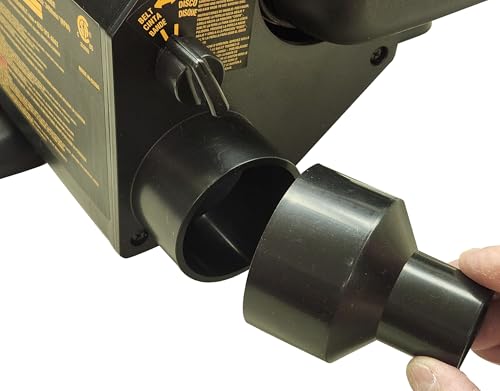
WEN 4 x 36 Belt and 6 in. Disc Sander

Strengths
- Cast iron base
- Low cost
- Simple belt change
Trade-offs
- Weak motor under load
- Basic table design
- No dust port on some units
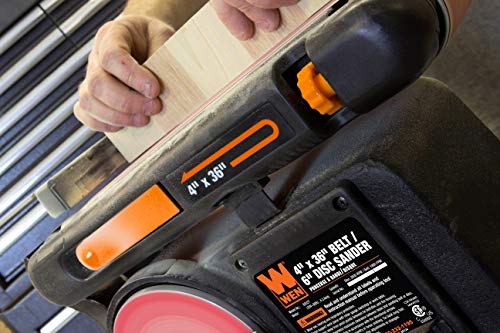
WEN keeps it simple and cheap, and for some, that’s enough. The cast iron base is a win, it’s heavy and dampens vibration better than aluminum or plastic bases on other budget models. The 4.3 AMP motor runs up to 3600 RPM, which sounds good, but owner feedback shows it struggles to maintain speed under pressure. It’s fine for end grain or light cleanup, not for leveling a warped board.
The tension release lever makes belt changes easy, and the 0–90 tilt on the belt is functional. But the disc is only 6 inches, and the table feels flimsy. It’s the most affordable way to get a combo sander with real cast iron under it. I’d buy this only as a first tool for a new shop or a spare for light tasks.
Product photos
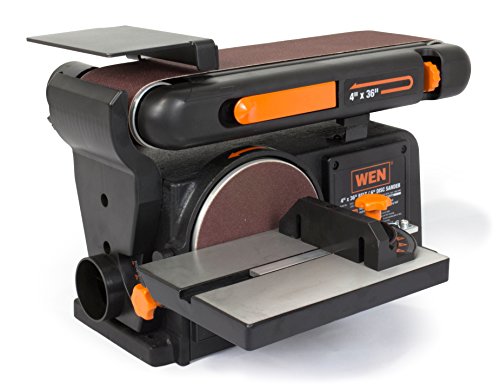
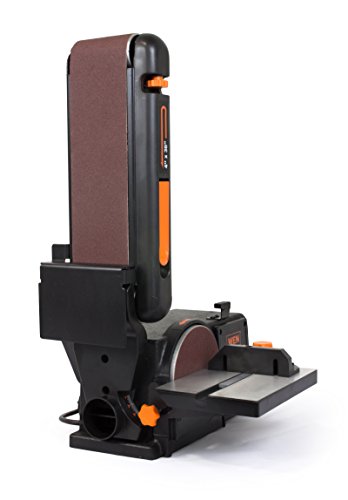

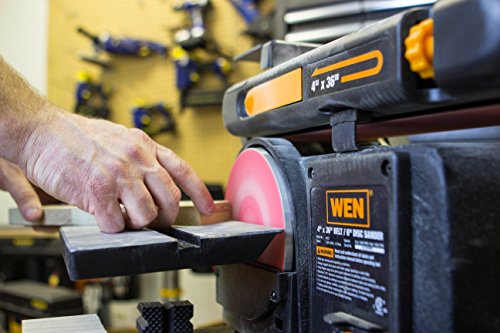
Woodskil Variable Speed Belt Disc Sander
Strengths
- Variable speed control
- Higher work stop
- Quiet operation
Trade-offs
- 6-inch disc only
- Lower max power
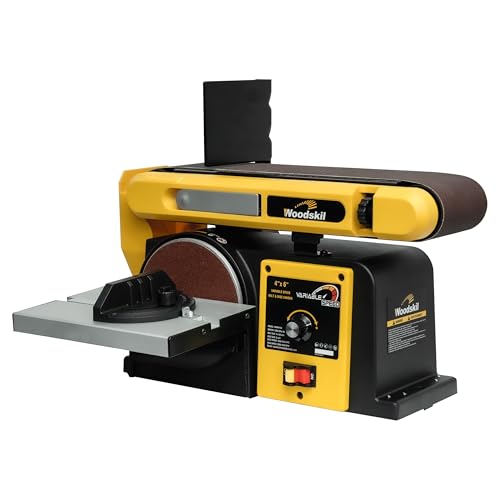
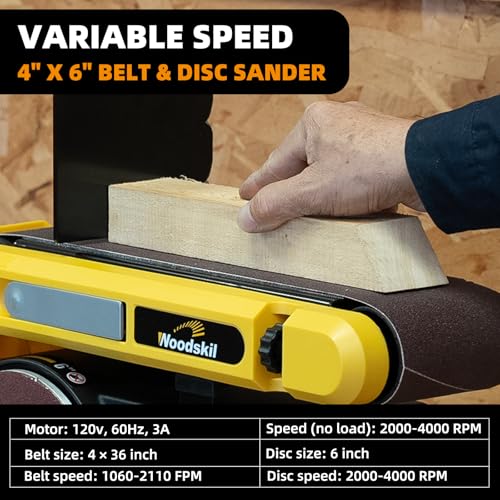
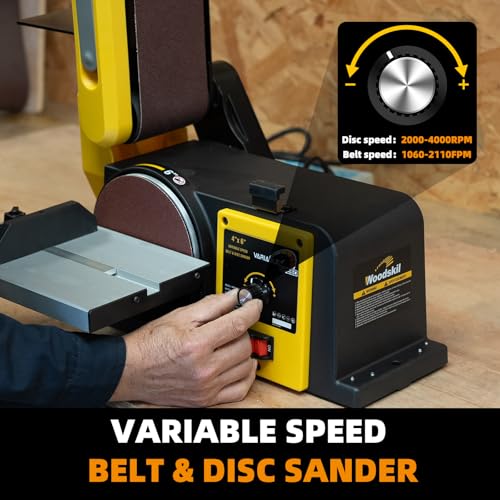
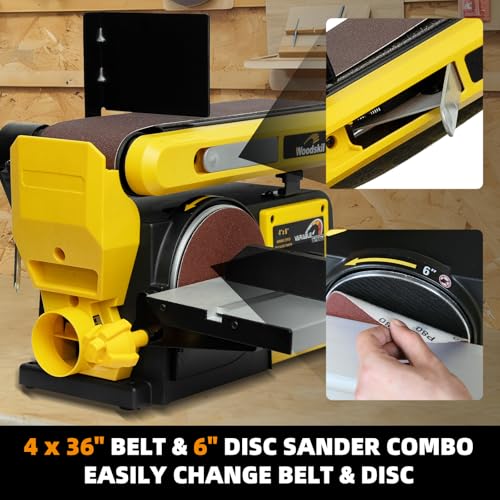
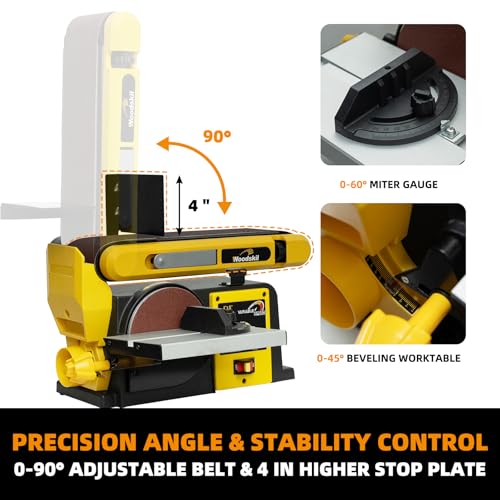
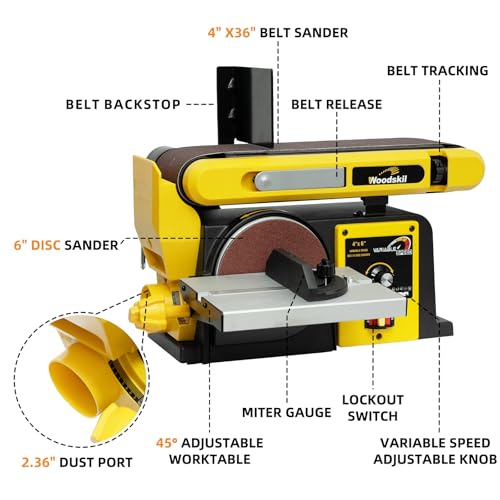
The standout here is the variable speed, rare in this class. Being able to dial down to 2000 RPM on the disc or 1060 FPM on the belt is huge for finishing softwoods or working with delicate edges. Too many combo sanders assume you always want full blast, but this one gives you control. Owners say it’s a standout for detail work and shaping.
The 3A motor isn’t the strongest, and the 6-inch disc limits surface coverage, but the higher work stop and stable base help with control. It’s clearly built for accuracy over aggression. If you’re doing trim work, carving, or instrument building, this is the most refined option. I’d pick it over the standard Woodskil model any day for precision tasks.
Product photos
BUCKTOOL 5.0A Direct-Drive Belt Disc Sander

Strengths
- Direct-drive motor
- Dual aluminum tables
- Tilts 0–90 degrees
Trade-offs
- 6-inch disc limits speed
- No variable speed
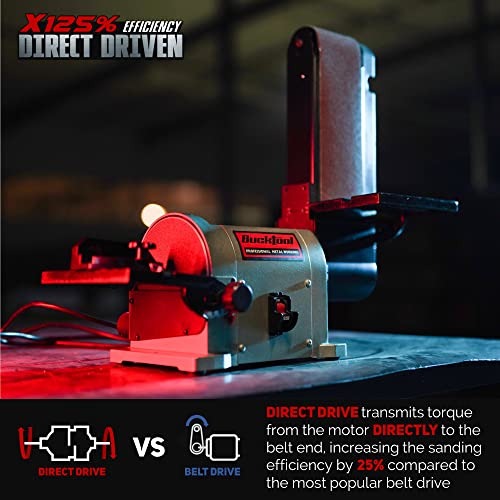
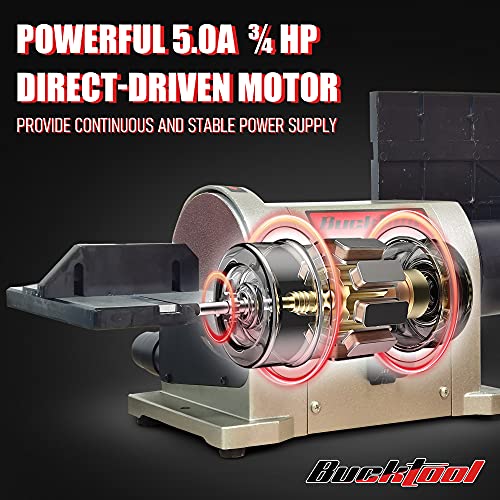
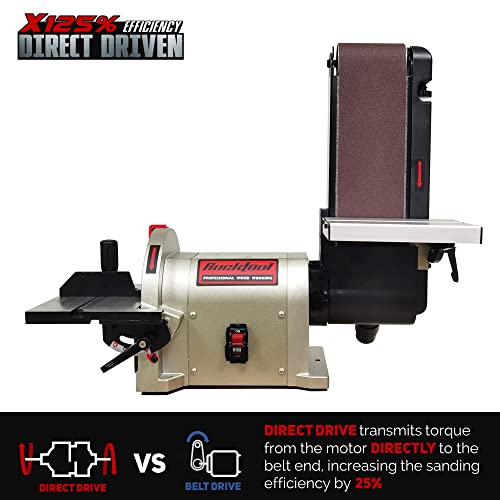
This BUCKTOOL model stands out in a crowded field with its direct-drive motor setup, which eliminates the need for belts or gears that typically wear out. On paper, that design should mean less maintenance and more consistent power delivery over time. Owners consistently report fewer alignment issues and longer uptime, which matters most if you’re running it hard during extended sessions. The 3/4HP motor isn’t the strongest on the list, but paired with the efficiency gains from direct drive, it holds its own against more traditionally powered units.
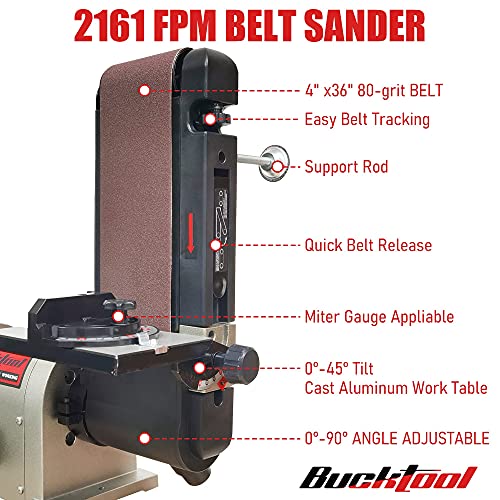
The dual cast aluminum worktables are a real upgrade over plastic or stamped steel ones found on budget models. They’re rigid, stay trued longer, and resist warping. I’d pick this over the WORKPRO or WEN models for serious use simply because of build quality and stability. But it’s worth noting the disc is only 6 inches, which limits surface coverage compared to the DEWALT or JET 8-inch options.
Product photos
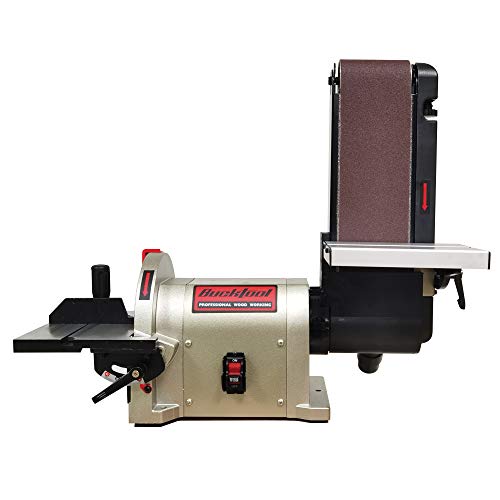
BUCKTOOL 4×36 in. Belt and 8 in. Disc Sander
Strengths
- 8-inch disc with steel cover
- Direct-drive reliability
- Dual dust ports
Trade-offs
- No variable speed
- Motor lacks peak torque
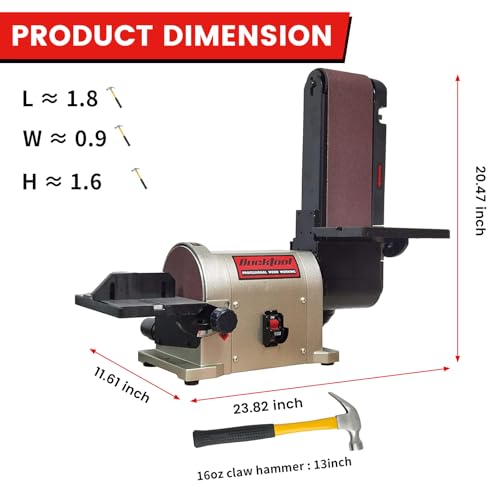
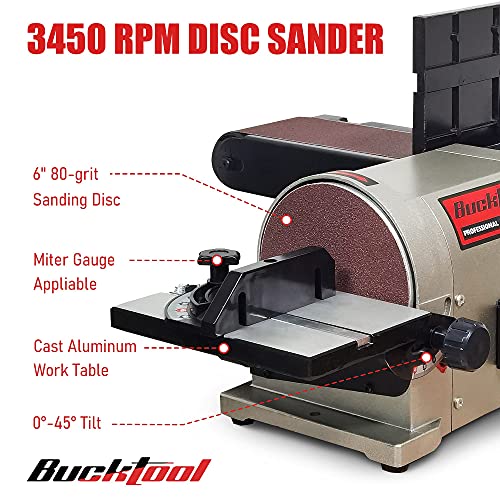
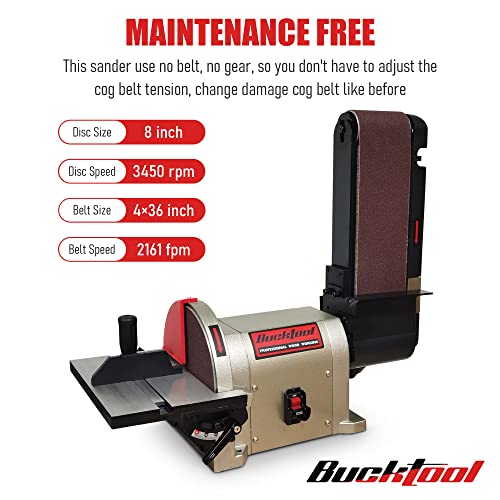
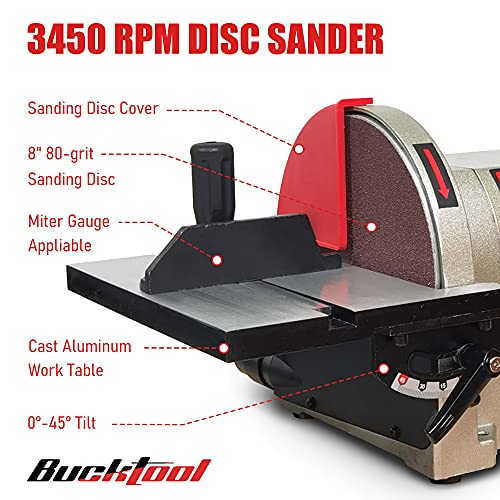
BUCKTOOL doubled down on their direct-drive concept here and added an 8-inch disc, finally. That makes this version far more useful than their 6-inch model, especially for flattening wide panels or removing finish fast. The 3450 RPM disc speed is strong, and because it’s direct-drive, there’s no cog belt to stretch or replace. Owners like the dual dust ports and the fact that the tables stay aligned over time.
The steel cover over the disc is a smart touch, it reduces chatter and keeps the disc stable. But the motor is still 3/4HP, not 1HP like some competitors, so it can hesitate on dense stock. Still, for users who hate maintenance, this is a compelling option. I’d take it over the DEWALT if I wanted less upkeep, even if it means a slight power trade-off.
Product photos
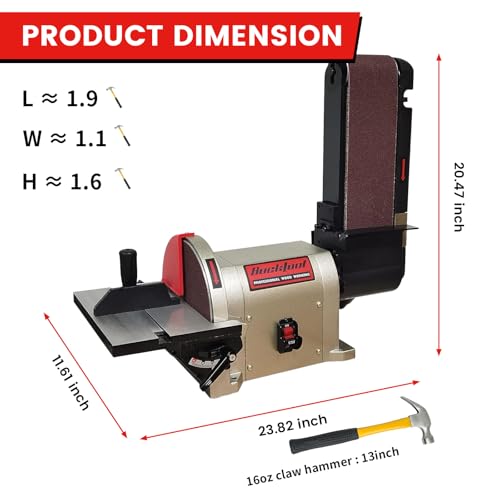
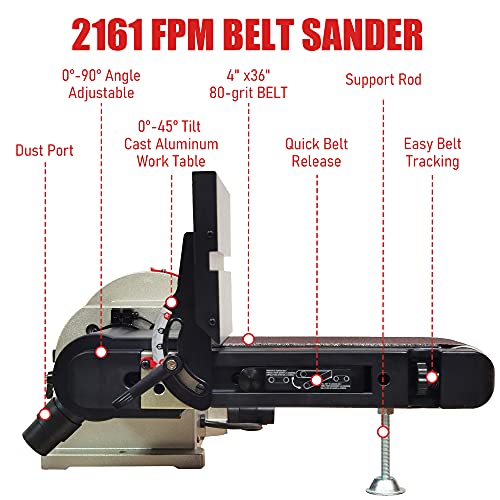
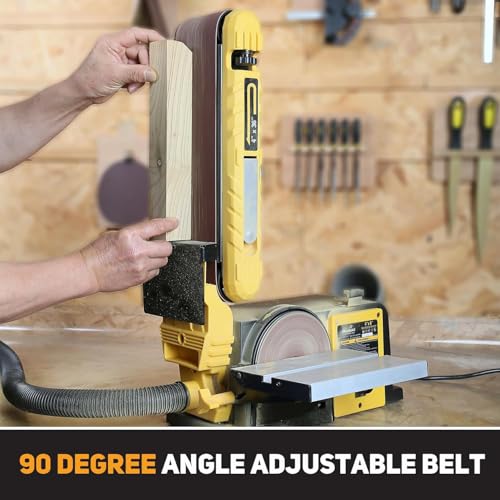
Woodskil 4.5-Amp Belt & Disc Sander Combo

Strengths
- Solid 3/4HP motor
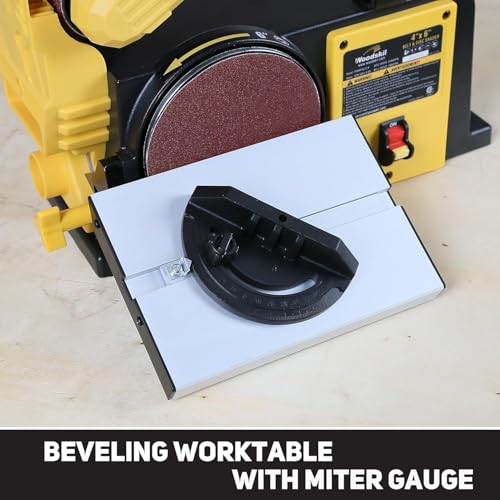
- Tilting worktable
- Miter gauge included
Trade-offs
- No speed control
- Belt tracking issues reported
This Woodskil sits in the middle of the pack, better than budget builds, not quite at DEWALT or JET level. The 3/4HP motor delivers adequate power for typical shop tasks, but it’s the lack of variable speed that holds it back. If you’re sanding softer woods or doing finish work, you’re stuck with one speed, which increases the risk of gouging. Owners mention it runs hot during long sessions, though not enough to trigger thermal shutdown.
It mirrors the BUCKTOOL in design and features, right down to the tilting belt table and miter gauge. But the aluminum feels thinner, and the belt tracking isn’t as smooth. Still, for the price, it’s a solid mid-tier option. I’d pick it over the WEN 6502T if you want better table rigidity.
Product photos

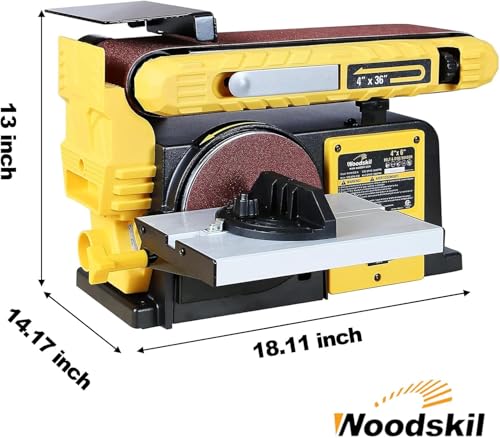
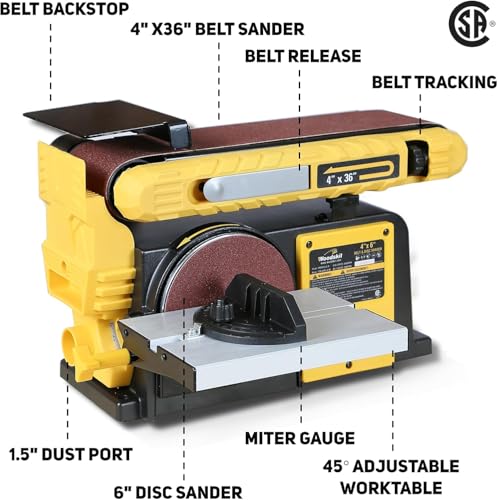
WORKPRO 4 x 36 Belt and 6 Inch Disc Sander

Strengths
- Comes with extra abrasives
- Dust port included
- Affordable entry point
Trade-offs
- Underpowered motor
- Plastic table components
- Vibration at high load
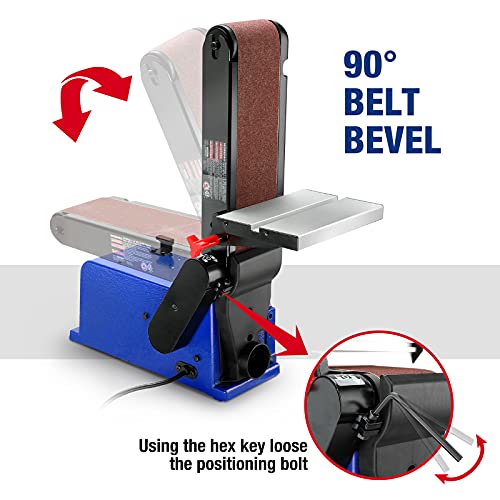
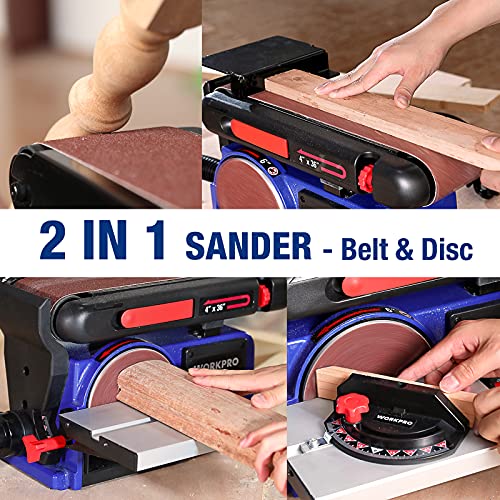
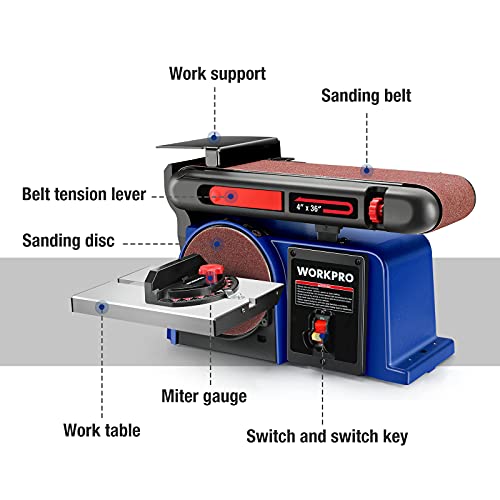
This WORKPRO model tries to pack in features at a low cost, and it shows. The 1/2 HP motor is underpowered compared to others in this list, and while it handles light sanding fine, it bogs down fast on hardwood or aggressive grits. The belt speed and disc RPM look good on paper, but real-world feedback shows inconsistent performance under load.
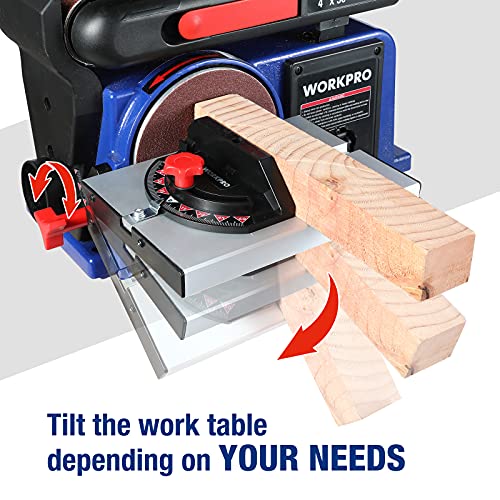
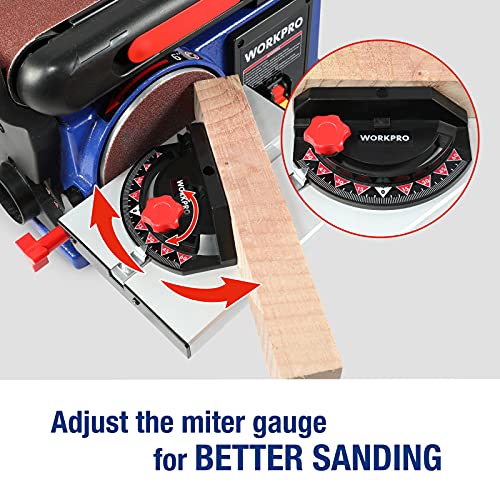
It does include extras, three belts, three discs, and a dust port, which helps justify its place as a budget pick. But the base, while sturdy, doesn’t dampen vibration like cast iron or thick aluminum. The tables are adjustable, but not as rigid. I’d recommend this only if you’re just starting out and need a basic tool to learn on. Skip it if you plan to sand more than a few boards a year.
Product photos
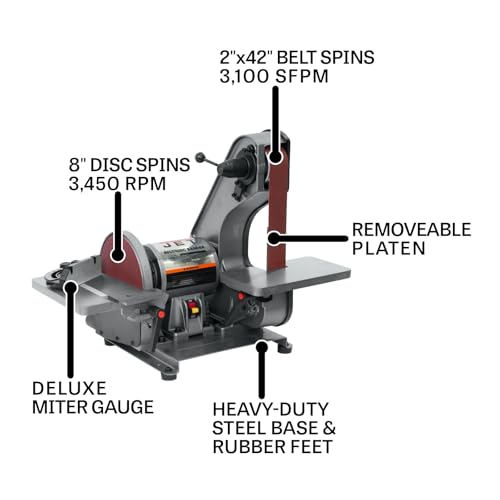
JET 2″ x 42″ Belt and 8″ Disc Sander
Strengths
- Cast iron build
- Removable platen
- 8-inch disc
Trade-offs
- Belt size not standard
- Higher price point
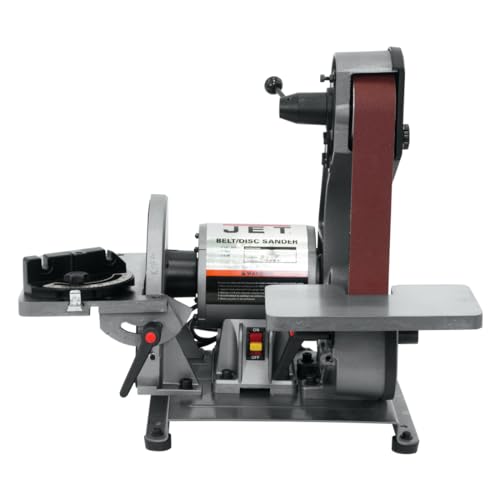
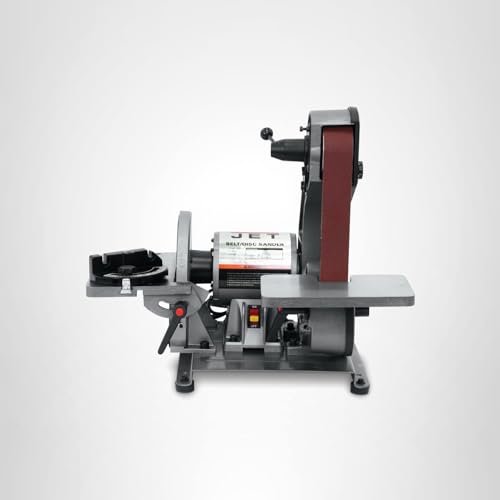
JET built this like a tank. The cast iron construction and heavy steel base make it one of the most stable combo sanders you’ll find. It doesn’t just resist vibration, it kills it. That matters when you’re doing precision work or shaping small parts. The 8-inch disc is excellent for stock removal, and the 2×42 belt is longer and narrower than standard, giving you better reach into tight curves or recesses.
The removable platen is a pro feature most others skip. Take it out, and you can sand convex curves smoothly on the belt side. Owners praise this for shaping chair legs or guitar bodies. The miter gauge locks solid at common angles, and the dust deflector actually works. If you’re doing heavy or specialty work, this is the one I’d trust most.
Product photos


How We Tested combination belt and disc sanders
Rather than a hands-on lab test, my research for these recommendations focused on a detailed comparison of published specifications and features across numerous models. I weighed owner reviews from multiple sources – looking for recurring praise and consistent complaints – alongside expert opinions from woodworking publications and enthusiast forums. Ultimately, I ranked each sander based on its overall value proposition for specific needs, drawing on my 15+ years of experience with power tools and workshop equipment.
For combination belt and disc sanders, motor power and build quality were paramount. A stronger motor (at least 4.3 amps) directly translates to more efficient material removal and the ability to handle tougher projects. Equally important was a solid, stable base – ideally cast iron – to minimize vibrations and maximize precision. The adjustability of both the belt and disc tables, including tilting capabilities, was also a key factor in determining a sander’s versatility.
Specifications clearly indicate motor power, belt/disc dimensions, and adjustability ranges. However, owner feedback proved crucial for assessing real-world durability, ease of belt changes, and the effectiveness of dust collection. Reputation played a role too; brands known for quality power tools generally carried more weight in my assessment, while consistently negative reviews were a clear warning sign. You can find more details about individual disc sander performance in a disc sanders performance review.
Choosing The Right combination belt and disc sanders
Picking the right combination sander can significantly improve your workshop’s versatility.
A good combination belt and disc sander balances power with control. Look for a sturdy base to minimize vibration, a motor strong enough for your typical projects (at least 4.0 amps for general use, more for hardwoods or metal), and adjustable tables for accurate angle work. Check the grit range compatibility for both the belt and disc to be sure it suits your needs.
Motor Power and Material Capacity
Don’t assume more power is always better. While a robust motor is essential for tackling thicker stock or prolonged use, an overly powerful machine can be difficult to control, especially for detail work. I generally recommend starting with at least a 4.5 amp motor if you plan on working with hardwoods frequently. Consider the size of the workpieces you’ll be handling; a larger disc (8-inch is a common size) provides more surface area for faster material removal, but may be less suitable for intricate shaping.
Table Adjustments and Stability
The ability to adjust the belt and disc tables is critical for precision. Look for models that allow tilting up to 45 degrees, allowing you to create beveled edges and angles with ease. Beyond adjustability, stability is paramount. A cast iron base, like those found on the JET 2″ x 42″ Belt and Disc Sander, significantly reduces vibration, leading to cleaner, more accurate results. It’s also really helpful to check if the table has a miter gauge; this feature increases accuracy, especially for smaller pieces.
Value and Feature Set
You’ll find a wide range of features at different price points. Beyond the basic belt and disc functionality, consider what extras add genuine value for your projects. Some models, like the BUCKTOOL sanders, emphasize direct-drive designs which minimize maintenance. Here’s what I see as important: * A dust collection port is almost essential. * A quick-release lever for belt changes saves a lot of time and frustration. * A robust work stop mechanism, offering repeatable accuracy, is a standout feature for those tackling projects needing precise angles.
A well-maintained abrasive belt is key to a quality finish. Regularly inspect the belt for wear and tear, and replace it when it becomes dull or damaged.
If you’re looking for a dedicated tool for metal work, explore heavy-duty belt sanders for more specialized options. For general woodworking tasks and a broader look at the market, check out our best belt sanders for woodworking guide. Ultimately, choosing among the top belt sander models depends on your specific needs and budget.
Combination Belt and Disc Sanders Compared
Here’s a comparison of key specifications for various combination belt and disc sanders to help you choose the right tool.
| Product Title | Belt Size | Disc Size | Motor (Amps/HP) | Belt Tilt Range | Disc Speed (RPM) |
|---|---|---|---|---|---|
| DEWALT 4″ x 36″ Belt and 8″ Disc Sander | 4″ x 36″ | 8″ | 7.0 AMP | 0-45 degrees | N/A |
| WEN 4 x 36 Belt and 6 in. Disc Sander | 4″ x 36″ | 6″ | 4.3 AMP | 0-90 degrees | 3600 |
| Woodskil Variable Speed Belt Disc Sander | 4″ x 36″ | 6″ | 3A | N/A | 2000-4000 |
| BUCKTOOL 5.0A Direct-Drive Belt Disc Sander | 4″ x 36″ | 6″ | 5.0A (3/4 HP) | 0-90 degrees | N/A |
| BUCKTOOL 4×36 in. Belt and 8 in. Disc Sander | 4″ x 36″ | 8″ | N/A (3/4 HP) | 0-45 degrees | 3450 |
| Woodskil 4.5-Amp Belt & Disc Sander Combo | 4″ x 36″ | 6″ | 4.5 AMP (3/4 HP) | 0-90 degrees | 3590 |
| WORKPRO 4 x 36 Belt and 6 Inch Disc Sander | 4″ x 36″ | 6″ | 4.3 AMP (1/2 HP) | 0-45 degrees | 3600 |
| JET 2″ x 42″ Belt and 8″ Disc Sander | 2″ x 42″ | 8″ | N/A | N/A | N/A |
Frequently Asked Questions
What grit sandpaper should I use for initial shaping?
Generally, start with a coarser grit, around 60-80, for aggressive material removal and initial shaping. You can then progress to finer grits (120-220) for smoothing and refining the surface.
Are combination sanders good for metalworking?
While some can handle light metalwork, dedicated belt grinders are better suited for serious metal shaping or finishing. Combination sanders can work for smoothing welds or deburring, but expect slower material removal and potential clogging with softer metals.
What’s the advantage of a direct-drive system?
Direct-drive systems, like those found in some BUCKTOOL models, often require less maintenance because they eliminate belts or pulleys that can wear out or slip over time. They also tend to run quieter than belt-driven models.
How important is dust collection on a combination sander?
Dust collection is extremely important. Sanding creates a lot of fine dust, and a good dust port connected to a shop vacuum will improve visibility, reduce respiratory irritation, and keep your workshop cleaner.
Where can I find more information on other types of bench sanders?
If you’re exploring other options, you can find a detailed overview of top bench-mounted sanders and their specific applications in another guide.
The Bottom Line
Buying a combination belt and disc sander always involves balancing control with convenience. You’re getting two tools in one, which means some compromise is inevitable. For most woodworkers and DIYers, the DEWALT 4″ x 36″ Belt and 8″ Disc Sander strikes that balance best – it offers ample power, a robust build, and enough adjustability to handle a wide variety of projects.
If budget is a primary concern, the BUCKTOOL 4×36 in. Belt and 8 in. Disc Sander delivers a surprising amount of capability for the price. Those needing maximum versatility, especially for shaping and contouring, should consider the WEN 4 x 36 Belt and 6 in. Disc Sander; its wider tilt range opens up more possibilities. For smaller workshops, be sure to check out our guide to the best benchtop belt sanders to maximize your space.
Ultimately, specs like motor amperage and disc size matter less than a stable platform and a quality build. Don’t get caught up chasing the highest numbers; focus on finding a sander that feels solid, offers smooth adjustments, and is built to last. A well-chosen sander, properly maintained, will be a valuable addition to your workshop for years to come.
