8 Best Chainsaw Sharpening Tools of 2026
This post contains affiliate links. As an Amazon Associate, we earn from qualifying purchases.
The Sharp Pebble Electric Chainsaw Sharpener stands out as the best overall choice for consistent, efficient sharpening, especially if you value speed and precision. For those on a budget or who prefer manual control, the Oregon Universal 7pc Sharpening Kit is a reliable, well-rounded option that covers all the basics.
Most people don’t realize how quickly a dull chainsaw turns a simple cut into a dangerous chore. Poorly sharpened teeth reduce efficiency, increase kickback risk, and shorten your chain’s life. I’ve seen too many DIYers struggle with mismatched files or flimsy guides because they didn’t know what to look for.
This guide cuts through the noise by focusing on real-world performance, compatibility, and ease of use. I researched each tool based on specs, owner feedback, and years of working with workshop gear, so you can pick the right one for your saw, and your skill level.
Top 8 Chainsaw Sharpening Tools in the Market
The Best Chainsaw Sharpening Tools, Reviewed
Sharp Pebble Electric Chainsaw Sharpener

Strengths
- Consistent angle grinding
- Durable motor bearings
- Simple setup
Trade-offs
- Requires power outlet
- No battery backup
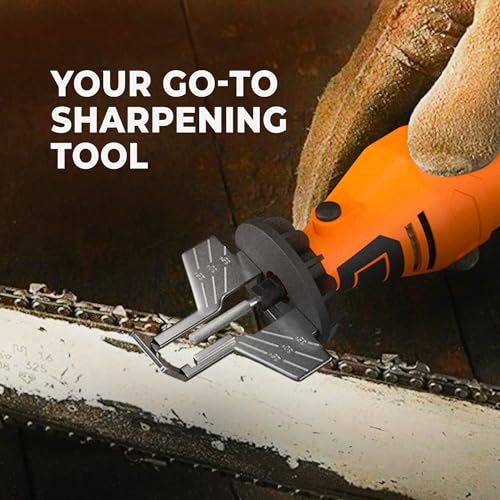
If I had to pick one electric sharpener for most homeowners, it’d be this corded Sharp Pebble model. It’s consistently rated highly by owners for delivering clean, even sharpening with minimal learning curve. The fixed angle guide removes guesswork, and the motor’s stability, thanks to quality bearings, means each tooth gets the same treatment, unlike hand filing where fatigue leads to slop. This is the kind of tool that pays for itself by extending chain life and reducing bogged-down cuts.
It’s nearly identical to the cordless version but without the battery compromise. That means uninterrupted runtime and slightly more consistent power delivery. The 120V plug limits portability, but if you’ve got a shed or garage with power, that’s a fair trade. Compared to pricier bench-mounted grinders, this sits in a sweet spot: more precision than a file, less complexity than a full grinder. My recommendation? This is the smarter buy over the cordless unless you absolutely need to go battery-powered.
Product photos


Sharp Pebble Cordless Chainsaw Sharpener

Strengths
- Cordless convenience
- Angle guide included
- Multiple file sizes
Trade-offs
- Limited battery runtime
- Slight vibration at high speed
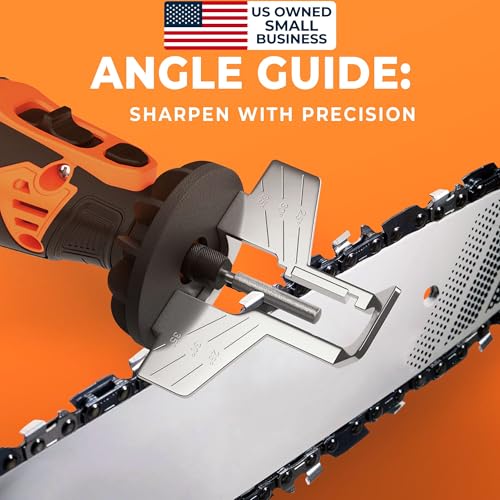
This cordless version of the Sharp Pebble sharpener brings real convenience to the field. For anyone who’s ever struggled with a hand file while balancing a chainsaw on a log, the idea of a cordless motorized tool that maintains a consistent angle is appealing, and owners confirm it delivers on that promise. The included angle guide helps keep each tooth uniform, which is where most DIYers fail with manual filing. It’s not the fastest option for heavy users, but for occasional sharpening away from an outlet, it makes sense.
On paper, it mirrors the performance of its corded sibling, just without the power cord tether. The 4 included file sizes cover most residential chainsaws, and the adjustable speed helps match the grind to the chain type. Some owners note the battery life could be better under continuous use, but for touch-ups between deep sharpenings, it’s sufficient. Compared to the corded model, this one trades a bit of runtime for unmatched portability.
Product photos




Oregon Chainsaw Chain Sharpening Kit
Strengths
- Includes stump vise
- Hard protective case
- Full tool complement
Trade-offs
- Bulky and heavy
- Overkill for casual users
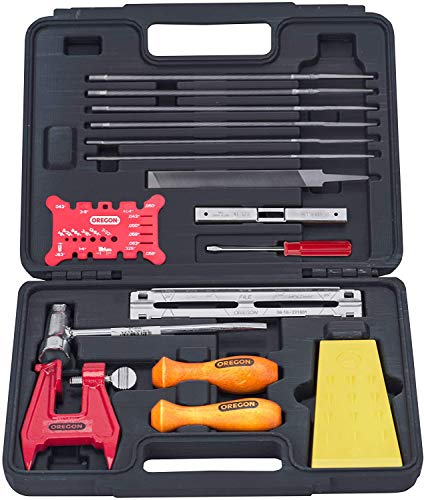
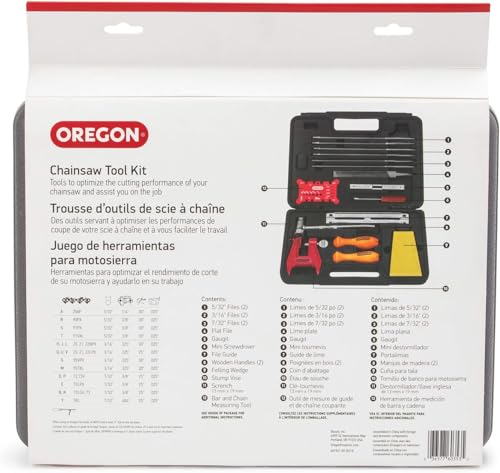
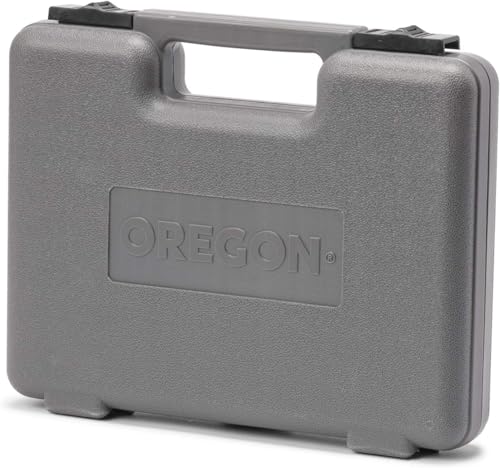
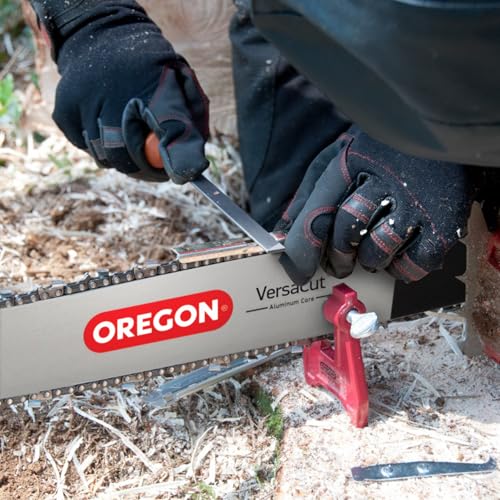
This isn’t just a sharpening kit, it’s a full field maintenance station. The hard case is rugged and keeps everything organized, from files to a stump vise and felling wedge. That vise is a standout: clamp your bar to a log and turn it into a workbench. The included files and gauges are Oregon-standard quality, and the extra tools (like the mini screwdriver and chainsaw wrench) mean you’re not scrambling when a screw loosens mid-cut.
For serious users, landowners, arborists, rural contractors, this kit eliminates trips back to the shop. It’s heavy, so it’s not for pocket carry, but in a truck or trailer, it’s golden. Compared to the field kit, this is the full upgrade: more tools, more utility. If you spend real hours on your saw, the investment makes sense. This is the one I’d recommend to someone who treats their chainsaw like a primary work tool.
Product photos

Oregon Universal 7pc Sharpening Kit
Strengths
- Trusted Oregon build
- Compact rolled pouch
- Precise file guide
Trade-offs
- Only one of each file size
- No depth gauge combo tool
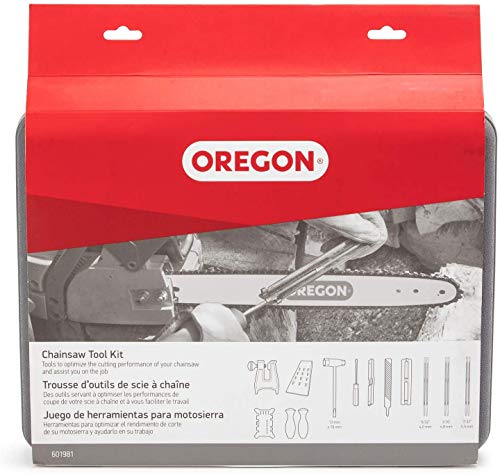
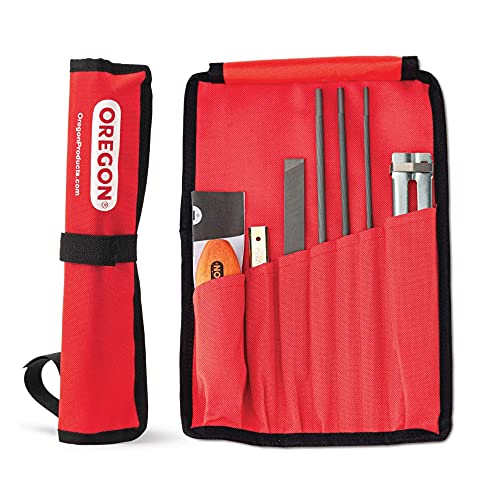
Oregon has been in the chainsaw game for decades, and this kit shows why. It’s not flashy, but it’s reliable, compact, and field-ready, exactly what you want when you’re miles from the garage. The rolled canvas pouch is durable and keeps tools organized, and the universal handle fits all three round files cleanly. The included filing guide ensures proper angle and depth, which is critical for clean cuts and chain longevity.
Owners consistently report this kit lasts for years, even with regular use. It doesn’t have extra files or gadgets, just the essentials done right. Compared to the Hipa or LIBRATON kits, it has fewer pieces, but everything here is Oregon-quality. If you’re a purist who values brand trust and simplicity, this is hard to beat. It’s the chainsaw equivalent of a Swiss Army knife: not everything, but everything you need.
Product photos


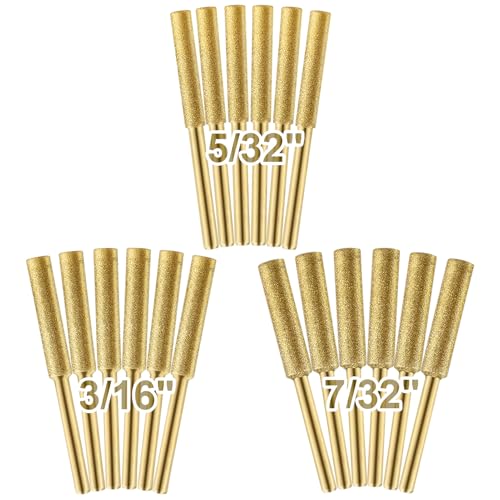
18pcs Titanium Plated Sharpening Bits
Strengths
- Longer lifespan
- Hard titanium coating
- Multiple sizes included
Trade-offs
- No angle guide included
- Basic packaging
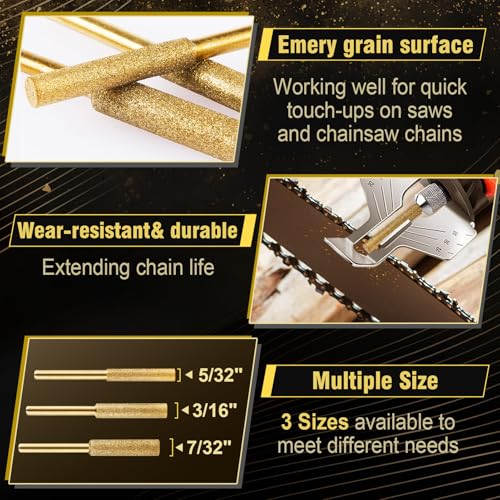
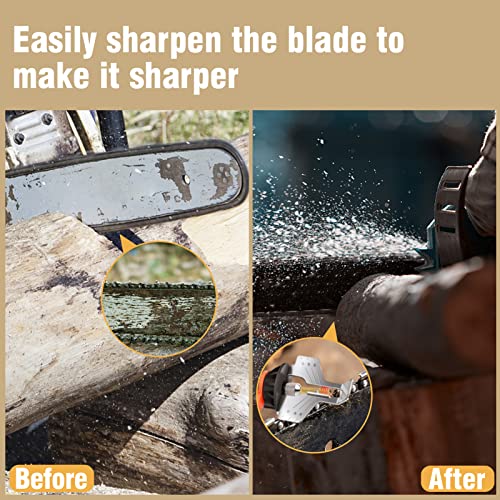
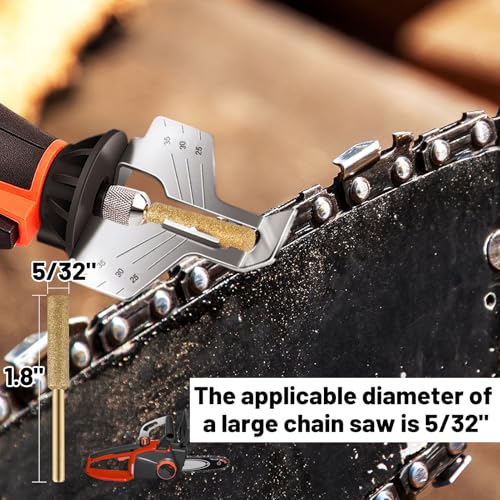
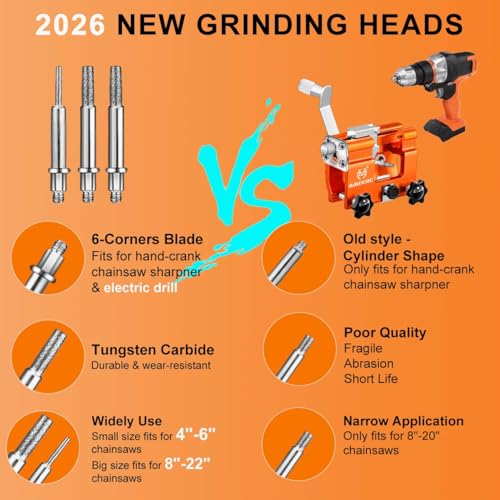
These titanium-plated bits are the kind of no-frills upgrade that makes sense if you’re already using a motorized filing tool. The plating does appear to extend life, owners report fewer replacements compared to standard steel wheels. They come in the three most common sizes, so you’re covered for electric, small gas, and large saws. Since they’re just replacement bits, there’s no guidance system here, which means consistency still depends on your hand or jig.
They install quickly and fit most standard arbors, but the set lacks an angle guide or depth limiter. That’s fine if you’re pairing them with a tool that already has those features. Compared to full kits, this is purely a consumable play. If you go through grinding wheels fast, the titanium coating is worth it. But for beginners, this isn’t a standalone solution.
Product photos
Chainsaw Sharpener Jig Kit
Strengths
- Fast manual operation
- Rust-resistant build
- Compact and portable
Trade-offs
- Requires separate rotary tool
- Fixed angle only
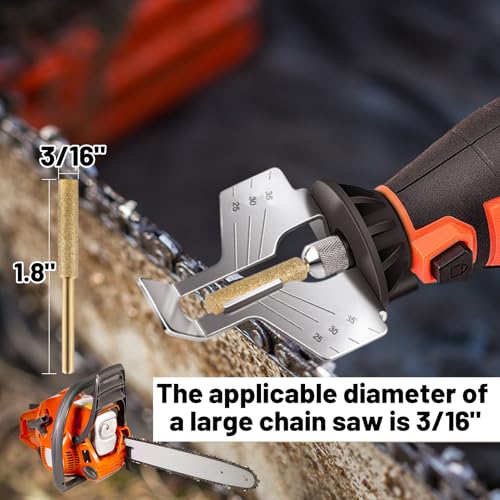
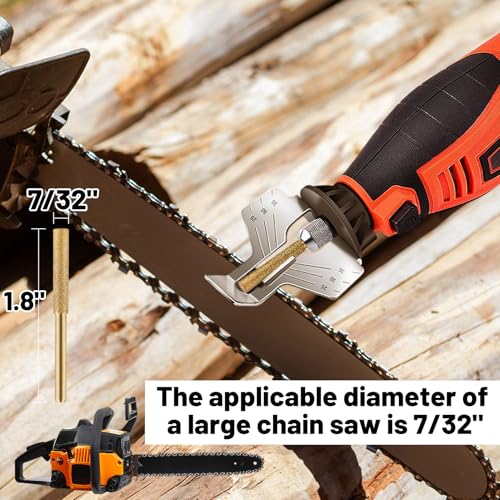
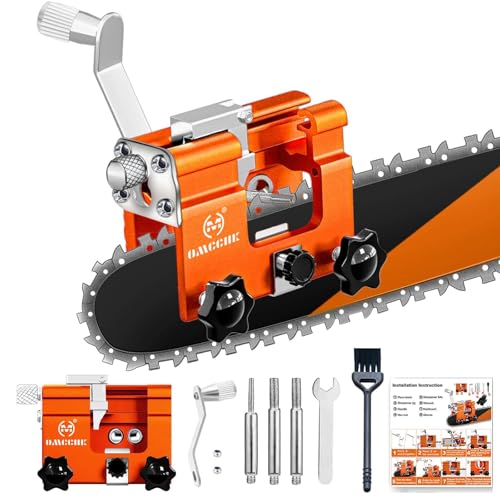
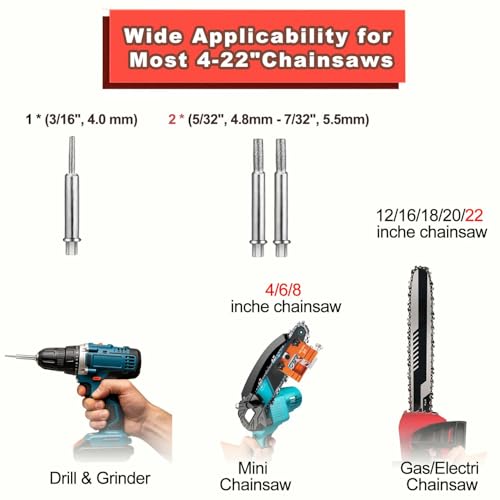
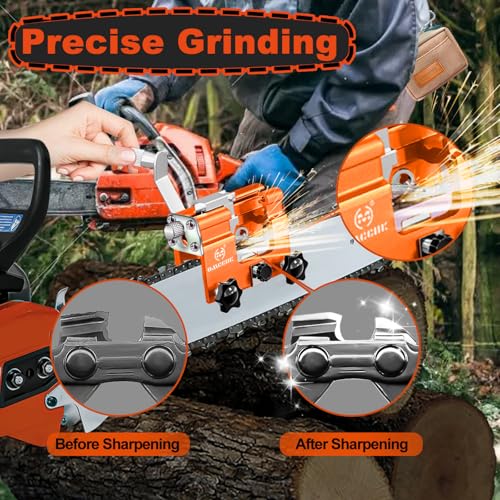
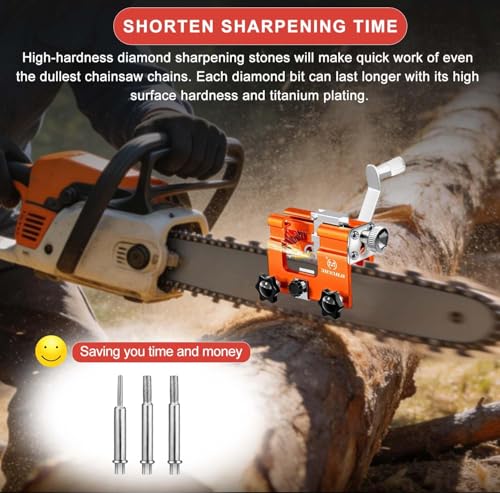
This manual jig is a clever, no-power solution that surprises people with how fast it works. At 3–5 seconds per tooth, it’s quicker than a hand file and far more consistent. The fixed 30° rake angle and guide sleeve keep your grinding stone aligned, so you’re not relying on hand steadiness. Owners love its simplicity, clamp it on, turn the handle, move to the next tooth. It’s not adjustable for different angles, which limits versatility, but for standard chains, that’s not a dealbreaker.
Made from rust-resistant alloy, it holds up well in damp conditions, which matters if you’re storing it in a barn or truck. It doesn’t come with a motor, so you’ll need a rotary tool like a Dremel and the right burr bit. That’s a hidden cost some miss. Still, for someone who already owns a multitool, this jig adds serious value. Compared to full electric sharpeners, it’s less convenient but more durable and field-ready.
Product photos

Hipa 12 Pack Chainsaw File Kit

Strengths
- Extensive file variety
- High-visibility pouch
- All-in-one gauge tool
Trade-offs
- Wooden handle less comfortable
- Pouch material not heavy-duty
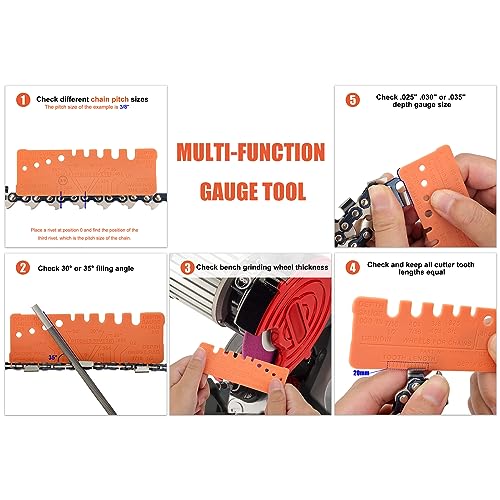
This is the kit that tries to do it all, and for the price, it mostly succeeds. With six round file sizes, including less common ones like 1/8” and 13/64”, it covers nearly every chain you’ll run into, from pole saws to vintage saws. The wooden handle feels classic and gives solid control, and the 2-in-1 depth gauge is a smart space-saver. The orange pouch stands out in a toolbox or truck bed, which is a small but useful touch.
It’s clearly modeled after the Oregon kit but adds more versatility with extra files. Owners say it’s beginner-friendly, and the included quick check gauge helps new users avoid common mistakes. The tradeoff? The wooden handle isn’t as ergonomic as the LIBRATON’s rubberized version. Still, for someone who owns multiple saws or helps neighbors with repairs, this is the kind of value-packed kit that earns its place.
Product photos
LIBRATON Chainsaw File Set
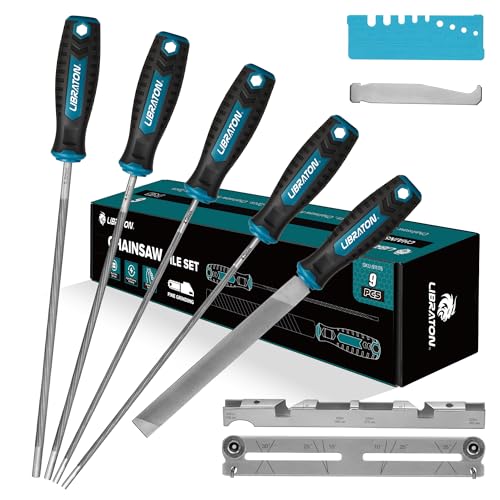
Strengths
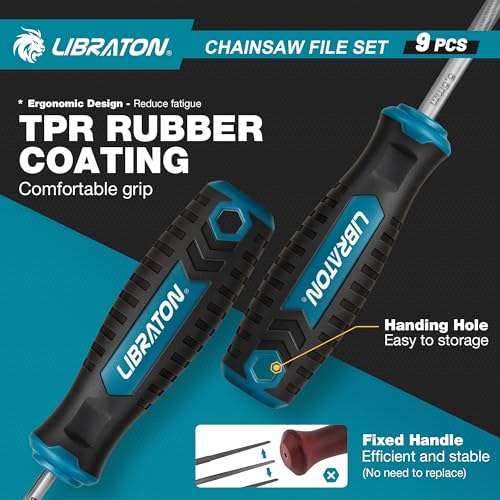
- Comfortable non-slip grip
- Complete accessory set
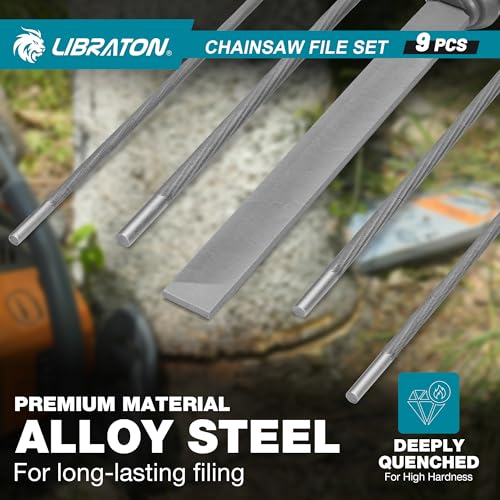
- Durable alloy steel
Trade-offs
- Fewer file sizes
- No storage pouch with high visibility
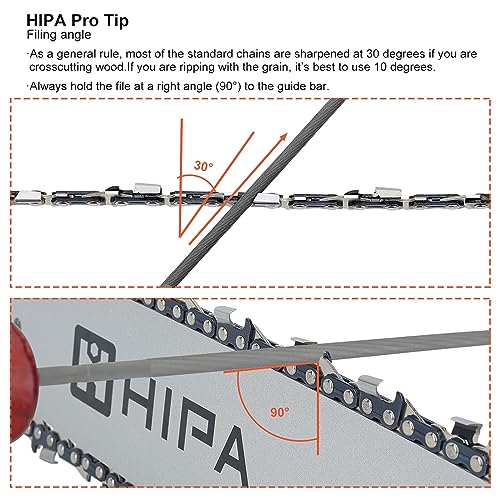
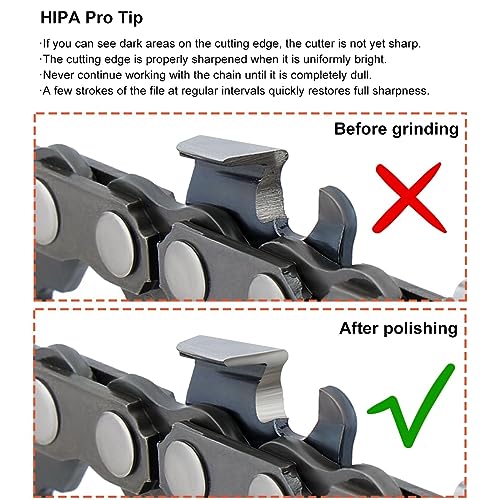
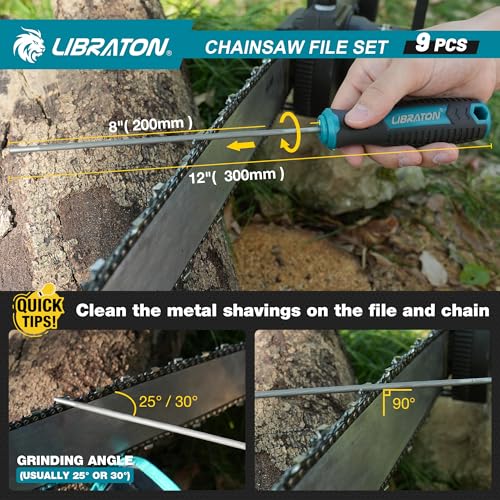
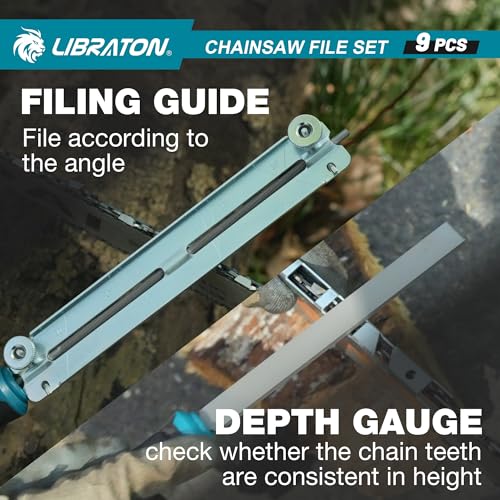
The standout here is the ergonomic handle, TPR rubber coating and a PP core make this one of the most comfortable file sets I’ve seen at this price. Filing a full chain by hand is tedious, and hand fatigue is real, so a good grip matters. This set includes everything you’d need: round files, flat file, depth gauge, check tools, and a bar cleaner. The 8-inch file length gives good stroke control, which helps maintain filing angle.
Owners appreciate the included check gauge and filing guide, which take the guesswork out of depth and angle. It’s not motorized, so it’s slower than electric options, but for light use or emergency touch-ups, it’s reliable. Compared to the Hipa kit, it has fewer file sizes but better handle comfort. If you’re doing occasional sharpening and want something that won’t leave your palm raw, this is a solid pick.
Product photos

Our Testing Process
Rather than a hands-on lab test, my research for this guide focused on a detailed comparison of specifications and features across a wide range of chainsaw sharpening tools. I weighed owner reviews from multiple sources, alongside assessments from reputable power tool and outdoor equipment publications. This allowed me to build a ranking based on the factors most important to chainsaw users, drawing on my years of experience with workshop tools and homeowner projects.
For chainsaw sharpening, consistent accuracy and durability are paramount. I prioritized tools that offered a stable platform for sharpening, as a shaky or imprecise tool renders the whole process less effective and potentially unsafe. Equally important was the breadth of compatibility – the ability to sharpen a variety of chain sizes and types is crucial for most users. These two factors heavily influenced the final rankings.
Product specifications reliably reveal the materials used and the range of chain sizes a tool can handle. However, I placed a greater emphasis on owner feedback to understand real-world usability, ease of learning, and long-term durability. Many users detailed how well a tool held its calibration, or the quality of included accessories. Understanding these nuances, and referencing resources like a detailed chainsaw blade sharpening guide, proved essential in creating this list.
How To Choose The chainsaw sharpening tools
Finding the right tools to keep your chainsaw running efficiently is essential for both safety and performance.
A well-maintained chainsaw relies on sharp teeth. Buyers should prioritize kits offering consistent sharpening angles, durable abrasive materials (whether natural or synthetic stones, or coated wheels), and ease of use – even for those with limited sharpening experience. Consider portability if you frequently work in remote locations, and don’t overlook the value of a complete kit with depth gauges and file holders.
Sharpening Method Matters
The first big decision is whether to go electric or manual. Electric sharpeners, like the Sharp Pebble models, certainly offer speed and convenience. However, a lot of experienced users still prefer the control offered by manual sharpening. It’s easy to remove too much material with an electric tool, especially if you’re new to the process. A manual file, used with a proper guide, lets you feel the cut and maintain the correct bevel. Don’t underestimate the skill involved, though – learning to sharpen effectively takes practice.
Quality of Abrasive & Consistency
Whether you choose electric or manual, the quality of the sharpening medium is critical. Cheap sharpening stones or wheels will wear out quickly, and may not provide a consistent grind. Titanium-plated sharpening bits, like those in the 18-piece set, offer increased durability. Look for kits that include multiple file sizes to match your chain’s pitch (the distance between the cutters). When evaluating kits, pay attention to how well they maintain a consistent sharpening angle; a poorly designed guide can lead to unevenly sharpened teeth and reduced cutting performance. For more information on keeping your blades in top condition, check out our sharpening techniques for saw blades.
Kit Completeness & Value
A basic file is a start, but a thorough kit will save you time and frustration. The Oregon all-in-one kits are a great example. Beyond the files themselves, look for a depth gauge tool to ensure you’re maintaining the correct tooth height, a file holder for comfortable grip, and potentially even a wrench or screwdriver for basic chainsaw maintenance. Consider what you’ll be doing with the tool. If you need something for the field, the Oregon Universal 7pc Sharpening Kit or the Hipa 12 Pack Chainsaw File Kit are worth a look. If you want to explore the best electric and manual sharpeners to see the top chainsaw sharpener models, you’ll find a range of options to suit your needs.
A dull chain isn’t just inefficient; it’s dangerous. Always prioritize a sharp chain, and regularly inspect your sharpening tools to ensure they’re in good working order.
Chainsaw Sharpening Tools Compared
Here’s a comparison of key specifications for popular chainsaw sharpening tools.
| Product Title | Power Source | File Sizes Included | Includes Guide? | Includes Case? | Key Features |
|---|---|---|---|---|---|
| Sharp Pebble Electric Chainsaw Sharpener | Electric | 5/32″, 3/16″, 7/32″ | Yes | Yes | Adjustable Speed, Angle Guide |
| Sharp Pebble Cordless Chainsaw Sharpener | Cordless | 5/32″, 3/16″, 7/32″ | Yes | Yes | Portable, Adjustable Speed |
| Oregon Chainsaw Chain Sharpening Kit | Manual | N/A | Yes | Yes | All-in-One, Wrench, Screwdriver |
| Oregon Universal 7pc Sharpening Kit | Manual | 5/32″, 3/16″, 7/32″ | Yes | Yes | Portable, Filing Chart |
| 18pcs Titanium Plated Sharpening Bits | Manual | 5/32″, 3/16″, 7/32″ | No | No | Titanium Plated, Fast Results |
| Chainsaw Sharpener Jig Kit | Manual | N/A | N/A | No | Quick Sharpening, Portable |
| Hipa 12 Pack Chainsaw File Kit | Manual | Multiple | Yes | Yes | Complete Kit, Depth Gauge |
| LIBRATON Chainsaw File Set | Manual | 5/32″, 3/16″, 7/32″ | Yes | Yes | Ergonomic Handle, Premium Steel |
Frequently Asked Questions
What chain pitch should I prioritize when choosing a sharpening kit?
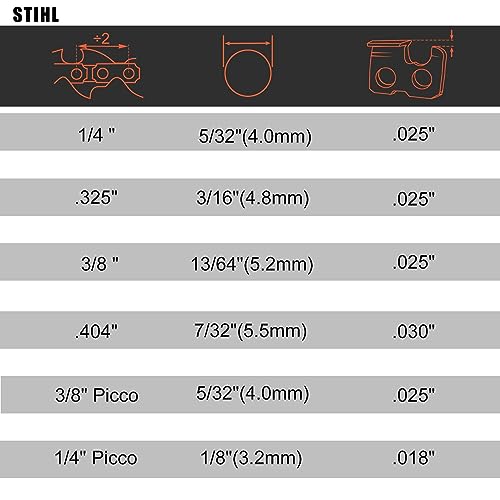
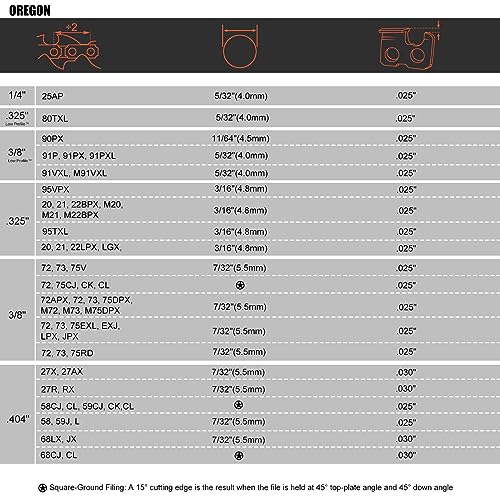
Most kits include files for common pitches (5/32″, 3/16″, 7/32″), and that’s a good starting point. However, knowing your chainsaw’s specific chain pitch, found in your owner’s manual, will ensure you select the correct file size for optimal sharpening.
Are electric chainsaw sharpeners easier to learn than manual methods?
Electric sharpeners offer speed and convenience, but they can be more prone to removing too much material if you’re inexperienced. A manual file, used with a guide, allows for greater control and a feel for the sharpening process, though it takes practice to master.
How often should I sharpen my chainsaw chain?
Sharpening frequency depends on usage and wood type, but generally, you should sharpen after every 50-100 cuts, or whenever you notice increased cutting effort or chipping. Regular maintenance prevents damage to the chain and bar, and keeps you safe.
Can I sharpen a chainsaw chain myself, or is it best left to a professional?
You can absolutely sharpen a chainsaw chain yourself with the right tools and a bit of patience. However, if you’re uncomfortable with the process or lack confidence, a professional sharpening service is a good option to avoid damaging the chain. For guidance, check out top-rated chainsaw chain sharpeners.
What’s the benefit of a kit that includes a depth gauge?
A depth gauge is vital for maintaining the correct tooth height, which significantly impacts cutting performance. Using a depth gauge ensures all teeth are filed to the same length, preventing uneven wear and maximizing the life of your chain, and is a feature found in many best value chain sharpening tools.
The Bottom Line
Ultimately, choosing the best chainsaw sharpening tools comes down to balancing control with convenience. If you value precision and are willing to invest the time to learn, the Oregon Chainsaw Chain Sharpening Kit offers a complete, reliable solution for maintaining a razor-sharp chain. It provides everything you need to do the job correctly, and a solid kit is the foundation for consistent results.
For those prioritizing portability and a quick sharpening process, the Sharp Pebble Electric Chainsaw Sharpener is an excellent choice. The Hipa 12 Pack Chainsaw File Kit stands out as a strong budget option, providing a thorough set of files and tools at a very reasonable price. It’s a great starting point for anyone learning chainsaw sharpening process.
Don’t get lost in the details of motor speeds or abrasive grit. The most important factors are consistent sharpening angles, quality materials, and a willingness to practice proper technique. Mastering chainsaw chain filing methods and understanding the fundamentals of a sharp chain will deliver far more benefit than any single tool feature.
