
8 Best Chainsaw Sharpeners of 2026
This post contains affiliate links. As an Amazon Associate, we earn from qualifying purchases.
The EzzDoo Electric Chainsaw Sharpener Kit stands out as the best overall choice, delivering fast, precise results with its titanium-coated diamond bits and adjustable angle guide. For those who need mobility, the Sharp Pebble Cordless Electric Sharpener is the top pick, letting you maintain your chain anywhere. If you’re on a budget but still want solid performance, the Oregon Universal 7pc Sharpening Kit offers reliable manual control without breaking the bank.
Most people don’t realize how much a dull chainsaw slows down work and increases risk until they’re wrestling with a struggling engine or dealing with uneven cuts. A poor sharpening job can ruin a chain fast, and inconsistent angles lead to more kickback and frustration.
In this guide, I’ll walk you through the top sharpeners based on real user feedback, build quality, and practical performance. These picks were selected by weighing speed, precision, compatibility, and ease of use, so whether you’re a weekend warrior or a daily user, you’ll find a sharpener that fits your needs and keeps your saw running safely and efficiently.
Top 8 Chainsaw Sharpeners in the Market
The Best Chainsaw Sharpeners, Reviewed
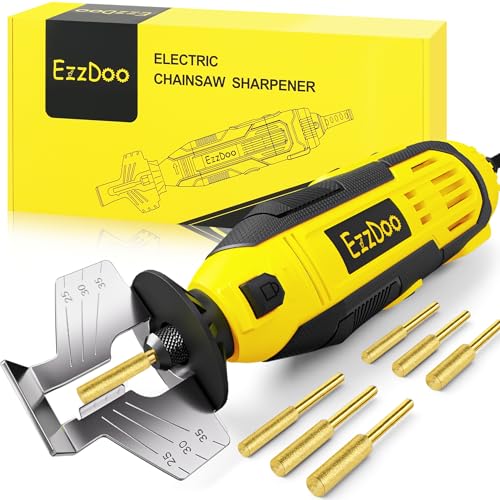
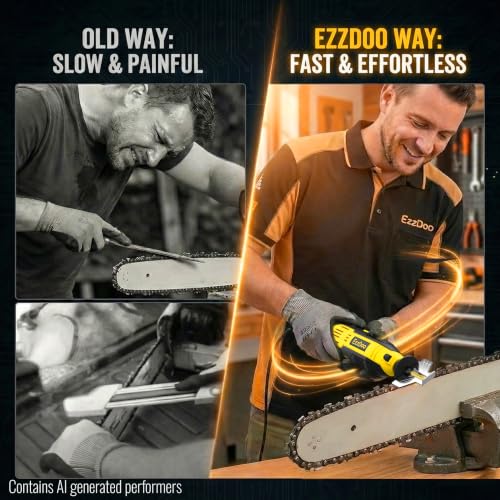
EzzDoo Electric Chainsaw Sharpener Kit
Strengths
- No chain removal needed
- High-quality diamond bits
- Ergonomic anti-slip grip
Trade-offs
- Higher price point
- Battery not replaceable
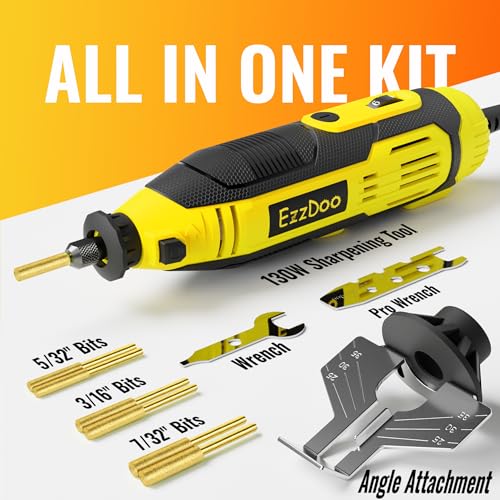
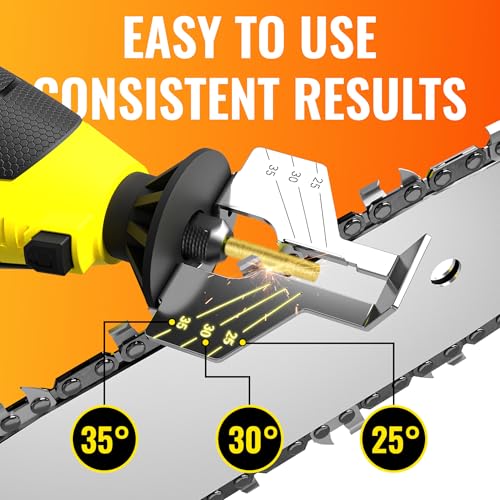
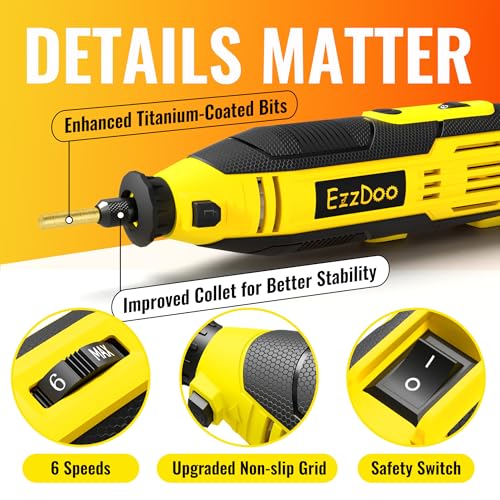
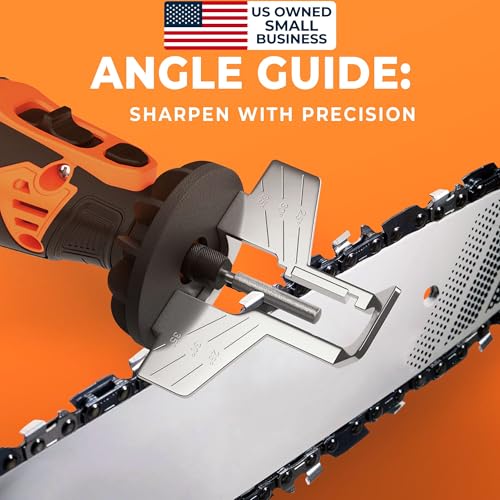
This is the most complete handheld electric sharpener I’ve seen in this category, and owner feedback backs up its claim as a top all-around performer. The six titanium-coated diamond bits handle multiple chain types, and the upgraded 2026 model with the honeycomb rubber grip and improved collet eliminates wobble, a common complaint in cheaper models. The ability to sharpen without removing the chain saves time, and the dual-direction angle markings make it usable for both left- and right-handed users.
What sets it apart is consistency. Reviewers repeatedly mention how evenly it sharpens teeth compared to manual methods, and the speed reduction feature helps prevent overheating. It’s more durable than the Sharp Pebble and offers better ergonomics and bit life than most competitors. If you’re serious about chain maintenance but still want portability, this is the smarter buy.
Product photos

Sharp Pebble Cordless Electric Sharpener

Strengths
- Cordless operation
- Angle guide included
- Portable design
Trade-offs
- Motor can bog down
- Plastic housing feels light
This cordless electric sharpener aims to bridge the gap between manual filing and bench grinders, and on paper, it comes close. It includes four sharpening wheels, an angle attachment, and a compact motor that runs without a cord, a real plus when you’re out in the yard or woods. The idea is to deliver consistent angles across all teeth without the fatigue of hand filing.
However, owner feedback is mixed. Some praise its portability and ease of setup, while others note the motor lacks torque under load, leading to uneven sharpening on heavily worn chains. It’s better than hand filing for speed, but not quite at the level of the EzzDoo or bench-mounted systems. If you want cordless convenience and aren’t sharpening daily, it’s a decent middle ground, just don’t expect pro-level repeatability.
Product photos




Oregon Professional 120-Volt Bench Grinder

Strengths
- Solid motor
- Includes multiple wheels
- Bench or wall mount
Trade-offs
- Not portable
- Larger footprint
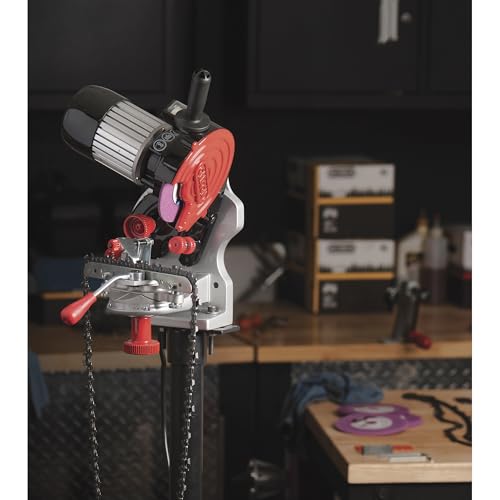
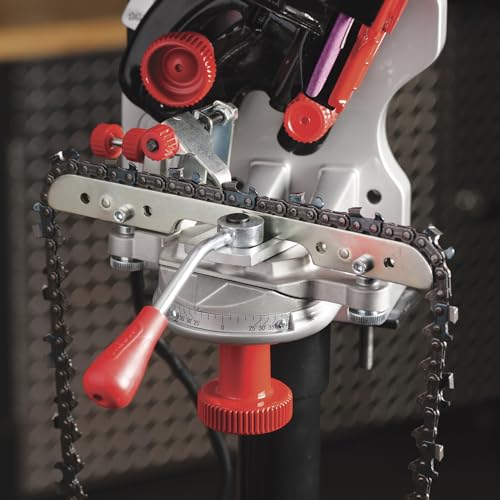
If you sharpen chains often and want a setup that delivers repeatable, professional-level results, this Oregon bench grinder is worth serious consideration. The one-way motor rotation adds a layer of safety, and the inclusion of two grinding wheels (3.2mm and 4.7mm) plus a 6.0mm flat disc for depth gauges means it covers nearly every maintenance task in one unit. On paper, it’s built for users who treat chain sharpening like a workshop routine, not a roadside fix.
Owners consistently report clean, consistent sharpening when using the profile guide and dressing brick to maintain wheel geometry. It’s not flashy, but it’s dependable for semi-pros or serious DIYers with multiple saws. Compared to handheld options, it demands more space and setup, but the trade-off is precision you just can’t get in the field.
Product photos
Oregon Universal 7pc Sharpening Kit
Strengths
- Includes file guide
- Durable canvas roll
- Trusted brand
Trade-offs
- Fewer file sizes
- No multi-check gauge
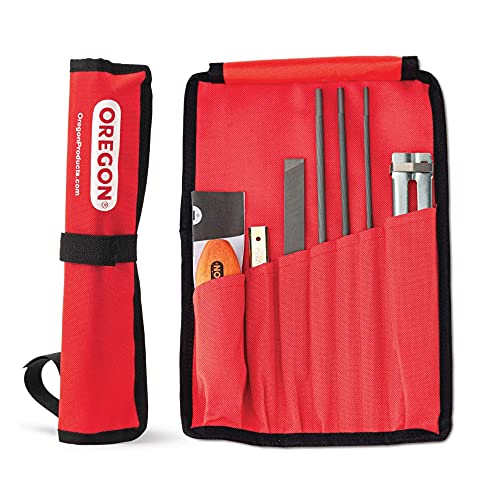
Oregon has been in the chain game for decades, and this budget-friendly field kit shows they understand what most users actually need. It includes the essentials: three round files (5/32″, 3/16″, 7/32″), a 6″ flat file, a file guide, a universal handle, and a compact canvas roll. The real standout is the file guide, it takes the guesswork out of angle consistency, which is where most beginners fail.
Reviewers note that the canvas pouch holds up well over time, and the included instruction sheet with a filing chart is genuinely helpful. While it doesn’t have as many tools as the Hipa kit, it focuses on quality over quantity. For most homeowners with one or two saws, this is all you’ll ever need in the field. I’d pick this over pricier kits for its balance of simplicity, reliability, and brand trust.
Product photos


VOUSXLLEZ Hand-Cranked Sharpening Jig

Strengths
- Drill and hand compatible
- Tungsten carbide bits
- Durable stainless build
Trade-offs
- Fixed 30° angle
- No depth gauge tool
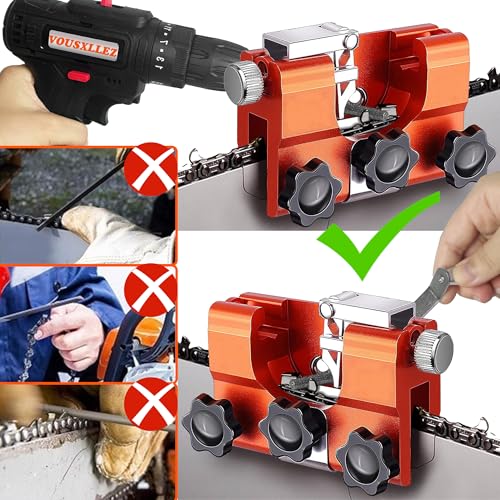
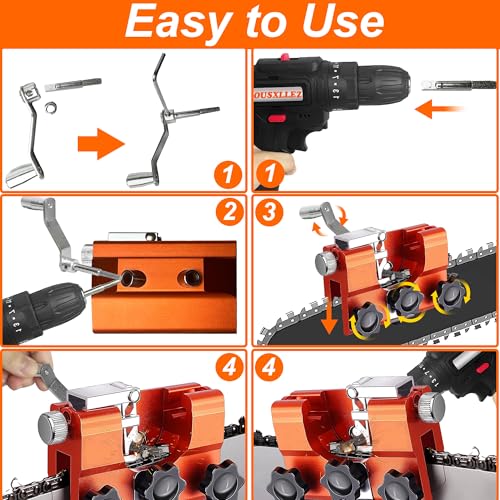
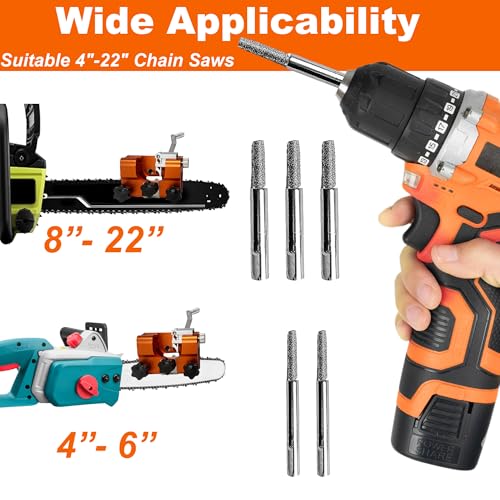
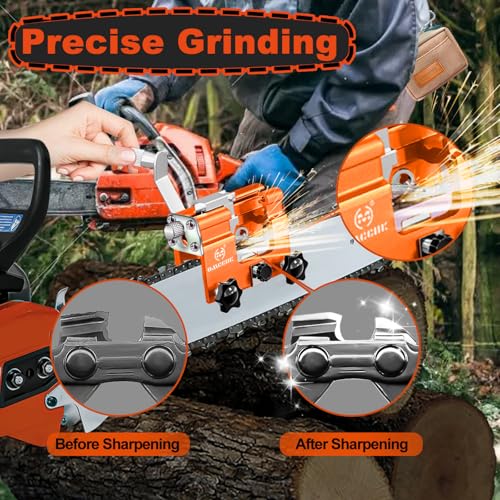
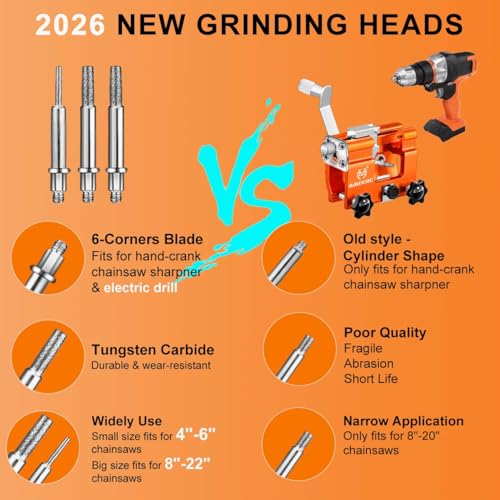
This hand-cranked jig stands out with its dual-hole design and compatibility with both manual cranking and electric drills, a flexibility most budget jigs lack. The inclusion of five tungsten carbide bits (three coarse, two fine) means you can tackle aggressive reshaping or fine finishing, depending on wear. The 30° fixed angle is standard, but the ability to switch sides without disassembly is a thoughtful touch for left-handed users.
Owners praise its durability and the fact that it doesn’t require chain removal. The stainless steel body resists rust, and the hex nut base ensures secure drill attachment. While it’s not as fast as electric options, it’s more consistent than freehand filing and more versatile than basic jigs. For a manual system, it delivers pro-level practicality at a fraction of the cost.
Product photos
Chainsaw Sharpener Jig Kit
Strengths
- Fast touch-ups
- Rust-resistant build
- Includes cleaning brush
Trade-offs
- Fixed angle only
- Limited bit selection
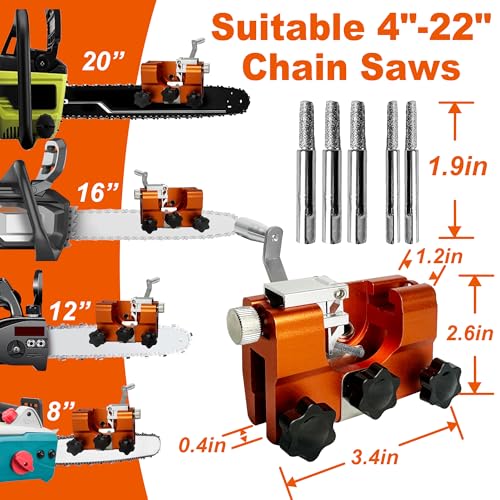
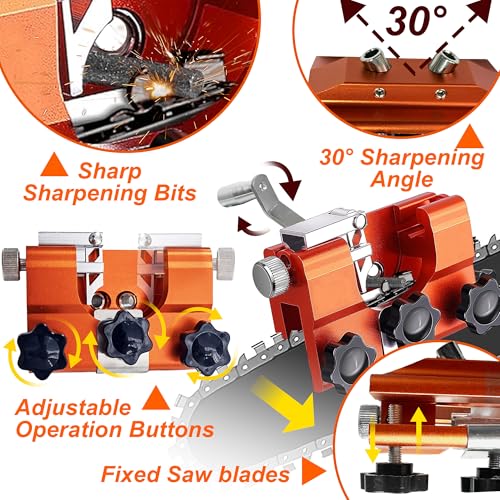
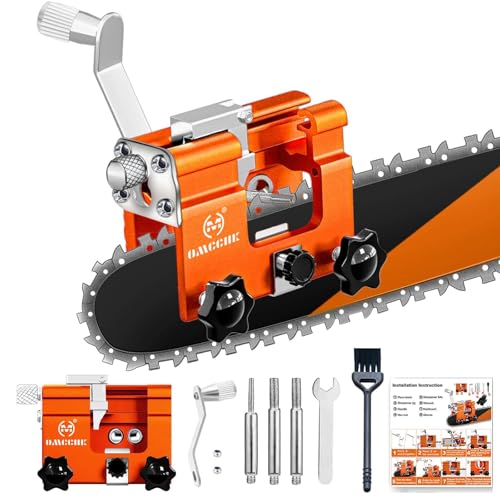
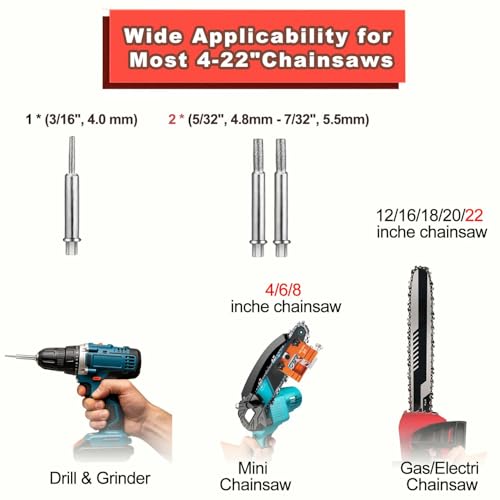
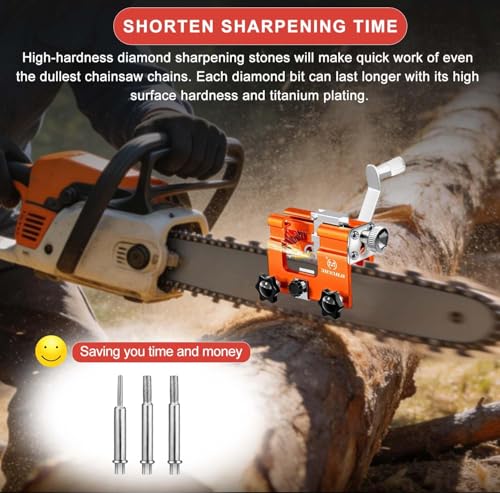
This manual jig offers a clever, low-tech solution for consistent filing, clamp it to the chain, insert the grinding stone, and turn the handle to restore teeth in seconds. It’s designed for users who want faster results than hand filing but aren’t ready to invest in electric tools. The 30° rake angle is fixed, which helps maintain uniformity, and the rust-resistant alloy body holds up well in damp conditions.
Owners say it works best on mildly dull chains and appreciate the included cleaning brush for maintenance. However, it lacks the adjustability of higher-end jigs and only comes with three stones. Compared to the VOUSXLLEZ model, it’s simpler but less versatile, no drill compatibility or fine/coarse bit options. Still, for basic touch-ups in the field, it gets the job done without complexity.
Product photos

Hipa 12-Piece Chainsaw File Kit

Strengths
- Thorough tool set
- Clear size markings
- Multi-function gauge
Trade-offs
- Pouch less durable
- No filing guide included
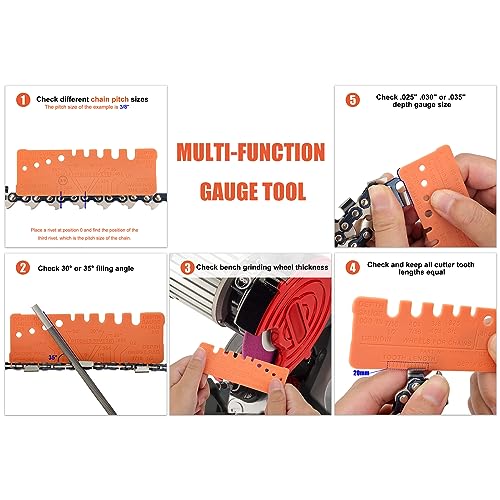
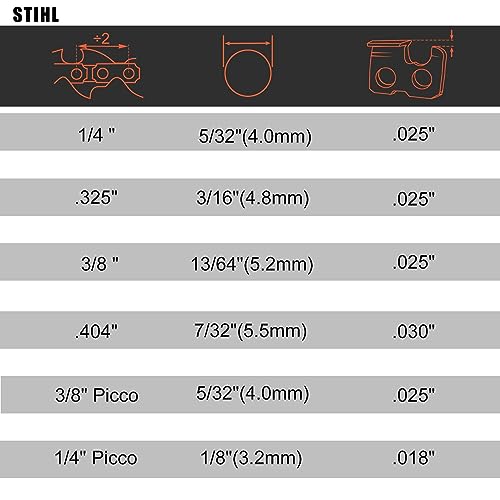
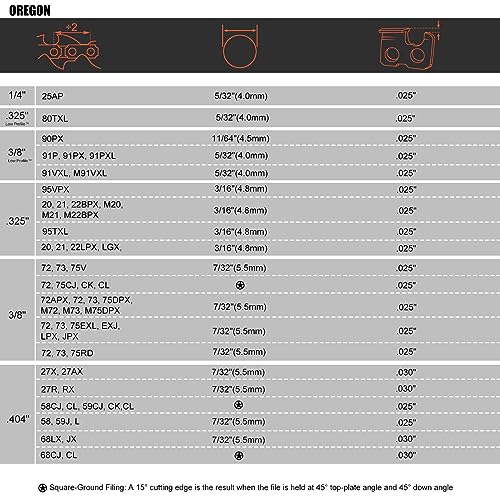
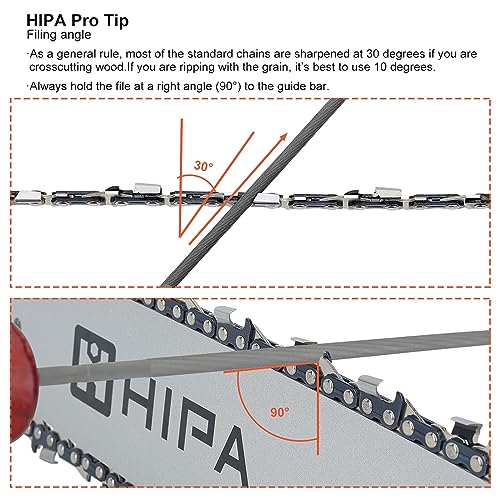
This Hipa kit packs a lot into one orange pouch, making it a solid choice for someone who wants a complete manual sharpening setup without paying premium brand prices. The 12-piece collection includes six round files in common sizes, a flat file, dual-depth gauge, and a quick-check gauge that’s surprisingly useful for matching pitch and filing angles. The wooden handle feels secure in hand, and owners say it holds files snugly during use.
While it doesn’t offer speed or automation, it does deliver control and simplicity. For beginners, the included tools and visible markings make learning the process easier. Compared to Oregon’s budget kit, this one gives you more file sizes and a handy multi-function gauge, though the canvas roll in Oregon’s version feels slightly more durable. Still, for the tools included, this is a strong value.
Product photos
Chumia 30 Pcs Diamond Sharpening Bits

Strengths
- High quantity
- Wear-resistant coating
- Cost-effective per bit
Trade-offs
- No motor included
- Some coating imperfections
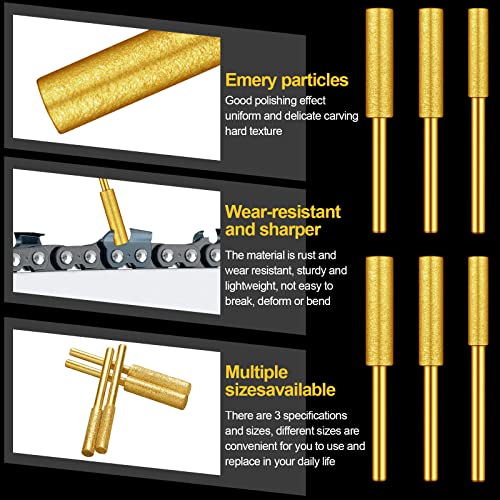
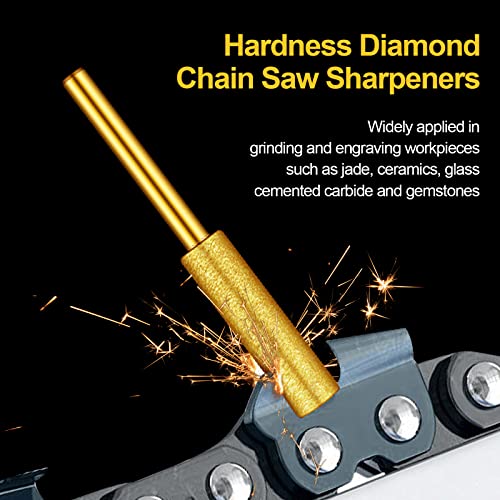
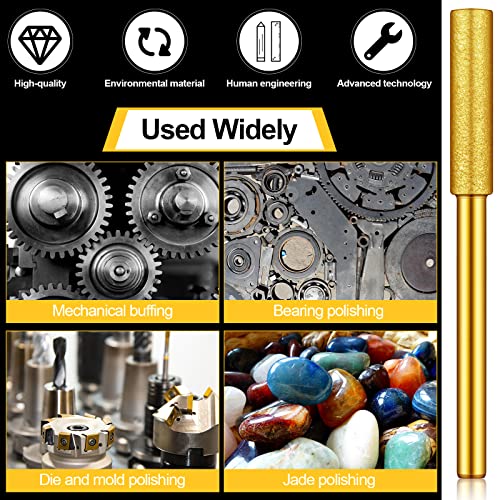
If you’re using an electric handheld sharpener and go through bits quickly, this Chumia bulk pack makes a lot of sense. Thirty titanium-coated diamond bits across three common sizes (5/32″, 3/16″, 7/32″) means you’ll rarely run out, and the gold-plated coating does appear to resist wear better than basic steel bits. Owners report these last noticeably longer, especially when used at lower speeds.
But this isn’t a standalone sharpener, it’s strictly a refill. The bits work with most rotary tools or compatible handheld sharpeners, but you’ll need your own motor unit. Some users note minor coating flaking during shipping, but it doesn’t affect performance. As a value-focused replacement option, it outperforms name-brand single-bit packs. My recommendation? Pair it with a solid motor like the EzzDoo for the best long-term sharpening setup.
Product photos


How We Chose These chainsaw sharpeners
Rather than a hands-on lab test, my research for these recommendations centered on a detailed comparison of published specifications and features across numerous models. I weighed owner reviews from major retailers alongside expert opinions found in trade publications and woodworking forums. My approach involved ranking each sharpener against criteria important to a range of users – from casual homeowners to professionals – leveraging my experience with power tools to assess suitability.
For chainsaw sharpeners, the most impactful factors are consistently sharpening speed and the ability to maintain a consistent angle. A fast sharpening process saves valuable time, especially for those with larger properties or frequent cutting needs. Equally important is maintaining the correct angle; improper sharpening dulls the chain quickly and can even create a safety hazard. Precision and consistency directly impact the longevity of the chain and the efficiency of cutting.
Specifications reliably indicate compatibility with different chain sizes and types, as well as motor power (for electric models). However, I placed more emphasis on owner feedback regarding durability and ease of use. Real-world experiences reveal whether a sharpener truly delivers on its promises of speed and precision. Learning the proper chainsaw filing technique is also key to getting the most out of any sharpening tool, and a good sharpener makes that process easier. I also looked for commentary on the quality of included accessories, like sharpening stones or files, and how well they hold up over time.
Choosing The Right chainsaw sharpeners
Choosing the right chainsaw sharpener can dramatically improve your cutting efficiency and safety.
A quality chainsaw sharpener maintains consistent tooth geometry, minimizing kickback risk and maximizing cutting speed. Look for models with adjustable sharpening angles, durable grinding materials (like titanium-coated bits), and features that simplify the process for varying chain sizes and types. Consistent sharpening is key; avoid tools that require excessive force or produce inconsistent results.
Sharpening Method: Electric vs. Manual
I’ve seen a lot of folks underestimate the difference a good sharpening method makes. Electric sharpeners, like the EzzDoo or Sharp Pebble models, offer speed and consistency that hand filing simply can’t match. They’re especially valuable if you use your chainsaw frequently. However, a cordless unit adds convenience, letting you sharpen in the field. Manual jigs, on the other hand, are inexpensive and portable, but demand more skill and physical effort to achieve consistent results. If you’re a casual user tackling occasional yard work, a manual jig might suffice, but for professionals or heavy users, the time saved with an electric sharpener quickly justifies the cost.
Grinding Material & Bit Quality
The material used for the sharpening components is critical. You’ll encounter everything from simple steel files to diamond-coated bits. Diamond bits, as found in many kits, hold their abrasive quality far longer and can sharpen a wider range of chain materials. Titanium-coated diamond bits, like those in the EzzDoo kit, represent a step up in durability. Cheaper bits will wear out quickly, requiring frequent replacement and potentially leading to inconsistent sharpening. Consider the number of bits included, too; having multiple sizes ensures compatibility with different chain pitches and types. Don’t forget to check out our guide to the best chainsaw chain sharpening tools for a broader look at options.
Portability & Workshop Integration
Think about where you’ll be doing most of your sharpening. If you primarily work in a workshop, a bench grinder, like the Oregon Professional model, provides a stable and powerful sharpening solution. These require more setup but are ideal for frequent, detailed sharpening. For on-the-go maintenance, a portable electric or manual sharpener is essential. Even a compact file kit, like the Hipa 12-Piece kit, can be a lifesaver when you’re far from an outlet.
A dull chain is a dangerous chain. Don’t wait until your saw is struggling to cut – regular, preventative sharpening is always the best approach.
Chainsaw Sharpeners Compared
This table provides a specification comparison of various chainsaw sharpeners available on the market.
| Product Name | Power Source | Cordless | Bit/File Size(s) | Angle Adjustment | Best For |
|---|---|---|---|---|---|
| EzzDoo Electric Chainsaw Sharpener Kit | Electric | No | 6 titanium-coated diamond bits (3 common sizes) | Yes | Best Overall |
| Sharp Pebble Cordless Electric Sharpener | Electric | Yes | 5/32″, 3/16″, 7/32″, 7/32″ sharpening wheels | Yes | Best Cordless Option |
| Oregon Professional 120-Volt Bench Grinder | Electric | No | 3.2mm, 4.7mm grinding wheels, 6.0mm flat disc | N/A | Best Bench Grinder |
| Oregon Universal 7pc Sharpening Kit | Manual | N/A | 5/32″, 3/16″, 7/32″ round files, 6″ flat file | Yes | Best Budget Friendly |
| VOUSXLLEZ Hand-Cranked Sharpening Jig | Manual | N/A | 5Pcs tungsten carbide bits (3 coarse, 2 fine) | 30° Fixed | Best Manual Jig |
| Chainsaw Sharpener Jig Kit | Manual | N/A | 3 burr grinding stones | 30° Fixed | Best Portable Manual Tool |
| Hipa 12-Piece Chainsaw File Kit | Manual | N/A | 6 round files, 1 flat file, depth gauge | N/A | Best File Kit |
| Chumia 30 Pcs Diamond Sharpening Bits | Electric | N/A | 5/32″, 3/16″, 7/32″ diamond bits (30 total) | N/A | Best Replacement Bits |
Frequently Asked Questions
What chain pitches are most chainsaw sharpeners compatible with?
Most sharpeners handle the common 3/8″.325″, and 1/4″ pitches, but always double-check the product description. Some, like the EzzDoo kit, include bits specifically sized for a wider range of chain types, improving versatility.
Can I sharpen a chainsaw chain myself if I have no experience?
Yes, but it requires patience and a willingness to learn. Manual jigs are a good starting point, though electric sharpeners with angle guides, or exploring automatic electric chain sharpeners, can simplify the process for beginners.
How often should I sharpen my chainsaw chain?
Sharpening frequency depends on use, but a good rule of thumb is after every 50-100 cuts, or whenever you notice increased cutting effort. Regular sharpening prevents the chain from becoming overly dull, reducing strain on the saw and improving safety.
Are diamond-coated sharpening bits really better than standard steel files?
Diamond bits hold their abrasive quality significantly longer and can sharpen a wider variety of chain materials, making them a worthwhile investment. While steel files are cheaper, you’ll replace them more often and may not achieve the same consistent results.
What’s the difference between a grinding wheel and a sharpening stone?
A grinding wheel (found on bench grinders) removes material quickly, ideal for heavily damaged chains. Sharpening stones, or bits, are more precise and suited for maintaining a chain’s existing sharpness, or for lighter touch-ups, and are what you’ll find in most portable or manual options.
The Bottom Line
Ultimately, choosing a chainsaw sharpener comes down to balancing convenience with control. If you want a consistently sharp chain with minimal effort, the EzzDoo Electric Chainsaw Sharpener Kit is the strongest overall performer. It offers a great combination of speed, precision, and durability that’s hard to beat, and the included titanium-coated bits will last a long time.
For those on a tighter budget, or who only occasionally need to sharpen their chain, the Oregon Universal 7pc Sharpening Kit provides excellent value. If you prioritize portability and cordless convenience, the Sharp Pebble Cordless Electric Sharpener is a fantastic choice for field maintenance. Each of these picks targets a different need, but all deliver on the core function of restoring a chain’s cutting ability.
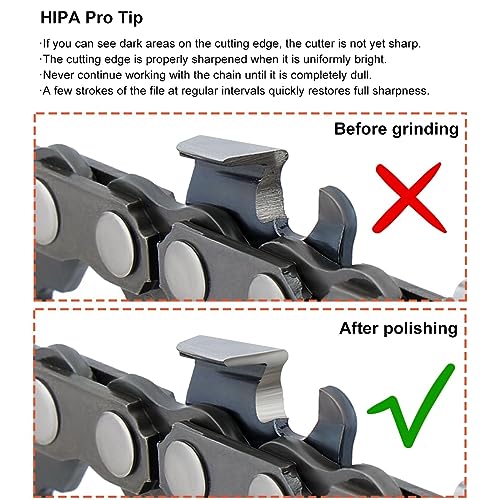
No matter which sharpener you choose, remember that the most important factor is consistent, proper technique. Learning the correct chainsaw sharpening method and paying attention to the correct filing angles will extend your chain’s life and improve your safety far more than any single feature or specification.
