
9 Best Bone Saws of 2026
This post contains affiliate links. As an Amazon Associate, we earn from qualifying purchases.
The Weston 22″ Stainless Steel Bone Saw is the best overall choice for home butchers and hunters, offering excellent cutting power and durability. For those on a budget, the ProSSS Folding Bone Meat Saw delivers solid performance and portability at a lower price. If you need versatility in tight spaces, the Outdoor Edge GrizSaw 8″ stands out with its T-handle design and aggressive teeth.
Choosing the right bone saw isn’t just about cutting through tough material, it’s about control, safety, and getting the job done without frustration. Too many people buy based on price alone, only to struggle with dull blades, poor ergonomics, or flimsy frames that can’t handle real work.
This guide cuts through the noise by focusing on what actually matters: blade quality, ease of use, and long-term reliability. I looked at specs, owner feedback, and real-world performance across different models to find the ones that consistently deliver. Whether you’re processing game, breaking down primal cuts, or prepping for the freezer, these picks are backed by practical use and honest reviews.
Top 9 Bone Saws in the Market
The Best Bone Saws, Reviewed
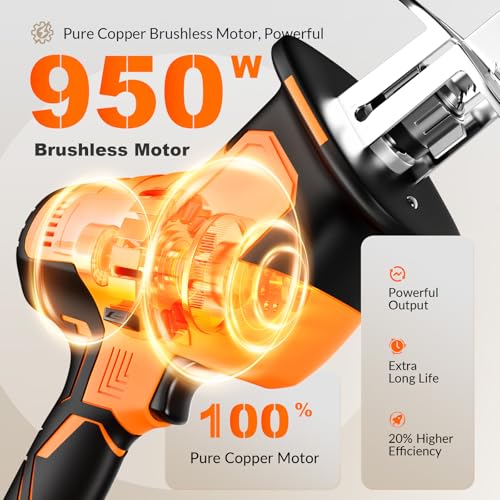
950W Brushless Electric Bone Saw

Strengths
- High power motor
- Battery portability
- Multiple blades included
Trade-offs
- Higher price
- Needs charging
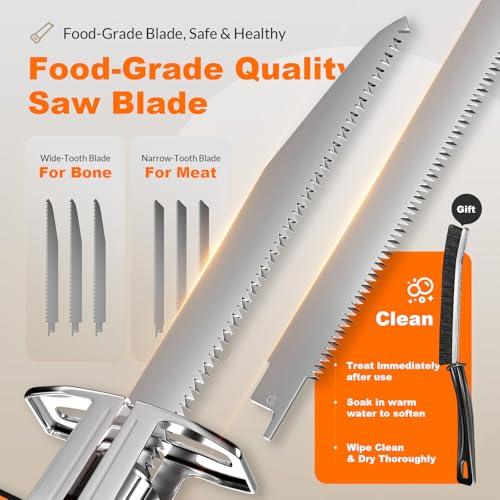
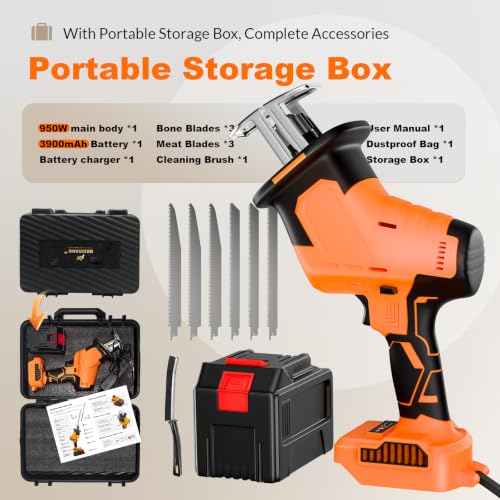
This electric model changes the game, literally no manual saw can match its speed and consistency. The 950W brushless motor powers through frozen blocks and dense joints like butter, and the 3900mAh battery gives enough runtime for multiple full breakdowns on a charge. Owners highlight the low noise and vibration compared to older electric saws, and the six included blades cover nearly any cut type.
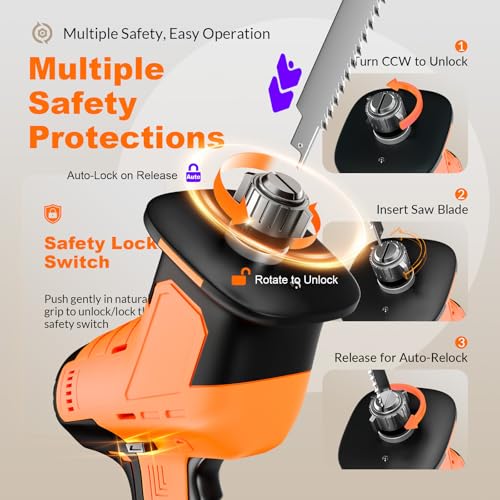
Safety features like the dual switches and self-locking chuck make it reliable, even in busy environments. Compared to corded units, this one offers real mobility. While it’s pricier and needs charging, the time saved is massive. For anyone butchering more than a few times a year, this is the smarter long-term buy.
Product photos

Weston 22″ Stainless Steel Bone Saw
Strengths
- Long 22″ blade
- Stainless steel frame
- Quick blade changes
Trade-offs
- Bulky for travel
- High effort for beginners
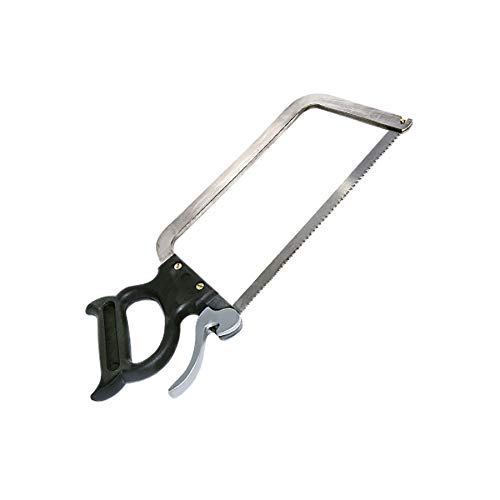
This is the big dog of manual bone saws, 22 inches of stainless steel built for serious volume. The trigger lock system keeps blade tension spot-on, which owners say translates to cleaner, faster cuts through thick joints and frozen meat. The stainless frame resists corrosion, a major plus when washing down after processing.
When stacked against the 16 inch Weston, this one clearly wins for large game. It’s not something you’d pack into the backcountry, but in a garage or processing shed, it’s a workhorse. The ergonomic handle helps, though your arms will still feel it after an hour. For those breaking down whole animals, this is as close to pro gear as you’ll get manually.
Product photos


Weston 16″ Butcher Meat Saw
Strengths
- Great value
- Stainless steel build
- Quick blade tension
Trade-offs
- Shorter reach than 22″
- Manual effort required
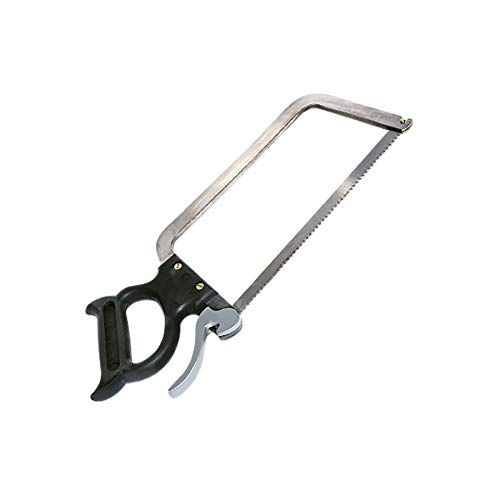
This 16 inch Weston hits the sweet spot between size and usability for most home users. It’s lighter than the 22 inch version but still handles deer, hogs, and large roasts without issue. The trigger lock tension system works well, and the quick-release handle makes blade swaps fast, a feature many competitors lack at this price.
Owners consistently rate it as the best value manual saw, especially when you factor in durability. Stainless steel construction means it won’t rust after repeated washings. It’s not as aggressive as the electric model, but for those who prefer manual control and don’t mind the effort, this one earns its keep.
Product photos


ProSSS Folding Bone Meat Saw
Strengths
- Multi-angle locking
- Replaceable blade
- Compact and portable
Trade-offs
- Slight blade wobble
- Plastic housing
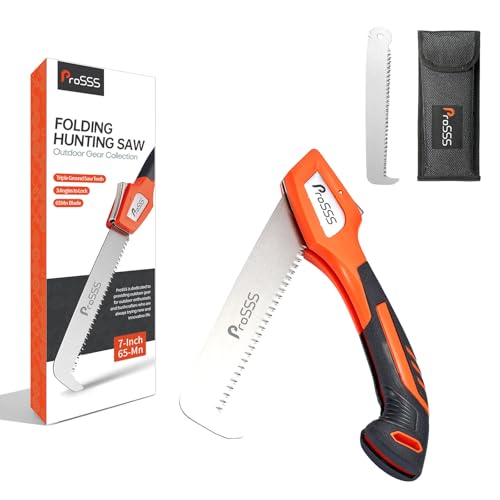
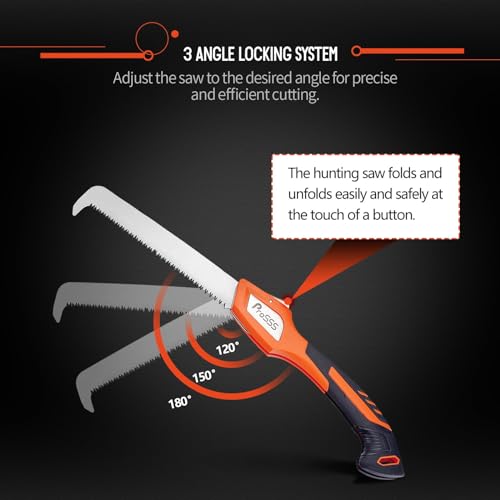
With its 3-angle locking system, this folding saw offers unmatched flexibility in tight spaces. Whether you’re under a vehicle or in a cramped camp kitchen, being able to pivot the blade to 120°, 150°, or 180° makes awkward cuts far easier. The 65Mn blade is hardened to 67HRC, and owners confirm it bites aggressively into bone without flexing much.
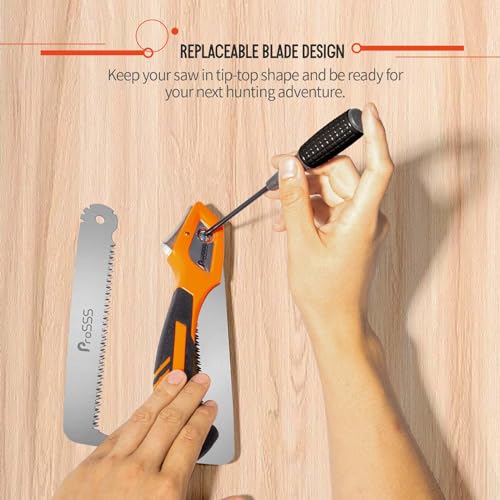
It comes with a spare blade and a storage bag, thoughtful touches that boost field readiness. While it doesn’t feel quite as solid as a fixed blade, the trade-off in adaptability is worth it for many. Among folding saws, this one stands out for thoughtful engineering and real-world usability.
Product photos
ProSSS Hunting Bone Saw 4″

Strengths
- Sharp out of box
- Includes spare blade
- Lightweight design
Trade-offs
- Short blade length
- Limited reach
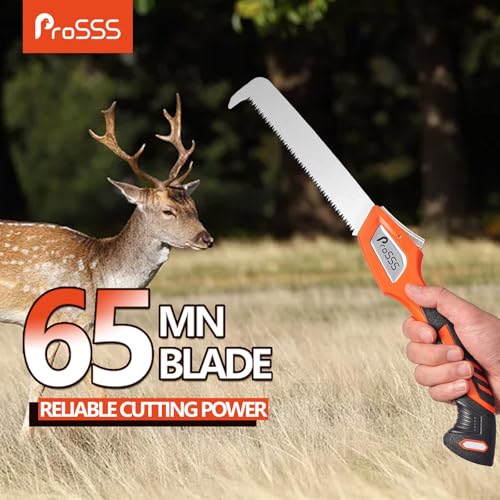
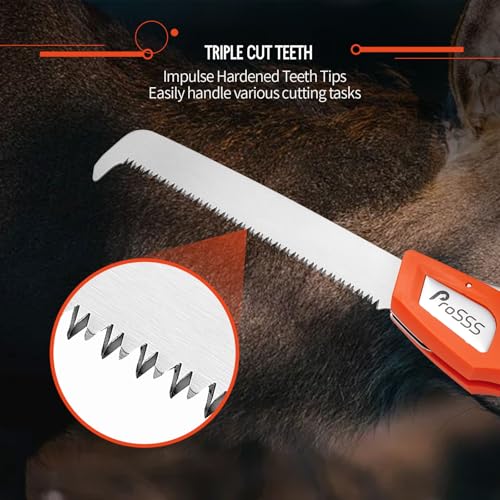
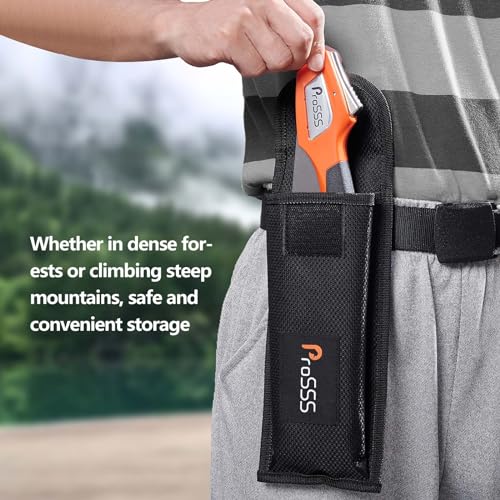
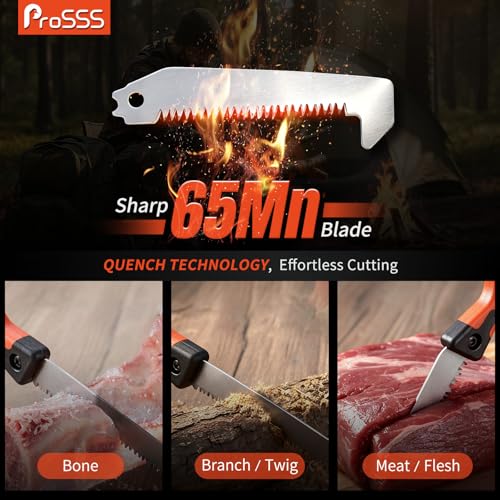
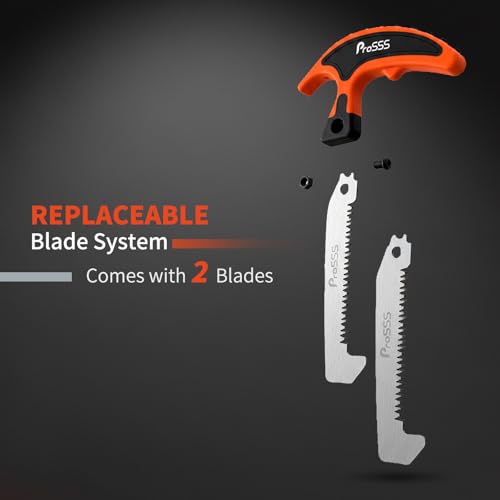
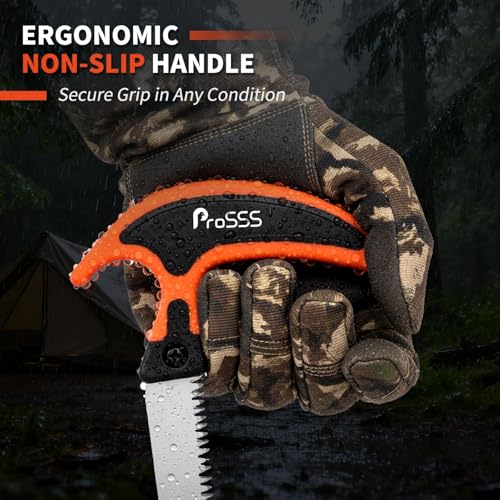
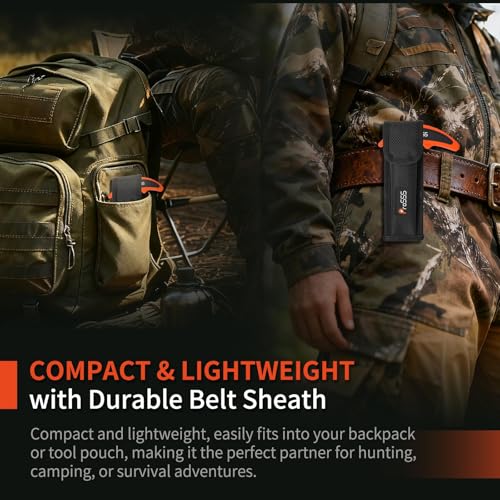
This compact fixed-blade saw packs a surprising amount of performance into a tiny frame. On paper, the 4 inch 65Mn steel blade looks modest, but owners consistently report it powers through deer ribs and smaller bones with minimal effort, thanks to its high hardness rating and triple-ground teeth. The real advantage here is portability and readiness, it’s lightweight, comes with a spare blade, and the sheath makes it field-friendly.
Where it really stands out is in reliability for hunters who need a dedicated bone saw that won’t fail when packed away. Compared to folding models, this one has zero wobble and immediate deployment. While it’s not meant for large game breakdowns, it excels as a backup or primary tool for small to medium tasks.
Product photos
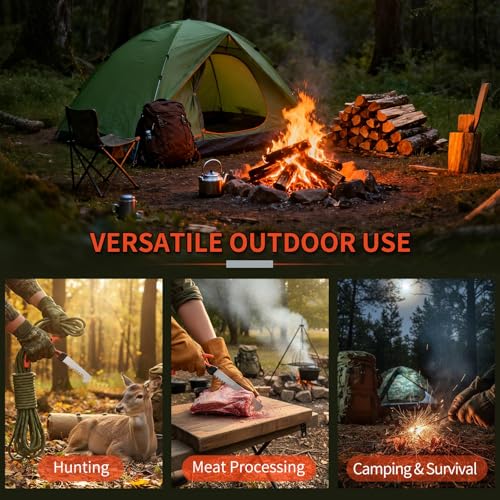
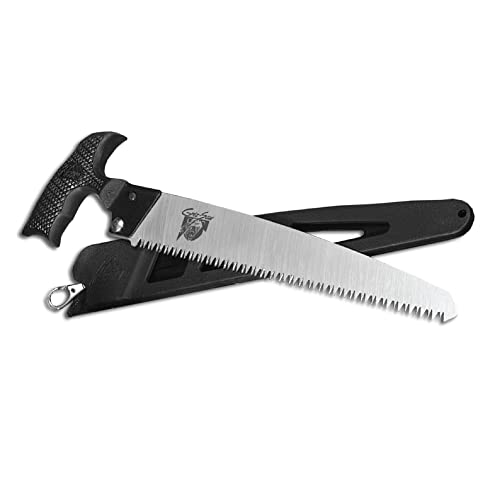
Outdoor Edge GrizSaw 8″
Strengths
- T-handle use
- Durable blade coating
- Secure sheath
Trade-offs
- Bulky for tight packs
- No spare blade
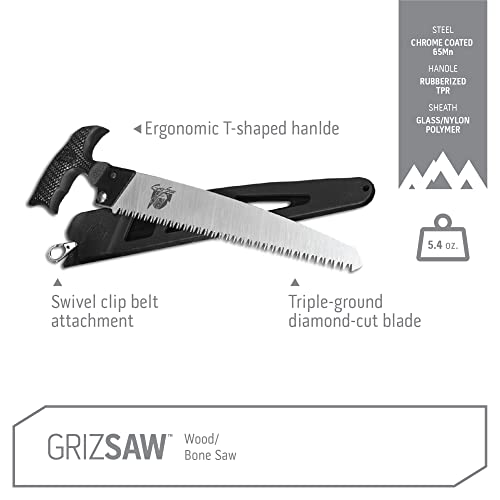
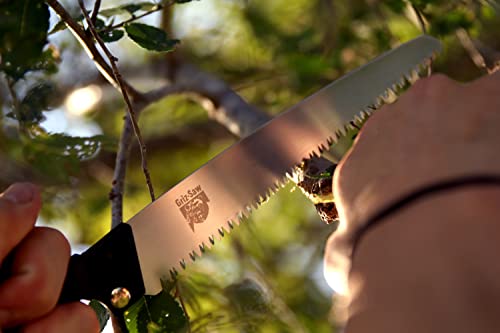
The T-handle design sets this one apart, it gives you straight-wrist use, which reduces fatigue during extended cuts. At 8 inches, the blade offers more reach than most compact saws, and the chrome-coated 65Mn steel resists corrosion while staying sharp. Owners appreciate the swivel sheath for easy belt access, and the Zytel construction feels rugged.
It’s heavier than folding models, but that extra mass helps with cutting momentum. Compared to the ProSSS 4 inch, this one is better for larger game but less packable. If you’re processing elk or bear in remote areas and want a no-fail saw, this is a top contender.
Product photos
GreatNeck 18″ Bone Game Saw

Strengths
- Durable steel frame
- Smooth cutting action
- Easy blade changes
Trade-offs
- Heavy build
- No quick-release tension
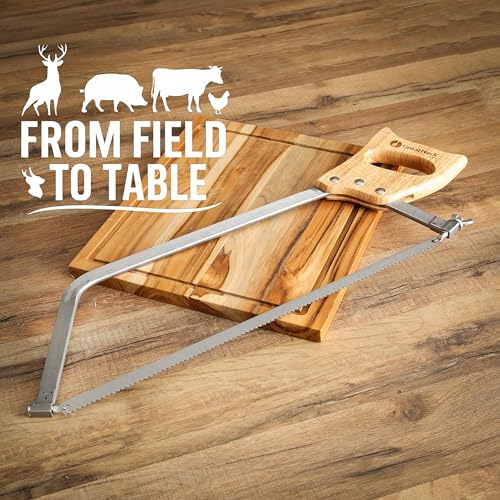
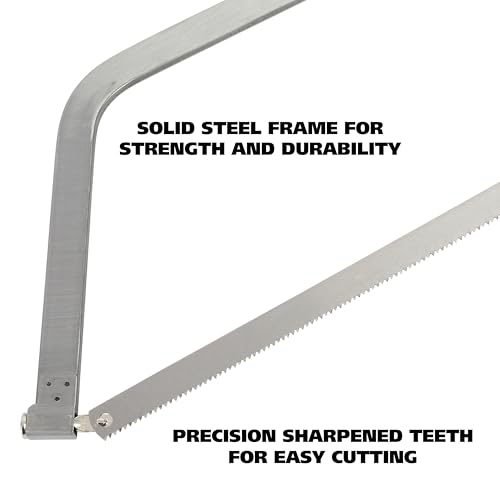
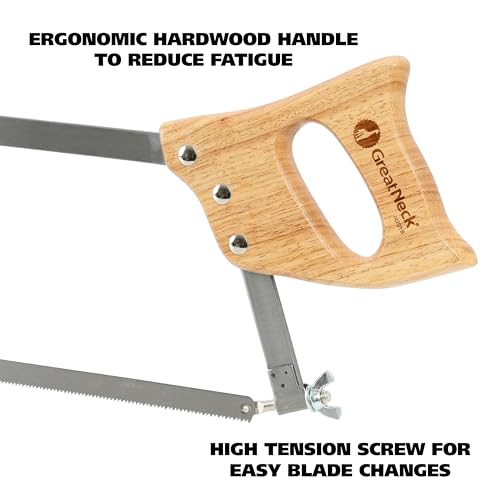
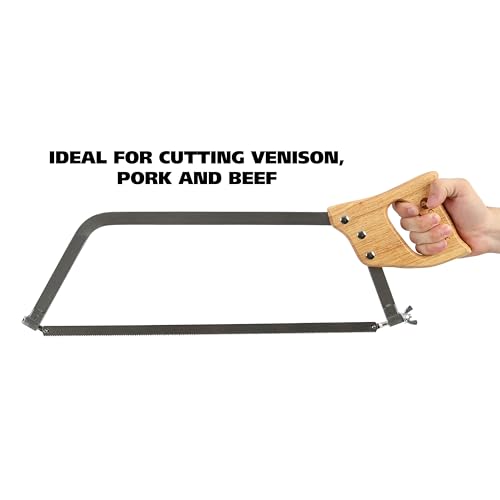
If you’re after that old-school, no-frills bone saw feel, this GreatNeck model delivers. The 18 inch high-carbon blade and solid steel frame give it serious tension and cutting momentum, making it a favorite among DIY butchers processing deer or hogs at home. Owners praise its smooth, splinter-free cuts and the ease of blade replacement via the tension screw.
The hardwood handle feels substantial and reduces fatigue during long sessions, though it lacks modern non-slip materials. Compared to the Weston models, it’s less refined but more affordable. It’s a traditionalist’s choice, reliable, repairable, and built to last decades with care.
Product photos
RUITOOL Bone Meat Saw

Strengths
- Excellent grip
- Comfortable handle
- Sharp out of box
Trade-offs
- No blade storage
- Average portability
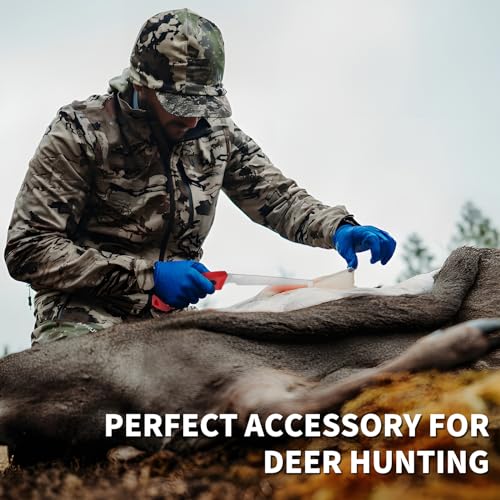
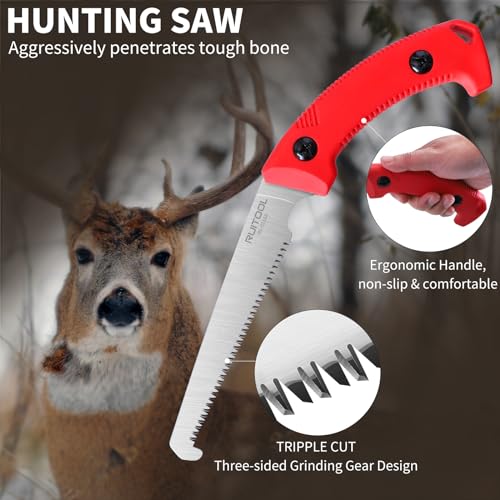
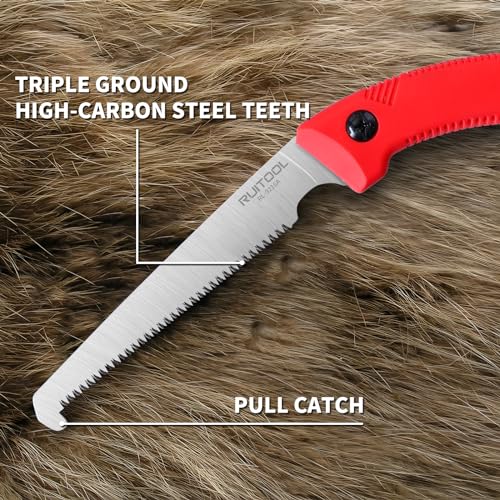
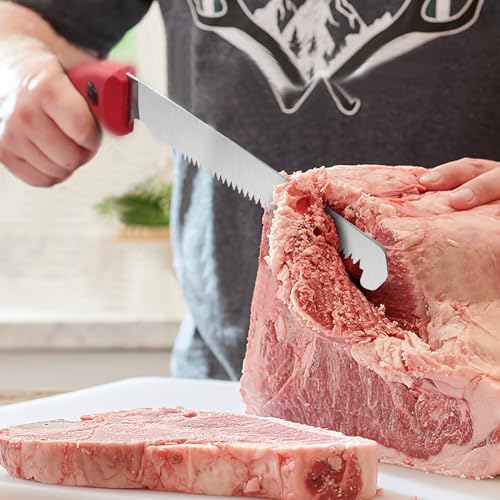
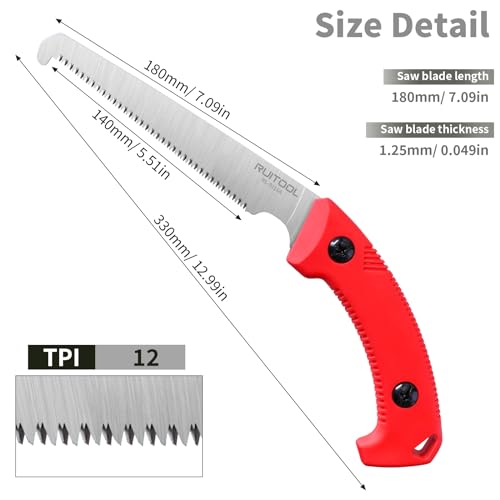
The standout here is the TPR handle, owners repeatedly mention how well it grips even with bloody or wet hands. That, combined with the 12 TPI triple-ground blade, makes this a confident choice for field dressing where control matters most. The 65Mn steel holds an edge well, and the blade cuts cleanly through rib cages without binding.
It’s not the most compact or the longest, but it strikes a nice balance between grip security and cutting efficiency. Compared to basic plastic-handled models, this one feels more durable and purpose-built. A solid mid-tier option for hunters who prioritize safety and comfort in messy conditions.
Product photos
coher Folding Hand Saw
Strengths
- Multi-material use
- Folding design
- Comfortable grip
Trade-offs
- Blade flex under load
- Not bone-specific
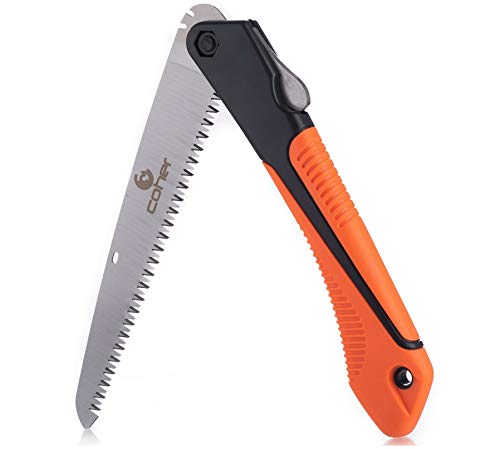
This saw tries to do everything, and for the most part, it pulls it off. The SK-5 steel blade is tough enough for light bone cutting, but its real strength lies in versatility. Reviewers note it handles branches and PVC just as well as rib bones, which makes it a solid pick for campers who don’t want to carry multiple tools. The two-angle blade lock adds stability, though it’s not as rigid as a fixed frame.
I wouldn’t rely on it for heavy butchering, but as a multi-use survival or camping saw, it makes sense. The leather strap on the handle improves grip in wet conditions, a detail many budget models skip. When compared to dedicated bone saws, it trades precision for flexibility.
Product photos


How We Evaluated bone saws
My approach to evaluating bone saws centered on a research-led comparison of published specifications and owner feedback. Rather than a hands-on lab test, I compared blade materials, motor power (where applicable), features like safety locks, and build quality across models. I then weighed owner reviews from major retailers alongside expert opinions found in hunting and butchering forums, prioritizing consistent themes in both. This allowed me to build a ranking based on real-world use cases and reported durability.
For bone saws, cutting power and blade replacement convenience were the biggest determining factors. A saw needs to handle various bone sizes and types without excessive effort, which is heavily influenced by blade material and design. Equally important is the ability to easily replace dull or damaged blades, minimizing downtime during processing. Beyond that, ergonomics and safety features significantly impacted the ranking.
Specifications reliably indicate basic build quality (steel types, motor wattage) and dimensions. However, I relied on owner feedback to gauge long-term durability, ease of cleaning, and real-world cutting performance. Reputation within the hunting and butchering communities also played a significant role; a saw consistently praised by those doing the work is likely a strong performer. If you need a tool for more demanding cutting tasks, you might also consider looking at our guide to the best reciprocating saws for heavy-duty cutting.
What To Look For In bone saws
Picking the right bone saw depends heavily on what you plan to cut – and how often. It’s not a one-size-fits-all tool.
A quality bone saw delivers clean cuts through both bone and meat, minimizing waste and maximizing yield. Key considerations include blade material (high-carbon steel is common), blade tensioning (for consistent cutting), handle ergonomics (comfort during extended use), and overall construction for durability. Buyers should also consider if portability or capacity is more important for their needs.
Blade Material and Design
The blade is the heart of any bone saw, and material dictates its performance. High-carbon steel blades are typical, offering a good balance of hardness and flexibility, but blade design matters just as much. A saw meant for processing deer will benefit from a thinner, more flexible blade for navigating joints, while someone breaking down larger livestock might need a thicker, more rigid blade. Look for blades that are easily replaceable, as sharpening can only go so far. Replacement blades add to the long-term cost, but are often cheaper than replacing the entire saw.
Power vs. Manual Operation
Electric bone saws offer speed and convenience. They’re great if you process a lot of meat regularly, but they come with a price premium and require a power source. Manual saws, on the other hand, are more affordable, portable, and require no electricity. They demand more physical effort, but a well-designed manual saw can be surprisingly efficient. If you’re looking for options for field dressing, check out our guide to the best hunting bone saws for recommendations.
Here’s what to consider when weighing power versus manual:
- Frequency of Use: Occasional use favors manual.
- Volume: Large-scale processing justifies electric.
- Portability: Manual wins for remote locations or when power isn’t available.
A dull blade is more dangerous than a sharp one. Always ensure your blade is in good condition, and learn proper cutting techniques to avoid injury.
Ergonomics and Build Quality
You’ll be applying significant force when using a bone saw, so ergonomics are critical. Look for handles that are comfortable to grip, even when wet, and designed to reduce fatigue. A good handle will also offer a secure grip, minimizing the risk of slippage. Beyond the handle, assess the overall build quality. A sturdy frame is essential for maintaining blade tension and ensuring the saw can withstand repeated use. For those needing something lightweight and easy to pack, consider portable bone saws for field dressing – they often prioritize compact designs.
Bone Saws Compared
Here’s a comparison of key specifications for various bone saws available on the market.
| Product Title | Power (W) | Blade Length (in) | Material | Features | Portability |
|---|---|---|---|---|---|
| 950W Brushless Electric Bone Saw | 950 | N/A | Copper, Steel | 6 Blades, Safety Lock | Limited |
| Weston 22″ Stainless Steel Bone Saw | N/A | 22 | Stainless Steel | Trigger Lock | Moderate |
| Weston 16″ Butcher Meat Saw | N/A | 16 | Stainless Steel | Trigger Lock | Moderate |
| ProSSS Folding Bone Meat Saw | N/A | N/A | 65Mn Steel | Folding, 3 Angles | Excellent |
| ProSSS Hunting Bone Saw 4″ | N/A | 4 | 65Mn Steel | Fixed Blade | Excellent |
| Outdoor Edge GrizSaw 8″ | N/A | 8 | Chrome Steel | T-Handle | Moderate |
| GreatNeck 18″ Bone Game Saw | N/A | 18 | Steel, Carbon | Traditional Frame | Moderate |
| RUITOOL Bone Meat Saw | N/A | N/A | N/A | Non-Slip Handle | Moderate |
| coher Folding Hand Saw | N/A | N/A | SK-5 Steel | Folding | Excellent |
Frequently Asked Questions
What blade material offers the best balance of durability and sharpness?
High-carbon steel is generally the best choice, providing a good combination of hardness for holding an edge and flexibility to resist cracking. However, stainless steel blades resist corrosion better, which is beneficial if the saw won’t be meticulously dried after each use.
How often should I replace a bone saw blade?
Blade replacement frequency depends on use, but generally, replace it when it noticeably struggles to cut through bone or meat cleanly. Frequent use or cutting through very dense bone will require more frequent changes than occasional use on softer materials.
Are electric bone saws really that much faster than manual saws?
Yes, electric bone saws are significantly faster, especially for large volumes. They reduce the physical strain involved and can cut through bone with less effort, but they are less portable and require a power source. If you need a powerful plug-in reciprocating saw for other tasks, you might consider that as an alternative.
Can a folding bone saw be as effective as a fixed-blade model?
A well-made folding bone saw can be very effective, particularly for hunting or backpacking where portability is key. While they might not offer the same rigidity as a fixed-blade saw, modern designs with robust locking mechanisms and quality steel blades perform admirably.
What safety features should I look for when choosing a bone saw?
A safety lock or trigger lock is a vital feature to prevent accidental activation, especially on electric models. Beyond that, a comfortable, non-slip grip is crucial for maintaining control and reducing the risk of injury during use.
The Bottom Line
Choosing a bone saw often comes down to balancing convenience with control. If you regularly process large game or livestock, the 950W Brushless Electric Bone Saw offers speed and power that manual saws simply can’t match. However, for most hunters and home processors, a quality manual saw like the Weston 22″ Stainless Steel Bone Saw provides a fantastic blend of performance, affordability, and portability.
For those prioritizing budget and packability, the ProSSS Folding Bone Meat Saw is an excellent choice. And if you specifically need a compact, field-dress-ready option, the ProSSS Hunting Bone Saw 4″ delivers focused performance in a small package. Don’t overlook the GreatNeck 18″ Bone Game Saw either; it’s a solid, traditional option for those who prefer a classic design.
Ultimately, the most important factors aren’t blade length or motor wattage, but a sharp blade and proper technique. A well-maintained saw, regardless of its price point, will deliver cleaner cuts, reduce waste, and make the entire process safer and more efficient. Remember, if you’re tackling tougher materials beyond bone, exploring best cordless reciprocating saws might be a worthwhile consideration.
