
9 Best Bandsaws of 2026
This post contains affiliate links. As an Amazon Associate, we earn from qualifying purchases.
The JET 14-Inch Woodworking Bandsaw stands out as the best overall for serious woodworkers, thanks to its large resaw capacity and rock-solid build. For those on a tighter budget, the WEN 10-Inch Two-Speed Band Saw delivers surprising performance and versatility without breaking the bank.
Most people shopping for a bandsaw are trying to balance power, precision, and price, but it’s easy to end up with a machine that shakes, struggles with thick stock, or wears out fast. I’ve seen too many DIYers waste money on underbuilt models that can’t handle real workshop demands.
This guide cuts through the noise by focusing on what actually matters: proven build quality, blade stability, and usable capacity. These picks are based on specs, owner feedback, and my experience evaluating how bandsaws perform over time in real shops.
Top 9 Bandsaws in the Market
The Best Bandsaws, Reviewed
JET 14-Inch Woodworking Bandsaw
Strengths
- 13+ inch resaw capacity
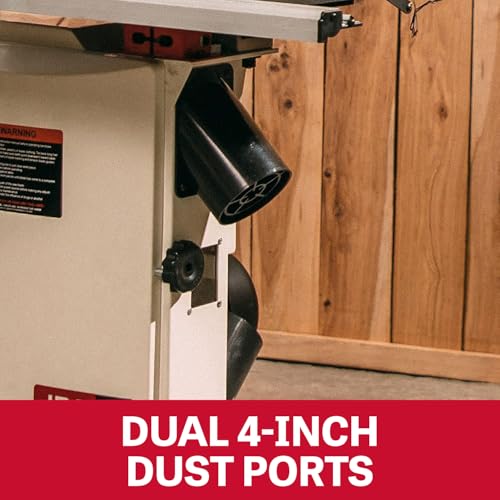
- Dual 4″ dust ports
- Cast iron work surface
- Toolless blade guides
- Welded steel frame
Trade-offs
- Heavy and bulky
- Higher price point
- 230V option may limit placement
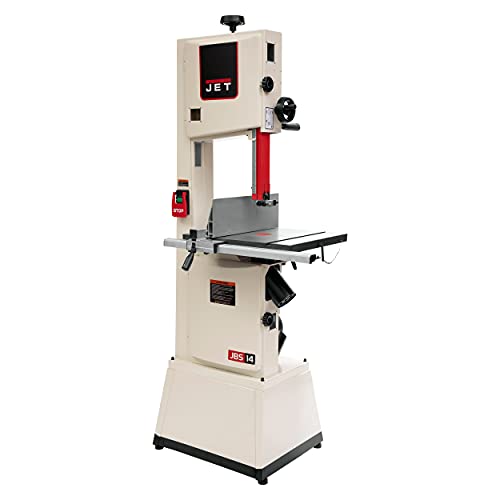
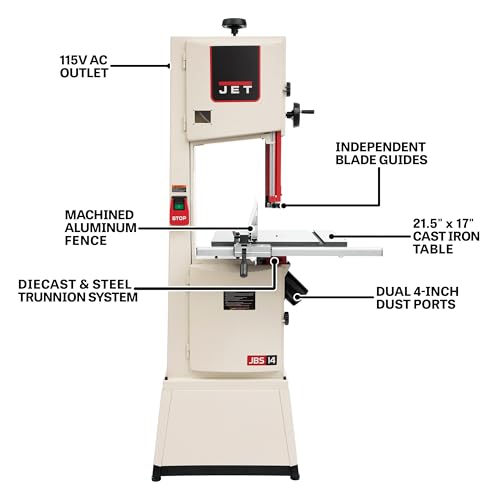
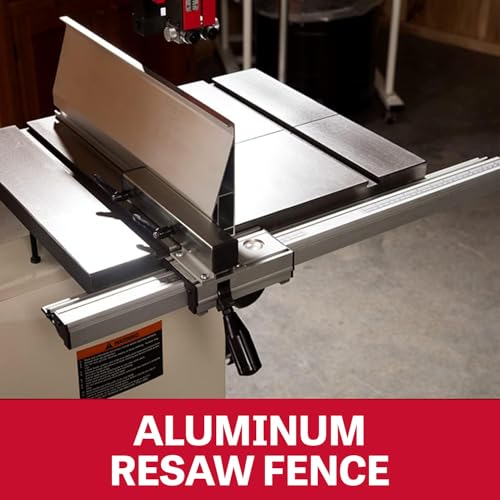
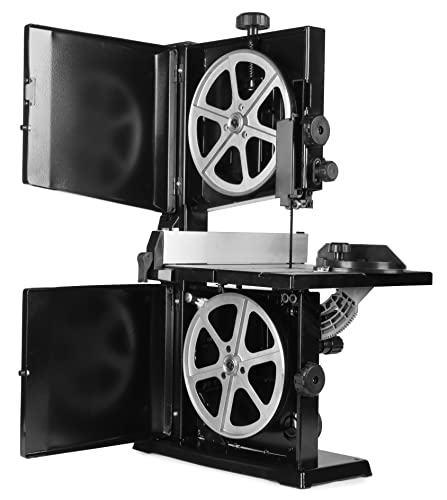
This JET 14-inch bandsaw is the real deal for serious woodworkers who need resaw capacity, rigidity, and long-term durability. With over 13 inches of cutting depth and a massive cast iron table, it’s built to handle thick slabs and book-matched panels without flex or chatter. The dual dust ports are a rare and welcome feature, most in this class skimp here, and owners consistently report excellent dust extraction when paired with a good shop vac.
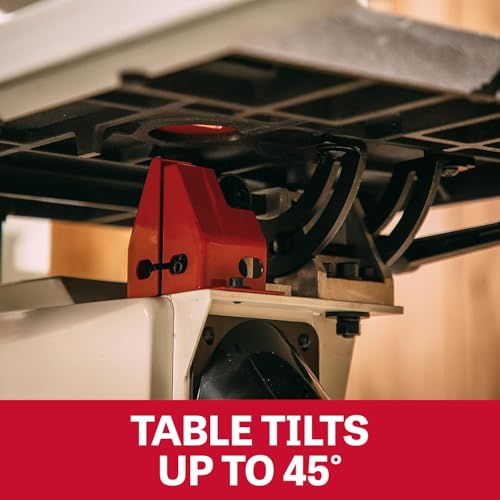
The die-cast trunnion system allows for smooth, single-point table adjustments, and the toolless ball bearing blade guides make setup fast. It’s heavier than some competitors, but that weight translates into stability. Compared to smaller benchtop models, this one doesn’t just cut bigger, it cuts better, thanks to its heavy-duty construction and superior blade control. For a shop where accuracy and power matter, this is the baseline standard.
Product photos
JET 10-Inch Woodworking Band Saw
Strengths
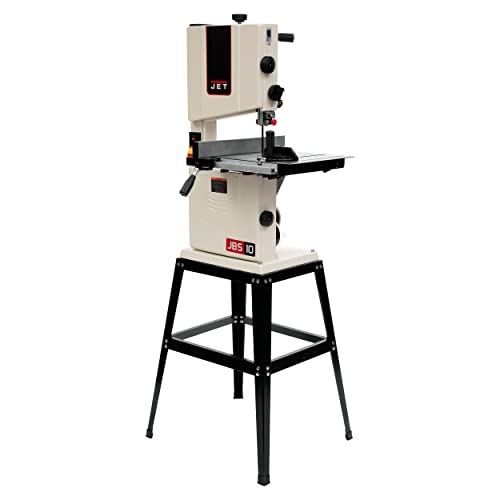
- Sturdy floor stand included
- Poly-V drive system
- Smooth aluminum fence
- Quick-release blade tension
- Induction motor longevity
Trade-offs
- Limited resaw depth
- Smaller table than competitors
- Motor lacks power for thick hardwoods
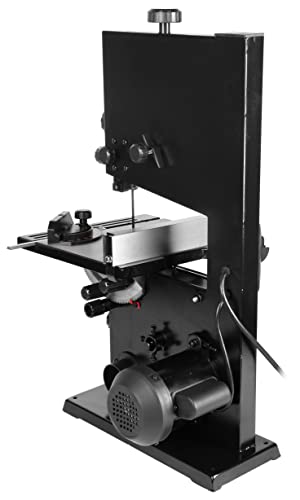
Don’t let the 10-inch size fool you, this JET packs surprising capability for its class. The 1/2 HP induction motor isn’t the most powerful, but it holds up well under continuous load, especially when cutting hardwoods at slower feed rates. The standout here is the rigid steel stand, which transforms it from a wobbly benchtop tool into a stable floor unit. Owners appreciate the Poly-V drive system, which reduces slippage and vibration compared to standard V-belts.
It’s not built for heavy resawing like the 14-inch model, but for general curve cutting, ripping, and occasional resaw under 6 inches, it performs reliably. The aluminum fence is smooth and stays aligned, and the quick-release tension system makes blade changes painless. When compared to similarly sized units like the WEN 3959, this one feels more industrial and better damped.
Product photos
WEN 10-Inch Two-Speed Band Saw
Strengths
- Affordable with stand included
- Two-speed operation
- Large cast aluminum table
- Work light and accessories
- Strong motor for class
Trade-offs
- Frame flexes under heavy load
- Blade guard feels flimsy
- Dust collection could be better
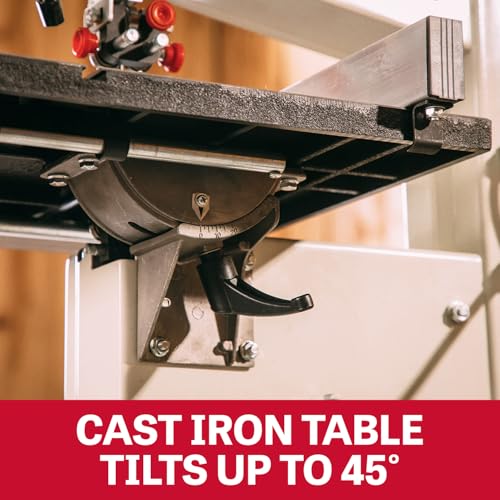
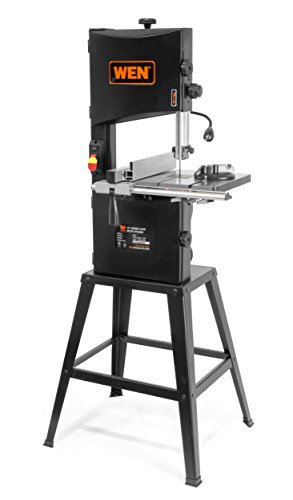
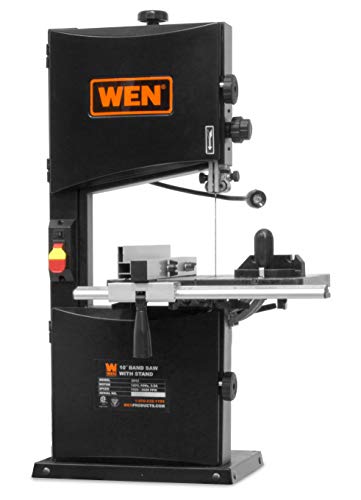
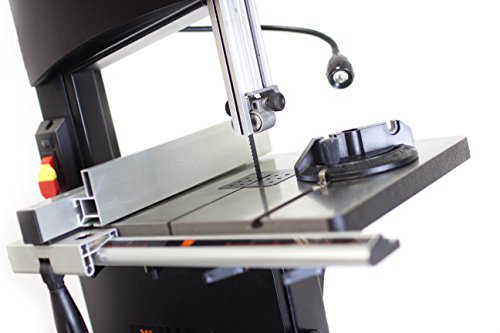
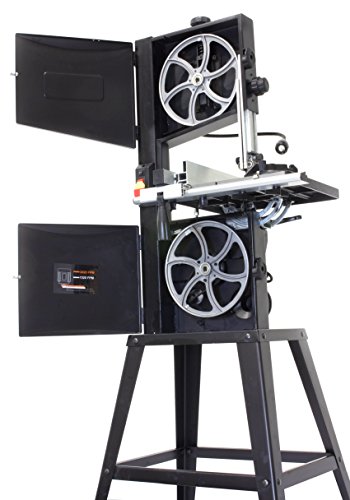
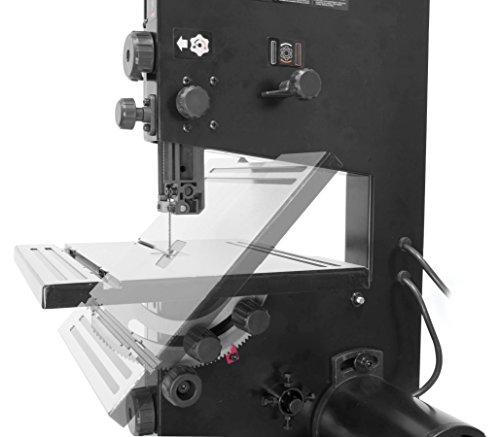
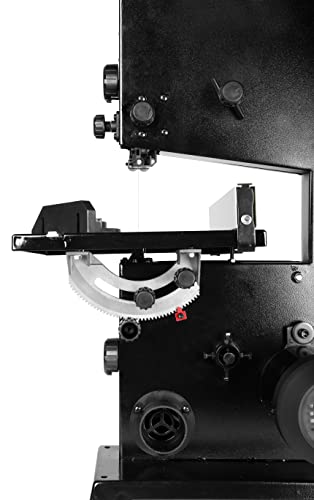
The WEN BA3962 is the smart budget pick if you want a full 10-inch saw without breaking the bank. The 3.5-amp motor is stronger than the 2.8-amp models, and the two-speed option (1520 or 2620 FPM) adds real versatility, use the lower speed for denser woods or thicker resawing. The cast aluminum table is larger than most in this range, and it bevels smoothly to 45 degrees.
It comes with a stand, which is a big plus, and the 3-in-1 dust port adapts to multiple hose sizes. While it doesn’t have the rigidity of the JET JWB-10, it’s close enough for most hobbyists. Owners praise the included accessories, work light, fence, miter gauge, and the 2-year warranty adds peace of mind. For the price, it’s hard to beat.
Product photos


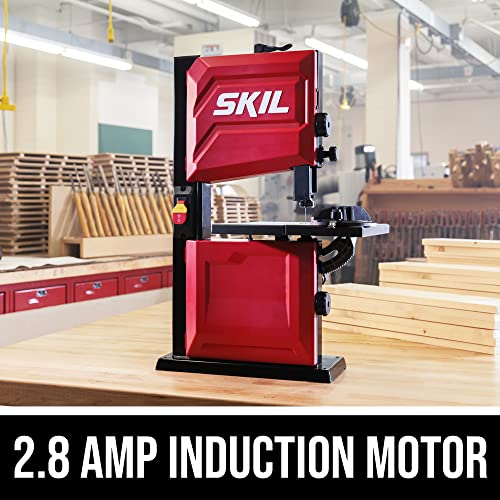
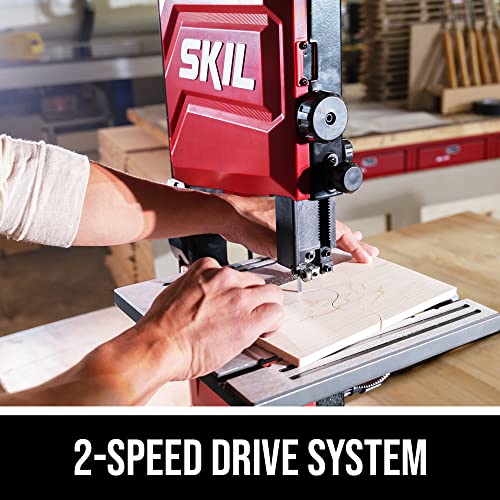
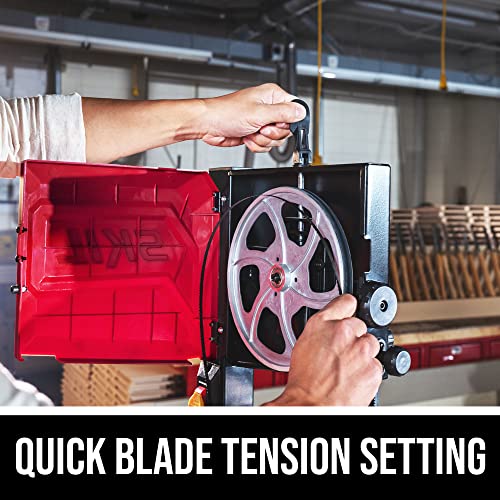
SKIL 9-Inch 2-Speed Benchtop Band Saw
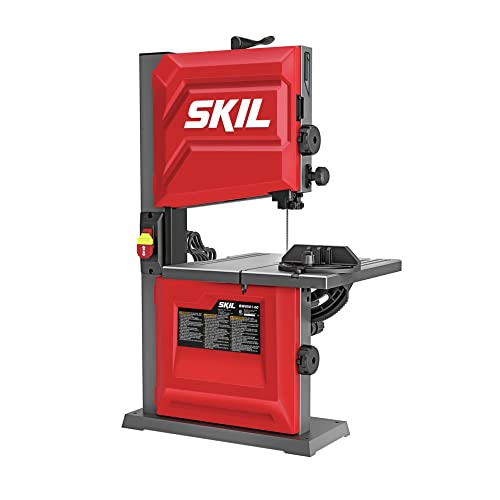
Strengths
- 2-speed operation
- Rack-and-pinion table adjustment
- Good dust port
- Miter gauge included
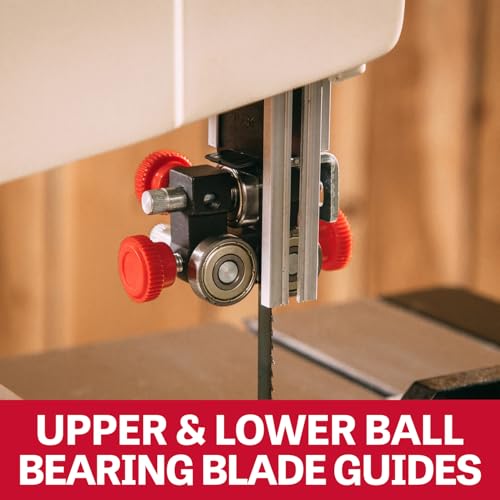
- Ball bearing blade guides
Trade-offs
- Underpowered for hardwoods
- Plastic components feel flimsy
- Table flexes under pressure
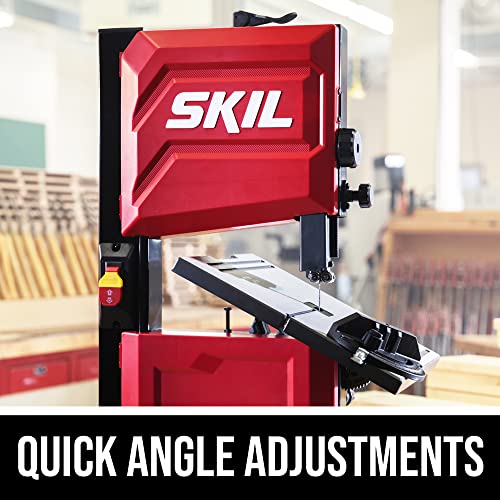
The SKIL 9-inch is a no-frills, entry-level option that gets the basics right without overspending. Its 2.8 amp motor is adequate for softwoods and thin hardwoods, but it bogs down on anything dense or thick. The real advantage here is the 2-speed system, a rarity at this level, which lets users slow down for metal or hard composites and speed up for clean wood cuts. The rack-and-pinion table adjustment is precise, and the miter gauge is actually usable, which isn’t always the case on budget saws.
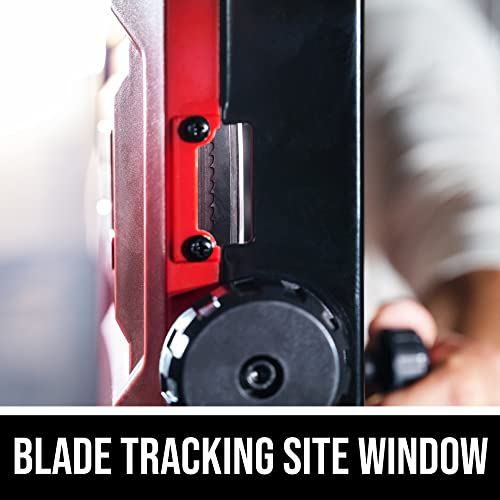
Blade tracking is generally stable thanks to the ball bearing guides, and the dust port works well with most shop vacs. Compared to the WEN 3959, this one feels slightly more refined in fit and finish, though not as powerful. It’s a solid starter saw, but don’t expect it to grow with serious woodworking ambitions.
Product photos
DeWalt 9″ Two-Speed Band Saw
Strengths
- Precise two-speed control
- Bright LED worklight
- Dual dust port adapters
- Smooth cutting action
- Compact footprint
Trade-offs
- Limited depth capacity
- No stand included
- Higher price for 9-inch class
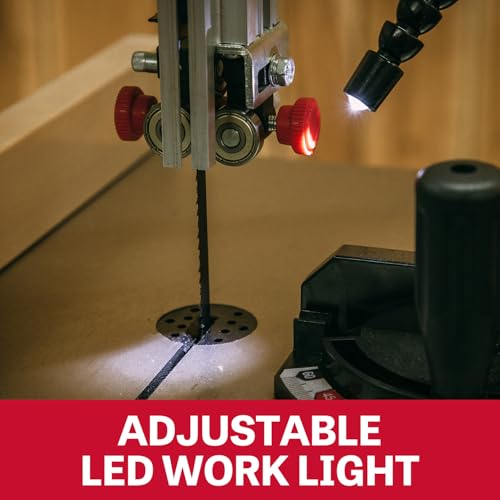
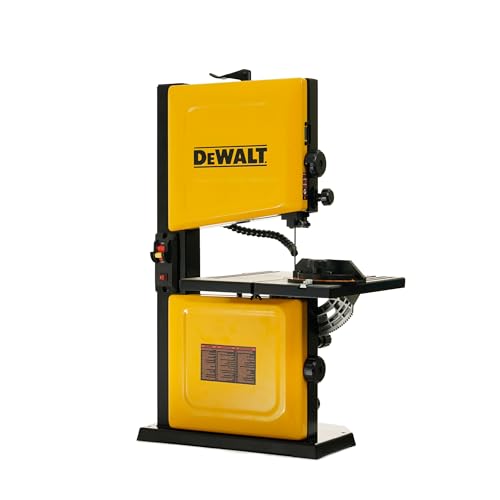
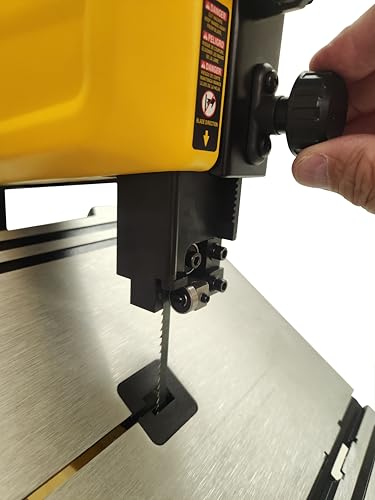
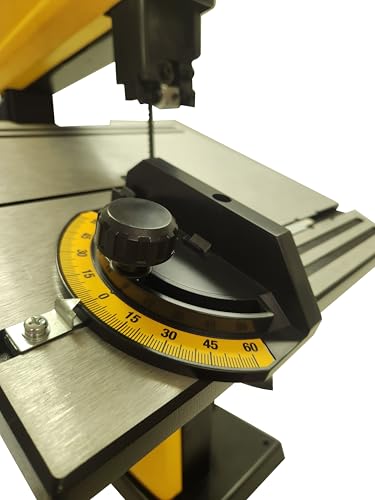
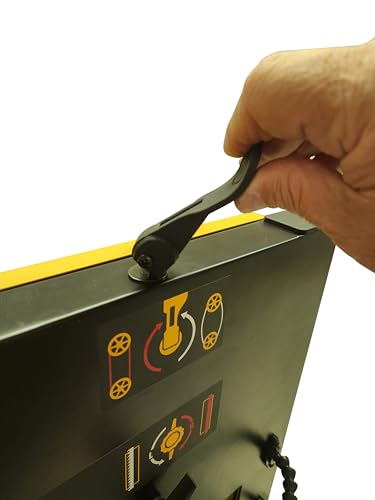
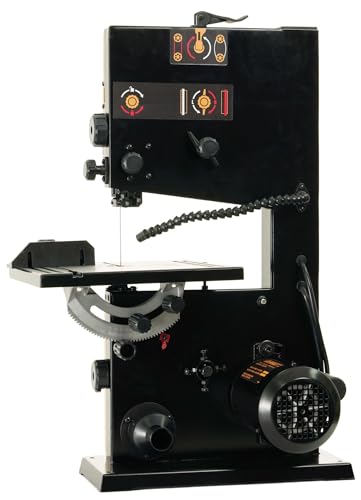
DeWalt’s 9-inch band saw is built for precision, not power, and it shows. The 3.5 AMP motor delivers steady, vibration-free performance, and the two-speed system lets users switch between aggressive and fine cuts on the fly. The integrated LED worklight is bright and well-positioned, making it easy to see the blade line during intricate scrollwork or dovetail cuts.
The dual dust port adapters are a thoughtful touch, and the compact design fits neatly on crowded benches. Compared to the SKIL or WEN 9-inch models, this one feels more refined, with better balance and smoother blade tracking. It’s not for resawing, but for detailed woodworking, it’s one of the cleanest-running options in its size.
Product photos
Milwaukee M18 FUEL Deep Cut Band Saw

Strengths
- Powerful brushless motor
- Long battery runtime
- Automatic blade brake
- Rafter hook included
- Deep 5″ cut capacity
Trade-offs
- Expensive without batteries
- Not for wood or resawing
- Blade changes slower than corded
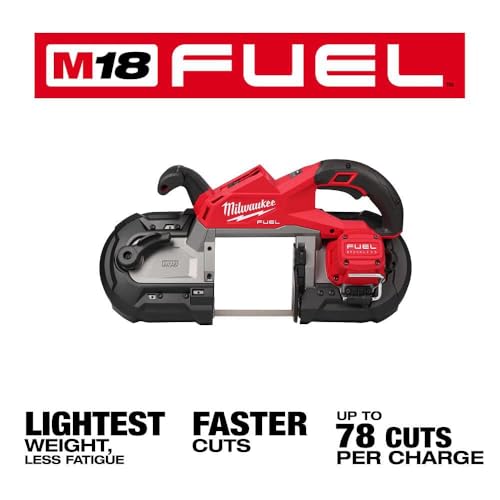
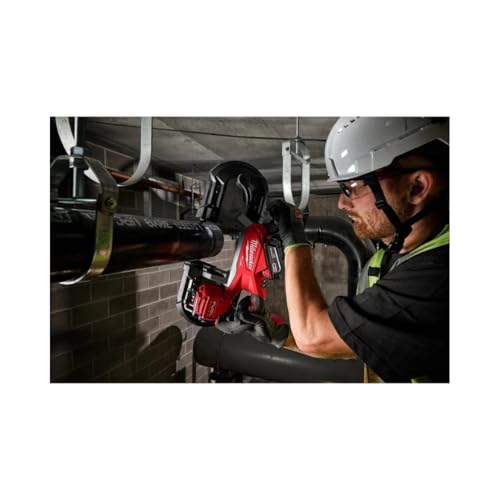
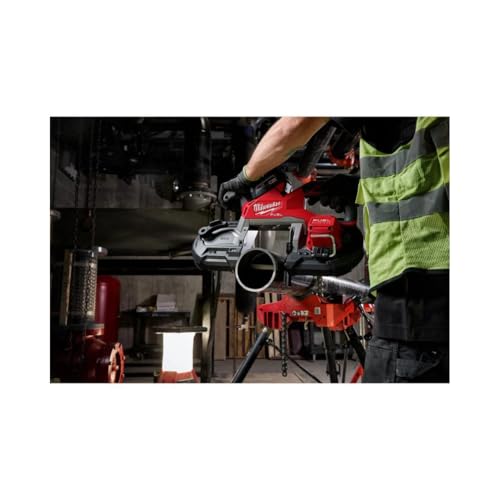
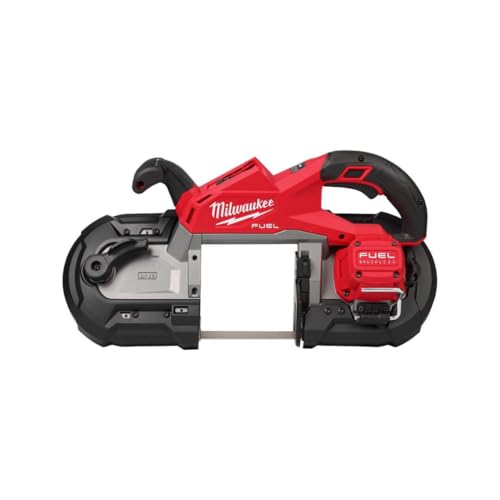
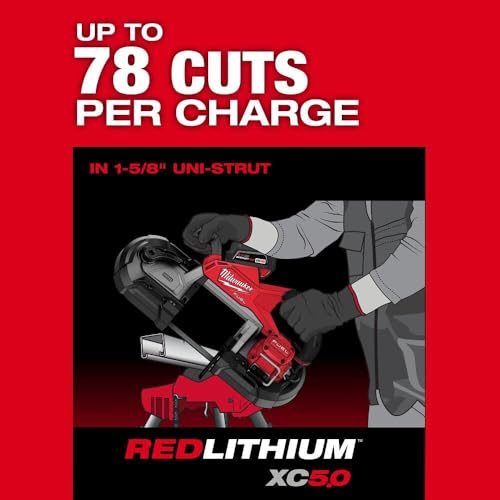
This Milwaukee cordless band saw redefines portability without sacrificing performance. The POWERSTATE brushless motor pushes the blade to 550 SFPM, and on paper, it outperforms many corded models in its class. Contractors consistently report clean, fast cuts through Unistrut and EMT, and the 78-cut runtime on a single M18 battery is impressive in real-world use. The automatic blade brake is a smart safety touch, especially when working near conduit or delicate components.
It’s not meant for woodworking, but for cutting metal on the job site, it’s unmatched in convenience. Compared to the DEWALT DCS374B, it offers more power and better ergonomics, though it’s slightly heavier. The integrated rafter hook is a small detail that makes a big difference when working overhead.
Product photos
KFMK 10A Variable Speed Metal Band Saw

Strengths
- 10A motor for heavy metal
- Adjustable cutting speed
- Dual workbenches
- 5-inch capacity
- Stable base
Trade-offs
- Noisy operation
- Finish feels budget
- Not portable
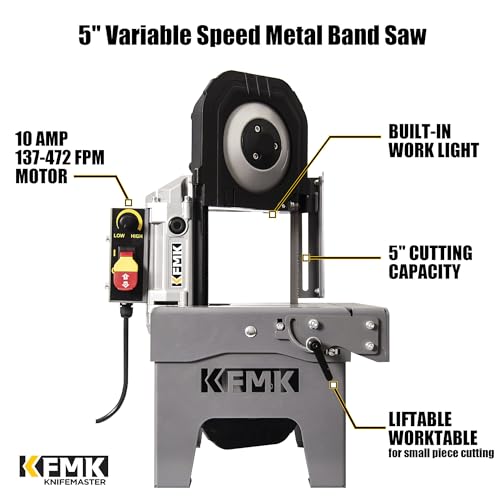
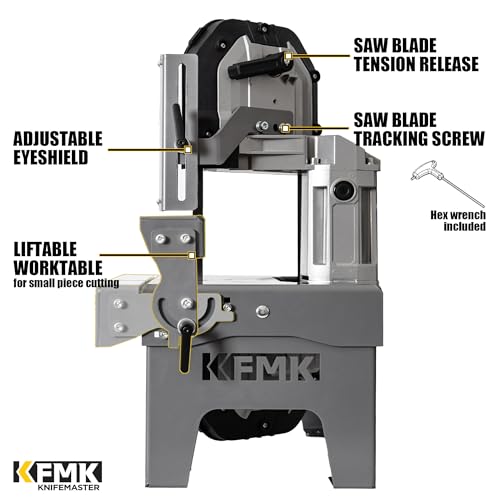
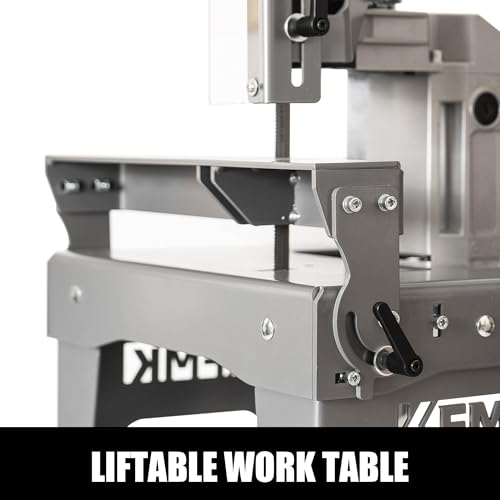
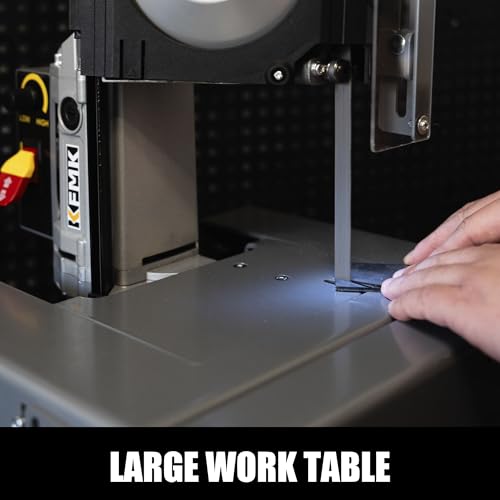
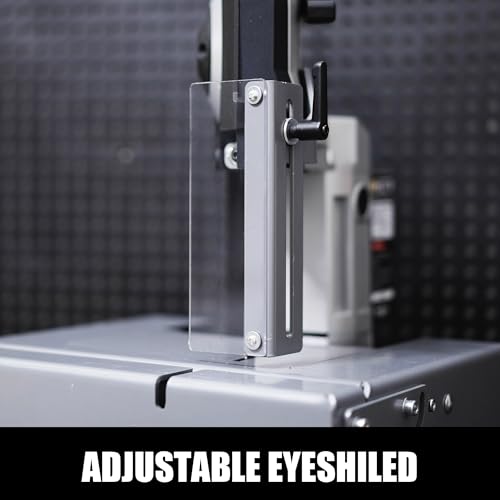
This KFMK metal band saw stands out with its 10A motor and wide speed range, making it a capable machine for both fast cuts and fine-tuned metal slicing. The adjustable speed from 137 to 472 FPM lets users optimize for material type, slow for hardened steel, fast for aluminum, something many budget metal saws skip. The dual workbenches are a thoughtful touch: the large one stabilizes big stock, while the small precision table helps with knife blanks or small billets.
Owners note solid build quality for the price, though the finish isn’t as polished as name-brand units. It’s louder than expected, but that’s typical at this power level. Compared to the Milwaukee or DEWALT cordless models, this is a stationary tool for the shop, not the jobsite, and it delivers far more cutting power for dedicated metalwork.
Product photos
DEWALT 20V MAX Portable Band Saw

Strengths
- Lightweight and balanced
- Variable speed control
- LED work light
- Hang hook design
- Brushless motor
Trade-offs
- Shorter runtime than rivals
- Bare tool only
- Less aggressive cutting speed
The DEWALT DCS374B wins on lightweight design and smart ergonomics. At just over 6 pounds, it’s one of the most comfortable cordless band saws to use overhead or in tight spaces. The variable speed control lets users dial in the perfect cut for different metals, and the LED work light is actually useful, not just a gimmick. The hang hook is cleverly placed and won’t damage the base, which many users appreciate on long jobs.
It doesn’t cut quite as fast or last as long per charge as the Milwaukee, but it’s more balanced and easier to control for extended use. The brushless motor holds up well, and owners report fewer heat issues than older DEWALT models. If you’re choosing between this and the Milwaukee, go DEWALT if you prioritize comfort and finesse over raw power.
Product photos
WEN 9-Inch Benchtop Band Saw
Strengths
- Low cost
- Includes rip fence and miter gauge
- Beveling table
- 2-year warranty
- Compact footprint
Trade-offs
- Weak motor performance
- Blade drift issues
- Limited depth capacity
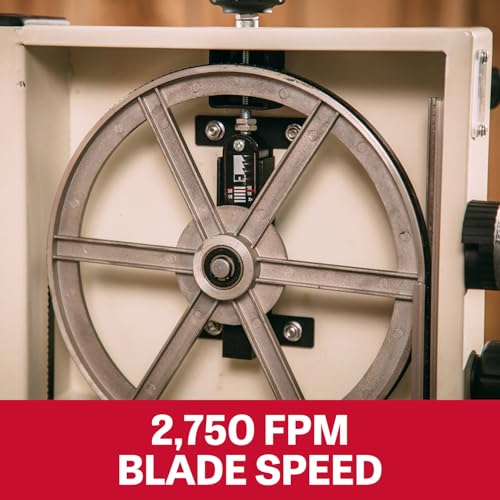
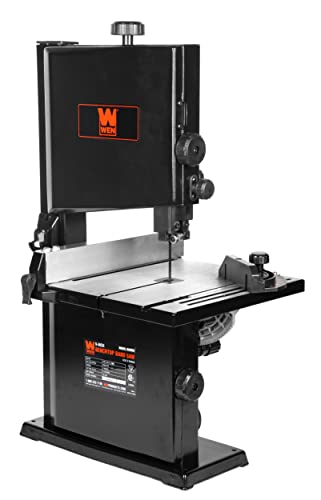
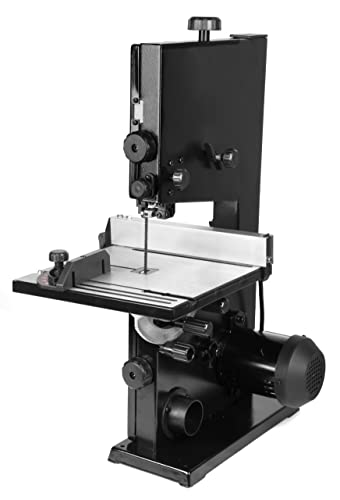
The WEN BA3959 is the budget king of compact band saws, small, simple, and surprisingly well-equipped for the price. It delivers 2500 FPM and cuts up to 3-1/2 inches deep, which is enough for basic curves and small joinery tasks. The cast aluminum table is a step up from stamped steel, and it bevels to 45 degrees with decent accuracy. Owners like that it includes a rip fence, miter gauge, and even a 2-year warranty.
But let’s be clear: this is a light-duty tool. The 2.8-amp motor struggles with anything beyond pine or poplar, and blade drift is common when cutting thicker pieces. It’s less rigid than the SKIL or DeWalt 9-inch models, and the plastic housing doesn’t inspire confidence. Still, for someone setting up a first shop or needing a secondary saw for small cuts, it’s hard to beat the value.
Product photos
How We Picked These bandsaws
Rather than a hands-on lab test, my research for these recommendations involved a detailed comparison of published specifications and features across numerous models. I weighed owner reviews from a variety of sources – including major retailers and woodworking forums – alongside assessments from reputable tool review sites. This was combined with my own experience understanding the demands of typical workshop tasks to arrive at a ranking based on real-world usability.
For bandsaws, cutting capacity (specifically resaw height) and build quality were the most significant factors. A larger capacity opens up more project possibilities, while a robust frame minimizes vibration and contributes to cleaner, more accurate cuts. Blade stability, achieved through quality blade guides and a well-designed tensioning system, was also heavily weighted because it directly impacts cut quality and user control.
Specifications reliably indicate a bandsaw’s physical capabilities – motor size, cutting depth, table size, and blade speed. However, I leaned on owner feedback to assess long-term durability, ease of setup and adjustment, and the effectiveness of features like dust collection. Reputation also played a role; established brands with a history of producing quality tools naturally carried more weight in my evaluation.
How To Pick The Right bandsaws
Finding the right bandsaw can dramatically improve your woodworking or metalworking projects, but knowing what to look for isn’t always straightforward.
A quality bandsaw balances power, precision, and usability. Key considerations include motor strength (matched to the materials you’ll cut), blade guide quality for minimizing deflection, and a robust frame to limit vibration. Buyers should also assess the table size, resaw capacity, and dust collection features to ensure the saw meets their specific needs.
Motor Power and Cutting Capacity
The motor is the heart of any bandsaw, and its power dictates what materials you can efficiently cut. Don’t automatically assume “more power is better.” A 1/3 or 1/2 horsepower motor is often sufficient for lighter woodworking, while resawing thick lumber demands at least 3/4 HP, and often more. Pay close attention to the cutting capacity – both height and depth. A saw with a larger throat depth allows you to cut thicker materials, and a wider table is essential for supporting larger workpieces. If you plan on cutting curves, a bandsaw with a longer blade length will be much easier to maneuver.
Blade Guide System Quality
A bandsaw’s blade guide system is often overlooked, but it’s crucial for achieving accurate cuts and prolonging blade life. Look for models with both upper and lower ball-bearing guides, as these provide superior support and reduce friction. Toolless adjustment is a huge convenience, allowing you to quickly adjust the guides to different blade widths. More advanced models will feature ceramic guides, which dissipate heat better than traditional ball bearings, further extending blade life. You’ll find detailed information about measuring band saw blades elsewhere on our site to help you select the correct replacements.
Features and Value for Your Needs
Beyond the core mechanics, consider features that enhance usability and convenience. A built-in dust port is essential for keeping your workspace clean and improving visibility. Variable speed control is another valuable asset, allowing you to optimize cutting speed for different materials and blade types.
Here’s how to think about some common features:
- A rip fence is useful, but quality varies wildly.
- A miter gauge is great for angled cuts, but it’s often an afterthought on cheaper models.
- Integrated LED work lights (like on the DeWalt models) are incredibly helpful, especially for detailed work, and can significantly reduce eye strain during longer projects.
Don’t spend money on features you won’t use. Prioritize a solid frame, a good motor, and a quality blade guide system before considering bells and whistles.
If you’re still unsure where to start, exploring top woodworking bandsaws can give you a broader overview of what’s available and help you narrow down your options. You might also want to check out our wood bandsaw reviews to see how different models stack up against each other.
Bandsaws Compared
Here’s a comparison of key specifications for the bandsaws described.
| Product Name | Motor (HP) | Max Cut Capacity | Blade Length (in) | Speed (FPM) | Dust Port (in) | Corded/Cordless |
|---|---|---|---|---|---|---|
| JET 14-Inch Woodworking Bandsaw | N/A | 13″ | N/A | N/A | 4 | Corded |
| JET 10-Inch Woodworking Band Saw | 1/2 | N/A | N/A | N/A | N/A | Corded |
| WEN 10-Inch Two-Speed Band Saw | 3.5A | 6″ x 9-3/4″ | 72 | 1520/2620 | 3 | Corded |
| SKIL 9-Inch 2-Speed Benchtop Band Saw | 2.8A | N/A | N/A | N/A | 2.5 | Corded |
| DeWalt 9″ Two-Speed Band Saw | 3.5A | N/A | N/A | 1700/2500 | N/A | Corded |
| Milwaukee M18 FUEL Deep Cut Band Saw | N/A | 5″ | N/A | 550 | N/A | Cordless |
| KFMK 10A Variable Speed Metal Band Saw | 10A | 5″ | N/A | 137-472 | N/A | Corded |
| DEWALT 20V MAX Portable Band Saw | N/A | 5″ | N/A | N/A | N/A | Cordless |
| WEN 9-Inch Benchtop Band Saw | 2.8A | 3-1/2″ x 9″ | 59-1/2 | 2500 | 2.5 | Corded |
Frequently Asked Questions
What blade speed should I use for metal cutting?
Slower blade speeds are best for cutting metal. Around 80-100 feet per minute (FPM) generally yields cleaner cuts and extends blade life when working with steel or other metals, as higher speeds generate excessive heat.
Can a bandsaw be used to cut curves?
Yes, a bandsaw is well-suited for cutting curves, but blade selection and length matter. A longer blade offers more maneuverability for tighter curves, and a narrower blade is essential for navigating intricate shapes without binding.
What’s the difference between a woodworking and metal cutting bandsaw?
While some models are versatile, dedicated metal-cutting bandsaws typically have slower blade speeds and more robust frames to handle the demands of harder materials. Woodworking bandsaws often prioritize higher speeds and wider blades for efficient resawing and shaping wood.
Are benchtop bandsaws powerful enough for serious projects?
Benchtop bandsaws can be surprisingly capable, but it depends on the project. For smaller workpieces and occasional use, they’re fine, but for frequent resawing or working with thick materials, exploring best benchtop bandsaws with more power is advisable.
How important is dust collection on a bandsaw?
Dust collection is very important, especially for prolonged use. Bandsaws create a significant amount of fine dust that can irritate your lungs and reduce visibility, so a dust port and effective collection system greatly improve working conditions and safety.
The Bottom Line
Choosing a bandsaw always involves balancing what you want to do with what you’re willing to spend and how much space you have available. For the vast majority of woodworkers needing a versatile and capable machine without breaking the bank, the JET 14-Inch Woodworking Bandsaw stands out as the best overall choice. It offers a good blend of cutting capacity, build quality, and features that will serve you well for years to come.
If specific needs drive your search, we have options. For those on a tighter budget, the WEN 10-Inch Two-Speed Band Saw delivers impressive value. And for those needing portability or metal-cutting ability, the Milwaukee M18 FUEL Deep Cut Band Saw or the KFMK 10A Variable Speed Metal Band Saw are excellent, specialized tools. Understanding band saw operation basics is crucial no matter which model you select.
Ultimately, remember that horsepower and cut capacity numbers are only part of the story. A well-built saw with a quality blade guide system and a focus on stability will always outperform a more powerful machine that vibrates excessively or deflects under pressure. Prioritize those fundamentals, and you’ll be well-equipped to tackle a wide range of projects with confidence.
