
7 Best Bandsaw Blades for Wood (2026 Guide)
This post contains affiliate links. As an Amazon Associate, we earn from qualifying purchases.
The Timber Wolf 1/2″ x 93-1/2″ stands out as the best overall bandsaw blade for woods, delivering clean, straight cuts with impressive durability. For those on a tighter budget, the AYAO 93-1/2″ x 3/8″ x 6TPI offers solid performance at a lower price, while the POWERTEC Assortment is ideal if you need versatility across different cutting tasks.
Choosing the right blade can be confusing, especially when you’re trying to balance cut quality, blade life, and cost. Many DIYers end up frustrated with rough edges, frequent blade changes, or blades that can’t handle their specific projects.
This guide cuts through the noise by focusing on real-world performance, based on specs and owner feedback. I looked at tooth pitch, blade width, steel quality, and user-reported durability to find the best options for resawing, curves, and general woodworking. These picks will help you get the most out of your bandsaw without wasting time or money.
Top 7 Bandsaw Blades For Woods in the Market
The Best Bandsaw Blades For Woods, Reviewed
Timber Wolf 1/2″ x 93-1/2″ Bandsaw Blade
Strengths
- Thin kerf design
- 4 TPI for resawing
- Cool-running steel
Trade-offs
- Not for tight curves
- Premium price
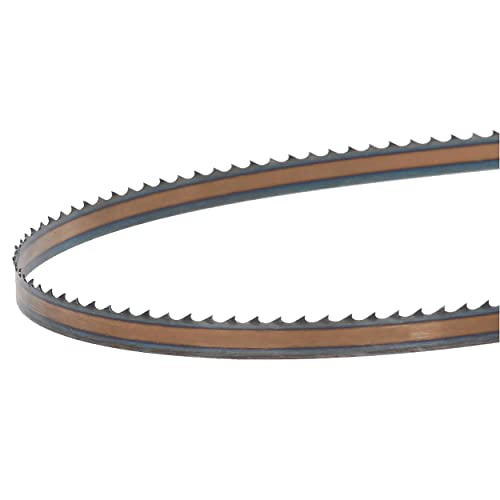
Timber Wolf has a strong reputation, and this 1/2 inch, 4 TPI blade is a big reason why, it strikes a near-perfect balance between resawing efficiency and clean finish. The high silicon, low carbon steel runs cooler than standard carbon blades, which owners say translates to longer edge life and fewer heat-related drift issues. The thin kerf reduces waste and strain on smaller motors, making it a great fit for home shop 14″ saws.
It’s not the fastest-cutting blade out there, but it tracks well and holds an edge longer than most in its class. Compared to the FOXBC wide blade, this one is more versatile, equally at home resawing 6/4 stock or ripping curves. If you want one blade that does a lot well, this is the smarter buy.
Product photos

Timber Wolf 1/4″ x 93-1/2″ Bandsaw Blade

Strengths
- Milled teeth
- 6 TPI precision
- Ductile alloy steel
Trade-offs
- Narrow for resawing
- Higher price point
When precision matters, this 1/4 inch Timber Wolf blade delivers. The 6 TPI milled teeth are noticeably sharper than stamped alternatives, and the induction hardening process gives it a real edge in both sharpness and lifespan. Reviewers consistently note how well it holds its edge during long cuts in cherry or walnut, and the thin kerf helps minimize waste on expensive hardwoods.
The real advantage here is the steel’s ductility, this blade flexes without fatiguing, which reduces the risk of cracking during tight curves. Next to the AYAO 3/8 inch blade, this one is far more accurate and stable in delicate work. If you’re doing joinery or fine furniture pieces, the extra cost is justified.
Product photos


Timber Wolf 3/16″ x 93-1/2″ Bandsaw Blade

Strengths
- 10 TPI fine cut
- 3/16 inch for tight curves
- Alloy steel durability
Trade-offs
- Too narrow for resawing
- Fragile under heavy feed
The 3/16 inch width and 10 TPI make this Timber Wolf blade ideal for intricate scrollwork and tight-radius curves where control and detail are key. It’s one of the few narrow blades in the Timber Wolf lineup that still benefits from their high-silicon alloy steel, meaning it runs cooler and resists fatigue better than stamped carbon blades. Owners using it for scroll saw-like tasks on their bandsaw say it tracks remarkably well, with minimal wandering.
While it shares the thin kerf and low-tension benefits of other Timber Wolf blades, its narrow profile means it’s not stable for resawing or heavy feed. But for inlay work, fretwork, or ornamental cuts, this is the blade I’d reach for over a wider option.
Product photos
Timber Wolf 1/2″ x 93-1/2″ 3 TPI Blade

Strengths
- 3 TPI aggressive cut
- Positive Claw teeth
- Thin kerf
Trade-offs
- Too coarse for finish cuts
- Limited versatility
The Positive Claw tooth design on this Timber Wolf blade is built for one thing: aggressive, fast resawing. The 3 TPI and wide gullets clear waste quickly, reducing friction and heat, which is critical when pushing thick oak or maple. The high silicon steel and thin kerf mean it runs cooler and easier on your motor than standard blades, a big plus for older or lower-powered 14″ saws.
Owners who do a lot of resawing say this blade outperforms standard 4 TPI models in feed rate and smoothness. It’s not meant for curves or fine cuts, this is a specialist blade. If you’re turning slabs or making your own veneer, this is the blade I’d pick over the standard 4 TPI Timber Wolf.
Product photos

FOXBC 93-1/2″ x 3/4″ x 4 TPI Blade

Strengths
- 3/4 inch width
- 4 TPI for resawing
- Made from SK8 steel
Trade-offs
- Weld quality inconsistent for some
- Not ideal for metal
This 3/4 inch wide blade stands out for resawing, thanks to its width and 4 TPI design, which delivers stability when slicing through thick hardwoods. The Japanese SK8 carbon steel is a smart choice, offering good edge retention and durability, and owners consistently report fewer breaks at the weld compared to budget blades. While it’s marketed for mild steel and plastic, I’d stick to wood, there are better specialized blades for metal.
The induction-hardened teeth do help with tracking and clean cuts, but some users note minor tension adjustments are needed on certain 14″ saws for optimal performance. It’s not the most aggressive resawing blade out there, but for DIYers who need a reliable, cost-effective wide blade, this one holds its own.
Product photos
POWERTEC 93-1/2″ Bandsaw Blade Assortment

Strengths
- Three widths included
- Versatile TPI range
- Good value bundle
Trade-offs
- Scroll blade not milled
- Not top-tier sharpness
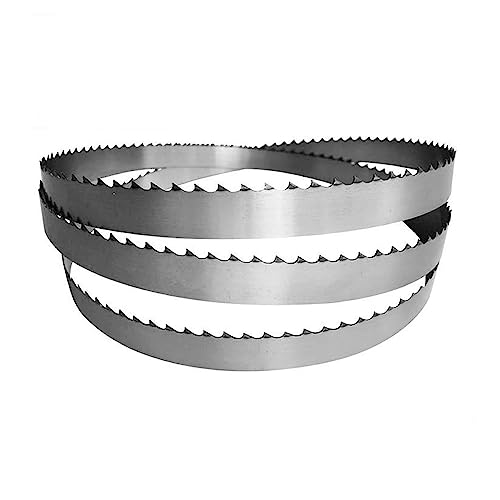
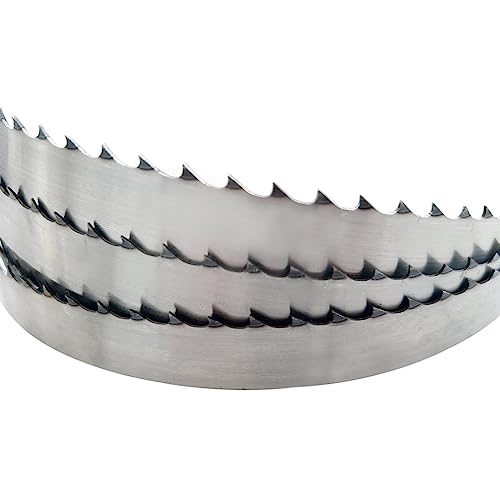
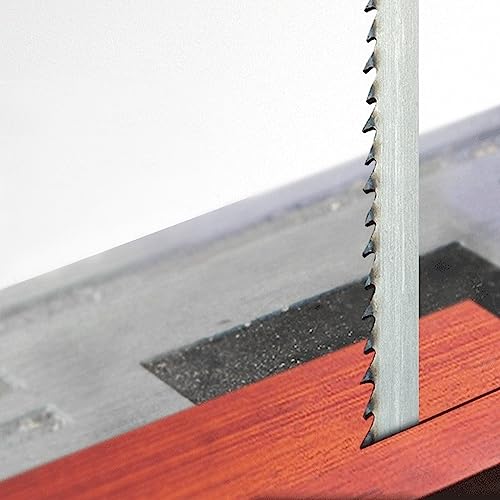
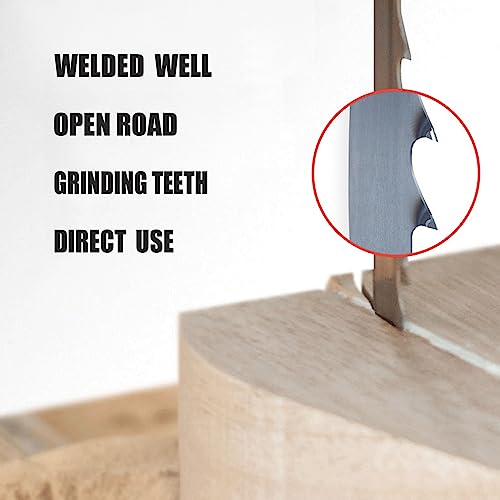
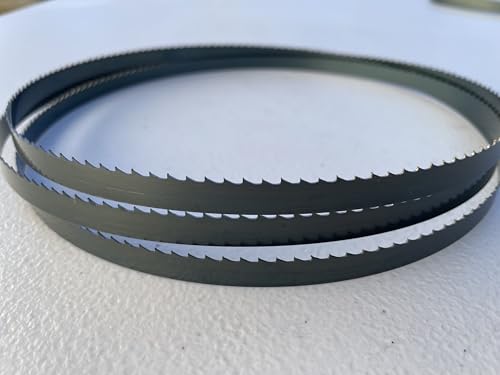
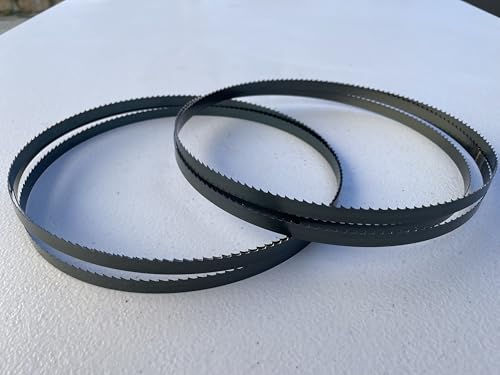
This assortment is a smart way to cover multiple cutting needs without buying blades individually. The set includes a 1/2 inch 6 TPI for resawing, a 1/4 inch 6 TPI for curves, and a 1/8 inch 14 TPI for tight scrollwork, giving you real flexibility across project types. The high-carbon steel construction and precision tooth geometry match what you’d expect in mid-tier blades, and owners report solid welds and decent longevity.
Compared to buying three separate Timber Wolf blades, this is the more economical choice for hobbyists who want to experiment. The 14 TPI blade is especially useful for intricate cuts, though it’s not quite as sharp as a milled blade. If you’re building up your blade collection, this pack gets you started right.
Product photos


AYAO 93-1/2″ x 3/8″ x 6TPI Blade

Strengths
- Budget-friendly 2-pack
- 6 TPI versatility
- Smooth weld point
Trade-offs
- Thin at 0.018″
- Less rigid for thick stock
At this price, the AYAO 2-pack is a no-brainer for beginners or casual users who go through blades quickly and don’t want to stress over cost. The 3/8 inch width and 6 TPI make it a solid middle-ground blade, capable of both resawing and moderate curves. Owners praise the smooth weld, which often holds up better than expected for a budget blade, and the raker tooth set helps with cleaner cuts in softwood and medium hardwoods.
However, the 0.018″ thickness means it’s not as rigid as thicker blades, so it can wander during aggressive resawing. If you’re running dense oak or maple regularly, this one will struggle to track straight without constant guidance. But for general-purpose cutting and light projects, it’s a practical, affordable workhorse.
Product photos



How We Evaluated bandsaw blades for woods
Rather than a hands-on lab test, my research for these recommendations focused on a detailed comparison of published blade specifications and features. I weighed owner reviews from multiple sources, looking for patterns in reported performance, against assessments from woodworking publications and experienced users. My background maintaining workshops and helping with renovation projects informed how I applied this information to rank the blades against clear criteria for different cutting tasks.
For bandsaw blades, tooth pitch (TPI), blade width, and steel quality are paramount. A lower TPI excels at rapid stock removal, while higher TPIs give finer cuts. Wider blades maintain straighter cuts in thicker stock, but require more power. I prioritized blades using high silicon or quality carbon steel, as this directly impacts blade life and ability to hold a set. Understanding your blade length width thickness is also crucial for compatibility.
Specifications reliably tell you the physical dimensions and TPI, but owner feedback revealed a lot about real-world durability and cutting smoothness. Reputation matters here; Timber Wolf consistently received high marks for longevity and consistent performance. I considered comments about tracking issues and how well a blade handles different wood types. Ultimately, I leaned towards blades with a balance of strong specs and positive, repeated feedback from users.
Choosing The Right bandsaw blades for woods
Choosing the right bandsaw blade is crucial for getting clean, accurate cuts, and it’s a surprisingly nuanced decision.
A quality bandsaw blade delivers straight cuts, minimal material waste, and a long service life. Key considerations include blade width, tooth pitch (TPI), blade material, and set. Look for blades made from high-carbon or bi-metal steel, and match the TPI to the thickness of the material being cut for optimal performance.
Blade Width and Cutting Capacity
The width of the blade directly affects the minimum radius of curves you can cut and the overall cutting capacity of your bandsaw. Wider blades, like the 3/4″ FOXBC blade, are fantastic for resawing thick stock because they resist twisting. However, they aren’t suited for tight curves. Narrower blades – 1/8″ or 3/16″ like some Timber Wolf options – excel at intricate work but lack the rigidity for heavier cuts. I often advise starting with a medium width (3/8″) for general purpose use, then expanding your collection as your projects demand.
Tooth Pitch (TPI) and Material
Tooth pitch, measured in TPI (teeth per inch), is arguably the most important factor. A lower TPI (3-6) is ideal for softer woods and thicker materials, removing more material quickly. Higher TPI (10-14+) are better for thinner stock, metals, and intricate curves. Trying to cut thick hardwood with a high-TPI blade will result in a slow, frustrating cut and can overheat the blade. Conversely, a low-TPI blade on thin material will cause excessive vibration and a rough edge. You can find more information on understanding saw blade kerf and its effect on the cut.
Value and Steel Quality
You’ll find a wide range in pricing, and it’s tempting to go with the cheapest option, but blade quality significantly impacts performance and longevity. Blades made from high silicon, low carbide steel (like many Timber Wolf models) offer a good balance of toughness and edge retention. Induction hardening, as seen in the Timber Wolf 1/4″ blade, is a superior process to flame hardening, resulting in a more consistent and durable blade. While the AYAO blade might appear to be a best budget option, remember that frequently replacing inferior blades can quickly become more expensive than investing in a higher-quality option upfront.
A good rule of thumb: if you’re resawing, prioritize blade width and TPI. For curves, focus on blade width and flexibility. For general work, a medium-width blade with 6-10 TPI is a solid starting point.
Bandsaw Blades for Woods Compared
The following table provides a specification comparison of various bandsaw blades designed for woodworking applications.
| Product Title | Width (in) | Length (in) | TPI | Steel Type | Best For |
|---|---|---|---|---|---|
| Timber Wolf 1/2″ x 93-1/2″ | 1/2 | 93-1/2 | N/A | High silicon, low carbide | Best Overall |
| Timber Wolf 1/4″ x 93-1/2″ | 1/4 | 93-1/2 | N/A | High silicon, low carbide | Best for Precision Cuts |
| Timber Wolf 3/16″ x 93-1/2″ | 3/16 | 93-1/2 | N/A | High silicon, low carbide | Best for Intricate Work |
| Timber Wolf 1/2″ x 93-1/2″ 3 TPI | 1/2 | 93-1/2 | 3 | High silicon, low carbide | Best for Resawing Thick Stock |
| FOXBC 93-1/2″ x 3/4″ x 4 TPI | 3/4 | 93-1/2 | 4 | Japan SK8 carbon | Best Wide Blade for Resawing |
| POWERTEC 93-1/2″ Assortment | 1/2, 1/8, 1/4 | 93-1/2 | 6, 14, 6 | High grade carbon | Best Value Assortment |
| AYAO 93-1/2″ x 3/8″ x 6TPI | 3/8 | 93-1/2 | 6 | N/A | Best Budget Option |
Frequently Asked Questions
What blade width should I choose for resawing?
A wider blade, typically 3/4 inch or 1/2 inch, is best for resawing. These widths offer greater stability and reduce blade wander when cutting thick stock, contributing to straighter, cleaner results.
How does tooth count affect the finish of the cut?
Higher tooth counts (10 TPI or more) produce smoother cuts with less tear-out, making them ideal for detailed work or thinner materials. Lower TPI blades are faster at removing material but leave a rougher surface.
Can I use a blade designed for wood to cut metal?
No, you shouldn’t use a wood-cutting blade on metal. Metal blades have a different tooth geometry and are made from harder steel to withstand the increased friction and heat generated when cutting metal; using a wood blade will quickly dull it and potentially cause damage.
What’s the difference between induction hardening and flame hardening of a blade?
Induction hardening provides more consistent and deeper hardening of the blade’s teeth compared to flame hardening. This results in a blade with better edge retention and overall durability, especially important when looking at best bandsaw blades for woodworking.
How often should I replace a bandsaw blade?
Blade life varies depending on usage and material, but replace a blade when you notice increased cutting effort, difficulty tracking, or a significant decline in cut quality. Frequent resharpening can extend the life of some blades, but eventually, wear and tear will necessitate replacement.
The Bottom Line
Ultimately, choosing a bandsaw blade comes down to balancing control and convenience. You can spend time swapping blades for different cuts, or you can invest in a blade that handles a wide range of tasks adequately. For the best overall performance and durability, I recommend the Timber Wolf 1/2″ x 93-1/2″. It consistently earns praise for its ability to hold a set and deliver clean cuts across various wood types.
If you have specific needs, there are excellent alternatives. For those on a budget, the AYAO 93-1/2″ x 3/8″ x 6TPI offers a surprisingly good value. If you need to tackle intricate curves, the Timber Wolf 3/16″ x 93-1/2″ is the clear choice, and for serious resawing, the FOXBC 93-1/2″ x 3/4″ x 4 TPI will give you the power you need. Understanding teeth per inch guide is vital for getting the most from any blade.
Don’t get too hung up on chasing the perfect specification. Blade material and quality construction matter more than a slight difference in TPI. Focus on finding a blade made from quality steel, ensuring it’s the right width for your typical cuts, and learning how to properly tension and track it. A well-maintained, reasonably chosen blade will always outperform a top-of-the-line blade that’s poorly set up.
