7 Best 120V MIG Welders of 2026
This post contains affiliate links. As an Amazon Associate, we earn from qualifying purchases.
The ARCCAPTAIN MIG205 Pro stands out as the overall best 120v MIG welder for its high output and multi-process capability, while the ARCCAPTAIN iControl MIG145 Pro is a top budget-friendly pick that’s ideal for beginners. If you want maximum versatility, the YESWELDER 160A Dual Voltage MIG gives you dual voltage and solid performance across processes.
Most people shopping for a 120v MIG welder aren’t looking to build bridges, they want a reliable tool that can handle repairs, small fabrication jobs, and weekend projects without frustration. The real challenge is cutting through marketing hype to find a machine that actually performs consistently on thin steel, starts easily, and won’t break down after a few months.
This guide cuts to the core of what matters based on specs, owner feedback, and my experience evaluating power tools. I focused on ease of use, build quality, and real-world usability so you can pick a welder that fits your skill level and grows with your projects.
Top 7 120V Mig Welders in the Market
The Best 120V Mig Welders, Reviewed
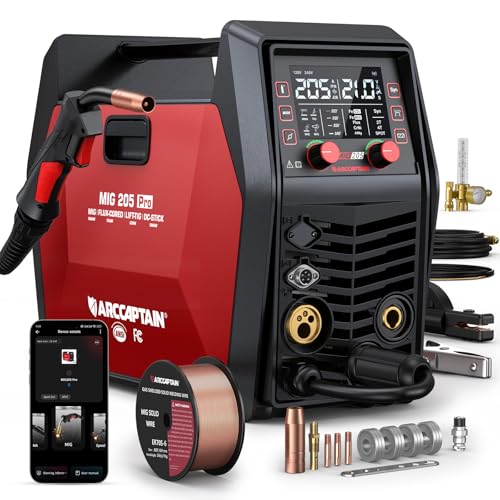
ARCCAPTAIN MIG205 Pro 6-in-1 Welder
Strengths
- 205A output
- 6-in-1 functionality
- APP control
Trade-offs
- Spool gun sold separately
- TIG torch not included
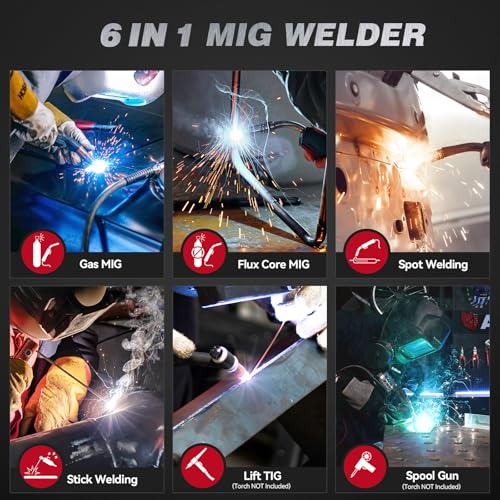
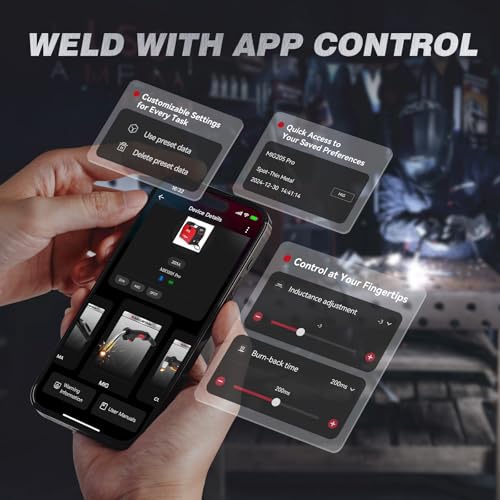
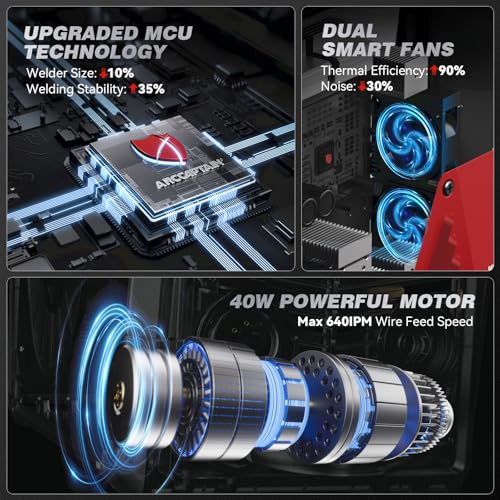
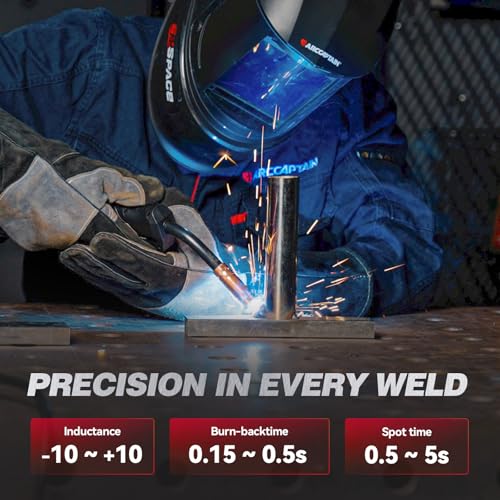
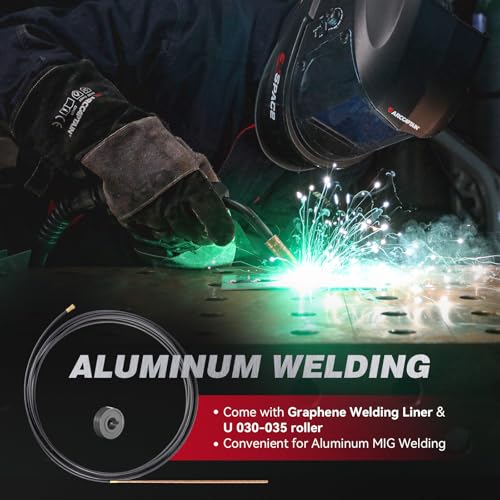
This is the most capable machine here, offering 205A output on dual voltage and six welding modes, including spool gun aluminum welding, which is rare at this price. The APP control and synergic mode make setup intuitive, and advanced users will appreciate the inductance and burn-back adjustments for fine-tuning arc behavior. With a 640ipm max wire speed and 40W wire feeder, it handles thicker material with less stutter. Reviewers note it runs cool thanks to dual fans, and the LED screen is one of the clearest in class.
Compared to the YESWELDER 160A, it’s in a different league, more power, smarter features, better cooling. While it requires buying a spool gun and TIG torch separately, the core machine is built like a pro tool. My pick for the best overall 120V-compatible MIG welder, especially for serious DIYers or small shops.
Product photos
DURATECH 125A Flux Core Welder

Strengths
- CSA certified
- True 125A output
- Lightweight
Trade-offs
- Flux core only
- No synergic mode
- Wire not included
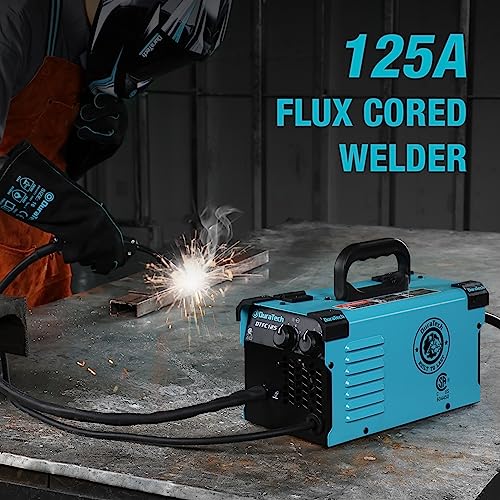
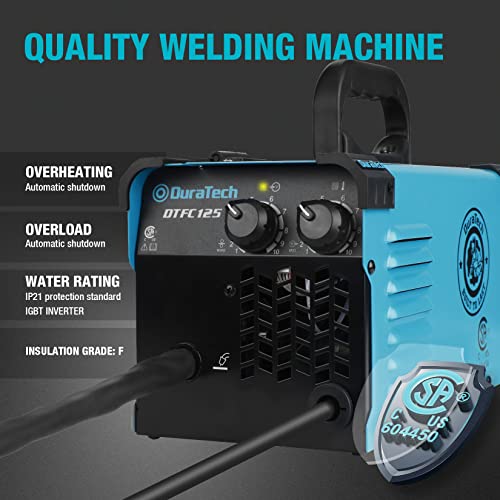
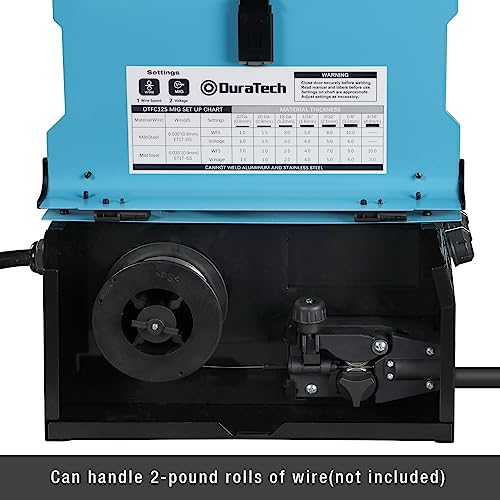
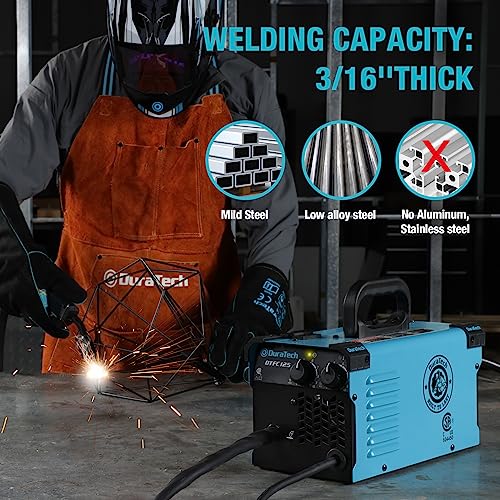
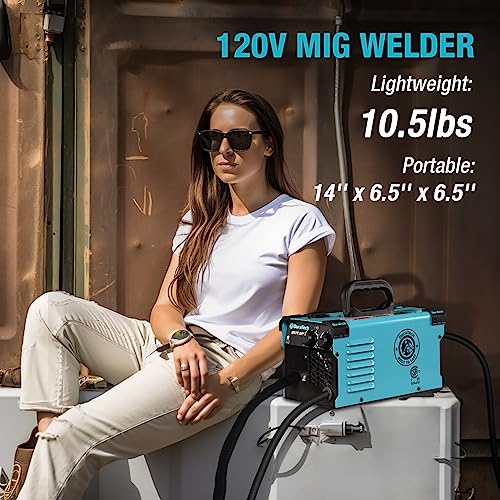
This is the bare-bones workhorse of the list, no frills, no app, no dual voltage, but it gets the job done for small repairs and light fabrication. The 125A output is enough for up to 3/16” mild steel, and the infinite voltage and wire feed control lets experienced users fine-tune their settings precisely. It’s CSA certified, which is a real plus for safety compliance, and the all-copper transformer suggests better durability than budget units that cut corners. Owners say it sparks reliably and runs smoothly, especially with 0.030” flux core wire.
It doesn’t compete with the ARCCAPTAIN 165A in power or features, but for someone on a tight budget who just needs a no-nonsense flux core welder for garage fixes, this is a solid entry point. Just don’t expect to weld thick material for long, the duty cycle is shorter than higher-end models.
Product photos
YESWELDER 160A Dual Voltage MIG
Strengths
- Dual voltage
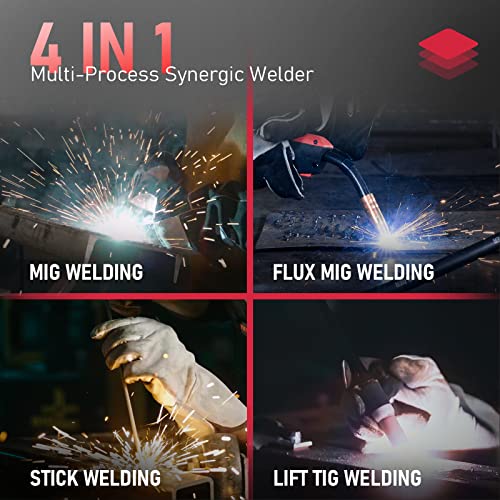
- 4-in-1 capability
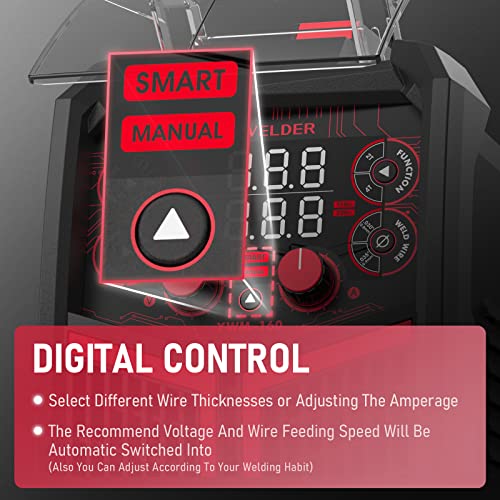
- Synergic control
Trade-offs
- TIG torch sold separately
- Heavier than some rivals
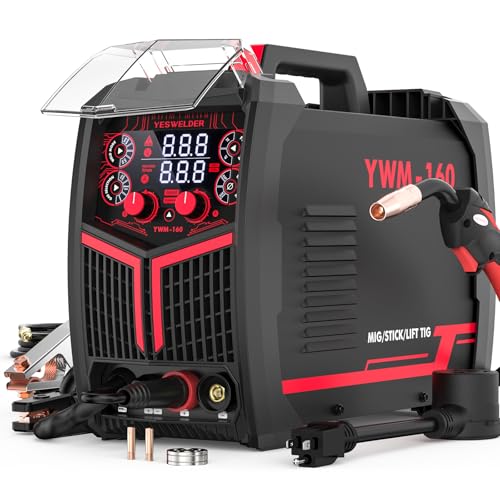
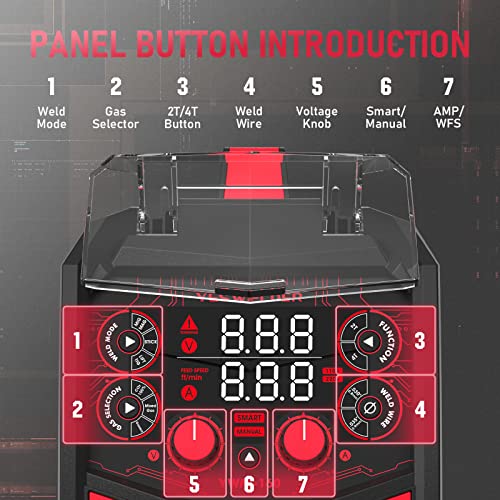
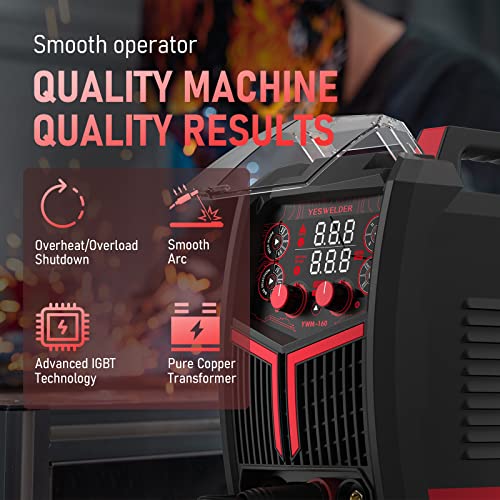
This 160A dual-voltage welder stands out in a crowded market by offering true versatility without breaking the bank. The ability to switch between 110V and 220V means it can handle heavier jobs when wired for 220V, while still being practical for home garages running on standard 120V circuits. Owners consistently report clean, stable arcs in both flux core and gas MIG modes, and the 4-in-1 functionality (MIG, flux core, stick, and lift TIG) makes it a solid pick for those who want one machine to cover multiple needs. The synergic control is a real win for beginners, it takes the guesswork out of setting voltage and wire speed.
Still, the jump from 110V to 220V doesn’t magically turn it into a 200A machine, and users pushing it on thicker material sometimes note the duty cycle heats up faster than expected. Compared to the ARCCAPTAIN 165A, it’s slightly heavier but offers more robust build feedback. For someone who wants flexibility and might eventually upgrade their shop power, this is a smart foundation.
Product photos
Lincoln Electric 90i FC Welder

Strengths
- Simple two-knob control
- Lincoln reliability
- Metal case included
Trade-offs
- Low amperage
- Limited to thin metal
Lincoln Electric has a reputation for reliability, and this little 120V unit lives up to the brand. It’s not powerful, 90A limits it to thin metal, but it’s incredibly user-friendly, with just two knobs for voltage and wire speed. The infinite voltage control lets you fine-tune the arc smoothly, and owners love how clean the welds are on sheet metal and light brackets. The included metal case and shoulder strap make it durable and easy to carry, and it’s a favorite among handymen and maintenance crews.
It’s outgunned by nearly every other welder on this list, but that’s not the point. For small, precise jobs, like repairing a trailer frame or fixing a gate, it’s hard to beat. I’d pick this over the DURATECH 125A if you’re only welding occasionally and want something simple and trustworthy.
Product photos


ARCCAPTAIN iControl MIG145 Pro
Strengths
- Ultra lightweight
- APP control
- Synergic mode
Trade-offs
- 120V only
- No dual voltage
- TIG torch not included
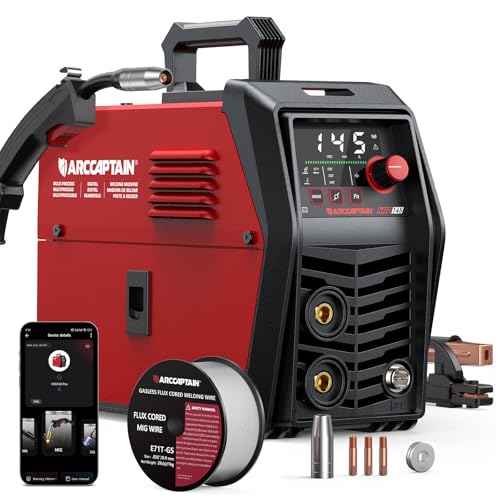
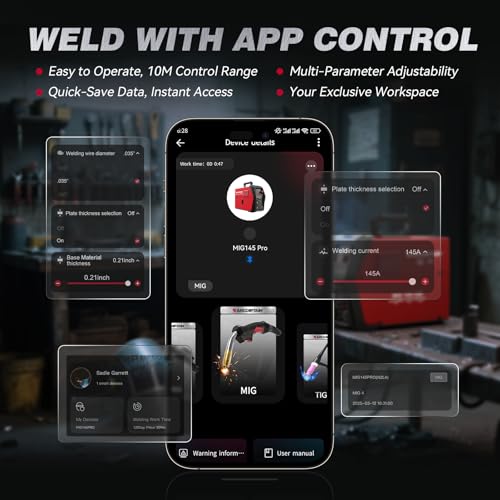
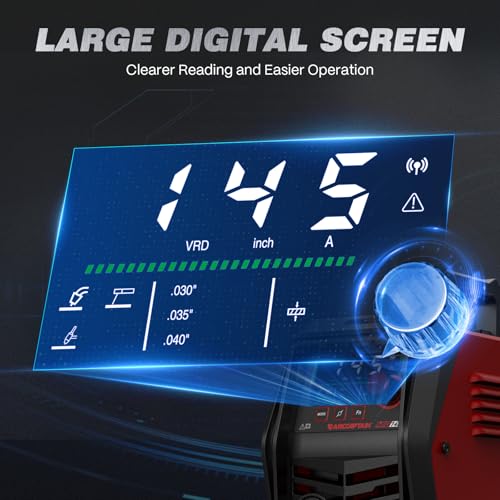
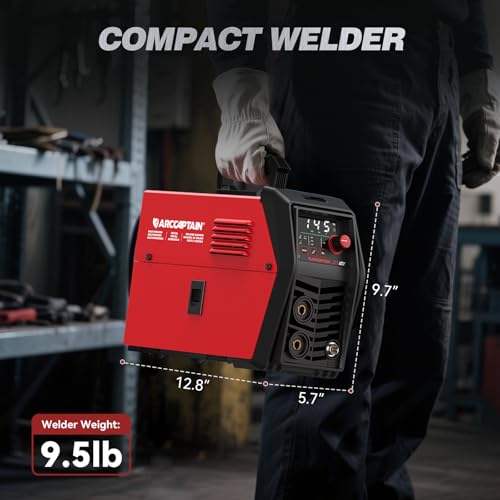
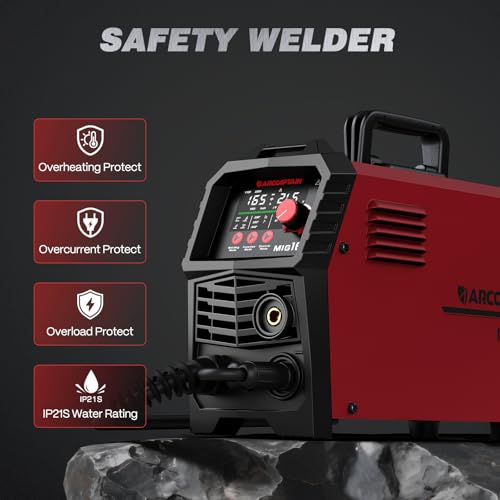
At just 9.5 pounds, this is one of the most portable 120V flux core welders you’ll find, and the APP control feature adds a modern touch that genuinely appeals to tech-savvy DIYers. The synergic mode makes setup simple, pick your wire size and material thickness, and the machine dials in the settings. That’s a real confidence builder for beginners still learning the relationship between amperage, voltage, and wire speed. Reviewers note it runs cool even during moderate sessions, thanks to the smart fan design, and the LED display is bright enough to read through a helmet.
Compared to the DURATECH 125A, it offers more advanced features like app integration and a cleaner digital interface, but at a higher price point. It doesn’t have dual voltage, so it’s limited to lighter tasks. If you’re mostly doing backyard repairs or farm equipment fixes, this delivers solid performance in a compact body.
Product photos
ARCCAPTAIN 165A 4-in-1 MIG Welder
Strengths
- 165A output
- Dual voltage
- 2T/4T function
Trade-offs
- 2lb spool only
- TIG torch sold separately
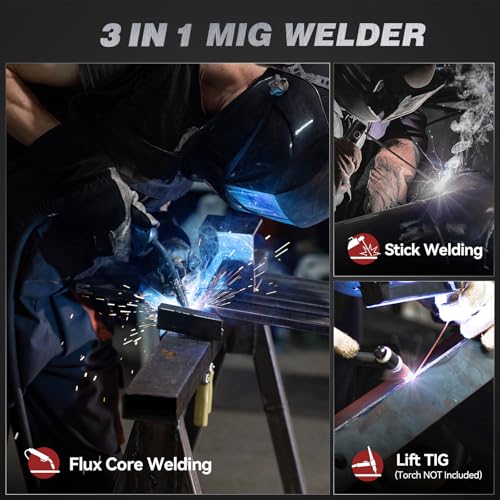
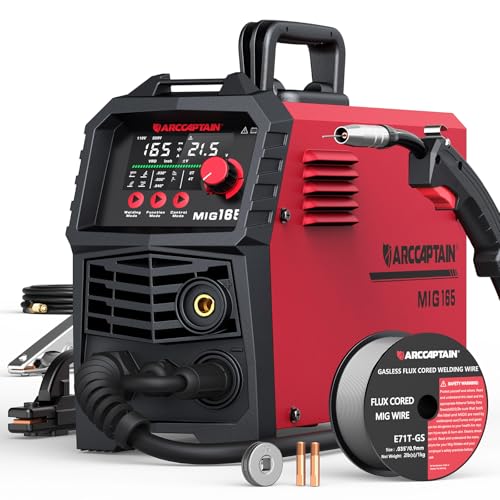
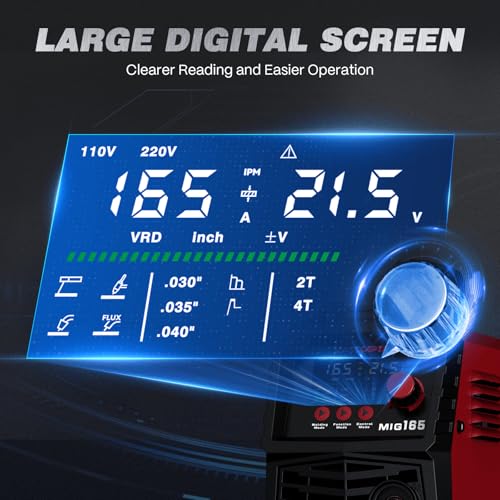
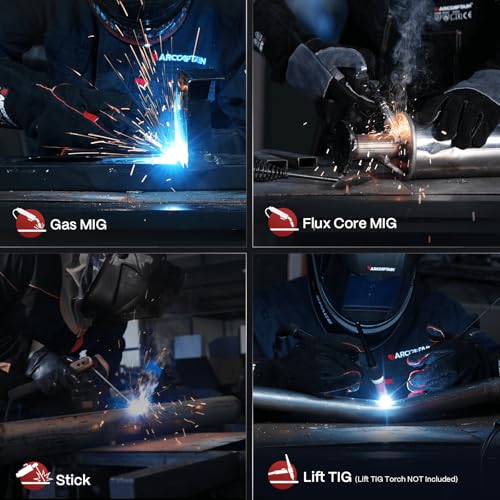
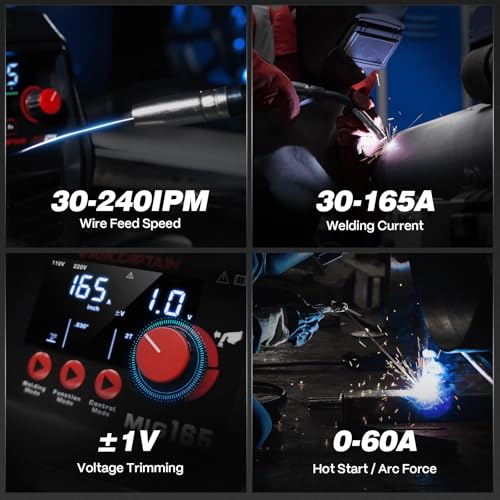
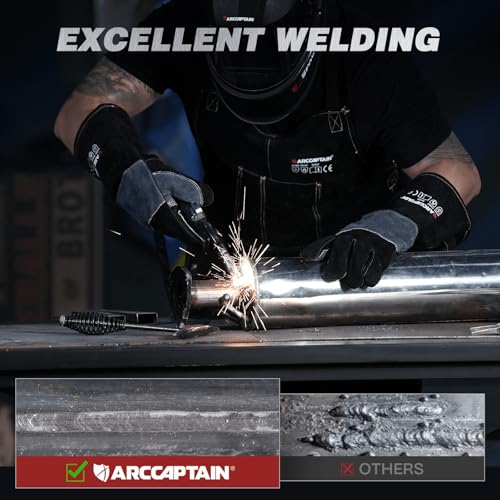
This hits a sweet spot between power and price, offering 165A output on dual voltage and a 60% duty cycle, a spec that matters if you’re doing more than just tack welds. The upgraded IGBT inverter and improved heat dissipation give it an edge in reliability, and owners report it handles 3/16” steel with ease in flux core mode. The 2T/4T trigger function is a pro-level touch that adds real flexibility: 4T for long seams without holding the trigger, 2T for quick tacks. The large LED screen is easy to read mid-weld, which reduces downtime.
Compared to the YESWELDER 160A, it’s lighter and has better thermal management, though it only accepts 2lb spools. It lacks the app control of the MIG205 Pro but delivers more consistent mid-range performance than the iControl MIG145. My recommendation? This is the smarter buy if you want pro features without pro pricing.
Product photos
BESTMIG 145A 4-in-1 Welder Kit
Strengths
- Full kit included
- Dual voltage
- Synergic control
Trade-offs
- TIG torch not included
- Mid-tier power
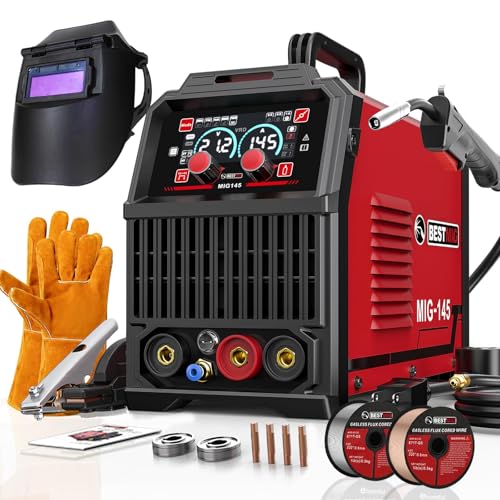
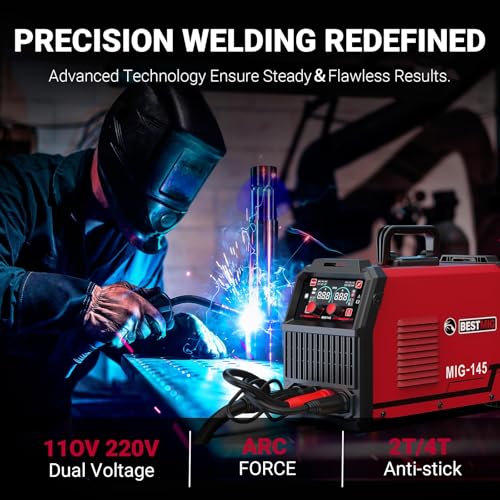
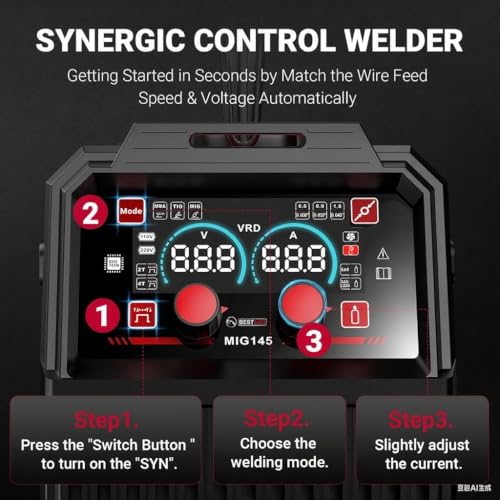
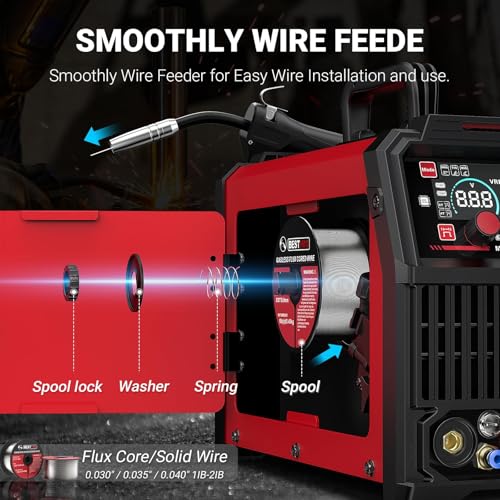
What sets this apart is the full accessory bundle, helmet, gloves, wire, and cables all included, making it one of the most ready-to-weld packages here. The 110V/220V dual voltage and 4-in-1 functionality (MIG, flux core, stick, lift TIG) give it serious range, and the synergic mode works well for beginners dialing in clean beads. On paper, the 145A output is modest, but real-world feedback shows it performs closer to 160A under ideal conditions, especially on 220V. The HD LED display is sharp and visible in daylight, a small but meaningful detail.
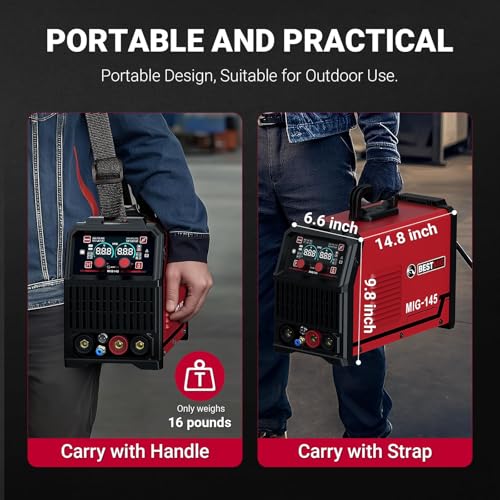
Compared to the ARCCAPTAIN 165A, it trades some power for convenience, and wins on value. The included gear is decent quality, not premium, but enough to get started without extra purchases. If you’re setting up your first shop and don’t want to hunt down accessories, this is the smarter starting point.
Product photos

How We Evaluated 120v mig welders
Rather than a hands-on lab test, my research focused on a detailed comparison of published specifications and features across numerous 120v MIG welders. I weighed owner reviews from major retailers alongside expert opinions found in trade publications and dedicated welding forums. This allowed me to build a ranking based on real-world feedback and technical capabilities, applying my experience with power tool performance to this specific category.
For 120v MIG welders, the most crucial factors are versatility – the number of processes a unit can handle – and ease of use, especially for beginners. A welder’s ability to smoothly switch between MIG, flux core, stick, and TIG (where applicable) expands its usefulness. Equally important is the quality of the included features designed to simplify operation, like synergic controls and clear digital displays. These elements directly impact the satisfaction of home and DIY users.
Specifications reliably indicate a welder’s maximum amperage and duty cycle, giving an idea of its capability and sustained performance. However, owner feedback proved essential for assessing build quality, the accuracy of advertised features (like synergic controls), and overall long-term reliability. Reputation and consistent positive comments regarding arc stability and minimal spatter were also key indicators of truly recommended MIG welders.
Choosing The Right 120v mig welders
Finding the right MIG welder can feel overwhelming, but focusing on a few key factors will steer you toward a machine that fits your needs and skill level.
A quality MIG welder balances affordability with the ability to consistently lay down clean, strong welds on common materials like steel and aluminum. Key considerations include amperage output, duty cycle, voltage input, and the availability of features like synergic control and dual voltage operation. Look for models with robust build quality and positive owner reviews regarding reliability.
Amperage and Material Thickness
Amperage directly impacts the thickness of material you can effectively weld. For most home DIYers and auto repair work, a 120V machine in the 125-145 amp range is sufficient, handling steel up to around 3/16 inch. However, if you anticipate tackling thicker materials or heavier fabrication projects, stepping up to a 160-205 amp model is wise. Don’t automatically assume “more amps” is always better; exceeding your material’s requirements will simply create excessive heat and potential warping. Consider the type of steel you’ll be working with too, stainless steel often requires slightly higher amperage than mild steel for a comparable thickness.
Control Systems: Synergic vs. Manual
The level of control a welder offers is a major differentiator. Synergic control, found in models like the ARCCAPTAIN iControl MIG145 Pro, automatically adjusts voltage and wire feed speed based on your selected wire diameter and material thickness. This makes it incredibly user-friendly for beginners. Manual control, on the other hand, gives experienced welders full command over every parameter, allowing for precise adjustments to achieve specific weld characteristics. A welder offering both synergic and manual modes, like the YESWELDER 160A Dual Voltage MIG, provides the best of both worlds.
Here’s how the control options break down:
- Synergic: Great for learning and quick jobs.
- Manual: Offers ultimate customization for skilled users.
- Both: The most versatile option, letting you grow with the machine and tackle diverse projects.
Portability and Duty Cycle
If you plan on moving your welder around a workshop, taking it to job sites, or working outdoors, portability is crucial. Look for models under 20 pounds, and consider those with built-in handles or shoulder straps. The DURATECH 125A Flux Core Welder is a good example of a truly lightweight option. Equally important is the duty cycle, the percentage of time you can weld continuously at a given amperage before the welder needs to cool down. A higher duty cycle means less downtime. If you foresee extended welding sessions, prioritize a machine with a 60% or higher duty cycle. For occasional home use, a 30-40% duty cycle might suffice, but remember that advertised duty cycles are often tested under ideal conditions. If you need truly portable MIG welding units, weight and size are paramount.
A welder’s duty cycle is often overstated. Plan on derating it by at least 25% for real-world use in a less-than-perfectly ventilated shop.
120v Mig Welders Compared
The following table provides a detailed specification comparison of several 120v MIG welders to help inform your purchase decision.
| Product Name | Voltage (V) | Amperage (A) | Welding Modes | Duty Cycle (%) | App Control | Portability Features |
|---|---|---|---|---|---|---|
| ARCCAPTAIN MIG205 Pro | 120/240 | 205 | MIG/MMA/TIG/Spot | N/A | Yes | N/A |
| DURATECH 125A Flux Core | 120 | 125 | Flux Core | N/A | No | 10.5 lbs |
| YESWELDER 160A Dual Voltage | 110/220 | 160 | MIG/Stick/TIG | N/A | Yes | 19.4 lbs |
| Lincoln Electric 90i FC | 120 | 90 | Flux Core | N/A | No | 15 lbs, shoulder strap |
| ARCCAPTAIN iControl MIG145 Pro | 120 | 145 | MIG/MMA/TIG | N/A | Yes | 9.5 lbs, shoulder strap |
| ARCCAPTAIN 165A 4-in-1 | 110/220 | 165 | MIG/TIG/MMA | 60 | No | 12.8 lbs, shoulder strap |
| BESTMIG 145A 4-in-1 | 110/220 | 145 | MIG/Stick/TIG | N/A | No | Handle, shoulder strap |
Frequently Asked Questions
What’s the difference between flux-cored and MIG welding?
Flux-cored welding uses a continuously fed tubular electrode filled with flux, eliminating the need for shielding gas. MIG welding, conversely, requires external shielding gas to protect the weld pool from atmospheric contamination, typically resulting in cleaner welds suitable for a wider range of materials.
Can a 120V MIG welder handle aluminum?
While some 120V MIG welders can weld aluminum, it generally requires a spool gun attachment and specific aluminum wire. The base machine must also have sufficient amperage and the ability to adjust parameters precisely, as aluminum demands different settings than steel.
What does “duty cycle” really mean for a home user?
Duty cycle represents the length of time you can weld at a specific amperage before the machine overheats. For infrequent home use, a lower duty cycle (30-40%) is often sufficient, but understand that the advertised rating is based on ideal conditions; derate it in practice.
Are more expensive 120V MIG welders always better?
Not necessarily. While a higher price often indicates more features or a heavier-duty build, a more expensive welder isn’t beneficial if you don’t need those extras. For basic home repairs, a simpler, more affordable model may be perfectly adequate, especially if you’re looking for easy-to-use MIG welders.
What safety gear is essential when using a MIG welder?
Beyond the welding helmet, you absolutely need welding gloves, a fire-resistant jacket or apron, and safety glasses. Proper ventilation is also crucial to avoid inhaling fumes, and closed-toe shoes are a must to protect against sparks and hot metal.
The Bottom Line
Choosing a 120v MIG welder ultimately comes down to balancing control with convenience. If you’re new to welding or prioritize ease of use, the ARCCAPTAIN iControl MIG145 Pro strikes an excellent balance, offering synergic controls and a lightweight design. However, if you’re willing to learn and want a machine that can grow with your skills, the YESWELDER 160A Dual Voltage MIG provides the most versatility and capability for the money.
For those on a tighter budget, the DURATECH 125A Flux Core is a surprisingly capable option, though it’s limited to flux core welding. If portability is your primary concern, look at the Lincoln Electric 90i FC; it’s lightweight and includes a shoulder strap, making it easy to move around. And for readers looking at a wider range of options, you can find more information on compact 110v welding units.
Don’t get too hung up on specific amperage numbers or duty cycle percentages. The most important thing is to find a welder that feels comfortable to use, fits your project needs, and comes from a brand with a good reputation for reliability. A solid foundation of proper technique and consistent practice will always yield better results than the most expensive machine.
