7 Best Gas Chainsaws for Home Use 2026
This post contains affiliate links. As an Amazon Associate, we earn from qualifying purchases.
The Husqvarna 120 Mark III 16″ is the best overall gas chainsaw for home use, delivering reliable power and smooth operation. For a simpler, no-mix option, the SENIX 4-Cycle 18-Inch stands out as a strong budget-friendly pick. If you need versatility for heavier tasks, the VEVOR 62CC 20-Inch offers solid performance at a reasonable price.
Most homeowners don’t need a pro-grade monster, but they still want a saw that starts easily, cuts cleanly, and won’t leave them exhausted after 10 minutes. Too many people buy based on engine size alone, only to end up with a tool that’s too heavy or too hard to maintain.
This guide cuts through the noise. I compared specs, owner feedback, and brand reputations to find models that actually work well for typical yard jobs, limbing, bucking, and occasional tree removal. These picks balance power, weight, safety, and ease of maintenance so you can make a smart, confident choice.
Top 7 Gas Chainsaw For Home Uses in the Market
The Best Gas Chainsaw For Home Uses, Reviewed
Husqvarna 120 Mark III 16″

Strengths
- Excellent ergonomics
- Low vibration
- Easy to start
Trade-offs
- Smaller bar than heavy models
- Higher price than budget saws
- Less raw power
The Husqvarna 120 Mark III stands out as the most balanced option for typical home use. With a 38cc X-Torq engine, it delivers 1.8 HP, enough for pruning, limbing, and cutting logs up to 16 inches, without the bulk of larger saws. The real advantage here is refinement: Air Injection keeps the air filter cleaner longer, LowVib reduces fatigue, and the inertia chain brake adds serious safety. Owners consistently highlight how easy it is to start, thanks to the combined choke/stop control and air purge.
Compared to budget 62cc models, it’s less powerful but far more user-friendly. It’s the kind of saw you can hand to a neighbor and trust it’ll start on the second pull. While it won’t replace a heavy-duty felling saw, it excels at the tasks most homeowners actually do. If you value reliability, ease of use, and brand-backed engineering, this is the one to beat.
Product photos


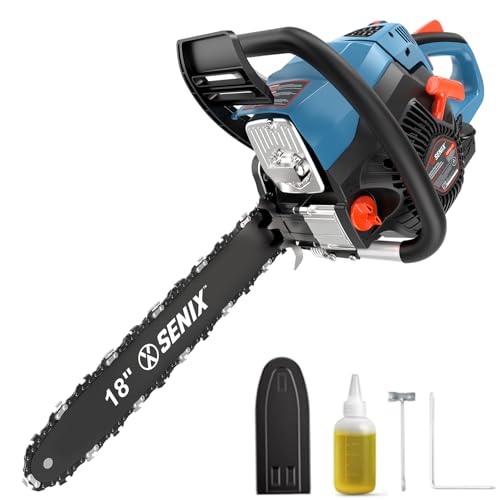
SENIX 4-Cycle 18-Inch
Strengths
- No fuel mixing
- Low emissions
- Smooth 4-cycle engine
Trade-offs
- Heavier than 2-stroke equivalents
- Slower in thick wood
- Bulkier design
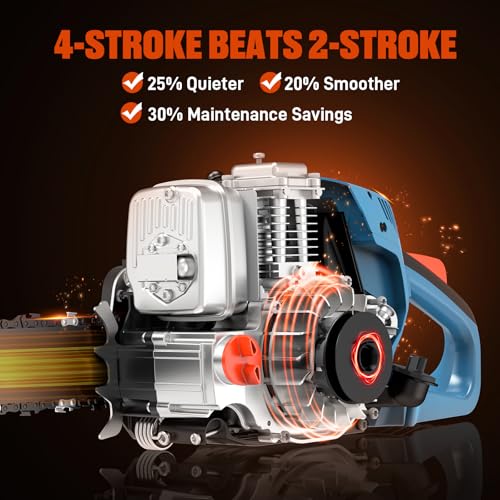
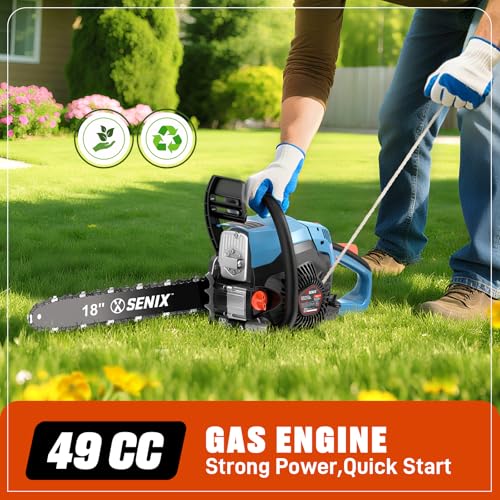
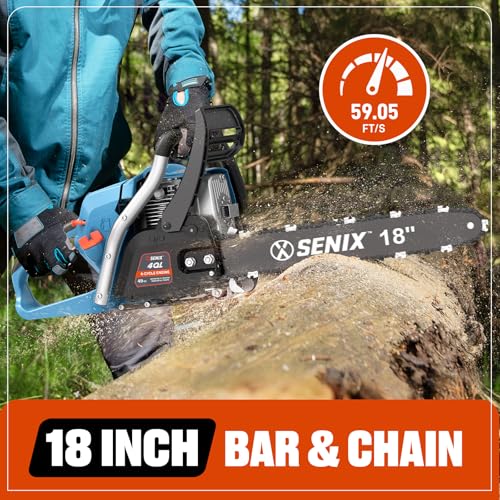
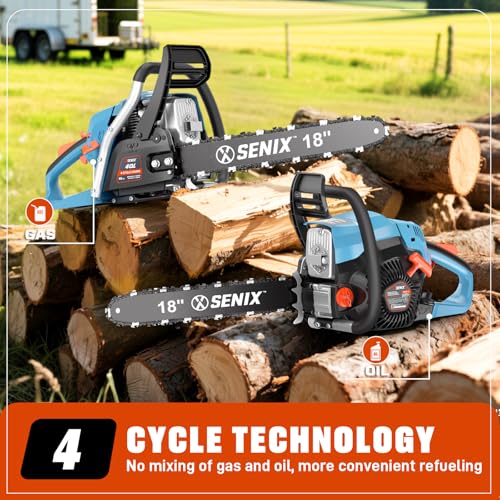
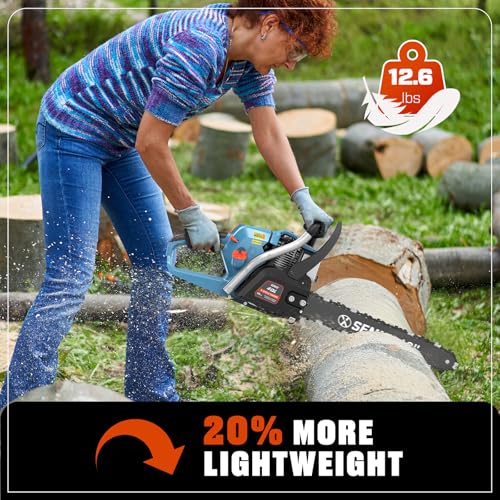
The SENIX 49cc 4-cycle chainsaw is a standout for anyone tired of mixing fuel. That’s the big win here, no gas-oil ratio to manage. The 4QL engine tech means you pour gasoline in one tank, oil in another, and go. Owners love this simplicity, especially for seasonal users who forget ratios or hate cleaning carburetors. The 18-inch bar strikes a good balance, and while 49cc isn’t class-leading, it’s enough for logs up to 30 inches with steady operation.
It’s not as powerful as 2-stroke 62cc saws, but it runs cooler and cleaner, with less vibration. The trade-off is slightly slower cuts in dense hardwoods. Still, for homeowners who prioritize low maintenance and hassle-free starts, this model makes a strong case. Compared to the Husqvarna, it’s less compact but easier to maintain long-term.
Product photos
IVOVI 63CC Dual Bar 20/18″
Strengths
- High cutting power
- Dual bar included
- Excellent safety features
Trade-offs
- Heavy and loud
- Overkill for small jobs
- Higher maintenance needs
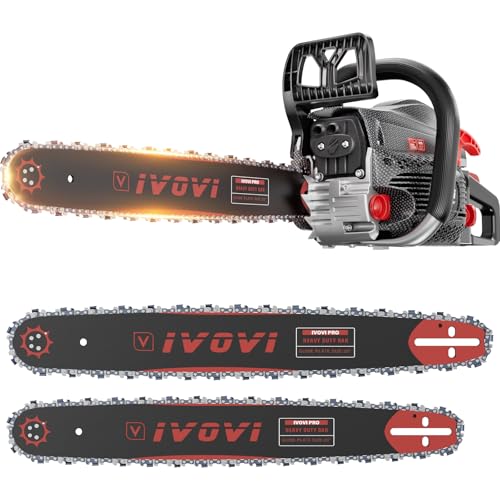
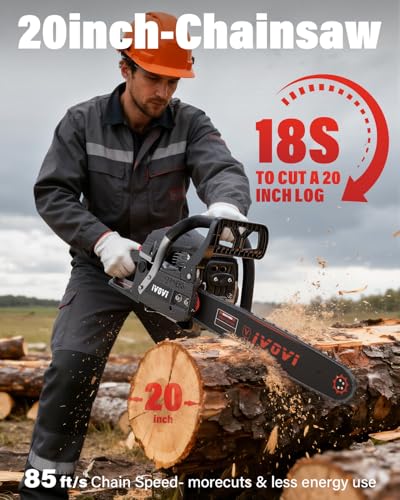
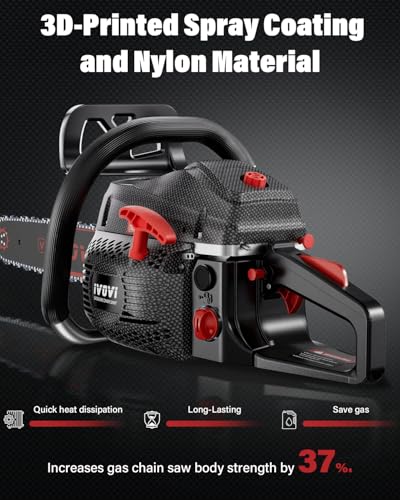
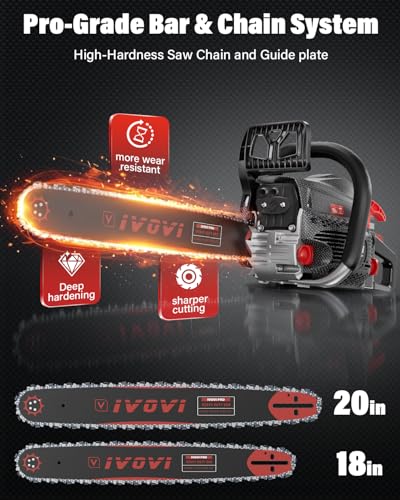
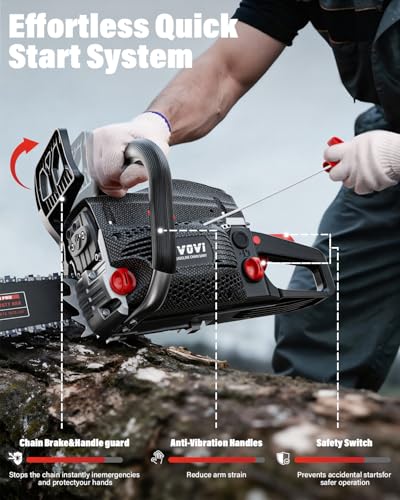
The IVOVI 63cc is built for serious cutting, no question. With 3.7 HP and a dual-bar setup (20-inch and 18-inch included), it’s one of the most versatile heavy-duty saws here. The ability to swap bars means you can fell a large oak with the 20-inch, then switch to the 18-inch for cleaner pruning. Owners praise its ‘no-stall’ performance on thick hardwoods, and the Easy-Start system gets strong marks for reliability in cold weather.
It’s not light or quiet, this is a pro-level tool with pro-level noise and weight, but the anti-vibration handles and inertia brake make it safer and more comfortable over hours of use. Compared to other 62-63cc models, the dual-bar feature is rare and valuable. If you’re clearing land, managing a ranch, or cutting a lot of firewood, this saw saves time and trips to the garage.
Product photos

WEMARS 52cc 18-Inch

Strengths
- Good power for price
- Comfortable grip
- Includes tool kit
Trade-offs
- Basic finish quality
- Moderate vibration
- Less brand support
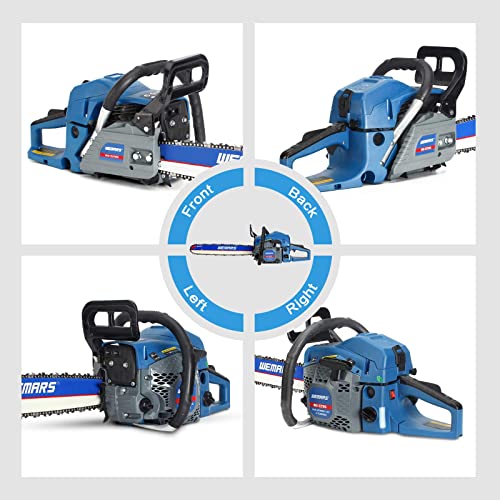
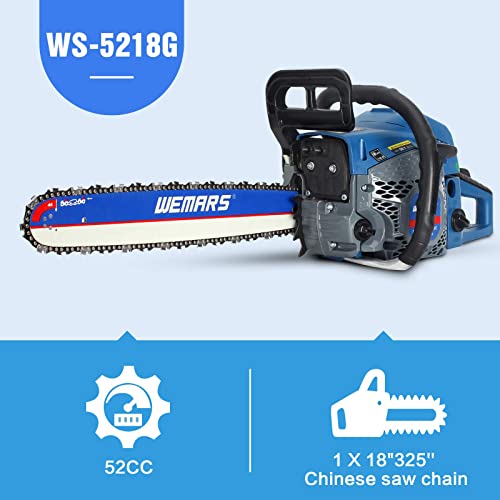
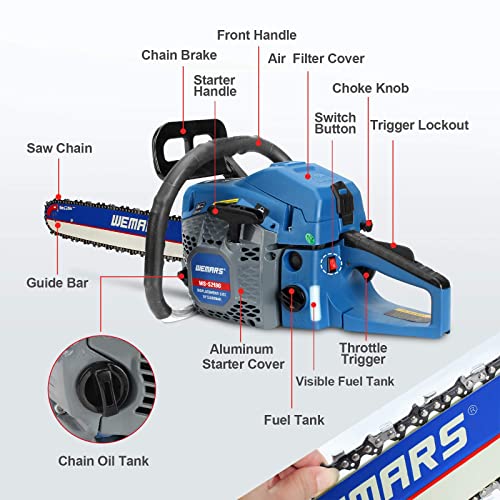
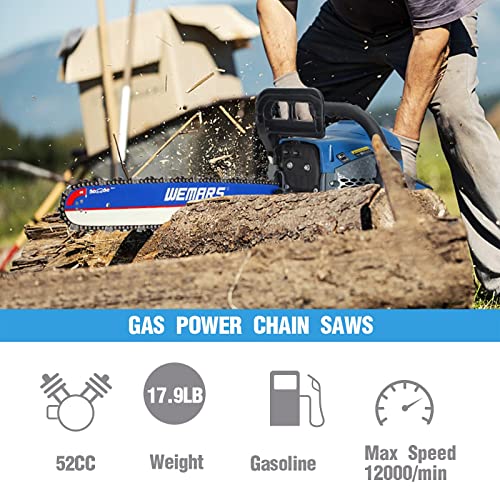
This WEMARS 52cc chainsaw is clearly positioned as a budget-friendly mid-tier option, and it delivers where it counts. The 18-inch bar and 52cc 2-stroke engine offer a solid middle ground, more power than the Husqvarna 120 Mark III, but less than the 62cc beasts. Owners report it starts reliably and holds up well with regular use, especially given the price. The anti-vibration handles and automatic oiler make it comfortable for moderate sessions, though it’s not as refined as premium models.
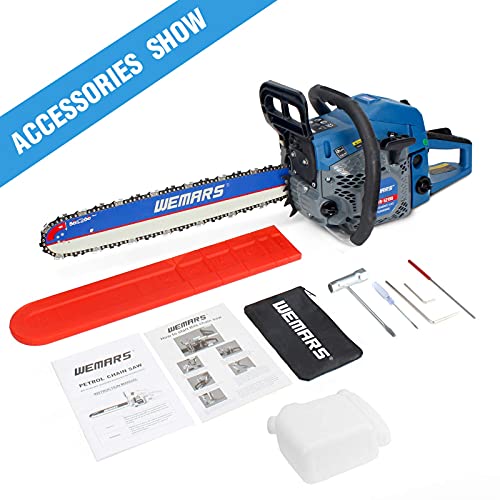
It won’t match the IVOVI or VEVOR in sheer durability, but for homeowners who cut wood a few times a year, it’s more than capable. The included tool kit is a nice touch, making chain adjustments and maintenance easier. If you’re upgrading from a 16-inch saw but don’t want to spend big, this is a smart middle step.
Product photos
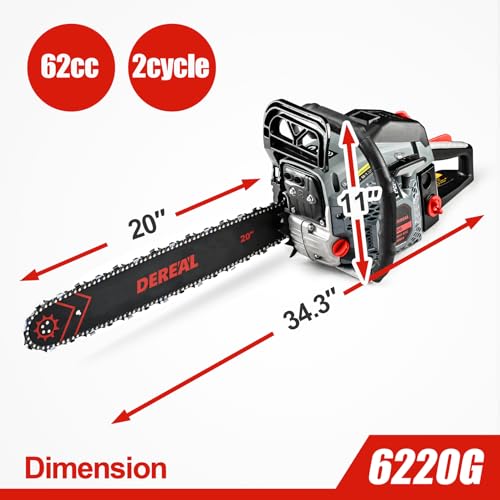
VEVOR 62CC 20-Inch

Strengths
- High power output
- Durable composite body
- Large fuel capacity
Trade-offs
- Heavier than average
- Basic vibration damping
- Bulky for light tasks
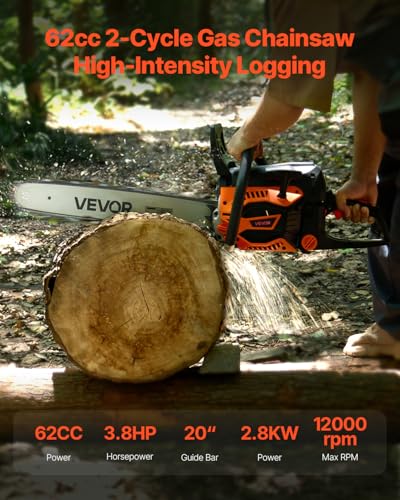
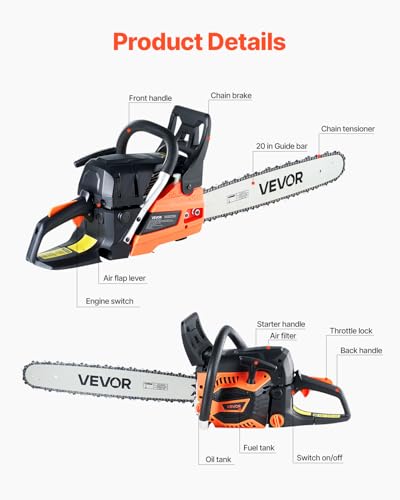
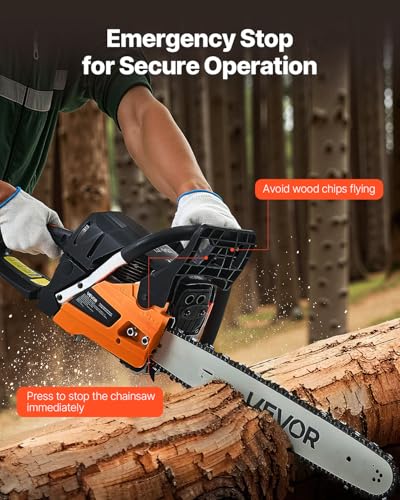
The VEVOR 62cc model is a no-nonsense workhorse built to handle everything from storm cleanup to firewood prep. With a 3.8 HP engine and 20-inch bar, it delivers serious cutting power on paper, and owner feedback confirms it holds up well under pressure. The composite body is a smart touch, resistant to cracking in extreme temps, which explains why so many users praise its reliability in both winter and summer. The dual fuel tanks (gas and oil) support longer runtime, and the 12,000 RPM max speed suggests aggressive cutting performance.
It lacks the refined anti-vibration systems of premium brands, but for the price, it’s well-equipped. Compared to the Husqvarna 120 Mark III, it’s heavier and less refined for casual use, but far more capable when you’re dealing with logs over 12 inches. If you’re looking for a durable, weather-resistant saw that won’t quit when the work gets tough, this one earns respect.
Product photos

JPNTECH 12-Inch Top Handle
Strengths
- Lightweight
- Easy start
- Top handle design
Trade-offs
- Limited cutting capacity
- Not for heavy tasks
- Short bar length
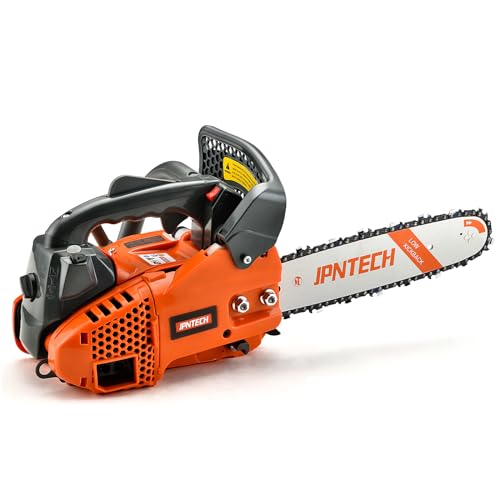
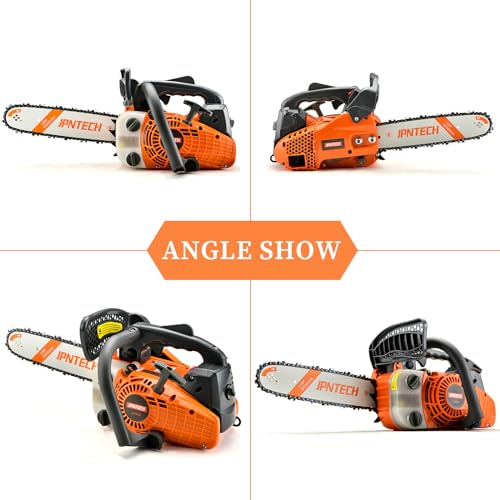
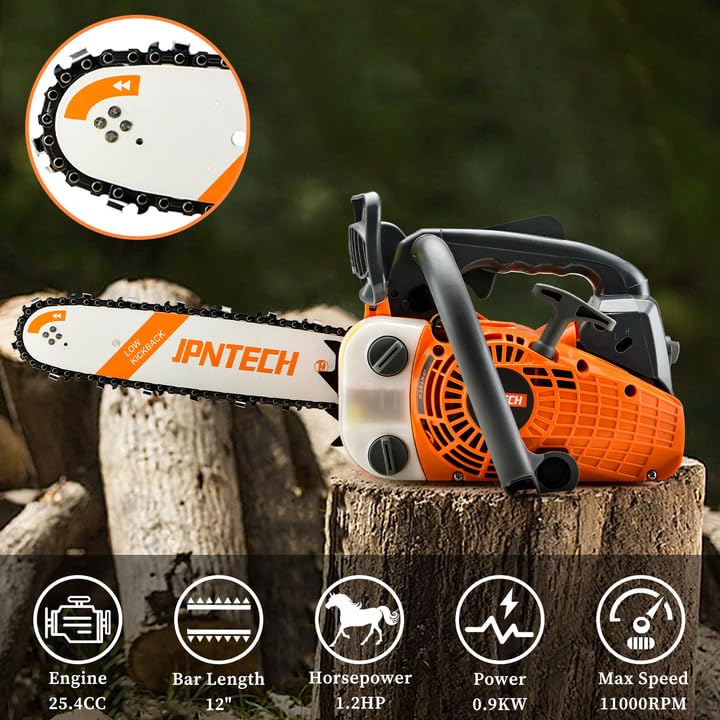
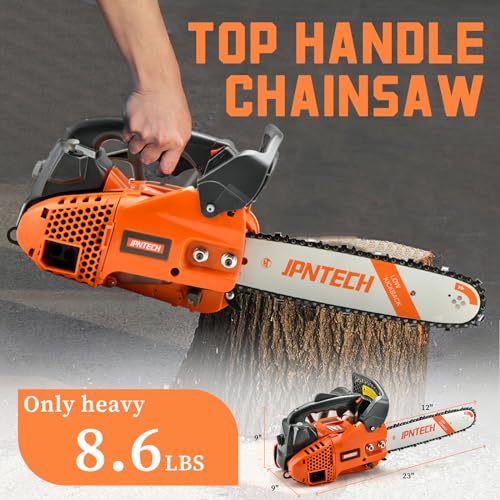
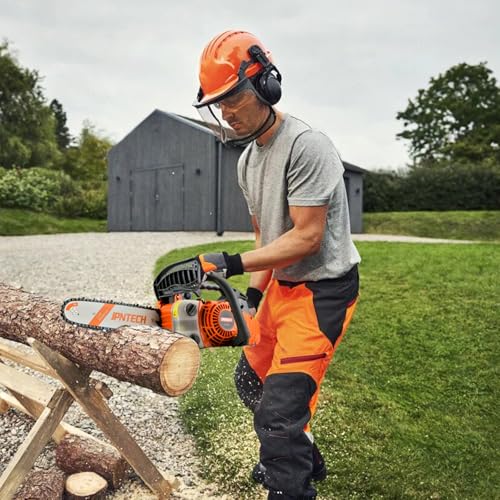
At just 8.6 pounds and with a 12-inch bar, this JPNTECH top-handle chainsaw is clearly built for light, one-handed work, think pruning high branches or trimming small trees. The 25.4cc engine puts out about 1.2 HP, which is adequate for occasional use, but don’t expect it to power through thick logs. Owners consistently report it starts easily thanks to the spring-assisted pull cord, and the compact design makes it a favorite for quick jobs where maneuverability matters more than muscle.
Still, the low displacement and short bar limit it to light-duty roles. Compared to full-size models, it’s not built for sustained cutting or felling medium trees. But if you need a gas-powered tool for occasional overhead work or backyard touch-ups, and want something far lighter than a standard chainsaw, this fits the niche. The top-handle layout also makes it easier to use in awkward angles, a plus for tree work.
Product photos

62CC Gas Chainsaw 20″
Strengths
- Strong power-to-price ratio
- Auto oiling system
- Durable bar and chain
Trade-offs
- Moderate vibration
- Basic build quality
- Lower RPM than rivals
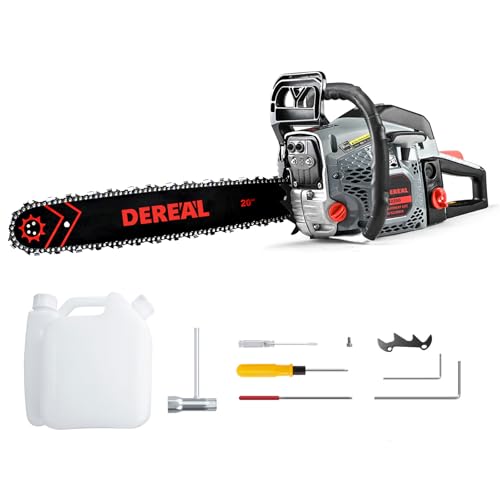
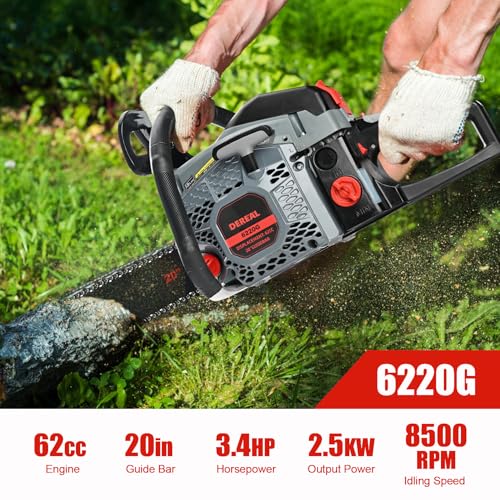
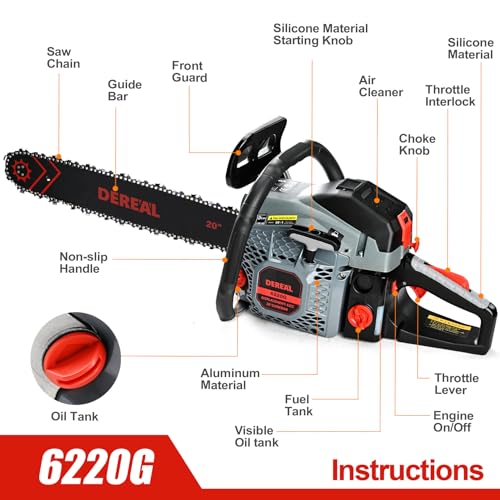
This 62cc model hits a sweet spot between cost and capability, which is why it’s often labeled ‘best value for power.’ It delivers 3.4 HP and a 20-inch bar, enough to tackle most home forestry tasks efficiently. The automatic oiler is a key feature, reducing wear and improving longevity, something owners notice in long-term use. While it doesn’t match the VEVOR’s 3.8 HP, the difference in real-world cutting isn’t dramatic, and many users find this saw more than sufficient for firewood and tree felling.
It’s not the smoothest running 62cc on the market, vibration levels are noticeable, but the ergonomic, shock-absorbing handles help. When compared to the Husqvarna, it’s less refined but significantly more affordable. For homeowners who cut wood regularly but don’t need professional-grade durability, this is a smart pick.
Product photos
How We Chose These gas chainsaw for home uses
As someone who’s spent years around power tools and helping folks choose the right equipment at PowerToolGuide.net, I know a gas chainsaw is a significant investment. Rather than a hands-on lab test of each model, this selection is a research-led comparison of published specifications, owner reviews, and expert opinions. I focused on identifying models that consistently receive positive feedback for home use, balancing power with ease of use and reliability.
For gas chainsaws intended for residential properties, I weighted factors like engine displacement, bar length, and starting system most heavily. A manageable weight and features like anti-vibration technology are crucial for homeowner comfort and safety. Engine size dictates cutting power, while bar length determines the size of wood you can realistically tackle. Finally, a reliable starting system is key – nobody wants to wrestle with a cold engine for half an hour.
Specifications reliably tell you about engine power, bar length, and oil capacity. However, owner feedback proved essential for gauging real-world starting reliability, long-term durability, and ease of maintenance. I also considered reputation; brands with a long history of quality power tools generally carried more weight in my assessment. Keeping your chainsaw in top shape is also important, so check out our chainsaw sharpening guide to learn how to maintain a sharp blade.
What To Look For In gas chainsaw for home uses
Finding the right gas chainsaw isn’t just about horsepower; it’s about matching the tool to the work you’ll be doing.
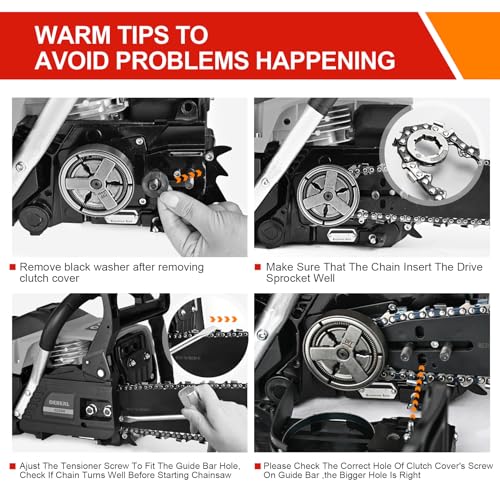
A quality gas chainsaw balances power, ease of use, and durability. Key considerations include engine displacement (cc), bar length, weight, safety features like chain brakes, and the availability of replacement parts. Look for models with anti-vibration systems to reduce fatigue during extended use, and prioritize those with readily accessible air filters and chain tensioning mechanisms for simplified maintenance.
Engine Size & Cutting Capacity
Don’t automatically assume bigger is better. While more cc’s generally translate to more power, a larger engine also means more weight and potentially more difficulty handling. For typical homeowner tasks like limbing, pruning, and cutting firewood, a chainsaw in the 40cc to 50cc range is often sufficient. If you’re regularly felling larger trees or dealing with dense hardwoods, then stepping up to 52cc or 62cc will be worthwhile. Consider the diameter of the wood you’ll routinely cut; this directly informs the bar length you’ll need.
Safety Features & Ergonomics
A gas chainsaw is a powerful tool, and safety should be paramount. Beyond the obvious chain brake (an inertia-activated one is preferable), look for features like an anti-vibration system. These systems, like Husqvarna’s LowVib technology, significantly reduce operator fatigue, especially during prolonged use. I’ve seen too many projects stalled because someone couldn’t comfortably use the tool for more than a few minutes. Another often-overlooked element is the handle design. A comfortable, secure grip is crucial for control.
- A basic chain brake is essential, but an inertia-activated brake reacts faster.
- Anti-vibration systems are a must-have for any extended work; they protect your hands and arms.
- A well-balanced chainsaw – one that doesn’t feel too front-heavy or back-heavy – will be much easier to maneuver and less tiring to use, even for beginners.
A dull chain is more dangerous than a sharp one. Always ensure your chain is properly sharpened and tensioned before each use.
Maintenance & Long-Term Value
A chainsaw is only as good as its upkeep. Models with tool-free chain tensioning are a huge convenience, as are those with easy access to the air filter and spark plug. The SENIX 4-Cycle, for example, boasts a 4-cycle engine that eliminates fuel mixing, which is a significant win for ease of maintenance. Don’t underestimate the importance of parts availability. Before committing to a brand, check online to see how readily available replacement chains, bars, and other components are. If you’re looking for more information on maintaining your saw, checking resources on how to sharpen chainsaw chain will ensure your investment lasts. Ultimately, finding top gas chainsaws for homeowners requires balancing initial cost with long-term usability and support.
Gas Chainsaw Compared
Here’s a comparison of key specifications for gas chainsaws suitable for home use.
| Product Name | Engine CC | Bar Length (in) | HP | Weight (lbs) | Fuel Mixing | Auto Oiler |
|---|---|---|---|---|---|---|
| Husqvarna 120 Mark III 16″ | 38 | 16 | 1.8 | N/A | No | Yes |
| SENIX 4-Cycle 18-Inch | 49 | 18 | N/A | N/A | No | N/A |
| IVOVI 63CC Dual Bar 20/18″ | 63 | 20/18 | 3.7 | N/A | Yes | Yes |
| WEMARS 52cc 18-Inch | 52 | 18 | N/A | N/A | Yes | Yes |
| VEVOR 62CC 20-Inch | 62 | 20 | 3.8 | N/A | Yes | Yes |
| JPNTECH 12-Inch Top Handle | N/A | 12 | 1.2 | 8.6 | Yes | N/A |
| 62CC Gas Chainsaw 20″ | 62 | 20 | 3.4 | N/A | Yes | Yes |
Frequently Asked Questions
What bar length do I really need for a homeowner chainsaw?
A 16- to 18-inch bar is generally sufficient for most homeowners. This length balances maneuverability with the ability to handle branches and smaller trees up to about 12 inches in diameter. Larger bars require more power and can be unwieldy for less experienced users.
Are 2-cycle or 4-cycle engines better for gas chainsaws?
4-cycle engines are becoming increasingly popular because they don’t require mixing oil and gas, simplifying operation and reducing emissions. While 2-cycle engines often offer a slightly higher power-to-weight ratio, the convenience of a 4-cycle engine often outweighs that benefit for typical homeowner tasks.
How much should I expect to spend on a good quality gas chainsaw?
You can find capable gas chainsaws for between $200 and $400. Spending more generally gets you a more durable engine, improved anti-vibration features, and a better reputation for reliability, but a well-maintained model in the lower range can still be a great option.
What’s the difference between chain tensioning systems, and which is easiest to use?
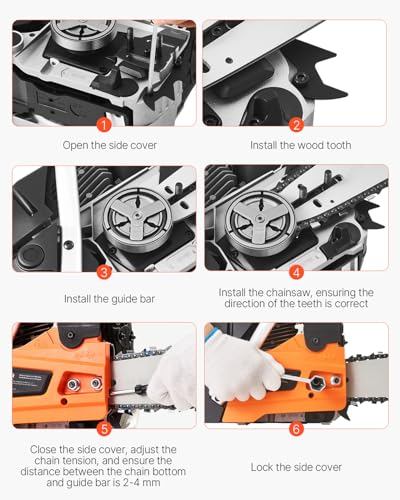
Tool-free chain tensioning systems are significantly easier to use than those requiring wrenches and screwdrivers. These systems allow you to adjust chain tension quickly and without needing extra tools, making on-the-job adjustments much more convenient. If you’re looking for a light-duty chainsaw for pruning, consider a homeowner-friendly mini chainsaw.
How often do I need to sharpen a chainsaw chain?
Chain sharpening frequency depends on usage and wood type, but as a general rule, sharpen the chain every 5-10 hours of use or whenever you notice increased cutting effort. A dull chain is not only inefficient but also more dangerous, as it requires more force and increases the risk of kickback.
The Bottom Line
Choosing a gas chainsaw often comes down to balancing initial cost with the power and convenience you truly need. While options like the IVOVI 63CC Dual Bar 20/18″ offer substantial cutting capacity, for most homeowners, the Husqvarna 120 Mark III 16″ strikes the best overall balance of manageable power, reliable starting, and ease of use. It’s a solid choice that won’t overwhelm a first-time user but will still handle typical yard work effectively.
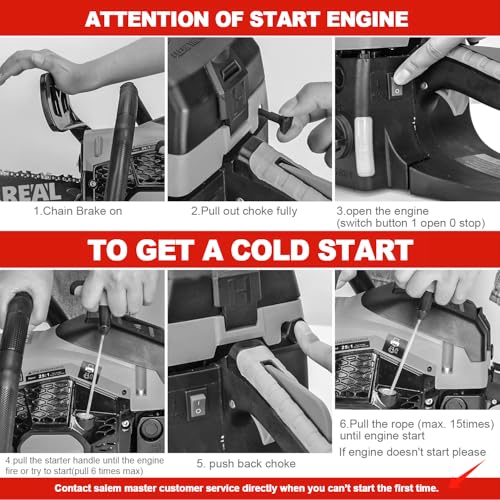
For those on a tighter budget, or who prioritize simplicity, the SENIX 4-Cycle 18-Inch is a great pick. And if you frequently tackle larger limbs or small trees, the VEVOR 62CC 20-Inch delivers the muscle you’ll appreciate. Remember to review safe chainsaw start procedures before your first use, regardless of the model you choose.
Ultimately, horsepower and bar length are just numbers. The most important factors are a comfortable, well-balanced saw, a reliable starting system, and a commitment to regular maintenance. A sharp chain, properly tensioned, and a well-maintained engine will always outperform a more powerful saw that’s neglected.
