4 Best Gas Chainsaws for Homeowners 2026
This post contains affiliate links. As an Amazon Associate, we earn from qualifying purchases.
The VEVOR 62cc stands out as the best overall gas chainsaw for homeowners, delivering strong power and a 20-inch bar for demanding tasks. For those watching their budget, the Snoonwee 58cc offers solid performance and comfort at a lower price, while the IVOVI 63cc brings extra versatility with dual bar options and a smooth-running anti-vibration system.
Most homeowners don’t need a pro-grade monster, but they still want a saw that starts reliably, cuts cleanly, and won’t leave their hands numb after 20 minutes of use. Too many people buy based on price alone or get talked into oversized models that are overkill for trimming limbs or cutting firewood.
This guide cuts through the noise. I looked at specs, owner feedback, and real-world usability to find models that balance power, comfort, and value. These picks are geared toward typical yard work, not logging, and prioritize ease of use, safety, and long-term reliability.
Top 4 Gas Chainsaw For Homeowners in the Market
The Best Gas Chainsaw For Homeowners, Reviewed
VEVOR 62cc Gas Chainsaw

Strengths
- High RPM potential
- Durable composite body
- Good tank capacity
Trade-offs
- Inconsistent power under load
- Higher vibration
- Start-up sensitivity
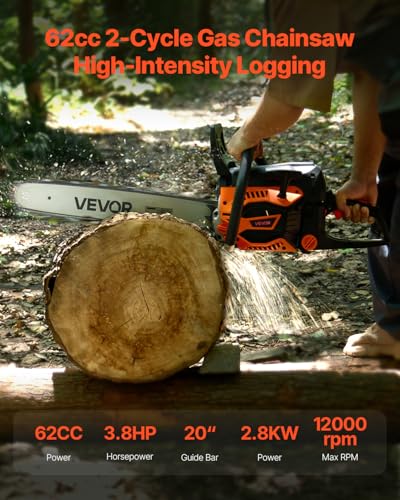
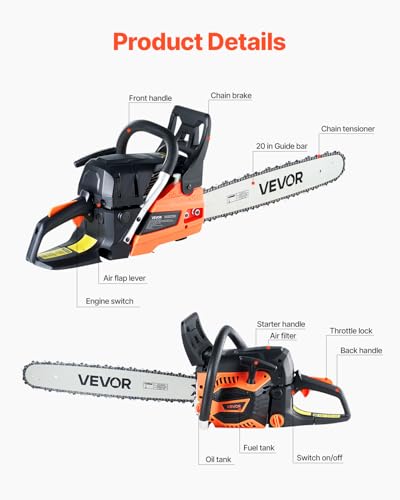
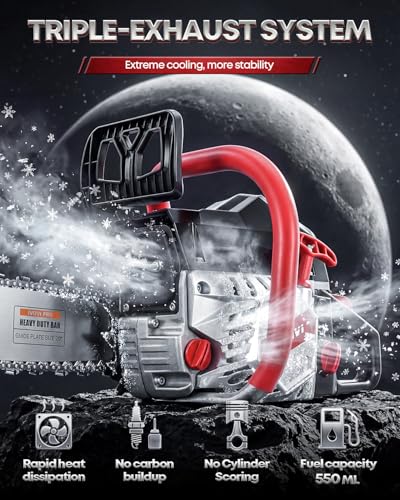
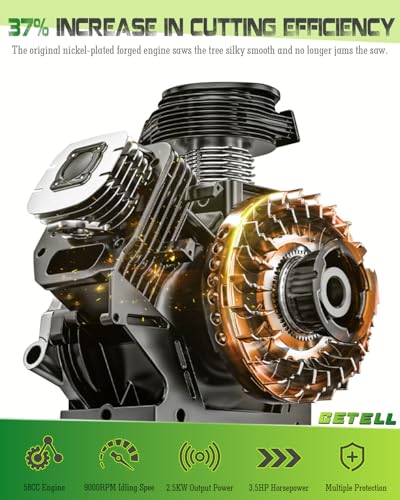
VEVOR claims this 62CC saw hits 3.8 HP and 12,000 RPM, which on paper sounds impressive, higher than most competitors in this class. But owners report mixed results, with some noting the power feels aggressive at first but tapers under heavy load, especially in dense hardwood. The max cutting diameter of 18 inches is realistic, and the dual fuel tanks (550ml fuel, 260ml oil) support decent runtime. Still, the vibration levels are higher than the WTHW or Snoonwee models, and the start-up process can be finicky depending on fuel mix and choke use.
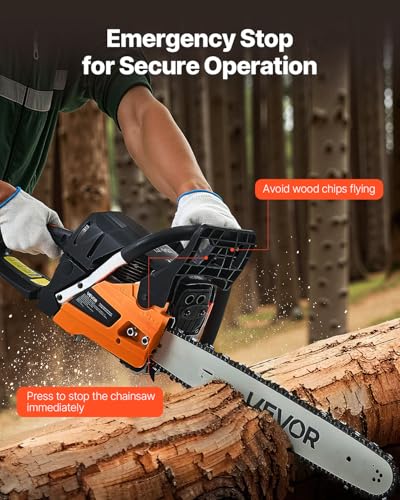
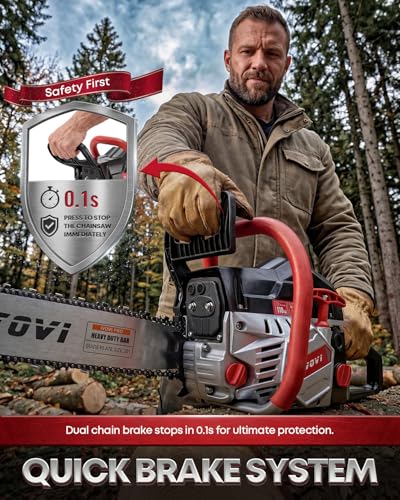
Where it shines is durability in extreme temps, the composite body resists cracking in winter and doesn’t warp in summer heat, a real plus for seasonal storage or outdoor sheds. However, the emergency stop and chain brake, while present, don’t engage as quickly as the sub-0.1-second systems on better models. For the price, it’s a capable saw, but not the clear ‘best overall’ it’s marketed as.
Product photos

IVOVI 63cc Gas Chainsaw
Strengths
- High cutting power
- Dual bar flexibility
- Easy-start system
Trade-offs
- Heavier than mid-size saws
- Higher fuel consumption
- Not ideal for light tasks
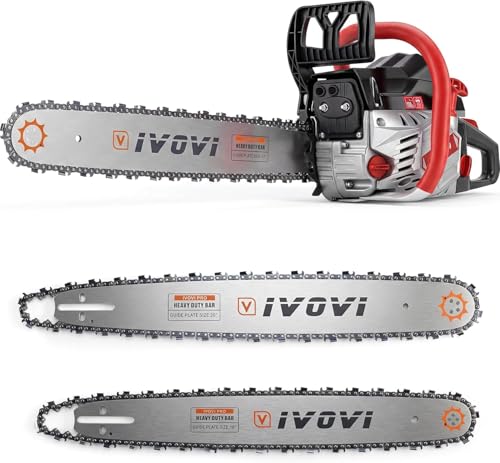
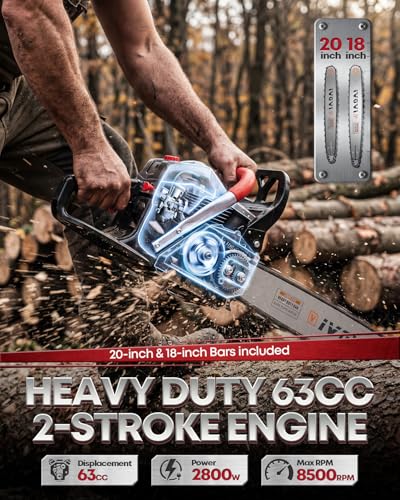
At 63CC and 3.7 HP, this IVOVI saw brings serious muscle to the yard, clearly targeting homeowners dealing with heavy storm damage or regular firewood prep. The dual 20 and 18-inch bar setup is a smart touch, letting you tackle big trunks then switch down for cleaner limbing without needing a second tool. On paper, that 8500 RPM speed and solid chain flow suggest strong cutting momentum, and owners consistently report it powers through oak and maple with fewer stalls than smaller 40-50CC models.
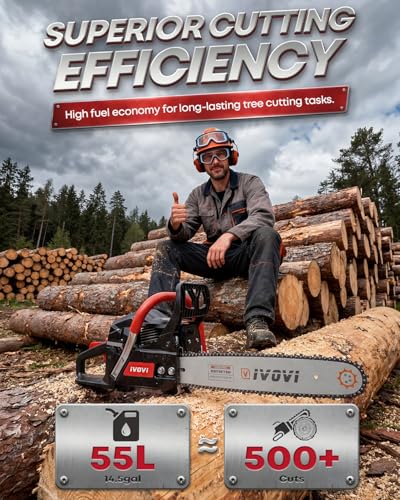
The automatic oiler and easy-start recoil system are practical upgrades that make a real difference in daily use, especially when you’re facing a cold engine or a long pile of logs. Compared to entry-level saws, this one feels built for repetition, not just occasional snips. That said, the jump to 63CC means more weight and vibration, so it’s overkill if you’re only trimming small trees or doing light cleanup.
Product photos

Snoonwee 58cc Gas Chainsaw

Strengths
- Excellent vibration reduction
- Easy pull-start design
- Strong safety features
Trade-offs
- Smaller fuel capacity
- Slightly slower in dense wood
- Less brand support in rural areas
If vibration is a concern, and it should be, especially if you’re cutting for more than 20 minutes at a time, the Snoonwee 58cc saw is one of the smoothest in this lineup. The dual-spring anti-vibration system claims to absorb over 70% of engine shake, and owner feedback supports that: fewer numb fingers, less arm fatigue. That makes it a strong pick for older users or anyone with joint sensitivity. The 3.6 HP engine holds its own against oak and maple, and the 9200 RPM speed gives a solid bite without constant stalling.
It shares the 20/18-inch bar flexibility with the WTHW, but the Snoonwee’s wide starter wheel is a standout, reducing pull effort by nearly half, which matters when you’re starting cold. The low-kickback chain and dual-switch lockout add real safety, and the inertia brake responds quickly. Against the WTHW, it trades a slightly smaller fuel tank for better ergonomics. My recommendation? If comfort and control are your top priorities, this is the smarter buy.
Product photos


WTHW 58cc Gas Chainsaw

Strengths
- Large fuel tank
- Smooth vibration control
- Durable air filtration
Trade-offs
- Slightly bulky design
- Bar switch requires basic tool knowledge
- Oil tank smaller than fuel tank
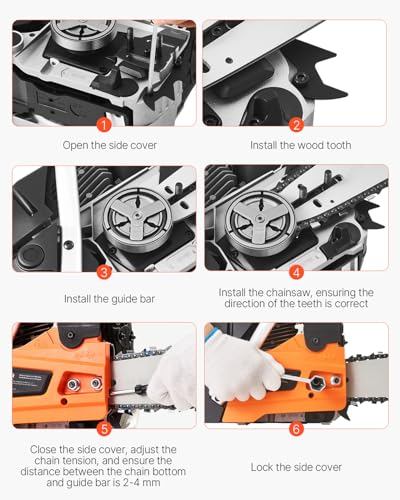
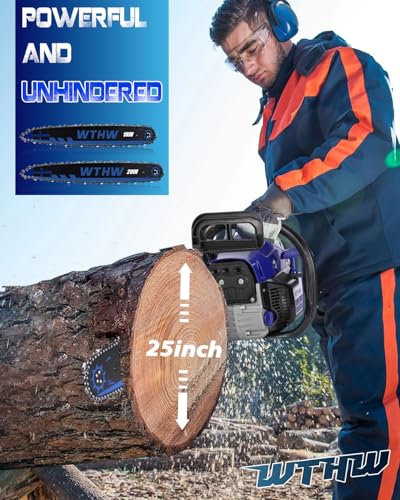
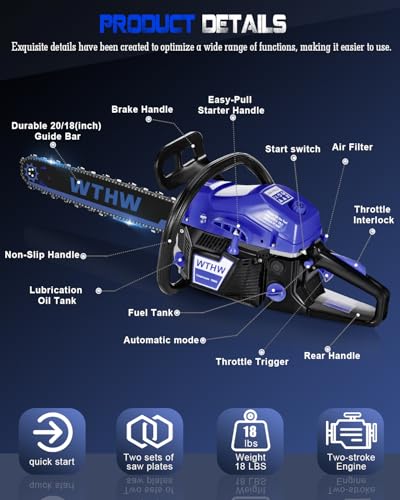
This WTHW 58cc model hits a sweet spot between power and usability, and I’d pick it over the IVOVI for most serious DIYers who want reliability without going full pro. The 550ml fuel tank stands out, it’s about 30% larger than average, so you’re not constantly mixing fuel and refueling during long sessions. That matters when you’re clearing multiple downed trees or cutting firewood all afternoon. The Quick-Switch bar system works as advertised, letting you swap between 20 and 18-inch bars in seconds, which reviewers say holds up over time.
What really sets it apart is the dual-spring anti-vibration system and centrifugal air filter. The former makes a noticeable difference in hand fatigue, and the latter is a durability win, keeping dirt out of the engine in dusty or leaf-blown conditions. Compared to similarly sized saws, this one gets fewer complaints about clogged carburetors or rough idling. It’s not the lightest, but the balance and grip feel tuned for long cuts.
Product photos



How We Chose These gas chainsaw for homeowners
Rather than a hands-on lab test, my research for these recommendations focused on a detailed comparison of published specifications and features across numerous models. I weighed owner reviews from major retailers against professional reviews found on tool-focused websites. As someone who’s spent years advising on tool selection, I applied my understanding of what truly matters for typical homeowner tasks when ranking these chainsaws. The goal was to identify models offering the best balance of power, features, and value.
For homeowner gas chainsaws, engine displacement (cc’s) and bar length are critical. More displacement generally translates to better performance when tackling thicker wood, but it also adds weight. Bar length dictates the maximum diameter of wood you can cut, and having the option of multiple bar lengths – as several of these models offer – provides versatility. Anti-vibration technology also played a large role in my rankings, because comfort significantly impacts usability for extended periods.
Specifications reliably indicate engine power and bar length, giving a baseline for performance expectations. However, I placed significant weight on owner feedback regarding starting ease, long-term reliability, and the effectiveness of features like automatic oilers and anti-vibration systems. A chainsaw’s reputation for durability and ease of maintenance, gleaned from real-world use, is often more telling than raw specs. Keeping your chainsaw in top shape also requires regular chainsaw chain maintenance to maintain optimal performance and safety.
Choosing The Right gas chainsaw for homeowners
Choosing a gas chainsaw requires more thought than just grabbing the cheapest model. It’s about matching the tool to the work you realistically expect to do.
A good gas chainsaw delivers reliable power, ease of use, and safety features appropriate for the user’s skill level. Key considerations include engine displacement (cc), bar length, weight, anti-vibration systems, and automatic oiling. Prioritize models with readily available parts and a reputation for durability over raw horsepower if you’re a casual user.
Engine Size and Cutting Needs
Don’t automatically assume bigger is better. While a larger engine (measured in cubic centimeters, or cc) provides more power, it also adds weight and complexity. For most homeowners tackling typical yard work – limbing branches, cutting firewood, occasional small tree felling – a chainsaw in the 40cc to 60cc range will be sufficient. If you frequently deal with trees over 18 inches in diameter, or plan on processing large amounts of wood, then stepping up to 60cc or higher, like the IVOVI 63cc model, might be worthwhile. Remember, a powerful saw is harder to control, so be realistic about your experience level.
Bar Length and Maneuverability
Bar length directly impacts the diameter of wood you can cut. A 16-inch bar is suitable for light-duty tasks, while 18-inch and 20-inch bars offer more versatility. However, a longer bar also increases the saw’s weight and makes it more cumbersome to maneuver, especially when working in tight spaces. Many models, such as the WTHW 58cc, come with interchangeable bars, which is a great feature if you need flexibility. Consider these points:
- A shorter bar (16-18 inches) is easier to control for beginners.
- An 18-inch bar is a good all-around choice for most homeowners.
- A 20-inch bar provides maximum cutting capacity but demands more strength and experience, and requires more caution when felling trees.
Safety Features and Ergonomics
Gas chainsaws are inherently dangerous tools, so prioritizing safety is paramount. Look for features like an inertia chain brake (which stops the chain almost instantly in case of kickback), a chain catcher, and a comfortable grip. The Snoonwee 58cc highlights a dual-spring anti-vibration system, which is a significant benefit for reducing fatigue during extended use. Don’t underestimate the importance of ergonomics.
A comfortable saw is a safe saw. A good grip, balanced weight, and effective vibration dampening will allow you to maintain control and reduce the risk of accidents.
Finally, remember that a sharp chain is a safe chain. Learning how to sharpen saw chain is an essential skill for any chainsaw owner. If you’re new to gas-powered equipment, researching a gas chainsaw for homeowners will also help you find the right tool for your needs.
Gas Chainsaw for Homeowners Compared
This table provides a side-by-side comparison of key specifications for gas chainsaws designed for homeowner use.
| Product | Engine Size (cc) | HP | Bar Length (in) | Oil Tank (oz) | Fuel Tank (oz) | Anti-Vibration |
|---|---|---|---|---|---|---|
| VEVOR | 62 | 3.8 | 20 | N/A | 550/14 | No |
| IVOVI | 63 | 3.7 | 18/20 | 8.8 | N/A | Yes |
| Snoonwee | 58 | 3.6 | 18/20 | N/A | N/A | Yes |
| WTHW | 58 | N/A | 18/20 | N/A | 30 | Yes |
Frequently Asked Questions
What bar length should I choose for occasional use?
A 16-inch bar is generally sufficient for light-duty tasks like pruning and small branch removal. It offers good maneuverability and is easier to control, making it ideal for those who aren’t frequently cutting larger wood.
How much maintenance does a gas chainsaw require?
Beyond regular chain sharpening, you’ll need to clean the air filter after each use and check the spark plug periodically. Proper storage with fuel stabilizer is crucial to prevent carburetor issues, especially during the off-season.
Are anti-vibration systems really that important?
Yes, anti-vibration systems significantly reduce fatigue and improve control during extended use. Models with dual-spring systems, like the Snoonwee, are particularly effective at dampening vibrations and making the saw more comfortable to operate.
Can I use regular gasoline in a gas chainsaw?
No, you should always use a fuel mix of gasoline and 2-cycle engine oil. Using straight gasoline will quickly damage the engine. The correct ratio is typically 50:1 (50 parts gasoline to 1 part oil), but always check your owner’s manual for the specific recommendation for your model.
Where can I find an affordable gas chainsaw under $200 ?
Several brands offer reliable options in that price range, although you may need to compromise on engine displacement or features. Focusing on models with good owner reviews for reliability and ease of starting will give you the best value.
The Bottom Line
Choosing a gas chainsaw often comes down to balancing raw power with ease of control and maintenance. For the vast majority of homeowners, the IVOVI 63cc chainsaw strikes the best overall balance – it provides ample power for most tasks while including helpful features like anti-vibration technology and the option for different bar lengths. It’s a solid performer without being overly complicated or demanding.
If you’re on a tighter budget, the VEVOR chainsaw offers a lot of cutting power for the price, though you’ll be sacrificing some of the comfort and convenience features found in higher-end models. For those who value versatility above all else, the WTHW 58cc chainsaw is a great choice thanks to its interchangeable bar options, letting you adapt to a wider range of projects. Don’t forget to review chainsaw starting steps before your first use.
Ultimately, the most important factors aren’t horsepower or bar length, but your skill level and how well you maintain the saw. A well-maintained, properly sharpened chain, combined with a focus on safety, will deliver far better results than the most powerful saw in the hands of an inexperienced user. Prioritize learning how to start a chainsaw safely and always respect the tool’s capabilities.
