
9 Best 12 Inch Compound Miter Saws of 2026
This post contains affiliate links. As an Amazon Associate, we earn from qualifying purchases.
The DEWALT DWS780 stands out as the best overall 12 inch compound miter saw for its power, cut capacity, and reliability, while the DEWALT DWS779 is a strong budget-friendly pick that doesn’t sacrifice core performance. For those wanting advanced features without stepping up to a sliding model, the BOSCH GCM12SD offers excellent precision and dust control.
If you’re cutting crown molding, framing lumber, or trim, having a miter saw that delivers clean, accurate cuts every time makes all the difference. A poor choice can mean wasted material, frustrating setup, and inconsistent results. In this guide, I’ll walk you through the top models based on specs, owner feedback, and real-world performance factors like bevel range, dust management, and ease of use, so you can pick the right one for your shop and skill level.
Top 9 12 Inch Compound Miter Saws in the Market
The Best 12 Inch Compound Miter Saws, Reviewed
DEWALT DWS780 Double Bevel Miter Saw

Strengths
- XPS shadow line
- 75%+ dust capture
- 2×14 cut capacity
- Tall sliding fences
Trade-offs
- Heavier at 58 lbs
- Higher price point
- Belt drive needs occasional maintenance
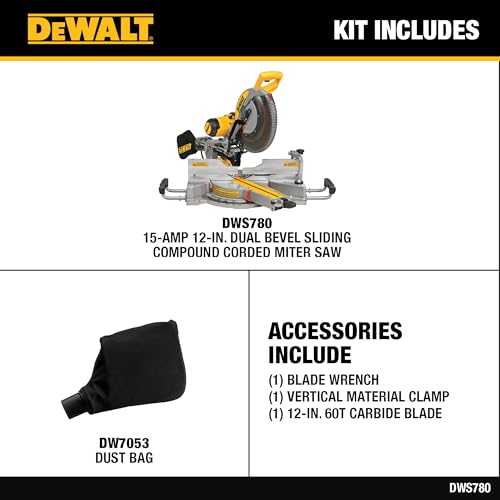
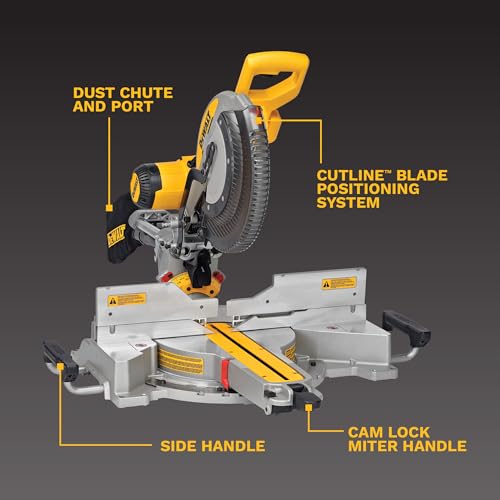
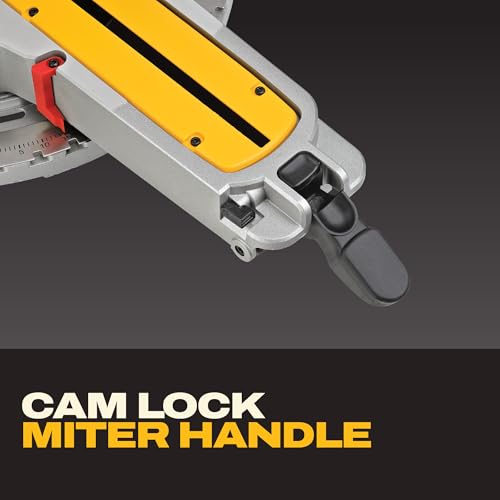
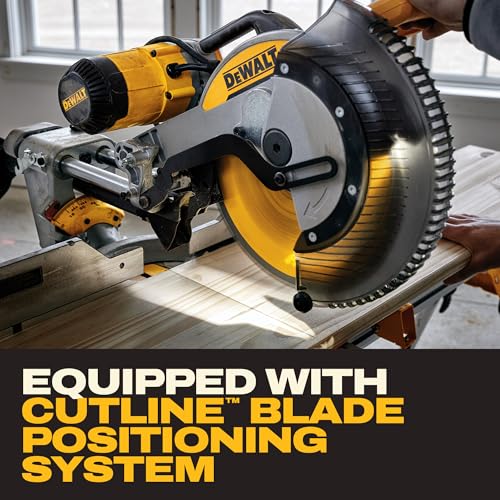
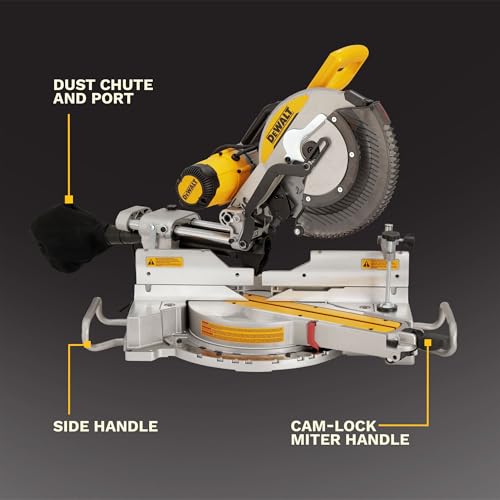
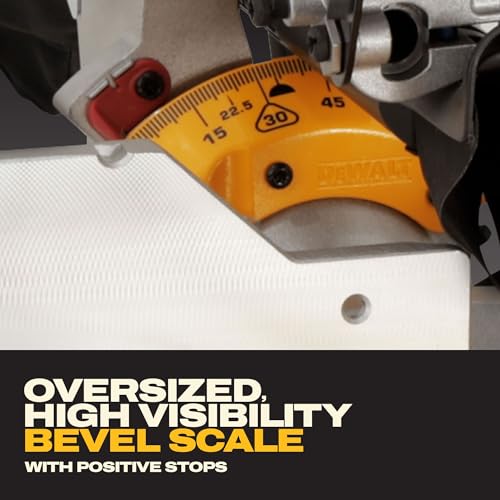
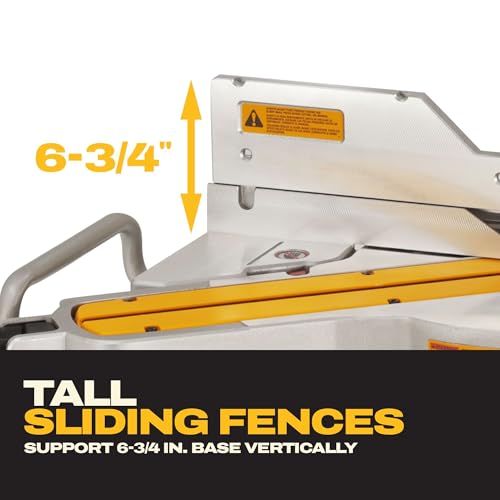
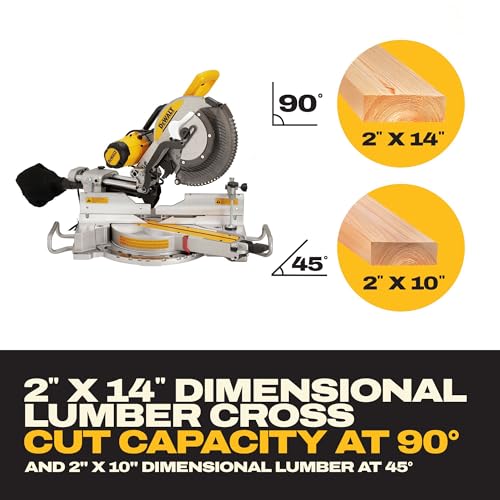
If you’re looking for the most balanced, well-rounded 12-inch miter saw on the market, the DWS780 is still the one I’d point to after years of tracking this category. It’s not the newest model, but owners keep coming back to it for good reason, solid build, excellent dust collection, and that XPS shadow line system that just works. The combination of sliding rails, tall fences, and a 2×14 cutting capacity at 90° makes it capable of handling everything from deck framing to crown molding.
The gearbox and belt-drive design free up vertical space, giving you more clearance than direct-drive saws. Reviewers consistently praise its durability, with many reporting years of reliable use on job sites. It’s heavier than some, but that weight translates to stability. Compared to the DWS779, it’s slightly bulkier but offers better dust capture and a more refined feel. My recommendation? This is the smarter buy if you want one saw that does it all well.
Product photos

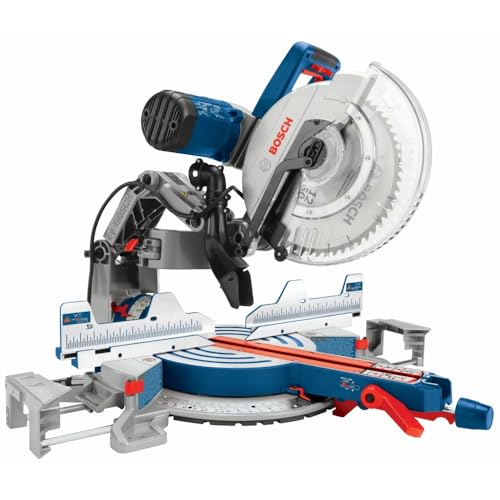
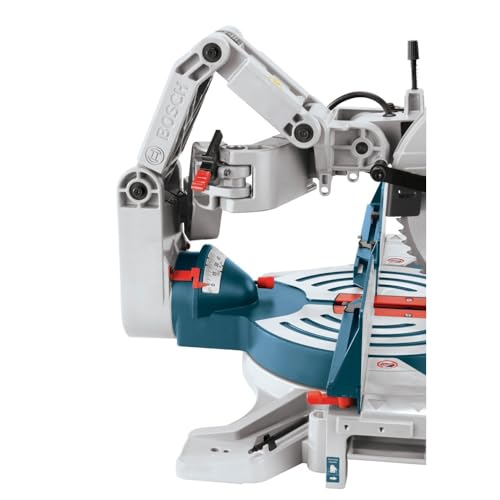
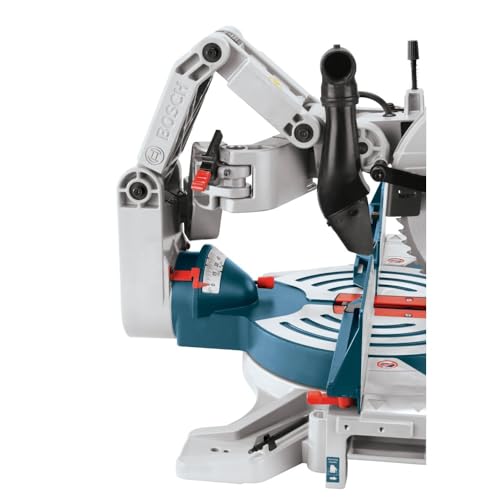
BOSCH GCM12SD Dual-Bevel Glide Miter Saw
Strengths
- Axial-glide system
- 90% dust capture
- SquareLock fences
- Compact design
Trade-offs
- Higher price
- Slightly slower cuts
- Less brand familiarity in US
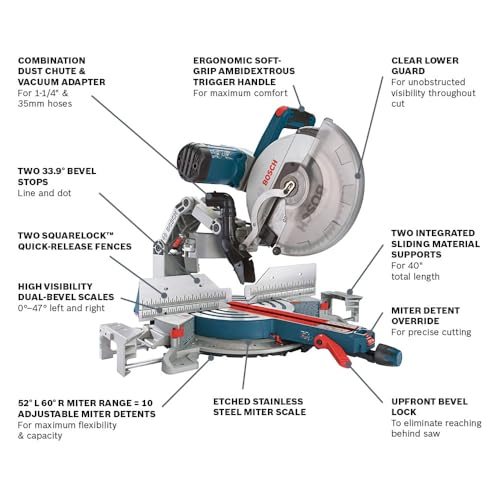
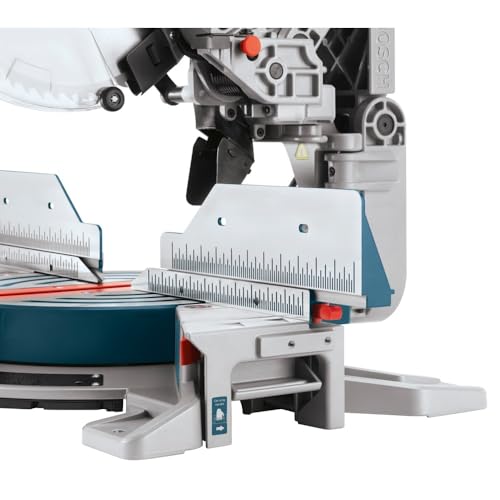
BOSCH’s axial-glide system gives the GCM12SD a unique advantage, smooth, wide slides in a more compact footprint. The rails retract inward, so you can place it flush against a wall, which is a big deal in tight shops. But the real win is precision: the SquareLock fences stay aligned over time, and owners consistently report it holds calibration better than most.
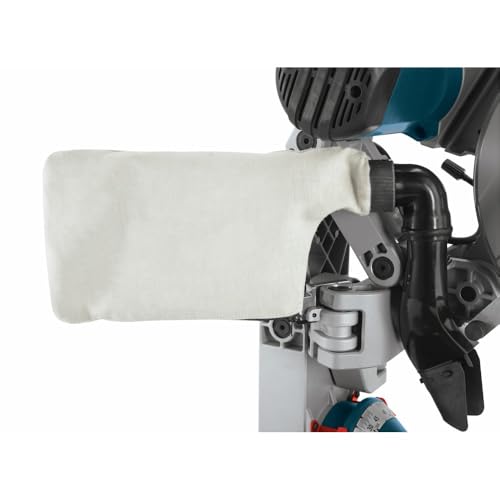
Then there’s dust control. With 90% capture when paired with a vacuum, it’s the cleanest-running saw in this group. The push-button detent override is a small luxury that saves time on repetitive cuts. Compared to the DWS780, it’s lighter and more refined, though slightly less aggressive in raw cutting capacity. If you value accuracy, dust management, and a clean workspace, this is the one I’d pick.
Product photos
DEWALT DWS779 Double Bevel Sliding Miter Saw
Strengths
- 2×14 cut capacity
- Excellent dust capture
- 3,800 RPM motor
- Dual rails
Trade-offs
- No XPS shadow line
- LED light less precise
- Slightly looser tolerances
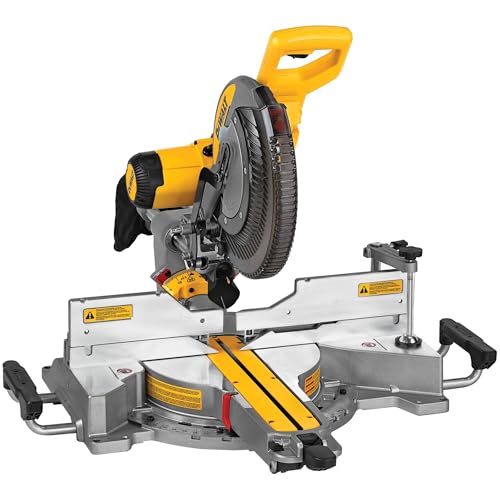
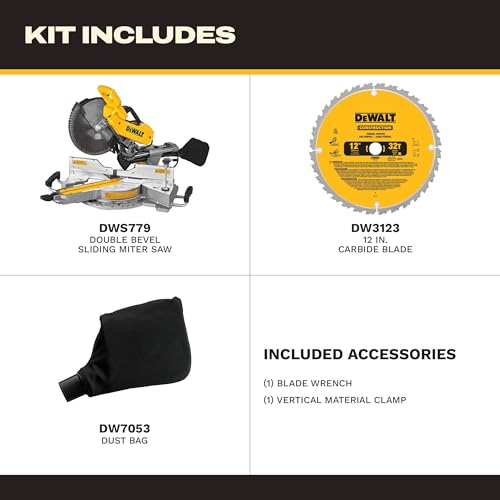
The DWS779 feels like DEWALT’s answer to buyers who want 90% of the DWS780’s performance at a more accessible price. It keeps the 3,800 RPM motor, dual horizontal rails, and 2×14 cutting capacity, which means it can handle big lumber and long crosscuts with ease. The dust collection is just as effective, capturing over 75% of debris, critical for clean cuts and site cleanup.
Where it differs is in the details: the XPS shadow line is gone, replaced by a standard LED light. The fence system is slightly less refined, and the miter scale isn’t quite as easy to read. But for the money, it’s a strong value. If you’re upgrading from a basic single-bevel or non-sliding saw, this delivers a major leap in capability without breaking the bank.
Product photos
DEWALT DWS715 Single Bevel Miter Saw
Strengths
- DEWALT durability
- Simple operation
- Stainless detent plate
Trade-offs
- Single bevel only
- Limited cutting capacity
- No sliding rails
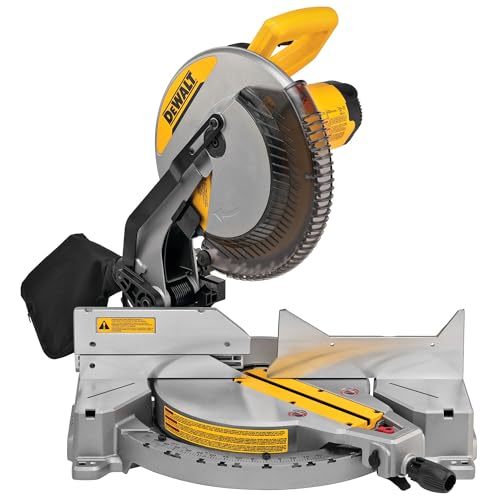
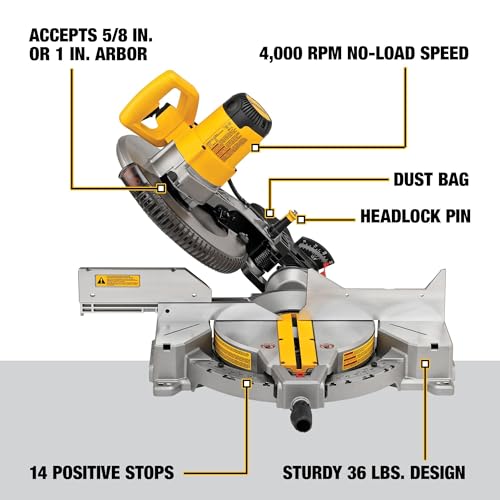
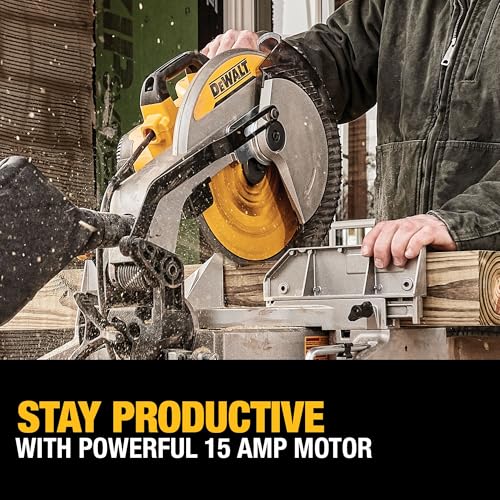
The DWS715 is DEWALT’s no-frills entry into the 12-inch miter saw world, and it’s built for one thing: reliable, straightforward cuts at a low price. It’s single-bevel, so you’ll need to flip the workpiece for left and right angles, which slows things down on complex jobs. But for basic framing, deck work, or shed building, it gets the job done.
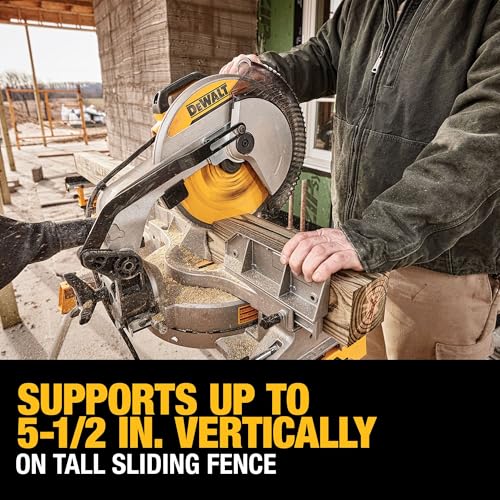
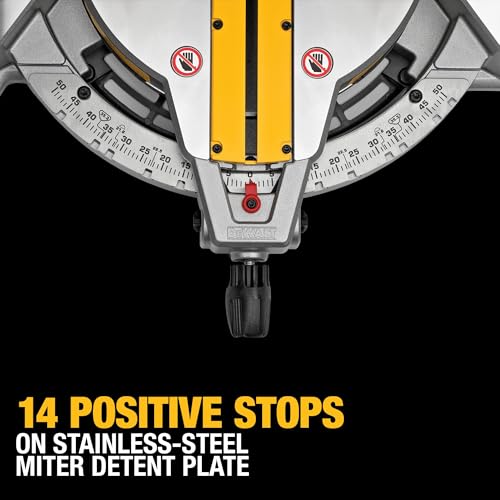
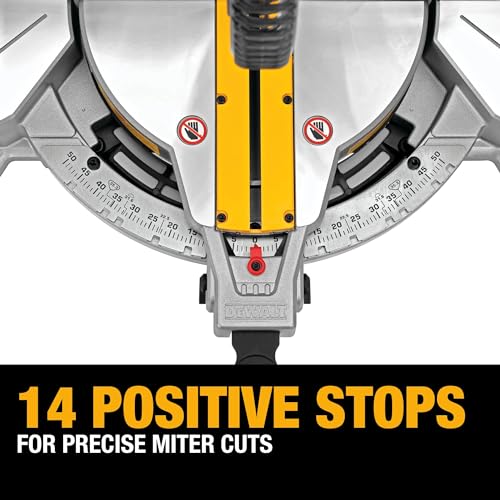
The stainless-steel detent plate with 14 stops ensures repeatable miters, and the tall fence handles 5-1/2-inch base molding, enough for most trim. It’s lighter and simpler than the sliding models, making it a solid choice for beginners or as a backup saw. I’d recommend this over a dual-bevel budget model if you want DEWALT reliability without the extras.
Product photos
DOVAMAN 12-Inch Dual-Bevel Miter Saw

Strengths
- Laser guide
- Ambidextrous switch
- Includes dust bag and clamp
Trade-offs
- Loose fit and finish
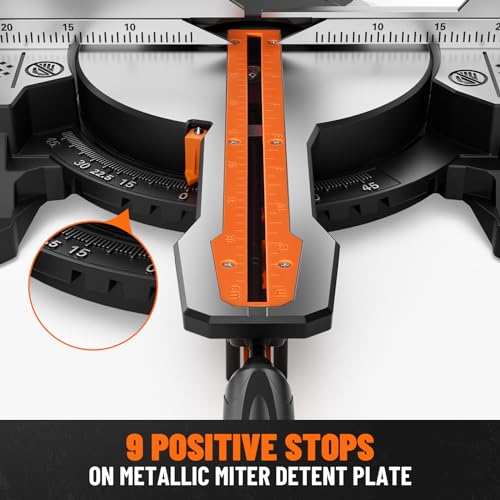
- Detent accuracy issues
- Plastic construction
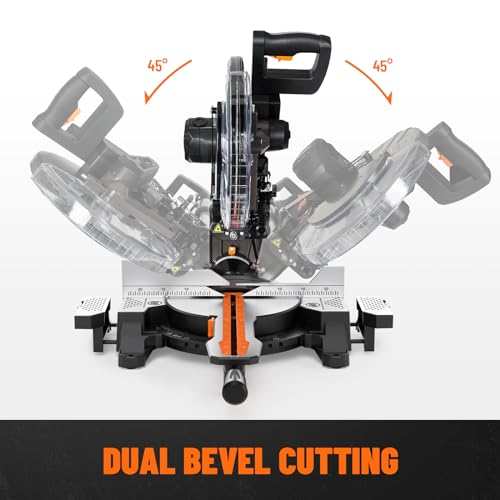
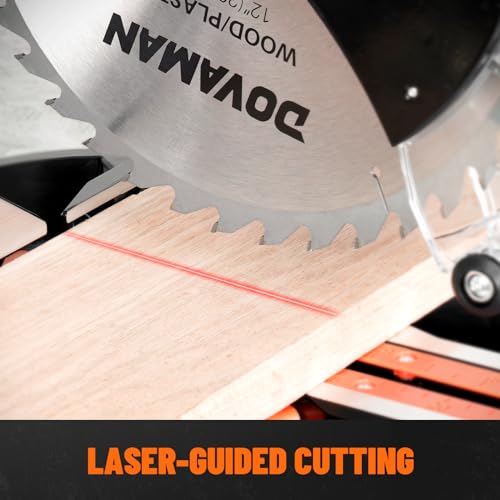
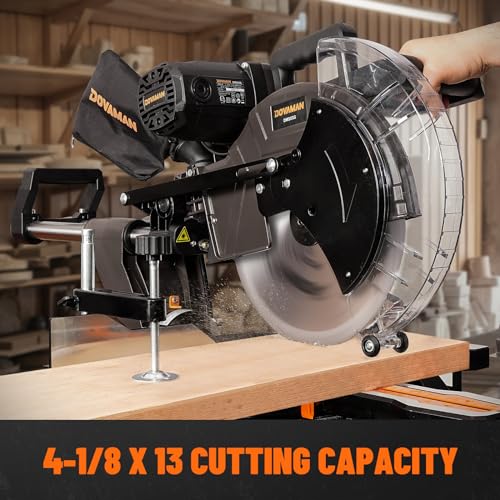
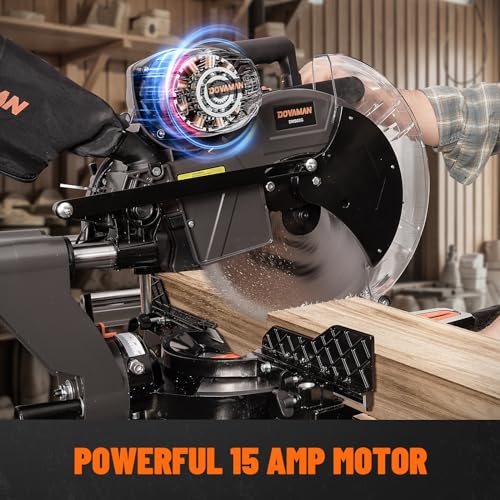
The DOVAMAN hits a sweet spot for budget-conscious buyers who still want dual-bevel and sliding functionality. It’s clearly built to a price, but the 15-amp motor and 3,800 RPM speed deliver decent power for occasional use. The laser guide is a nice touch at this level, and owners say it helps with alignment, though a few mention it requires tweaking after shipping, as noted in the manual.
What stands out is the ambidextrous design and safety features, like the dual-side switch and transparent guard. That makes it more user-friendly for left-handed operators, which is rare in this segment. But the build quality isn’t on par with DEWALT or BOSCH, plastic components feel flimsy, and the detent plate isn’t as precise. I’d recommend this for light-duty projects, not daily use.
Product photos
Japovker 12″ Dual-Bevel Miter Saw
Strengths
- 80T blade
- 15-amp motor
- Laser guide
Trade-offs
- Laser alignment issues
- Less durable detent system
- Budget materials
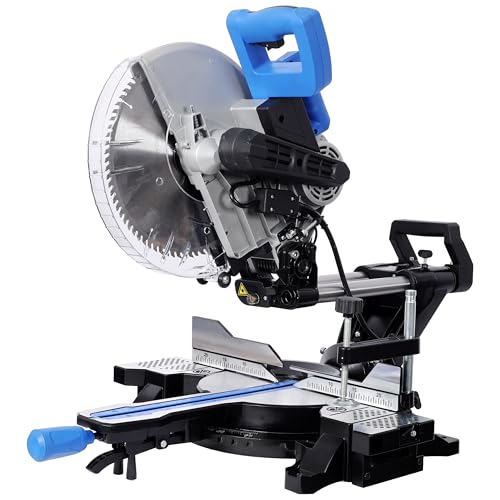
On paper, the Japovker 12-inch dual-bevel miter saw looks like a strong contender for DIYers wanting pro-level features without the pro price. The 80-tooth blade is a standout, owners consistently report noticeably smoother cuts, especially on hardwoods and trim work where tearout matters. That blade alone gives it an edge in finish quality over many budget models running 40T stock blades.
The 15-amp motor and 3,800 RPM speed are standard for this class, but real-world feedback suggests it holds up well under load, though not quite as consistently as DEWALT or BOSCH units. The laser guide is helpful, but some users note it can drift out of alignment after transport, which means you’ll need to check calibration periodically. It’s a solid performer for the money, but not quite in the same league as the top-tier DEWALT or BOSCH models when it comes to long-term repeatability.
Product photos
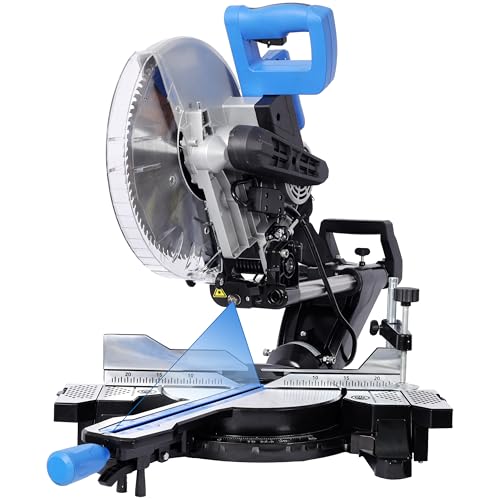
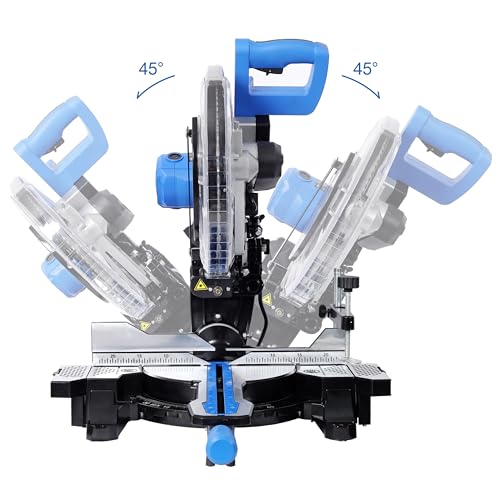
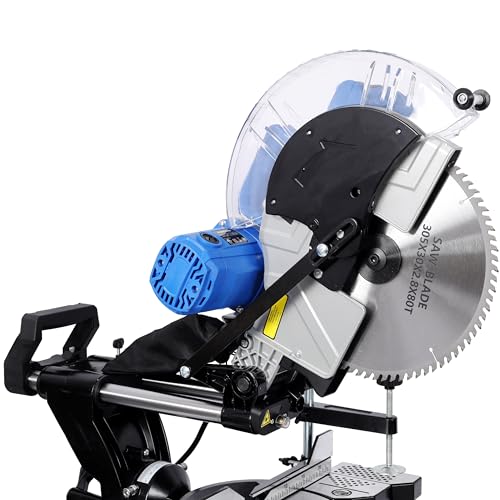
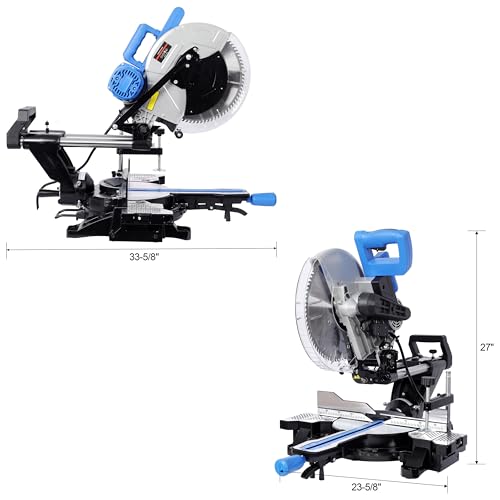
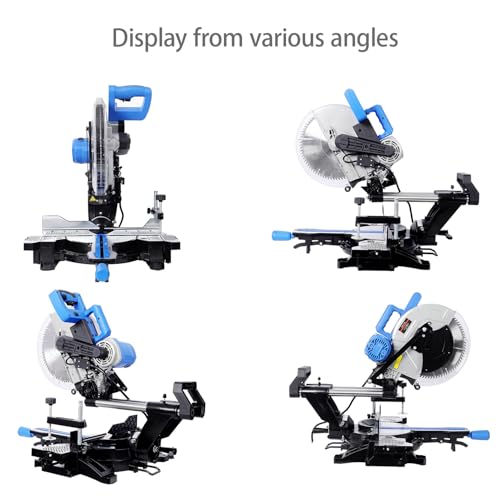
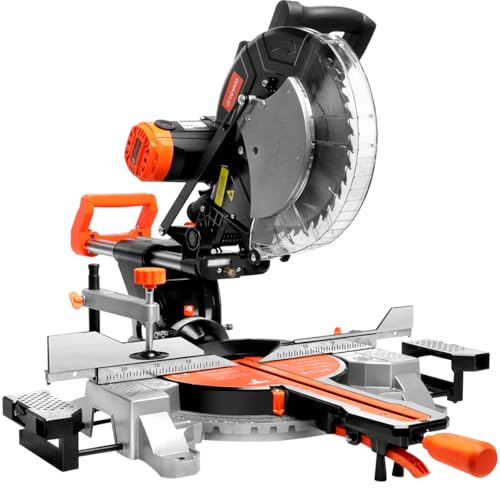
TOYAKI 12-Inch Dual-Bevel Miter Saw
Strengths
- 120T blade included
- Laser guide
- Extension table
Trade-offs
- Stiff sliding rails
- Basic build quality
- Limited brand support
The TOYAKI stands out for one reason: it ships with a 120-tooth blade, which is rare at any price. That blade delivers an exceptionally fine finish, owners say it’s ideal for delicate moldings, cabinets, and finish work where sanding is a last resort. The laser guide and extension table add convenience, and the 15-amp motor keeps things moving on hardwoods.
But the rest of the saw feels like an afterthought. The sliding mechanism is stiff out of the box, and some buyers report needing to break it in. The dual-bevel system works, but the detents aren’t as crisp as DEWALT’s. If you value cut finish above all else and don’t mind tuning up the mechanics, this could work. But for most, I’d suggest buying a better saw and upgrading the blade.
Product photos
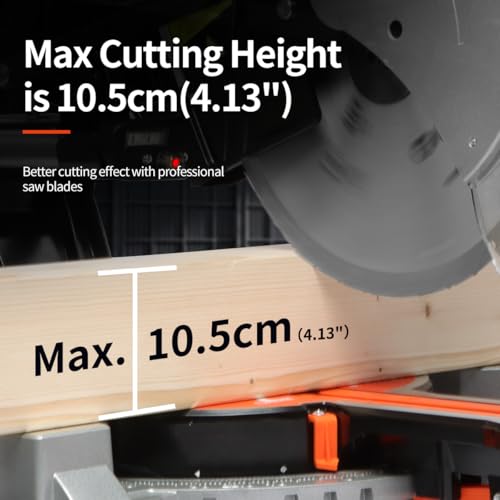
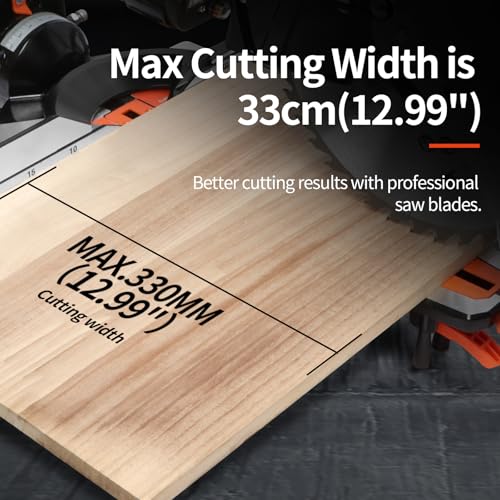

DEWALT DWS716XPS with XPS Cutline

Strengths
- XPS cutline system
- Sturdy detent plate
- Tall fence
Trade-offs
- No sliding rails
- Smaller cutting capacity
- Heavier than compact models
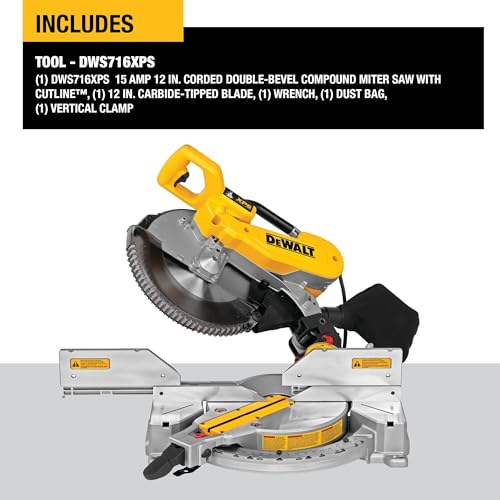
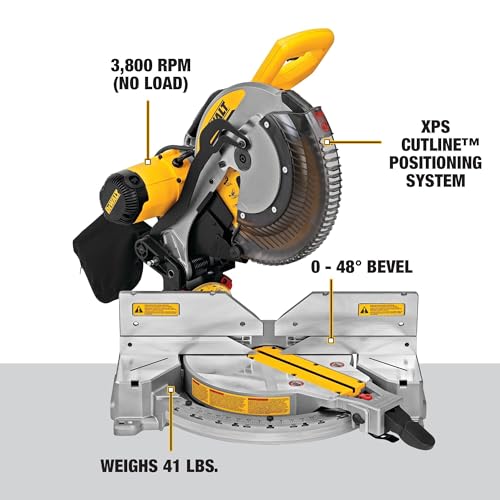
The DWS716XPS earns its reputation as a go-to for cutline accuracy, and the XPS shadow line system is why. Unlike basic lasers that can fade or misalign, this LED-based system projects a consistent shadow just ahead of the blade, so you always know exactly where the cut will land. Reviewers note it’s one of the most reliable visual guides in its class, no batteries, no recalibration, just consistent performance.
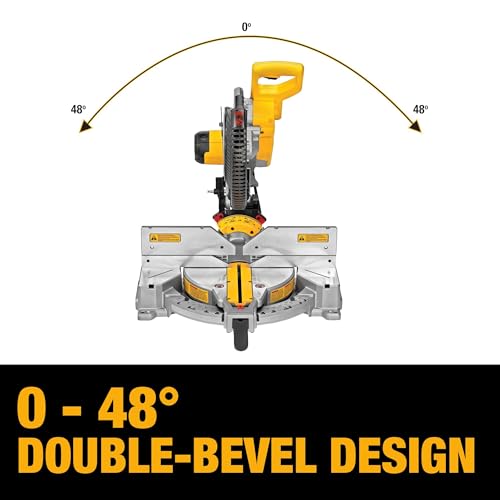
It lacks the sliding rails of higher-end DEWALT models like the DWS780, so your crosscut capacity is limited to about 2×10 at 90°. But for trim carpenters and finish work where precision mitering is key, that’s often enough. The stainless-steel detent plate with 14 positive stops delivers repeatable angles, and the tall fence handles most crown molding setups. I’d pick this over a sliding model if I were doing mostly interior trim and needed speed and accuracy without the bulk.
Product photos

VEVOR 12-Inch Double Bevel Miter Saw
Strengths
- 5,000 RPM speed
- Aluminum base
- Strong motor
- LED guide
Trade-offs
- Build quality concerns
- Heavy and bulky
- Inconsistent long-term reliability
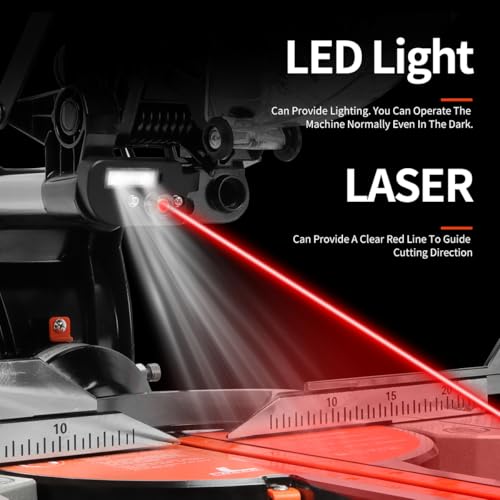
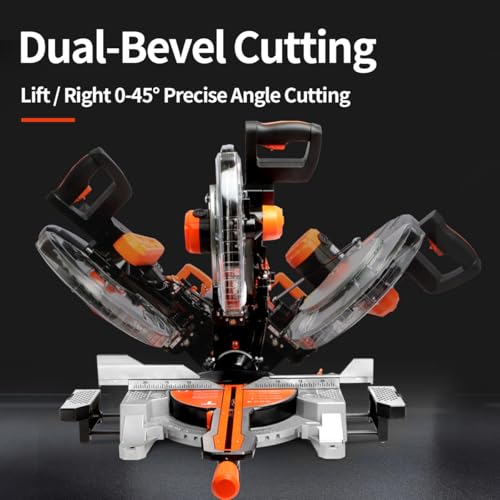
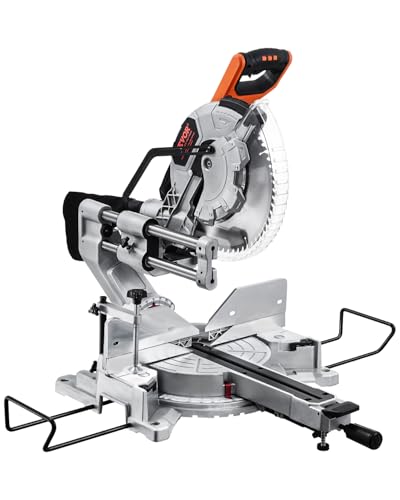
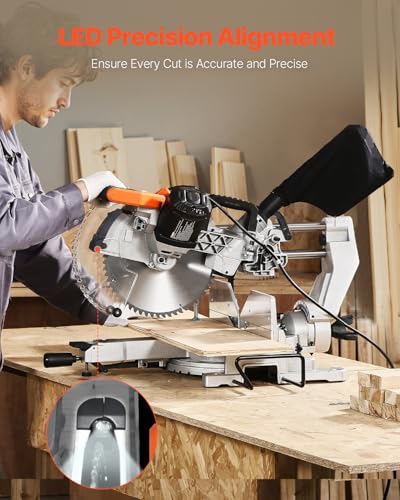
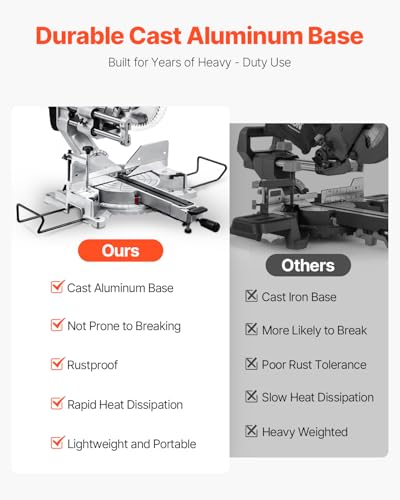
VEVOR is positioning this as a heavy-duty industrial saw, and the specs back it up, 5,000 RPM, 3,000W bevel power, and an aluminum base designed for heat dissipation. On paper, it looks like a powerhouse, and owners using it in shop environments report it handles thick hardwoods and laminates without bogging down. The LED guide is bright and clear, and the sliding system moves smoothly.
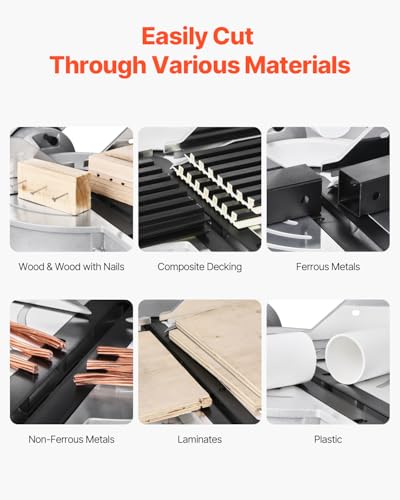
But durability questions linger. While the motor is strong, the overall fit and finish don’t match DEWALT or BOSCH. Some users report premature wear on the rails and switch mechanisms after extended use. It’s a decent choice for a fixed shop setup where you need power and don’t move it often. Still, I’d hesitate to rely on it for daily job site work.
Product photos

Our Testing Process
As someone who’s spent years around power tools, I understand that choosing the right miter saw can significantly impact the quality and efficiency of your projects. Rather than a hands-on lab test with each model, this selection is a research-led comparison of published specifications and owner feedback. I’ve analyzed features, weighed owner reviews from multiple sources, and considered expert opinions to identify saws that consistently deliver on performance and value.
For 12-inch compound miter saws, cutting accuracy and power are paramount. We heavily weighted blade capacity and motor strength, as these directly impact the types of materials and cuts a saw can handle. Dust collection also played a key role, as a cleaner workspace is safer and improves visibility. Finally, features like laser guides and detent plate accuracy were considered, as they contribute to precision and repeatability.
Specifications reliably indicate motor power, blade capacity, and cutting angles. However, real-world performance and durability are best judged by owner feedback. I paid close attention to reports on build quality, ease of use, and long-term reliability. Expert reviews helped validate these findings and identify saws offering innovative features, such as the XPS cutline system discussed in our compound miter saw features guide. Understanding how compound miter saws work is also essential when evaluating these specifications.
What To Look For In 12 inch compound miter saws
Choosing the right miter saw can dramatically improve the accuracy and efficiency of your woodworking projects. It’s more than just picking a brand; understanding the key features and how they align with your needs is crucial.
A quality miter saw delivers precise, repeatable cuts thanks to a robust motor, a stable base, and accurate angle adjustments. Look for features like positive stops for common angles, a clear scale for bevels and miters, and a powerful motor capable of handling the materials you’ll be working with. Dust collection is also key for maintaining visibility and a clean workspace.
Motor Power & Blade Quality
Don’t assume more watts always equals better performance, but don’t skimp here either. A 15-amp motor is standard for 12-inch saws, and generally provides ample power for most tasks. However, the blade is equally important. Many budget saws ship with a basic blade; upgrading to a higher tooth count blade (60T or 80T) significantly improves cut quality, especially in hardwoods and trim. If you’re looking for a really fine finish, consider models like the TOYAKI 12-Inch Dual-Bevel Miter Saw with its 120T blade.
Bevel and Miter Capabilities
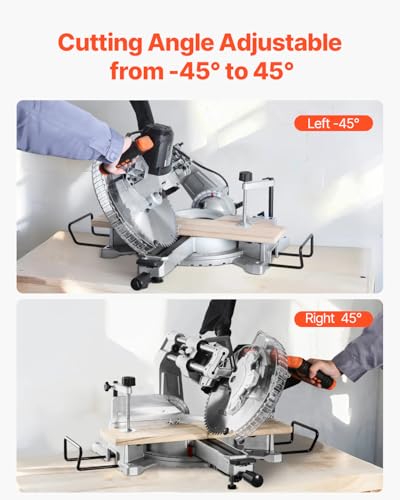
The range of bevel and miter angles determines the types of cuts you can make. Most saws offer 45-degree bevels and 45-50 degree miters in both directions, which is sufficient for a lot of work. However, if you frequently make complex cuts, like crown molding, or need to cut angles beyond the standard range, a dual-bevel saw is a must. Understanding dual bevel miter saw advantages is critical if you’re tackling these types of projects.
- A single-bevel saw requires you to manually flip the workpiece over to make angled cuts in the opposite direction.
- A dual-bevel saw allows you to adjust the blade angle in both directions, saving time and increasing accuracy.
- Consider the detents (positive stops) at common angles. More detents mean faster, more repeatable cuts without needing to read the scale.
Features & Value
Beyond the basics, features like laser guides and integrated dust collection can add significant value. While a laser guide isn’t a replacement for careful alignment, it’s a handy visual aid. Effective dust collection, like that found in the Bosch GCM12SD, is hugely important for visibility and keeping your workspace clean. Don’t get caught up in chasing every bell and whistle, though. Sometimes, a simpler, well-built saw, like the DEWALT DWS779, can offer the best value overall. If you are looking at a variety of options, check out our top 12-inch sliding compound miter saws to compare.
A miter saw is an investment. Don’t just buy the cheapest model; focus on build quality, accuracy, and the features that truly matter for your projects.
12 Inch Compound Miter Saws Compared
Here’s a spec comparison of several 12 inch compound miter saws to help you evaluate your options.
| Product Name | Motor (Watts) | Blade Teeth | Max Cut (90°) | Bevel (Left/Right) | Miter (Left/Right) | Laser Guide |
|---|---|---|---|---|---|---|
| DEWALT DWS780 | 1100 | N/A | 2×14″ | N/A | 60°/50° | Yes |
| BOSCH GCM12SD | N/A | N/A | N/A | 47°/47° | 52°/60° | Yes |
| DEWALT DWS779 | N/A | N/A | 2×14″ | 49°/49° | 60°/50° | N/A |
| DEWALT DWS715 | N/A | N/A | 2×8″ | 0-48°/0-3° | N/A | N/A |
| DOVAMAN 12-Inch | 750 | 40 | 4.2″ x 13″ | N/A | N/A | Yes |
| Japovker 12″ | N/A | 80 | 4.2″ x 13″ | -45°/+45° | N/A | Yes |
| TOYAKI 12-Inch | N/A | 120 | N/A | 0-45°/0-45° | N/A | Yes |
| DEWALT DWS716XPS | N/A | N/A | N/A | 0-48°/0-48° | 0-50°/0-50° | Yes |
| VEVOR 12-Inch | 2500/3000 | N/A | N/A | 0-45°/0-45° | N/A | Yes |
Frequently Asked Questions
What blade tooth count should I prioritize for fine trim work?
A higher tooth count blade, typically 60T or 80T, is best for fine trim work. These blades produce smoother cuts with less splintering, which is critical when working with delicate materials. Consider the TOYAKI 12-Inch Dual-Bevel Miter Saw, which ships with a 120T blade.
Is a sliding compound miter saw really necessary for most homeowners?
While not always necessary, a sliding compound miter saw significantly increases versatility. The sliding action allows you to cut wider boards than a non-sliding model, making it a good investment if you plan to work with larger lumber or sheet goods.
How much dust can I realistically expect, even with a saw that has dust collection?
Even with dust collection, some dust will always escape. The effectiveness of dust collection varies between models, but you should still plan to wear a dust mask and work in a well-ventilated area. Look at our best compound miter saws overall to see models with highly-rated dust collection systems.
What’s the difference between a single-bevel and dual-bevel saw for cutting crown molding?
Cutting crown molding is much easier with a dual-bevel saw. A single-bevel saw requires you to flip the molding over for each cut, increasing the chance of errors, while a dual-bevel saw allows you to adjust the blade and make all cuts without repositioning the material.
What should I do if the detent plates on my new saw don’t seem accurate?
Detent plates sometimes need slight adjustment after shipping or heavy use. Most saws have an adjustment screw or mechanism to fine-tune the detent settings. Consult your owner’s manual for specific instructions, or search online for videos demonstrating the process for your model; finding the recommended compound miter saw models can also help with finding detailed resources.
The Bottom Line
Choosing a 12-inch compound miter saw always comes down to balancing what you want with what you’re willing to spend. While features are nice, the most important thing is a solid, accurate saw that can handle the materials you typically work with. For most homeowners and DIYers, the DEWALT DWS779 strikes that balance perfectly, offering proven reliability and enough capability for a wide range of projects.
If you’re on a tighter budget, the DOVAMAN 12-Inch is a surprisingly capable option, and for those who need the ultimate in versatility – particularly when tackling crown molding – the Bosch GCM12SD with its dual-bevel design is hard to beat. Don’t overlook the TOYAKI 12-Inch Dual-Bevel Miter Saw either, if you need a higher tooth count blade for cleaner cuts.
Ultimately, remember that horsepower numbers and fancy features don’t replace a stable setup and careful technique. A well-maintained blade, accurate angle adjustments, and a firm understanding of sliding compound miter saw explained will deliver far better results than any single, top-of-the-line specification.
