7 Best Surface Planers of 2026
This post contains affiliate links. As an Amazon Associate, we earn from qualifying purchases.
The DEWALT 13-Inch Thickness Planer stands out as the overall best surface planer for its reliability and consistent performance, while the WEN PL1337 Two-Speed Planer is a smart budget pick with versatile feed options. For those prioritizing cut quality and long-term blade life, the FINDBUYTOOL 13-Inch Helical Planer offers excellent value with its carbide helical cutterhead.
Most people shopping for a surface planer are trying to get smooth, flat stock without wasting time on tear-out or constant adjustments. It’s frustrating when a machine leaves snipe, stalls on hardwood, or demands frequent maintenance.
This guide cuts through the noise by focusing on what matters: motor power, cutterhead design, and build stability. I compared specs and owner feedback across top models, weighing real-world performance and long-term usability to find the ones that deliver where it counts.
Top 7 Surface Planers in the Market
The Best Surface Planers, Reviewed
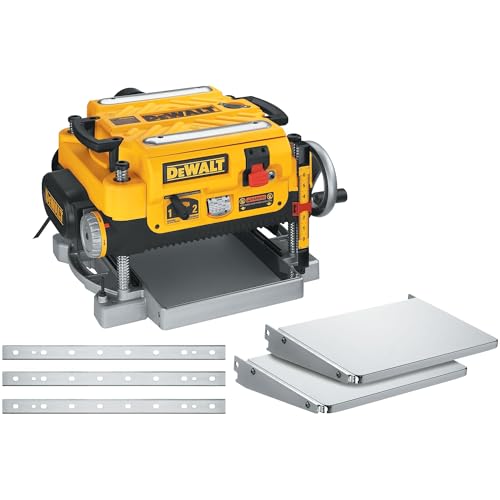
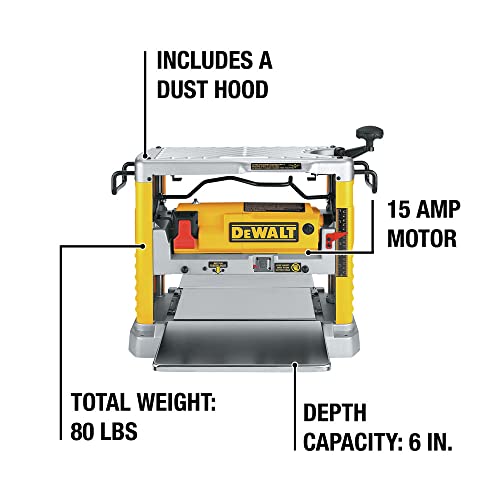
DEWALT 13-Inch Thickness Planer
Strengths
- Three-knife cutterhead
- Automatic snipe reduction
- 3-year warranty
Trade-offs
- No helical cutterhead
- Heavy at 84 lbs
- Dust port could be larger
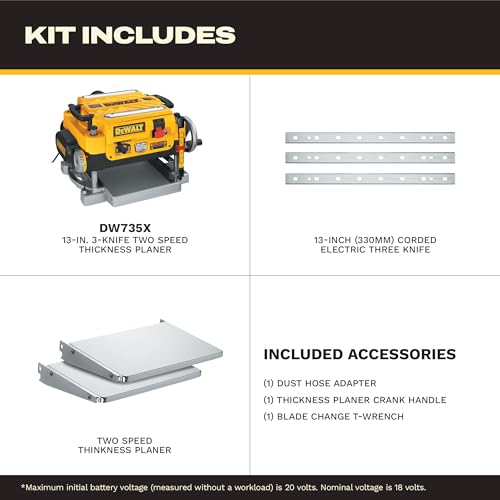
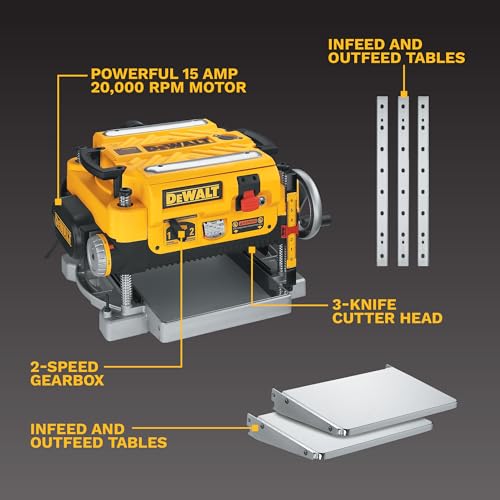
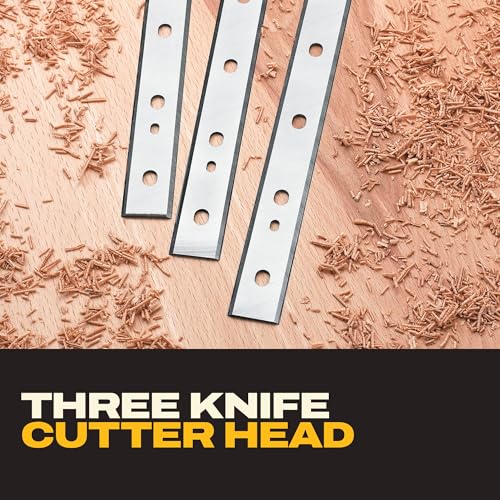
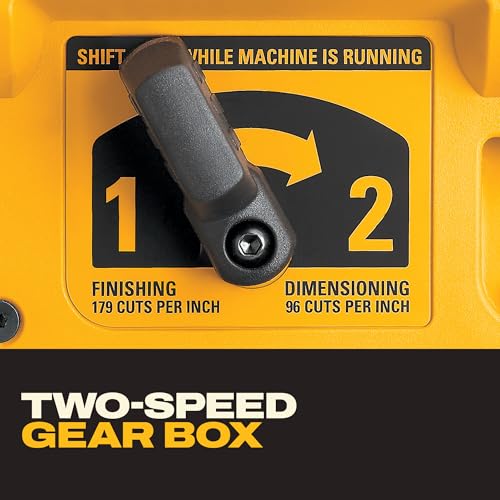
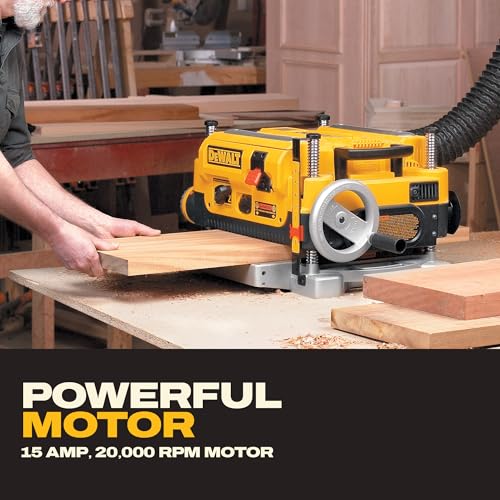
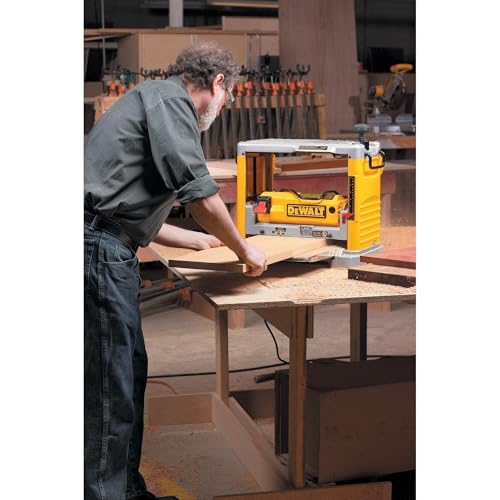
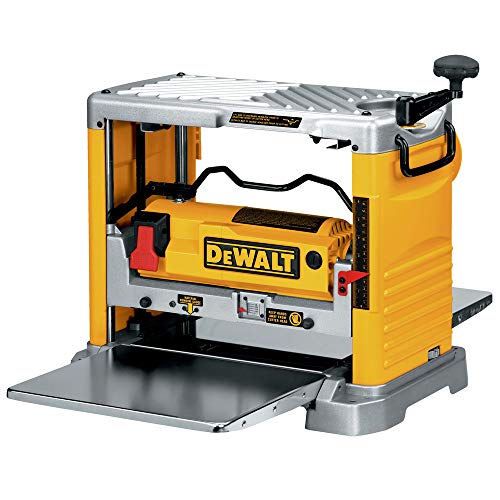
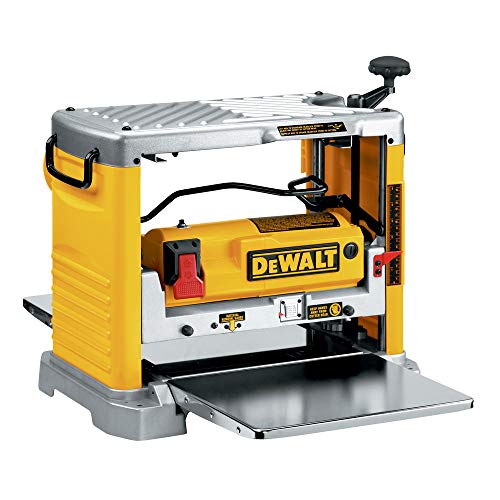
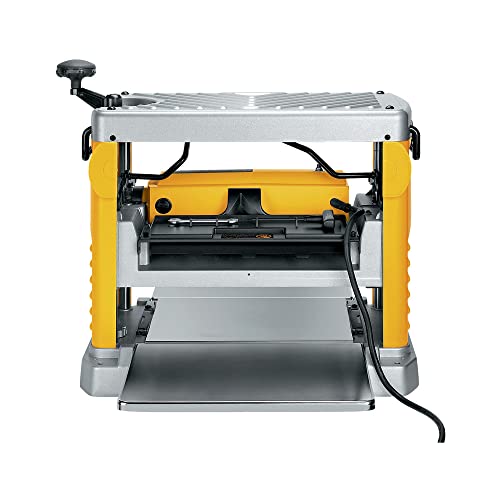
The DEWALT DW735X is the benchmark for a reason. Its three-knife cutterhead spinning at 10,000 RPM delivers 96 to 179 cuts per inch, depending on feed speed, which translates to a consistently smooth surface, even in tricky grain. The cast aluminum base is noticeably rigid, and the automatic carriage lock is a standout for minimizing snipe, a pain point on cheaper models. Owners love the extra-large depth stop turret and the fact that it comes with an extra set of knives.
It’s not the quietest or the most feature-laden (no helical head here), but it’s incredibly dependable. Compared to the FINDBUYTOOL and JET models, it doesn’t have carbide inserts or a 2.5HP motor, but its balance of power, durability, and ease of use makes it the smarter buy for most. The 3-year warranty is the cherry on top.
Product photos
FINDBUYTOOL 13-Inch Helical Planer
Strengths
- 40-carbide helical head
- Ball-screw adjustment
- LED work lights
Trade-offs
- Brand is less established
- Slightly noisier than expected
- Manual can be unclear
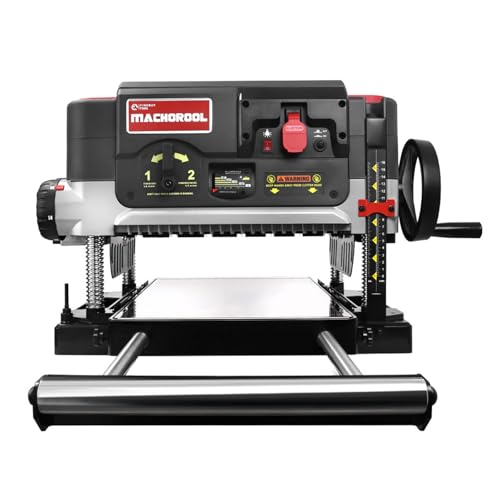
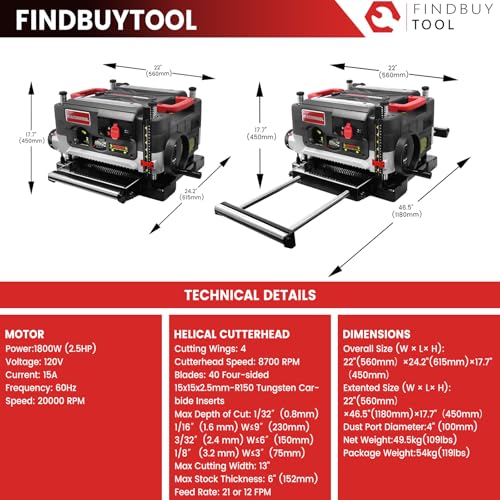
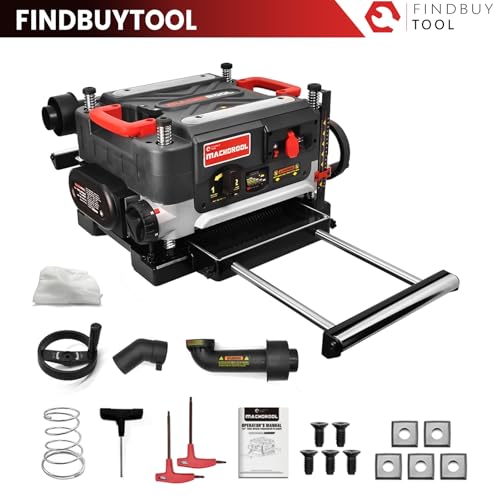
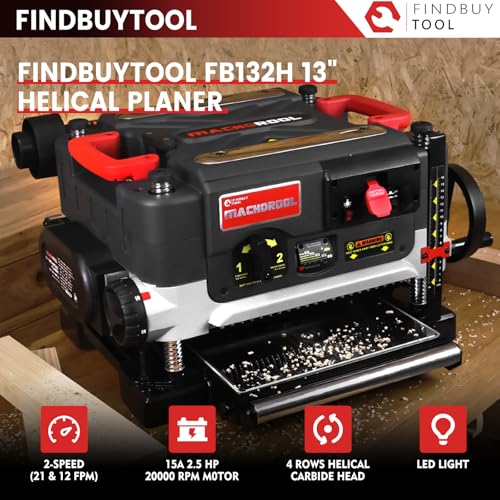
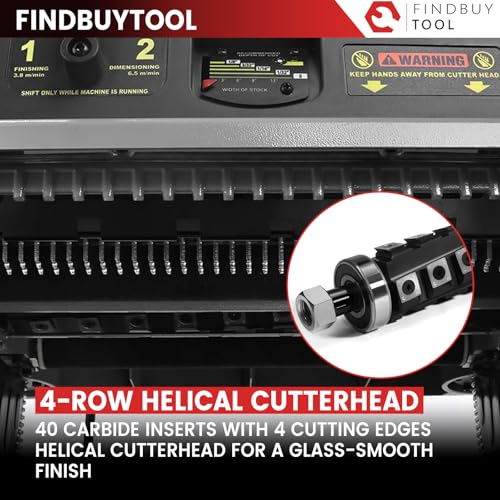
This FINDBUYTOOL model, under the MACHOROOL brand, is built like a prosumer dream. The 2.5HP motor and 40-carbide-insert helical cutterhead are serious upgrades, carbide lasts significantly longer than HSS, especially against abrasive woods, and owners confirm fewer sharpening cycles and cleaner finishes. The 2-speed feed (12 and 21 FPM) gives real control: fast for roughing, slow for final passes.
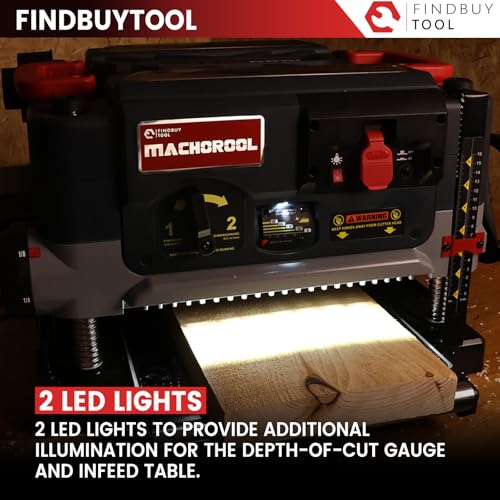
What seals the deal are the thoughtful details: ball-screw height adjustment with ±0.05mm accuracy, LED lighting, and a 4″ dust port that actually keeps the work area clear. Reviewers note it’s among the most precise benchtop planers they’ve used, rivaling machines twice the price. Next to the DEWALT DW735X, it offers better finish and adjustability, though DEWALT still wins on brand trust and warranty support. My pick for finish quality and precision.
Product photos
WEN PL1326 Spiral Benchtop Planer
Strengths
- Spiral cutterhead
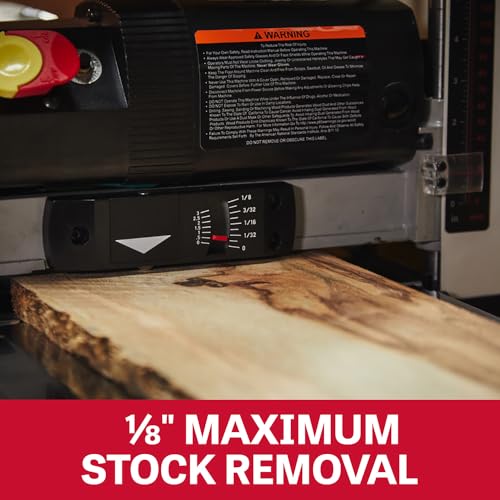
- Onboard depth gauge
- Two-year warranty
Trade-offs
- No feed rate adjustment
- Lighter build quality
- Limited outfeed support
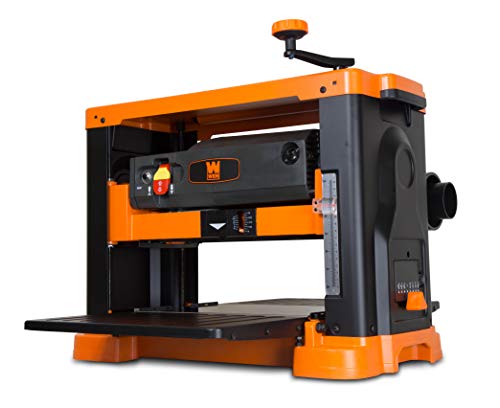
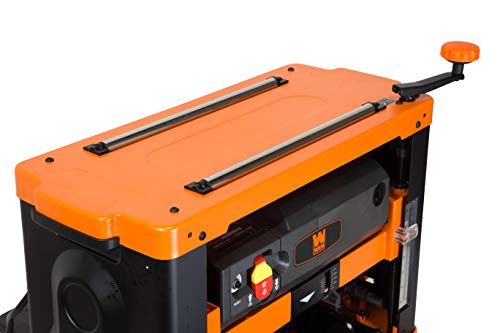
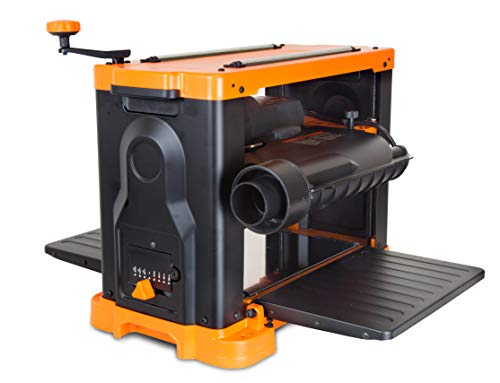
The WEN PL1326 stands out in the budget planer space not by overpromising, but by delivering core performance where it counts. Its spiral cutterhead with 26 HSS blades is a smart upgrade over basic two-knife designs, reducing tear-out and delivering a noticeably smoother surface right out of the gate. On paper, the 15A motor and 10,000 RPM cutterhead speed are solid for a machine at this price, and owners consistently report it handles softwoods and lighter hardwoods without bogging down.
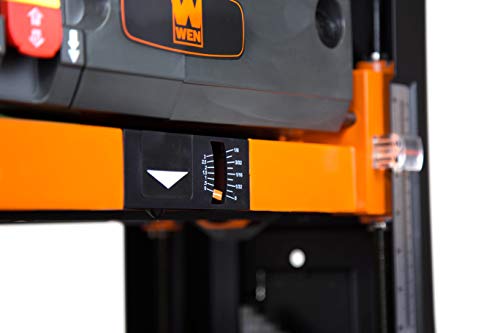
What I appreciate most is how WEN keeps it simple: the onboard depth gauge is functional, the dust collection works decently with a shop vac, and the two-year warranty offers peace of mind. It’s not built like a cabinet planer, but for DIYers and light workshop use, it punches above its weight. Compared to the VEVOR and DEWALT DW734, it trades some rigidity and feed control for affordability, yet still beats many in its class on finish quality.
Product photos
JET 13-Inch Helical Planer

Strengths
- Helical cutterhead
- Cast iron bed
- 2 HP motor
Trade-offs
- No preset depth memory
- Heavier than competitors
- Higher price point
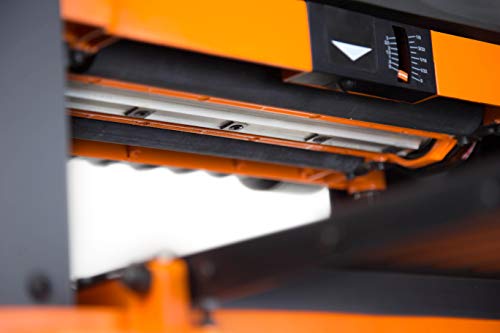
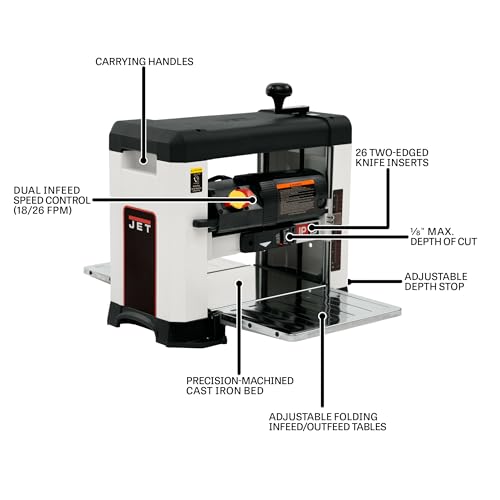
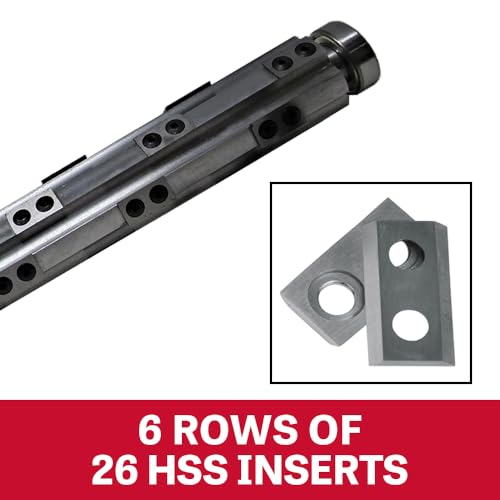
JET has long been a name woodworkers trust, and the JWP-13BT justifies that reputation with its helical cutterhead and 2 HP motor. The 26 high-speed steel inserts deliver a fine, quiet cut, and the dual feed speeds let you balance speed and finish, something the basic WEN models can’t match. Owners consistently praise its ability to handle dense hardwoods like maple and walnut with minimal snipe, thanks to the four-post cutterhead design and cast iron bed.
It’s heavier and less portable than the DEWALT models, but that mass contributes to stability. Compared to the FINDBUYTOOL helical planer, it lacks some modern touches like LED lights or preset thickness memory, but it makes up for it in proven durability. If you’re working hardwoods regularly and want a machine that won’t flinch, this is a strong contender.
Product photos
VEVOR 13-Inch Two-Blade Planer

Strengths
- Long table support
- Hardened steel cutter
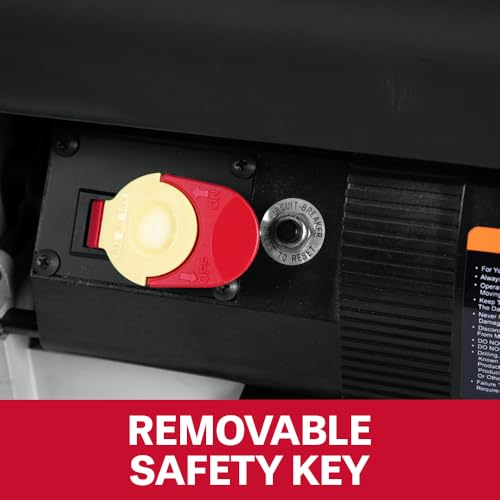
- Overload protection
Trade-offs
- Two-knife design limits finish
- Inconsistent depth control
- Build quality varies
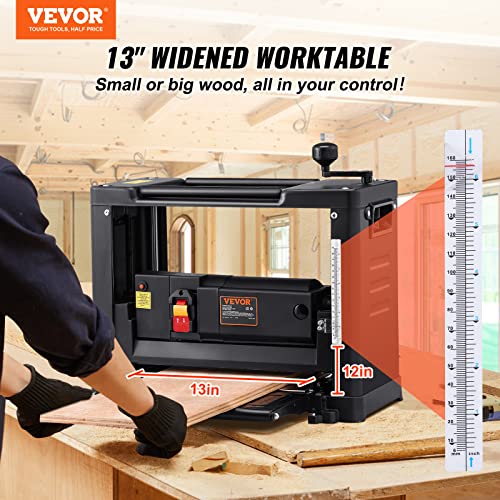
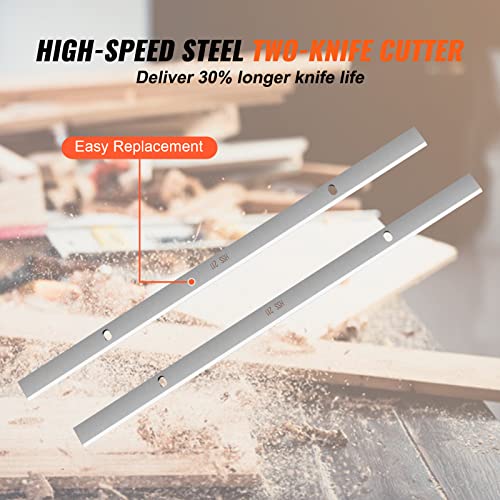
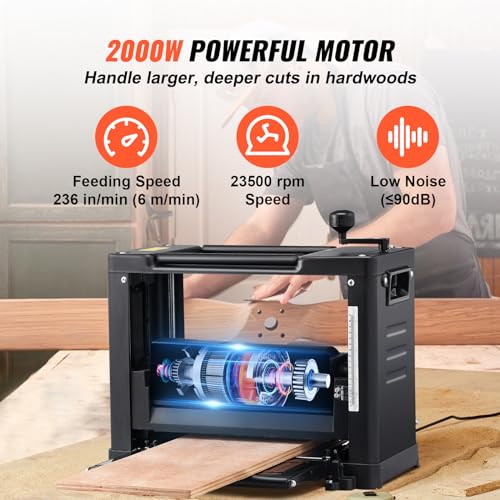
VEVOR is aiming for the sweet spot between price and features here, and on specs alone, this planer looks impressive: a 2000W motor, 23,500 RPM spindle speed, cast iron bed, and 35 inches of total table length with extensions. The two-knife cutterhead is hardened to HRC55-60, which sounds durable, but I’m skeptical about long-term edge retention compared to carbide or helical designs. Owners report it powers through pine and poplar without issue, but feedback on hardwood performance is mixed, some notice vibration and chatter during deeper cuts.
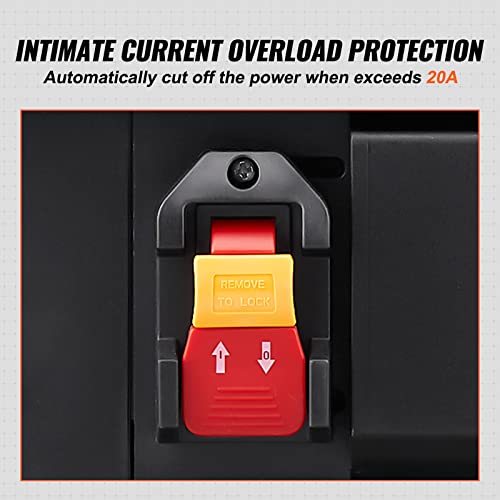
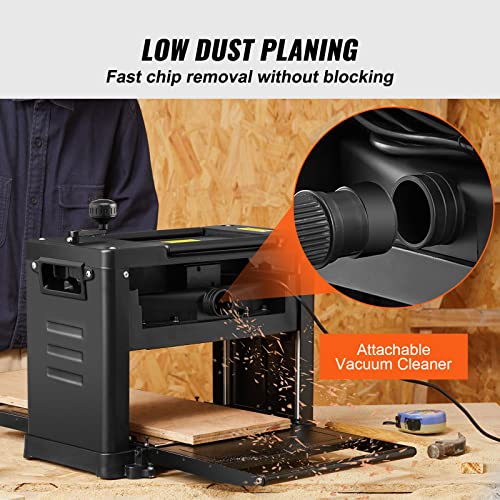
It’s clear VEVOR packed in conveniences like overload protection and a large dust port, which help. But when stacked against the DEWALT DW735X or the FINDBUYTOOL model, it lacks the refined feed mechanism and precision depth control that make repeatable, accurate planing easier. I’d call this a decent value pick for beginners, but not one I’d trust for fine woodworking.
Product photos
WEN PL1337 Two-Speed Planer

Strengths
- Two-speed feed
- Spiral HSS blades
- Return rollers
Trade-offs
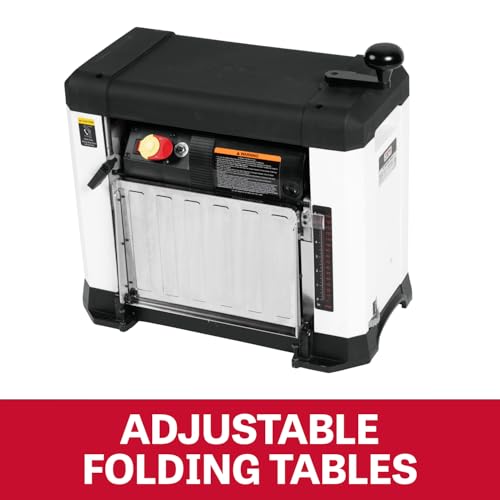
- Plastic table extensions
- No carbide option
- Dust collection is average
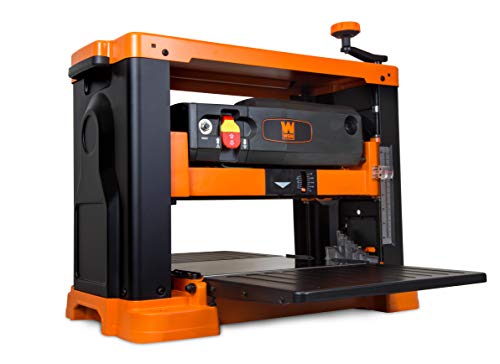
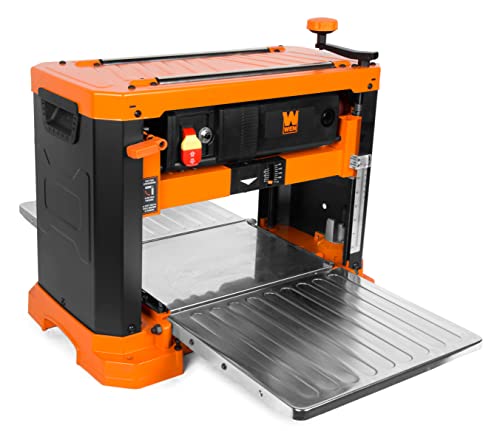
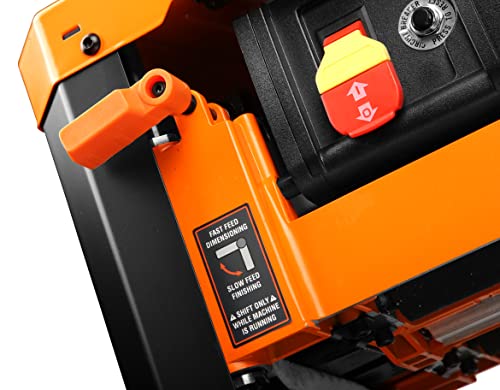
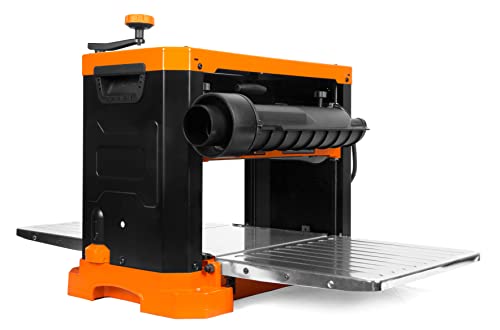
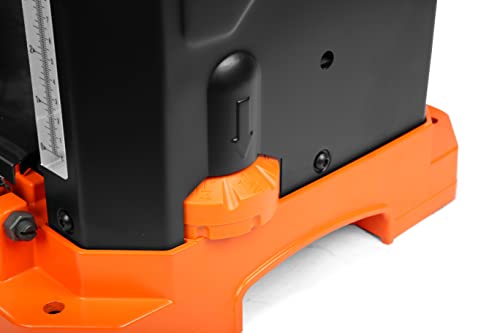
The WEN PL1337 takes the PL1326’s formula and refines it with dual feed speeds, a major upgrade. Being able to drop to 16 FPM for finishing passes means noticeably cleaner results, especially in figured or interlocked grain. The spiral HSS blade design remains a highlight, offering better surface quality than straight-knife models in its price range. Owners say it’s quiet, efficient, and the return rollers help prevent jams.
It still lacks the heft and precision of the DEWALT or JET models, but for smoothness on a budget, it’s hard to beat. When compared to the VEVOR two-blade planer, the PL1337 wins on finish and user control, even if VEVOR offers longer tables. If silky surfaces are your priority and you’re not milling oak all day, this is my pick over the PL1326.
Product photos
DEWALT DW734 Benchtop Planer

Strengths
- Compact footprint
- Solid DEWALT build
- Reversible knives
Trade-offs
- 12.5-inch width limit
- Less table support
- No feed rate adjustment
The DW734 is DEWALT’s compact answer to the full-size DW735X, and it’s a clever space-saver. At 12.5 inches wide, it sacrifices only half an inch in capacity but gains serious portability. The 3-knife cutterhead still delivers 96 cuts per inch, so finish quality remains excellent, and the four-column carriage lock does a solid job reducing snipe. It’s lighter, easier to store, and still backed by DEWALT’s reputation.
But that smaller width becomes a limitation fast, especially when working wide stock or panels. Owners report needing to joint boards first to fit them through. Compared to the WEN PL1326 or VEVOR, it’s pricier for less capacity, but if you’re tight on shop space and still want DEWALT reliability, it makes sense. Just know you’re trading breadth for convenience.
Product photos
How We Evaluated surface planers
As someone who’s spent years around workshops and power tools, I know a good surface planer can make all the difference. Rather than a hands-on lab test with each model, my approach involved a detailed research-led comparison of published specifications and features, combined with careful consideration of owner reviews and assessments from reputable woodworking experts. I weighed this information against my understanding of what truly matters in planer performance to arrive at these recommendations.
For surface planers, consistent cut quality and power were paramount. A planer’s ability to handle different wood types – from softwoods to dense hardwoods – without tear-out or stalling is critical, so motor strength and cutterhead design were heavily weighted. Equally important was stability; minimizing vibration and snipe (that unwanted dip at the beginning or end of a board) directly impacts the final result. You’ll find models excelling in these areas highlighted in our guide to best thickness planers.
Specifications reliably reveal motor power, cutting depth, and feed rates. However, I found owner feedback invaluable for gauging real-world performance, particularly regarding noise levels, ease of knife changes, and long-term durability. Reputation and brand history also played a role – established manufacturers often have a track record of building reliable, well-supported tools. We looked at various thickness planer models to find those offering a balance of features and positive user experiences.
What To Look For In surface planers
Choosing the right surface planer can dramatically improve the quality of your woodworking projects.
A good surface planer balances power with precision. Key considerations include motor strength for handling different wood types, cutterhead design for finish quality and blade life, feed rate control for material removal speed, and build quality for stability and accuracy. Look for features like helical cutterheads, adjustable feed rates, and robust base construction.
Motor Power & Capacity
The motor is the heart of any planer, and you’ll want to match its power to the type of wood you typically work with. Softer woods like pine and fir require less muscle than hardwoods like oak or maple. I often advise folks to overestimate slightly – a 15-amp motor is a good starting point for a versatile machine, but if you’re primarily dealing with hardwoods, consider stepping up to a 2HP (or higher) motor. Don’t just look at amperage, though. Consider the maximum cutting depth and width capacity; a planer that can handle 6-inch thick and 13-inch wide boards offers significant flexibility.
Cutterhead Design: Spiral vs. Straight Knife
The cutterhead is where the magic happens, and this is where you’ll see a significant difference in cut quality and maintenance. Straight-knife cutterheads are the traditional design, often more affordable upfront, but require frequent sharpening or replacement. Spiral (or helical) cutterheads, like those found in the FINDBUYTOOL 13-Inch Helical Planer, use multiple carbide inserts. These inserts last far longer and deliver a noticeably smoother finish. Here’s a breakdown:
- Straight Knife: Cheapest to replace initially.
- Spiral Cutterhead (Carbide Inserts): More expensive up front, but dramatically reduces downtime for blade changes.
- Spiral Cutterhead (HSS Inserts): A good middle ground, offering improved finish and longevity over straight knives, without the high cost of carbide.
Feed Rate & Stability
Consistent, accurate planing relies on a stable machine and controlled feed rate. A two-speed feed rate, like on the WEN PL1337 Two-Speed Planer, is a huge advantage. It lets you quickly remove material with a faster feed for roughing out stock, then slow down for a finish-quality pass.
A wobbly base or a poorly designed carriage lock leads to ‘snipe’– those unsightly ridges at the beginning and end of your boards. A heavy, cast-iron base and a reliable carriage lock are essential for clean, consistent results.
If you’re looking for more options, you can also review other benchtop planer models to find the right one for your needs. I’ve seen a lot of folks find great value in exploring different top benchtop planers to see what suits their specific projects. Ultimately, choosing the best benchtop planer depends on your budget and the types of projects you plan to tackle. Don’t underestimate the importance of finding the right benchtop wood planers to get the job done right.
Surface Planers Compared
Here is a comparison of key specifications for various surface planers.
| Product Name | Max. Width | Max. Depth | Motor HP | Cutterhead Type | Feed Rate (FPM) | Dust Port (in.) |
|---|---|---|---|---|---|---|
| DEWALT 13-Inch Thickness Planer | 13 in. | 6 in. | N/A | Two-Knife | 96/179 | N/A |
| FINDBUYTOOL 13-Inch Helical Planer | 13 in. | 6 in. | 2.5 | Helical | 21/12 | 4 |
| WEN PL1326 Spiral Benchtop Planer | 13 in. | 6 in. | N/A | Spiral | 26 | N/A |
| JET 13-Inch Helical Planer | 13 in. | 6 in. | 2 | Helical | N/A | N/A |
| VEVOR 13-Inch Two-Blade Planer | 13 in. | 6 in. | N/A | Two-Knife | N/A | N/A |
| WEN PL1337 Two-Speed Planer | 13 in. | 6 in. | N/A | Spiral | 26/16 | 2.5/4 |
| DEWALT DW734 Benchtop Planer | 13 in. | 6 in. | N/A | Two-Knife | 96 | N/A |
Frequently Asked Questions
What’s the difference between a surface planer and a thickness planer?
A surface planer, unlike a thickness planer, is designed to flatten one face of a board, ensuring a perfectly flat surface. Thickness planers are for bringing boards to a consistent thickness after one face has been flattened, and they are not ideal for initial flattening.
How often do I need to change the blades on a surface planer?
Blade replacement frequency depends heavily on the cutterhead type and wood species. Straight-knife cutterheads may require sharpening or replacement every 20-30 hours of use, while spiral cutterheads with carbide inserts can last for 100+ hours, and finding reliable wood planer reviews can help you compare models.
What does ‘snipe’ mean, and how can I minimize it?
Snipe refers to the unwanted dip that sometimes occurs at the beginning and end of a board when using a planer. A sturdy planer with a reliable carriage lock and consistent feed rate control will minimize snipe, and a sacrificial board can also help.
Are helical cutterheads really worth the extra cost?
Yes, helical cutterheads are a worthwhile investment for anyone who plans to do a lot of planing. Although more expensive initially, they produce a superior finish, require far less maintenance, and offer longer blade life compared to traditional straight-knife options, making them a favorite among those seeking the best wood planers.
Can a surface planer handle hardwoods like oak or maple?
Most surface planers can handle hardwoods, but you’ll need a model with sufficient motor power (at least 1.5HP, ideally 2HP or more). Hardwoods require more force to cut, and a less powerful planer may stall or produce a rough finish, so considering stationary wood planers designed for heavier use is advisable.
The Bottom Line
Choosing a surface planer often comes down to balancing upfront cost with long-term convenience and quality. While you can find capable machines at lower price points, the FINDBUYTOOL 13-Inch Helical Planer strikes an excellent balance, offering a helical cutterhead for superior finish and reduced maintenance without a premium price tag. It’s a solid all-around performer that I believe will satisfy most woodworkers.
For those on a tighter budget, the VEVOR 13-Inch Two-Blade Planer is a respectable option, providing the core functionality you need to get started. If versatility is your priority, the WEN PL1337 Two-Speed Planer stands out. Its adjustable feed rates give you more control over material removal and finish quality, making it well-suited for a wider range of projects. And, if you are interested in more portable options, you might also consider exploring portable hand planers for smaller jobs.
Ultimately, remember that horsepower and cutterhead type are important, but they’re not everything. A stable machine, precise adjustments, and sharp blades matter more than any single specification. Focus on build quality, positive owner feedback, and a planer that feels right for your hands and your projects – that’s where you’ll find the most lasting value.
