7 Best Bench Planers of 2026
This post contains affiliate links. As an Amazon Associate, we earn from qualifying purchases.
The DEWALT DW735X stands out as the best overall bench planer for its reliable performance, solid build, and smooth two-speed feed, while the FINDBUYTOOL 13″ is a strong budget pick thanks to its durable helical cutterhead and clean cuts. For those wanting versatility, the DEWALT DW735X handles a wide range of stock with consistent results.
If you’ve ever struggled with uneven boards or tear-out ruining a finished piece, you know how critical a dependable bench planer is. A bad one wastes time, material, and patience, especially when snipe or vibration creeps in.
This guide cuts through the noise, focusing on real-world feedback, key specs, and what actually matters in daily use. I looked at motor reliability, cutterhead type, snipe control, and ease of maintenance to find models that deliver precision without constant tweaking. You’ll get clear insights into which planers earn their keep, and which ones fall short, based on how they perform over time, not just on paper.
Top 7 Bench Planers in the Market
The Best Bench Planers, Reviewed
DEWALT DW735X 13-Inch Thickness Planer
Strengths
- Two-speed cutting
- Fan-assisted dust ejection
- Automatic snipe reduction
- Cast aluminum base
- 3-year warranty
Trade-offs
- Heavier than some
- Higher price point
- Larger footprint
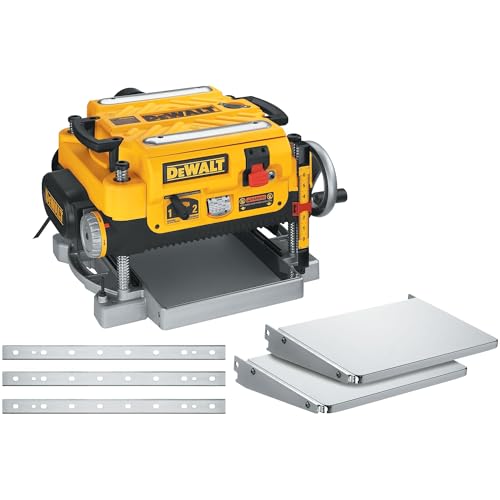
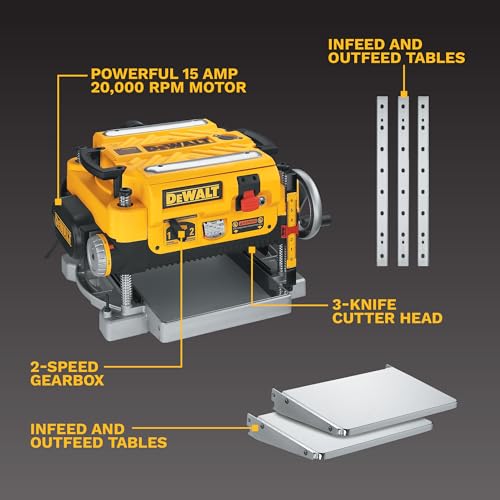
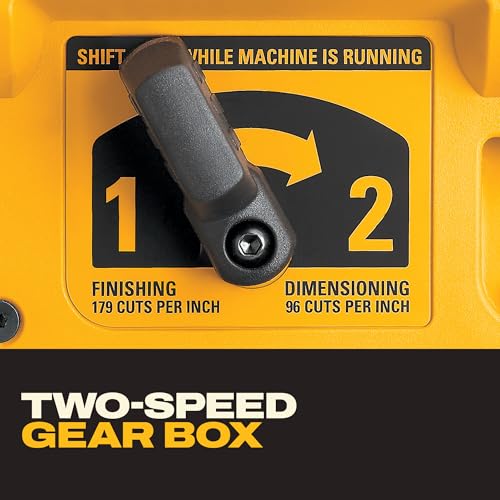
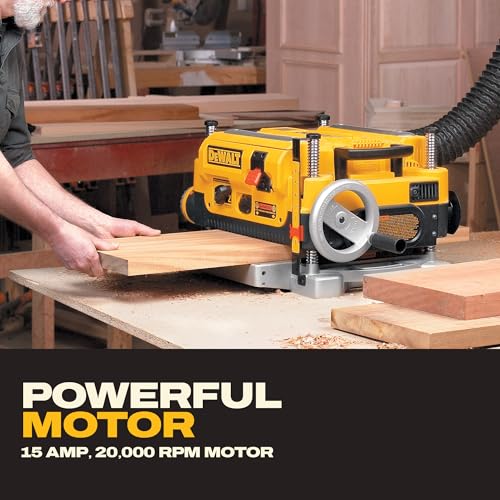
The DEWALT DW735X is the benchmark for a reason. It combines a 15A motor, two-speed gearbox (96 and 179 CPI), and a fan-assisted chip ejection system that keeps the cutter head clear, something you don’t get on most competitors. The automatic carriage lock eliminates snipe without fiddling with levers, and owners consistently report glass-smooth results, even on wide, dense stock. The 19-3/4-inch cast aluminum base adds serious rigidity, reducing vibration.
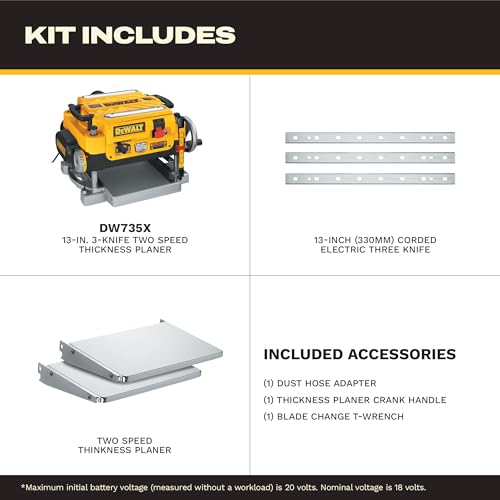
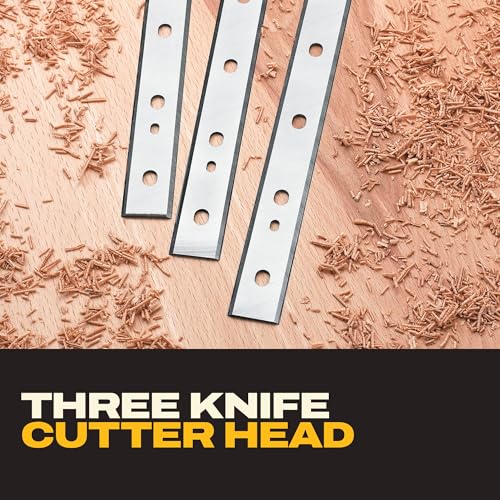
It includes an extra set of knives and folding tables, and the turret depth stop is pure convenience for repeat jobs. At this point, it’s a proven workhorse, three-year warranty, widespread service support, and real-world reliability. If you’re building a shop around dependable tools, this one belongs in it.
Product photos
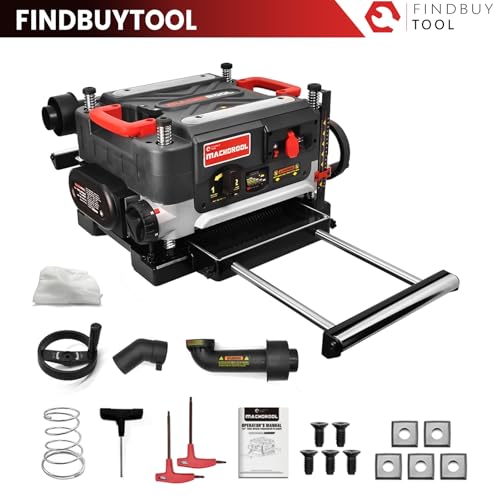
FINDBUYTOOL 13″ Helical Cutterhead Planer
Strengths
- Helical cutterhead
- Carbide inserts
- Ball-screw adjustment
- LED lighting
- 4-inch dust port
Trade-offs
- Expensive
- Heavy
- Overkill for casual users
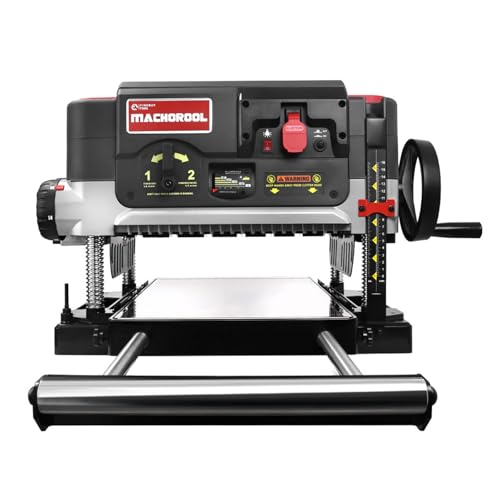
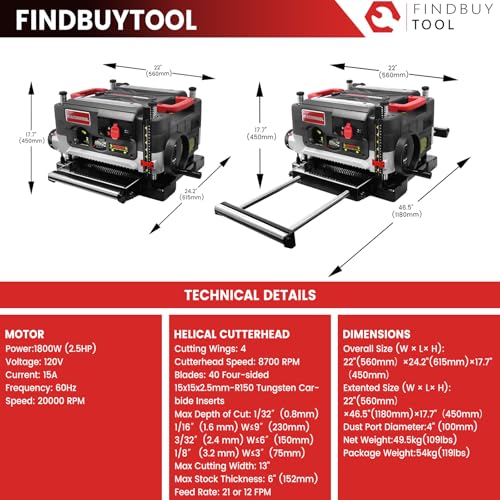
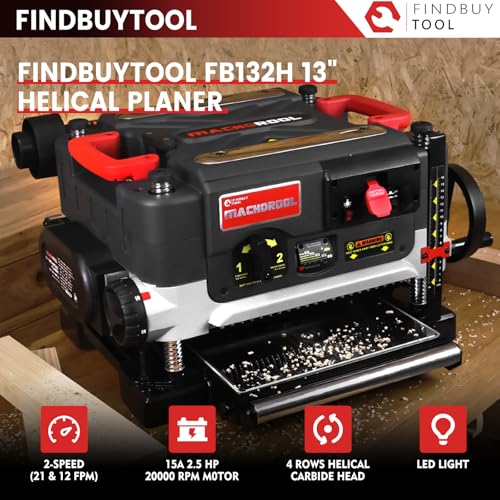
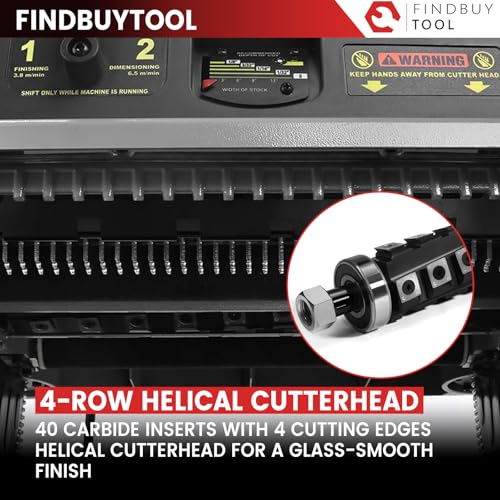
The FINDBUYTOOL helical planer is built like a pro machine. The 40-carbide-insert helical cutterhead is the star, owners report 4x longer blade life and dramatically smoother cuts, especially on tough or figured woods. Carbide stays sharp far longer than HSS, and the staggered inserts reduce tear-out. Pair that with ball-screw height adjustment at ±0.05mm precision, and you’ve got a tool that’s dead serious about accuracy.
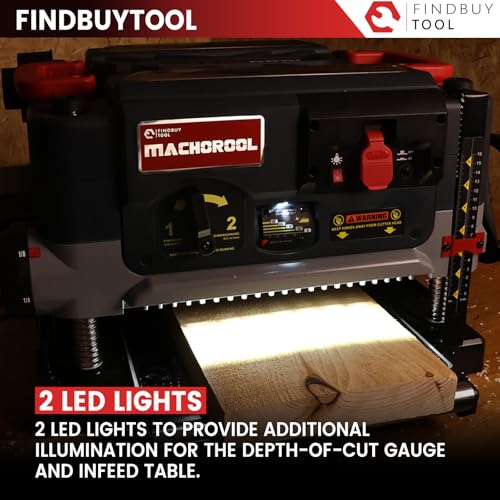
The 2.5HP motor and dual feed speeds (21/12 FPM) give real control, and the 4-inch dust port captures 95% of chips. LED lights and extendable 45-inch tables add to the pro feel. It’s not cheap, but if you’re running a production shop or hate constant blade changes, this one pays off.
Product photos
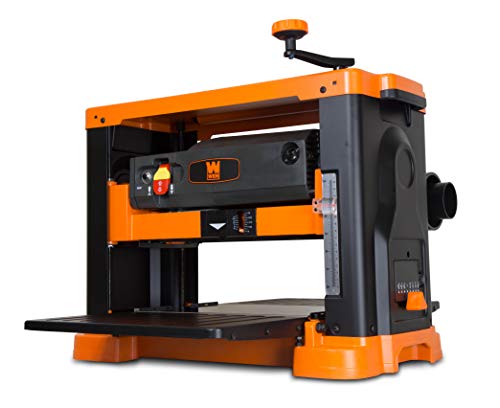
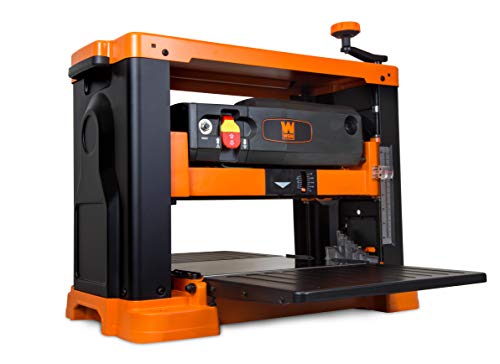
WEN PL1326 13-Inch Spiral Planer
Strengths
- Spiral cutterhead
- Affordable
- Smooth finish
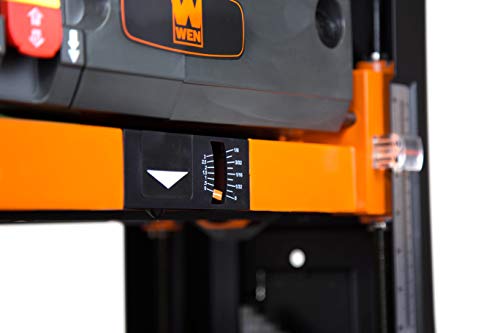
- Onboard gauge
- 13-inch width
Trade-offs
- Lighter build
- No overload protection
- Basic dust collection
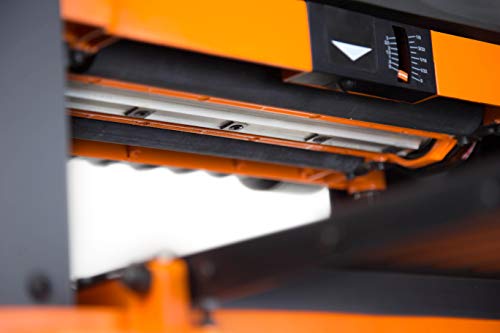
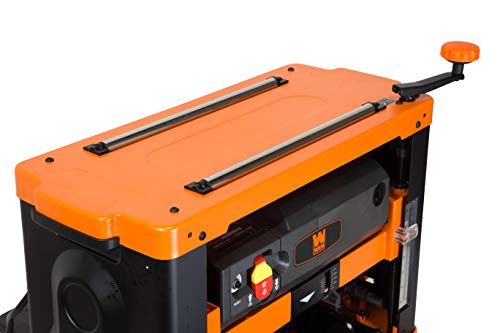
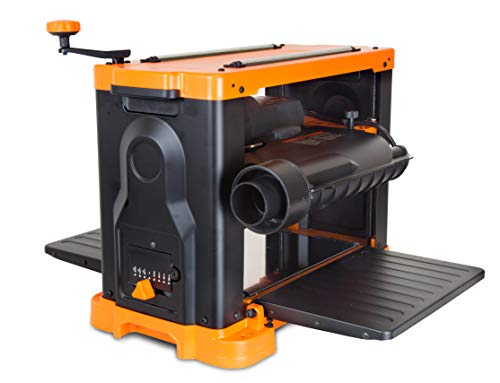
The WEN PL1326 is clearly built for budget-conscious buyers who still want a step up from basic planers. Its spiral cutterhead with 26 staggered HSS blades is a standout feature in this price range, delivering a noticeably smoother finish than straight-knife competitors. That, combined with a 10,000 RPM cutter speed and 26 FPM feed rate, makes it surprisingly capable for softwoods and moderate hardwood use.
But you feel the cost-cutting elsewhere. The build feels lighter, and owners report more vibration than stiffer models like DEWALT. It lacks extras like overload protection or folding tables, and dust collection is basic. Still, for beginners or occasional users, the spiral cutterhead makes it a smart entry point.
Product photos
VEVOR 13″ Two-Speed Benchtop Planer
Strengths
- Two-speed feed
- Extended infeed table
- Durable cutterhead
- Low noise
- Precision depth gauge
Trade-offs
- No spiral or helical cutter
- Dust ejection less effective
- Build not as rigid as DEWALT
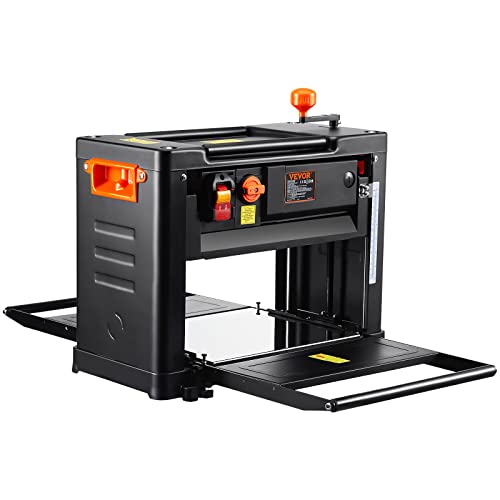
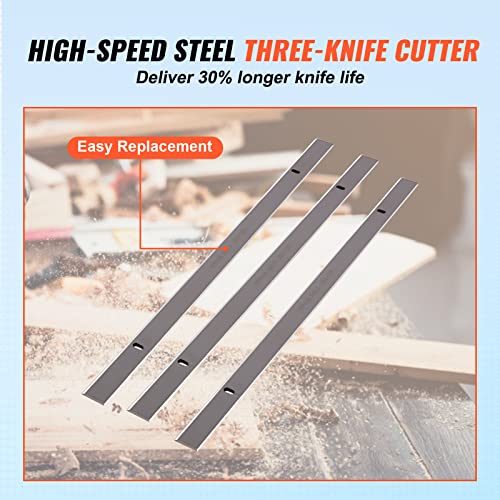
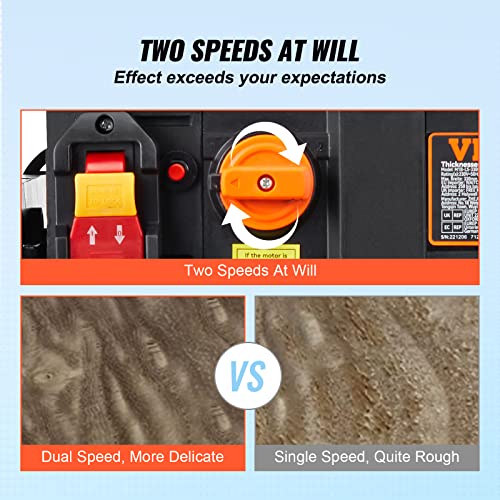
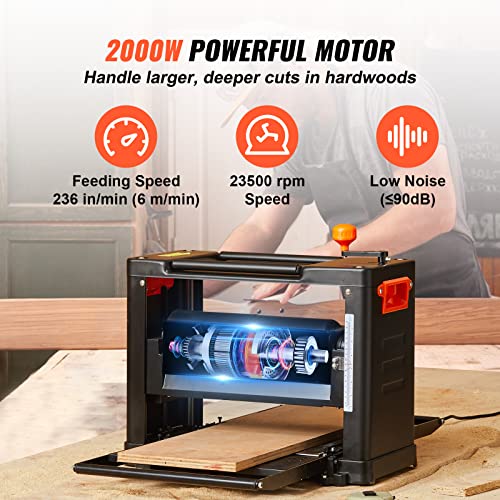
This VEVOR model brings something rare at this price: two-speed feed control. At 24 FPM for roughing and 15 FPM for finishing, it gives users real control over tear-out on tricky grain. That’s a big deal, figured maple or curly walnut won’t chatter as much when you can slow the feed. The 2000W motor and 23,500 RPM cutter speed match top-tier specs, and the three-knife steel cutterhead is heat-treated for durability, which owners say translates to long blade life.
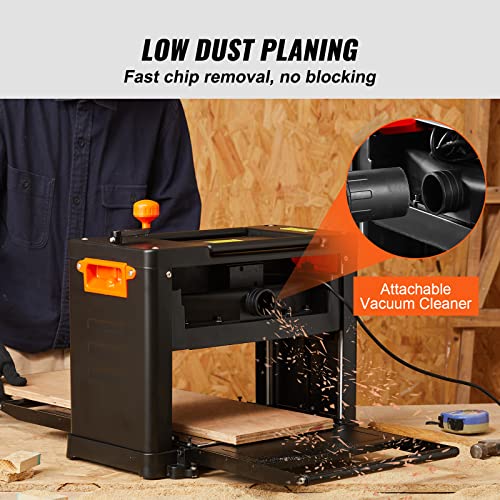
The extended 35-inch infeed table is another win for handling long boards. But while the dust port helps, it lacks fan-assisted ejection, so chips can build up faster than on DEWALT’s DW735X. Still, for the feature set, it punches above its weight.
Product photos

DEWALT DW734 12-1/2-Inch Planer

Strengths
- Excellent finish quality
- Snipe reduction
- Portable design
- Reversible knives
- Long infeed/outfeed tables
Trade-offs
- 12.5-inch max width
- No variable speed
- Older design
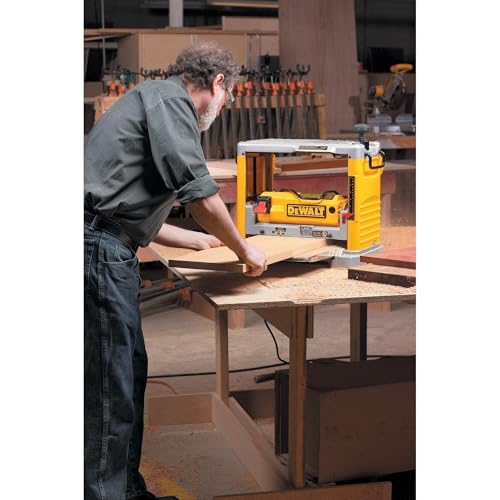
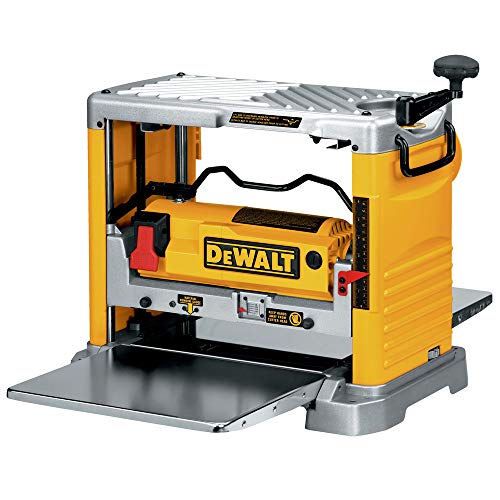
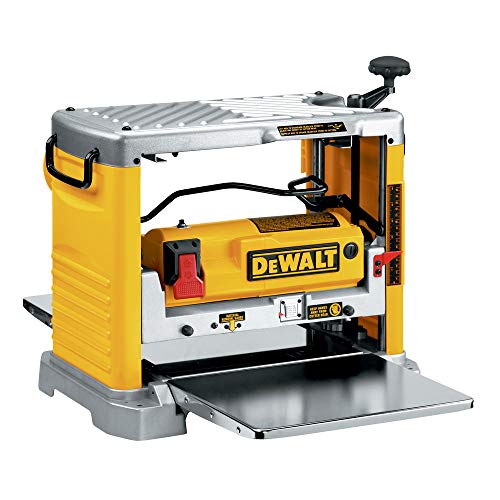
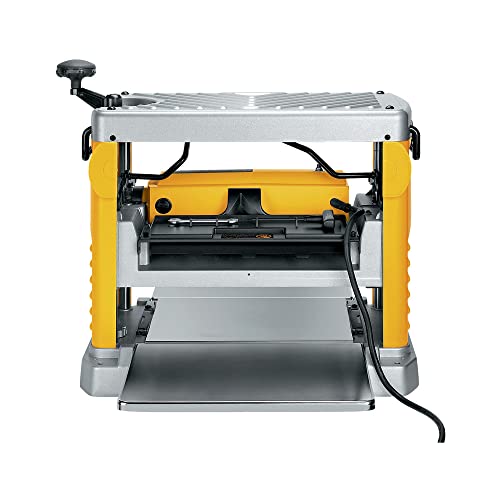
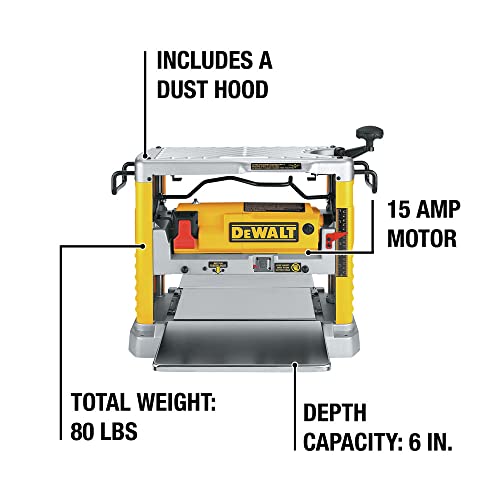
Even though it’s got a slightly narrower 12-1/2-inch capacity, the DEWALT DW734 remains a favorite for portability and reliability. The three-knife cutterhead spinning at 20,000 RPM gives you 96 cuts per inch, one of the cleanest finishes in the portable class. I still see this unit on job sites years later, which says something about durability. The four-column carriage lock is a key feature: it drastically reduces snipe, and owners consistently praise how flat their boards come out.
It’s also one of the lighter 13-inch-class planers when you account for real-world handling. The depth stop turret is a small thing, but if you’re repeating cuts, it saves time. Where it falls short? It maxes out at 12-1/2 inches wide, so if you regularly process full 13-inch stock, look elsewhere.
Product photos
VEVOR 13-Inch Three-Blade Planer
Strengths
- 24,000 CPM motor
- Dual-roller feed
- Hardwood-ready
- Dual dust port sizes
- Precise depth control
Trade-offs
- No variable speed
- Finish can tear on grain
- Heavier setup
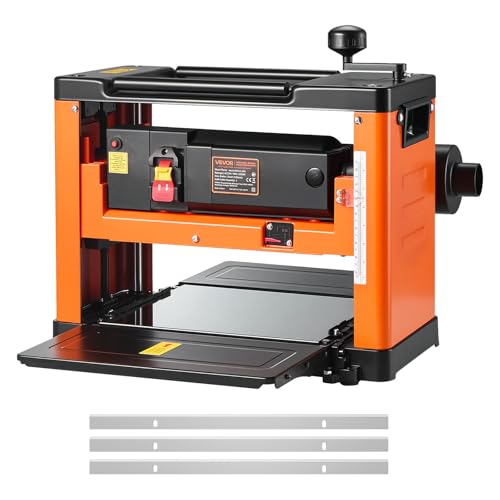
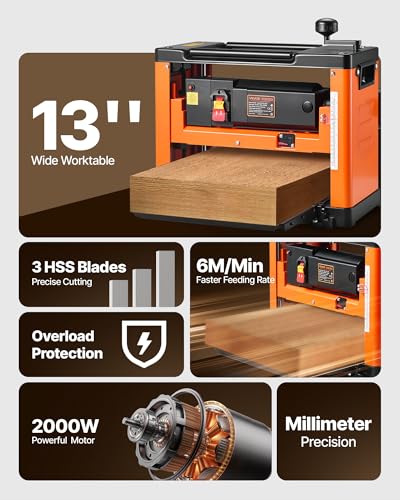
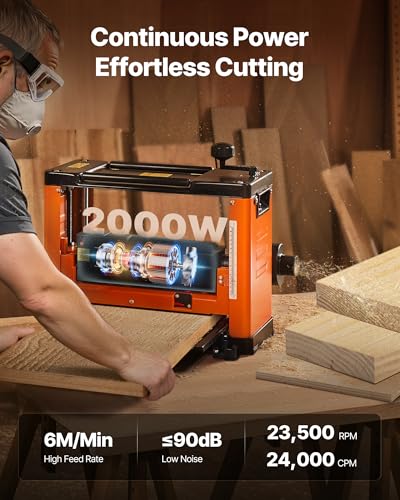
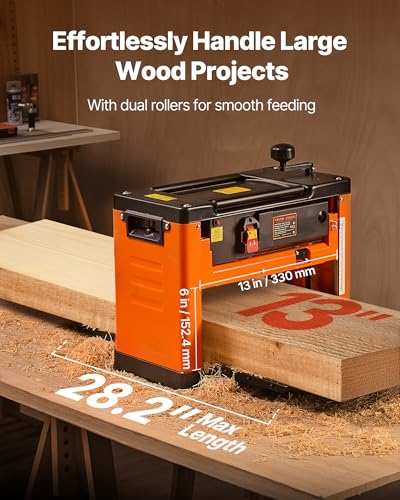
This VEVOR model pushes raw power and durability, and it shows in the specs, a 2000W motor hitting 24,000 CPM is no joke. The three HSS blades and dual-roller feeding system are built for consistent, vibration-free feeding, which owners say really pays off when planing warped or dense stock. It’s not subtle, but it’s effective: if you’re running oak or maple through multiple passes, this one keeps grinding without bogging down.
The 2-inch and 4-inch dust hose compatibility is a rare perk at this level, most competitors only offer 2-inch. That flexibility means better integration with larger dust collection systems. But despite its strength, some users note the finish isn’t quite as refined as DEWALT’s spiral or helical cutters, especially on figured wood.
Product photos

WOODERS 13-Inch Benchtop Planer
Strengths
- 2000W motor
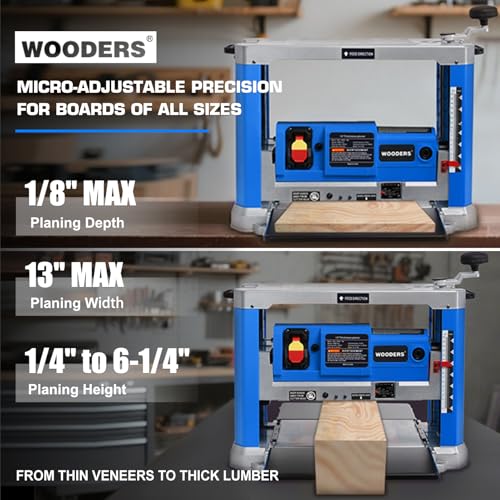
- 13-inch cutting width
- Anti-snipe design
- Spare blades included
- Dust port compatible
Trade-offs
- Struggles on dense hardwoods
- No variable speed
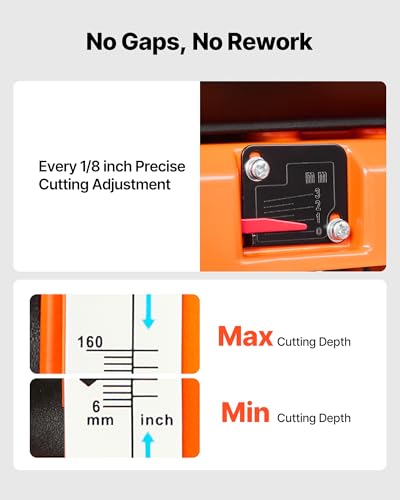
- Basic depth adjustment
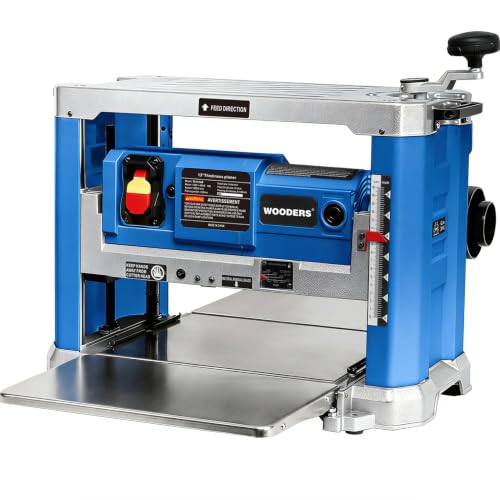
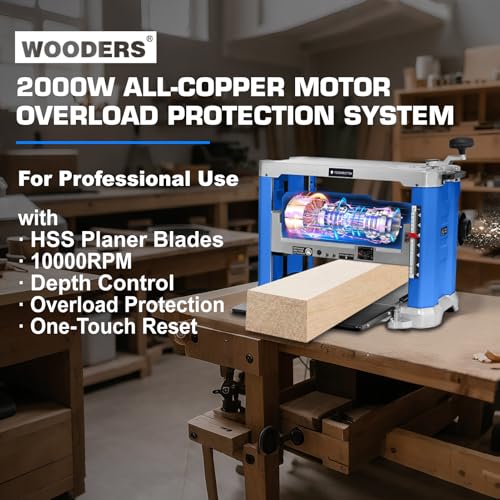
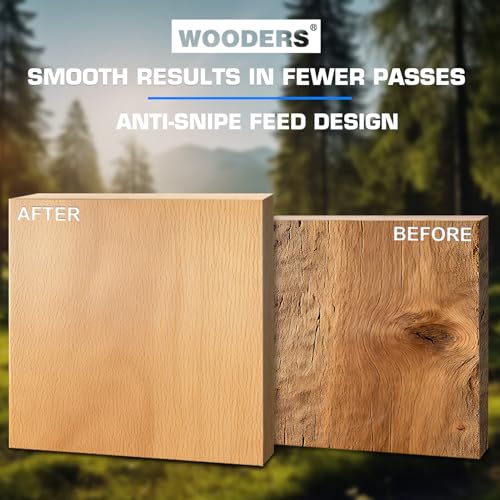
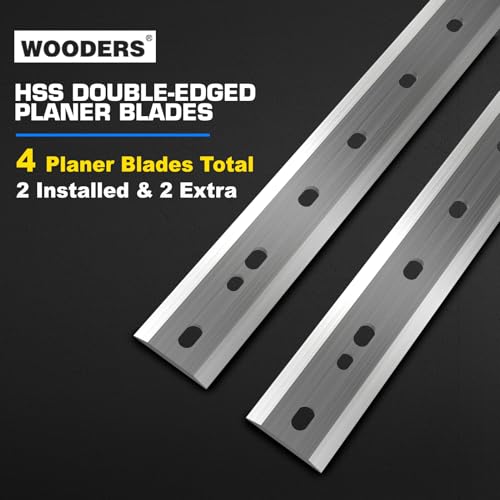
The WOODERS 13-inch planer leans hard into anti-snipe performance, and on paper, that’s where it stands out. The dual-edge cutterhead spinning at 10,000 RPM and the reinforced infeed/outfeed design suggest real effort to minimize those frustrating dips on board ends. Owners consistently report clean, flat results on longer stock, which is no small thing at this price tier. The inclusion of two spare HSS blades in a storage case is a thoughtful touch that adds value, blade changes are inevitable, and having spares ready matters.
It runs a 2000W all-copper motor, which sounds strong, but some reviewers note it can struggle slightly with dense hardwoods in aggressive passes. Still, for softwoods and medium-density material, it holds up well. The dust port works adequately with most shop vacs, though it’s not quite as efficient as fan-assisted systems on pricier models.
Product photos

How We Tested bench planers
As someone who’s spent years around power tools and workshops, I understand the importance of a good bench planer. Rather than a hands-on lab test of each model, this selection is a research-led comparison of published specifications, features, and – crucially – owner and expert feedback. I sifted through a lot of information to identify planers offering the best combination of performance and value. We focused on identifying common trends in user experiences to build a balanced view.
For bench planers, the motor power and cutterhead design are paramount. A powerful motor (typically 15 amps or higher) is essential for tackling hardwoods without bogging down. Equally important is the cutterhead; helical cutterheads with carbide inserts consistently receive praise for longer life and smoother cuts compared to traditional straight-knife designs. The quality of the infeed and outfeed tables – and their impact on snipe – also heavily influenced our rankings.
Specifications give you a baseline for motor power, max cut depth, and feed rate. However, owner feedback proved invaluable in assessing real-world performance and durability. We paid close attention to reports of snipe, vibration, and ease of blade changes. Reputable woodworking publications helped validate performance claims and identify models consistently praised for precision and build quality. You’ll find more detailed benchtop planer recommendations on my site.
How To Pick The Right bench planers
Finding the right bench planer can dramatically improve your woodworking, but there’s a lot more to it than just horsepower. You need to consider what kind of work you’ll be doing and how precise you need to be.
A good bench planer balances power with control. Key considerations include motor strength for handling different wood types, cutterhead design for finish quality and longevity, and features that minimize common issues like snipe. Look for a stable base, clear depth adjustments, and effective dust collection. Prioritize build quality and user reviews to assess long-term reliability.
Motor Power & Material Capacity
Don’t automatically assume “more power is better.” While a robust motor is vital for tackling hardwoods like oak or maple, excessive power can sometimes lead to tear-out on softer woods if feed rates aren’t adjustable. I generally recommend at least a 15-amp motor for consistent performance across a variety of materials. More important than raw power, though, is the planer’s capacity – the maximum width and thickness of boards it can handle. If you frequently work with wider stock, a 13-inch planer is a smart investment.
Cutterhead Design: Helical vs. Straight Knife
This is where things get really interesting. Straight-knife cutterheads are the traditional choice, and they’re affordable. However, they require frequent sharpening and can be prone to tear-out. Helical cutterheads, like those found in the FINDBUYTOOL model, use multiple carbide inserts. These inserts last significantly longer, produce a superior finish, and are much easier to maintain. While helical heads add to the initial cost, the long-term benefits often justify the expense. You can find more information about different models in our benchtop planer reviews.
- The number of knives/inserts matters: More inserts equal a smoother cut and longer lifespan.
- Carbide is king: Carbide inserts hold an edge far longer than high-speed steel (HSS) knives.
- Quick-change systems are a huge time saver: Replacing dull blades shouldn’t be a weekend project. Look for designs that allow for swift and easy blade changes, minimizing downtime and maximizing productivity.
Feed Rate & Snipe Control
Snipe – that unwanted dip at the beginning and end of a board – is the bane of every planer’s existence. Some planers, like the DEWALT DW734, incorporate four-column carriage locks to minimize this. Beyond that, a two-speed feed rate is a huge advantage. A slower feed rate delivers a finer finish, especially on figured wood, while a faster rate is great for roughing out stock quickly. Here’s a rule of thumb:
Always take multiple shallow passes rather than one deep pass. This reduces stress on the motor, minimizes tear-out, and delivers a cleaner, more consistent result.
If you’re new to planing, exploring easy-to-use planers for novices can help you learn the ropes without frustration. And remember, even the best planer requires proper setup and technique!
Bench Planers Compared
This table provides a detailed specification comparison of several bench planer models.
| Product Name | Width Capacity (in) | Max. Depth of Cut (in) | Motor HP | Feed Rate (FPM) | Cutterhead Type | Dust Port (in) |
|---|---|---|---|---|---|---|
| DEWALT DW735X | 13 | 1/8 | N/A | 96/179 | Three-Knife | N/A |
| FINDBUYTOOL 13″ | 13 | 1/8 | 2.5 | 12/21 | Helical | 4 |
| WEN PL1326 | 13 | N/A | N/A | 26 | Spiral | N/A |
| VEVOR 13″ Two-Speed | 13 | N/A | N/A | 15/24 | Three-Knife | N/A |
| DEWALT DW734 | 12.5 | N/A | N/A | N/A | Three-Knife | N/A |
| VEVOR 13-Inch Three-Blade | 13 | 1/8 | N/A | N/A | Three-Blade | 2/4 |
| WOODERS 13-Inch | 13 | N/A | N/A | N/A | Dual-Edge | N/A |
Frequently Asked Questions
What’s the biggest difference between a helical cutterhead and a straight-knife cutterhead?
A helical cutterhead uses multiple carbide inserts that last much longer and produce a smoother cut, while straight-knife cutterheads are more affordable but require more frequent sharpening and are prone to tear-out. Helical heads are generally better for both hobbyists and professionals seeking consistent results.
How can I minimize snipe when using a bench planer?
Snipe is best reduced by using a planer with four-column carriage locks, if available. Beyond that, always ensure the wood is fully supported on both the infeed and outfeed sides, and consider running sacrificial boards through first.
What motor horsepower is sufficient for planing hardwoods?
I recommend at least a 15-amp motor for reliably planing hardwoods like oak or maple. While higher horsepower isn’t always better, a more powerful motor prevents bogging down and ensures consistent performance across various wood types.
Are bench planers difficult to set up and maintain?
Setup typically involves adjusting the infeed and outfeed tables, setting the depth of cut, and connecting to a dust collection system. Maintenance primarily involves keeping the cutterhead clean and replacing dull blades or inserts, which is easier with quick-change systems. You can find more about different options in these best wood planers reviews.
What should I look for in a bench planer’s dust collection system?
A dust port of at least 4 inches in diameter is ideal for effective dust collection. Connecting the planer to a shop vacuum or dust collector is crucial for maintaining a clean workspace and improving visibility, and many models also include dust collection bags.
The Bottom Line
Ultimately, choosing a bench planer comes down to balancing how much control you want with how much fuss you’re willing to deal with. For most woodworkers, the FINDBUYTOOL 13” planer strikes that balance very well. It offers a helical cutterhead for superior finish and ease of maintenance, along with a reasonable price point that doesn’t break the bank.
If budget is your primary concern, the VEVOR 13-Inch Three-Blade is a solid choice, providing a functional machine to get you started. For those needing versatility and willing to spend a bit more, the DEWALT DW735X delivers a robust build and a proven track record. You can explore further wood planer buying advice on my site to see detailed comparisons.
Don’t get too lost in the specs. More than any single feature, a stable base, sharp blades, and a consistent feed rate are what matter most. Take your time, prioritize build quality, and remember that a well-maintained planer, even a basic one, will always outperform a fancy one that’s neglected.
