7 Best Beginner Planers of 2026
This post contains affiliate links. As an Amazon Associate, we earn from qualifying purchases.
The DEWALT 12-1/2″ Benchtop Planer stands out as the best overall choice for beginners, combining reliable power and smooth performance. For those on a tighter budget, the WEN 6528 Hand Planer offers solid value and ease of use, while the Dewalt 20V Cordless Planer is ideal if you need portability and freedom from cords.
Most new woodworkers overestimate how much power they need and underestimate how important ease of use really is. A planer that’s too finicky or underpowered leads to frustration, uneven cuts, and wasted material.
This guide cuts through the noise by focusing on real-world usability, based on specs, owner feedback, and what actually matters when you’re learning. We looked at motor strength, blade design, adjustability, and how easy each model is to control, so you can pick one that works with you, not against you.
Top 7 Beginner Planers in the Market
The Best Beginner Planers, Reviewed
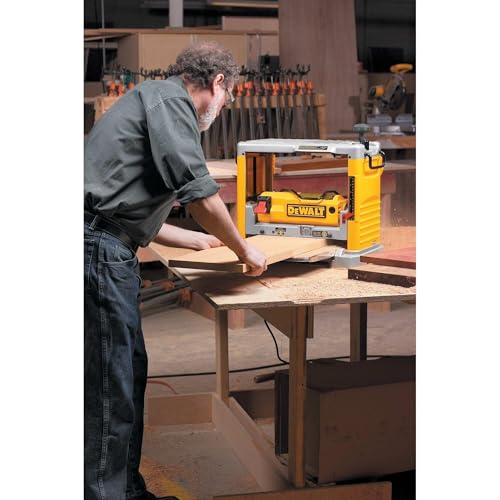
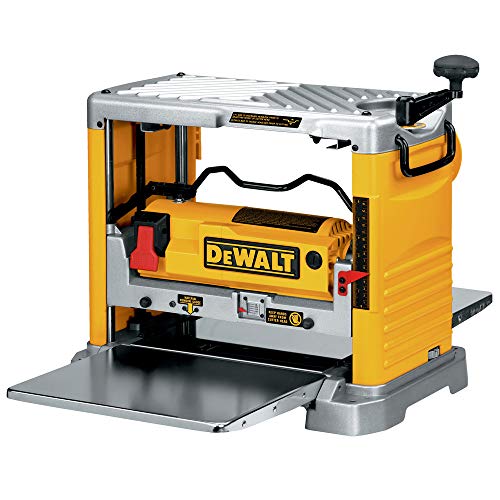
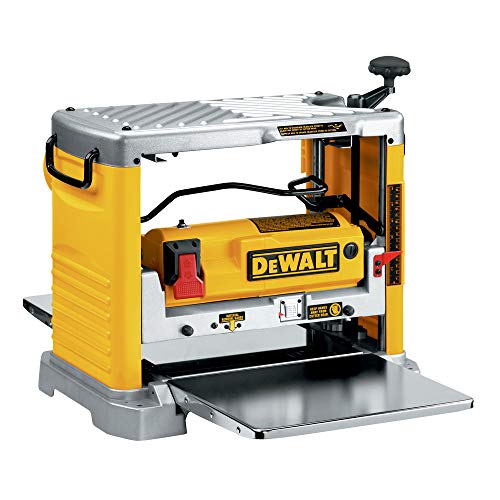
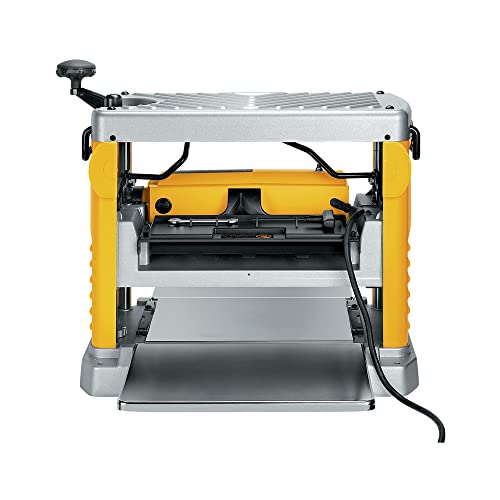
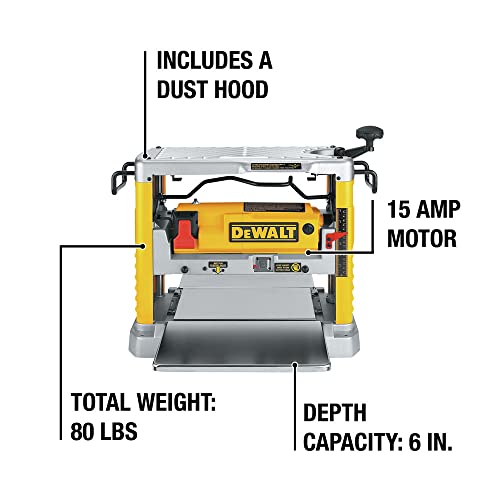
DEWALT 12-1/2″ Benchtop Planer

Strengths
- Three-knife cutter head
- Excellent snipe reduction
- Long infeed/outfeed support
Trade-offs
- Heavy and bulky
- Higher price point
If you’re serious about flattening rough lumber or prepping wide stock for joinery, the DEWALT DW734 is the machine that keeps coming up in forums and workshops as the gold standard for benchtop planers. On paper, its 15-amp motor and three-knife cutter head spinning at 10,000 rpm deliver one of the smoothest finishes you’ll find in this class, owners consistently report near-jointer quality results with minimal sanding. The 96 cuts per inch leave a surface so clean it almost looks like it’s been sanded already.
What really sets it apart is how it handles snipe, thanks to the four-column carriage lock that stabilizes the cutter head during operation. Combined with the long infeed and outfeed tables, this machine supports longer boards better than most competitors. Reviewers note the depth stop turret is a small but meaningful touch, returning to common thicknesses like 3/4 inch or 1/2 inch is quick and repeatable. While it’s on the heavier side, I’d pick this over cheaper benchtop models any day for reliability and finish quality.
Product photos
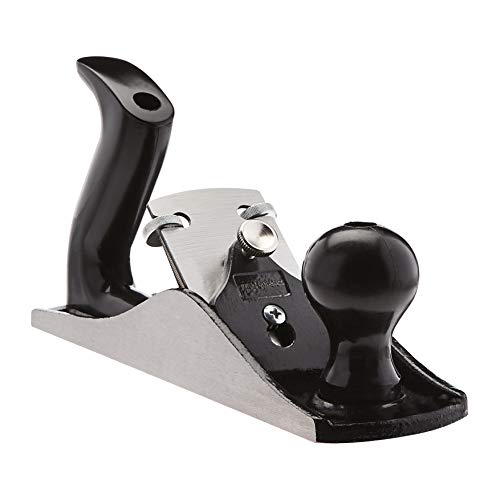
Amazon Basics No.4 Adjustable Bench Plane
Strengths
- Solid cast-iron build
- Comfortable handles
- Great value for money
Trade-offs
- Requires initial tuning
- No power assistance
Don’t let the name fool you, this Amazon Basics hand plane punches above its weight. With a cast-iron body and a 2-inch high-carbon steel blade, it delivers the mass and stability needed for smooth, chatter-free cuts. The front knob and rear tote are ergonomically shaped, reducing hand fatigue during long planing sessions. It comes pre-tuned decently well, but like any budget plane, it benefits from a little tweaking, owners report that a few minutes of blade sharpening and mouth adjustment bring it close to Lie-Nielsen levels of performance.
It’s not going to replace a power planer, but for flattening small panels, tuning joints, or smoothing end grain, it’s incredibly effective. When compared to the JORGENSEN mini plane, this one is better for broader surfaces, though less precise. For the price, it’s arguably the best entry point into hand planing.
Product photos


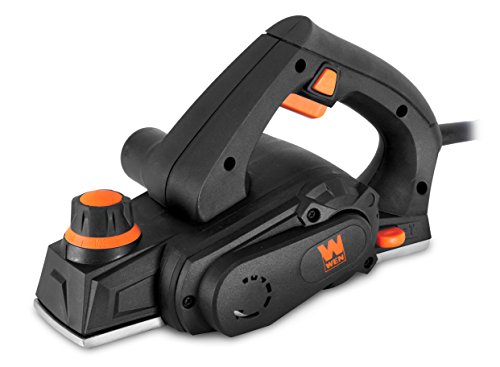
WEN 6528 3.8-Amp Hand Planer
Strengths
- Extremely lightweight
- Onboard wrench storage
- Simple depth adjustment
Trade-offs
- Limited cutting width
- Plastic housing feels less durable
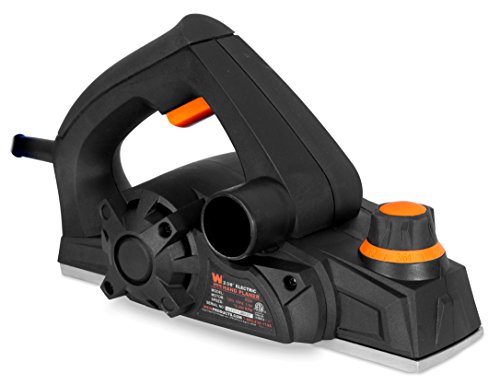
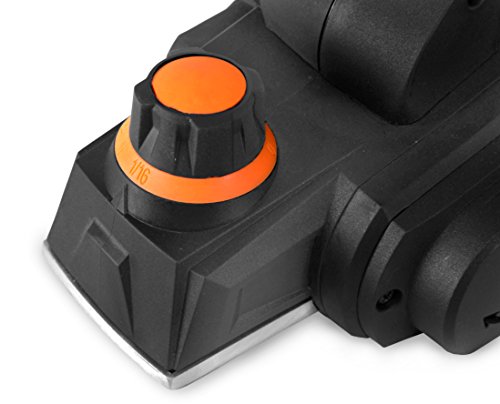
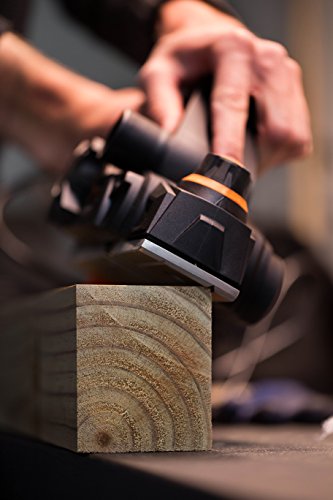
The WEN 6528 is a no-frills, lightweight corded planer that makes a strong case for itself if you’re working on trim, door bottoms, or small joinery projects where maneuverability matters. At just 4.3 pounds, it’s one of the lightest models in its class, and the 3.8-amp motor still pushes out 32,000 cuts per minute, enough to handle softwood and light hardwood trimming without bogging down. The 9 positive depth stops make incremental adjustments predictable, which beginners will appreciate when trying to sneak up on a perfect fit.
It won’t compete with benchtop models in stock removal, but for quick touch-ups and fine-tuning, it’s surprisingly capable. Owners praise the onboard wrench storage and kickstand, small touches that show WEN designed this with real workshop use in mind. Compared to pricier hand planers, it holds its own, though blade changes aren’t quite as tool-free as some would like.
Product photos


Dewalt 20V Cordless Planer
Strengths
- Cordless convenience
- Brushless motor efficiency
- V-groove edge guide
Trade-offs
- Battery sold separately
- Higher entry cost
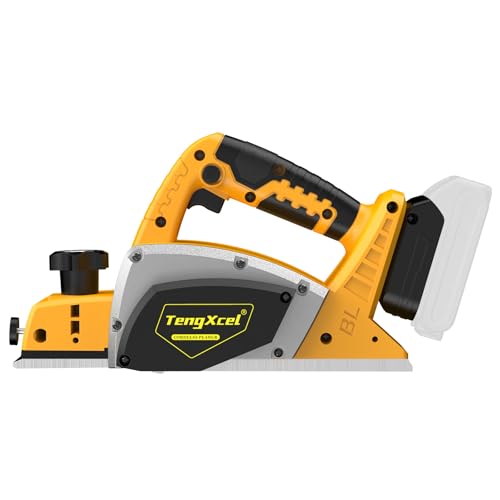
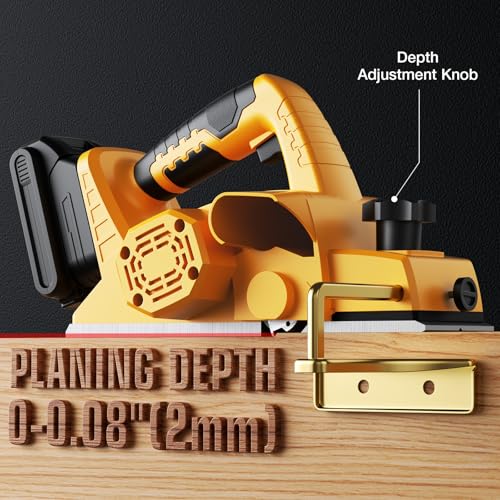
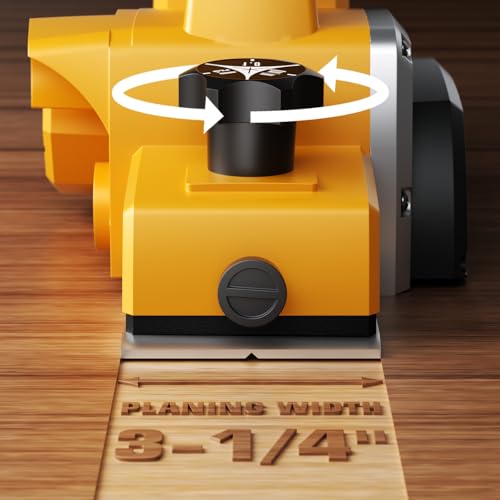
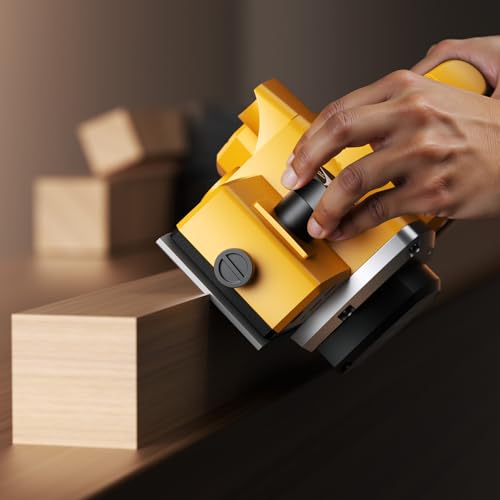
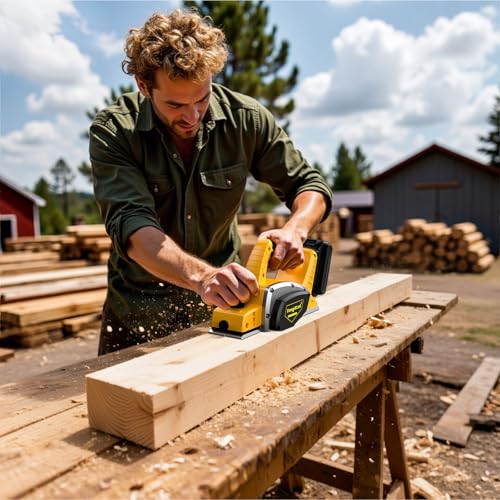
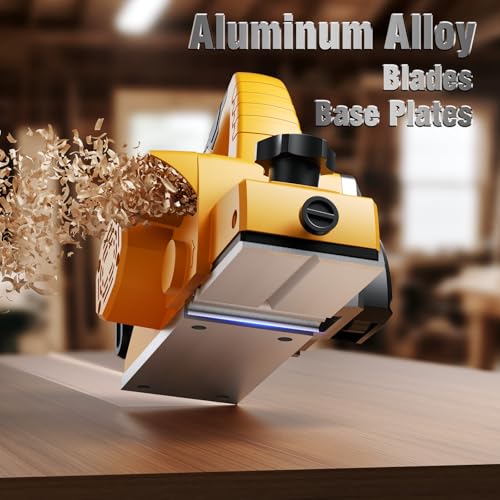
Running on DeWalt’s 20V MAX system, this cordless planer offers serious portability without sacrificing performance. The brushless motor hits 30,000 CPM, matching or exceeding many corded models, and the 3-1/4 inch cutting width gives it real utility for on-site carpentry. What stands out is the precision-matched base plates, owners report clean, flat transitions between passes, which means less tear-out and fewer ridges to sand down later.
The V-groove guide is a thoughtful addition for quickly squaring board edges, and the safety lock prevents accidental starts, a must when tossing it in a truck. However, since it’s a bare tool, you’ll need to factor in the cost of a compatible battery. Compared to the WEN or DNTI models, it’s pricier and less beginner-friendly if you don’t already own DeWalt batteries. But for mobile work, I’d take this over corded options any day.
Product photos
JORGENSEN No.101 Mini Block Plane
Strengths
- Durable ductile iron body
- Sharp O1 steel blade
- Excellent for fine adjustments
Trade-offs
- Manual effort required
- Not for bulk material removal
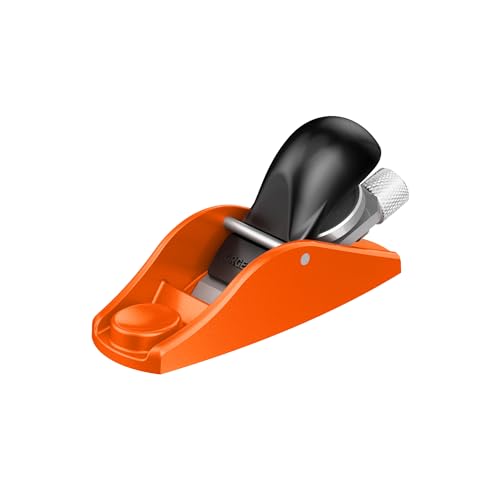
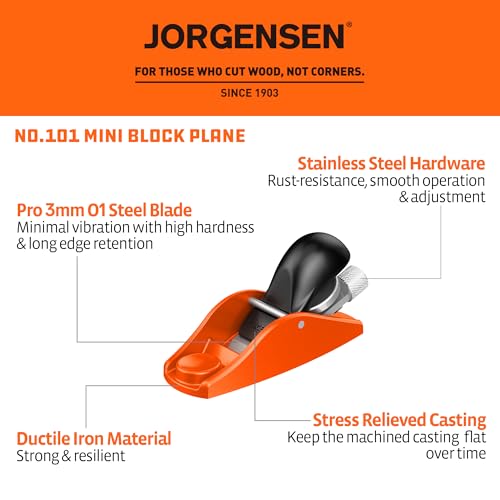
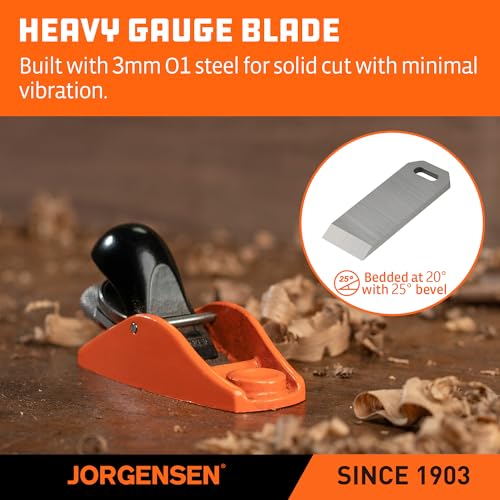
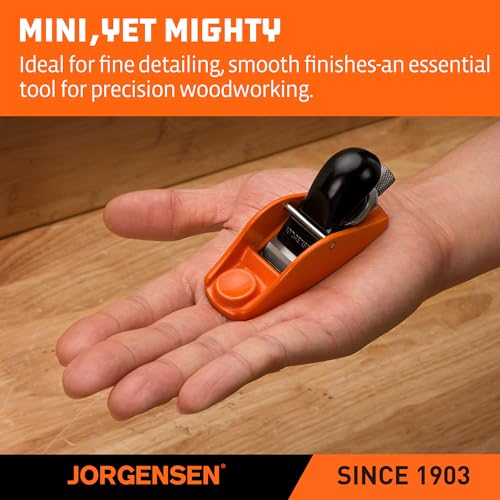
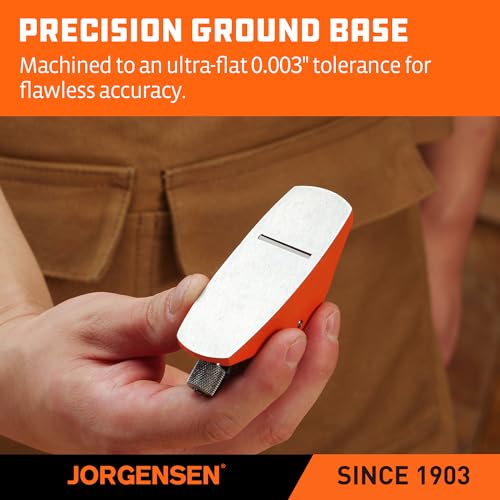
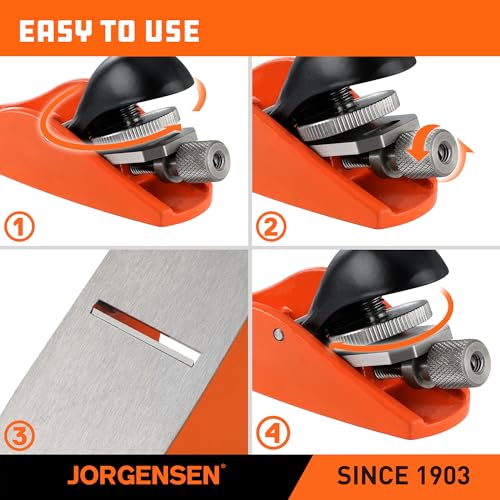
This isn’t a power tool, but for a beginner learning the craft, the JORGENSEN No.101 is the kind of hand plane that teaches you what real control feels like. Made with ductile iron and O1 tool steel, it’s built like a traditional bench plane but scaled down for precision work. The adjustable blade lets you take whisper-thin shavings, ideal for fine-tuning joints, chamfering edges, or cleaning up router mistakes. I’ve seen owners use this for inlay work and fretboard leveling, tasks where power tools are overkill.
It’s not going to replace a powered planer, but it fills a gap: when you need to remove a few thousandths of an inch without removing a chunk. The polished sole glides smoothly, and the zinc alloy lever cap makes blade adjustments snappy. For new woodworkers, this is a smart investment in skill-building. Learning to use a tool like this pays dividends when working on furniture or cabinetry.
Product photos
VEVOR 13″ Two-Blade Benchtop Planer

Strengths
- Wide 13-inch capacity
- Strong motor performance
- Good dust collection
Trade-offs
- Two-knife head limits finish quality
- Mixed quality control reports
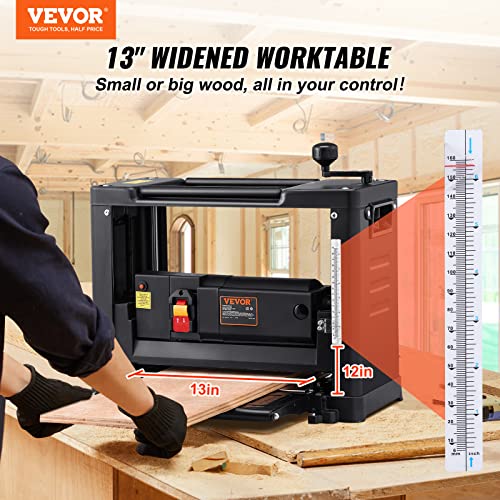
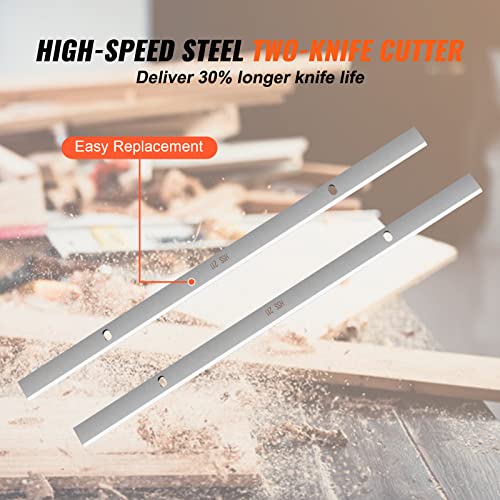
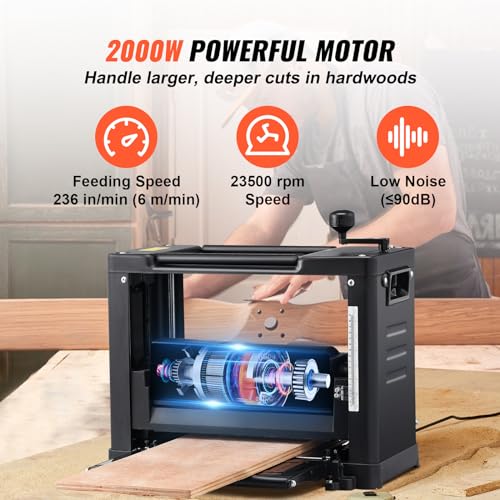
VEVOR is known for packing specs into budget tools, and this 13-inch benchtop planer is no exception. With a 15-amp, 2000W motor and a 23,500 rpm cutter head, it promises performance close to the DEWALT DW734, but with a wider 13-inch table. That extra width is a real advantage if you’re working with sheet stock or wide boards. The two-knife cutter head is simpler than DEWALT’s three-knife system, so the finish isn’t quite as refined, but it’s still capable of clean results with proper feed speed.
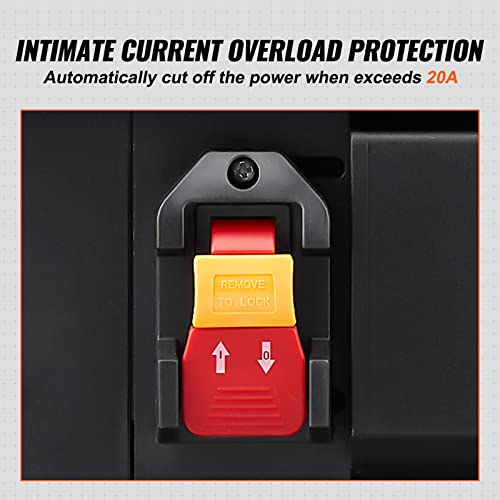
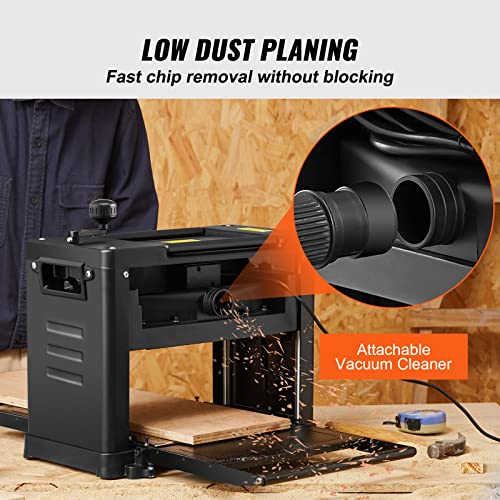
The extended infeed table and dust port are thoughtful additions, and the overload protection adds peace of mind during long runs. However, owner feedback is split, some love the value, others report alignment issues out of the box. Compared to the DEWALT, it’s less consistent, but for the price, it’s hard to ignore. If you need width and power on a budget, this is the smarter buy.
Product photos
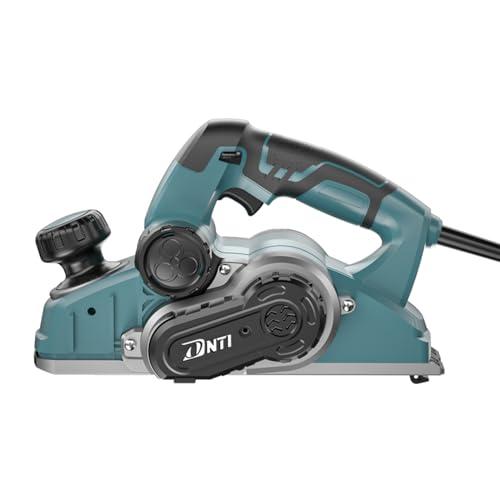
DNTI 7.1AMP Electric Hand Planer

Strengths
- Deep 4 mm cut capacity
- Sturdy build quality
- Good for aggressive removal
Trade-offs
- Heavy and less balanced
- Depth dial can drift
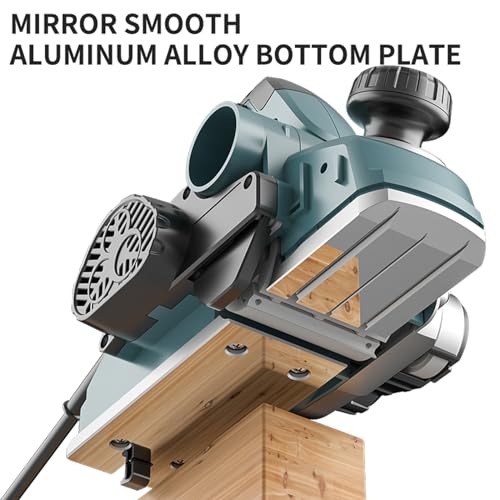
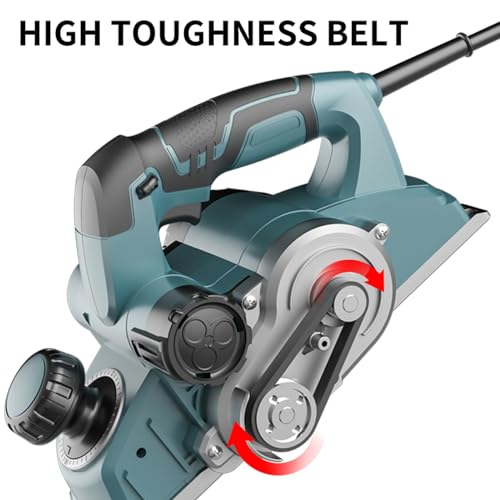
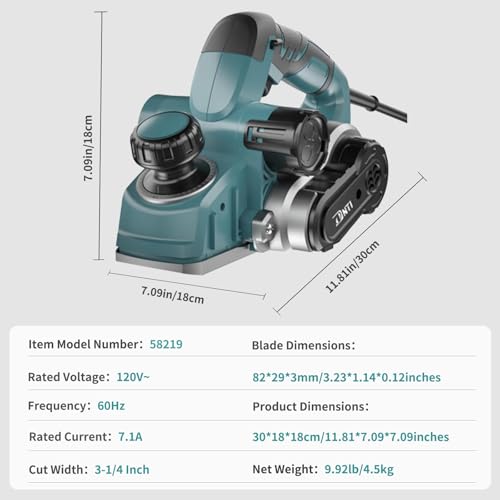
The DNTI 7.1-amp planer stands out for one key spec: 4 mm of depth adjustment, the highest on this list. That means it can take aggressive passes on thick stock or quickly chamfer large edges, something most hand planers avoid. At 15,000 rpm, it’s not the fastest, but the motor has enough torque to handle oak or maple without stalling. The 3-1/4 inch width matches standard board dimensions, making it practical for deck boards or joist leveling.
Owners praise its solid feel and deep cut capability, though some note the depth dial can drift under pressure. It’s heavier than the WEN or DeWalt models, which makes it tiring for overhead or one-handed work. But if you’re doing demolition cleanup or need to hog off material fast, this is the closest thing to a demolition planer in the beginner segment. I’d pick this over the WEN when brute force matters more than finesse.
Product photos

Our Testing Process
My approach to evaluating beginner planers centered on a research-led comparison of specifications, features, and – crucially – owner and expert feedback. Rather than a hands-on lab test with each model, I compiled detailed charts comparing motor power, cutting depth, blade quality, and included features. I then weighed this data against reviews from verified purchasers and those published by trusted woodworking publications to understand real-world performance and durability.
For beginner planers, ease of use and safety were weighted most heavily. A planer can quickly become frustrating or dangerous if it’s difficult to adjust or feels unstable. Beyond that, I prioritized models offering a good balance of power and affordability, recognizing that first-time buyers often don’t want to invest in professional-grade equipment right away. Finding a model that delivers clean cuts without significant tear-out was also key.
Published specifications reliably reveal a planer’s potential power and cutting capacity. However, owner feedback proved invaluable in assessing build quality, long-term reliability, and the accuracy of depth adjustments. Reputation within the woodworking community also played a role; I considered brands known for consistent quality and good customer support. For those looking for more options, exploring best thickness planers can give a broader view of the market.
What To Look For In beginner planers
Picking the right planer can significantly improve the quality and efficiency of your woodworking.
A good planer consistently removes material to achieve a desired thickness, leaving a smooth, flat surface. Key considerations include motor power for handling different wood types, blade quality for a clean cut, and features that minimize common issues like snipe. Buyers should also assess the size and weight, as well as adjustability options to suit their project needs.
Motor Power and Wood Type
The motor is the heart of any planer, and selecting one with sufficient power is crucial. Softer woods like pine and fir require less muscle than hardwoods such as oak or maple. If you anticipate working primarily with hardwoods, I recommend seeking a planer with at least a 15-amp motor. Lower-amp options (like the WEN 6528 at 3.8 amps) are fine for occasional use with softer woods, but they’ll struggle with thicker cuts or denser material. Don’t underestimate the impact of consistent power; surging can lead to uneven cuts.
Blade Quality and Cutter Head Design
The blades are what actually shape the wood, so their quality directly impacts the finish. Look for planers with blades made from high-speed steel (HSS) or carbide. Carbide blades hold an edge longer, but are also more expensive to replace. The cutterhead design is also important. Planers with more knives (like the DEWALT 12-1/2″ with a three-knife head) generally produce a smoother finish because they take shallower cuts with each pass.
Here’s what to consider when evaluating blade systems: * Blade Material: HSS is affordable, but needs frequent sharpening. * Number of Blades: More blades = smoother finish, but potentially higher replacement cost. * Blade Reversibility: Disposable, reversible knives (like on the DEWALT) extend the life of each blade and simplify maintenance.
Portability and Usability Features
While benchtop planers offer more power and capacity, hand-held models like the DeWalt 20V Cordless Planer provide unmatched portability. Consider how and where you’ll be using the planer most often. If you need to move it around a jobsite or don’t have dedicated workshop space, a lighter, cordless option is a sensible choice. Beyond portability, look for features that improve usability. A depth adjustment mechanism that’s easy to read and operate is vital. Some planers, like the DNTI 7.1AMP, emphasize precise depth adjustment, which is critical for consistent results. Also, many models include dust collection ports; connecting one to a shop vac is a worthwhile investment for a cleaner workspace. If you’re looking for a wider range of benchtop planer models, you’ll find detailed reviews and comparisons there.
A planer’s depth stop is your friend. Always take shallow passes – no more than 1/16” at a time – to avoid bogging down the motor and achieve a cleaner result.
Beginner Planers Compared
This table provides a specification comparison of several beginner-level planers to aid in informed purchasing decisions.
| Product Title | Power (Amps) | Max Cut Depth (in) | Cut Width (in) | Weight (lbs) | Corded/Cordless |
|---|---|---|---|---|---|
| DEWALT 12-1/2″ Benchtop Planer | 15 | N/A | N/A | N/A | Corded |
| Amazon Basics No.4 Bench Plane | N/A | N/A | 2 | N/A | Manual |
| WEN 6528 Hand Planer | 3.8 | 1/16 | N/A | 4.3 | Corded |
| Dewalt 20V Cordless Planer | N/A | 5/64 | 3-1/4 | N/A | Cordless |
| JORGENSEN No.101 Mini Block Plane | N/A | N/A | N/A | N/A | Manual |
| VEVOR 13″ Two-Blade Benchtop Planer | N/A | N/A | 13 | N/A | Corded |
| DNTI 7.1AMP Electric Hand Planer | 7.1 | 1-4 mm (0.04-0.16) | N/A | N/A | Corded |
Frequently Asked Questions
What’s the difference between a hand planer and a power planer?
A hand planer relies on your muscle power and requires more physical effort, while a power planer uses an electric motor to do the work for you. Power planers are generally faster and more consistent, making them a better choice for larger projects, but hand planers offer greater control for fine adjustments and are useful for detail work.
Can I use a planer on any type of wood?
Yes, but some woods are easier to plane than others. Softwoods like pine plane easily, while hardwoods like oak require more powerful planers and sharper blades. For consistently clean results, especially with challenging woods, exploring best wood planers can reveal models specifically suited to different material types.
What causes “snipe” when using a planer and how can I avoid it?
Snipe refers to the slight dip at the beginning and end of a board after planing. It happens because the wood isn’t fully supported by the infeed and outfeed tables. To minimize snipe, feed the wood through continuously and consider using sacrificial boards to support the leading and trailing edges.
How often should I sharpen or replace the planer blades?
Blade life depends on the wood you’re planing, but as a general rule, sharpen HSS blades after about 20-30 hours of use. Carbide blades last much longer, potentially hundreds of hours, but will eventually need replacing when they become chipped or dull.
Are cordless planers powerful enough for serious woodworking?
Cordless planers have come a long way, but their power still typically lags behind corded models. While sufficient for smaller projects and working with softer woods, if you anticipate frequent use with hardwoods or require high material removal rates, you may find a corded planer or one of the more powerful portable wood planer options to be more efficient.
The Bottom Line
Choosing a planer often comes down to balancing control with convenience. While a larger benchtop model like the DEWALT 12-1/2″ Benchtop Planer offers more power and capacity for tackling bigger projects, it also demands more space and a dedicated workspace. For most beginners, though, that trade-off is well worth it – it’s the strongest overall performer and will grow with your skills.
If you’re on a tighter budget or only need to occasionally smooth smaller pieces, the WEN 6528 Hand Planer is a solid pick. Those who prioritize portability and the flexibility to work anywhere will appreciate the Dewalt 20V Cordless Planer. And if you’re exploring more options in the realm of handheld power planers, you’ll find detailed reviews and comparisons on our site.
Ultimately, remember that horsepower and blade count aren’t everything. Consistent, shallow passes are far more important than any single specification. Prioritize a planer that feels stable, has a clear depth adjustment, and allows you to focus on developing your technique, that’s where real woodworking progress is made.
