8 Best MIG Welders for Beginners 2026
This post contains affiliate links. As an Amazon Associate, we earn from qualifying purchases.
The YESWELDER 135A Flux Core MIG Welder stands out as the best overall choice for beginners, offering reliable performance and multi-process flexibility. If you want a complete kit right out of the box, the BESTMIG 135A MIG Welder with Helmet is our top budget-friendly pick, while the Futelo 145A Compact MIG Welder delivers excellent portability without sacrificing capability.
Starting out in welding means facing a wall of technical terms, voltage specs, and conflicting advice. You don’t need the most powerful machine, just one that’s simple, safe, and gets clean results without constant tweaking.
As Robert A. Bennett from PowerToolGuide.net, I’ve spent over 15 years around power tools and helping DIYers make smart choices. This guide cuts through the noise by focusing on real-world usability, based on specs, owner feedback, and what actually matters when you’re learning: easy setup, consistent arcs, and having the right gear included.
Top 8 Mig Welder For Beginners in the Market
The Best Mig Welder For Beginners, Reviewed
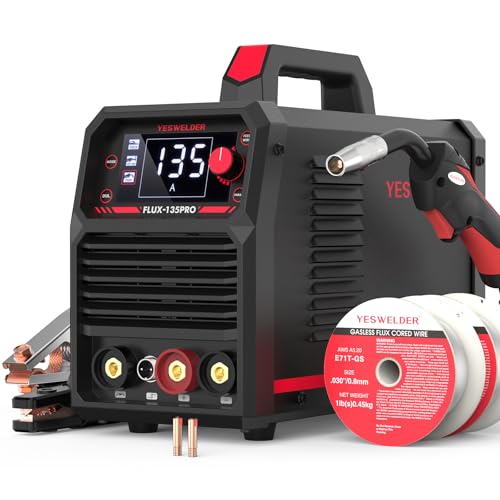
YESWELDER 135A Flux Core MIG Welder
Strengths
- Synergic control
- Bonus wire included
- 3-in-1 functionality
Trade-offs
- TIG torch not included
- No 220V option
- Stick mode limited
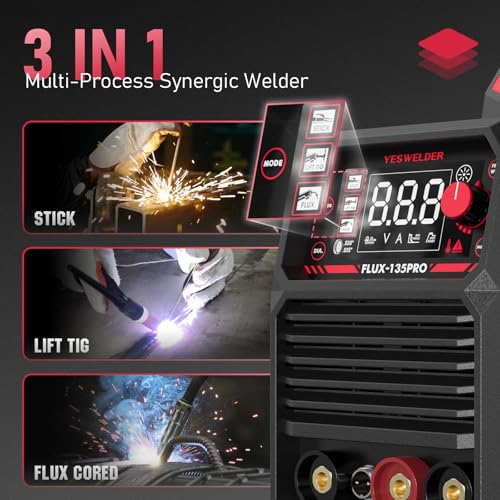
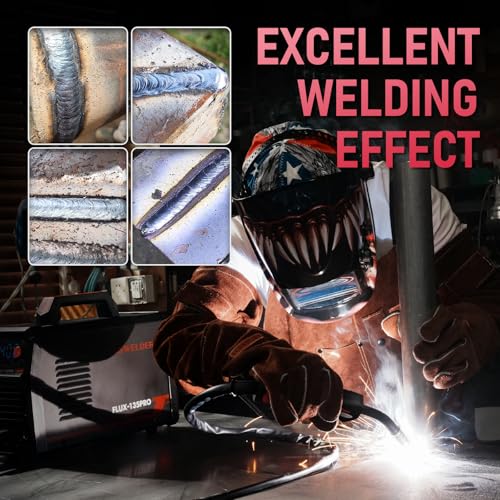
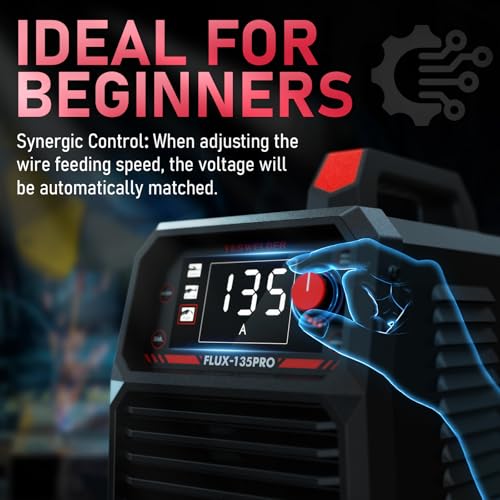
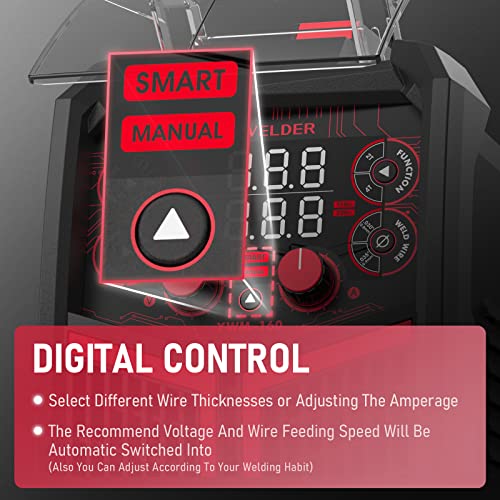
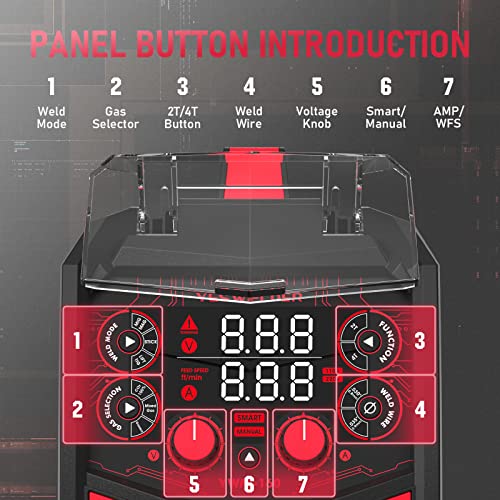
If I had to pick one starter MIG for most DIYers, it’d be this YESWELDER 135A. It strikes the best balance between price, features, and ease of use. The synergic control is well-tuned, set your wire size and thickness, and the welder auto-matches voltage, with fine-tune adjustment available. Owners love that it comes with bonus flux core wire, so you’re truly ready to weld out of the box. The digital display is bright and shows real-time current, which helps beginners learn proper settings.
At 11.4 lbs, it’s portable, and the 135A output handles 2.5mm steel with ease. It supports MIG, stick, and lift TIG (torch sold separately), giving room to grow. Compared to the WELDPRO, it lacks dual voltage, but for most home users on 110V, that’s not a dealbreaker. The safety features are solid, and the wire feed system runs smoothly. This is the smart buy for someone starting out who wants room to experiment.
Product photos


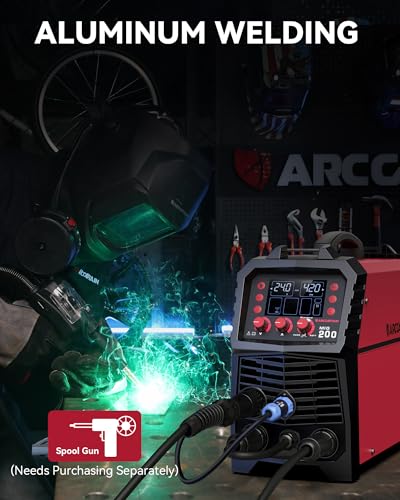
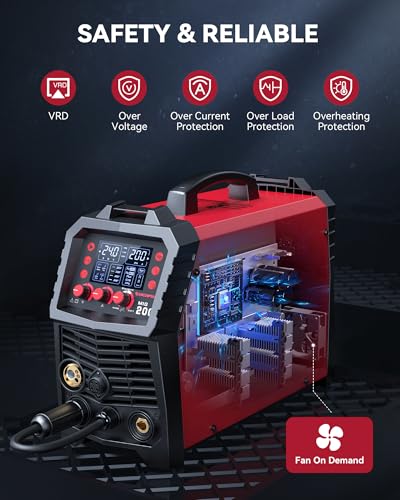
ARCCAPTAIN 200A 6-in-1 MIG Welder
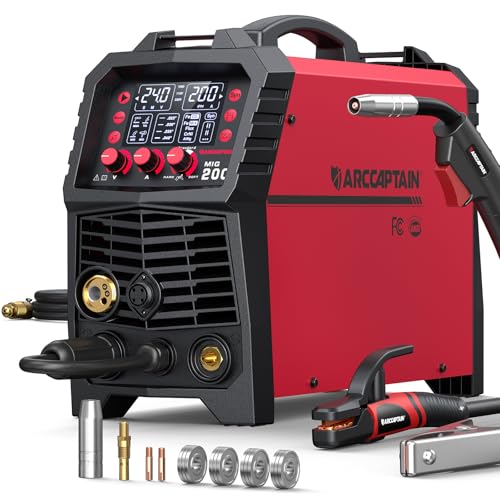
Strengths
- Aluminum welding ready
- 200A output
- Preset memory function
Trade-offs
- Spool gun not included
- Complex for beginners
- Heavy and bulky
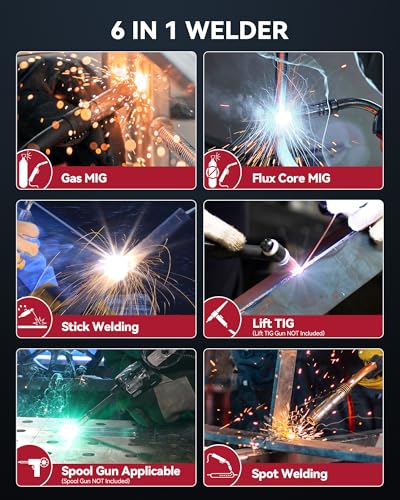
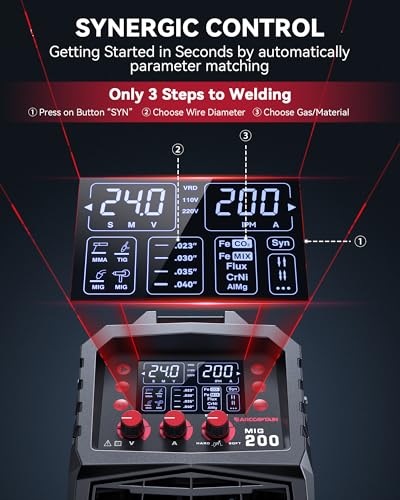
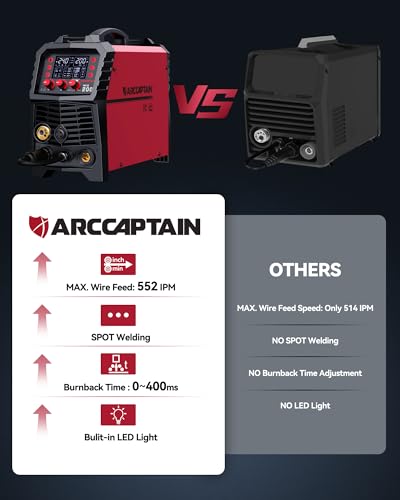
ARCCAPTAIN is the only one here built with aluminum welding in mind, thanks to its spool gun compatibility and .023”/.040” wire support. The 200A output is overkill for 110V in some cases, but on 220V it shines. The 6-in-1 functionality includes spot welding and burn-back adjustment, features usually found on pro units. Owners praise the preset memory (10 settings), which speeds up repeat jobs. The large LED display is easy to read, and the 2T/4T trigger helps with long welds.
It’s not the easiest for pure beginners, setup is more complex, and the spool gun is extra. But for someone who knows they’ll weld aluminum or wants pro-level control, it’s unmatched here. Compared to the YESWELDER 160A, it’s pricier but far more capable for specialty work.
Product photos
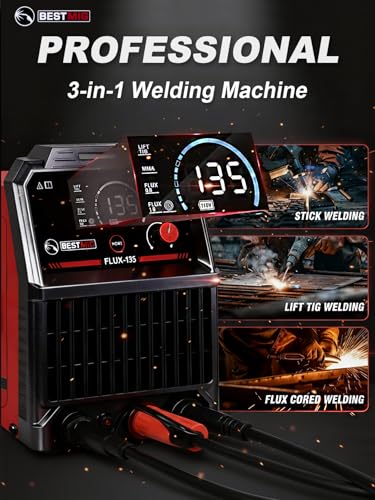
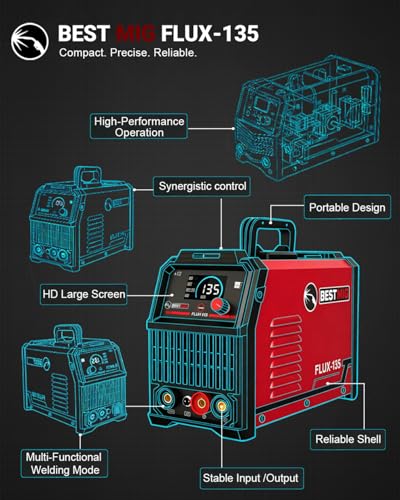
BESTMIG 135A MIG Welder with Helmet
Strengths
- Includes safety gear
- Beginner-friendly interface
- Smooth wire feed
Trade-offs
- Plastic casing
- TIG torch not included
- Display can be dim
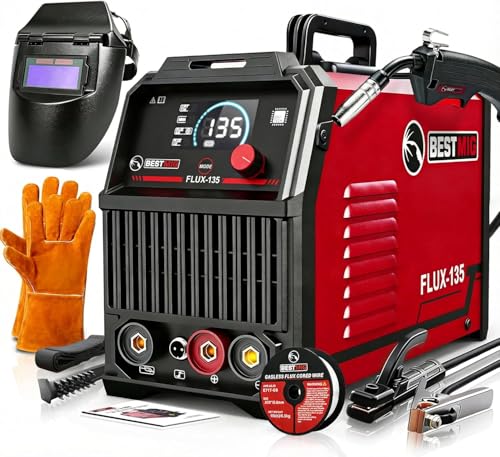
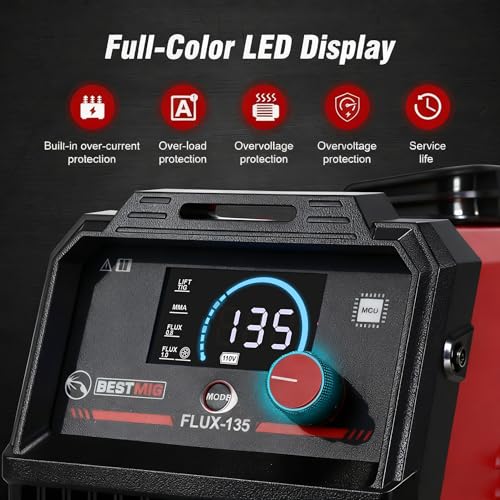
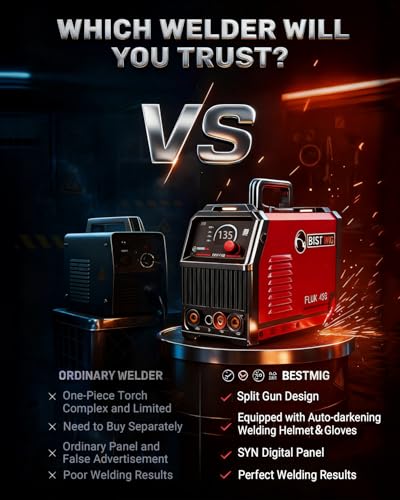
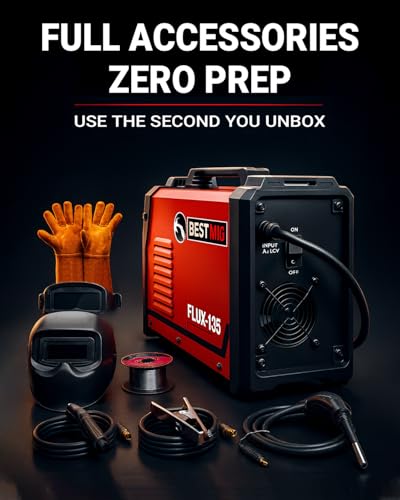
BESTMIG focuses on safety and beginner readiness, and it shows. The included auto-darkening helmet and gloves are quality upgrades over basic kits. The digital interface is simple, with automatic parameter adjustment, great for someone who just wants to plug in and start welding. The 135A output handles 1/8-inch steel, which is solid for a 110V unit. Owners say the wire feed is smooth, and the spatter is low, especially with 0.030” flux core wire.
It’s a 3-in-1 machine (MIG, stick, lift TIG), but like others, the TIG torch is extra. The red-black design is sharp, but the build feels a bit plasticky compared to metal-cased rivals. Still, for a first welder, the safety focus and included PPE make it stand out. Compared to the Futelo, it’s heavier but better protected.
Product photos
Futelo 145A Compact MIG Welder
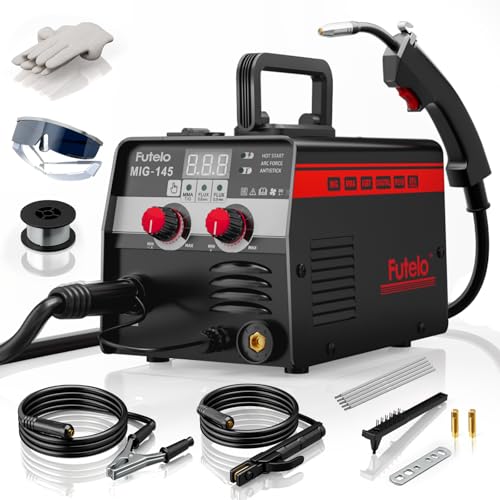
Strengths
- Extremely lightweight
- Thorough starter kit
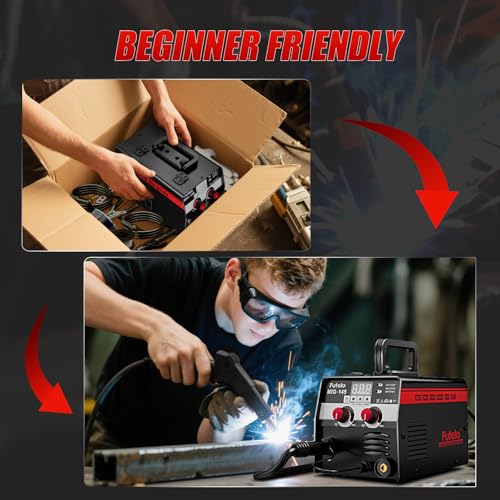
- Simple setup
Trade-offs
- No dual voltage
- TIG torch not included
- Lower duty cycle
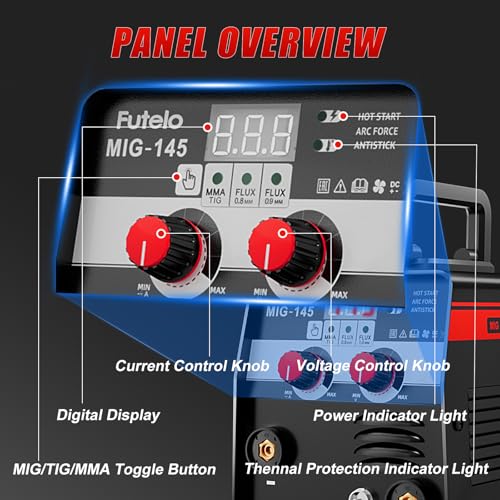
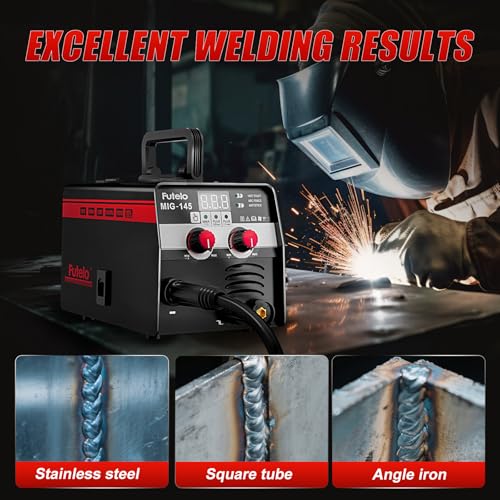
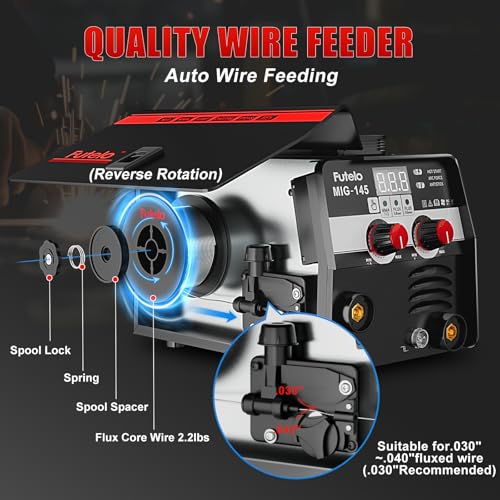
At just 7.5 lbs, the Futelo 145A is the lightest in the group, and impressively compact. Don’t let the size fool you: it delivers 145A and supports 1–5mm steel, which is solid for repairs and thin fabrication. The synergic control is beginner-friendly, auto-matching settings based on wire size or amperage. The LED display shows real-time amperage, and users say it’s responsive and accurate.
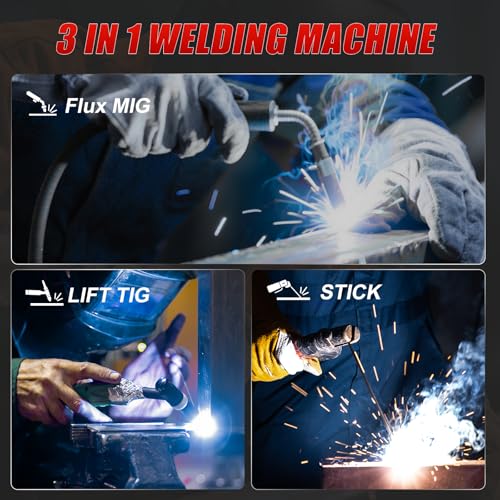
It comes with a full kit, gloves, goggles, rods, wire, tools, so no extra buys. The 3-in-1 function (MIG, stick, lift TIG) is useful, though the TIG torch is missing. Compared to the BESTMIG, it’s lighter and more portable but lacks dual voltage. For someone who moves between job sites or works in tight spaces, this is the go-to.
Product photos
YESWELDER 160A Dual Voltage MIG Welder
Strengths
- High 160A output
- Dual voltage
- Handles 10LB spools
Trade-offs
- TIG torch not included
- Fan noise
- Heavier than average
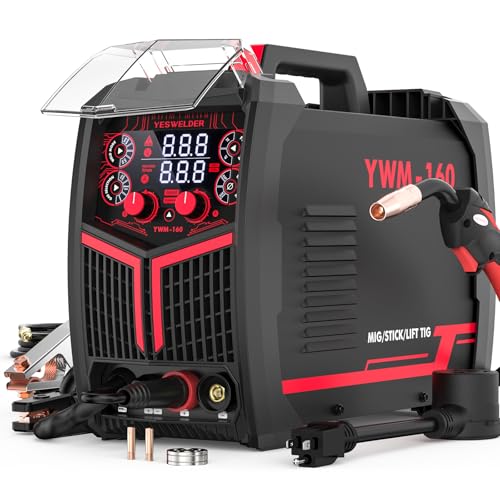
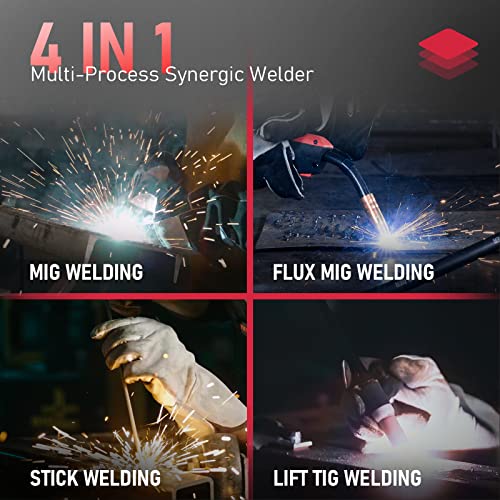
This YESWELDER 160A is the budget-friendly pick that doesn’t feel cheap. With 160A output and dual-voltage support, it’s one of the most powerful in this list for the price. It handles 2LB and 10LB spools, which is rare for entry-level units, meaning less frequent reloading. The synergic control works well, and owners appreciate the manual override for fine-tuning. The LED display is large and clear, and the 19.4 lb weight is manageable with the carry handle.
It’s a 4-in-1 machine, but again, the TIG torch is sold separately. Some users report the fan is loud, but it’s effective at cooling. Compared to the ARCCAPTAIN, it lacks aluminum-specific features but costs much less. For a beginner wanting future-proof power and flexibility, this is a strong contender.
Product photos
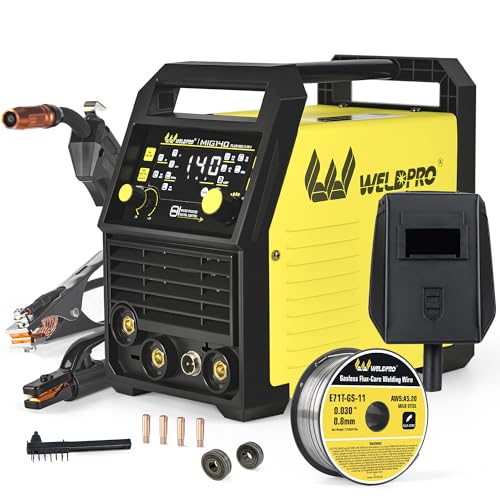
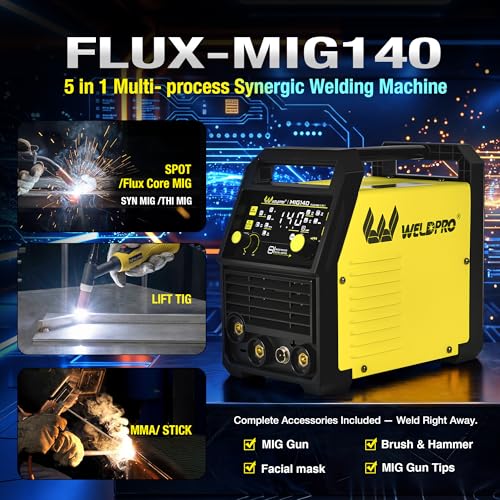
WELDPRO 140A 5-in-1 MIG Welder
Strengths
- Dual voltage auto-detect
- 5-in-1 functionality
- Lightweight and portable
Trade-offs
- Limited TIG performance
- Torch durability concerns
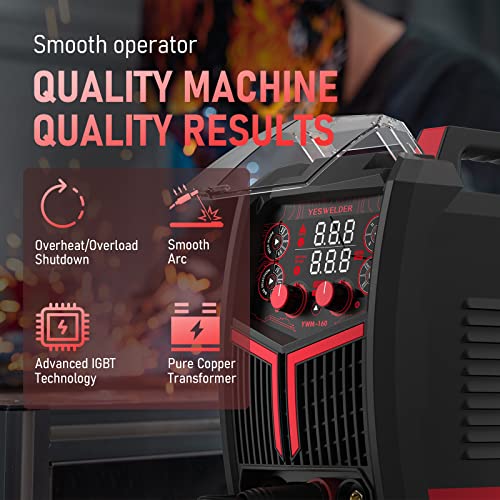
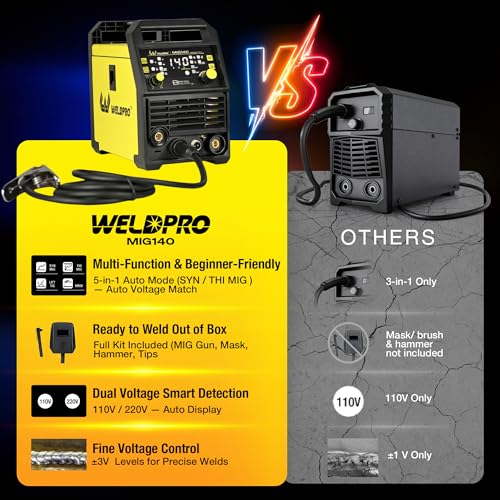
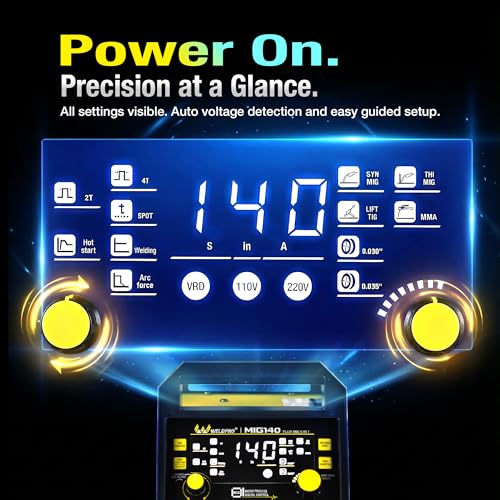
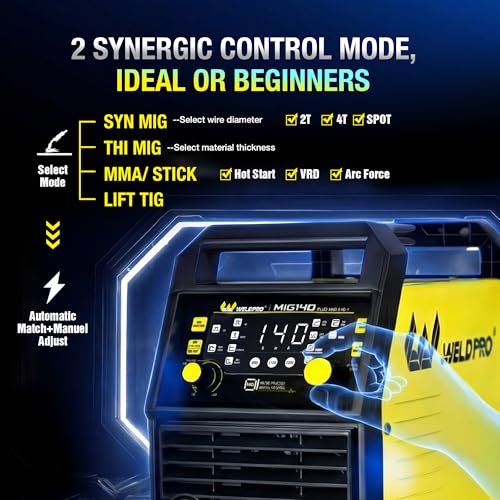
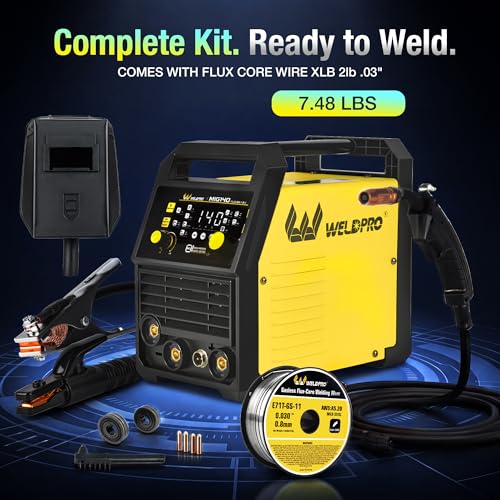
This 5-in-1 WELDPRO unit stands out for its dual-voltage auto-detect feature, which is rare at this level. For beginners who might move between home outlets and job sites, not having to manually switch between 110V and 220V is a real advantage. The IGBT inverter tech delivers stable arcs, and owners consistently report clean welds with minimal spatter, especially in flux core mode. The synergic control is a big help for new users, automatically matching voltage and wire speed, though experienced welders say the fine-tuning range (±3V) is narrow.
The LED display is clear and functional, and the 2T/4T trigger option adds flexibility for longer welds. It’s lightweight and comes with a full starter kit, including a helmet and flux core wire. Some users note the 14AK torch feels a bit light-duty for heavy use, but for DIYers and beginners, it holds up fine. Compared to other entry-level multi-process units, this one leans more toward versatility than raw power.
Product photos
Ehomful 145A 4-in-1 MIG Welder Kit
Strengths
- All-in-one accessory kit
- Dual voltage support
- Clear HD display
Trade-offs
- Heavy for portability
- TIG torch not included
- Setup can be complex for newbies
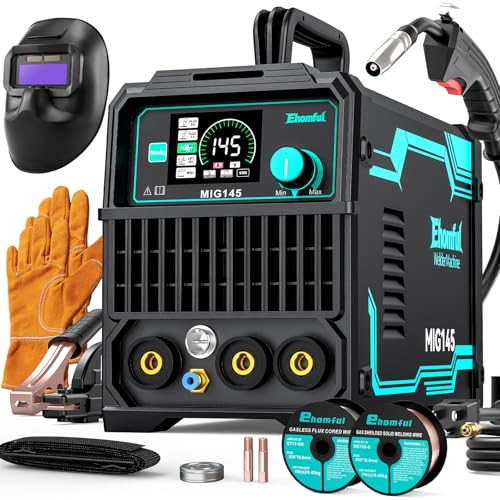
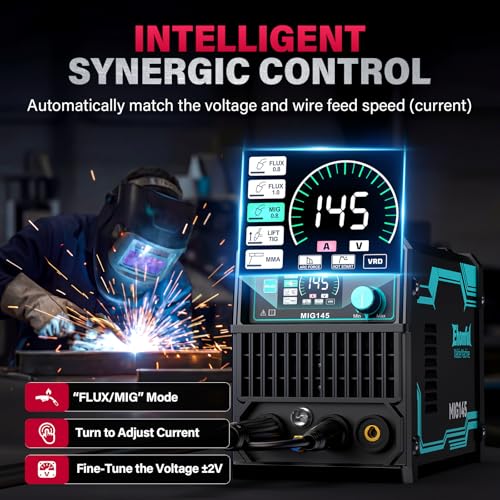
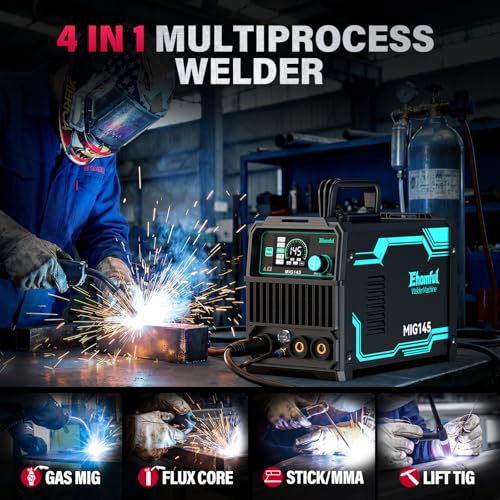
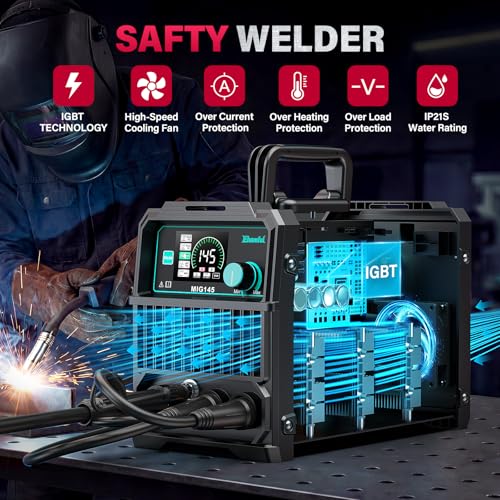
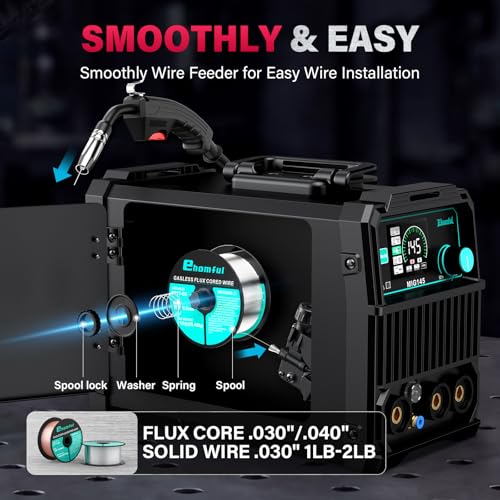
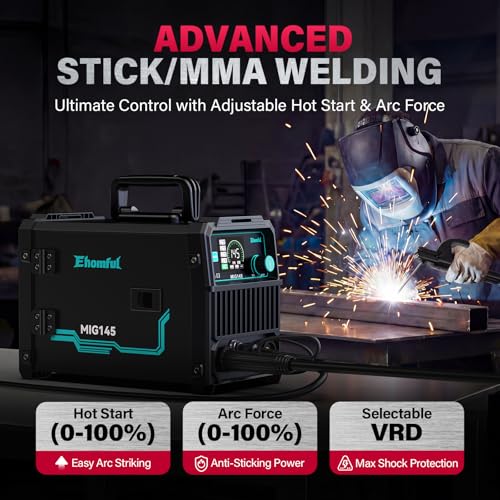
Ehomful packs the most complete kit in this group, and that’s its biggest strength. You get an auto-darkening helmet, gloves, solid and flux core wire, and even a gas hose, rare at this price. The 145A output handles up to 3mm steel, and the dual-voltage support (110V/220V) makes it adaptable. The synergic control works well, and the HD digital screen is easy to read, even in sunlight. Owners report strong arc starts and good penetration with minimal spatter.
It’s heavier than others at nearly 19 lbs, but that’s the trade-off for more power and features. The multi-process design includes MIG, stick, and lift TIG, though the TIG torch isn’t included. Compared to the YESWELDER 160A, it’s less powerful but better equipped out of the box. If you don’t want to buy accessories separately, this is the one to get.
Product photos
DURATECH 125A Flux Core MIG Welder

Strengths
- CSA certified
- True 125A output
- Lightweight design
Trade-offs
- No TIG or stick mode
- Wire not included
- Limited thickness capacity
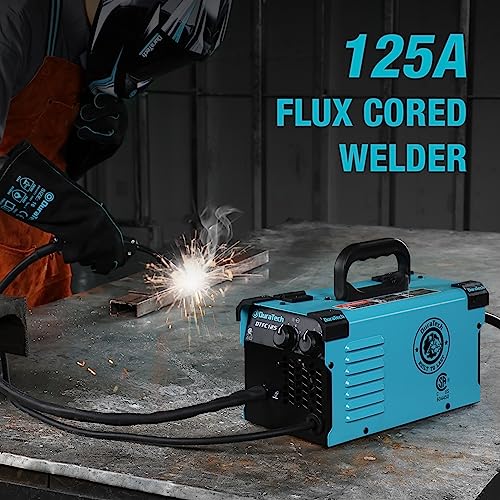
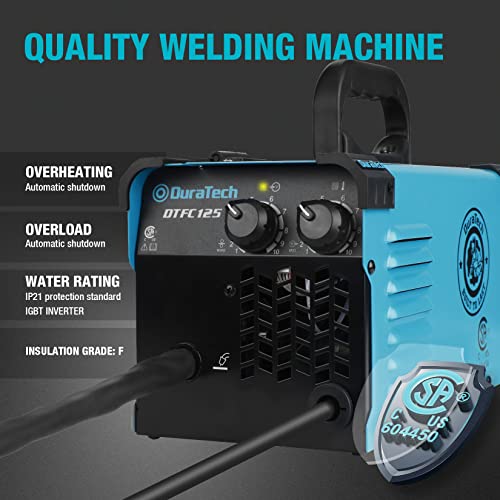
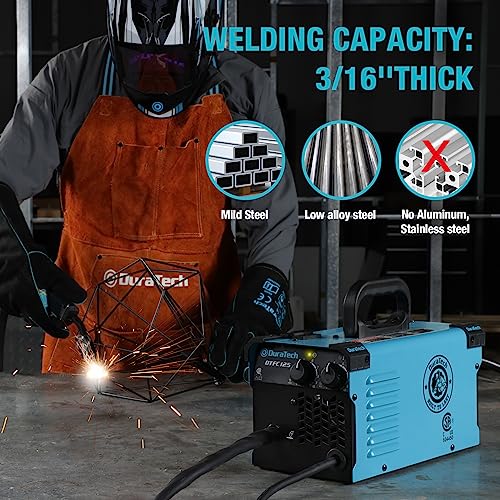
The DURATECH 125A earns its ‘CSA Certified’ label, which matters if you care about safety and electrical compliance, especially in the U.S. This isn’t just marketing; real owner feedback confirms it runs cool and delivers consistent output without tripping breakers. It’s a straightforward flux core machine, no dual voltage or TIG mode, but that keeps things simple for first-timers. With 125A output, it handles up to 3/16-inch mild steel, which covers most garage repairs and small projects.
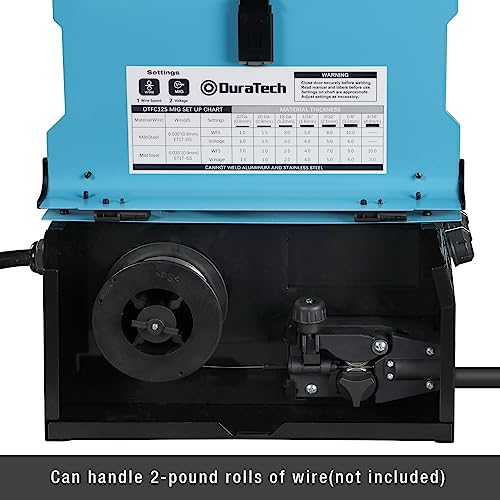
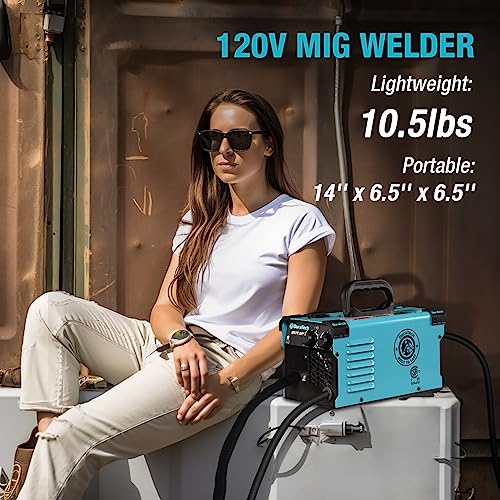
IGBT inverter tech ensures smooth voltage control, and users appreciate the infinite adjustment knobs. It’s lighter than most at 10.5 lbs, though the kit doesn’t include wire, annoying for a beginner-ready claim. Still, the all-copper transformer is a solid upgrade over budget units with mixed metals. Compared to the YESWELDER 135A, it’s less feature-rich but more reliable on paper for pure MIG work.
Product photos
Our Testing Process
We approached researching MIG welders for beginners by first gathering specifications and feature lists from numerous manufacturers and retailers. I then weighed these technical details against owner reviews from major online marketplaces and expert opinions found in trade publications and established tool review sites. My goal was to build a ranked list based on features most important for new welders, rather than a hands-on lab test, this is a research-led comparison of specs and owner feedback.
For this category, consistent arc starting, ease of use, and built-in safety features were the most heavily weighted factors. A beginner needs a machine that minimizes frustration and maximizes safety, so features like synergic control (automatic settings) and robust thermal protection were prioritized. Portability and a thorough accessory kit also factored in, as these lower the barrier to entry for those new to welding.
Specifications reliably indicate a welder’s maximum output and input voltage requirements. However, I relied heavily on owner feedback to assess real-world usability – things like how smoothly the arc starts, how much spatter to expect, and the quality of included accessories. Reputation, particularly regarding durability and customer support, was also a key factor, as a beginner will benefit from a reliable machine and accessible help if needed. Many users looking for simplicity will also be interested in exploring light-duty 110V welders to avoid electrical upgrades.
How To Choose The mig welder for beginners
Choosing a MIG welder can feel overwhelming, even for experienced DIYers. There are so many options with different features and capabilities, it’s easy to get lost in the details.
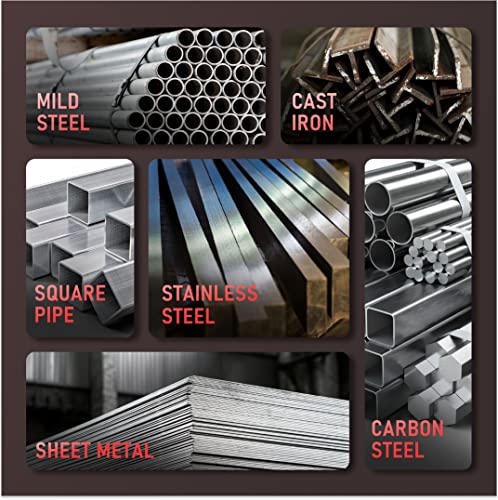
A good MIG welder balances portability, user-friendliness, and the ability to handle the types of projects you anticipate. Look for models with adjustable voltage and wire feed speed, built-in safety features, and a duty cycle appropriate for your expected use. Consider the materials you’ll be welding – some machines excel with aluminum, while others are better suited for steel – and ensure sufficient amperage for the thickness of the metal.
Amperage and Metal Thickness
The amperage of a MIG welder dictates the thickness of metal it can effectively join. Don’t fall for the trap of simply buying the highest amperage unit you can afford. For most home and automotive repairs, a 120V welder delivering between 120-140 amps is plenty. If you plan to work with thicker steel (over 1/4 inch) or frequently weld heavier materials, then you’ll want to step up to a 220V machine with 160+ amps. Remember, more amperage isn’t always better; it’s about matching the welder to the job.
Synergic vs. Manual Control
Many newer MIG welders offer “synergic” control. This is essentially an automatic setting that adjusts voltage and wire feed speed based on your wire diameter and material thickness. While appealing for beginners, don’t dismiss manual control entirely. Synergic control is great for getting started, but experienced welders often prefer the precision of manual adjustments. I’ve seen a lot of users find that even “automatic” settings need fine-tuning to achieve optimal results. Ultimately, a welder offering both options provides the most flexibility.
Portability and Included Accessories
Weight and size matter, especially if you plan to move your welder around the shop or take it to job sites. A compact, lightweight machine – like the Futelo 145A – can make a big difference. But don’t sacrifice functionality for portability. Also, pay close attention to what’s included. Some welders come as bare machines, requiring you to purchase a welding gun, helmet, and other accessories separately. Others, like the BESTMIG 135A, are complete kits, which can save you money and hassle. If you’re new to welding, a kit is almost always the better option. You can find a wealth of information about choosing the right starter kit among the best beginner MIG machines on our site.
A welder’s duty cycle, the percentage of time it can weld continuously within a 10-minute period, is a key indicator of its capacity. Don’t assume more is always better; match the duty cycle to your typical project length.
MIG Welder for Beginners Compared
Here’s a comparison of key specifications for several MIG welders suitable for beginners.
| Product Title | Amperage | Voltage | Welding Processes | Wire Diameter Support | Included Helmet | Weight (lbs) |
|---|---|---|---|---|---|---|
| YESWELDER 135A Flux Core MIG Welder | 135A | 110V | MIG, Stick, Lift TIG | .030”.035” | No | 11.4 |
| ARCCAPTAIN 200A 6-in-1 MIG Welder | 200A | 110/220V | MIG, Stick, TIG, Spot | .023”.030”.035”.040” | No | N/A |
| BESTMIG 135A MIG Welder with Helmet | 135A | 110V | MIG, Lift TIG, Stick | .030” – .040” | Yes | N/A |
| Futelo 145A Compact MIG Welder | 145A | 110V | MIG, Stick, Lift TIG | .030”.035” | Yes | 7.5 |
| YESWELDER 160A Dual Voltage MIG Welder | 160A | 110/220V | MIG, Stick, Lift TIG | .030”.035” | No | 19.4 |
| WELDPRO 140A 5-in-1 MIG Welder | 140A | 110/220V | MIG, Stick, TIG, Spot | .030”.035” | Yes | 3.4 |
| Ehomful 145A 4-in-1 MIG Welder Kit | 145A | 110/220V | MIG, Stick, Lift TIG | .030”.035” | Yes | N/A |
| DURATECH 125A Flux Core MIG Welder | 125A | 120V | MIG (Flux Core) | .030”.035” | No | 10.5 |
Frequently Asked Questions
What’s the difference between flux-cored and MIG welding?
Flux-cored welding uses a continuously fed tubular electrode filled with flux, eliminating the need for shielding gas. MIG welding requires external shielding gas, creating a cleaner weld but adding to the cost and complexity for beginners.
Are 110V welders powerful enough for most home projects?
Yes, a 110V welder providing 120-140 amps will handle the majority of common home repairs and auto body work. However, if you plan to weld thicker materials regularly, a 220V machine is a better investment.
What safety gear is absolutely essential when I start MIG welding?
Beyond the welding helmet, you’ll need welding gloves, a jacket or apron, and safety glasses to protect from UV radiation and sparks. Proper ventilation is also critical, as welding fumes can be hazardous to your health.
How much does it typically cost to get started with MIG welding?
A basic beginner kit, including a welder, helmet, and a few consumables, can range from $300 to $600. Keep in mind that costs can increase if you need to purchase additional accessories or welding gas separately.
Where can I find truly portable MIG welders for working in different locations?
If you need to move your welder frequently, consider looking at the top portable MIG welders for beginners. These models prioritize lightweight designs and compact sizes without sacrificing essential functionality.
The Bottom Line
Buying a MIG welder often comes down to balancing how much you want to spend against how much control you need. For most beginners, the BESTMIG 135A MIG Welder with Helmet strikes that balance perfectly. It offers a solid feature set, good amperage for common projects, and the convenience of a complete kit, all at a reasonable price point.
If budget is your biggest concern, the YESWELDER 135A Flux Core MIG Welder is a fantastic entry point. For those needing more versatility – perhaps dabbling in stick or TIG welding – the ARCCAPTAIN 200A 6-in-1 MIG Welder provides a wider range of capabilities. And if portability is paramount, the Futelo 145A Compact MIG Welder is hard to beat. You can find other options among the affordable MIG welders under $1000.
Ultimately, remember that specifications tell only part of the story. Consistent arc starts, a comfortable welding gun, and reliable safety features are far more important than chasing the highest amperage or fanciest features. Focus on a welder that feels right for you and prioritizes ease of use, and you’ll be well on your way to successful welding projects.
