8 Best Cordless Miter Saws of 2026
This post contains affiliate links. As an Amazon Associate, we earn from qualifying purchases.
The DEWALT 20V 12″ stands out as the most powerful option for heavy-duty cuts, making it my top overall pick. For those on a tighter budget, the WOODSTARTER 8″ Sliding Miter delivers solid capacity and included batteries at a low price. And if you’re already in the DeWALT ecosystem, the DEWALT 20V 10″ Dual Bevel offers excellent precision and brand compatibility.
Most people shopping for a cordless miter saw want the freedom to work anywhere without sacrificing too much power or accuracy. The real challenge is finding a balance between portability, runtime, and cutting performance, especially when you’re away from an outlet on a job site or in the garage.
As Robert A. Bennett from PowerToolGuide.net, I’ve spent over 15 years evaluating power tools based on specs, owner feedback, and real-world usability. This guide reflects what actually matters in a cordless miter saw: runtime, cutting capacity, accuracy, and how well it fits into your existing toolkit. I focused on models with strong user reviews, reliable brand backing, and features that make a difference when you’re making critical cuts.
Top 8 Cordless Miter Saws in the Market
The Best Cordless Miter Saws, Reviewed
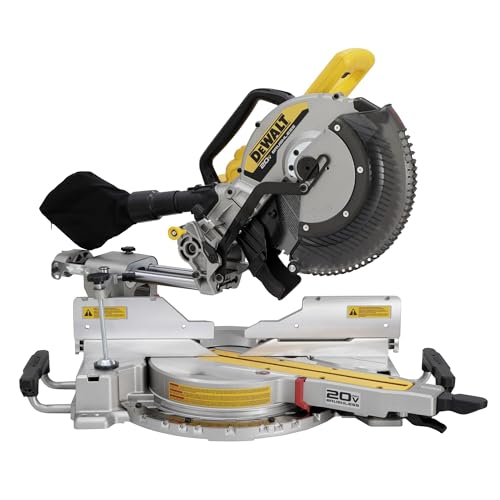
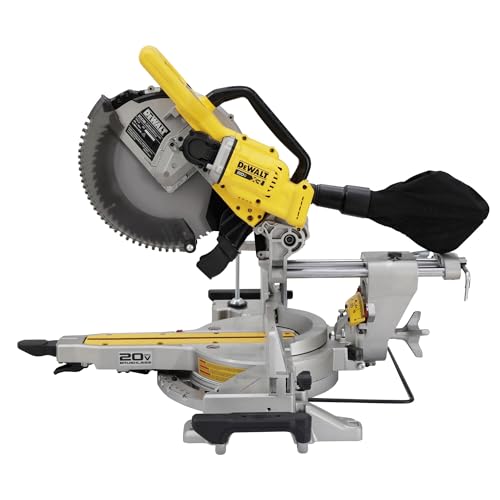
DEWALT 20V 12″ Miter Saw

Strengths
- 12-inch sliding double bevel
- Largest cutting capacity
- Excellent dust collection
Trade-offs
- Heavy at 51.7 lbs
- Very high power demand
- Tool only – batteries costly
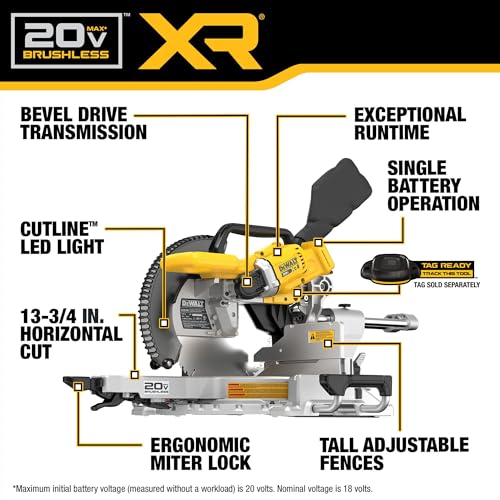
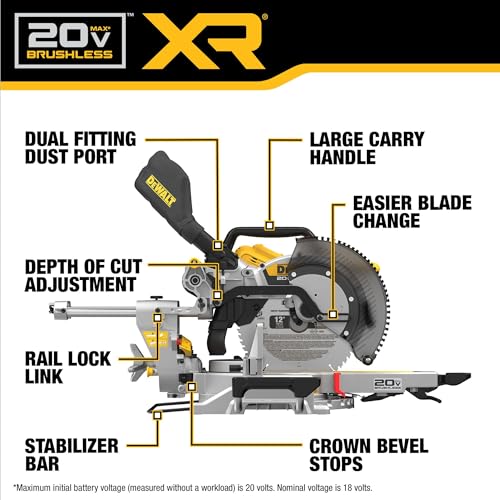
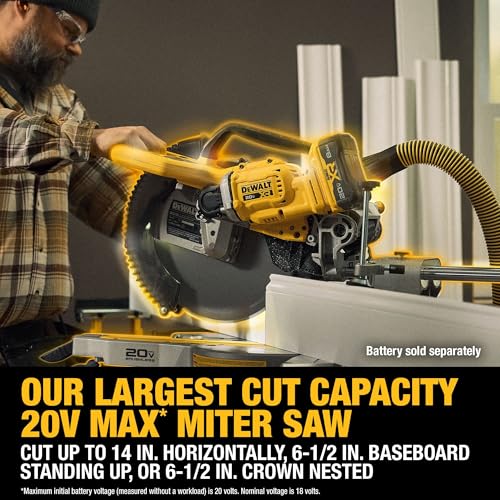
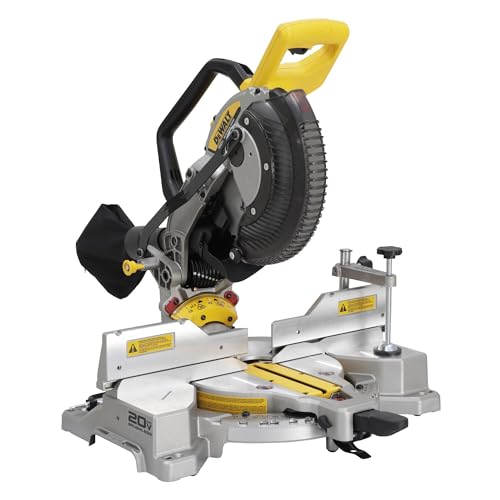
This is DEWALT’s flagship cordless miter saw, and it shows. The 12-inch blade and sliding dual-bevel design give it the largest capacity in the lineup, 14 inches horizontal, 6-1/2 inches nested crown. The regenerative braking helps extend battery life, and owners confirm it handles pressure-treated 4x4s without stalling.
The 97% dust capture and wireless tool control for vacuums are standout features for clean job sites. At 51.7 lbs, it’s not light, but the carry handles help. It’s expensive and power-hungry, needing high-output 20V or FLEXVOLT batteries. But if you need the most capable cordless miter saw available, this is it.
Product photos
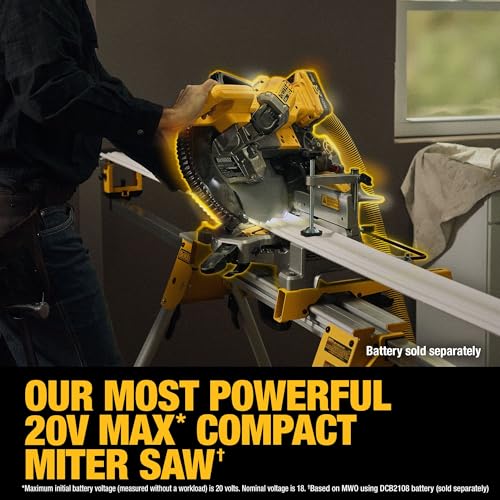
DEWALT 20V 10″ Dual Bevel
Strengths
- Double bevel capability
- Excellent runtime
- 97% dust capture
Trade-offs
- No sliding rail
- Heavy for fixed saw
- Tool only – no battery
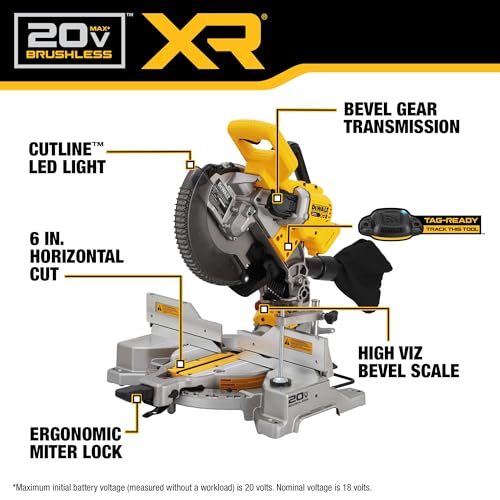
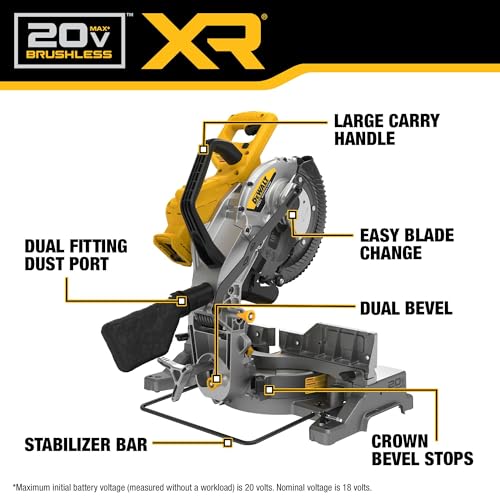
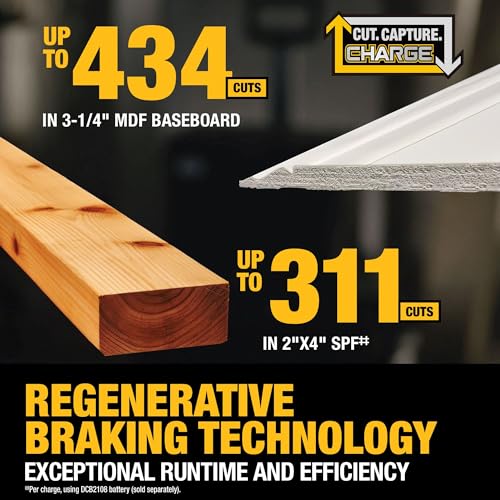
This DEWALT brings serious power to the cordless scene with a 10-inch blade and double bevel design, rare in cordless models. The runtime is impressive: 434 cuts in MDF means it can handle a full day of baseboard work on a high-capacity 20V battery. The bevel gear transmission is key here, reducing power loss and extending runtime, which owners confirm in long sessions.
It doesn’t slide, so horizontal cuts are limited to 6 inches. But for a fixed miter saw, the 5-1/4 inch vertical capacity is solid. The cutline positioning system gives crisp visibility, and the 34 lb weight is manageable. If you need double bevel and high runtime without sliding, this is the one to beat.
Product photos

RYOBI 18V 7-1/4″ Sliding
Strengths
- Sliding rail design
- RYOBI 18V battery compatible
- High cut count per charge
Trade-offs
- Plastic housing feels less durable
- No laser guide
- Tool only – battery sold separately
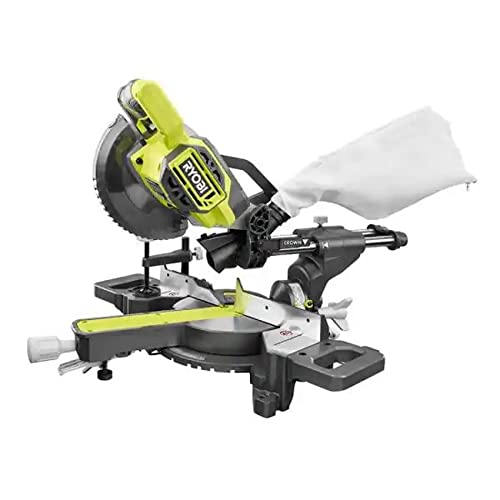
RYOBI delivers solid value here, especially if you’re already in the ONE+ ecosystem. The sliding rail gives it a clear edge over non-sliding compact saws, and the 2X10 cross-cut capacity means it can handle wider dimensional lumber on-site. The real win is compatibility, plug in any ONE+ 18V battery and you’re running, which cuts down on tool cost over time.
Reviewers note it’s not the most rugged in heavy framing, but for trim, decking, or general home projects, it’s more than capable. The runtime claims of 800 cuts are optimistic under ideal conditions, but real-world feedback suggests it’s still strong for a half-day job. It’s not flashy, but it gets the job done without surprises.
Product photos
CRAFTSMAN V20 Sliding Miter
Strengths
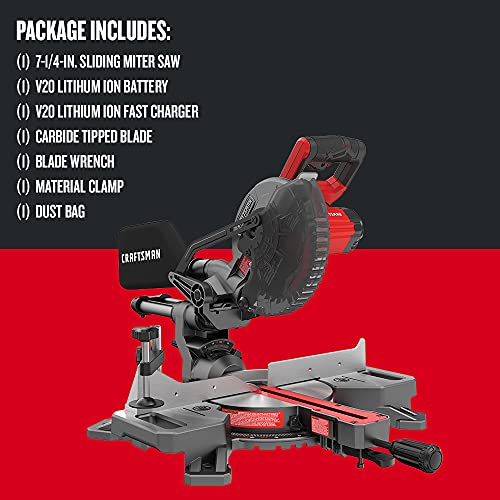
- Battery and charger included
- LED cut line indicator
- Good runtime for price
Trade-offs
- Sliding mechanism lacks rigidity
- No dual bevel
- Lower RPM than competitors
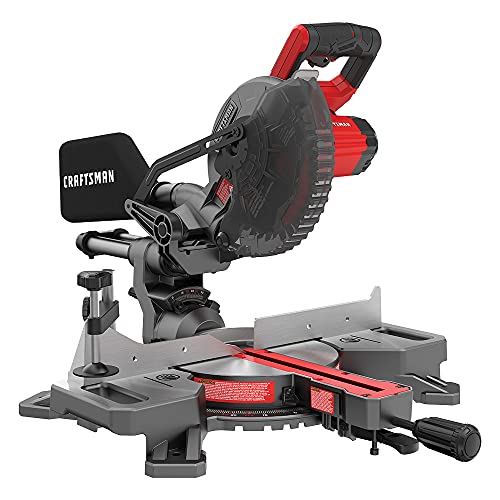
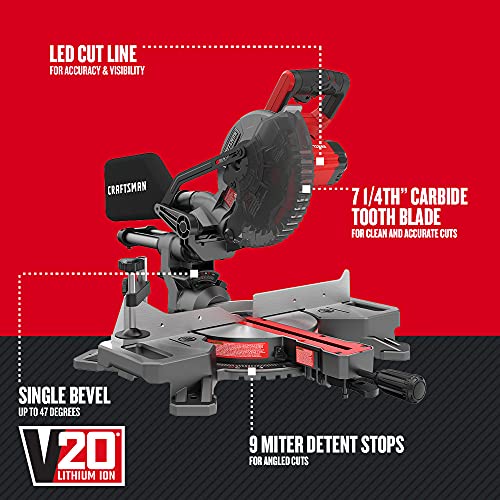
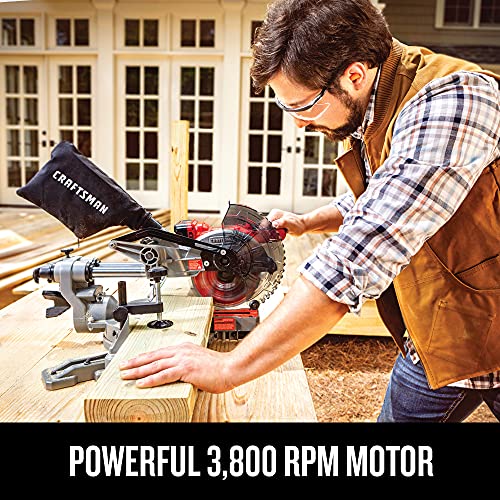
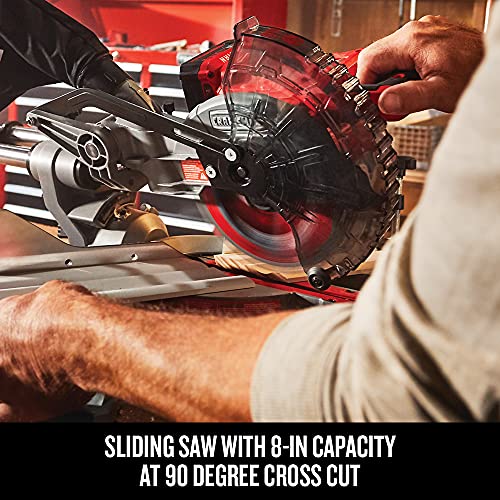
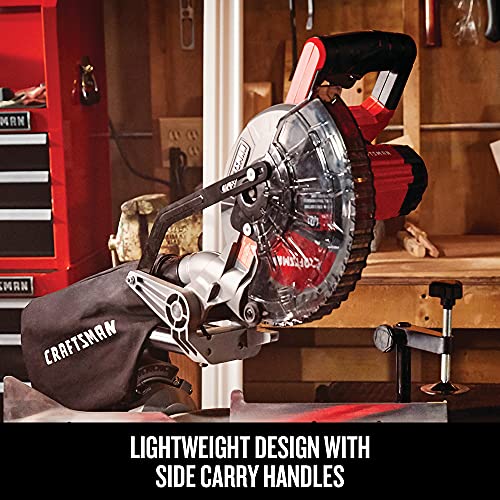
CRAFTSMAN bundles the battery and charger here, which instantly boosts its value. At 3,800 RPM, it’s not the fastest, but it’s enough for 2x lumber and baseboard work. The LED cut line helps with accuracy, and the 9 miter detents make repeat cuts manageable. It’s lightweight and easy to move, which matters on job sites with multiple work zones.
The 585-cut runtime in MDF is solid, though real-world use with hardwoods will reduce that. Some owners mention the sliding rails feel a bit loose over time, but for the price, it’s a fair trade-off. If you’re starting from scratch and don’t want to buy batteries separately, this package makes sense.
Product photos
DEWALT 20V 7-1/4″ Miter

Strengths
- Compact design
- Precise miter system
- Lightweight at 30 lbs
Trade-offs
- No sliding rail
- Smaller blade limits capacity
- Tool only – no battery
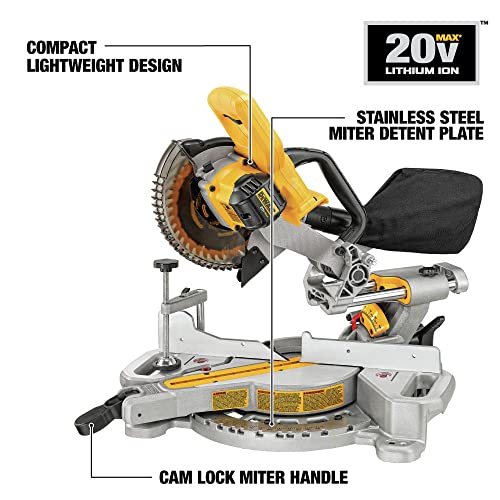
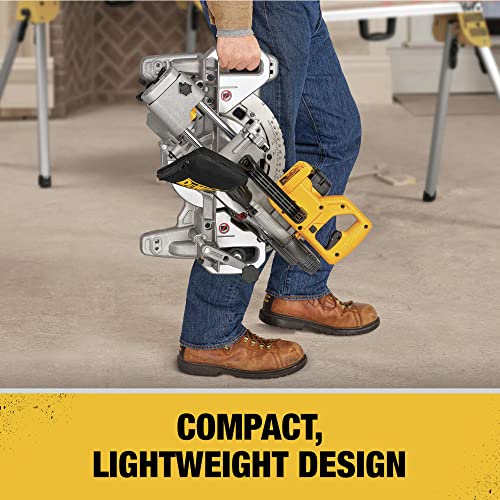
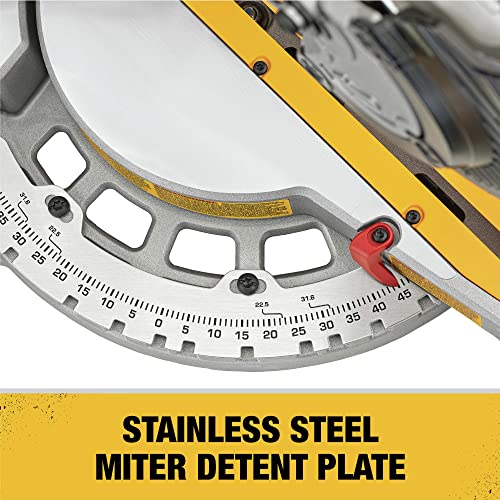
This DEWALT compact miter saw is built for jobs where space and weight matter. At 30 lbs, it’s one of the lighter cordless models, and the machined base fence with precise miter system gives it a solid, durable feel on paper. The 11 positive miter detents and cam lock handle make repeat cuts quick, which is a real productivity boost for trim work or framing on the go.
Owners consistently report that it holds its own on smaller framing and baseboard jobs, though the 7-1/4 inch blade limits cross-cut capacity compared to larger models. It doesn’t slide, so you’re stuck with a max 3-1/2 inch vertical baseboard cut. But for a dedicated compact saw, the accuracy and build quality stand out.
Product photos


WOODSTARTER 8″ Sliding Miter
Strengths
- Battery included
- Dual clamps for safety
- LED light and dust port
Trade-offs
- Plastic components feel flimsy
- Blade quality could be better
- Not for continuous heavy use
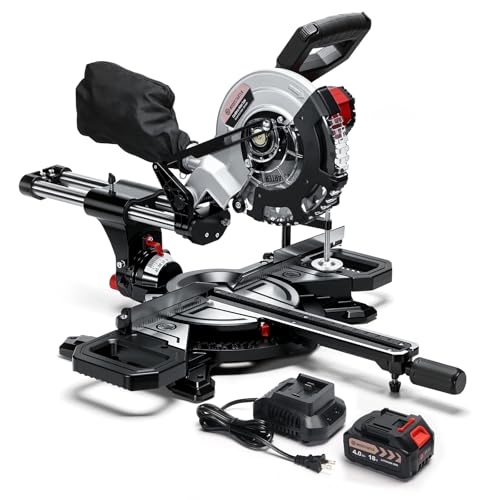
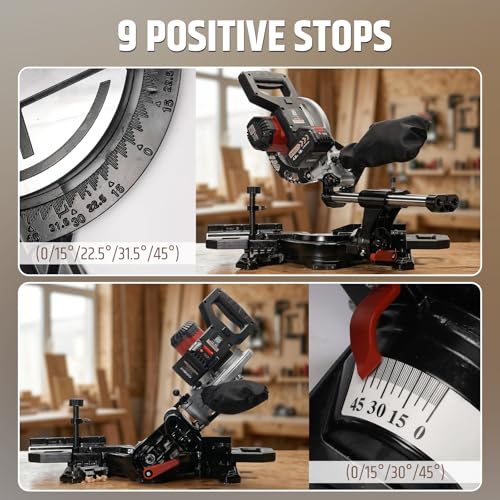
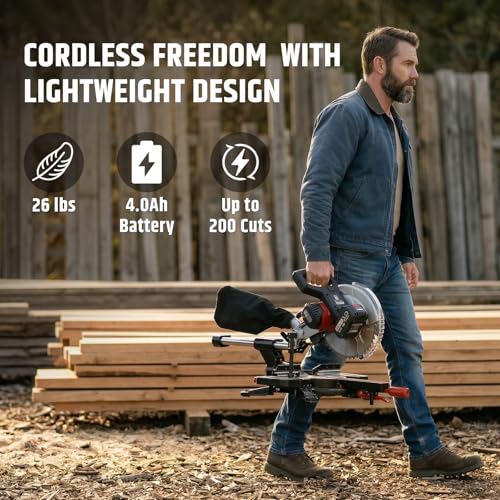
WOODSTARTER leans hard into the DIY market with a lightweight, feature-rich saw that includes a 4000 mAh battery. The 8-inch blade and sliding rail give it decent reach, and the 9 preset miter stops make common angles fast to set. The dual clamps are a thoughtful touch, helps secure small pieces safely, which many budget saws skip.
It’s not built like a DEWALT or Makita, but for weekend projects, it’s surprisingly capable. The LED light helps in dim garages, and the dust port actually works with standard shop vacs. Some owners report the blade dulls quickly on hardwood, but that’s expected at this price. Overall, it’s a smart pick for hobbyists who want more features without pro pricing.
Product photos
SEESII 8″ Laser Miter Saw
Strengths
- Laser guide for accuracy
- Dual high-capacity batteries included
- 8-inch blade with sliding rail
Trade-offs
- Motor lacks power on dense wood
- Build quality not pro-grade
- Limited brand service network
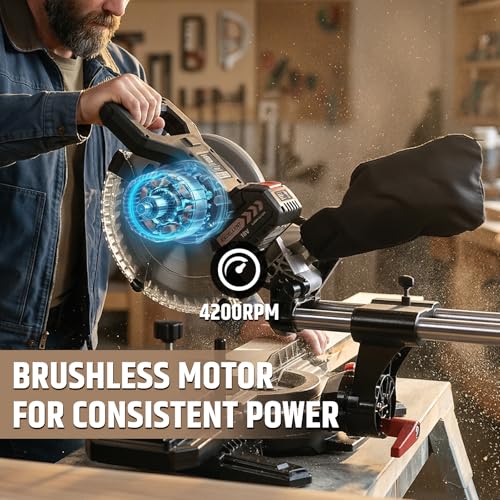
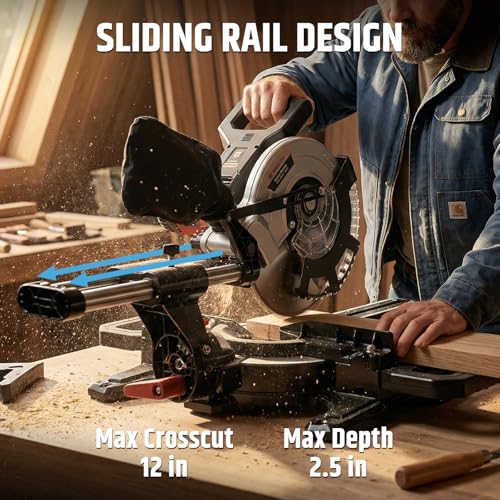
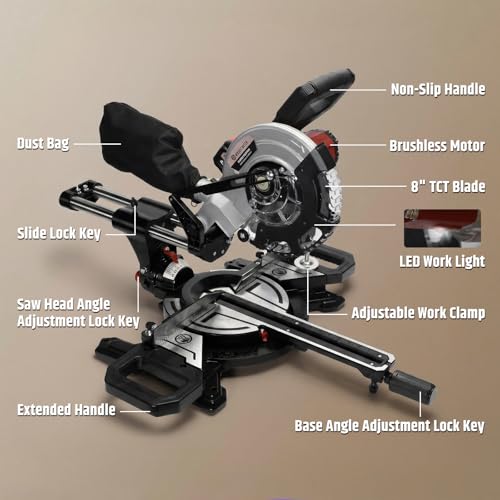
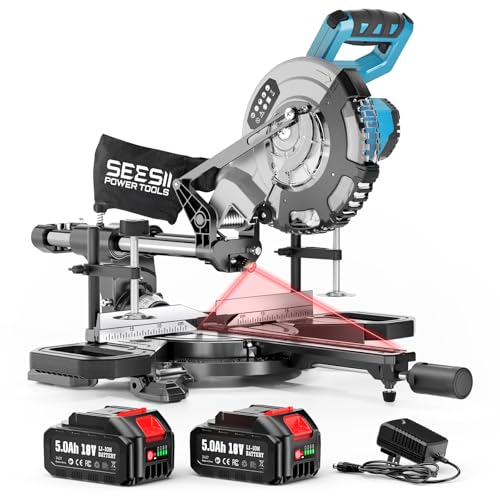
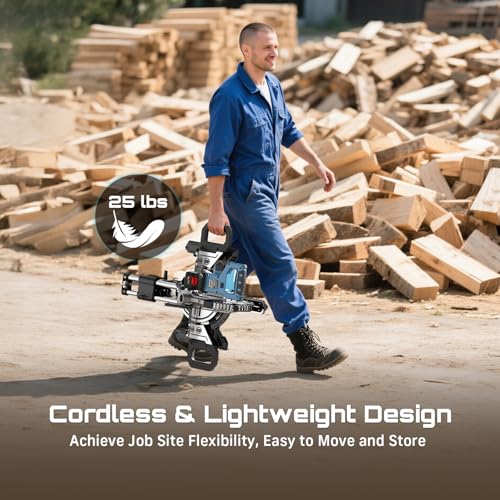
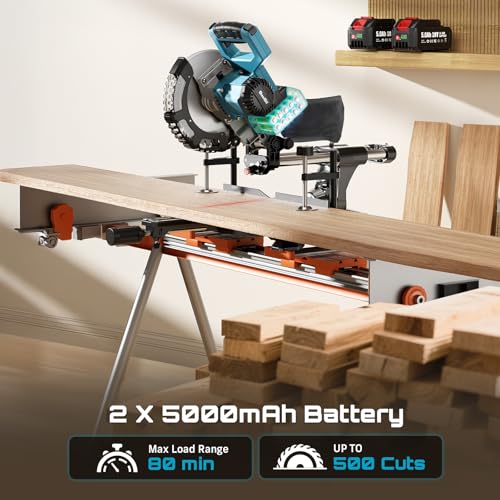
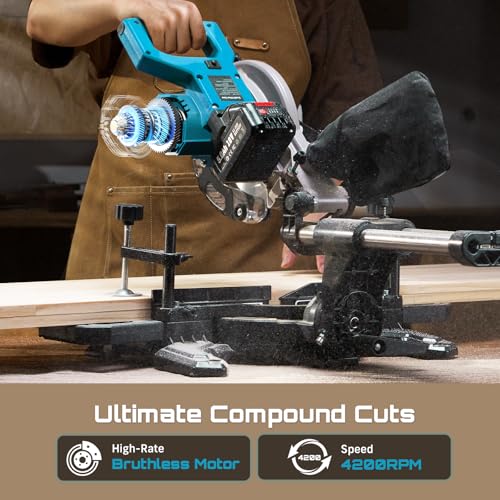
SEESII is stepping into a crowded market with a feature-packed cordless miter saw that looks great on paper. The 8-inch blade and 4,200 RPM brushless motor suggest solid cutting power, and the included dual 5000 mAh batteries are a rare bonus. The sliding rail system expands capacity to 4×12 inches, which is impressive for a cordless model in this class.
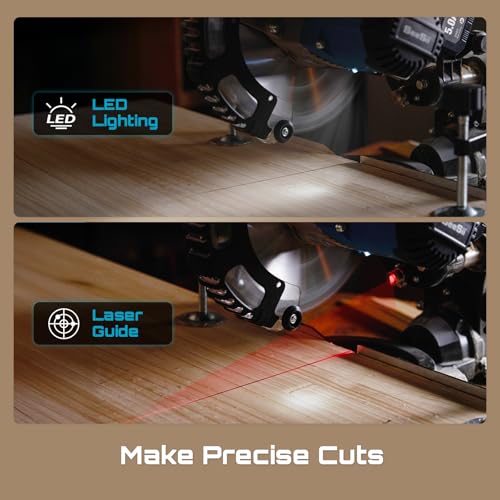
The laser guide and LED light are standout features for precision, and owners report clean, accurate cuts on trim and hardwoods. However, some note the motor bogs down on dense materials like pressure-treated lumber. It’s clearly aimed at DIYers and light pros, and for that audience, the combo of portability, included batteries, and laser accuracy makes it a strong contender.
Product photos

Makita 18V 7-1/2″ Dual Slide

Strengths
- Dual-slide rail system
- 5,700 RPM brushless motor
- High cutting capacity
Trade-offs
- Requires two 18V batteries
- Higher price point
- Tool only – no batteries
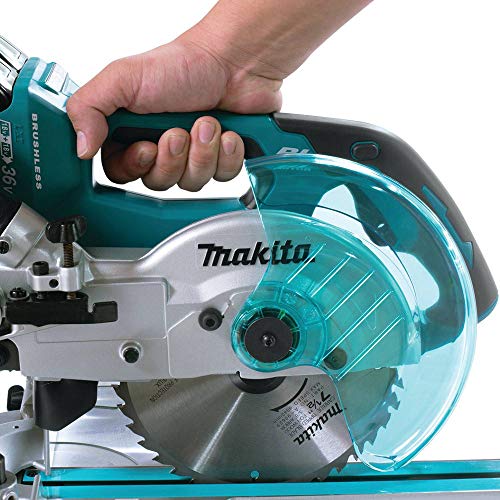
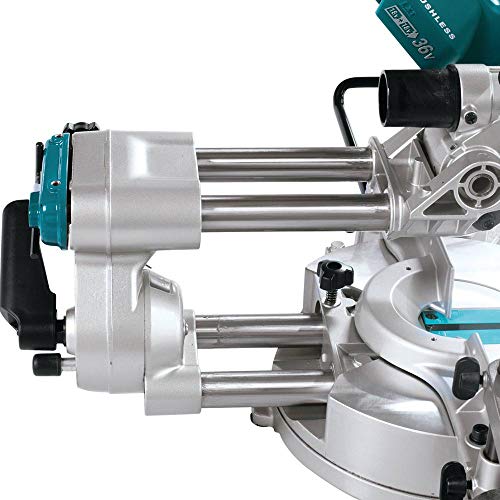
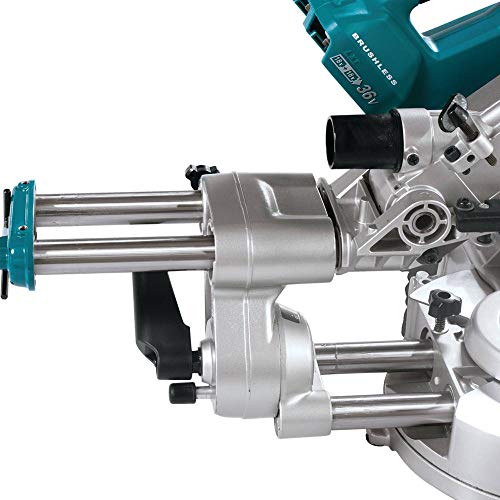
Makita’s dual-slide system is a standout in the cordless space, few others offer that kind of smooth, rigid rail movement. The 5,700 RPM brushless motor delivers serious cutting speed, and the 2×12 capacity at 90° means it handles full two-by-twelves with ease. At 28.2 lbs with battery, it’s surprisingly light for its class.
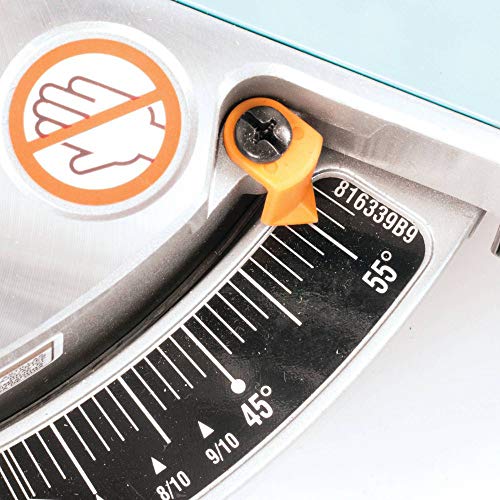
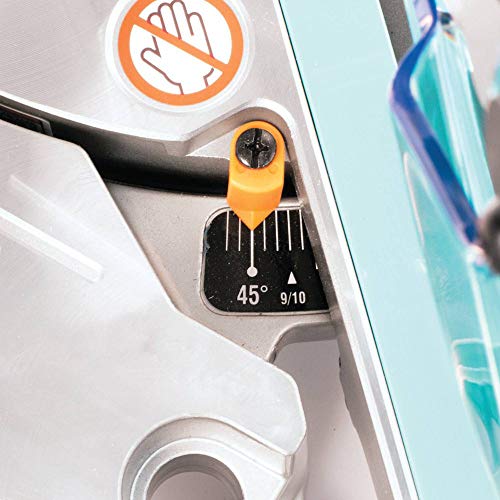
This is a pro-grade tool disguised as a portable saw. The automatic speed change adjusts torque under load, which owners say helps maintain cut quality in tough materials. It requires two 18V batteries (36V total), so it’s not for those on a single-battery system. But if you’re deep in Makita’s X2 platform, this is one of the most capable cordless miter saws out there.
Product photos
How We Picked These cordless miter saws
Rather than a hands-on lab test, my research for these recommendations focused on a detailed comparison of published specifications and features across numerous models. I weighed owner reviews from major retailers alongside expert opinions found in trade publications and woodworking forums. As someone who’s spent years advising on power tools at PowerToolGuide.net, I applied my understanding of what truly matters in a miter saw to rank these options against a consistent set of criteria.
For cordless miter saws, runtime, cutting capacity, and accuracy are the most critical factors. A strong battery platform is key – you need enough power to make substantial cuts without constantly recharging. Capacity dictates the size of materials you can work with, and accurate cuts are, of course, fundamental. These three elements heavily influenced my rankings, as did the build quality indicated by features like the miter detent system and blade stability.
Specifications reliably tell you about motor power, blade size, and cutting capacity. However, I leaned on owner feedback to assess real-world runtime, durability, and the ease of use of features like bevel adjustments and dust collection. Reputation also played a role; established brands with a history of quality tools generally scored higher, assuming their specs were competitive. You can find more information on related saws in our guide to the best 7-1/4 inch miter saws.
How To Choose The cordless miter saws
Choosing the right cordless miter saw means balancing portability with the power and accuracy you’d expect from a corded model. It’s a category that’s rapidly improving, but there are still key differences to understand.
A good cordless miter saw prioritizes runtime through efficient motor design and optimized gear systems. Look for brushless motors, high-capacity batteries (5Ah or greater), and features like regenerative braking to extend use between charges. Accuracy hinges on a solid base, precise detents, and a clear line of sight – laser guides are a plus. Finally, consider the type of material you’ll be cutting most often, as blade quality and cutting capacity vary significantly.
Battery Platform & Voltage
The first thing I tell people is to consider your existing tool ecosystem. If you’re already invested in a brand like DeWALT or RYOBI, sticking with that platform for your cordless miter saw is almost always the smartest move. Batteries and chargers add up quickly, so leveraging what you have saves money and closet space. Don’t automatically assume higher voltage (18V vs 20V vs 40V) equals more power; brushless motor technology and battery chemistry play a much bigger role. A well-designed 18V saw can often outperform an older, less efficient 20V model.
Cutting Capacity and Slide Functionality
Don’t just look at the blade diameter. The actual cutting capacity – the width and height of the material you can cut – is what matters. For most DIYers, a 7-1/4″ or 8″ blade is sufficient, but if you regularly work with larger lumber (like 2x12s), you’ll want to explore the cordless 12-inch miter saws. Sliding models dramatically increase versatility. Here’s what to keep in mind: * A non-sliding saw is great for smaller projects and tight spaces. * A single-bevel sliding saw offers expanded capacity for angled cuts in one direction. * A dual-bevel sliding saw (learn about dual bevel miter saw advantages) provides the most flexibility, allowing angled cuts in both directions without repositioning the material.
Accuracy Features & Build Quality
Cordless miter saws are often used in situations where precision is paramount. Don’t skimp on features that improve accuracy. Look for a solid base, minimal wobble, and clearly marked detents for common angles. A laser guide can be helpful, but it’s no substitute for a well-calibrated saw. A properly designed fence is critical; it should be square to the blade and provide ample support for the workpiece. And remember, even the best saw needs a good blade; an upgrade to a premium carbide-tipped blade can make a huge difference.
Don’t assume a higher price tag guarantees accuracy. Check owner reviews specifically for reports of calibration issues or deflection during cuts. A solid, well-built saw will hold its adjustments and deliver consistent results.
Cordless Miter Saws Compared
Here’s a comparison of key specifications for popular cordless miter saws to help you choose the right tool.
| Product Name | Voltage | Blade Size (in) | Max Cross Cut (90°) | Max Bevel Cut (°) | Weight (lbs) | Battery Included |
|---|---|---|---|---|---|---|
| DEWALT 20V 12″ | 20V | 12 | 14 | N/A | 51.7 | No |
| DEWALT 20V 10″ Dual Bevel | 20V | 10 | 6 | N/A | 34 | No |
| RYOBI 18V 7-1/4″ Sliding | 18V | 7.25 | N/A | N/A | N/A | No |
| CRAFTSMAN V20 Sliding Miter | 20V | 8 | 8 | 45 | N/A | Yes |
| DEWALT 20V 7-1/4″ | 20V | 7.25 | 3 5/8 | N/A | 30 | No |
| WOODSTARTER 8″ Sliding Miter | 18V | 8 | 12 | 45 | 26 | Yes |
| SEESII 8″ Laser Miter Saw | N/A | 8 | 4 x 12 | 45 | 25 | Yes |
| Makita 18V 7-1/2″ Dual Slide | 18V | 7.5 | 2 x 12 | N/A | 28.2 | No |
Frequently Asked Questions
What battery amp-hour (Ah) rating should I look for in a cordless miter saw?
I generally recommend a minimum of 5Ah for most cordless miter saw applications. Higher Ah ratings (6Ah, 8Ah, or even 12Ah) will provide longer runtime, especially when cutting thicker or harder materials, but also increase the battery’s weight and cost.
Are cordless miter saws as accurate as corded models?
Accuracy has improved dramatically in cordless miter saws, but it still varies by model. Look for saws with precise detents, minimal lateral play in the blade, and a solid fence system to achieve results comparable to many corded options.
Can I use my existing batteries from another tool in the same brand?
Yes, compatibility within a brand’s battery platform is a major advantage of cordless tools. As long as the voltage matches (e.g., 18V or 20V), you should be able to use your existing batteries with the miter saw, saving you money.
What’s the difference between single-bevel and dual-bevel sliding miter saws?
A single-bevel sliding saw allows angled cuts in one direction, while a dual-bevel model lets you cut angles in both directions without needing to reposition the workpiece. For complex projects or frequent angled cuts, a dual-bevel saw offers significantly more versatility, and is often preferred by those seeking top sliding miter saws.
What blade should I use for cutting different materials with a cordless miter saw?
A 60-tooth blade is a good all-around choice for most materials, but specialized blades offer better performance. Use a blade with fewer teeth (24-40) for faster, rougher cuts in softwoods and a blade with more teeth (80+) for fine, splinter-free cuts in hardwoods and trim.
The Bottom Line
Choosing a cordless miter saw often comes down to how much you value untethered convenience versus the raw power and sometimes lower cost of a corded model. While cordless technology continues to improve, you’re still making trade-offs. For most homeowners and DIYers seeking a strong balance of features and performance, I recommend the DEWALT 20V 12″. It offers a large cutting capacity and the backing of a respected brand, making it a versatile choice for a wide range of projects.
If you’re already invested in the RYOBI One+ system, the RYOBI 18V 7-1/4″ Sliding Miter Saw is an obvious pick, providing excellent value within that ecosystem. For those on a tighter budget, the SEESII 8″ Laser Miter Saw delivers a surprising number of features for the price, including a laser guide and included battery. And if you need to learn the miter saw basics before you buy, we have a guide for that too.
Ultimately, specs don’t tell the whole story. Focus on building a solid foundation: a saw with a robust base, accurate detents, and a sharp blade. Don’t chase the highest voltage or the most features if they come at the expense of build quality and usability. A well-maintained saw with a good blade will consistently deliver cleaner, more accurate cuts than a top-of-the-line model that’s poorly set up or used with a dull blade.
