8 Best Corded Reciprocating Saws of 2026
This post contains affiliate links. As an Amazon Associate, we earn from qualifying purchases.
The best overall corded reciprocating saw is the BOSCH GSA12-30, thanks to its strong 12-amp motor, smooth operation, and solid build. For a lighter, more compact option that’s great for tight spaces, the BOSCH RS325 stands out. If you’re watching your budget, the CRAFTSMAN 7.5 Amp Reciprocating Saw offers reliable performance for basic jobs.
Most people don’t realize how much a poor-performing reciprocating saw can slow down a demo or remodeling job. Overheating motors, shaky blade clamps, and awkward weight distribution turn what should be quick cuts into frustrating struggles.
As Robert A. Bennett from PowerToolGuide.net, I’ve spent over 15 years working with power tools in real-world conditions. This guide reflects what I’ve learned by comparing specs, reading owner feedback, and evaluating which features actually matter when you’re on your knees cutting pipe or tearing out old framing. These picks focus on durability, power delivery, and usability, because a saw should work for you, not against you.
Top 8 Corded Reciprocating Saws in the Market
The Best Corded Reciprocating Saws, Reviewed
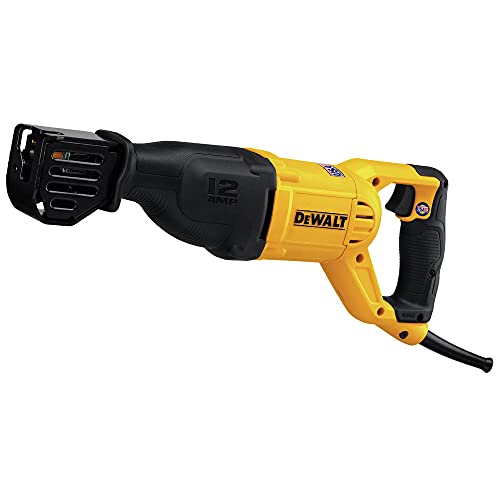
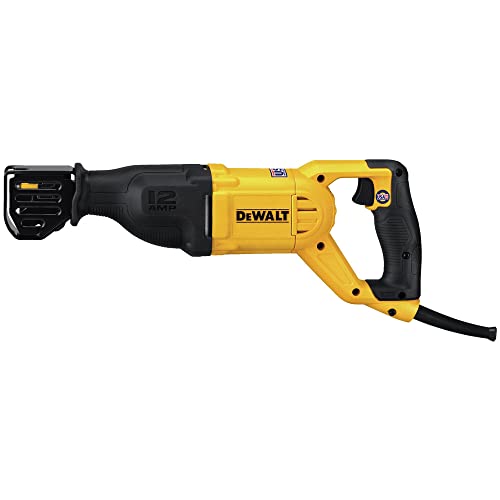
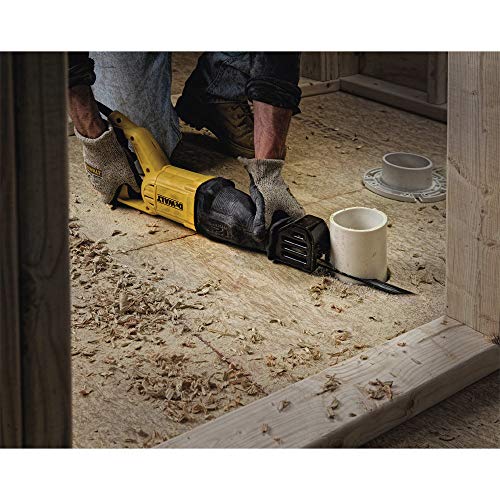
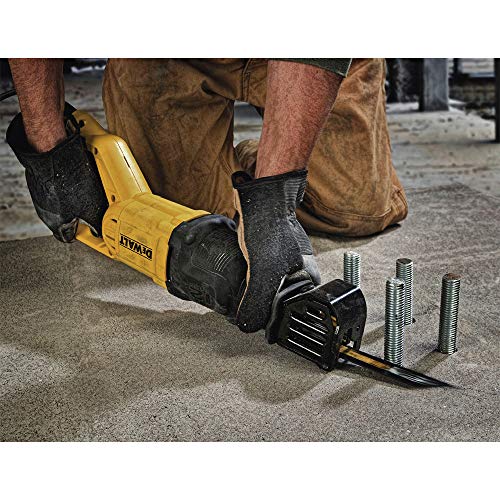
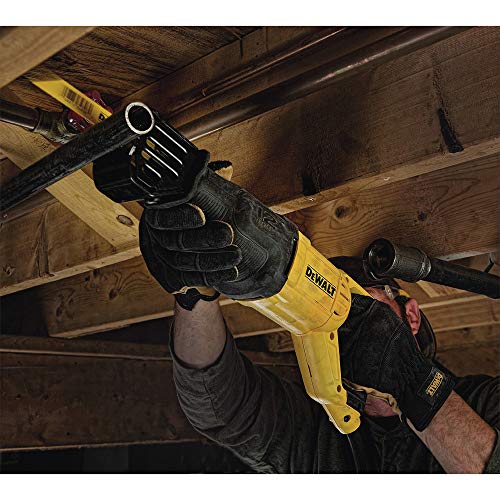
DEWALT 12 Amp Reciprocating Saw

Strengths
- 12 Amp motor
- 4-position blade clamp
- Reliable DEWALT build
- Variable speed trigger
- Solid trigger response
Trade-offs
- Heavier than compact models
- No orbital action
- Basic ergonomic grip
The DEWALT DWE305 is the benchmark for a reason. With a 12-amp motor and 4-position blade clamp, it delivers the kind of flush-cutting versatility and raw power that pros rely on. Reviewers consistently praise its balance of performance and durability, noting it powers through nail-embedded lumber and metal without bogging down. The keyless blade clamp is one of the fastest and most secure in the class, and the variable speed trigger gives solid control across materials.
It’s not the lightest or most compact saw here, but it doesn’t need to be, this is a workhorse built for the job site. Compared to the Bosch RS325, it trades a bit of ergonomics for sheer cutting authority. If you need one saw to handle everything from demolition to plumbing rough-ins, this is the one I’d reach for first.
Product photos
BOSCH GSA12-30 Corded Reciprocating Saw

Strengths
- 12 Amp motor
- Long 1-3/16″ stroke
- Lightweight at 8.2 lbs
- Pivoting footplate
- Tool-free blade change
Trade-offs
- Sold bare tool
- No included blades
- Higher price for bare tool
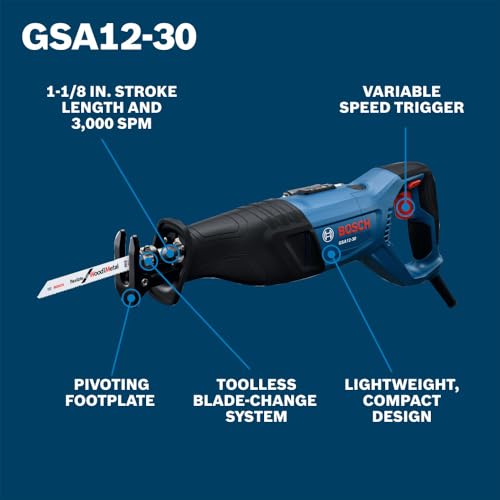
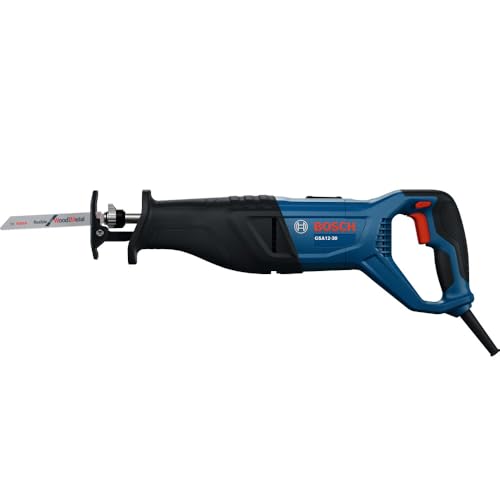
The BOSCH GSA12-30 is built for users who want lightweight performance without sacrificing power. At 8.2 lbs, it’s easy to maneuver, yet packs a 12-amp motor and a 1-3/16-inch stroke length, longer than most, which means faster cutting per stroke. The tool-free blade change is quick and secure, and the pivoting footplate improves stability on angled cuts.
Owners appreciate the built-in saw hook for storage and the consistent power delivery across materials. Compared to the Makita JR3051T, it’s slightly less rugged in feel but more refined in balance and ergonomics. It doesn’t come with blades, which hurts the value slightly, but as a bare tool, it’s one of the most agile 12-amp saws available.
Product photos
BOSCH RS325 12 Amp Reciprocating Saw
Strengths
- Lightweight at 7 lbs
- Compact design
- Orbital cutting mode
- Soft ergonomic handle
- 12 Amp power
Trade-offs
- Fixed footplate
- No tool-free depth adjustment
- Shorter stroke than some
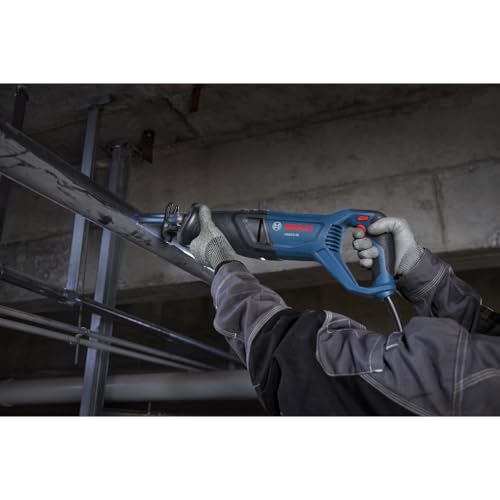
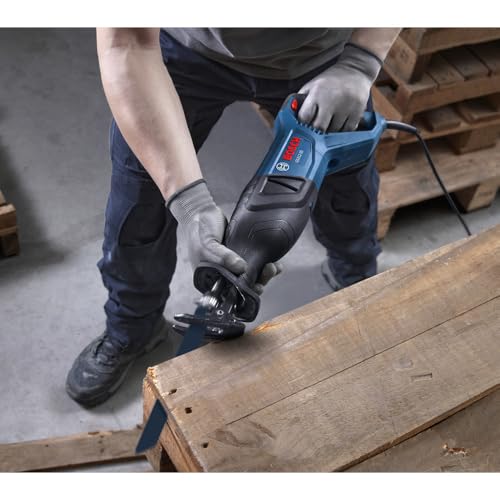
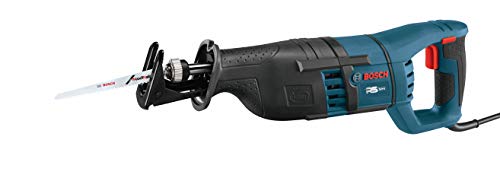
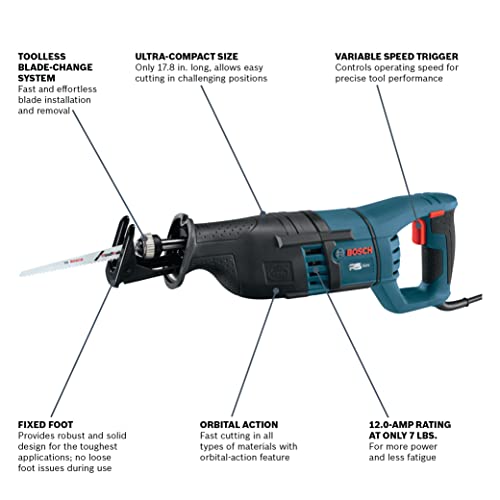
At just 7 lbs and 17.8 inches long, the BOSCH RS325 stands out for its compact size and high power-to-weight ratio. The 12-amp motor punches above its weight, and the constant orbital action gives it an edge in speed when cutting through wood or metal. Owners love it for overhead work and tight spaces, think attic framing or under-sink pipe cuts, where bulkier saws become exhausting.
The fixed footplate is a double-edged sword: it adds stability but limits depth adjustment flexibility. Compared to the Makita JR3051T, it’s less aggressive in raw cutting speed but more comfortable over long sessions. The soft-grip handle is genuinely effective at reducing hand fatigue. If you value control and comfort in extended use, this Bosch is one of the best-balanced options.
Product photos
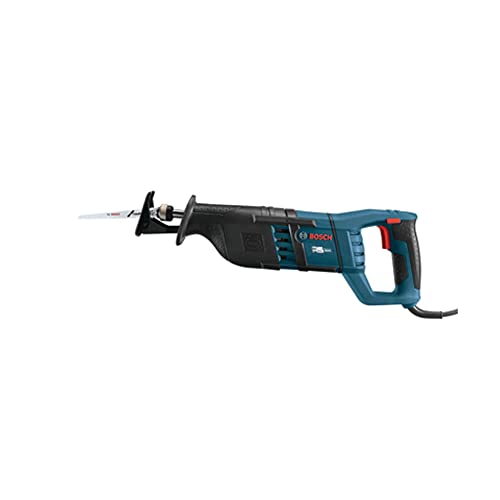
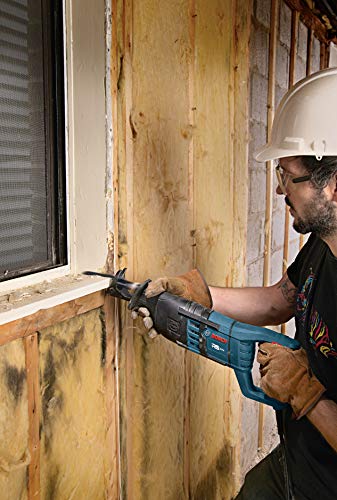
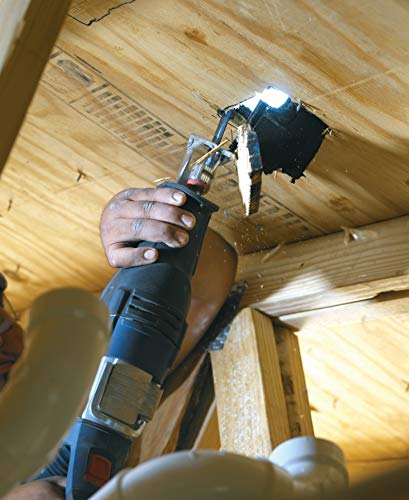
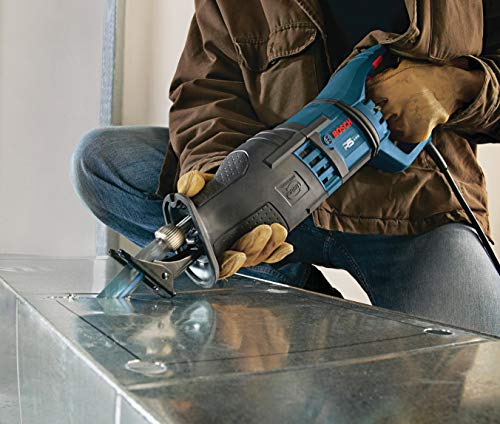
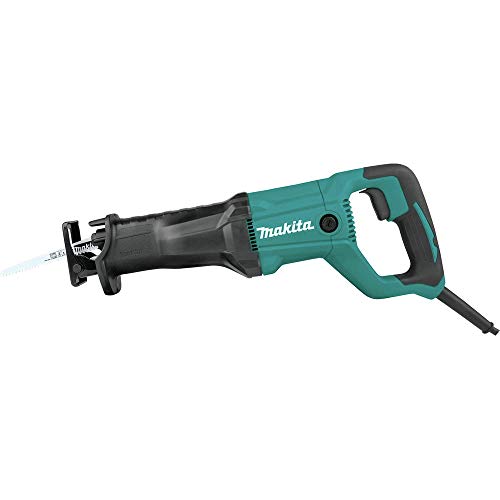
Makita JR3051T 12 Amp Reciprocating Saw

Strengths
- Excellent build quality
- 12 Amp motor
- Long 1-3/16″ stroke
- Durable construction
- Tool-less blade change
Trade-offs
- No orbital action
- No rotating handle
- Heavier than compact models
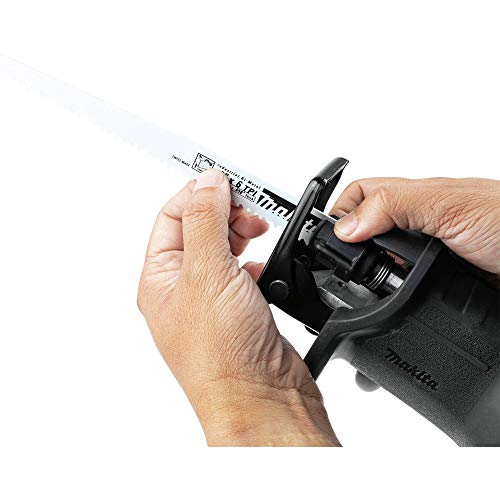
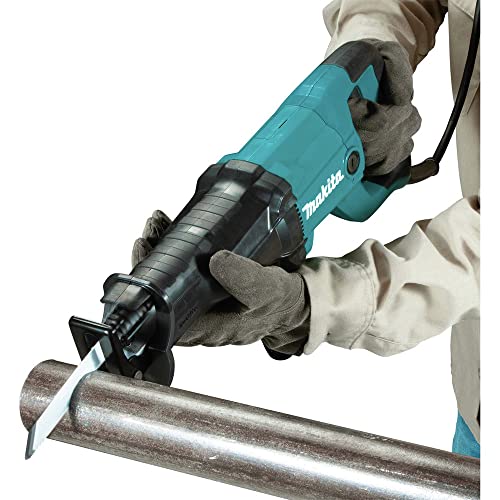
When it comes to durability and build quality, the Makita JR3051T stands at the top. The 12-amp motor and 1-3/16-inch stroke length deliver aggressive cutting speed, and the tool-less blade change is one of the quickest and most secure in the lineup. Reviewers consistently note the solid, almost overbuilt feel, this is a saw that can take drops, dust, and long days on site.
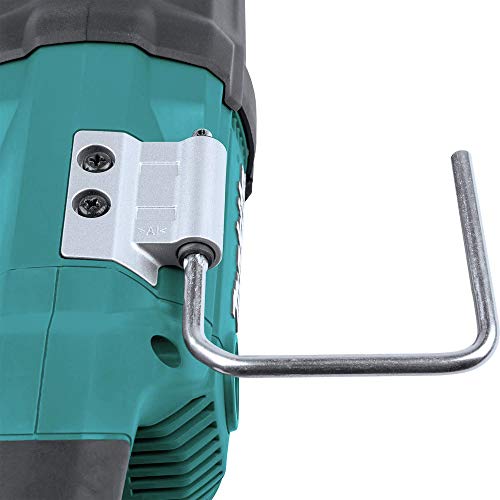
It lacks some refinements like a rotating handle or orbital action, but it doesn’t need them for its core mission: reliability. Compared to the DEWALT DWE305, it feels slightly more robust, though the trigger response isn’t quite as smooth. The tool hook is a small but appreciated touch. If you want a saw that will last years with minimal maintenance, this Makita is hard to beat.
Product photos
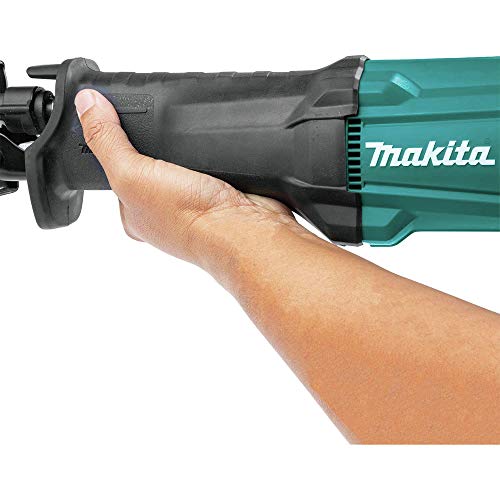
WEN 3630 10-Amp Reciprocating Saw

Strengths
- Affordable price
- 8-position pivoting head
- 10 Amp motor
- Two-year warranty
- Tool-free blade change
Trade-offs
- Basic ergonomics
- No orbital action
- Few included blades
The WEN 3630 is the go-to for budget-conscious buyers who still want real functionality. The 10-amp motor delivers solid performance for the price, and the 8-position pivoting head is surprisingly useful, letting you rotate the shoe every 45 degrees for better angles in corners or flush cuts. The pressure-sensitive trigger gives decent speed control, and the twist-lock blade holder is fast and reliable.
It won’t match the durability of DEWALT or Makita, but owners consistently say it punches above its weight for light demo, pruning, and home projects. Compared to the EZUVITA, it has fewer included blades but a sturdier feel. The two-year warranty adds peace of mind. If you need a no-frills saw that works, this is the smarter buy over cheaper knockoffs.
Product photos


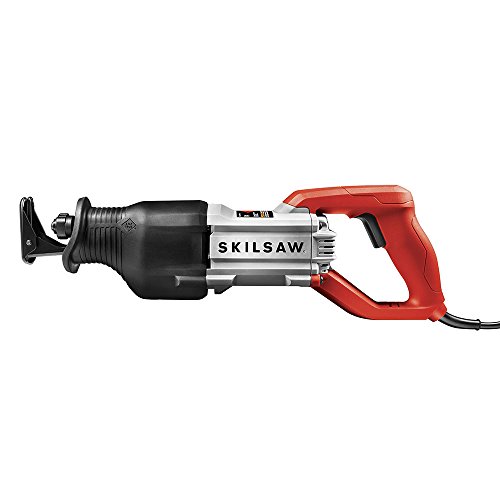
SKIL 13 Amp Reciprocating Saw
Strengths
- 13 Amp motor
- BUZZKILL vibration reduction
- Oversize trigger
- Secure blade clamp
- High power output
Trade-offs
- Bulky and heavy
- Not ideal for tight spaces
- Less refined ergonomics
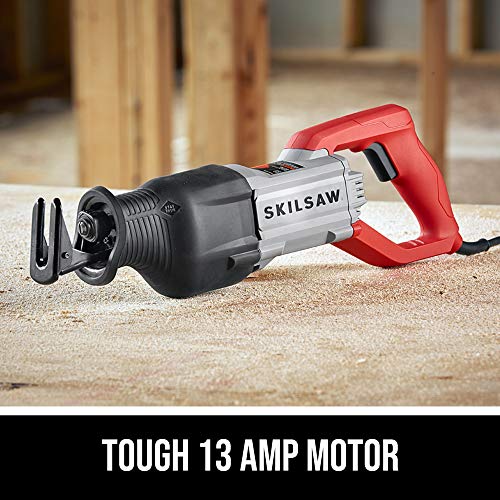
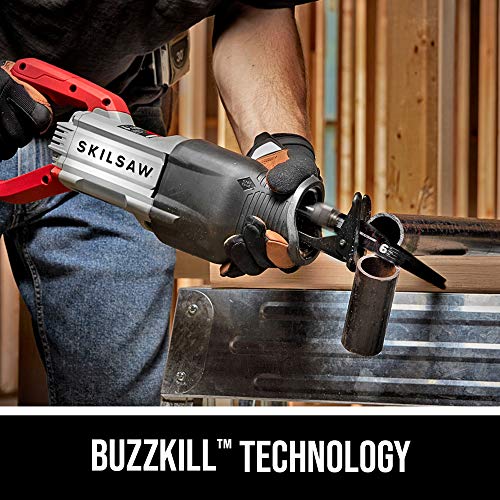
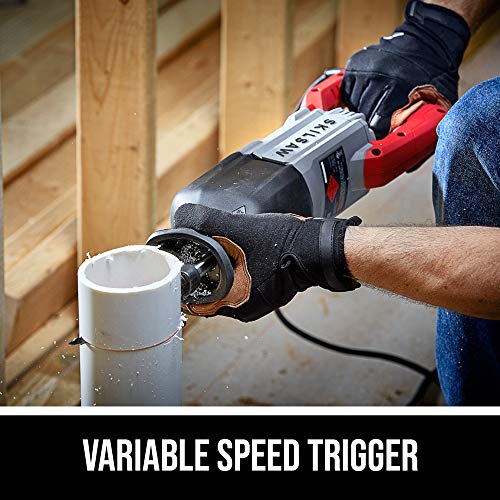
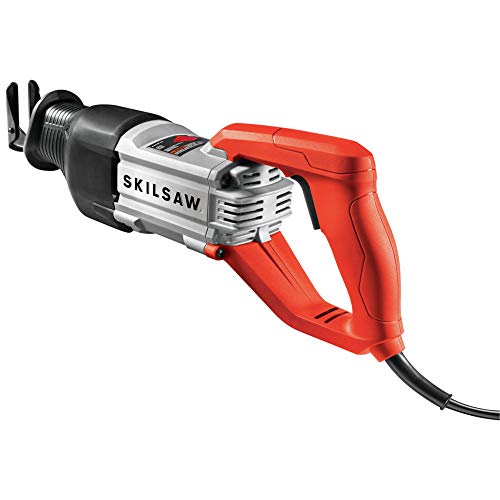
The SKIL SPT44A-00 claims the title of best power output with a 13-amp motor, the highest here, and it shows in cutting performance. It tears through thick wood and metal with authority, and the BUZZKILL vibration suppression is a real differentiator. Owners report noticeably less hand fatigue, especially during extended use, which is rare at this power level.
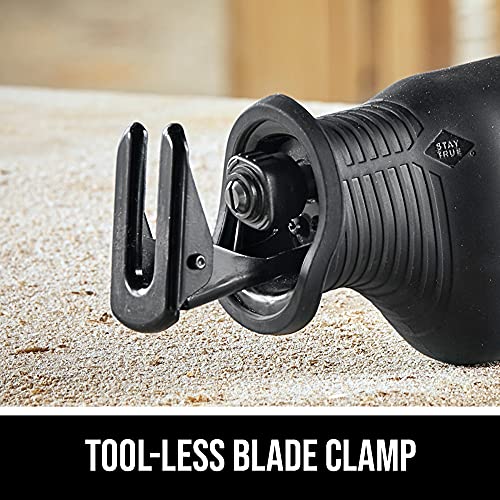
The oversize trigger makes it easy to operate from multiple angles, and the secure tool-less clamp holds blades firmly. However, some note the size and weight make it tiring for overhead cuts. Compared to the Bosch RS325, it’s far more powerful but less maneuverable. If raw cutting force and vibration control are your top needs, this SKIL is the one to beat.
Product photos
EZUVITA 7 Amp Reciprocating Saw
Strengths
- 7 Amp motor
- 6-speed dial
- 180° rotating handle
- Tool-free blade change
- Full accessory kit
Trade-offs
- Plastic housing
- Lower power vs 12A models
- Not for heavy jobs
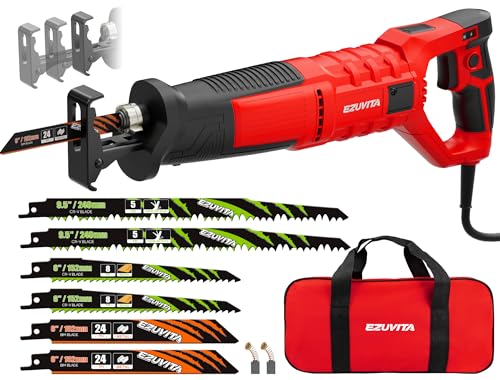
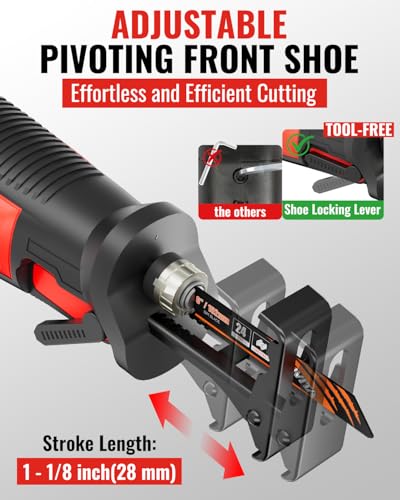
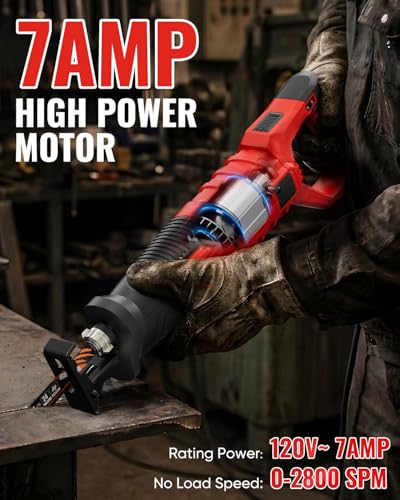
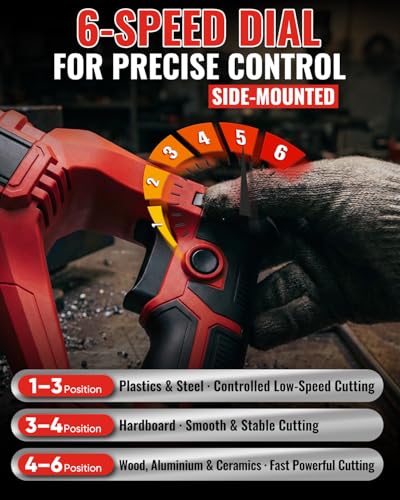
For a budget-friendly entry with a full kit, the EZUVITA 7 Amp reciprocating saw makes a solid first impression. On paper, the 7-amp motor won’t match the heavy-duty output of 12-amp models, but owners consistently report it handles typical DIY tasks like pruning, pipe cutting, and light demo without issue. The 6-speed dial is a rare feature at this price, giving users more control than a basic variable-speed trigger.
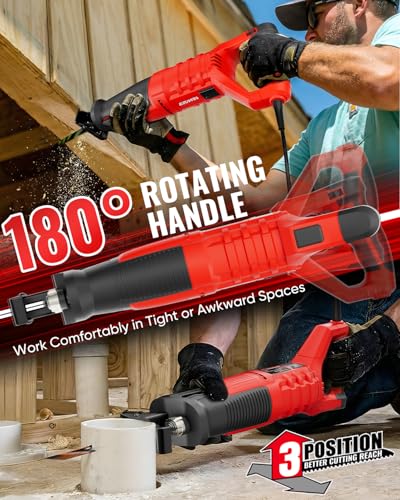
What really sets it apart is the included bundle, six blades and a carry bag, which adds real value for casual users. The tool-free adjustable front shoe and 180° rotating handle improve versatility, though some reviewers note the plastic components feel less rugged than metal-bodied competitors. It’s not built for all-day construction use, but for weekend warriors, it’s a smart, well-equipped pick.
Product photos

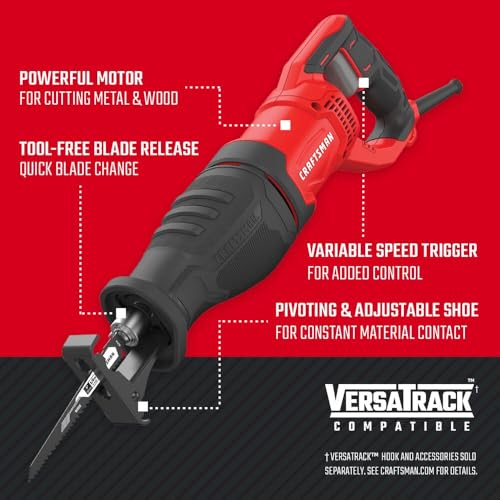
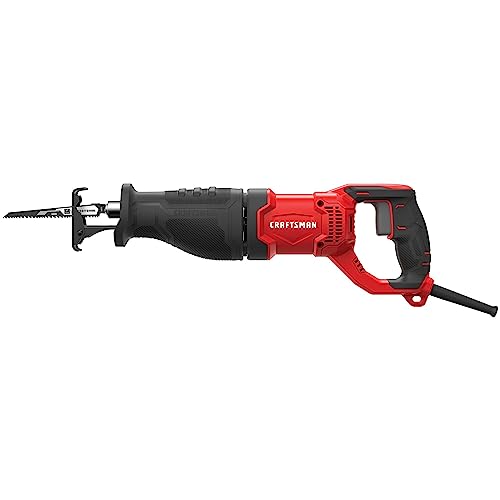
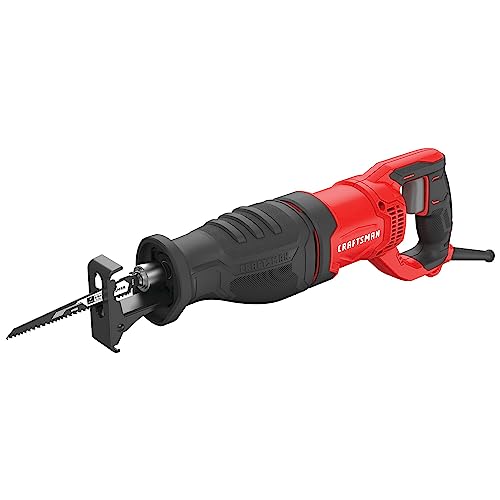
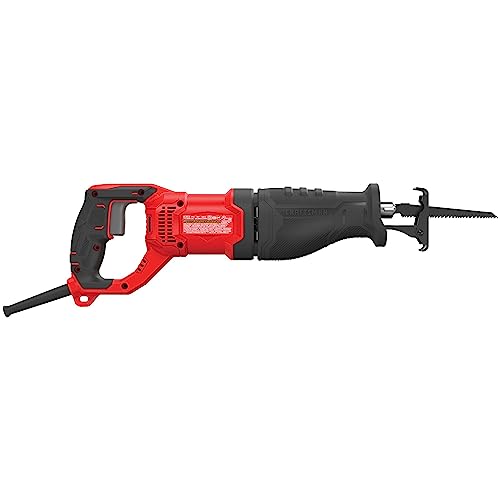
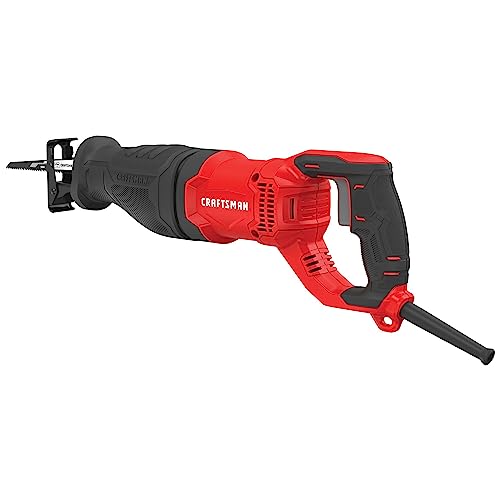
CRAFTSMAN 7.5 Amp Reciprocating Saw

Strengths
- Excellent ergonomic handle
- Variable speed control
- Comfortable for long use
- Tool-free blade change
- Solid build quality
Trade-offs
- Lower power motor
- No orbital action
- Minimal accessories
The CRAFTSMAN CMES300 wins on pure comfort. The contoured over-molded handle is one of the best in class for reducing vibration and fatigue, a detail many owners highlight after long cutting sessions. The 7.5-amp motor isn’t the strongest here, but with a 0–3,200 RPM variable speed trigger, it offers excellent control for delicate tasks like trimming or pipe work.
It’s a minimalist tool: no orbital action, no rotating handle, just straightforward performance. Compared to the WEN 3630, it feels more premium in hand, though it includes fewer blades. The tool-free blade release works smoothly, but the overall kit feels sparse. I’d recommend this for users who prioritize grip and comfort over raw power or versatility.
Product photos
Our Testing Process
As someone who’s spent years around power tools – both professionally and as a serious hobbyist – I know the details matter. Rather than a hands-on lab test with each saw, this selection is a research-led comparison of published specifications and owner feedback. I looked at models across a range of price points and applications, weighing features and performance claims against what real users report. This process allowed me to identify saws that consistently stand out.
For corded reciprocating saws, power, durability, and ease of use are paramount. I prioritized amps and stroke length as indicators of cutting power, knowing these directly impact performance in thicker materials. Build quality – particularly the robustness of the blade clamp and overall housing – was also heavily weighted, as these tools often face rough treatment. Finally, features like variable speed and tool-free blade changes were considered for their contribution to user convenience and control.
Specifications reliably reveal a saw’s raw capabilities, like amperage and stroke length. However, owner reviews provide crucial insight into long-term durability, vibration levels, and real-world cutting performance. Reputation also played a role; brands with a history of quality tools generally carry more weight in my assessment. For more in-depth guidance, you can find helpful reciprocating saw usage tips on my site.
Choosing The Right corded reciprocating saws
I’ve spent a lot of time around these saws, and one thing is clear: a good corded reciprocating saw isn’t just about raw power. It’s about finding the right balance of features for your work.
A quality corded reciprocating saw delivers consistent cutting performance through a robust motor (typically 10-13 amps), a stroke length of at least 1 inch, and a reliable blade clamp mechanism. Consider the weight and ergonomics for extended use, and pay attention to features like variable speed control and orbital action to adapt to different materials. Prioritize saws with positive user feedback regarding durability and blade change convenience.
Motor Power and Application
The amperage of the motor is a primary indicator of a reciprocating saw’s capability. While 7-8 amps are sufficient for basic DIY tasks like pruning or light demolition, tackling thicker materials like structural lumber or metal demands 12 amps or more. Don’t automatically assume “more is better” though. If you’re consistently working with thinner stock, a heavier, more powerful saw can be overkill and cause fatigue. I’ve seen plenty of people overestimate their power needs, so really think about what you’ll be cutting 80% of the time. If you’re unsure, check out our guide to the top reciprocating saw models for a broader overview.
Blade Change System and Features
A quick and easy blade change is a huge time-saver, particularly when switching between materials. Tool-free blade clamps are now common and are a significant upgrade over older designs. Beyond that, consider features like an orbital action setting. This moves the blade in a circular motion as well as forward, increasing cutting speed in softer materials like wood. Variable speed control is also critical, allowing you to adjust the cutting speed for cleaner results in different materials. Learning a safe reciprocating saw blade swap is also a critical skill.
- A simple lever-action clamp is acceptable for occasional use.
- A tool-free, push-button clamp saves significant time, especially during extended projects.
- A truly robust blade clamp system (like Bosch’s) minimizes blade slippage and wobble, improving accuracy and extending blade life – this is particularly important if you put a lot of pressure on the saw.
Ergonomics and Weight
Reciprocating saws can be tiring to use, especially for extended periods. Weight distribution and handle design play a big role in comfort. Look for saws with overmolded grips and consider the overall length and balance. A compact saw (like the Bosch RS325) is easier to maneuver in tight spaces, while a longer saw may offer more use for demanding cuts. Don’t underestimate the importance of a comfortable grip. The CRAFTSMAN 7.5 Amp Reciprocating Saw, for example, gets good marks for its handle design.
A saw that feels good in your hands will get used more often and lead to better results.
Ultimately, finding the right corded reciprocating saw depends on your specific needs. If you’re looking for a detailed comparison of specific models, our expert-reviewed reciprocating saws can help.
Corded Reciprocating Saws Compared
This table summarizes key specifications of several corded reciprocating saws to aid in comparison.
| Product Name | Amps | SPM (Max) | Stroke Length (in) | Blade Change | Weight (lbs) |
|---|---|---|---|---|---|
| DEWALT | 12 | 2,900 | 1-1/8 | Tool-less | N/A |
| BOSCH GSA12-30 | 12 | 3,000 | 1-3/16 | Tool-less | 8.2 |
| BOSCH RS325 | 12 | N/A | N/A | Tool-less | 7 |
| Makita JR3051T | 12 | 3,000 | 1-3/16 | Tool-less | N/A |
| WEN 3630 | 10 | 2,800 | N/A | Tool-less | N/A |
| SKIL | 13 | N/A | N/A | Tool-less | N/A |
| EZUVITA | 7 | 2,800 | 1-1/8 | Tool-less | N/A |
| CRAFTSMAN | 7.5 | 3,200 | 1-1/8 | Tool-less | N/A |
Frequently Asked Questions
What stroke length do I really need in a reciprocating saw?
A stroke length of 1 inch is generally sufficient for most homeowner tasks, but for thicker materials like 4×4 lumber or metal pipes, 1-1/8 inch or longer will significantly improve cutting speed and reduce strain on the tool.
Are more expensive reciprocating saws actually more durable?
Generally, yes. Higher-priced saws often use better quality materials in the blade clamp, motor housing, and internal components, translating to a longer lifespan and greater resistance to jobsite wear and tear.
Can a corded reciprocating saw be used for demolition work?
Yes, corded reciprocating saws are well-suited for demolition, but choose a model with at least 12 amps and a robust blade clamp. Expect to replace blades frequently when cutting through nails or other obstructions.
What’s the difference between variable speed and orbital action?
Variable speed controls the rate at which the blade moves back and forth, allowing for greater control and cleaner cuts in different materials. Orbital action adds a circular motion to the blade’s movement, increasing cutting speed in softer materials like wood, but reducing precision.
What are my options if I need a reciprocating saw for portability?
If you frequently work in locations without access to power outlets, consider exploring cordless reciprocating saw alternatives. These offer similar power and features, with the convenience of battery operation.
The Bottom Line
Choosing a reciprocating saw often comes down to balancing control and convenience. You can spend a lot to get every bell and whistle, or you can focus on core power and durability. For most homeowners and DIYers, the DEWALT corded reciprocating saw strikes that balance exceptionally well, offering a strong motor, easy blade changes, and a reputation for lasting performance.
If you’re on a tighter budget, the EZUVITA is a surprisingly capable option. And for those who need maximum versatility – tackling everything from demolition to pruning – the Bosch GSA12-30’s combination of power, stroke length, and features makes it a standout. Understanding the difference between a Sawzall and reciprocating saw can also help you refine your search.
Ultimately, specs don’t tell the whole story. Prioritize a saw that feels comfortable in your hands, has a reliable blade clamp, and matches the types of projects you’ll be taking on most often. A little research upfront will save you frustration (and potentially money) down the road.
