5 Best Oscillating Multi Tool Blades 2026
This post contains affiliate links. As an Amazon Associate, we earn from qualifying purchases.
The Bionso 55PCS Oscillating Saw Blades stand out as the overall best choice for most users, offering a strong mix of high-carbon and bimetallic blades that handle a wide range of materials. For budget-conscious DIYers, the PECHAM 24PCS Universal Blades deliver solid performance without breaking the bank, while the LEILUO 15PCS Japanese Teeth Blades are ideal if you’re focused on clean, fast wood cuts and prefer that aggressive Japanese tooth design.
Choosing the wrong oscillating multi-tool blade leads to frustrating cuts, wasted time, and blades that dull or break too soon. I’ve seen it too many times, someone trying to slice through hardwood trim with a flimsy HCS blade meant for plastic, or forcing a metal-cutting blade through drywall and wondering why it binds.
This guide cuts through the noise. Based on specs, owner feedback, and my experience evaluating tool performance, I’ve narrowed down the best blades for real-world use. I’ll explain what actually matters, material, tooth design, compatibility, so you can pick the right blade for the job, not just the one with the most pieces in the box.
Top 5 Oscillating Multi Tool Blades in the Market
The Best Oscillating Multi Tool Blades, Reviewed
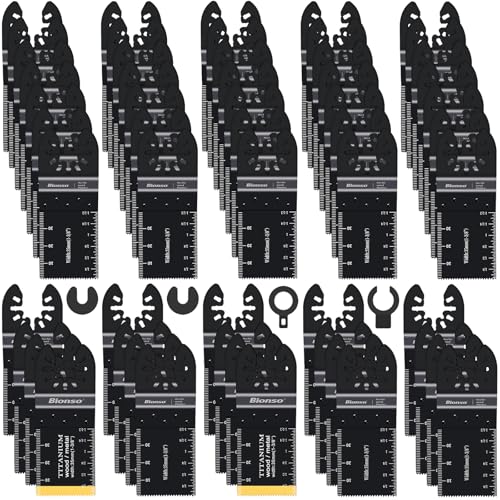
Bionso 55PCS Oscillating Saw Blades
Strengths
- Large 55-piece count
- Bimetallic alloy steel
- Broad compatibility
Trade-offs
- No sanding pads
- No length markers
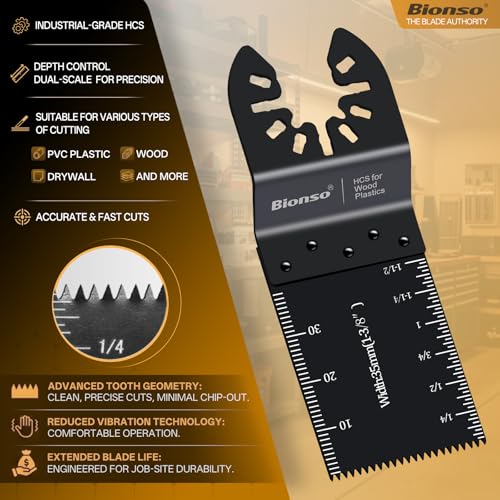
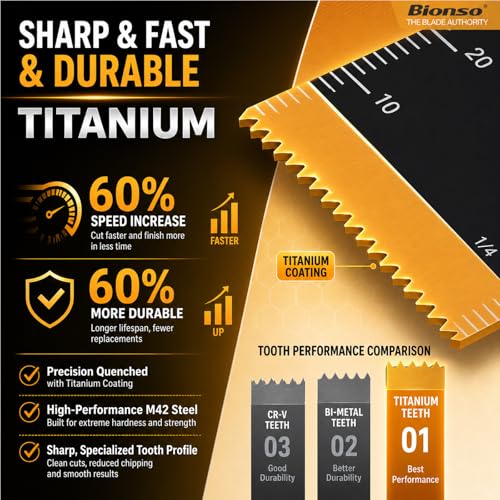
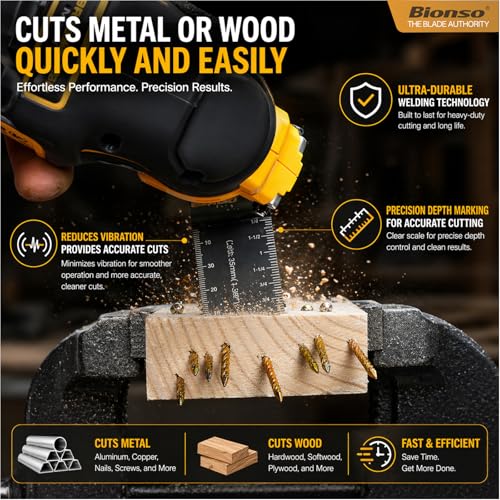
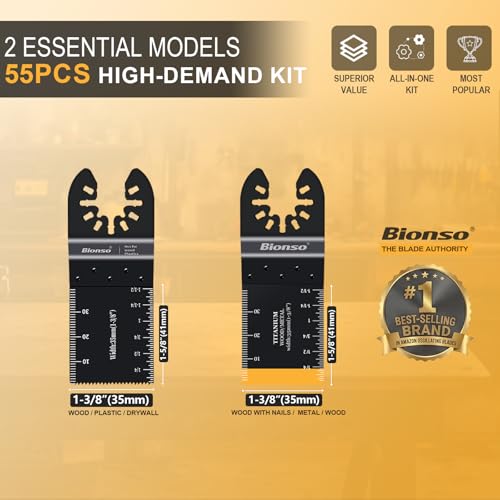
On sheer volume and versatility, the Bionso 55-piece kit feels like the most complete all-rounder in this lineup. It doesn’t just throw parts at you, it organizes them into two distinct blade types that cover wood, plastic, and light metal, which matches what serious DIYers and weekend fixers actually need. The use of high-carbon and bimetallic alloy steel suggests better durability than basic HCS, and reviewers confirm these blades resist dulling longer, especially during mixed-material tasks like baseboard removal or pipe trimming.
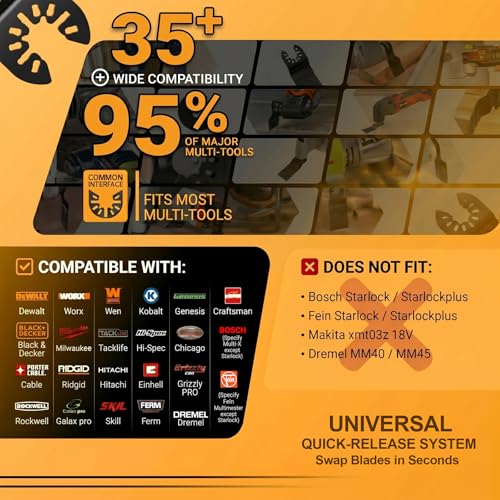
The universal fit covers nearly all non-Starlock tools, and the packaging makes sorting straightforward. While it lacks sanding accessories, the focus stays on cutting performance. Compared to smaller kits, this one gives you breathing room to experiment and replace worn blades without constantly reordering. For most users, this is the smarter buy over niche sets unless you’re only doing one type of cut.
Product photos
PECHAM 24PCS Universal Blades

Strengths
- Affordable 24-piece set
- Length markers
- Includes adapters
Trade-offs
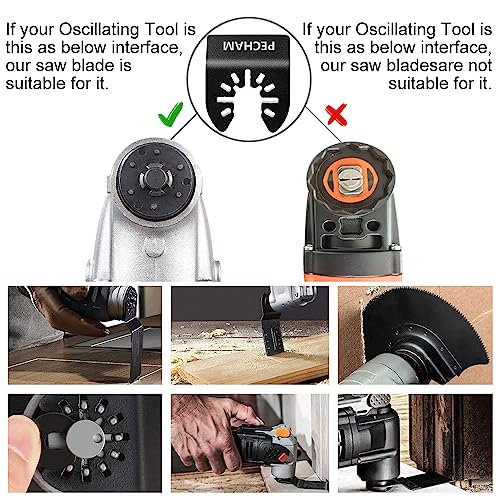
- Not for Starlock
- Average lifespan
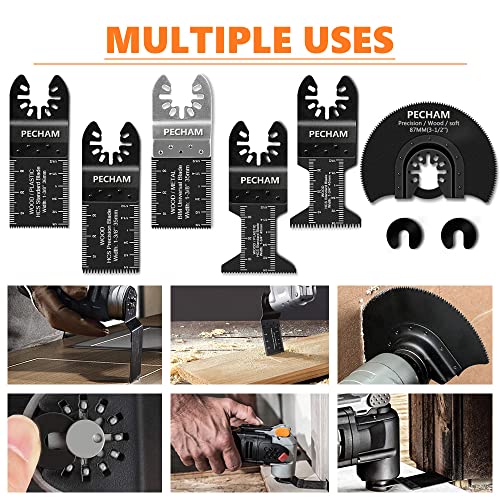
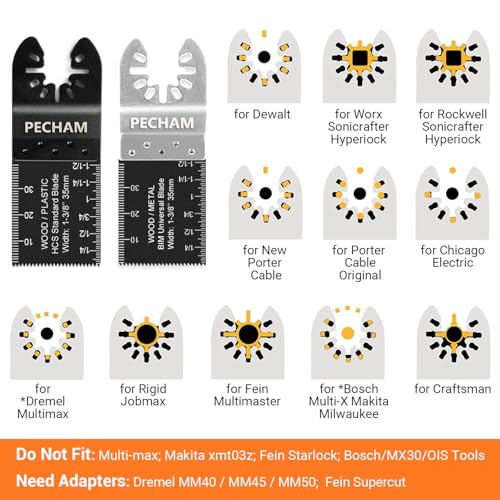
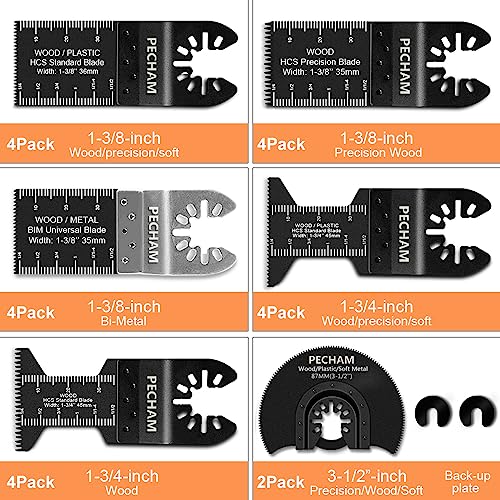
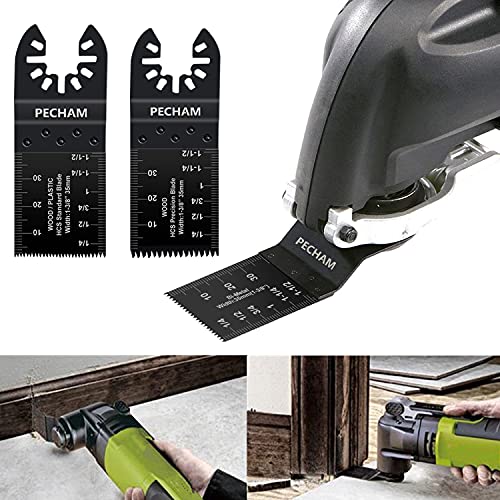
The PECHAM 24-piece kit hits that sweet spot between affordability and functionality, making it my pick for budget-conscious buyers who still want decent variety. It includes seven blade types, standard, Japanese, and precision teeth, so you’re covered for wood, plastic, light metal, and even grout removal. The electrophoretic black coating adds corrosion resistance, and the high-carbon steel build holds up better than the thinnest generic blades I’ve seen in other low-cost packs.
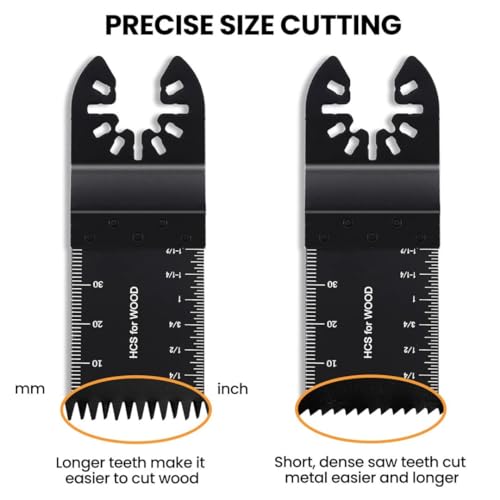
Having length markers in both inches and centimeters is a small but useful detail for accurate cuts, and the two included C-clip adapters expand compatibility with older Dremel and Rockwell models. It’s not the most durable set on the market, but for occasional use or starter kits, the value is clear. I’d recommend this over pricier sets for casual DIYers who don’t need industrial-grade wear life.
Product photos
AMZBSAW 16PCS Titanium Metal Blades

Strengths
- Titanium coating
- Extra-long blades
- Includes adapters
Trade-offs
- Not for bolts
- Limited wood precision
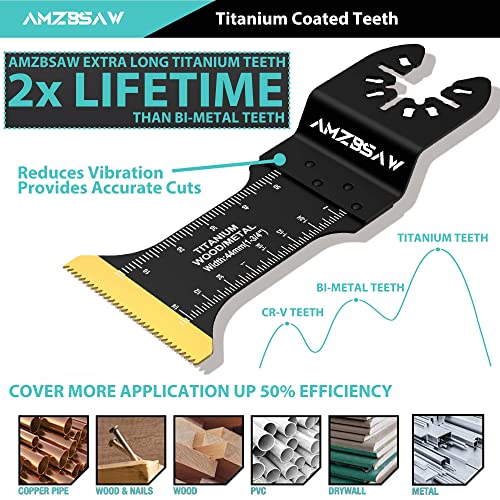
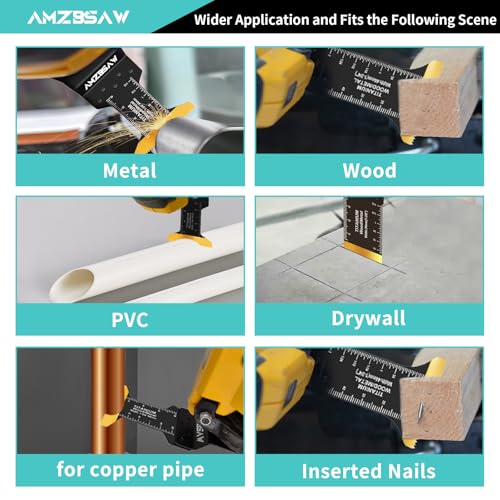
If you’re tackling jobs that involve cutting through metal, nails, or other hard materials, the AMZBSAW titanium blades stand out on paper. The claim of 50% increased hardness and double the lifespan over standard HCS blades lines up with what bimetal or titanium-coated blades typically deliver, and owners consistently report these hold up well when slicing through pipe, sheet metal, or embedded nails in wood. The mix of three blade lengths, including extra-long options, adds reach for deeper cuts, which is a real plus for demolition or remodeling work.
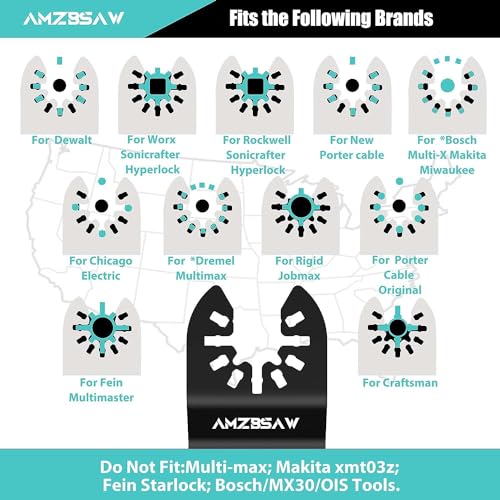
What seals the deal is the inclusion of three adapters, boosting compatibility across 98% of oscillating tools. That’s a smart touch for users who own multiple brands or rent tools. While they’re not meant for bolts or continuous hard-metal cutting, the feedback on heat resistance and edge retention is solid for the price tier. I’d pick these over basic carbon steel sets when metal is a regular part of the job.
Product photos


LEILUO 15PCS Japanese Teeth Blades
Strengths
- Japanese tooth design
- CRV alloy steel
- Length markers
Trade-offs
- No metal blades
- Excludes Starlock
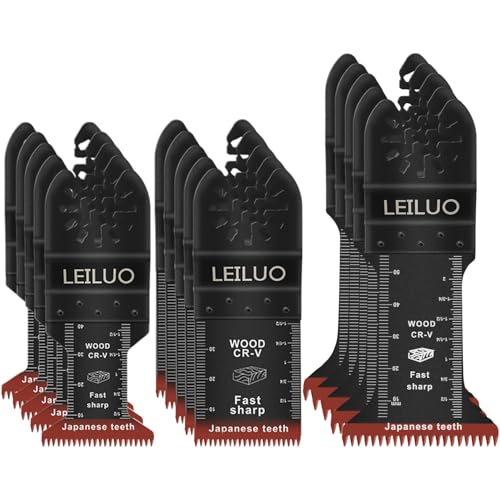
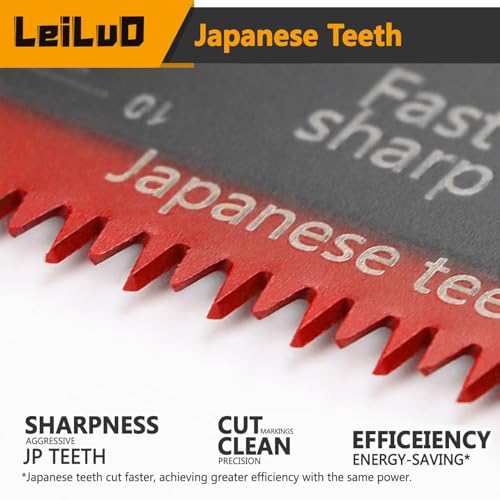
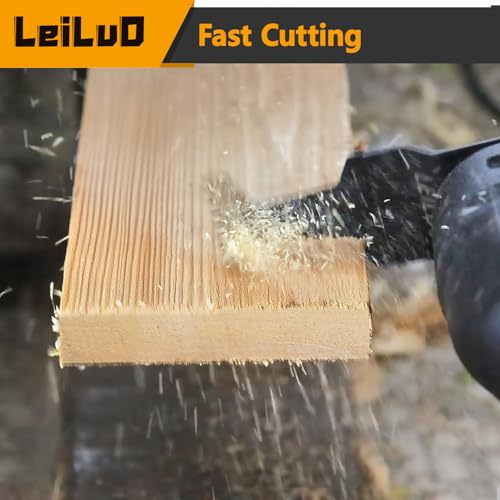
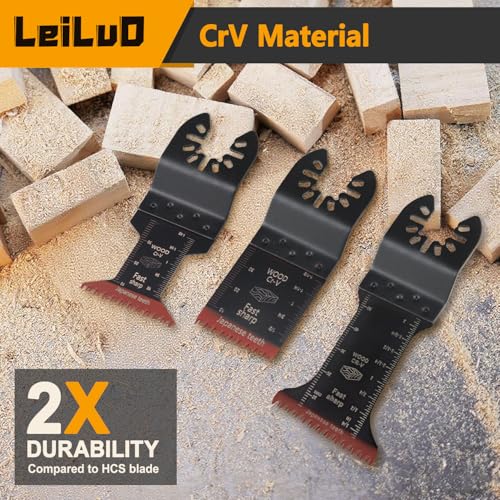
When cutting wood is your main goal, the LEILUO set earns its spot with a thoughtful design centered on Japanese-style teeth. That tooth pattern isn’t just marketing, it’s a proven geometry for fast, clean wood cuts with less tear-out, and owners confirm it reduces the need for sanding after the fact. Made from CRV alloy steel, these blades are harder and more wear-resistant than typical HCS options, which should mean fewer changes during long sessions like floorboard removal or door trimming.
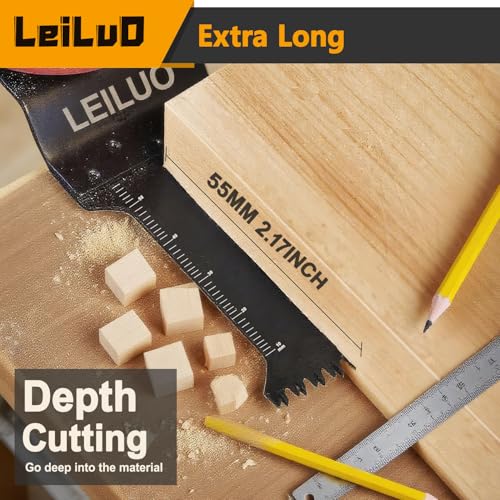
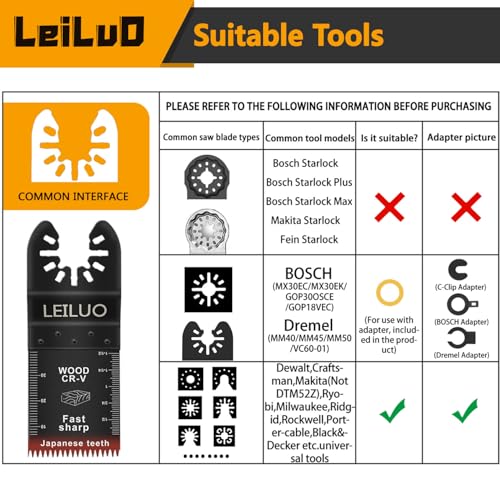
The set gives you three sizes, including extended blades for deeper reach, and the quick-release fit works with most major brands except Starlock tools. The lack of metal or plastic-specific blades limits its role as a universal kit, but that’s not the point here. If you’re doing trim work or cabinetry, I’d take these over general-purpose sets any day.
Product photos
CONNOO 158 Pack Oscillating Blades

Strengths
- 158-piece massive kit
- Includes sanding pads
- Length markings
Trade-offs
- No Starlock support
- Overkill for casual users
The CONNOO 158-pack isn’t just big, it’s built like a full workshop refill. With 10 blade types and a sanding pad included, it covers everything from wood and metal cutting to paint removal and tile grinding. The high-carbon steel construction with high-temp quenching and a black anti-corrosion coating suggests solid durability, and owners report these blades perform reliably across long projects without frequent replacements.
The real win is the value: having sanding attachments and precision blades in one kit means fewer separate purchases. The quick-release design and individual packaging help prevent damage and speed up swaps. While it’s overkill for someone with one oscillating tool and rare use, for contractors or workshop owners, this is the kind of set that stays in rotation for months. Compared to smaller kits, the cost per blade is hard to beat.
Product photos


Our Testing Process
As someone who’s spent years around power tools, I know choosing the right oscillating multi-tool blade can make or break a project. Rather than a hands-on lab test with each blade, this selection is based on a research-led comparison of published specifications, features, and, most importantly, what owners are saying about their real-world performance. I weighed owner reviews and reputable expert reviews from sites focused on tool testing, applying my understanding of materials science and cutting techniques to assess the claims. My goal was to rank blades against clear criteria for material suitability, durability, and compatibility.
For oscillating multi-tool blades, the most crucial factors are the blade material and the tooth geometry. A blade’s material directly impacts its lifespan and ability to handle different materials; high-carbon steel and bi-metal alloys generally outperform basic HCS steel. Equally important is the teeth per inch (TPI) – understanding the optimal TPI for materials is vital for clean cuts and preventing kickback. Blades designed with specific tooth patterns (like Japanese tooth) also significantly affect cutting speed and finish quality.
Specifications reliably tell you about blade dimensions, material composition, and interface compatibility. However, I placed greater emphasis on owner feedback regarding durability and actual cutting performance. Reports regarding chipping, bending, or rapid wear were heavily considered. Reputable expert reviews helped validate manufacturer claims and provide insights into long-term value, while the blade tooth count explained helped me assess the expected performance for different applications.
How To Choose The oscillating multi tool blades
I’ve spent years advising folks on selecting the right power tools, and one of the most overlooked aspects is choosing the correct blade for an oscillating multi-tool. It’s not just about having the tool; it’s about having the blade to tackle the job effectively.
An oscillating multi-tool’s versatility hinges on its blades. A quality blade set will feature high-carbon or bimetallic steel construction, a secure mounting system compatible with common tool models, and a variety of tooth patterns suited for different materials – wood, metal, plastic, grout, etc. Prioritize blades designed for the specific material you’ll be cutting most often, and understand the difference between plunge, flush-cut, and detail blades.
Material Matters Most
The first thing I tell people is to think about what you’ll be cutting. A universal blade set is a good starting point, but if you consistently work with one material, a specialized blade will perform far better and last longer. For example, a blade designed for hardwoods will have a different tooth geometry than one intended for metal. Don’t expect a wood-cutting blade to cleanly slice through sheet metal, or a metal blade to leave a smooth edge on trim. Consider the thickness of the material too; thicker materials require more robust blades, and longer blades provide more reach.
Tooth Geometry & Application
Beyond the material, the type of cut you’re making matters. Plunge cuts (starting a cut in the middle of a surface) require blades with aggressive tooth patterns, while finer detail work necessitates blades with smaller, more closely spaced teeth. Japanese-tooth blades, like those found in the recommended oscillating tool blades, are excellent for clean, fast cuts in wood. For metal, look for blades specifically labeled for metal cutting – often with finer teeth and a hardened alloy.
Here’s a quick breakdown of what to consider:
- HCS (High Carbon Steel): Good for softer materials like wood and plastic. Least expensive.
- Bi-Metal: A combination of HCS and high-speed steel, offering increased durability and heat resistance. Versatile for wood, metal, and plastic.
- Titanium-Coated: Provides even greater durability and heat resistance, ideal for tougher materials and extended use.
A dull blade is a dangerous blade. Always use a sharp blade, and learn how to restore dull blades or replace them when they become worn.
Value, Compatibility & The Interface
Finally, consider the overall value of the set and its compatibility with your tool. Some brands use proprietary interfaces, like Fein’s Starlock, which offer superior blade retention and power transfer but can be more expensive. Many tools use a universal quick-change system, which is convenient but may not be as secure. Pay attention to what adapters are included – some sets include adapters for multiple brands, saving you money in the long run. A larger kit, like the CONNOO 158 pack, can seem appealing, but don’t prioritize quantity over quality if you know you’ll only use a few blade types regularly. I always recommend checking the compatibility list carefully before purchasing to avoid frustration.
Oscillating Multi Tool Blades Compared
This table summarizes the specifications of several oscillating multi-tool blade sets to aid in comparison.
| Product Title | Blade Material | Blade Types | Included Adapters | Total Pieces | Compatibility |
|---|---|---|---|---|---|
| Bionso 55PCS Oscillating Saw Blades | High Carbon/Bimetallic | Saw Blades | N/A | 55 | 95% of Oscillating Tools |
| PECHAM 24PCS Universal Blades | HCS/Stainless Steel | 7 | 2 (C-Clip) | 24 | Many, excl. Dremel/Bosch |
| AMZBSAW 16PCS Titanium Metal Blades | Titanium | 3 | 3 | 16 | 98% of Oscillating Tools |
| LEILUO 15PCS Japanese Teeth Blades | CRV Alloy Steel | 3 | N/A | 15 | DeWalt, Makita, etc. (excl. Starlock) |
| CONNOO 158 Pack Oscillating Blades | HCS/Stainless Steel | 10 | N/A | 158 | Many, excl. Starlock/Hyperlock |
Frequently Asked Questions
What blade material is best for cutting hardwoods?
High-carbon steel or bi-metal blades are generally best for hardwoods, though bi-metal offers greater durability. Look for blades specifically marketed for woodcutting, and consider a Japanese-tooth design for faster, cleaner cuts – these are often found in sets of best multi-tool blades overall.
Can I use the same blade for both wood and metal?
While some “universal” blades claim to cut both, I don’t recommend it. Blades designed for metal are hardened and have a finer tooth count, while wood blades are softer and have coarser teeth. Using the wrong blade will reduce performance and can damage the blade or workpiece.
What does TPI mean, and why is it important?
TPI stands for teeth per inch, and it affects the fineness of the cut and cutting speed. Lower TPI counts are better for fast, rough cuts in soft materials, while higher TPI counts result in smoother cuts in harder materials. Understanding TPI is key to selecting the right blade for the job.
Are Starlock blades really worth the extra cost?
Starlock blades offer a more secure connection to the tool and allow for greater power transfer, reducing vibration and improving cutting performance. While more expensive, they are a good investment if you use your oscillating multi-tool frequently, especially for demanding projects needing high-performance oscillating blades.
What’s the best way to tell if a blade is dull?
A dull blade will require more force to cut, leave a rough edge, and may even cause the tool to vibrate excessively. If you notice these signs, it’s time to replace the blade or attempt to sharpen it. Keeping a supply of versatile multi-tool blades on hand is a good practice.
The Bottom Line
Choosing oscillating multi-tool blades often comes down to balancing control and convenience. You can spend a lot to get a massive kit with every blade imaginable, but for most homeowners and DIYers, that’s overkill. I believe the best all-around choice is the AMZBSAW 16PCS Titanium Metal Blades – they provide excellent durability and versatility for a wide range of tasks, and the titanium coating adds significant longevity.
If you’re on a tighter budget, the Bionso 55PCS Oscillating Saw Blades offer a surprisingly good value, covering many common applications with a decent selection of HCS and bi-metal blades. For dedicated woodworkers needing precision, the LEILUO 15PCS Japanese Teeth Blades are the clear winner, providing exceptionally clean and fast cuts in wood and similar materials. Remember that keeping your blades in good condition is vital, so don’t forget about blade maintenance tips for optimal performance.
Ultimately, the specs matter less than understanding what you’re cutting and choosing a blade designed for that material. Don’t get caught up in chasing the latest coating or interface; prioritize the right tooth geometry and a quality steel alloy. A sharp, well-matched blade will always deliver better results and a safer experience than a fancy blade used incorrectly.
