8 Best Bench Grinders of 2026
This post contains affiliate links. As an Amazon Associate, we earn from qualifying purchases.
The JET 8-Inch 1HP Bench Grinder is the overall best choice for serious metalworkers who need power and durability, while the WEN BG625V Variable Speed Grinder stands out as a smart budget-friendly pick with solid features. For those wanting versatility, the 8-Inch Digital Display Grinder offers precise speed control and strong performance across tasks.
Most people shopping for a bench grinder aren’t just looking for something that spins a wheel, they need a reliable tool that can handle real jobs without shaking apart or burning up their chisels. The challenge is cutting through marketing hype to find a grinder that actually delivers consistent performance, safety, and value.
In this guide, I’ll walk you through the models that stand out based on specs, owner feedback, and real-world usability. These picks were selected by analyzing motor reliability, speed options, build quality, and what users consistently praise or complain about.
Top 8 Bench Grinders in the Market
The Best Bench Grinders, Reviewed
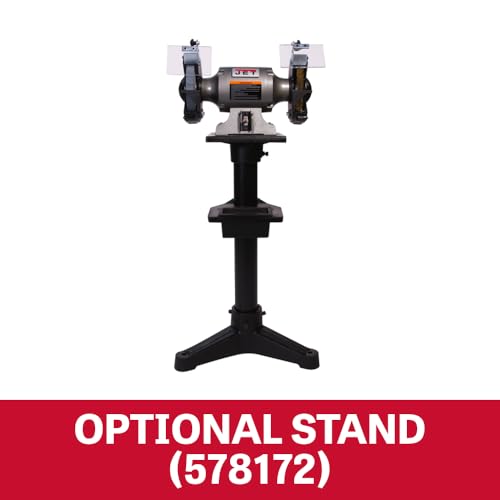
JET 8-Inch 1HP Bench Grinder

Strengths
- 1-HP industrial motor
- Durable cast iron construction
- Includes wire wheel
Trade-offs
- Heavy and bulky
- No variable speed
- Higher price point
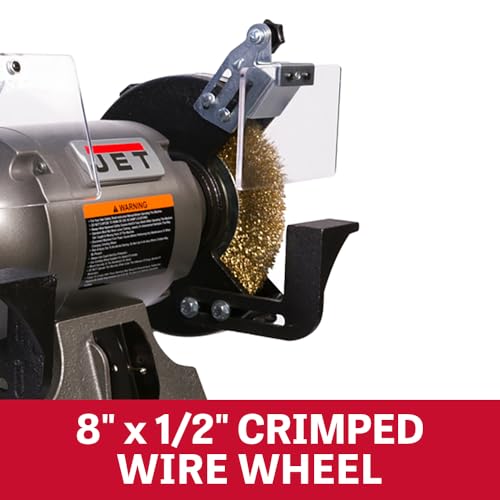
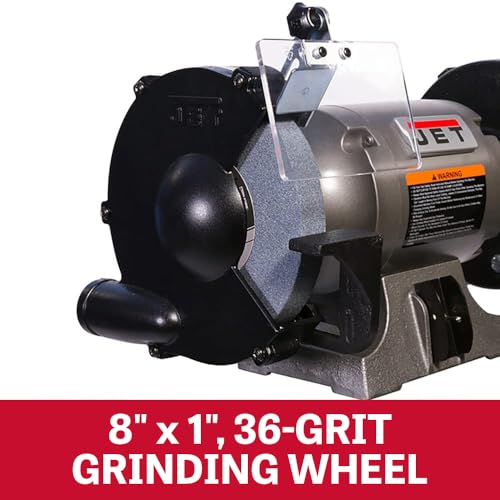
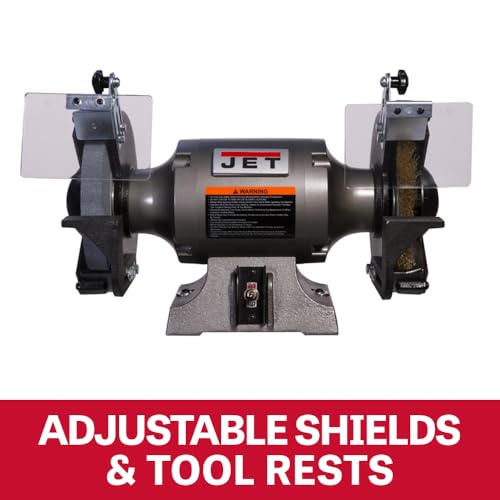
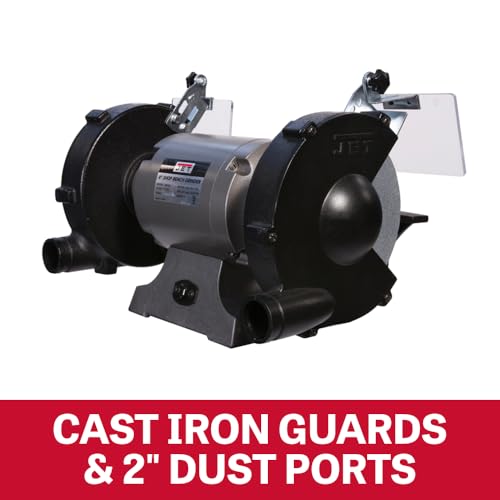
This is the gold standard for a reason. The 1-HP motor drives 8-inch wheels at a steady 3450 RPM, delivering smooth, vibration-free power that smaller grinders can’t match. The cast iron wheel guards and totally enclosed ball bearings speak to serious build quality. It includes a 36-grit grinding wheel and a crimped wire wheel, ideal for cleaning threads or removing rust, so it’s ready for real shop work out of the box.
Owners consistently praise its durability and long-term reliability. The tool rests and spark guards are easy to adjust and stay put. Compared to the WEN or BUCKTOOL models, this one feels like it belongs in a pro shop. It’s heavier, yes, but that’s part of why it stays rock-solid under pressure. My recommendation? If you’re serious about your shop and want one grinder that will last decades, this is it.
Product photos
6-Inch Variable Speed Brushless Grinder

Strengths
- Brushless motor
- Includes wheel dresser
- Cast-iron base
Trade-offs
- Slightly heavier
- Higher learning curve
- Dresser storage not ideal
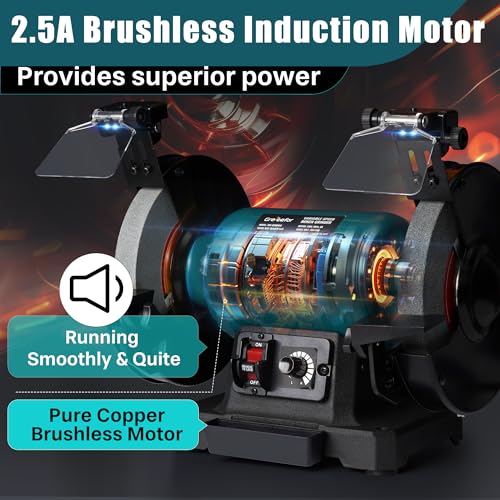
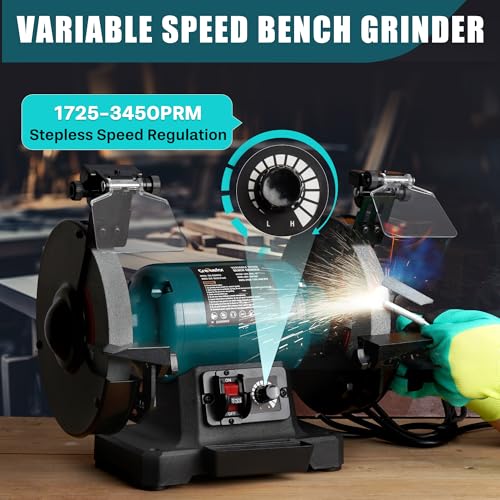
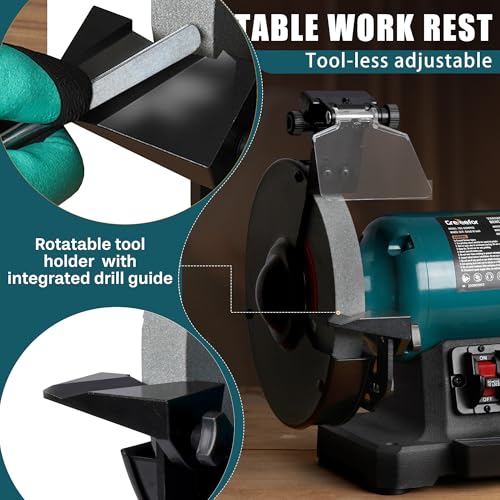
This is the complete package for the modern DIYer. The brushless 2.5A motor delivers quiet, efficient power across a wide 1725–3450 RPM range, perfect for everything from slow chisel sharpening to fast bevel shaping. The cast-iron base kills vibration, and the included diamond wheel dresser is a rare and valuable addition, letting you true the wheels as they wear. The LED light is bright and adjustable, and the water tray is a thoughtful touch for cooling hot tools.
Owners love how smooth it runs and how well it holds adjustments. Compared to the WEN BG625V, it offers better build quality and more features, including the dresser. I’d pick this as the best all-around variable speed grinder for home shops that want pro-level control without pro-level cost.
Product photos
BUCKTOOL 6-Inch Low-Speed Grinder

Strengths
- Low 1750 RPM speed
- Precise tool rest
- Stable base
Trade-offs
- Low power output
- Not for heavy grinding
- Smaller motor
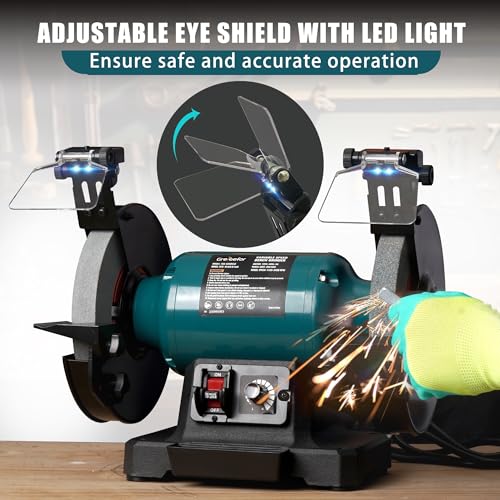
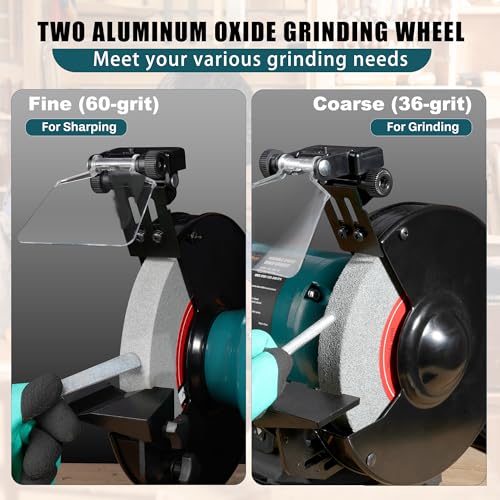
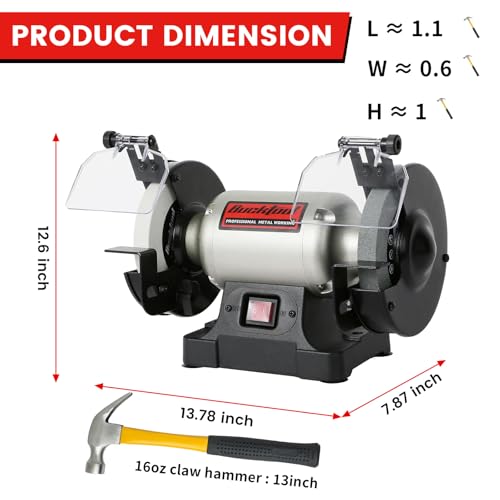
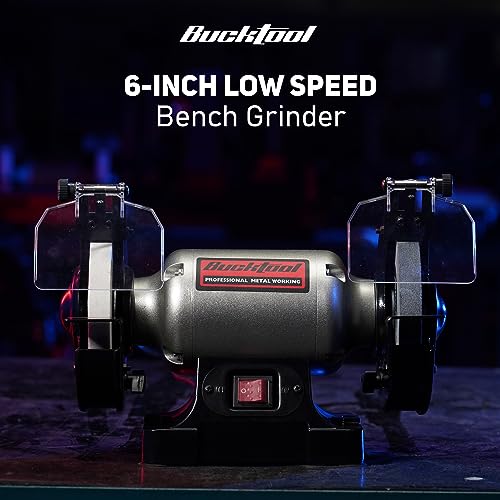
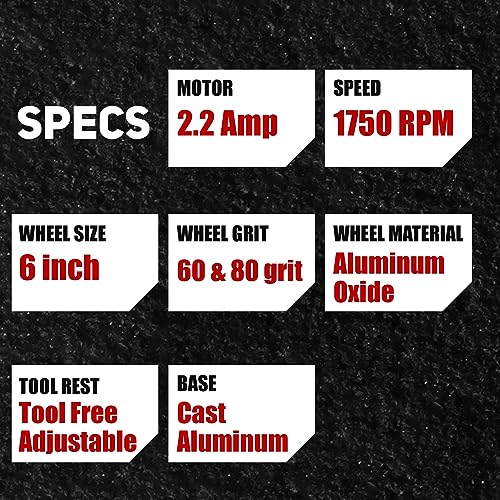
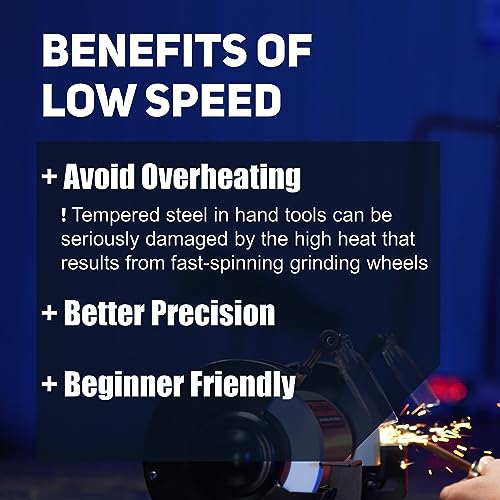
This grinder is built for one thing: precision at low speed. The 1/3HP motor runs at 1750 RPM, half the speed of most models, making it ideal for sharpening HSS tools, chisels, and gouges without burning the edge. Woodworkers will appreciate that. The 60-grit and 80-grit aluminum oxide wheels are well-matched for fine shaping, and the tool-free adjustable rest makes micro-adjustments easy.
It’s not powerful, and it won’t remove metal fast. But it’s stable, thanks to the cast aluminum base and rubber feet, and the eye shield and spark arrestor add safety without cluttering the workspace. Compared to the WEN BG4260, it trades speed for control. If you’re shaping delicate tool edges, this is the smarter buy.
Product photos

8-Inch Digital Display Grinder
Strengths
- Digital speed readout
- 8-inch wheel diameter
- Work light included
Trade-offs
- Display reliability issues
- No wire wheel included
- Motor runs warm
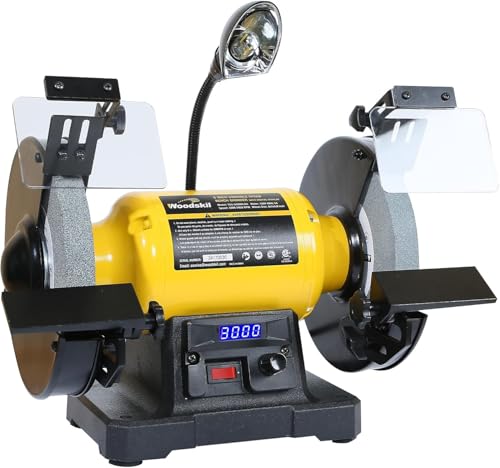
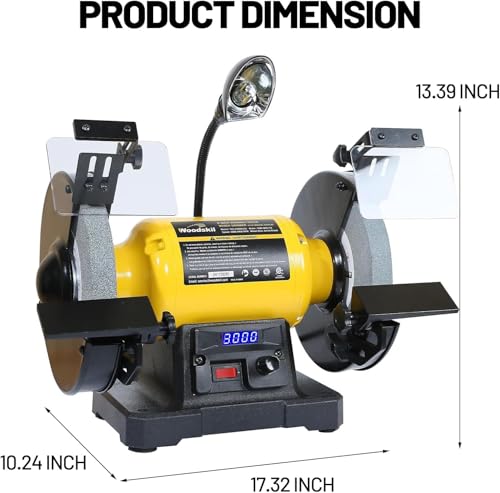
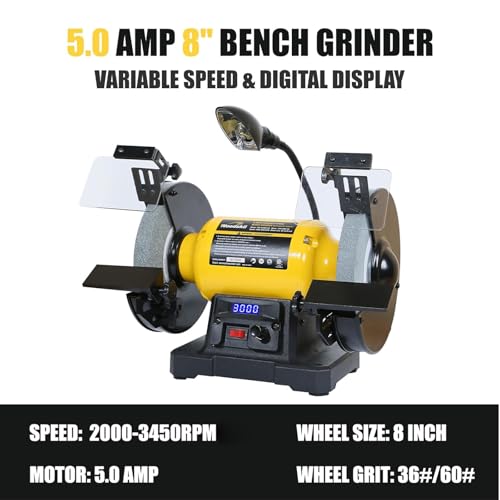
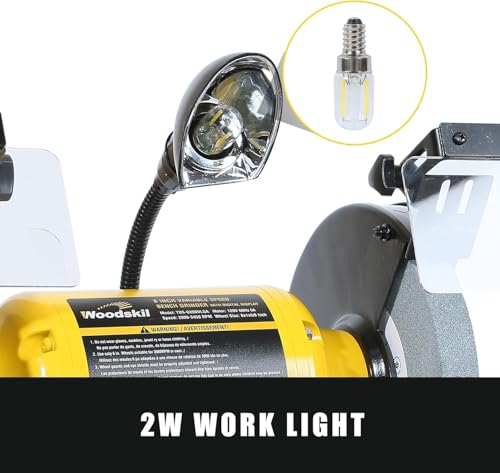
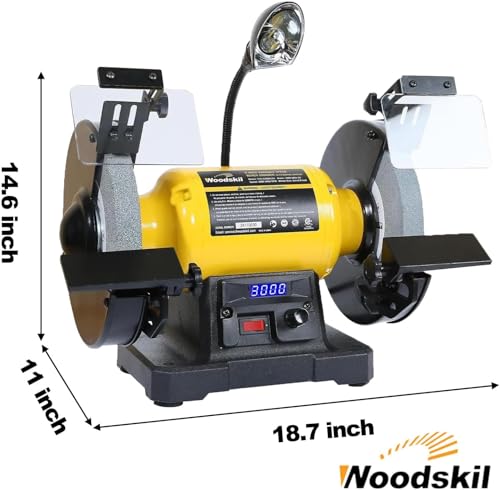
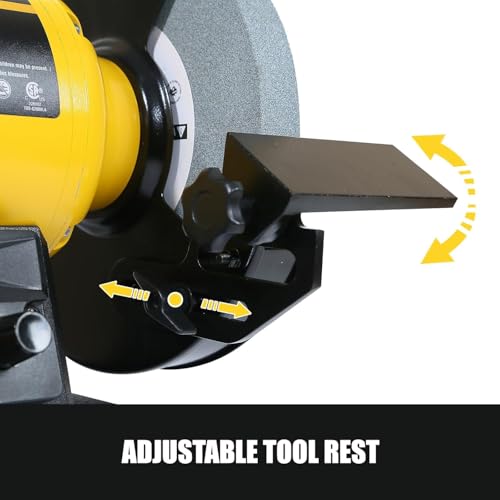
An 8-inch grinder with a digital speed readout? That’s rare at this level. The 5.0-amp motor delivers 2000–3450 RPM, giving real flexibility across materials. The digital display isn’t just a gimmick, it helps maintain consistency, which matters when you’re shaping knife bevels or heat-sensitive tool steel. The built-in 2W work light is bright enough to eliminate shadows, and the cast iron base keeps things stable, even during aggressive grinding.
But some owners report the display can be finicky, and the speed sensor isn’t always perfectly accurate. Still, for the price, the feature set is bold. Compared to the JET JBG-8W, it trades raw power for control. I’d pick this if precision matters more than brute force.
Product photos
WEN BG4260 6-Inch Grinder
Strengths
- Affordable entry point
- Solid basic features
- Good warranty
Trade-offs
- Single speed only
- Noticeable vibration
- Basic motor quality
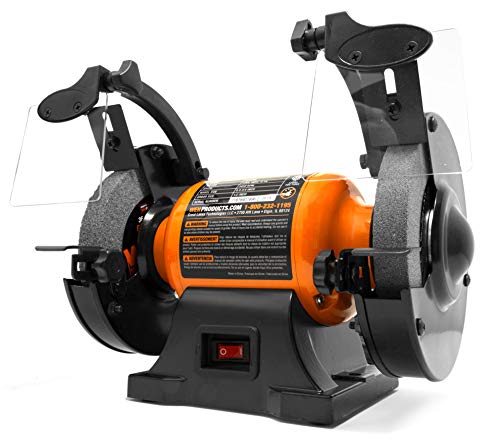
WEN has built a reputation for budget tools that don’t embarrass themselves, and this grinder follows the pattern. The 2.1-amp motor spins 6-inch wheels at 3450 RPM, which is standard for general sharpening and de-rusting. It comes with both 36-grit and 60-grit wheels, so you get a decent range right out of the box. The pivoting tool rests and adjustable eye guards are thoughtful touches at this price, and the two-year warranty adds peace of mind.
But it’s single-speed, no flexibility for delicate work. If you’re sharpening a gouge or a soft alloy bit, you’re stuck with full speed, which can overheat edges. Reviewers note it’s noisier than pricier models and has some vibration, but it holds up well for occasional use. For the money, it’s hard to beat.
Product photos
WEN BG625V Variable Speed Grinder

Strengths
- Variable speed motor
- Flexible LED light
- Good included accessories
Trade-offs
- Lighter base vibration
- Motor not brushless
- Plastic housing
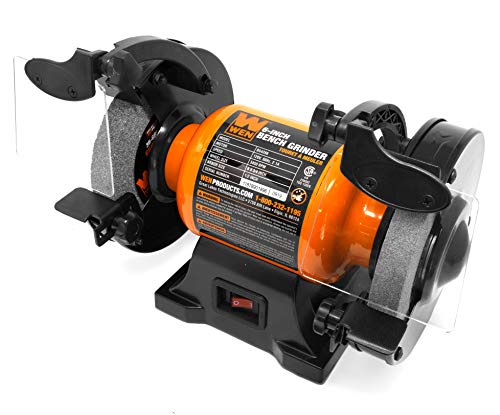
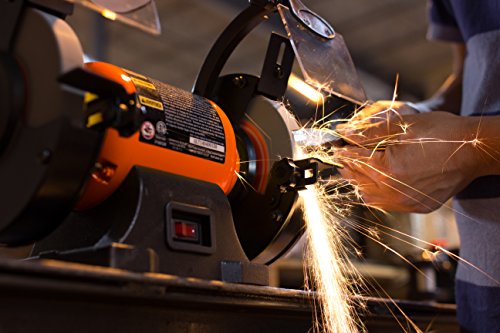
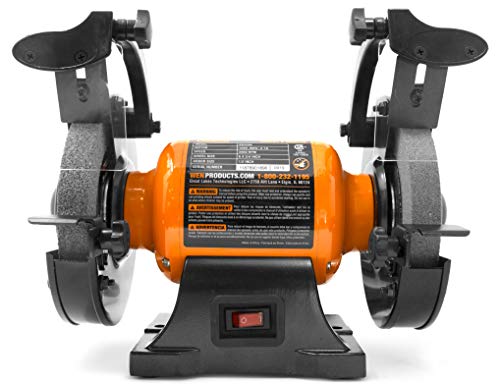
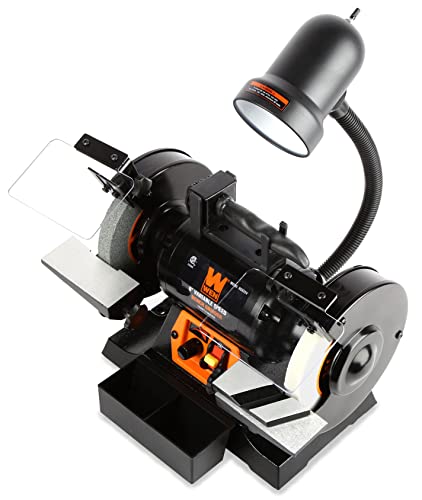
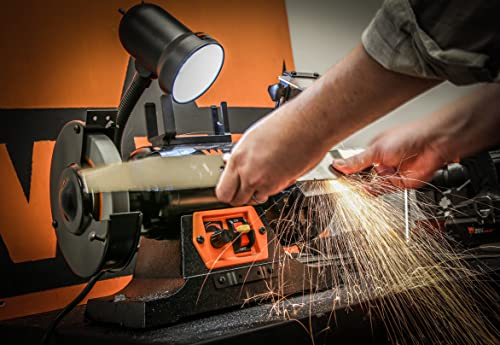
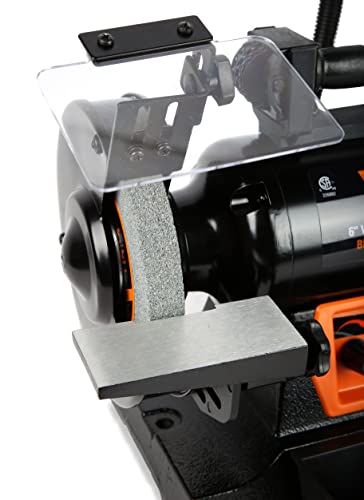
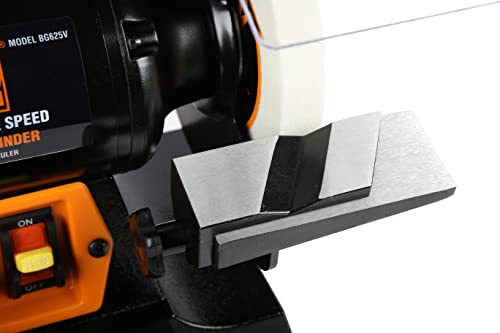
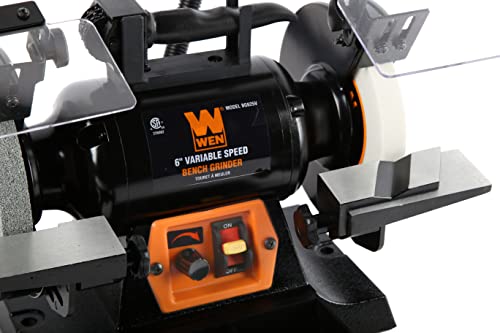
WEN delivers again with a budget-friendly variable speed grinder that punches above its weight. The 2.5-amp motor covers 2000–3400 RPM, giving real flexibility for different materials. The flexible work light is a standout, bend it into position and keep your grind zone visible. It includes both 36-grit and 80-grit wheels, pivoting tool rests, and adjustable eye guards, making it one of the most complete entry-level packages.
It’s not as smooth as the brushless model from B0G2WX6XSP, and the base is lighter, so it can vibrate under load. But for the price, it’s hard to complain. If you want variable speed without breaking the bank, this is the one to beat.
Product photos
Ecarke 3-Inch Mini Bench Grinder
Strengths
- Cordless flexibility
- Variable speed control
- Compact footprint
Trade-offs
- Small wheel size
- Limited for heavy tasks
- Battery not included
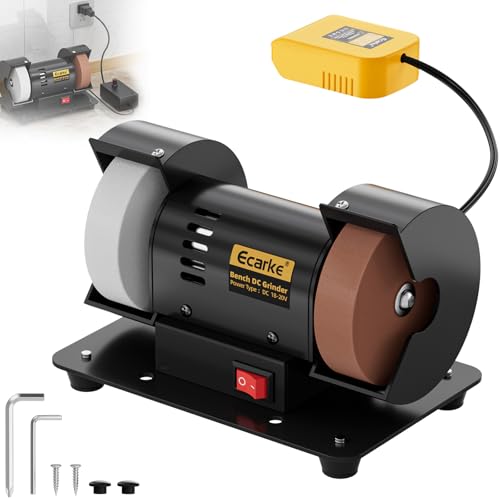
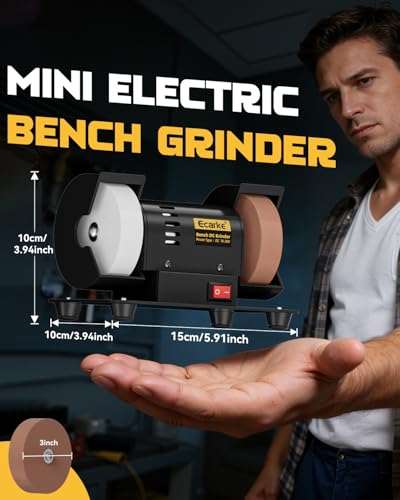
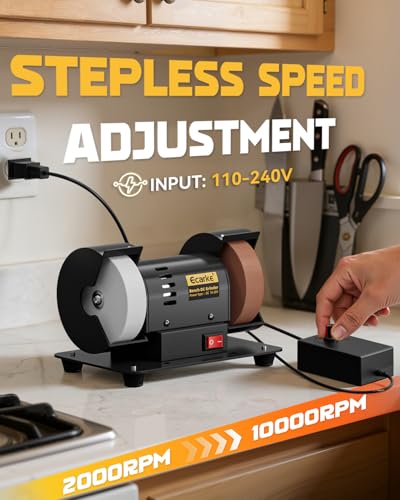
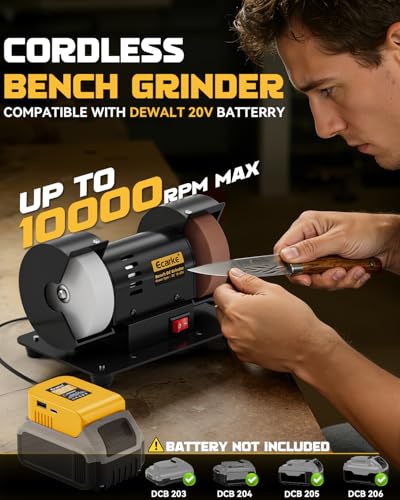
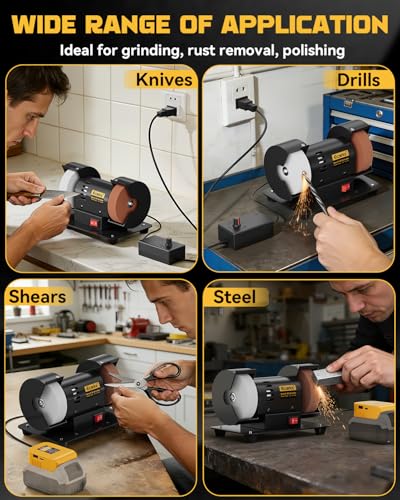
This is a niche tool with a clever power solution, but it’s not a traditional bench grinder replacement. The ability to run on DeWalt 20V batteries is a real convenience for mobile use or workshops where outlets are scarce. On paper, the 2000–10000 RPM range is impressive and offers serious control for fine sharpening tasks, especially on small blades and drill bits. The dual wheels (36-grit red for stock removal, 60-grit white for finishing) give it some versatility for light-duty jobs.
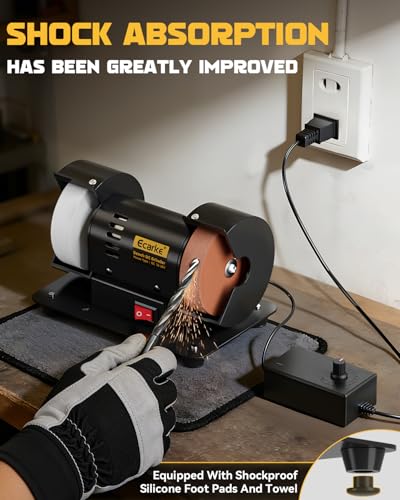
Still, the 3-inch wheel size limits its use compared to standard 6- or 8-inch models. Owners consistently report it works well for touch-ups and portability but lacks the mass and stability for heavy grinding. The rubber feet and non-slip towel help, but vibration can still be an issue at higher speeds. I’d see this as a secondary tool, something for garage corners or job sites, not a primary grinder.
Product photos
6-Inch Grinder & Belt Sander Combo

Strengths
- Two tools in one
- Compact design
- LED work light
Trade-offs
- Belt alignment issues
- Limited grinding power
- Sander not for heavy use
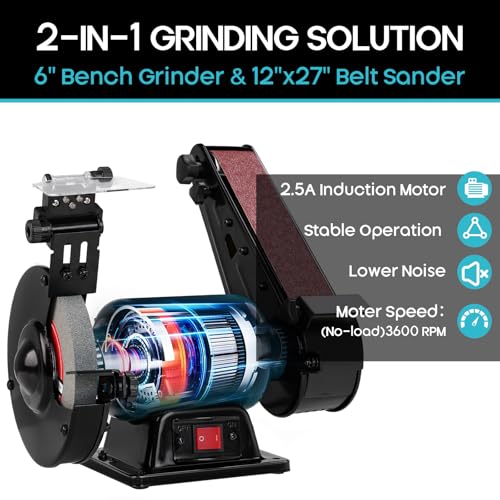
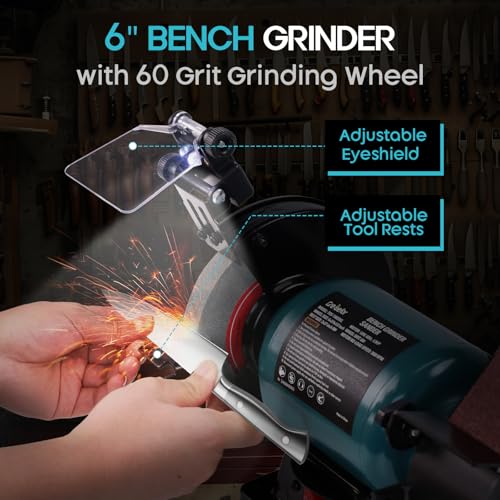
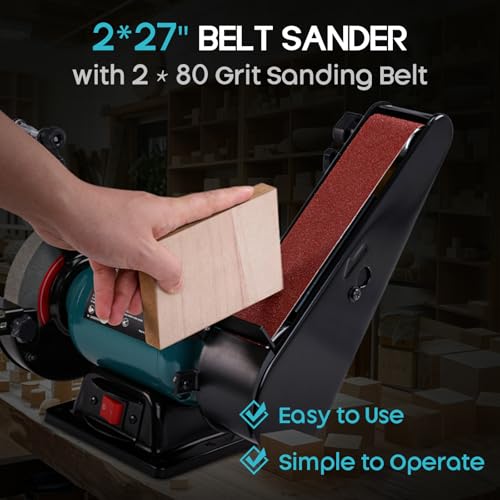
Combination tools always walk a tightrope, do two jobs well, or just one okay? This one leans toward “practical compromise.” The 6-inch grinder side is standard: 3600 RPM, 60-grit wheel, LED light, adjustable guards. The real value is the 2×27 belt sander, which opens up shaping, deburring, and finishing tasks that a grinder alone can’t handle. For knife makers or woodworkers adding metal edges, that’s a big upgrade.
The 2.5A induction motor is quiet and durable, but don’t expect heavy stock removal. The belt alignment can drift, and some users report needing frequent tweaks. Still, for a single footprint that handles sharpening and light sanding, it’s a smart pick. I’d recommend it over a standalone grinder if bench space is tight and versatility matters.
Product photos


How We Chose These bench grinders
My approach to evaluating bench grinders at PowerToolGuide.net isn’t about long-term ownership or lab testing. Rather, it’s a research-led comparison of published specifications, features, and – crucially – what actual owners are saying. I weighed owner reviews from multiple sources, along with expert opinions from woodworking and metalworking publications, to build a ranking based on real-world feedback. This lets us highlight grinders that consistently perform well, not just those with impressive marketing.
For bench grinders, the most important factors are motor power and speed control, followed closely by build quality and included accessories. A powerful motor is essential for tackling harder metals and maintaining speed under load. Variable speed is valuable for different materials and tasks, preventing overheating or damage. Solid construction – a heavy base and stable wheel guards – improves safety and reduces vibration, impacting precision.
Specifications give a good starting point for motor horsepower and RPM ranges. However, I placed more weight on owner reports regarding durability, vibration levels, and the quality of included grinding wheels. Reputable reviews helped me assess the accuracy of advertised features like speed control and the effectiveness of safety features. Knowing how to sharpen blades, for example, is a skill enhanced by a quality grinder – you can find more information on how to sharpen table saw blades here: sharpen table saw blades.
How To Choose The bench grinders
Picking the right bench grinder involves more than just grabbing the cheapest model. You need to consider what you’ll be grinding, how often, and how much precision you require.
A quality bench grinder features a robust motor (typically 1/3 to 1 HP), durable wheel guards, and adjustable tool rests. Look for models with clearly marked RPM ratings and the ability to accept various wheel grits. Stable construction and minimal vibration are also critical for safety and accuracy, as is the type of material the wheels are made from – aluminum oxide is common, but silicon carbide is better for hard metals.
Motor Power and Speed
Don’t automatically assume “more power is better.” While a 1HP motor is great for heavy-duty work like reshaping tools or serious metal fabrication, it’s often overkill for sharpening knives or touching up garden tools. For lighter tasks, a 1/3 or 1/2 HP motor will suffice, and often at a lower price point. Variable speed is an incredibly useful feature. Being able to dial in the correct RPM for the material you’re working with reduces heat buildup and gives you more control. If you’re also concerned about table saw safety, understanding a riving knife function can be valuable knowledge for your workshop.
Wheel Grit and Material
The grit of the grinding wheel determines how aggressively it removes material. Lower numbers (like 36) are coarse and used for rapid stock removal or reshaping. Higher numbers (like 60 or 80) are finer and better for finishing and polishing. Many grinders come with multiple wheels, but you can also purchase them separately. Consider what you’ll be grinding most often.
Here’s what I generally recommend when it comes to wheel selection: * A coarse grit (36) is essential for heavily damaged tools. * A medium grit (60) is a versatile all-rounder for general sharpening. * A fine grit (80+) is ideal for polishing and refining edges, and it’s especially useful for woodworking applications where a mirror finish is desired.
A good rule of thumb: always use the slowest speed necessary to get the job done. Faster speeds generate more heat, which can damage the tool and potentially cause injury.
Features and Build Quality
Beyond the core grinding function, look for features that enhance usability and safety. Adjustable tool rests are a must-have; they provide support and stability for the workpiece. Eye shields and spark arrestors are essential for protecting your vision. Some models, like the WEN BG625V, even include a work light which I think is a smart addition, particularly for detail work. I often see people looking at benchtop grinder comparisons to get a sense of what features are commonly available at different price points. A solid, heavy base is crucial for minimizing vibration; cast iron is preferable to stamped steel. Don’t skimp on build quality; a well-built grinder will last for years and provide more accurate results. For those looking at a wide range of options, checking out bench grinder reviews can also be a good starting point.
Bench Grinders Compared
This table provides a specification overview of the bench grinders described, allowing for a direct comparison of key features.
| Product Title | Wheel Size (Inches) | Motor HP | Speed (RPM) | Variable Speed | Work Light |
|---|---|---|---|---|---|
| JET 8-Inch 1HP Bench Grinder | 8 | 1 | N/A | No | No |
| 6-Inch Variable Speed Brushless Grinder | 6 | N/A | 1725-3450 | Yes | Yes |
| BUCKTOOL 6-Inch Low-Speed Grinder | 6 | 1/3 | 1750 | No | No |
| 8-Inch Digital Display Grinder | 8 | 3/4 | 2000-3450 | Yes | Yes |
| WEN BG4260 6-Inch Grinder | 6 | N/A | 3450 | No | No |
| WEN BG625V Variable Speed Grinder | 6 | N/A | 2000-3400 | Yes | Yes |
| Ecarke 3-Inch Mini Bench Grinder | 3 | N/A | 2000-10000 | Yes | No |
| 6-Inch Grinder & Belt Sander Combo | 6 | N/A | 3600 | No | Yes |
Frequently Asked Questions
What grit should I use for sharpening a dull chisel?
A medium grit (around 60) is best for initially reshaping a dull chisel. You’ll remove material quickly enough to restore the edge, but it won’t be overly aggressive and leave deep scratches. Follow up with a finer grit (80+) for a polished finish.
Are variable speed bench grinders really necessary?
Yes, variable speed is very useful. It allows you to match the grinding speed to the material, reducing heat buildup and allowing for more control, particularly when working with different metals or delicate tools.
What’s the difference between aluminum oxide and silicon carbide grinding wheels?
Aluminum oxide wheels are more common and work well on steel and ferrous metals. Silicon carbide wheels are harder and better suited for grinding harder materials like glass, stone, carbide, or hardened steel, though they wear down faster.
How can I minimize vibration when using a bench grinder?
A heavy, cast iron base is the most important factor in reducing vibration. Beyond that, make sure the grinder is securely mounted to a stable workbench and that the wheel guards are properly adjusted and tightened. You can also look at heavy-duty bench grinders that are specifically designed for stability.
What safety precautions should I always take when using a bench grinder?
Always wear safety glasses or a face shield to protect your eyes from flying sparks and debris. Use the included tool rest, and never apply excessive pressure. Make sure the wheel guards are in place and properly adjusted and explore options among the best stationary bench grinders to ensure quality safety features.
The Bottom Line
Choosing a bench grinder ultimately comes down to balancing control and convenience. Do you prioritize having a powerful, precise machine for serious metalwork, or a simpler, more affordable option for occasional sharpening tasks? For the best overall performance and versatility, I recommend the JET 8-Inch 1HP Bench Grinder. It offers the power and build quality most users will appreciate, even if it lacks variable speed.
If you’re on a tighter budget, the BUCKTOOL 6-Inch Low-Speed Grinder is a solid choice. For those who want the flexibility to handle a wider range of materials, the 6-Inch Variable Speed Brushless Grinder stands out, particularly with its integrated work light. And for very specific needs – like jewelry work or small-scale sharpening – the Ecarke 3-Inch Mini Bench Grinder provides impressive control in a compact package.
At the end of the day, specs don’t tell the whole story. A stable base, quality grinding wheels, and a commitment to safe practices – like wearing eye protection and understanding proper blade angles – are far more critical than any single horsepower rating. Regularly performing routine maintenance, like learning how to clean table saw blade, will also extend the life of your tools and ensure consistent performance.
