
7 Best Circular Saws of 2026
This post contains affiliate links. As an Amazon Associate, we earn from qualifying purchases.
The DEWALT DWE575SB stands out as the best overall circular saw for most users, delivering reliable power and durability. For those on a budget, the GALAX PRO 7-1/4″ offers solid performance with helpful features like a laser guide. If you’re going cordless, the DEWALT DCS590B is a top pick thanks to its brushless motor and strong runtime.
Choosing the right circular saw shouldn’t mean sifting through hype or confusing specs. Most people just want a tool that starts every time, cuts straight, and won’t let them down mid-project. After comparing the field and analyzing owner feedback, I focused on models that consistently deliver in power, build quality, and real-world usability.
This guide breaks down what actually matters, motor type, cutting capacity, and key features, so you can pick a saw that fits your work, whether you’re building decks or tackling weekend repairs.
Top 7 Circular Saws in the Market
The Best Circular Saws, Reviewed
DEWALT DWE575SB 7-1/4″ Circular Saw

Strengths
- Lightweight at 8.8 lbs
- Electric brake
- Dust blower
- Tough cord protection
- 57 degree bevel
Trade-offs
- Plastic guard vs full metal
- No LED light
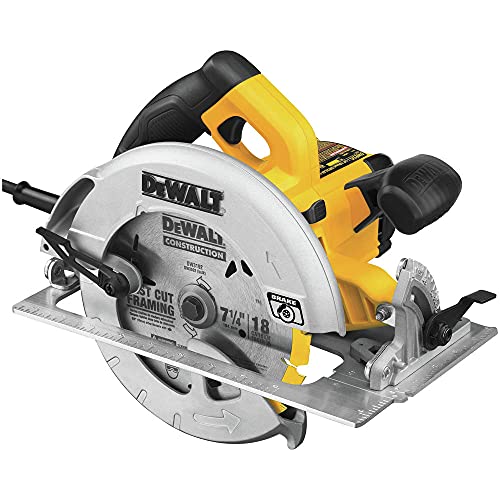
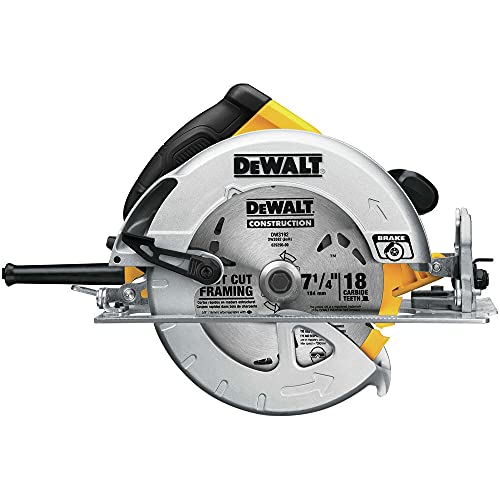
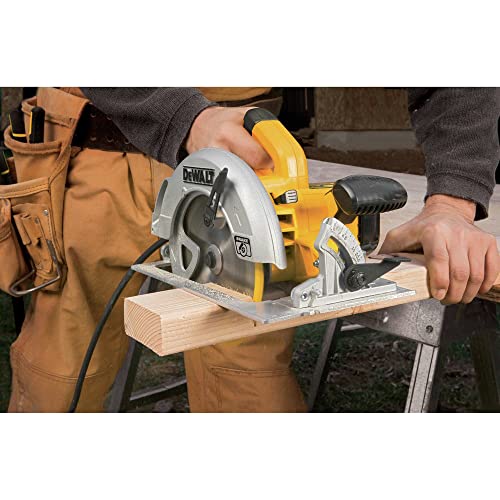
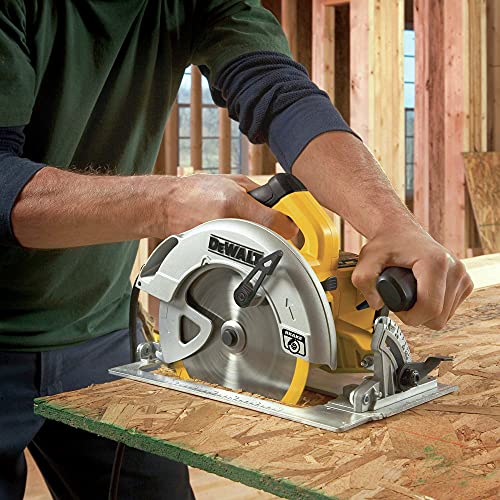
The DEWALT DWE575SB is the model I’d recommend to most homeowners and weekend warriors who want a reliable, no-nonsense corded saw. At 8.8 lbs, it’s among the lightest 15-amp models available, and that makes a real difference when you’re cutting overhead or working on a ladder. The 15-amp motor hits 5,000 RPM, and reviewers note it powers through pressure-treated lumber and plywood without bogging down.
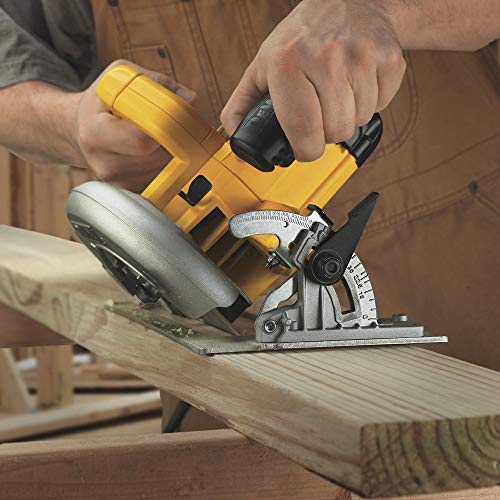
Its standout features are practical: the dust blower keeps your line clear, the electric brake improves safety, and the patented cord guard is a small detail that prevents frustrating disconnects on the job. The aluminum base is smooth and accurate, and the 57-degree bevel with detents at common angles makes it easy to switch between cuts. Compared to the Makita 5007F, it’s lighter and slightly more user-friendly, though not quite as rugged. But for most users, this is the smarter buy.
Product photos
Metabo HPT C7SB3 7-1/4″ Circular Saw

Strengths
- Includes blade and bag
- Single-handed bevel
- Dust blower
- 6,000 RPM motor
- Cord holder
Trade-offs
- Base scale readability issues
- Slightly heavier than rivals
- Plastic components feel cheap
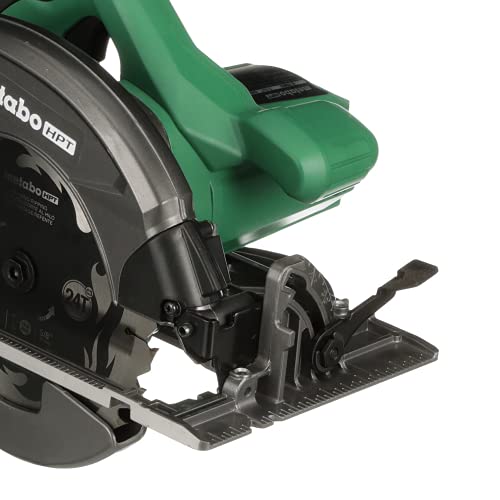
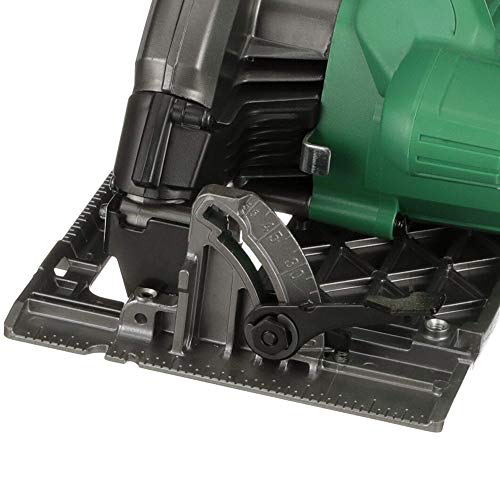
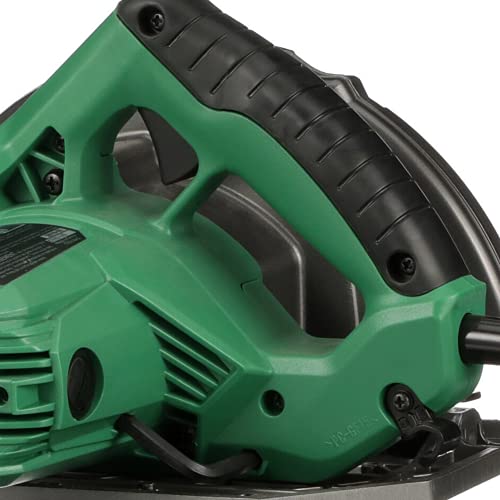
The Metabo HPT C7SB3 is a budget-friendly saw that punches above its weight. It hits 6,000 RPM with a 15-amp motor, and reviewers note it handles OSB, plywood, and 2x4s without hesitation. The single-handed bevel adjustment is smooth and intuitive, a small thing that makes a big difference when you’re switching angles often.
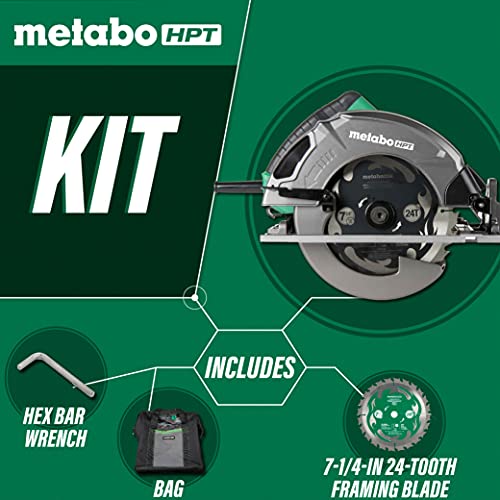
It comes with a 24-tooth framing blade, a carrying bag, and a hex wrench, so it’s ready to go out of the box. The dust blower is effective, and the cord holder keeps things tidy. At 9.5 lbs, it’s not the lightest, but it’s manageable. Compared to the DEWALT DWE575SB, it trades a bit of refinement for value, but for someone setting up a first workshop or doing occasional home projects, this is the smarter buy.
Product photos

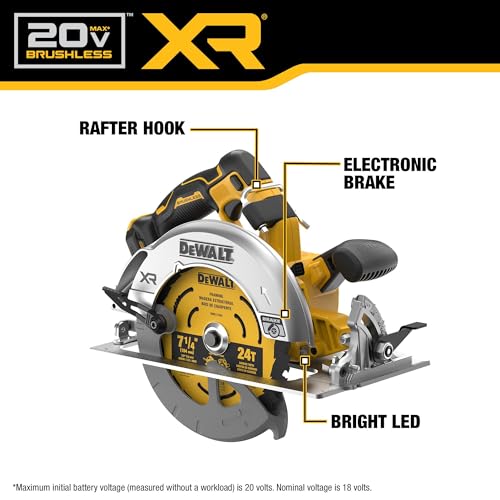
DEWALT DCS590B 20V MAX Brushless Saw

Strengths
- High cut count per charge
- Brushless efficiency
- Deep 2-9/16″ cut
- 5,500 RPM speed
Trade-offs
- No LED work light
- Bare tool only
- Heavier than corded options
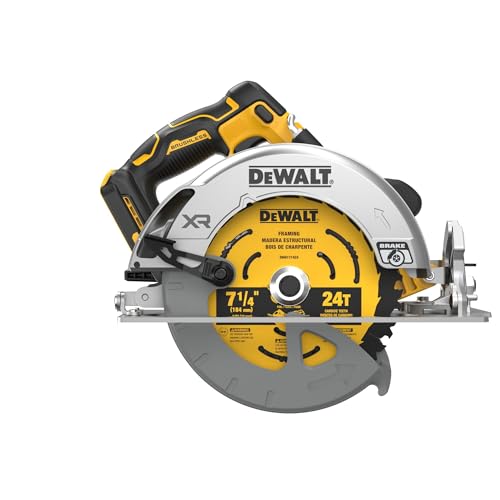
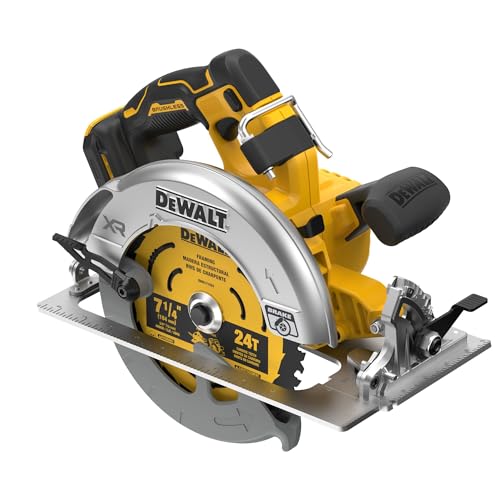
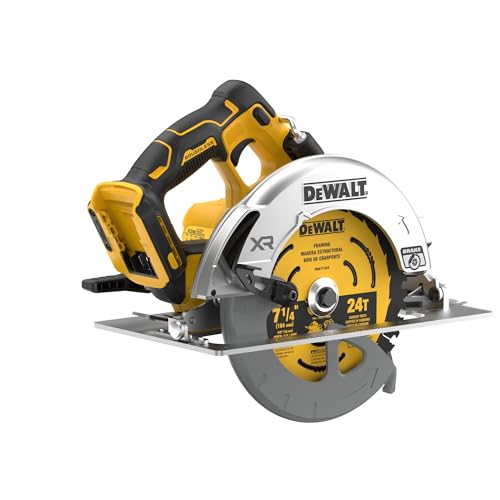
This DEWALT DCS590B is their most powerful 20V circular saw, and on paper, it’s built to compete with corded models. The brushless motor delivers up to 5,500 RPM and can make up to 368 cuts per charge under load, a number that aligns with owner feedback in real-world use. With a 2-9/16 inch depth of cut at 90 degrees, it matches or exceeds most corded saws, making it a strong pick for framing or deck work where mobility matters.
It lacks a built-in light, which feels like a miss at this price, but the electric brake and compact design help with control and safety. Compared to the CRAFTSMAN CMCS551B, this has more power and better integration with a mature battery ecosystem. If you’re running a cordless tool fleet and need a saw that won’t hold you back, this is the one I’d pick, assuming you’re okay carrying a heavier tool.
Product photos

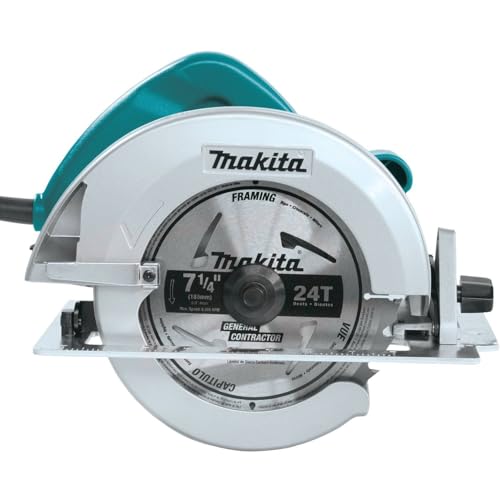
Makita 5007F 7-1/4″ Circular Saw

Strengths
- Dual LED lights
- All-ball bearing build
- 5,800 RPM motor
- Excellent balance
- AC/DC switch
Trade-offs
- No dust blower
- Slightly shallower cut
- No bevel beyond 50 degrees
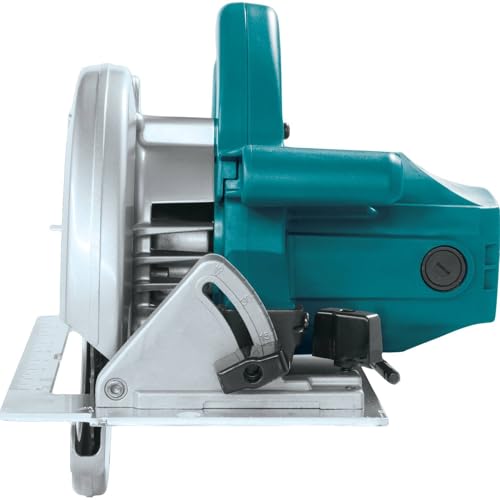
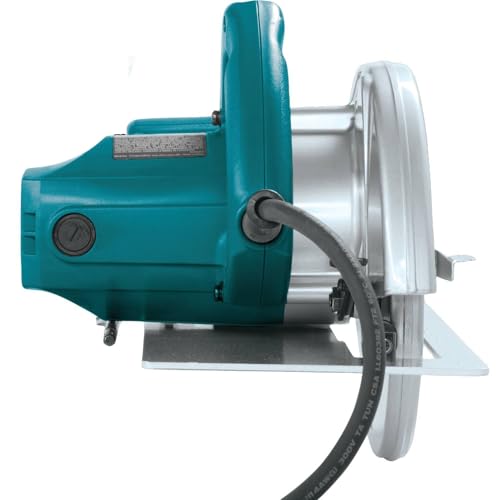
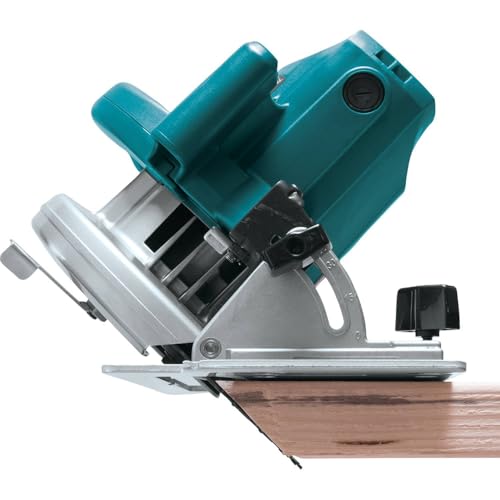
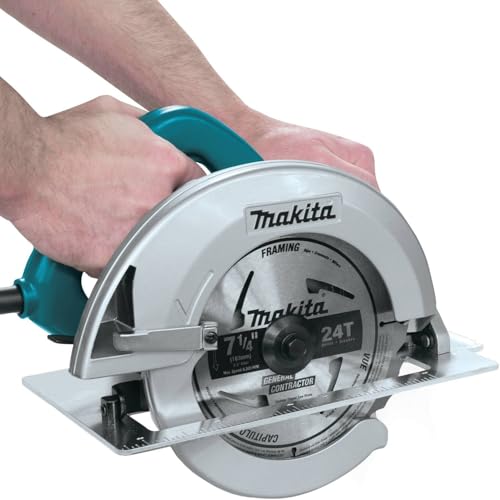
The Makita 5007F is a workhorse. With a 15-amp motor pushing 5,800 RPM and all-ball bearing construction, it’s built for contractors who run saws all day. The dual LED lights are a major win, they actually stay lit during cuts and shine directly on the blade path, which fewer saws do well. The balance is excellent, and framers consistently report it feels stable during long cuts.
It doesn’t have a dust blower or laser, but it doesn’t need them, this is a no-frills, high-durability tool. The 2-3/8 inch cut depth is slightly less than the DEWALT DWE575SB, but the motor feels more robust under load. If you’re framing houses or doing heavy remodeling, this is the kind of saw that lasts for years. For pros who value reliability over bells and whistles, it’s hard to beat.
Product photos
Seesii Mini 4-1/2″ Corded Circular Saw
Strengths
- Multi-material cutting
- Laser guide
- Lightweight and compact
- Includes 3 blades
- Dual safety switches
Trade-offs
- Limited cut depth
- Not for framing or thick lumber
- Blade changes can be fiddly
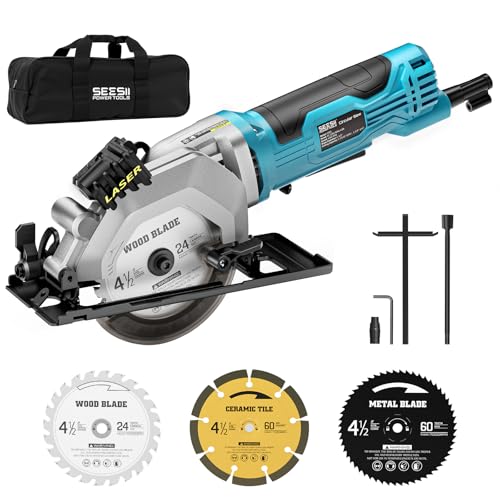
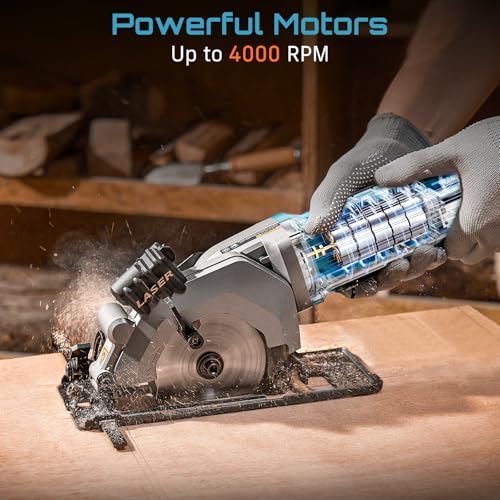
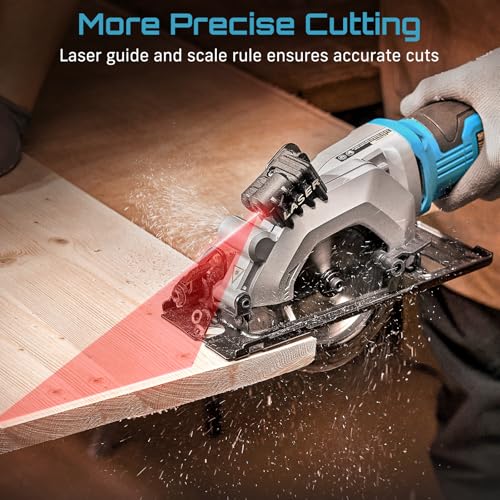
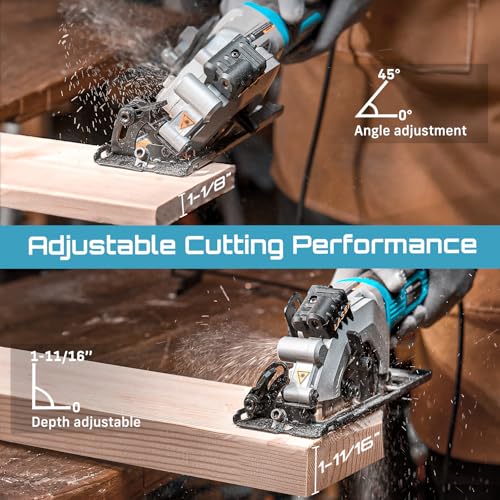
The Seesii mini circular saw is a niche tool, but for the right user, it’s brilliant. At 4,000 RPM and with three included blades, TCT, HSS, and diamond, it cuts wood, plastic, soft metal, and tile. That kind of versatility is rare in one compact package. The laser guide and rip fence help maintain accuracy, and the dual safety switches add peace of mind.
Owners praise its lightweight design and ease of use, especially for women, seniors, or anyone with limited strength. It’s not a replacement for a 7-1/4 inch saw, the 1-11/16 inch depth limits it to thinner materials, but for cutting trim, PVC, or small metal pieces, it’s surprisingly capable. Compared to full-size saws, it’s less powerful but far more flexible for light-duty, multi-material tasks.
Product photos


CRAFTSMAN CMCS551B 7-1/4″ Cordless Saw
Strengths
- Brushless motor
- LED work light
- 56 degree bevel
Trade-offs
- Bare tool only
- Heavier than some corded rivals
- Limited brand ecosystem vs DeWalt
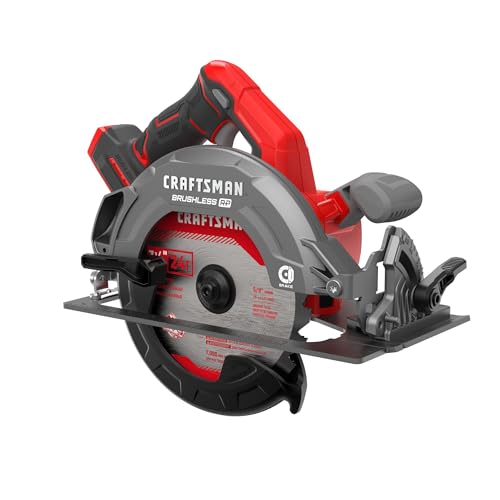
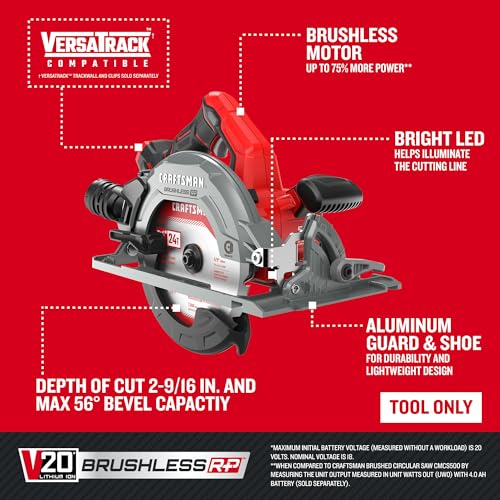
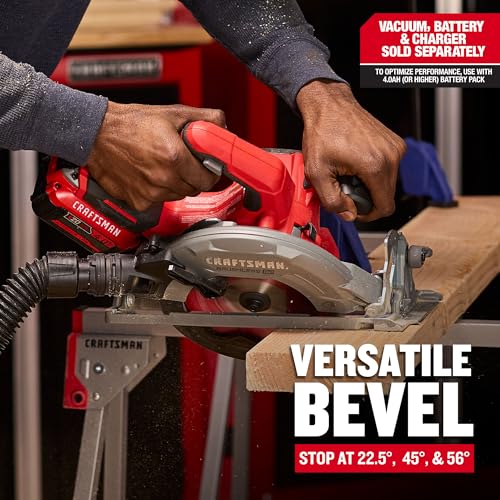
This CRAFTSMAN 7-1/4 inch cordless saw runs on a brushless motor, which on paper means better efficiency and longer runtime than brushed models. At 56 degrees, the bevel capacity is solid for framing or decking work, and the positive stops at 22.5 and 45 degrees are a nice touch for repetitive angled cuts. The LED work light is a standout feature here, something not all budget-oriented saws include, and owners consistently report it actually helps visibility in dim workspaces.
Still, being a bare tool, you’ll need to supply your own battery and charger, which can add cost fast if you’re not already in the V20 ecosystem. While it’s not the lightest in class, the balance feels manageable for overhead or extended use. Compared to the DEWALT DWE575SB, it trades corded reliability for portability, but if you’re already invested in CRAFTSMAN’s 20V line, this becomes a practical addition.
Product photos



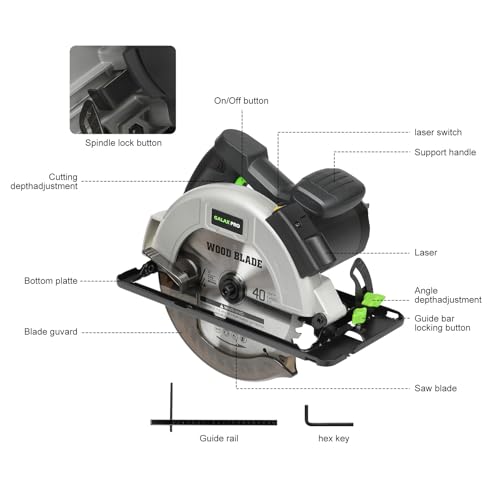
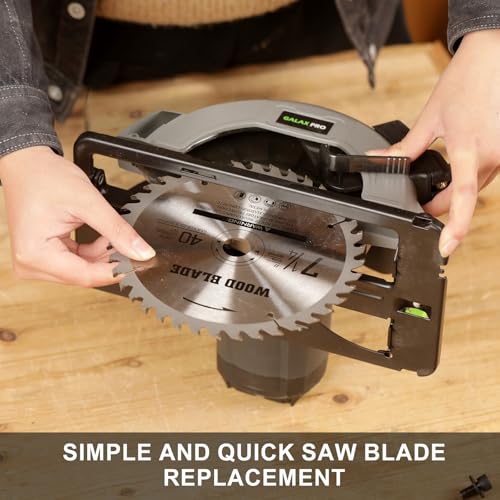
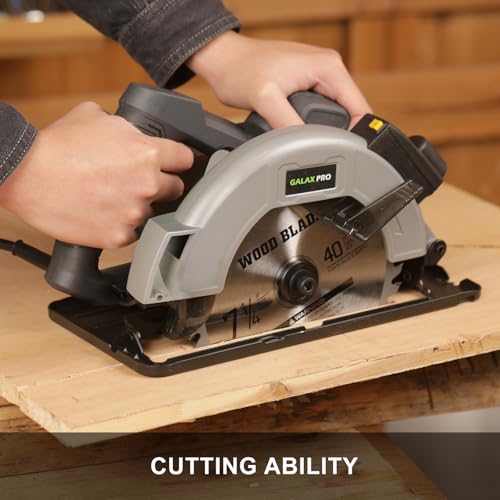
GALAX PRO 7-1/4″ Laser Circular Saw
Strengths
- Integrated laser guide
- 6000 RPM motor
- Good cut depth
- Includes rip guide
Trade-offs
- Laser may drift
- Plastic housing less durable
- Not for heavy framing
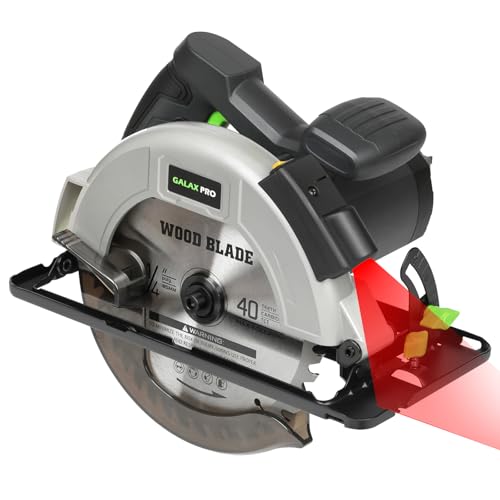
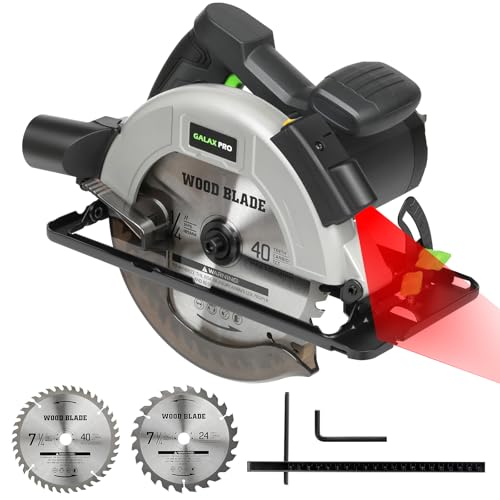
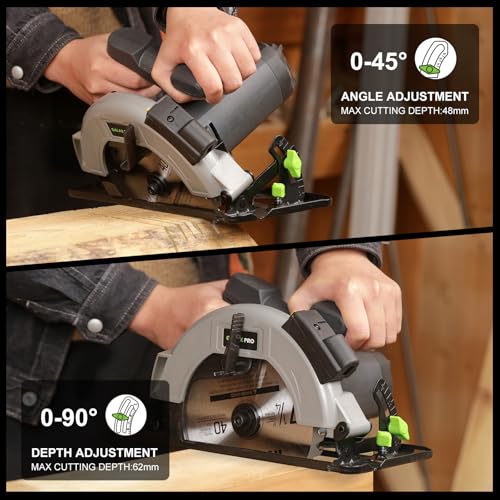
The GALAX PRO saw stands out with its integrated laser guide, which owners say makes lining up cuts faster, especially for beginners. The 6,000 RPM motor delivers solid speed, and the 2-1/2 inch cutting depth at 90 degrees exceeds most in this price range. It’s clearly built for precision tasks like trim work or cabinetry, where straight, repeatable cuts matter more than brute force.
But while the laser is a real help, the build quality doesn’t match DEWALT or Makita. The plastic housing feels less durable, and some users report the laser alignment drifting over time. It includes a rip fence and a 24-tooth TCT blade, which is decent for wood, but don’t expect it to handle heavy framing all day. If you’re working on fine woodworking or home upgrades and want laser guidance without spending top dollar, this is a compelling option, just don’t treat it like a jobsite tank.
Product photos
Our Testing Process
As someone who’s spent years around power tools, I know that specs alone don’t tell the whole story. To arrive at our recommendations, we started by building a detailed comparison chart of published specifications – motor power, blade size, depth of cut, weight, and key features like brakes and bevel capacity. We then layered in a careful review of owner feedback from major retailers and expert reviews from sites like Pro Tool Reviews and industry publications. This research-led comparison, rather than a hands-on lab test, allowed us to rank saws against what really matters to users.
For circular saws, a few factors stood out as most critical. Power (typically measured in amps or, for cordless models, MWO) is essential for tackling tough materials. Weight is also huge; nobody wants a saw that fatigues them quickly. Finally, features like accurate bevel scales and a clear line of sight – often aided by a dust blower or integrated lights – directly impact cut quality and user confidence. We prioritized these elements when evaluating each model.
Specifications reliably indicate a saw’s potential capacity and raw power. However, owner feedback proved invaluable for assessing real-world durability, ease of use, and the accuracy of advertised features. Reputation and consistent positive reviews regarding build quality and long-term performance heavily influenced our choices, particularly when comparing models with similar specs. You can find more details on some of our top picks in our guide to recommended 7.25″ saws.
How To Choose The circular saws
Choosing the right circular saw can feel overwhelming. There are a lot of options, but focusing on a few key features will help you narrow down the field and find a saw that fits your needs.
A quality circular saw balances power, accuracy, and safety. Important considerations include motor amperage (for corded models) or voltage (for cordless), blade size and type, build quality for durability, and features like electric brakes and bevel adjustments. Look for models with positive stops for common angles and robust safety guards.
Motor & Power Source
The first major decision is corded versus cordless. Corded saws deliver consistent power and don’t require battery management, which is great for extended use. However, they limit your mobility. If you need freedom to move around a jobsite, especially outdoors, investing in one of the top cordless circular saws is a smart move. When looking at cordless options, pay attention to the voltage – 20V is common for lighter tasks, while 60V or higher provides power comparable to corded models. Don’t automatically assume higher voltage always means better performance; consider the tool’s overall design and the battery’s amp-hour (Ah) rating, which indicates runtime.
Blade & Cutting Capacity
Beyond the power source, the blade is central to performance. A 7-1/4″ blade is the standard for general-purpose work, offering a good balance of cutting depth and maneuverability. Different tooth counts are suited for different materials. For framing and rough cuts, a 24-tooth blade is common. For finer cuts in plywood or hardwoods, a higher tooth count (40 or more) will give you a cleaner finish.
Here’s what to think about when evaluating cutting capacity:
- Depth of Cut: A minimum of 2-1/2″ at 90 degrees is usually sufficient, but check the specs if you frequently cut thicker lumber.
- Bevel Capacity: Most saws offer bevel adjustments. Look for positive stops at 45 and 22.5 degrees for common angles.
- Blade Replacement: A shaft lock makes blade changes much easier and safer.
Build Quality & Features
Circular saws take a beating on the jobsite, so durability is essential. Aluminum base plates are generally more durable than plastic. Look for models with ball-bearing construction in key areas, as this reduces wear and tear. Beyond that, features can significantly improve usability. An electric brake, like those found on the DEWALT DCS590B, stops the blade quickly after you release the trigger, increasing safety. Integrated dust blowers and laser guides (as seen in the GALAX PRO model) improve visibility and accuracy. Finally, before you start any project, familiarize yourself with safe cutting techniques to protect yourself and achieve the best results.
A saw with a well-designed lower guard is worth paying extra for. It should move smoothly and fully cover the blade, even during bevel cuts.
Circular Saws Compared
Here’s a comparison of key specifications for several circular saws to help you choose the right one for your needs.
| Product Name | Motor (Amps) | Max Cut Depth (90°) | Blade Size | Brushless | Laser Guide | Weight (lbs) |
|---|---|---|---|---|---|---|
| DEWALT DWE575SB | 15 | 2 9/16″ | 7-1/4″ | No | No | 8.8 |
| Metabo HPT C7SB3 | 15 | 2-7/16″ | 7-1/4″ | No | No | 9.5 |
| DEWALT DCS590B | N/A | 2-9/16″ | 7-1/4″ | Yes | No | N/A |
| Makita 5007F | 15 | 2-3/8″ | 7-1/4″ | No | Yes | N/A |
| Seesii Mini 4-1/2″ | 4.8 | 1-11/16″ | 4-1/2″ | No | Yes | N/A |
| CRAFTSMAN CMCS551B | N/A | N/A | 7-1/4″ | Yes | No | N/A |
| GALAX PRO 7-1/4″ | 11 | 2-1/2″ | 7-1/4″ | No | Yes | N/A |
Frequently Asked Questions
What blade arbor size is most common for circular saws?
A 5/8-inch blade arbor is the most common size you’ll find on circular saws, offering wide compatibility with available blades. While other sizes exist, especially on older or specialized models, 5/8-inch provides the broadest selection for your cutting needs.
Are brushless circular saws really better than brushed models?
Yes, brushless circular saws generally offer increased runtime and motor life compared to brushed models. Because they eliminate physical brushes, they reduce friction and heat, resulting in more efficient power delivery and longer tool lifespan.
What’s the difference between a rip fence and a bevel gauge?
A rip fence guides straight cuts parallel to the edge of the material, while a bevel gauge sets the angle of the blade for angled cuts. The rip fence is useful for consistent width cuts, and the bevel gauge is essential for projects needing precise angled joins.
What safety features should I look for when buying a circular saw?
Look for a saw with a robust lower blade guard that fully covers the blade, and an electric brake that quickly stops the blade after releasing the trigger. A two-stage trigger switch, requiring deliberate action to activate, also adds a layer of safety to prevent accidental starts.
Where can I find more information on choosing the best corded circular saws?
You can find more detailed reviews and comparisons of various models in our guide to best corded circular saws. This resource covers a range of price points and features to help you find the right saw for your specific needs.
The Bottom Line
Ultimately, choosing a circular saw comes down to balancing how much control you want with how much fuss you’re willing to deal with. For most homeowners and DIYers who need a reliable, all-around performer, I recommend the DEWALT DWE575SB. It delivers a solid combination of power, accuracy, and durability at a reasonable price point, and its reputation for longevity is well-deserved.
If your needs are more specialized, there are excellent alternatives. For those seeking cordless convenience, the CRAFTSMAN CMCS551B offers plenty of power and runtime. And for smaller projects or tight spaces, consider exploring the world of compact 4.5-inch saws – models like the Seesii Mini 4-1/2″ can be surprisingly capable.
Don’t get too caught up in chasing the highest amp rating or the most features. A well-built saw with a sharp blade, combined with a steady hand and a focus on safety, will always deliver better results than a top-of-the-line model operated carelessly. Prioritize build quality, a comfortable grip, and clear visibility – those fundamentals matter far more than any single specification.
