7 Best Welding Helmets of 2026
This post contains affiliate links. As an Amazon Associate, we earn from qualifying purchases.
The Lincoln Electric Viking 3350 stands out as the best overall welding helmet, delivering top-tier optical clarity and a large viewing area. For those on a budget, the ARCCAPTAIN Intelligent Panoramic Helmet offers impressive responsiveness and smart features at a lower price. If you need versatility across multiple welding types, the ESAB Sentinel A60 brings reliable performance and advanced lens technology.
Welders don’t just need protection, they need a helmet that stays out of the way so they can focus on the bead. Too many settle for foggy lenses, slow reaction times, or bulky designs that cause neck strain after an hour.
As Robert A. Bennett from PowerToolGuide.net, I’ve evaluated dozens of helmets based on specs, real user feedback, and years of hands-on experience in workshops. This guide cuts through the marketing to show you which models deliver where it matters, clarity, speed, comfort, and durability, so you can choose with confidence.
Top 7 Welding Helmets in the Market
The Best Welding Helmets, Reviewed
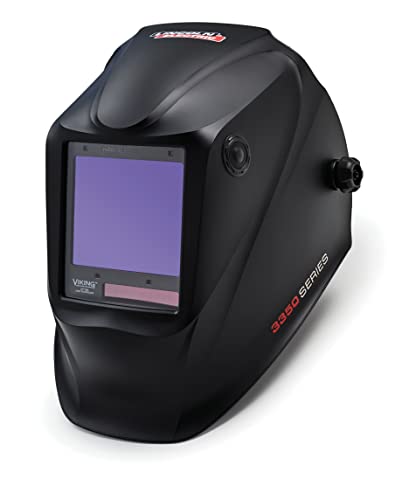
Lincoln Electric Viking 3350
Strengths
- 12.5 sq in viewing area
- 4C True Color lens
- X6 comfort headgear
- 5-year warranty
- 1/1/1/1 optical clarity
Trade-offs
- High price
- Heavier than some
- No built-in light
The Lincoln Viking 3350 is the benchmark many others try to reach. Its 12.5 square inch viewing area is massive, and paired with 4C Lens Technology, it delivers a distortion-free, true-color image that welders describe as “like seeing through glass.” This isn’t just marketing, owners consistently report less eye strain and better bead control, especially during long TIG runs.
The X6 headgear is a standout for comfort, distributing weight so well that you forget you’re wearing it. And Lincoln’s 5-year warranty signals serious confidence in durability. Yes, it’s one of the pricier options, but when you factor in performance, comfort, and longevity, it’s hard to justify going cheaper if you weld regularly.
Product photos


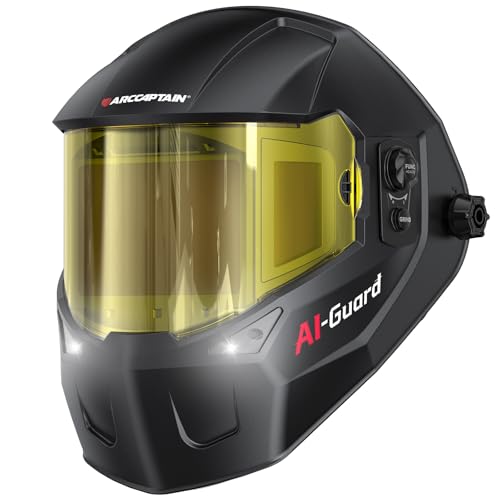
ARCCAPTAIN Intelligent Panoramic Helmet
Strengths
- Panoramic true color view
- Internal display
- Rechargeable with solar assist
- Built-in LED light
- Seven arc sensors
Trade-offs
- Bulkier profile
- Heavier than average
- Learning curve for settings
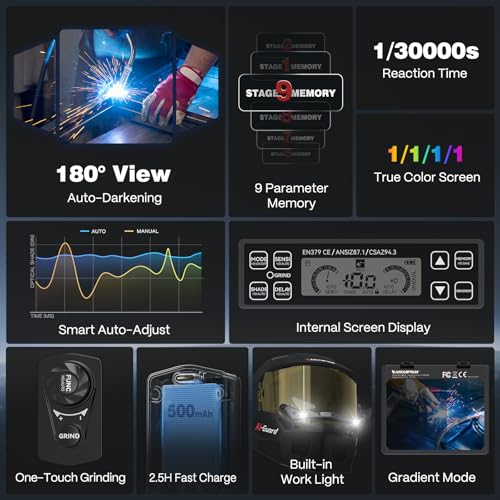
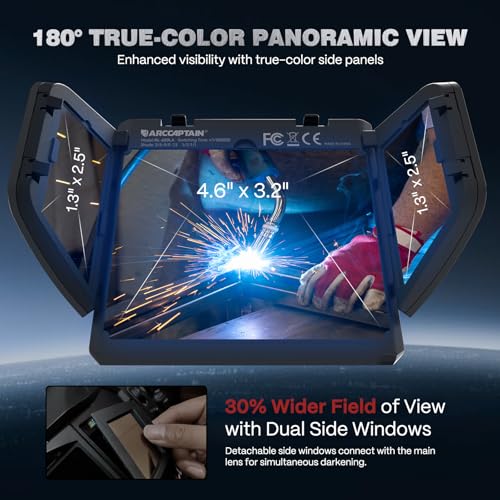
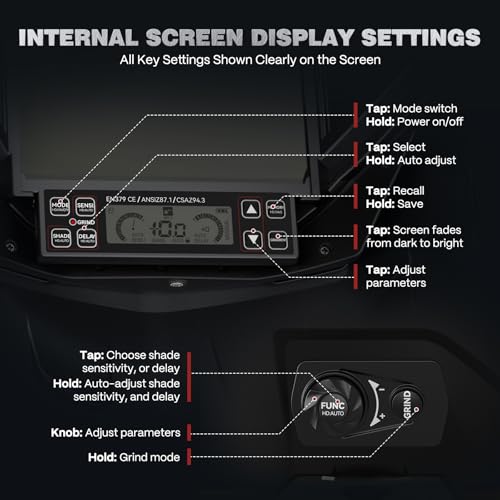
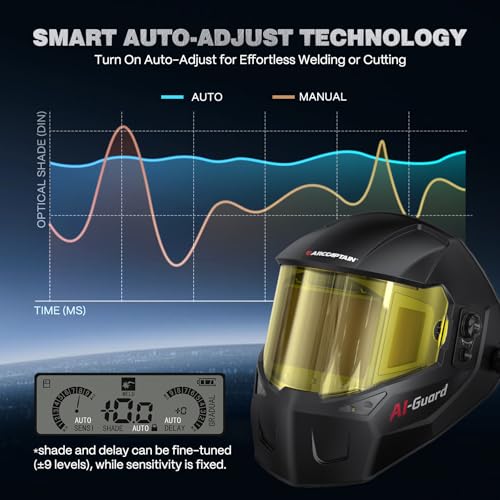
This ARCCAPTAIN model pushes the envelope on visibility and smart features. The total viewing area of 7.2 x 3.2 inches, combining a 4.6 x 3.2 main lens with two side windows, is one of the largest available, and owners say it genuinely improves spatial awareness, especially in tight or overhead positions. The internal display for adjusting settings is a standout; you can tweak shade, delay, and sensitivity without flipping the helmet up, which saves time and keeps you in the zone.
The 1/30000 second switching speed and seven arc sensors mean it reacts instantly, even with erratic arcs. Add in the built-in LED work light and rechargeable battery with 1,200-hour runtime, and you’ve got a helmet built for real-world productivity. Some users note the interface takes a little getting used to, but once dialed in, it’s a powerhouse.
Product photos
YESWELDER Blue Light Blocking
Strengths
- Low cost
- Blue light blocking
- Solar powered
- Meets ANSI standards
- Beginner-friendly
Trade-offs
- Small viewing area
- Only 2 arc sensors
- Basic lens performance
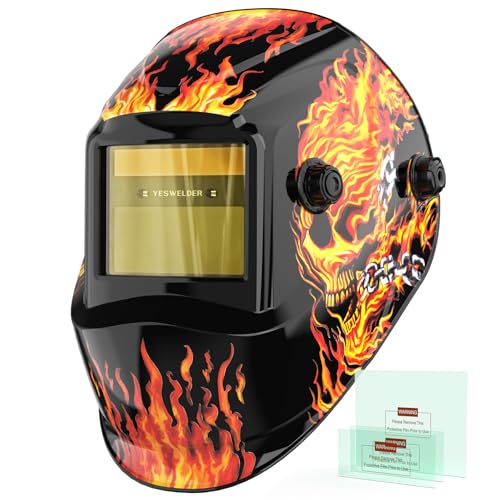
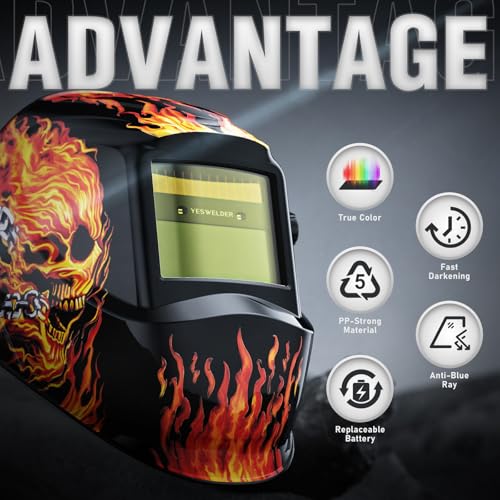
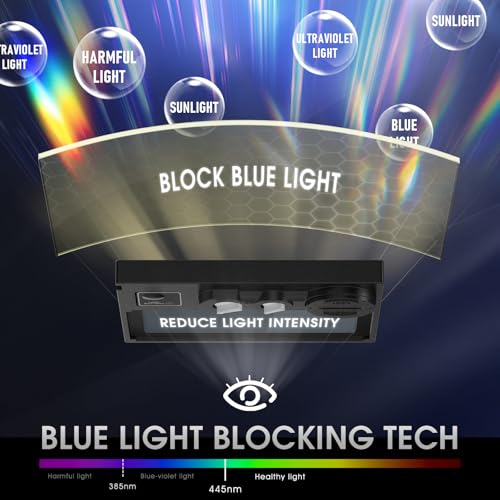
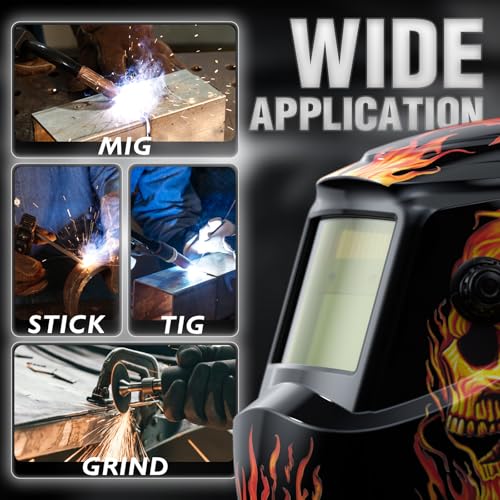
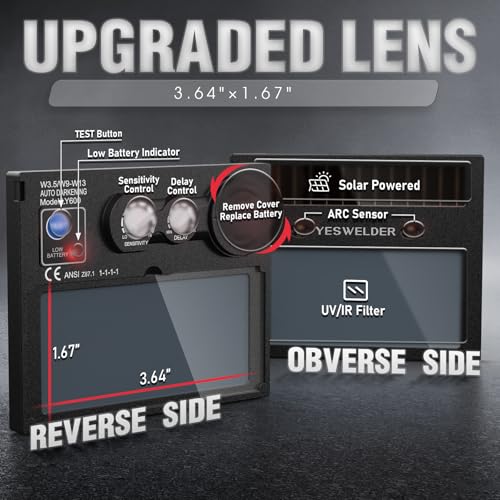
When budget is the top constraint, the YESWELDER model makes sense. It’s one of the most affordable 1/1/1/1 optical clarity helmets on the market, and it still includes key features like blue light blocking, solar power, and a 1/30000 second switching time. The 3.64 x 1.67 inch viewing area is on the small side, and owners note it can feel restrictive for overhead or wide bead work, but it’s functional for straight-line MIG or stick jobs.
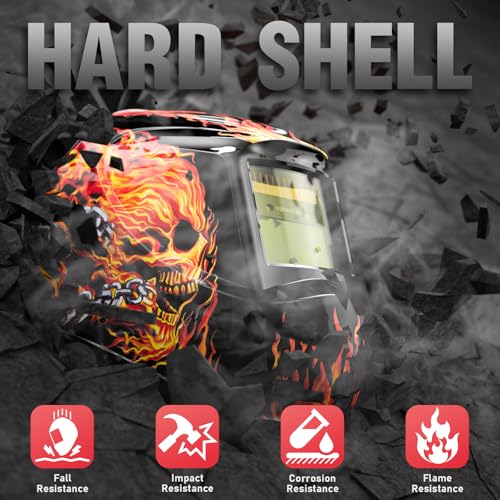
It only has two arc sensors, which means occasional misfires on low-amperage TIG. But for weekend projects or occasional farm/shop repairs, it’s a decent entry point. The pivot headgear is simple but effective, and it meets ANSI safety standards. I’d recommend it with one caveat: don’t expect precision-grade optics or long-term durability under heavy use.
Product photos
ARCCAPTAIN Large View with LED Light

Strengths
- Large vertical screen
- Built-in LED work light
- Lightweight design
- 4 arc sensors
- USB rechargeable light
Trade-offs
- Separate light charging
- Basic headgear padding
- No internal display
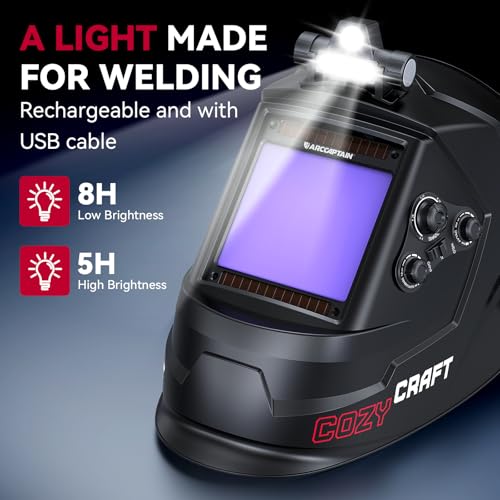
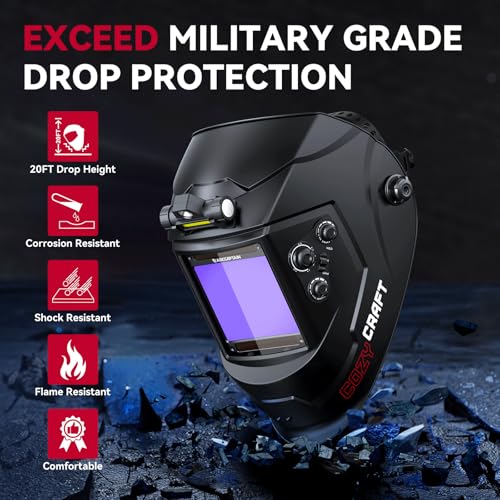
This ARCCAPTAIN model is built for welders who often work in dim or poorly lit spaces. The 3.94 x 3.66 inch viewing area is wide and tall, offering excellent vertical visibility, great for pipe or structural work. But the real standout is the USB-powered LED work light that attaches to the top. It’s not always needed, but when you’re under a trailer or in a shadowed corner, it’s a lifesaver.
The 4 arc sensors and 1/25000 second switching time keep pace with most welding types, and the 12-in-1 smart filter adds an extra layer of UV/IR protection. At just 1 lb, it’s light on the head, and the PP body resists cracking. Some users mention the light requires separate charging, which is a minor hassle, but overall, it’s a smart package for practical use.
Product photos


Miller Classic Series

Strengths
- ClearLight HD optics
- Excellent for low-amp TIG
- Auto-on activation
- Ratchet headgear
- 3-year warranty
Trade-offs
- Smaller viewing area
- Only 2 arc sensors
- No solar charging
Miller has long been a go-to for TIG welders, and this Classic Series helmet proves why. The ClearLight Technology delivers exceptional contrast at low amperages, making it easier to see the puddle when running 5–10 amps, a real advantage for thin materials or detailed work. The 6-square-inch viewing area is modest, but the high-definition optics make up for it with sharpness and clarity.
It’s not packed with bells and whistles: only two arc sensors, no side windows, and a smaller screen than some rivals. But for TIG purists, that doesn’t matter. The ratchet headgear is reliable, and the auto-on function means it activates the moment you strike an arc. Owners report it just works, day after day.
Product photos


ESAB Sentinel A60

Strengths
- True color lens
- High impact resistance
- On-board memory
- Adjustable shade increments
- Durable nylon build
Trade-offs
- No solar assist
- Smaller viewing area than rivals
- CR2450 battery only
The ESAB Sentinel A60 stands out in a crowded field not because it reinvents the wheel, but because it builds the wheel better. On paper, its 4.65 x 2.80 inch viewing area isn’t the largest, but combined with OpTCS True Color Lens Technology, it delivers a crisp, natural image that many users say reduces eye fatigue over long shifts. The four arc sensors and 0.08 millisecond switching time are solid, though not class-leading, and the ability to adjust shade in 0.5 increments gives experienced welders fine control.
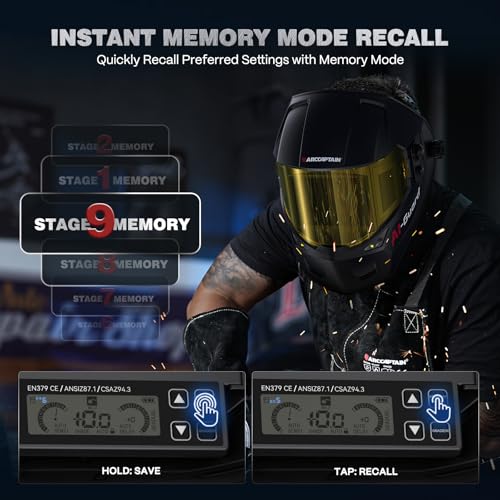
What really sets this helmet apart is the build. Owners consistently report it surviving drops, heat, and daily abuse in industrial environments. The low-profile design helps with balance, and the on-board memory for nine custom settings is a small but meaningful perk for those switching between MIG, TIG, and stick. It’s a pro-grade tool that doesn’t rely on gimmicks.
Product photos


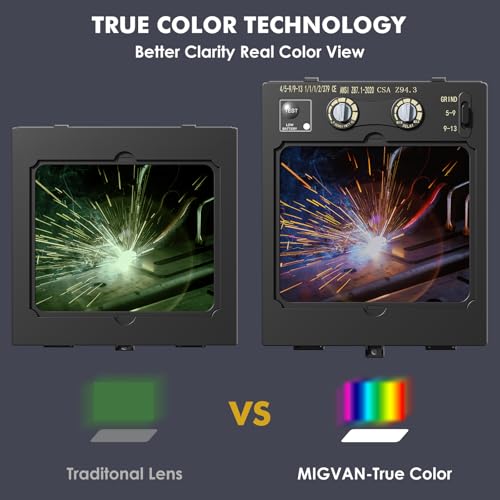
MIGVAN True Color Solar Powered
Strengths
- Solar + rechargeable
- Large viewing area
- True color lens
- Comes with spare lenses
- Good value
Trade-offs
- Basic headgear design
- No internal display
- Only 4 arc sensors
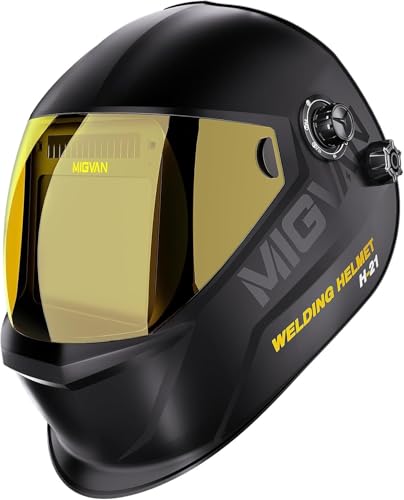
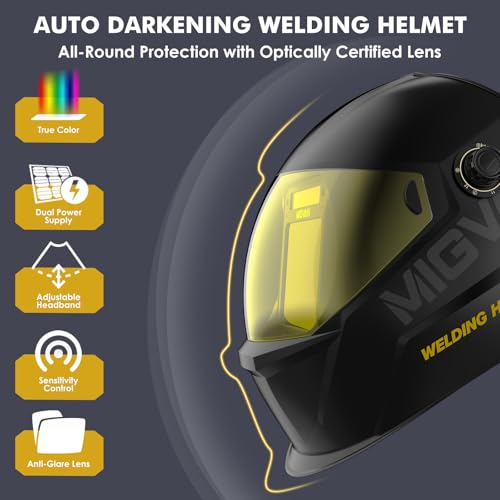
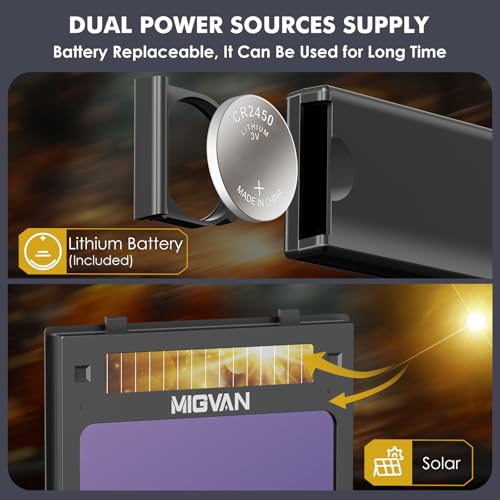
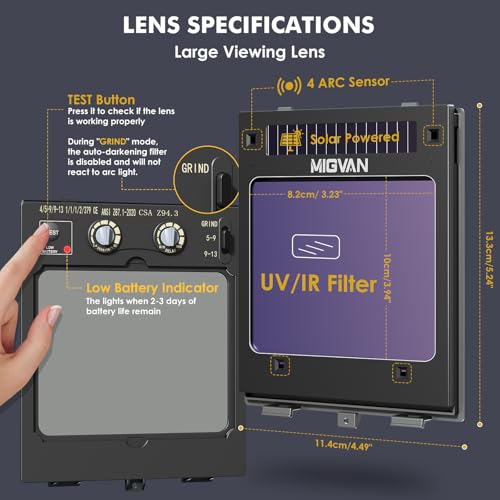
The MIGVAN hits that sweet spot where solid performance meets affordability. It’s not flashy, but it delivers core features well: a large viewing area, 4 arc sensors with 1/10000 second response, and true color golden lens that owners say improves weld pool clarity. The solar-assist with replaceable lithium battery means you won’t be swapping CR2450s every few months, which is a real plus for frequent users.
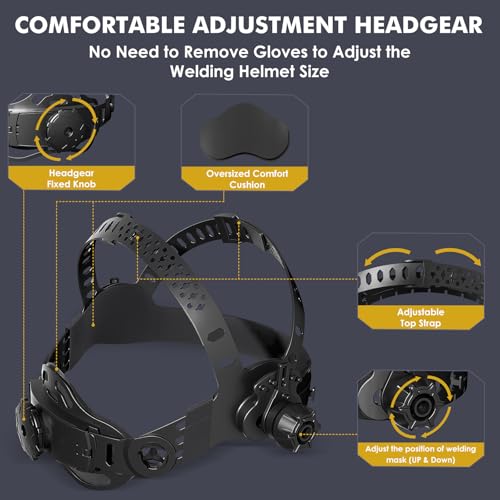
It’s built to meet ANSI/CE standards and includes a full set of replacement lenses plus a storage bag, a thoughtful touch. The pivoting headgear is comfortable, though not as refined as premium models. For the price, it’s a strong all-rounder. If you’re upgrading from a basic fixed-shade helmet, this feels like a major leap.
Product photos
How We Chose These welding helmets
As someone who’s spent years around workshops and job sites, I know a good welding helmet isn’t just about dark glass – it’s about clarity, comfort, and reliable protection. Rather than a hands-on lab test of each model, this is a research-led comparison of published specifications and owner feedback. I compared features across numerous helmets, then weighed those against what real users are saying about performance and durability, applying my experience to identify the strongest contenders.
For welding helmets, optical clarity, viewing area, and responsiveness are the biggest differentiators. A large viewing area and a clear lens (rated 1/1/1/1) significantly improve control and reduce fatigue, especially during extended welds. Fast switching times (measured in seconds) are also crucial for protecting your eyes from the initial arc flash. These factors directly impact weld quality and operator safety, making them heavily weighted in my assessment.
Specifications reliably detail viewing area, shade range, and switching speeds. However, owner reviews provide critical insight into real-world comfort, durability, and the accuracy of advertised features. I paid close attention to feedback regarding lens distortion, headgear fit, and long-term reliability. I also considered those who may want additional respiratory protection and looked at options like PAPR welding helmets to see how these helmets stacked up.
How To Pick The Right welding helmets
Picking the right welding helmet goes far beyond just blocking the light. It’s about comfort, visibility, and ensuring you can consistently lay down quality welds.
A good welding helmet prioritizes optical clarity (look for 1/1/1/1 ratings), fast switching speeds (under 1/10,000th of a second is ideal), a comfortable and adjustable headgear system, and reliable arc sensors. Don’t overlook build quality and features tailored to your specific welding processes – TIG, MIG, or stick.
Viewing Area & Optical Clarity
The size of the viewing area impacts how easily you can see your workpiece and the weld puddle. Larger isn’t always better; a larger area can introduce distortion if the lens quality isn’t up to par. I consistently see folks prioritizing size over clarity, and that’s a mistake. Pay close attention to the optical clarity rating, specifically the 1/1/1/1 standard. This rating assesses blurriness, distortion, shade consistency, and angle uniformity. Helmets like the Lincoln Electric Viking 3350 boast this rating, suggesting a high-quality viewing experience.
Auto-Darkening Speed & Sensitivity
A fast auto-darkening speed is critical to prevent flash burn. Anything slower than 1/10,000 of a second can be risky, particularly with lower amperage TIG welding. Sensitivity adjustments are equally important. You’ll want to be able to dial it in to reliably trigger the darkening effect in various lighting conditions – from bright sunlight to dimly lit shops. Some models, like the ARCCAPTAIN Intelligent Panoramic Helmet, offer intelligent auto-adjustment features, taking some of the guesswork out of the process.
- Simple sensitivity adjustments are useful for occasional changes.
- Multiple preset modes (for different welding types) save time and effort.
- Fully customizable settings allow for fine-tuning to your specific environment and welding style, and are a must for experienced welders.
Comfort & Features for Your Needs
Don’t underestimate the importance of comfort, especially if you spend hours welding. Look for helmets with adjustable headgear, breathable padding, and a balanced weight distribution. Beyond that, consider features suited to your primary welding applications. If you frequently weld in tight spaces, a streamlined helmet design is beneficial. If you do a lot of TIG welding at low amperage, a helmet with excellent optical clarity and a fast switching speed is crucial. For those starting out, exploring welding helmets for beginners can help narrow down your options.
A properly fitted helmet isn’t just more comfortable; it’s safer. Ensure the headgear is snug but not overly tight, and that the helmet effectively shields your face and neck from arc rays.
Many welders are also looking at top auto-darkening helmets these days, and for good reason – the technology has improved significantly. It’s worth considering a model with extra features like built-in work lights (ARCCAPTAIN Large View) or memory settings if you switch between multiple welding processes frequently. Ultimately, choosing the right helmet comes down to prioritizing the features that best support your welding style and needs.
Welding Helmets Compared
Here’s a comparison of key specifications for several welding helmets to help you make an informed decision.
| Product Title | Viewing Area (sq. in.) | Shade Range | Switching Speed (sec) | Power Source | Arc Sensors | Special Features |
|---|---|---|---|---|---|---|
| Lincoln Electric Viking 3350 | 12.5 | 5-13 | N/A | Battery/Solar | N/A | 1/1/1/1 Optical Clarity |
| ARCCAPTAIN Intelligent Panoramic Helmet | 7.2 | 3.5/9-13 | 1/30000 | Battery/Solar | 7 | Panoramic View, Smart Auto Adjustment |
| YESWELDER Blue Light Blocking | 3.64×1.67 | 3.5/9-13 | 1/30000 | Solar/Battery | 2 | Blue Light Blocking |
| ARCCAPTAIN Large View with LED Light | 3.94×3.66 | 4/5-8/9-13 | 1/25000 | Solar/Battery | 4 | LED Light |
| Miller Classic Series | 6 | 8-13 | 1/23000 | Battery | 2 | ClearLight Lens Technology |
| ESAB Sentinel A60 | 4.65×2.80 | 3/5-13 | 0.08 | Battery | 4 | True Color Lens Technology |
| MIGVAN True Color Solar Powered | N/A | 5-9/9-13 | 1/10000 | Solar/Battery | 4 | True Color, Large Viewing Area |
Frequently Asked Questions
What shade number should I choose for my welding helmet?
The appropriate shade number depends on the welding amperage you’re using. Shade 8 to 12 generally covers most welding applications, but lower amperage TIG welding often requires a shade 5 or 6 for comfort and to prevent eye strain.
Are solar-powered welding helmets reliable?
Yes, solar-powered helmets are generally very reliable, as the solar panel supplements the battery to keep it charged during use. However, it’s still a good idea to have a battery backup, especially if you weld in areas with limited sunlight.
How often do I need to replace the lens in an auto-darkening helmet?
The lifespan of an auto-darkening lens varies, but most will last for several years with proper care. You’ll know it’s time for a replacement when you notice significant distortion, cloudiness, or inconsistent darkening.
Can I use a welding helmet for cutting metal?
Yes, you can use a welding helmet for cutting metal, but the shade number may need to be adjusted. Cutting often requires a darker shade than welding, typically shade 9 to 14, to protect your eyes from the intense light.
Are there welding helmets specifically designed for TIG welding optimized helmets?
Absolutely. Helmets designed for TIG welding prioritize optical clarity and fast switching speeds, as TIG welding often involves lower amperage and requires precise visibility. These helmets often feature a 1/1/1/1 optical clarity rating for the clearest view of the weld puddle.
The Bottom Line
Choosing a welding helmet often comes down to balancing your budget with the level of control and clarity you require. While there are many options available, the Lincoln Electric Viking 3350 stands out as the strongest overall pick, offering a superb combination of optical clarity (with its 1/1/1/1 rating) and proven reliability. It’s a workhorse designed to deliver consistent performance for a wide range of welding tasks.
For those on a tighter budget, the YESWELDER Blue Light Blocking helmet delivers impressive features at an accessible price point. And if you’re looking for versatility and a unique viewing experience, the ARCCAPTAIN Intelligent Panoramic Helmet is a solid choice – it’s particularly well-suited to welders who work in various positions and lighting conditions. You can also find top MIG-specific helmets if you do a lot of that type of welding.
Ultimately, the most expensive helmet isn’t necessarily the best for you. Focus on prioritizing optical clarity, a fast switching speed, and a comfortable, secure fit. Those fundamentals will have a far greater impact on your weld quality and safety than any extra bells and whistles.
