Trimming Shrubs with a Hedge Trimmer: Essential Techniques
This post contains affiliate links. As an Amazon Associate, we earn from qualifying purchases.
Trimming shrubs correctly with a hedge trimmer requires matching three things: timing based on the plant’s flowering cycle, a trapezoidal shape for light, and a one-third height limit per cut. Proper timing ensures health, the shape allows sunlight to reach lower branches, and the limit prevents fatal shock to the shrub.
Most people grab the trimmer on a sunny Saturday and slice the sides straight up and down. The lower branches starve for light within a year, the base goes bald, and you’re left with a thin, leggy shrub that looks worse than before you started. They also cut flowering shrubs before the blooms appear, wiping out next season’s color.
This guide walks through the exact sequence: when to cut, what gear you need, how to set up guide strings for straight lines, the bottom-to-top cutting motion that keeps the base wide, and how to handle overgrown shrubs without killing them.
Key Takeaways
- Never trim a spring-flowering shrub like lilac or forsythia before it blooms, you’ll cut off the flower buds and get no color next year.
- Always cut sides in a trapezoidal shape, with the bottom 2–4 inches wider than the top. Flat sides cause lower branch die-off within 12 months.
- Limit removal to one-third of the shrub’s total height in a single session. Cutting more shocks the root system and can kill the plant by autumn.
- Use a line level on your guide string for the top cut. Eyeballing it on uneven ground creates dips and bulges that are visible from 20 feet away.
- For branches thicker than 3/4 inch, switch to hand pruners or loppers. A hedge trimmer will chew the bark, stall, and potentially kick back into your hands.
When to Trim: It’s Not About Your Schedule
The calendar that matters is the shrub’s, not yours. If you trim a lilac in March before the purple blooms appear, you’ve just cut off every flower bud. The shrub will leaf out fine but stay bare all spring. That mistake is obvious by May.
Spring-flowering shrubs (lilac, forsythia, rhododendron) must be trimmed immediately after their blooms fade. Summer-flowering shrubs (hydrangea, rose of Sharon) get trimmed in late winter or early spring, before new growth starts. Non-flowering shrubs like boxwood or yew can be trimmed every 6-8 weeks during the growing season for shape, or receive heavy pruning from October 1st to February when they’re fully dormant.
Heavy pruning, cutting back more than just the tips, should happen during the dormant period. The plant isn’t actively growing, so the shock is minimal. If you do it in July, the shrub tries to heal the cuts while also fighting heat stress. It often fails. You’ll see browned leaves around each cut within a week.
Light shaping can happen anytime, provided you check for nesting birds first. Running a trimmer through a nest is destructive and illegal in many areas. Look for movement and listen for chirping from inside the shrub before you start.
Safety Gear You Absolutely Need
This isn’t a gentle pruning with hand shears. A hedge trimmer blade moves at several thousand strokes per minute. It throws debris, and if it hits a buried rock or fence wire, it can kick the tool back toward you.
Before you start: The blade can throw wood chips and twigs into your eyes at high speed, wear wrap-around safety goggles, not regular glasses. Your hands are close to the cutting action, wear cut-resistant gloves (not fabric gardening gloves). If the trimmer kicks or you step on a thorny clipping, wear sturdy boots with covered toes. Corded electric trimmers add a third hazard: the blade cuts an extension cord like butter in a half-second of distraction, keep the cord routed over your shoulder and away from the cutting path.
I ran a corded Black & Decker trimmer for two seasons without goggles. A chip from a dry boxwood branch hit my eyelid and scratched the cornea. It wasn’t a deep cut, but the irritation lasted three days and I couldn’t work. Now the goggles go on before the battery is even charged.
Your clothing matters too. Long sleeves and pants protect against thorns from shrubs like barberry and against the sun if you’re outside for hours. Ear protection is needed for gas-powered trimmers, the sustained noise from a Stihl or Husqvarna model can cause ringing by the end of the day.
The Right Trimmer for the Job
Not all hedge trimmers are equal for shrub work. Shrubs often have thicker, woodier branches than soft hedge foliage.
| Trimmer Type | Best For | Limitation on Shrubs |
|---|---|---|
| Cordless (Battery) | Residential shrubs, quick shaping | Struggles with branches over 1/2 inch thick; runtime limited to 30–60 mins per charge |
| Corded Electric | Consistent power, longer sessions | Cord management hazard; can’t reach far from outlet |
| Gas-Powered | Thick, mature shrubs, professional use | Heavy, noisy, requires fuel mix; emits fumes |
For most home shrubs, a cordless trimmer like the EGO Power+ 24-inch or the DeWalt 20V Max is sufficient. They’re lighter, quieter, and have no cord to cut. But if your shrubs are old and woody, think mature privet or overgrown yew, the extra power of a gas model (Stihl HL 100, Husqvarna 122HD60) matters. The blade won’t stall on a 3/4-inch branch.
The cutting blade length also matters. A 24-inch blade is ideal for shrubs up to chest height. It covers more area per sweep. For shorter, dense shrubs like boxwood, a 18-inch blade gives better control. Longer blades (30-inch+) are for tall hedges, not precision shrub work.
What’s the best shape for a shrub?
A trapezoid. The bottom must be wider than the top by a measurable margin, 2 to 4 inches on a shrub that’s 3 feet tall. If you cut the sides straight up, the lower branches receive progressively less sunlight as the top fills in. They yellow, then brown, then die off completely. The shrub looks like a skinny pole with a bush on top.
The reason is light angles. Sun hits the top of the shrub directly. The sides receive angled light.
The very bottom receives only filtered, indirect light if the top is dense. A wider base captures more of that angled light before it’s blocked. This isn’t just aesthetics, it’s plant physiology.
A trapezoidal shape with the base wider than the top ensures sunlight reaches all foliage layers. A straight-sided shrub will show lower branch die-off within 12 months, starting as yellowing leaves at the bottom that fail to green up in spring.
To achieve this, you start cutting at the bottom and sweep upward. Don’t start at the top and come down, that naturally leads to a straight side because you’re following the existing top line. Your first cut defines the widest point.
Setting Up Guide Strings for Straight Lines
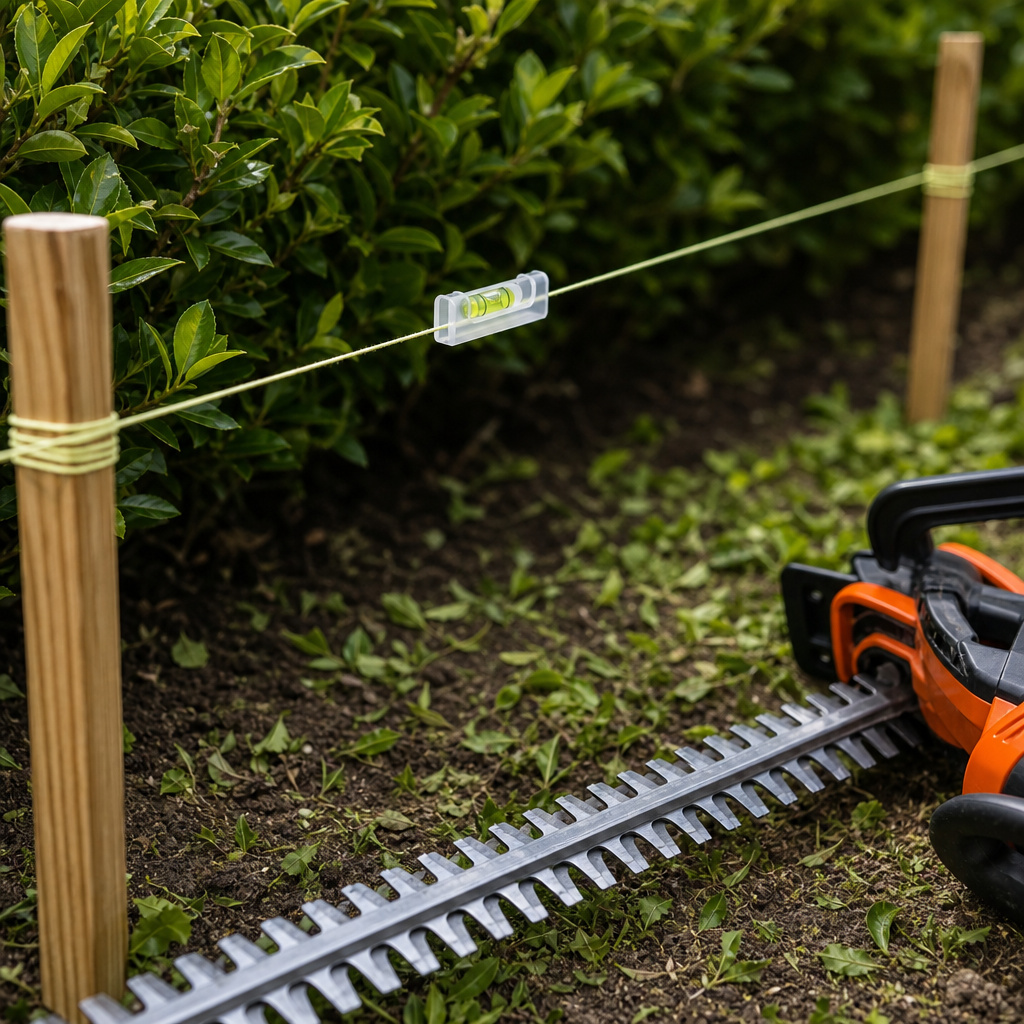
If you want a level top or straight sides, eyeballing doesn’t work. Your brain compensates for dips and bulges in the ground, and you’ll cut a slope that follows the terrain, not a true horizontal line.
- Drive stakes. Use two wooden stakes or metal rods, driven into the ground at each end of the shrub. Place them outside the shrub’s width so the string doesn’t get caught in branches.
- Run the string. Tie a taut mason’s line or nylon string between the stakes at the height you want the top of the shrub to be.
- Use a line level. Clip a small line level onto the string. Adjust the string height at one stake until the bubble is centered. This gives you a true horizontal reference even on a sloping lawn.
- Check the side guides. For straight sides, you can run vertical strings as guides, but most shrubs don’t need this if you maintain the trapezoidal sweep from bottom to top.
Skip the line level, and your “flat” top will dip on one end. It’s visible from across the yard. The fix is to recut, which means taking off more height than you planned, risking the one-third limit.
The Step-by-Step Cutting Sequence
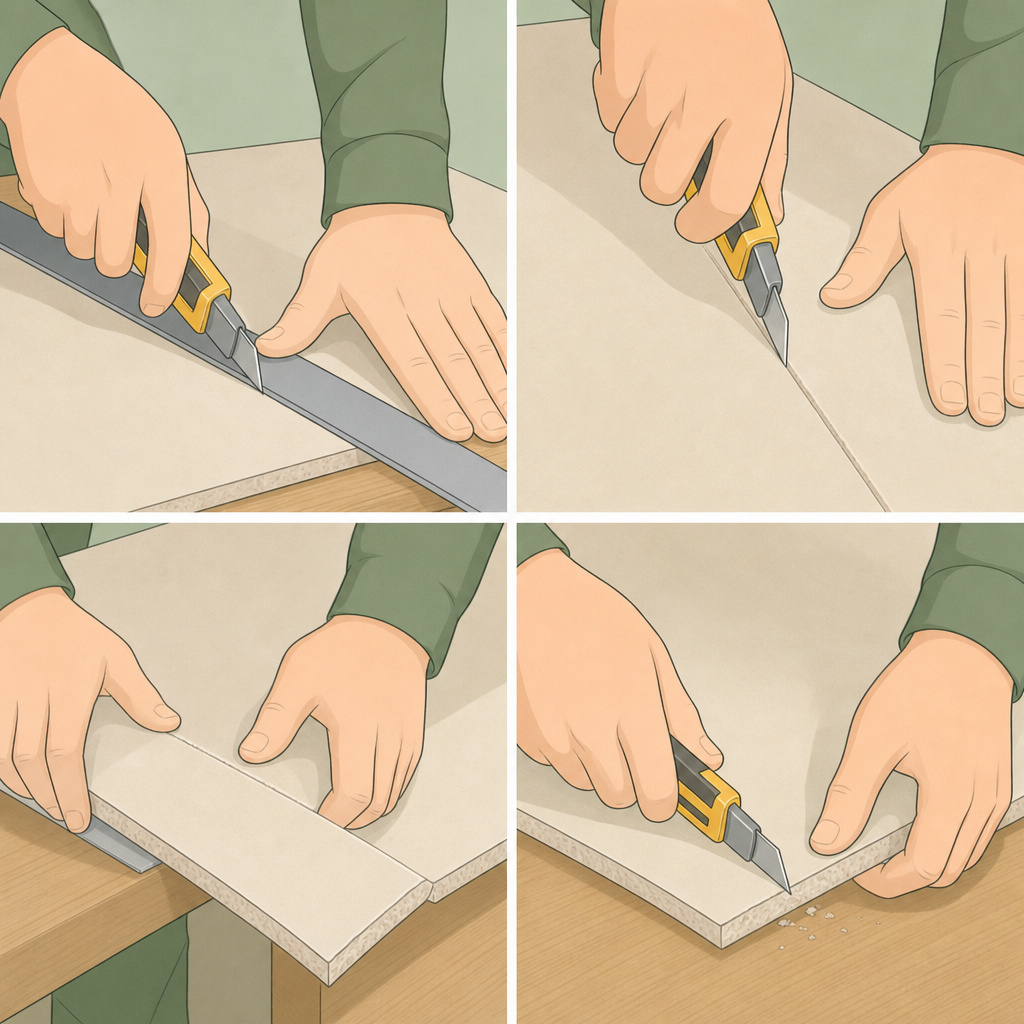
Follow this order. Switching the steps leads to uneven cuts, missed debris, and safety issues.
Step 1: Clear the base. Remove any vines, leaves, toys, or irrigation lines hidden at the bottom of the shrub. The trimmer blade will strike them, and a rock or sprinkler head can kick the tool back violently. This takes two minutes and prevents a trip to the garage for repairs.
Step 2: Lay down a tarp. Spread a groundsheet or heavy tarp under the shrub. Clippings fall here, not on your lawn or flower beds. For thorny shrubs like barberry, this also protects bare feet later. Skip this, and you’ll spend 30 minutes raking and picking out thorns from the grass.
Step 3: Trim the sides bottom to top. Hold the trimmer blade vertical. Start at the lowest point and make an upward sweeping arc, keeping the blade base about 2 inches wider than where you finish at the top. Move along the shrub, repeating this arc. Do several light passes, don’t try to cut the full depth in one go. If you cut too deep, the blade can bind and stall.
Step 4: Trim the top against the string guide. Hold the trimmer horizontally. Run it along the string guide, letting the blade teeth just kiss the string. Make multiple shallow passes to gradually reach the guide line. Cutting too deep at once risks cutting the guide string itself or creating a stepped top.
Step 5: Use hand tools for thick branches. Inspect the shrub for any branches thicker than 3/4 inch. These are usually interior branches. Use hand pruners (for up to 1/2 inch) or loppers (for up to 1 inch) to remove them cleanly. A hedge trimmer will chew these, leaving ragged bark that invites disease. This is also when you thin out the interior for light by removing some inner branches to improve air circulation.
Step 6: Step back and inspect. Walk away 10 feet and look at the shrub from different angles. Check for dips, bulges, or stray branches. Make small corrective passes with the trimmer or pruners. This is the refinement stage, don’t overdo it.
Step 7: Clean up and tool care. Roll up the tarp with clippings inside. Dispose of them. Then clean your hedge trimmer blades with a brush and damp cloth to remove sap and debris. Sap left on the blades hardens and increases friction, making the next use harder.
How to Handle Overgrown Shrubs
If your shrub is twice the size it should be, you can’t just chop it back to height in one year. That violates the one-third rule and will likely kill it. The plant can’t regrow enough foliage to support its existing root system.
Use the three-year rule instead.
| Year | Action | Result by End of Season |
|---|---|---|
| Year 1 | Remove one-third of the oldest, thickest stems at the base. | The shrub looks thinner but still full; new growth starts from remaining stems. |
| Year 2 | Remove another third of the old stems. | The shrub is noticeably renewed; vigorous new growth fills in. |
| Year 3 | Remove the final third of old stems; shape new growth. | The shrub is fully rejuvenated, smaller, and healthy. |
This method works for shrubs like overgrown privet, yew, and even some flowering types. It reduces the plant gradually without shocking it. In year one, you’ll use loppers or a pruning saw for the thick stems, not the hedge trimmer. The trimmer comes back in year three for shaping the new growth.
Post-Trimming Care: What Most People Skip
After you cut, the shrub is stressed. It’s healing wounds and redirecting energy. Help it.
- Water deeply. Give the shrub a thorough watering at the base, not a light spray. This helps root recovery. Do this within a day of trimming.
- Add compost. Spread a thin layer of compost around the base. It provides slow-release nutrients without burning the roots like synthetic fertilizer can.
- Monitor for pests. Fresh cuts can attract borers or other insects. Check the cut ends for signs of infestation (sawdust-like frass, holes) over the next two weeks.
If you skip post-care, the shrub may struggle to regrow. It stays sparse, and you think you trimmed too much. Actually, you just didn’t help it recover.
Frequently Asked Questions
Can I trim shrubs in the fall?
Yes, for heavy pruning. The best window for major size reduction is from October 1st to February, when the shrub is dormant. Light shaping can be done in fall, but avoid trimming spring-flowering shrubs in fall, you might cut off next year’s buds.
How much can I cut off in one session?
Never remove more than one-third of the shrub’s total height. For new growth on an established shrub, you can cut back about two-thirds of that new growth. If you need to reduce more, use the three-year rule over multiple seasons.
My hedge trimmer blades are dull. Should I sharpen them?
Yes. Dull blades tear the branches instead of cutting them. The ragged wounds heal slower and invite disease. Learn the process for sharpening hedge trimmer blades or replace the blade if it’s severely worn. A sharp blade also makes the job easier and faster.
What’s the difference between trimming and pruning?
Trimming refers to shaping the outer foliage with a hedge trimmer, typically for aesthetics. Pruning involves selective removal of branches, often from the interior, for plant health, using hand tools like pruners and loppers. For shrubs, you often do both: trim the shape, then prune the interior.
Can I use a hedge trimmer on all types of shrubs?
Mostly, but with limits. Hedge trimmers are ideal for dense, small-leaved shrubs like boxwood, yew, and privet. They struggle with shrubs that have large leaves or very thick, woody stems (like some mature rhododendrons). For those, use hand tools for the thick parts and the trimmer only for fine shaping.
How do I prevent the lower branches from dying?
Cut in a trapezoidal shape, wider at the bottom. This is the only reliable method. If the lower branches are already thin, you can’t regrow them quickly, you need to maintain the shape over several years to encourage new growth at the base.
Before You Go
Trimming shrubs isn’t about making them smaller. It’s about keeping them healthy and shaped so they look good year after year. The three non-negotiable rules are timing based on flowering, the trapezoidal shape for light, and the one-third height limit to avoid killing the plant.
Use guide strings with a line level for straight tops. Wear the safety gear, goggles, gloves, boots, every time. And remember that a hedge trimmer is for shaping; hand pruners and loppers are for the thick branches inside.
If your shrub is overgrown, spread the work over three years. That patience saves the plant. Finally, water and feed the shrub after you cut. It needs that help to regrow strongly.
