
Can a Hedge Trimmer Cut Branches? What You Need to Know
This post contains affiliate links. As an Amazon Associate, we earn from qualifying purchases.
A hedge trimmer can cut branches up to the width of its blade gap, typically between 3/4 inch and 1 1/2 inches for residential and pro models. Pushing past that limit damages the tool, creates dangerous kickback, and tears the branch instead of cutting it cleanly.
Most people grab the hedge trimmer for every overgrown limb because it’s the tool already in their hand. They see a branch sticking out, hear the motor whine, and force it through. The trimmer bucks, the wood splinters, and a week later the shrub shows brown, dying tips back to the main stem. That ragged cut let fungi right in.
This guide maps the line between what your trimmer is built for and what will break it. We’ll cover the exact measurements that matter, the technique that keeps you safe, and when to walk back to the shed for a different tool.
Key Takeaways
- The maximum branch thickness your hedge trimmer can handle is determined by its blade gap, not its motor power. A 3/4-inch gap means a 3/4-inch branch is the absolute limit.
- Forcing a cut on a branch that’s too thick will instantly dull the blades, strain the motor, and can snap the blade teeth or gearbox.
- Always cut branches in shallow, repeated passes, moving from the tip back toward the main stem. A single deep bite will jam the blades.
- If you’re cutting more than a few stray branches thicker than a pencil, you need loppers or a pruning saw. A hedge trimmer is for shaping foliage, not for serious limb removal.
- Wear cut-resistant gloves every single time. A branch can twist and pull the trimmer toward your free hand in a fraction of a second.
What Determines a Hedge Trimmer’s Cutting Power?
The motor gets all the marketing hype, but the cutting action happens at the blades. Two metal bars, each with a series of teeth, slide past each other in a scissoring motion. The space between those opposing teeth is the blade gap.
The blade gap is the maximum diameter of material the tool can cleanly shear. A branch wider than the gap will not fit between the teeth, forcing the blades to crush and tear the wood instead of cutting it.
Think of it like a paper shredder. Feed a single sheet through, it cuts cleanly. Crumple that sheet into a ball and force it in, and the mechanism jams or breaks. The same physics apply to your hedge trimmer‘s internals.
Gas-powered models like the Stihl HS82R or Echo HC-152 often have a wider, more aggressive 1-inch to 1.5-inch gap and the torque to power through denser wood. High-end cordless trimmers, such as the Milwaukee M18 model that boasts cutting 1 1/4-inch branches, achieve this with high-output batteries and optimized gearing. Standard corded and entry-level cordless trimmers typically max out at 3/4 inch.
How Thick of a Branch Can a Hedge Trimmer Cut?
Match the branch to the gap. It’s that simple.
| Trimmer Type | Typical Blade Gap | Max Branch Diameter (Clean Cut) | Best For |
|---|---|---|---|
| Corded Electric / Basic Cordless | 1/2″ – 3/4″ (13–19 mm) | Pencil to 3/4″ (19 mm) | Annual hedge shaping, soft new growth, leafy material. |
| Premium Cordless (e.g., Milwaukee M18, DeWalt DCCHT820B) | 3/4″ – 1″ (19–25 mm) | 3/4″ – 1″ (19–25 mm) | Thicker hedges (laurel, privet), occasional woody stems. |
| Gas-Powered (e.g., Stihl HS82R, Echo HC-152) | 1″ – 1 3/4″ (25–44 mm) | 1″ – 1 1/2″ (25–38 mm) | Overgrown, woody hedges, frequent branch trimming, professional use. |
The numbers on the chart are for dry, seasoned hardwood. Live green wood is softer and a bit more forgiving, but not by much. A branch that’s exactly the width of your blade gap will cut, but you’ll feel the motor labor. Anything wider will stop the blades dead.
I learned this the hard way on a row of overgrown junipers. My 18V cordless trimmer had a 3/4-inch gap. A stubborn branch looked about that size.
I went for it. The motor screamed, the blades bound up, and when I pulled the tool back, two teeth on the lower blade were bent outward. The repair bill was more than I’d paid for the trimmer. Now I keep a pair of Fiskar PowerGear2 loppers hanging right next to the trimmer on the wall.
Why Wood Hardness Matters
A trimmer rated for 1-inch branches will sail through a 1-inch willow or poplar shoot. That same tool will groan and bog down on a 3/4-inch oak or locust branch. Dense hardwoods require significantly more shear force. If you’re dealing with species like holly, boxwood, or mature privet, mentally subtract 1/4 inch from your trimmer’s rated capacity. When in doubt, snip a test piece first.
The Right Way to Cut Branches with a Hedge Trimmer
Before you start: A spinning blade can amputate a finger in milliseconds. Always wear safety goggles, wood chips fly. Wear cut-resistant gloves, a branch can whip the trimmer toward your hand. Ensure solid footing, never use a hedge trimmer on a ladder. Check for hidden wire, rocks, or bird nests in the foliage.
If the branch passes the gap test, the technique is everything. You’re not chopping; you’re shearing.
- Isolate the branch. Pull back surrounding foliage with your free hand (gloved!) to get a clear shot at the stem. Vines or twigs wrapped around it will tangle in the blades and stall the cut.
- Start at the tip. Never try to bite the branch off at its base in one go. Position the blades about 6 inches from the very end of the branch. Make a shallow, slicing pass. This removes bulk and prevents the dreaded pinch.
- Work back toward the stem. After the first cut, move the trimmer back another 6 inches toward the main shrub and make another pass. Repeat until you’ve trimmed the branch back to your desired length. This incremental approach keeps the blades moving and prevents jams.
- Let the tool do the work. Don’t force it. Apply gentle, forward pressure. If the motor pitch drops and the blades slow, you’re pushing too hard or the branch is too thick. Stop, reassess, and grab the loppers.
Skipping the multi-pass approach is where most people get hurt. They force the blades into the crotch of a branch, the wood pinches, the trimmer kicks back toward their body, and in the reflex to catch it, a hand meets the blades. It happens fast.
What Happens When You Cut a Branch That’s Too Thick?
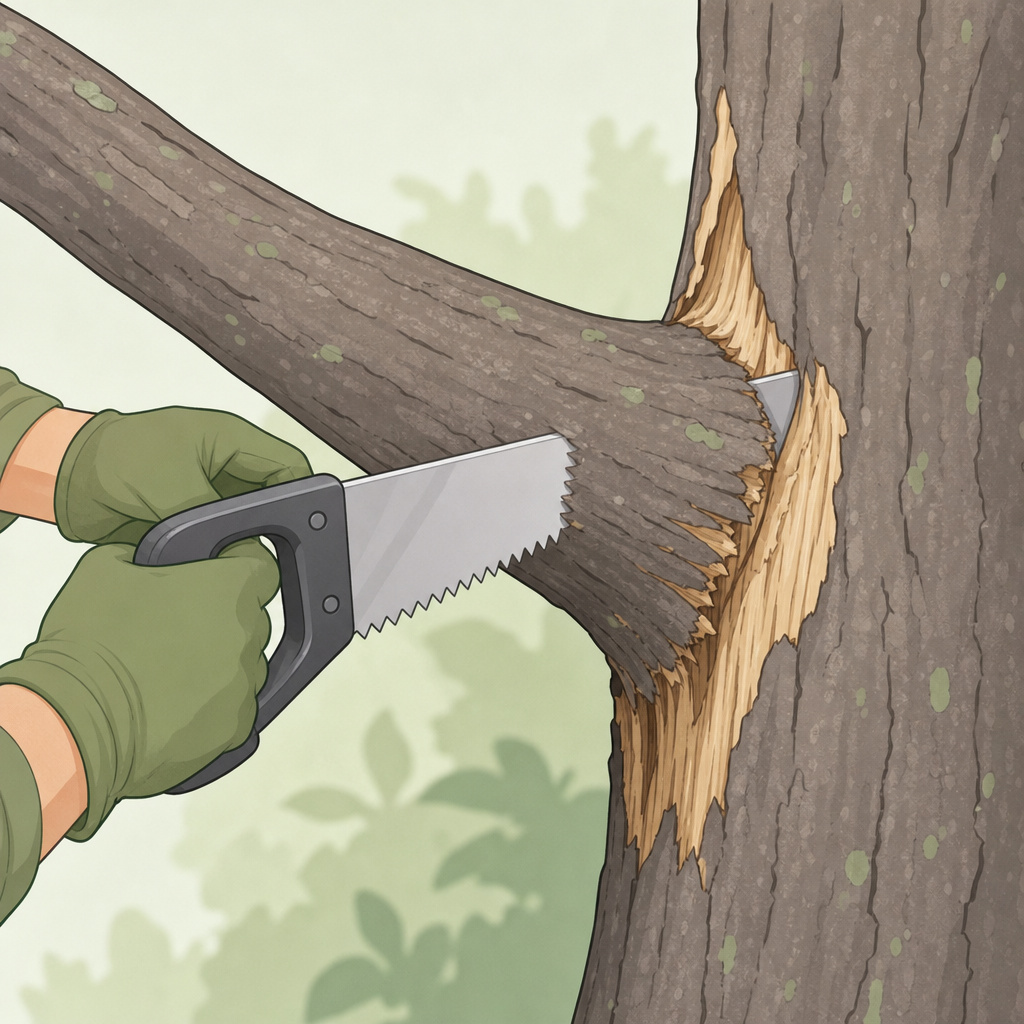
The consequences aren’t subtle. They show up in stages.
First, you hear it. The electric motor’s whine turns into a strained groan. The cordless tool’s LED battery indicator might flash. For gas models, the engine RPM drops and black smoke might puff from the exhaust. This is the clutch or gearbox straining.
Next, you feel it. The smooth vibration turns into a harsh chatter as the blade teeth slam into solid wood they can’t cut. This vibration travels up your arms and can cause fatigue or even nerve damage over time, a real concern with powerful gas units.
Then, you see it. The branch isn’t cut; it’s mangled. The outer bark is shredded, and the inner wood is crushed and frayed. This ragged wound is an open door for pests and diseases like canker or dieback. The plant will spend energy sealing this ugly tear instead of growing.
Finally, you pay for it. The immediate cost is a dulled or chipped blade. The hidden cost is wear on the drive mechanism. Repeatedly overloading a trimmer like this will strip the gears or burn out the motor. I’ve seen the nylon drive gears inside a popular cordless model melt into a fused lump after just three such abuses.
When to Use a Different Tool Entirely
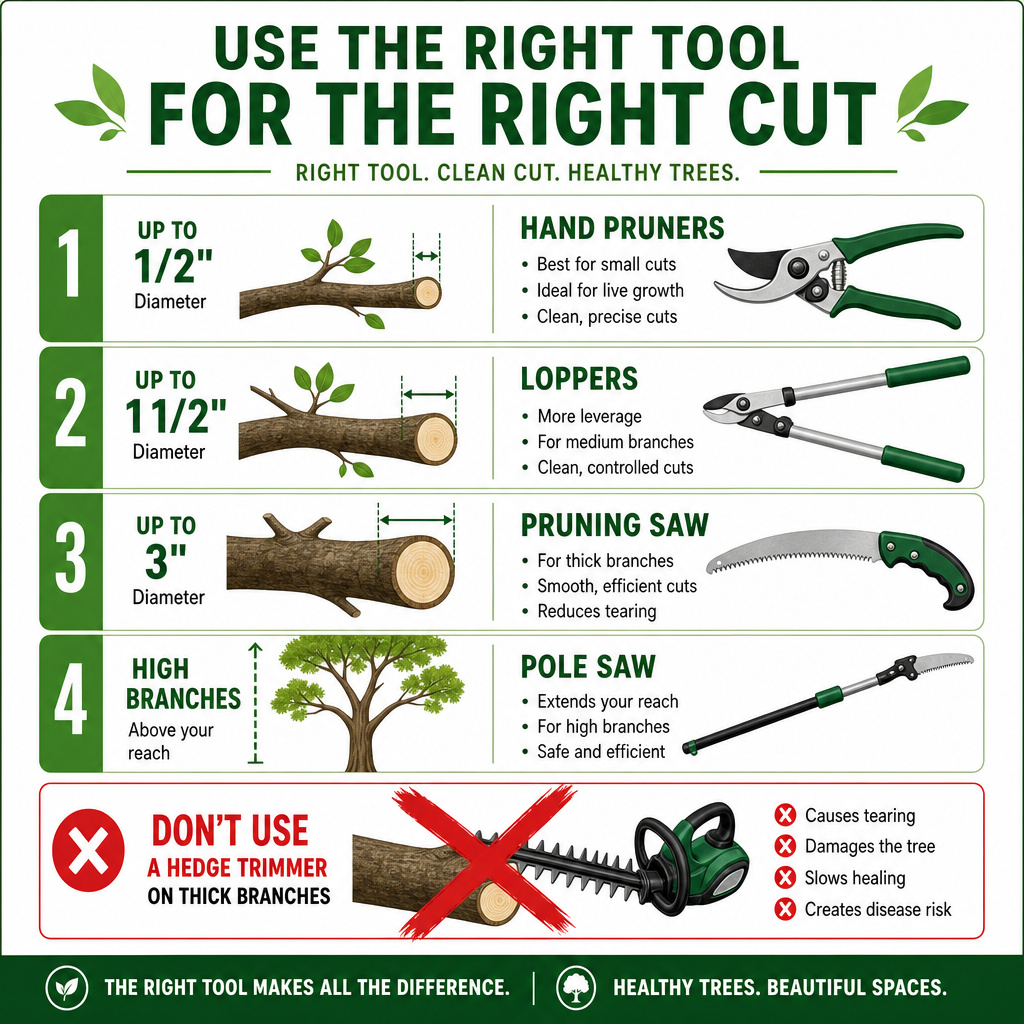
A hedge trimmer is a shaping tool. A chainsaw is a felling tool. In between, you have the right tools for branch work.
- For branches up to 1/2 inch: Hand pruners or shears are faster, quieter, and give you more control.
- For branches 1/2 inch to 1 1/2 inches: Bypass loppers are the correct tool. They give a clean, angled cut that heals quickly. The Fiskar PowerGear2 mechanism provides incredible leverage.
- For branches over 1 1/2 inches: A pruning saw is necessary. A sharp Silky Gomboy cuts on the pull stroke and goes through 3-inch limbs with ease.
- For high branches: A pole saw or pole pruner is the safe choice. Trying to use a hedge trimmer overhead, even a lightweight one, is an invitation to lose balance and control.
The rule is simple. If you find yourself making more than five or six cuts on branches at the trimmer’s maximum capacity during a single session, you are doing the wrong job with the wrong tool. Stop, and get the loppers.
Maintaining Your Trimmer After Cutting Branches
Cutting woody material is dirty work. Sap and plant resins gum up the blades faster than leafy growth.
After a session involving branches, don’t just hang the trimmer up. Wipe the blades down with a rag dampened with mineral spirits or a dedicated blade cleaner like Pine-Sol (diluted). This dissolves the sticky residue that attracts grit. Once clean, spray a light lubricant like WD-40 Specialist Long-Term Corrosion Inhibitor onto the blades to prevent rust.
Feel for nicks along the cutting edge with your thumb (gloved!). A small nick can often be filed out with a flat metal file. If you see a bent tooth or a deep chip, it’s time for professional sharpening or a blade replacement. Running with damaged blades forces the motor to work harder and makes every cut more dangerous.
Check the manual for your specific model. Some, like certain Stihl units, have a gearbox that requires annual greasing, especially after heavy use.
Frequently Asked Questions
Can I use a hedge trimmer to cut small trees?
No. Even a small tree sapling has a central trunk denser and more resilient than the peripheral branches a hedge trimmer is designed for. You will damage the tool and leave a horrible wound on the tree. Use a hand saw or a small chainsaw.
Will cutting branches dull my hedge trimmer blades faster?
Yes, dramatically. Green wood is softer than metal, but it’s still abrasive. Sap acts like glue, binding dust and grit to the blades, which accelerates wear. Cutting dry, dead wood is even worse, it’s often seasoned and harder. Expect to sharpen the blades 2-3 times more often if you regularly trim branches.
What’s the difference between single-sided and double-sided blades for branch cutting?
Double-sided blades (teeth on both cutting bars) are standard and are what you need for branch work. They provide a shearing action. Single-sided blades (one cutting bar, one stationary anvil) exist but are typically for light-duty, low-power electric trimmers and are useless for anything beyond soft stems.
Can I attach a hedge trimmer to a string trimmer as an attachment?
You can, but don’t expect branch-cutting performance. These attachments are almost universally underpowered and have tiny blade gaps meant only for soft, leafy growth. They’ll stall on anything more substantial than a daisy stem. For real branch work, you need a dedicated, powered hedge trimmer.
Is it safe to cut branches with an electric hedge trimmer?
It can be, within its limits. The primary risk with electric models (corded or cordless) isn’t power, it’s the temptation to force a cut because the tool is light and quiet. You can push it past its breaking point before you realize it’s struggling. Always respect the blade gap, and wear gloves. The cut from a cordless trimmer is just as deep as from a gas one.
The Bottom Line
Your hedge trimmer is a precision sculptor, not a brute-force lumberjack. It can handle the occasional stray branch that fits within its blade gap, provided you cut with patience and the right technique. But the moment you find yourself leaning into the tool, listening to the motor strain, or looking at a shredded branch end, you’ve crossed a line. That’s your cue to put it down, walk back to the shed, and pick up the right tool for the job. Your hedges will look better, your trimmer will last longer, and your fingers will stay attached.
