
No-Drill Method: How to Hang a Curtain Rod Without a Drill
This post contains affiliate links. As an Amazon Associate, we earn from qualifying purchases.
Hang a curtain rod without a drill by choosing between two main hardware types: tap-in brackets like Kwik-Hang that pin into wooden window trim, or tension rods that wedge inside the window casing. Kwik-Hang brackets require trim between 1/2 inch and 1 inch wide and hold up to 20 lbs, while tension rods are best for lightweight curtains and windows under 50 inches wide.
That 20-pound rating is the ceiling. It’s a lab number. On real walls with real trim, the failure point isn’t the bracket, it’s the drywall behind the trim. A documented review of a similar tap bracket product shows removal can peel the top layer of drywall clean off, a repair that needs a putty knife. So the choice isn’t just about weight; it’s about what you’re willing to patch later.
What follows: a breakdown of each method’s exact requirements, the step-by-step install that actually works, and the physical limits you won’t find in the marketing copy. By the end, you’ll know which no-drill path fits your windows and your risk tolerance.
Key Takeaways
- Kwik-Hang brackets only work on traditional wooden window trim between 1/2″ and 1″ wide. They fail on oak, PVC, MDF, or metal trim.
- Tension rods have a hidden sag limit. The MAYTEX Superior Hold manual states rods longer than 50 inches need a center bracket, most packaging omits this.
- Overtightening a tension rod bows the tube. The constant outward pressure can pop it loose after a few weeks, especially with medium-weight fabrics.
- Removal is where tap brackets cause damage. Prying them out can strip the drywall paper, requiring spackle and paint.
- For a clean, high-and-wide look without drilling, Kwik-Hang is the only option. Tension rods lock you into the exact height of the window casing.
The Two Main Methods: Brackets vs. Tension Rods
Your window’s anatomy decides the winner here. Not the look you want, not the curtain weight, the physical structure you’re attaching to.
Kwik-Hang and similar tap brackets mount to the top outside corner of the window’s wooden trim. The bracket has built-in pins you hammer in, like a thumbtack into corkboard. This gives you placement flexibility; you can mount the rod several inches above the window for the standard “high and wide” look. The load rating is 20 pounds.
Tension rods work by friction. You extend a spring-loaded tube so it presses against the inside of the window casing or the wall itself. They install in seconds but only work at the exact height of the window opening. Their weight capacity is lower, and the grip depends entirely on the pressure against two surfaces.
Common mistake: Assuming a tension rod labeled for “medium weight” can hold blackout curtains. The label refers to the rod’s strength, not its grip. Overtighten to compensate, and the rod bows, loses contact at the ends, and falls.
| Method | Best For | Weight Limit | Placement Flexibility |
|---|---|---|---|
| Tap Brackets (Kwik-Hang) | Windows with wooden trim; high-and-wide hanging | Up to 20 lbs (mfr. Claim) | High, wide, adjustable |
| Tension Rods | Lightweight sheers, temporary setups, inside mount | Light to medium fabrics | Fixed to window height |
The Kwik-Hang path is a permanent-looking install without screws. The tension rod path is utterly temporary. One looks like you hired someone; the other looks like you’re in a dorm. Decide which outcome you actually want before buying hardware.
What You Need: Hardware and Tools Checklist
Gather everything before you start. A missing item means a half-finished install and frustration.
For Kwik-Hang Bracket Install:
- Kwik-Hang brackets (single or double rod set)
- Curtain rod (5/8″ diameter for light curtains, 1″ for heavy drapes)
- Curtain panels
- Hammer (optional for firmer wood)
- Tape measure (to check trim width and rod length)
For Tension Rod Install:
- Tension rod (like the Kenney Rogers 5/8″ Twist & Fit or MAYTEX Superior Hold)
- Curtain panels
- A second person (for wider windows, per the MAYTEX manual)
Notice the tool difference. The bracket method needs a hammer at most. The tension rod method often needs an extra set of hands to hold one end while you twist and extend the other. Trying it solo on a 48-inch rod usually ends with scratched paint.
Where this goes sideways: Using a 1-inch curtain rod with a bracket made for 5/8-inch rods. The Kwik-Hang 5/8-inch bracket only fits rods 1/2 to 5/8-inch in diameter. Forcing a thicker rod bends the bracket’s cradle and the rod won’t seat. Check the bracket’s spec sheet before you buy the rod.
Step-by-Step Kwik-Hang Installation
This is the process Kwik-Hang claims takes under 60 seconds. It can, if your trim is soft pine and you’ve measured twice.
Check Your Trim First (The Non-Negotiable Step)
Window trim must be traditional wood, not oak, PVC, MDF, or metal. Hardwoods like oak are too dense for the pins to grip properly. Synthetic trim cracks.
Measure the width of the trim’s top face. You need at least 1/2 inch of flat surface, but no more than 1 inch. The bracket’s pins are spaced for that specific range. Trim narrower than 1/2 inch gives the pins nothing to bite; wider than an inch and the pins might not reach the wood’s center.
Position and Tap the Brackets
Hold a bracket at the top outer corner of the window trim. The bracket should sit flush against the wall and the top of the trim.
Tap it in with a hammer. Use firm, controlled strikes. Don’t swing wildly, you’re setting pins, not driving a nail. The goal is to seat the pins fully into the wood without smashing the bracket’s finish.
Repeat for the bracket on the opposite side.
Seat the Rod and Hang Curtains
Thread your curtains onto the rod first. Then, simply rest the rod ends into the cradles on each bracket. Give the rod a gentle downward tug to ensure it’s seated. The curtain’s weight will help lock it in place.
Walk away. You’re done.
The part nobody mentions: Removal. To take the brackets off, you must pry them upward. If the pins gripped deep into drywall behind the trim, they can pull the paper surface of the drywall with them. That’s not a tiny nail hole; it’s a patch job. Consider this a semi-permanent install.
Tension Rod Installation Walkthrough
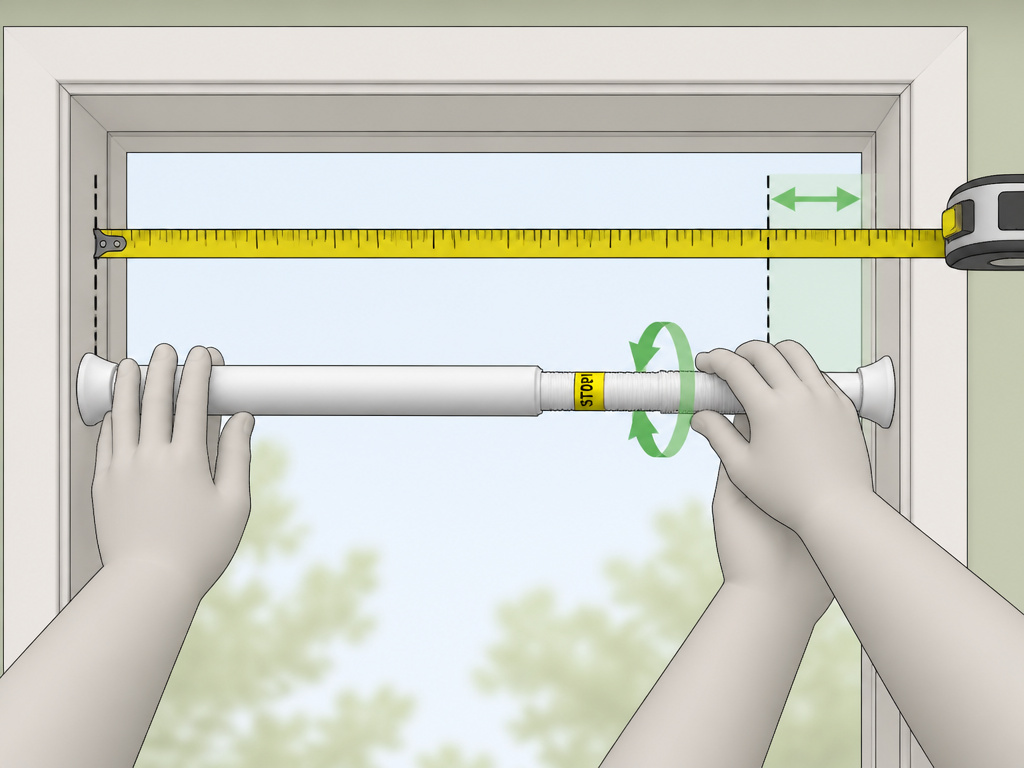 Tension rods seem foolproof. They’re not. The failure mode is gradual, the rod slips a millimeter each day until the curtains are on the floor.
Choose the Right Rod Diameter and Length
A 5/8-inch diameter rod (like the Kenney Rogers Twist & Fit) is for lightweight linens and cottons. It adjusts from 28 to 48 inches. Heavier fabrics need the thicker, more rigid tubes of a 1-inch rod.
Measure your window’s inside width. The rod must be adjustable to a length 1-2 inches longer than that measurement. That’s the tension gap. A rod that only extends to the exact width of the window has no gripping force.
The Two-Person Twist and Lock
Referencing the MAYTEX Superior Hold manual, the safe method requires two people for anything over 40 inches. One person holds the thicker, fixed tube steady against one side of the window.
The other person unlocks the rod by gripping the second tube and twisting it toward themselves. They then extend that tube, but not past the yellow “STOP!” line printed on the rod. Exceeding that line over-stretches the internal spring.
Finally, they twist the tube back toward the window until it locks tight. Repeat for a third tube if your rod has one.
Avoid the Bow and Fall
Once locked, the rod should be straight. Sight down its length. If you see a curve, it’s bowed. A bowed rod is applying uneven pressure; the ends will lose grip first.
The fix is to loosen it slightly. A straight, firmly seated rod holds better than a bent, over-tightened one. This is why the MAYTEX manual recommends a center support bracket for spans longer than 50 inches, to prevent mid-span sag that turns into end slip.
When No-Drill Methods Won’t Work
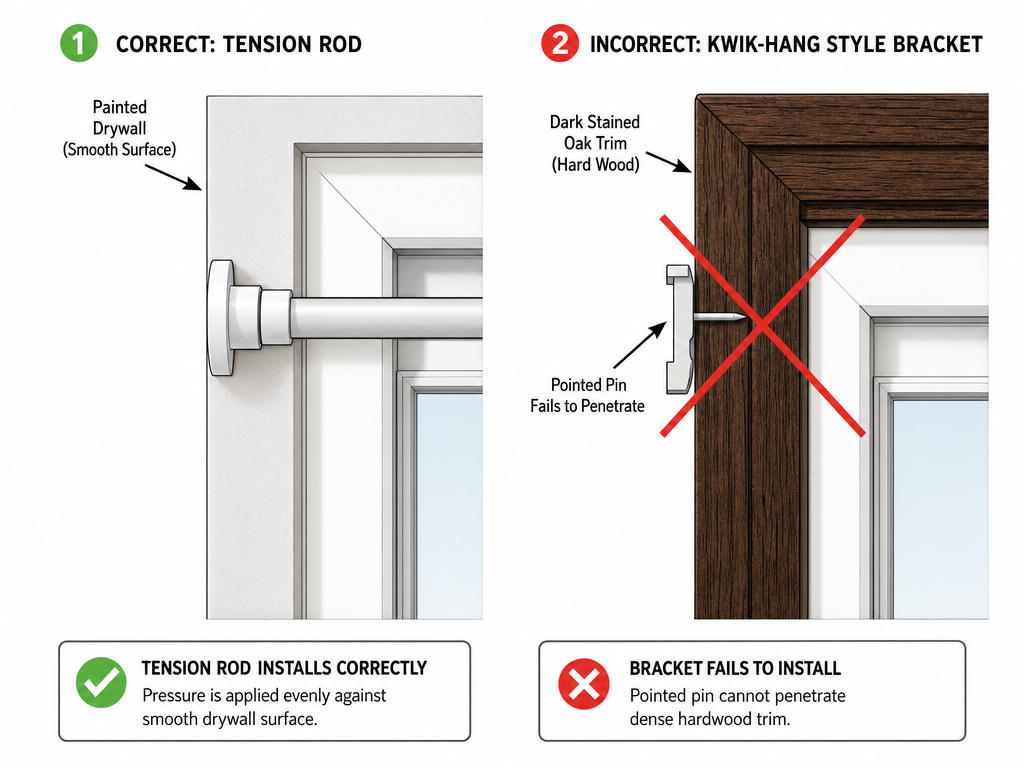 Sometimes the answer is to borrow a drill. Recognizing these deal-breakers saves a trip to the hardware store.
Your trim is the wrong material. PVC, metal, or stained oak trim won’t work with Kwik-Hang pins. Tension rods might be your only no-drill option here.
You have crown molding or a flush drywall reveal. If the top of your window trim is covered by crown molding or there’s no trim at all, just drywall, tap brackets have nowhere to mount. You’re in tension rod territory by default.
The window is extra wide. The Kwik-Hang FAQ mentions corner window setups need two rods and center supports. For a single wide window, a rod longer than 50 inches will sag without a center bracket. Since you can’t install a no-drill center bracket, you’re stuck with a visible dip in your curtains.
You own heavy blackout drapes. That 20-pound rating is for perfect conditions. In reality, the daily open-and-close motion on a tap bracket works the pins loose over months. Heavy drapes are a job for screwed-in brackets.
Frequently Asked Questions
Can you hang curtains without a drill on drywall?
Yes, but only with a tension rod placed inside the window casing. Tap brackets like Kwik-Hang require wooden trim to grip. If you have drywall around the window with no trim, there’s no structure for the pins to anchor into.
Do no-drill curtain rods hold blackout curtains?
They can, but not reliably long-term. Kwik-Hang brackets are rated for 20 lbs, which covers most blackout drapes. However, the constant weight and friction from opening and curtains can gradually loosen the pins’ grip in the trim. For a permanent blackout solution, drilled brackets are more secure.
How do you hang a curtain rod without nails or drills?
Use a tension rod. It’s the only method that requires no hardware attachment to the wall or trim. The rod stays up through spring pressure against the window casing or walls. Just be sure to get the length and weight capacity right.
Do Kwik-Hang brackets damage walls?
They can damage walls upon removal. While installation leaves only pin holes, prying the brackets out can tear the drywall paper behind the trim. This creates a larger repair than a simple screw hole. If you’re a renter, check with your landlord before using them.
What is the best no-drill curtain rod for heavy curtains?
The Kwik-Hang 1-inch rod bracket system is the strongest no-drill option. It’s designed for heavy drapes and uses the same pin mechanism as their standard bracket. You must have compatible wooden trim, and remember that 20 lbs is the maximum, not the recommended everyday load.
Before You Go
Measure your window trim width first. That number tells you if Kwik-Hang is even an option. If you have the right trim and want a clean, elevated look, the Kwik-Hang path is straightforward. Just accept that removal might cost you some spackle.
If your trim is wrong or you want total reversibility, a tension rod is your answer. Stick to light fabrics, respect the yellow stop line, and don’t expect it to hold up sheers for more than a season without slipping.
For everyone else, the wide windows, the heavy drapes, the plaster walls, the honest answer is that no-drill methods have limits. Sometimes the right tool for the job is the one you wanted to avoid. A drill, a level, and a proper bracket leave the smallest holes anyway. And they’re easy to patch.
