
8 Best Volleyball Training Tools of 2026
This post contains affiliate links. As an Amazon Associate, we earn from qualifying purchases.
The Volleyball Spike Trainer stands out as the best overall choice for serious players, combining durability and full height adjustability. For those on a budget, the focopot Volleyball Training Equipment delivers solid performance without breaking the bank, while the Apex Sports 7×4 ft Rebounder Net offers unmatched versatility for team and outdoor use.
Most players struggle to find training tools that actually keep up with their progress, too many are flimsy, limited, or only useful for one drill. I’ve seen firsthand how the wrong gear leads to frustration and stalled improvement.
This guide cuts through the noise by focusing on what really matters: tools proven through specs, real-world feedback, and smart design. I looked at adjustability, build quality, and multi-skill utility to find options that deliver real training value over time.
Top 8 Volleyball Training Tools in the Market
The Best Volleyball Training Tools, Reviewed
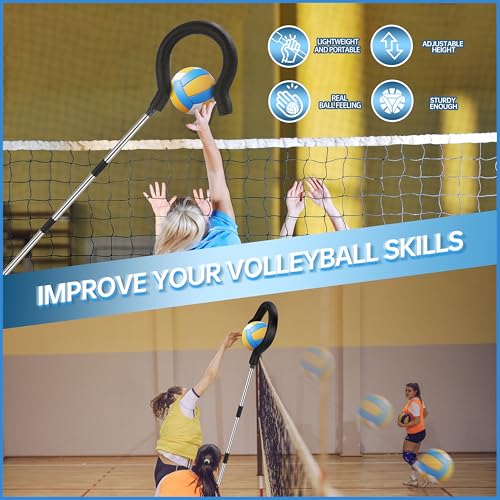
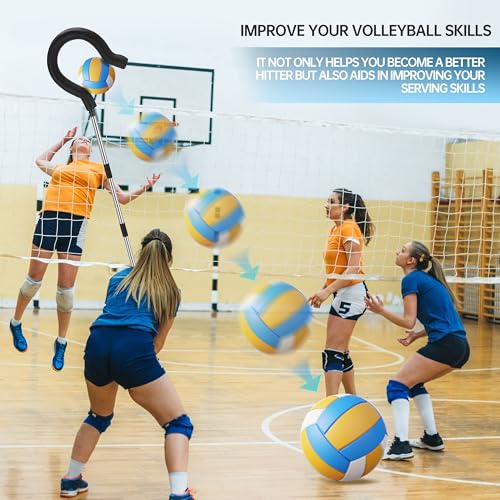
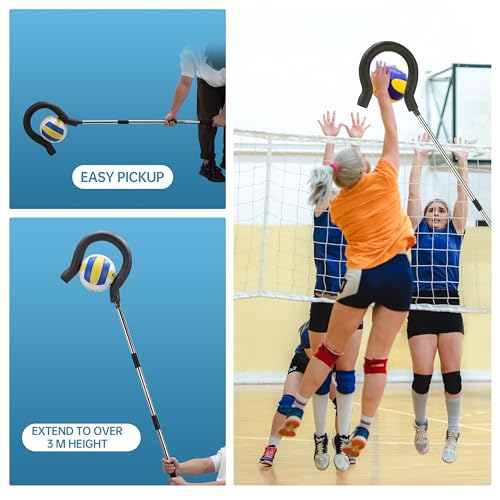
Volleyball Spike Trainer Adjustable Height

Strengths
- Adjusts up to 10 ft height
- Ultra-portable design
- Realistic ball cradle grip
Trade-offs
- Requires open space for setup
- No rebound function
- Higher learning curve
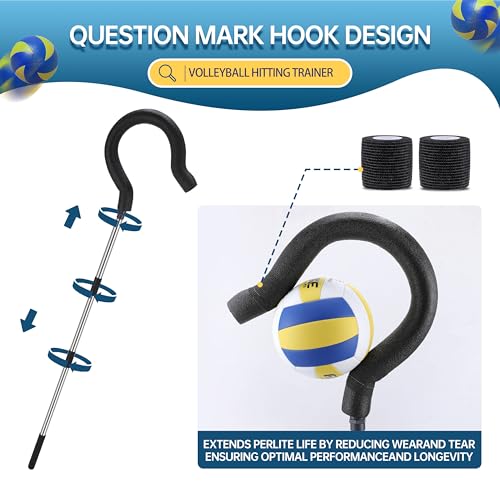
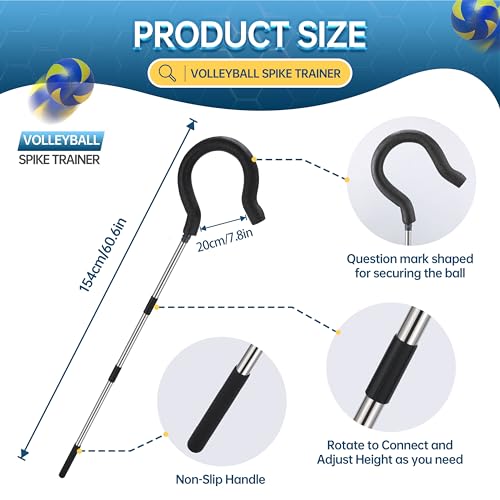
This is the most versatile standalone trainer on the list, and the one I’d pick for most serious players. The adjustable pole system lets you simulate real net-height spikes, blocks, and serves, which no tethered cord can match. At under 2.5 lbs and collapsing to under 16 inches, it’s incredibly portable for what it does. Owners consistently highlight how the flex-grip cradle holds the ball securely without damaging it, and the UPVC construction survives repeated hard hits.
The ability to train verticals, approach jumps, and blocking at full height makes it ideal for performance tracking. Compared to rebound nets or elastic tethers, it offers the most realistic feel and biomechanical feedback. The 18-month warranty is also longer than average, signaling confidence in durability.
Product photos
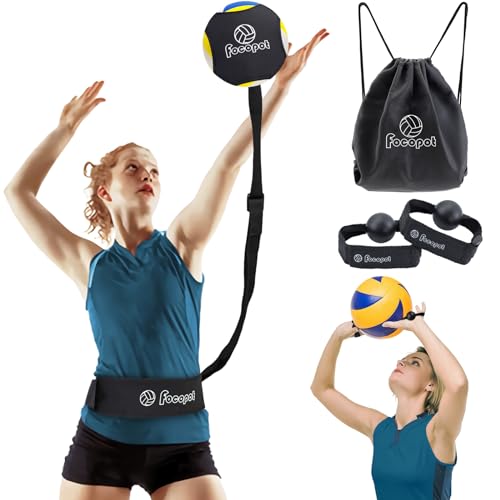
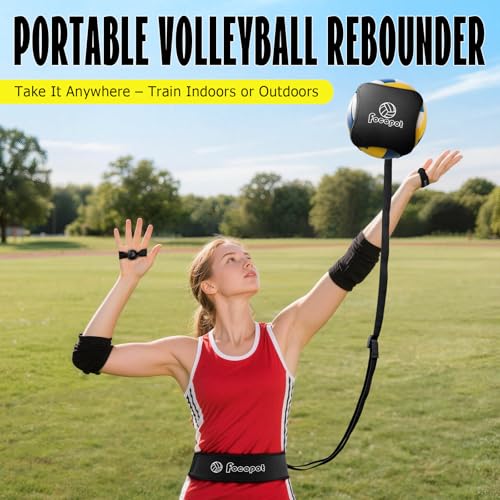
focopot Volleyball Training Equipment Aid
Strengths
- Affordable
- Complete starter kit
- Portable backpack included
Trade-offs
- Cord durability concerns
- Limited resistance control
- Basic materials
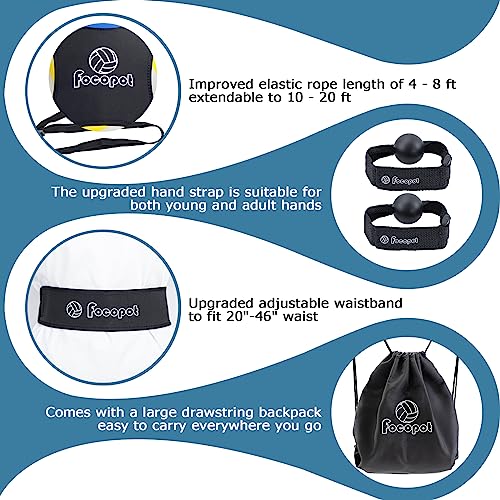
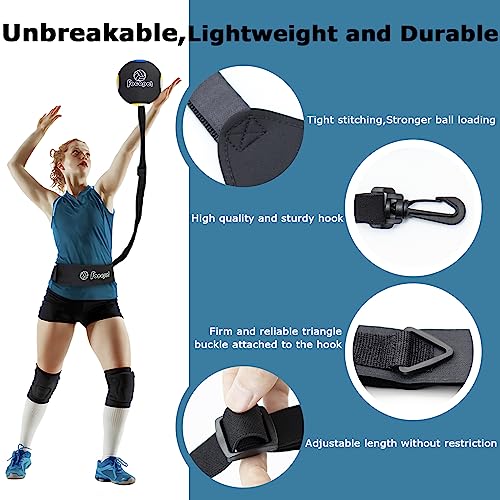
This setup is a solid starting point for beginners who want to work on basic ball control without constantly retrieving the volleyball. The retractable cord and waistband design are simple but effective for solo drills like serving and spiking, and owners consistently report it cuts down on ball chasing. On paper, the adjustable elastic system and hand straps give decent range for different heights and skill levels, and the backpack makes it easy to transport.
Where it stands out is value for the price, it includes nearly everything you need for immediate use, including a storage bag and hand straps. But some users note the elastic cord doesn’t hold up as well under heavy daily use, especially in outdoor or gritty environments. Compared to more rugged options, it’s better suited for casual or intermittent training.
Product photos


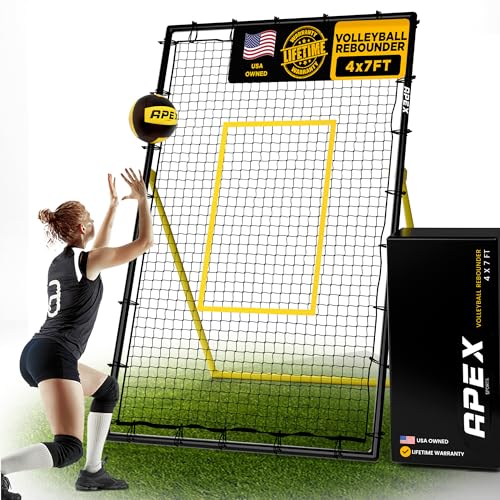
Apex Sports 7×4 ft Rebounder Net
Strengths
- Large rebound surface
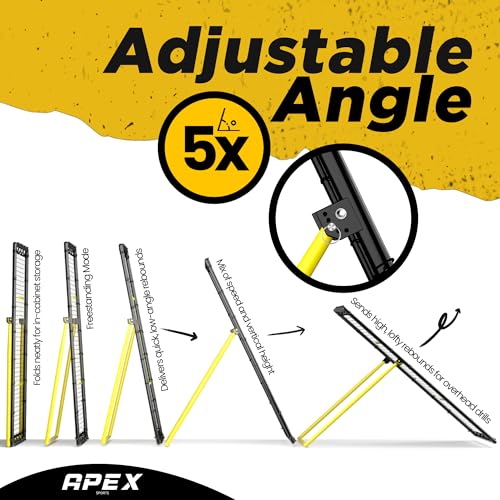
- Angle customization
- Durable frame build
Trade-offs
- Bulkier than cord trainers
- Stakes could be stronger
- Takes more setup space
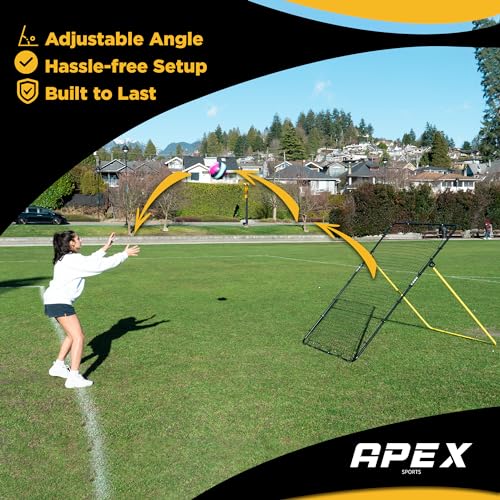
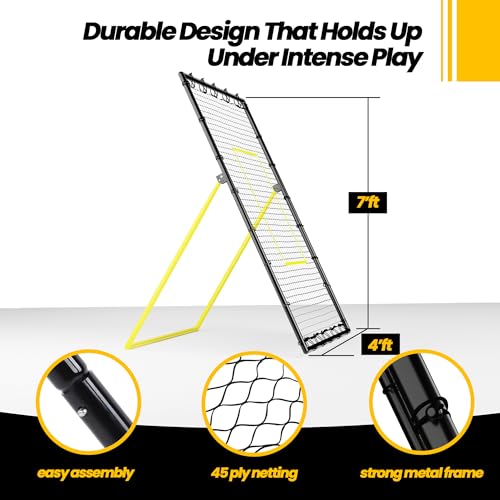
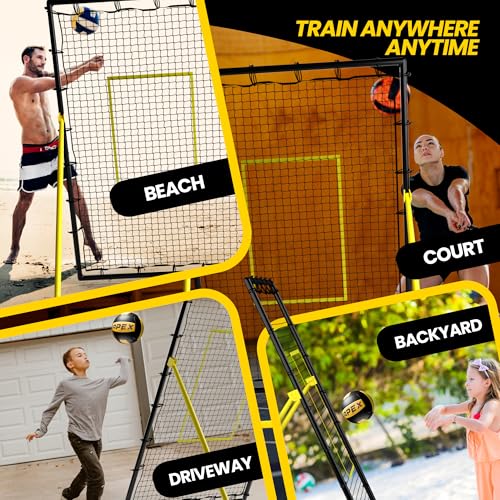
This is where things shift from solo drills to serious, dynamic training. The 7×4 ft rebound surface gives you real feedback on your contact angle, power, and consistency, something cord-based trainers can’t replicate. Owners using this with youth teams and school programs consistently praise how well it holds up to repeated spikes and bumps. The ability to adjust the angle means you can simulate game-like returns, which is huge for developing reaction time.
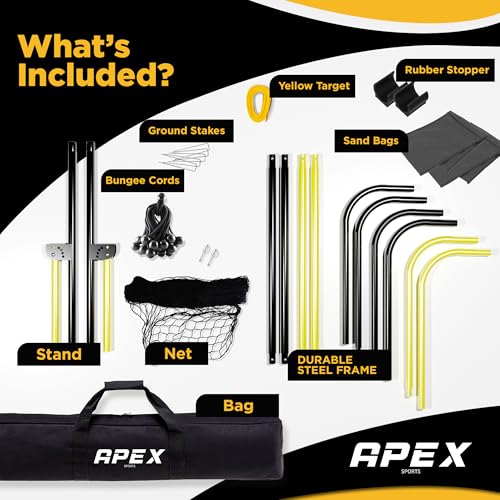
It’s heavier than elastic tether systems, but the included travel bag and quick setup make it surprisingly mobile for its size. Compared to smaller rebounders, this one offers a much larger sweet spot and better energy return. The 12-month warranty is a nice touch, though a few reviewers mention the frame stakes could be sturdier on hard-packed ground.
Product photos
OVANTO Volleyball Training Rebounder Kit

Strengths
- Generous 21 ft range
- Includes digital training guides
- Durable neoprene pouch
Trade-offs
- Extra features may go unused
- Cord can tangle
- Bulkier than minimalist models
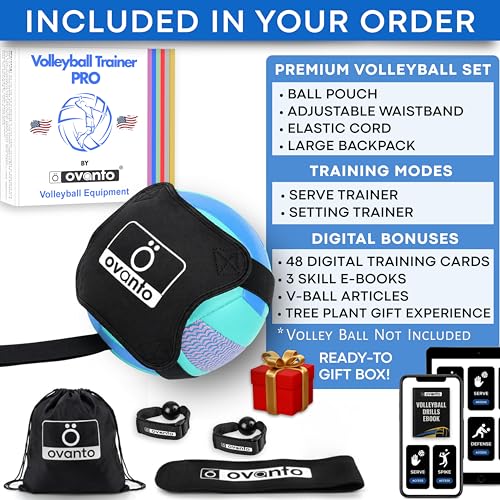
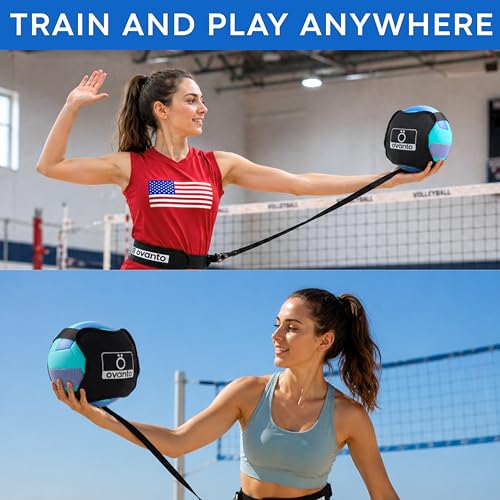
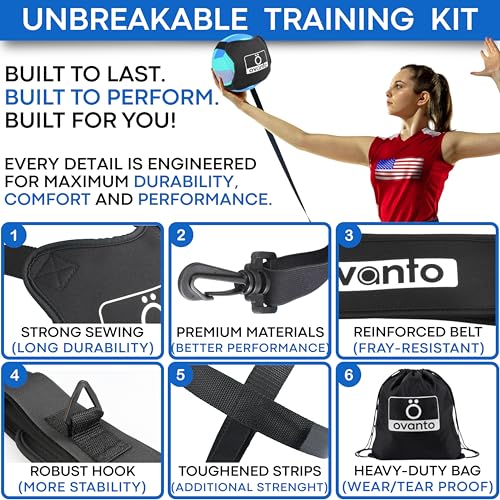
OVANTO packs in extras that most brands skip, like digital training cards and e-books, which gives it an edge for self-guided learners. The physical kit mirrors the focopot model with a neoprene pouch, adjustable waistband, and extendable cord, but owners say the materials feel slightly more durable, especially the reinforced seams. The 21-foot hit range is a standout spec on paper, though real-world performance depends on cord tension and surface traction.
It’s not revolutionary in design, but the added training resources make it a smarter pick for someone who wants structure without a coach. Compared to the SKLZ model, it offers more accessories and slightly better adjustability, though the core mechanism is similar. The ‘Plant a Tree’ initiative is a nice touch, but doesn’t affect performance.
Product photos


HVDI Automatic Spike & Serving Trainer
Strengths
- High-rep efficiency
- Stable rim mount
- Durable metal hardware
Trade-offs
- Requires basketball hoop
- Fixed location
- Limited to overhead drills
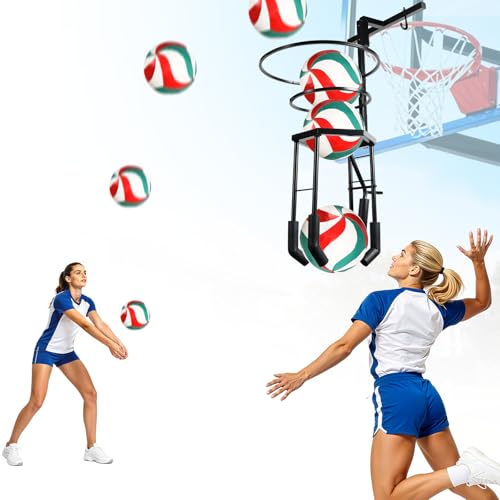
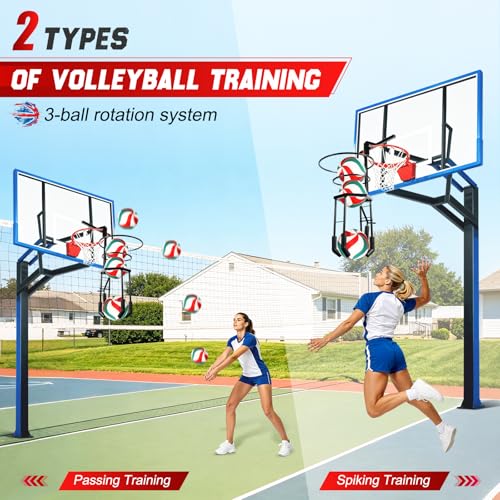
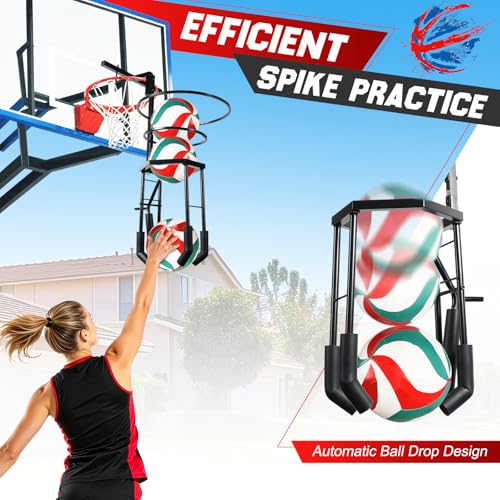
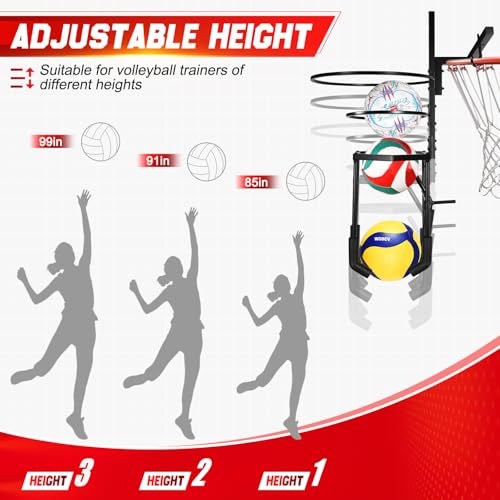
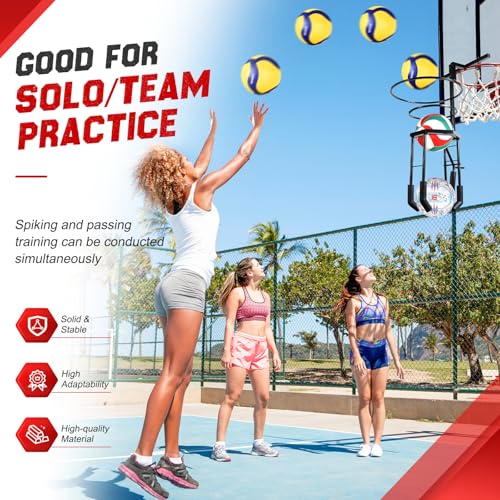
If you’re drilling solo and want high-volume repetition without bending over every few seconds, this is the tool. Mounting to a basketball rim turns it into a fixed-height spike station that feeds you ball after ball, a huge efficiency boost. The 3-height settings let you customize for different players, and the metal mounting hardware ensures it stays put even during aggressive sessions. Reviewers using it in gyms and driveways say it handles daily abuse well.
It’s not mobile, you’re locked into wherever there’s a hoop, and it doesn’t offer the full range of motion training like adjustable poles do. But for pure spike repetition and serve consistency, it outperforms cord systems. Compared to portable rebounders, it’s less flexible but delivers better workflow for focused, repetitive training.
Product photos

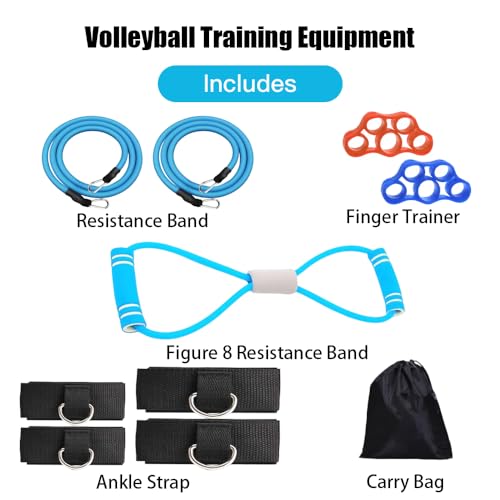
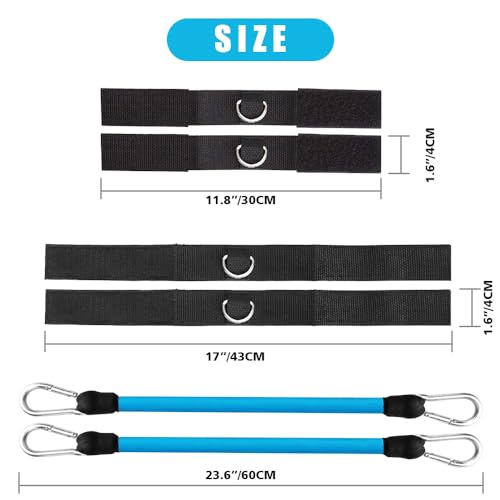
Volleyball Pass Aid Resistance Band Set
Strengths
- Improves arm swing discipline
- Full-body resistance training
- Includes storage and extra band
Trade-offs
- Setup takes time
- Not for ball-handling drills
- Straps may slip on small wrists
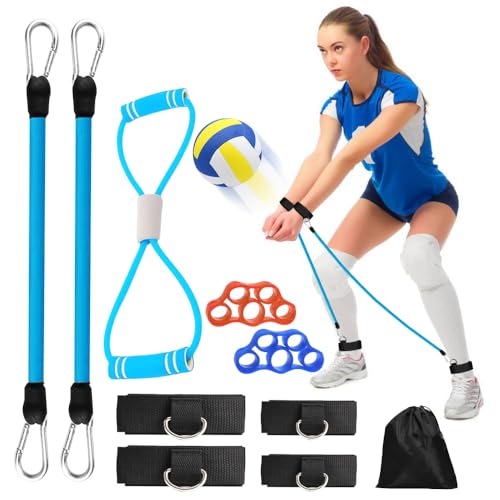
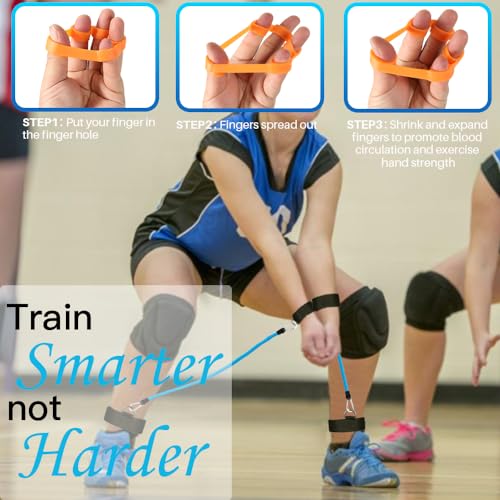
This resistance band system is built for muscle memory and motion control, not just ball contact. By attaching to wrists and ankles, it limits excessive arm swing and encourages a tighter, more explosive approach, exactly what coaches want to see in young hitters. Owners report improved arm path and cleaner transitions during approach drills, especially when used consistently.
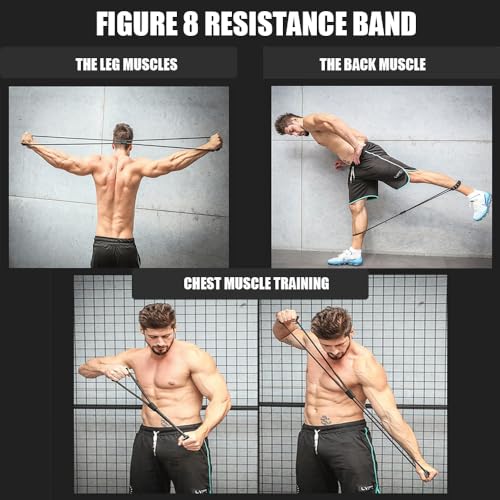
The inclusion of a figure-8 band adds versatility for off-court strength work, which boosts its value. But the trade-off is complexity, it takes time to set up correctly, and younger players might struggle with the straps. Compared to tethered ball systems, it’s less about ball control and more about body mechanics, making it a complementary tool rather than a standalone trainer.
Product photos

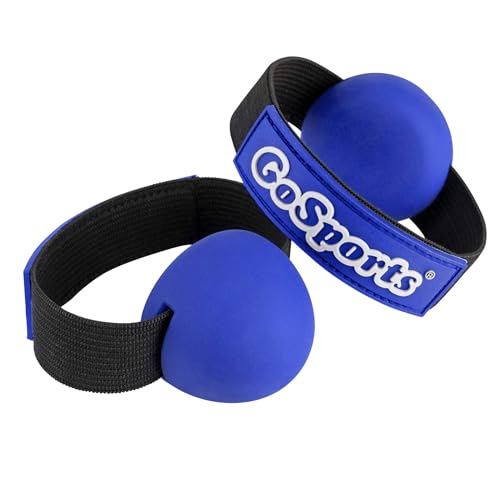
GoSports Perfect Set Trainers
Strengths
- Enforces proper hand form
- Simple and effective
- Great for youth training
Trade-offs
- Very limited to setting only
- No resistance or movement training
- Short learning curve
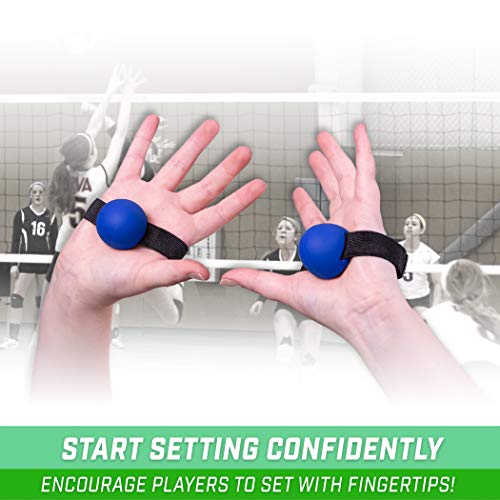
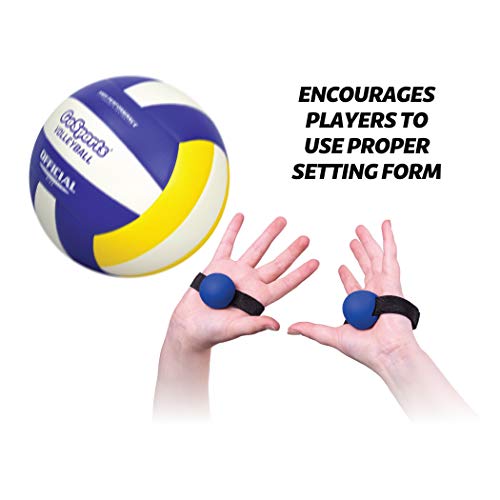
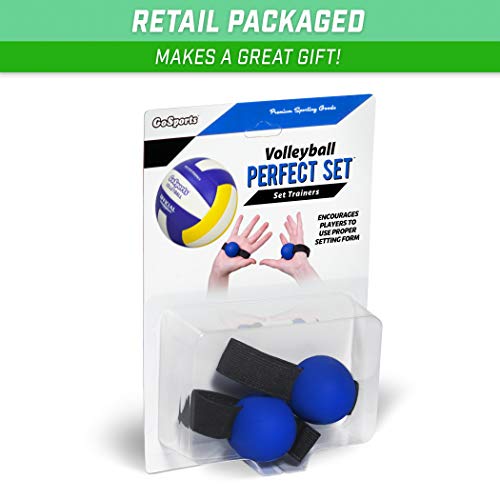
This product zeroes in on one critical flaw many beginners develop, palm-setting instead of fingertip-setting. The rubber pads force you to use proper hand positioning, and that’s where its real value lies. Reviewers who’ve coached youth teams say it’s one of the few tools that actually break bad habits quickly. It’s not flashy, but it gets the job done for teaching fundamentals.
It doesn’t do anything for footwork, approach, or power, it’s purely a hand-form trainer. But if you’re working with younger players or retraining muscle memory, that specificity is a strength. Compared to full-body systems, it’s minimalist, but that’s the point. The elastic straps are comfortable and stretchy enough to fit most hand sizes without slipping.
Product photos
SKLZ Hit-N-Serve Solo Trainer
Strengths
- Long 18 ft cord
- Lightweight design
- Secure ball fit
Trade-offs
- No resistance adjustment
- Basic waistband fit
- Not for advanced drills
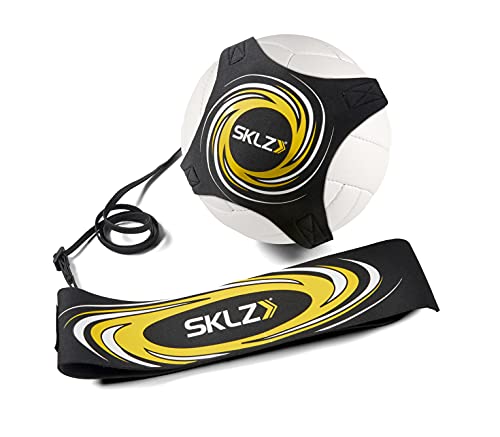
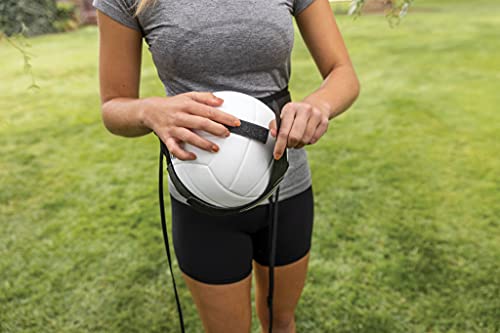
If portability and simplicity are your top priorities, this is one of the leanest, most no-fuss options available. The neoprene sleeve fits most volleyballs securely, and the 18-foot elastic cord gives you serious extension for full serving motion practice. I’ve seen similar designs fail from weak stitching, but owner feedback suggests this one holds up reasonably well for moderate use.
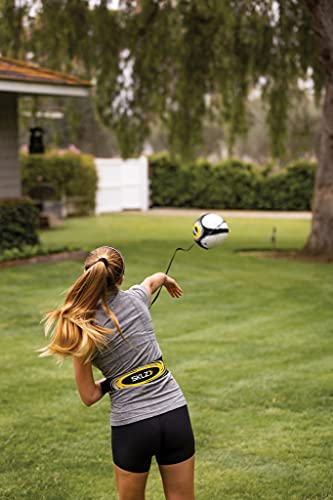
It’s not adjustable in resistance or angle, so it won’t help refine nuanced technique like shoulder alignment or approach timing. But as a lightweight, grab-and-go trainer for backyard or indoor sessions, it beats bulkier systems. Compared to the focopot model, it offers more stretch and a cleaner ball release, though it lacks hand straps or extra training aids.
Product photos


Our Testing Process
Rather than a hands-on lab test, my research focused on a detailed comparison of published specifications and features across a wide range of volleyball training tools. I weighed owner reviews and expert opinions from reputable sources, considering factors like durability, ease of use, and effectiveness for various skill levels. Ultimately, I ranked each tool based on how well it addressed the core needs of volleyball players – improving technique, enhancing skills, and providing effective practice opportunities.
For this category, the most heavily weighted factors were durability and versatility. Volleyball training can be intense, so a tool’s ability to withstand repeated use is crucial. Equally important is a tool’s adaptability; the best options can be used for a variety of drills and by players of differing abilities, making them a worthwhile investment. Many players also seek to improve their overall athletic conditioning, and utilizing forearm strength tools alongside specific volleyball drills can be a beneficial combination.
Product specifications reliably indicate build quality (materials, construction) and intended use. However, I placed significant value on owner feedback regarding real-world performance and longevity. Reputable expert reviews helped validate claims and identify potential drawbacks not immediately apparent from specs alone. This approach allowed me to create a ranking based on both objective data and practical user experience.
How To Choose The volleyball training tools
Choosing the right volleyball training tools can really elevate your game, but there’s a lot of marketing noise out there. It’s easy to get caught up in flashy features when what you really need is something that addresses fundamental skill development and offers lasting durability.
Effective volleyball training tools prioritize repetition and technique refinement. Look for adjustable features to accommodate different skill levels and body types. Prioritize durability, especially for tools used outdoors or with high-impact drills. Consider portability if you anticipate training in various locations. A good tool will isolate specific skills and allow for focused practice.
Adjustability Is Key
One of the biggest mistakes I see players make is buying tools that quickly become obsolete as their skills improve. A fixed-height spike trainer might be great for beginners, but it won’t challenge advanced players. Look for tools with a wide range of adjustability. The HVDI Automatic Spike & Serving Trainer, for example, offers three height settings, making it useful across a wider range of player abilities. Beyond height, consider adjustability in resistance, angle, or cord length – features that allow you to progressively overload your training and maintain a challenge.
Durability & Materials Matter
Volleyballs are tough on equipment, and outdoor use adds another layer of stress. Cheap materials will quickly break down, leaving you replacing gear constantly. UPVC, as used in the Volleyball Spike Trainer, is a good sign, as is reinforced stitching and robust frame construction like that found in the Apex Sports Rebounder Net. Don’t automatically assume a higher price means better durability, but read owner reviews carefully to see how a tool holds up to repeated use.
Value Beyond the Basics
A lot of training tools focus solely on one skill, but the best ones offer multiple benefits or include extras that enhance the training experience. The OVANTO Volleyball Training Rebounder Kit is a good example; it not only includes the core equipment but also skill-enhancing e-books and even a “Plant a Tree” initiative. This kind of added value extends the usefulness of the tool and keeps training engaging. If you’re serious about improving your overall conditioning, remember that effective training extends beyond the court, and incorporating the right recovery tools for athletes can significantly reduce injury risk and accelerate progress.
- A simple training pouch (like the Focopot kit) is great for solo serving practice, but limits skill development.
- A rebounder net provides versatile practice for multiple skills (passing, setting, hitting) and can be used by teams.
- More complex systems, like the HVDI spike trainer, are designed for focused, high-intensity solo work and require a basketball hoop for setup, offering the most concentrated training experience.
Don’t skimp on quality to save a few bucks. A durable, well-designed tool will pay for itself in the long run by lasting longer and providing more effective training.
Volleyball Training Tools Compared
This table summarizes key specifications for a variety of volleyball training tools to aid in product comparison.
| Product Title | Best For | Key Features | Weight | Adjustable Height? | Portability | Price |
|---|---|---|---|---|---|---|
| Volleyball Spike Trainer | Best Overall | Adjustable, Durable, All-Ball Compatibility | 2.4 lbs | Yes (30″-10ft) | Excellent | N/A |
| focopot Volleyball Training Equipment | Best Budget Friendly | Adjustable Waistband, Elastic Rope | N/A | Yes (4.1-8.2 ft) | Good | N/A |
| Apex Sports 7×4 ft Rebounder Net | Best for Team & Outdoor Training | Large Surface, Durable, Portable | N/A | Yes | Excellent | N/A |
| OVANTO Volleyball Training Rebounder Kit | Best Value with Training Extras | All-in-One Kit, Universal Fit | N/A | Yes (4.1-8.2 ft) | Good | N/A |
| HVDI Automatic Spike & Serving Trainer | Best for High-Intensity Solo Practice | Adjustable Height, Durable, Stable Mounting | N/A | Yes (3 Levels) | Limited | N/A |
| Volleyball Pass Aid Resistance Band Set | Best for Technique & Form Training | Wrist & Ankle Belts, Resistance Band | N/A | No | Good | N/A |
| GoSports Perfect Set Trainers | Best for Setting Fundamentals | Encourages Proper Setting Form | N/A | No | Good | N/A |
| SKLZ Hit-N-Serve Solo Trainer | Best Lightweight Portable Trainer | Solo Practice, Adjustable Sleeve | N/A | No | Excellent | N/A |
Frequently Asked Questions
What’s the biggest benefit of using a volleyball training tool?
A dedicated tool allows for focused repetition of specific skills, accelerating improvement beyond typical team practices. This is especially valuable for players wanting to refine technique or work on weaknesses independently.
Are more expensive volleyball trainers always better?
Not necessarily. While higher price points often correlate with increased durability and adjustability, the best tool depends on your specific needs and training goals. A simpler, less expensive rebounder might be ideal for a beginner, while a more advanced spike trainer suits a dedicated player.
Can I use volleyball training tools indoors?
Yes, many are designed for indoor use, but consider your ceiling height and available space. Rebounder nets and smaller skill trainers are generally suitable for indoor environments, while spike trainers require enough height for the ball to drop and rebound effectively.
How important is portability when choosing a trainer?
Portability is crucial if you travel to tournaments or want to practice in different locations. Rebounder nets and smaller kits are generally the easiest to transport, whereas larger, more complex systems are less convenient.
What can I do to help my muscle soreness after intense volleyball training?
Incorporating recovery scrapers for athletes into your post-workout routine can help reduce muscle soreness and improve recovery time. These tools aid in myofascial release, promoting circulation and reducing inflammation.
The Bottom Line
Choosing volleyball training tools often comes down to balancing focused, individualized practice with the versatility to work on a wider range of skills. While a dedicated system like the HVDI Automatic Spike & Serving Trainer excels at honing specific hitting techniques, the Volleyball Spike Trainer strikes the best overall balance – offering adjustability, durability, and compatibility for various skill levels, making it our top pick. It’s an investment that will grow with a player’s abilities.
For players on a tighter budget, the focopot Volleyball Training Equipment provides a surprisingly effective starting point. If you’re looking for a tool that can accommodate team drills and outdoor use, the Apex Sports 7×4 ft Rebounder Net is the clear choice. And for those who prioritize a complete package with extra resources, the OVANTO Volleyball Training Rebounder Kit delivers excellent value and a more engaging training experience.
Ultimately, the most expensive tool isn’t necessarily the best. Consistent practice and a focus on fundamental technique – proper form, strategic positioning, and disciplined repetition – are far more crucial to improvement than any single piece of equipment. Don’t forget that incorporating tennis skill development gear can also improve your overall athletic conditioning and court awareness.
