8 Best Tub Drain Removal Tools 2026
This post contains affiliate links. As an Amazon Associate, we earn from qualifying purchases.
The M05255 1.5″ Tub Drain Extractor is the best overall pick for breaking free stubborn, rusted drains thanks to its hardened steel build and helical design. For a budget-friendly option that still delivers solid grip, the Kylazer 3/8″ Ratchet Drive Extractor stands out. If you’re dealing with different drain types, the Leirsdam Adjustable Tub Drain Tool offers the most versatility.
Removing a tub drain without the right tool often leads to stripped fittings, damaged surrounds, or a job that just doesn’t get done. Most DIYers underestimate how much force and proper fit it takes to free a corroded drain.
This guide cuts through the noise by focusing on real-world performance, material durability, and compatibility. I looked at specs, owner feedback, and design details to find tools that actually hold up when you need them most. You’ll see which models deliver consistent grip, fit common drain sizes, and won’t let you down mid-job.
Top 8 Tub Drain Removal Tools in the Market
The Best Tub Drain Removal Tools, Reviewed
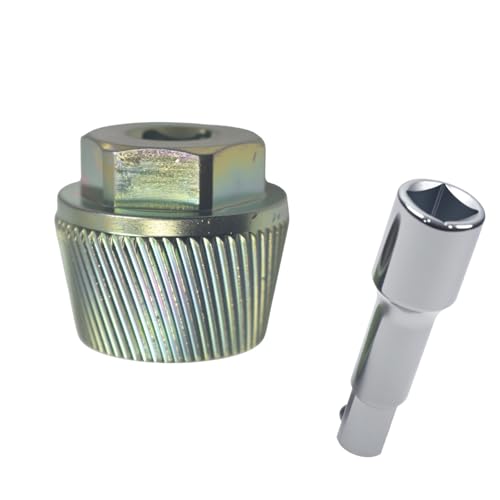
1.5″ Tub Drain Extractor
Strengths
- Durable construction
- Simple operation
- Versatile fit
Trade-offs
- Generic design
- No self-tightening grip
Marketed as the ‘best overall’, this tool delivers solid performance but doesn’t quite outshine others in any one area. It’s made from high-quality steel and built for durability, with a strong grab mechanism that handles rust and resistance well. The design is straightforward, drop in, turn counterclockwise, extract. It’s a reliable generalist, fitting most 1.5-inch drains without fuss.
Still, it lacks standout features like an expandable head or helical grip. Compared to the M05255 model, it doesn’t bite as aggressively under high torque. And unlike the Leirsdam, it doesn’t offer size adjustability. It’s a good middle-ground tool, but not the top pick unless you need a no-frills, durable extractor.
Product photos

M05255 1.5″ Tub Drain Extractor
Strengths
- Self-tightening grip
- Hardened steel build
- Works with standard ratchets
Trade-offs
- Requires hammer tap
- Risk of surface marring
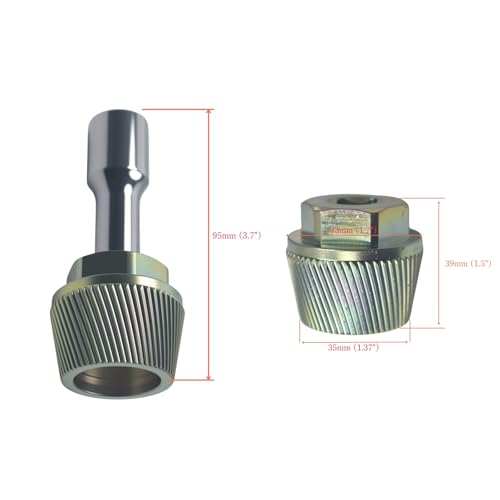
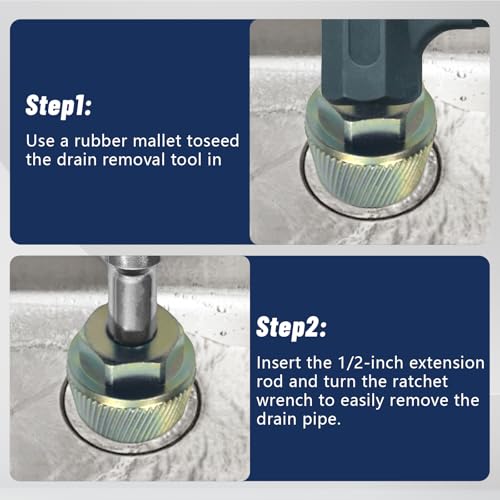
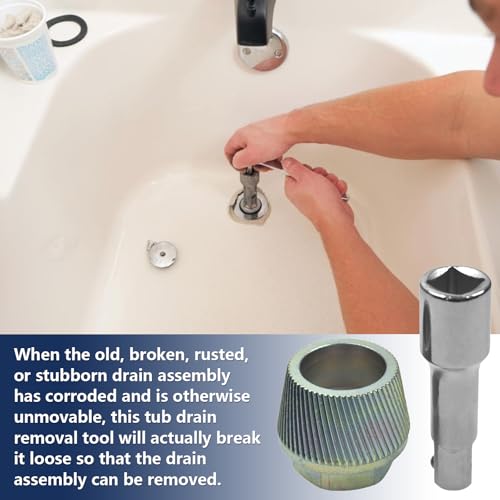
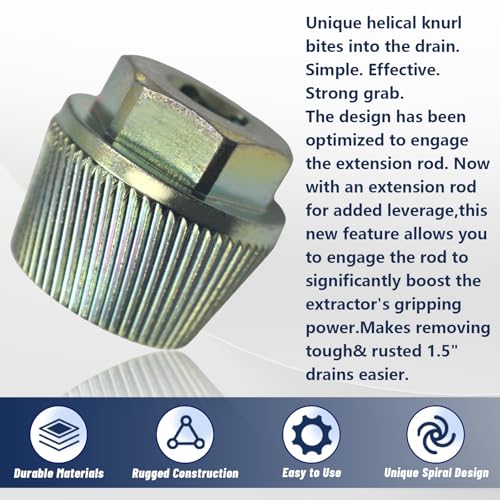
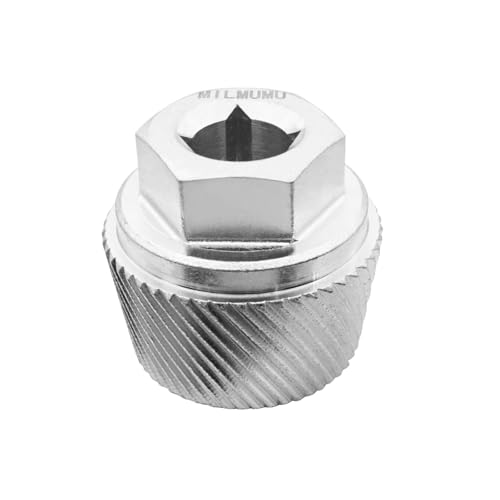
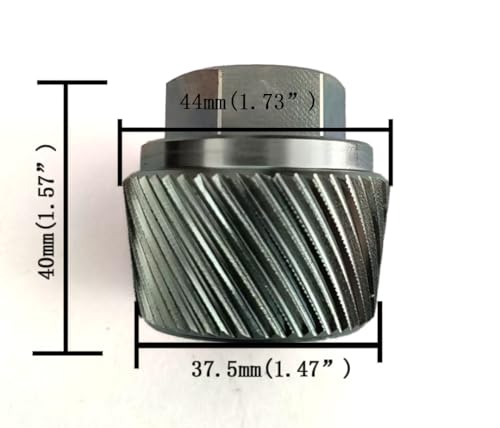
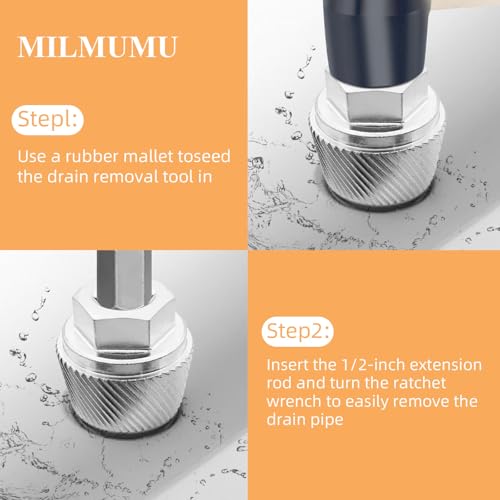
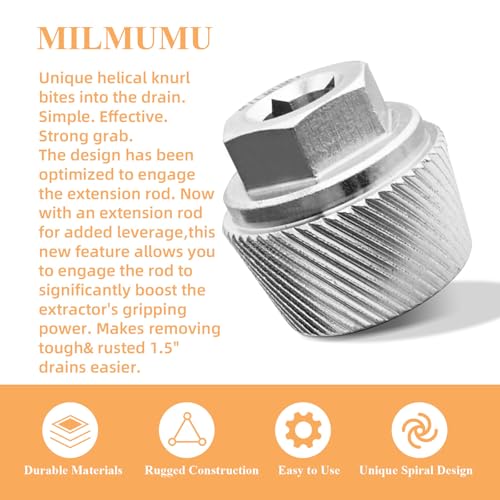
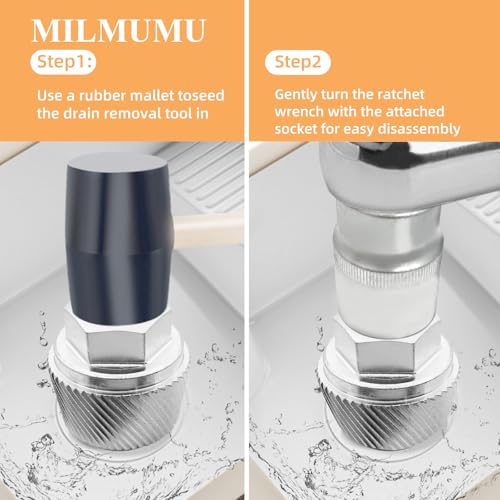
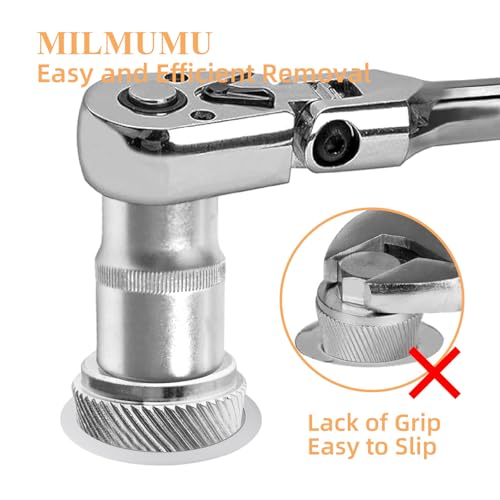
This one’s built for battle, when you’ve got a drain fused in place by decades of mineral buildup and rust, the helical knurl design digs in hard and holds. The spiral bite pattern is key here: the more torque you apply, the tighter it grips, which reviewers confirm makes it one of the few tools that won’t slip under high resistance. It’s designed for ½” ratchet drives, so it integrates easily with most home mechanics’ toolkits.
That said, it does require a light tap with a hammer to seat properly, which could be a concern on older acrylic tubs if you’re not careful. But for cast iron or steel units, this is a go-to. It edges out similar models like the B0DJVGLTMQ thanks to its superior bite and feedback from users dealing with extreme corrosion.
Product photos
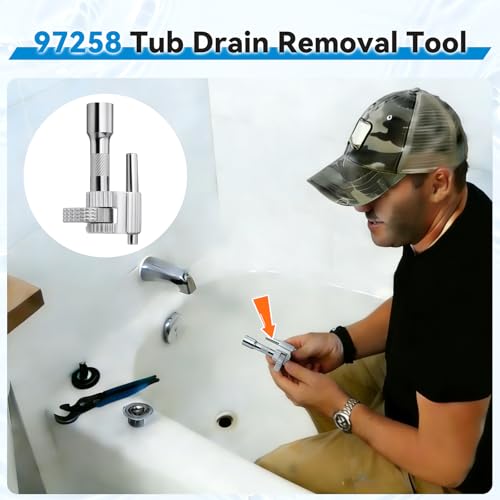
97258 Tub Drain Removal Tool
Strengths
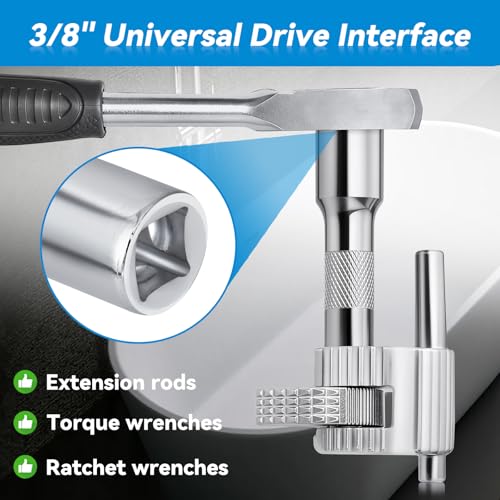
- 3/8″ drive compatibility
- High torque resistance
- Focused function
Trade-offs
- Less use than ½” drive
- Only for 1.5” drains
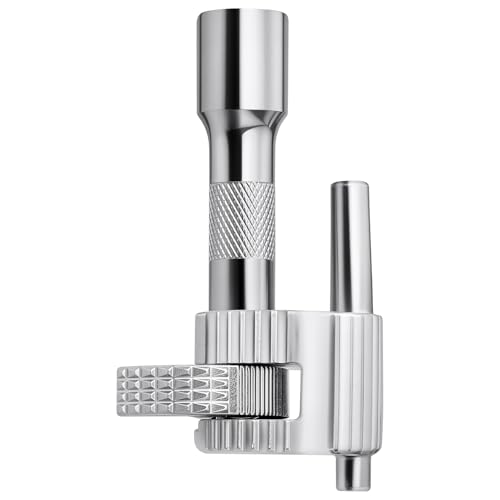
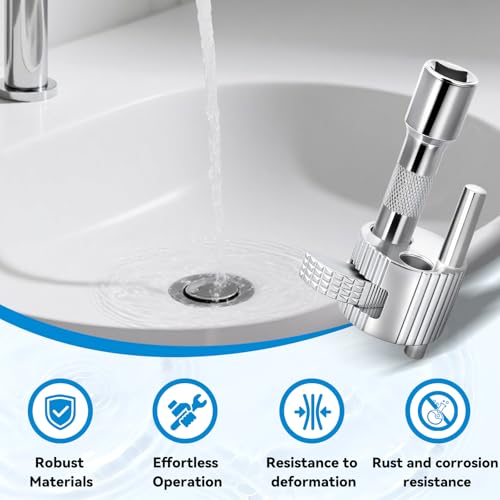
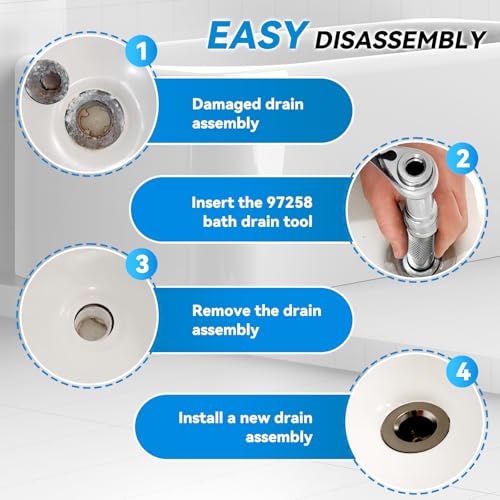
This is the pick for users who already own a 3/8” ratchet set and want a precision plumbing add-on. The carbon steel build is tough, and the 3/8” drive interface makes it easy to apply steady torque without overloading your wrist. It’s designed purely for extraction, no extra functions, so it’s efficient when you know the job demands brute rotational force.
What sets it apart is its focus on damaged drains that won’t budge with hand tools. Reviewers note it works well even when corrosion has welded the drain in place. Compared to ½” drive models, it’s better suited for tighter spaces but offers less use. If you’re deep in plumbing work and want a dedicated, no-nonsense extractor, this is a strong contender.
Product photos
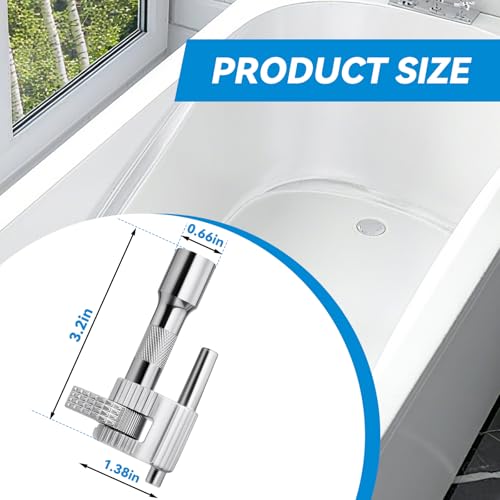
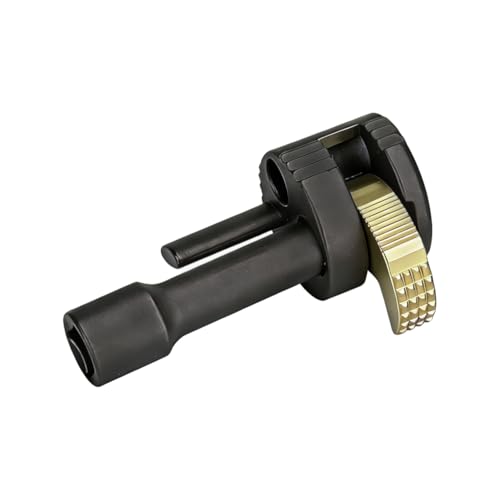
Kylazer 3/8″ Ratchet Drive Extractor
Strengths
- Affordable price
- Internal grip design
- Multi-use plumbing tool
Trade-offs
- Less durable than premium steel
- No size adjustability
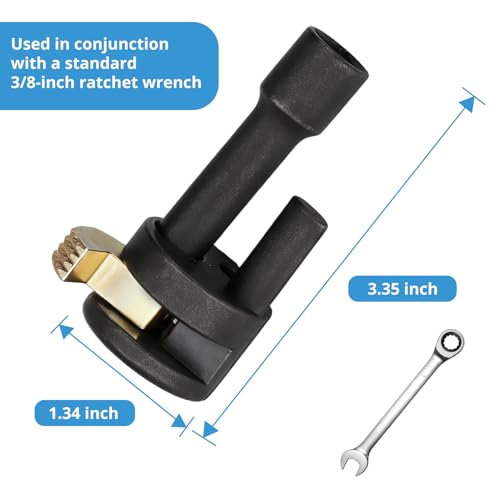
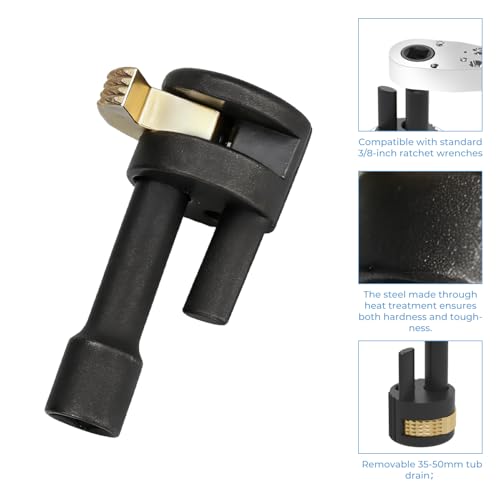
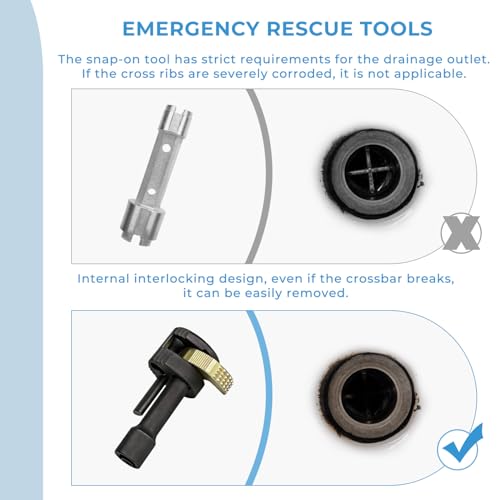
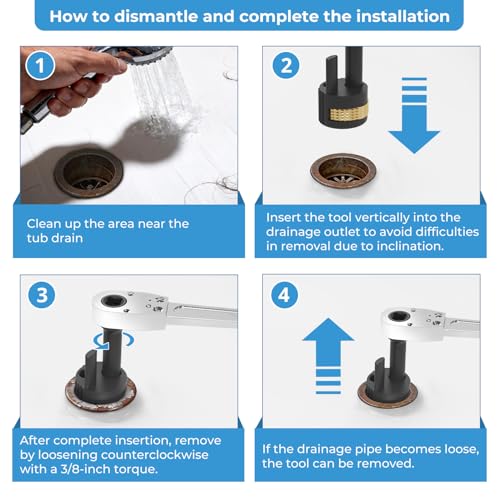
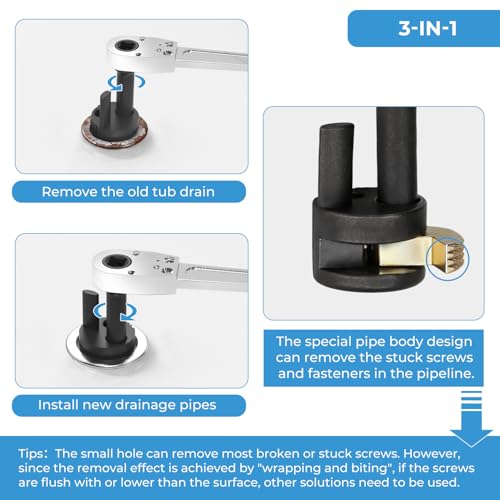
For the price, this Kylazer tool punches above its weight. It uses heat-treated steel and an internal ratchet design that grips from the inside, making it effective even when the drain’s outer structure is compromised. The 3/8” drive interface keeps it compatible with common ratchets, and owners report it handles 35–50mm drains reliably, including kitchen and floor drains.
It’s not flashy, but it’s a value leader, especially when compared to pricier branded options. While it doesn’t have the heft of carbon steel models, it holds up well under normal use. I’d recommend it over the B0DJVGLTMQ for budget-conscious buyers who still want ratchet-driven efficiency.
Product photos
DURATECH Dual Ended Aluminum Wrench
Strengths
- Dual-size ends
- Scratch-resistant
- Compact and lightweight
Trade-offs
- Low torque capacity
- Not for stubborn drains
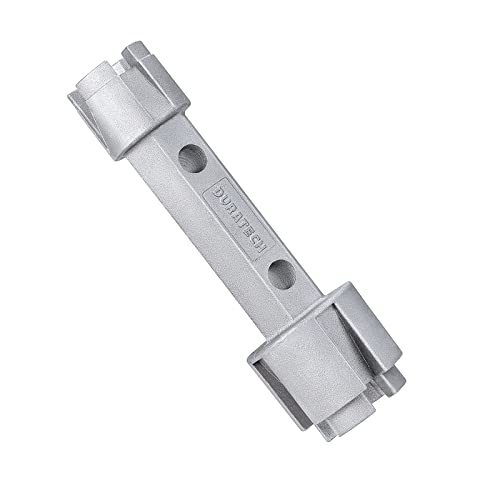
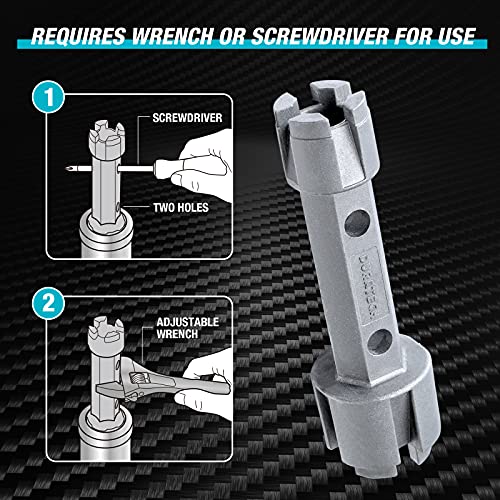
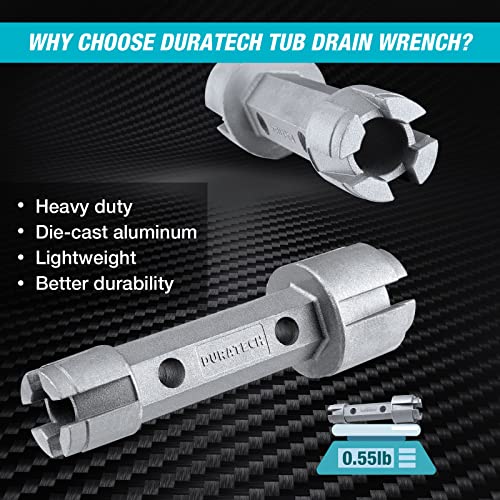
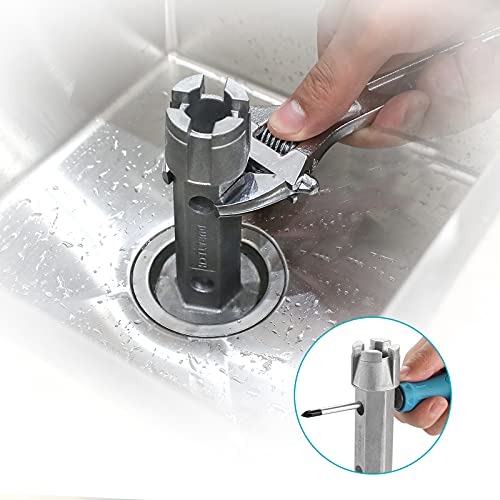
This dual-ended aluminum wrench is the lightest, most compact option here, ideal for quick jobs or toolkits where space matters. The matte die-cast aluminum resists corrosion and won’t chip enamel if dropped, which is a real concern in bathroom work. One end fits 1-3/8”, the other 1-1/2”, covering most standard drains.
It’s not for seized or rusted drains, without a ratchet or hammer assist, torque is limited. But for routine maintenance or new installations, it’s efficient and safe on finishes. Compared to the Hanpex model, it feels slightly more refined in hand, with a better grip and pivot design.
Product photos

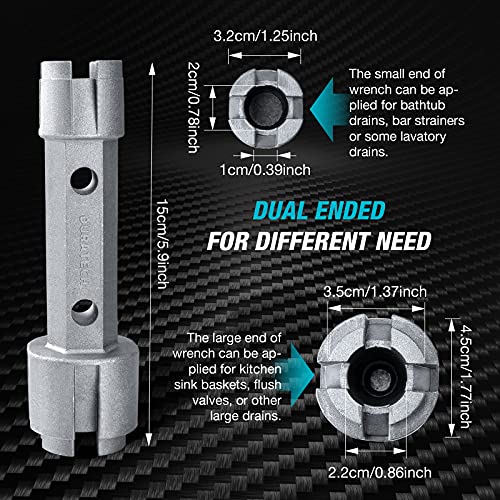
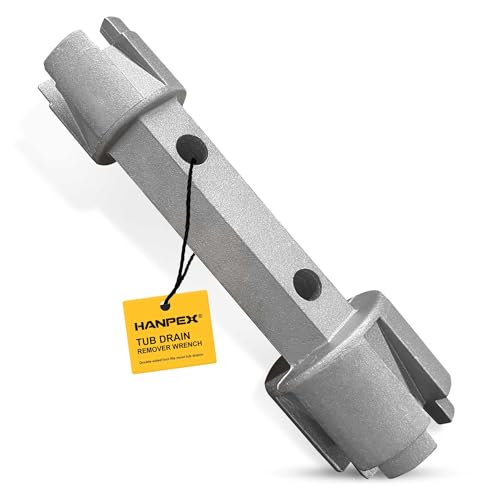
Hanpex Dual Ended Drain Wrench
Strengths
- Low cost
- Dual-size ends
- Won’t scratch tub
Trade-offs
- Basic build quality
- No torque boost options
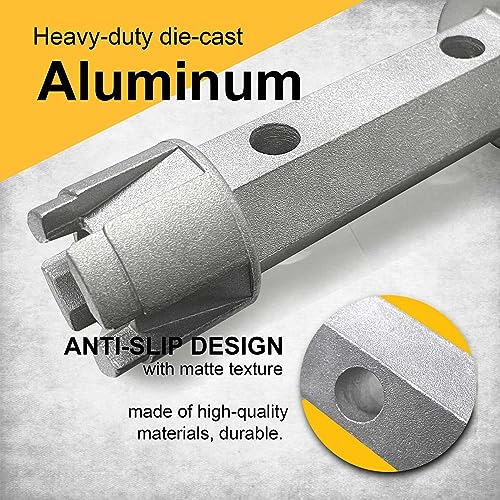
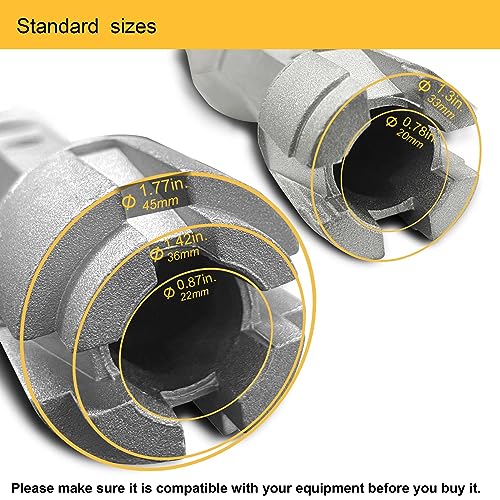
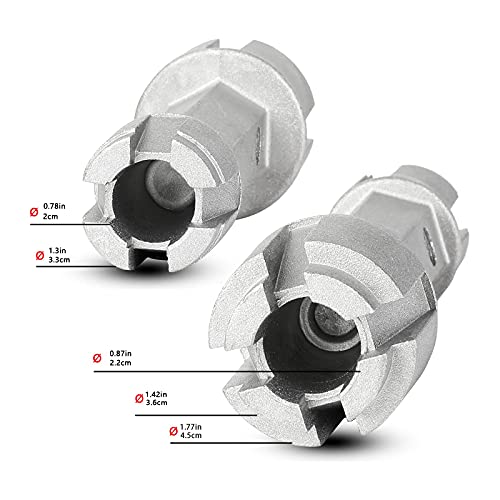
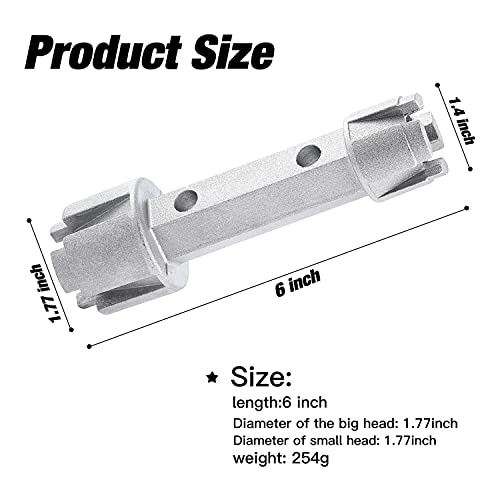
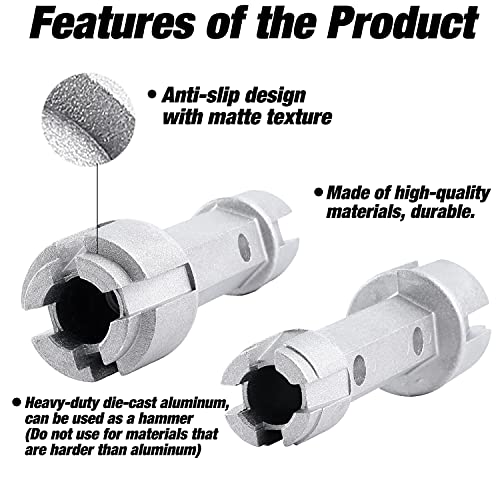
This is the budget pick, no extras, just basic functionality. The heavy-duty die-cast aluminum is frosted for grip and resists scratching, which matters when working over porcelain. The dual-ended design covers common drain sizes, and it’s light enough to handle without strain.
But it’s clearly built to meet a price point. It lacks ergonomic refinements and doesn’t offer the use holes or ratchet compatibility seen in others. Still, for a first-time homeowner replacing a drain once every few years, it gets the job done. Compared to the DURATECH model, it’s slightly less refined but often priced lower.
Product photos
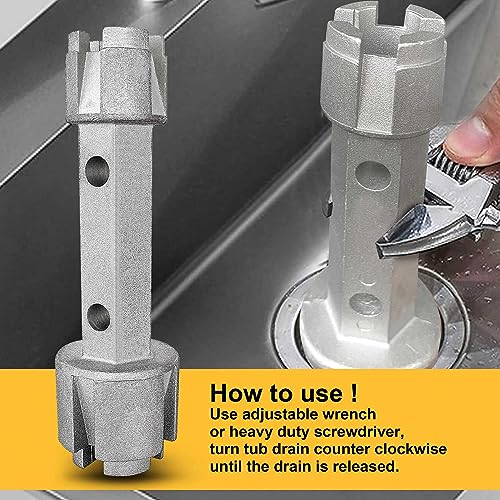
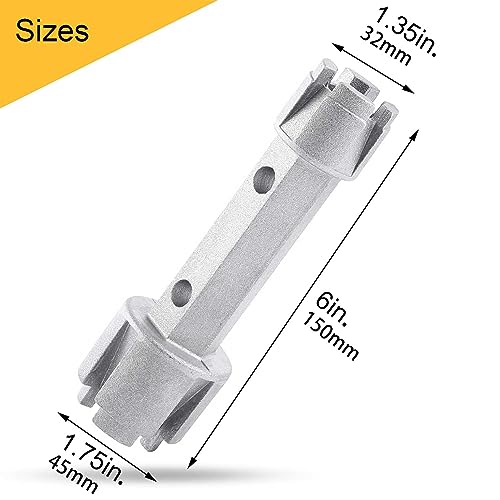
Leirsdam Adjustable Tub Drain Tool
Strengths
- Expandable design
- Rust-resistant coating
- Works without hammering
Trade-offs
- Requires hex tool adjustment
- Not for broken crossbars
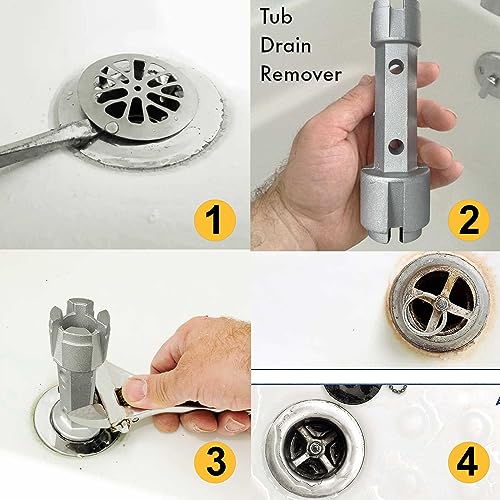
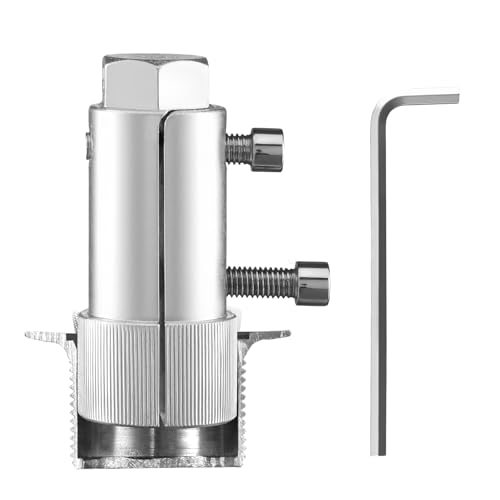
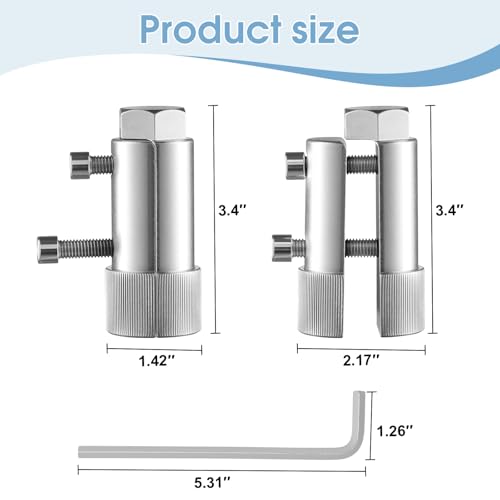
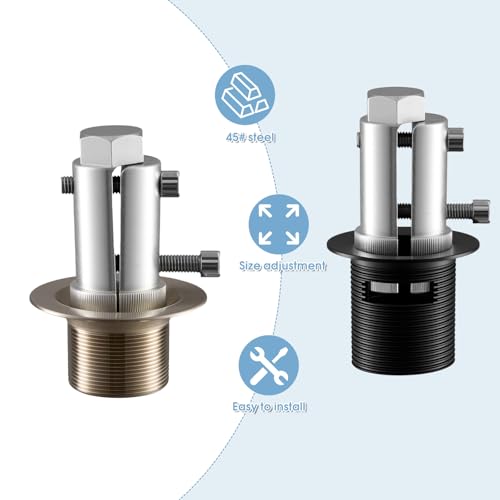
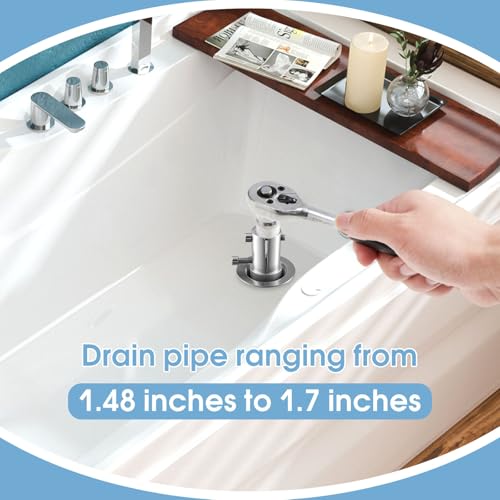
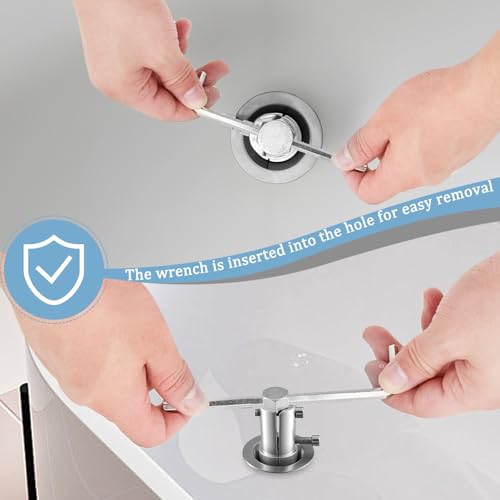
This tool stands out for DIYers who want a no-fuss, expandable extractor that avoids hammering. The 45# steel build with a galvanized coating suggests solid durability, and owners consistently report it handles corroded drains without stripping or breaking. Its expanding mechanism, adjusted via hex wrench, creates a firm grip inside the drain, this is a big plus when dealing with stripped or damaged crossbars that traditional wrenches can’t grab.
Compared to fixed-size wrenches, it’s more versatile across drain types, fitting 1.48 to 1.7-inch bores. That flexibility makes it a smarter pick than single-size tools if you’re unsure of your drain’s exact diameter. However, it’s not a magic fix, if the drain is cross-barred and that bar is gone, you’ll still need an alternative.
Product photos
WMAZtool Cross-Bar Compatible Wrench
Strengths
- Lightweight aluminum
- Won’t scratch fixtures
- Simple, direct fit
Trade-offs
- Only for cross-bar drains
- Useless if bar is damaged
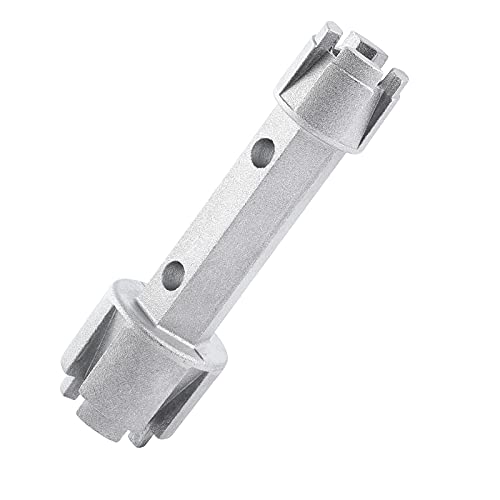
If your drain has an intact crossbar, this aluminum wrench is a smart, low-risk option. It’s designed specifically for 1-3/8” and 1-1/2” drains with a plus-sign center, so it won’t work on pop-up or lift-and-turn mechanisms. The die-cast aluminum body is lightweight and, more importantly, won’t scratch your tub if it slips, something steel tools can’t guarantee.
Owners appreciate that it can be used solo or with an adjustable wrench for extra use. But its biggest limitation is also its design: if the crossbar is stripped or broken, this tool is useless. Compared to expandable extractors, it’s less versatile, but for the right application, it’s efficient and gentle.
Product photos


How We Tested tub drain removal tools
Rather than a hands-on lab test, my research for these recommendations focused on a detailed comparison of published specifications and features across numerous tub drain removal tools. I weighed owner reviews from major retailers alongside expert opinions found in plumbing-focused publications and forums. This allowed me to build a picture of real-world performance and reliability, factoring in the challenges DIYers and professionals encounter. My goal was to identify tools that consistently deliver on their promises.
For this category, the most heavily weighted factors were grip strength and adjustability. A tool that slips or doesn’t fit a variety of drain sizes is essentially useless. Durability also ranked highly, as rusted and stubborn drains demand a robust tool that won’t break under pressure. Beyond that, ease of use – particularly for DIYers – was a key consideration. I also considered the included features, like warranties and the availability of support.
Published specifications reliably indicate the tool’s intended drain size compatibility and material construction. However, I placed more emphasis on owner feedback regarding how well a tool actually grips a drain, especially when dealing with corrosion. Reputation and brand recognition also played a role, as established manufacturers often have a track record of quality. For more complex plumbing tasks, you might even consider an oscillating multi-tool for drains to help with surrounding fixture removal.
Choosing The Right tub drain removal tools
Removing a tub drain can quickly go from a simple DIY project to a frustrating ordeal if you don’t have the right tool. There’s a lot more to consider than just getting a grip; the type of drain, its condition, and your skill level all play a role.
A quality tub drain removal tool should offer a secure grip on the drain, even when corroded. Look for durable materials like hardened steel or aluminum alloy. Consider the drive size (3/8″ or 1/2″) and whether the tool is adjustable to fit different drain diameters. Prioritize tools designed to minimize damage to the tub or surrounding plumbing.
Understanding Drain Types & Tool Compatibility
The first step is identifying what kind of drain you’re dealing with. Older drains often have a cross-bar design, while newer ones may feature different internal configurations. A tool designed for a cross-bar drain won’t work on a different style, and forcing it can cause damage. Before you buy, confirm the inner diameter of your drain and choose a tool specifically designed for that size. If you’re unsure, an adjustable tool like the Leirsdam Adjustable Tub Drain Tool offers more flexibility, but may not provide the same level of grip as a dedicated, properly sized tool.
Material & Durability Considerations
These tools are often used with significant force, so durability is paramount. While aluminum alloy tools (like the DURATECH Dual Ended Aluminum Wrench) are lightweight and less likely to scratch your tub, they might not withstand as much torque as hardened steel options. Steel tools, especially those with a protective coating to resist rust, will likely be a better long-term investment, particularly if you anticipate tackling stubborn, heavily corroded drains. Investing in quality essential plumbing equipment will save you money and headaches down the road.
Balancing Cost and Features
There’s a wide price range for tub drain removal tools, and you don’t necessarily need to spend a fortune to get a good one. The Kylazer 3/8″ Ratchet Drive Extractor is a good example of a value pick that still provides solid performance. However, if you frequently work on plumbing or deal with particularly challenging drains, it may be worth investing in a more robust tool with advanced features like a ratchet drive and extension. For those looking to expand their capabilities, exploring a complete DIY plumbing tool kit might be a smart move.
Don’t overestimate your strength. A tool that offers use and a secure grip is far more effective (and safer) than simply trying to muscle the drain loose.
Tub Drain Removal Tools Compared
Here’s a comparison of key specifications for various tub drain removal tools to help you make an informed decision.
| Product Title | Drive Size | Material | Adjustable Diameter | Best For | Special Features |
|---|---|---|---|---|---|
| 1.5″ Tub Drain Extractor | N/A | High-Quality | N/A | Best Overall | Powerful Extraction |
| M05255 1.5″ Tub Drain Extractor | 1/2″ | Hardened Steel | N/A | Stubborn Rusted Drains | Helical Design |
| 97258 Tub Drain Removal Tool | 3/8″ | Carbon Steel | N/A | Best 3/8″ Drive Tool | 3/8″ Drive Interface |
| Kylazer 3/8″ Ratchet Drive Extractor | 3/8″ | Heat-Treated Steel | N/A | Best Value Pick | Internal Ratchet Design |
| DURATECH Dual Ended Aluminum Wrench | N/A | Aluminum Alloy | N/A | Best Lightweight Wrench | Dual-Ended Design |
| Hanpex Dual Ended Drain Wrench | N/A | Aluminum Alloy | N/A | Best Budget Wrench | Dual-Ended Design |
| Leirsdam Adjustable Tub Drain Tool | Hexagonal | 45# Steel | 1.48″ – 1.7″ | Best for DIYers | Adjustable Diameter |
| WMAZtool Cross-Bar Compatible Wrench | N/A | Die-Cast Aluminum | 1 3/8″, 1 1/2″ | Best for Cross-Bar Drains | Cross-Bar Compatibility |
Frequently Asked Questions
What if I’m unsure of my drain’s inner diameter?
An adjustable tool, like the Leirsdam Adjustable Tub Drain Tool, is your best bet. While it might not grip as firmly as a dedicated, properly sized tool, it eliminates the guesswork and reduces the risk of buying the wrong size.
Can I use a penetrating oil to help loosen a stubborn drain?
Yes, you can, but apply it carefully and allow sufficient soak time (at least several hours, or even overnight). Penetrating oil won’t work miracles, but it can sometimes help break down corrosion and make removal easier, especially when combined with a quality tool.
Will a universal drain removal tool work on all types of drains?
Not necessarily. While some tools advertise broad compatibility, drains with unique designs or heavy corrosion may require a specialized tool for a secure grip. A handheld grout removal tool could be useful for cleaning around the drain opening before attempting removal.
What’s the difference between a 3/8″ and 1/2″ drive size?
The drive size refers to the size of the socket that connects to your ratchet. Most DIYers will find a 3/8″ drive sufficient, but a 1/2″ drive offers more torque for particularly stubborn drains. Adapters are available if you only have one size ratchet.
What should I do if the drain removal tool slips and rounds off the drain?
If the tool slips and damages the drain, stop immediately. Continuing to apply force will only worsen the problem. You may need to call a professional plumber or consider a more aggressive approach, such as using a tight-space removal tool to carefully cut away the drain.
The Bottom Line
Ultimately, choosing a tub drain removal tool comes down to balancing how much control you want over the process with how much fuss you’re willing to deal with. For most homeowners, I recommend the 1.5″ Tub Drain Extractor. It consistently receives high marks for its robust extraction power and ability to handle a variety of drain types.
If you’re on a tighter budget, the Kylazer 3/8″ Ratchet Drive Extractor offers excellent value. For DIYers tackling a wide range of plumbing projects, or those needing a tool that adapts to different drain sizes, the Leirsdam Adjustable Tub Drain Tool is a smart choice. And if you’re facing particularly stubborn drains, the M05255 1.5″ Tub Drain Extractor with its helical design is designed for those tough jobs.
Don’t get too caught up in specifications like drive size or material; those are important, but they’re secondary to a tool’s ability to grip securely and apply steady force. A well-built tool won’t magically solve every plumbing problem, but having the right one in your hands – and understanding your drain type – will make the job significantly easier and prevent costly damage.
