
7 Best Tracksaws of 2026
This post contains affiliate links. As an Amazon Associate, we earn from qualifying purchases.
The Festool TS 55 FEQ-F-Plus stands out as the overall best tracksaw for precision and reliability, especially when paired with their high-quality guide rails. For those on a budget, the WEN CT1274 delivers solid performance and surprising features at a fraction of the cost. If cordless convenience is a priority, the Festool TSC 55 remains a top choice despite its premium price.
If you’ve ever struggled with crooked cuts, splintered plywood, or the frustration of trying to keep a circular saw on track, you know why so many woodworkers and builders swear by tracksaws. They solve real problems, but not all models deliver the same level of accuracy, power, or durability.
In this guide, I’ll walk you through the key factors that actually matter based on specs, owner feedback, and years of working with these tools. These picks reflect what delivers consistent results, whether you’re building cabinets, framing walls, or tackling weekend DIY projects.
Top 7 Tracksaws in the Market
The Best Tracksaws, Reviewed
Festool TS 55 FEQ-F-Plus Track Saw

Strengths
- Splinter-free cuts
- Consistent bevel depth
- Excellent accessory support
Trade-offs
- Very expensive
- No track included
- Overkill for basic tasks
The Festool TS 55 FEQ-F-Plus is the gold standard for a reason. It’s not the most powerful or the cheapest, but in terms of precision, dust management, and long-term reliability, it’s unmatched. The splinter guard system delivers clean cuts on both sides of the board, critical for finished cabinetry, and the blade depth stays consistent even at steep bevels, which few other saws manage.
Owners who’ve used it for years still praise the build quality and the ecosystem of accessories. Yes, it’s expensive, and yes, the track is sold separately, but if you’re doing fine woodworking, the investment pays off in reduced rework and cleaner joints. Compared to the Milwaukee or DEWALT, it’s lighter and more refined, though less brute-force in raw cutting power.
Product photos
Festool TSC 55 Cordless Track Saw

Strengths
- Complete ready-to-use kit
- Superior dust extraction
- Bluetooth auto-start
Trade-offs
- Extremely high cost
- Battery life limited under load
- Heavy setup
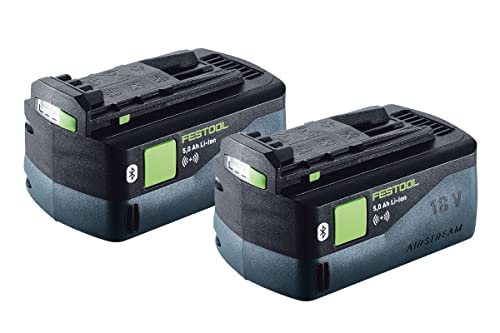
This Festool cordless kit is the complete package, saw, battery, and a 55-inch rail, all in one box. The TSC 55 runs on a brushless EC-TEC motor and delivers performance that feels nearly identical to the corded TS 55. The Bluetooth-enabled dust extractor auto-starts when the saw fires up, which owners love for site cleanup. The kickback stop adds safety, though it can be deactivated for specialty cuts.
Where this kit shines is integration. Unlike buying pieces separately, this bundle gets you started right. Compared to the bare-tool Milwaukee, it’s more expensive but includes more and offers better dust control. For mobile pros who hate cords and cords but need shop-level results, this is as good as it gets.
Product photos

DEWALT DWS520K 6-1/2″ TrackSaw Kit

Strengths
- Solid build quality
- Effective anti-kickback
- Accurate depth scale
Trade-offs
- No variable speed
- Track sold separately
- Heavier than some
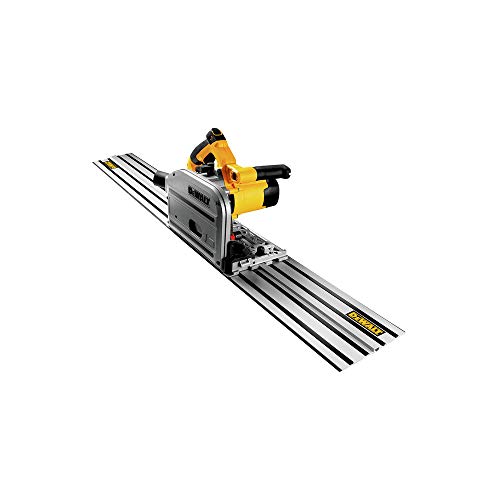
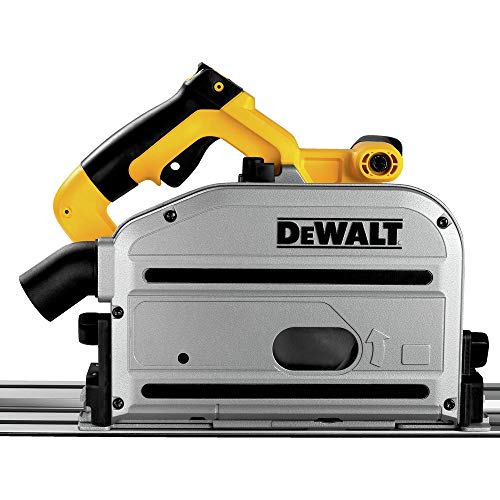
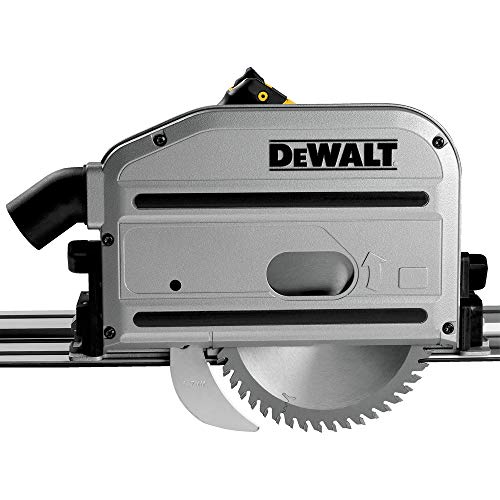
The DEWALT DWS520K remains one of the most balanced corded track saws in the mid-tier range. With a 1300W motor and zero-clearance track system, it delivers clean, splinter-free cuts that rival more expensive options. The depth scale is accurate and accounts for track thickness, which is a small but meaningful detail that saves guesswork. Owners regularly highlight the anti-kickback system and riving knife as confidence builders, especially when making blind plunge cuts.
It doesn’t have variable speed or the ultra-refined ergonomics of Festool, but it’s far more durable than the WEN models and priced to move. When compared to the VEVOR or Milwaukee, it splits the difference, more reliable than budget picks, but without the premium features. For most serious DIYers and small pros, this is the sweet spot.
Product photos

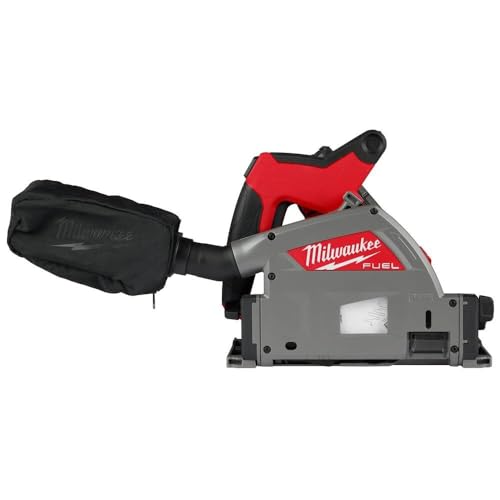
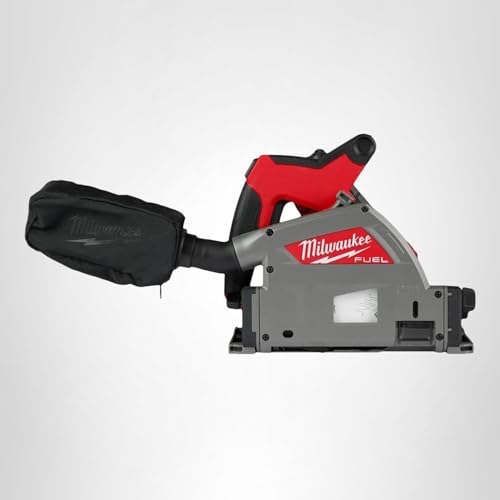
Milwaukee M18 FUEL 6-1/2″ Track Saw
Strengths
- Brushless motor power
- Smooth plunge action
- Micro depth adjustment
Trade-offs
- Bare tool only
- Expensive with battery
- Heavy for cordless
Milwaukee’s M18 FUEL track saw is built for users who need cordless power without compromise. The POWERSTATE brushless motor delivers torque that matches corded units, and the variable speed dial lets you tune the RPM for clean cuts in everything from plywood to dense oak. Owners consistently report that the plunge action is smooth and the cam-adjustable rail fitment ensures laser-straight cuts, something that matters when you’re panelizing cabinets.
It’s also one of the few cordless models with micro-adjust depth control and bevel stops at 22.5, 45, and 48 degrees, which adds real workflow value. When compared to the Festool cordless model, it’s slightly heavier but more accessible price-wise and easier to integrate into an existing M18 battery ecosystem. My pick for contractors who already run Milwaukee tools.
Product photos
WEN CT1274 7.25″ Variable Speed Track Saw

Strengths
- Variable speed control
- 7.25-inch blade compatibility
- Good cutting depth
Trade-offs
- Plastic housing lacks rigidity
- No track included
- Dust port is finicky
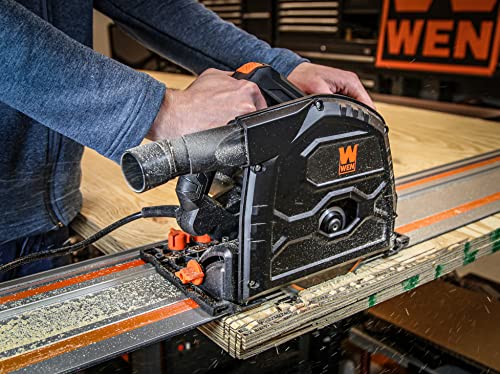
The WEN CT1274 stands out in the budget segment by offering a full-size 7.25-inch blade and variable speed, a feature usually seen on pricier models. That range, from 2000 to 6000 RPM, gives you real control when adjusting for material type, which is a big plus over fixed-speed saws like the CT1065. On paper, it cuts deeper too, up to 2.6 inches at 90 degrees, making it more versatile for thick stock.
Owners praise the included 40-tooth blade for clean crosscuts, and the compatibility with longer WEN tracks means you can scale up as needed. But the build quality still feels like budget plastic, fine for light use, but I wouldn’t trust it on a job site with daily abuse. When stacked against the DEWALT DWS520K, it trades some durability for flexibility and cost savings.
Product photos
WEN CT1065 6.5″ Plunge Cut Track Saw
Strengths
- Affordable entry point
- Lightweight design
- Includes blade
Trade-offs
- Weak dust collection
- Limited bevel depth
- Not for heavy materials
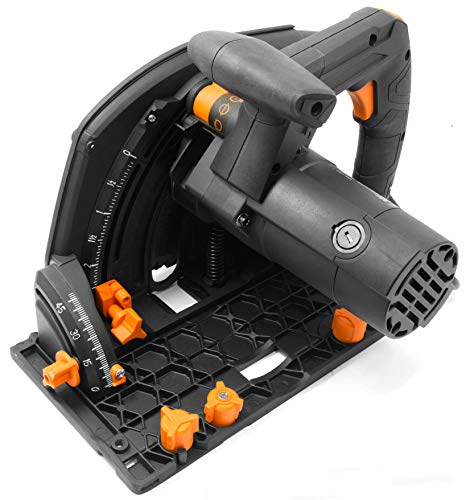
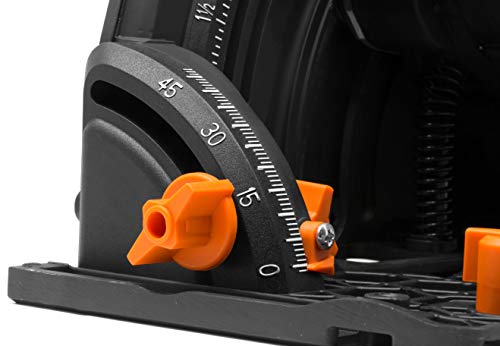
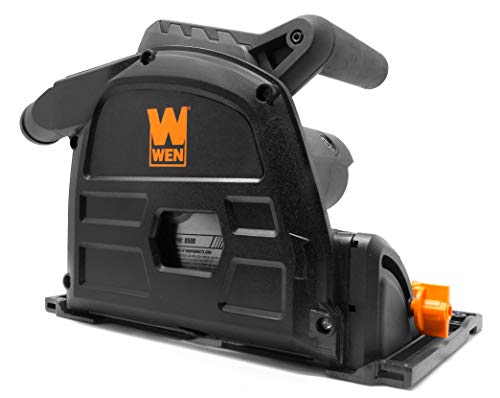
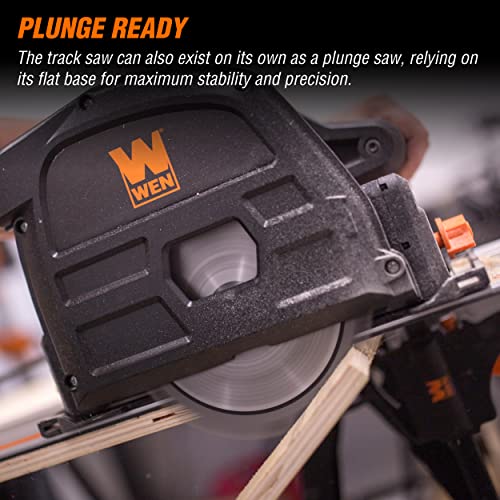
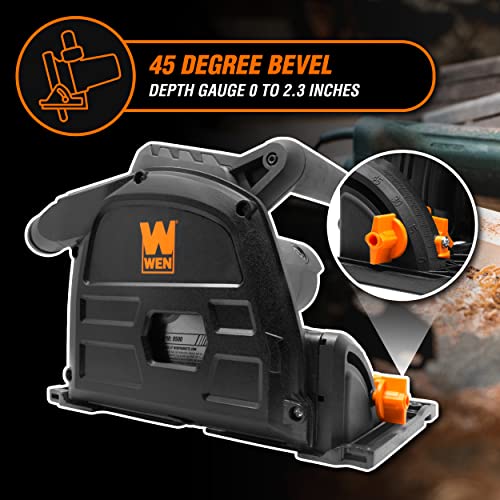
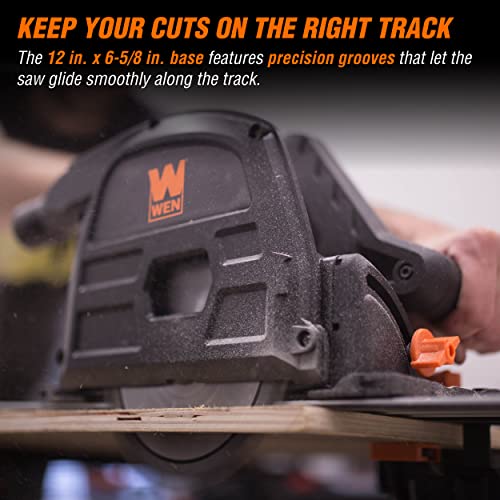
For DIYers dipping their toes into track saws without wanting to drain the bank, the WEN CT1065 makes a solid first impression on paper. It’s lightweight, includes a usable 6.5-inch blade, and handles cuts up to 2-1/3 inches thick, enough for most dimensional lumber. Owners consistently report clean, straight rips when paired with a compatible WEN track, though some note the dust collection isn’t great unless you’re using a shop vac with strong suction.
The real limitation here is depth and power. Compared to heavier-duty models like the DEWALT or Milwaukee, this saw starts to struggle on dense hardwoods near its max depth. It’s also not as refined in plunge control or bevel adjustments. But for weekend projects and sheet goods, it gets the job done without fuss.
Product photos

VEVOR 6-1/2″ Plunge-Cut Track Saw
Strengths
- High tooth-count blade
- Good RPM and power
- Aluminum blade guard
Trade-offs
- Inconsistent build quality
- No track included
- Bevel lock can slip
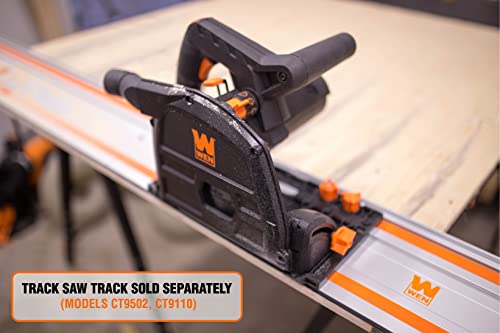
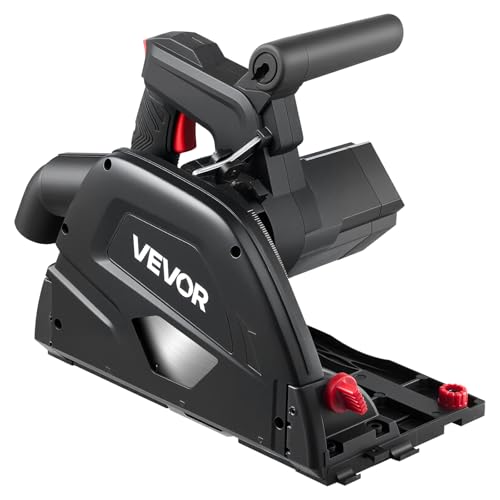
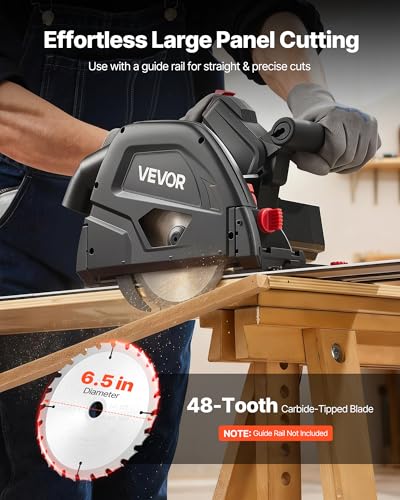
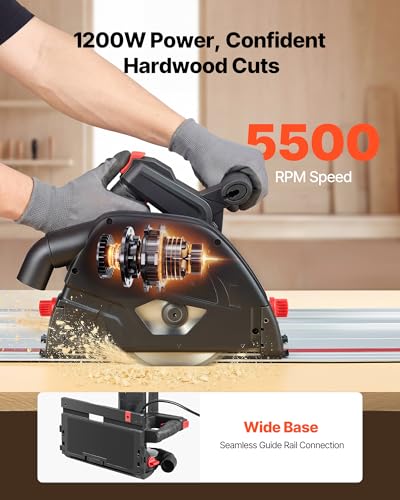
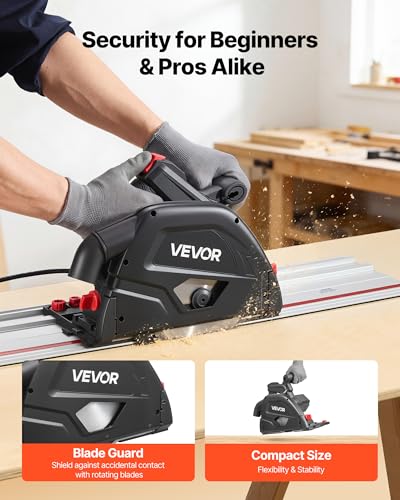
VEVOR is trying to punch above its weight with this 1200W track saw, and on specs alone, it looks competitive. The 48-tooth blade promises cleaner cuts, and the 2.16-inch depth at 90 degrees is respectable. Marketing claims it’s for contractors and cabinet makers, but owner feedback tells a different story, build quality is hit or miss. Some report smooth operation, while others mention wobble in the plunge mechanism and inconsistent bevel locks.
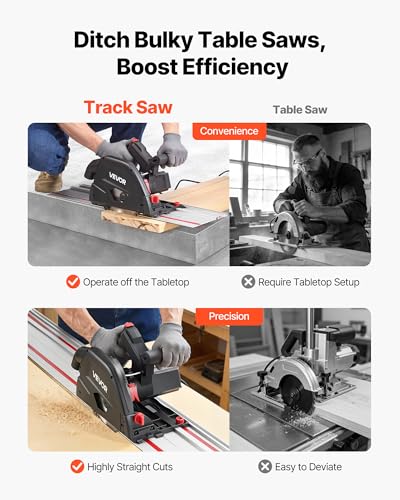
It’s clearly designed to mimic higher-end models, but the fit and finish aren’t there. Compared to the DEWALT or Milwaukee, it feels like a replica with cheaper tolerances. That said, for a DIYer who wants decent power and a good blade out of the box, it might be worth the gamble, especially if you’re not running it eight hours a day.
Product photos

How We Evaluated tracksaws
As someone who’s spent years around workshops and job sites, I know a good cut is the foundation of any solid project. Rather than a hands-on lab test with each model, my approach to evaluating tracksaws involved a deep research comparison of published specifications and features. I weighed owner reviews from multiple sources alongside assessments from reputable tool reviewers, applying my experience to identify patterns and potential drawbacks. This allowed me to rank each saw against a set of criteria important for real-world use.
For tracksaws, consistent, splinter-free cuts and accuracy are paramount. Therefore, I heavily weighted the quality of the blade guard systems and the precision of the guide rail compatibility. Motor power and speed were also key factors, particularly when considering the ability to handle thicker, denser materials. Cordless models were judged on battery performance and run-time relative to their cutting power. Understanding track saw safety tips is also crucial.
Specifications reliably reveal motor power, blade size, and cutting depth. However, owner feedback proved invaluable in understanding real-world durability, ease of use, and the effectiveness of features like dust collection. Reputation also played a role; established brands with a history of quality tools generally carried more weight, but I always looked for evidence to support that reputation in the reviews. Learning proper track saw cutting techniques will also improve your results.
How To Pick The Right tracksaws
As someone who’s spent years around workshops and job sites, I’ve seen tracksaws evolve from niche tools to essential equipment for anyone needing accurate, repeatable cuts. Choosing the right one, however, can be surprisingly complex.
A quality tracksaw delivers precision through a combination of a robust motor, a well-engineered guide rail system, and thoughtful safety features. Key considerations include cutting depth, blade quality, dust extraction capabilities, and the availability of compatible accessories. Look for models with anti-kickback mechanisms, precise bevel adjustments, and reliable power delivery.
Motor and Power Source
The first thing I always consider is how the saw is powered. Corded models, like the DEWALT DWS520K, generally offer consistent power for demanding cuts, which really matters when ripping sheet goods. Cordless options, such as the Festool TSC 55, are incredibly convenient, especially on jobs where access to power is limited. Brushless motors are becoming standard, and for good reason – they deliver more power and longer runtimes, though they naturally come at a higher price. Don’t automatically equate wattage with cutting power, however. A well-designed 12-amp motor can often outperform a poorly built 15-amp one.
Guide Rail and Cutting Precision
The guide rail is where a tracksaw truly separates itself from a standard circular saw. A rigid, accurately machined rail is absolutely critical for achieving those splinter-free, factory-edge cuts we all strive for. Look for rails that securely attach to the saw and offer a tight fit. Some manufacturers, like Festool, offer a wide variety of rail lengths and accessories, while others require you to purchase the rail separately. Consider the types of projects you’ll be tackling.
- For occasional hobbyist use, a shorter rail might be sufficient.
- For larger sheet goods or long rip cuts, a 55-inch or even a 100-inch rail is almost essential.
- And if you plan on doing a lot of angled cuts, make sure the rail system allows for precise angle adjustments and locking mechanisms.
Value and Features
While high-end tracksaws from brands like Festool are undeniably excellent, they come with a premium price tag. If you’re on a tighter budget, there are plenty of capable alternatives. The WEN CT1274 offers a surprising amount of features for the price, and it’s a good starting point for DIYers. However, keep in mind that cheaper models may compromise on build quality, motor power, or the precision of the guide rail system. For those looking at a variety of models, checking out best track saw picks can offer a solid overview.
Don’t cheap out on the blade. A high-quality blade designed for tracksaws will make a noticeable difference in cut quality and reduce splintering.
Tracksaws Compared
The following table provides a specification overview of several tracksaws available for purchase.
| Product Title | Power (Watts) | Blade Diameter (in) | Max Cut Depth 90° (in) | Corded/Cordless | Variable Speed |
|---|---|---|---|---|---|
| Festool TS 55 FEQ-F-Plus | N/A | 5.5 | N/A | Corded | N/A |
| Festool TSC 55 | N/A | 5.5 | N/A | Cordless | N/A |
| DEWALT DWS520K | 1300 | 6.5 | 2.125 | Corded | N/A |
| Milwaukee M18 FUEL | N/A | 6.5 | N/A | Cordless | Yes |
| WEN CT1274 | N/A | 7.25 | 2.6 | Corded | Yes (2000-6000 RPM) |
| WEN CT1065 | N/A | 6.5 | 2.33 | Corded | N/A |
| VEVOR 6-1/2″ | 1200 | 6.5 | 2.16 | Corded | N/A |
Frequently Asked Questions
What rail length should I get for most home projects?
A 55-inch guide rail strikes a good balance for many homeowners. It’s long enough to handle most sheet goods and large panels, but it’s still manageable for storage and transport. Shorter rails exist, but limit your ability to make long, straight cuts in a single pass.
Are cordless tracksaws powerful enough for cutting hardwoods like oak?
Yes, modern cordless tracksaws with brushless motors can handle hardwoods effectively. However, expect slightly slower cutting speeds and potentially reduced run-time compared to corded models, especially with thicker stock. Battery capacity and blade choice also significantly impact performance.
Can I use a standard circular saw blade with a tracksaw?
No, you shouldn’t use a standard circular saw blade with a tracksaw. Tracksaw blades have a special tooth geometry designed for splinter-free cutting when used with a guide rail. Using the wrong blade will negate the precision benefits of the tracksaw system.
What’s the typical price range for a decent tracksaw setup (saw and rail)?
You can expect to spend between $300 and $600 for a basic tracksaw and rail combination. Higher-end models, particularly those from Festool, can easily exceed $1000. Consider that the rail is a significant portion of the overall cost, so factor that in when comparing options.
How do tracksaws compare to other tools like best circular saw models for making straight cuts?
Tracksaws excel at accuracy and splinter-free cuts, due to the guide rail system. While a circular saw with a guide can produce reasonable results, it won’t match the precision of a dedicated tracksaw, especially when working with plywood or veneered materials.
The Bottom Line
Choosing a tracksaw often comes down to balancing control and convenience. If you prioritize ultimate precision and are willing to invest, the Festool TS 55 FEQ-F-Plus stands out as the top overall performer, offering a level of cut quality and accessory support that’s hard to match. However, excellent cuts are achievable at every price point.
For budget-minded DIYers, the WEN CT1274 provides a surprising amount of capability for the money, while the Milwaukee M18 FUEL is the clear choice if cordless convenience is a must-have. Those needing versatility should consider the DEWALT DWS520K; it’s a solid all-around performer that won’t break the bank.
Ultimately, the most important factors are understanding your project needs and prioritizing a sharp blade, a stable guide rail, and safe operating practices. Mastering accurate circular saw cutting fundamentals – like proper stance and feed rate – will have a bigger impact on your results than any single specification.
