9 Best Tool Bags of 2026
This post contains affiliate links. As an Amazon Associate, we earn from qualifying purchases.
The Klein Tools Tradesman Pro stands out as the best overall toolbag, combining rugged 1680D ballistic weave with smart, accessible organization. For those watching their budget, the Heavy Duty 16-Inch Tool Bag delivers surprising value and solid durability. And if you need maximum versatility, the DEWALT 20-inch Professional Tool Tote offers excellent capacity and comfortable dual carry options.
Most people don’t realize how much a poorly designed toolbag can slow them down, zippers failing after a few months, pockets that don’t fit the tools you actually use, or straps that dig into your shoulder under load. A good bag should keep your gear protected, organized, and easy to carry, not become a source of daily frustration.
This guide cuts through the marketing hype by focusing on real-world performance. I researched each bag based on material quality, pocket layout, and owner feedback, using my years of hands-on experience to judge what actually matters on the job site. These picks balance durability, function, and value, the kind of tools you can rely on project after project.
Top 9 Toolbags in the Market
The Best Toolbags, Reviewed
Heavy Duty 16-Inch Tool Bag
Strengths
- 46 pockets
- Waterproof base
- Folds flat
Trade-offs
- Heavier when empty
- Slightly overbuilt for light use
- Less color contrast inside
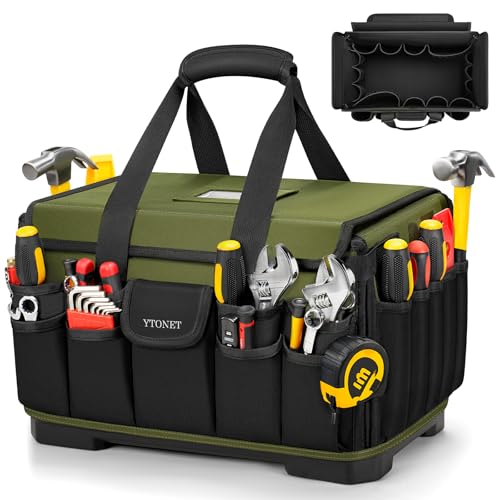
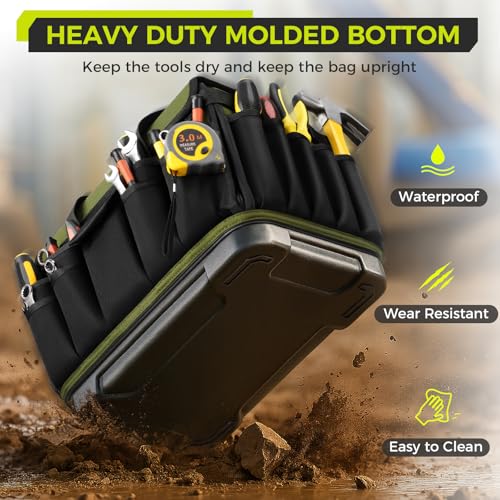
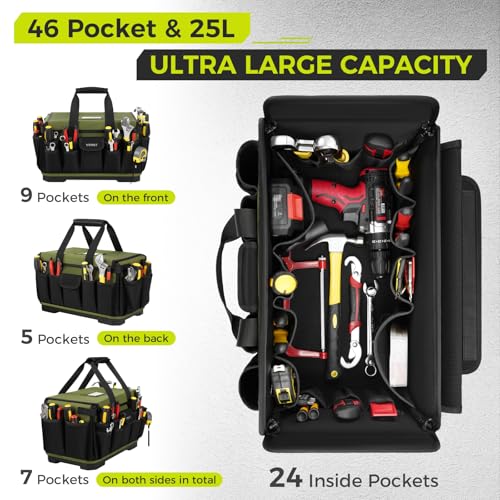
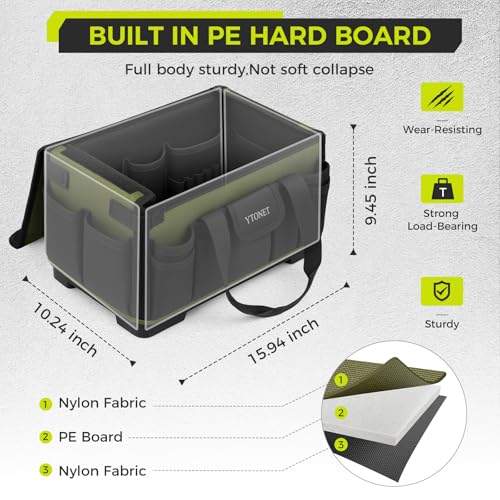
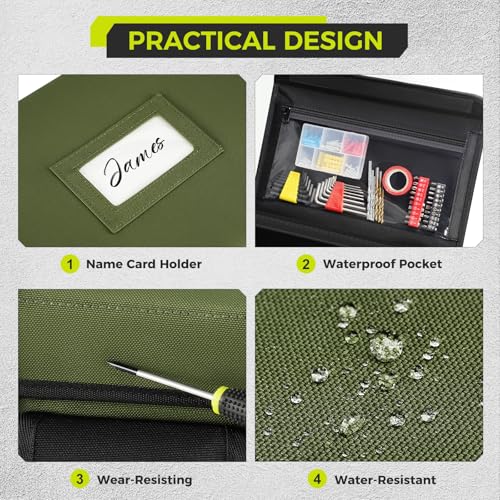
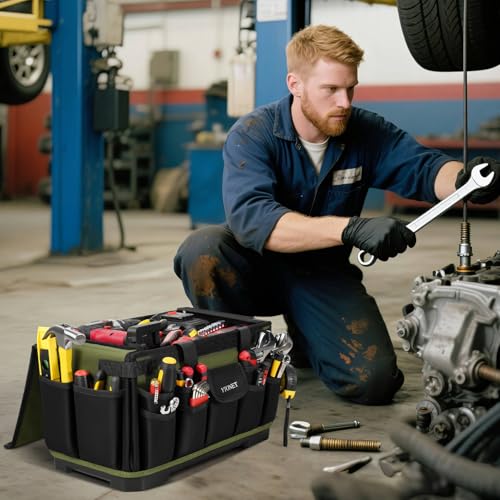
With 46 pockets and a 25L capacity, this bag earns its ‘Best Overall’ label by blending size, structure, and thoughtful design. The PP plastic waterproof base supports up to 100 lbs, far beyond most competitors, and owners report it staying upright and stable even when fully loaded. The 1680D tear-proof Oxford fabric and PE hard board lining give it rigidity and long-term shape, which matters when you’re tossing it in a truck bed daily.
The internal waterproof zippered pocket is a standout for safeguarding drill bits or small parts. It even folds flat when not in use, a rare perk. Compared to the IRONLAND model, it has more pockets and better internal structure. For a pro who wants one bag to rule them all, this is the most balanced choice.
Product photos
Klein Tools 40-Pocket Tool Bag

Strengths
- Orange interior
- 40 pockets
- Molded bottom
Trade-offs
- No backpack option
- Shoulder strap not padded
- Less back support
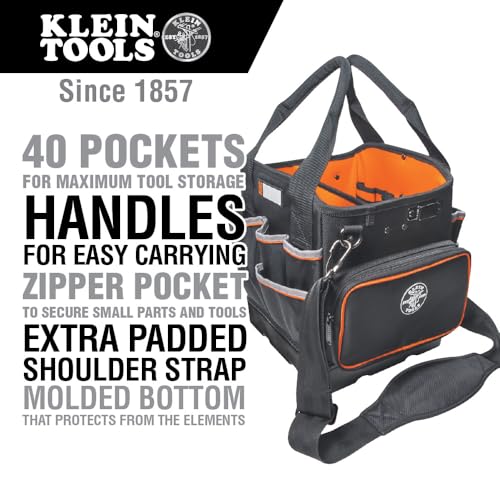
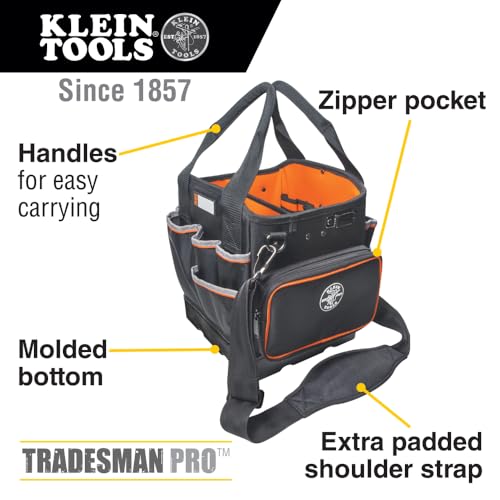
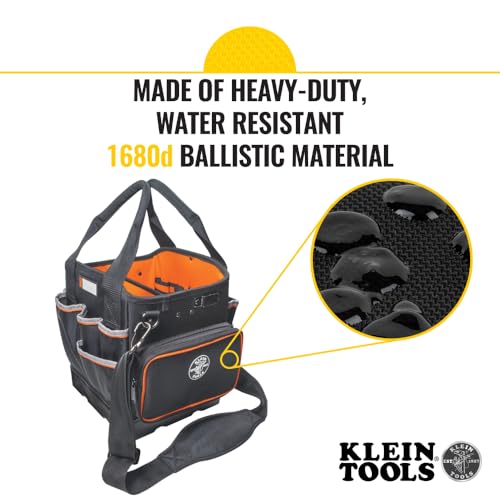
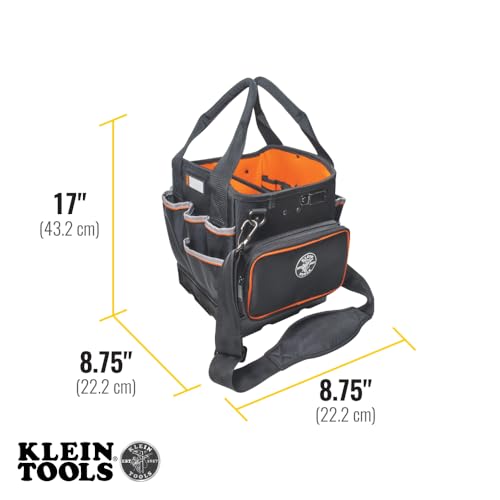
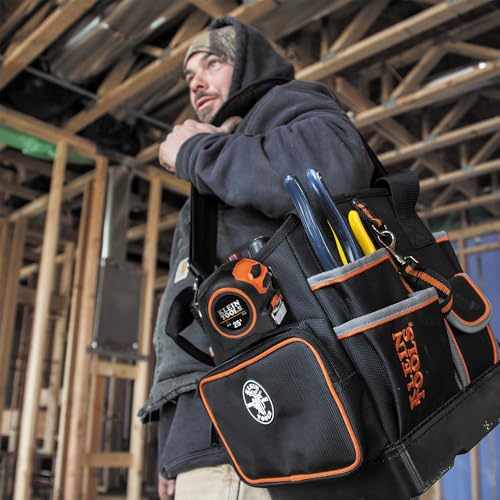
This bag lives up to its ‘Best for Organization’ tag, not because it reinvents the wheel, but because it executes the basics extremely well. With 40 pockets and an orange interior, it’s easy to spot tools fast, which owners consistently praise in field use. The molded bottom adds stability and weather protection, and the 1680d fabric holds up well in gritty environments. It’s not a backpack, but the shoulder strap is solid and the open-face design makes it faster to grab tools than zippered backpacks.
Compared to the 55421BP-14, this one trades load comfort for speed and visibility. For someone working mostly on one level or in a garage, that’s a worthwhile trade. I’d pick this over the backpack version if I were doing residential wiring or plumbing where I’m not constantly climbing.
Product photos
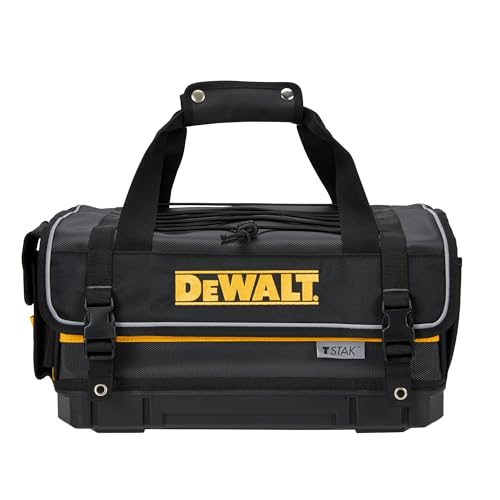
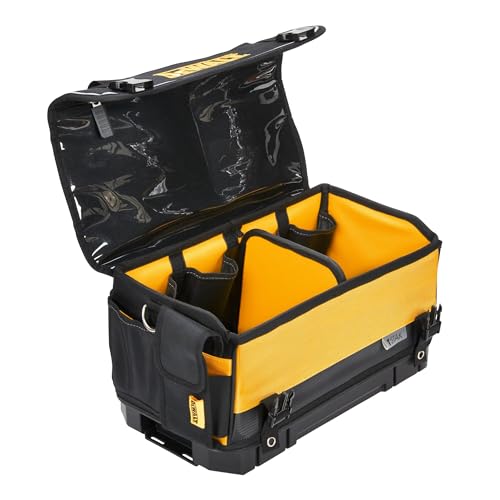
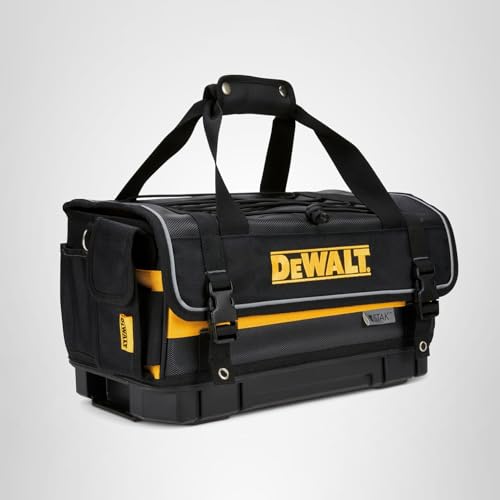
DEWALT 16-inch TSTAK Tool Bag
Strengths
- Removable divider
- Bungee cord
- Stain-resistant
Trade-offs
- Fewer pockets
- No hi-vis lining
- Basic strap padding
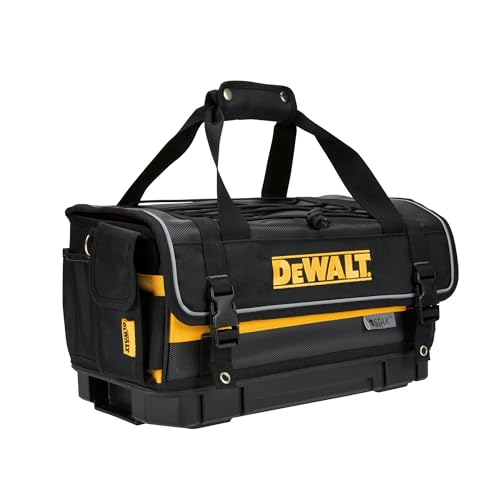
This DEWALT bag leans hard into durability and modularity, and it shows. The 1680D fabric, waterproof base, and removable divider make it highly adaptable, use it for tools one day, parts the next. The bungee cord on top is handy for clamping down a tape measure or gloves. Owners like the stain-resistant cover, which keeps it looking cleaner longer in greasy garage environments.
It doesn’t have the pocket count of the 46-pocket beast, but it’s built like a tank. Compared to the DWST560104, it’s smaller but more customizable. If you value long-term resilience over max storage, this is the DEWALT to choose.
Product photos
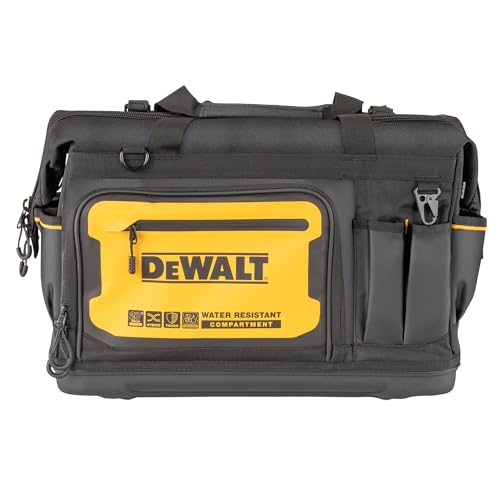
DEWALT 20-inch Professional Tool Tote
Strengths
- Hi-vis interior
- Water-resistant
- U-shaped zipper
Trade-offs
- Heavier empty
- Bulkier design
- No MOLLE or add-ons
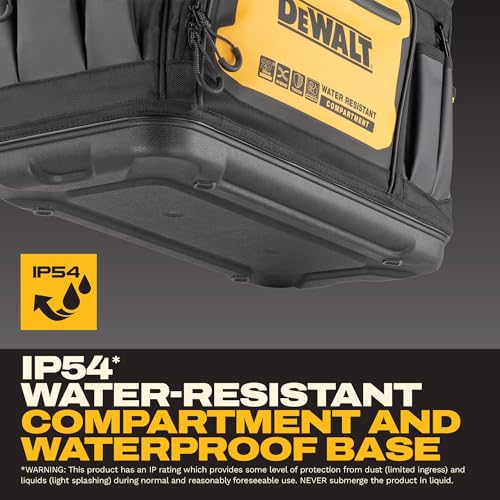
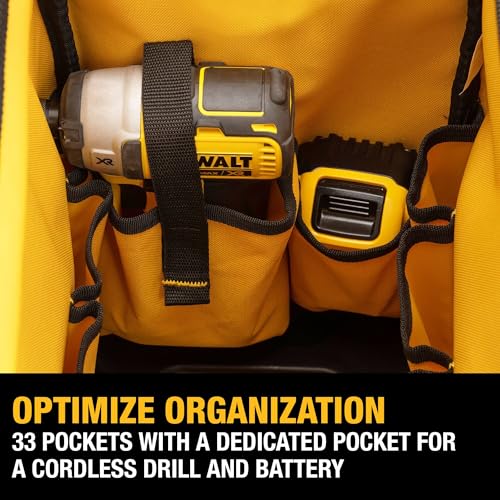
When you need to haul a lot and keep it dry, this DEWALT 20-inch tote is hard to beat. The IP54-rated water-resistant compartment and waterproof base are standout specs, especially for outdoor or unfinished-site work. The yellow hi-vis interior is a small detail that makes a big difference, tools pop instantly, and owners love it. With 33 pockets and a dedicated drill/battery pocket, it balances space and order well.
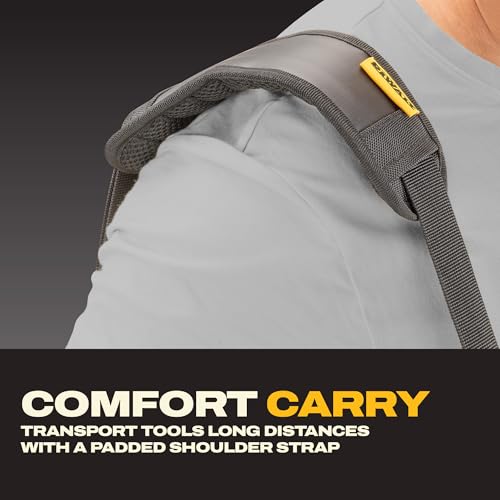
The U-shaped zipper is glove-friendly, a real plus in cold weather, and the backstrap for telescopic handles is genius for loading into trucks. Compared to the smaller DEWALT DWST17623, this one wins on capacity and weather protection. If you’re doing framing, roofing, or outdoor electrical, this is the smarter buy.
Product photos


Klein Tools 5-Pack Zipper Pouches

Strengths
- Stand-up design
- Reinforced bottom
- Carabiner clips
Trade-offs
- Not a primary bag
- Limited size capacity
- Zippers can snag on thick gloves
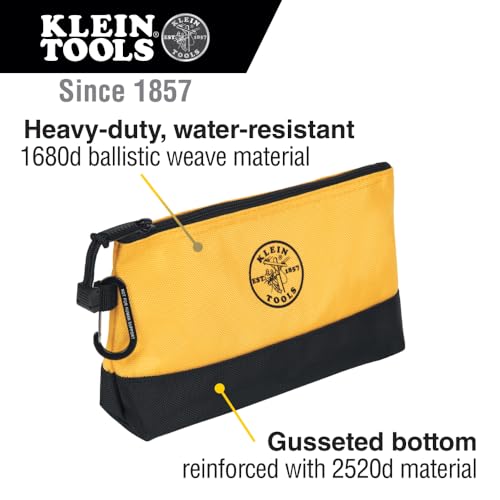
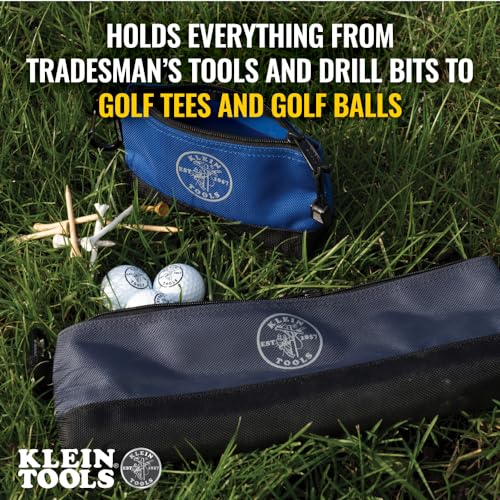
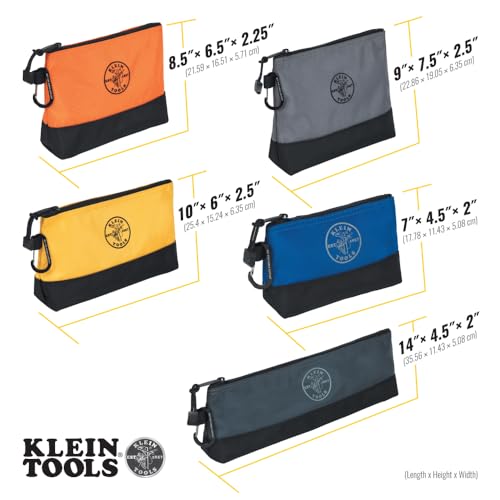
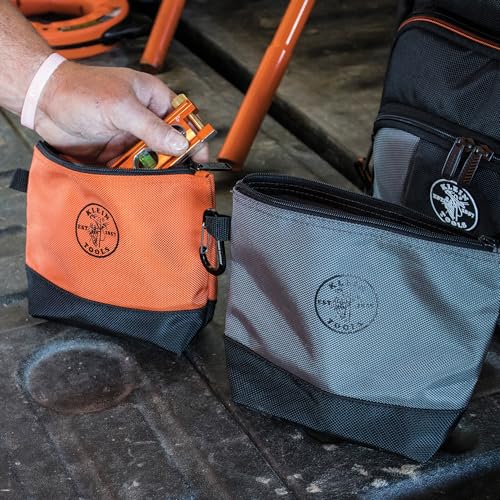
This 5-pack of stand-up zipper bags is a standout for small parts and specialty tools. The gusseted 2520d reinforced bottoms mean they stay upright when open, no more tipping over pouches trying to grab a bit. The color-coded sizes help you sort by task or user, and the included carabiners make clipping them to belts, ladders, or larger bags effortless. Owners love using them for drill bits, fasteners, or electrical connectors.
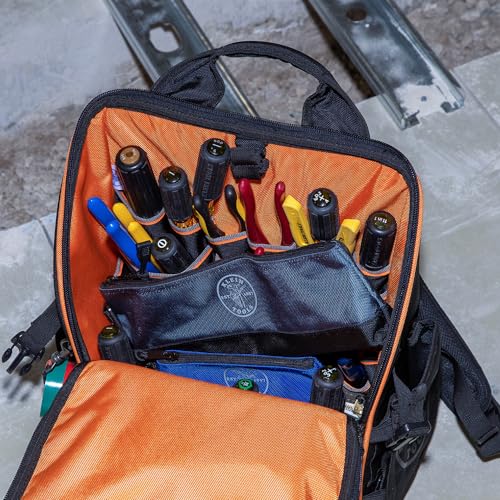
They’re not a full tool bag replacement, but as a modular organization system, they’re unmatched. I’d pair these with any of the larger totes here to boost compartmentalization. For anyone tired of loose bits rattling around, this set is a no-brainer.
Product photos
Amazon Basics 16-Inch Tool Bag
Strengths
- Affordable
- Reinforced stitching
- Wide opening
Trade-offs
- No molded base
- Basic materials
- No padded strap
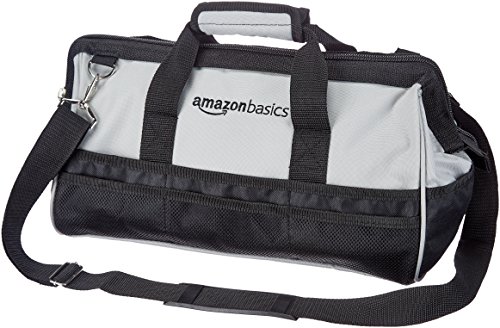
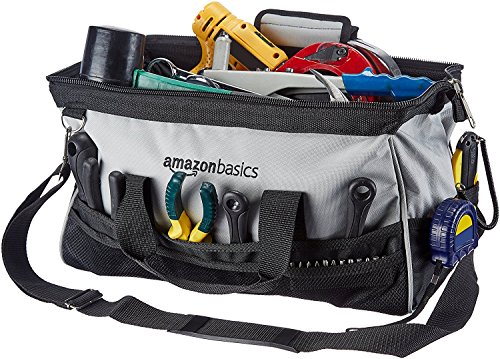
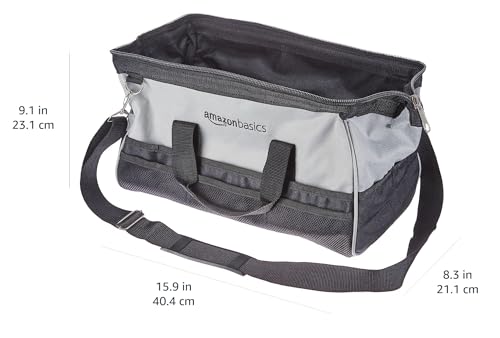
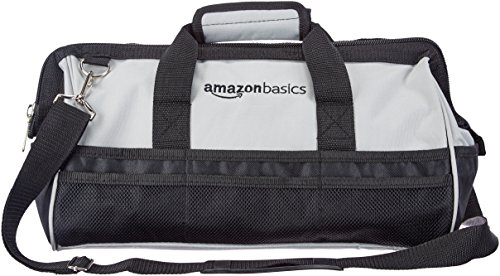
This is the bare-bones workhorse of the group, affordable, functional, and built with heavy-duty stitching and bar tacking, which helps it outlast cheaper bags despite the lower price. The 26 pockets offer decent organization, and the Oxford cloth exterior handles light scrapes and moisture. It’s not flashy, but for occasional DIYers or homeowners with a basic toolkit, it gets the job done without breaking the bank.
But it’s clear where corners were cut: no molded bottom, no high-visibility lining, and the shoulder strap lacks padding. Compared to the UUP or DEWALT options, it feels more like a starter bag. I wouldn’t trust it on a daily job site, but for weekend projects or a car emergency kit, it’s a smart, no-risk buy.
Product photos


IRONLAND 16.5-Inch Heavy Duty Bag
Strengths
- Waterproof base
- Non-slip feet
- Larger main compartment
Trade-offs
- Lower fabric denier
- Fewer internal pockets
- No hi-vis interior
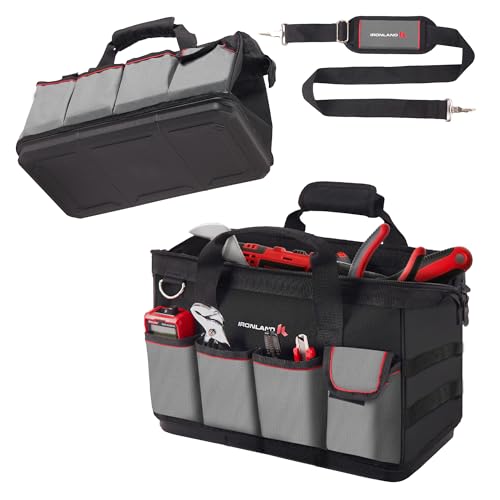
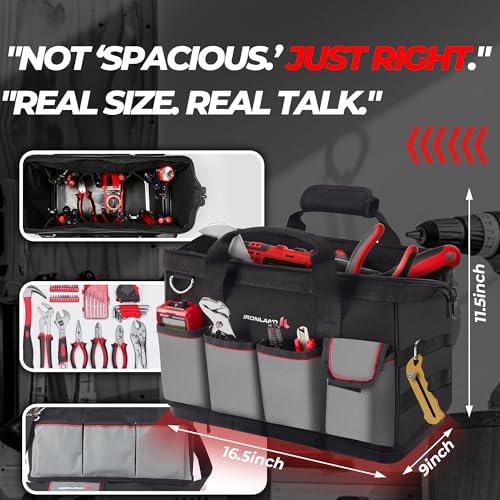
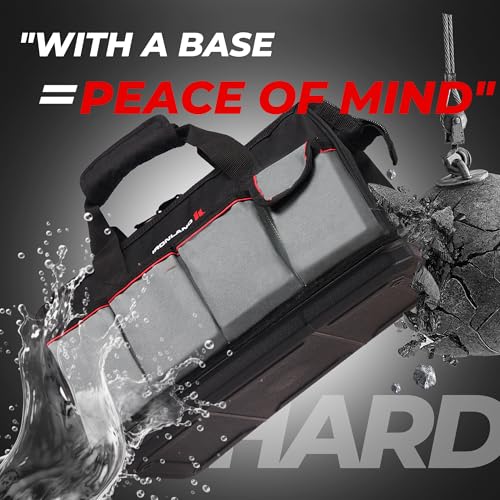
IRONLAND goes all-in on base protection, and it pays off. The molded waterproof plastic base plate is one of the most robust in this lineup, with non-slip feet that keep it planted on slick floors. At 16.5 inches, it’s slightly larger than most 16-inch bags, giving it an edge in power tool fit, owners report fitting two cordless drills with room to spare. The 600D Oxford with PVC coating isn’t as dense as 1680D, but it’s still abrasion-resistant and weatherproof.
The dual carry options, padded handle and shoulder strap, give flexibility. But it lacks internal organization compared to top-tier models. If you just want a dry, stable base and rugged shell, this delivers. For pure water resistance at the bottom, it’s the one to beat.
Product photos
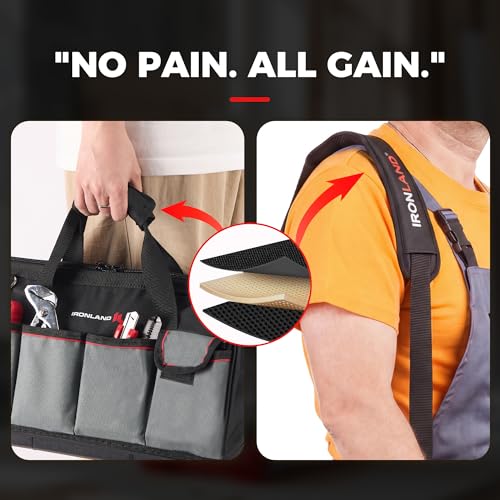
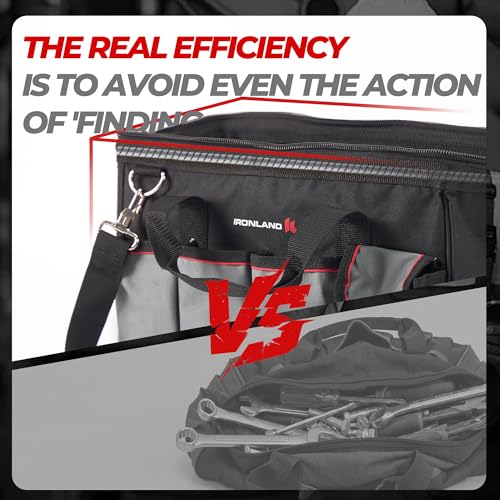
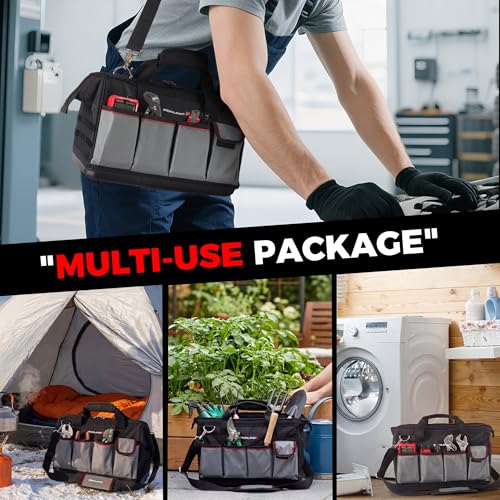
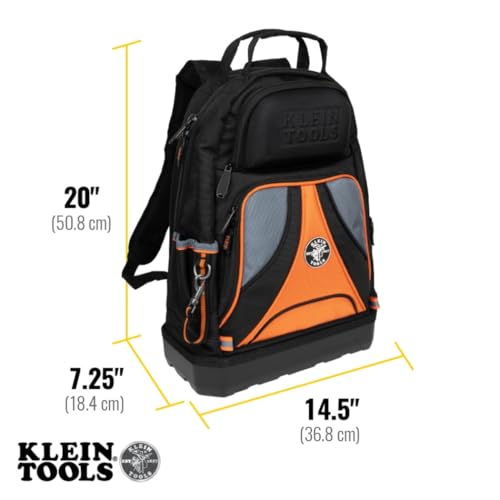
Klein Tools Tradesman Pro Backpack

Strengths
- Molded bottom
- 39 interior pockets
- Padded shoulder straps
Trade-offs
- Slower tool access
- Bulkier profile
- Less stable when open
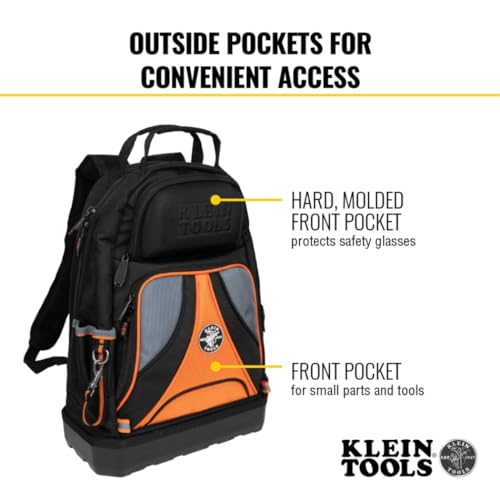
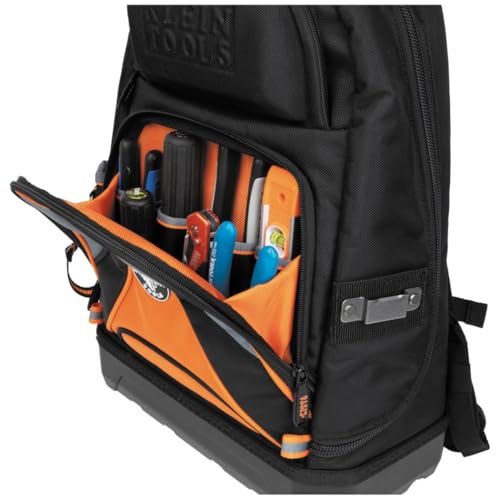
If you’re hauling tools across uneven terrain or climbing ladders all day, this backpack design from Klein Tools makes a strong case for itself. The molded bottom and 1680d ballistic weave mean it can take a beating on job sites, and the 39 pockets offer serious organization, especially helpful if you’re the type who hates digging for a specific wrench. The padded shoulder straps stand out in owner feedback, with many noting reduced fatigue on long days compared to standard tote bags.
Still, while the backpack format helps with mobility, it’s not the fastest to open and access tools mid-task. Compared to top-opening totes, you lose some immediacy. But if you value load distribution and back support over split-second access, this is a smart pick.
Product photos

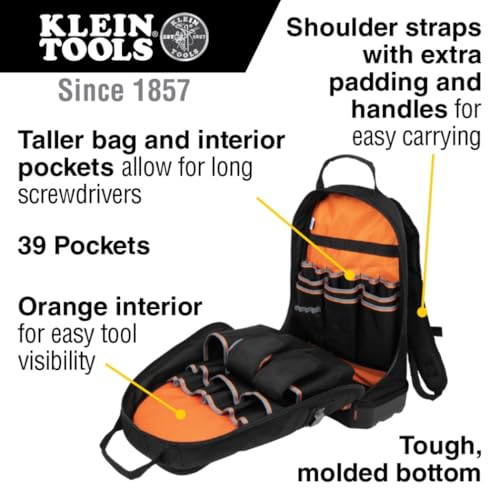
UUP 15-Inch Heavy Duty Tool Bag

Strengths
- Lightweight
- MOLLE webbing
- Removable strap
Trade-offs
- Fewer pockets
- No hard bottom
- Less internal structure
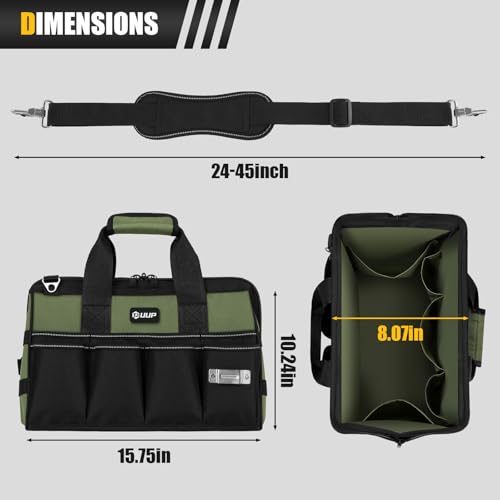
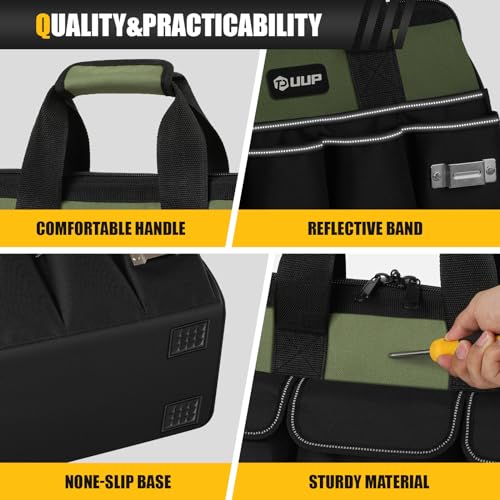
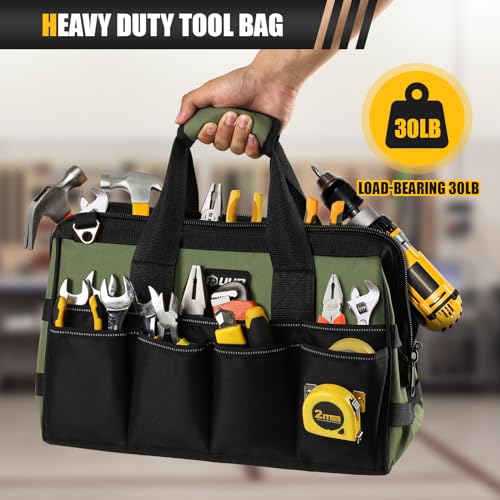
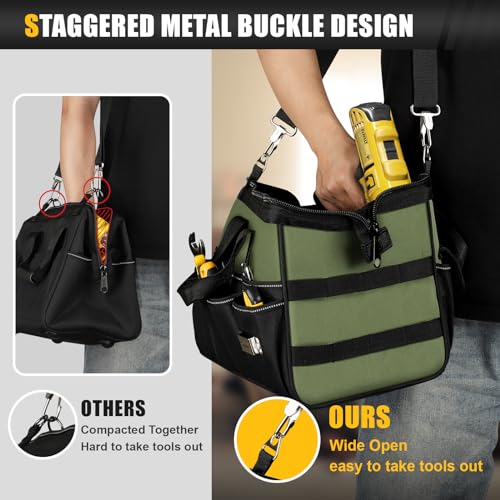
At just 2.6 lbs, this UUP bag stands out as one of the lightest 15-inch options with serious load capacity, rated for 30 lbs, and it doesn’t feel flimsy. The Oxford fabric with PVC coating delivers real-world water resistance, and owners report it holding up well in damp basements and outdoor jobs. The MOLLE webbing is a small but thoughtful touch, letting you attach extra pouches or a flashlight. I appreciate the removable shoulder strap with padding, which gives flexibility between grab-and-go and extended carry.
It doesn’t have as many pockets as some competitors, but the 16 are well-placed. Compared to the Amazon Basics model, it’s lighter, sturdier, and more feature-rich, yet still competitively priced. For a mobile electrician or HVAC tech who hates heavy gear, this is a strong contender.
Product photos

How We Evaluated toolbags
Rather than a hands-on lab test, my research for these toolbags involved a detailed comparison of published specifications and features across numerous models. I weighed owner reviews from major retailers against assessments from reputable tool review sites, focusing on patterns of praise and complaint. My experience with power tools and workshop organization informed how I interpreted this data and ranked each bag against key criteria for durability, capacity, and organization.
For toolbags, the factors of build quality and pocket design were most important. A robust construction, using materials like 1680D polyester or reinforced Oxford fabric, directly impacts longevity, especially with heavy loads. Equally crucial is a well-thought-out pocket arrangement; the ability to quickly locate and access specific tools saves significant time and frustration on the jobsite. Considering these aspects helped separate genuinely useful bags from those with flimsy construction or impractical layouts.
Specifications reliably indicate material quality and overall size. However, I relied heavily on owner feedback to gauge real-world durability and usability. Reports about zipper failures, stitching issues, or difficulty accessing tools guided my assessment. Understanding how to store a string trimmer, for example, requires a bag with specific dimensions and internal organization – something specs alone don’t always convey, and is why considering proper weed trimmer storage is vital. Reputation and long-term owner satisfaction were strong indicators of a toolbag’s value.
How To Pick The Right toolbags
Finding the right tool bag isn’t just about hauling gear; it’s about maximizing efficiency and protecting your investment.
A quality tool bag balances durability with intelligent organization. Key features include robust materials (like 1680D polyester or Oxford fabric), a waterproof base to withstand jobsite conditions, a sufficient number of pockets for segregation of tools, and comfortable carrying options. Construction quality, specifically stitching and zipper integrity, are indicators of long-term reliability.
Material & Durability
The tool bag world offers a wide range of materials, but don’t assume more expensive automatically means better. While 1680D ballistic weave nylon is a popular choice and generally very durable, high-density Oxford fabric with a PVC coating can provide excellent tear and water resistance at a more reasonable price. I’ve seen plenty of bags with seemingly impressive specs fall apart at the seams due to poor stitching. Pay close attention to bar-tacking at stress points – this reinforces the areas that take the most abuse. Consider the type of work you do; a carpenter framing a house will demand more from a bag than someone handling basic household repairs.
Organization & Capacity
Capacity is important, but it’s useless if everything is jumbled together. Look beyond the total number of pockets and think about types of pockets. Dedicated slots for screwdrivers, drill bits, and adjustable wrenches are incredibly valuable. Some bags, like the Klein Tools Tradesman Pro, even feature specialized pockets for safety glasses. Don’t overlook internal dividers – they allow for customization and prevent tools from sliding around. If you frequently carry a lot of smaller parts, consider a bag with a clear zippered pocket for easy visibility. For those who need even more organization, exploring a top-rated tool backpacks can be a great solution.
Carrying Comfort & Practical Features
A fully loaded tool bag can get heavy, quickly. Padded handles and adjustable shoulder straps are essential for comfort, especially if you’re walking long distances on a jobsite. A wider, padded shoulder strap distributes weight more evenly. Beyond that, look for thoughtful details. A waterproof base, like those found on the IRONLAND bag, protects your tools from moisture, while reflective strips increase visibility in low-light conditions.
- A simple tape measure clip on the outside saves you time and prevents damage to the tape.
- MOLLE webbing (as seen on the UUP bag) allows you to attach additional pouches or accessories, expanding your carrying capacity.
- A wide-mouth opening provides easy access to tools at the bottom of the bag, instead of needing to dig around. This is especially helpful when working quickly and needing to switch tools frequently.
A tool bag should make your life easier, not harder. If you find yourself constantly fumbling for tools or struggling with an uncomfortable carry, it’s time to upgrade.
Toolbags Compared
Here’s a comparison of key specifications for various toolbags to help you choose the right one.
| Product Title | Capacity (L) | Material | Waterproof Base | Number of Pockets | Carrying Options |
|---|---|---|---|---|---|
| Heavy Duty 16-Inch Tool Bag | 25 | 1680D Oxford Fabric | Yes | 46 | Handle |
| Klein Tools 40-Pocket Tool Bag | N/A | 1680d Ballistic Weave | Yes | 40 | Handle |
| DEWALT 16-inch TSTAK Tool Bag | N/A | 1680 Denier | Yes | N/A | Shoulder Strap, Handles |
| DEWALT 20-inch Professional Tool Tote | N/A | 1680 Denier | Yes | 33 | Shoulder Strap, Handles |
| Klein Tools 5-Pack Zipper Pouches | N/A | 1680d | N/A | 5 (pouches) | Carabiner Clip |
| Amazon Basics 16-Inch Tool Bag | N/A | Oxford Cloth | N/A | 26 | Handle, Adjustable Strap |
| IRONLAND 16.5-Inch Heavy Duty Bag | N/A | 600D Oxford Fabric | Yes | N/A | Handle, Shoulder Strap |
| Klein Tools Tradesman Pro Backpack | N/A | 1680d Ballistic Weave | Yes | 39 | Backpack, Handles |
| UUP 15-Inch Heavy Duty Tool Bag | N/A | Oxford Fabric | N/A | 16 | Handle, Shoulder Strap |
Frequently Asked Questions
What’s the difference between a tool bag and a tool tote?
A tool tote generally has an open top and wider opening for quick access, while a tool bag usually features a zippered closure for more secure storage and protection. Totes prioritize visibility and speed, while bags focus on keeping tools contained.
Are tool backpacks a good alternative to traditional bags?
Yes, tool backpacks distribute weight more evenly and are excellent if you frequently walk long distances with your tools. They often have dedicated compartments for power tools and smaller accessories, offering organization similar to a bag but with added portability.
What material offers the best balance of durability and cost?
High-density Oxford fabric with a PVC coating provides excellent tear and water resistance at a reasonable price. While 1680D nylon is very durable, Oxford fabric is often a better value for many users needing a reliable bag.
How can I tell if a tool bag has quality stitching?
Look for bar-tacking at stress points (where straps attach or corners are reinforced). This extra stitching significantly increases durability and prevents seams from ripping under heavy loads, extending the bag’s life.
If I’m just starting out, should I invest in a large, expensive tool bag or a smaller, more affordable one?
Beginners should start with a smaller, more affordable bag containing only the essential home tool sets needed for basic tasks. As your tool collection and project complexity grow, you can always upgrade to a larger, more feature-rich bag later.
The Bottom Line
Choosing a tool bag often comes down to balancing how much control you want over organization versus how much fuss you’re willing to tolerate. If you want a bag that can handle almost anything and keep it neatly arranged, the Heavy Duty 16-Inch Tool Bag is the strongest overall pick. Its extensive pocket layout and durable construction make it a solid choice for most users.
For those on a tighter budget, or who need a focused solution, there are excellent alternatives. The Amazon Basics 16-Inch Tool Bag provides a surprising amount of utility for the price, while the Klein Tools 5-Pack Zipper Pouches are ideal for keeping small parts organized within a larger bag or toolbox. And if you’re also looking at how to store a string trimmer, the DEWALT 20-inch Professional Tool Tote offers the space and durability you need.
Ultimately, the best tool bag isn’t about having the most pockets or the fanciest materials. It’s about finding a reliable companion that protects your tools, keeps you organized, and makes your work easier. Prioritize build quality, a layout that suits your workflow, and a comfortable way to carry everything – those fundamentals matter far more than any single specification.
