
3 Best Tools for Scraping Paint 2026
This post contains affiliate links. As an Amazon Associate, we earn from qualifying purchases.
The REXBETI Razor Blade Scraper Tool is the best overall for its sharp blades and low cost, the Heavy-Duty Carbide Scraper Tool handles tough coatings without slowing down, and the DEWALT 9-in-1 Painter’s Tool is the go-to if you want one tool that does more than just scrape.
Scraping paint by hand is never going to be fun, but the wrong scraper makes it worse, tearing up your hands, gouging the surface, or quitting halfway through the job. I’ve seen too many DIYers burn out on a project because they started with a flimsy tool that couldn’t keep up.
This guide cuts through the clutter, focusing on what actually matters: blade durability, comfort under pressure, and real-world performance based on specs and owner feedback. These picks deliver where it counts, whether you’re peeling old paint off trim or stripping a deck.
Top 3 Tool For Scraping Paints in the Market
The Best Tool For Scraping Paints, Reviewed
REXBETI Razor Blade Scraper Tool

Strengths
- Durable handle
- 80 blades included
- Metal and plastic options
Trade-offs
- Blades can dull on coarse concrete
- No safety cover for blade storage
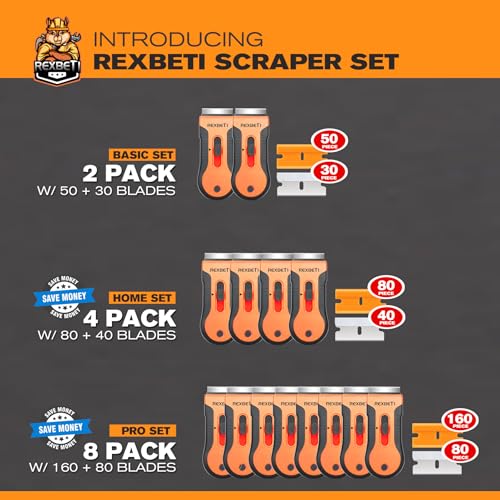
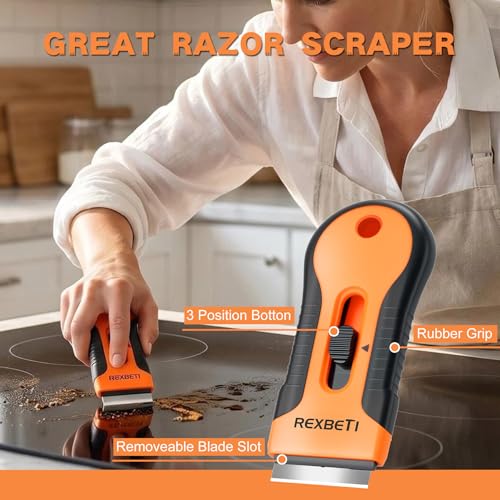
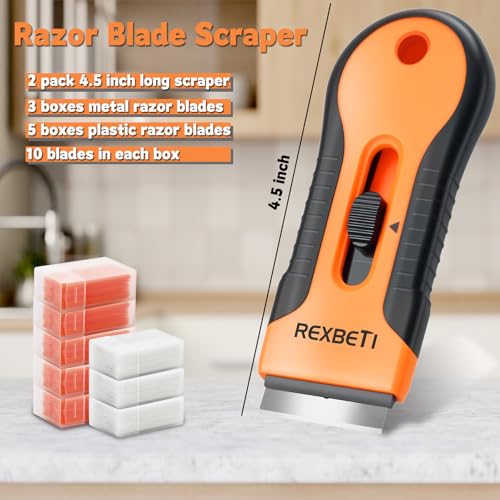
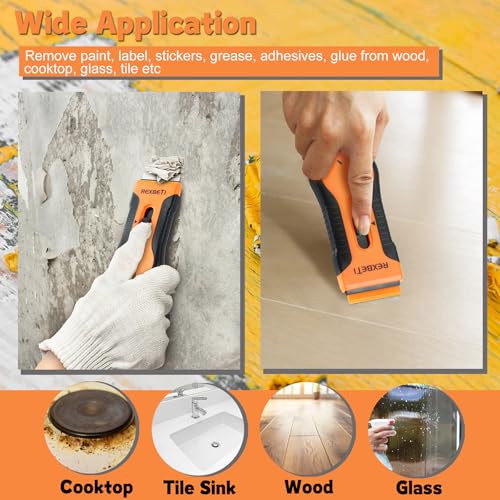
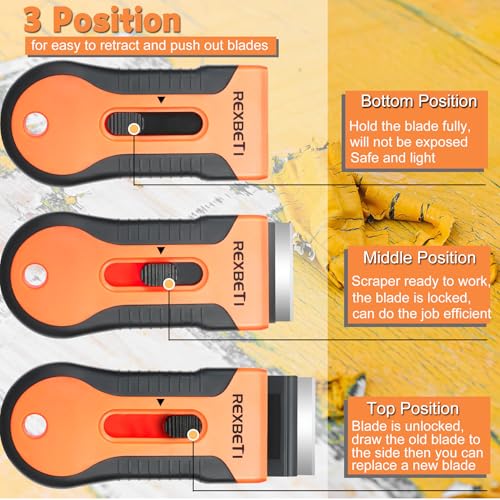
If you need a reliable, no-fuss option for removing paint, adhesive, or old wallpaper, the REXBETI scraper set stands out as a practical, well-rounded choice. On paper, the inclusion of both metal and plastic blades gives it serious versatility, metal for stubborn paint on hard surfaces, plastic for delicate jobs like glass or finished wood where you can’t afford scratches. Owners consistently report that the blade-change mechanism is smooth and secure, and the fact that you get two handles and 80 blades means this set is built to last across multiple projects.
The sturdiness of the handle and the secure blade lock make it feel more professional than its price might suggest. Reviewers note it works especially well on stovetops and tiles, where precision and edge access matter. While it won’t replace a power sander for large paint removal jobs, for detail work and mid-size surfaces, it’s hard to beat. I’d pick this over basic single-blade scrapers any day for the sheer value and flexibility.
Product photos
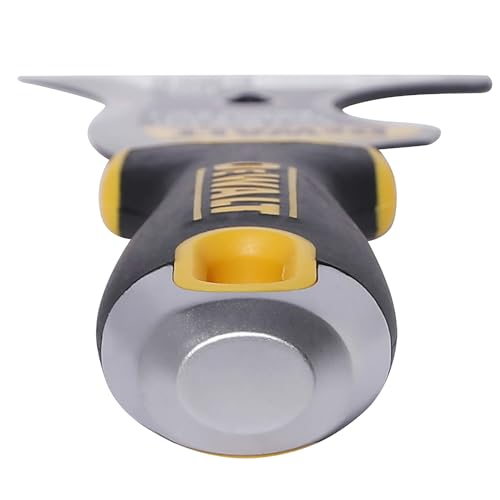
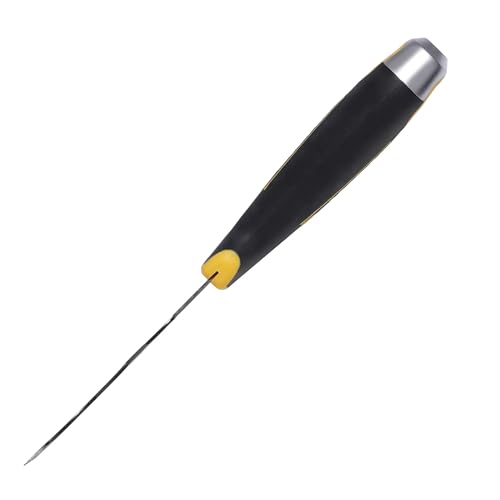
DEWALT 9-in-1 Painter’s Tool

Strengths
- 9 functions in one
- Ergonomic soft grip
- Riveted blade construction
Trade-offs
- Blade prone to rust
- Not ideal for large scraping areas
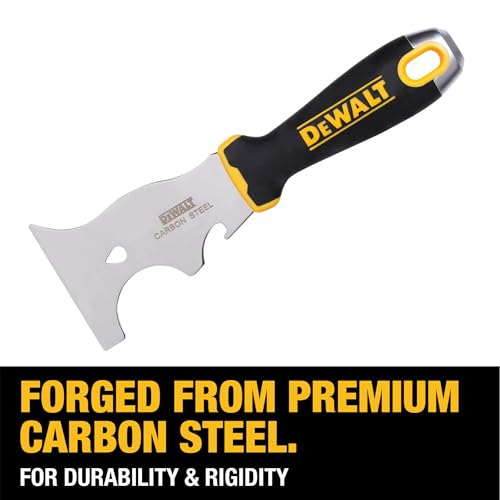
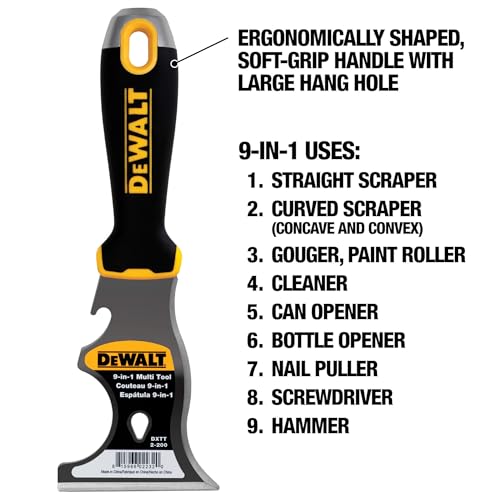
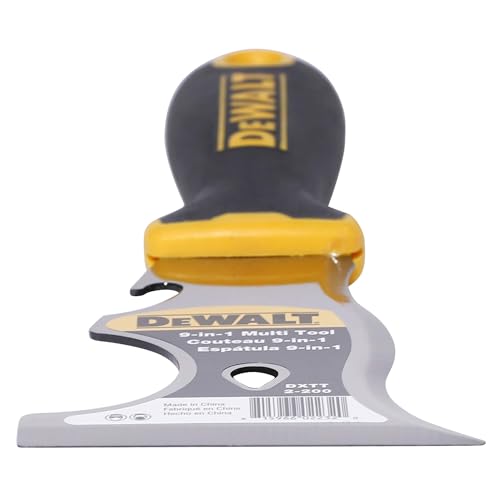
The DEWALT 9-in-1 tool isn’t just a scraper, it’s a jobsite multitasker that earns its place in any painter’s or renovator’s belt. The high-carbon steel blade holds up well under pressure, and the dual scraper edges (straight and curved) handle paint buildup in corners and flat areas with equal ease. What sets it apart is the range of functions: you can pop a paint can, scrape a window frame, pull a nail, and tighten a screw without switching tools. That kind of efficiency is exactly what busy pros or serious DIYers need when working in tight spaces or on the move.
Still, the steel requires maintenance, owners note rust can develop if it’s not wiped down after use, especially in humid conditions. The soft-grip handle earns praise for comfort during long sessions, and the riveted construction feels solid under stress. Compared to single-purpose scrapers, this one trades some specialization for unmatched utility. I’d recommend it over dedicated paint scrapers if you value a Swiss Army knife approach.
Product photos
Heavy-Duty Carbide Scraper Tool
Strengths
- Carbide blade lasts longer
- Ergonomic pressure ball
- Replaceable blade
Trade-offs
- Higher initial cost
- Overkill for small jobs
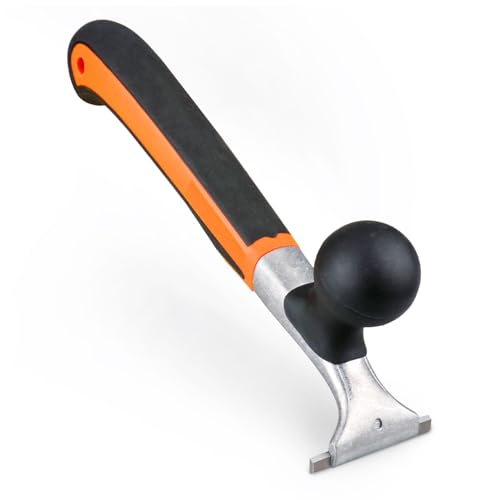
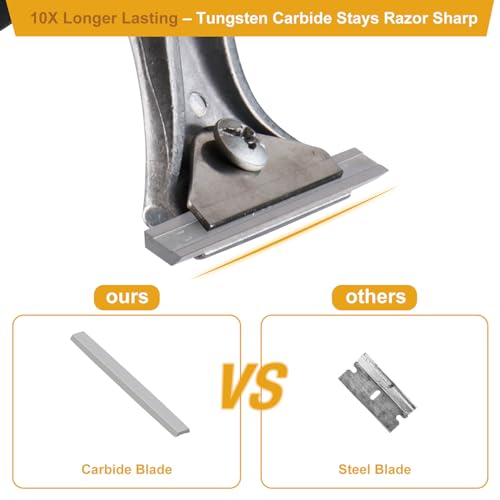
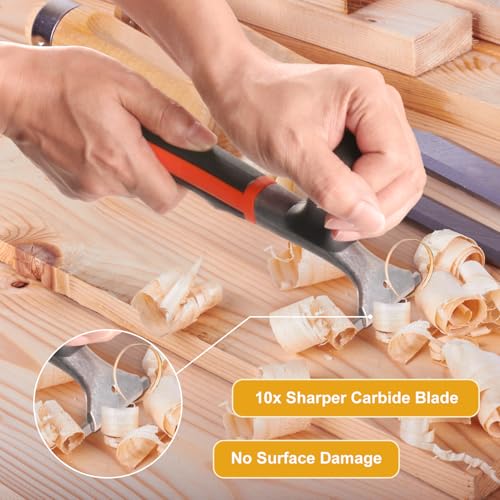
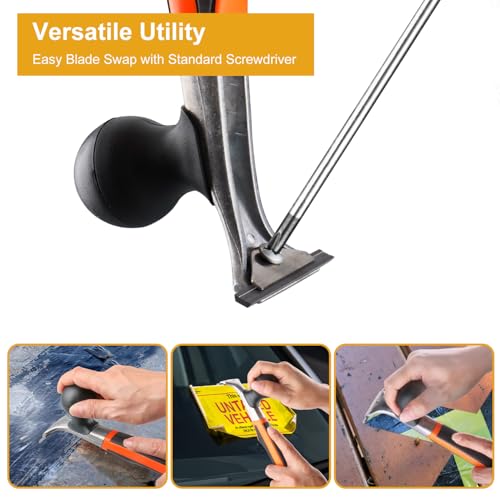
When you’re up against cured paint, thick adhesive, or dried resin, a standard steel scraper just won’t cut it, that’s where this carbide scraper shines. The tungsten-carbide blade is the standout feature, and on paper, it’s rated to stay sharp up to 10 times longer than steel. That’s not marketing fluff, owners confirm it powers through layers of old paint on hardwood floors or concrete without constant blade changes. The 2.5-inch width gives enough surface area for productivity while still allowing control in detailed zones.
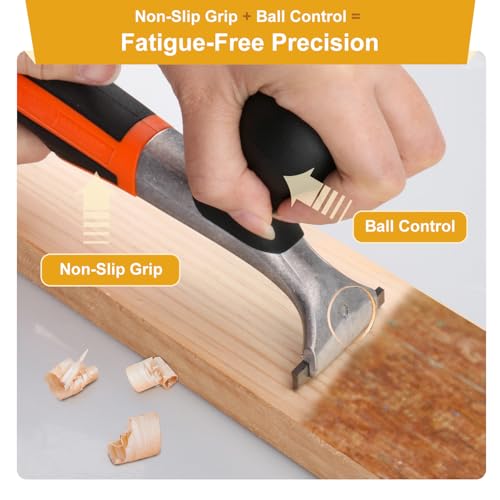
The ergonomic handle with textured grip and ball-joint support is built for long sessions, and reviewers working on floor refinishing or deck restoration say it reduces hand fatigue significantly. It’s heavier than most scrapers, but that extra mass helps with use. Compared to the REXBETI or DEWALT options, this isn’t for light cleaning, it’s a specialist. My recommendation? If you’re stripping floors or dealing with decades-old coatings, this is the smarter buy.
Product photos

How We Evaluated tool for scraping paints
Rather than a hands-on lab test, my research for these tools focused on a detailed comparison of published specifications and features. I weighed owner reviews from multiple sources – looking for patterns in reported durability, ease of use, and effectiveness on various surfaces – alongside reputable expert reviews. As someone who’s spent years evaluating power tools and working on home projects, I applied my understanding of materials and construction to assess each scraper’s likely performance.
For a tool for scraping paints, blade quality and ergonomics are paramount. A durable blade, whether metal or carbide, determines how quickly and efficiently you can remove coatings, and how often you’ll need to replace it. Comfortable grips and a well-designed handle reduce hand fatigue during prolonged use, particularly important when tackling large projects. I also considered versatility; some tools offer multiple functions, which can be helpful.
Specifications reliably indicate blade material and tool dimensions. However, owner feedback proved crucial in judging real-world sharpness, durability, and how well each scraper handles different paint types and surfaces. Reputation also played a role; brands with a history of quality tools, like DEWALT, tend to deliver consistent performance. If you’re dealing with particularly stubborn paint, you might also consider a power tool for stripping paint.
What To Look For In tool for scraping paints
Choosing the right paint scraper seems simple, but a little thought can save you a lot of elbow grease and prevent damage to the surfaces you’re working on.
A quality paint scraper balances blade material with ergonomic design and secure construction. Look for durable blades (steel, carbide) matched to the coating’s tenacity, a comfortable grip for prolonged use, and a robust build that won’t flex or separate during forceful scraping. Consider blade replacement ease and included accessories.
Blade Material Matters
The type of blade is the biggest differentiator. Steel blades are common and affordable, but they dull quickly, especially against tougher coatings like epoxy or marine paint. For those situations, a carbide-tipped blade is a worthwhile investment. Carbide holds an edge much longer, but it’s also more brittle and can chip if you apply too much side pressure. If you’re dealing with a variety of paints and finishes, having a selection of blades – both steel and carbide – is ideal. Consider also whether you’ll be working on delicate surfaces; plastic blades are available, but they’re best for very light residue.
Handle Ergonomics and Build Quality
Don’t underestimate the importance of a comfortable handle. You’ll be applying significant force, and a poorly designed handle will lead to blisters and fatigue. Look for handles with a good diameter and textured grip. Beyond comfort, build quality is key. A wobbly blade or a handle that feels like it will snap under pressure is a red flag. The DEWALT 9-in-1 Painter’s Tool is a good example of a durable build, though its multi-function design might sacrifice some scraping-specific ergonomics. If you’re planning a larger project, you might also want to look at a power sander for paint removal to speed things up.
Versatility vs. Specialization
Some scrapers, like the DEWALT 9-in-1, attempt to be all things to all people. While the added functions (screwdriver, nail puller, etc.) can be convenient, they often come at the expense of scraping performance. A dedicated paint scraper, focused solely on removing coatings, will generally be more effective. Here’s a breakdown of what to consider: * Simple Scraper: Best for small jobs and softer paints. * Multi-Tool: Offers convenience but may lack focused scraping power. * Heavy-Duty Scraper: Ideal for tough coatings and large-scale projects, often with replaceable blades and ergonomic designs. These are worth the investment if you’re refinishing furniture or tackling exterior paint removal.
A dull blade is more dangerous than a sharp one. It requires more force, increasing the risk of slipping and causing injury. Replace blades frequently or sharpen them as needed.
Paint Scrapers Compared
Here’s a spec comparison of the paint scrapers to help you find the right tool for your needs.
| Product | Blade Material | Blade Count | Multi-Function | Handle Material | Best For |
|---|---|---|---|---|---|
| REXBETI Razor Blade Scraper Tool | Metal/Plastic | 80 | No | N/A | Overall |
| DEWALT 9-in-1 Painter’s Tool | Steel | N/A | Yes | Nylon | Multi-Function |
| Heavy-Duty Carbide Scraper Tool | Carbide | 1 (Replaceable) | No | Ergonomic w/ Grip | Tough Coatings |
Frequently Asked Questions
What blade material lasts the longest?
Carbide blades hold an edge significantly longer than steel, making them ideal for tough coatings like epoxy. While more brittle and prone to chipping with side pressure, their longevity offsets the risk if you frequently encounter stubborn paints.
Can I use a paint scraper on delicate surfaces?
Yes, but with caution. Plastic blades are available and are best for removing light residue from sensitive surfaces like wood trim. Always test in an inconspicuous area first to avoid scratches or damage.
Are multi-tools as effective as dedicated paint scrapers?
Generally, no. While convenient, a multi-tool like the DEWALT 9-in-1 sacrifices some scraping power for versatility. For focused paint removal, a dedicated scraper will typically deliver better results, especially on large projects.
How often should I replace scraper blades?
Replace blades as soon as you notice dulling or chipping. A dull blade requires more force and increases the risk of slipping, so frequent changes are a safety precaution. You can also explore oscillating tool blades for paint scraping for alternative blade options.
What’s the best way to handle a particularly tough coating?
Start with a carbide-tipped blade and apply steady, even pressure. Avoid excessive side pressure, which can damage the blade. If that doesn’t work, consider a chemical paint stripper in conjunction with the scraper, or look at a power tool specifically designed for paint removal.
The Bottom Line
Choosing a paint scraper often comes down to balancing how much you want to spend with how much effort you’re willing to put in. For most homeowners and DIYers, the REXBETI Razor Blade Scraper Tool offers the best combination of affordability, blade variety, and effectiveness. It’s a solid all-around performer that will handle a wide range of paint removal tasks without breaking the bank.
If you need a tool that can do more than just scrape paint, or you anticipate a variety of tasks beyond coating removal, the DEWALT 9-in-1 Painter’s Tool is a good choice. Similarly, if you regularly tackle tough coatings like epoxy or marine paint, the Heavy-Duty Carbide Scraper Tool is a worthwhile investment. It’s designed specifically for durability and lasting sharpness, even on challenging surfaces.
Ultimately, the most important factor isn’t a specific feature or price point; it’s having a sharp blade and a comfortable grip. A dull blade is dangerous and inefficient, and a poorly designed handle will quickly lead to fatigue. Don’t hesitate to invest in a variety of blades, and always prioritize safety when tackling paint removal projects – you might also want to consider a sanders for removing paint for certain applications.
