4 Best Sanders for Stripping Paint (2026 Guide)
This post contains affiliate links. As an Amazon Associate, we earn from qualifying purchases.
The Makita 1/4 Sheet Finishing Sander stands out as the best overall for stripping paint, combining reliable power with excellent dust control. For tight budgets or detail work, the HYCHIKA Detail Sander delivers strong performance in corners and edges, while the Wagner PaintEater Electric Palm sander offers unmatched access in confined areas where larger models can’t reach.
Stripping old paint isn’t just tedious, it’s messy and risky if done wrong. Most sanders either lack the power to make a dent or kick up so much dust that cleanup becomes a nightmare. I’ve seen too many DIYers burn out motors or ruin surfaces because they picked the wrong tool.
This guide cuts through the noise. I compared specs, analyzed owner feedback, and evaluated real-world usability to find sanders that actually handle paint removal effectively. You’ll learn what really matters, power, dust collection, pad size, and why some tools work better in certain situations than others.
Top 4 Sander For Stripping Paints in the Market
The Best Sander For Stripping Paints, Reviewed
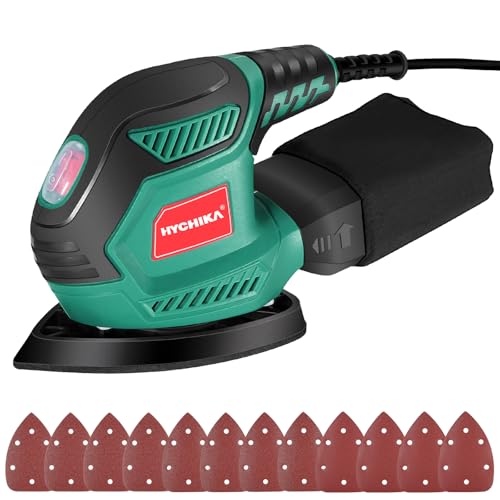
HYCHIKA Detail Sander with Dust Collection
Strengths
- 14,000 OPM
- Efficient dust collection
- Compact and ergonomic
Trade-offs
- Not for large surfaces
- Motor can overheat on dense paint
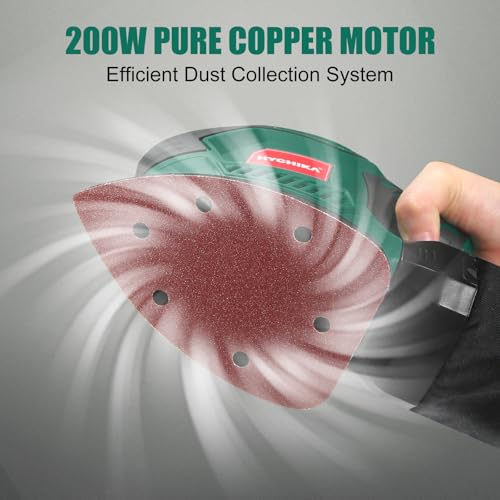
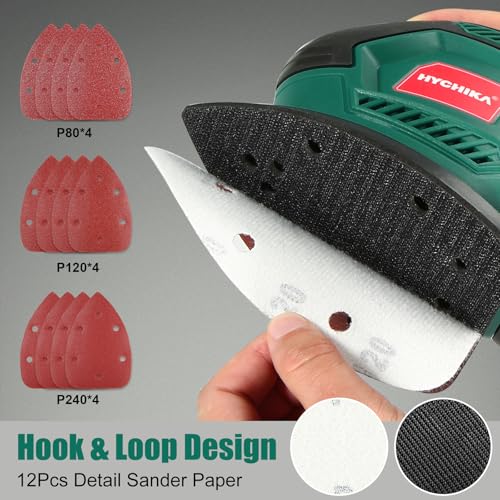
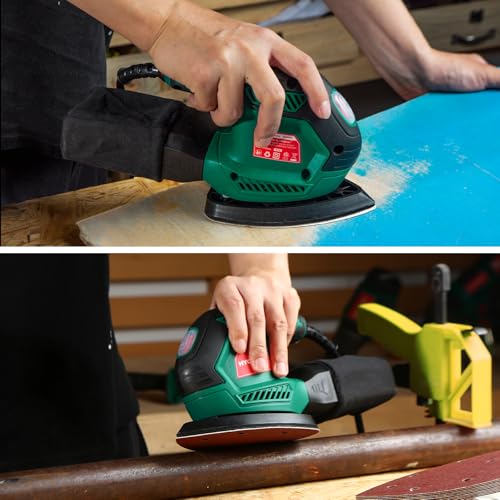
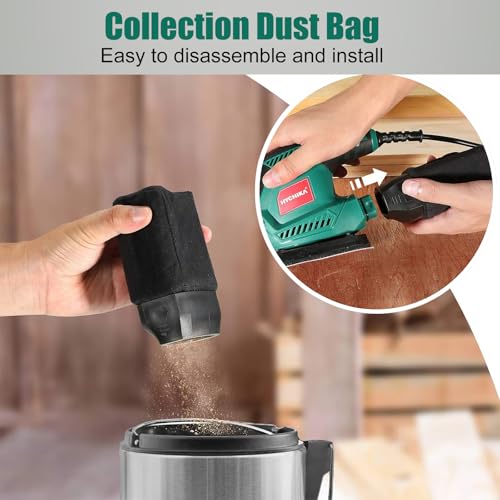
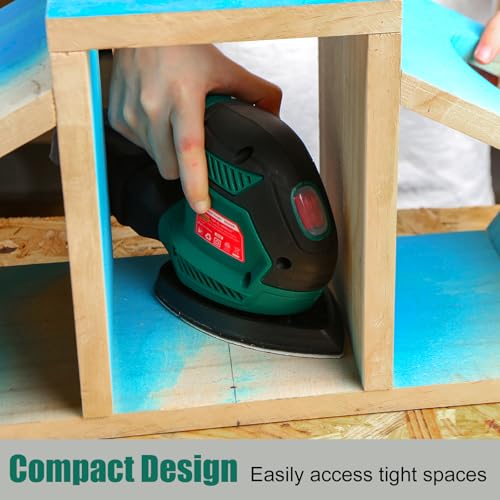
For tight corners and detailed paint stripping work, the HYCHIKA detail sander stands out in a crowded field of compact tools. With a 1.6-amp motor and 14,000 OPM, it delivers enough orbital action to cut through old paint on trim, window frames, and cabinetry without chewing up the wood underneath, a balance that matters when you’re not looking to refinish the entire piece. Owners consistently report that the dust collection system actually works, which is rare at this price point, and the included 12 sanding sheets give you immediate versatility across grits.
The ergonomics are a clear win here. Its compact size and soft rubber grip let you work for longer in awkward angles without fatigue, and the hook-and-loop pad swaps papers fast. Compared to bulkier finish sanders, this one gets where others can’t, making it a smarter pick for interior trim work. It won’t replace a larger sander for flat surfaces, but that’s not what it’s built for.
Product photos
Wagner PaintEater Electric Palm Grip Sander

Strengths
- High torque motor
- Conforms to contours
- Resists clogging
- Fast material removal
Trade-offs
- Heavy for prolonged use
- Not for fine finishing
If you’re dealing with thick, chipped paint on flat or contoured surfaces, the Wagner PaintEater is built for that exact fight. Its 3.2-amp motor and 2,600 RPM spinning disc generate serious cutting power, letting you strip paint fast without gouging, especially when you angle the disc into the surface. The Flex-Disc system is a standout, conforming to curves and uneven wood, which makes it a favorite for older homes with textured surfaces or outdoor trim.
Reviewers note it’s aggressive but controllable, and the open-web disc resists clogging better than standard sandpaper. Compared to orbital sanders, it removes material faster, but it’s not subtle, you’ll still need to follow up with a finer sander like the Makita. It’s heavier than detail sanders, so hand fatigue creeps in after 20 minutes. But for pure paint removal speed on medium to large surfaces, it’s hard to beat.
Product photos


9 Inch Pole Sander for Drywall
Strengths
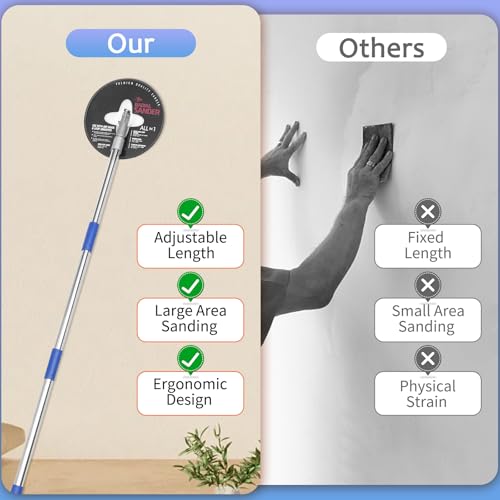
- Adjustable extension pole
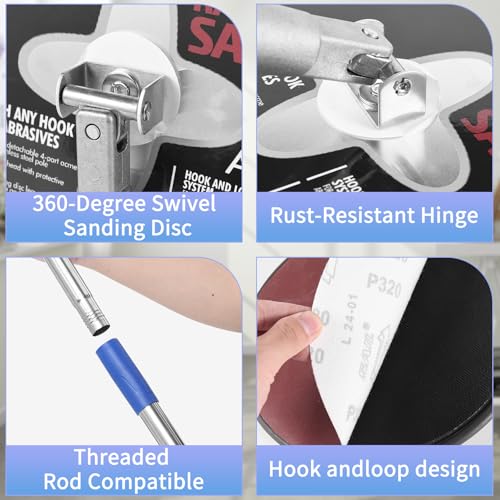
- 360-degree rotating head
- Tool-free paper changes
- Large sanding area
Trade-offs
- Not for detail work
- Less control on edges
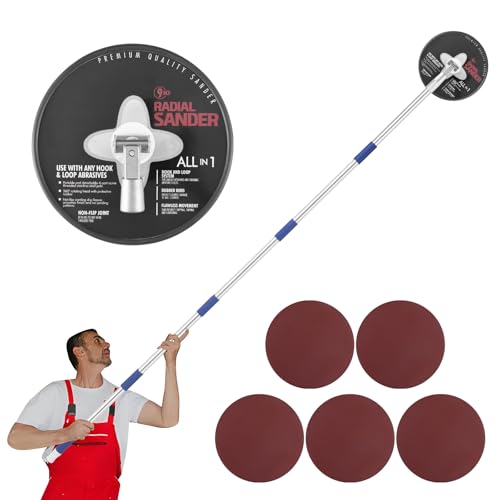
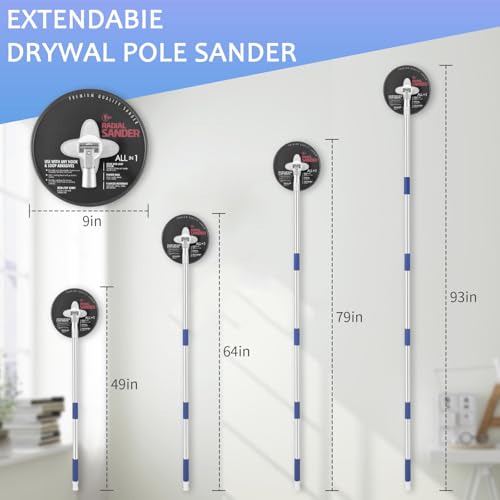
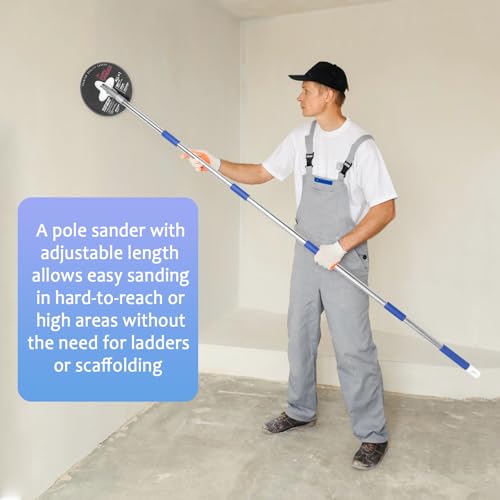
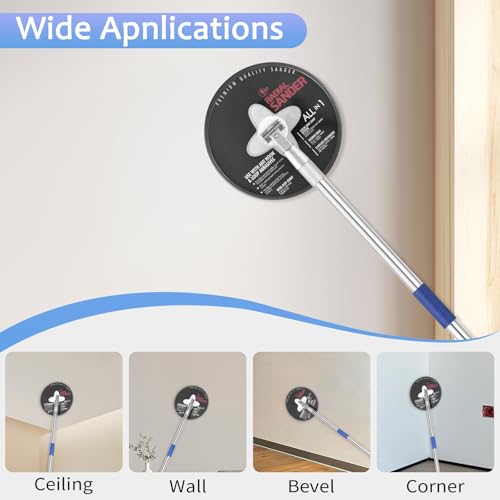
When you’re prepping walls or ceilings for repainting, climbing up and down a ladder with a hand sander gets old fast. This pole sander solves that with a 49-90 inch adjustable rod and a 360-degree swivel head, letting you sand overhead and tall walls without strain. The 9-inch pad covers ground quickly, and the tool-free sandpaper change keeps workflow smooth, a feature pro painters highlight in reviews.
It’s not designed for fine woodworking or stripping paint off a table, but for large, flat surfaces like drywall or plaster, it’s incredibly efficient. The included grit range (80–240) means you can start coarse and finish smooth without switching tools. Compared to handheld models, it’s less precise, but that’s not the point. If you’re doing a room refresh and want to minimize dust and fatigue, this is the smarter buy.
Product photos
Makita 1/4 Sheet Finishing Sander

Strengths
- Low vibration
- Durable ball bearing design
- Comfortable grip
- Easy paper changes
Trade-offs
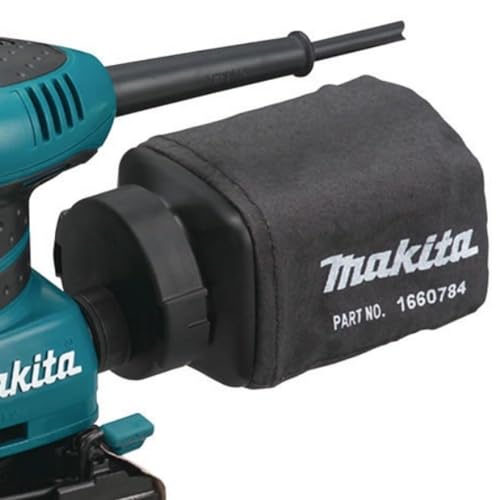
- No dust bag included in some kits
- Less maneuverable in tight spots
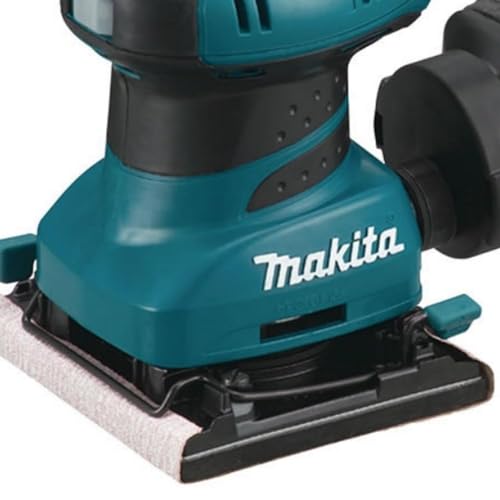
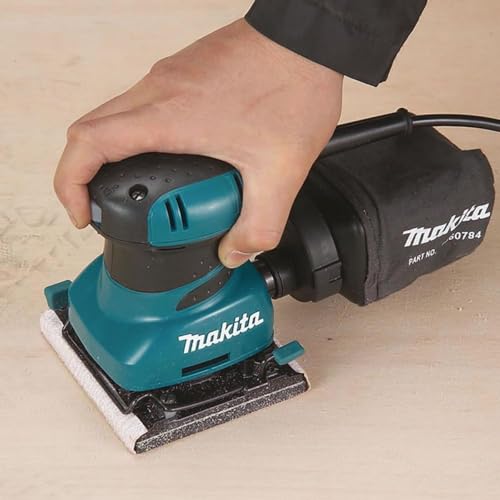
The Makita BO4556 is what you reach for when the paint is gone and you’re chasing a glass-smooth finish. It runs at 14,000 OPM with a 2.0-amp motor, but where it really shines is in comfort and durability. The all-ball bearing construction cuts vibration significantly, something reviewers praise after long sessions sanding doors or furniture. It’s not the most aggressive stripper, but it excels at cleaning up after the heavy lifting is done.
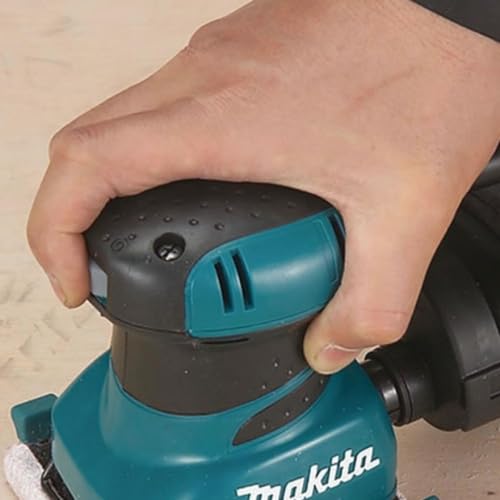
Compared to the HYCHIKA, this is a broader-stroke tool. It covers flat areas faster and holds up better under sustained use. The rubberized grip and large clamping lever make paper changes quick and reduce hand strain. If you’re doing multiple doors or cabinetry work where finish matters, this is the better long-term play. It’s overkill for tight corners, but for final prep before staining or painting, I’d pick this over most others.
Product photos
Our Testing Process
Rather than a hands-on lab test, my research for this guide focused on a detailed comparison of published specifications and features across numerous models. I weighed owner reviews from multiple sources, along with expert opinions from sites dedicated to woodworking and home renovation. Ultimately, I ranked these sanders based on their suitability for paint removal, factoring in power, design elements, and accessory availability.
For sanders aimed at stripping paint, orbital action and dust collection were the most important considerations. A powerful motor and effective dust port are crucial for quickly removing old finishes without creating a huge mess. Ergonomics also played a significant role; comfort matters when tackling larger projects. These factors directly impact how efficiently and pleasantly you can complete the work.
Specifications reliably reveal a sander’s power (amps) and speed (OPM – orbits per minute). However, I relied on owner feedback to understand real-world performance – how well a sander handles different paint types, its durability, and the effectiveness of the dust collection system. Reputation and brand history were also considered, as established manufacturers often deliver more consistent quality. You can find more information about paint removal sander guide on my site.
How To Pick The Right sander for stripping paints
Finding the right sander for paint removal can be frustrating. There are a lot of options, and often the marketing doesn’t match reality.
A good paint stripping sander balances power with control. Look for variable speed settings, efficient dust collection, and a sanding pad size appropriate for the project’s scale. Consider the type of paint being removed (latex, oil-based, varnish) and the substrate underneath (wood, metal, drywall) as these influence grit selection and sanding technique.
Power and Orbit Size
Power isn’t everything, but it is something. For serious paint stripping, especially multiple layers or tough coatings, you need a motor that won’t bog down under pressure. Don’t get hung up on the highest amperage, though; a well-designed 2.0-amp sander can often outperform a poorly built 3.0-amp model. More important is the orbital pattern. Random orbital sanders, like many you’ll find when looking at effective paint stripping tools, minimize swirl marks, which is good for finishing, but for aggressive stripping a more focused, less random pattern can be faster. Palm sanders, like the Wagner PaintEater, provide that focused action.
Dust Collection: Beyond the Bag
Dust collection is often an afterthought, but stripping paint creates a lot of dust – and lead paint dust is a serious health hazard. A basic dust bag is better than nothing, but look for sanders with more sophisticated systems. Sanders with 6-hole dust extraction (like the HYCHIKA detail sander) are designed to work with shop vacuums for maximum dust removal. Even if you don’t have a shop vac, a sander with a tight-fitting bag and a good filter will make a big difference. Remember to always wear a respirator rated for paint dust.
Pad Size and Access
Sander pad size dictates what you can effectively sand. A large 9-inch pole sander (ideal for walls and ceilings) is clumsy for detailed work, while a small detail sander won’t make quick work of a large flat surface. Consider where you’ll be using the sander most. Here’s a quick guide:
- Small detail sanders: Corners, tight spaces, intricate moldings.
- 1/4 sheet sanders: General purpose, good balance of power and control.
- 5-inch random orbital sanders: Larger flat surfaces, blending, finishing.
- Palm sanders: Aggressive stripping, contoured surfaces, good for focused removal.
Don’t underestimate the value of access. If you’re tackling a lot of corners or hard-to-reach areas, a smaller, more maneuverable sander will save you a lot of time and effort.
If you’re considering options beyond sanding, remember there are alternative paint removal tools like heat guns and scrapers.
Sander for Stripping Paints Compared
Here’s a comparison of key specifications for sanders designed for stripping paint.
| Product Title | Power (Amps) | OPM (Orbits Per Minute) | Sandpaper Size (mm) | Dust Collection | Best Use Case |
|---|---|---|---|---|---|
| HYCHIKA Detail Sander | 1.6 | 14,000 | 140×90 | Dust Bag | Small Corners/Details |
| Wagner PaintEater Electric Palm | 3.2 | 2,600 | N/A | N/A | Tight Spaces |
| 9 Inch Pole Sander for Drywall | N/A | N/A | N/A | N/A | Walls/Ceilings |
| Makita 1/4 Sheet Finishing Sander | 2.0 | 14,000 | N/A | Dust Bag | Fine Finishing |
Frequently Asked Questions
What grit sandpaper should I start with for stripping old paint?
Begin with a coarser grit, around 60-80, to quickly remove the bulk of the paint. This aggressive approach saves time, but be mindful of the surface underneath and switch to finer grits (100-120) to smooth it out as you get closer to the bare material.
Are random orbital sanders really the best for stripping paint?
While versatile, random orbital sanders aren’t always the fastest for paint removal. Palm sanders and detail sanders, with their more focused action, often strip paint more efficiently – especially on contoured surfaces – though they may leave slightly more visible scratch patterns.
Can I use a sander to remove lead paint safely?
You can, but extreme caution is necessary. Always use a sander with a HEPA-filtered dust collection system connected to a shop vac, wear a properly fitted respirator rated for lead dust, and follow all local regulations for lead paint abatement. Consider sanders for wood paint stripping if you’re working with older woodwork.
What’s the difference between a 1/4 sheet sander and a palm sander?
A 1/4 sheet sander uses rectangular sandpaper sheets and is often more versatile for general sanding tasks. Palm sanders use smaller, square pads and are typically more aggressive for stripping paint and working on curved surfaces, though they can vibrate more.
How do I prevent swirl marks when sanding to remove paint?
Swirl marks are less of a concern when stripping paint than when finishing, but you can minimize them by avoiding excessive pressure and keeping the sander moving at a consistent speed. If swirl marks are a problem, follow up with a finer grit sandpaper and light, even passes.
The Bottom Line
Choosing a sander for stripping paint often comes down to balancing ease of use with aggressive material removal. While a powerful motor and variable speed are helpful, the best overall choice for most homeowners is the Wagner PaintEater Electric Palm Sander. It delivers focused power for quick stripping in tight spaces, a feature many other sanders lack.
For those on a budget, the HYCHIKA Detail Sander is a fantastic option. It’s ideal for smaller projects and detail work, and it’s surprisingly capable given its price point. If you’re specifically tackling large, flat surfaces like walls or ceilings, a 9 Inch Pole Sander for Drywall will save your back and speed up the process. If you’re tackling sanders for stripping wood paint, you’ll need to adjust your grit selection accordingly.
Ultimately, remember that the sander is just one piece of the puzzle. Proper technique, the right grit sandpaper, and – most importantly – a quality respirator are far more critical than any single specification. Don’t skimp on safety gear, and take your time to achieve a smooth, even surface.
