9 Best Tool Backpacks for 2026
This post contains affiliate links. As an Amazon Associate, we earn from qualifying purchases.
The Heavy Duty Tool Backpack 3.0 stands out as the overall best pick, thanks to its rugged 1680D polyester build and unmatched 78 pockets for organization. For a more affordable option, the DEWALT Tool Backpack delivers solid durability and weather resistance. If you need specialized features like USB ports or ventilation, the Klein Tools Camo and Golkcurx models offer smart upgrades.
Hauling tools across job sites means dealing with weight, wear, and the constant hunt for the right screwdriver or bit. A flimsy or poorly laid-out backpack turns every task into a chore. This guide cuts through the noise, focusing on what actually matters: real durability, smart storage, and all-day comfort. I compared specs, analyzed owner feedback, and evaluated top models so you can pick the one that fits your workflow, not just today, but for years to come.
Top 9 Tool Backpacks in the Market
The Best Tool Backpacks, Reviewed
Heavy Duty Tool Backpack 3.0
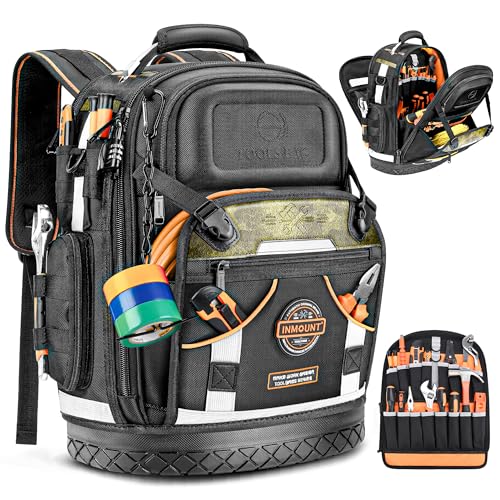
Strengths
- 78 pockets
- Combination lock
- Full front opening
- Ergonomic design
- Reinforced stitching
Trade-offs
- No laptop compartment
- Slightly bulky
- No USB port
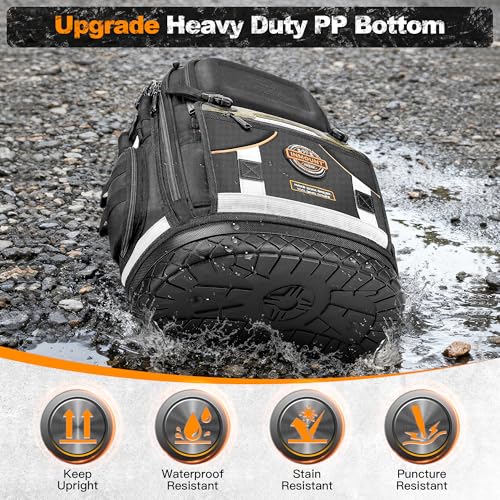
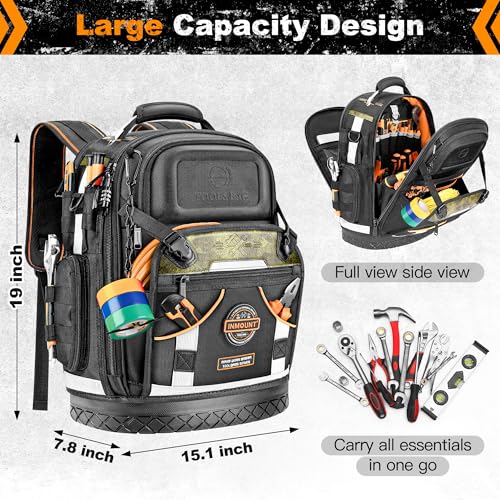
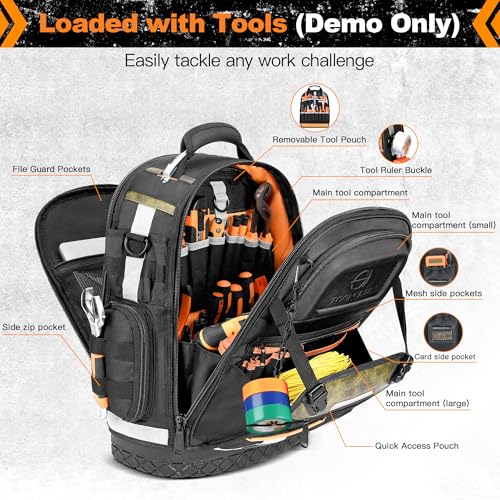
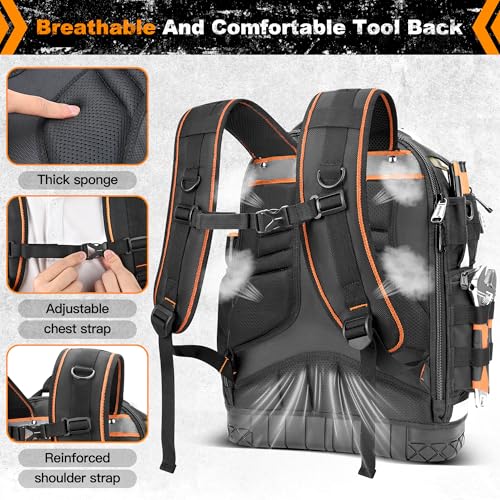
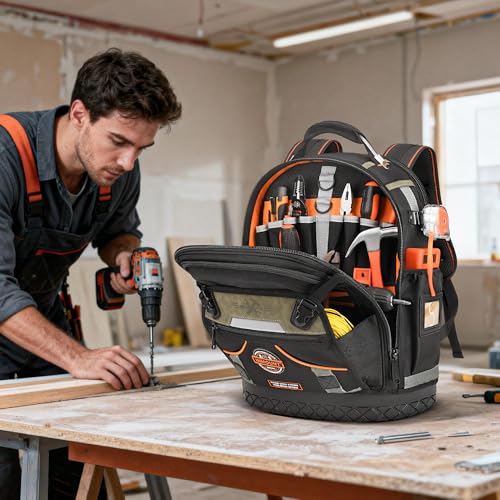
This Version 3.0 backpack is the most complete package in the lineup, and it’s easy to see why it’s labeled ‘Best Overall’. With 78 pockets, a combination lock, full front-opening design, and ergonomic support, it hits nearly every major need in one build. The lockable zipper (default 000) is a real security upgrade for job sites, and the spacious 15.1″ x 19″ frame fits power tools, meters, and hand tools without feeling cramped. Owners consistently report it’s held up well under stress, thanks to the reinforced stress points and upgraded zippers.
Compared to the LOKASS model, it offers more pockets and better security. Against the DEWALT, it’s less focused on weather resistance but more versatile for mixed use. If you want one backpack that does it all, organization, security, comfort, and access, this is the smarter buy.
Product photos
DEWALT Tool Backpack Durable
Strengths
- 43 pockets
- IP54 water resistance
- Hi-vis interior
- Laptop compartment
- Drill-specific storage
Trade-offs
- Heavier construction
- No ventilation
- No lock
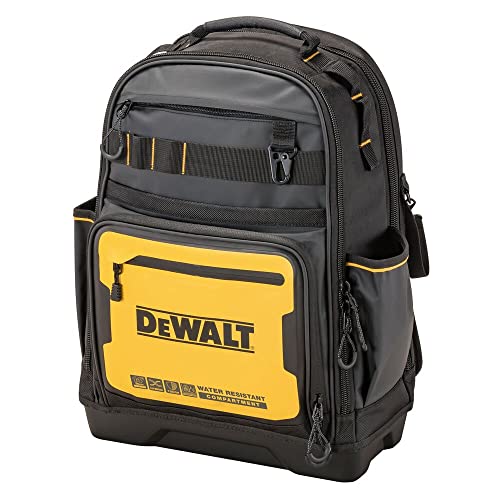
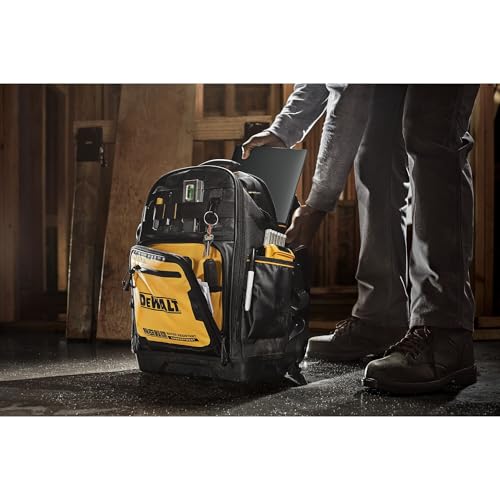
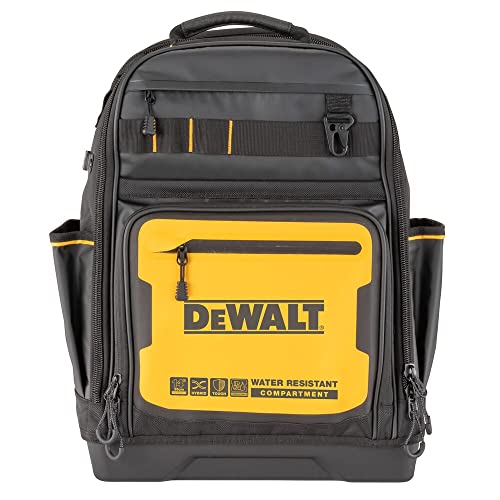
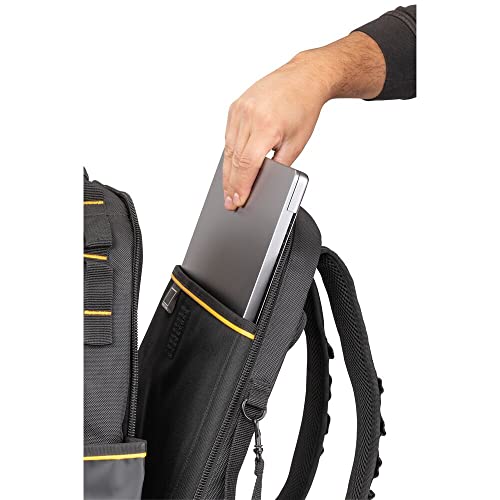
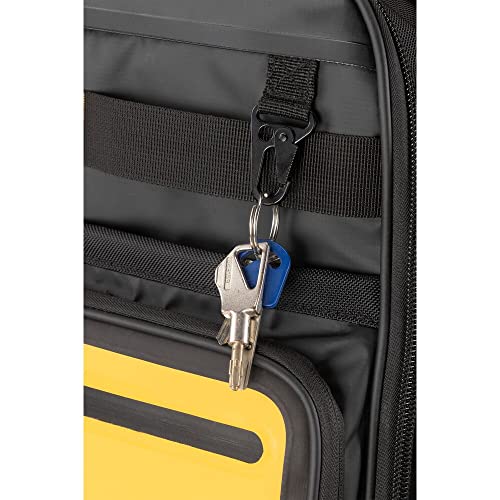
DEWALT built this backpack like it belongs on a demolition site, and that’s exactly where it shines. The IP54-rated water-resistant compartment and waterproof base are serious upgrades for harsh conditions, and the 1680D fabric with tarpaulin reinforcements feels like overkill in the best way. With 43 pockets, including dedicated spaces for drills, batteries, and long tools, it’s one of the most organized packs here. The hi-vis yellow interior is a small but impactful detail; reviewers routinely mention how much easier it is to find a nut driver when you’re not digging through a dark void.
It’s bulkier than some, but the padded back system and chest strap make it manageable even when fully loaded. Compared to the AIRAJ model, it trades a bit of lumbar focus for broader jobsite resilience. If you’re in and out of wet crawl spaces or exposed sites, this one’s built to survive.
Product photos
Klein Tools Camo Tool Backpack

Strengths
- USB-C port
- Hard front pocket
- 40 pockets
- Curved molded base
- Camouflage design
Trade-offs
- No laptop compartment
- No combination lock
- No ventilation
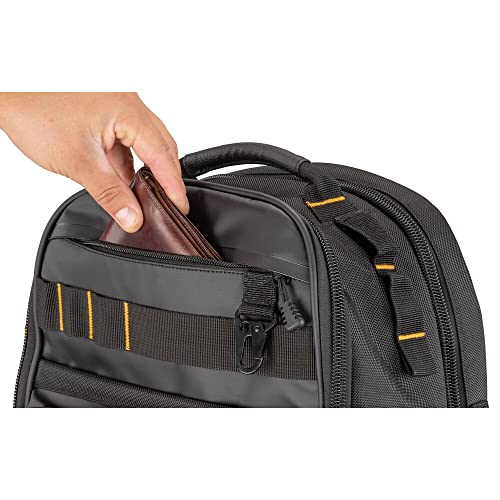
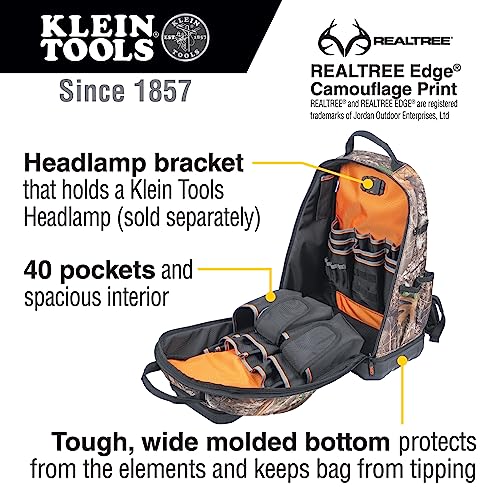
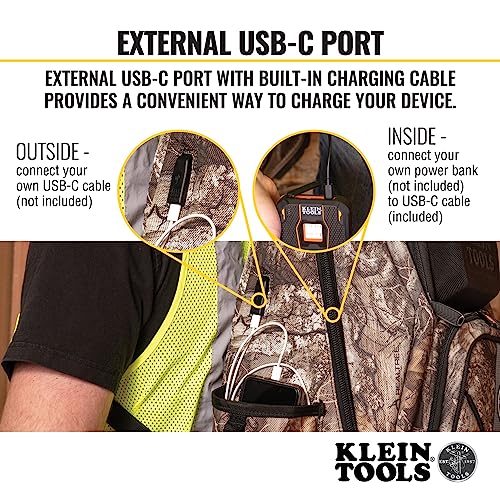
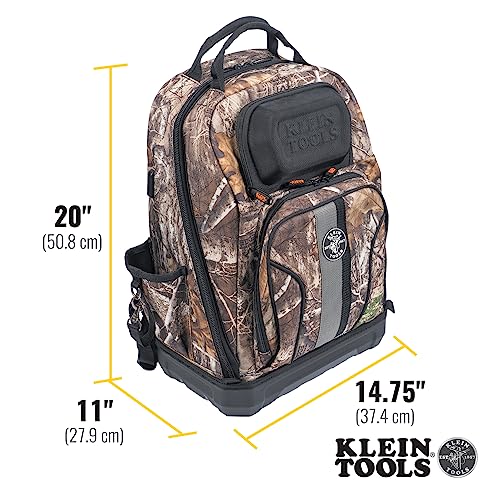
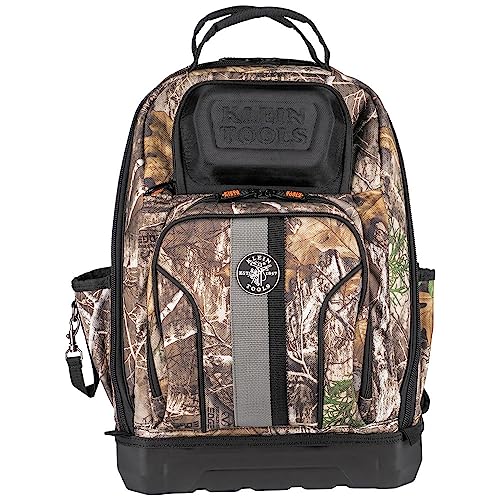
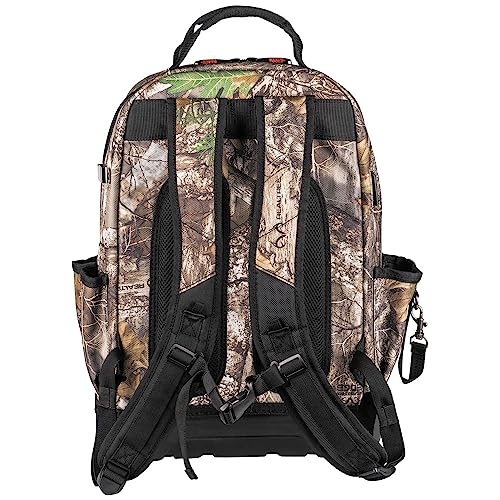
This camo-pack isn’t just for hunters, its REALTREE design actually helps it blend into outdoor job sites, which some linemen and field service techs appreciate. Beyond the look, it’s one of the few with a USB-C charging port and a hard molded front pocket perfect for phones or glasses. The 40 pockets are well-placed, and the curved molded bottom improves both stability and carry comfort. It’s essentially Klein’s tech-forward model, pairing durability with modern convenience.
Compared to the 62482, it trades a few pockets for better tech integration and a more contoured fit. If you’re charging a phone or meter all day and want a rugged bag that keeps up, this is the one to beat.
Product photos
Golkcurx Ventilated Tool Backpack

Strengths
- Ventilated design
- Removable tool pouch
- Molded base
- Ergonomic straps
- 180° opening
Trade-offs
- No USB port
- No laptop compartment
- Fewer total pockets
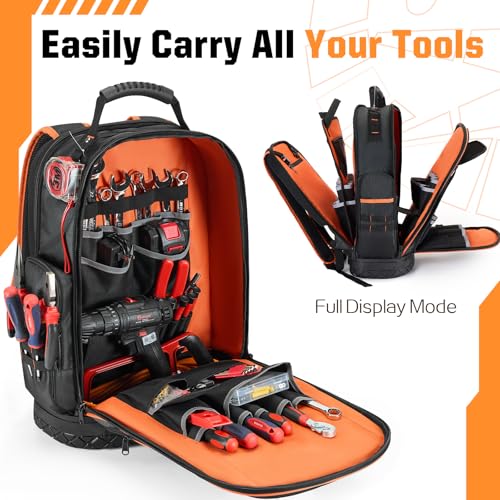
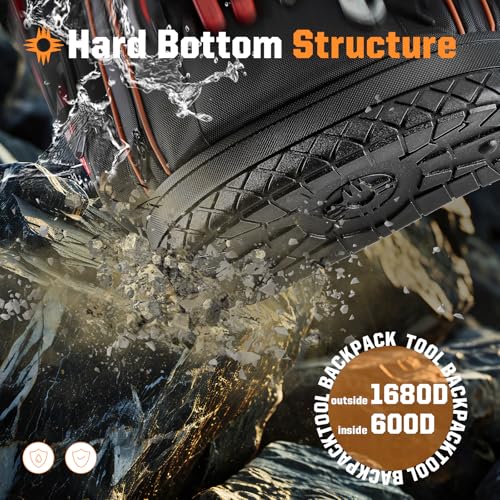
The Golkcurx backpack solves a problem most brands ignore: tool moisture buildup. That front ventilation grommet isn’t just a gimmick, owners in humid climates report noticeably less condensation and rust on their tools, especially after long days in HVAC or outdoor electrical work. The 180° full-open design turns it into a workstation, and the removable tool pouch is a smart way to avoid lugging the whole bag to tight spaces. On paper, it doesn’t have the highest pocket count, but the elastic loops and smart interior layout keep frequently used tools within reach.
It’s also one of the more versatile packs, with a design that works as well for plumbers as it does for electricians. Compared to the Klein 62482, it offers better airflow and a more modern comfort system, though it lacks a USB port. For anyone working in damp conditions, this is a quiet standout.
Product photos

LOKASS 56-Pocket Tool Backpack
Strengths
- 56 pockets
- Combination lock
- 180° opening
- Molded base
- Waist strap
Trade-offs
- No laptop compartment
- No ventilation
- Smaller main space
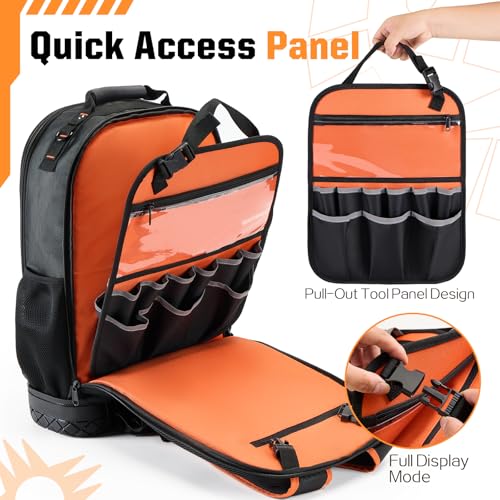
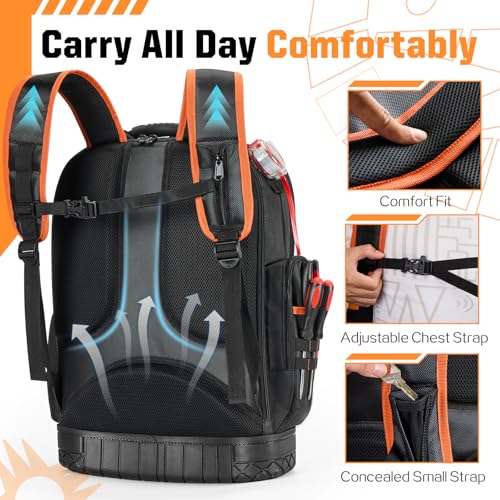
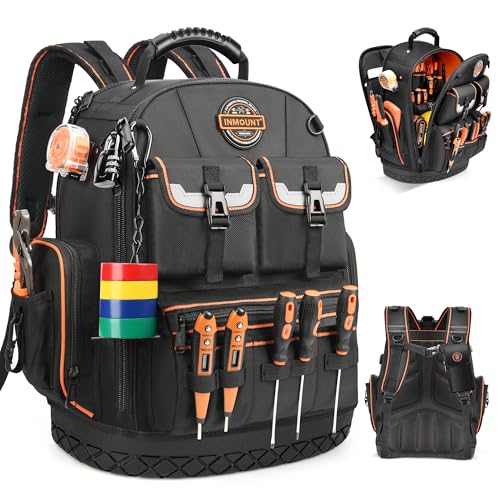
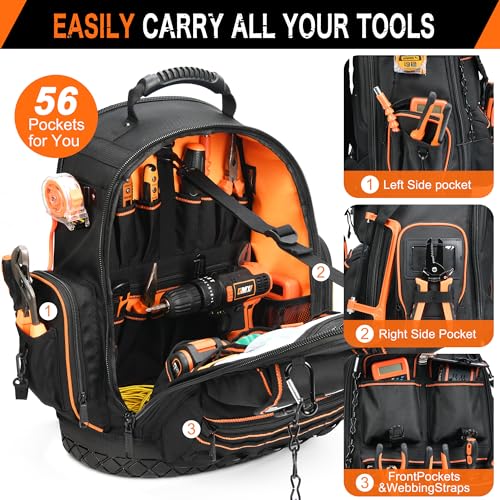
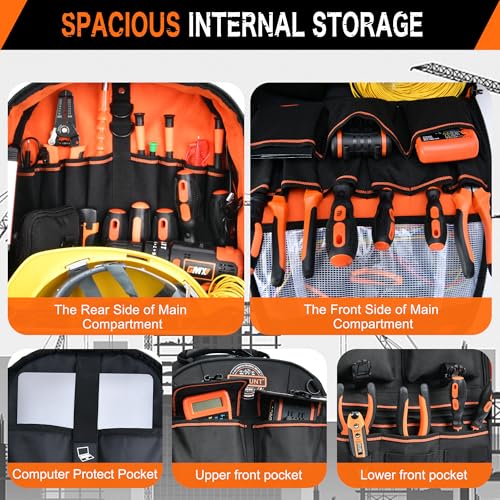
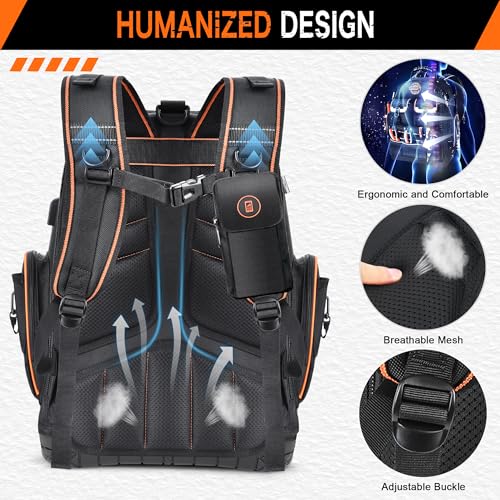
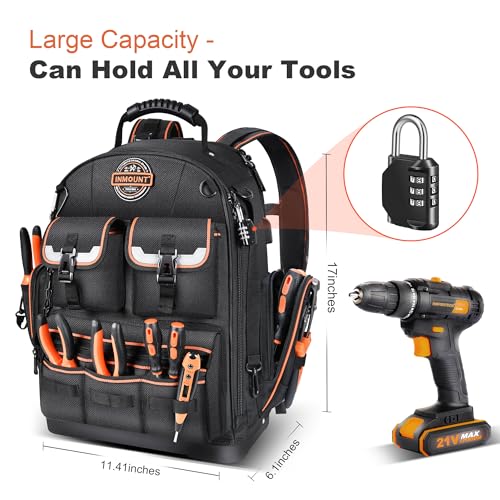
With 56 pockets and a 180° opening, the LOKASS backpack is built for people who hate digging. The wide layout turns it into a spread-out organizer the moment you unzip it, and the combination lock adds real peace of mind on shared sites. The molded base keeps it upright, and the padded straps with waist belt make it comfortable even when fully packed. It’s compact at 11.4″ x 17″, so it won’t overwhelm smaller users or fit issues in vans.
While it doesn’t have a laptop sleeve like the DEWALT, its focus is purely on tool access and security. Compared to the Klein 55485, it offers more pockets and a lock, but lacks the removable caddy. For someone who wants maximum organization in a mid-sized frame, this is a strong contender.
Product photos
Klein Tools 48-Pocket Backpack

Strengths
- 48 pockets
- Removable caddy
- Molded bottom
- Hang hook
- Lockable zippers
Trade-offs
- No USB port
- No laptop compartment
- No ventilation
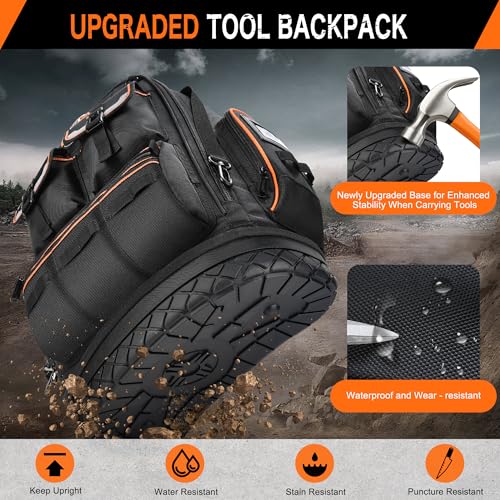
This is the electrician’s favorite for a reason. With 48 pockets and a removable caddy that hangs from a D-ring, it’s built for precision tool placement and rapid deployment. The caddy itself is a standout, pull it out and take just the essentials to a cramped panel box without dragging the whole pack. The molded bottom and 1680D ballistic weave are standard for this class, but the metal hook for hanging the bag is a subtle win for overhead work.
Compared to the LOKASS 56-pocket model, it trades a few slots for a more modular system. It’s not the most high-tech, but it’s one of the most trusted designs in the field. If you’re doing repetitive electrical work and need consistency, this is a proven performer.
Product photos


Klein Tools Work Station Backpack

Strengths
- Molded bottom
- 27 pockets
- USB-C port
- Workstation design
- Water-resistant
Trade-offs
- No laptop sleeve
- Fewer pockets than rivals
- No combination lock
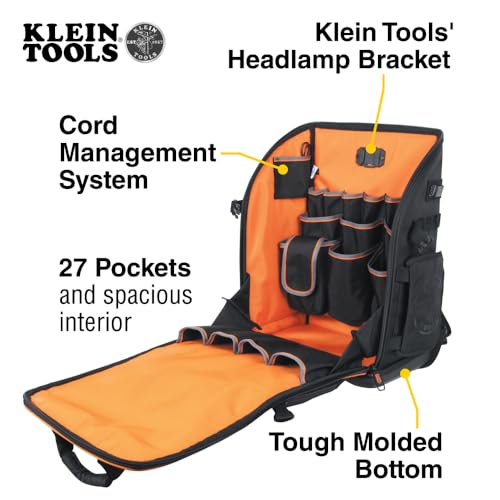
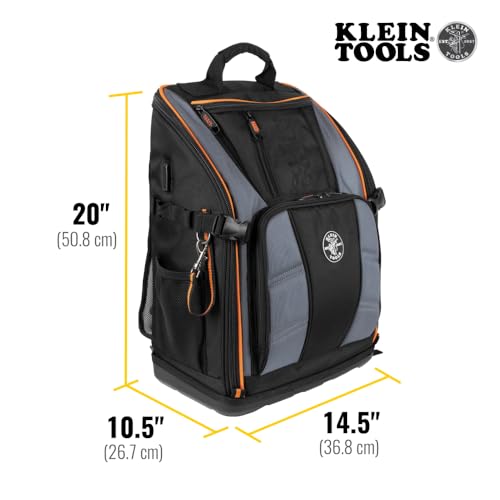
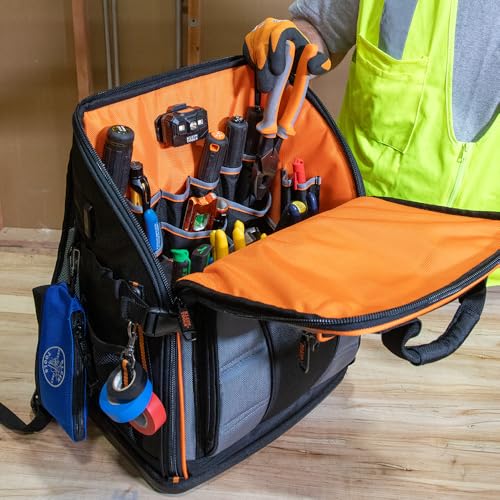
If you want a tool backpack that doubles as a mobile workstation, the Klein Tools 62482 stands out immediately. The ability to unzip halfway for quick access or fully lay flat transforms it into a functional job site organizer, and owners consistently praise how stable it feels thanks to the molded bottom. On paper, the 27 pockets seem modest compared to others in this lineup, but the layout is clean and practical for electricians who need immediate access to meters, wire strippers, and small hand tools.
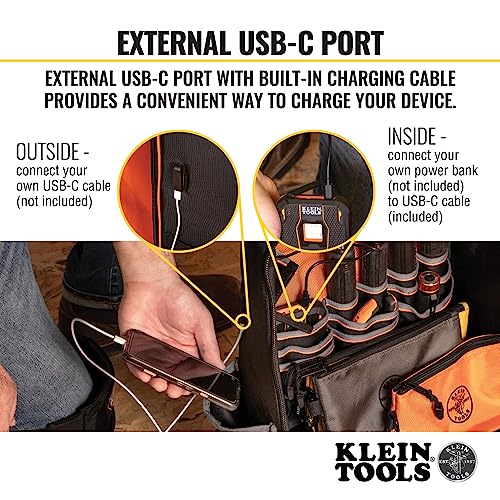
The inclusion of a USB-C port is a thoughtful touch for charging devices on the go, though it doesn’t include a power bank, something to keep in mind. While it lacks a laptop compartment, its focus is clearly on tool access and durability, not digital gear. Compared to the DEWALT DWST560102, it’s less about total pocket count and more about smart, field-tested usability.
Product photos

AWP Extreme Tool Backpack

Strengths
- Budget-friendly
- Padded straps
- Waist belt
- Water-resistant base
- Lightweight
Trade-offs
- Lower fabric rating
- Fewer pockets
- No lock or USB
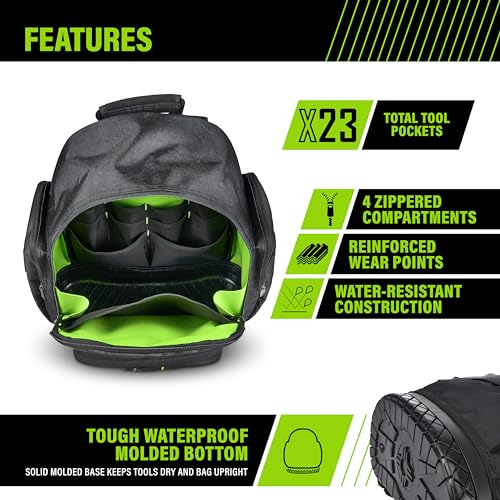
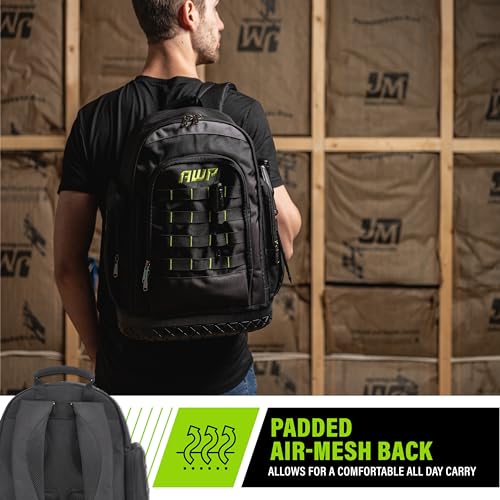
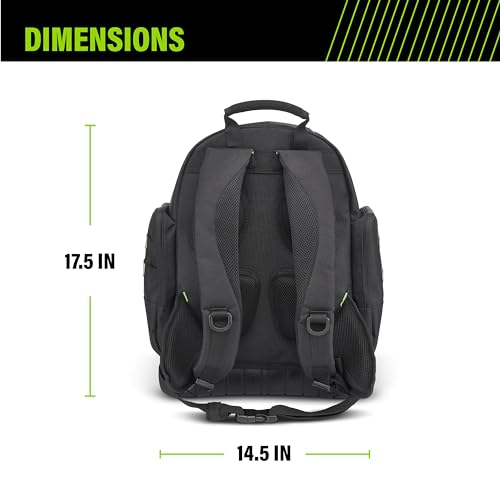
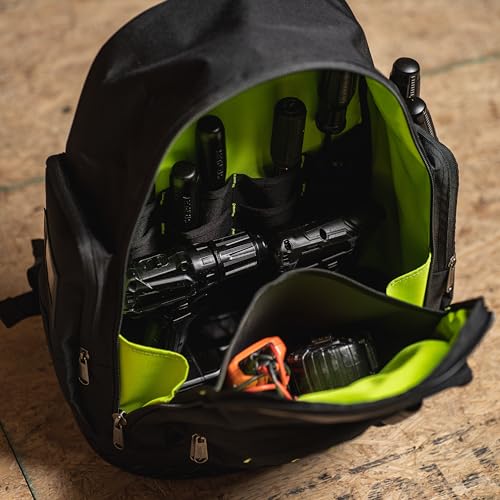
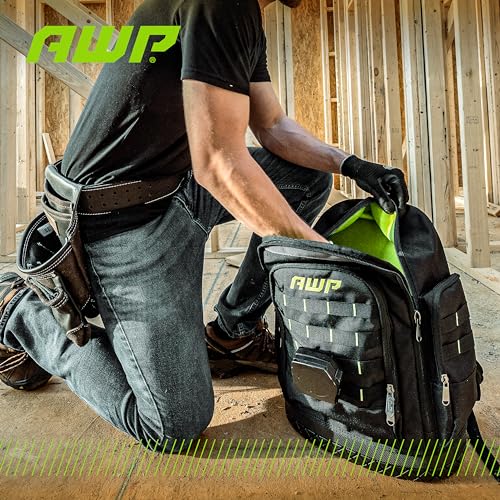
If you’re on a budget but still need a rugged, no-nonsense tool backpack, the AWP Extreme delivers. It’s made with 600D polyester, less dense than the 1680D standard, but reinforced in high-wear areas, which helps close the durability gap. The 23 pockets and 4 zippered compartments are functional, though not as finely divided as some pricier models. Still, for the cost, the air-mesh padding on the shoulders, back, and waist strap is impressive and keeps it comfortable under load.
It won’t last a decade like a Klein or DEWALT, but for weekend warriors or entry-level techs, it’s a solid starting point. Compared to the Tool Backpack Bag Version 3.0, it’s far less feature-rich, but the price reflects that. My recommendation? Use it to get started, then upgrade when your workload demands more.
Product photos
AIRAJ Lumbar Support Backpack
Strengths
- Lumbar support
- Breathable back
- Molded base
- Reinforced stitching
- Wide versatility
Trade-offs
- No tech features
- No lock
- No laptop sleeve
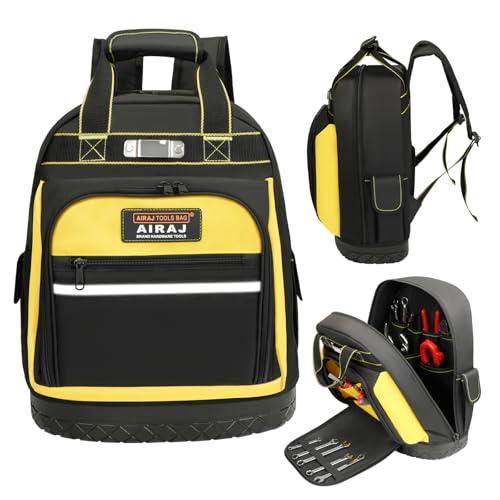
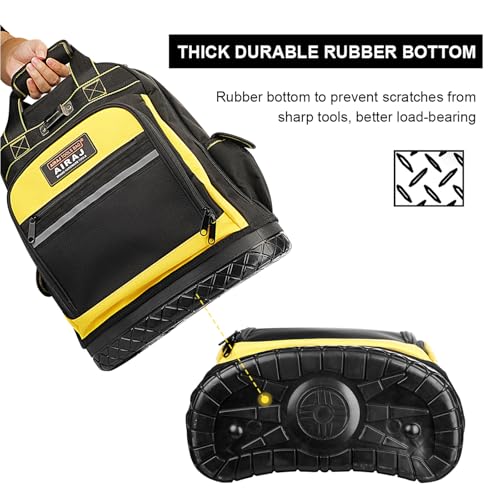
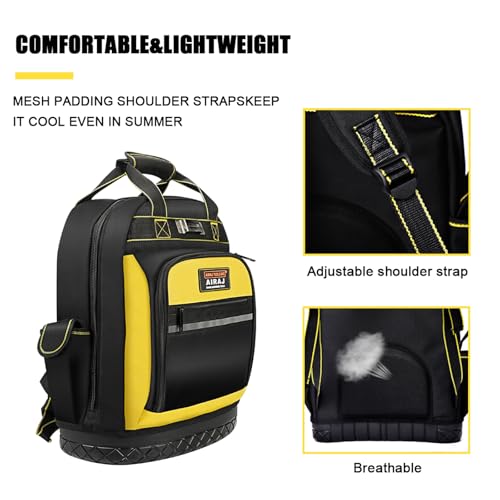
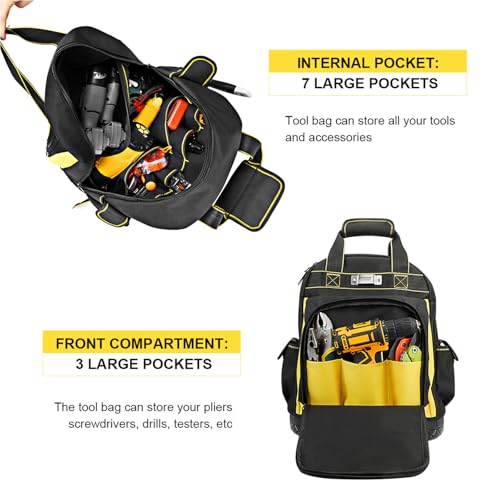
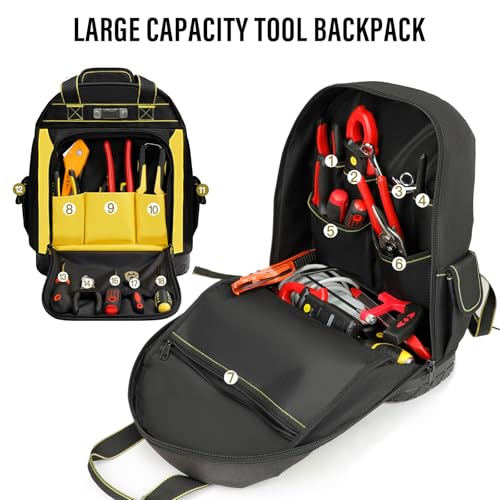
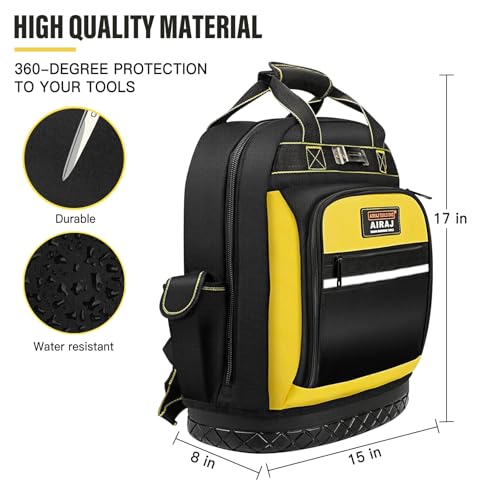
When comfort is your top priority, the AIRAJ backpack earns its keep. The lumbar support isn’t just extra padding, it’s structured to reduce lower back strain during long hauls, and the breathable back panel helps prevent overheating, a detail many competitors overlook. The molded PP plastic base is simple but effective, standing upright and wiping clean with a damp cloth. While it doesn’t have flashy features like a USB port or lock, the reinforced stitching and 1680D Oxford cloth make it durable enough for daily use.
It’s not as feature-packed as the Tool Backpack Bag Version 3.0, but for someone who walks a large site or climbs ladders all day, the ergonomic design makes a real difference. Owners report it feels lighter than it looks, thanks to the weight distribution. If you’re on your feet more than you’re crouched at a workstation, this one deserves a hard look.
Product photos
How We Evaluated tool backpacks
Rather than a hands-on lab test, my research focused on comparing published specifications and features across numerous models. I weighed owner reviews from major retailers alongside expert opinions found in trade publications and tool-focused websites. As someone who spends a lot of time researching and recommending power tools, I applied my understanding of jobsite needs and durability expectations to rank these backpacks against clear criteria.
For tool backpacks, capacity and durability were the biggest factors influencing my recommendations. A large number of pockets and loops are useful, but not if the bag falls apart under a heavy load. Ballistic polyester construction and reinforced stitching are key indicators of longevity, as is a robust base to resist abrasion. Comfort is also crucial; a well-padded suspension system makes a huge difference when carrying a fully loaded pack all day.
Specifications reliably tell you about materials (denier of polyester, type of zippers) and dimensions. However, judging real-world durability and comfort requires looking at owner feedback. Users consistently highlight issues with zipper failures or strap wear that aren’t apparent in marketing materials. I also considered brand reputation; established tool manufacturers often prioritize build quality and stand behind their products. If you need something smaller, you might also want to consider looking at portable hand tool totes for lighter loads.
How To Choose The tool backpacks
Finding the right tool backpack isn’t just about carrying things; it’s about boosting efficiency and protecting your investment.
A good tool backpack prioritizes durability with materials like ballistic polyester, offers intelligent organization through numerous pockets and compartments, and balances comfort with ergonomic design features like padded straps and back support. Consider water resistance, security features like locks, and specific needs like ventilation to prevent rust or dedicated spaces for specialized tools.
Durability & Materials
I’ve seen a lot of tool bags fall apart prematurely, and the biggest factor is usually the materials. Don’t skimp here. Look for backpacks constructed from high-denier polyester (1680D is a sweet spot) and reinforced stitching, especially at stress points. A molded base isn’t just about standing the bag up; it protects your tools from impacts and moisture. Ballistic nylon is another excellent choice, offering exceptional abrasion resistance. Don’t assume all “heavy duty” fabrics are created equal; read reviews to see how they hold up in real-world conditions.
Organization & Access
The number of pockets isn’t everything, but a well-thought-out layout is crucial. Consider how you work. Do you need quick access to frequently used tools? A wide-mouth opening or a fold-down front panel can be a lifesaver. Some models, like the Klein Tools Work Station Backpack, are designed to lay flat and function as a mobile workstation. Here’s what I look for in organization:
- A dedicated drill/impact driver compartment.
- Multiple smaller pockets for hand tools and accessories.
- Larger compartments with adjustable dividers to customize the layout. This lets you adapt the backpack as your tool collection grows or your job requirements change.
Comfort & Value
A fully loaded tool backpack can get heavy. Prioritize comfort features like padded shoulder straps, breathable back padding, and an adjustable chest strap to distribute the weight evenly. Some backpacks even include waist belts for added support. But comfort isn’t the only factor in value. If you’re an HVAC technician backpacks, you might want to consider models with dedicated compartments for meters and testing equipment, or even features like USB charging ports.
A tool backpack is an investment. Don’t just buy the cheapest option; prioritize quality and features that will save you time and frustration in the long run.
Tool Backpacks Compared
Here’s a comparison of key specifications for popular tool backpacks to help you find the best fit for your needs.
| Product Title | Capacity (cu. in.) | # of Pockets | Material | Water Resistance | USB Port | Ventilation |
|---|---|---|---|---|---|---|
| Heavy Duty Tool Backpack 3.0 | N/A | 78 | 1680D Polyester | Yes | No | No |
| DEWALT Tool Backpack Durable | N/A | 43 | 1680D Polyester | IP54/Waterproof | No | No |
| Klein Tools Camo Tool Backpack | N/A | 40 | 1680D Ballistic | Yes | Yes | No |
| Golkcurx Ventilated Tool Backpack | N/A | N/A | 1680D Ballistic | Yes | No | Yes |
| LOKASS 56-Pocket Tool Backpack | N/A | 56 | 1680D Polyester | Yes | No | No |
| Klein Tools 48-Pocket Backpack | N/A | 48 | 1680D Ballistic | Yes | No | No |
| Klein Tools Work Station Backpack | N/A | 27 | 1680D | Yes | Yes | No |
| AWP Extreme Tool Backpack | N/A | 23 | 600D/1680D Polyester | Yes | No | No |
| AIRAJ Lumbar Support Backpack | N/A | N/A | 1680D Oxford | Yes | No | No |
Frequently Asked Questions
What level of water resistance should I expect from a tool backpack?
Most tool backpacks offer some level of water resistance, typically through a water-repellent coating on the polyester or nylon fabric. However, truly waterproof backpacks (like the DEWALT model with an IP54 rating) are rare and usually more expensive. For most jobsite conditions, a water-resistant pack will protect your tools from light rain or spills.
How many pockets is too many on a tool backpack?
While a lot of pockets seem appealing, exceeding 50 can become disorganized quickly. Prioritize a well-designed layout over sheer quantity; a backpack with 25-40 intelligently placed pockets is often more useful than one crammed with 60 small, unusable compartments.
Are more expensive tool backpacks always better?
Not necessarily. Price often reflects brand reputation and premium features like USB charging or advanced suspension systems. However, a higher price doesn’t guarantee better durability. Focus on materials (1680D polyester or ballistic nylon) and construction quality, regardless of the price point. You can find excellent, reliable options among heavy-duty tool rucksacks.
What should I look for in a tool backpack if I carry a lot of heavy power tools?
A robust suspension system with heavily padded shoulder straps and a waist belt is essential. Look for backpacks with reinforced stitching at stress points and a molded base to distribute the weight effectively. Consider models designed for trade-specific backpacks if your profession demands carrying particularly heavy or specialized equipment.
What’s the difference between polyester and ballistic nylon in tool backpack construction?
Both are durable, but ballistic nylon offers superior abrasion resistance and is generally more expensive. 1680D polyester is a very strong and common material for tool backpacks, providing a good balance of durability and cost. If you anticipate particularly rough use, a backpack made with ballistic nylon will likely hold up longer, but for general use, a high-denier polyester pack will be sufficient.
The Bottom Line
Choosing a tool backpack often comes down to balancing how much you want to carry with how much you want to spend, and how organized you need to be. For the best overall combination of durability, features, and value, I consistently see positive feedback regarding the Heavy Duty Tool Backpack 3.0. It strikes a great balance, and the 1680D polyester construction suggests it will hold up well on most jobsites.
If you’re on a tighter budget, the AWP Extreme Tool Backpack provides a surprising amount of organization for the price. For those prioritizing versatility and a mobile workstation setup, the Klein Tools Work Station Backpack is a standout option, and if you’re looking for something a little smaller, consider these heavy-duty tool tote bags. The Golkcurx Ventilated Tool Backpack is a good choice if you work in hot climates or need to protect sensitive electronics.
Ultimately, the specs matter less than how well a backpack fits your workflow and how ruggedly it’s built. Don’t get hung up on pocket counts; focus on a durable material like 1680D polyester or ballistic nylon, reinforced stitching, and a comfortable suspension system. A well-made backpack isn’t just about carrying tools; it’s about protecting your investment and making your job easier.
